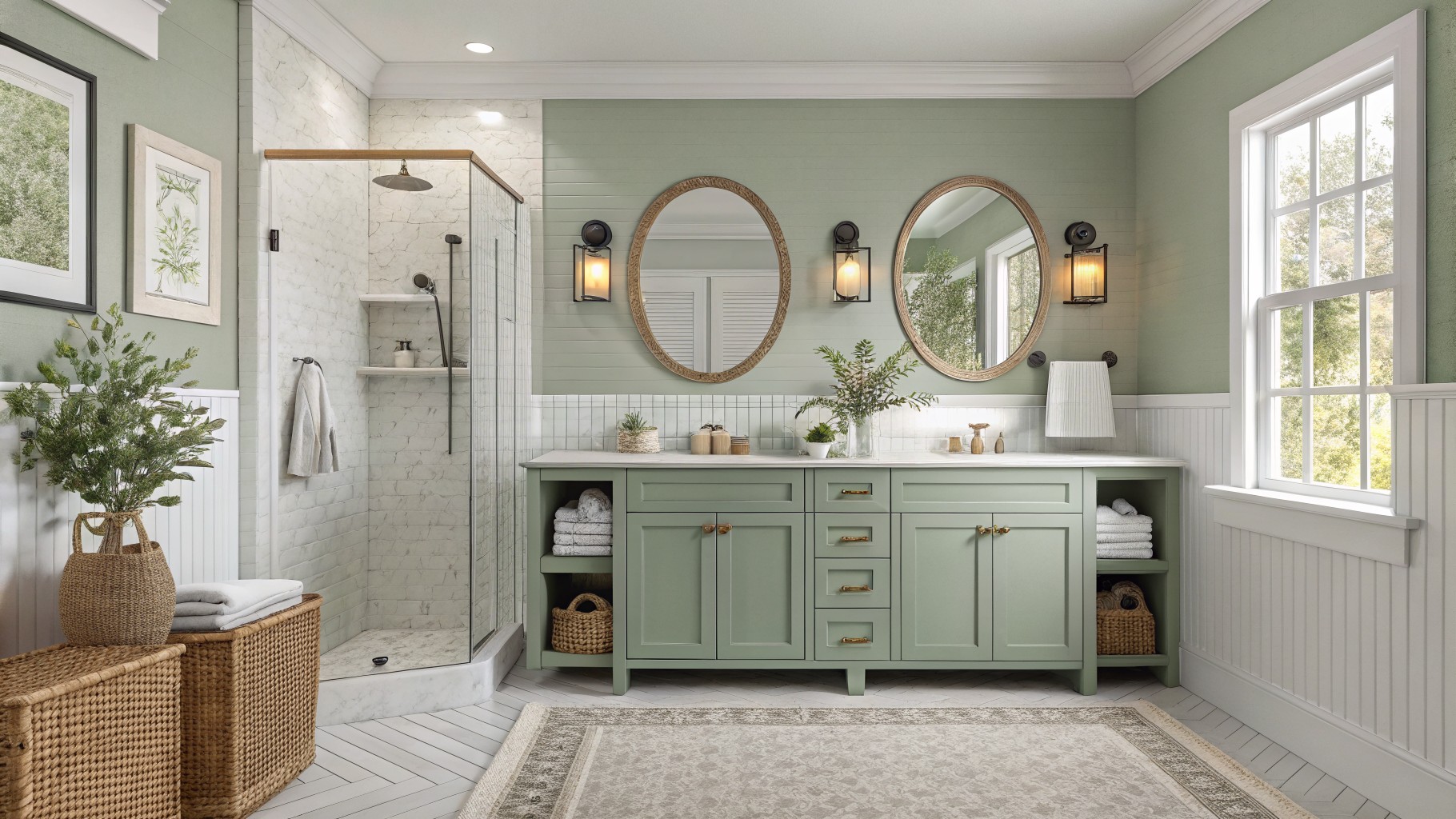
I have learned that bathroom colors need to hold their calm tone even when morning light hits one wall and the afternoon light shifts everything else.
Once I tried a pale blue that looked gentle on the chip but picked up a green cast next to white tile, so now I check samples against the actual surfaces first.
Undertones show up fast in small rooms where steam and artificial lights stay on for hours at a time.
It is worth watching how a shade sits beside cabinets and flooring before the rollers come out.
Swatches on the wall always decide it.
Soft Sage Green Walls
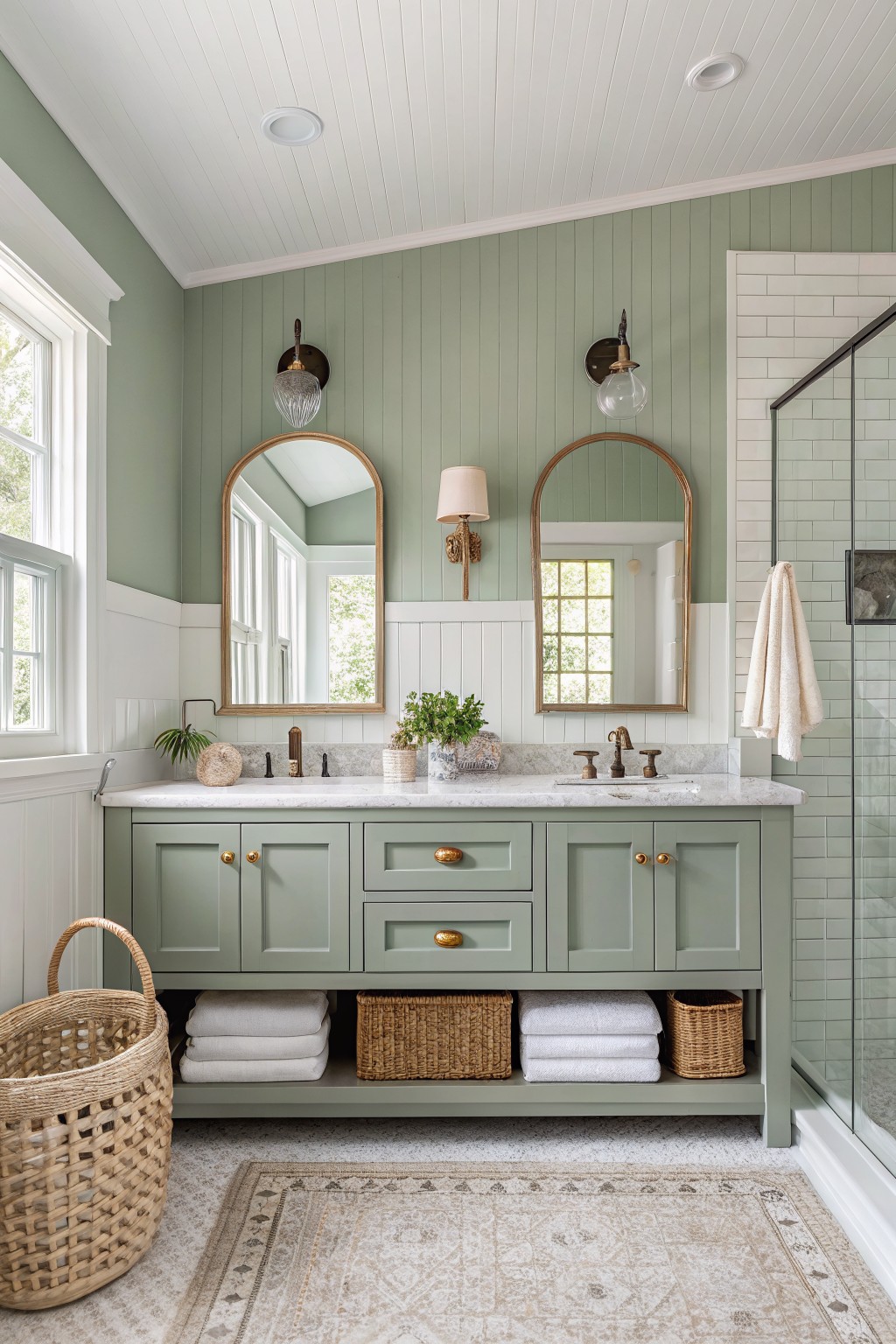
A soft sage green gives bathrooms that quiet, settled feeling without making the space feel small. This color sits right between gray and green, so it reads calm and a little earthy at the same time. It looks closest to Sherwin Williams Rainwashed, Benjamin Moore October Mist, and Farrow & Ball Lichen.
The green has cool undertones that work best with white trim and light stone counters. It can shift a bit depending on the light, so it helps to test a sample on the wall first. This shade suits smaller bathrooms especially well because it keeps the room feeling open and easy to relax in.
Soft Blue Gray Walls
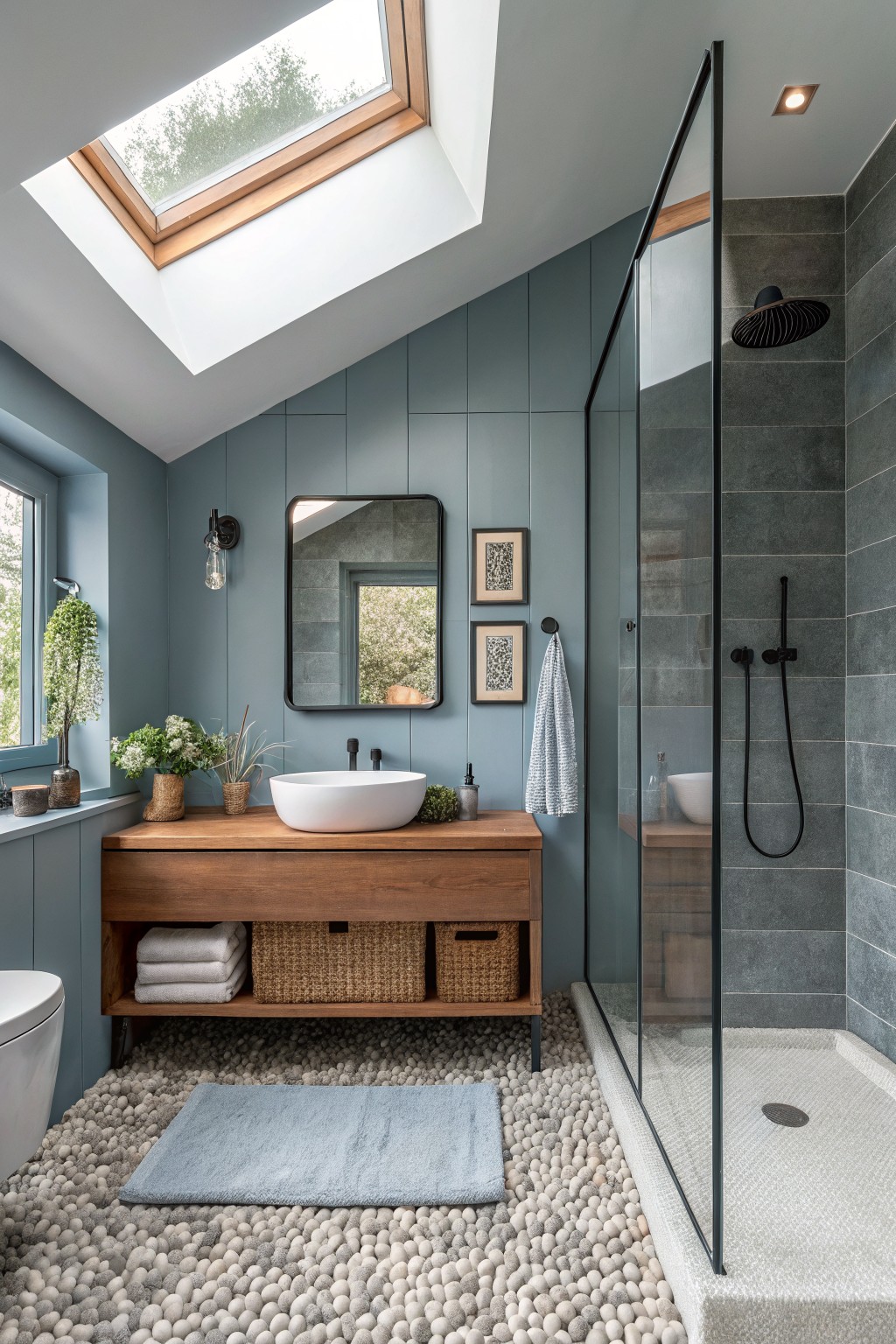
A soft blue gray on the walls gives a bathroom that quiet, steady feel without turning it cold. This color family reads closest to Sherwin Williams Silver Strand, Benjamin Moore Pale Smoke, Behr Soft Rain, or Farrow & Ball Light Blue.
It carries cool undertones that sit nicely next to warm wood and stone. It works best in rooms with decent natural light and pairs cleanly with white trim or simple black fixtures.
Soft Warm Cream On The Walls
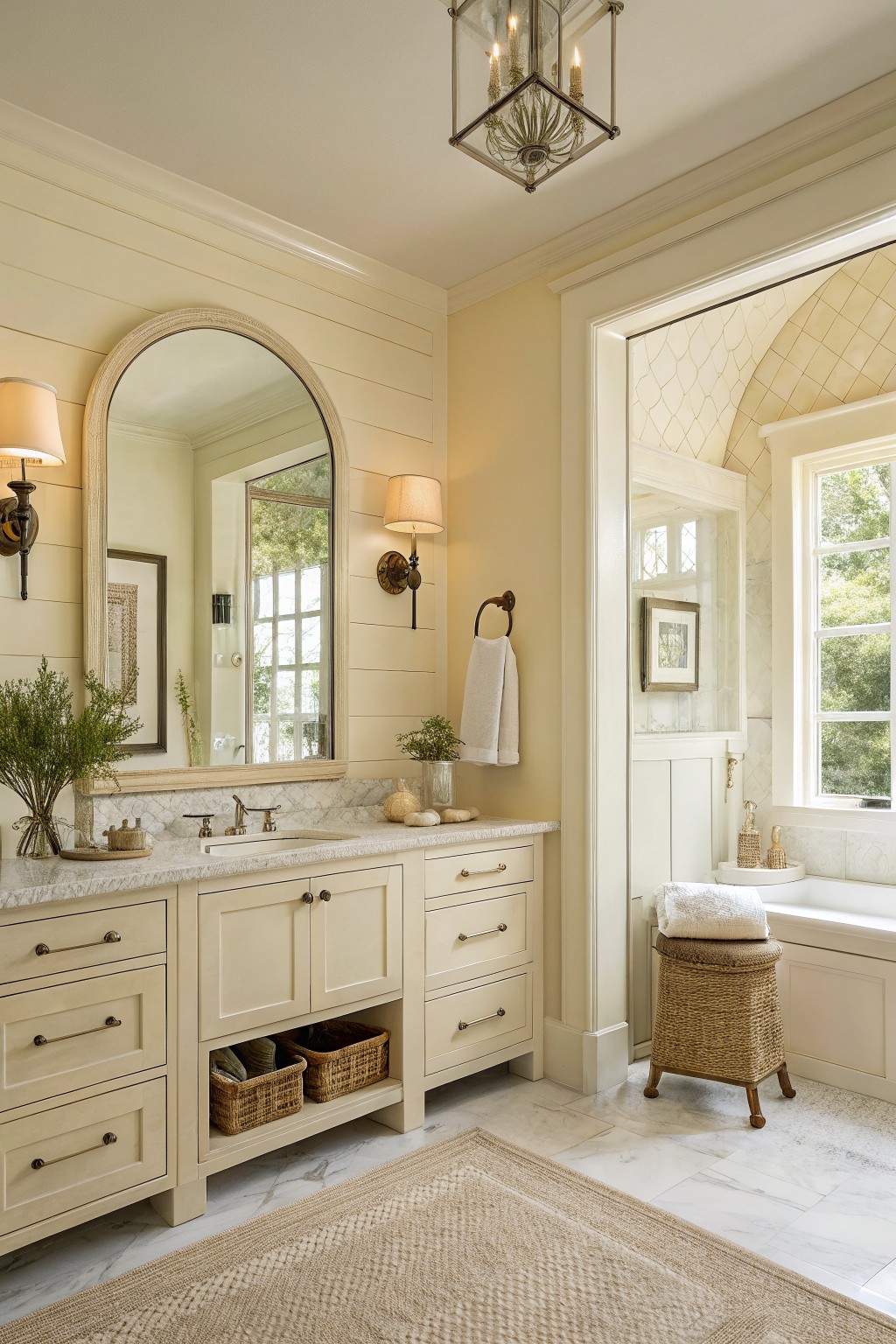
This bathroom uses a soft warm cream on the walls. It is a gentle neutral that feels calming and easy to live with.
The color has a light yellow undertone that sits nicely next to white trim and marble. It works best in bathrooms with natural light and pairs well with wood cabinetry or woven accents.
Soft Greige Bathroom Walls
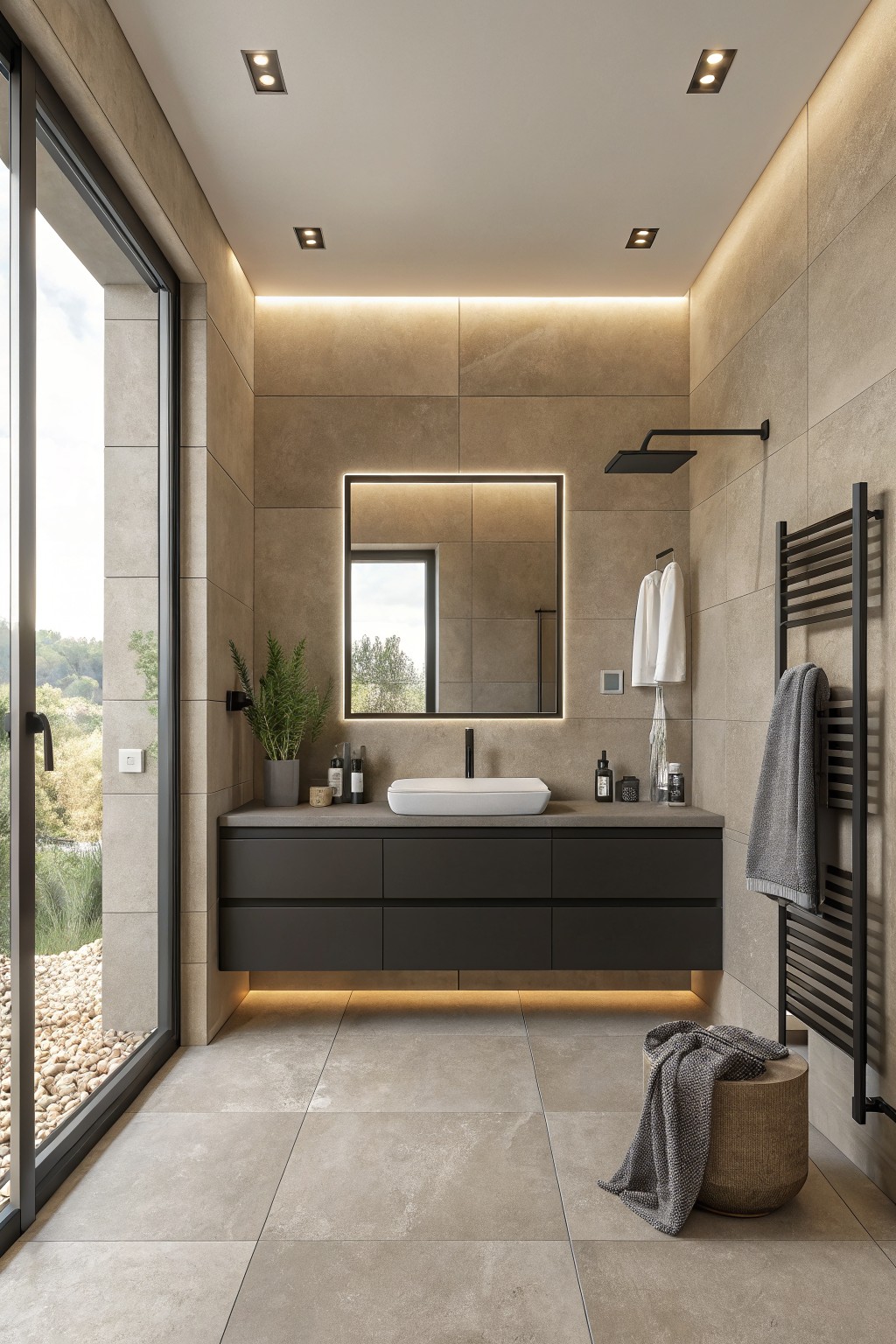
This bathroom uses a warm greige on the walls. It is a soft neutral that blends beige and gray, creating a calm backdrop that feels grounded without pulling too much attention.
The color has gentle warm undertones that sit nicely next to dark cabinetry and stone tile. It works best in bathrooms with steady natural light, though it can still feel welcoming in lower light if you keep the trim and fixtures light. Pair it with warm wood or matte black hardware to keep the balance.
Soft Lavender Walls
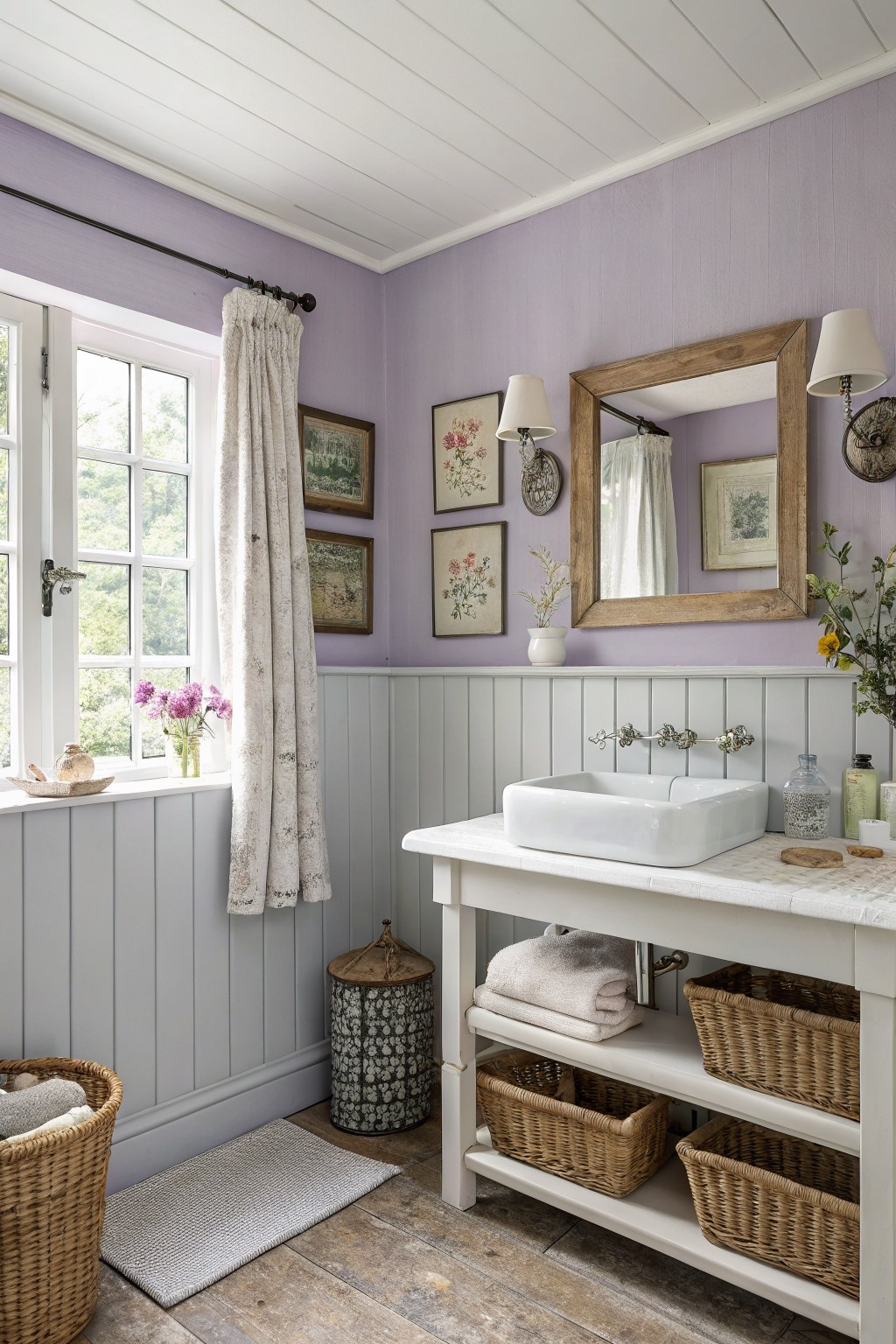
A soft lavender brings a gentle calm to bathrooms without feeling too sweet or bold. This shade sits in the light purple family with a touch of gray that keeps it quiet and easy to live with, and it works especially well next to crisp white trim.
The color has cool undertones that can shift slightly depending on the light, so it reads best in rooms that get steady daylight. Pair it with white fixtures and simple wood tones to avoid any chilliness, and test a sample on the wall first since lavender can surprise you once it is up.
Soft Aqua Bathroom Walls
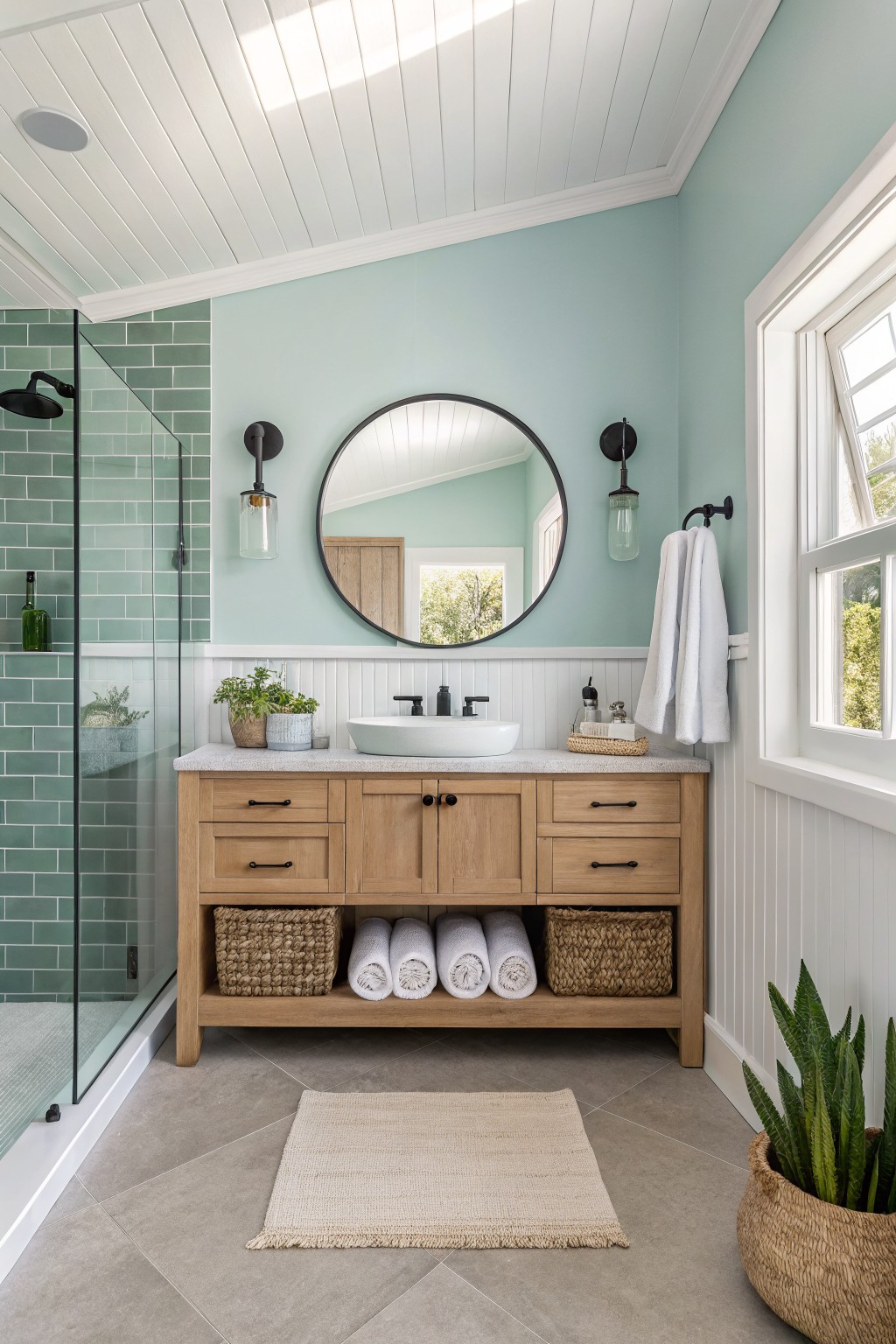
This soft aqua reads as a pale mint green with a hint of blue. It feels light and calm without turning too cool, which makes it a good pick for bathrooms where you want things to stay relaxed.
The color sits nicely next to white trim and natural wood tones. It works best in rooms with decent natural light, and it pairs well with simple white fixtures or light stone counters. Watch that it does not pull too green in very yellow lighting.
Warm Beige Walls
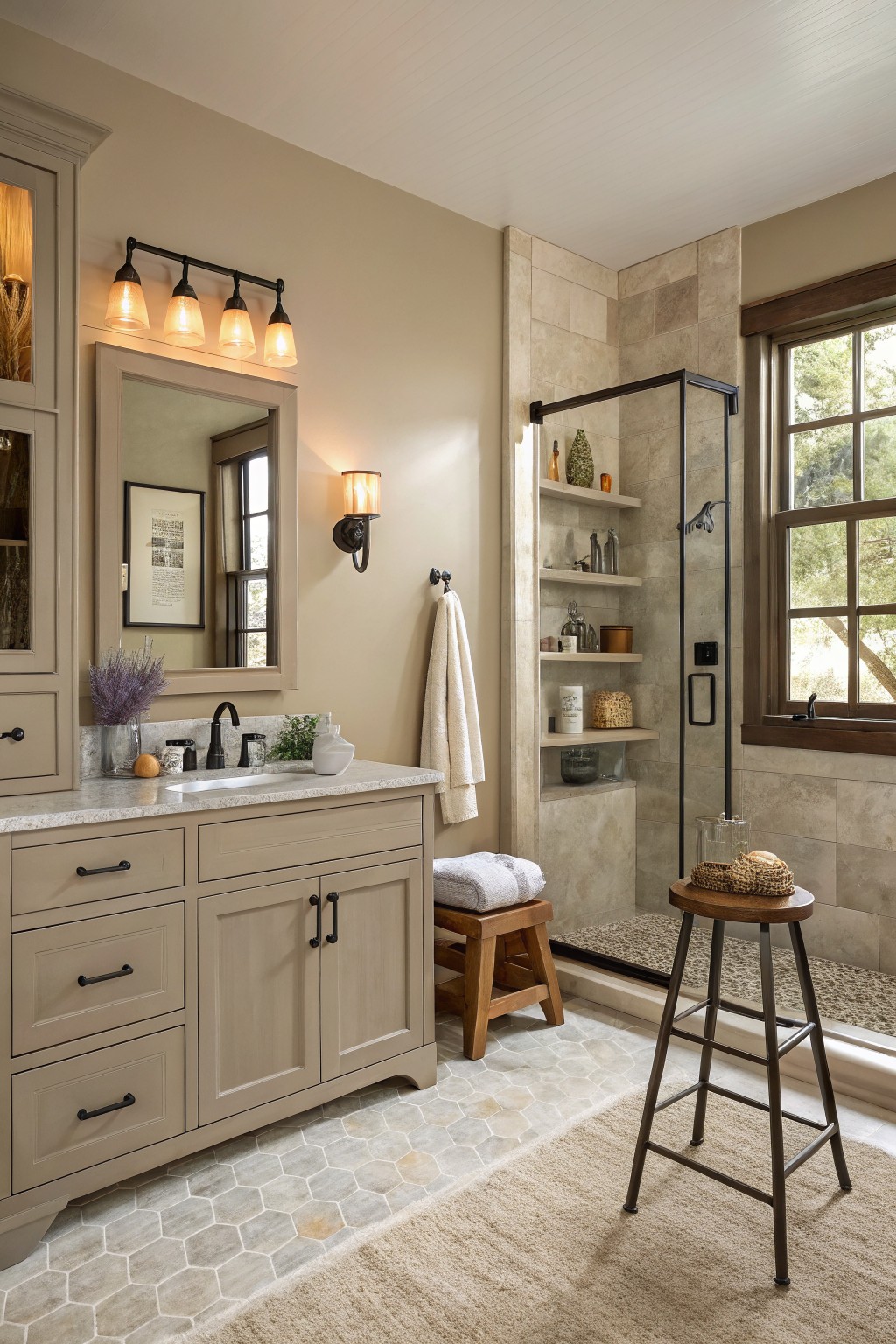
This bathroom uses a warm beige on the walls that sits right between a soft tan and a light greige. It reads calm and steady without pulling too gray or too yellow, which makes it easy to live with in a room that gets mixed natural light. Colors like Sherwin Williams Accessible Beige, Benjamin Moore Edgecomb Gray, or Behr Almond Wisp give a similar effect.
The gentle warmth helps the wood vanity and stone shower stay grounded instead of feeling cold. It works best with simple trim and natural textures, though it can look flat if the lighting stays too dim all day.
Deep Blue Walls
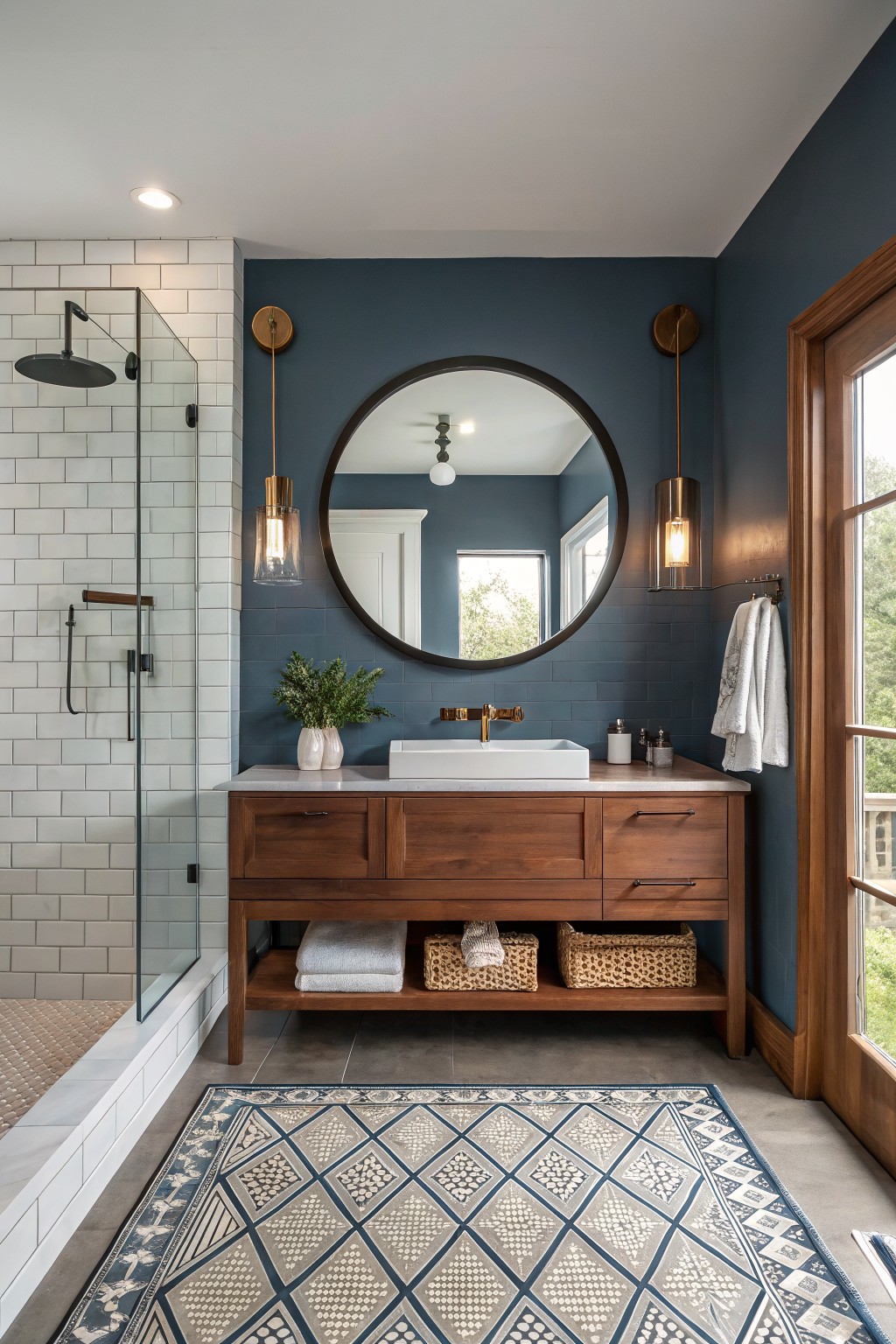
This bathroom uses a deep navy blue that feels calm and steady on the walls. The color sits somewhere between a true navy and a soft slate, which keeps it from feeling too heavy while still giving the room a grounded look. It pairs easily with warm wood tones and white tile, and it works well in bathrooms that get decent natural light during the day.
The blue has a slight cool undertone that shows up more under bright lights but stays balanced next to the wood vanity. It suits smaller or medium bathrooms best, especially when you want something stronger than a pale gray or soft green. Try it with white trim and natural wood accents so the color stays the main focus without turning the space too dark.
Soft Mint Green Walls
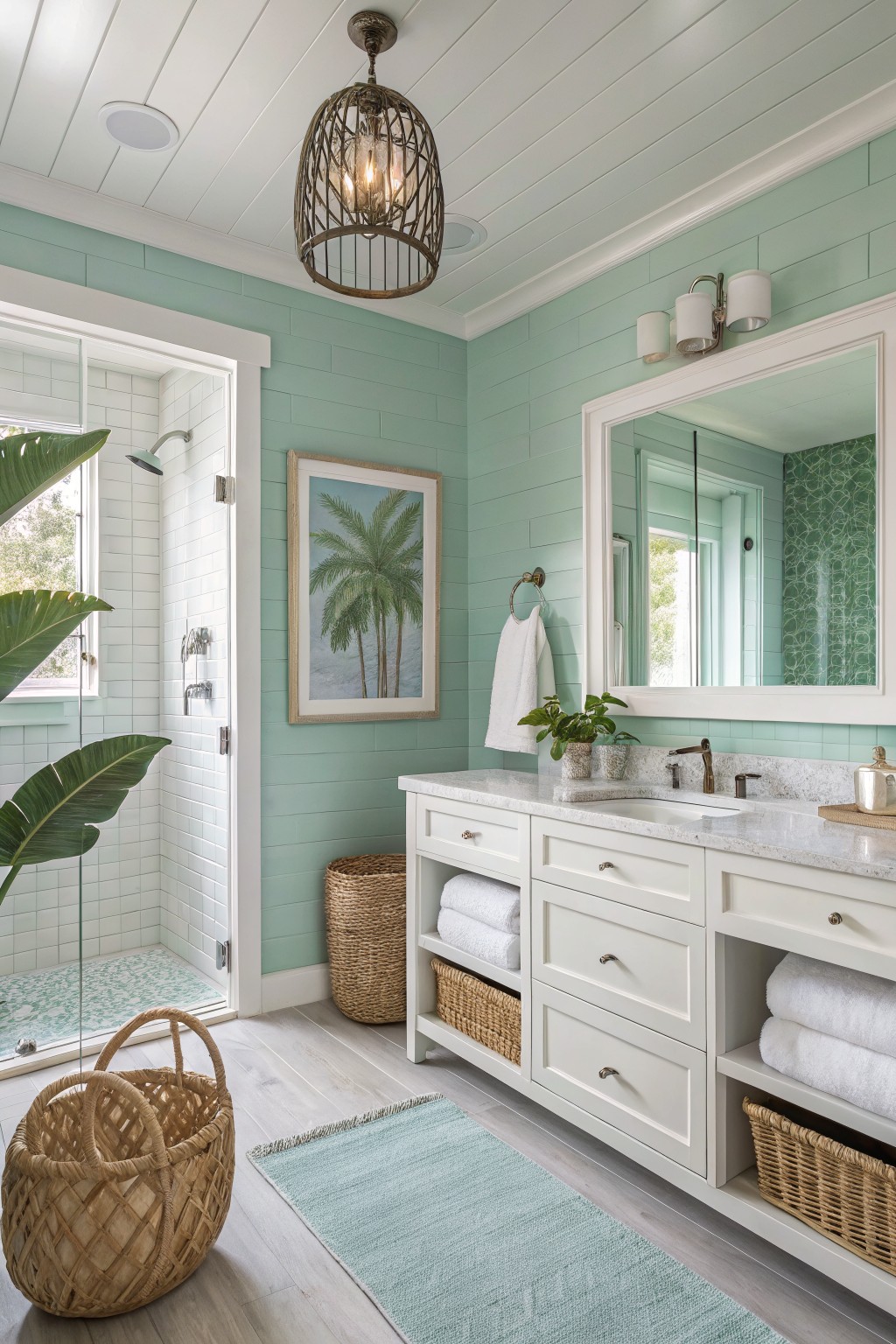
This bathroom uses a soft mint green on the walls. It is a light, fresh shade with a slight blue undertone that feels clean and easy to live with.
The color sits well next to white trim and cabinetry. It works best in bathrooms with steady daylight and pairs simply with wood floors or stone counters.
Soft Greige Walls With Marble Accents
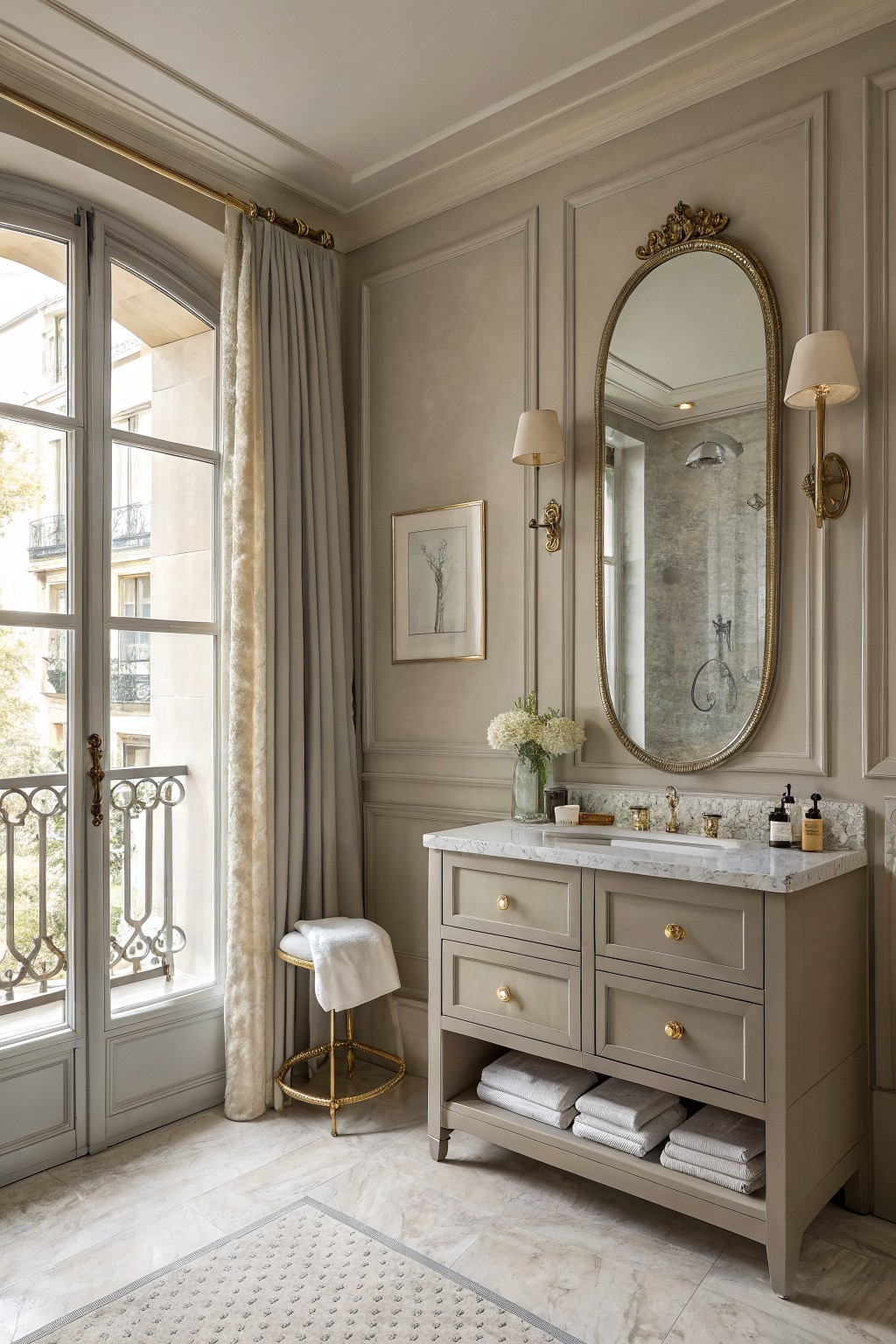
This bathroom uses a soft greige on the walls. It is a light gray with gentle beige undertones that feels calm and easy to live with.
The color sits nicely next to the marble and the matching vanity color. It works best with warm metals and simple stone, and it stays steady in both natural light and evening light.
Soft Sage Green With Warm Wood Accents
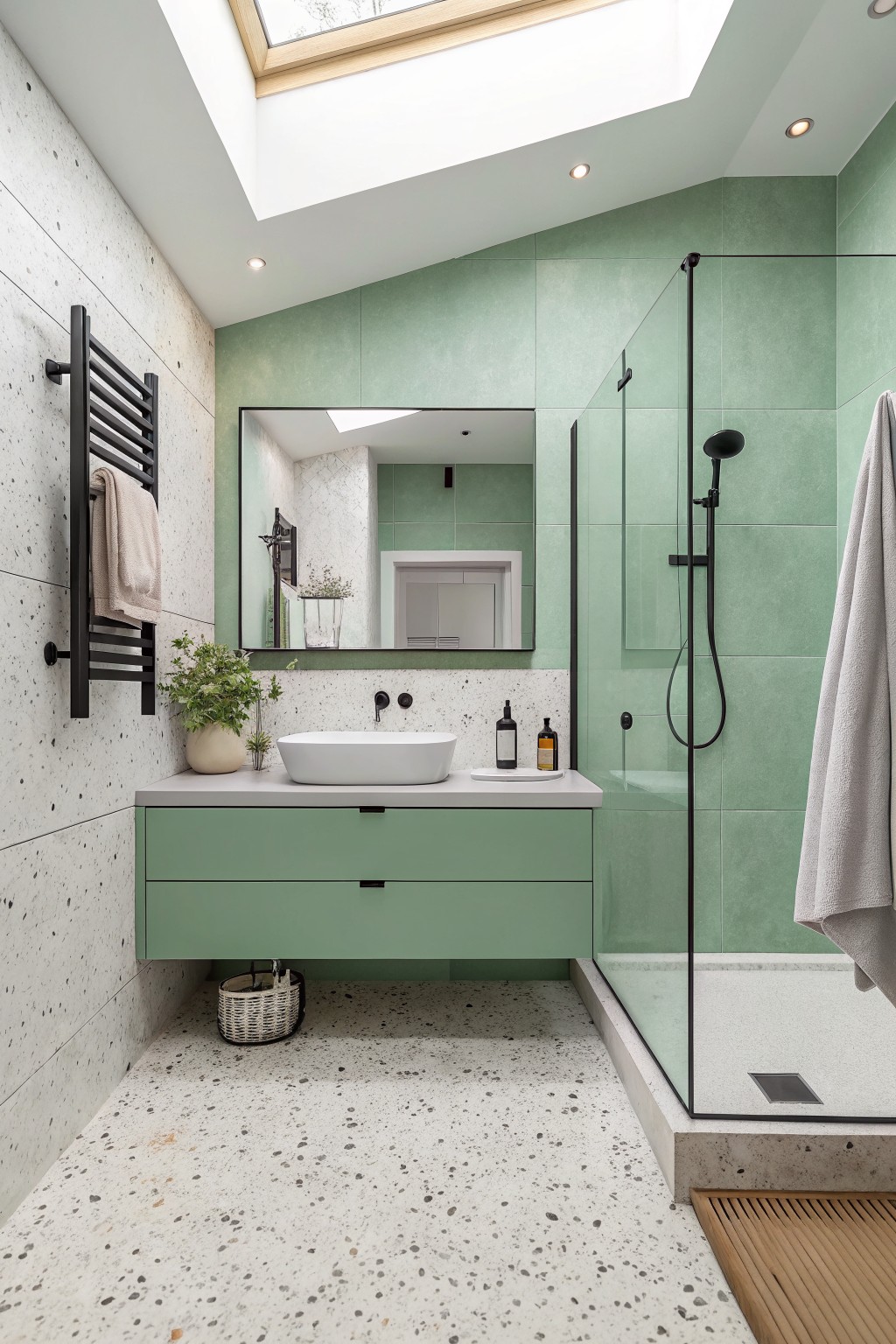
This soft sage green brings a quiet, steady feel to a bathroom without making the space feel cold or flat. It sits in that middle ground between gray and green, which helps it look calm next to white tile and light stone. The color reads closest to Sherwin Williams Rainwashed, Benjamin Moore Saybrook Sage, Behr Quietude, or Farrow & Ball Pigeon.
It works best with warm wood tones or black hardware, since those keep the green from leaning too cool. In lower light it can pick up a bit more gray, so testing a sample on the actual wall helps avoid surprises.
Warm Beige With Cream Cabinetry
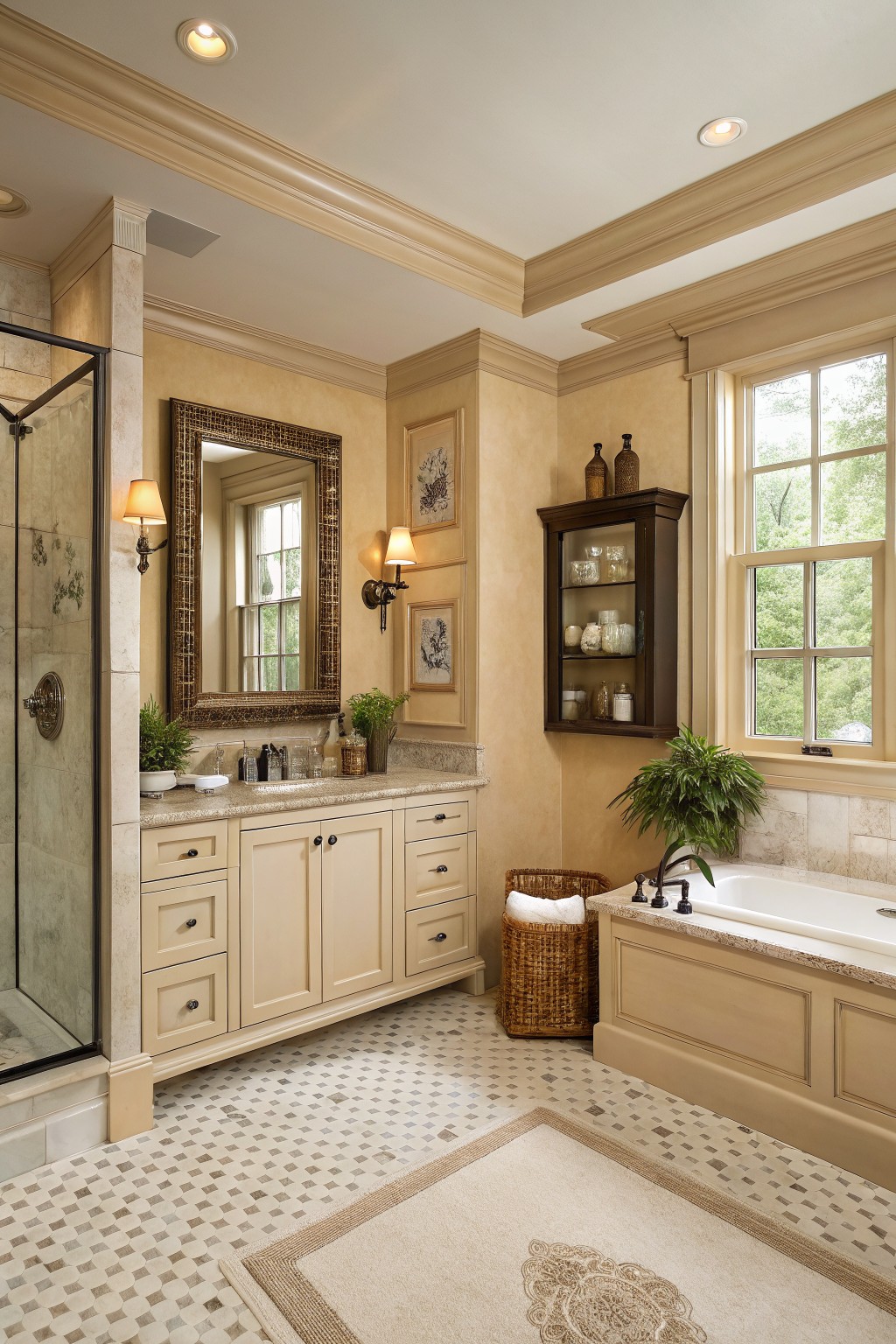
This bathroom uses a warm beige on the walls that sits right between cream and taupe. It has a soft yellow undertone that keeps the room feeling calm and a little sunlit even on cloudy days.
It pairs nicely with the cream cabinetry and stone surfaces without fighting them. Colors like Sherwin Williams Accessible Beige, Benjamin Moore Edgecomb Gray, or Behr Almond Wisp would get you close. Just paint a test patch because these neutrals change fast once the light hits them.
Soft Dusty Rose Walls
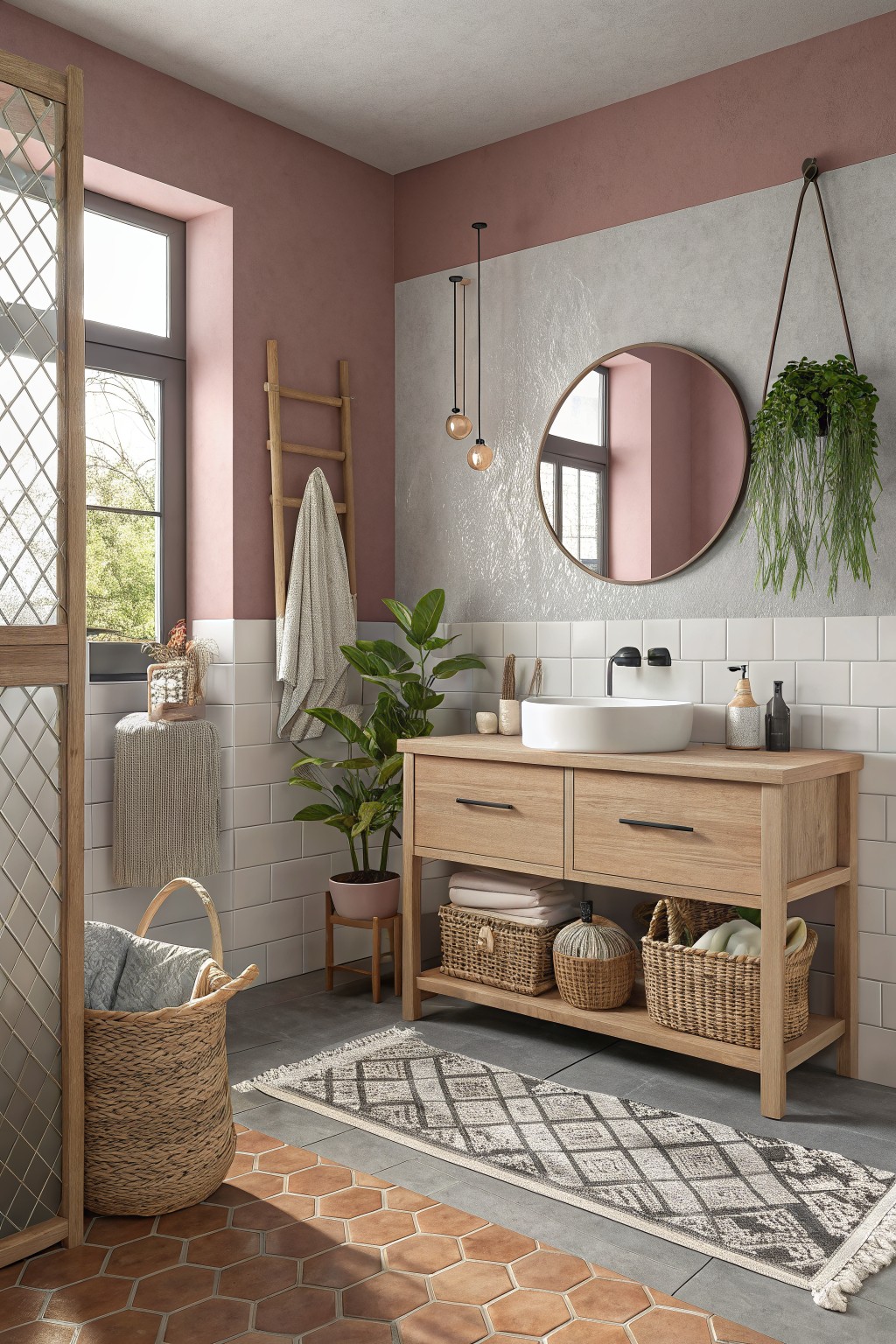
This bathroom uses a soft dusty rose on the upper walls. It is a warm, muted pink that feels calm without turning too sweet or childish. The color sits nicely against the white tile and brings a gentle warmth that works well in smaller spaces.
It has a hint of gray in the undertone, which keeps it from feeling too bright in natural light. The shade pairs easily with wood tones and simple black hardware. Try it in bathrooms that get decent daylight, and test a sample first since the pink can shift slightly depending on the time of day.
Muted Gray Bathroom Walls
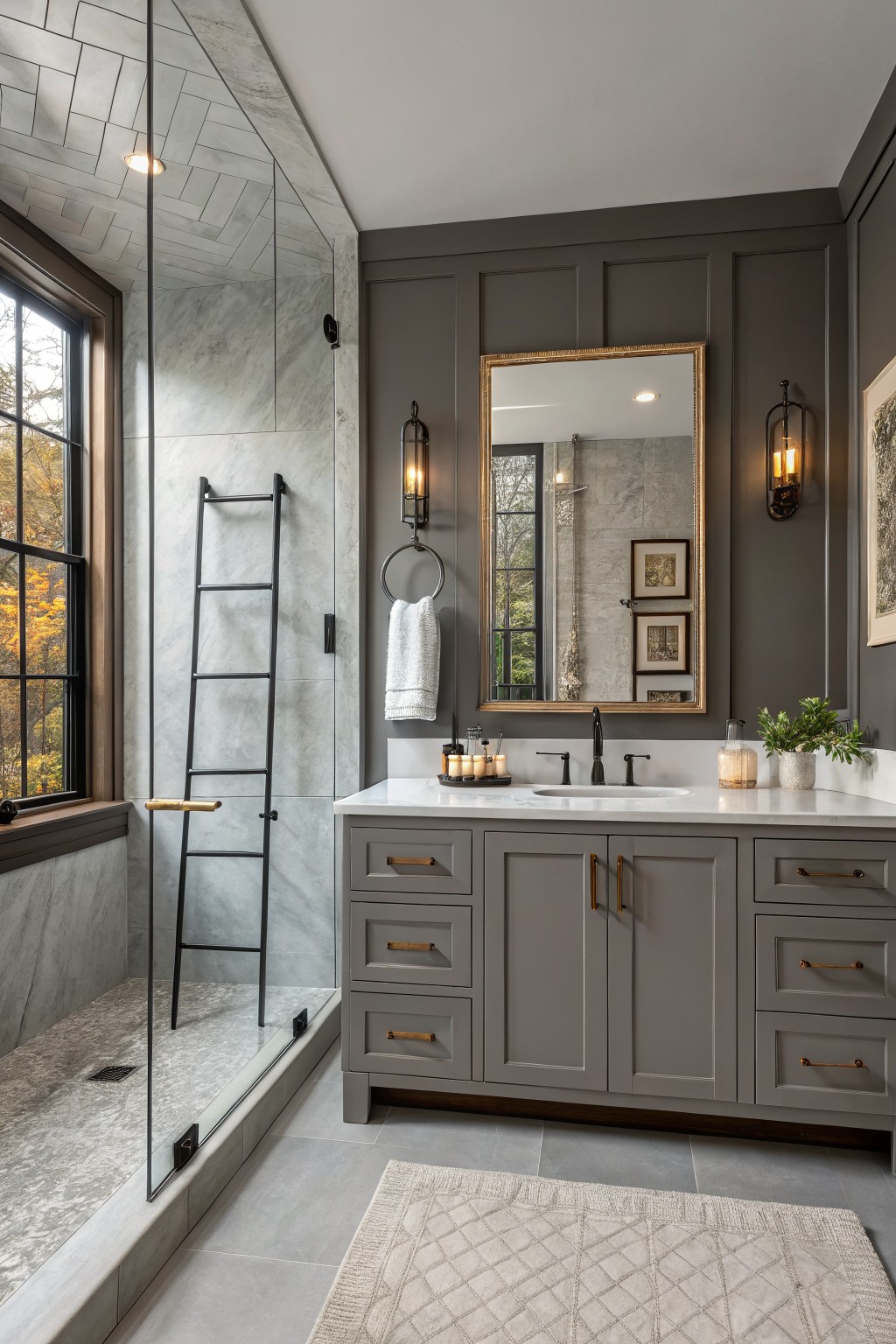
A medium gray on the walls gives this bathroom a steady, calming feel. It is not too cool or too warm, which helps it sit comfortably with marble, wood, and dark metal accents.
This shade works best with white or light trim and simple fixtures. It can look a little deeper in low light, so samples on the actual wall are worth checking. It reads close to Sherwin Williams Worldly Gray, Benjamin Moore Kendall Charcoal, or Behr Silver Strand.
Soft Sage Green With Natural Textures
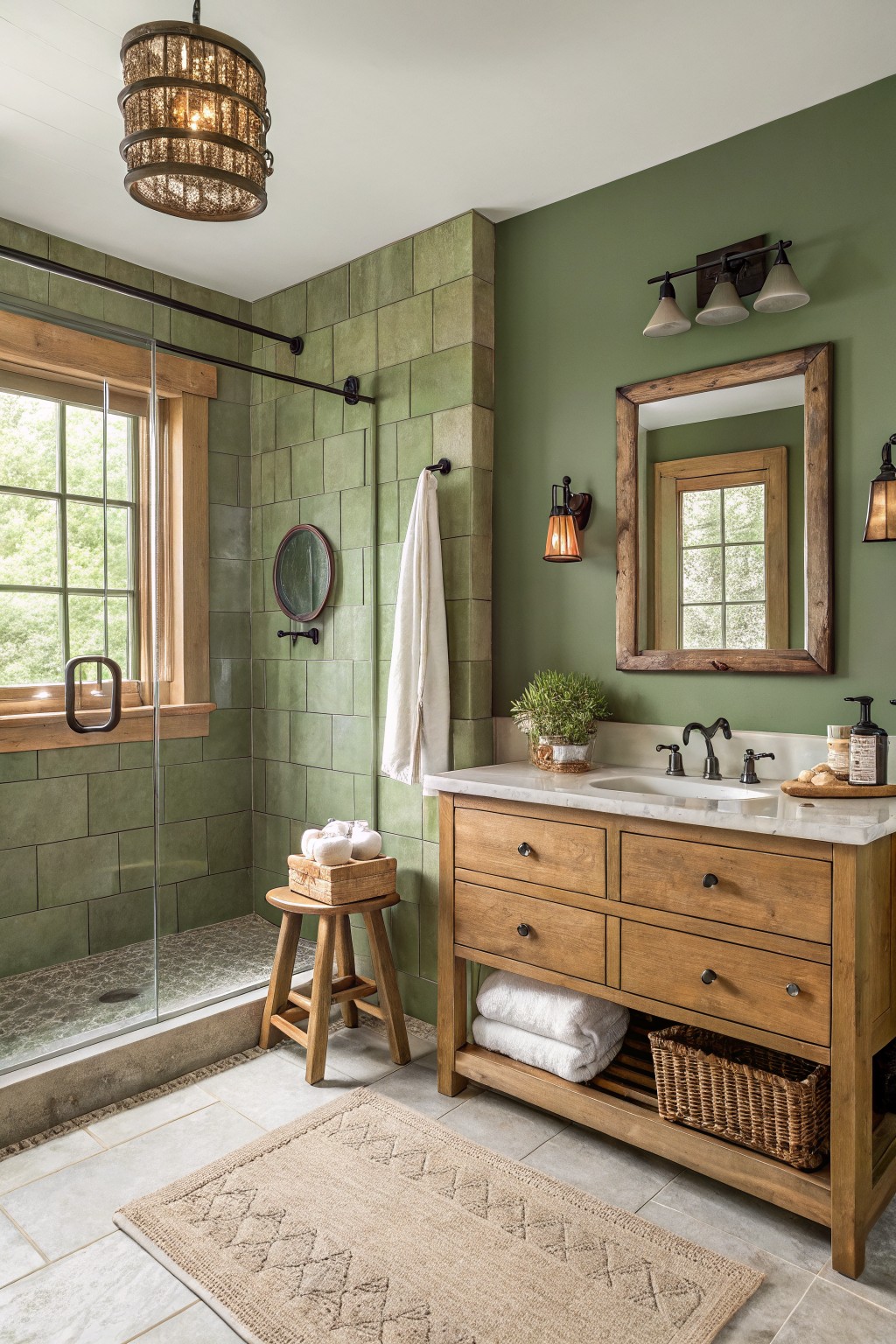
This bathroom uses a soft sage green on the walls. It is a muted green with a touch of warmth that feels calm without going flat.
The color sits nicely next to wood tones and stone, and it holds up well in rooms with mixed lighting. It works best in bathrooms that already have natural textures like tile or wood, and it pairs easily with white trim or simple black hardware.
Soft Blue Bathroom Walls
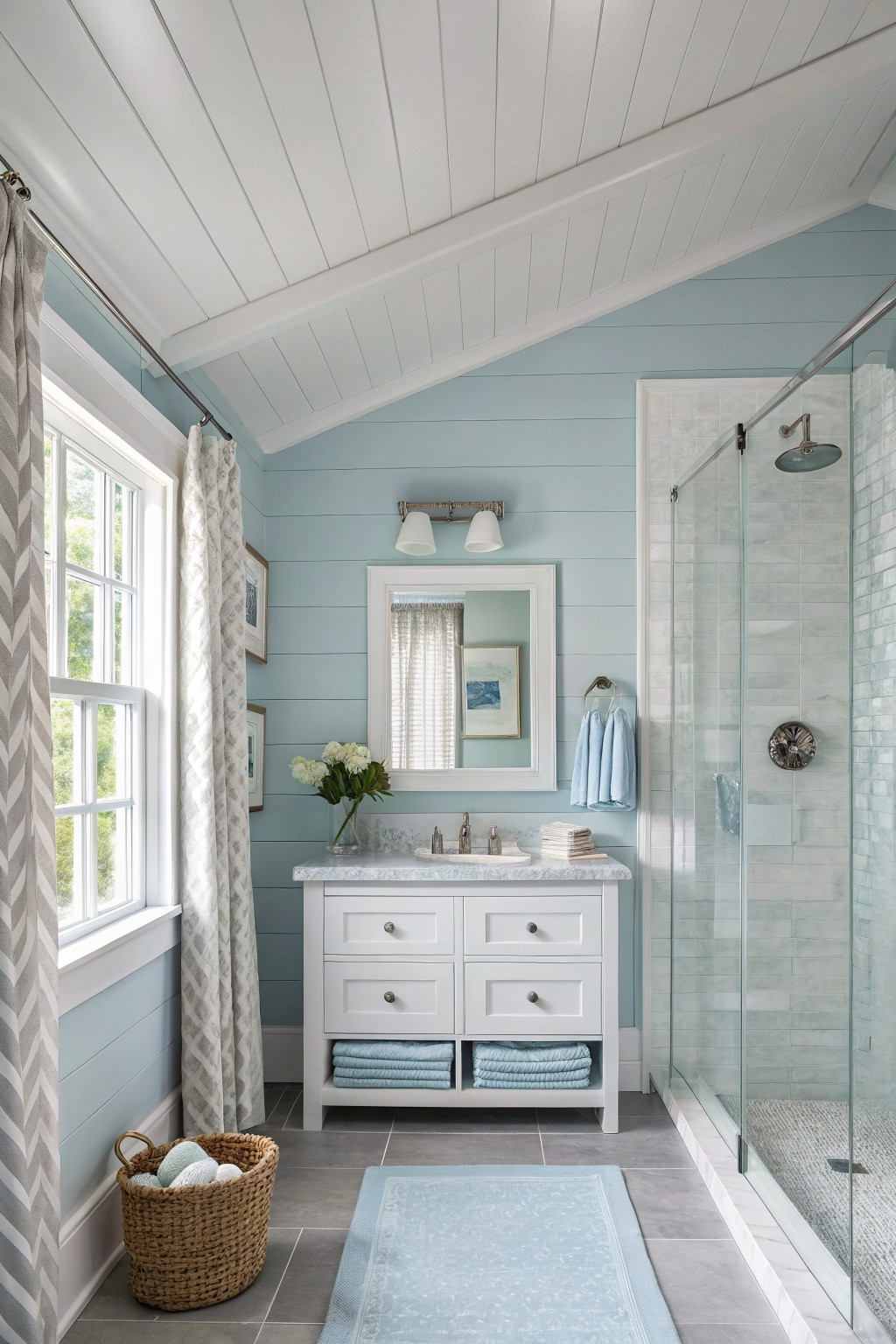
This soft blue gives the walls a calm, watery look that feels easy to live with. It is light enough to keep the room bright but still has enough color to feel like a real choice instead of just another white.
It reads closest to Sherwin Williams Rainwashed or Benjamin Moore Palladian Blue, with a touch of gray that stops it from going too sweet. The color works well with white trim and stone counters, though it can look a little flat if the lighting is very warm.
Earthy Sage Green Bathroom Walls
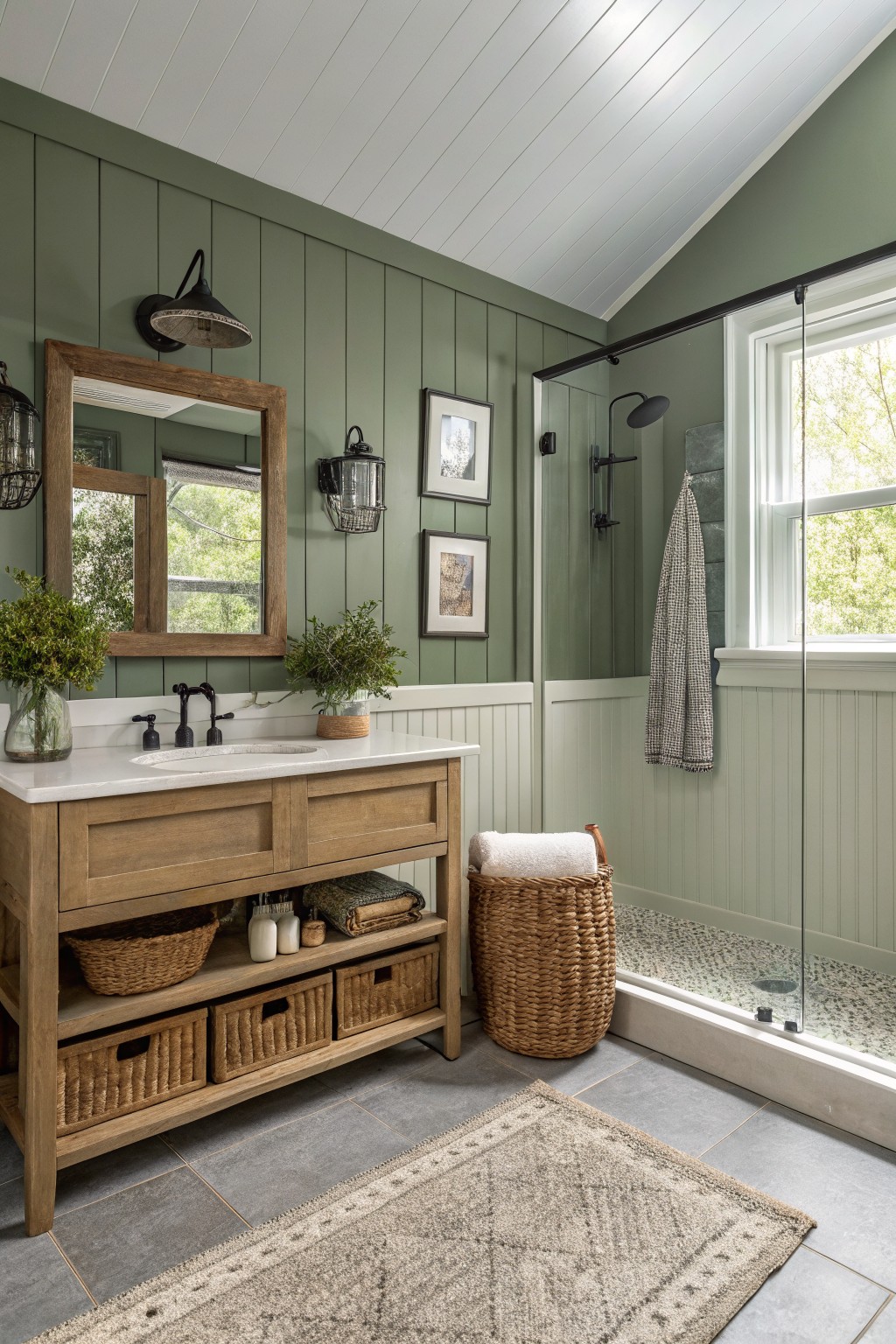
This bathroom uses a soft sage green on the walls that reads as calm and a little earthy. The color sits in that middle ground between green and gray, so it feels quiet without turning cold.
It pairs nicely with white trim and warm wood like the vanity and baskets. Try Sherwin Williams Evergreen Fog, Benjamin Moore Saybrook Sage, Behr Aged Sage, or Farrow & Ball Pigeon for a close match.
Warm Beige Bathroom Walls
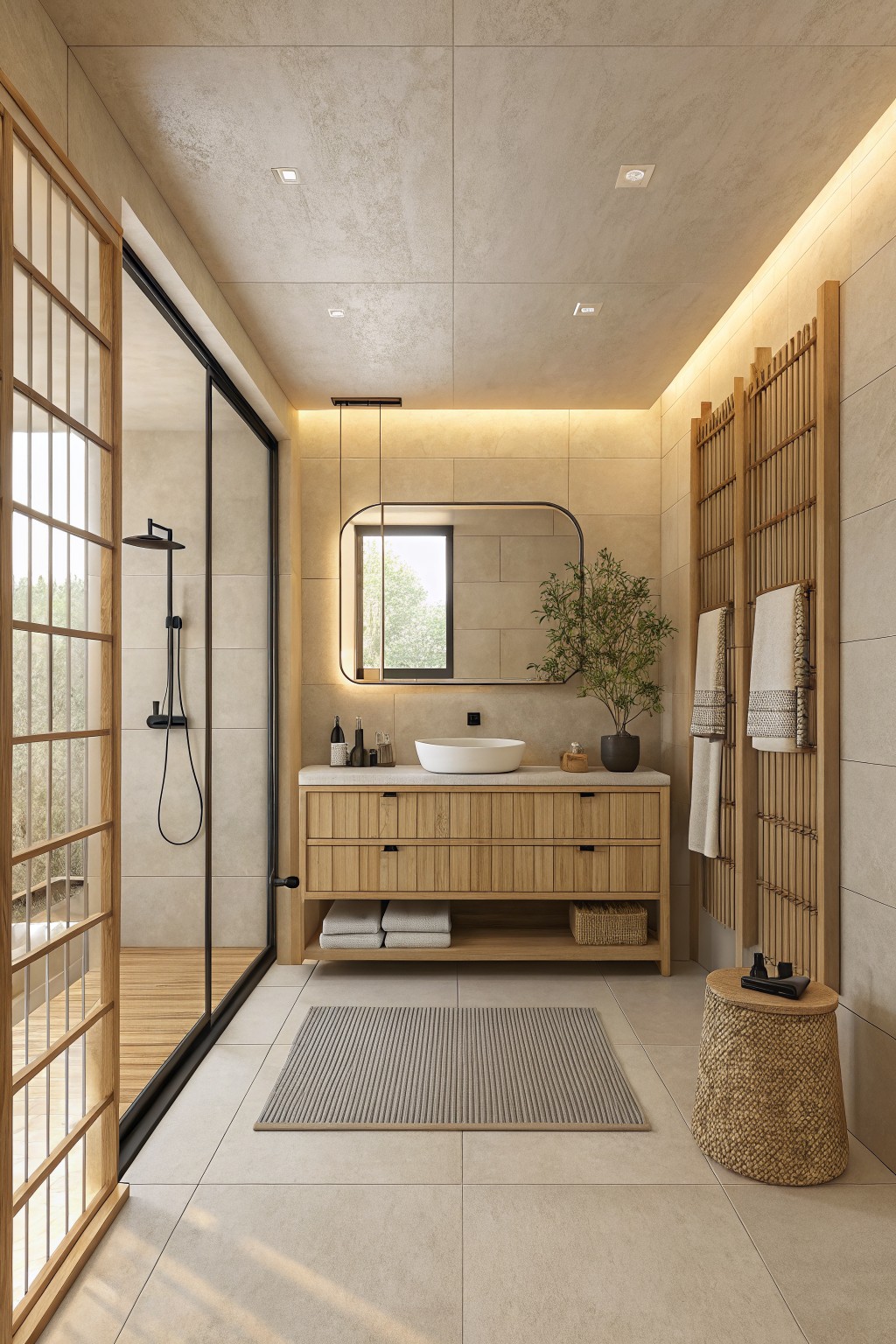
This bathroom uses a warm beige on the walls that feels soft and steady. It sits somewhere between beige and greige, with a gentle warmth that keeps the space from looking stark. Colors like Sherwin Williams Accessible Beige, Benjamin Moore Edgecomb Gray, or Behr Creamy Mushroom give a similar effect.
The tone works well with wood vanities and light stone because it does not fight those materials. It stays calm under different lighting and suits smaller bathrooms where you want things to feel open but still grounded. Avoid pairing it with anything too cool or gray, since that can make the beige read flat.
Soft Warm Beige Walls
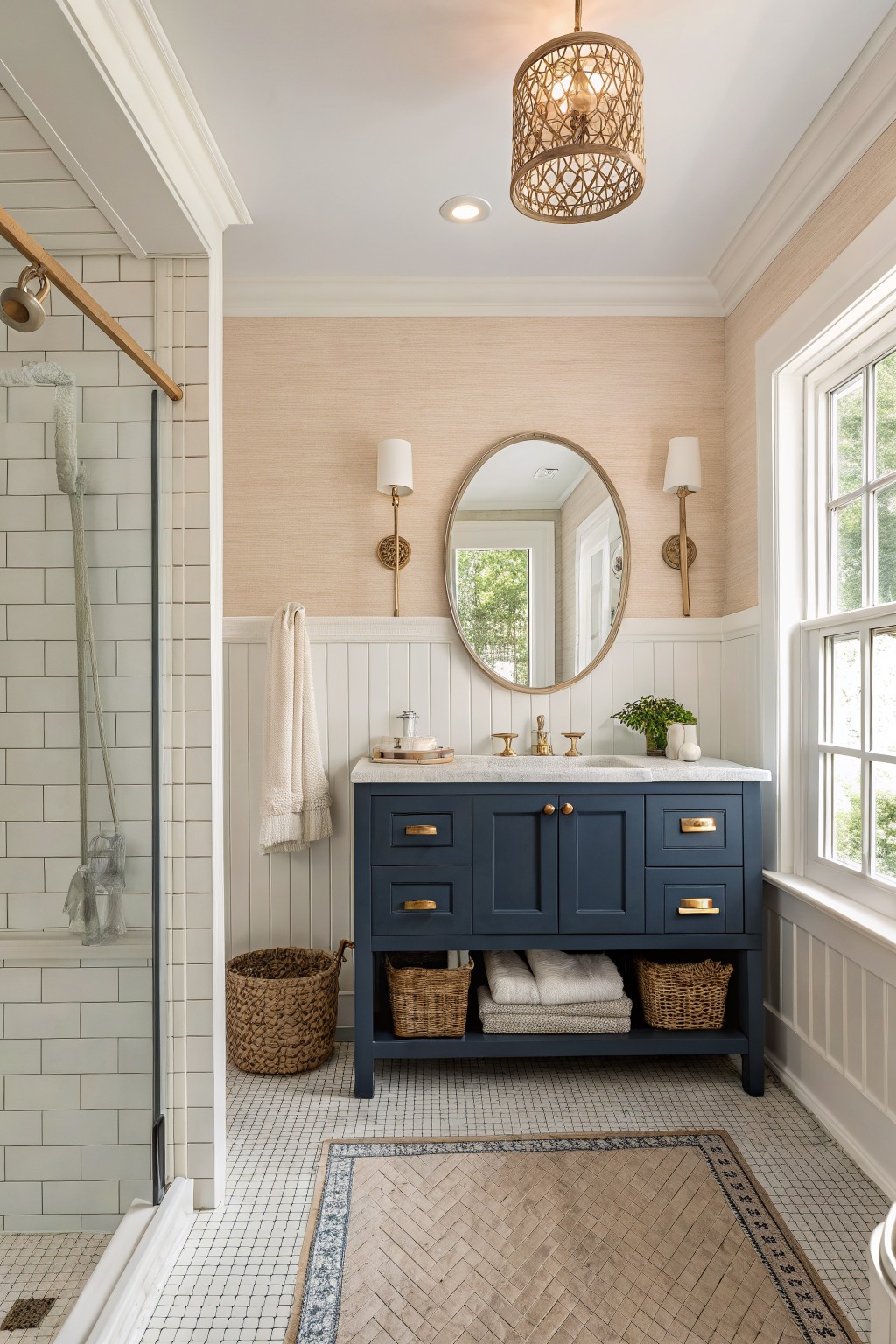
This bathroom uses a soft warm beige on the upper walls. It is a gentle neutral that feels calm without being too stark or flat. The color has enough warmth to keep the space inviting while still reading clean and simple next to white trim.
It works best with natural light and pairs easily with wood tones or darker cabinetry. Watch the undertone in cooler lighting since it can shift slightly toward gray. Good matches include Sherwin Williams Accessible Beige, Benjamin Moore Edgecomb Gray, Behr Almond Wisp, or Farrow & Ball Elephant’s Breath.
Soft Sage Green With Blue Gray Undertones
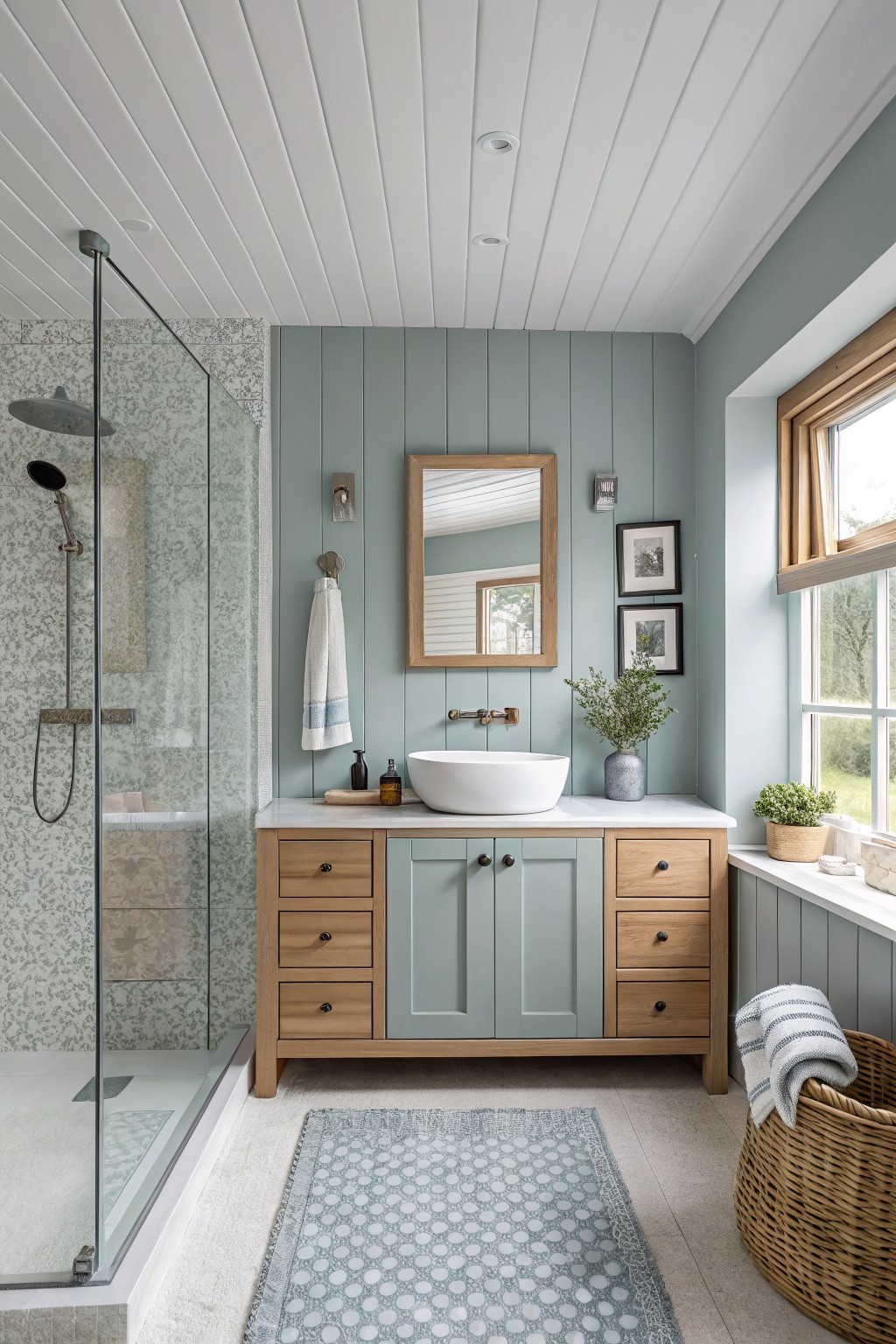
This soft sage green brings a quiet, steady calm to the bathroom. It has a gentle blue-gray undertone that keeps the color from feeling too bright or too earthy, which makes it easy to live with day after day.
The shade works especially well with warm wood cabinetry and white surfaces. It stays looking fresh in both morning and afternoon light and pairs simply with natural textures like linen or stone.
Soft Greige Walls
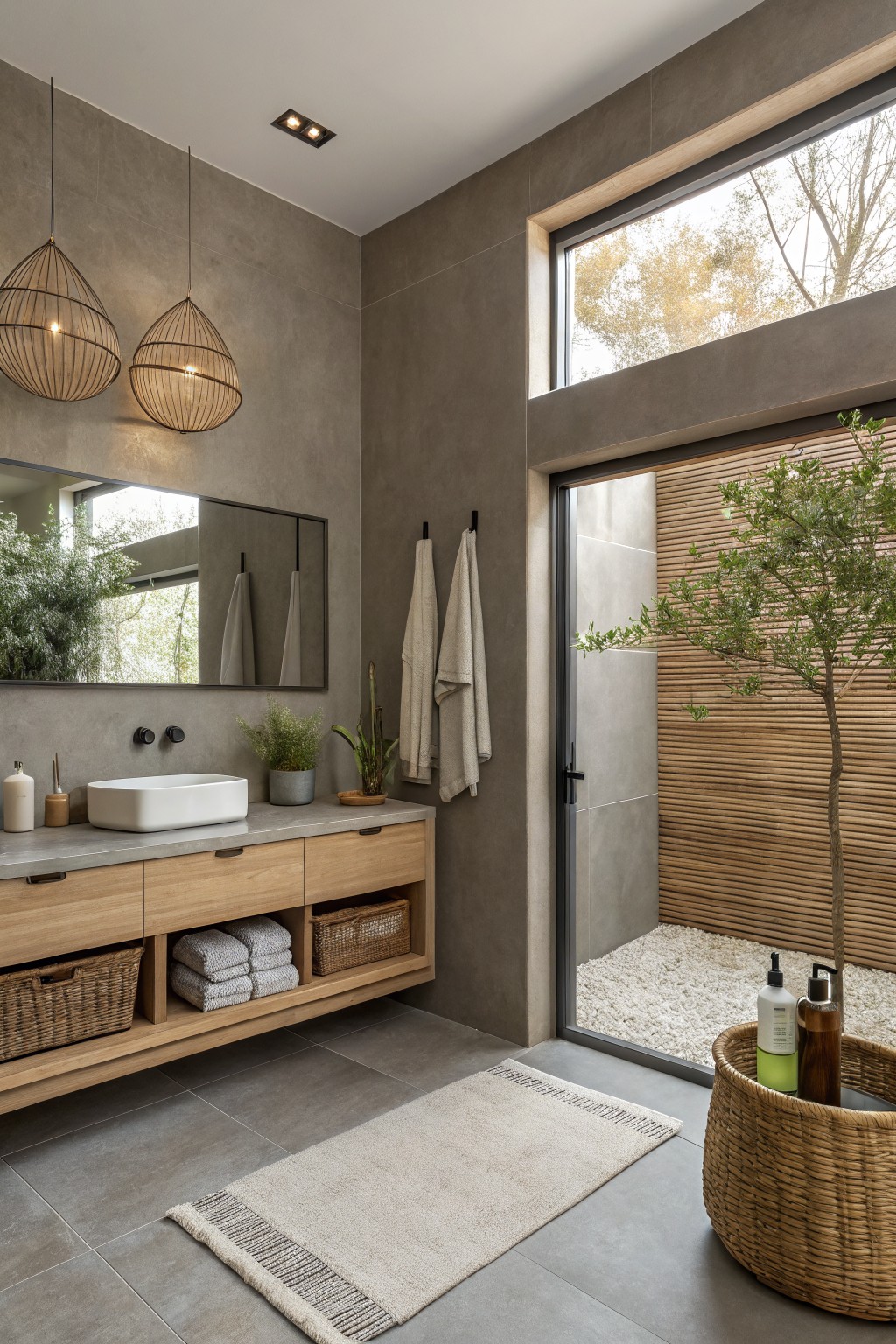
This bathroom uses a soft greige on the walls. It is a warm gray with a touch of beige that feels calm and steady in a space like this.
The color has a slight earthy undertone that keeps the room from looking stark next to wood and stone. It works best with natural materials and simple fixtures, and it holds up well under both natural light and overhead spots.
Frequently Asked Questions
Q: Will these colors work if my bathroom gets mostly artificial light?
A: Pick warmer tones like soft beige or greige in that case. They hold up better under bulbs and still feel relaxing at night.
Q: How many coats should I plan on for good coverage?
A: Two coats usually does the trick with these light shades. Start with a primer if your walls are dark now.
Q: Can I use one of these colors on just the ceiling?
A: Sure, a pale blue overhead makes the room feel taller. Keep the walls a touch lighter to balance it out.