A backyard starts to feel like a real living space only after privacy is handled in a way that fits how you actually use it.
Fences play a big role here since they shape both the look and the daily comfort of the area.
Light and airflow matter more than most people expect.
I would rather try a couple of these ideas on a small scale first to see what holds up through the seasons.
Over time the solutions that work best are the ones that grow into the yard instead of standing out as obvious barriers.
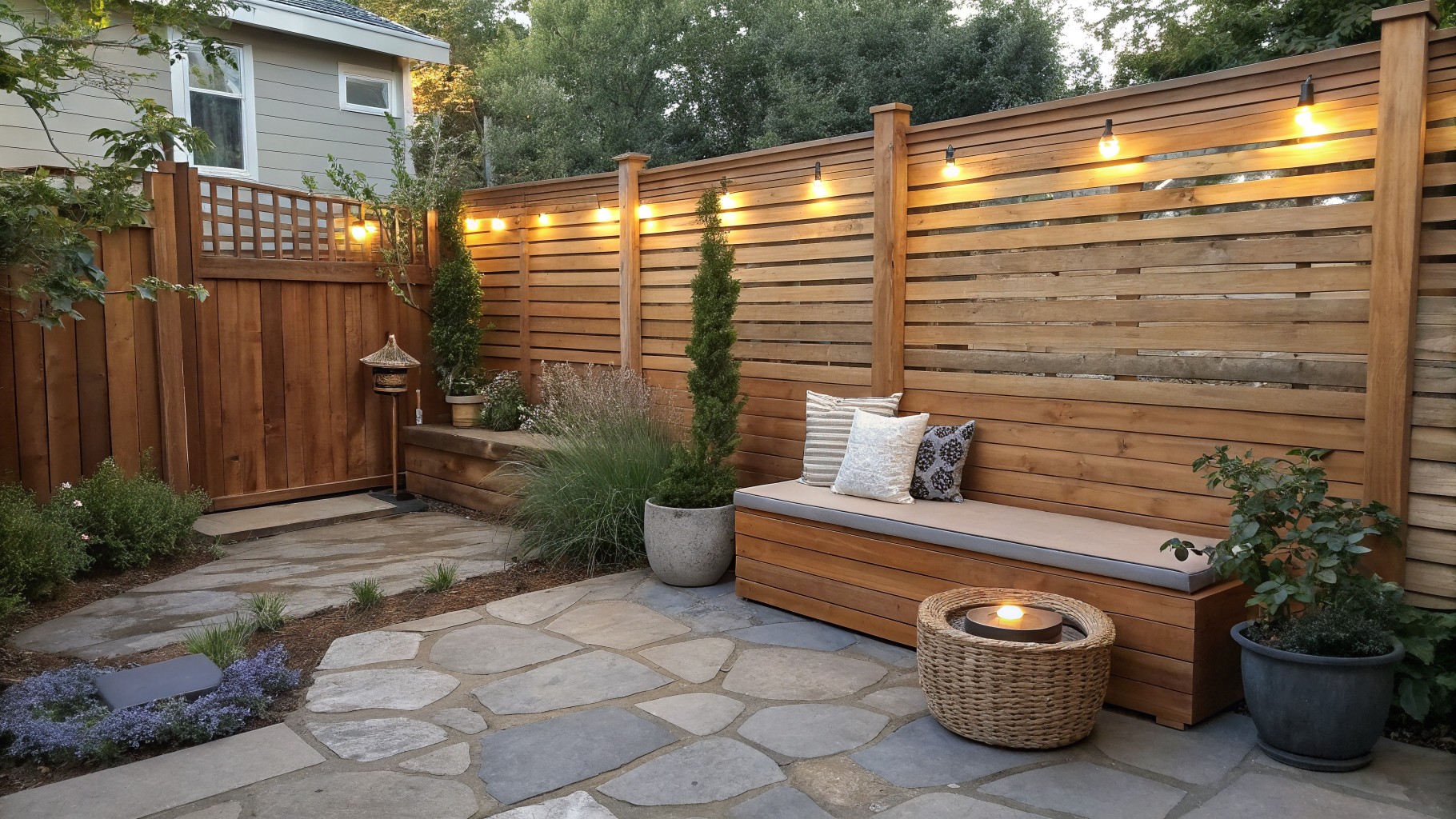
Build A Bench Into Your Privacy Fence

A bench built right along the fence gives you seating without losing floor space in a small yard. The horizontal wood slats already block the view from neighbors, so the bench just makes the fence work harder.
This setup suits narrow patios or side yards where a freestanding bench would feel cramped. Keep the bench depth around 18 inches and use cushions you can store when the weather turns.
Climbing Roses on Lattice Fencing

Lattice fencing already gives some privacy on its own, but adding climbing roses turns it into something much more effective. The vines fill in the open spaces over time and create a thicker screen that blocks views without making the yard feel closed in. It works especially well along side yards or near gates where you want coverage but still like a bit of air and light.
This approach suits older homes or cottage style gardens best, since the roses soften the straight lines of the fence. Just make sure the lattice is sturdy enough to hold the weight once the plants mature, and give them room to spread along the top edge.
Tall Wood Fences Create Private Backyard Patios

A tall wood fence is one of the easiest ways to make an outdoor seating area feel separate from the rest of the yard. It blocks sight lines from neighbors and turns a simple patio into a space that actually feels enclosed without needing a full structure.
This approach works best on smaller lots or in neighborhoods where houses sit close together. Use straight vertical boards for a clean look, and consider adding a narrow slatted screen near a corner if you want a bit more light and air while keeping the privacy.
Use Corrugated Metal Panels For Solid Privacy
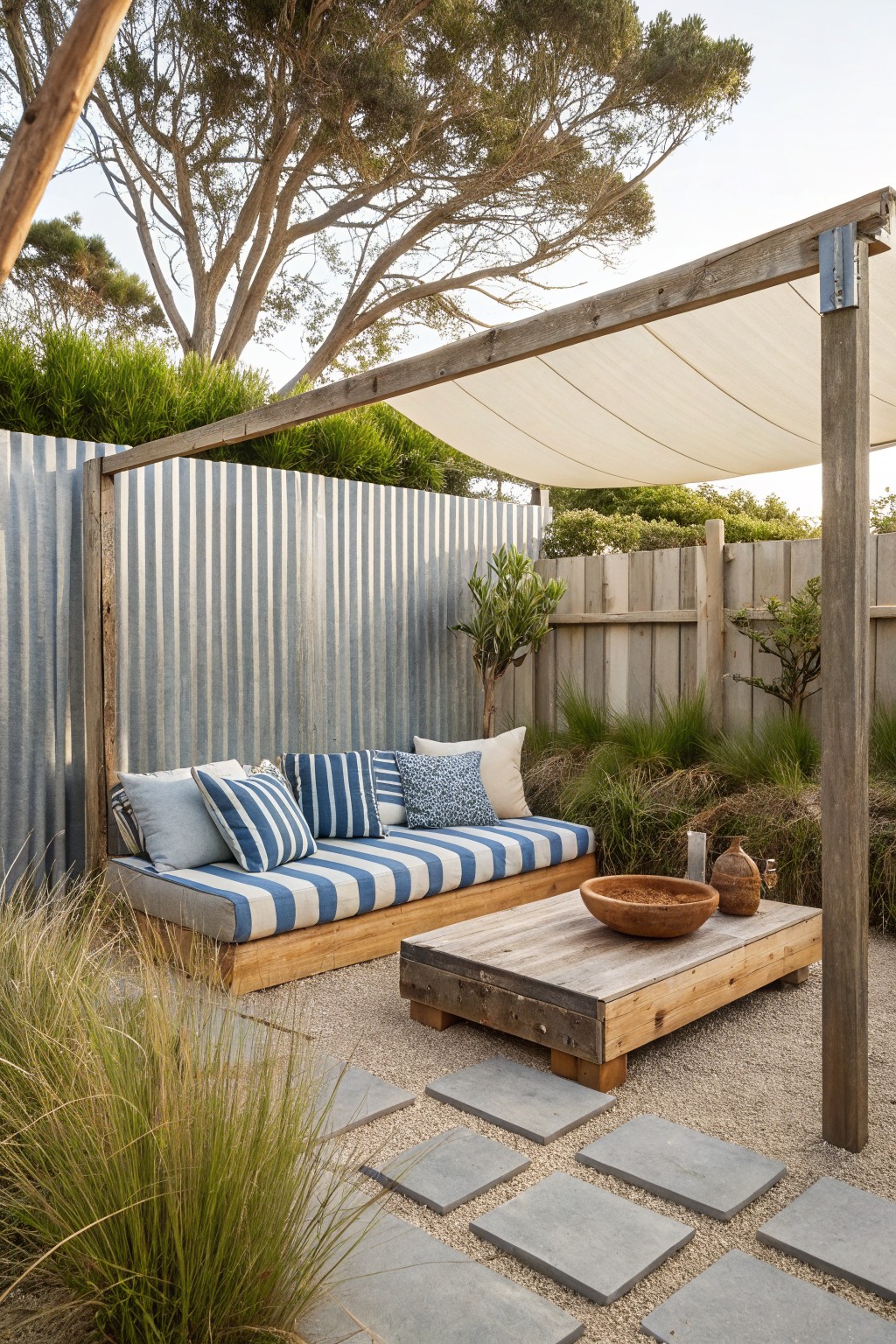
A corrugated metal fence gives you fast, reliable privacy without a lot of extra work. It blocks the view right away and stands up to weather better than many wood options.
This approach works well behind a seating area where you want a sheltered feel. Mount the panels to a basic frame, then add a simple overhead structure if you want shade on top too.
Add Vertical Planters To A Fence

Mounting planters at different heights along a fence turns a plain barrier into a living screen. The layers of greenery block sight lines from neighbors while keeping the space from feeling closed in. It works especially well when the fence already has a solid base.
This approach suits smaller backyards where you want privacy without building something tall. Secure the boxes well so they can hold soil and water, and pick plants that trail or spread to fill gaps faster. The bench below shows how the area stays usable once the plants take over.
Bamboo Fencing For Quick Privacy

A tall bamboo fence like the one along the back of this patio gives an outdoor space an enclosed feel without much effort. It blocks the view from outside and creates a quiet corner for seating, which works especially well in smaller yards where full walls are not an option.
This style suits homes with patios or decks that sit close to neighbors or streets. It installs faster than many other fence types and pairs with simple outdoor furniture and a few large plants to soften the edges. Just make sure the panels are secured well so they hold up in wind.
Woven Twig Fencing For Natural Privacy

A fence woven from twigs or branches creates a solid screen that still feels light and garden-like. It blocks the view from outside while letting air move through, which keeps the space from feeling closed in.
This approach works best along the back or side of a patio where you want privacy without a heavy wall. It suits smaller yards or homes with a casual planting style, and the natural materials age well with the surrounding greenery.
Patterned Metal Screens For Backyard Privacy
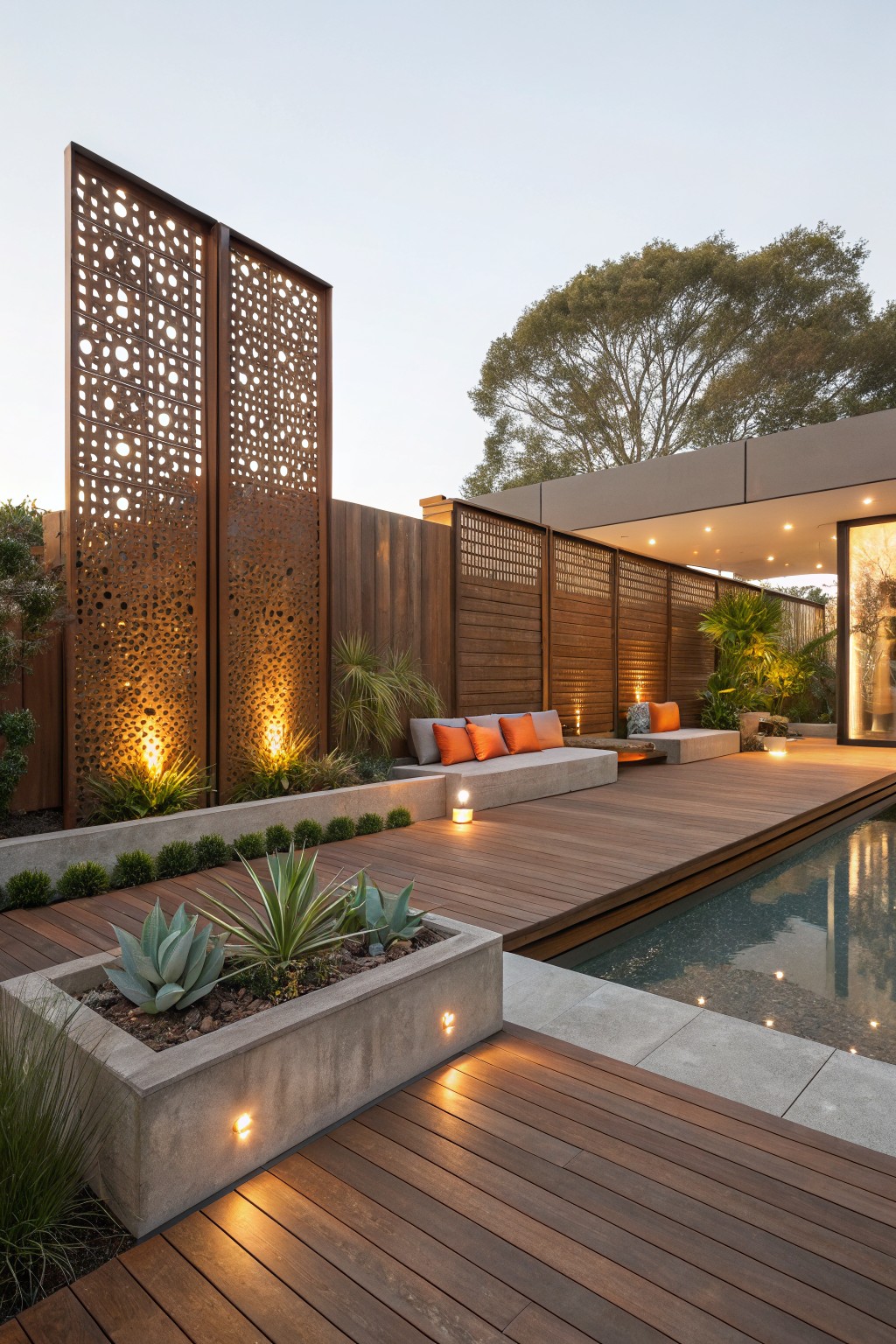
Many homeowners turn to metal screens with cutout patterns when they want privacy without losing all the light and openness in the yard. These panels block the view from neighbors while still letting some glow through at night, which keeps the space from feeling boxed in.
They work especially well along the side of a deck or pool area where you need a quick screen but do not want a solid wall. Most versions can be mounted to existing posts or fencing, and they hold up well in most climates as long as you choose a rust-resistant finish.
Mount a Chalkboard on Your Fence

A chalkboard attached right to the fence gives you a simple spot to jot down planting notes or reminders without heading back inside. It turns the fence into more than just a barrier and makes the whole area feel like a working garden space.
This works well on any tall wooden fence where you have room to hang a framed board at eye level. Keep the rest of the fence fairly plain so the board stands out without crowding the view.
Horizontal Boards Make A Simple Privacy Fence

Horizontal fencing gives a backyard patio a clean enclosed feel without needing a tall vertical structure. The solid look blocks views from outside while still letting the space feel open overhead, which works well for an outdoor kitchen or dining area.
This style suits modern homes and decks where you want privacy but also want to keep things simple. Use weather-treated wood and keep the boards tight so the screen stays solid over time.
Pair a Solid Fence With Layered Planting
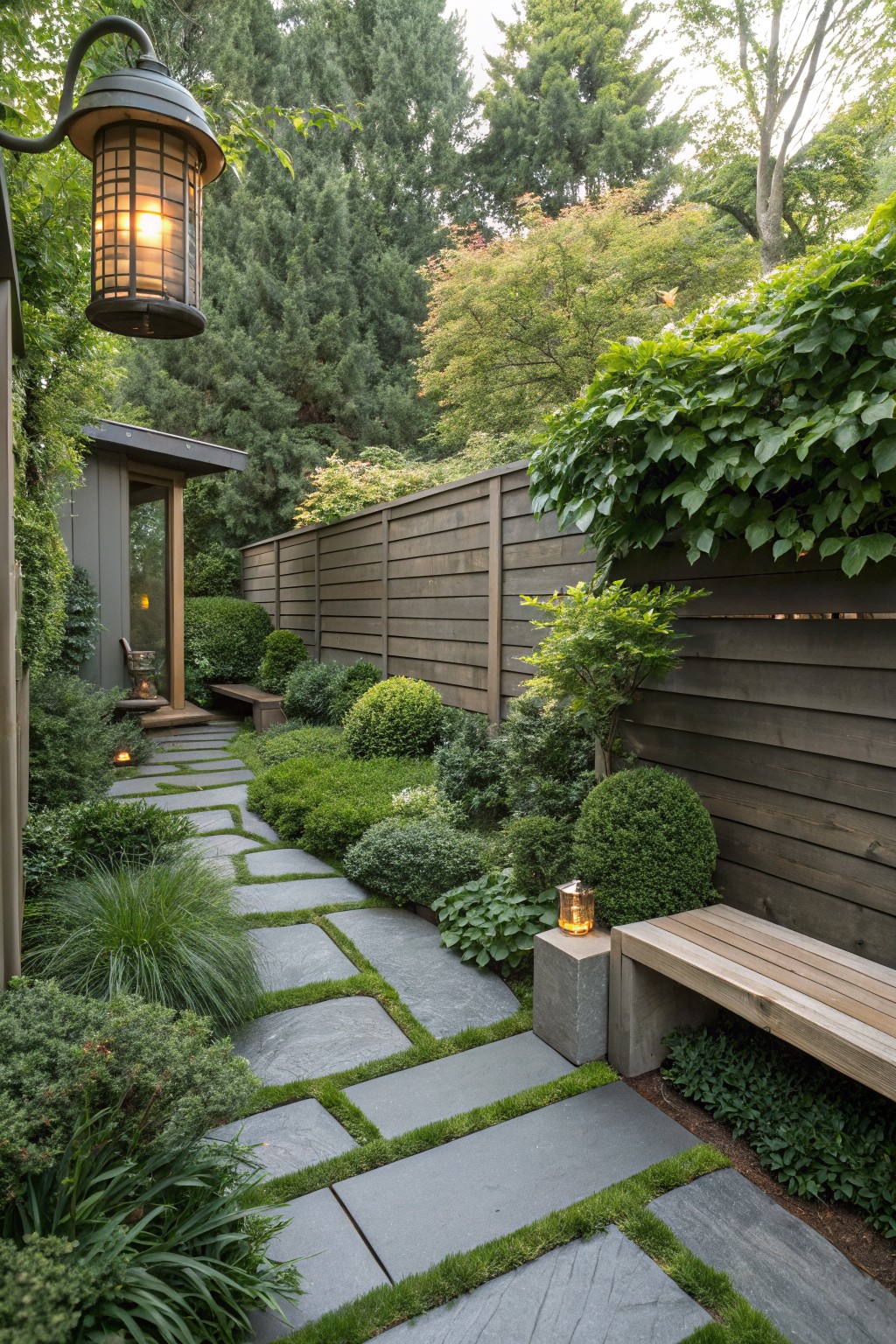
A solid wood fence already blocks the view, but the real privacy comes when you add shrubs and vines right up against it. The plants fill in any gaps and soften the look so the fence does not feel like a wall.
This approach works best along side yards or back property lines where you need height without going too wide. Plant a mix of evergreens and climbers at the base and let them grow in over a season or two.
Raised Planters Create Natural Privacy Screens

A raised planter along the edge of a patio can block views without needing a tall fence. The extra height lets you grow denser plants that fill in quickly and soften the line between your space and the next yard.
This setup works best on the sides where you need the most screening. Use a sturdy base like concrete blocks and top it with wood so the plants stay contained and the whole thing lasts through the seasons.
Mount Shelves on a Privacy Fence

Adding shelves along a fence turns the structure into more than just a barrier. It creates space for plants and tools right where you need them, and the fence still does the main job of keeping the yard private.
This works best in smaller backyards or along one side where you want both seclusion and a spot for gardening. Use sturdy brackets and weather-treated wood so the shelves stay solid through the seasons.
Create Privacy With Layered Planting Along a Stone Wall

A low stone retaining wall gives you a solid base that plants can build on. When you layer shrubs and flowers along the top, the whole thing starts to block the view from the side without needing a tall fence right away.
This setup works best on yards that already have a slight slope or need some edging. Stick with evergreens in the back row and lower flowering plants in front so the screen stays full through the seasons.
Enclose Your Patio with Tall Walls

Tall walls around a patio can turn an ordinary backyard into a much more private space. They block views from outside and create a sense of enclosure that fences alone often cannot match.
This approach works well on smaller lots or in neighborhoods where you want to feel cut off from the street or neighboring yards. Keep the wall height consistent and match the material to the house so the whole area feels like one connected space rather than an afterthought.
Slatted Fencing Adds Privacy Without Blocking Everything

Many people turn to slatted fencing when they want a patio to feel more private without making it feel closed in. The dark panels in this space run along two sides and create a clear boundary while still allowing some light and air to move through the gaps.
This style works especially well on decks that sit near neighboring homes or streets. It suits modern backyards and can be built with simple wood or composite boards if you want to try it yourself. Just keep the spacing tight enough to block direct views from outside.
Layer Planting Along a Wood Fence

A basic wood fence does a good job of marking the edge, but it can still feel a little open on its own. Adding a row of ferns and shrubs right in front gives the fence more depth and blocks views from the side without needing anything fancy.
This setup works best in side yards or along the back where you already have some trees. Keep the beds narrow so the path stays clear, and choose shade-tolerant plants if the fence runs near larger trees.
Use a Decorative Screen Wall
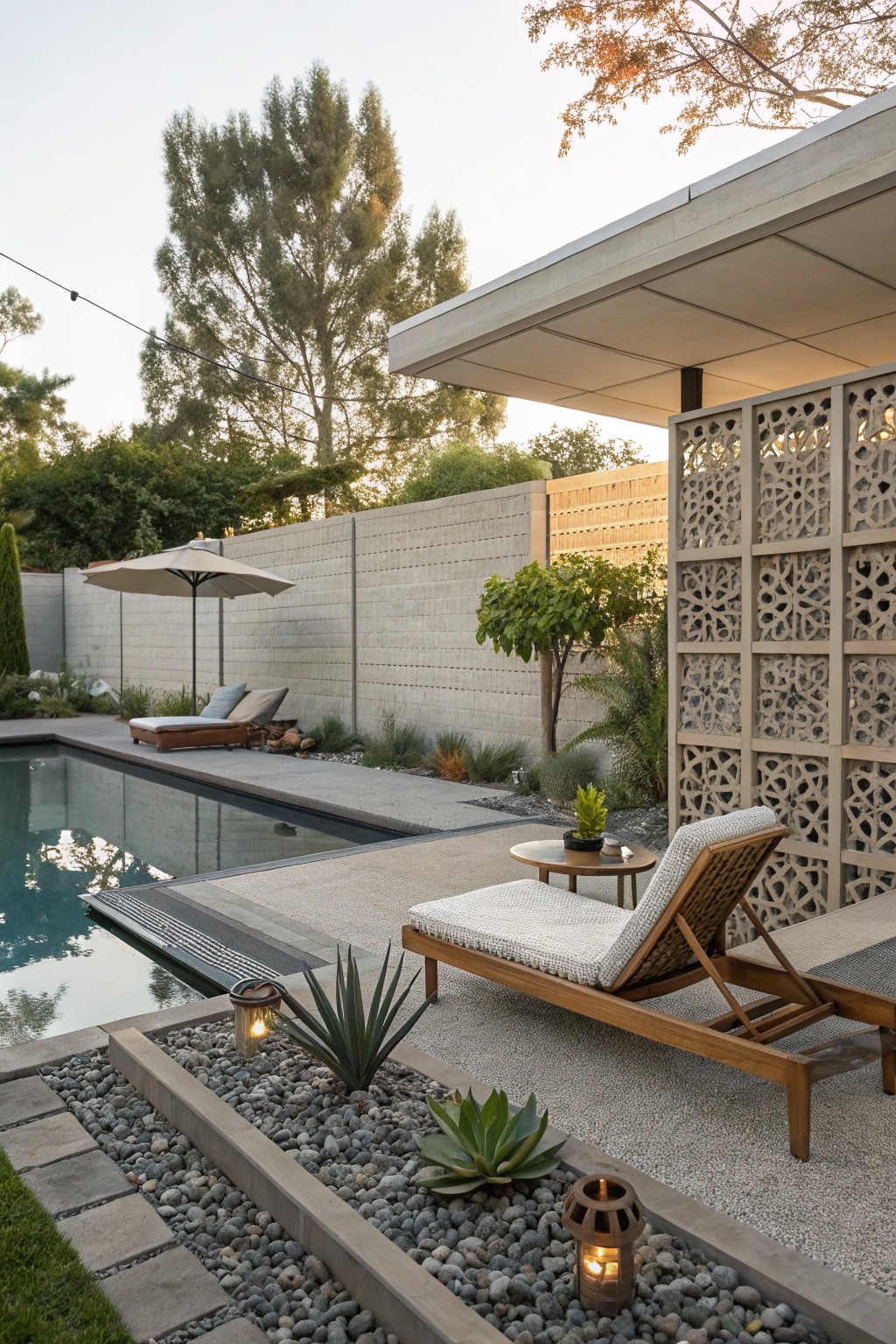
A patterned screen wall gives privacy without making the space feel closed in. The open design lets air and light move through while still blocking direct views from outside, which works well around a pool or seating area where you want some seclusion but not a heavy solid fence.
This approach suits modern or minimalist backyards and pairs easily with gravel, concrete, or simple plantings. Keep the pattern simple so it does not compete with the rest of the yard, and make sure the material holds up to weather if it stays exposed year round.
Layer Plants Against a Wall for Natural Privacy

Many yards already have a solid wall or fence but still feel exposed. Adding layers of shrubs, vines, and taller greenery in front of it turns that surface into a living screen that blocks views and softens the edge.
This approach works best along side or back boundaries where you can mix heights and textures. It suits homes with existing masonry walls and keeps the space from needing extra fence panels that might feel too heavy.
Frequently Asked Questions
Q: Can I mix a couple of these ideas together on one fence?
A: Start with a basic wood frame and add lattice panels on top for extra height. This keeps things simple while giving more seclusion. Test a small section first to see how it fits your space.
Q: Will these fences last through heavy rain and wind?
A: Choose treated lumber or cedar to resist moisture. Secure posts deep in concrete so they stay steady. Check joints every season and tighten them as needed.
Q: How high should I build the fence to block views from next door?
A: Measure the sight lines from your neighbor’s windows first. Go for at least six feet where it matters most. Add climbing vines along the top if you want more coverage without extra height.