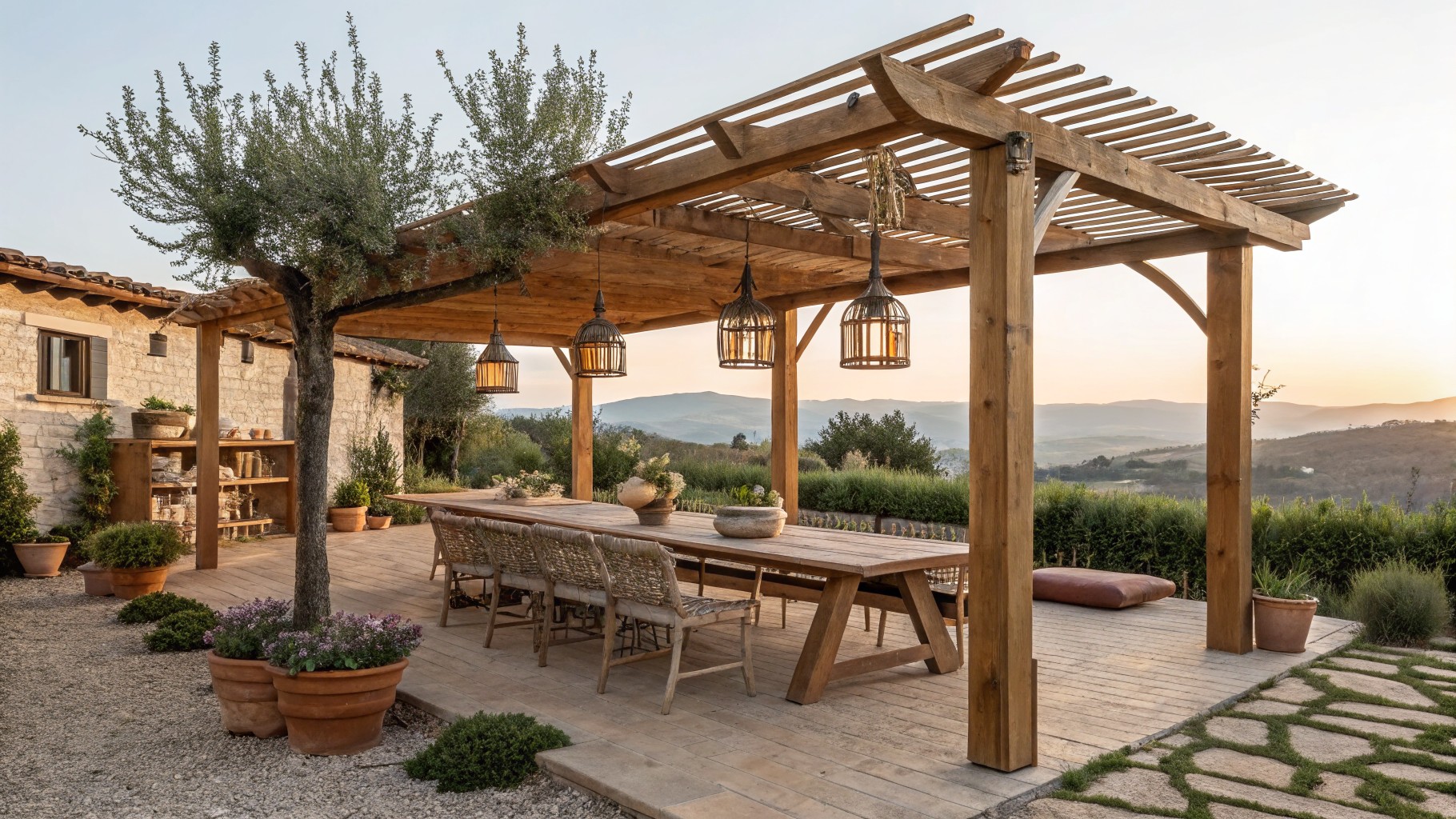
Backyards tend to feel unfinished until there is some kind of overhead structure that creates a clear spot for sitting or eating outside.
A pergola can give that definition while still letting in light and air, which matters more than most people expect when they first plan the space.
I have noticed that yards without any vertical lines often look bigger on paper but end up feeling scattered once furniture and daily use are added.
Choosing materials that match the house rather than stand out usually helps the whole area read as an extension instead of an add-on.
A few of the approaches here seem practical enough to test in sections before committing to the full build.
Pergola Shade Over an Outdoor Dining Table
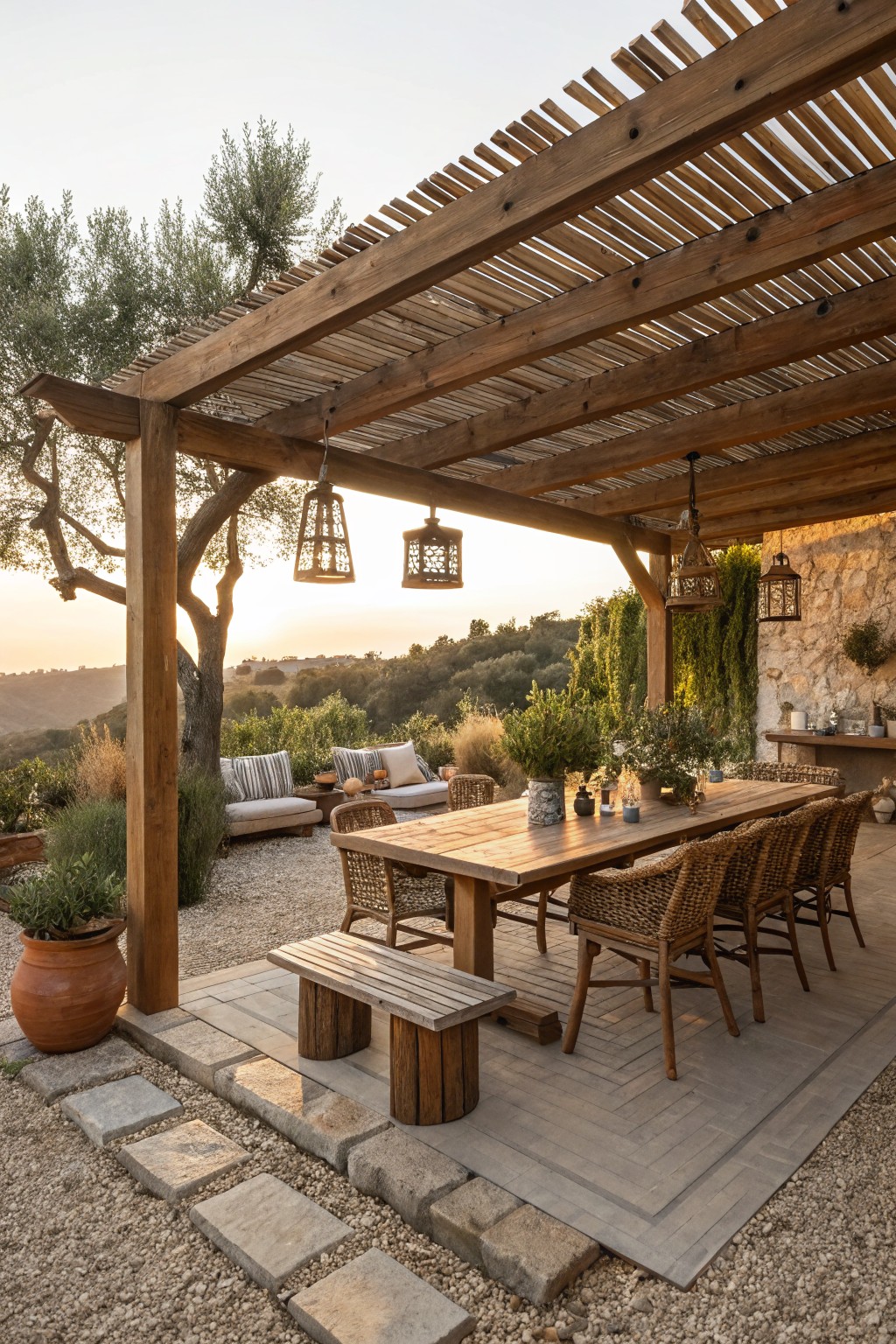
A pergola works well over a dining table because it gives steady shade while still letting some light and air through the slats. It turns an open patio into a spot that feels more settled and ready for meals without needing a full roof.
This approach fits homes with gravel or stone patios that already have some surrounding greenery. Keep the posts set wide enough for chairs to move freely, and add simple hanging lights if you plan to eat outside after dark.
A Pergola With Fabric Shade For Patio Comfort

A pergola with a fabric canopy gives an outdoor seating area real shade without making it feel closed in. The light fabric lets some sun through while blocking the harshest rays, and the simple frame keeps the whole space looking finished rather than just open patio.
This setup works best on a concrete or paved patio next to the house where you already have seating. It suits homes that want shade without adding a full roof or heavy structure, and it stays practical as long as the fabric can be cleaned or replaced when needed.
Create a Cozy Pergola Lounge With String Lighting
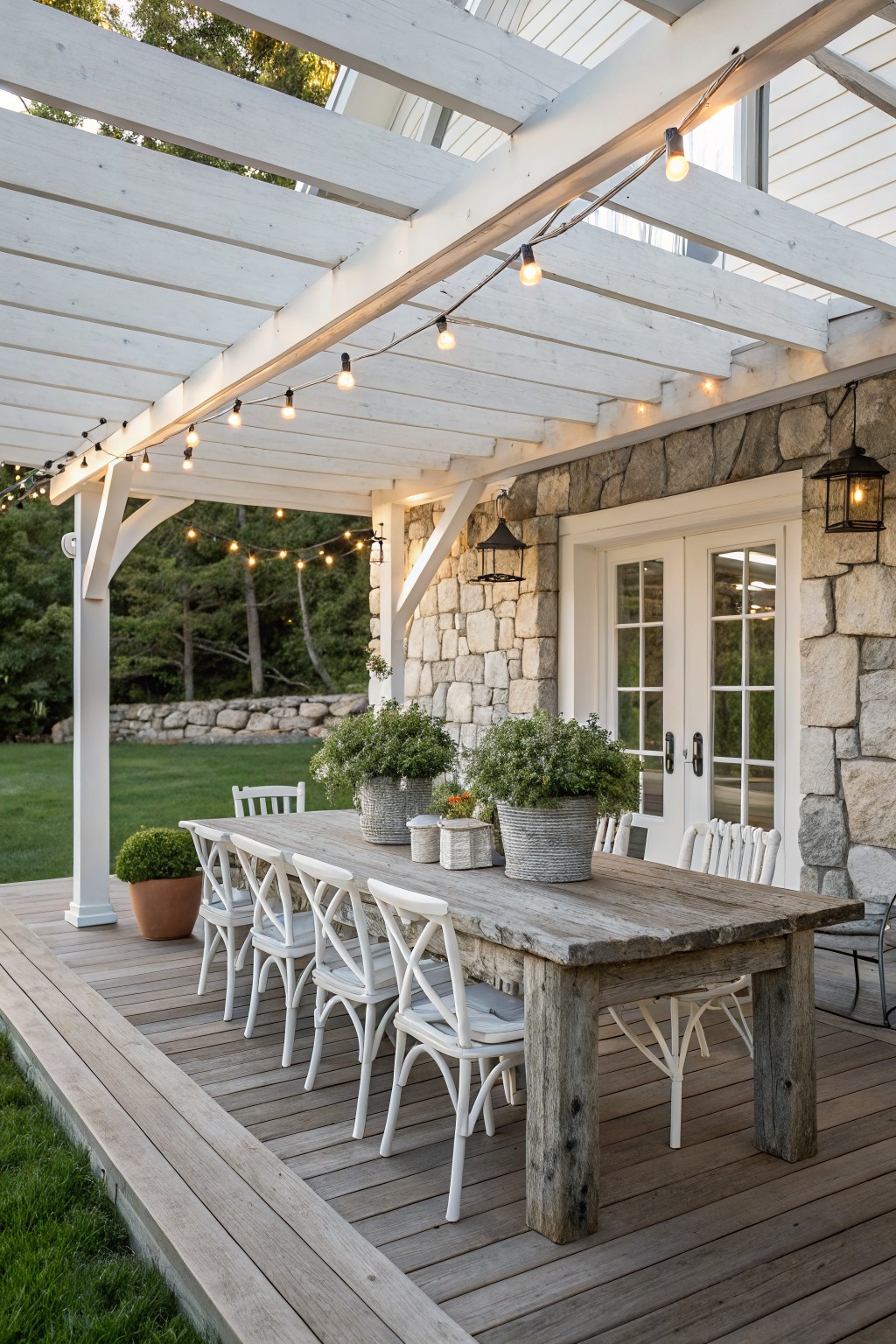
String lights add a simple way to keep a pergola useful once the sun goes down. They turn the overhead beams into a light source without adding much weight or cost, so the space stays comfortable for meals or sitting outside later than planned.
This approach works best on decks or patios that already have a solid pergola frame. Run the lights along the rafters in a loose grid and choose warm bulbs so the light stays soft rather than harsh.
Add Shade with a Woven Roof Pergola
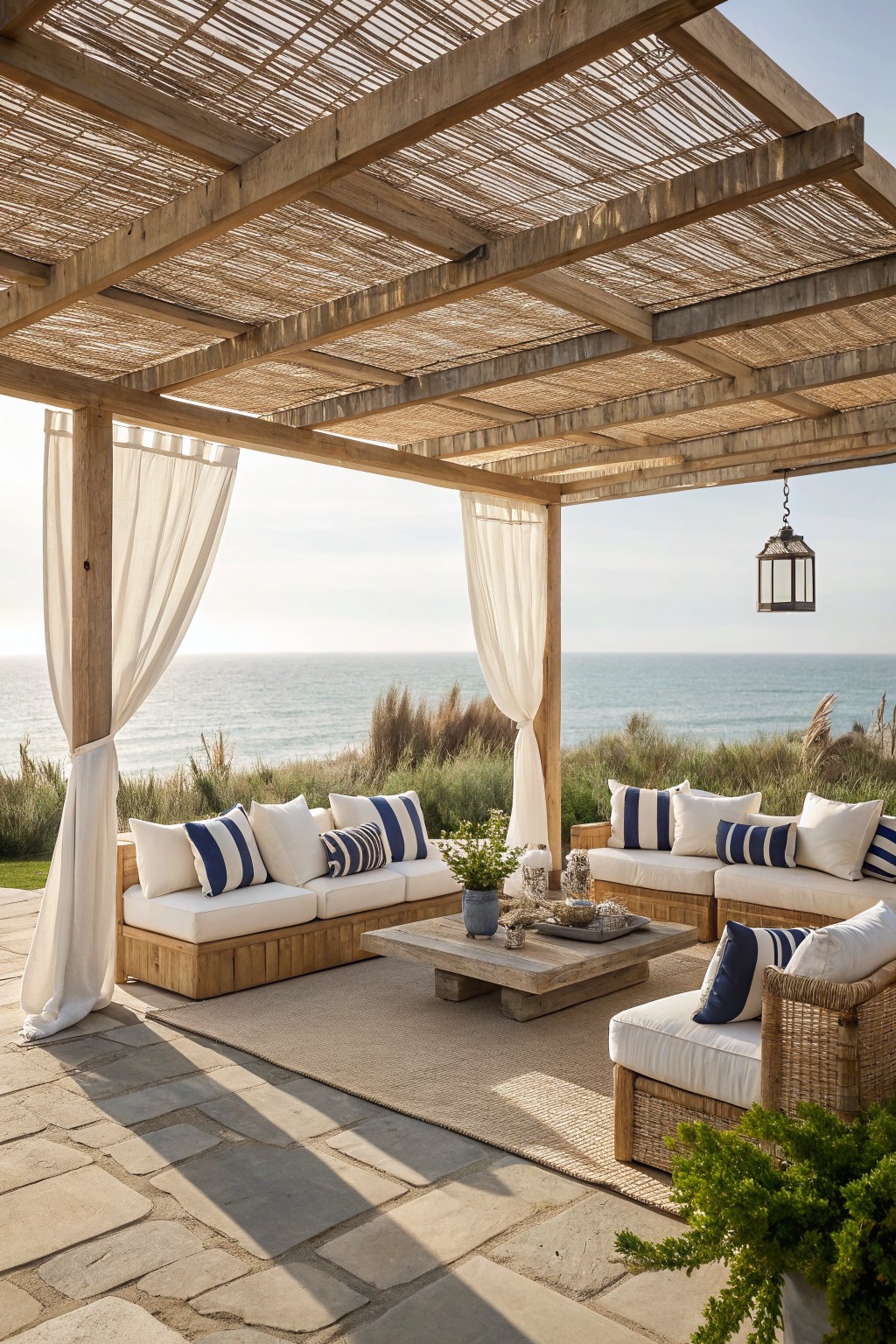
A pergola with a woven roof gives solid shade without making the space feel closed in. The natural material lets a little light through while blocking most of the sun, and it fits right into a backyard setting where you want something simple and useful.
This works best on a patio or deck where you already have seating. Keep the frame in wood and add a couple of curtains if you want the option to block wind or gain a bit more privacy on one side. It suits most homes with an open yard and does not need much extra planting to feel finished.
Shade a Patio With Arched Openings
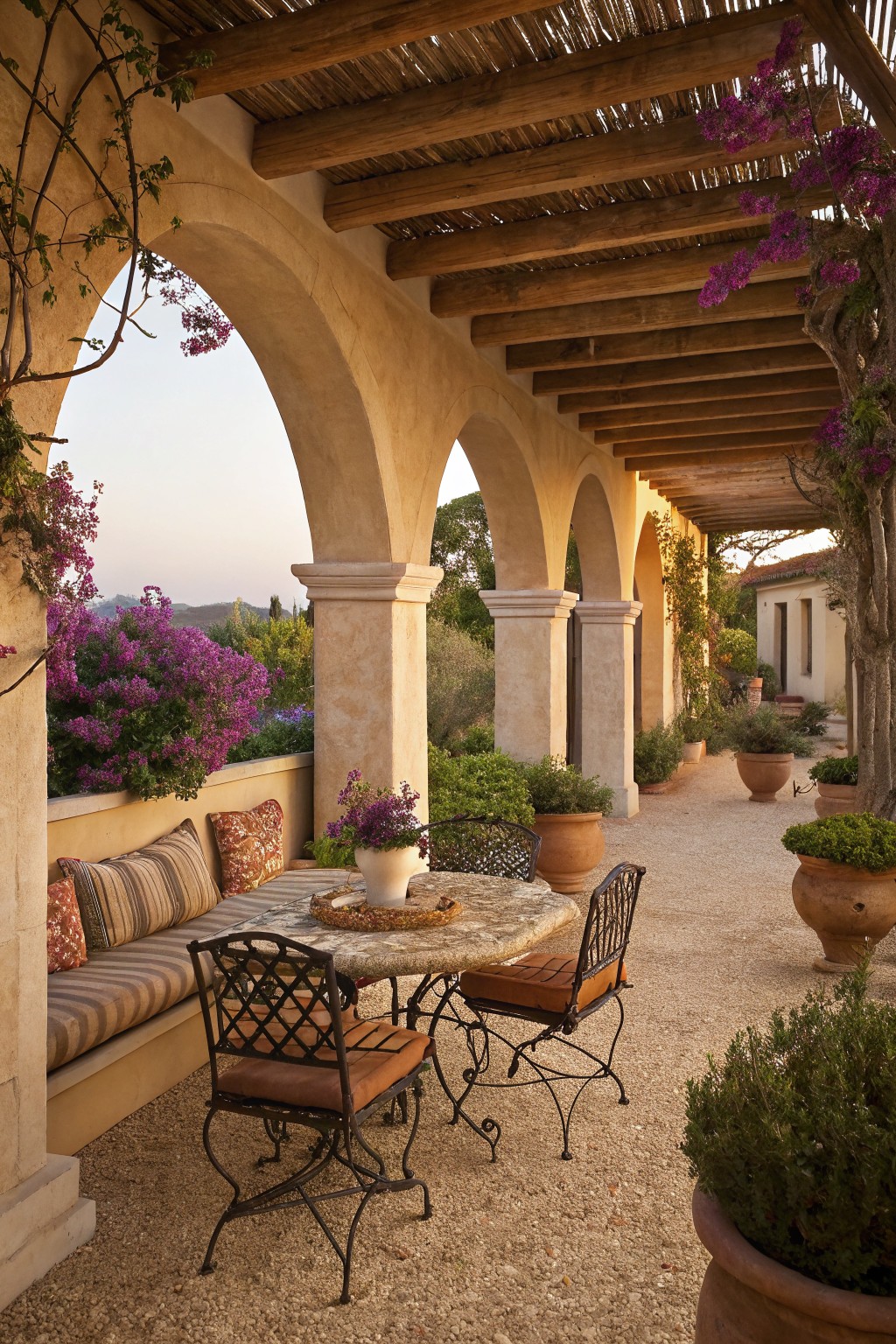
An arched pergola creates a shaded spot that still feels open to the rest of the yard. The openings let in light and air while the roof and columns give enough cover to sit comfortably even on warm days.
This setup works best on homes with some existing structure or on larger lots where you can run the covered area along a wall or garden edge. Keep the materials simple so the pergola blends with the house rather than competing with it.
Pergola Shade Over Poolside Seating
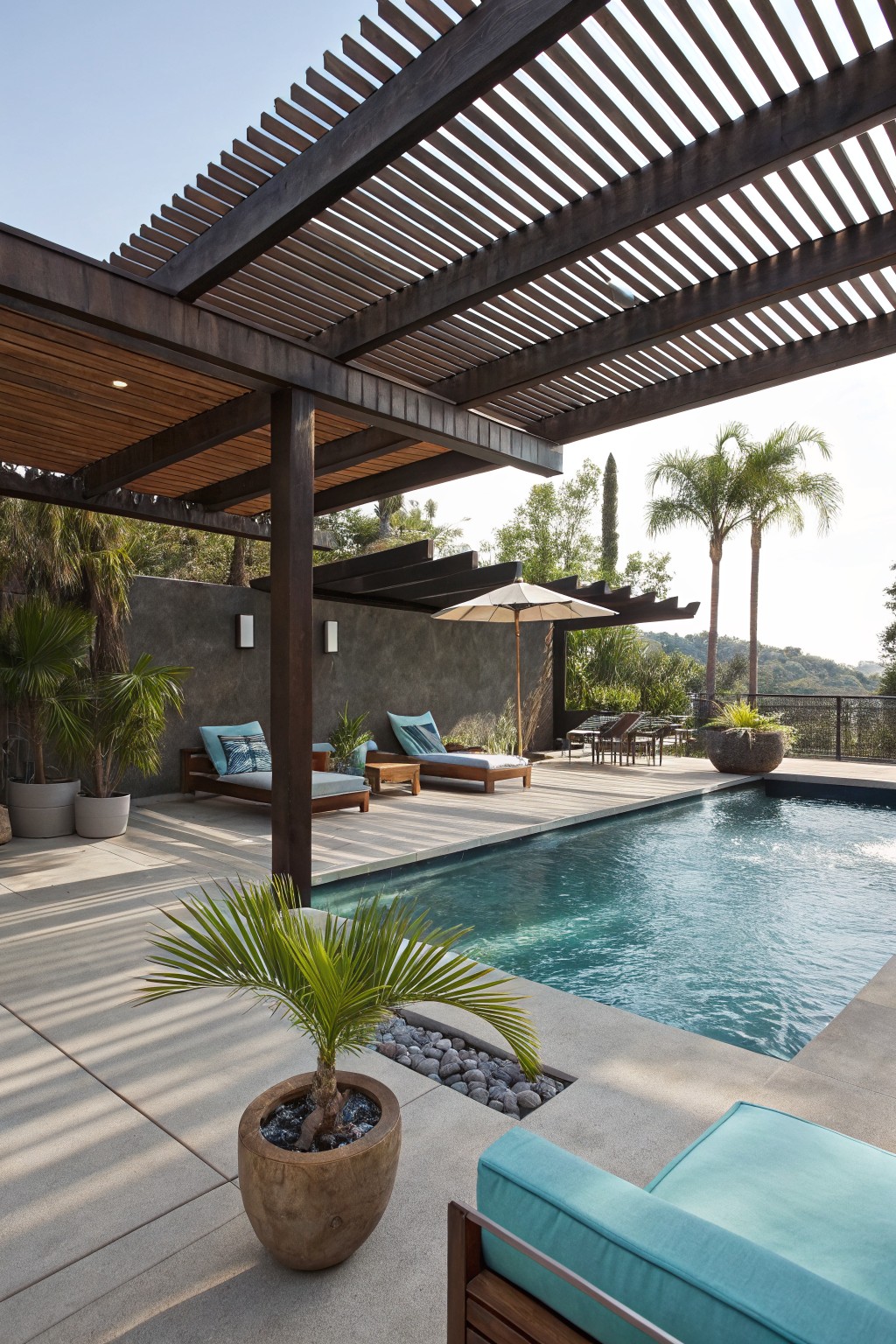
A pergola works well here because it creates a clear shaded zone right next to the pool without blocking the open feel of the deck. The slatted roof lets in filtered light and air while keeping the lounge area usable during the day.
This approach suits homes that already have a pool and deck space. It works best when the pergola is built to cover the main seating area and finished in a wood tone that matches the surrounding deck or fencing.
Cover an Outdoor Kitchen With a Pergola
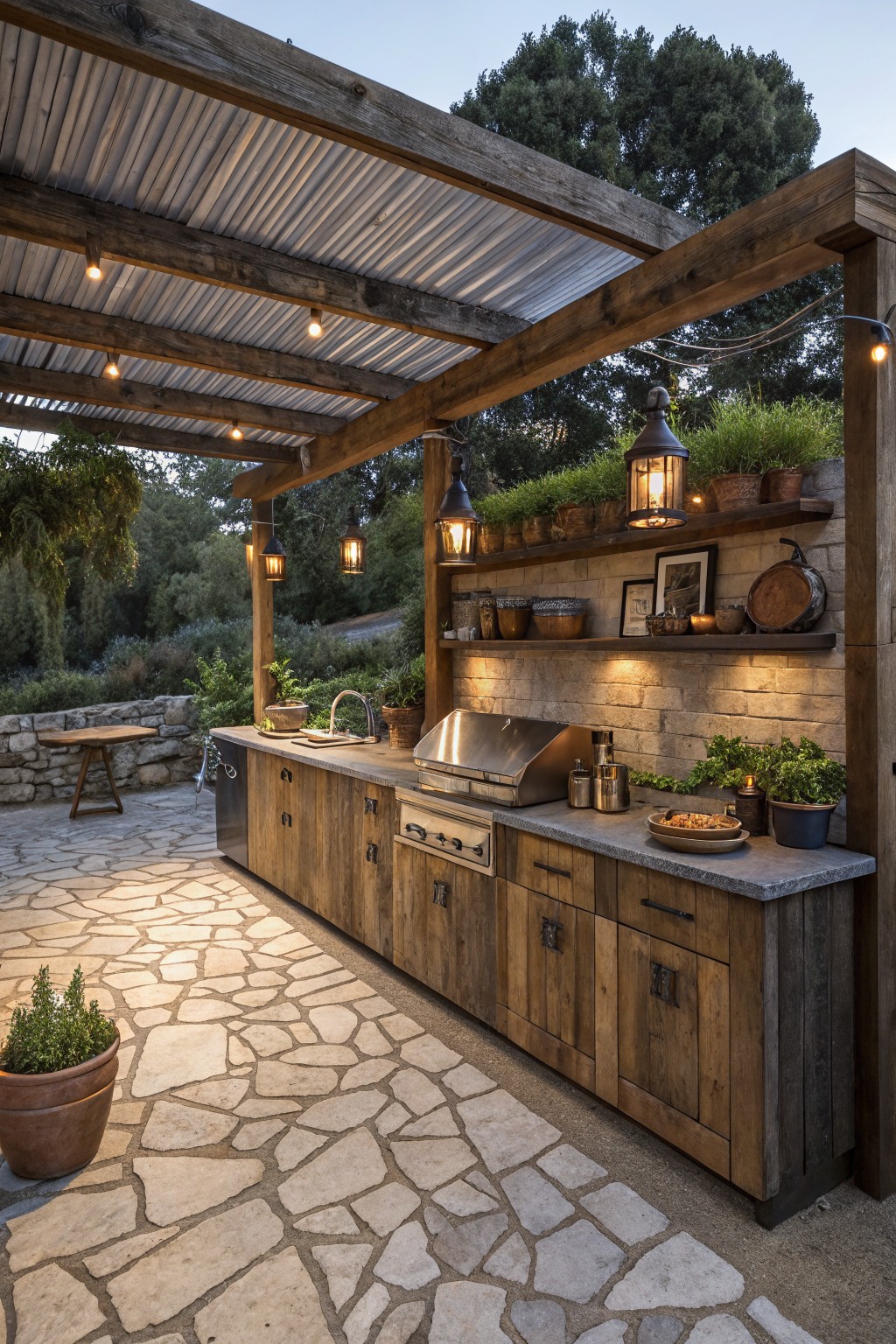
A pergola overhead turns an outdoor kitchen into a space you can actually use during the day. The roof adds shade and keeps the cooking area from feeling exposed, while the open sides still let in air and views of the yard.
This works best on a patio that already has a solid floor and room for cabinets and a grill. It suits homes that want a simple structure without building a full room, though you may need to add lighting if you plan to cook after dark.
Frame a Backyard Dining Space With a Pergola

A pergola gives you an easy way to mark off a dining spot and keep it usable when the sun is strong. The open roof lets some light through while still cutting the heat, and the posts help frame the table without closing the space in.
This works best in a backyard that already has a flat patio area and some planting around the edges. Match the wood tone to nearby fences or decking so the whole setup feels connected rather than added on later.
Incorporate Linear Lighting Into A Pergola
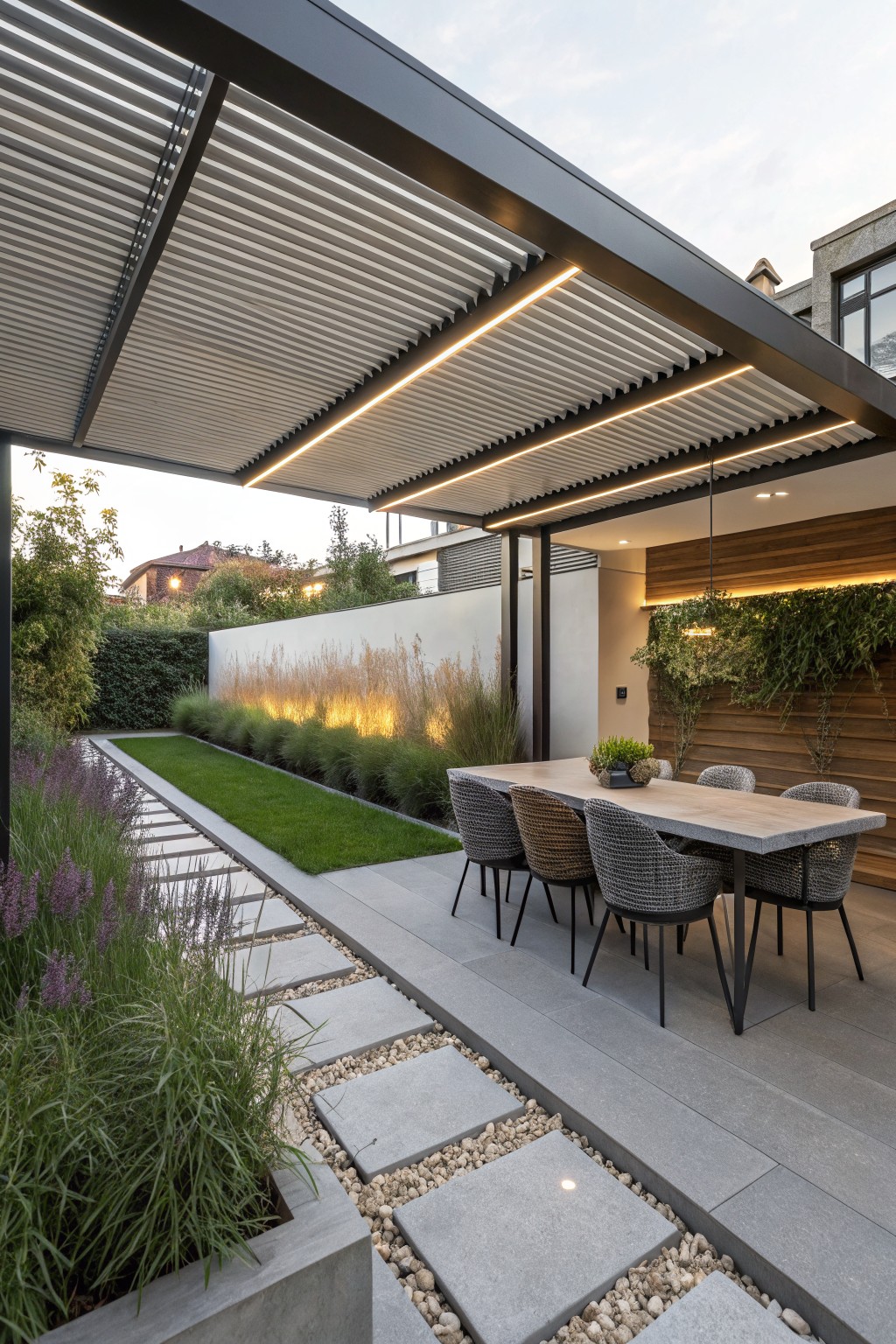
A pergola already gives shade and a clear edge to an outdoor space. Adding thin lines of light along the beams makes the same structure useful after sunset without extra fixtures cluttering the area.
This approach works best over a dining table or seating zone on a patio that sees regular evening use. It suits homes with simple modern lines and pairs well with straightforward furniture. Keep the lights on a dimmer so the brightness stays comfortable for meals.
Pergola Over a Patio Seating Area
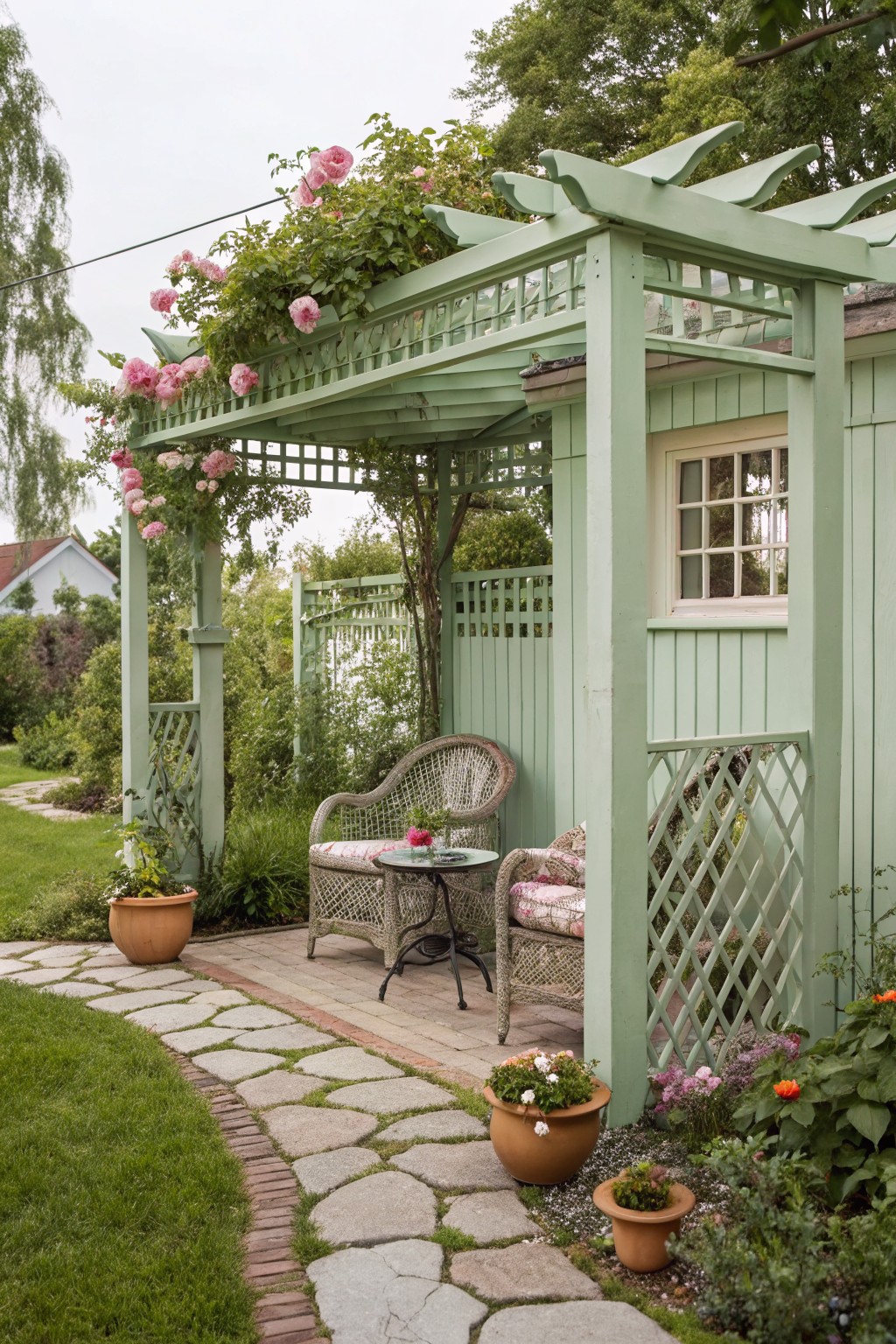
A pergola can turn an open patch of patio into a real spot for sitting without much fuss. It adds overhead structure, casts some shade, and gives climbing plants a place to grow so the area feels more finished.
This setup works best right against the house or along a garden path where you already have room for a couple of chairs. Keep the scale modest so it does not crowd the yard, and choose a paint color that blends with the siding if the pergola sits close to the building.
Built-In Pergola Lighting for Rooftops and Decks

A pergola that builds lighting into the frame itself makes an outdoor space feel more complete. The lights along the beams give steady, even illumination without adding extra poles or stands that take up floor space.
This approach works best on rooftops and decks where you want both daytime shade and a place that stays comfortable after dark. It pairs well with simple seating and low-maintenance plants so the whole area stays easy to use year-round.
Adding a Fireplace Under Your Pergola
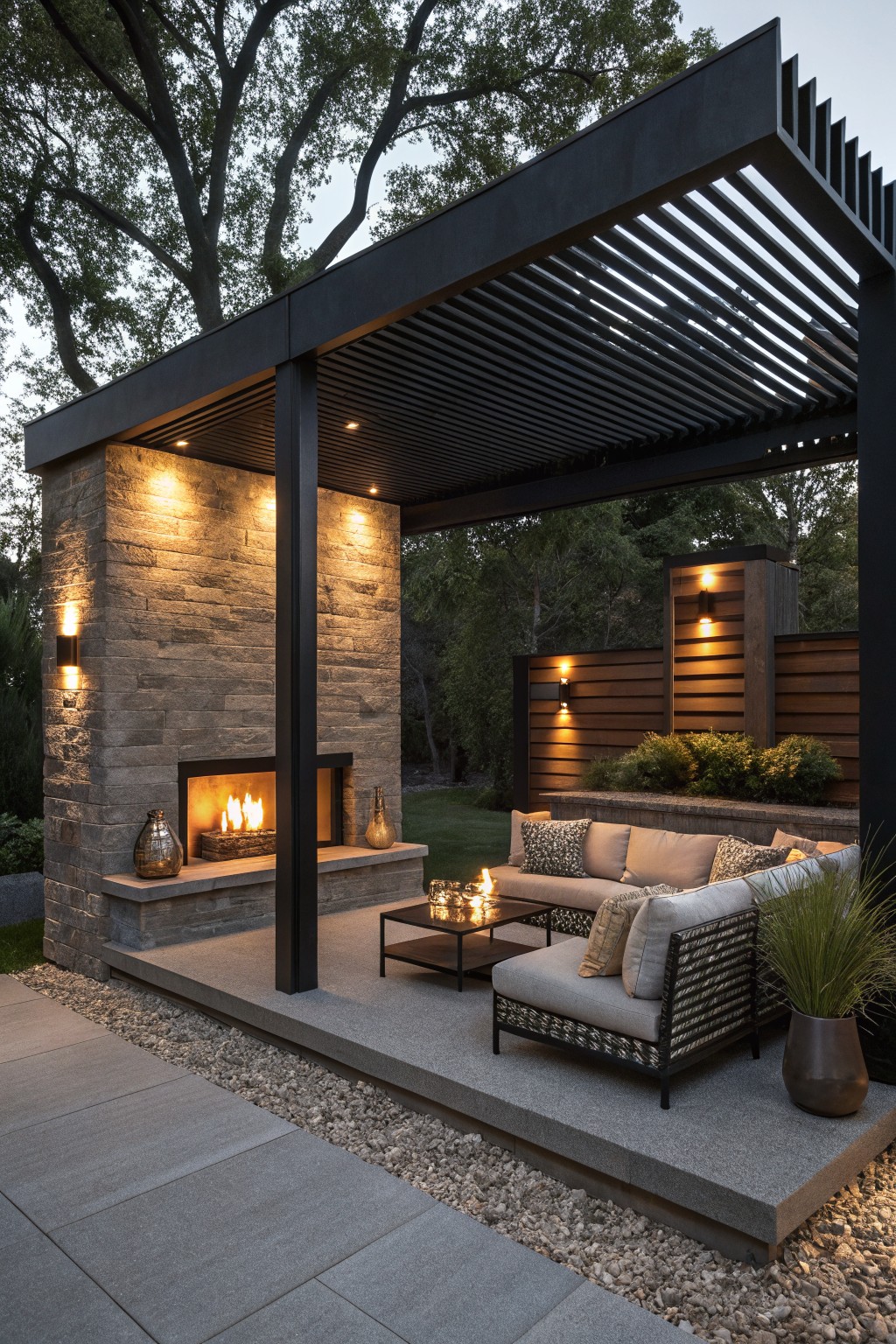
A fireplace built into the side of a pergola gives the space a clear focal point and makes it usable on cooler evenings. The solid wall also helps block wind and gives the seating area a more finished, room-like feel.
This setup works best on patios that already have some privacy from fencing or planting. Keep the fireplace on the back or side wall so it does not block the main views or traffic flow through the space.
Pergola Over A Sandbox

Placing a pergola directly over a sandbox gives the play area steady shade without closing it in. The open roof structure still lets in light and air while protecting kids from strong sun during the middle of the day.
This setup works best in smaller backyards where one zone needs to serve both play and seating. Hang simple swings from the beams and keep a bench or two along the edge so adults can sit close by without needing extra furniture.
Pergolas That Define An Outdoor Dining Area

A pergola with iron scrollwork gives an outdoor dining space clear boundaries while still letting in light and air. The structure creates a natural spot for a table without needing walls or a full roof. It also pairs easily with nearby cooking areas like a fireplace or counter so everything feels connected.
This approach works best on larger stone patios where you want one main gathering zone. Match the base materials to your existing hardscaping and keep the metal details from getting too heavy. It suits homes that already have some outdoor cooking setup and need a simple way to make the seating feel intentional.
Pergola With a Slatted Roof for Filtered Shade
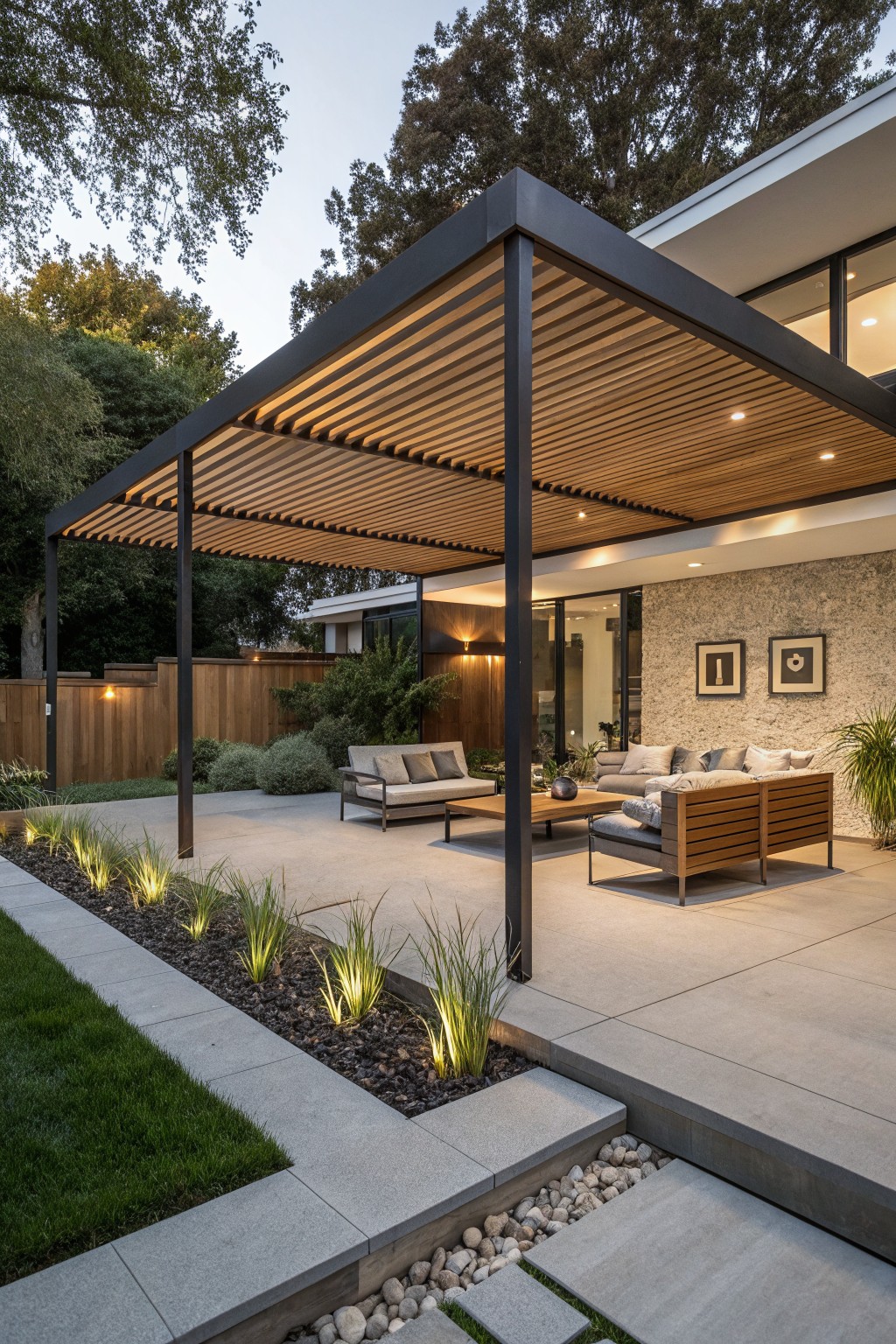
A pergola with a slatted roof and lights tucked into the beams gives steady shade by day and a soft glow once the sun goes down. The open slats keep the space from feeling closed in while still cutting harsh light, and the built-in lights remove the need for extra lamps or strings.
This setup suits homes with a larger paved patio right off the back door. Keep the posts simple and strong, and put the lights on a dimmer so the area stays usable without overpowering the yard at night.
Illuminate a Pergola Dining Area With String Lights
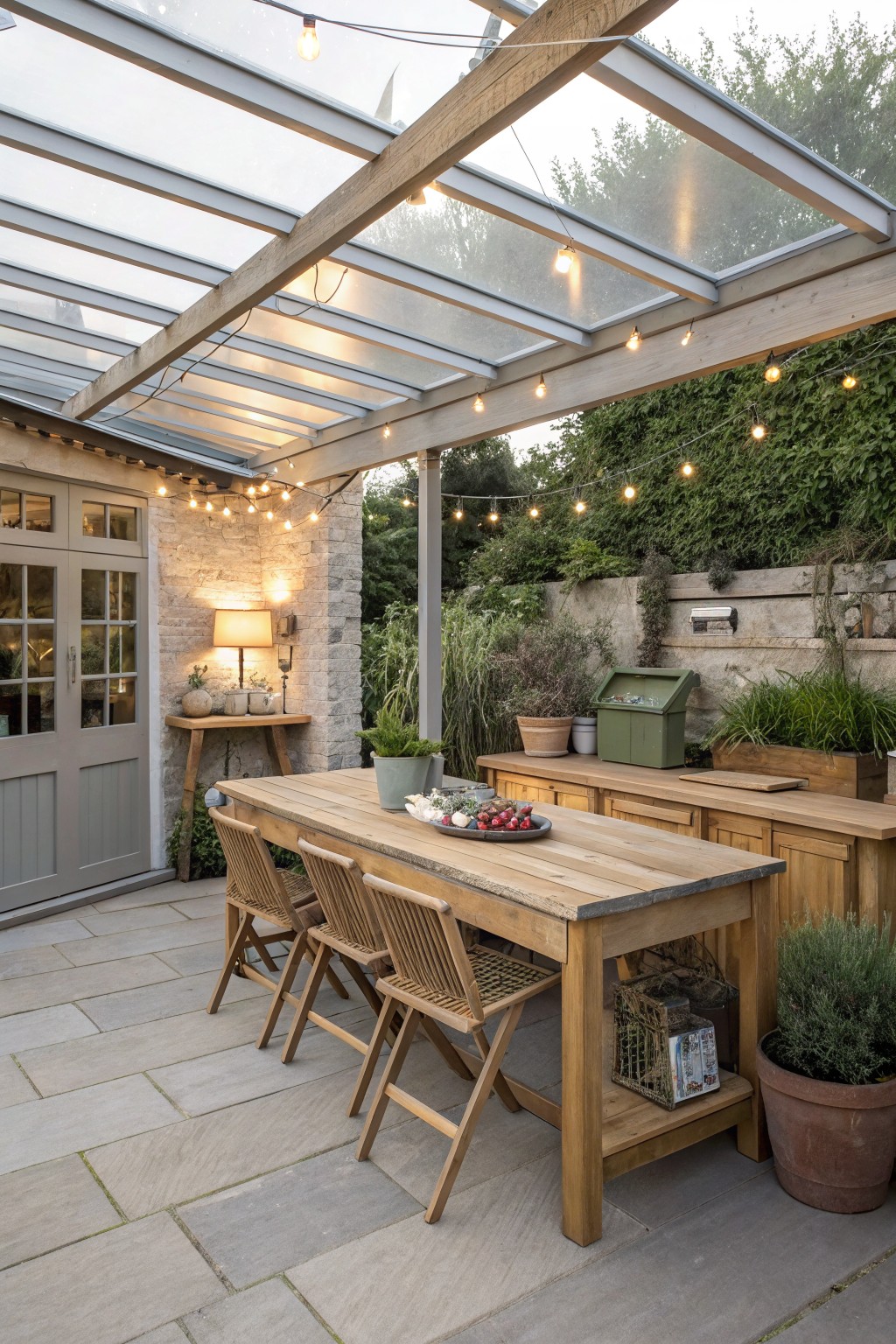
String lights are one of the easiest ways to make a pergola usable after dark. They give off a soft glow that works for meals without needing extra fixtures or bright overhead lighting. Many people find this setup keeps the space feeling casual while still making it practical once the sun drops.
This approach suits backyards that already have a pergola structure and a dining table underneath. Run the lights along the beams and rafters so they cover the seating area evenly. Just watch that the bulbs are not too bright or spaced too far apart, or the light can feel uneven at night.
Mount A Screen In Your Pergola For Backyard Movies
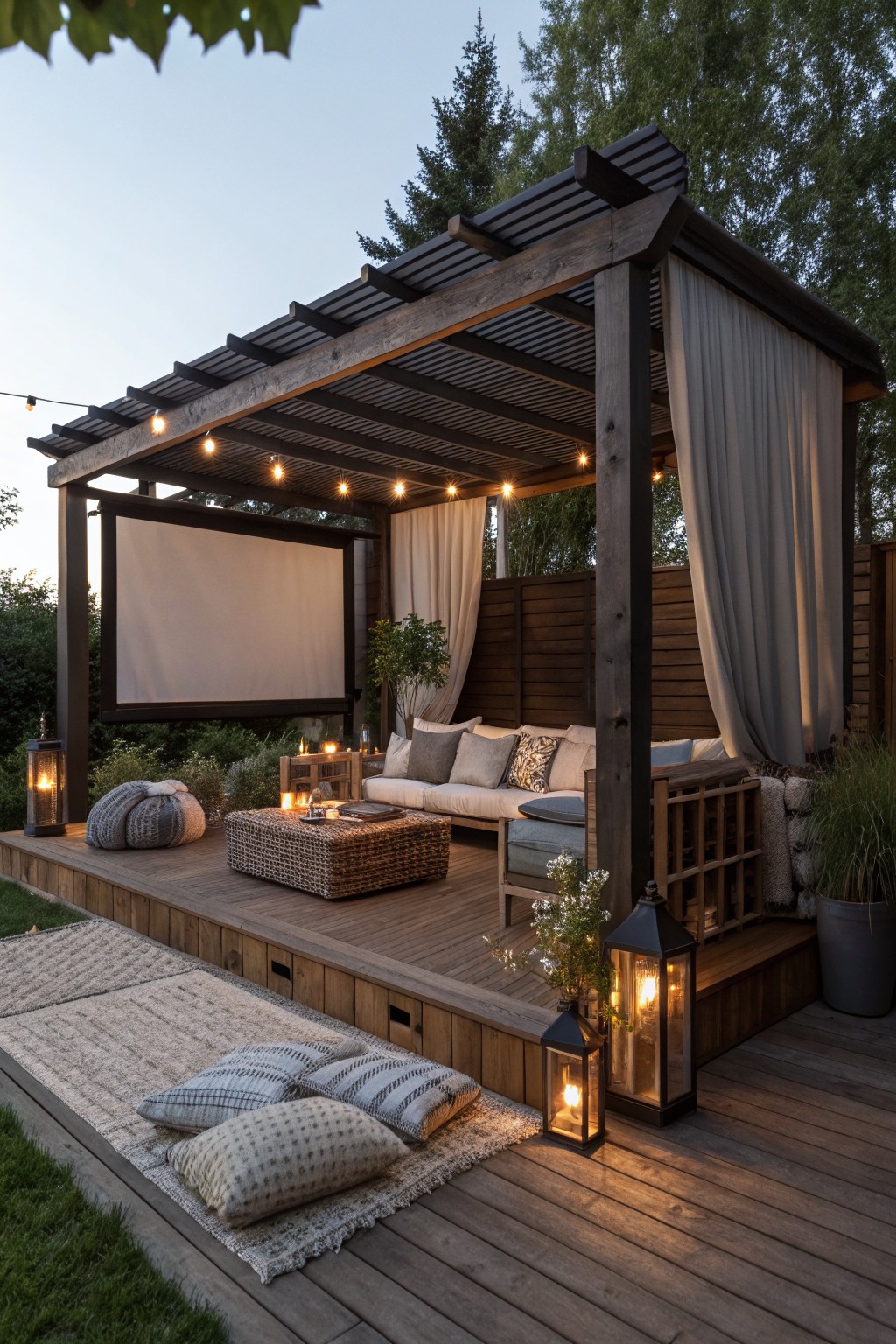
Adding a projector screen directly to one side of the pergola gives the space a clear purpose after dark. It creates a simple outdoor theater without needing a separate structure, and the roof already helps block stray light from above.
This setup works best on a deck or patio that already has seating and low lighting. String lights and lanterns keep the area usable while still letting the screen stay visible, and it suits homes with enough room for a few people to gather comfortably.
Run a Counter Along One Side of the Pergola
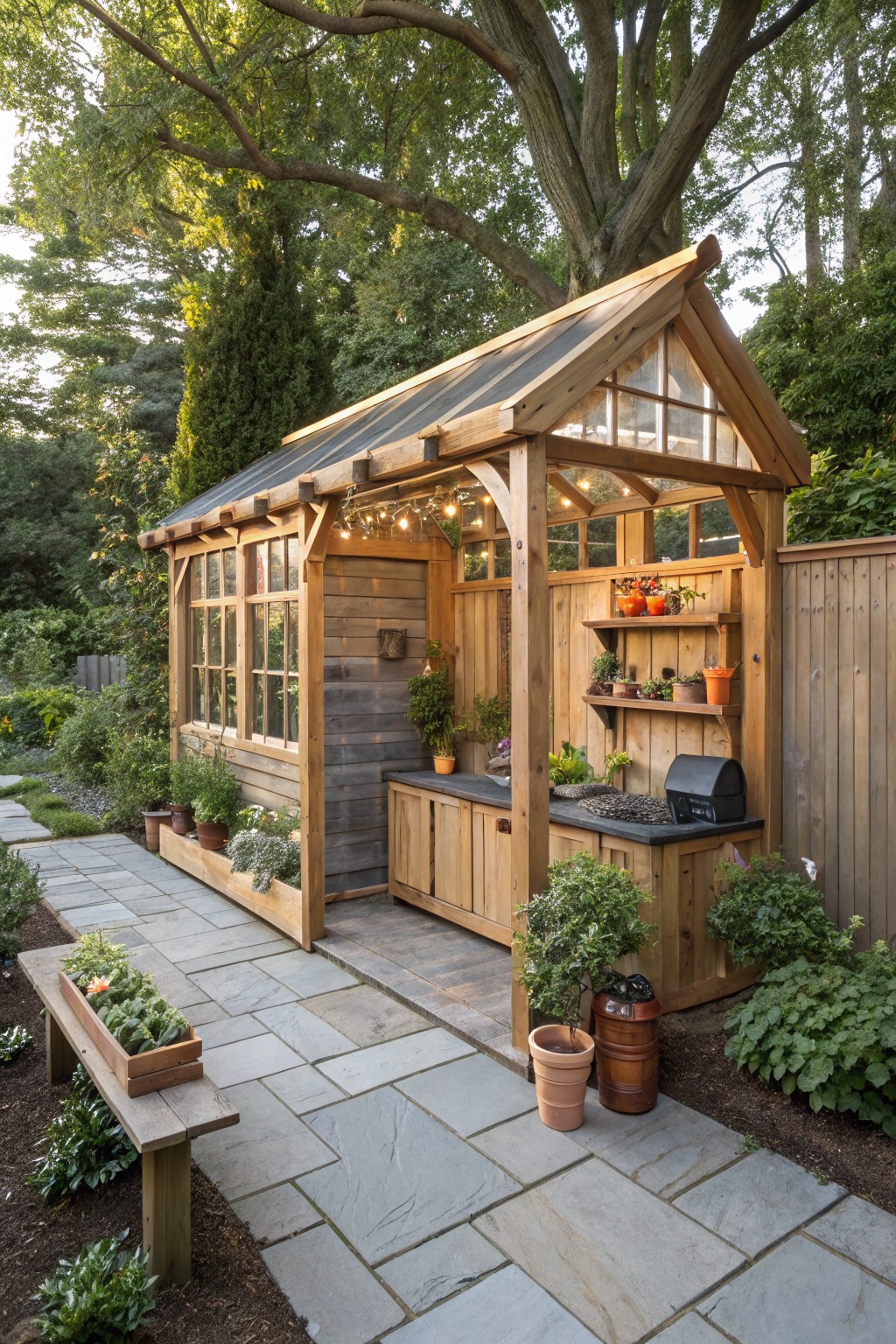
A simple counter changes how a pergola gets used. Instead of just covering a seating area, it turns one wall into a place for food prep, drinks, or even a small grill. The dark surface in this setup blends with the wood tones and gives a solid work zone without taking up extra floor space.
This works best in smaller yards where you want cooking and gathering in the same spot. Keep the counter depth reasonable so it does not crowd the walkway, and choose a material that holds up to weather. Shelves above can hold tools or plants without adding clutter.
Frequently Asked Questions
Q: Which vines work best for quick shade on a pergola? A: Try morning glory or a similar fast climber that covers the rafters in one season. Plant them at the base in good soil and give them a trellis strip to grab. They fill in fast and drop leaves in fall so winter light still gets through.
Q: How do I stop the posts from sinking over time? A: Set each post on a concrete footing below the frost line in your area. Pack gravel around the base for drainage before you backfill. This keeps everything level without constant adjustments later.
Q: Can the pergola double as a spot for string lights? A: Run the wires along the inside of the beams before you add the top boards. Staple them every few feet so wind does not pull them loose. The lights then sit right where you want evening glow without extra poles.