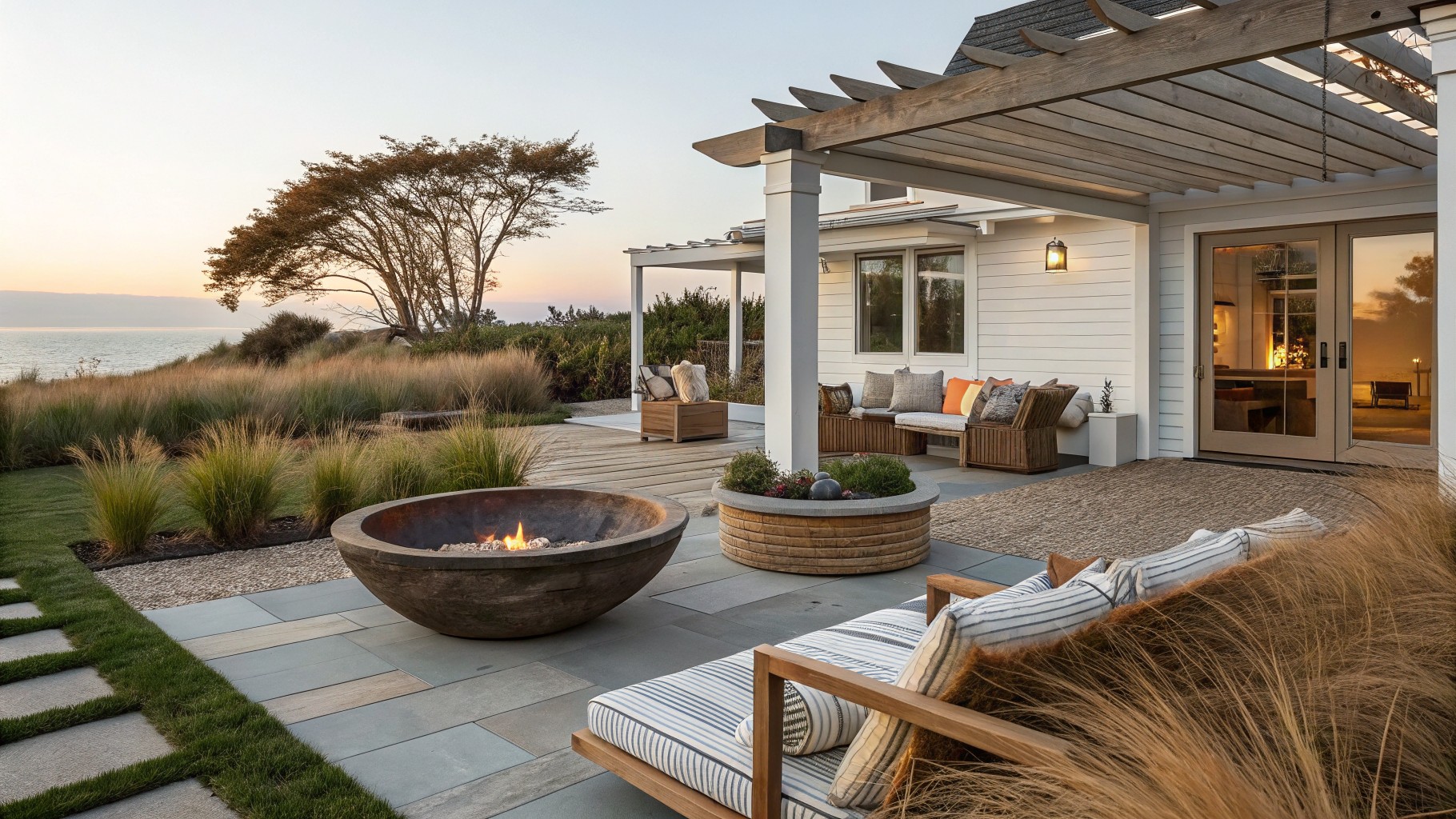
Patios often sit empty after dark because they lack something that makes staying outside feel worthwhile.
A fire pit can provide that missing element by creating a natural spot where people gather without needing much direction.
My backyard showed me how quickly plans fall apart when the heat does not reach everyone evenly.
Considering windbreaks or better seating angles helps avoid those same issues in future setups.
Testing a couple of these ideas could reveal what actually fits the way evenings unfold at home.
Built-In Seating Wraps Around the Fire Pit
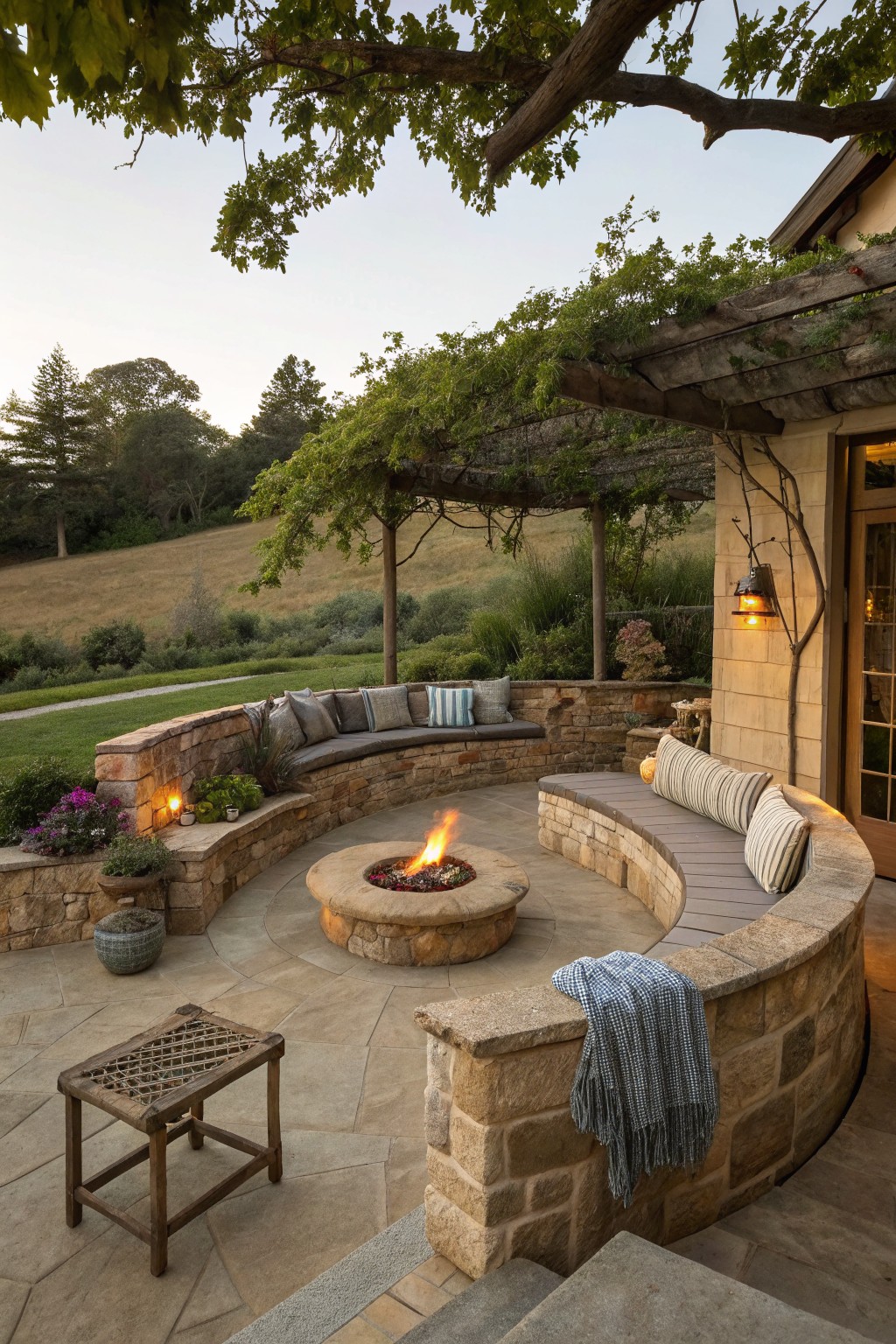
A curved bench built right into the stonework makes the fire pit the natural center of the patio. Everyone ends up facing the flames without needing extra chairs or constant rearranging, which keeps the space feeling simple and ready to use.
This layout works best on patios that have enough room for a full circle and pairs well with homes that already use stone or masonry. It creates a permanent gathering spot that stays comfortable even when the group grows or shrinks.
Center the Fire Pit in the Seating Layout
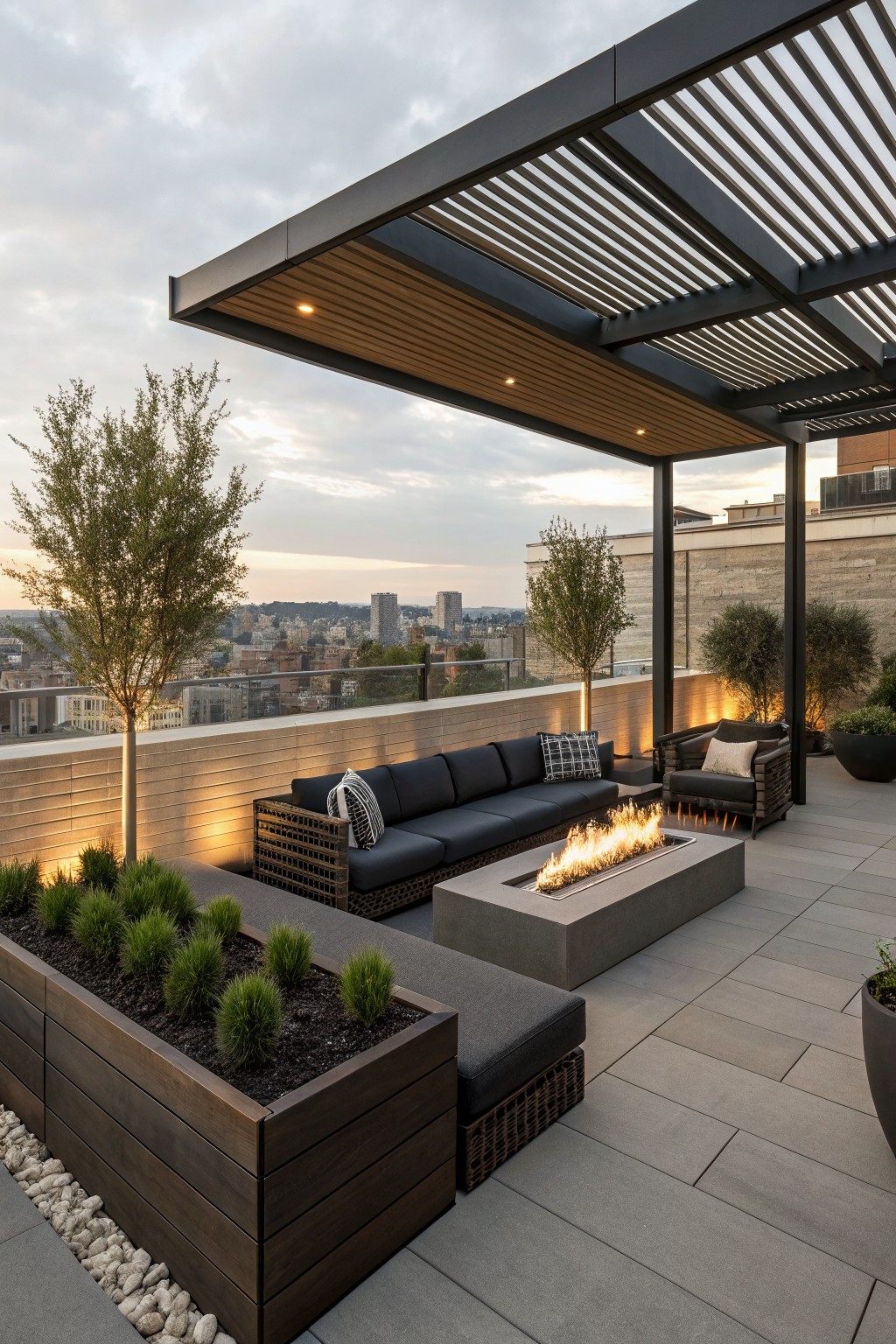
A central fire pit makes it easy for everyone to stay close to the warmth without anyone feeling left out. In this setup the rectangular pit sits right between the long sofa and the open space, so conversation flows naturally while the flames stay the main focus.
This layout works best on rooftops or larger patios where you can pull a couple of chairs in on either side. Keep the surrounding seats low and deep so people linger longer, and add an overhead structure if you want the space to stay usable after dark.
Linear Fire Pits Anchor Patio Seating Areas
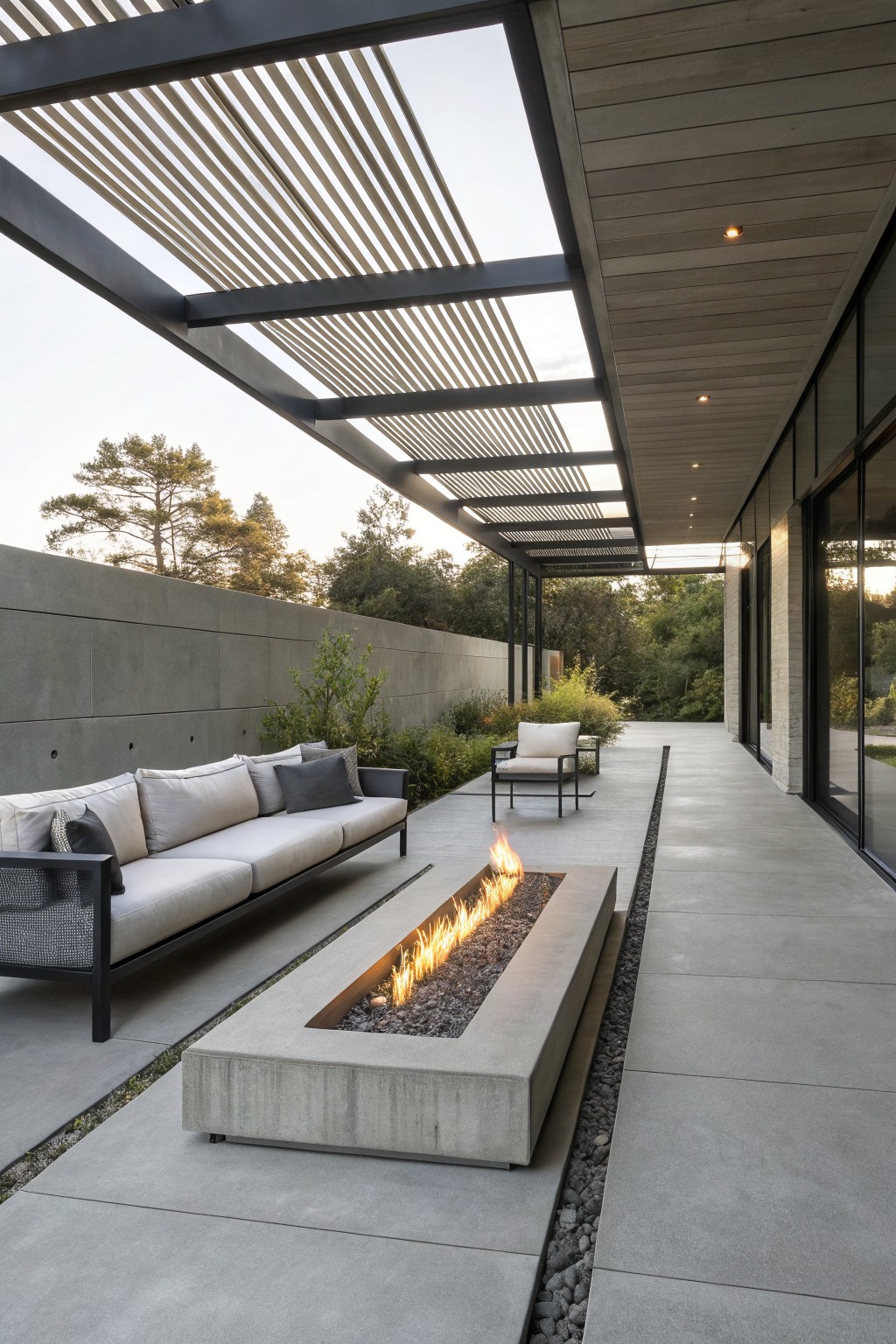
A long rectangular fire pit gives the patio a clear center without needing extra walls or dividers. It pulls the seating together so people naturally face the flames, and the length keeps the heat moving along the whole row of chairs and sofas. The simple concrete surround also doubles as a low ledge for setting down drinks.
This layout works best on covered patios attached to the house where the roof already provides shade and rain protection. It suits homes with straight runs of outdoor space and modern concrete or stone finishes. Just leave enough room on both sides so the fire does not block the walkway.
Anchor Patio Seating Around a Tall Chiminea
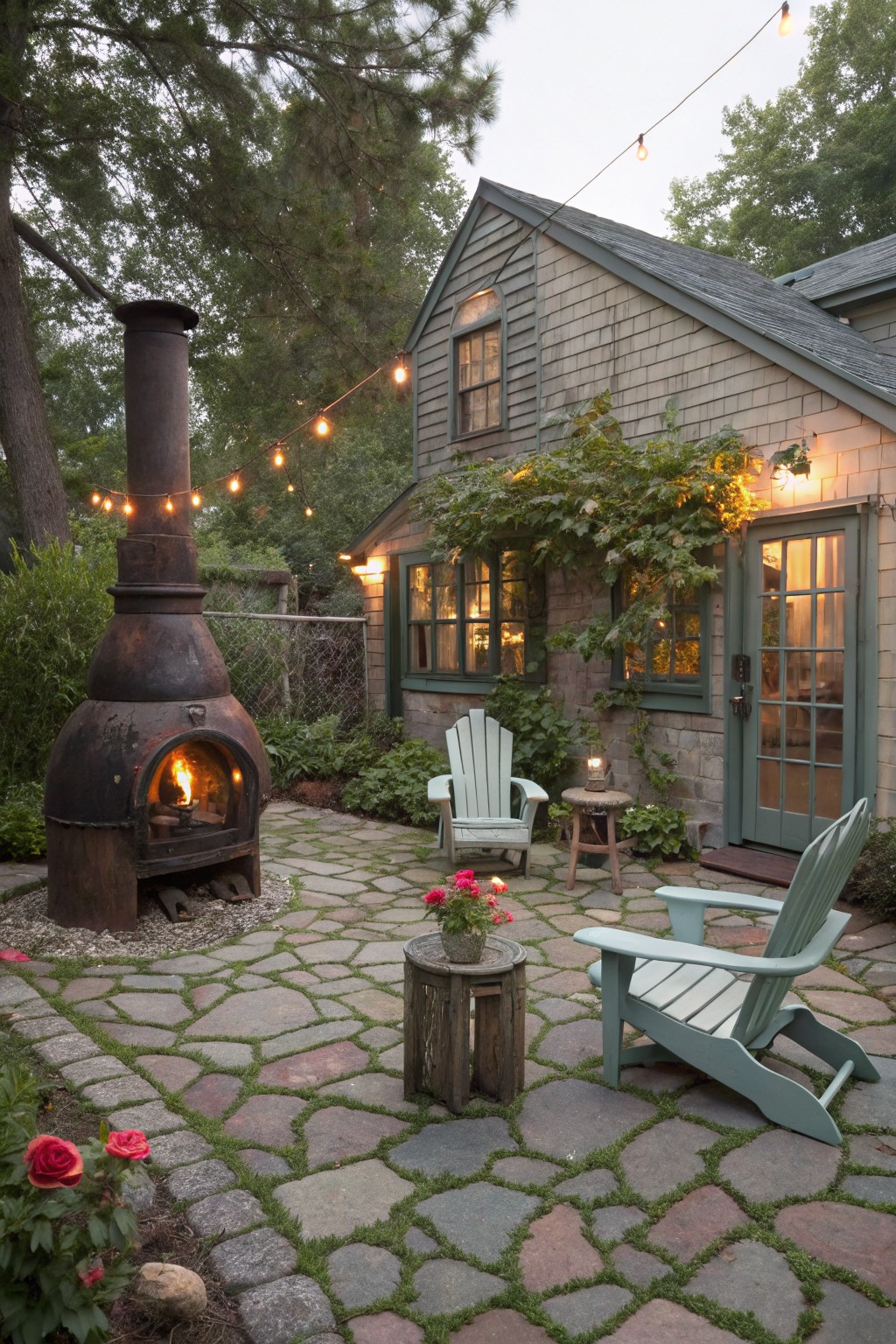
A tall outdoor fireplace gives the patio a clear center without much extra effort. It throws real heat and draws people in once the evening cools off, which makes the whole space feel more usable after dark.
Place two or three chairs within a few feet of it on the same hard surface. This setup works best on stone or brick patios next to a house that already has some planting around the edges.
Set the Fire Pit Into the Patio Surface
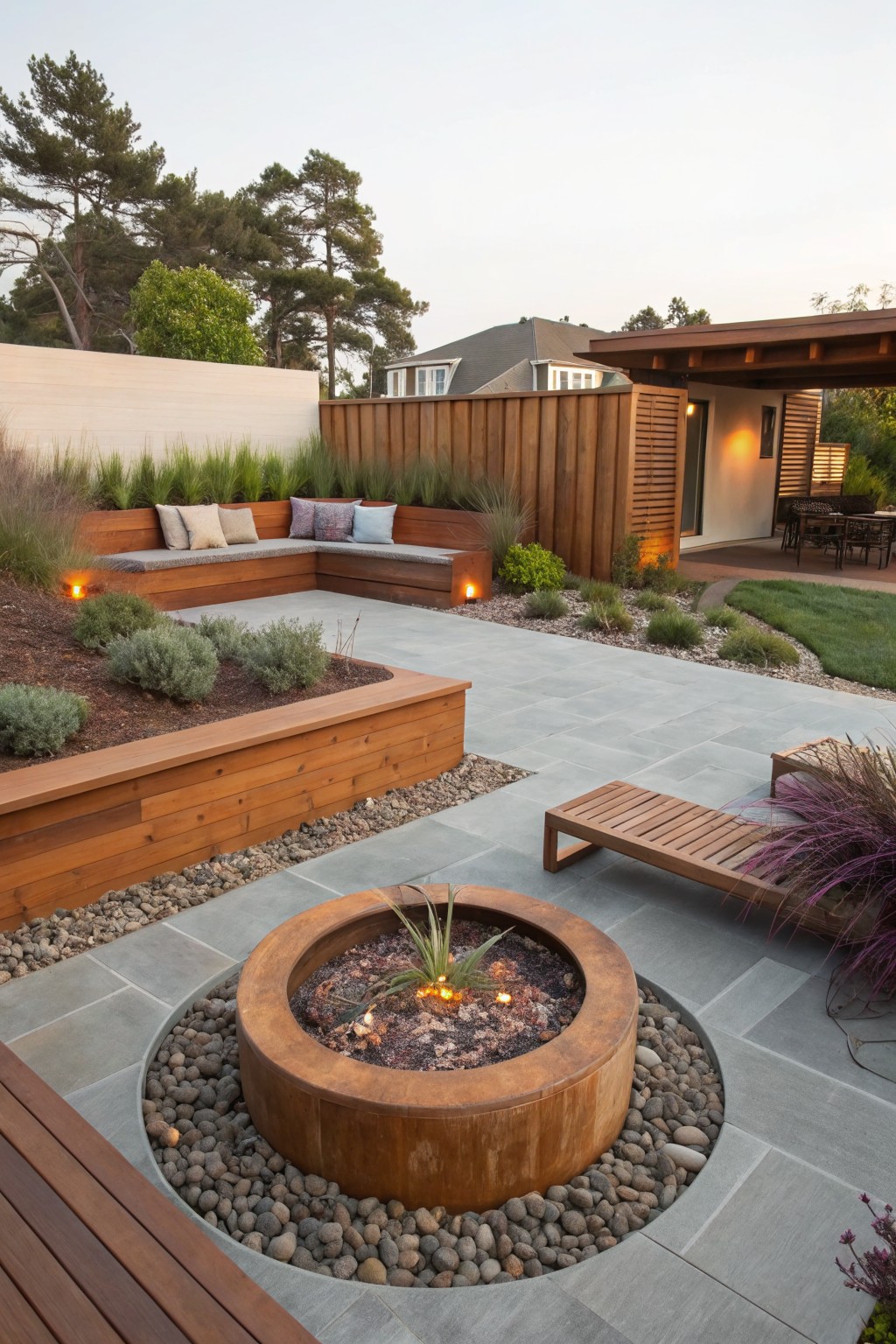
One simple way to make a fire pit feel like part of the main seating area is to set it down into the patio itself. A ring of gravel or pebbles around the pit keeps it level with the surrounding stone while giving the fire a safe, contained spot that does not interrupt the flow of the space.
This approach works best on patios that have enough room for both walking paths and a central gathering spot. Keep the gravel contained with a low edging so it stays neat and does not scatter onto the main paved surface.
A Fire Pit Set In Gravel And Stone
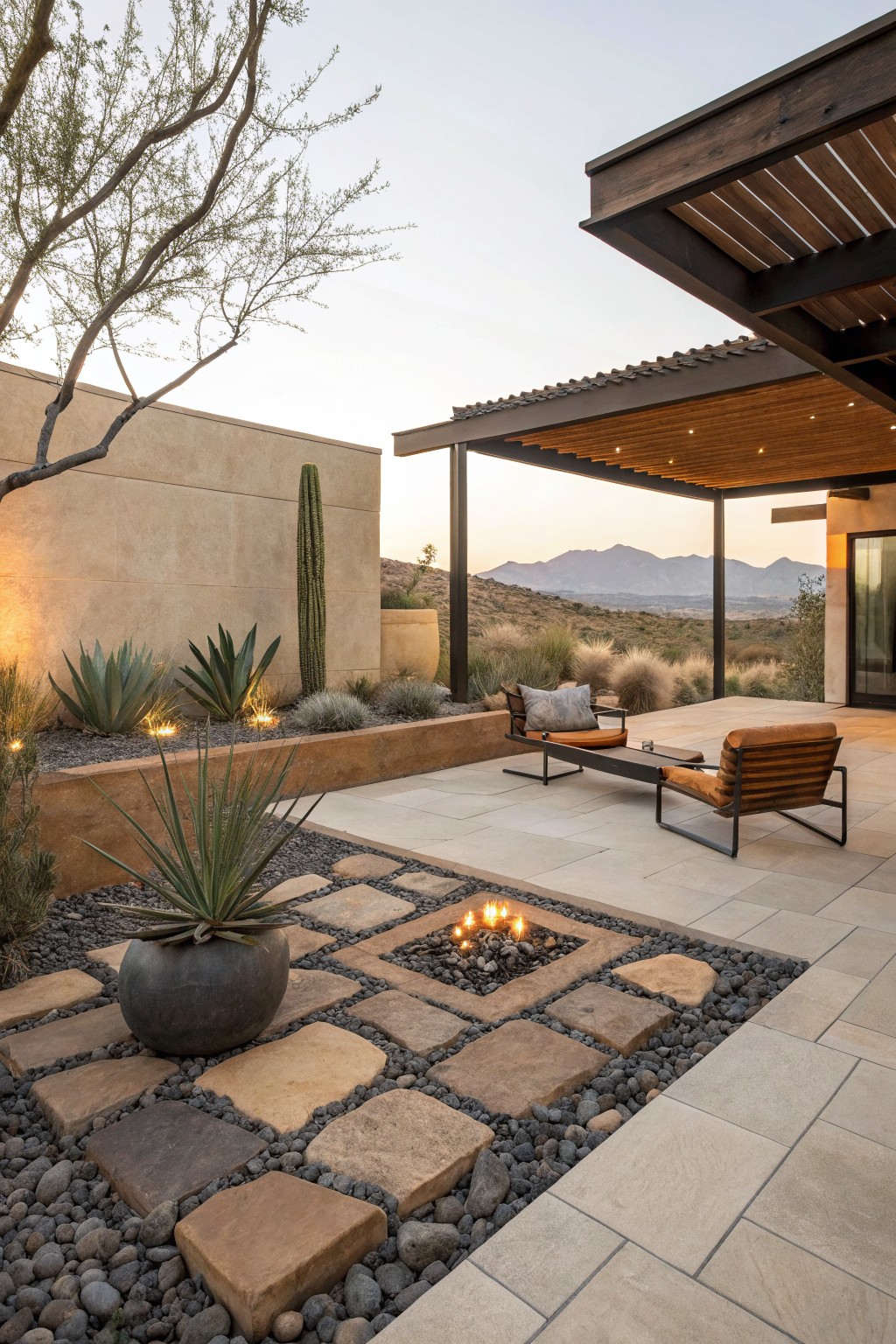
Placing a fire pit into a gravel bed with stone pavers gives the patio a clear gathering spot that feels separate from the main seating area. The gravel softens the look and helps contain the heat zone while the pavers keep everything stable underfoot. This setup works especially well when you already have a large tiled surface and want one defined area for evenings.
It suits homes with some yard space where the patio can handle both open lounging and a smaller fire feature. Keep the gravel area modest so it does not compete with the main floor, and make sure the pavers form a simple path to the chairs.
Wrap Your Seating Around A Fire Pit
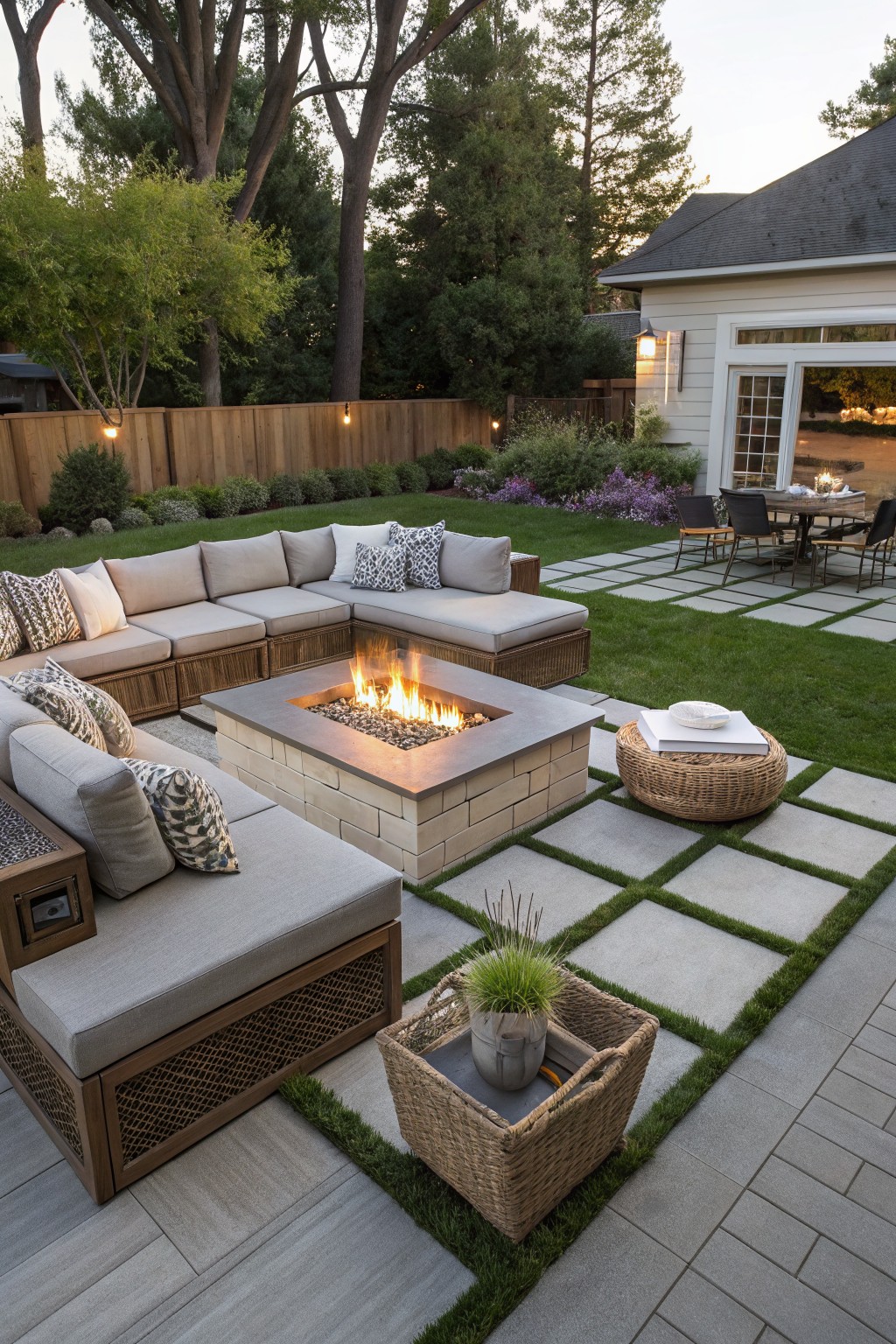
A fire pit works best when it sits at the center of the seating instead of off to the side. This layout keeps people close to the flames and makes it easy to talk without anyone feeling left out.
It suits most backyards that have room for an L-shaped or U-shaped sofa. Just keep the pit at a height that lines up with the seats so everyone can reach it comfortably.
A Brick Fire Pit Built Into the Patio
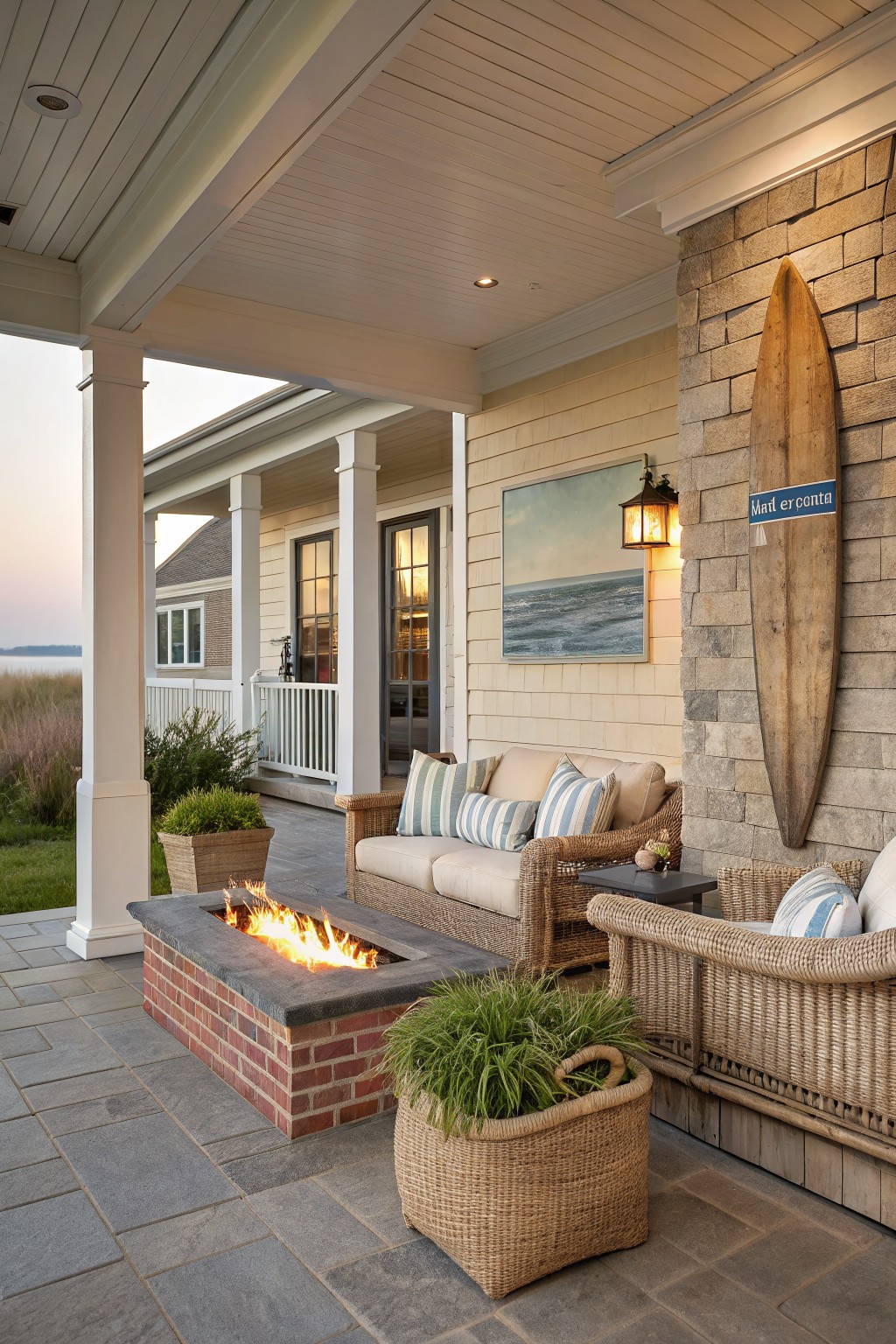
A brick fire pit set into the patio surface keeps the seating area compact and practical. The low profile lets chairs and sofas sit close without blocking movement, and the contained fire stays easy to manage on cooler evenings.
This layout works best on covered porches or patios with enough room for a loose ring of furniture. It suits homes that already have stone or paver flooring, since the brick ties in cleanly and needs little extra maintenance.
Center the Fire Pit on Your Patio
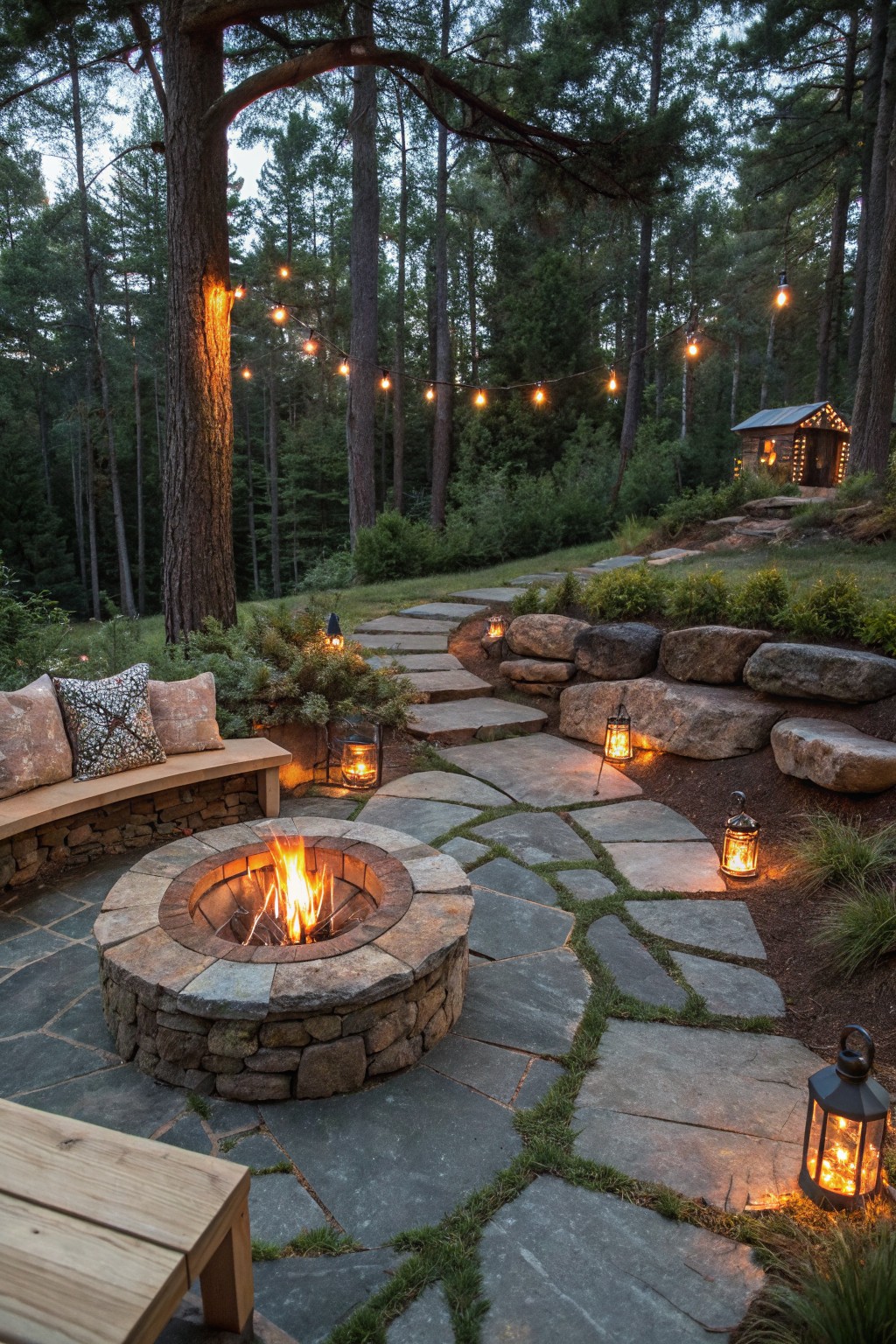
A central fire pit makes the whole patio feel more inviting because everyone can sit close without crowding one side. The round shape also helps the space flow better when you add seating all around it.
This layout works well on medium or larger patios where you can keep walking paths open on at least two sides. It suits homes with wooded yards since the stone blends easily with nearby rocks and trees.
Fire Pits Built Into Walls
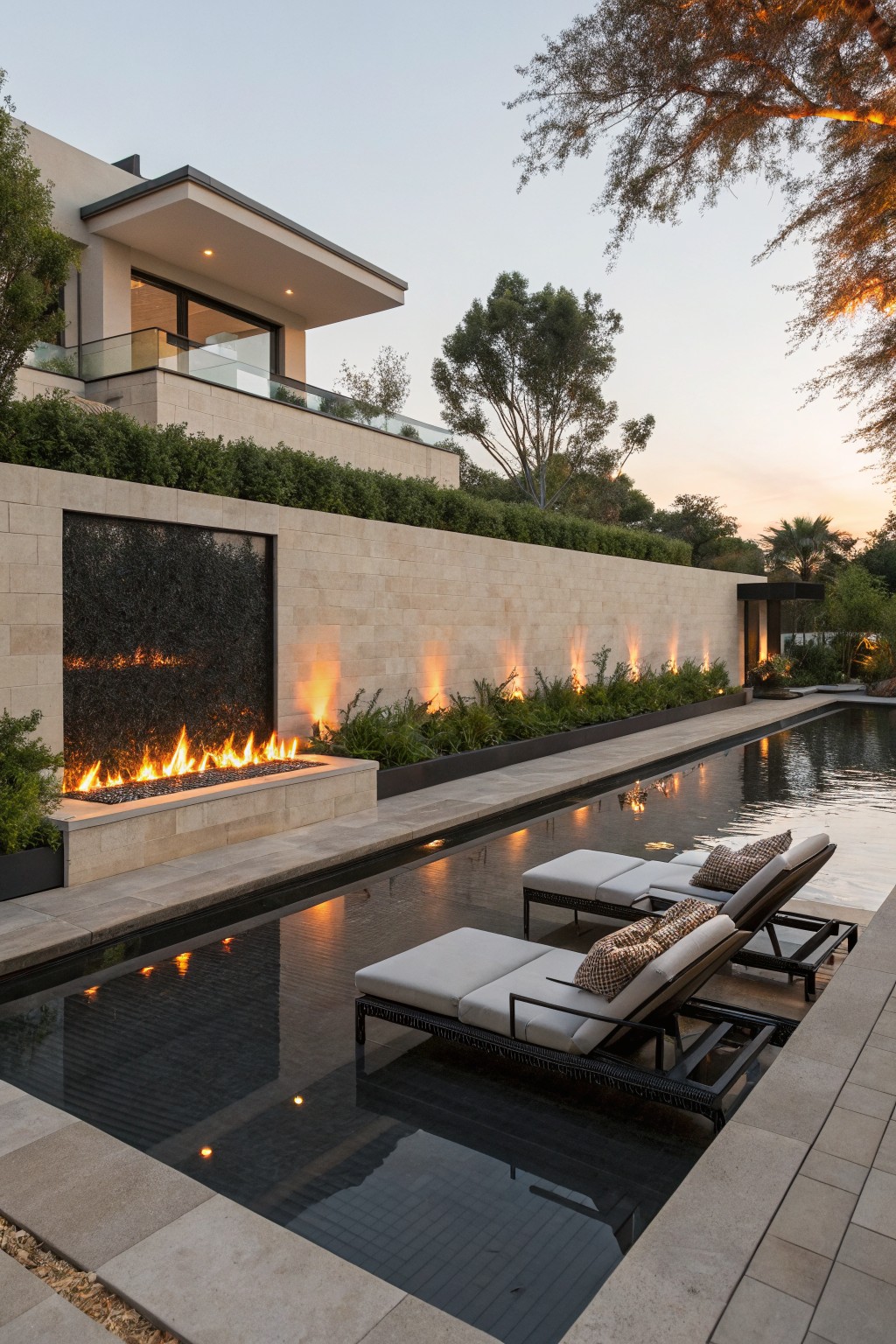
A fire pit set into a wall keeps the seating area open while still giving off plenty of heat. It works especially well when the wall already exists as a boundary or pool edge, so the fire becomes part of the structure instead of another object to work around.
This layout suits homes with long walls or raised beds near the pool or patio. Just check that the wall material can take the heat and that the seating sits at a comfortable distance so no one feels the direct flame.
Fire Pit Centered On A Small Deck
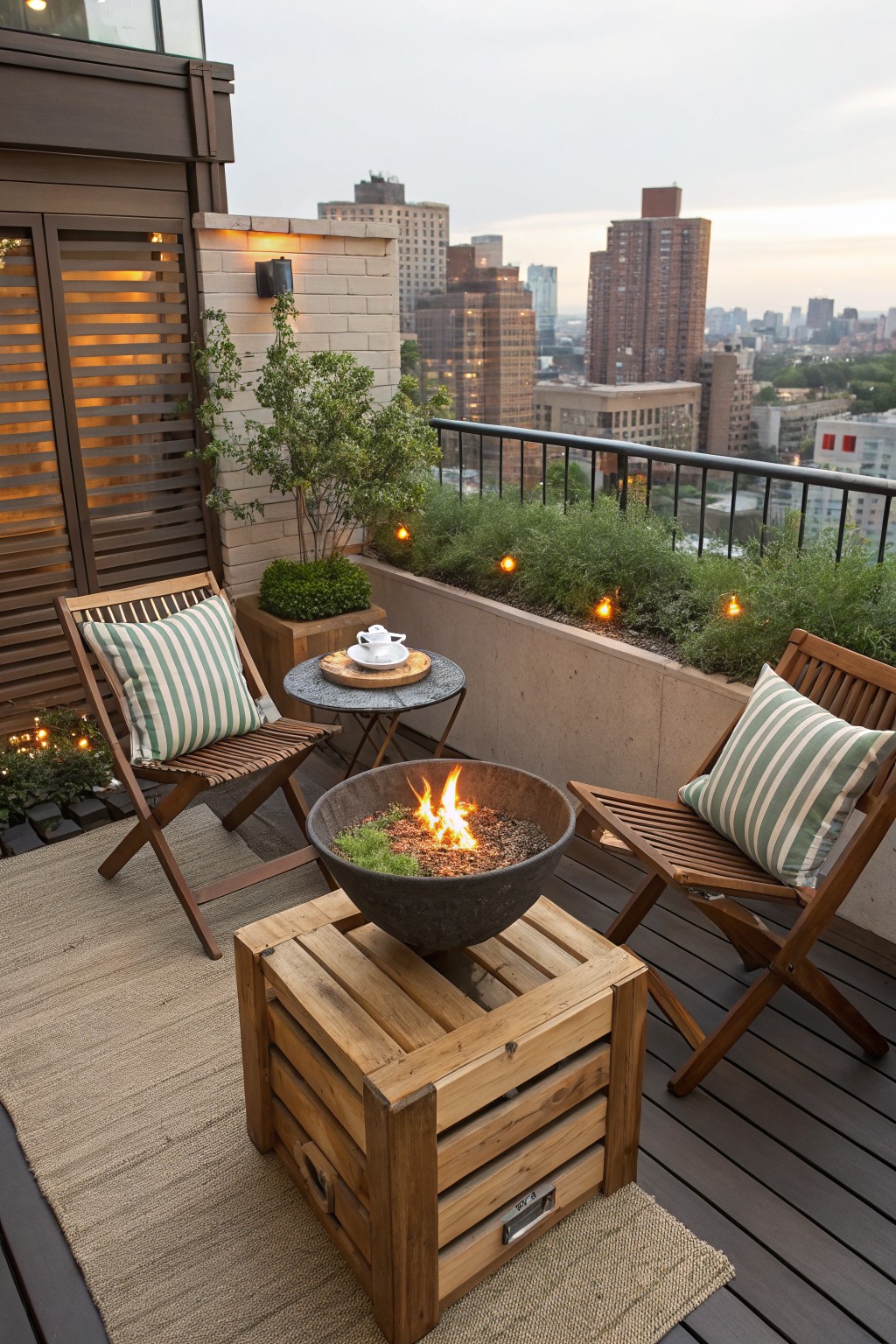
A fire pit works well when it sits right in the middle of the seating instead of pushed to one side. This layout keeps the heat and light shared evenly between chairs, which makes the space feel more like a gathering spot than just a place to sit. On smaller decks or balconies the central placement also helps define the area without needing extra furniture or dividers.
This approach suits urban balconies or compact patios where space is tight. Use a simple wooden base to raise the bowl to a comfortable height and keep it stable on the deck boards. Just leave enough room to walk around the chairs so the setup stays practical for evening use.
Put the Fire Pit in the Middle of the Patio

A fire pit placed right in the center pulls the whole patio together and makes it easier for people to gather without anyone feeling left out on the edges. The round shape keeps the heat and light balanced so conversation flows more naturally than it would with a pit tucked off to one side.
This layout works best on medium to large patios where you can add seating all the way around. Stone construction holds up well and blends with most house styles, though you will want to leave enough walkway space so guests can move around the seating comfortably.
Fire Pit Set in Gravel and Stone
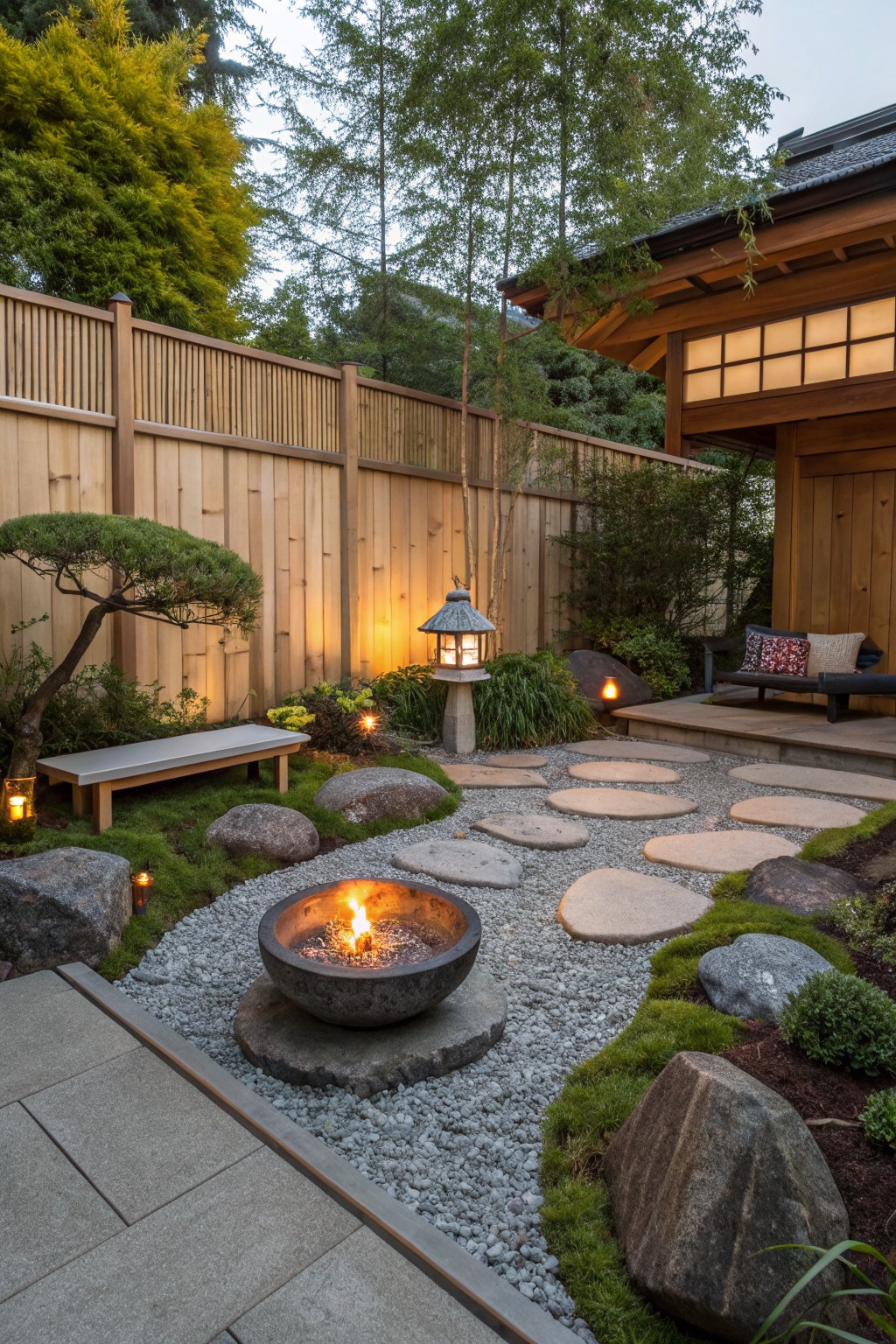
Placing a fire pit directly in a bed of gravel with stepping stones around it gives the area an easy, garden-like feel. The loose surface keeps things casual and helps with drainage, while the stones create simple paths that lead people right to the seating without any extra paving.
This approach suits homes with existing landscaping or smaller yards where a full deck might feel too heavy. Keep the gravel contained and use larger stones to define the edges so the space stays tidy over time.
Anchor Outdoor Dining Around a Fireplace
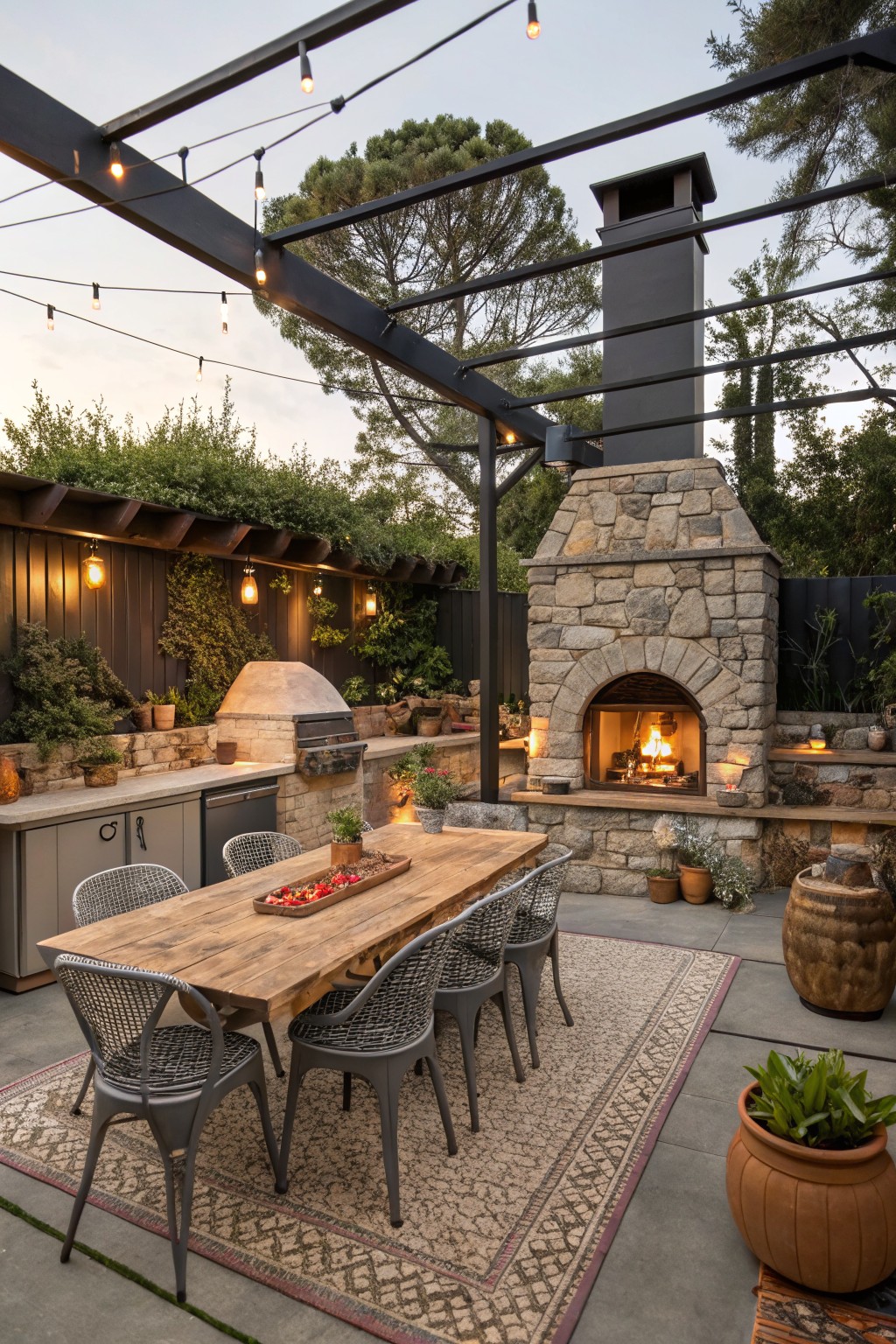
Many patios feel more usable in the evening when the dining table sits close to a fireplace. The fire gives off steady heat and creates a natural spot for people to gather without needing extra heaters or blankets right away.
This works best on covered patios that already have room for both cooking and seating. Keep the table a safe distance from the fire and use the surrounding space for extra chairs so the area can shift from dinner to casual sitting as the night goes on.
Building A Fire Pit Into The Deck
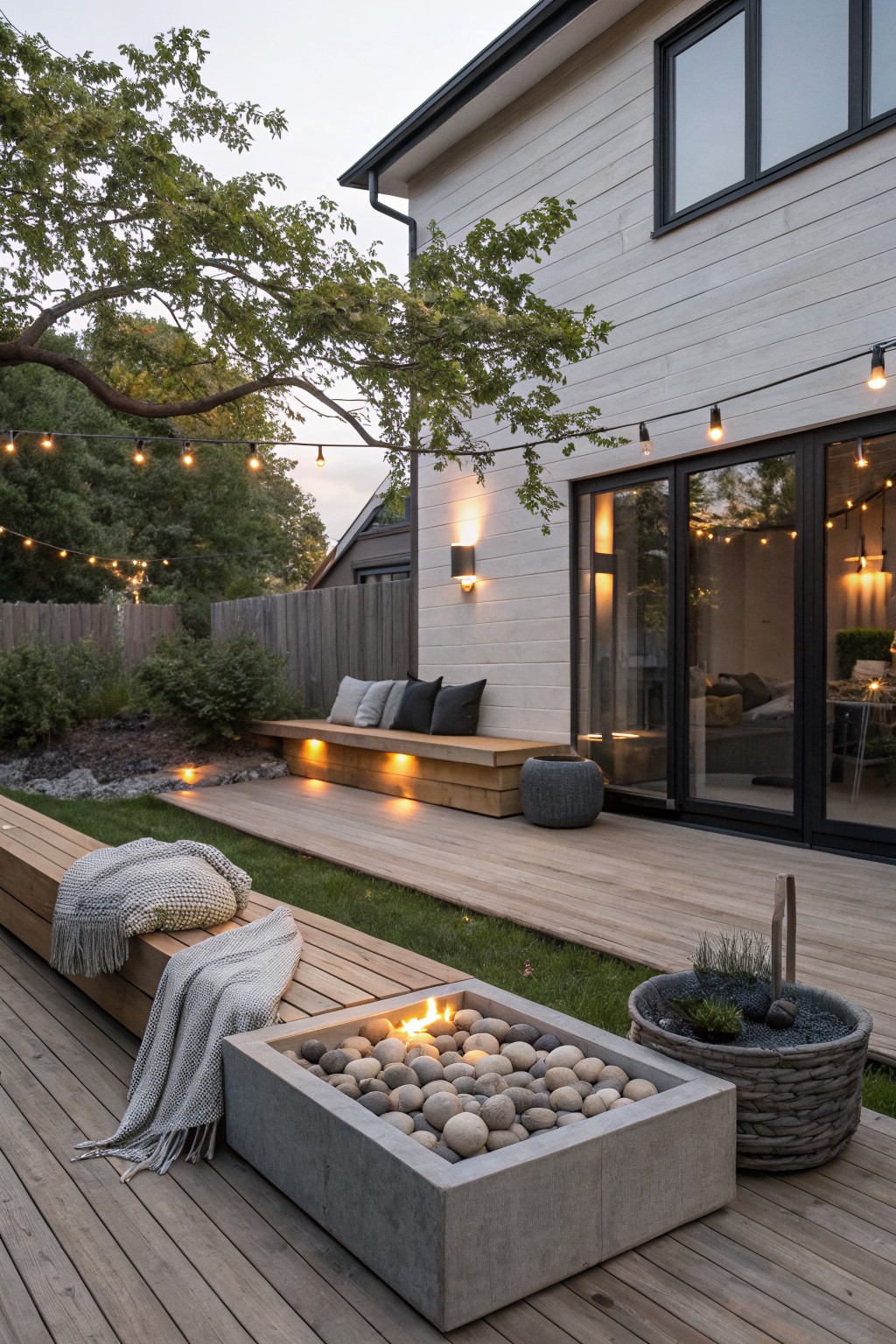
Setting the fire pit into the deck surface keeps the whole area on one level. It feels more connected than a freestanding unit and leaves more room for chairs and foot traffic around it.
This approach works well on medium to large decks where you already have the structure in place. It suits homes that use the outdoor space often in the evenings and want the fire to feel like part of the deck rather than something added later.
Frequently Asked Questions
Q: How far should seating sit from the fire pit? A: Set chairs three to four feet out so the heat feels inviting without roasting anyone. That gap also leaves room to walk around and toss on another log.
Q: What works if the patio gets a lot of wind? A: Angle the pit so smoke drifts away from the main seats and add a low screen on the windward side. The flames stay steady and guests avoid constant eye irritation.
Q: How do I stop the area from feeling too dark once the sun sets? A: String a few low-watt bulbs overhead or tuck solar path lights around the perimeter. The soft glow keeps the fire as the focus while everyone can still see their drinks.
Q: Is a gravel base enough under the pit itself? A: A packed gravel layer drains well and keeps the unit level on most patios. Just check it each season and top up any spots that settle.