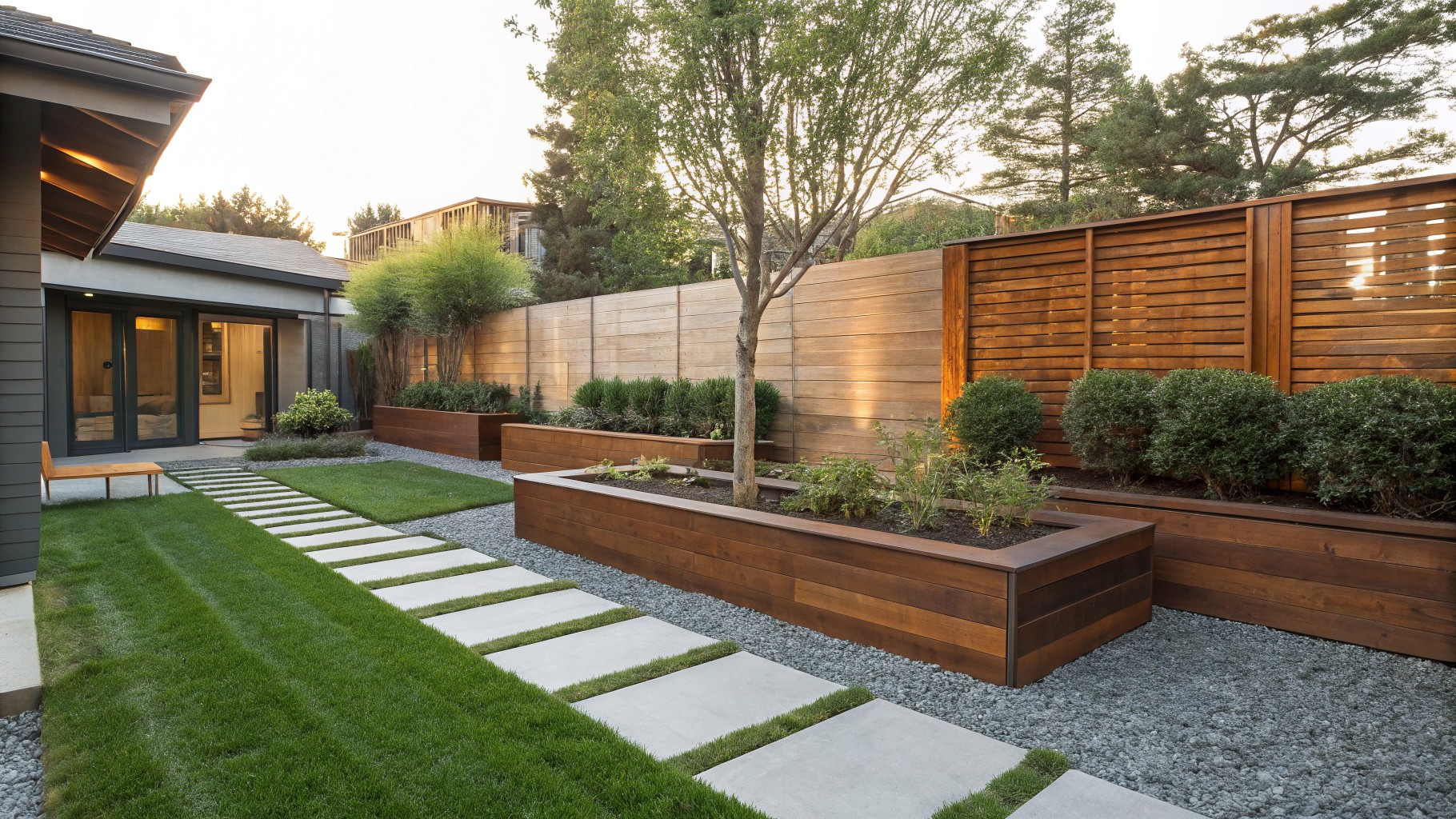
In my yard, I’ve learned that clean lines and structure make all the difference in turning a backyard into a space that actually holds together over seasons.
Paths and edging give the layout purpose, guiding movement while plants gradually soften the edges.
What stands out first to visitors is usually the framework, the way it shapes views without overwhelming the natural growth.
I would test a few of these structured beds next spring, since they promise low upkeep with real impact.
They adapt well to different sizes, worth noting down for your setup.
Wide Stepping Stone Pathway in Grass and Gravel
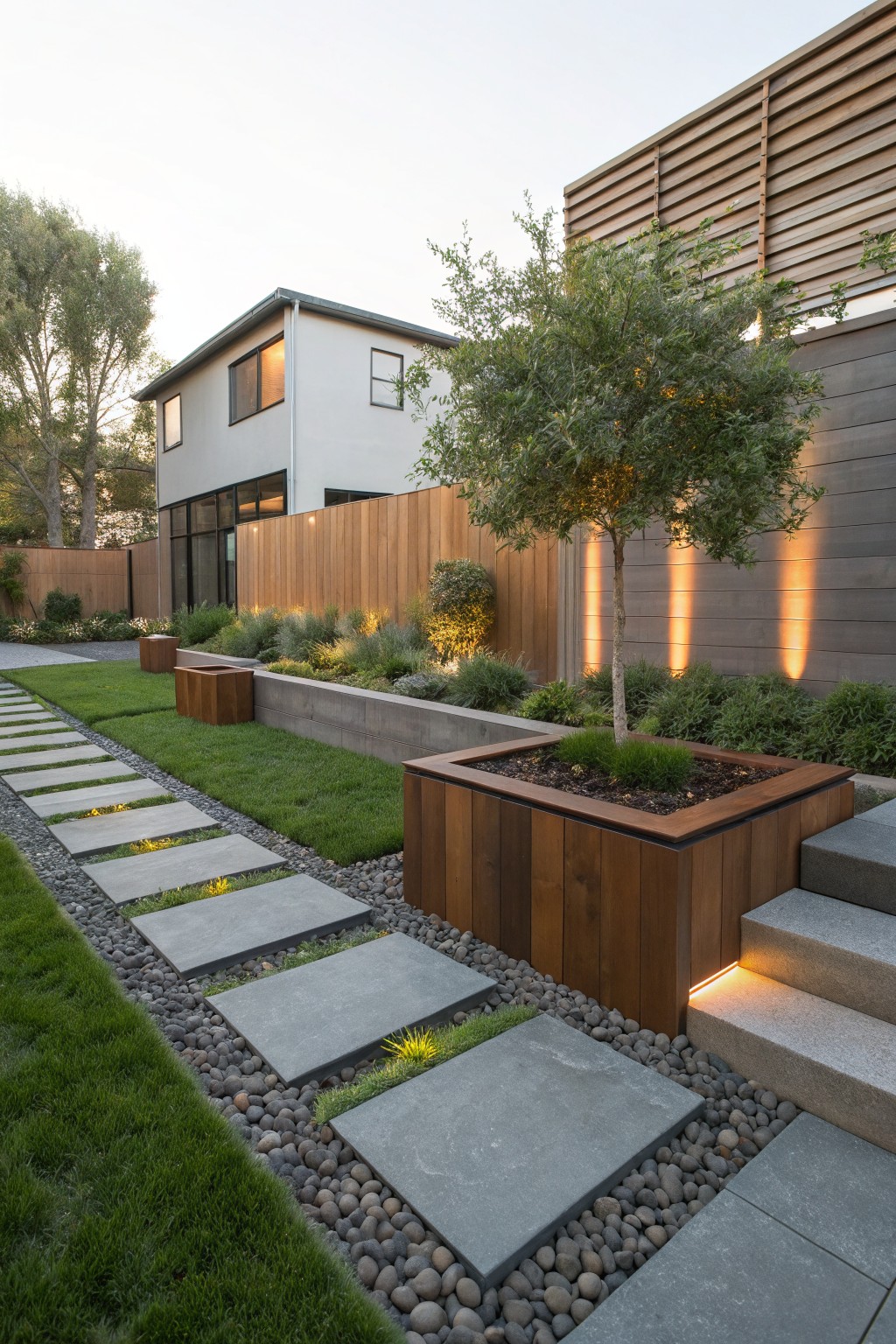
One straightforward way to add structure to a backyard is with a path made from large concrete slabs set into grass and gravel. The slabs are wide enough for comfortable walking, and the spaces between them let grass grow right up close. Small uplights along the edges add just enough glow at night without overpowering the look. It keeps the yard feeling open and green while guiding you clearly to the house or seating area.
This setup works best in yards that get regular foot traffic but still need that lawn feel. It’s low maintenance too, since gravel fills in any gaps and stops mud. Try it leading from a gate to a patio, or along a side yard. Just make sure the slabs are level so no one trips.
Linear Reflecting Pool in a Narrow Yard
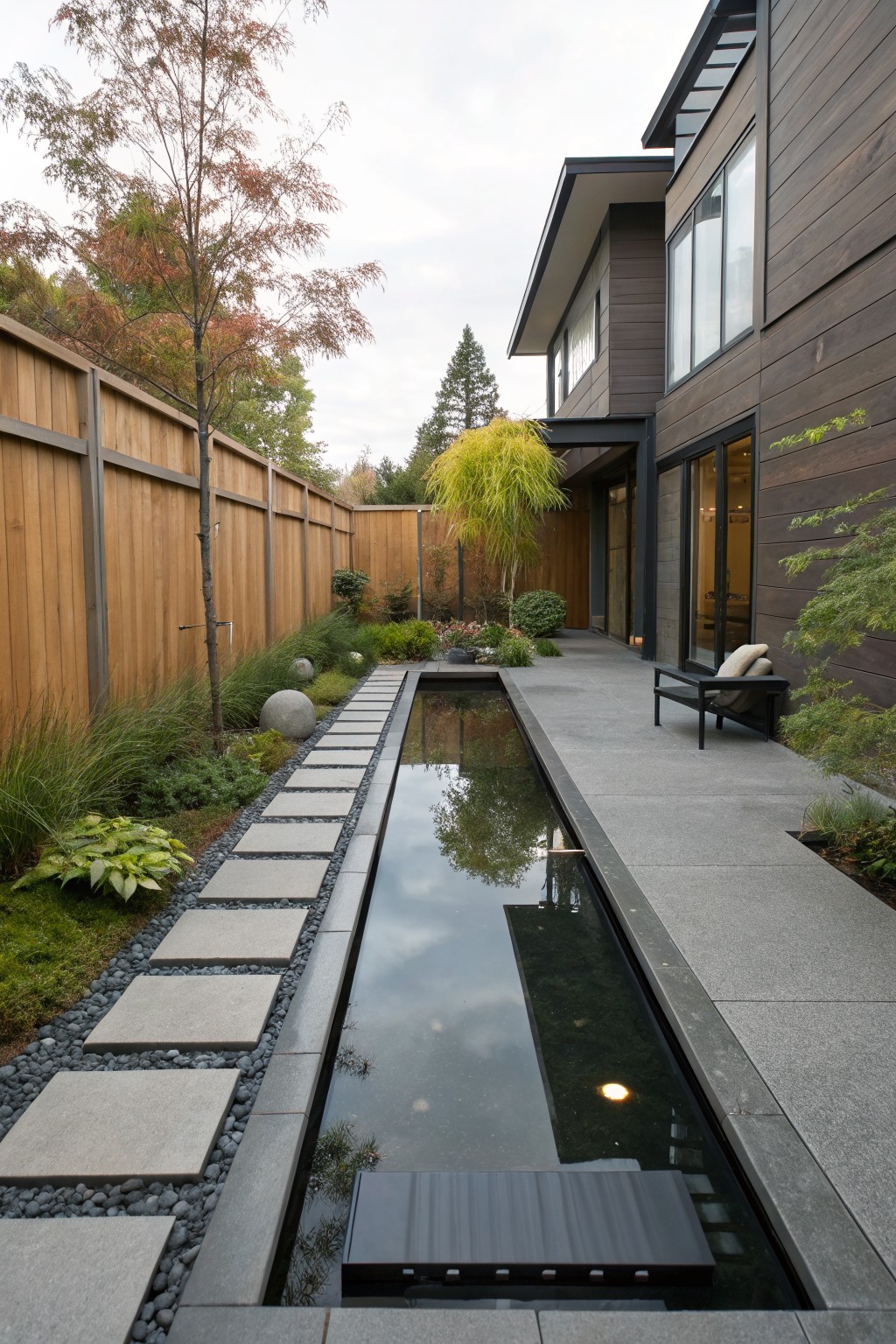
A slim reflecting pool like this runs right along the house in a tight side yard. It pulls in the surrounding trees and sky with its mirror surface. Paired with simple stepping stones and gravel edging, it gives the space real direction without taking up much room. The low plants on either side keep things calm and contained.
This setup works best in long skinny spots where you want some interest but not clutter. Line it with concrete slabs and dark pebbles for that clean look. It suits modern homes with wood siding. Just keep the water moving a bit to avoid stagnation. Easy to maintain if you skip heavy planting.
Terraced Slopes with Stone Walls

Sloped backyards often go unused. Terracing fixes that by carving out level spots with stone retaining walls. In this setup, the walls create planted terraces, while simple wooden steps link them up. Low grasses fill the beds, and path lights add evening usability without fuss.
This idea suits hillside homes, especially modern ones blending into nature. Pick rugged local stone to blend in, and space steps for easy climbs. Go for drought-tolerant plants to keep upkeep low… just ensure good drainage behind the walls.
Side Yard Walkway with Raised Planters
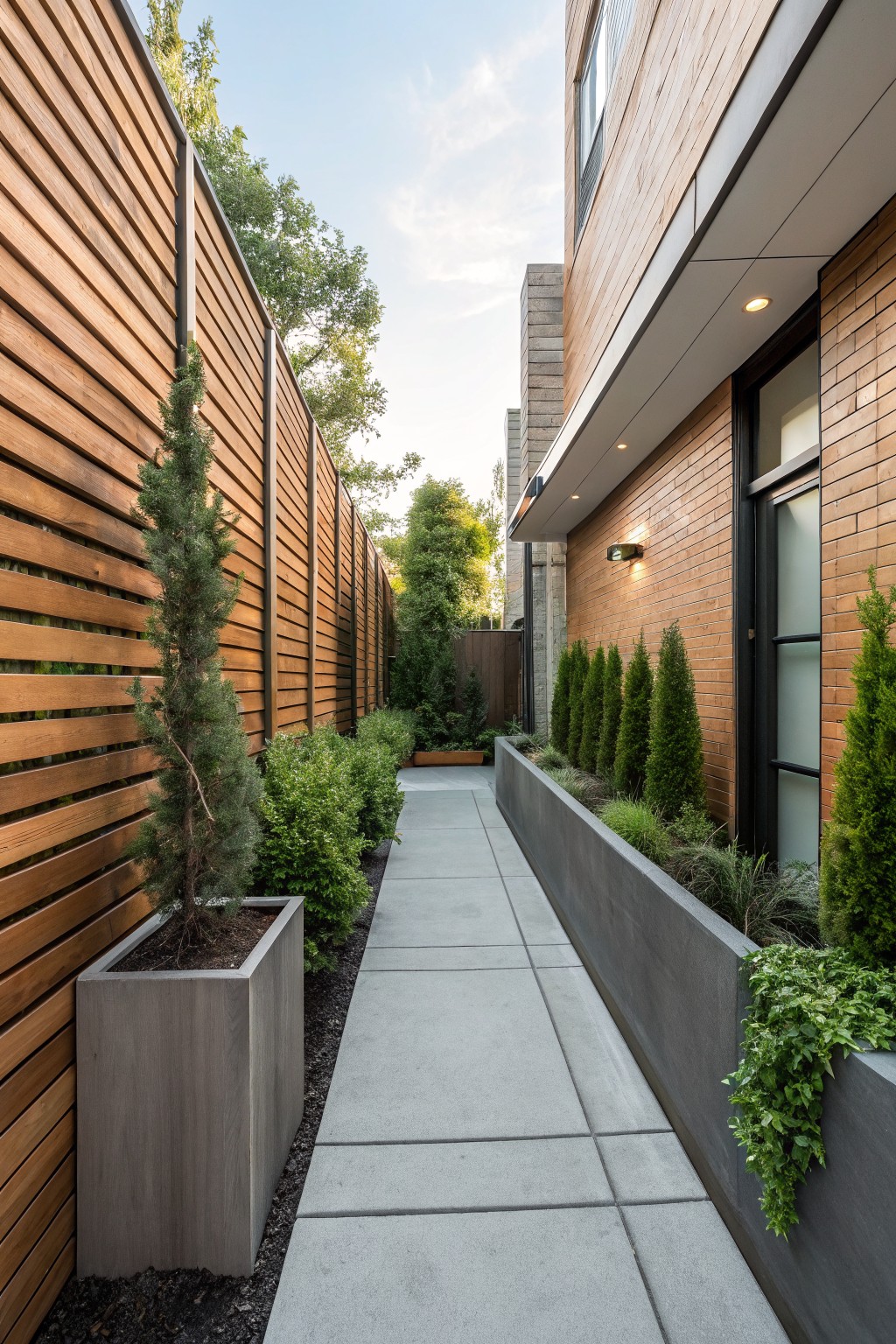
A narrow concrete path like this makes the most of a skinny side yard. One side has a tall slatted wood fence for privacy. The other uses simple raised concrete planters packed with upright conifers and flowing grasses. It keeps everything neat and structured. No room feels wasted.
This works best next to a modern house where you need access without losing yard space. Pick tough, narrow plants that don’t spread. Skip anything too bushy. It suits townhomes or lots with close neighbors. Easy to maintain once set up.
Sunken Fire Pit with Bench Seating
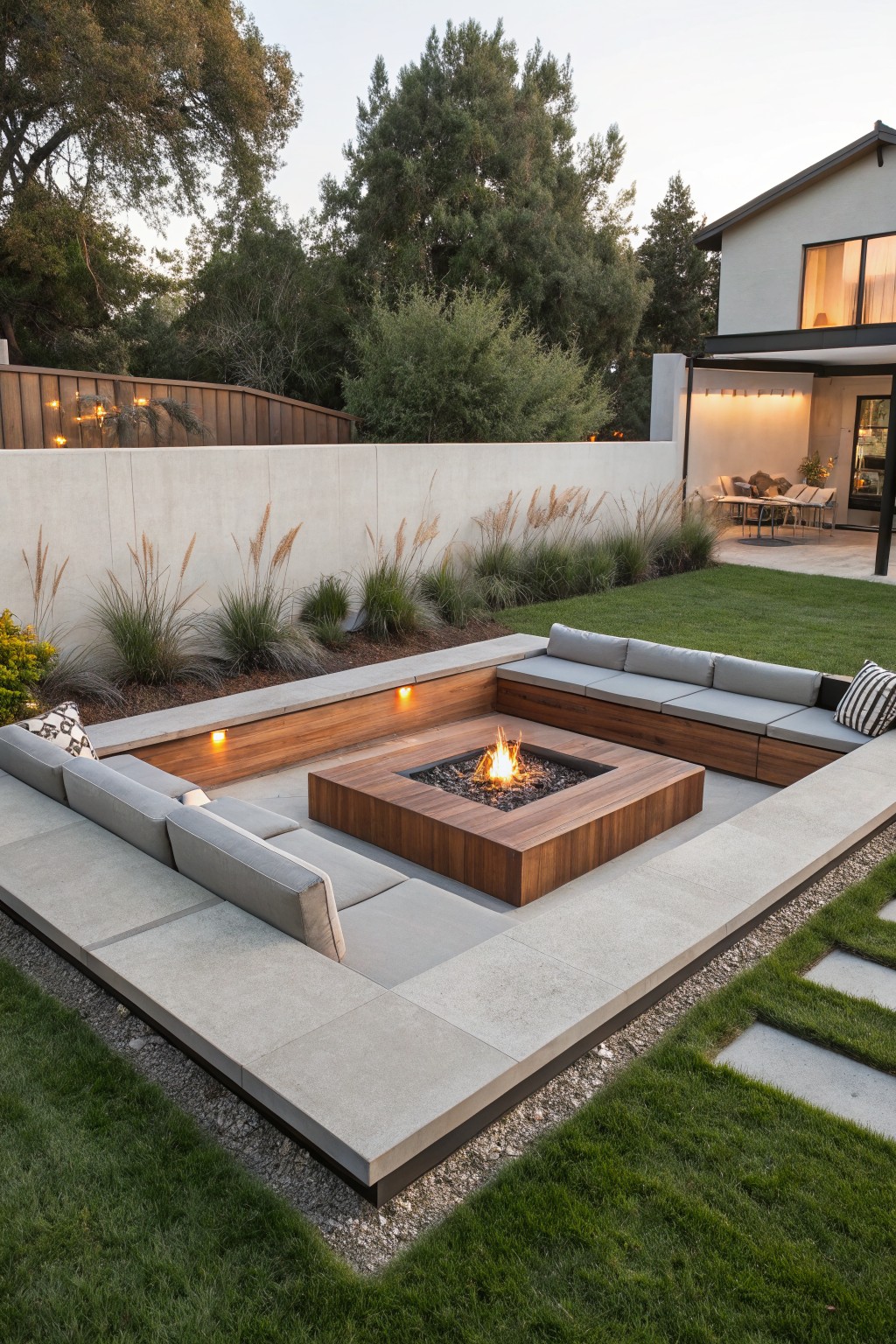
A sunken fire pit like this pulls everyone together around the flames. The square pit sits flush in a concrete platform, wrapped by simple wooden benches that form an L-shape. Low lights along the edges add a soft glow at night, and it keeps the whole area feeling structured without taking up too much yard space.
This works best in backyards with room for at least eight people to sit comfortably. Go for it if you want a modern spot for evenings outside… just make sure the concrete is level and the wood is treated for weather. It fits clean-lined homes, tying right into the grass and planting around it.
Narrow Pool Along the Terrace Edge
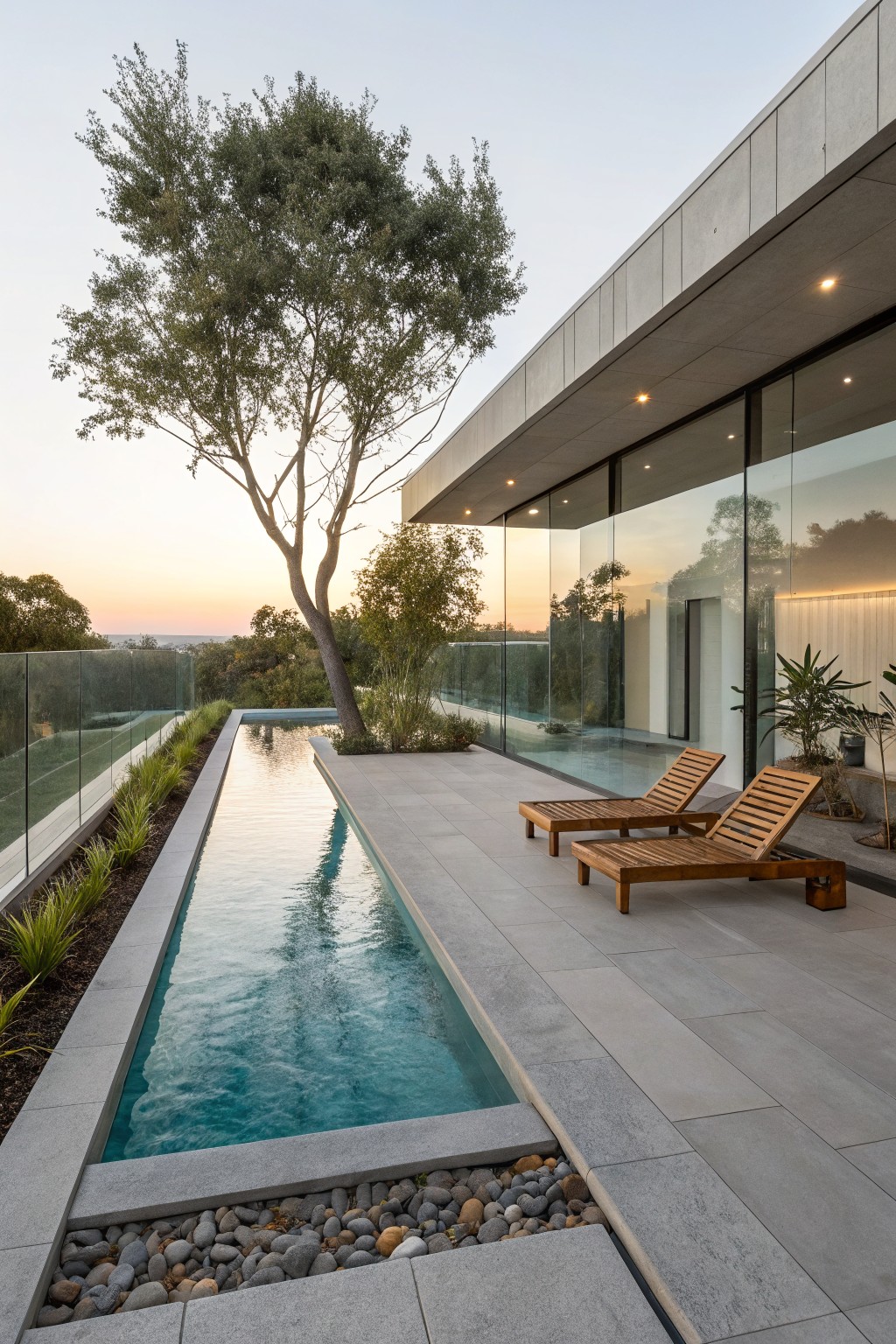
A narrow pool like this runs right alongside the house wall, turning a simple deck into a quiet water feature. The turquoise water reflects the trees and sky, and those wooden loungers make it easy to stretch out and unwind. It keeps the look clean without taking up much room.
This works well on sloped lots or rooftops where you want a pool but space is limited. Pair it with concrete decking and glass railings to match modern homes. Skip busy patterns. Just add low plants along the edge… and you’ve got a spot that feels both fancy and usable.
Curved Paths in Desert Gardens

A smooth concrete path curves gently through this yard, lined with gravel mulch, chunky boulders, and clusters of agave and succulents. It pulls the eye along without feeling rigid, and the structured plants add height and texture that fits right in with dry yards. Keeps everything looking tidy and intentional.
This works best in sunny, low-water spots like backyards in the Southwest. Start with the path to set the flow, drop in boulders for anchors, then tuck in tough plants like blue agave or spiky cactus. Pairs nicely with simple house walls. Just watch the path width so it feels walkable, not too narrow.
Formal Boxwood Parterres
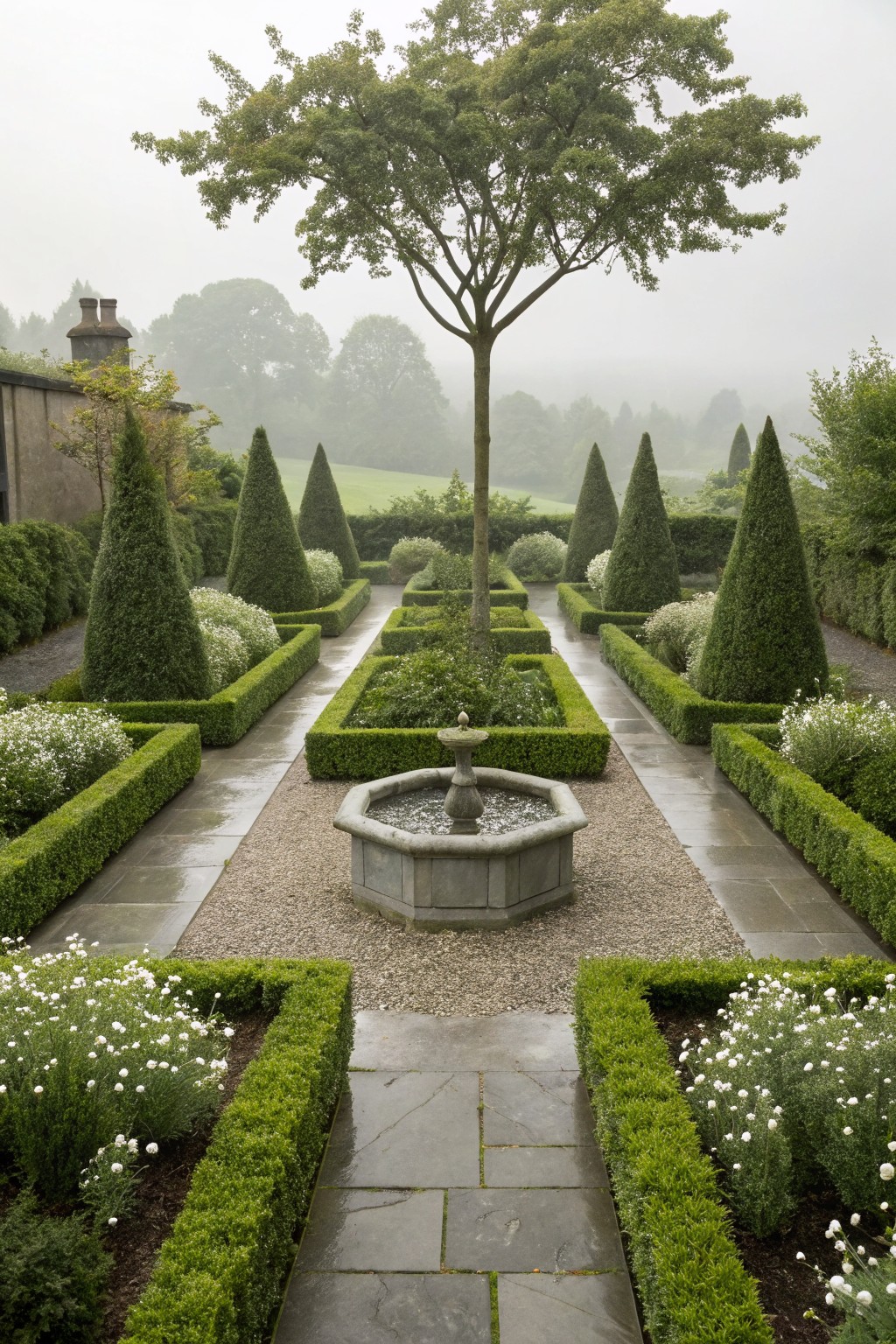
A formal parterre garden like this one uses clipped boxwood hedges to create clean, repeating patterns that give your backyard real structure. The symmetrical layout pulls everything together around a simple stone fountain at the center, and those gravel paths make it easy to walk through without feeling too fussy. It stands out because the straight lines and shapes keep things orderly, even on a foggy day.
You can pull this off in a bigger backyard where you have room for the beds and paths. Boxwoods stay green year-round and don’t need much once they’re shaped right, so it’s practical for low upkeep. Pair it with a house that has some stone or classic lines… it fits traditional spots best, but watch the scale if your yard is small.
Modern Outdoor Kitchen Island
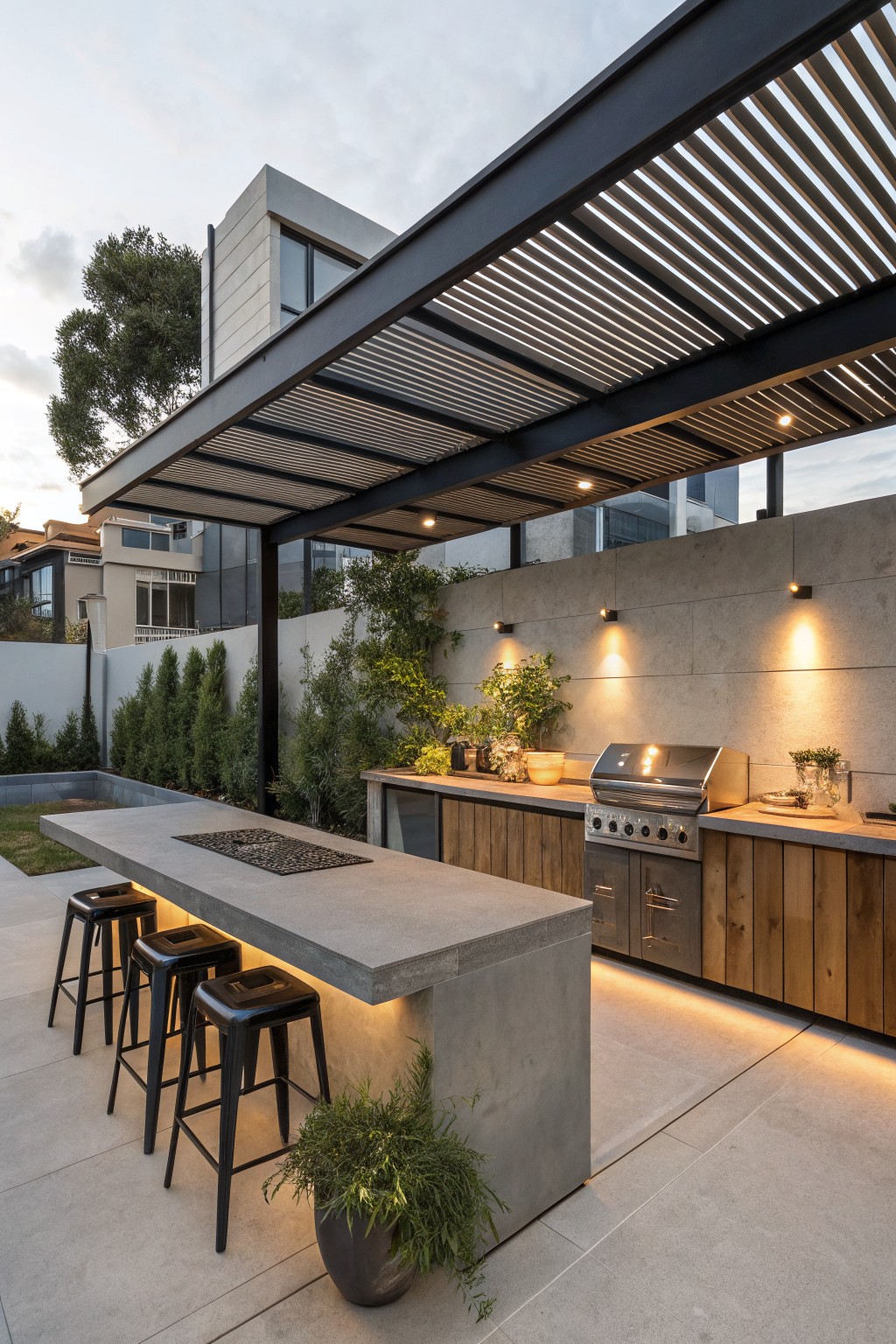
A concrete-topped island like this one pulls double duty as a cooking station and casual bar. With a built-in cooktop right in the center and wood cabinets tucked underneath for storage, it keeps everything handy without cluttering up the space. The clean lines and low glow from LED strips under the edge make it feel sleek and ready for evening cookouts.
This works best in open backyards where you want a spot for grilling and gathering. Go for polished concrete that’s sealed well against weather, add a few stools, and tuck it under a simple slatted roof for shade. It suits modern homes… just make sure the base is solid on uneven ground.
Metal Planters Add Backyard Structure
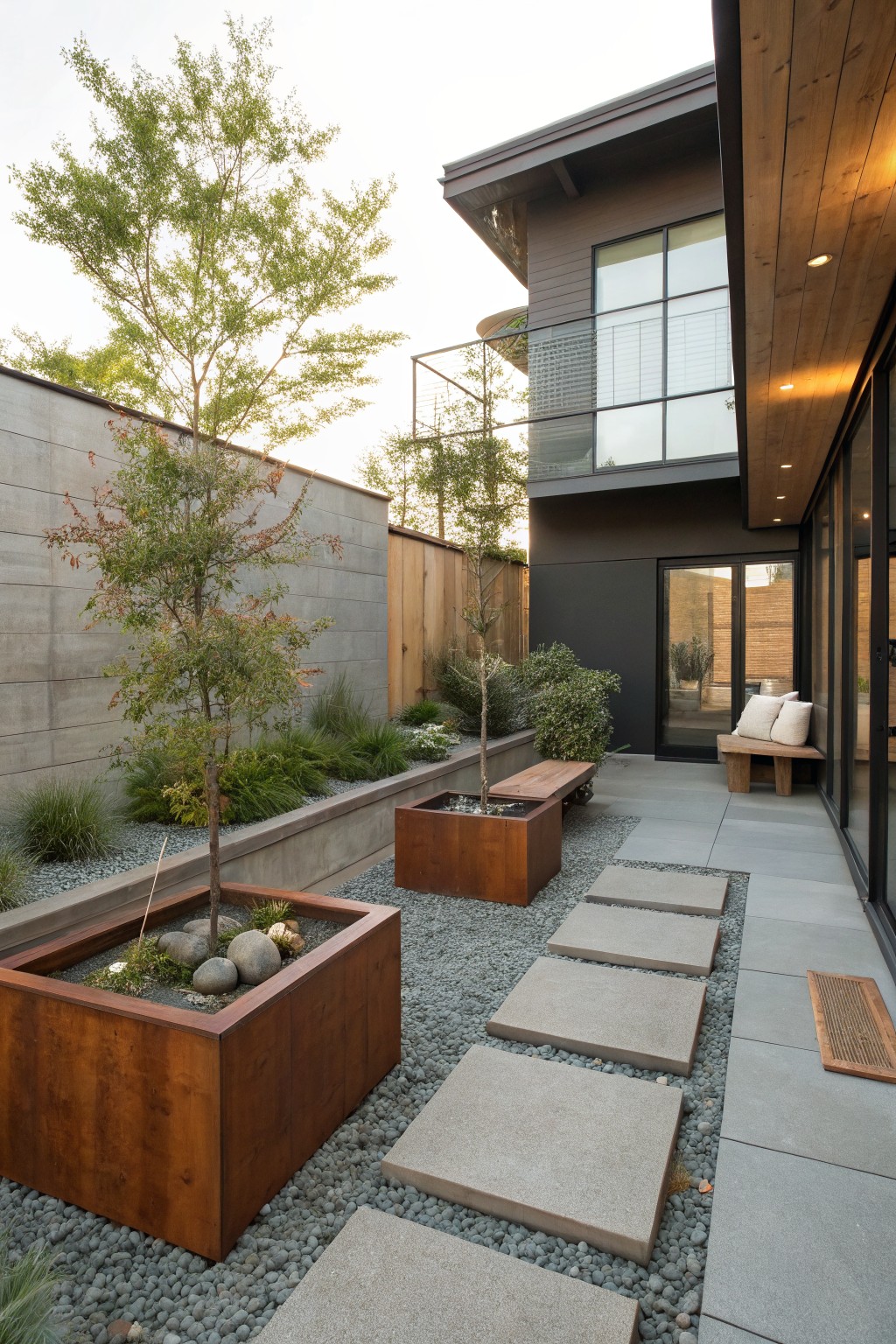
Big corten steel planters like these give a gravel yard real shape. They’re tough, low-maintenance boxes that hold trees, rocks, or simple plantings. The rusty patina fits right into modern outdoor spaces, keeping everything clean and contained.
Use them to line a path or sit near the house entrance. They work best in small backyards where you want focus without lots of mowing. Pair with gravel and wide stepping stones, but pick sizes that match your scale.
Stepping Stone Paths in Gravel Gardens

A simple path of square concrete stepping stones set into white gravel makes a yard feel calm and put together. Large rocks nearby add weight without crowding the space. The gravel rakes easily into patterns, and low plants like ferns fill in just enough to soften things.
This works best in smaller backyards where you want low upkeep. Start with a gravel base, space the stones for natural steps, then tuck in boulders and a water feature if you like. Skip the grass for less mowing… suits modern homes with clean lines.
Raised Planters with Wood Benches
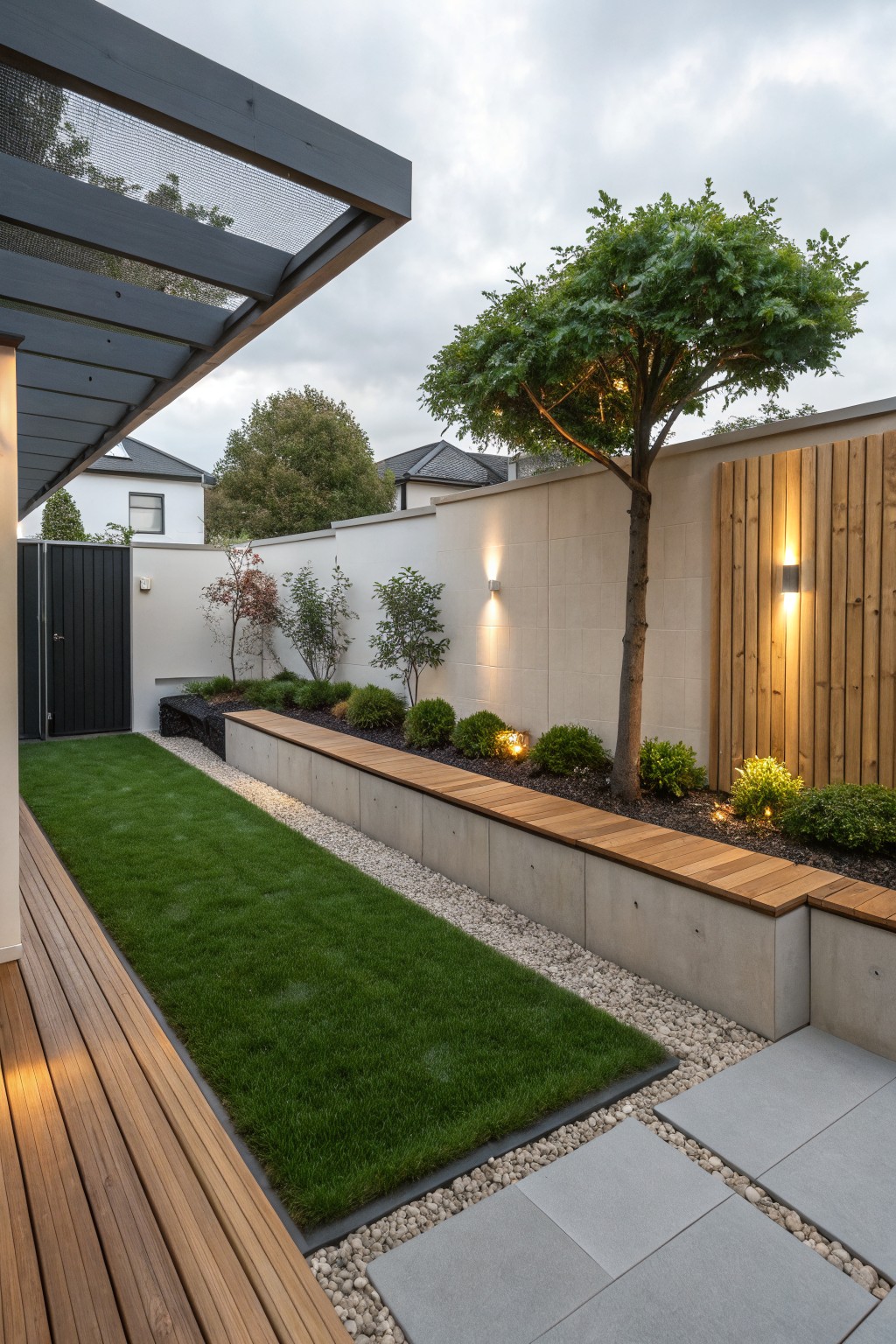
One clean way to edge a backyard lawn is with raised concrete planters topped by simple wood benches. They keep plants contained and add a spot to sit without taking up extra space. In this setup, the beds run right along the fence, holding low shrubs and a small tree, while gravel and pavers lead to a wood deck. The straight lines make the yard feel bigger and more put-together.
These work best in narrow yards or modern homes where you want structure without fuss. Use concrete for the base since it lasts, then cap it with wood like ipe or cedar for comfort. Plant low-maintenance stuff in the beds to avoid trimming headaches. Just make sure the height suits sitting, around 18 inches, and add drainage holes.
Illuminated Gravel Pathways
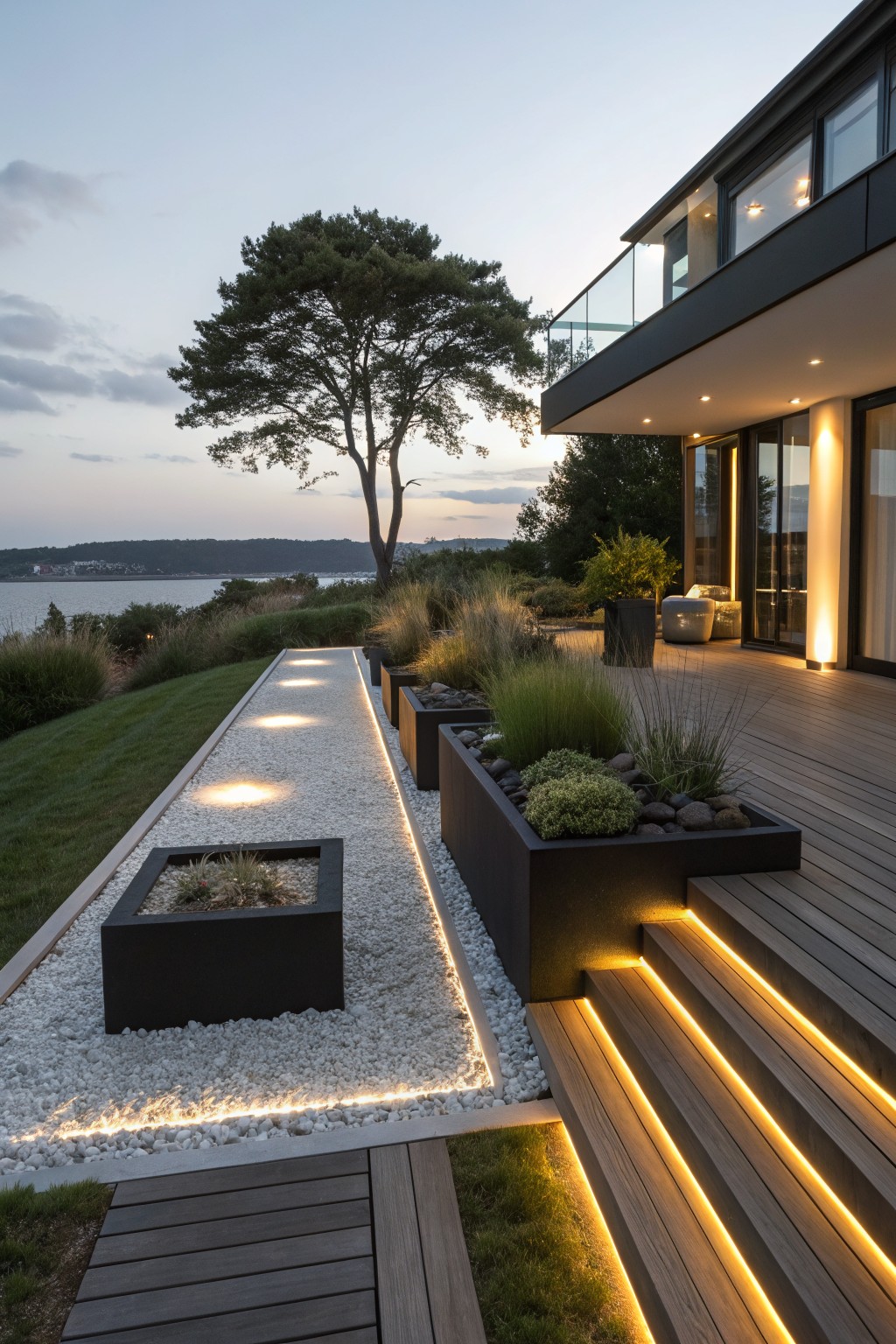
One simple way to add structure to a backyard is with a straight gravel path edged in LED strip lights. It pulls the eye right through the space, especially at dusk when the glow kicks in. Here, white pebbles fill the walk, with black metal planters holding tall grasses on both sides. That clean line keeps things modern without much upkeep.
You can run this along a side yard or up to a deck, perfect for sloped lots or narrow spots. Use low-voltage lights for safety, and pick angular planters to match. Skip curves if you want that sharp look. Works great near a house with glass walls, tying the yard to indoor views.
Built-In Bench with Linear Fire Pit
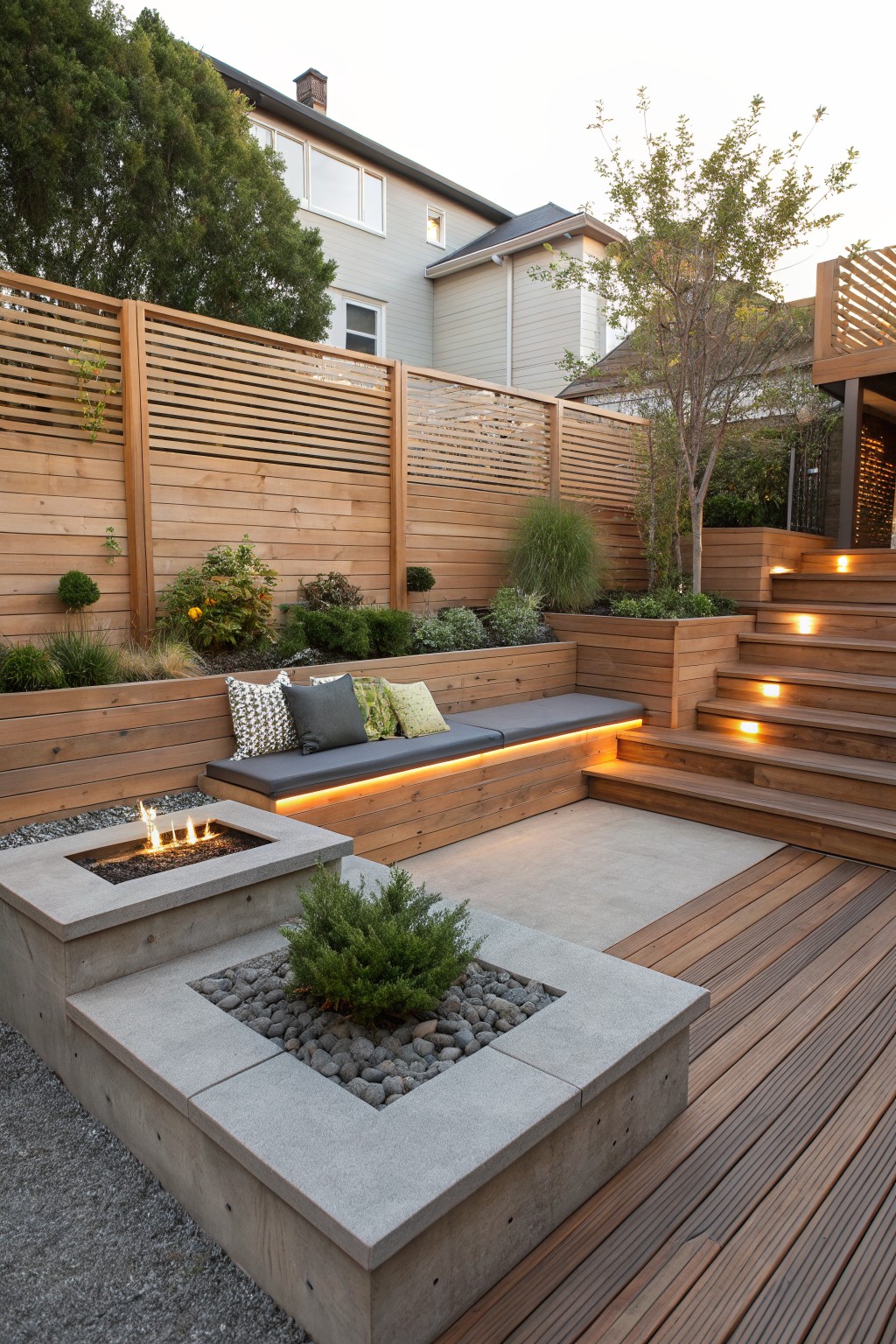
One simple way to make a backyard feel more like an extension of the house is with a built-in bench wrapped around a linear gas fire pit. Here the concrete fire feature sits low and sleek, right next to the cushioned bench on a wooden platform. The flames add warmth on cooler evenings without taking up extra space. LED strips under the bench edge give it a soft glow at night, tying into the steps nearby.
This setup works best in sloped yards where you need to level out areas for seating anyway. Pair the wood tones with concrete and gravel for that clean modern look. It’s practical for small gatherings, just add pillows and you’re set. Keep plants in raised beds close by to soften the hard edges a bit.
Simple Gravel Path with Stepping Stones
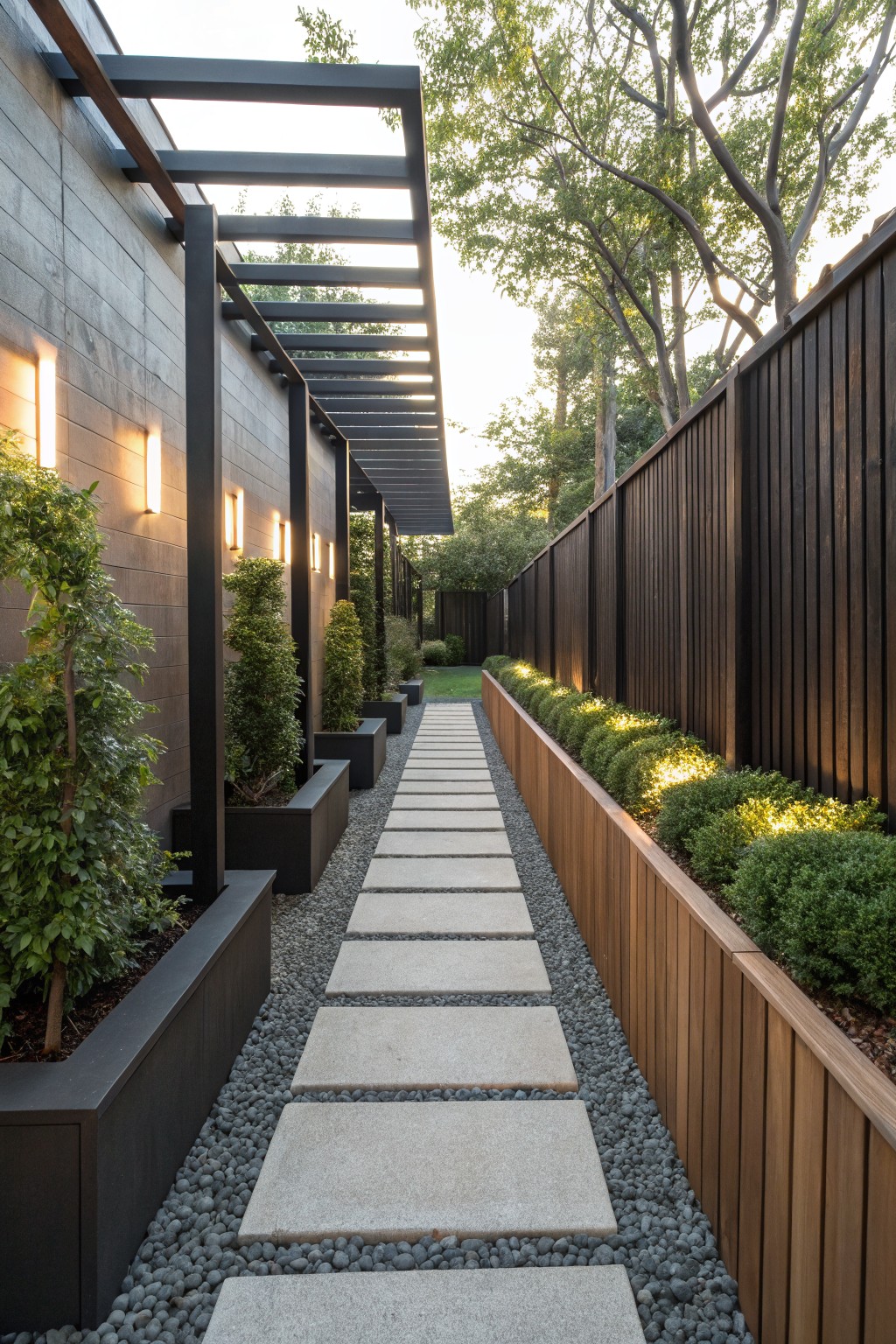
One straightforward way to guide people through a narrow side yard is with large square pavers set into gravel. This setup keeps things open and easy to walk on. The stones here are spaced just right, with pea gravel filling in around them, and raised beds along one side hold neat boxwoods that add some green without crowding the path.
It works best in tight spaces like this, where you want low upkeep and a modern feel. Use concrete or stone pavers that match your house, and keep plantings simple… tall skinny ones against the wall, low ones in beds. Skip mulch if gravel feels cleaner for your yard. Good for modern homes with clean lines.
Linear Concrete Benches as Planters
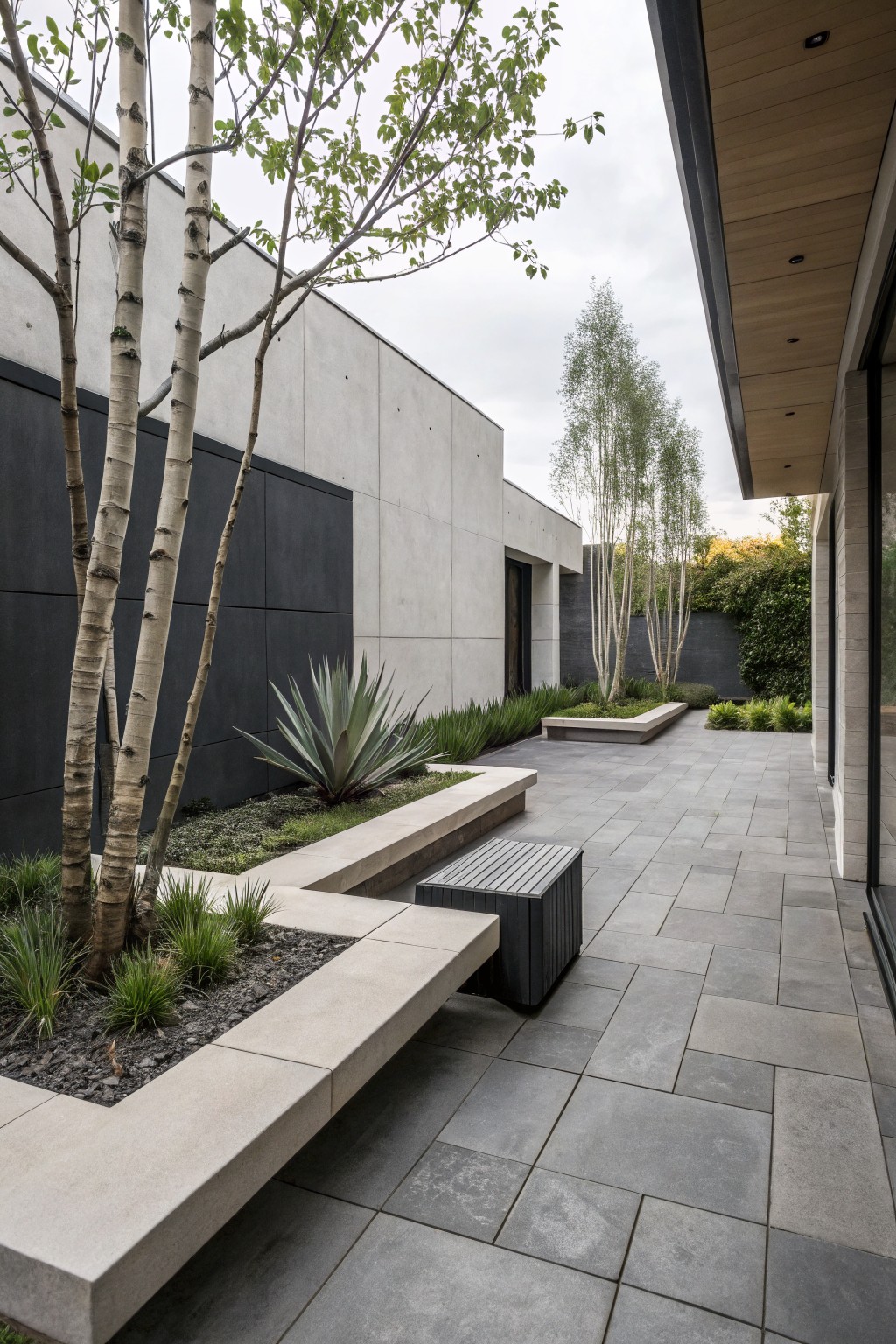
One clean way to add structure to a backyard is with concrete benches that run right into planting beds. You see it here with low grasses and succulents tucked along the edges, gravel filling in for drainage. It keeps everything in straight lines that match the stone pavers and tall birch trees nearby. The result feels open but organized, without any fussy borders.
This setup works best in smaller courtyards or patios where you want seating that doesn’t take up extra space. Use poured concrete or precast slabs for the edges, plant drought-tolerant stuff like grasses or agaves that won’t overflow. It suits modern homes with concrete or stucco walls. Just make sure the gravel layer is deep enough so roots don’t crack the bench over time.
Raised Beds Shape a Tidy Backyard Garden
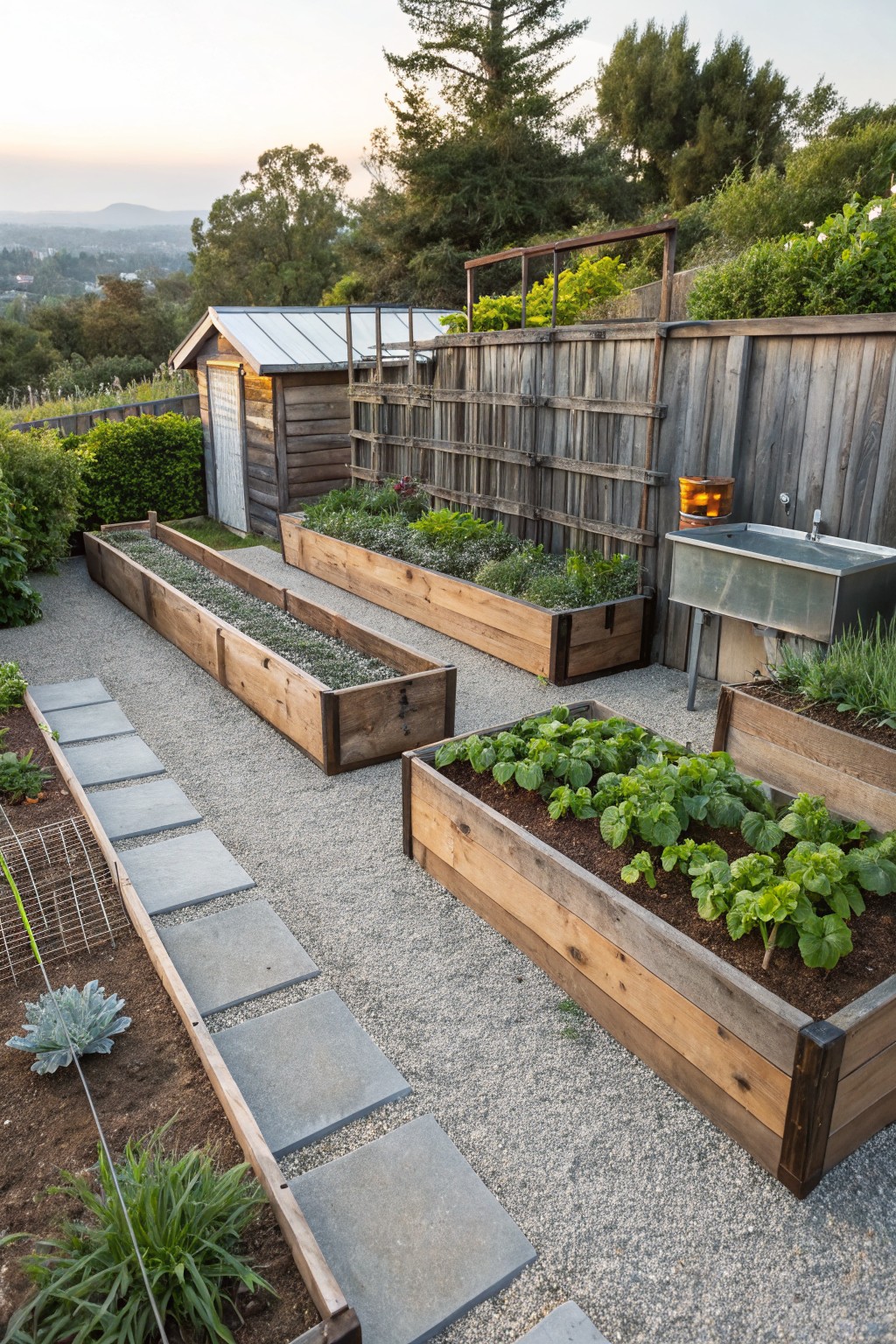
Raised wooden beds like these keep everything in order. They’re lined up straight with gravel filling the spaces between, plus stone steps for easy walking. Veggies and herbs grow right in them, no mess spilling over. The whole setup looks structured but not fussy, and that old wooden shed and sink nearby fit right in without stealing focus.
You can pull this off in any sunny backyard spot, even on a slope. Start with cedar or redwood boards for beds that last, about two feet high to save your back. Gravel paths drain well and need little upkeep. Works best for practical growers who want fresh produce without chaos. Just watch for weeds creeping in from the edges.
Water Channel Garden Path
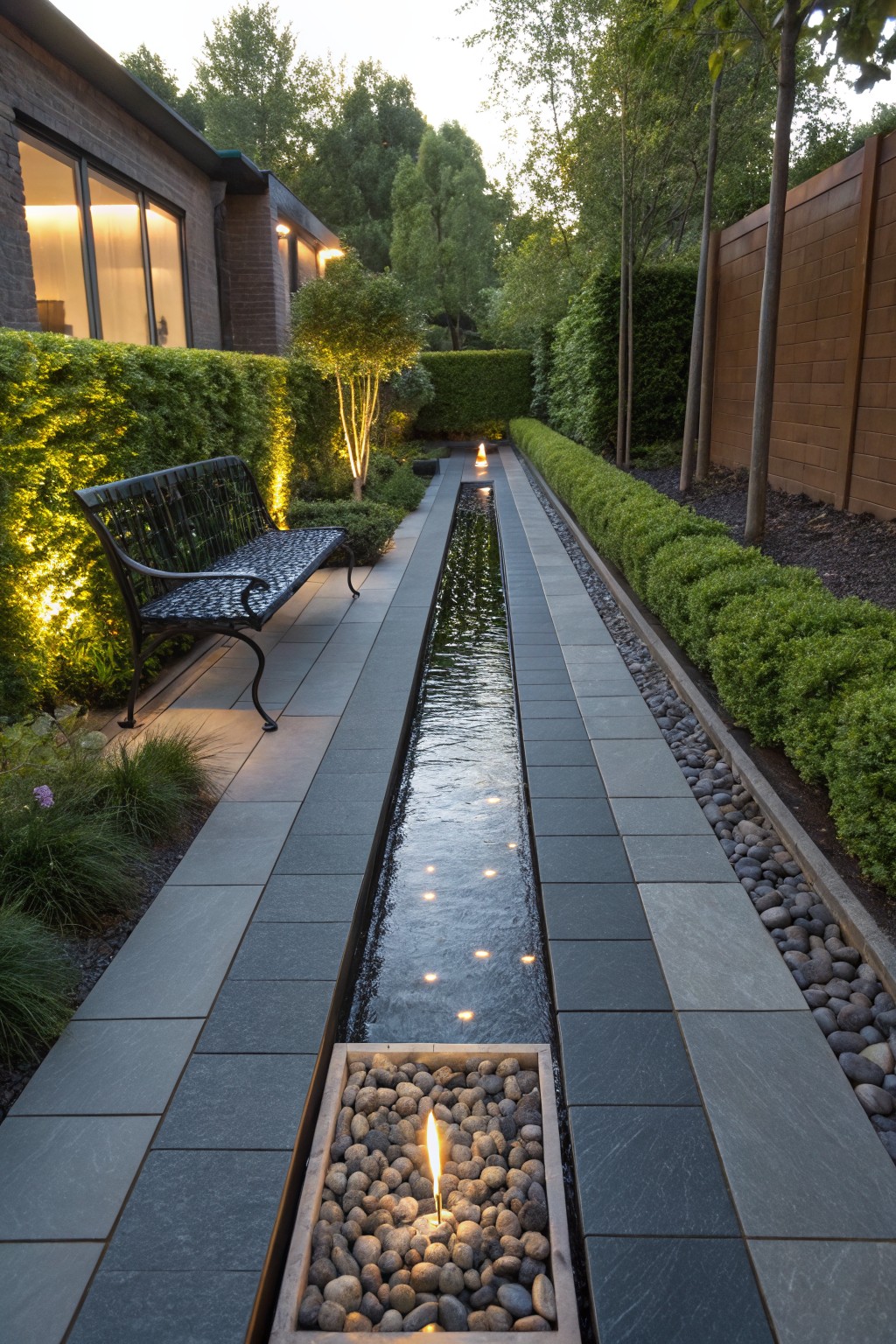
A narrow water channel running straight through the backyard makes a simple, strong path that pulls your eye from one end to the other. It adds a quiet flow without taking up much space, and the reflections from underwater lights give it extra interest at dusk. Paired with straight-edged hedges and stone slabs, it keeps the lines clean and the feel structured.
This works best in longer, narrower yards where you want to connect seating to other areas. Set it between low boxwoods for easy upkeep, add a bench along the side, and maybe a small fire pit basin at the end. Skip it if your space is too small or sloped, since leveling takes some work.
Terraced Retaining Walls for Sloped Backyards

Slopes can be tricky in a backyard. They make it hard to plant or just walk around without slipping. One solid fix is terraced retaining walls like these concrete ones. They turn the hill into flat levels for gardens and paths. The clean lines keep it modern and the plants tucked into the beds add some green without mess.
You build these with poured concrete or blocks, adding steps right into the design. Low-voltage lights under the treads make it safe at night. It works best on hillsides near a modern house. Go for drought-tolerant grasses and shrubs to keep upkeep low. Just make sure the walls drain well or they could crack over time.
Gravel Walkway with Stone Borders
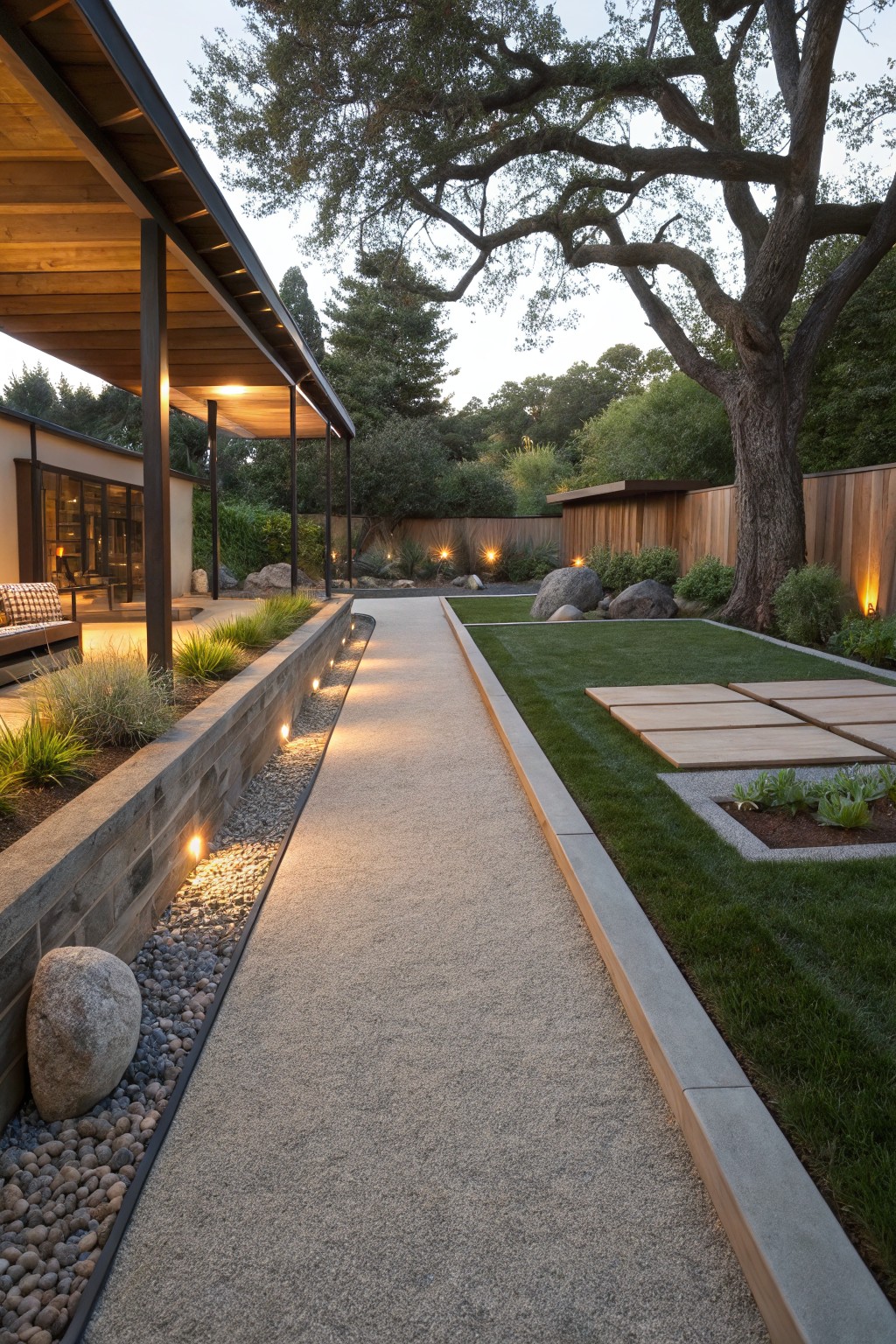
A gravel walkway like this pulls the backyard together with its straight lines and simple borders. The path uses fine gravel for a smooth walk, set off by a sturdy stone retaining wall and a row of pebbles. Small lights along the edge light it up nicely after dark, making the whole thing feel planned and calm.
This setup works well in yards with some slope or level ground. Go for light-colored gravel to keep it bright, and match the stone to your house. It fits modern homes best, especially with grasses and big rocks nearby. Skip it if you want something super formal, though. Keeps maintenance low once it’s in.
Patio Edged with Linear Boxwood Planters
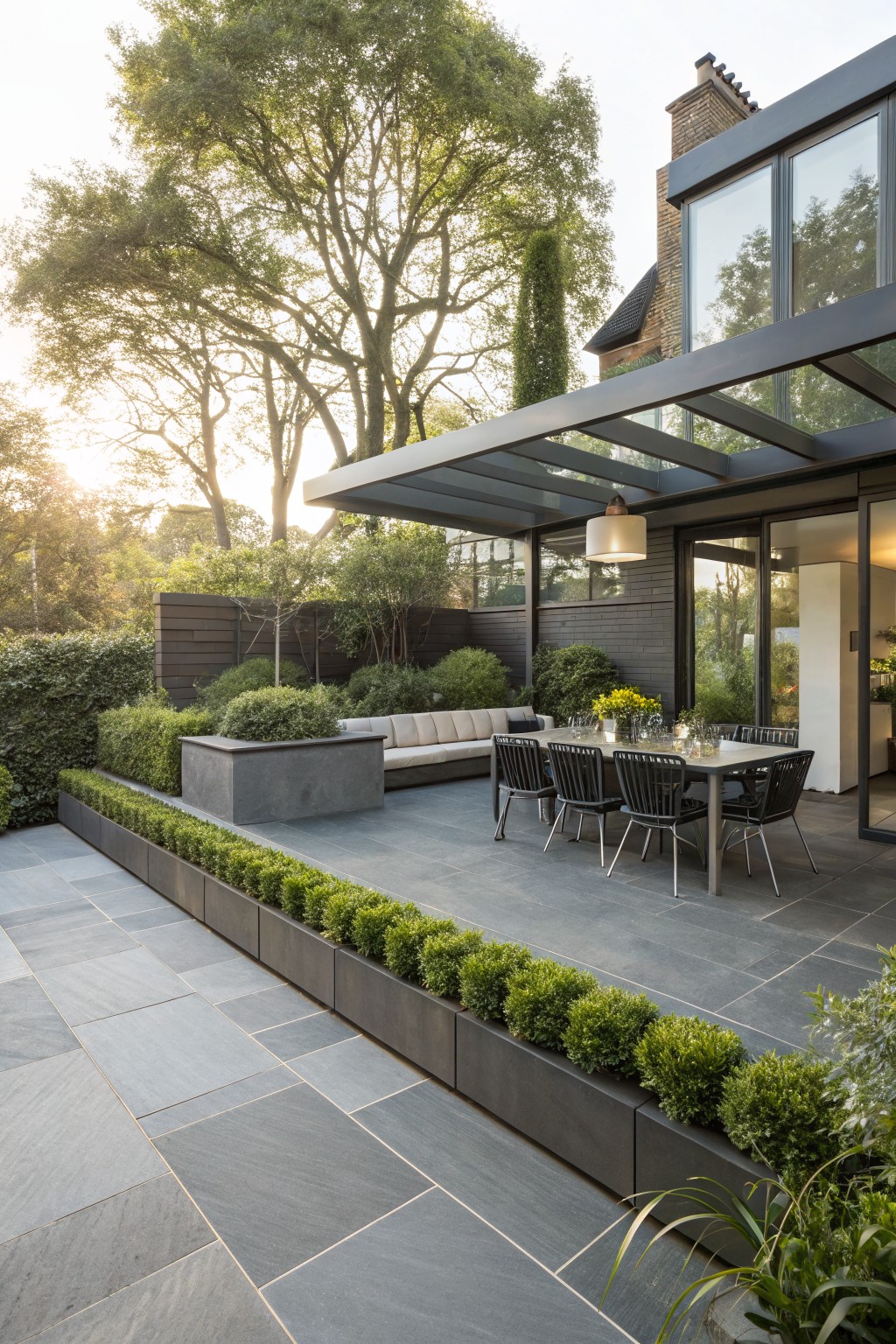
One simple way to give your backyard patio some structure is lining the edges with raised black planters full of uniform boxwood hedges. In this setup, the low green hedges run right along the grey slate pavers, keeping the open dining and lounge area neatly framed without blocking views. The clean lines match the slim black chairs and metal table, making the whole space feel modern and put-together.
This works best on flat terraces next to the house, especially if you want low upkeep. Go for matching planters to keep it simple, and trim the boxwoods a couple times a year. It suits smaller yards or spots with a contemporary extension, adding privacy from the sides while letting light through.
Clean Grid Pavers for Backyard Paths
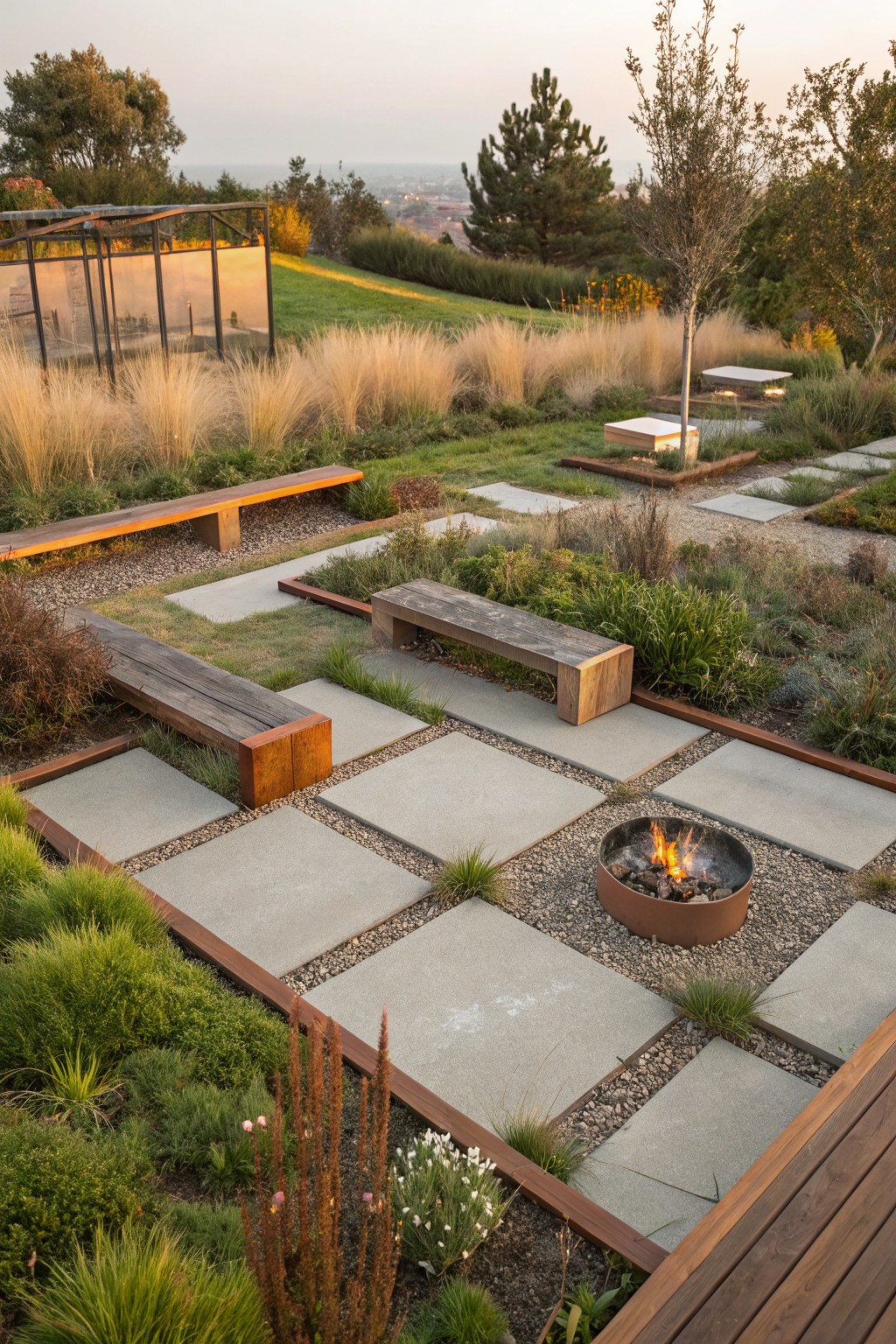
Large concrete pavers laid in a simple grid pattern make a strong base for modern backyard paths. They stand out here because the oversized slabs with gravel between them keep everything looking sharp and structured, without a lot of fuss. The setup pulls your eye right to the fire pit in the center, and it lets low grasses and benches fit in naturally.
This works best in sloped yards or terraced spaces where you want clear zones for walking and sitting. Use it around a fire pit or seating area to define the layout without overwhelming the plants. Stick to neutral tones so the hardscape doesn’t compete with your greenery, and it suits smaller backyards too. Just make sure the gravel drains well to avoid mud after rain.
Frequently Asked Questions
Q: Can I pull off these clean, modern lines in a tiny backyard?
A:
Start with simple raised planters or a sleek gravel path. They take up little space but add that structured punch right away. Scale everything down, and your yard feels bigger.
Q: How do I keep gravel paths looking neat without constant raking?
A:
Edge them with metal strips sunk into the soil. This holds the stones in place through rain and play. Refresh the top layer once a year, and they stay crisp.
Q: What’s a cheap way to add structure without building walls?
A:
Stack concrete blocks or old bricks for low borders around planting beds. Paint them a uniform gray for that modern edge. Plant tightly inside to fill out fast.
Q: But what if my soil is rocky and poor for these structured beds?
A:
Build soil up in frames made from spare lumber. Mix in compost, and your plants thrive despite the base. Skip digging altogether.