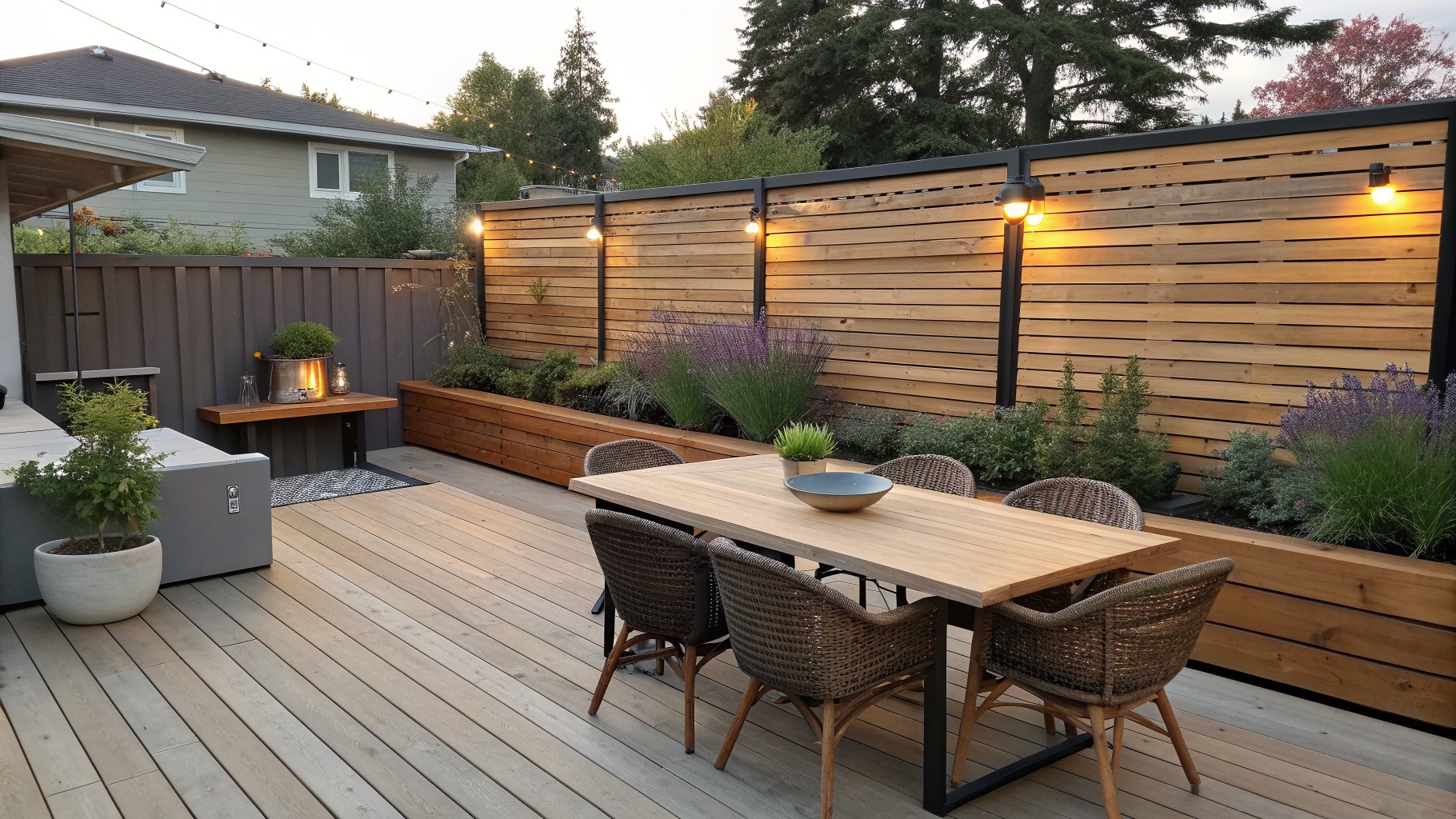
I often see decks that look finished on paper but end up feeling too open once people start using them.
Adding a privacy fence can shift the whole feel without taking away from the outdoor setting.
The key is finding options that block views while still letting in light and air.
Some setups work better than others in real yards.
I have a few in mind that I want to test out based on the space I have now.
Horizontal Wood Fencing For Deck Privacy
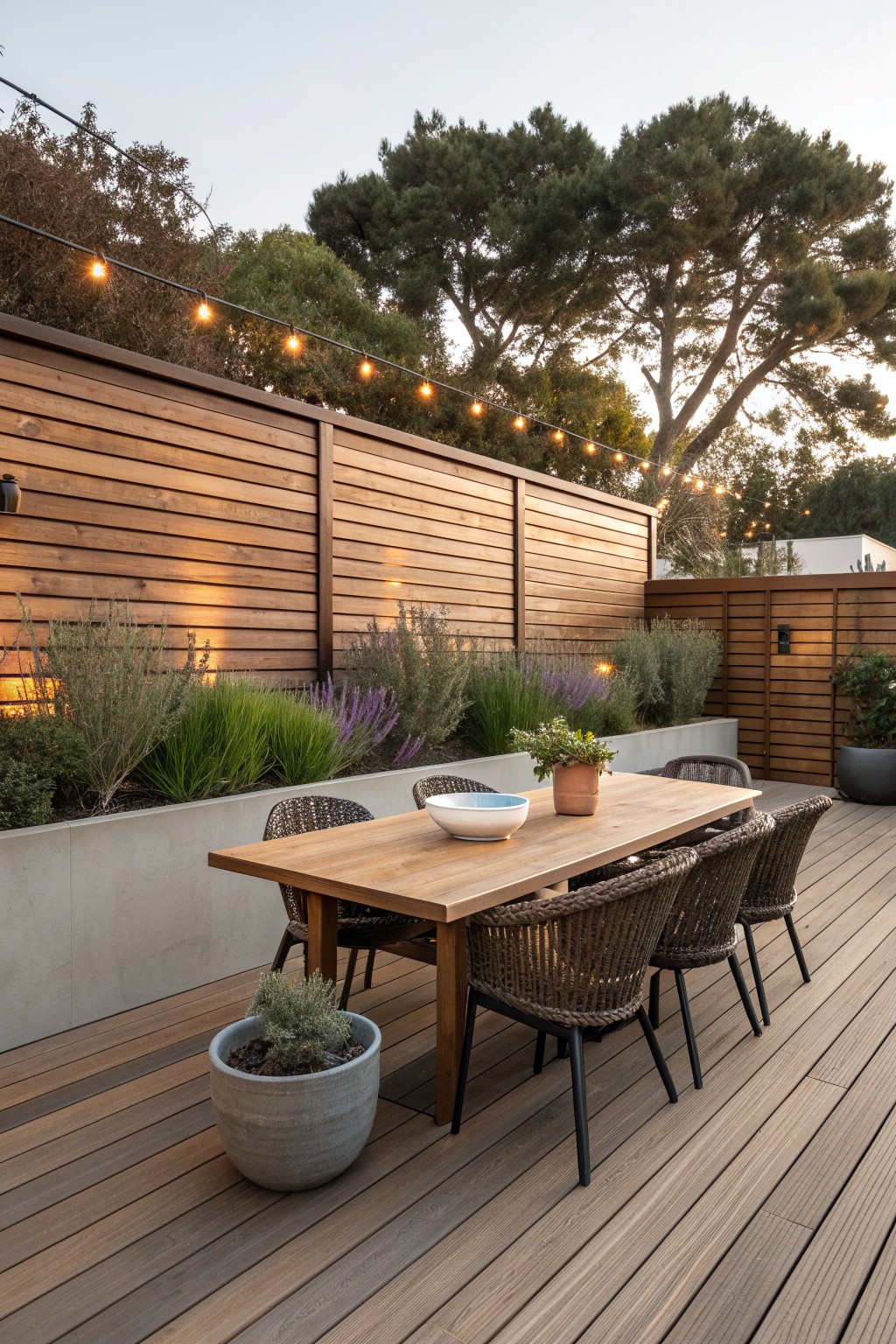
A simple run of horizontal wood boards makes a strong privacy screen on a deck. It blocks the view from outside while still letting some light and air through, and it feels less heavy than a solid wall.
This approach works best on decks that sit close to other homes or the street. Keep the fence height just above eye level and add a few low planters in front so the wood does not feel too stark.
Define A Deck Seating Area With A Large Rug
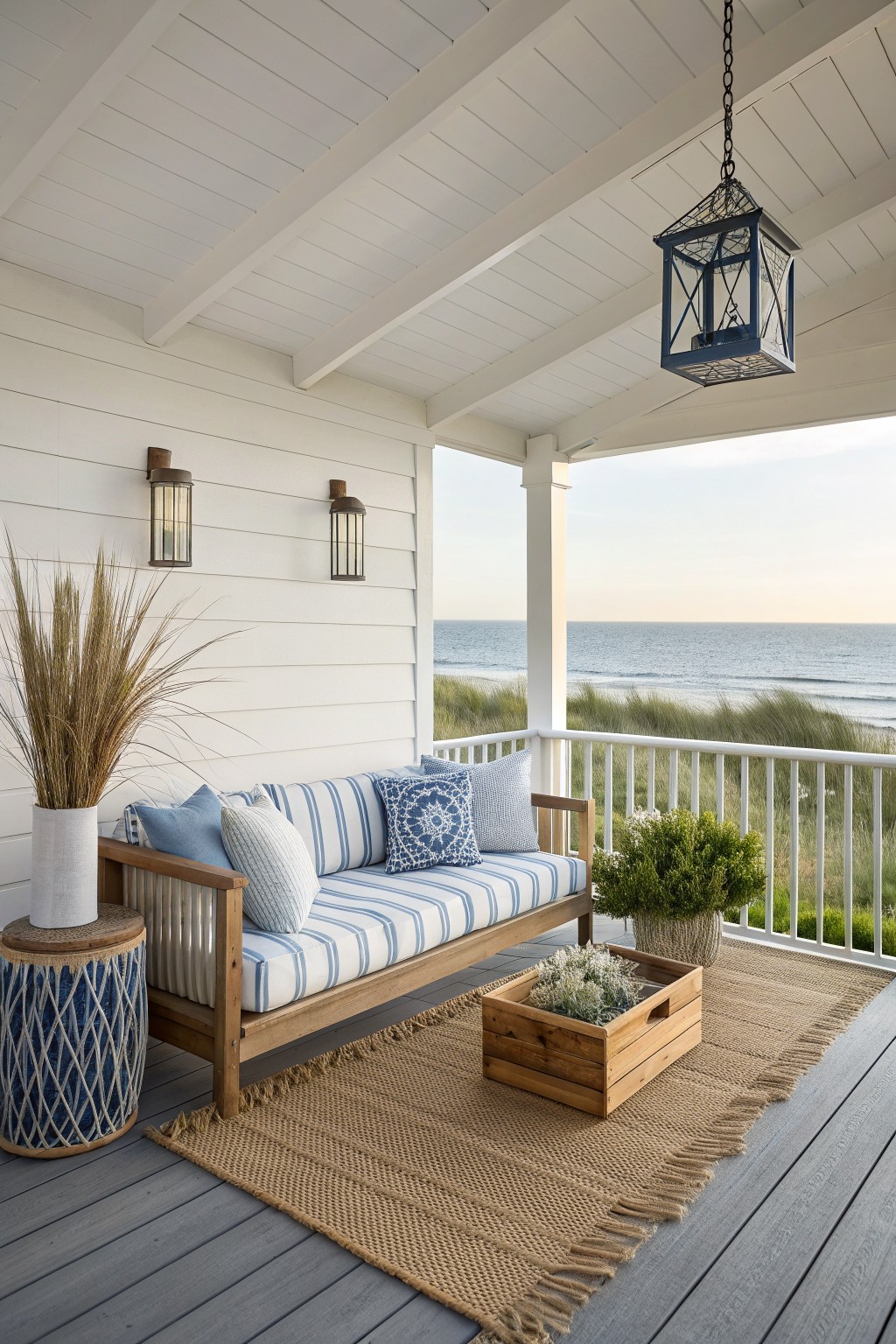
A big outdoor rug helps turn an open deck into a real sitting spot. It pulls the furniture together, adds some softness underfoot, and keeps the space from feeling scattered. Many people like this approach because it works even on simple decks without a lot of built-in features.
It suits homes near the water or in open yards where you want a cozy corner but still like the view around you. Just make sure the rug is made for outdoors so it holds up to sun and moisture.
Slatted Screens For Deck Privacy
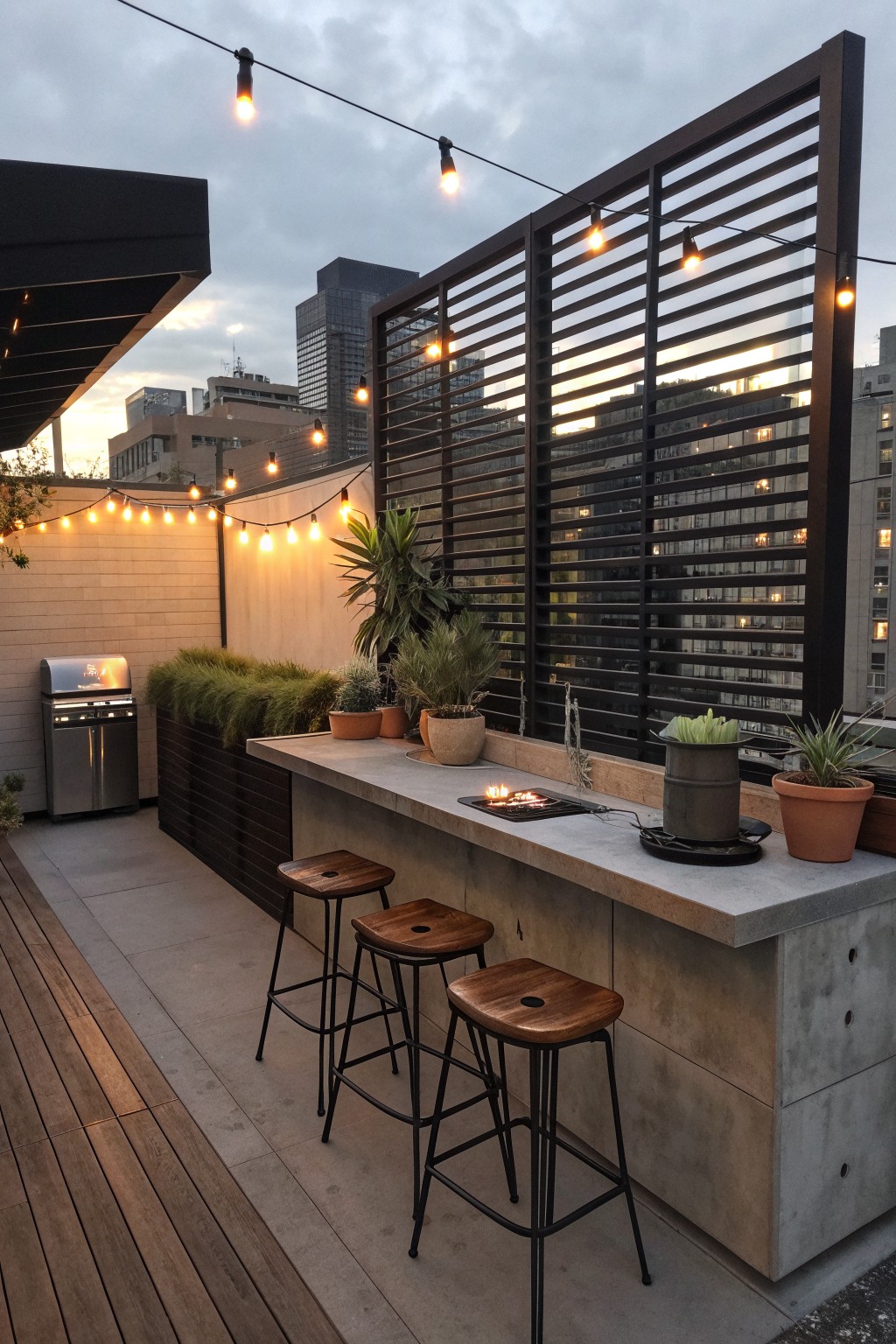
A horizontal slat screen gives solid screening on a deck without cutting off all the light or air. It works especially well on rooftops or upper levels where you need to block views from nearby buildings while still keeping the space open and usable.
Run one along the back edge of a bar or seating area like this. The open spacing keeps it from feeling too solid, and you can add a few pots in front to soften the look. It suits both modern decks and simpler wood ones, as long as the material matches the rest of the railing or fence.
Bamboo Fencing For Natural Deck Privacy
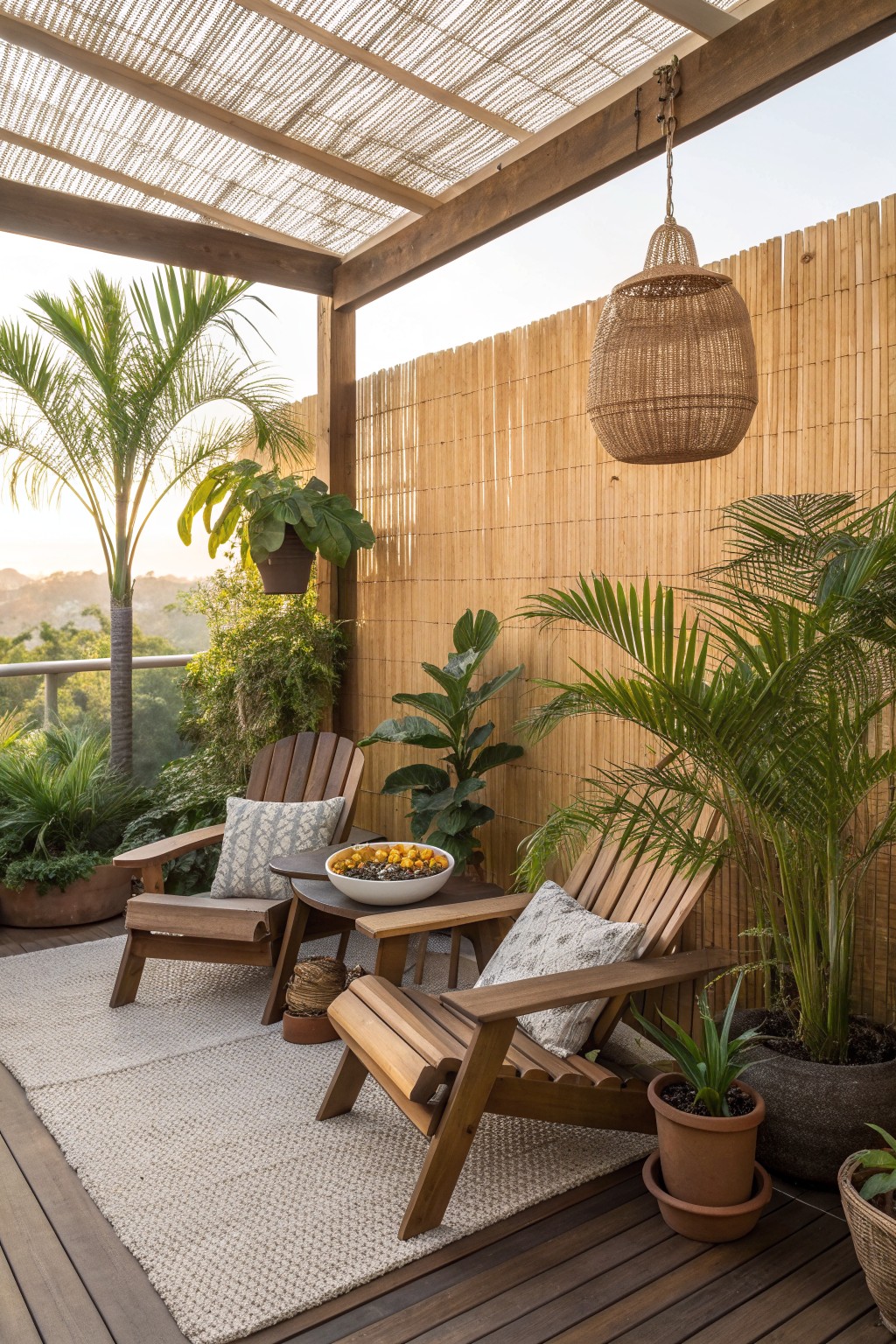
Bamboo fencing gives a deck quick privacy while keeping the space from feeling boxed in. The vertical lines add height without blocking all light or air, and the material pairs easily with wood furniture and plants.
It works best on decks that face neighbors or open views where full walls would feel too heavy. Run a section along the back or side and let vines or pots soften the base over time.
Privacy Fences With Built-In Shelves
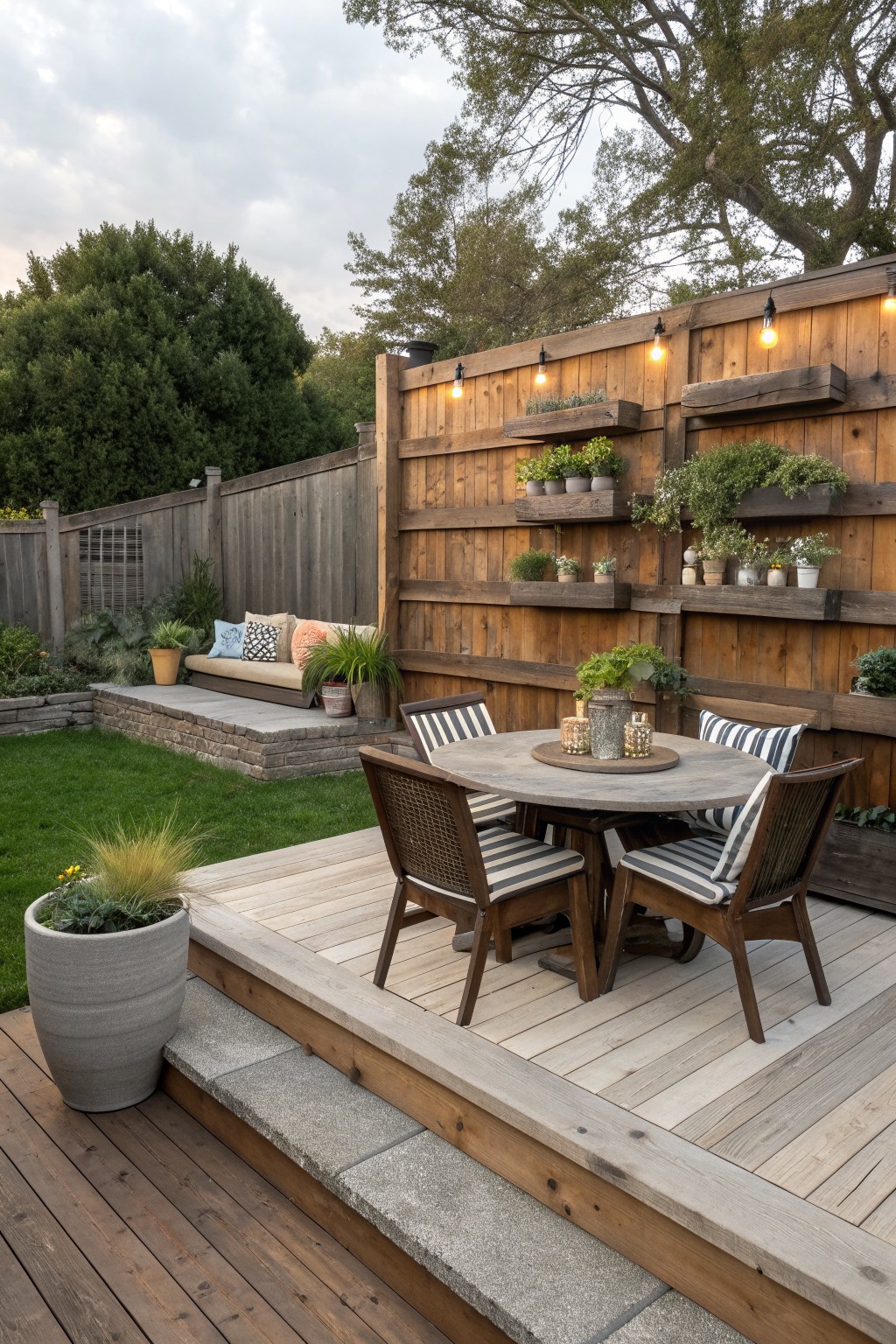
A fence that doubles as a place to set plants can give a deck more screening without making the space feel closed in. The shelves break up the flat surface of the wood and let you layer greenery at different heights, which adds coverage while keeping things practical.
This setup works well on decks that sit close to neighbors or a busy side of the yard. Keep the shelves at a comfortable height for watering and choose plants that handle the light in your spot. Avoid overcrowding the shelves so air can still move through the area.
Frosted Panels Add Privacy Without Closing In a Deck
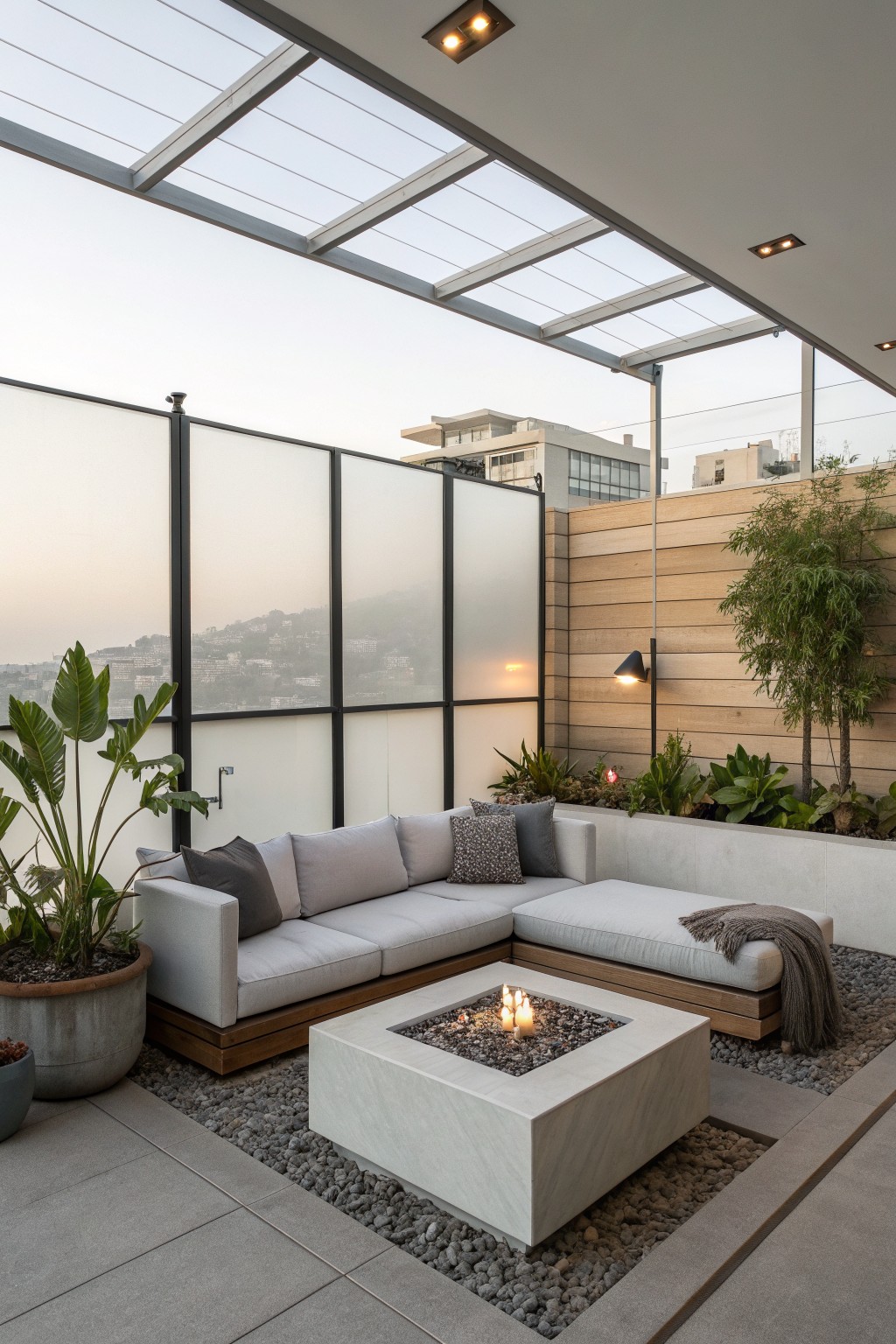
Many decks sit close to neighbors or streets, and full solid fencing can make the space feel boxed in. Frosted glass panels give a clean middle ground. They block the direct view while still letting light and a soft sense of openness through.
This approach works best on rooftops, side yards, or upper-level decks where you want screening but not total enclosure. Combine the panels with a wood accent wall or a few taller plants to soften the look and add texture.
Lattice Panels with Climbing Vines
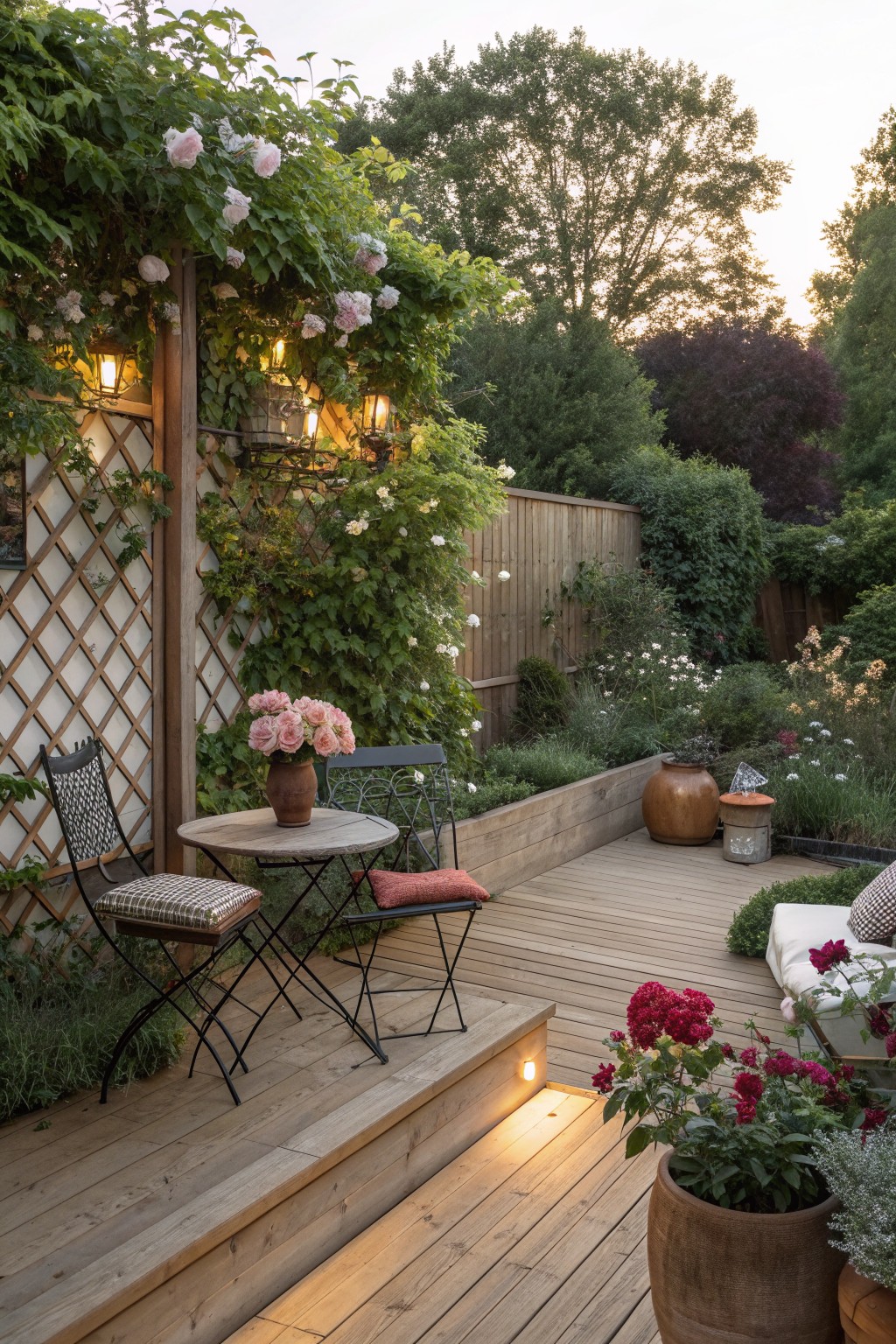
Lattice panels give a deck quick privacy while still letting some light through. Once vines start growing across the grid, the screen becomes fuller and softer without feeling heavy or closed in.
This setup works best on decks that sit close to neighboring homes or yards. It suits smaller outdoor spaces since the plants add coverage without taking up floor room, though you will need to keep the vines trimmed so they do not overwhelm the structure.
Hang Vines From A Pergola For Natural Screening
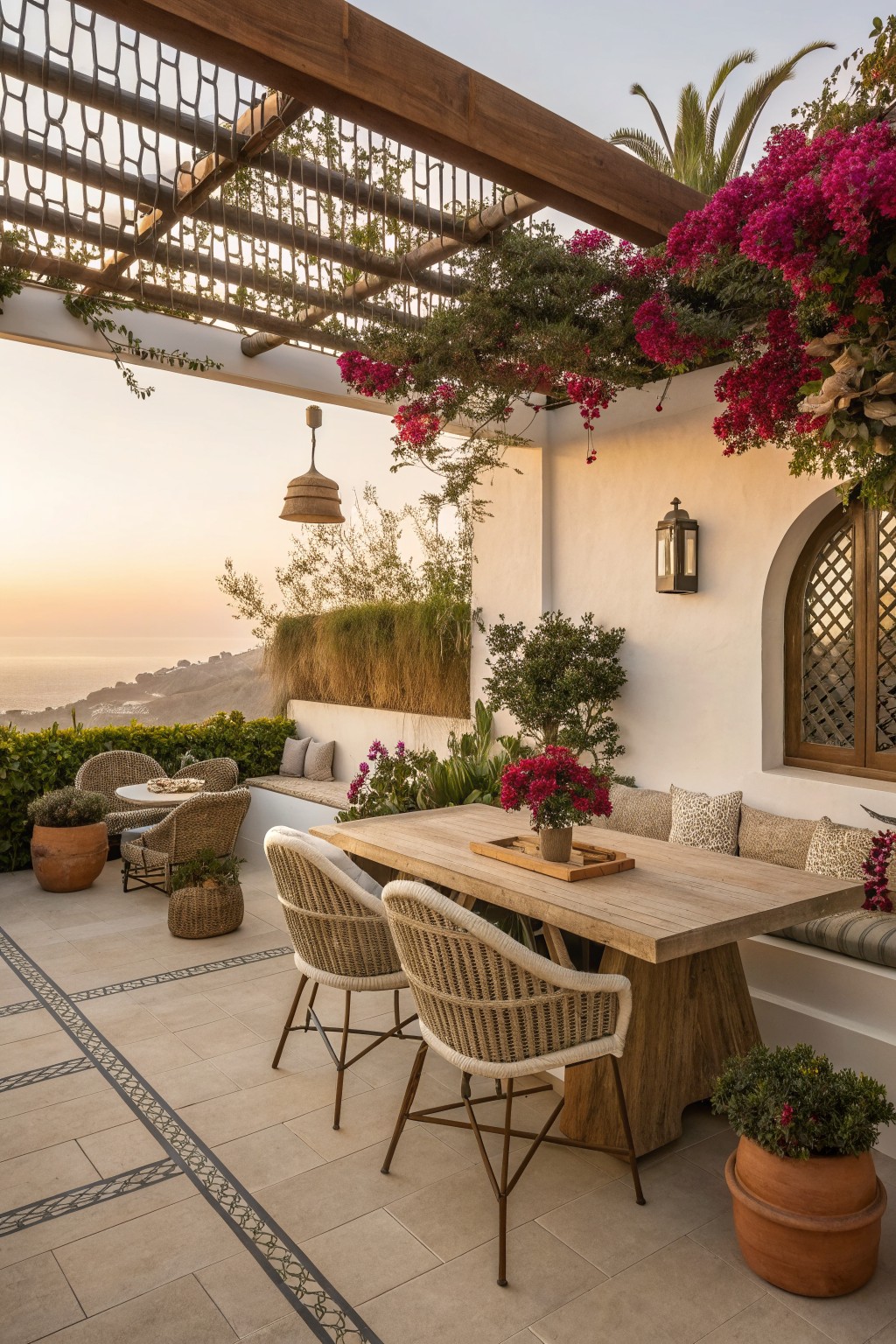
Many decks sit wide open, and a solid fence can make the space feel boxed in. A pergola with trailing plants gives you a softer screen that blocks sightlines while still letting in air and light.
This approach works best on upper-level decks or terraces where you need height without heavy construction. Let the vines fill in over time and trim them back when they start to block too much of the view you actually want to keep.
Bamboo Screens for Deck Privacy
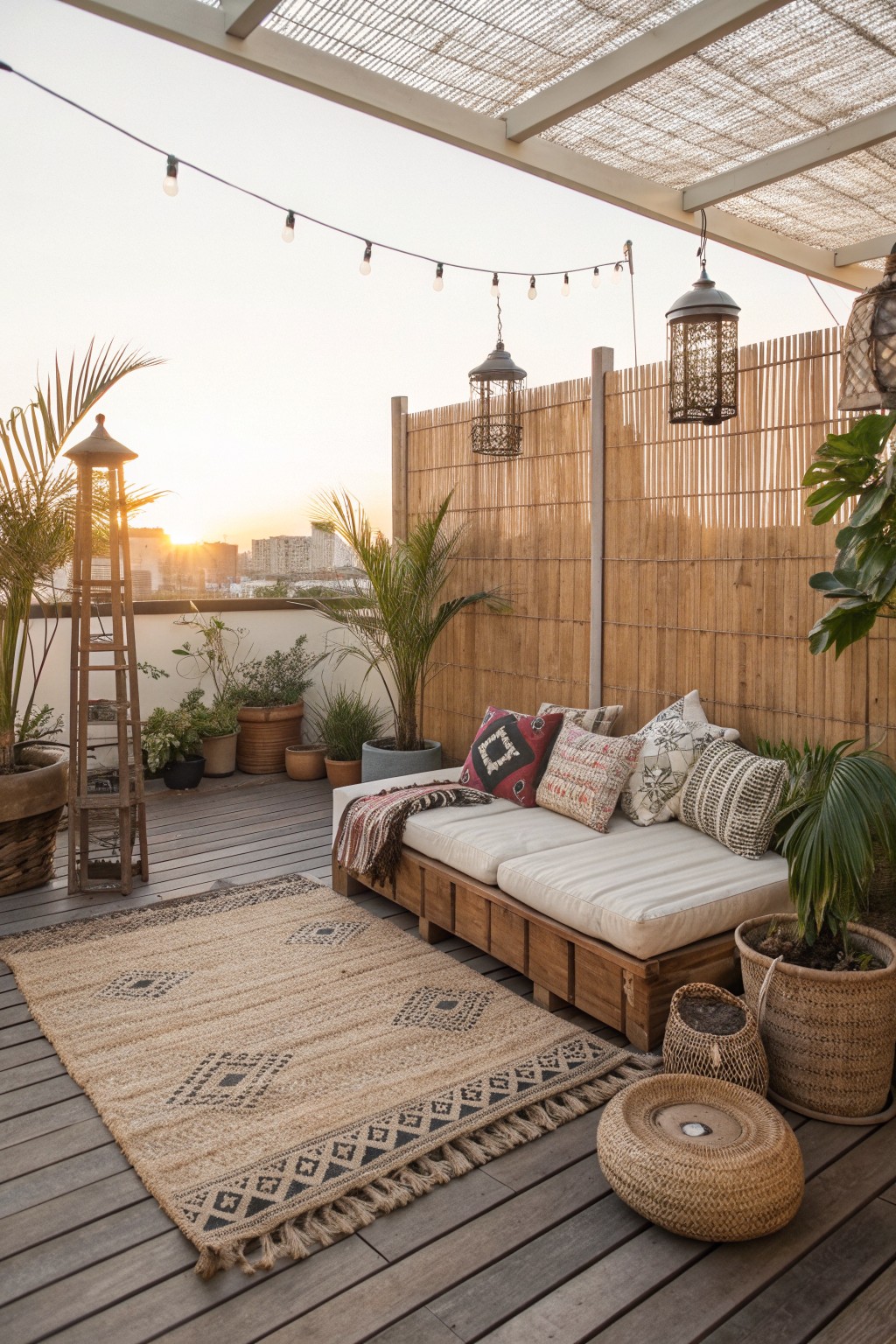
Bamboo fencing gives an open deck quick privacy without making the space feel closed in. The vertical lines keep it light while blocking the view from nearby buildings or neighbors.
This approach suits rooftop decks and upper-level patios where a full wall would feel too heavy. Mount the panels on simple posts behind the seating area and let potted plants soften the base.
Horizontal Slat Screens For Deck Privacy
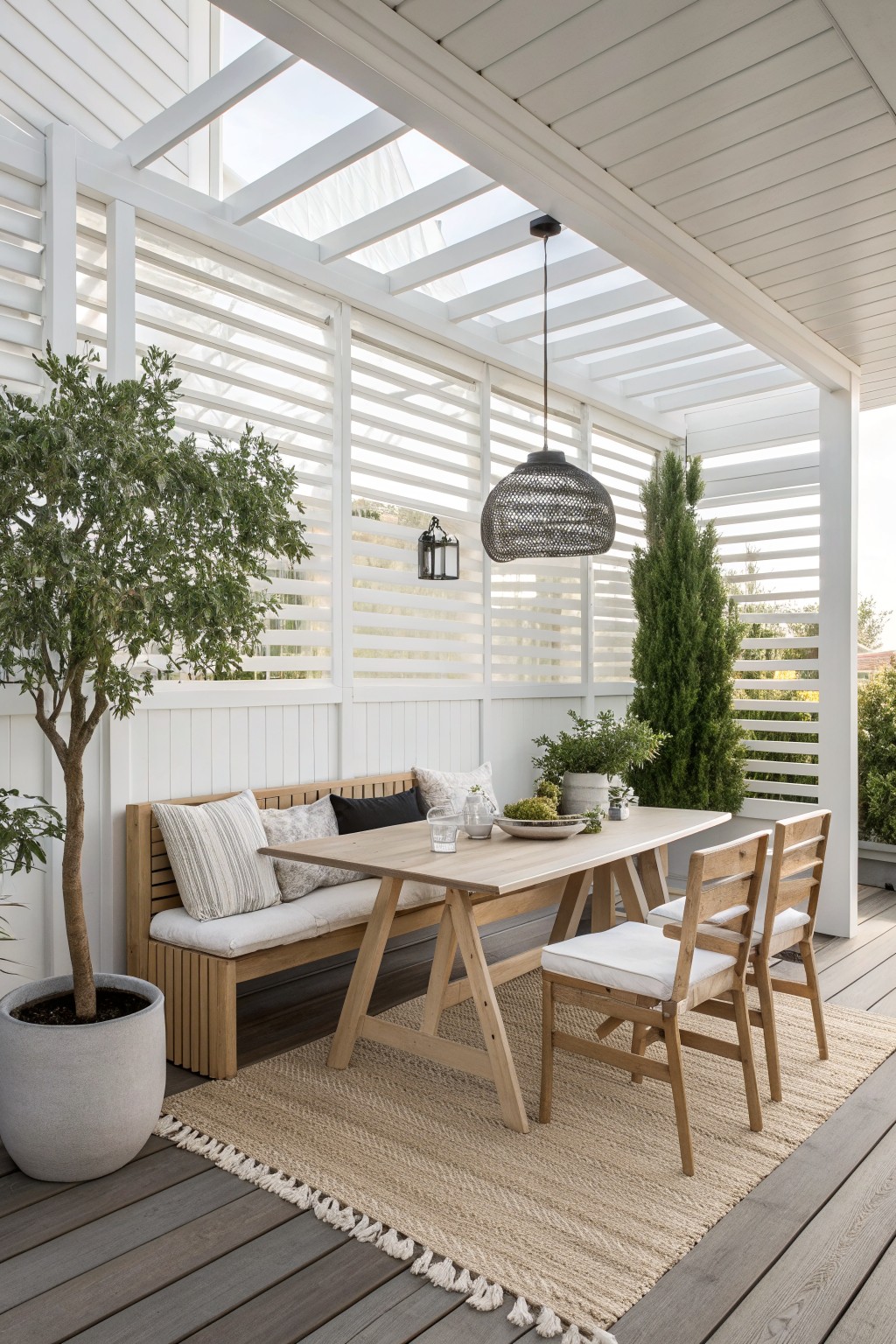
Horizontal slat screens give a deck real privacy without making the space feel closed in. The gaps let light and air move through, so the area stays bright even when the screens run along more than one side.
This approach works best on covered decks or porches that sit close to neighbors or a street. Keep the slats painted a light color to match the house trim and avoid a heavy look.
Vertical Wood Screens Add Privacy To A Deck
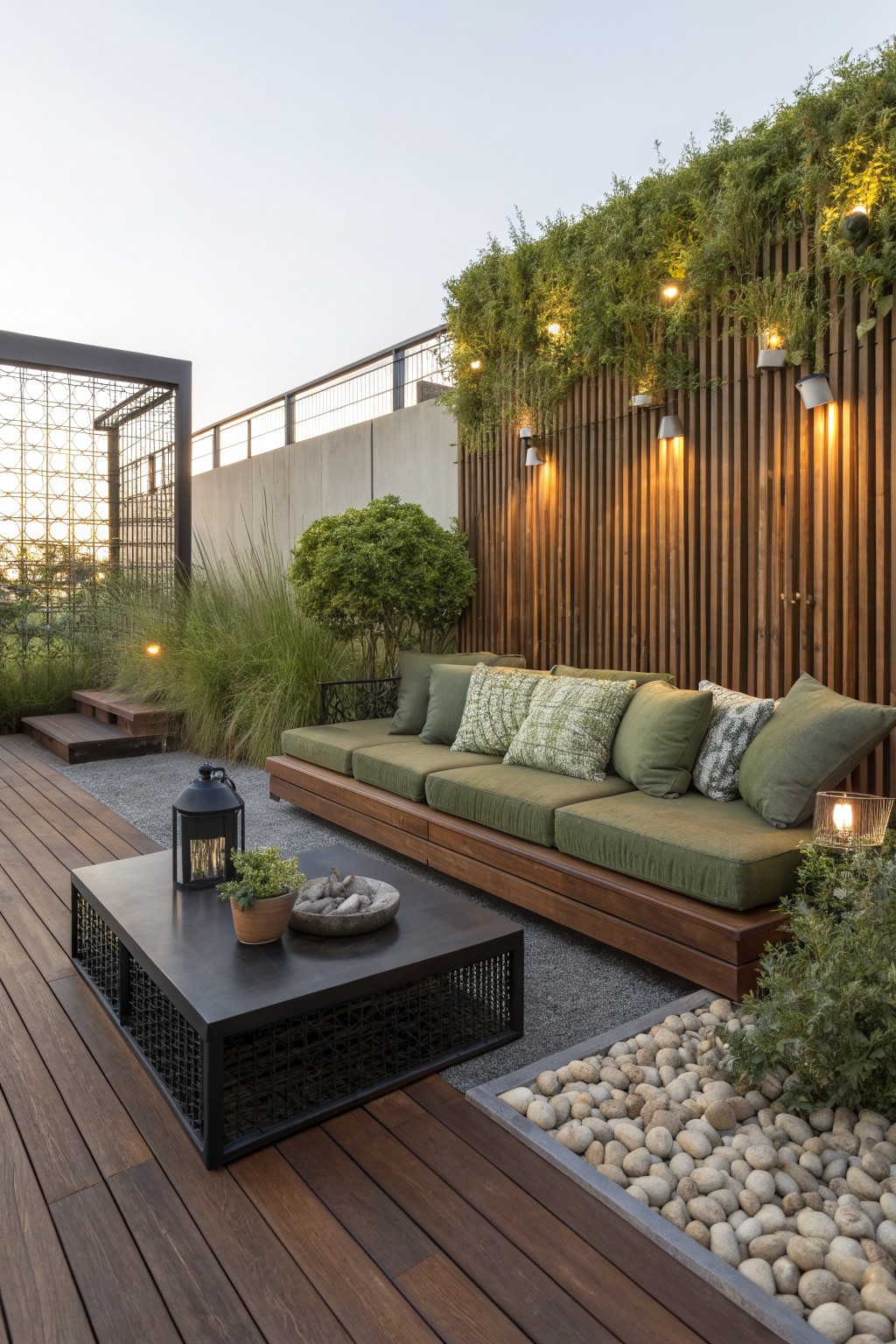
A vertical wood slat wall gives solid privacy without making the deck feel closed in. The gaps between the slats let light and air move through, while the overall height blocks views from outside. It works especially well when the seating area sits right against it.
Run the screen along the back or side of the deck where you need the most coverage. Add a few small lights or trailing plants if you want extra interest, but keep the structure simple so it stays easy to maintain.
Mount Planters On Your Privacy Fence
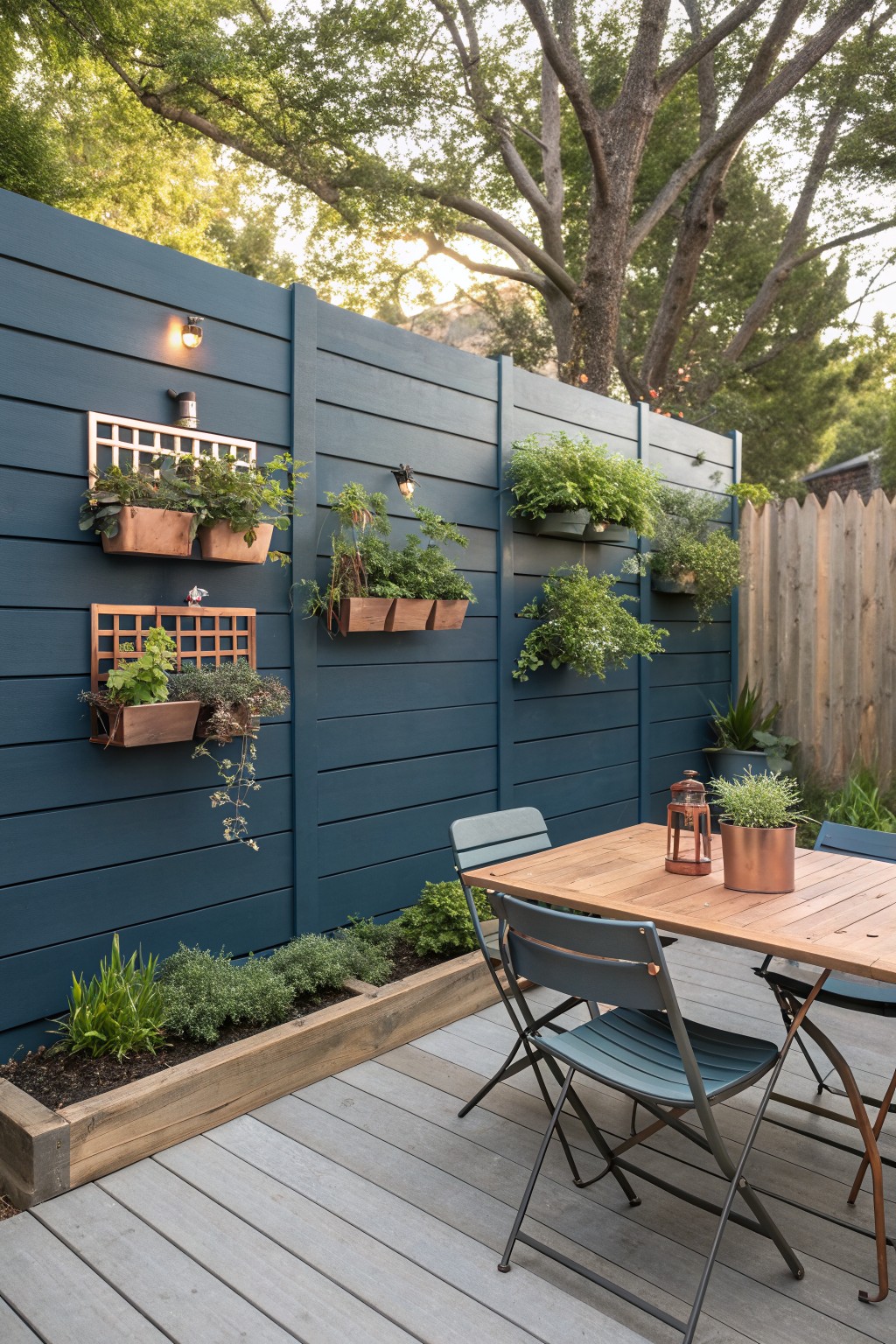
One simple way to improve screening on a deck is to mount planters straight onto the fence boards. This adds height and greenery without using up floor space, and the plants help break up the solid look of the fence while still giving you privacy.
It suits decks that sit close to neighboring yards or need a bit more coverage than a plain fence provides. Use sturdy boxes that can handle weather, space them at different levels, and pick plants that will fill in over the season so the screening gets better each year.
Vertical Slat Fences For Private Deck Seating
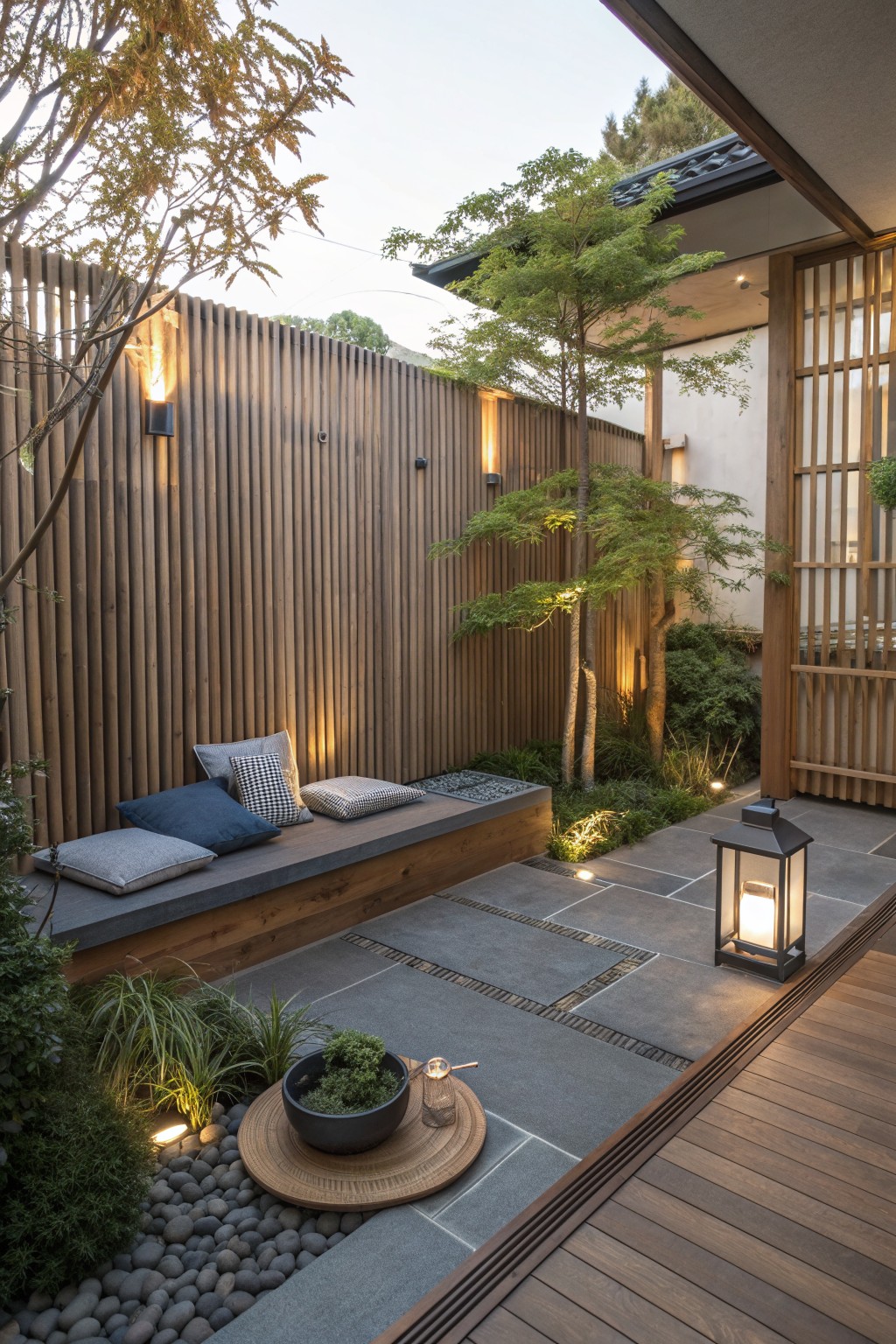
A tall vertical wood slat fence gives a deck corner real privacy without making it feel closed in. The narrow gaps let light and air pass while blocking most of the view from outside, so the seating area feels more sheltered.
This setup works best on decks that sit close to neighbors or along a side yard. Build the fence to match the deck height or slightly taller, then add a simple bench against it so the space feels finished and usable right away.
Privacy Fences With Built-In Planters
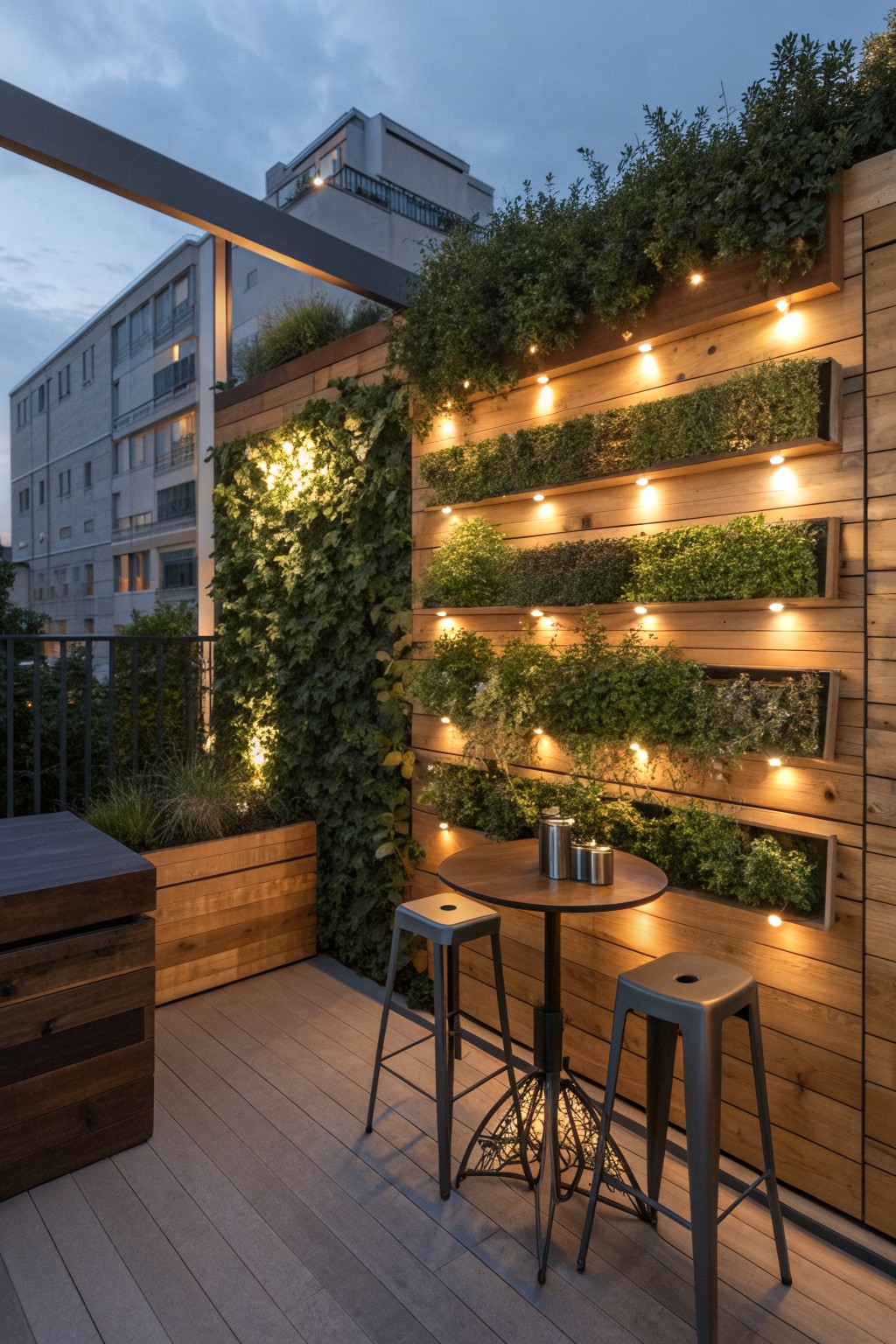
A living wall built into a fence gives you solid privacy while keeping the deck from feeling boxed in. The plants break up the wood surface and add a layer of green that changes over time.
This setup works best on decks that sit close to other buildings or need screening from neighbors. Make sure the planters drain well and pick plants that match the sun or shade on your space.
Lattice Screens That Add Privacy Without Blocking Light
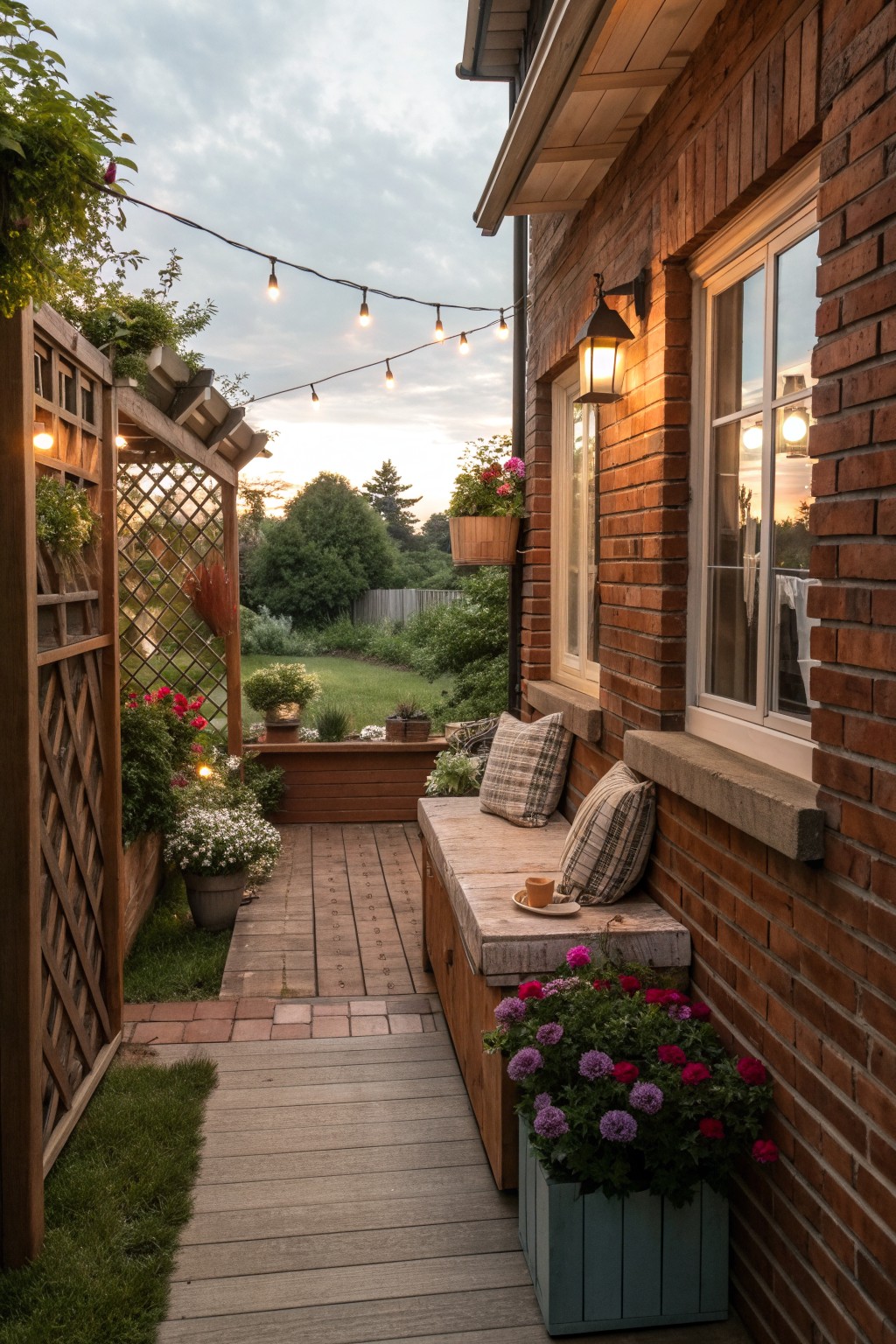
A lattice fence gives you decent screening on a deck while still letting air and light pass through. It works especially well on smaller decks or side areas where a solid wall would feel too closed off.
This approach suits homes with existing garden views or where you want to keep the space feeling open. Set the panels along one side and let vines grow in if you need more coverage later.
Fabric Privacy Screens On Decks
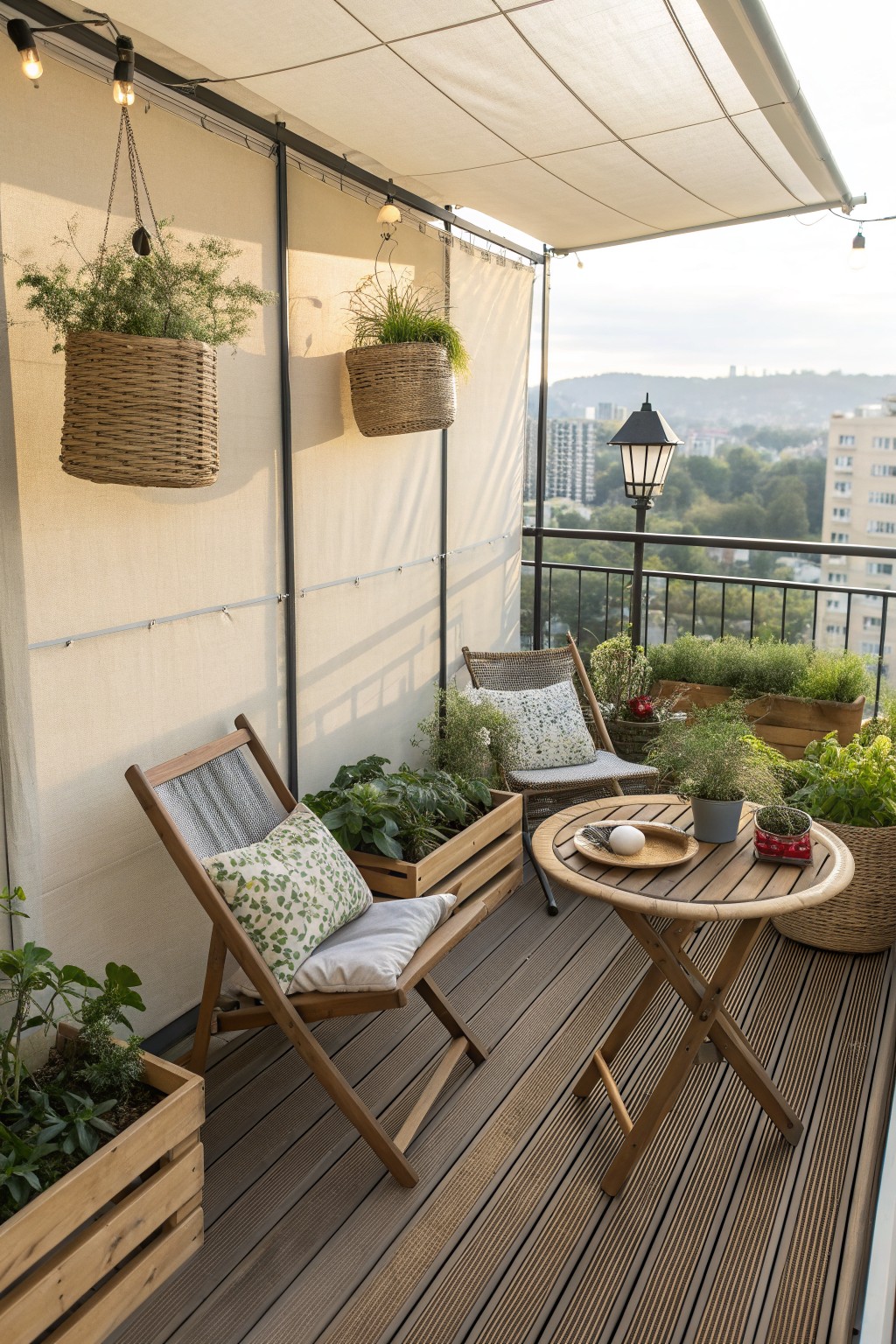
Fabric screens give decks and balconies a simple way to cut down on outside views without building a solid wall. They hang from the top rail or ceiling and let in light and air while still blocking the line of sight from nearby buildings.
These panels work best in tight urban spots where a full fence would feel too heavy. Pick outdoor fabric that can handle sun and wind, and hang them so they can be rolled or tied back on clear days.
Horizontal Slat Screens For Deck Privacy
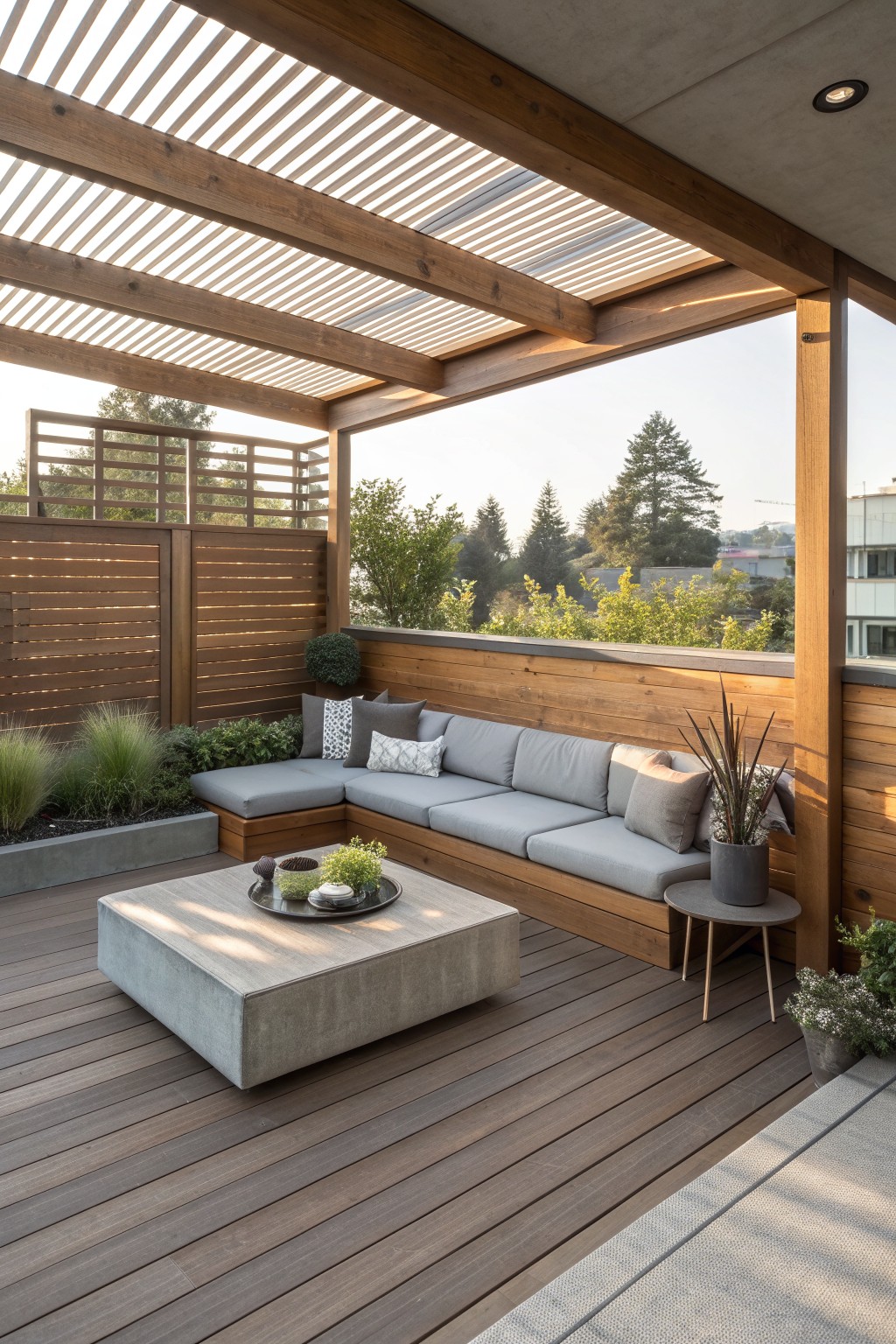
Many decks sit right in view of neighbors or nearby buildings, and a full wall can make the space feel boxed in. Horizontal slat panels give just enough screening while still letting air and light through.
This approach works best on decks that already have wood tones and simple lines. Match the slats to the decking or railing so the screen reads as part of the structure instead of an add-on.
Patterned Panels For Deck Screening
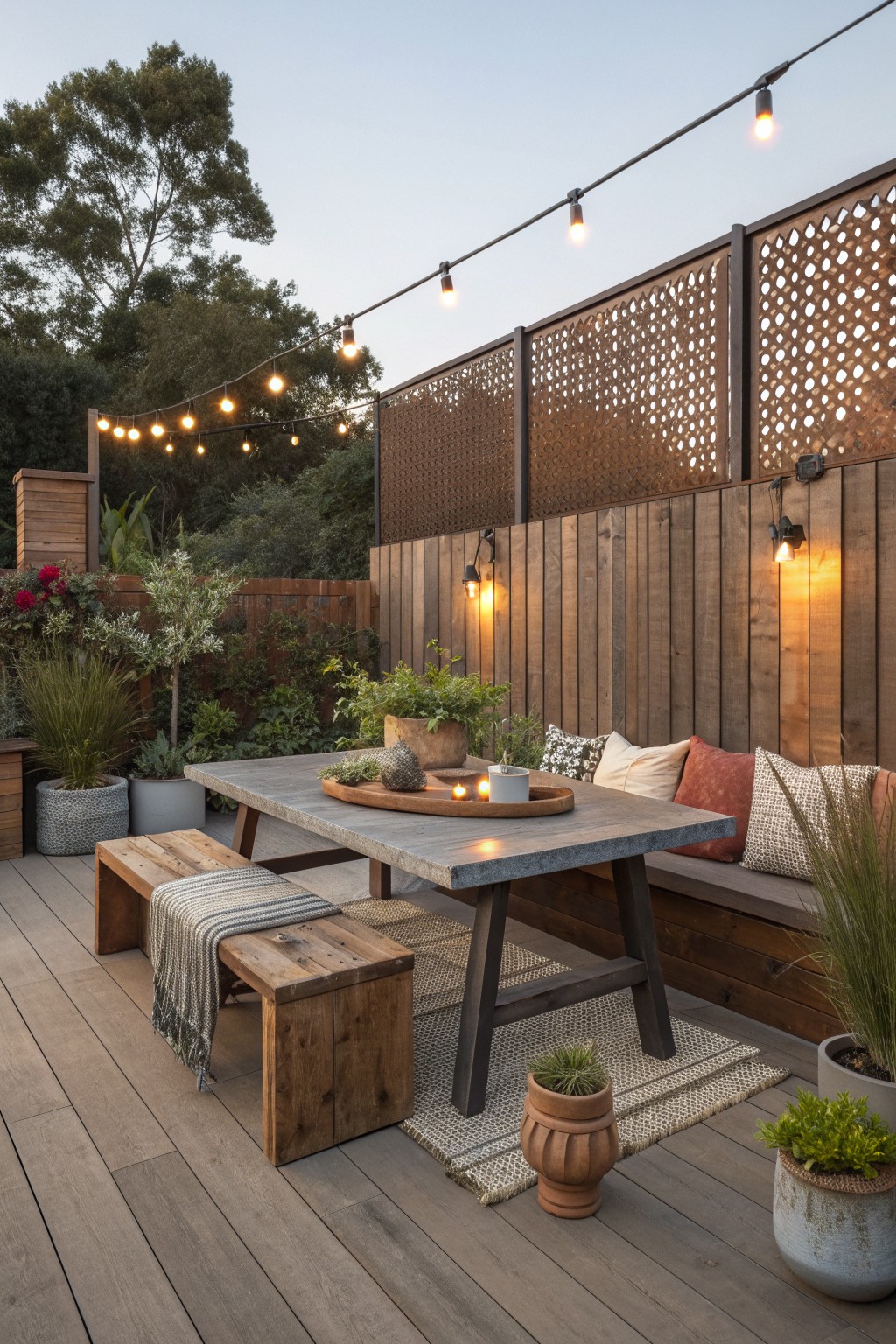
Many decks need privacy but a solid wall can make the space feel closed in. Adding fence sections with cutout patterns gives screening while still letting light and air move through.
This approach works best on decks that sit close to neighbors or the street. It suits homes where you want the fence to feel lighter and more open rather than heavy and blank. The cutouts also add a bit of interest without needing extra decoration.
Slatted Screens For Deck Privacy
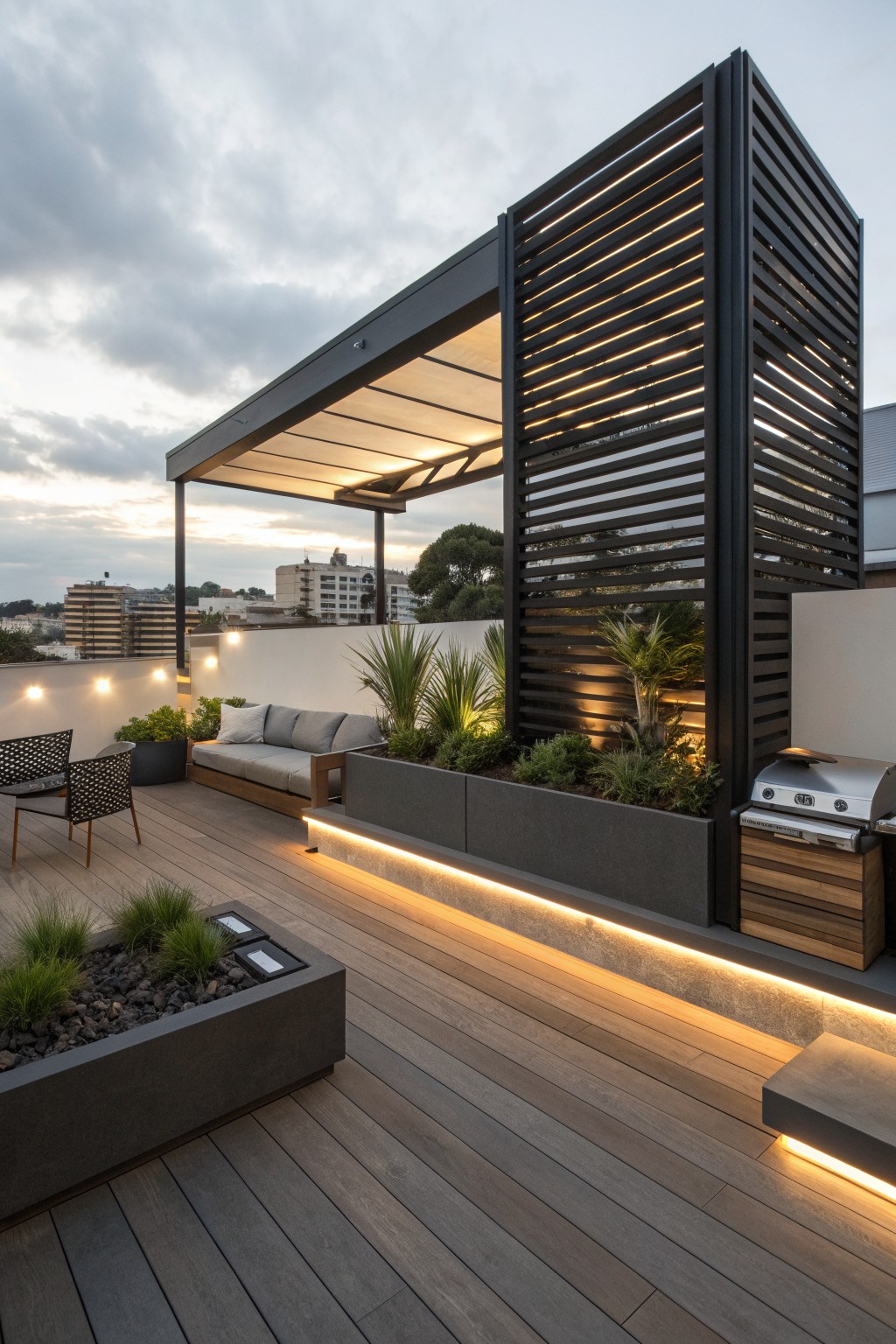
A tall vertical slat screen works well when you need solid screening without making the deck feel closed in. The dark frame and evenly spaced slats block views from nearby buildings while still letting some light and air through. Many people like how it doubles as a backdrop for plants and lighting.
This approach suits rooftops or side yards where you want separation from neighbors but still need the space to feel open. Mount the screen along one edge and add a planter base so the plants soften the look over time. Keep the slats wide enough that the structure does not feel too heavy.
Colorful Picket Fencing For Deck Privacy
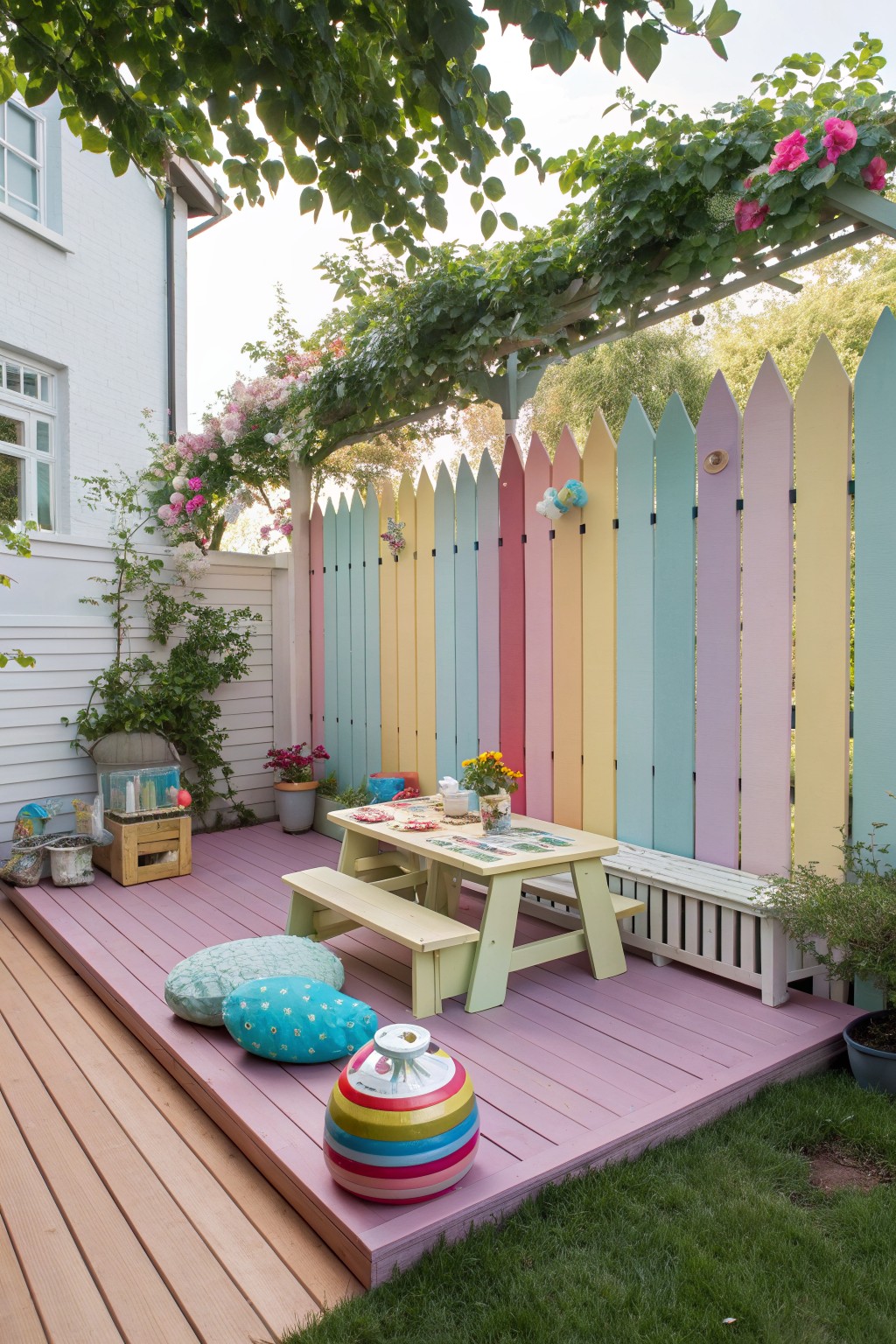
A picket fence painted in soft pastel shades gives a deck real privacy while keeping the space from feeling closed in. The vertical boards block the view from outside, but the mix of colors stops the fence from looking heavy or dull.
This approach works best on smaller decks or family yards where you want screening without a solid wall. Use lighter tones if the space gets a lot of sun, and keep the height just tall enough to cover the main sight lines.
Glass Panels for Deck Privacy
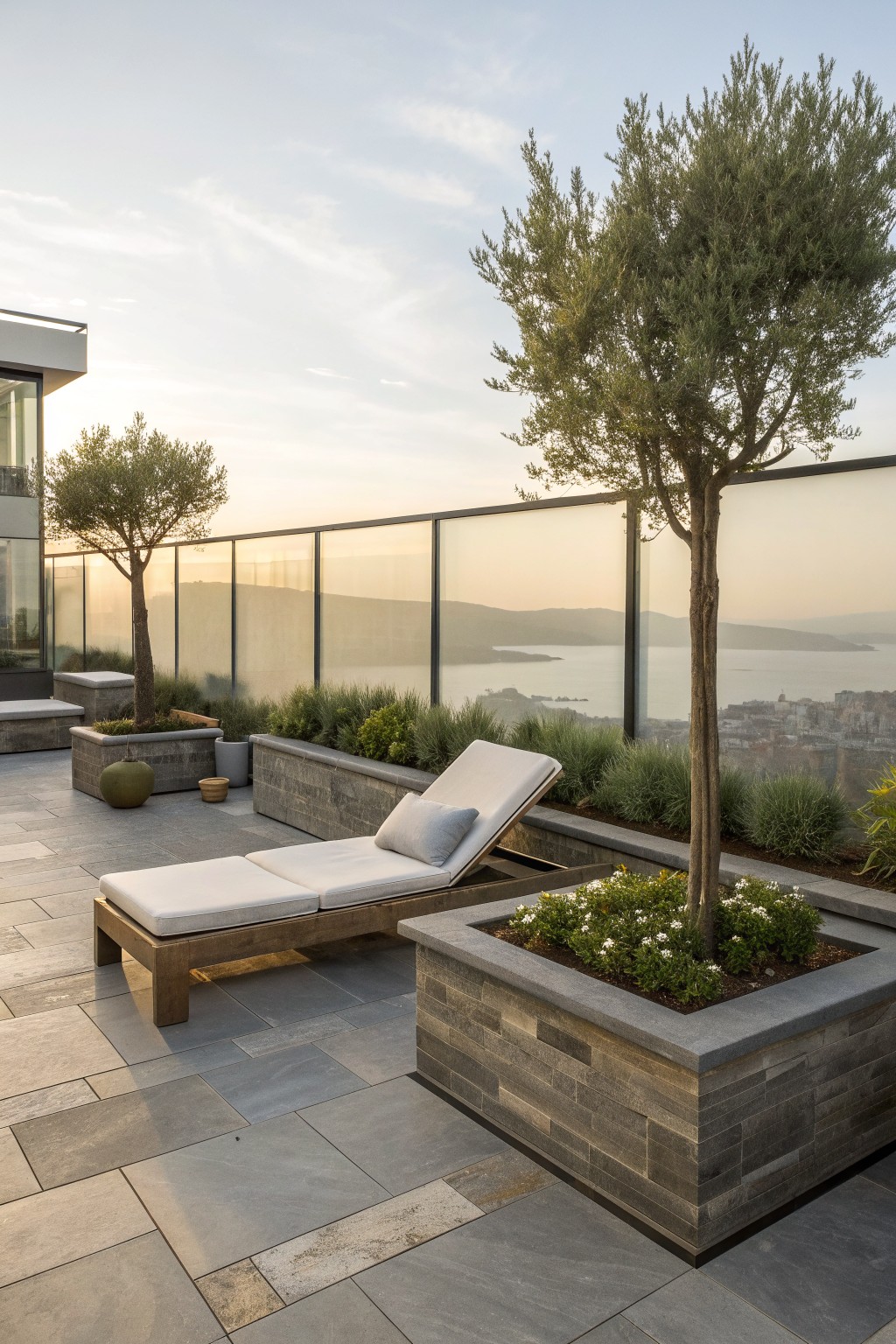
Glass panels give you a clean way to add screening on a deck without cutting off the view. They block wind and create a defined edge while still letting light and scenery through, which works especially well on rooftops or elevated spaces.
Pair them with low planters along the base if you want a bit of greenery to break up the line. This approach fits modern homes best and keeps the deck from feeling boxed in.
White Railings With Climbing Roses
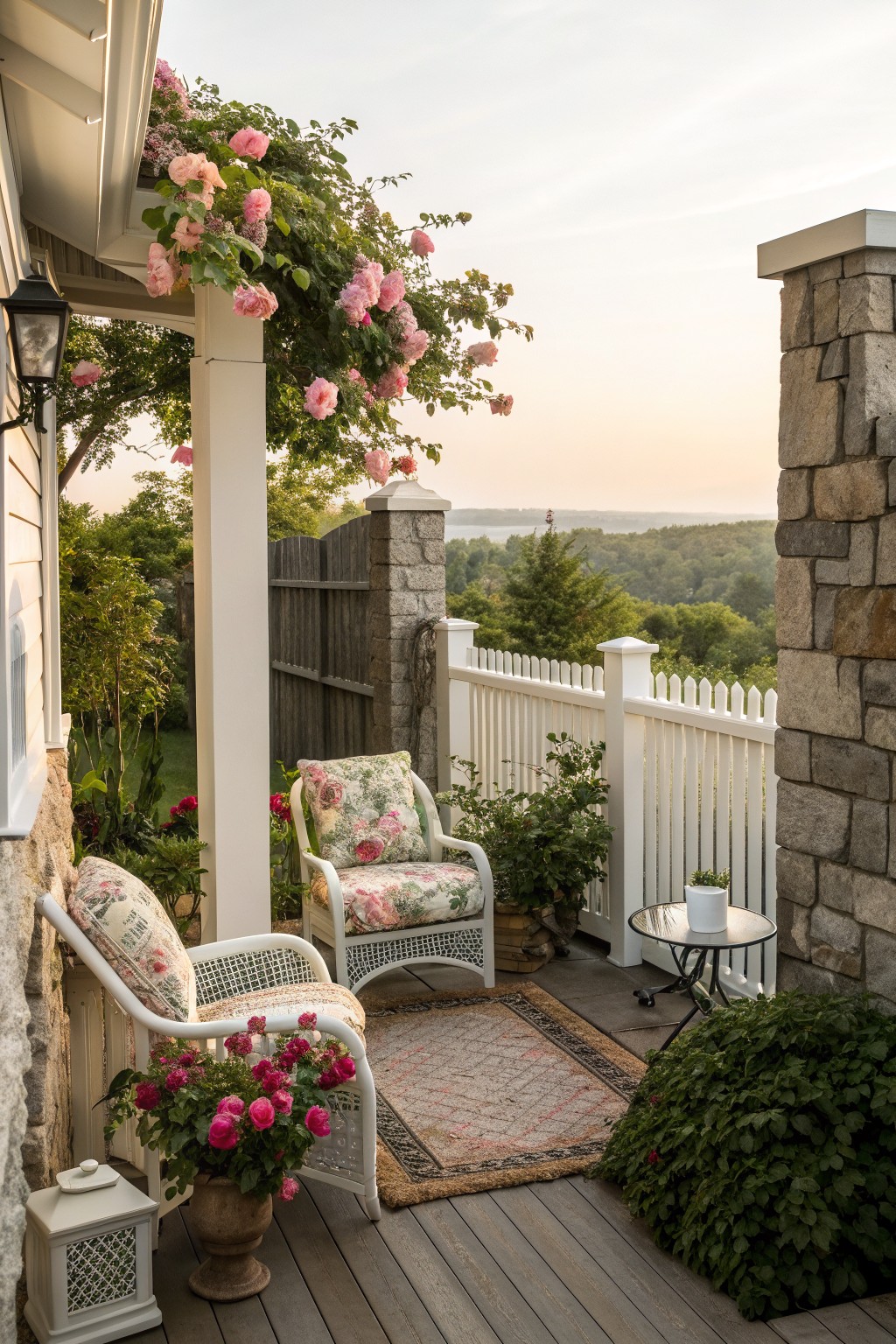
A low white railing along the deck edge gives just enough structure to feel private without closing the space in. The open picket style still lets in light and a bit of the view, which keeps the area from feeling boxed off.
Planting climbing roses or similar vines along the railing adds a living screen that fills in over the seasons. This approach suits decks that need screening from one or two sides but still want to stay connected to the surroundings. Keep the railing height modest and let the plants do most of the work.
Frequently Asked Questions
Q: How tall should I make the fence if my deck sits right next to the neighbor’s yard? A: Go with six feet as a starting point since it blocks most seated views without towering over the space. Check your local rules first because some areas cap fence height at that mark. Raise one section higher only if the neighbor’s windows sit above your deck level.
Q: Can I mix plants with these fence ideas without a lot of extra work? A: Train vines like jasmine along the posts so they fill in gaps over one season. Water them when you water your other deck plants and trim once a month to keep them neat. This adds softness while the fence still does the main screening job.
Q: What works if I want quick privacy but hate permanent builds? A: Set up tall planters with built-in trellises and move them as needed. They give instant coverage and let you change the layout later without tools.
Q: How do I stop wind from rattling a lighter fence option? A: Anchor the bottom of each panel to the deck rail with simple brackets. (especially useful on hot days when gusts pick up) Check the fit after the first storm and tighten anything that shifted.


