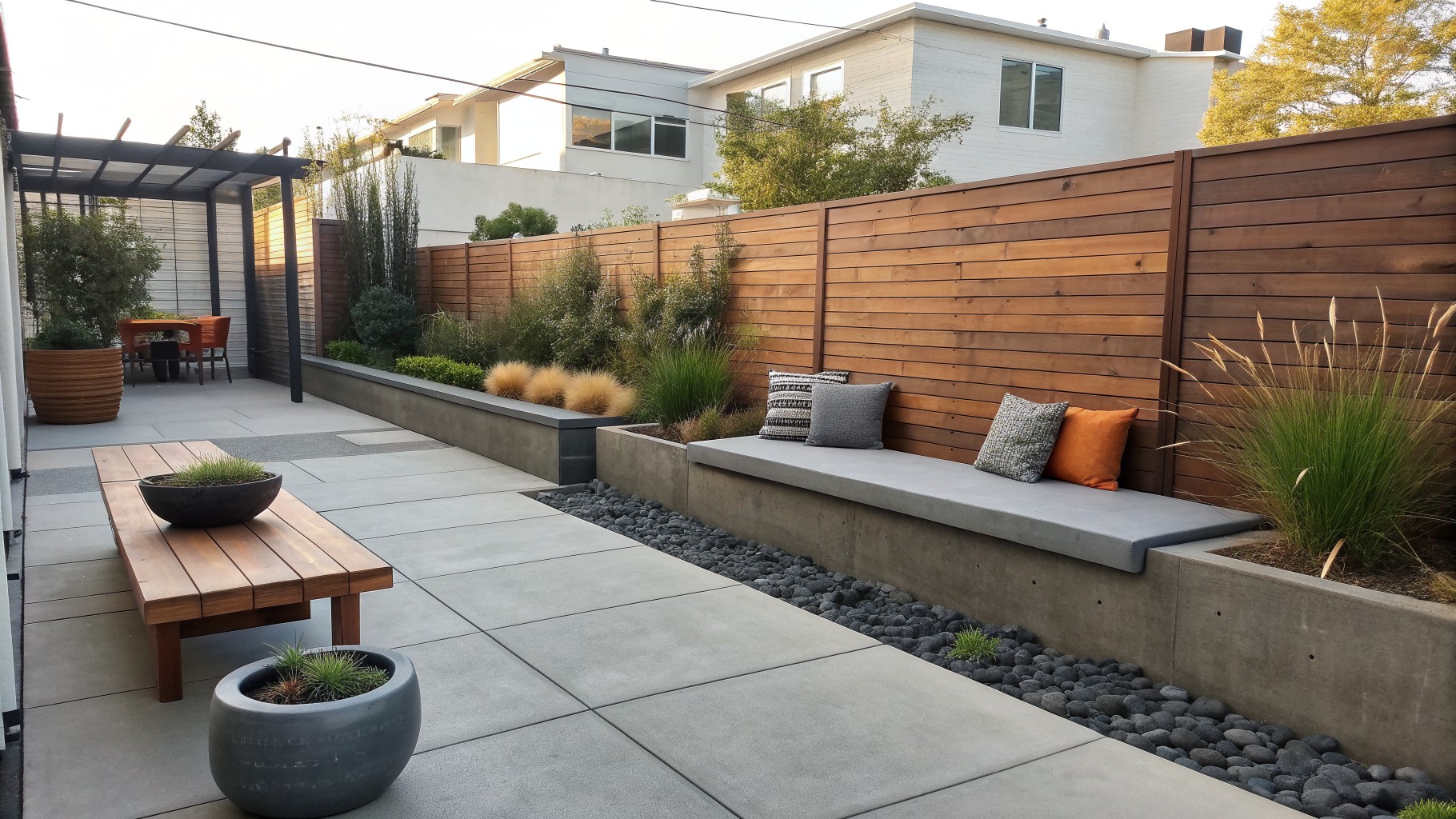
When I plan outdoor areas the seating often ends up as an afterthought even though it shapes how the whole space gets used on weekends and evenings.
Concrete benches stand out because they tie into the ground and weather well yet they still require some surrounding elements to keep people comfortable for more than a few minutes.
Placement decides everything.
I have tried different spots in my backyard and found that moving a bench even a few feet closer to the main path made it part of daily life instead of just decoration.
Ideas that focus on concrete as the core can help create spots that feel both simple and ready for real use without needing constant adjustments.
Built-In Concrete Benches Along Planting Beds
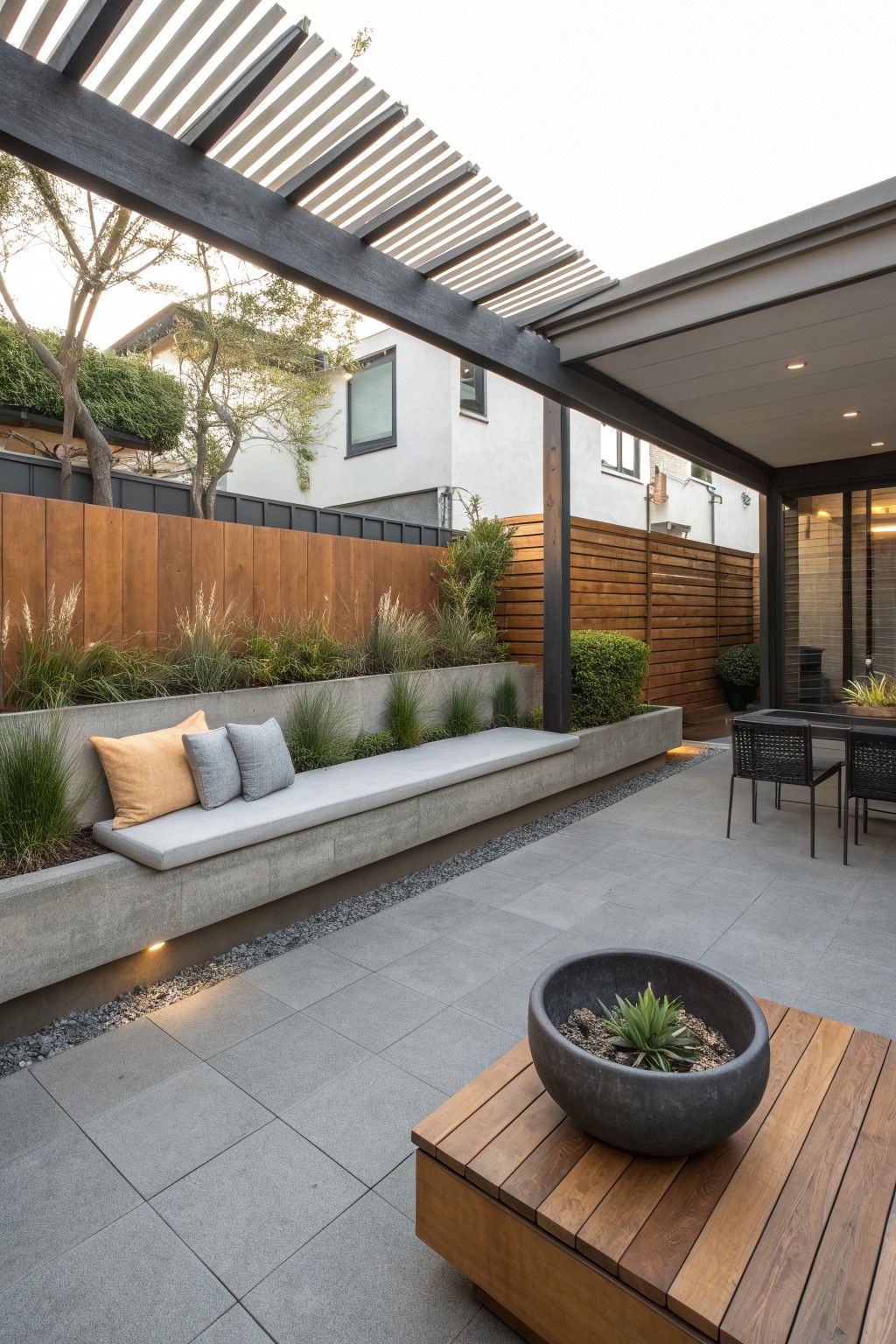
A long concrete bench set into a raised planter gives you solid seating while keeping the garden right behind it. The material holds up well outdoors and creates a simple, low-maintenance edge that does not need extra furniture or constant upkeep.
This setup works best along a fence or property line where you want seating and planting in the same spot. Keep the bench height around 18 inches and choose plants that stay lower so the space still feels open.
Built In Concrete Bench Seating
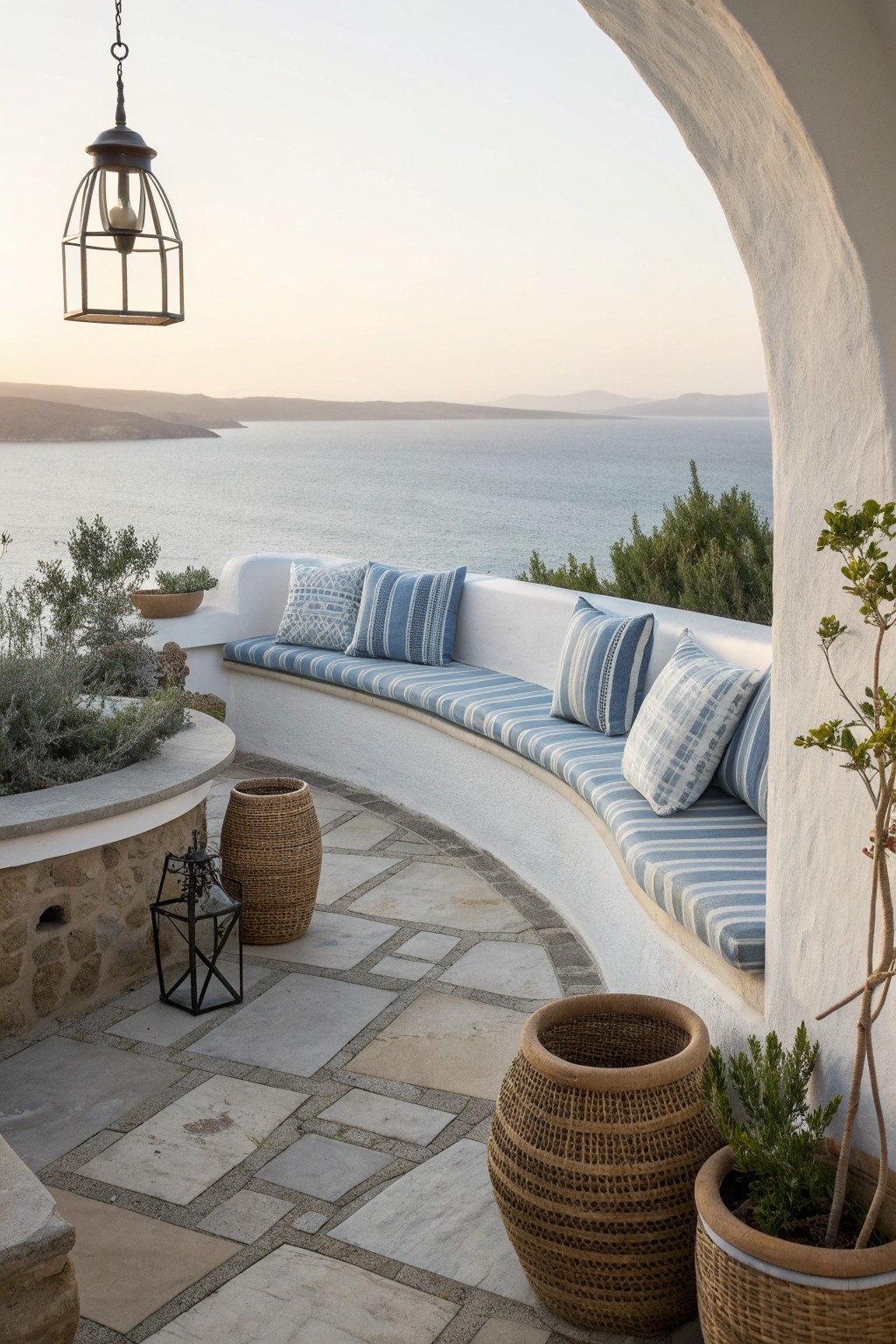
A curved concrete bench built right into the patio wall gives you plenty of seating without crowding the space. It works especially well when you want the seating to feel like part of the structure instead of something added later. Cushions in simple fabrics make it comfortable while keeping the look clean and practical.
This approach suits homes with terraces or balconies that face a view. The bench can follow the shape of the wall or archway, which helps the whole area feel connected. Just watch the depth so people can sit comfortably without their feet dangling.
Concrete Benches Built Into Pool Edges
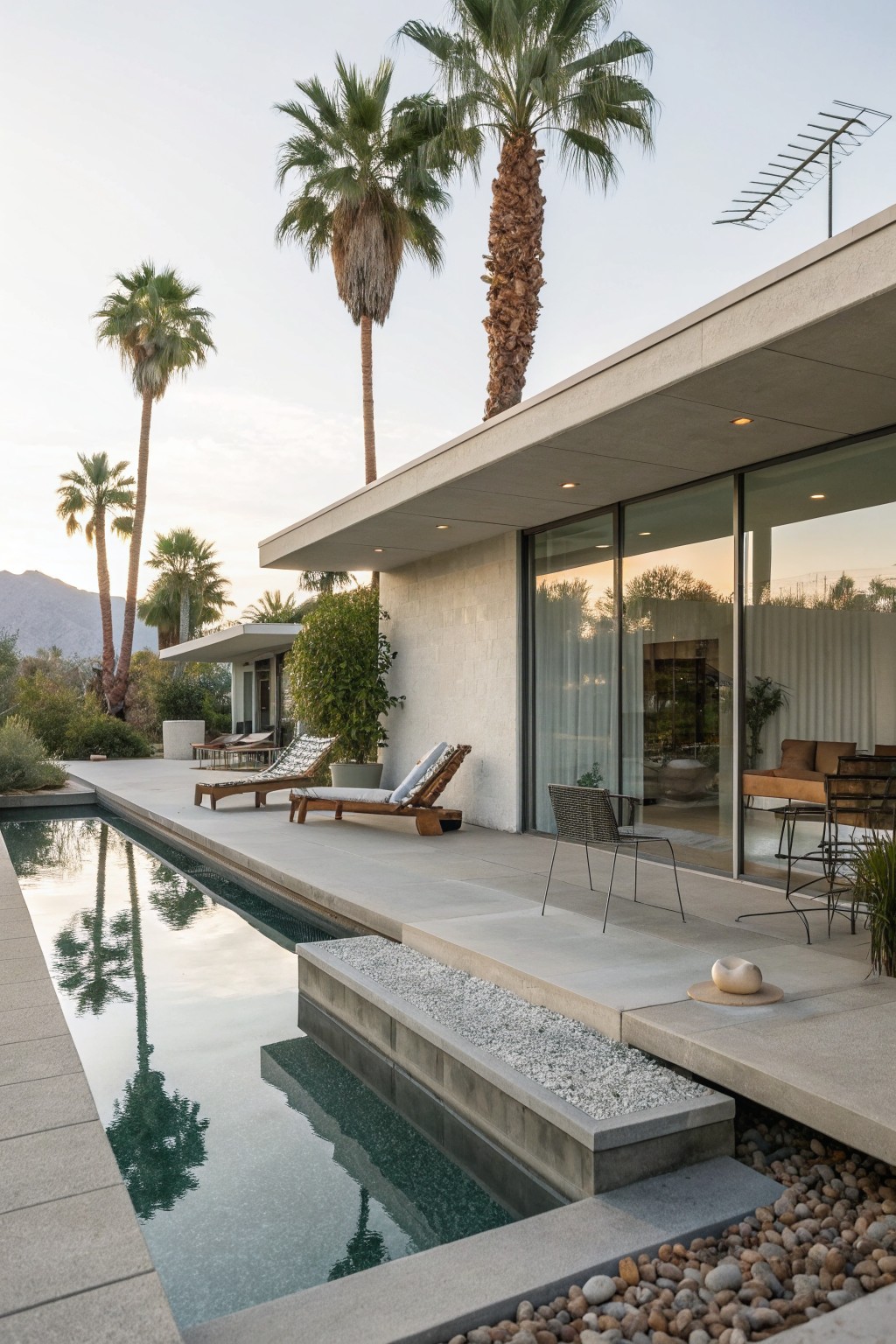
One way to keep a pool area feeling open and simple is to build low concrete benches right along the edge. They give people a place to sit without adding extra furniture that might crowd the space. The benches also help define the swimming area while keeping the whole setup clean and low maintenance.
This approach works best on modern homes where the patio and pool sit close together. It suits smaller yards especially well because the seating becomes part of the hardscape instead of something separate. Just make sure the bench height stays comfortable for sitting, around 16 to 18 inches, and pair it with gravel or pavers for good drainage.
Built In Concrete Benches For Narrow Spaces
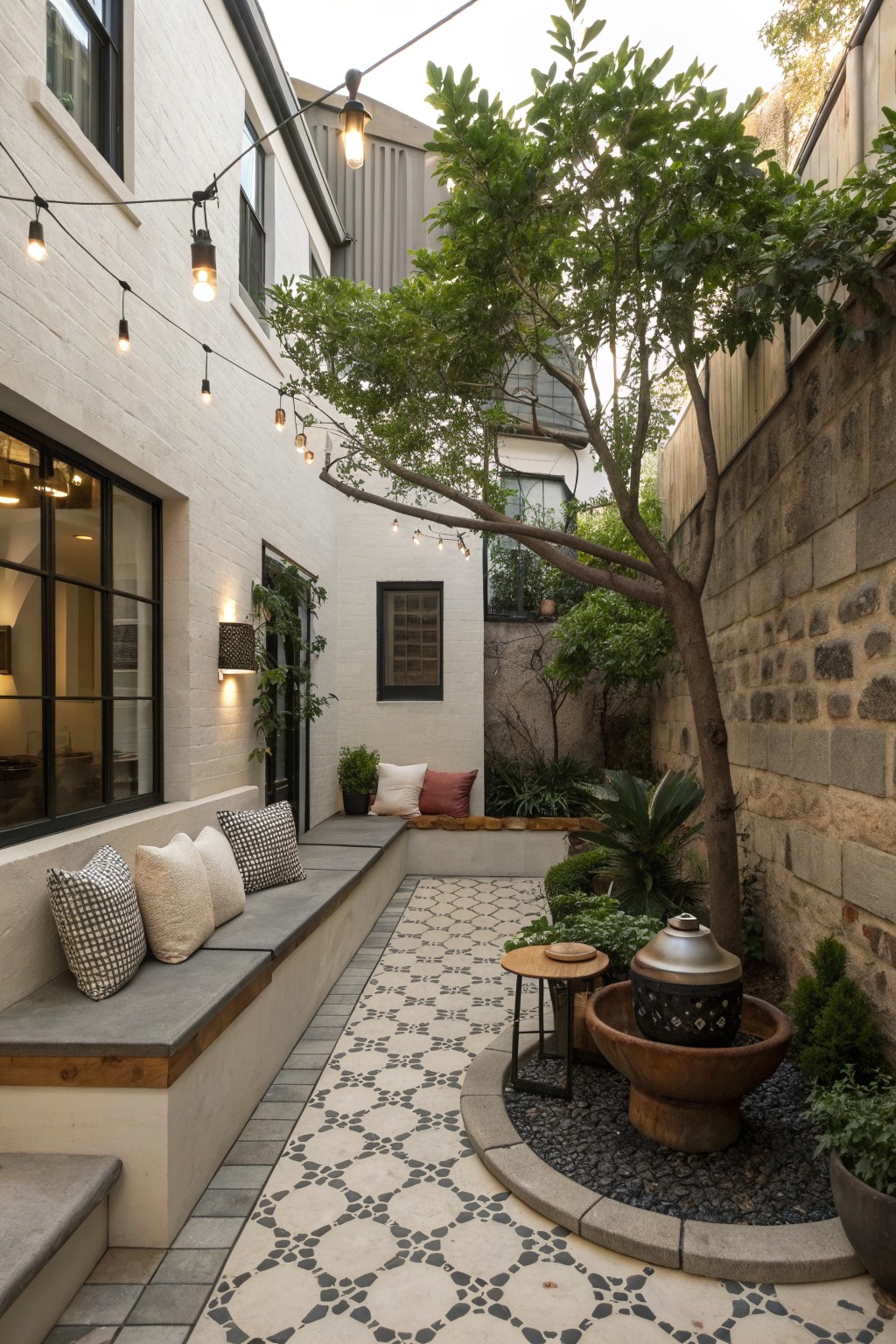
A built-in concrete bench makes good use of limited outdoor room. It turns the base of a wall into seating without adding loose furniture that can crowd a tight courtyard or walkway.
This works best on homes where the yard runs along the side or back of the house. Keep the cushions weatherproof and simple so the bench stays practical year round.
Concrete Benches As Patio Borders
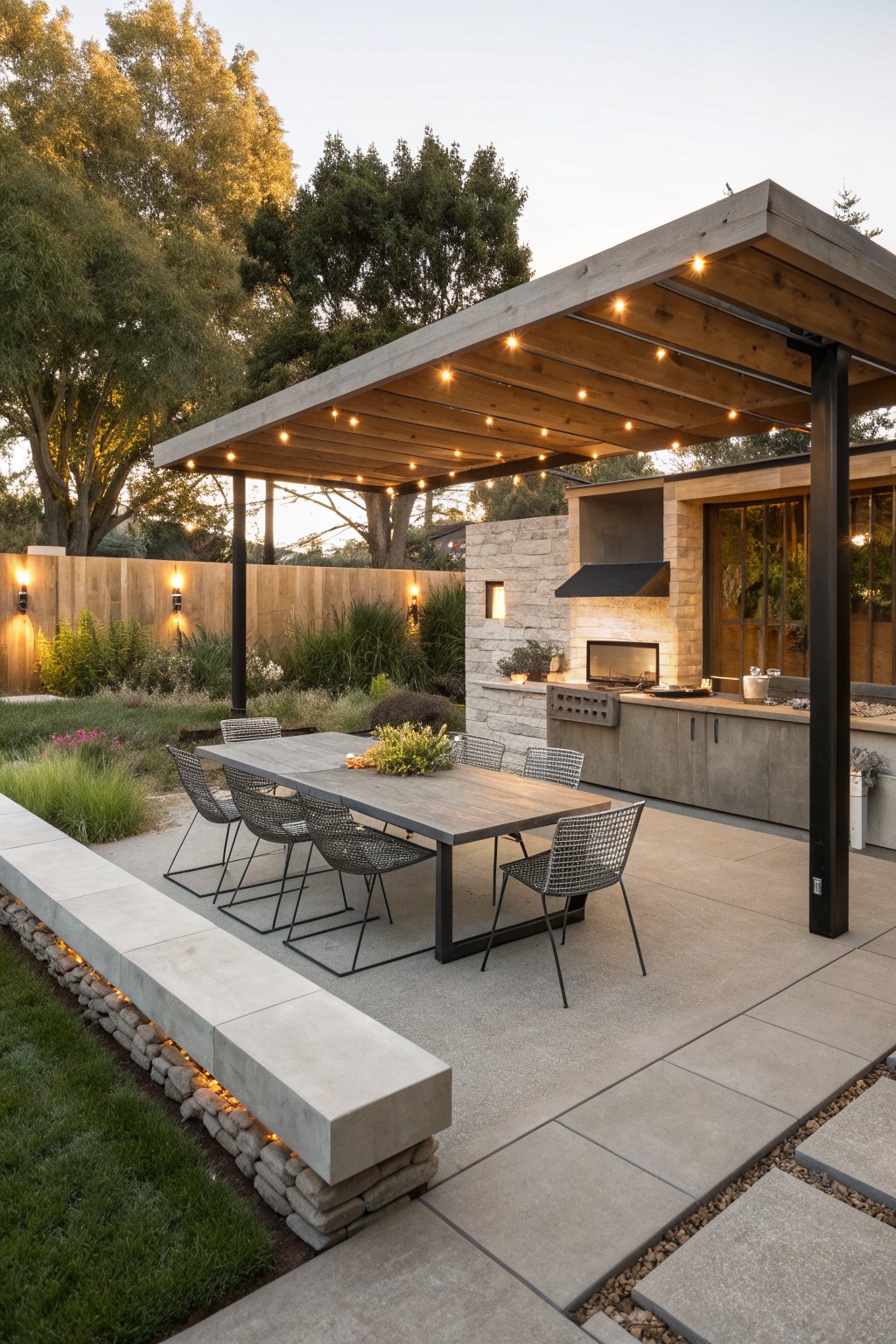
A concrete bench along the edge of a patio gives the space a clear boundary without needing extra furniture. It separates the dining area from the lawn and planting beds while offering a place to sit when the main table is full. The low profile keeps the layout open and makes the whole area feel more intentional.
This works best on homes with level yards where you want a simple transition between hardscape and garden. Keep the bench height around standard seat level and add a few lights along the base so it stays useful after dark. It pairs especially well with modern outdoor kitchens or pergola setups that already use clean lines.
Built In Bench Against The Fence
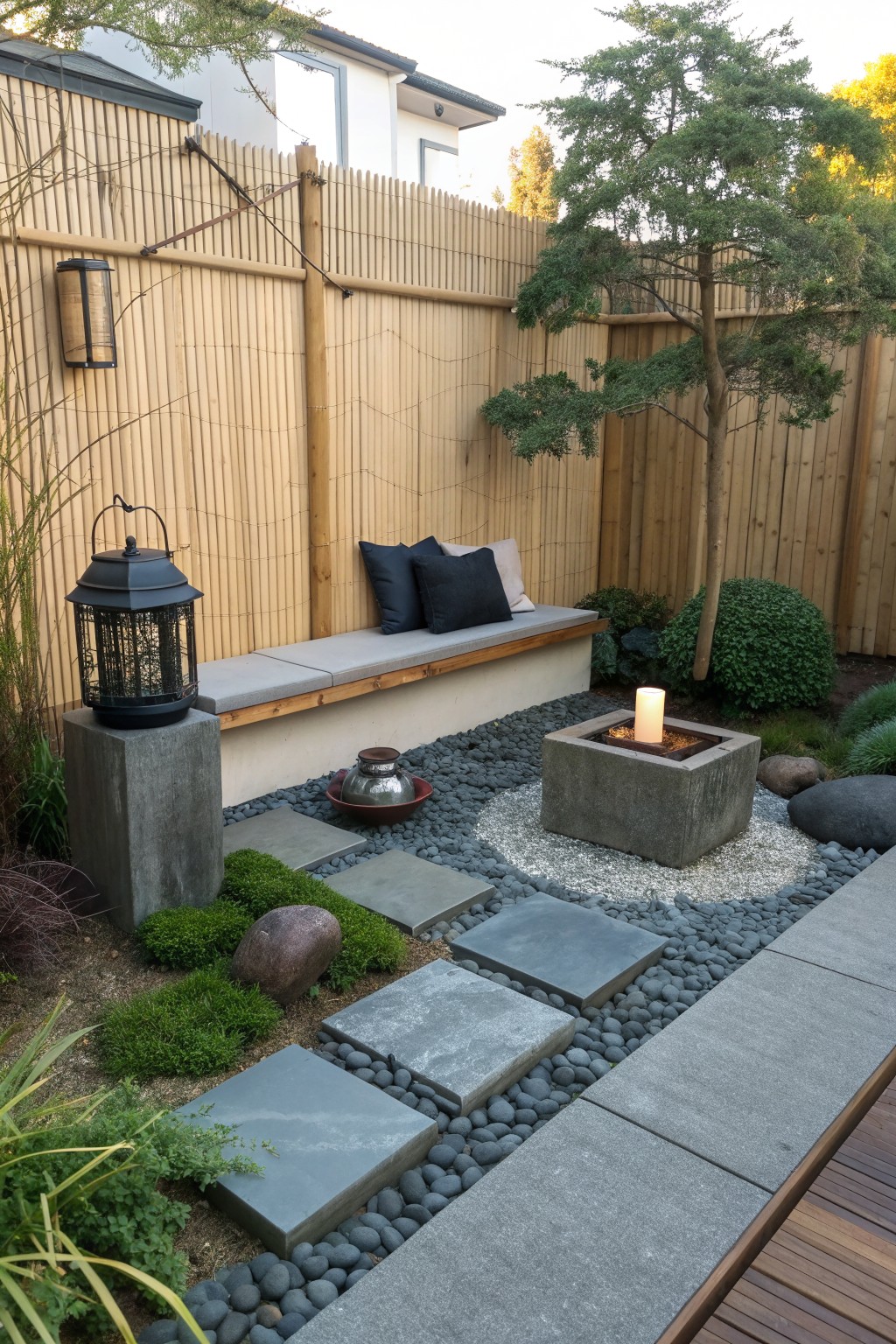
A bench placed right against the fence keeps the seating area simple and leaves more room for other elements like paths and a fire pit. This layout works especially well in smaller yards where you want the space to feel open but still have a place to sit comfortably.
It suits homes with existing fencing or walls and pairs easily with gravel and stepping stones. Keep the cushions basic and the surrounding hardscape low so the bench stays practical rather than decorative.
Concrete Benches With Planters Nearby
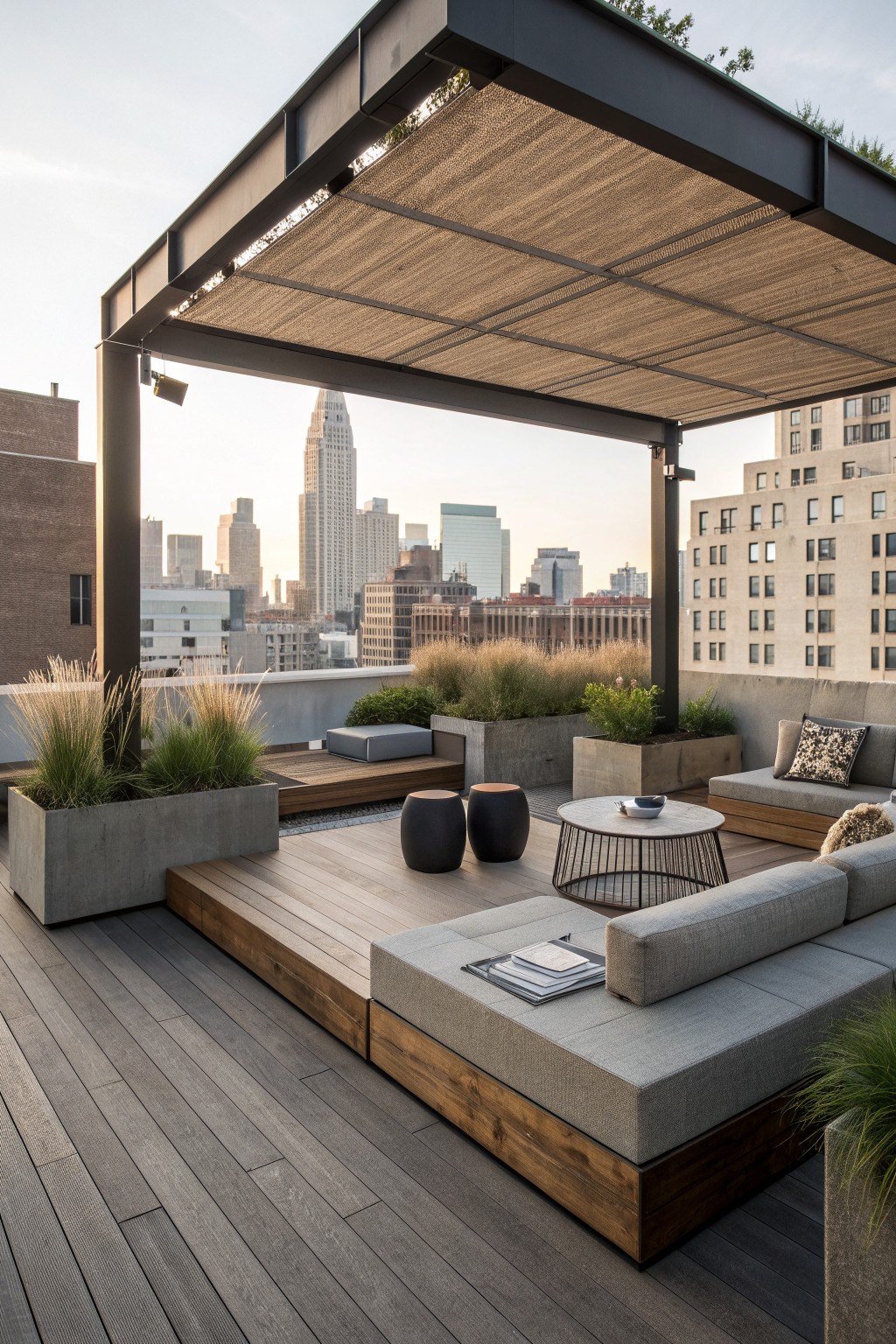
Concrete benches give an outdoor space a solid base that does not shift or wear out fast. They hold up well in exposed spots and create clear spots to sit without crowding the area with too many separate chairs.
Set them along the edge of a deck or terrace and keep a few large planters close by for greenery. This works on rooftops or patios where you want seating that feels built in but still leaves walking room.
Built-In Benches Along Exterior Walls
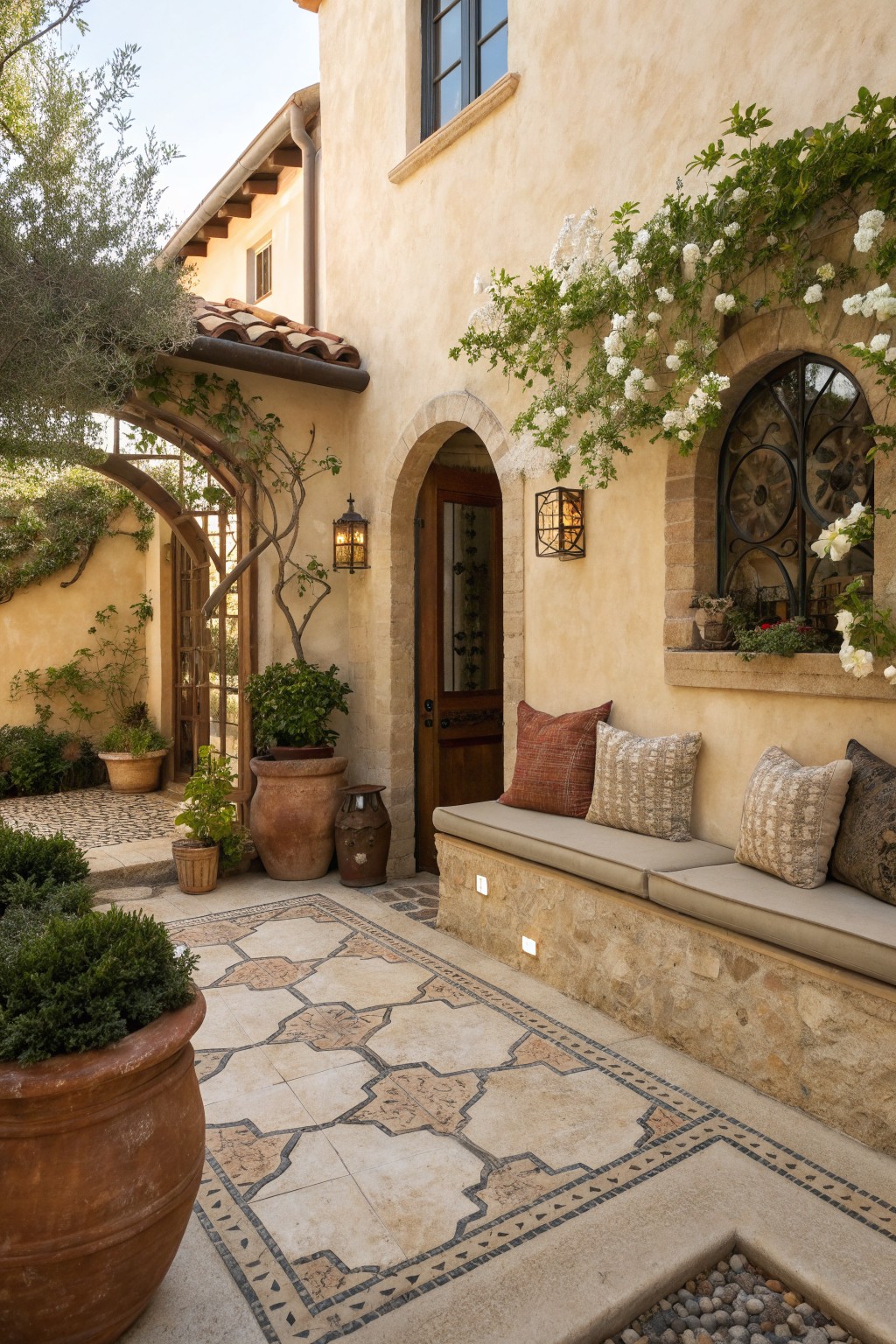
A built-in bench gives you permanent seating without adding extra furniture that needs moving or storing. It works especially well when placed right against the house, turning an empty wall into a usable spot for relaxing. The stone base holds up to weather and keeps the look simple.
This setup suits homes with a patio or courtyard where you want seating that feels part of the structure. Keep the cushions weatherproof and choose a bench height that feels comfortable for everyday use. Avoid making the bench too deep or it can start to crowd the walking space.
Concrete Porch Surfaces For Lasting Seating
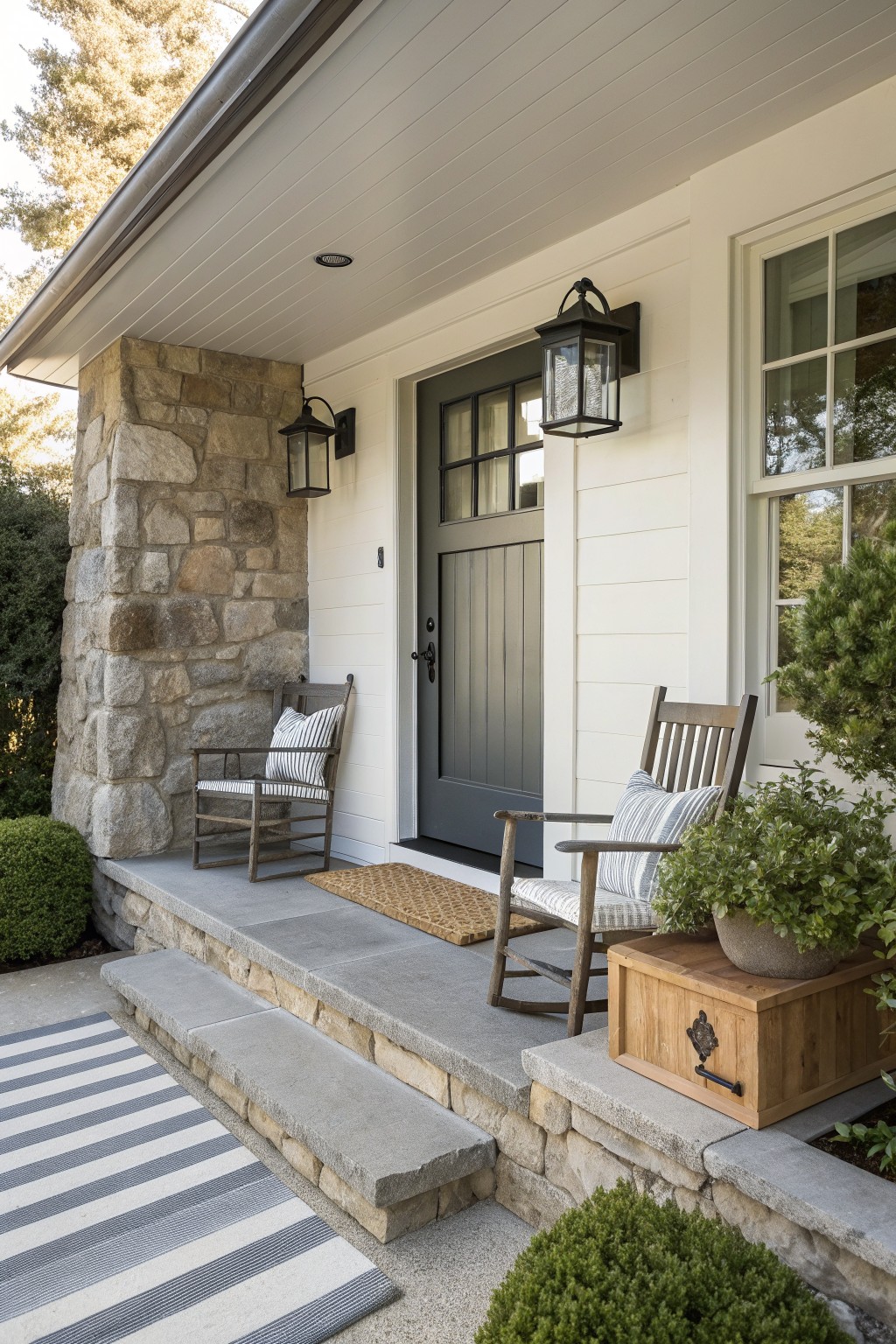
Concrete holds up well on a porch because it resists weather and daily wear without needing much upkeep. It creates a flat, solid base that works for rocking chairs or other simple seating, and it keeps the whole area feeling grounded even when the rest of the space stays fairly plain.
This setup fits homes with straightforward front entries where you want something practical rather than fussy. Keep the seating light so the concrete stays the main surface, and add a rug or mat only if you want a softer spot underfoot.
Concrete Benches Built Into Garden Terraces
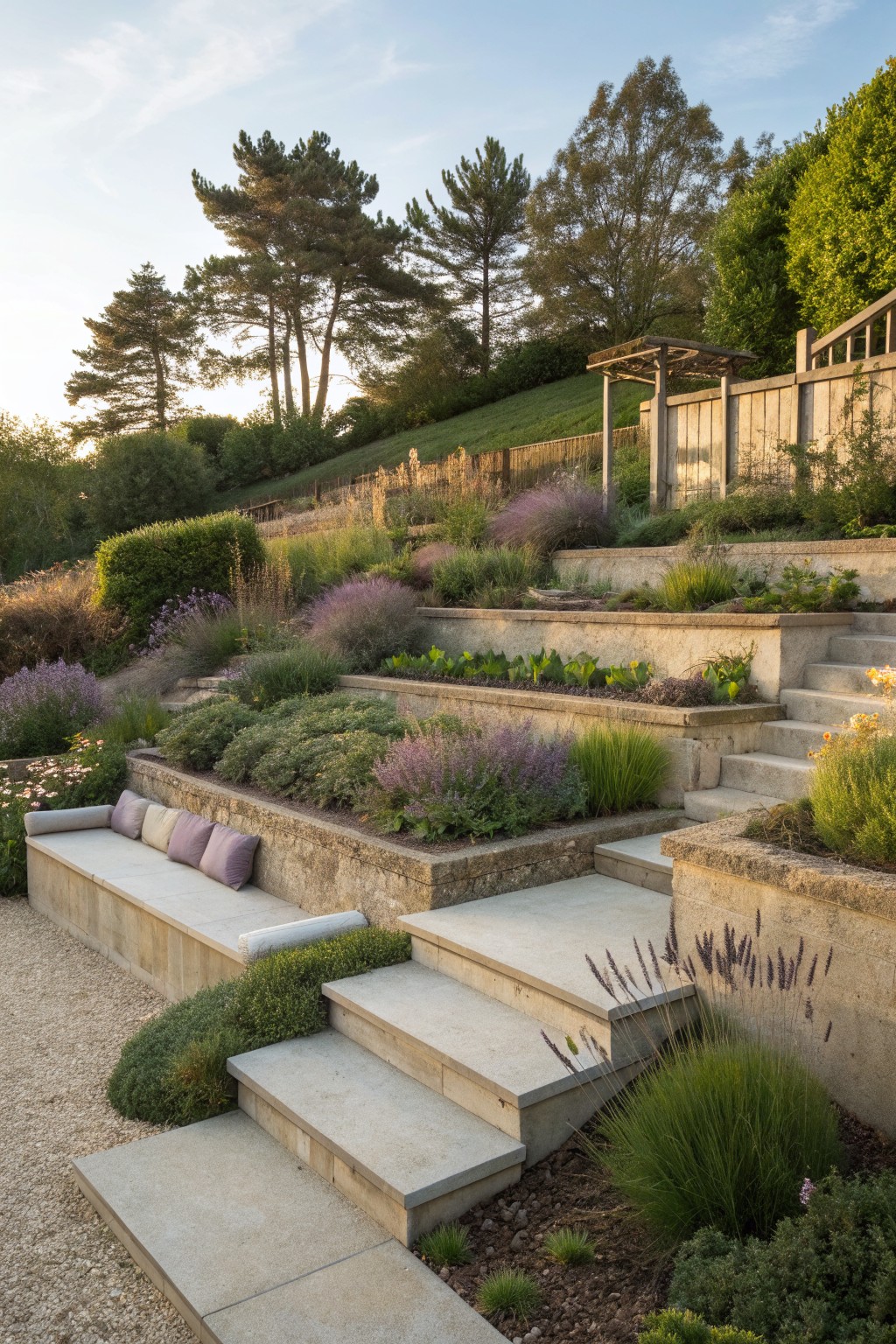
One way to handle a sloped yard is to build concrete benches right into the terraces. This creates seating that feels like part of the landscape instead of something added on later. The benches stay solid and low maintenance while the levels connect different parts of the garden.
This works best on properties with a natural slope or where you want to add structure without losing the garden feel. Keep the concrete simple and let the planting soften the edges around it. It suits homes where the outdoor space needs to handle both sitting and moving between levels easily.
Using Concrete Planters With Outdoor Benches
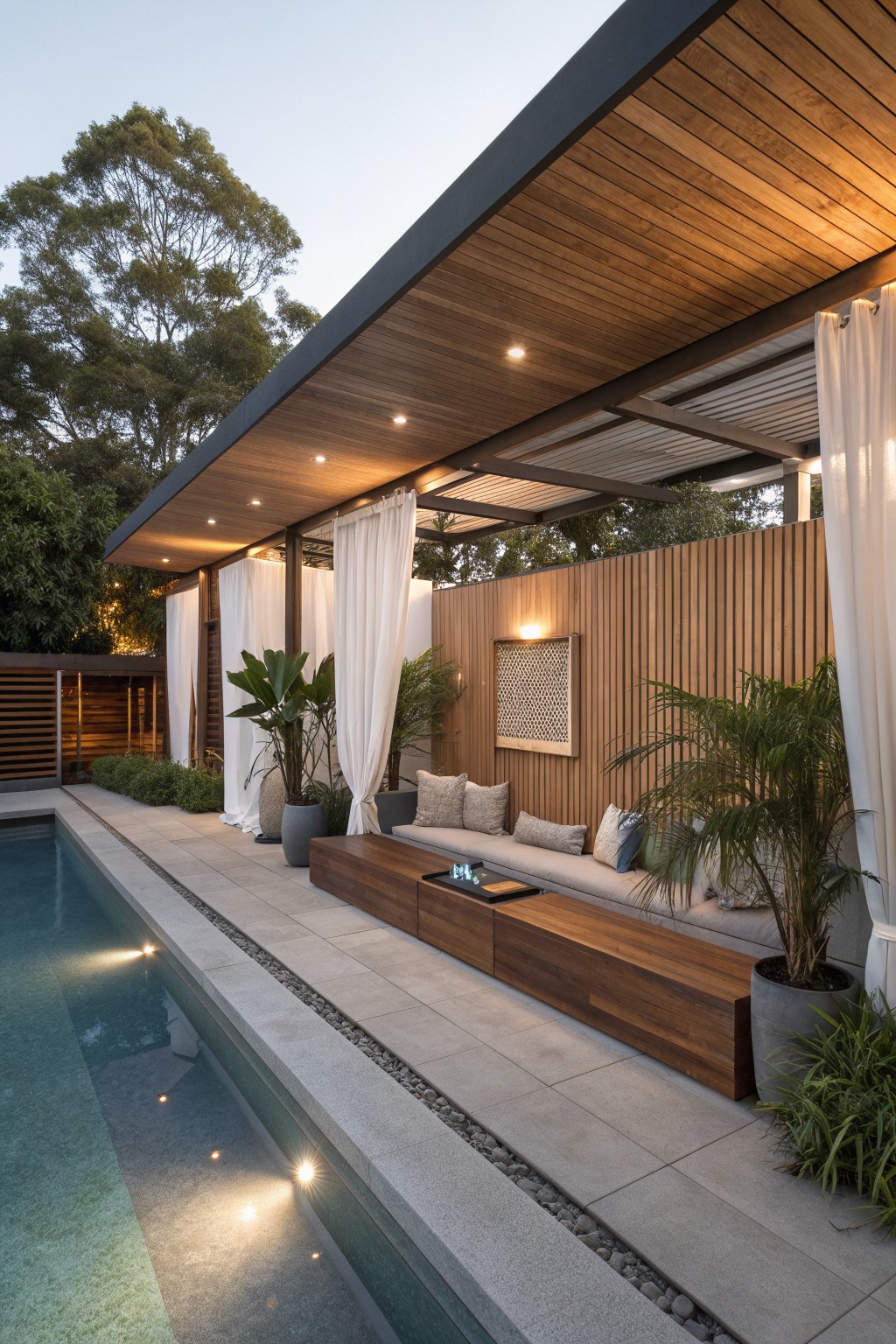
Many people add large concrete planters right next to a built-in bench because it adds height and greenery without crowding the seating. The solid planters also help mark the edge of the space and keep things looking tidy.
This setup works best on a pool deck or wide patio where you have room to run a long bench. Choose planters that match the bench length so the whole area feels balanced, and pick plants that stay full without much trimming.
Built In Concrete Benches For Narrow Spaces
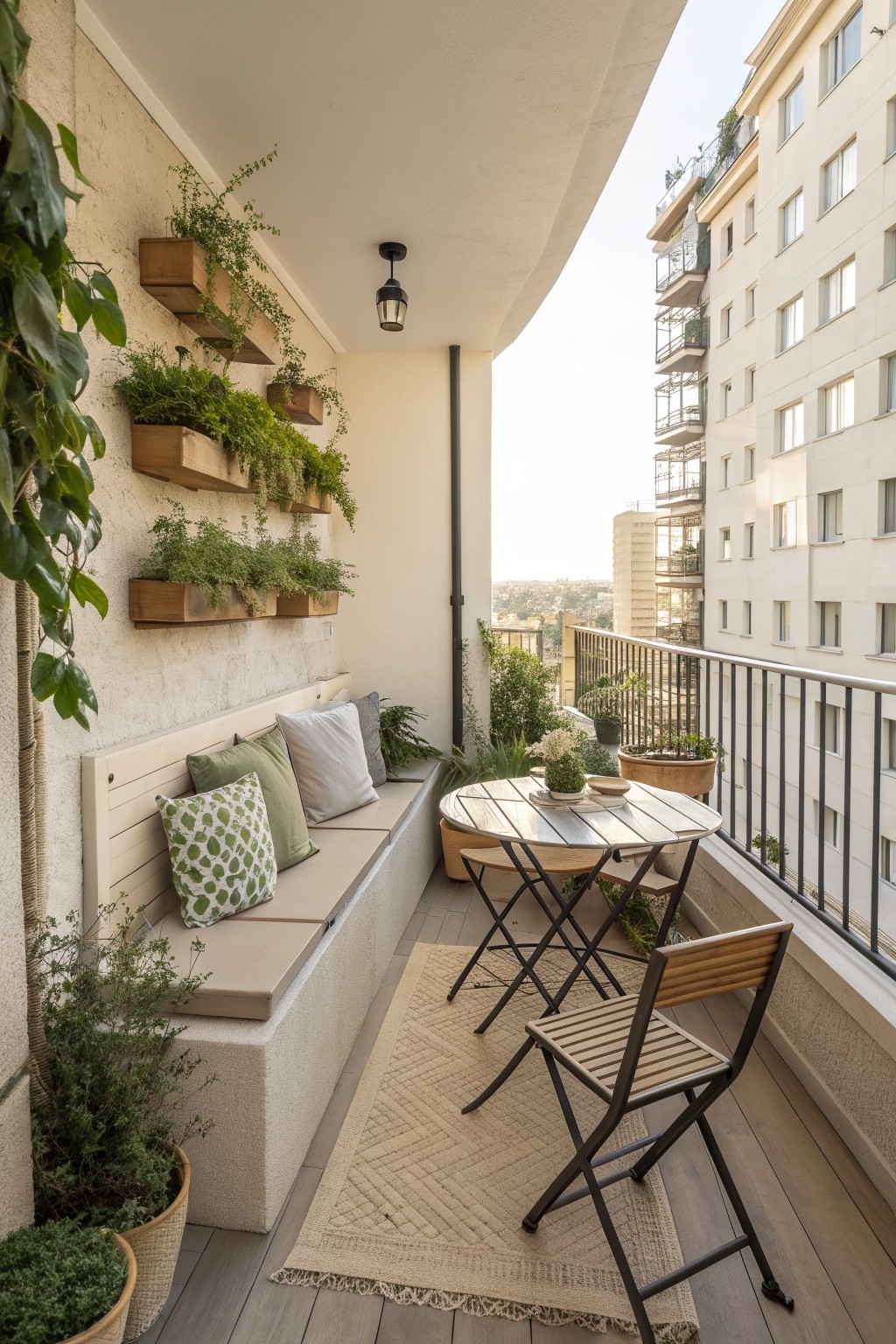
A concrete bench built right into the wall works well on balconies because it stays put and does not take up extra floor space. It gives you a solid place to sit without needing to move furniture around or worry about weather damage.
This setup fits apartments or homes with limited outdoor room. Add cushions for comfort and keep a few plants nearby so the area feels less bare.
Concrete Islands For Casual Outdoor Seating
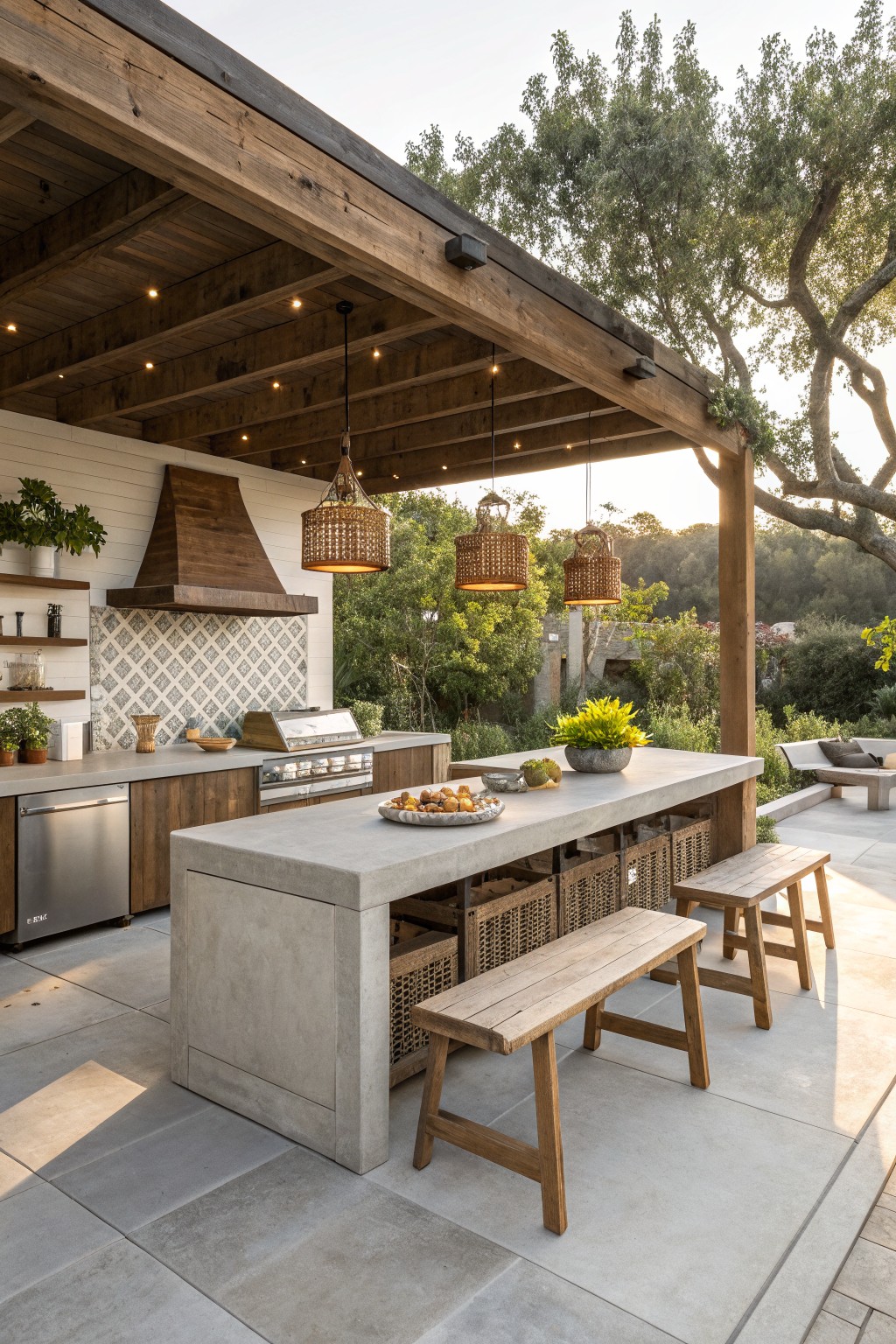
A big concrete island makes a strong base for outdoor seating because it stays put and handles daily use without any fuss. People like it because the surface doubles as both a prep area and a place to gather, with benches pulled up on both sides so the whole setup feels open and easy to move around.
This works best on a covered patio or backyard kitchen where the concrete can tie into the floor or other hard surfaces. Keep the benches simple and wooden so they contrast with the heavier look of the island without competing for attention.
Concrete Benches To Anchor Lounge Areas

A concrete bench or low platform gives an outdoor seating spot a solid base that holds up well in damp or uneven ground. It creates a clear place to add chairs without building a full deck, and the material stays cool and stable even in changing weather.
This setup works best on properties with water views or natural slopes where a full patio might feel too heavy. Keep the concrete simple and let the surrounding grass and gravel handle the rest of the transition.
Concrete Benches With Wood Tops
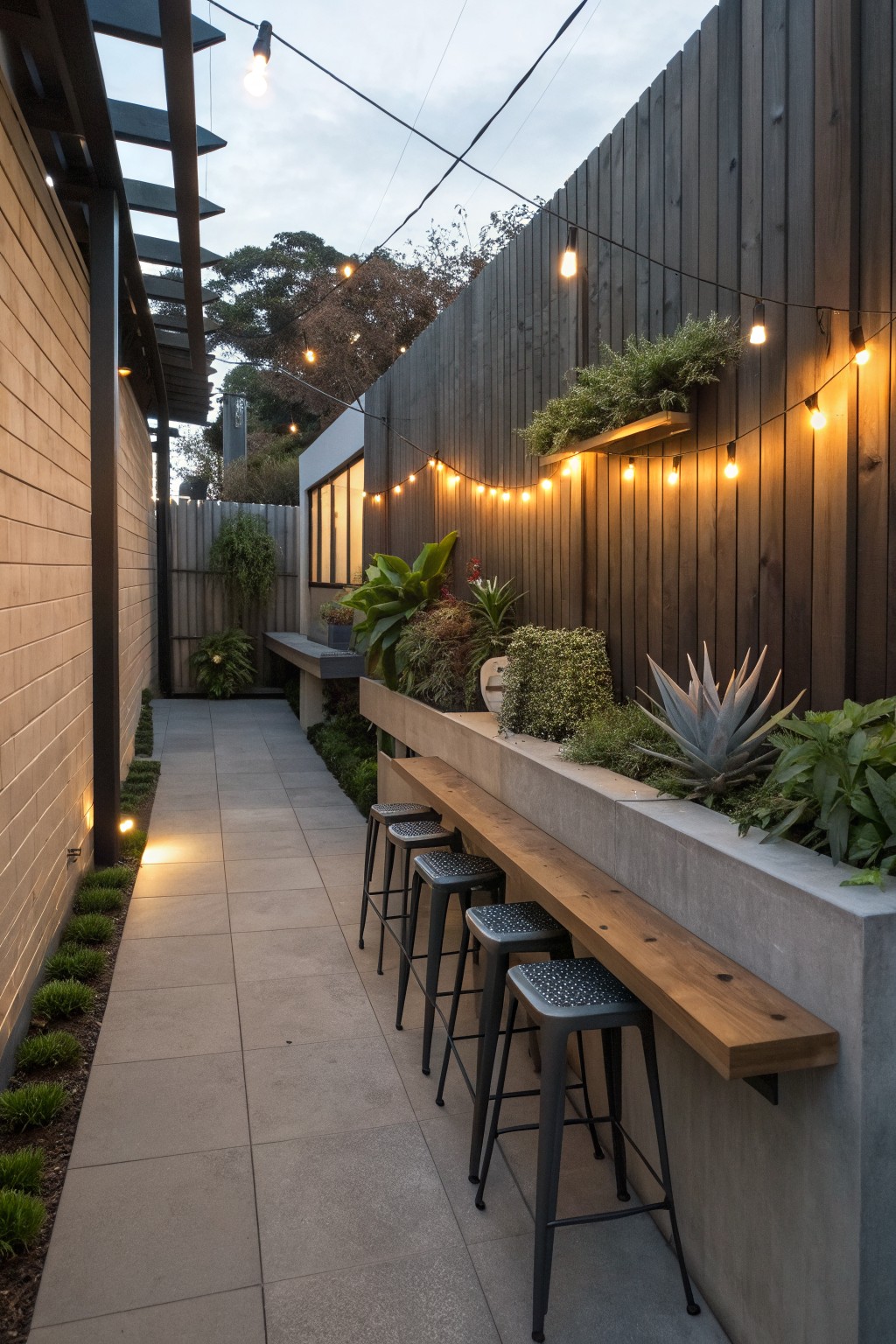
A concrete bench with a wood top gives you solid seating that lasts through all kinds of weather. It feels more permanent than regular chairs and works especially well in narrow side yards or along a fence where space is tight.
This approach suits homes that already have some concrete or stone in the yard. Keep the bench height around 18 inches so it stays comfortable, and add a few stools if you need extra spots for guests.
Built-In Seating Along The Walls
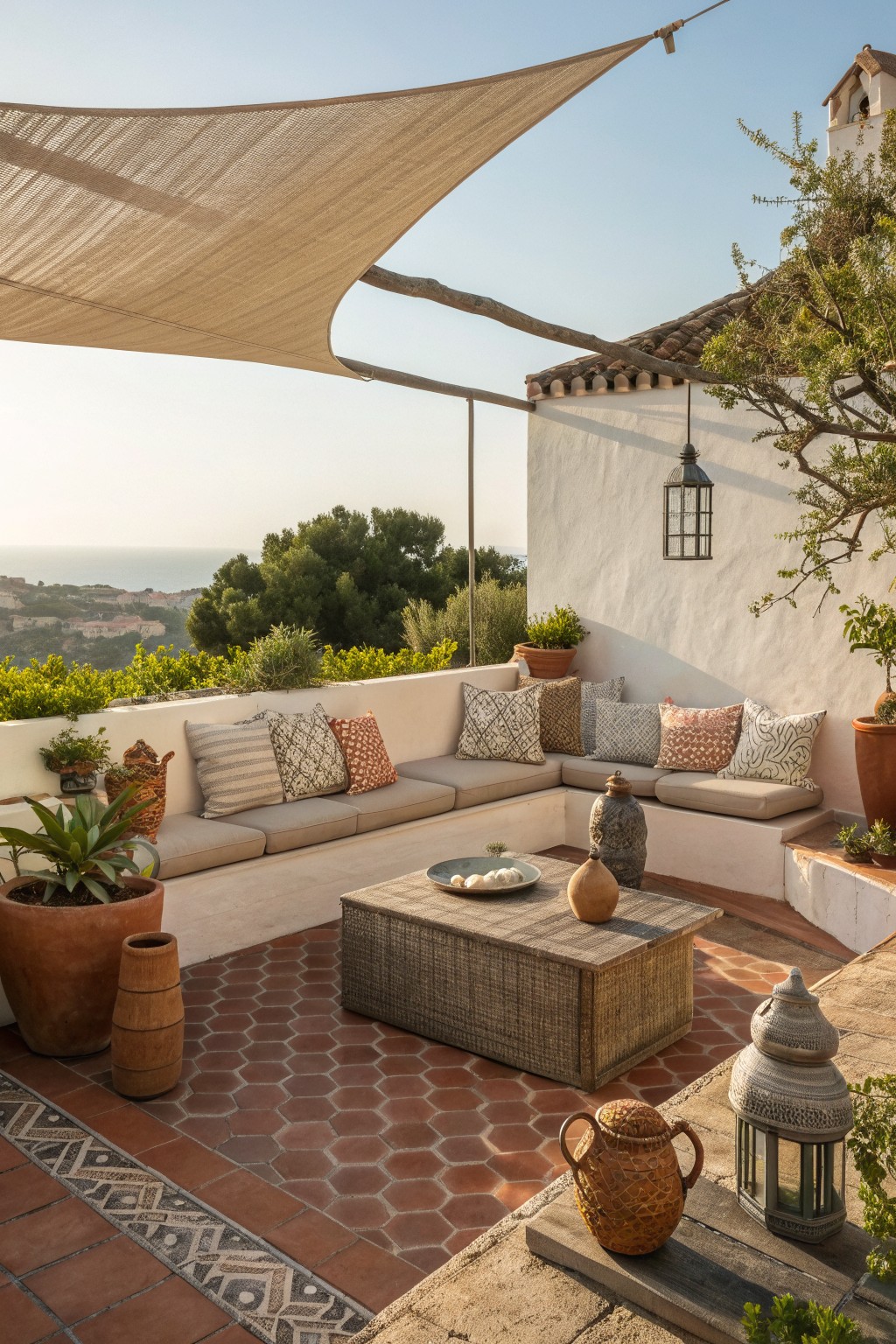
Built-in seating works well on a terrace because it turns the edges of the space into usable lounge areas without taking up extra floor room. You can add cushions in different patterns and sizes to make it comfortable for long stretches outside.
This setup suits homes with a patio or roof deck that gets good sun but needs some structure. Keep the bench height low so it feels relaxed rather than formal, and choose weatherproof cushions that can stay out most of the season.
Concrete Benches Beside Planting Beds
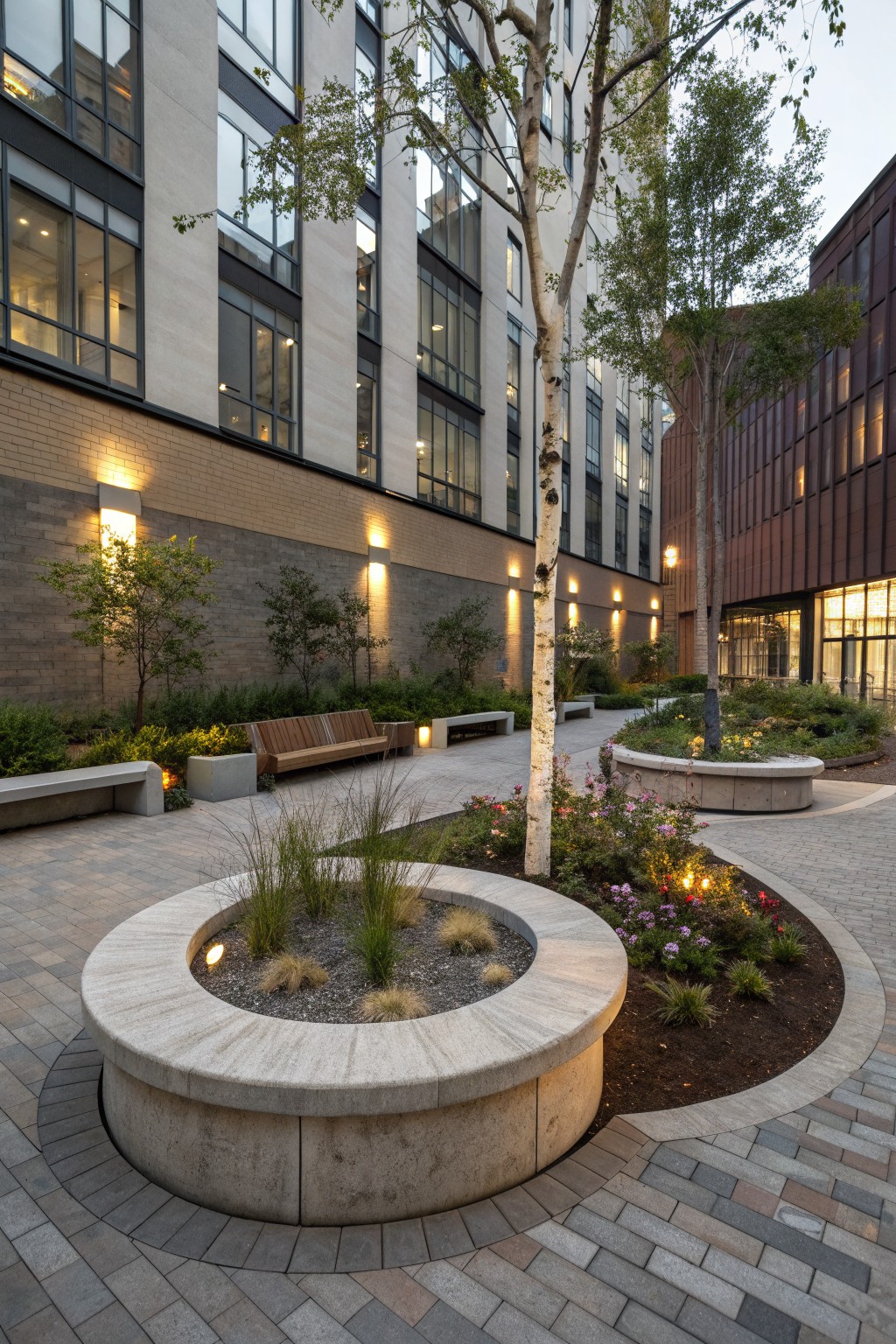
Concrete benches gain a lot when they sit directly next to planted areas. The greenery softens the hard edges and gives people something to look at while they sit, which makes the space feel more settled than a row of benches on plain paving.
This works especially well in smaller courtyards or shared outdoor areas where you want clear places to stop without crowding the space with extra furniture. Keep the benches low and simple so they read as part of the landscape rather than separate pieces.
Benches That Trace the Edge of the Water
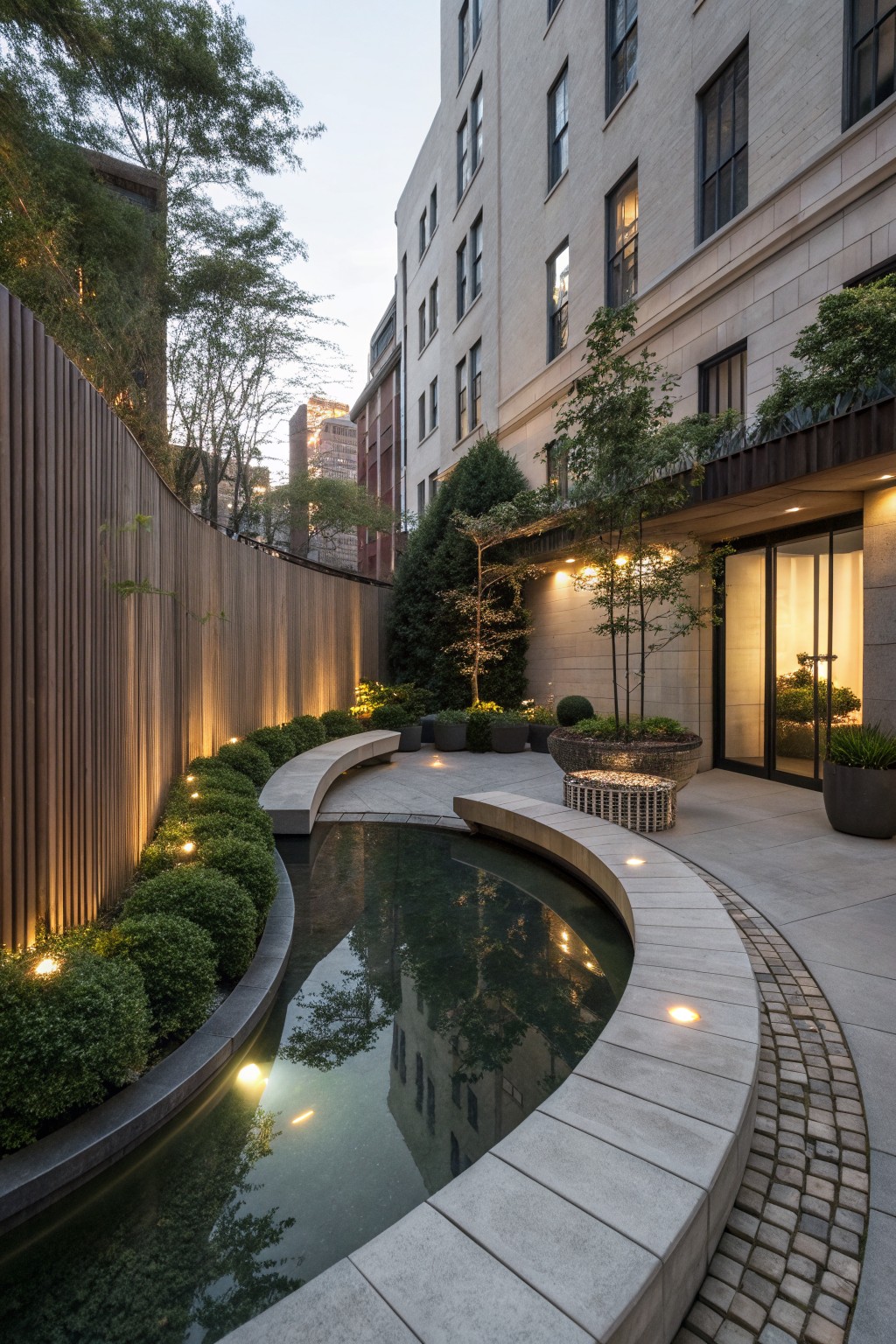
Running a concrete bench right along the water gives the space a built-in feel without extra furniture. The bench becomes part of the hardscape, so the seating feels permanent and the pond stays the main feature.
This layout works best in smaller courtyards or side yards where you need both a focal point and a place to sit. Keep the bench height low and the curve gentle so it stays comfortable rather than looking like a wall.
Bench Seating Along a Narrow Pathway
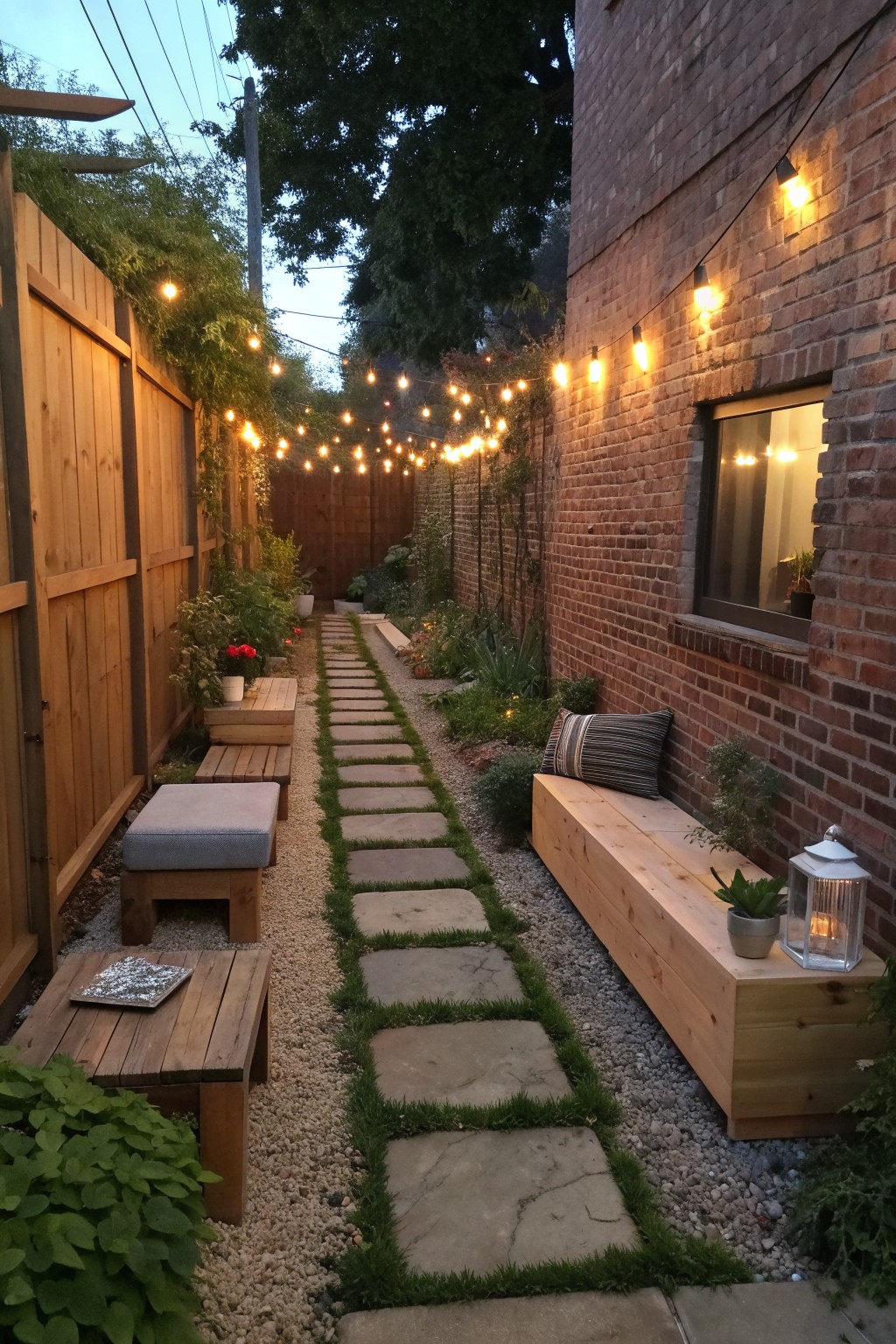
One way to make the most of a slim side yard is to run simple benches down both sides of a central path. This turns what could be wasted space into a place where people can actually sit and relax without crowding the walkway.
It works especially well in urban yards or between houses where width is limited. Keep the benches low and the path clear with stepping stones so the area still feels open and easy to move through.
Concrete Platforms Extended Over Water
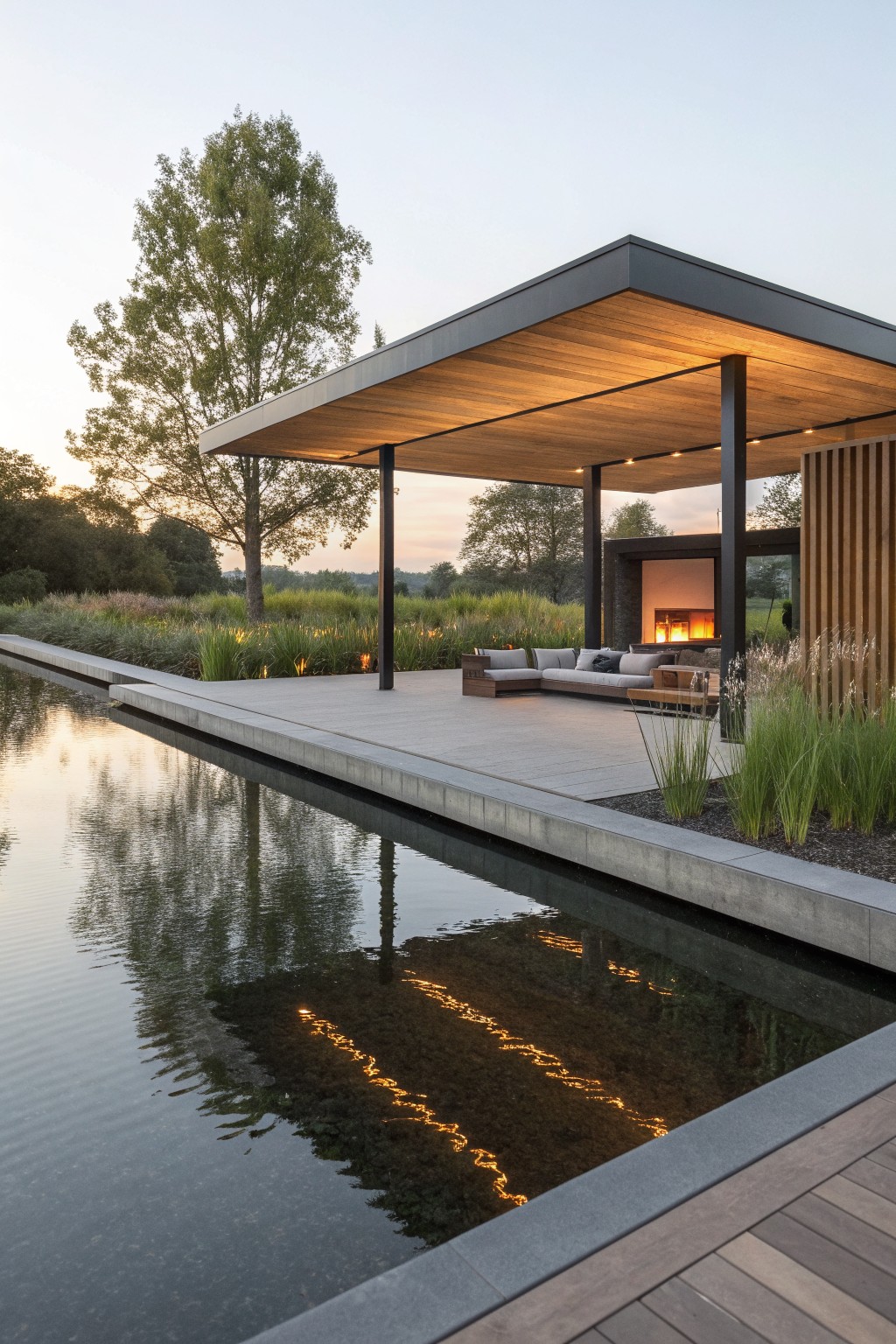
One way to give outdoor seating a strong modern feel is to build it on a concrete platform that extends over a pond or pool. The flat surface creates a clean edge and lets the seating sit right at the water without extra railings or steps in the way.
This layout works best on homes with existing water features or where a small pond can be added. It needs solid structural support for the overhang, but once in place it pairs well with simple furniture and a basic roof overhead for year-round use.
Concrete Benches Near Outdoor Ovens
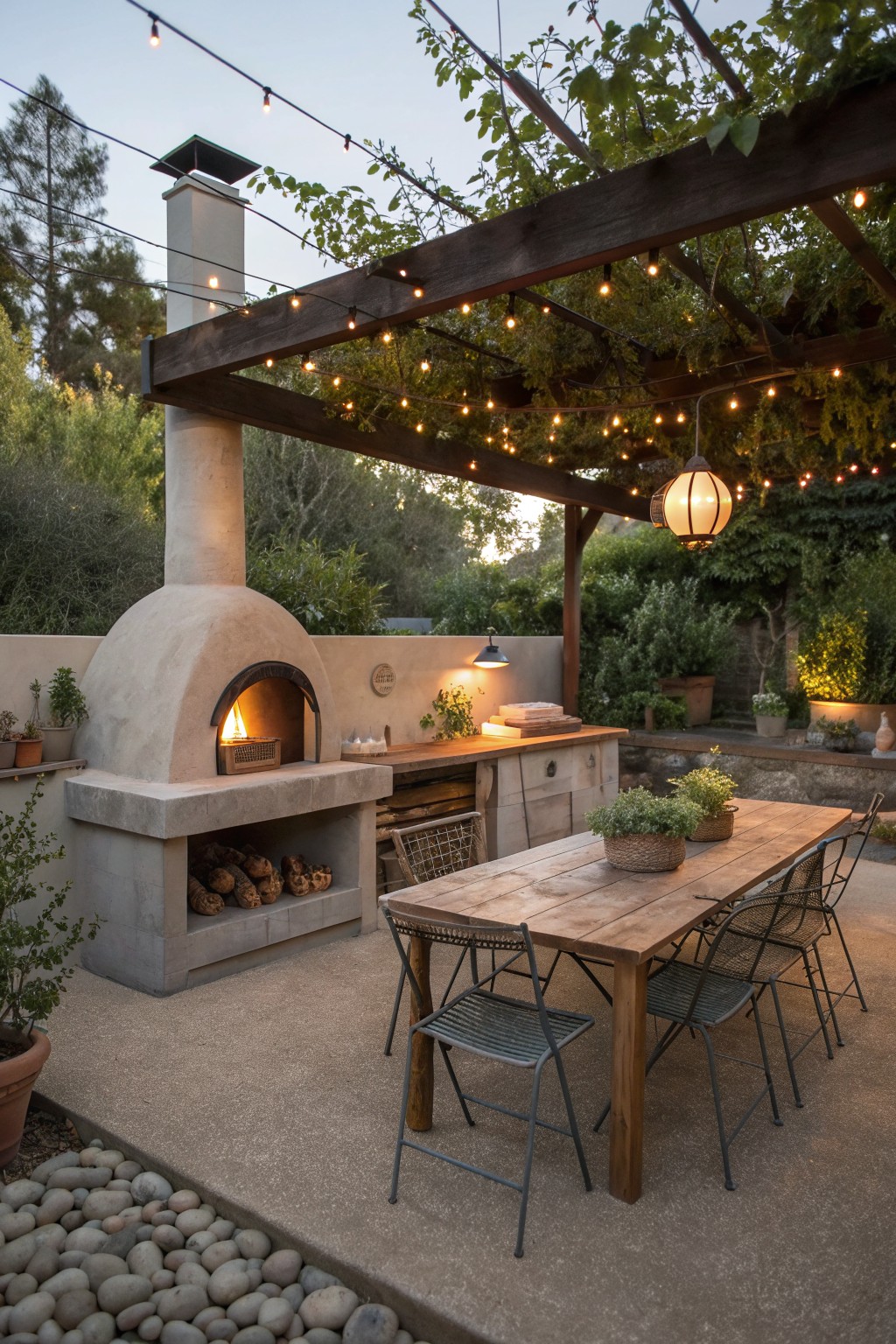
Concrete benches hold up well when placed right beside a pizza oven or similar built-in cooking spot. The material stays cool enough to sit on even after the fire has been going, and it needs almost no upkeep compared with wood or cushions that get left outside.
This works best on a patio where the bench can double as extra counter space or a spot for guests to perch while the food cooks. Keep the bench height in line with your dining chairs so the whole area feels like one connected space instead of separate pieces.
Frequently Asked Questions
Q: How do I make a concrete bench feel comfortable for longer sits? A: Lay down a couple of thick outdoor cushions with some grip on the bottom. They add softness and keep the cold from seeping through right away. Stick to neutral colors so the bench still looks clean and modern.
Q: What happens to concrete benches after a long rainy season? A: Let the surface dry fully between storms and brush off any leaves or dirt that holds moisture. A light sealant every few years blocks stains without changing the look. Most cured mixes handle wet weather fine if you avoid letting puddles sit for days.
Q: Can I fit one of these benches into a tiny backyard without it taking over? A: Go for a shorter two-seater version and set it flush against a fence or wall. This leaves floor space open while still giving you a sturdy place to rest. Add one small side table next to it and the whole spot feels balanced.


