I’ve found that bedroom walls rarely stay the same once trim and bedding enter the picture.
Light shifts across the space throughout the day and often pulls out undertones I did not notice on the sample.
Testing on the actual wall still feels necessary.
Bedding fabrics catch light in a softer way than painted surfaces so the whole group needs to balance in person rather than on paper.
I usually end up repainting a small section after I see how everything sits together in the finished room.
Soft Sage Green Walls
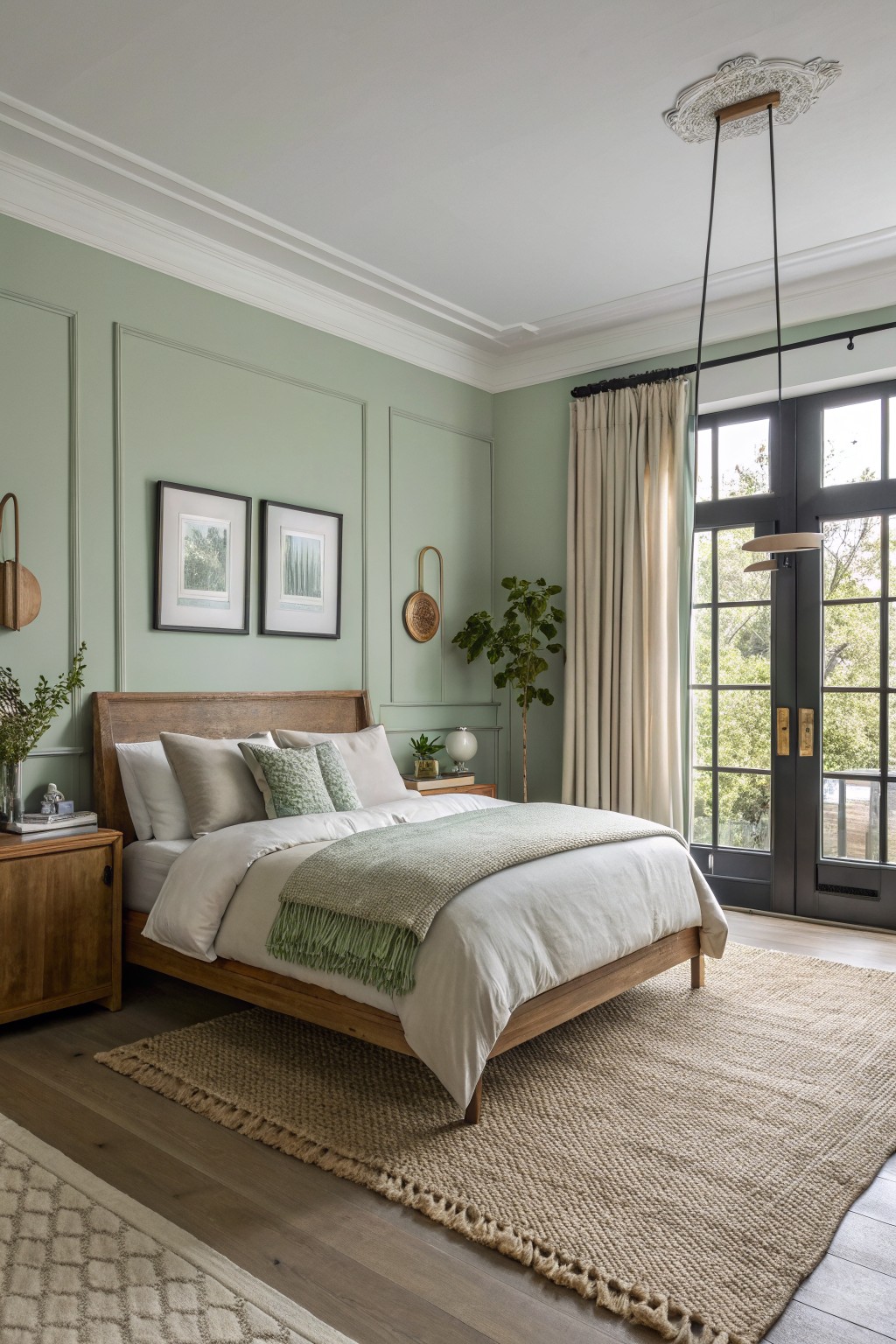
A soft sage green on the walls gives this bedroom a quiet, steady feel. It is a muted color that sits between gray and green, so it never feels too bright or too cool in the space.
The green has a light gray undertone that helps it blend with warm wood tones and white bedding. It works best in rooms with steady daylight and pairs easily with natural textures like linen or unfinished wood. Try Sherwin Williams Evergreen Fog, Benjamin Moore Saybrook Sage, Behr Aloe Touch, or Farrow & Ball Lichen.
Soft Greige Walls
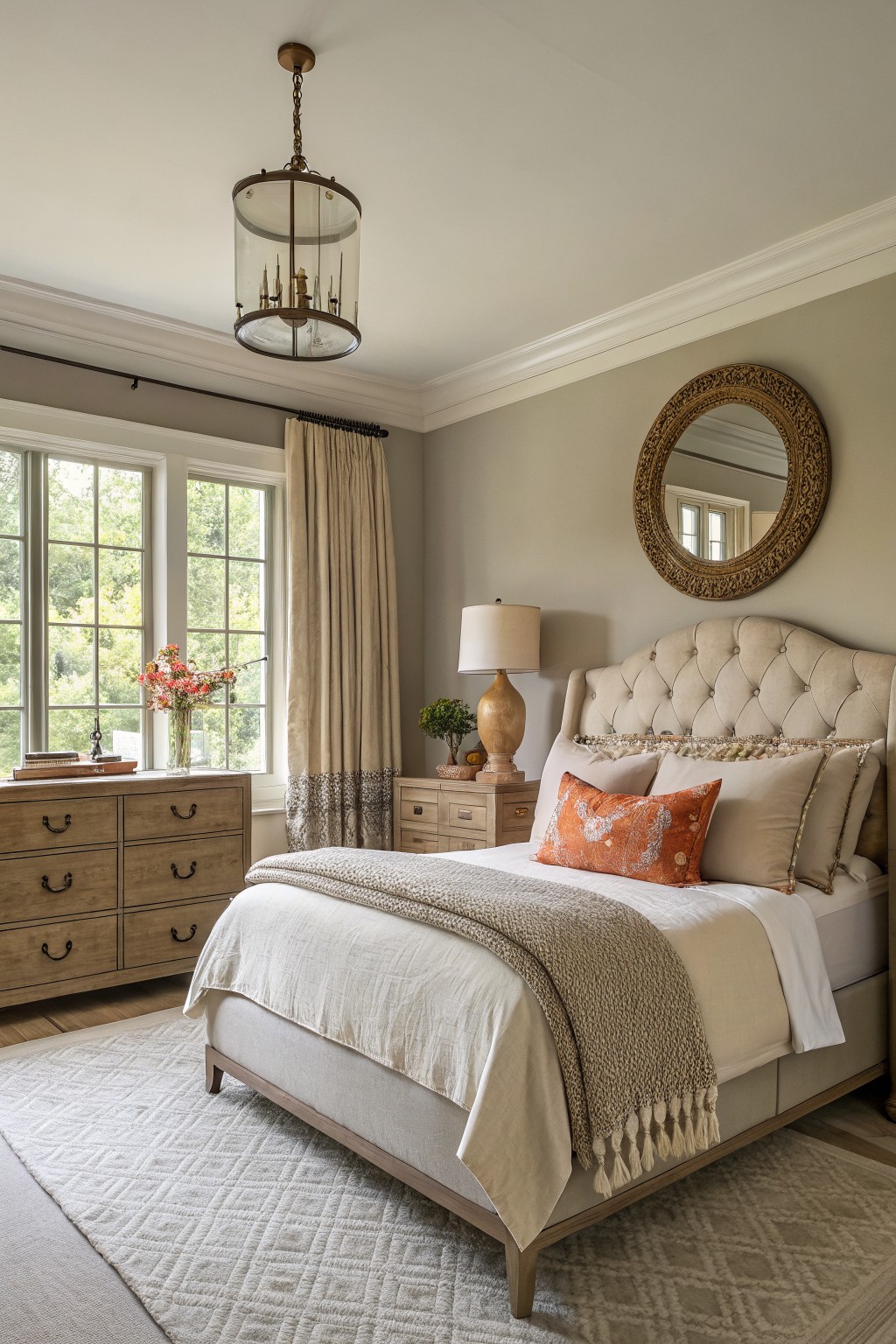
This bedroom uses a soft greige on the walls. It is a warm light gray with a touch of beige that feels calm and blends easily with wood tones and white trim.
The color has a gentle warmth that keeps the space from looking flat or cool. It pairs well with natural wood furniture and simple textiles. Closest matches include Sherwin Williams Accessible Beige, Benjamin Moore Edgecomb Gray, Behr Silver Satin, and Farrow & Ball Elephant’s Breath.

This deep navy blue on the walls gives a bedroom a solid, quiet feel without turning the room too dark. It sits between a true navy and a blue-gray, which helps it stay versatile across different lighting.
The color has a cool undertone that works best with warm wood furniture and floors to balance it out. It pairs easily with white or light gray bedding and painted trim in the same shade or a soft off-white.
Soft Green Bedroom Walls

This soft green on the walls is a pale seafoam that sits between blue and green without leaning too far either way. It feels calm and a little coastal while still reading as a true neutral in the room. The color works because it gives the space some life without competing with the white trim or the bedding. Closest matches would be Sherwin Williams Sea Salt, Benjamin Moore Palladian Blue, Behr Soft Seafoam, or Farrow & Ball Light Blue.
It has cool undertones so it stays crisp next to bright white trim and wood tones. Use it in bedrooms that get steady daylight, since it can look a little flat in very dim rooms. Keep the rest of the palette light and simple so the green stays the main quiet note.
Warm Terracotta Walls
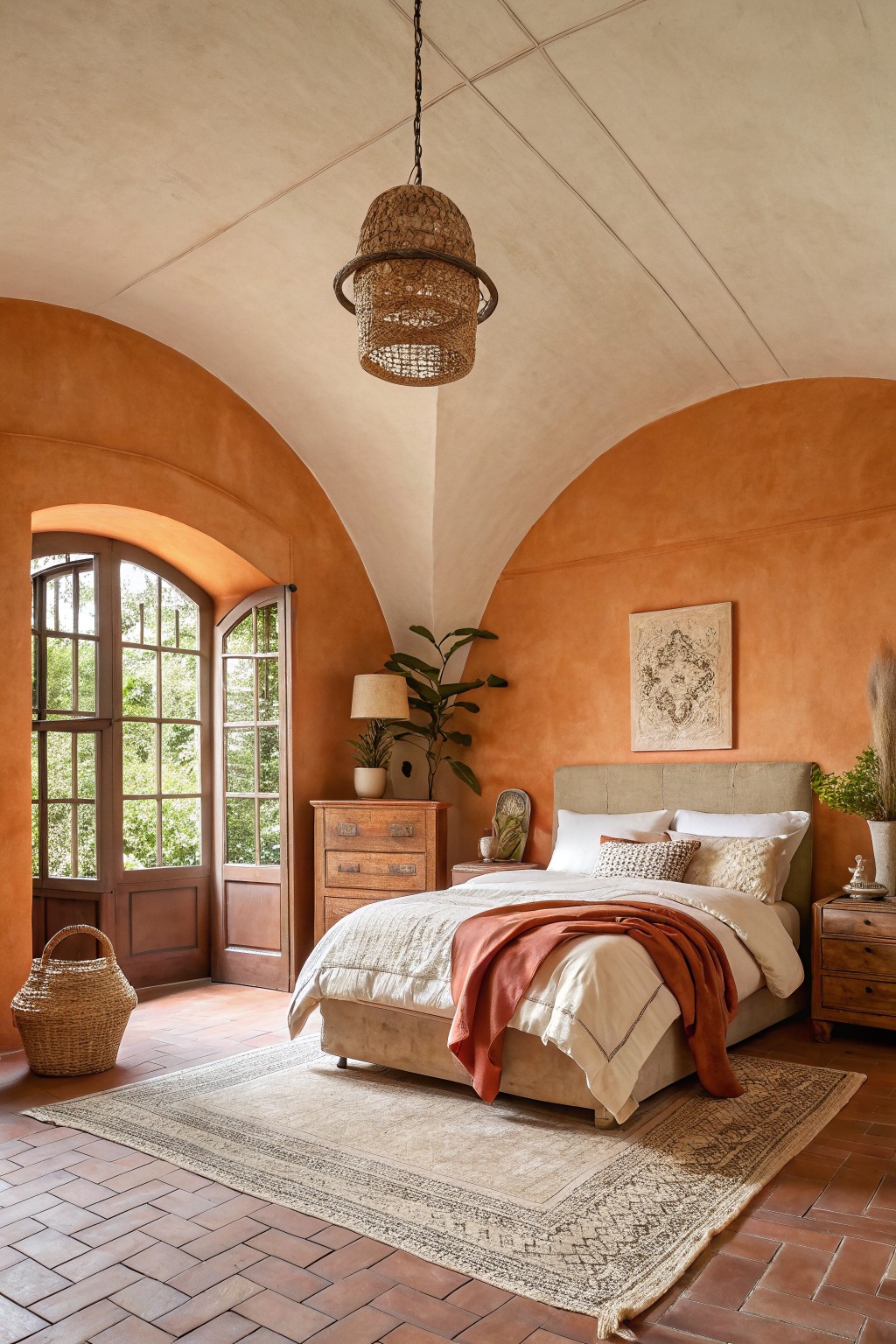
Terracotta walls give a bedroom a simple earthy base that feels settled. This color sits in the warm orange family with a touch of brown, and it reads softer than a bright orange while still adding real depth to the space.
It carries a mild red undertone that can shift depending on the light, so it works best in rooms with decent natural light. Pair it with wood tones and lighter bedding to keep the overall look connected and easy to live with.
Soft dusty rose walls
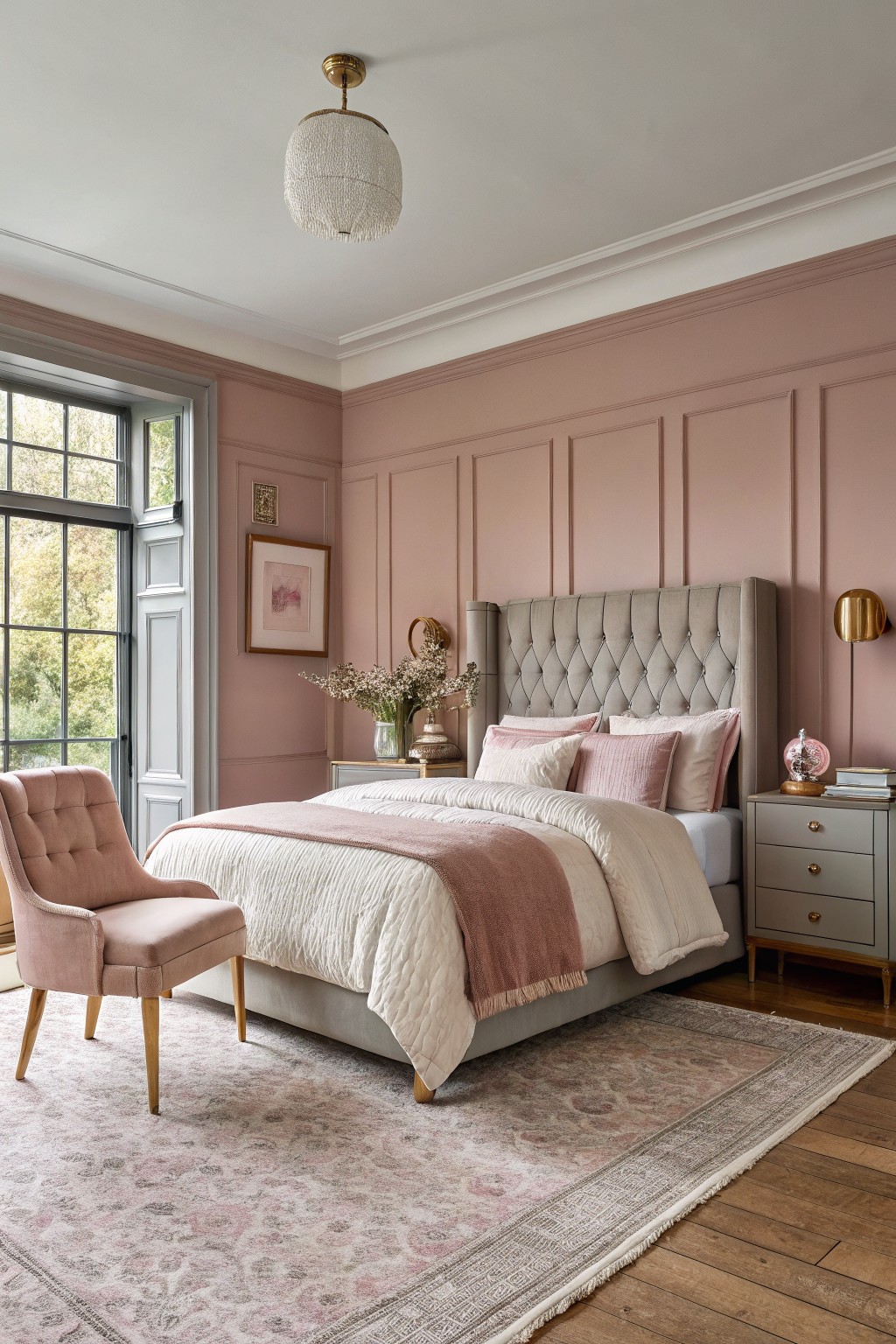
This bedroom uses a soft dusty rose on the walls. It is a muted pink with light gray undertones that feels calm without turning too sweet or pastel.
The color sits nicely next to the warm wood floor and gray furniture. It works best in rooms with decent natural light and pairs well with simple textiles or wood tones. Try Benjamin Moore Dusty Rose, Sherwin Williams Rosebud, Behr Mauve Mist, or Farrow & Ball Peignoir for a close match.
Earthy Sage Green Bedroom Walls
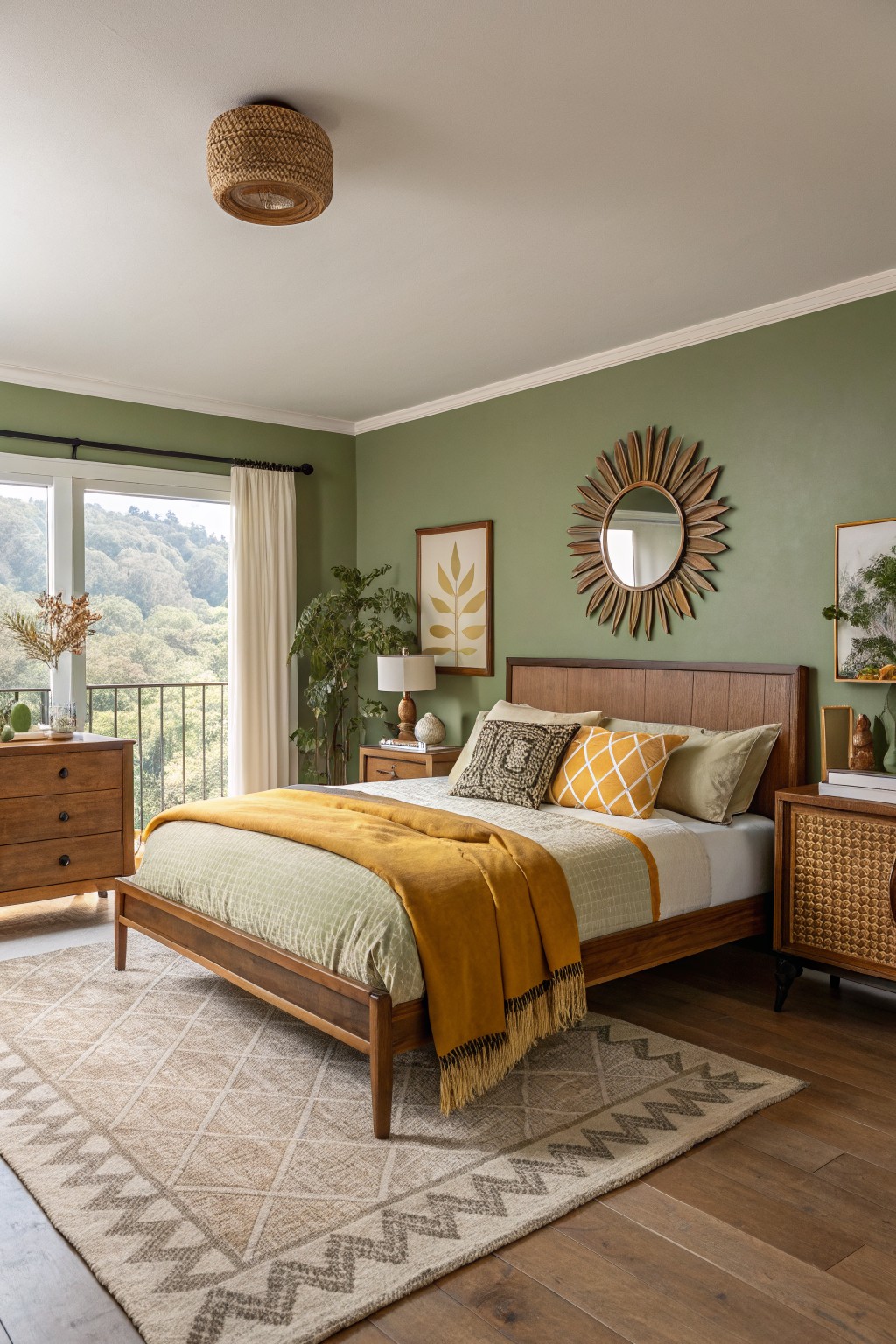
This bedroom shows a soft sage green on the walls that feels calm and a little earthy. The color sits in a middle range, not too light or dark, with a gentle warmth that keeps the room from feeling chilly. It works especially well with wood furniture because the green lets the natural tones stand out instead of competing with them.
It reads closest to Sherwin Williams Clary Sage or Benjamin Moore Saybrook Sage. Behr Aloe or Farrow & Ball French Gray come close too. The shade holds up nicely with warm wood and simple bedding, though it can look a bit flat if the room gets very little natural light.
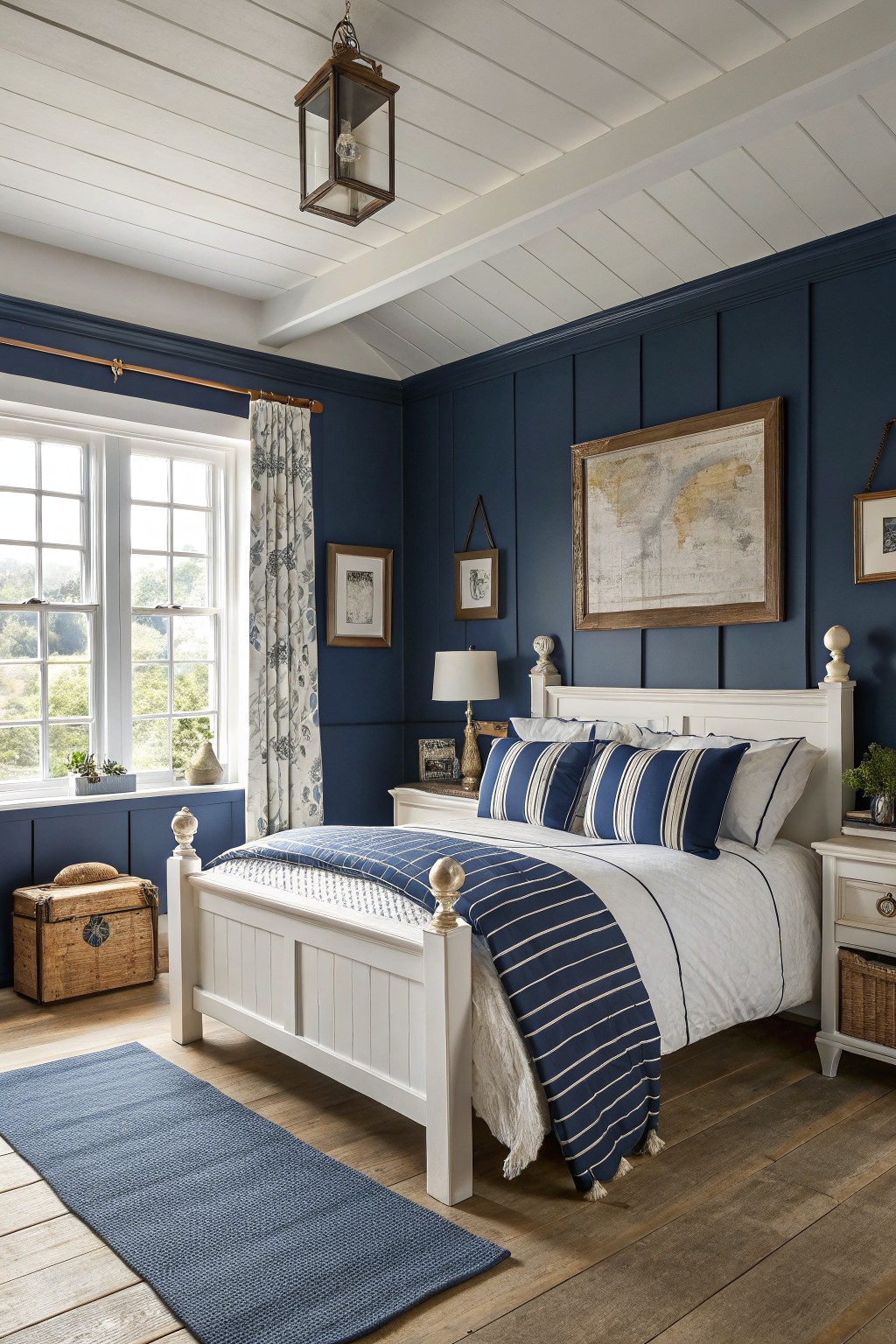
A deep navy blue covers the walls in this bedroom and gives the space a steady, pulled-together look. It reads very close to Benjamin Moore Hale Navy or Sherwin Williams Naval, with a slight shift toward Farrow & Ball Hague Blue in softer light. The color stays rich without turning too dark, which helps the white trim stand out cleanly.
It has a cool undertone that sits well against wood floors and keeps the room from feeling flat. This shade works best in bedrooms that get decent daylight, since it can feel heavy in very dim spaces. Pair it with simple white bedding and natural wood pieces if you want the walls to stay the main focus.
Warm Cream Bedroom Walls

A warm cream on the walls gives this bedroom a soft, quiet background that feels natural with the wood floors. The color sits right between white and a light beige and looks closest to Sherwin Williams Alabaster, Benjamin Moore White Dove, or Farrow & Ball Pointing.
It has a gentle yellow undertone that keeps the room from feeling too cool. The paint works well in bedrooms with plenty of light and pairs easily with both white trim and warmer textiles.
Warm Greige Bedroom Walls
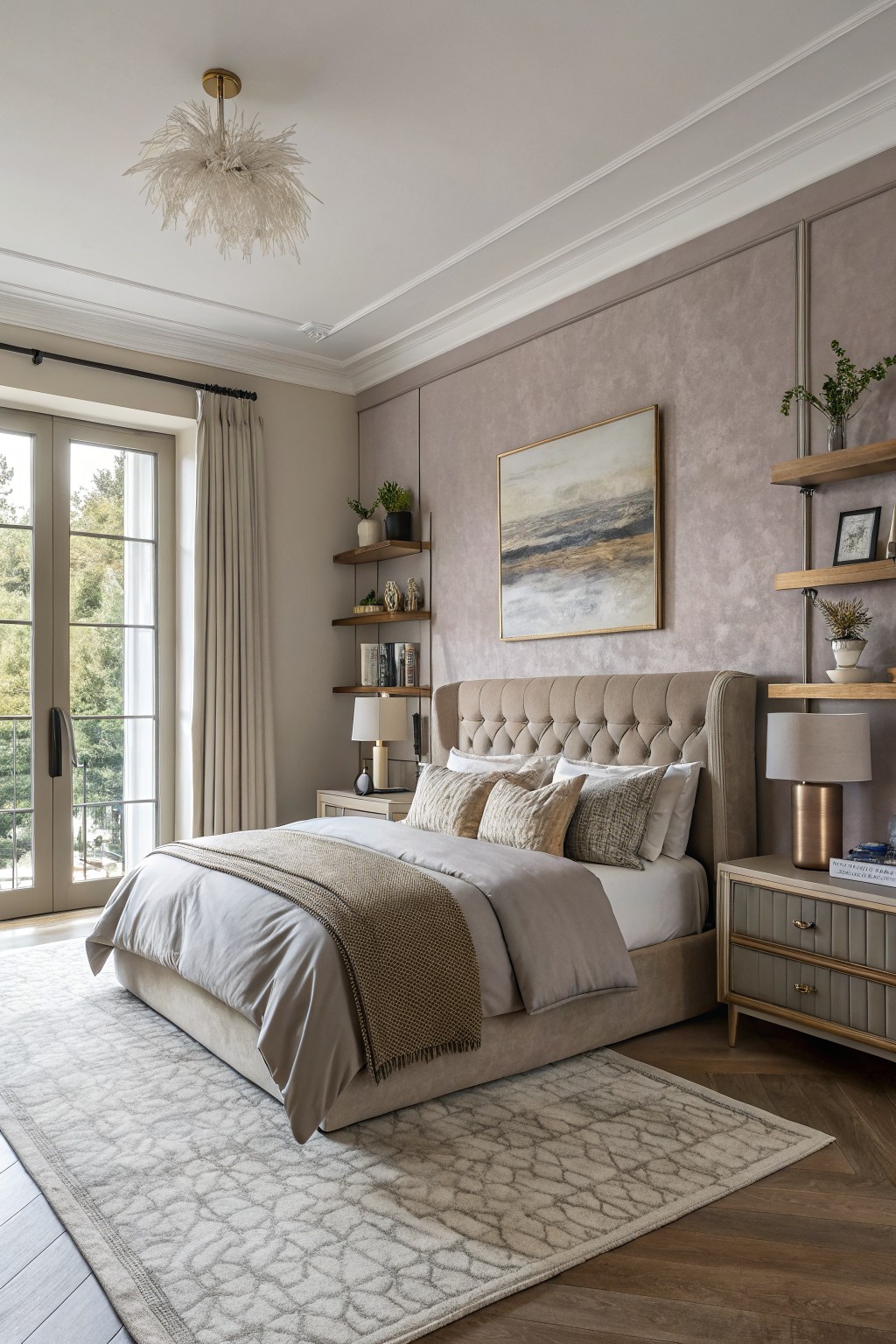
This bedroom uses a soft greige on the walls. It is a warm neutral that blends gray and beige without leaning too far in either direction.
The color has a light beige undertone that keeps the room feeling calm and connected to the wood floor and white trim. It suits bedrooms where you want the walls to sit quietly behind bedding and other neutrals. Try Sherwin Williams Accessible Beige, Benjamin Moore Edgecomb Gray, Behr Creamy Mushroom, or Farrow & Ball Elephant’s Breath.
Soft Blue Bedroom Walls
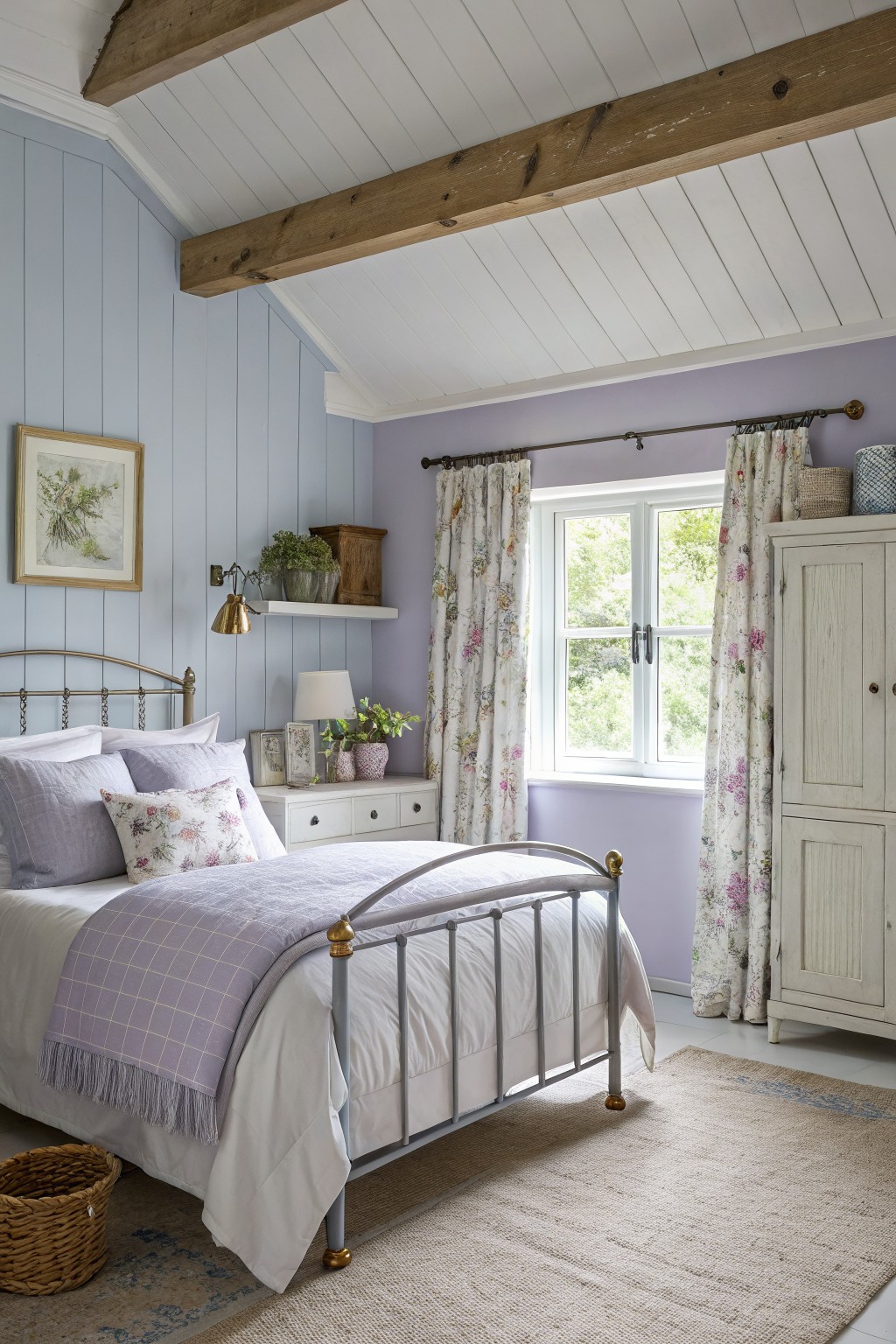
This soft blue on the walls gives the room a calm, quiet feel without turning cold. It sits in that light blue-gray range that feels easy to live with and works well with white bedding and wood tones.
The color has a slight gray undertone that keeps it from feeling too sweet. It pairs best with crisp white trim and natural wood, though it can look a bit flat if the room gets very little natural light.
Deep Teal Bedroom Walls
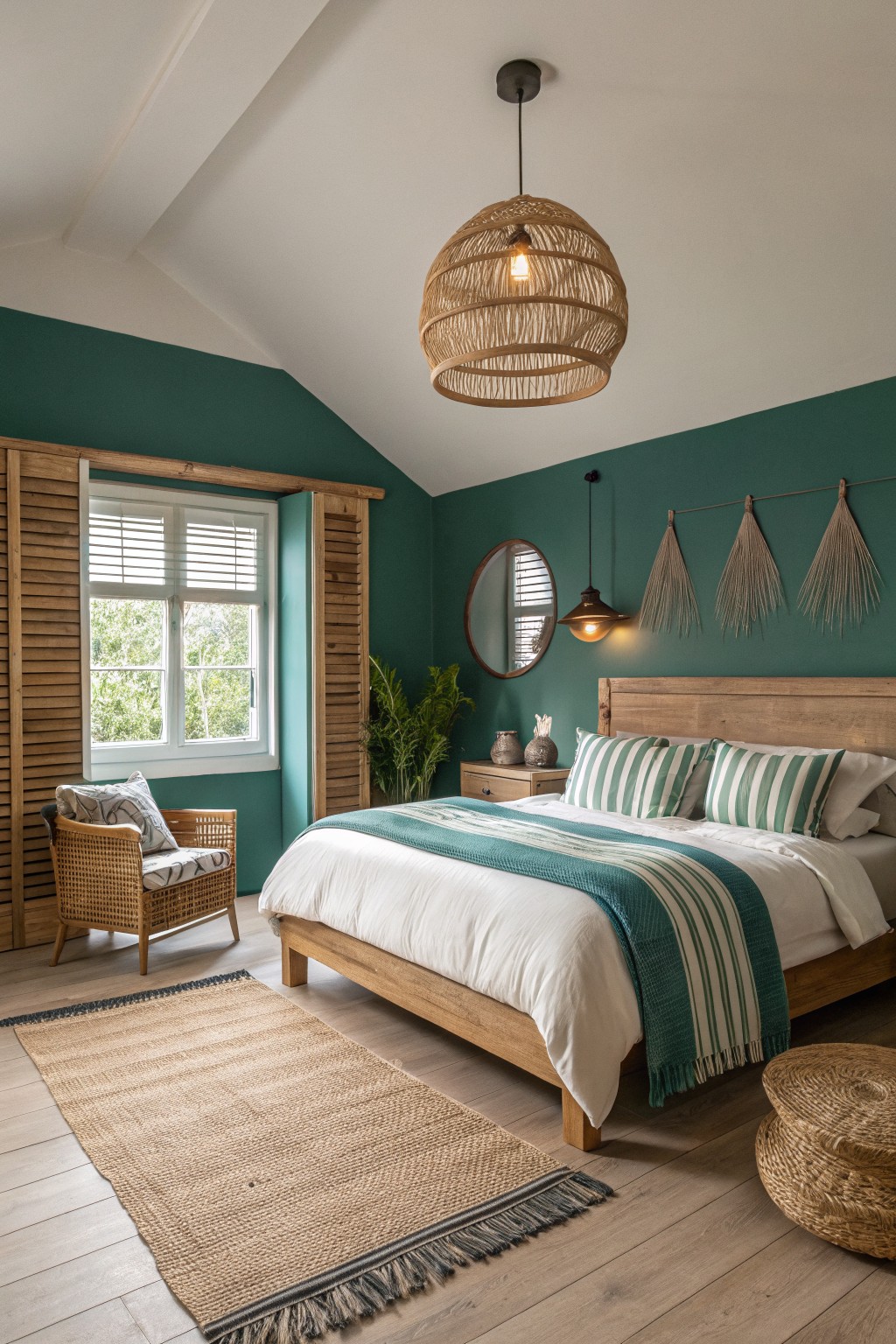
A deep teal like this gives bedroom walls a strong but still calm color. It sits between green and blue, with enough depth to feel grounded next to wood tones and white bedding without overpowering the room.
This shade has a slight blue undertone that shows up more in cooler light, so it works best in spaces with warm wood floors or trim to balance it out. Pair it with simple white or off-white bedding and natural textures if you want the color to stay the main focus.
Warm brown walls

This bedroom uses a deep warm brown on the walls. It is a rich color that feels grounded and cozy. The shade reads close to Sherwin Williams Urbane Bronze, Benjamin Moore Raccoon Brown, or Behr Brown Bear.
The brown sits well against the dark wood trim and flooring. It works best in rooms that get steady daylight and pairs easily with lighter bedding and simple textiles so the space stays balanced.
Warm Yellow Bedroom Walls

This bedroom uses a warm golden yellow on the walls that sits nicely between soft and saturated. It has enough depth to feel grounded while still keeping the room light. The color looks closest to Benjamin Moore Hawthorne Yellow, Sherwin Williams Golden Fleece, Behr Honey Bee, or Farrow & Ball India Yellow.
Because it leans warm, the yellow pairs easily with wood tones and cream textiles. It works best in rooms that get decent daylight, since the shade can turn a bit muddy in very low light. Keep the trim simple and let the wood furniture carry some of the weight so the yellow does not feel too sweet.
Soft Yellow Walls
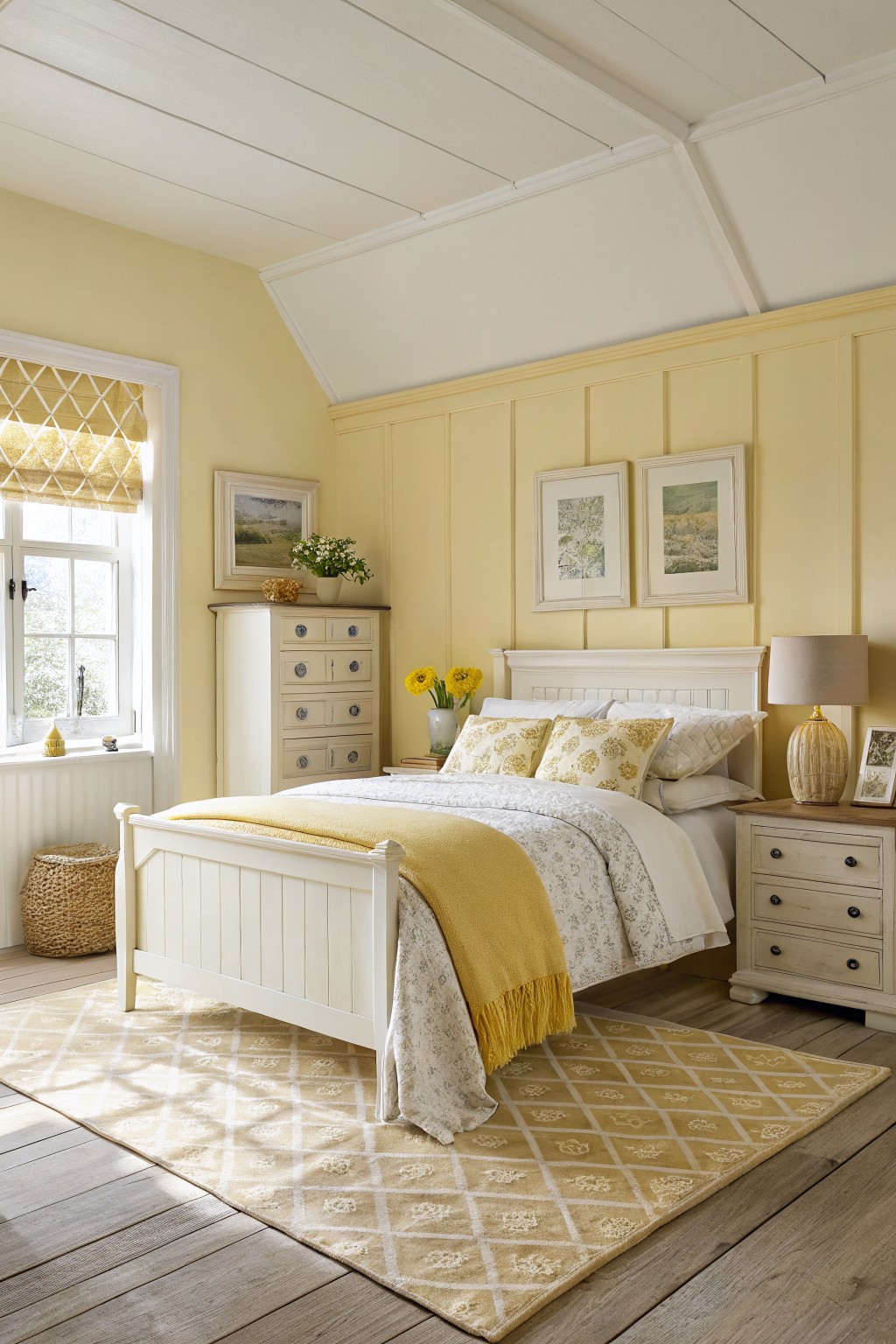
A soft yellow like this brings a gentle warmth to bedroom walls without feeling too bright or bold. It reads as a pale buttery yellow with a warm undertone, and similar shades include Benjamin Moore Pale Moon, Sherwin Williams Daffodil, Farrow & Ball Yellow Ground, and Behr Sunflower Seed.
The color works best in rooms with decent natural light where the warmth can show up nicely. It pairs easily with white trim and light wood floors, though it can start to feel washed out in very dark spaces.
Soft Blue Gray Bedroom Walls

This bedroom uses a soft blue gray on the walls that feels calm without turning cold. It sits somewhere between gray and blue, with just enough softness to keep the room from feeling stark.
The color works well with the warm wood tones on the furniture and floor, and it stays easy on the eye even in lower light. It suits older homes or spaces where you want the walls to recede a bit while still adding a gentle layer of color. Try it with off-white trim and natural wood pieces if you want the same quiet balance.
Blue-Green Teal Bedroom Walls
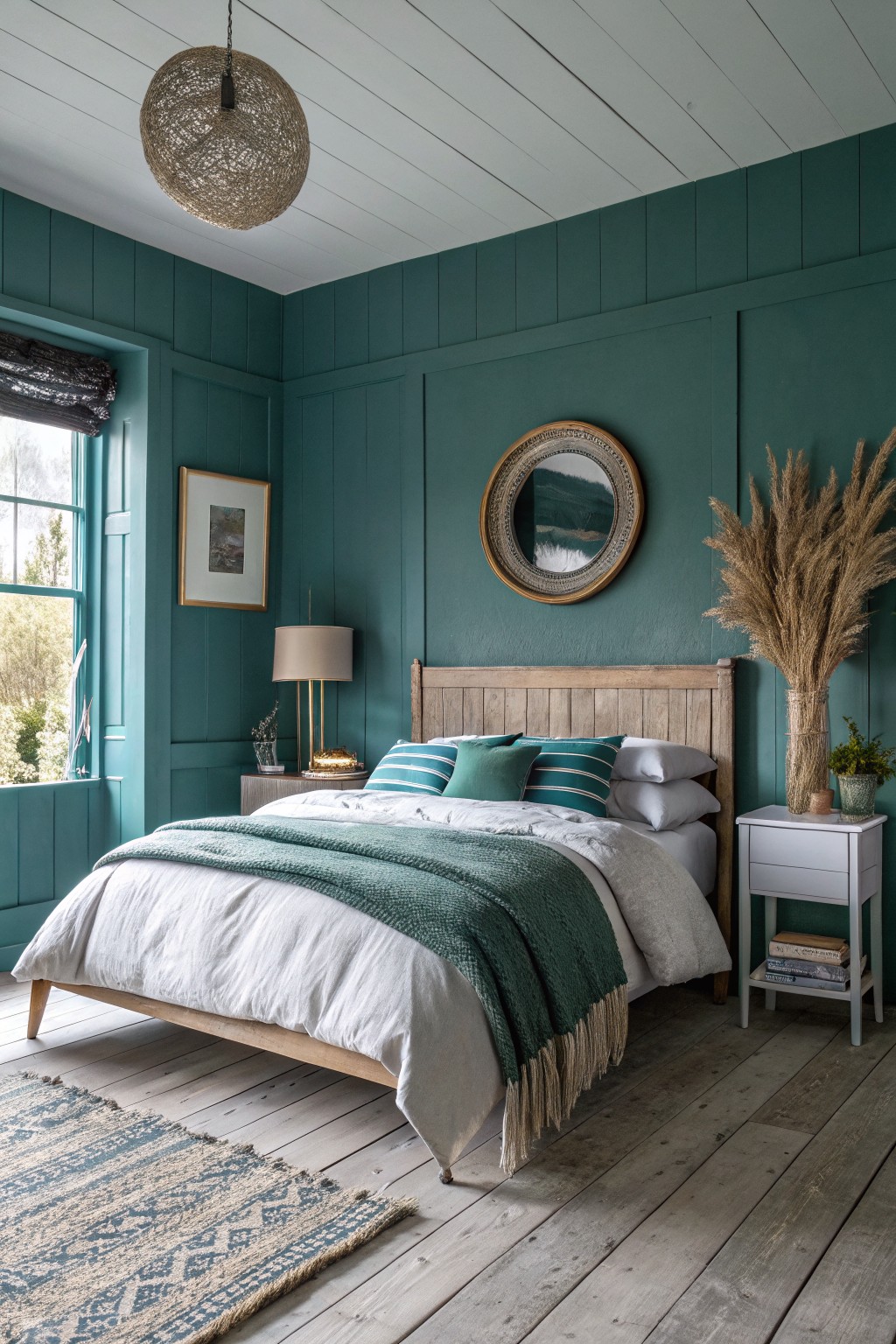
A deep teal like this one gives the walls a solid, quiet presence that still feels fresh. It sits right between green and blue, so it works with wood floors and white or light gray bedding without looking too heavy. Colors in this range often read close to Sherwin Williams Evergreen Fog, Benjamin Moore Aegean Teal, Behr Deep Forest, or Farrow & Ball Inchyra Blue.
It has a slight blue undertone that shows up more in cooler light, which keeps the room from feeling too earthy. Pair it with simple white trim and natural wood to let the color hold its own without extra fuss.
Clay Terracotta Bedroom Walls
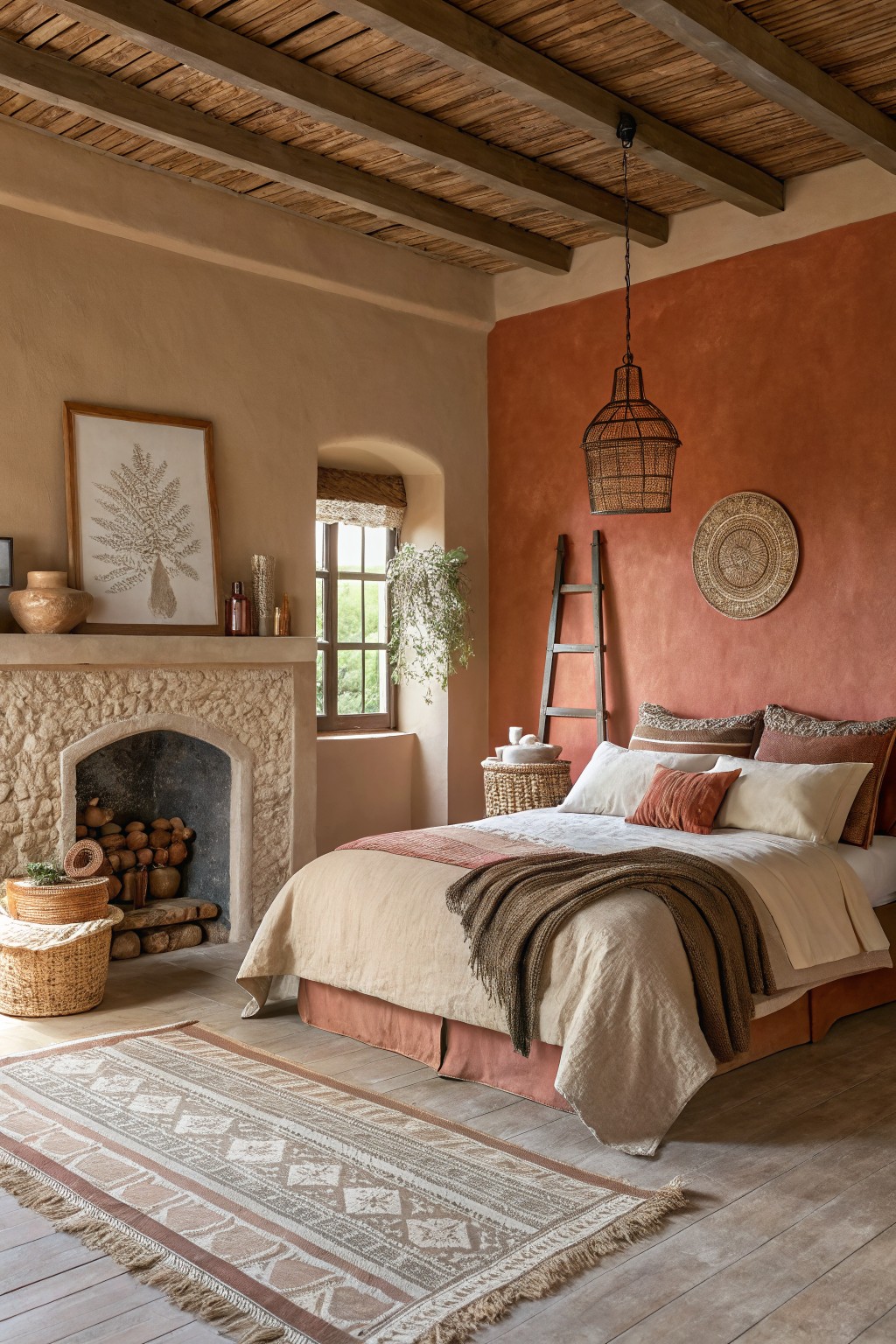
This bedroom uses a warm terracotta that leans more orange than red. It has a soft clay feel that sits nicely against the plaster walls and wood ceiling beams without looking too bold.
The color has a muted earthy base that works well with natural textures like stone and wood. It can feel a little flat in low light, so it helps to test it on a large sample first and pair it with lighter bedding or trim to keep the room from closing in.
Muted Sage Green Bedroom Walls

This bedroom uses a muted sage green on the walls. It is a soft green with gray undertones that feels calm and grounded without turning heavy.
The color works well with warm wood tones and light bedding. It suits rooms that get decent daylight and pairs easily with both painted trim and natural wood furniture.
Frequently Asked Questions
Q: How can I make sure my new bedding ties into the trim color?
A: Look for bedding that includes a hint of the trim color in its design. Layer in a throw or pillows if the main pieces do not match exactly. This keeps the connection without a full overhaul.
Q: What if my room gets lots of sunlight?
A: Pick wall colors with a bit more depth to counter the strong light. Use bedding in softer tones from the same palette. The trim stays neutral to hold it all in place.
Q: Can these palettes work with wood furniture?
A: Choose shades that highlight the natural warmth in your wood pieces. Let the bedding carry a color that links back to both the walls and trim. Small swaps like pillowcases make a big difference here.