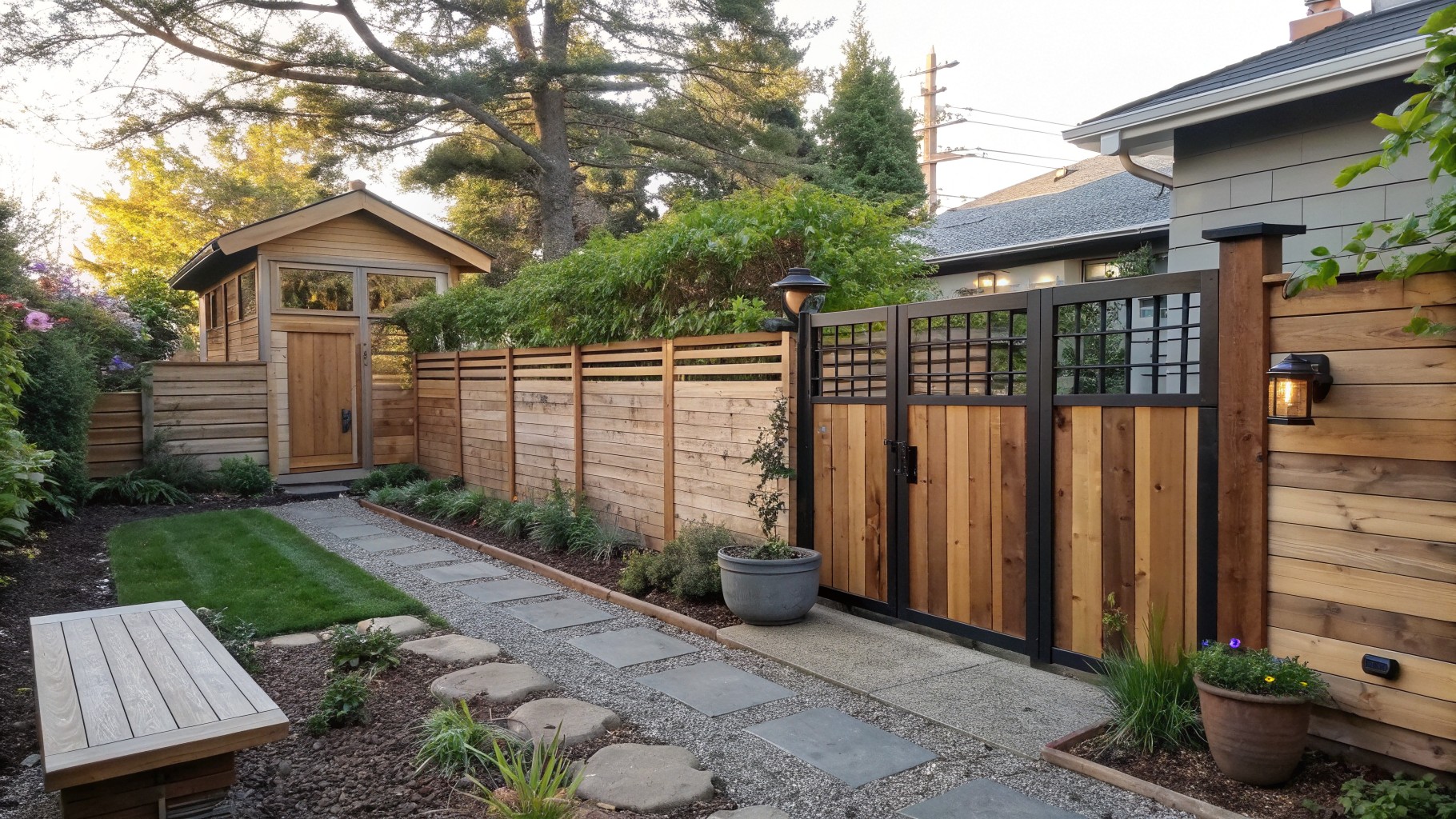
When I walk up to a farmhouse the fence line is what first tells me whether the exterior feels welcoming or closed off.
Rustic wood has a way of blending the boundary into the overall look so the house does not appear boxed in from the street.
Details show up fast.
I check how new lumber will match the weathered tones already on the siding before making any cuts.
Height and spacing decisions show up more clearly in person than they do in sketches.
Rustic Wood Fences With Lattice Tops
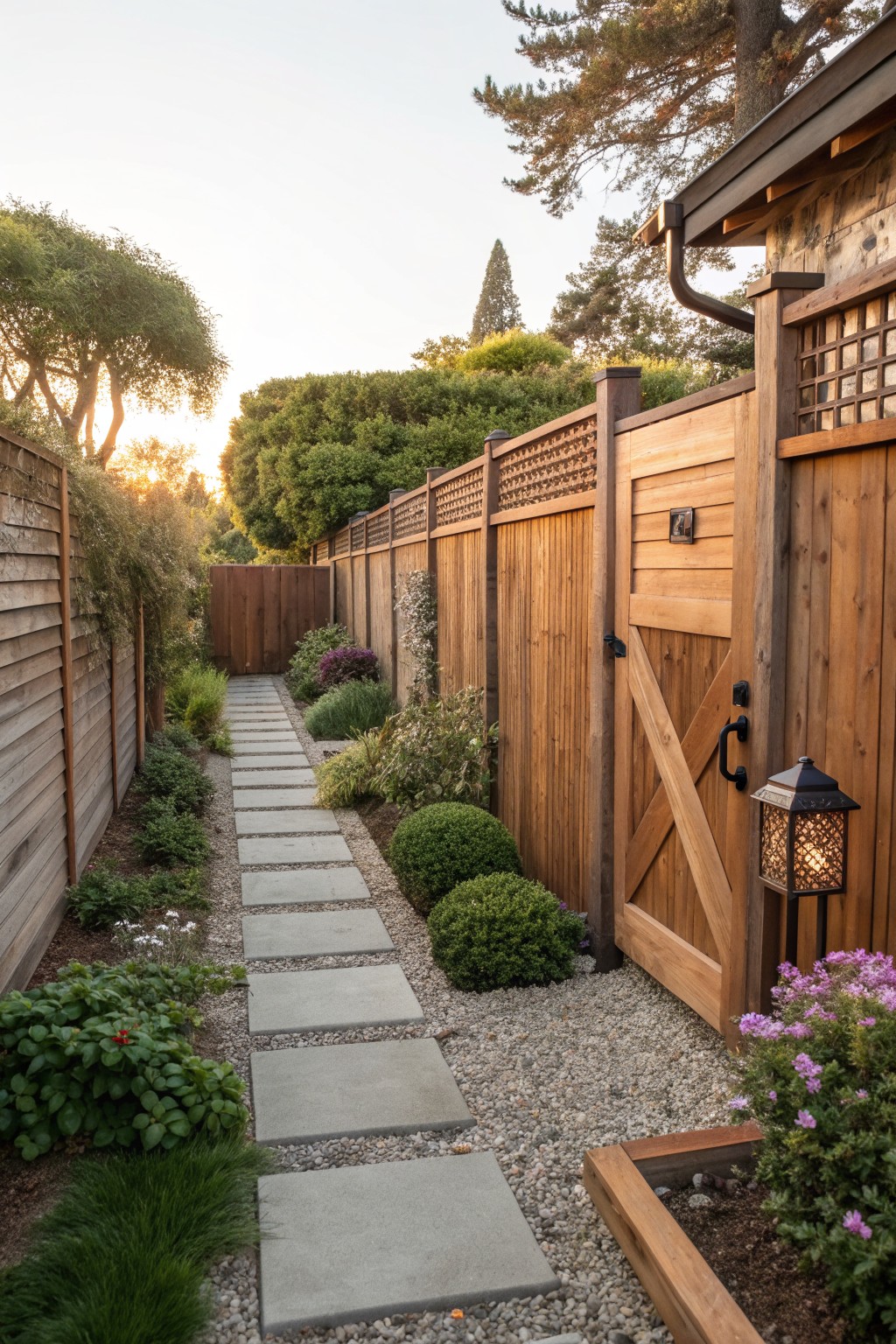
A solid wood fence with a section of lattice near the top gives privacy without making the space feel closed in. The mix of full boards and open pattern keeps the fence from looking too heavy while still marking a clear boundary.
This approach works best along side yards or narrow garden paths on farmhouse properties. It pairs well with gravel and stepping stones and holds up in most climates as long as the wood is treated for outdoor use.
Rustic Wood Privacy Fences With Arched Gates
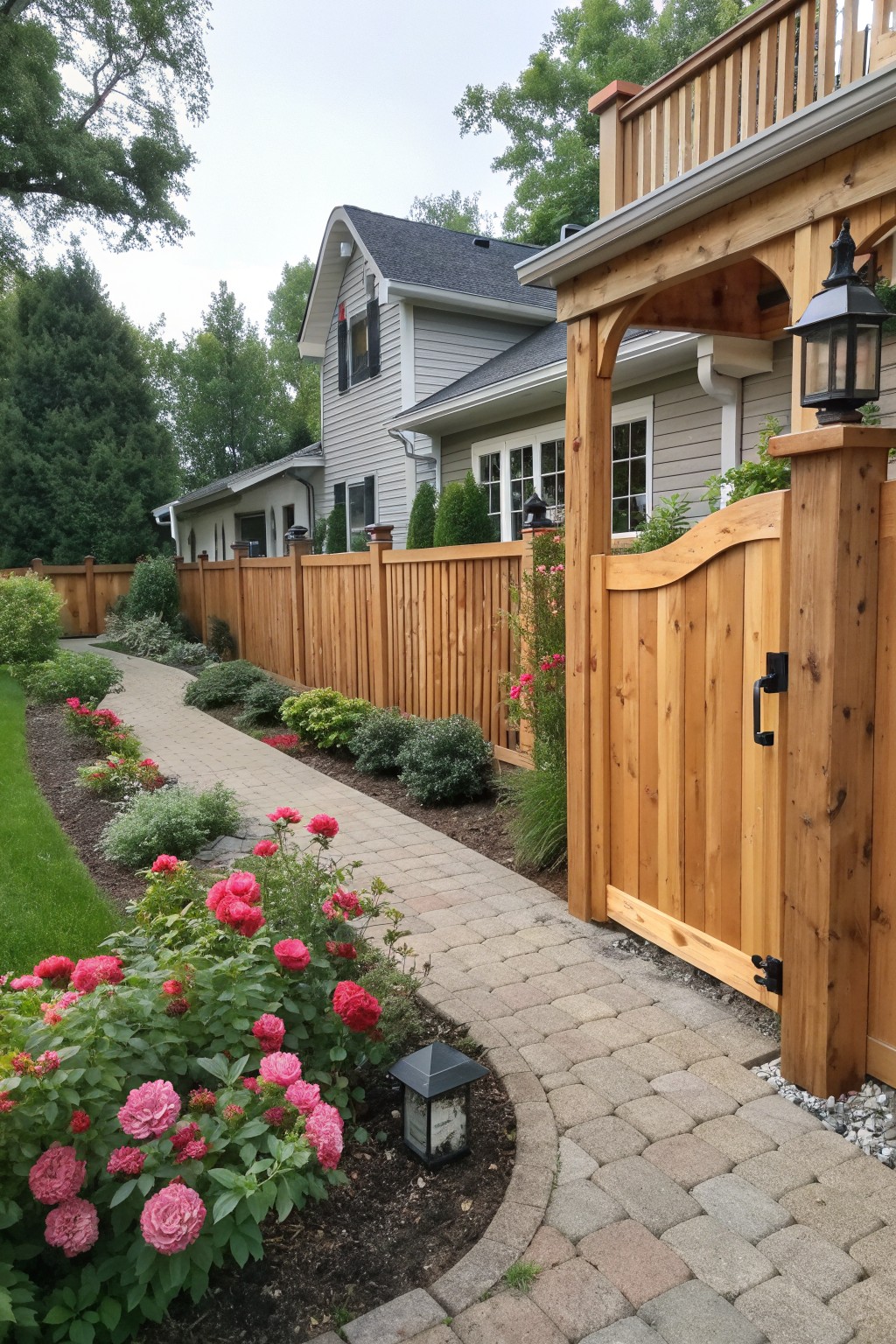
A simple wood fence like this one adds solid privacy while still looking at home with a farmhouse. The vertical boards and natural finish keep the look straightforward instead of overly finished.
This style works best along a side path or property line where you need separation but do not want a solid wall. Pair it with a gently curved gate so the entrance stays welcoming and easy to walk through.
Mix Horizontal and Vertical Boards in One Fence
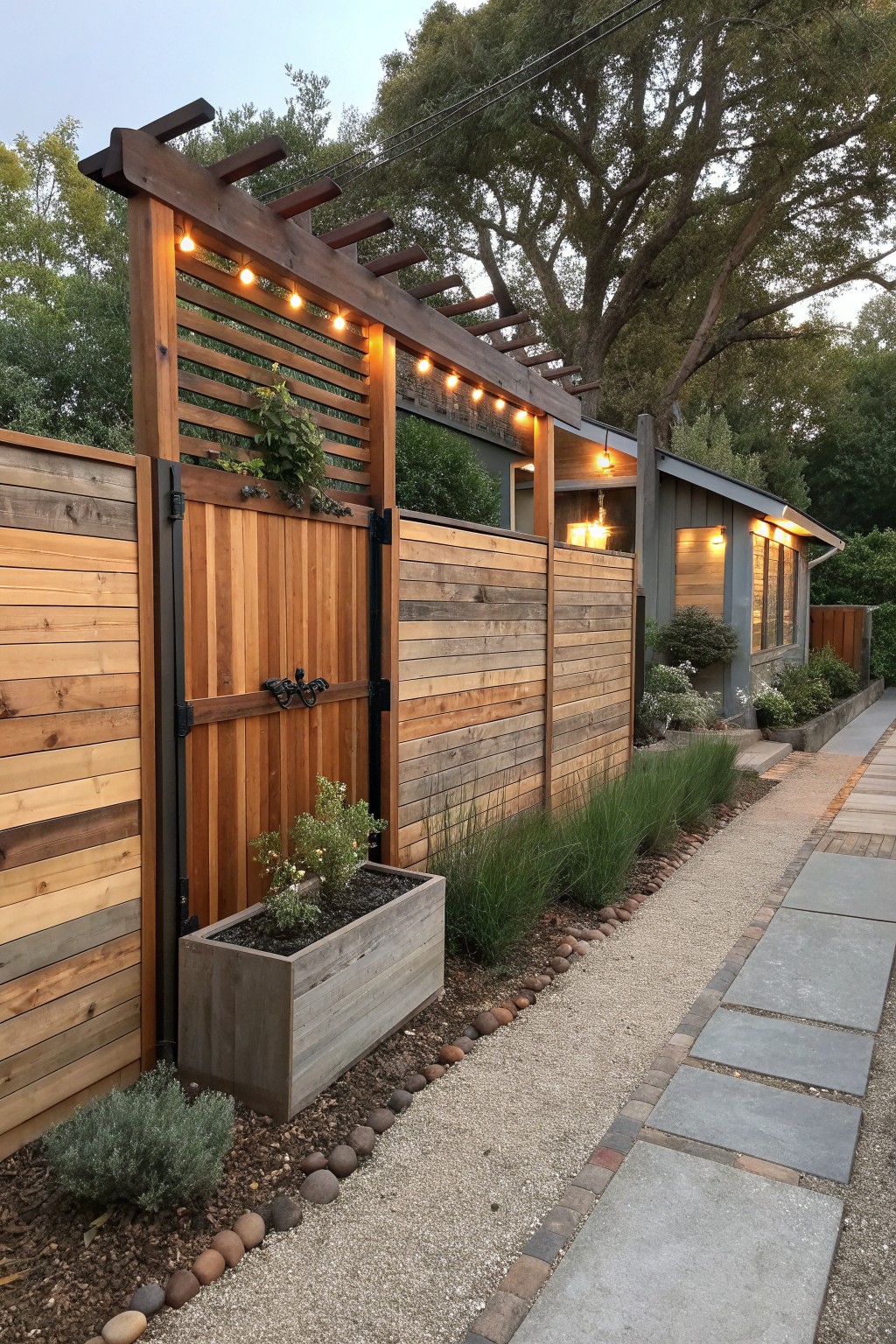
A fence that uses both directions of wood feels more interesting than a flat wall of boards. The lower section stays solid with horizontal planks while the upper part opens up slightly with vertical slats. This mix gives real privacy without making the whole thing feel heavy or closed in.
It works best on longer side yards where you need screening but still want some light and air to pass through. Keep the wood tone natural and add a simple gate in the same style. A small planter at the base helps soften the bottom edge without much extra work.
Rustic Wood Fences That Frame A Private Patio

A solid wood fence like this one gives a backyard real privacy without making the space feel boxed in. The vertical boards and simple gate keep the look straightforward and farmhouse friendly while the surrounding plants soften the edges and tie everything together.
This style works well on homes with a clear backyard boundary where you want to separate the patio from the rest of the yard. Keep the wood natural or lightly weathered, add a few low shrubs along the base, and make sure the gate hardware stays simple so the fence stays the main feature.
Tall Wood Fences For Side Yards
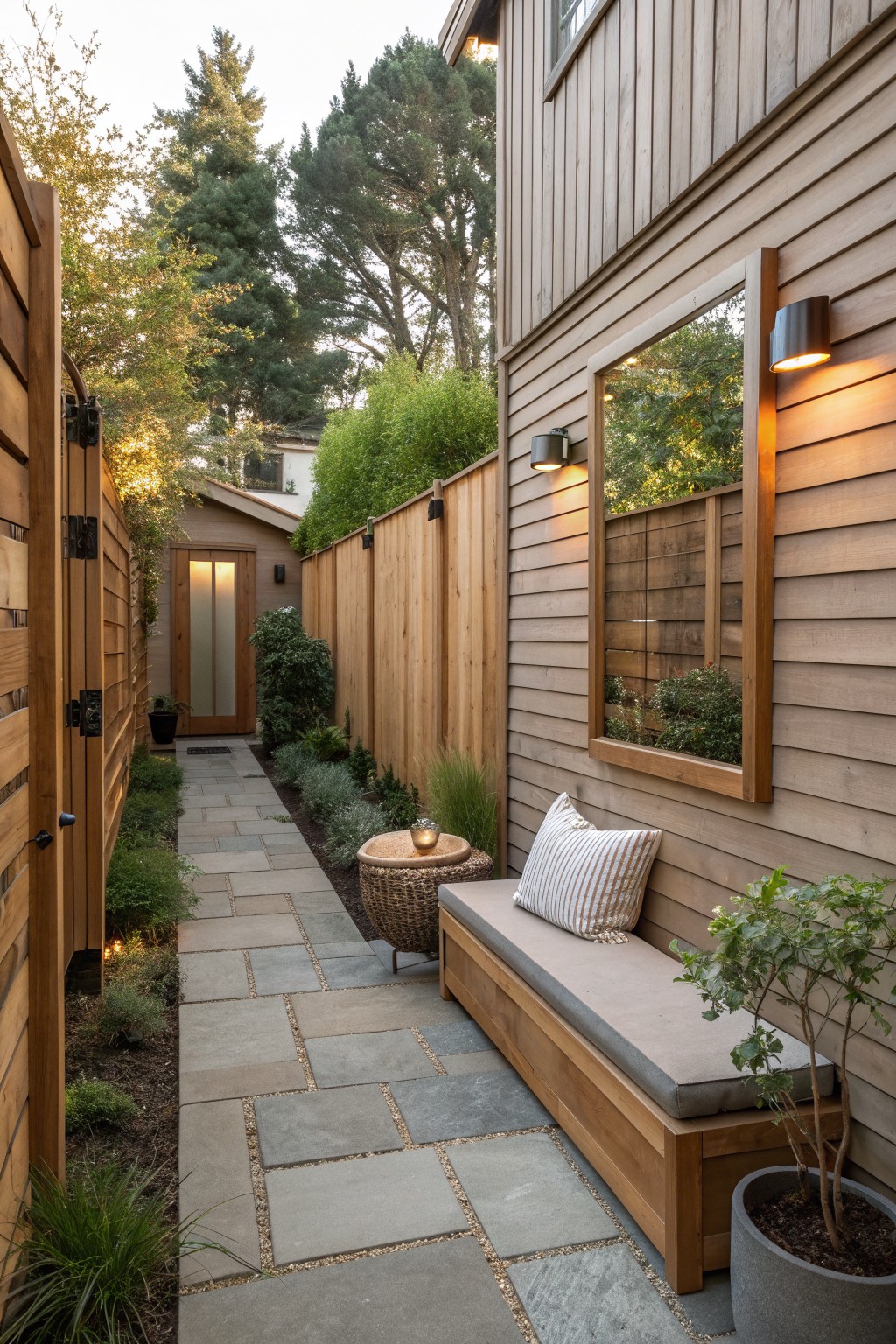
A tall privacy fence made of simple vertical wood boards can turn a narrow side passage into a more usable space. It creates a clear boundary while keeping the look consistent with the rest of the house.
This works best on homes where the fence can run close to the siding. Match the wood tone and keep the height even so the whole area feels enclosed without looking closed off.
Rustic Wood Fences With Simple Gates
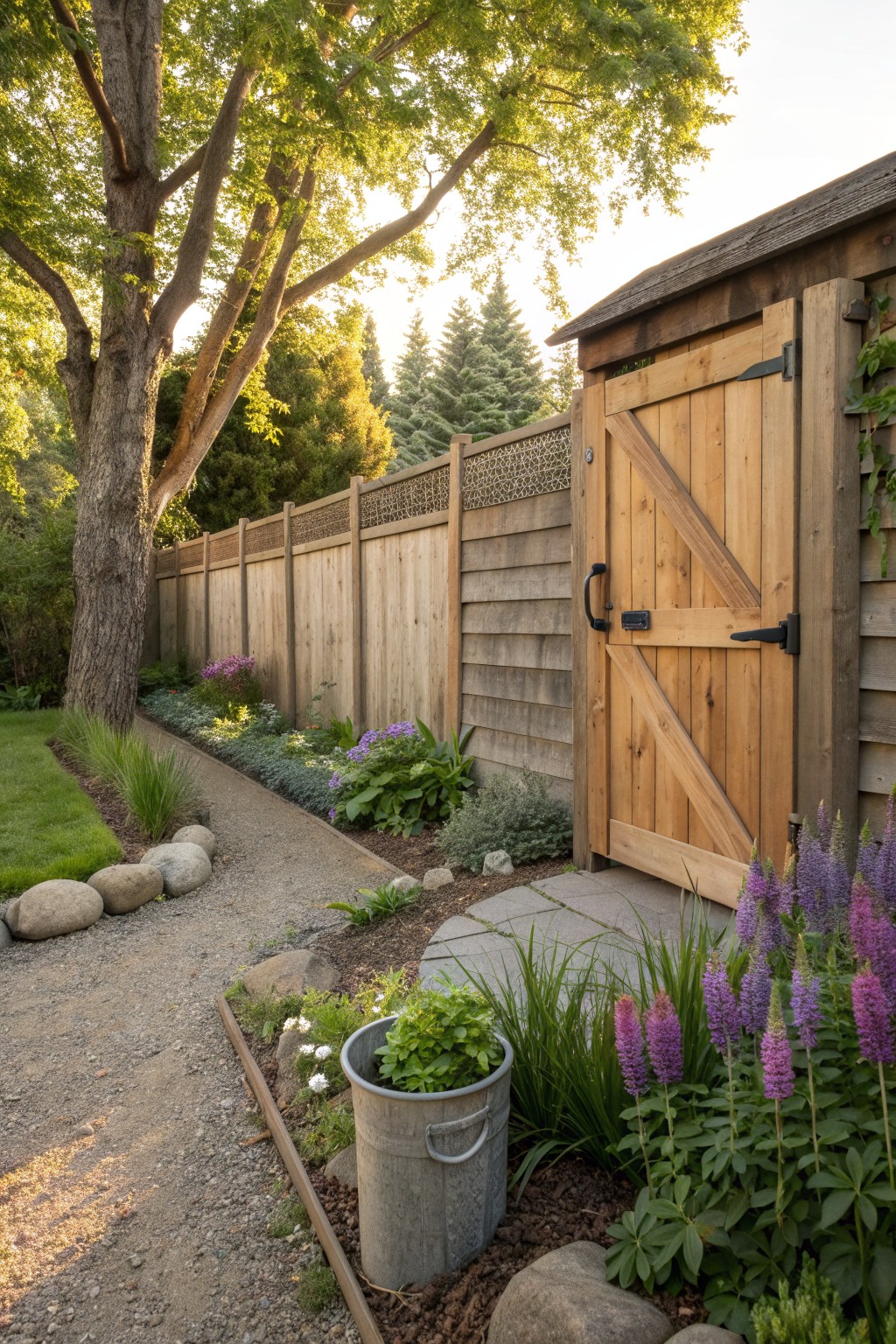
A wood privacy fence feels more welcoming when it includes a gate that matches the same boards and hardware. The diagonal bracing on the gate adds structure while keeping the whole run looking consistent and sturdy.
This setup works well along side yards or back garden edges where you need separation but still want a clear way through. Keep the planting low in front so the fence stays visible and the gate remains easy to use.
Rustic Wood Fences Along Garden Paths

A simple rustic wood fence can give privacy without cutting off the open feel of a farmhouse yard. The weathered boards and straightforward gate style work well because they match the house and let plants grow up around the base without looking messy.
Place the fence along a stone path so the two features guide people through the garden instead of just blocking a view. This setup works best on larger lots where you want some separation between the house and open fields or neighboring yards. Keep the wood untreated or lightly sealed so it ages naturally with the rest of the property.
Rustic Wood Fences That Enclose a Patio Seating Area

A tall wood privacy fence works well when you want an outdoor seating spot that feels separate from the rest of the yard. The vertical boards give solid coverage while the natural tone keeps the look simple and farmhouse friendly. It turns an open patio into a quieter spot without needing heavy structures or extra walls.
This approach fits homes with smaller backyards where you still want room to sit outside. Keep the fence height around six feet and add one or two natural accents like an arch if you want a bit more shape. Just make sure the wood is sealed so it holds up over time.
Rustic Wood Fences With Stone Pillars
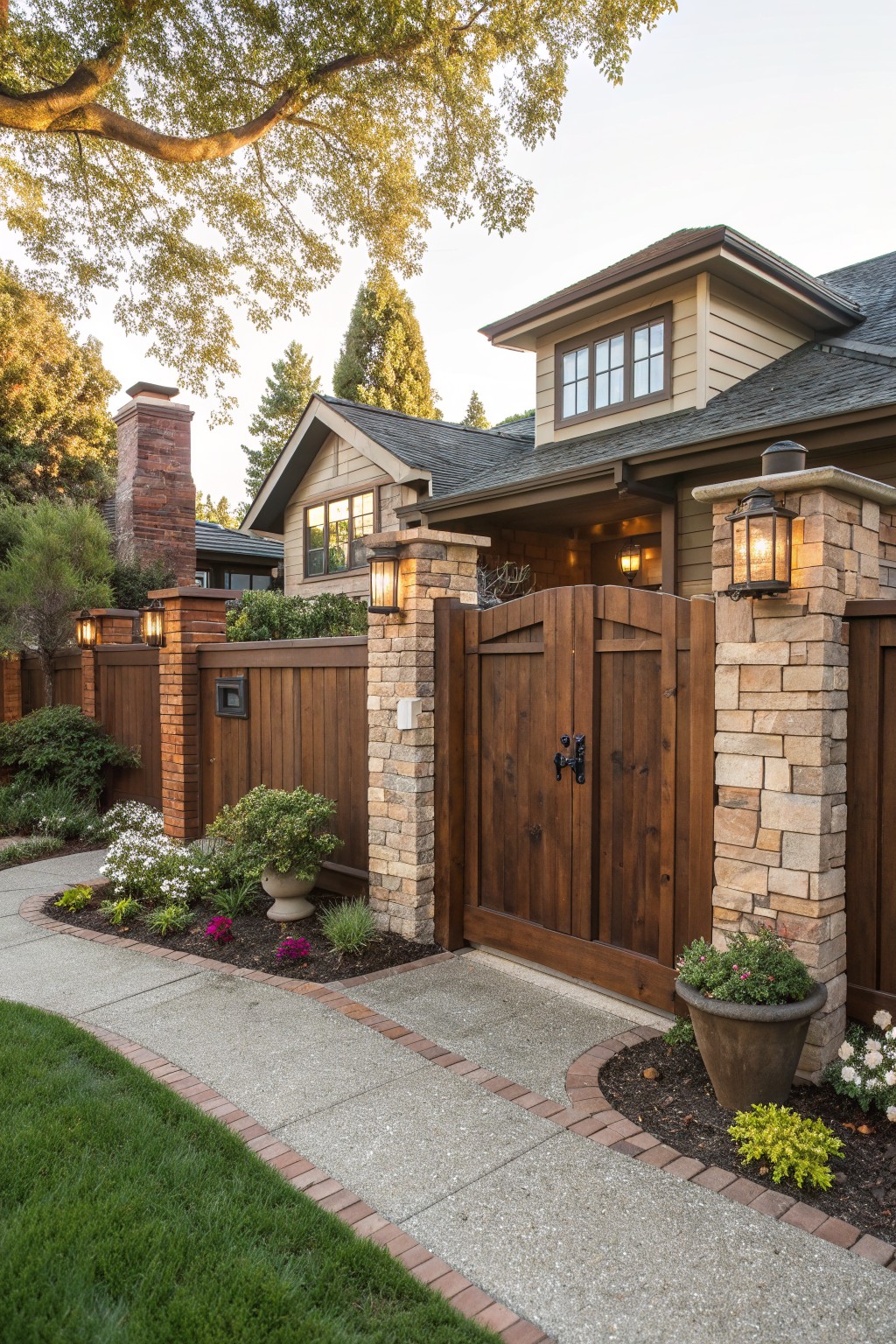
Many homeowners like pairing solid wood fencing with stone pillars because it creates strong privacy without looking too heavy or plain. The wood brings warmth and texture while the stone gives the fence a grounded, lasting structure that suits farmhouse style.
This setup works best along the front or side of a property where you need a clear boundary but still want the fence to feel connected to the house. It pairs especially well with homes that already use stone or brick, and the pillars make an easy spot for simple lighting if you want the entry to feel welcoming after dark.
Rustic Wood Fences Around Pools

A solid wood fence gives a pool the privacy most people want while still fitting a farmhouse look. The vertical boards and basic gate style block the view from outside without needing anything fancy or modern.
This works well on lots where the pool sits near the property line. Keep the fence height consistent and add a few plants at the base so the wood does not feel too stark against the water.
Rustic Wood Fencing Around Outdoor Seating

A rustic wood fence can turn an open deck into a more private spot without making the space feel closed in. The vertical planks give a simple farmhouse look that pairs easily with wood decking and a few plants along the base. Many homeowners use this approach when the yard sits close to neighboring homes.
This setup works best on mid-sized decks where you want a clear boundary but still need light and air to move through. Keep the fence height around six feet and leave small gaps between boards if you want a bit of openness. It suits most older homes and needs little upkeep beyond an occasional stain.
Build a Raised Planter Into the Privacy Fence

A raised planter running the full length of a wood fence gives you room for plants without crowding a narrow side path. The wood matches the fence boards so everything reads as one clean structure instead of separate pieces.
This setup works best on small lots where you need privacy but still want some greenery close to the house. Keep the planter about knee height so it stays easy to reach for watering and weeding, and choose straight vertical boards to match the simple farmhouse look.
Combine Solid Boards With Lattice For Privacy
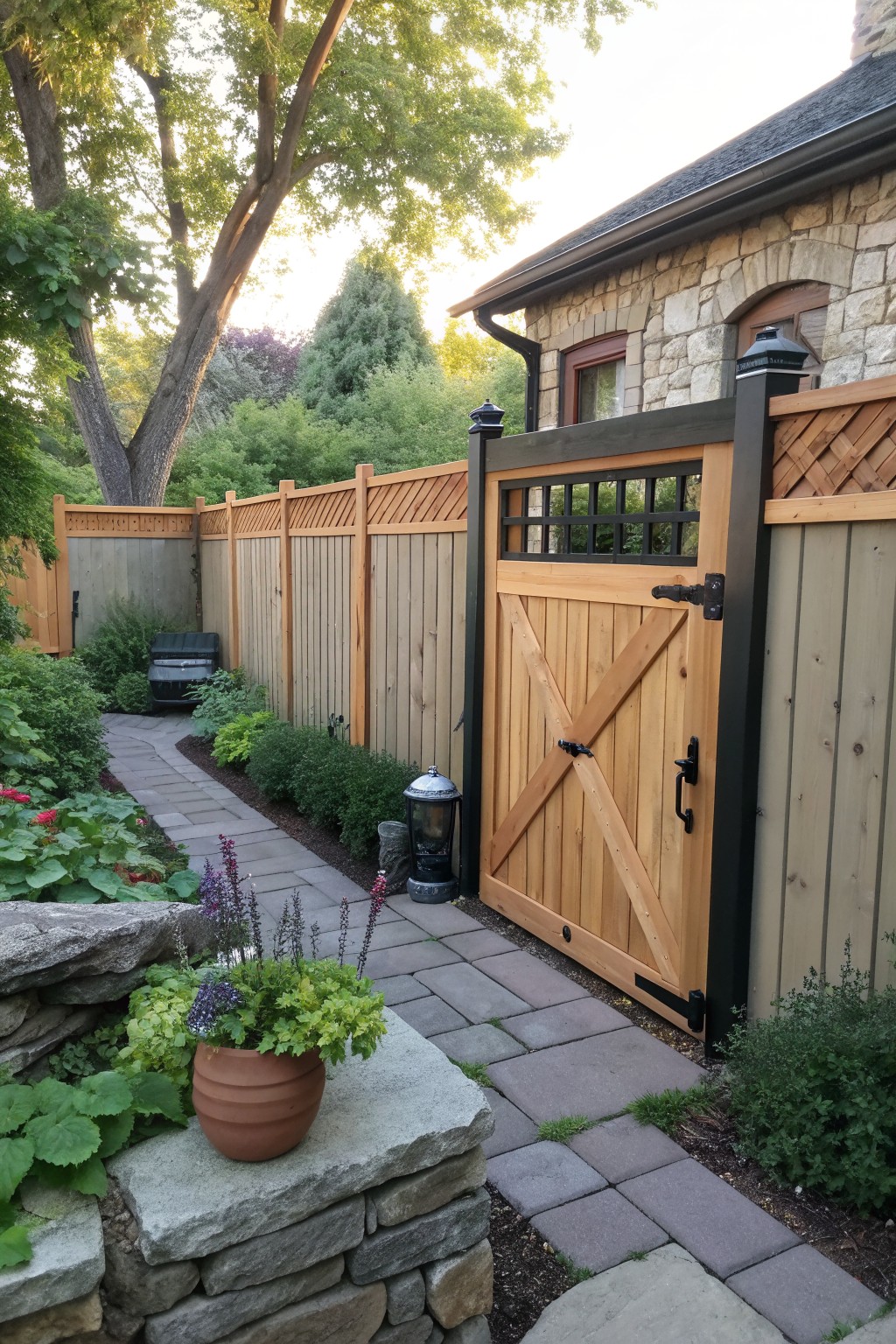
A fence that mixes solid wood panels with a lattice top section gives solid privacy without making the yard feel boxed in. The lattice lets in a little light and air while the lower boards handle the main job of blocking the view.
This approach works best on side or back property lines where you want a farmhouse look that still feels friendly. It pairs well with stone or wood homes and simple plantings along the base so the fence does not overwhelm the garden.
Rustic Wood Fences With Matching Gates
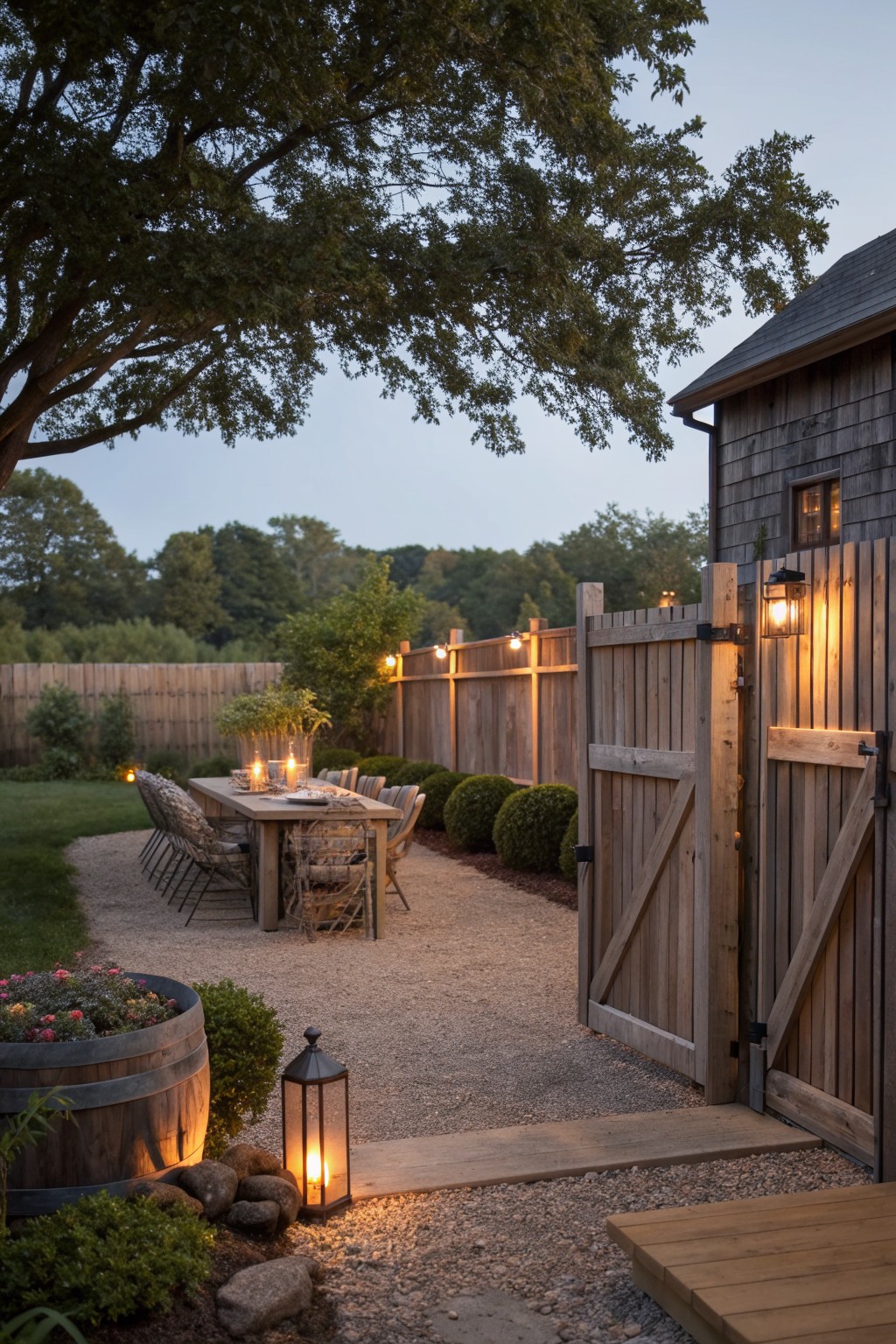
A simple wood fence and gate can give an outdoor dining spot real privacy while still feeling open and welcoming. The gate lets you control the view and sound from the rest of the yard without building a solid wall that would close everything in.
This setup works best on larger lots where you want to separate the seating area from the rest of the property. Keep the wood natural or lightly weathered so it matches the house and any nearby sheds, and add a path that leads right up to the gate so the entrance feels intentional.
Horizontal Wood Fencing For Solid Privacy

A fence made with wide horizontal boards creates a clean barrier that blocks the view from outside without looking too heavy or closed in. The wood grain shows through and the simple lines keep the whole side of the house feeling calm and orderly.
This approach works best on homes where the fence runs close to the structure. It pairs well with matching gates and needs only a yearly seal to stay in good shape. Most farmhouse yards can use it along the property line or right beside the house.
Add Built-In Seating Along the Fence
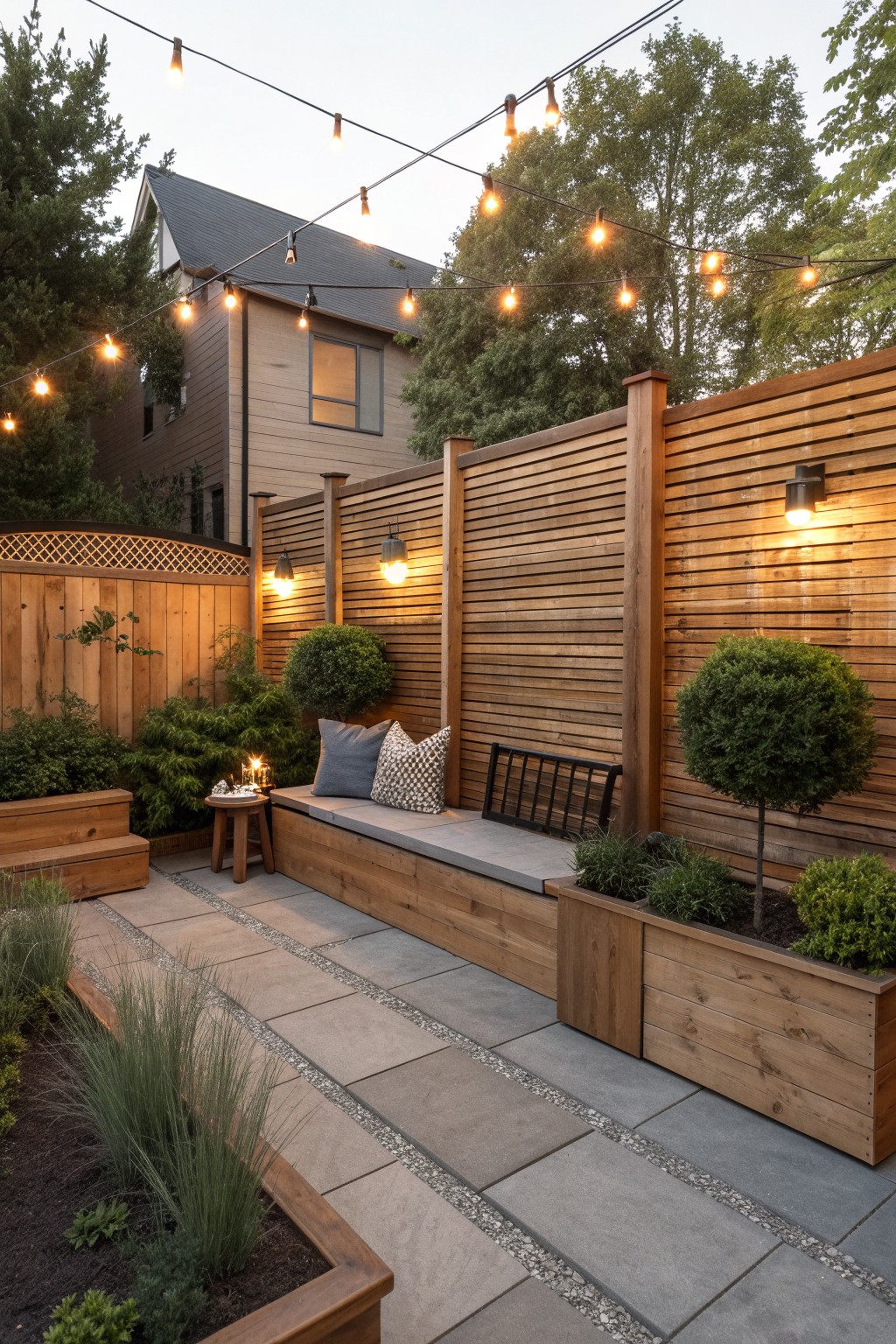
One of the simplest ways to make a privacy fence more useful is to build a bench right into the base. The long seat turns the fence into a real sitting area instead of just a barrier, and it keeps the patio from feeling empty along that edge. Horizontal wood slats give the fence a clean look while still blocking the view from outside.
This setup works best on a side or back patio where you want both privacy and a place to linger. Keep the bench depth around 16 to 18 inches so it stays comfortable, and use the same wood tone for the fence and bench so everything feels connected. Just watch the height of any plants in front so they do not block the seat.
Mount Shelves On A Wood Fence For Vertical Growing

Adding shelves to a privacy fence lets you grow more without crowding the ground. The wood matches the fence for a simple, built-in look, and it keeps plants at eye level where they get good light. Raised beds along the base complete the setup and make the whole area feel more productive.
This approach works best in narrow side yards or along property lines where you already need a tall fence. Use sturdy brackets and seal the wood so it holds up outdoors. Keep the number of pots reasonable so the shelves stay secure over time.
Pair a Picket Fence With a Low Stone Wall
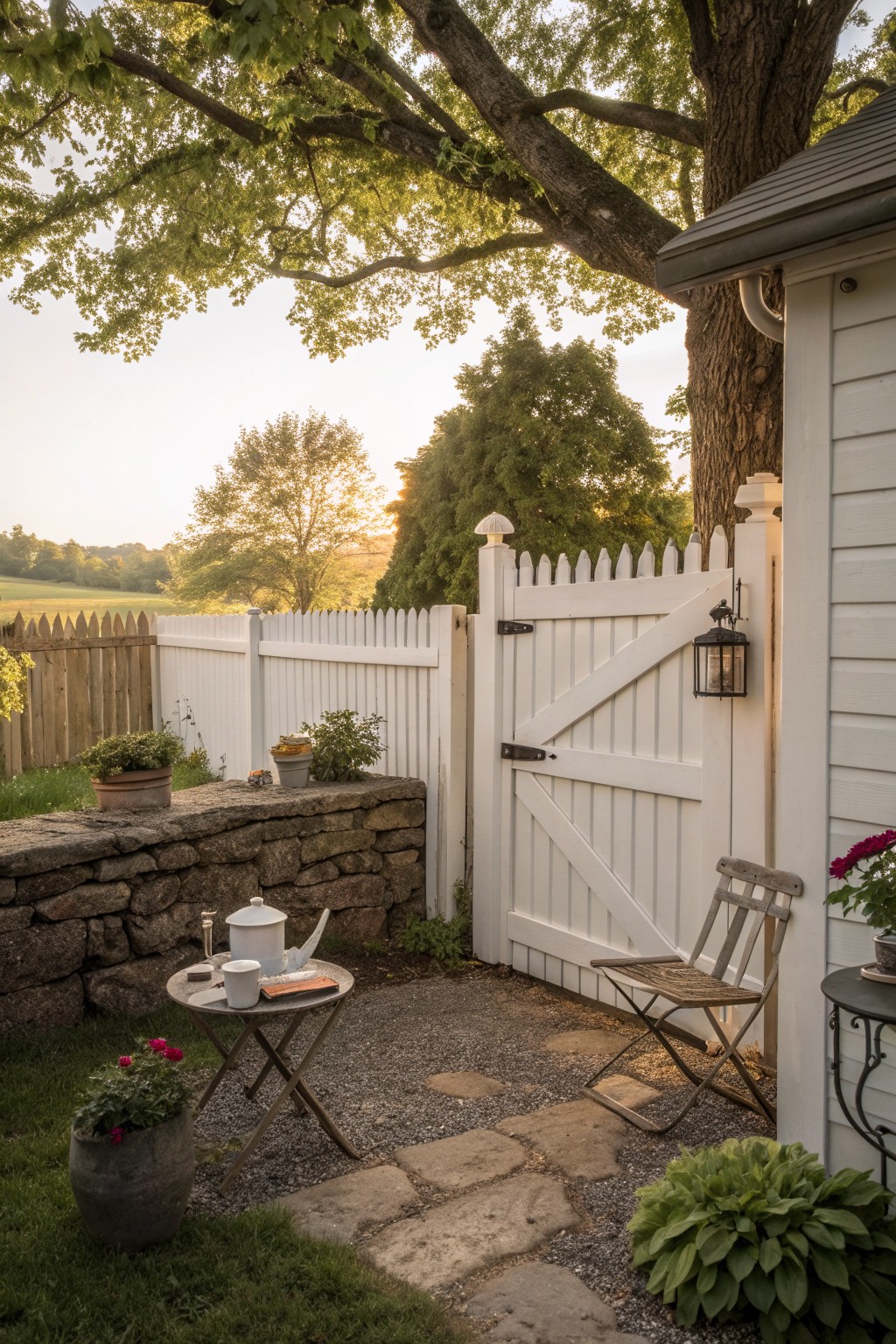
A low stone wall under a picket fence gives extra height for privacy while the open top keeps the yard from feeling closed in. The mix adds texture that fits a farmhouse setting and works better than a tall fence alone in most yards.
This setup suits homes with gentle slopes or open views where full enclosure would look too heavy. Keep the stone natural and the fence painted white so the two materials balance each other without competing.
Frequently Asked Questions
Q: What’s the easiest wood to start with for one of these fences? A: Cedar holds up well in most weather and takes stain evenly for that rustic look. Cut and install the boards first before adding any trim details from the ideas.
Q: How do I stop the fence from leaning after a year or two? A: Set the posts in concrete at the right depth for your soil type. Check the rails for level as you attach each section and the whole thing stays straight.
Q: Can I put a gate in without ruining the privacy? A: Build the gate from the same boards as the fence panels. Hang it on heavy hinges so it closes tight against the frame.
Q: What if my fence runs along a slope? A: Step the sections down the hill one post at a time. Keep the top line level and the bottom follows the ground.


