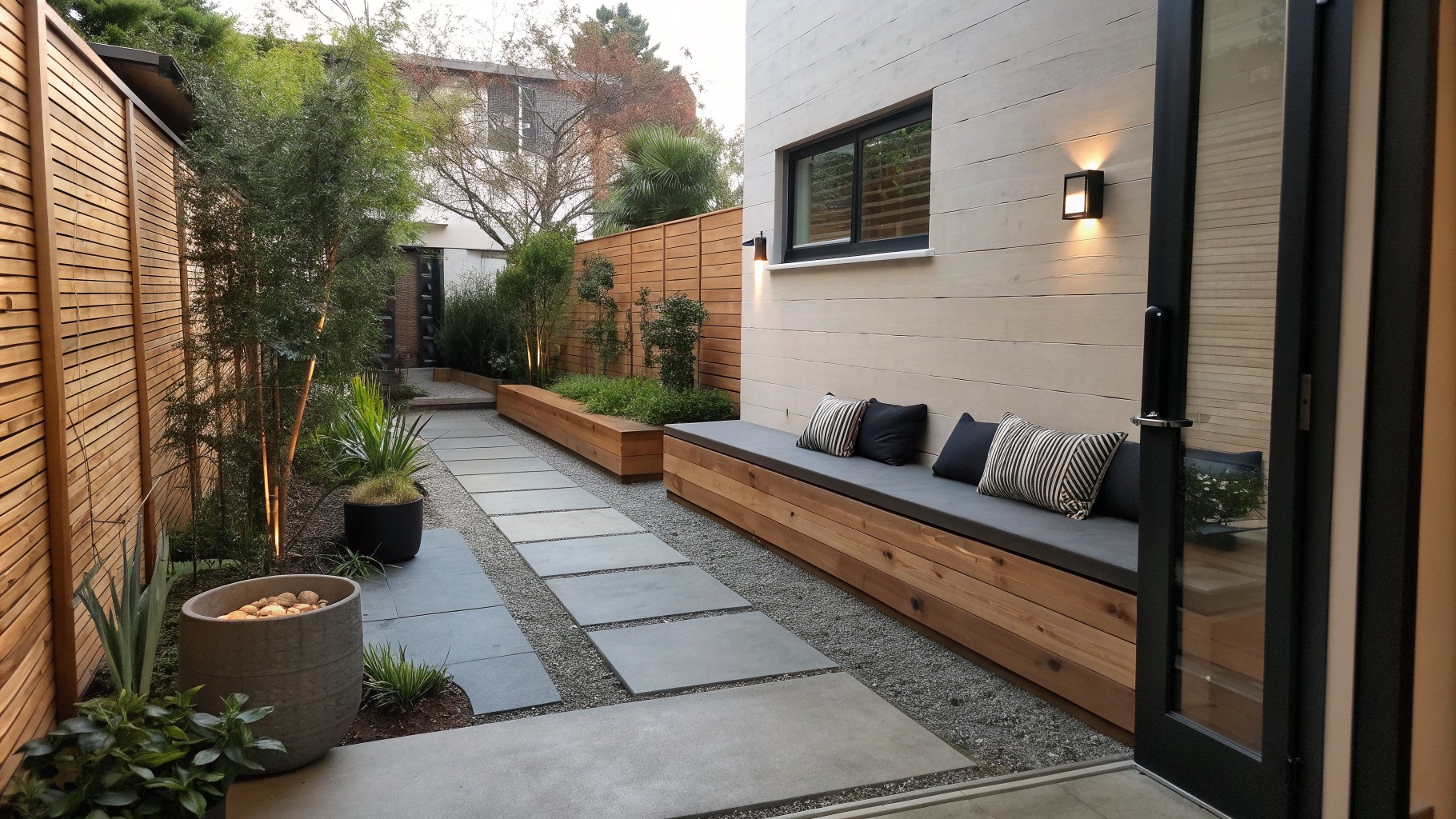
I have seen too many backyards where the seating ends up blocking the flow and making the whole space feel smaller than it is.
Built-in options change that by working with the existing layout instead of adding more pieces that crowd the ground.
Some of the simpler builds make a real difference in how the yard actually gets used day to day.
When I plan changes for my own space I always test how the seating will sit against the fence or deck edge before I start.
A few of these ideas feel worth marking down so I can adapt them once the weather allows.
Built-In Benches Along Narrow Walls
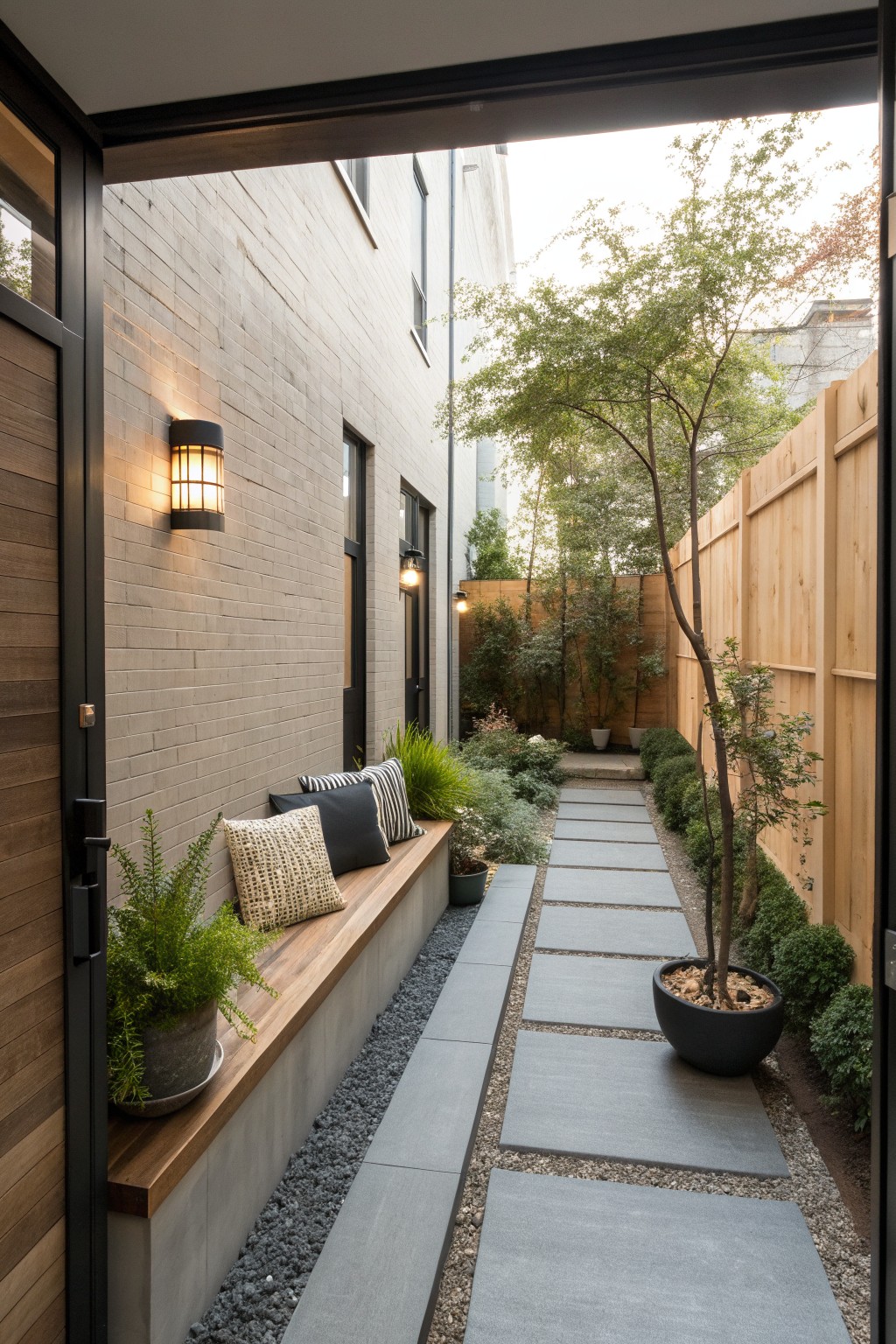
A built-in bench makes the most of a tight side passage by turning an existing wall ledge into seating. It stays out of the way while still giving people a place to sit without adding extra furniture that would crowd the space.
This works best on homes where the side yard is long and narrow. Build the bench at a comfortable height with a simple wood top, then add a few cushions so it feels inviting rather than like an afterthought.
Built-In Seating That Follows The Wall Line
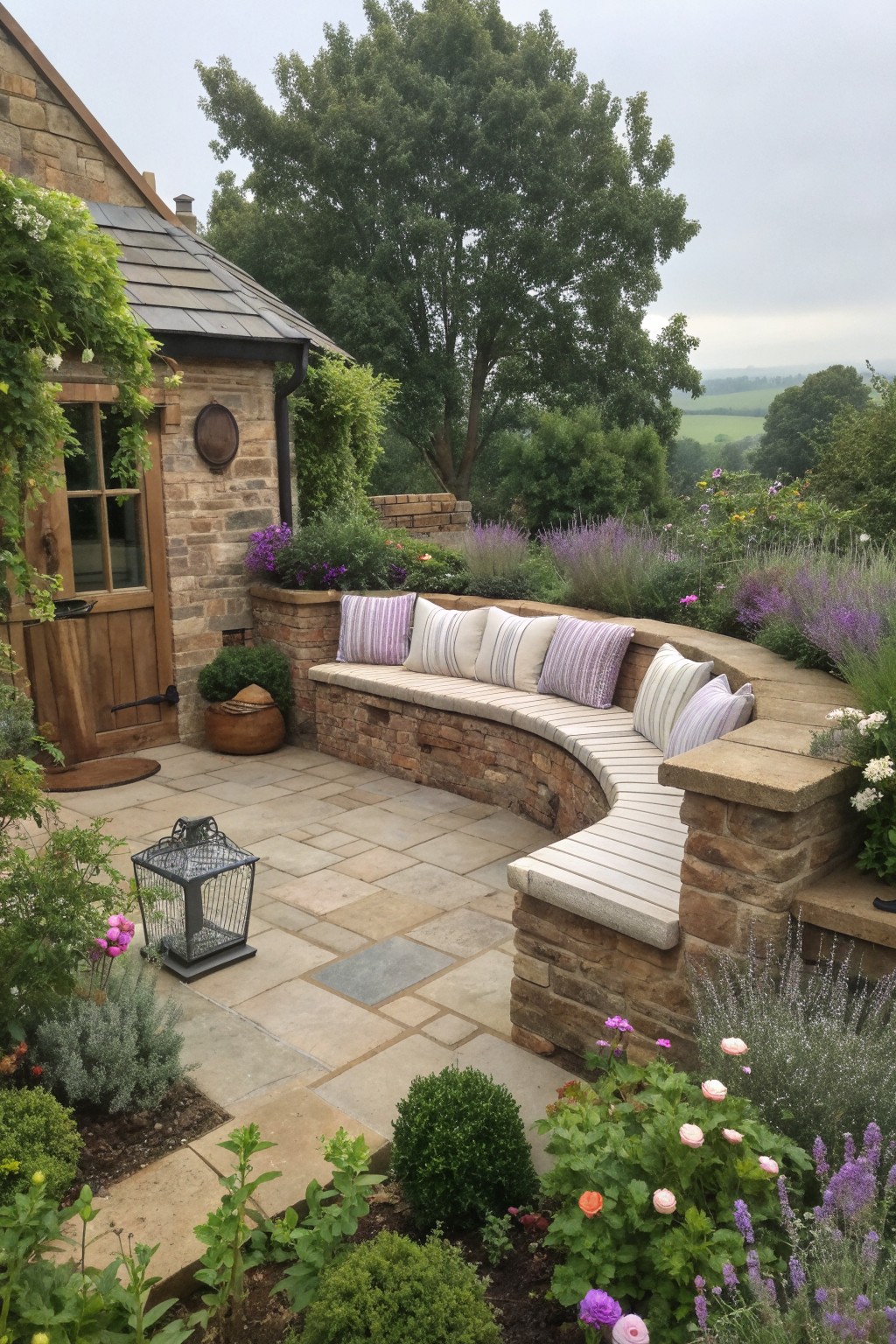
A curved bench built right into a low stone wall gives you plenty of seating without taking up extra floor space on the patio. It works especially well when the wall already serves as a planter edge, because the seating becomes part of the garden structure instead of an added piece of furniture.
This approach suits smaller backyards or sloped sites where a freestanding sofa would crowd the area. Keep the bench height comfortable for sitting and use a simple wood top so it stays dry and easy to clean. The cushions can stay light since they are easy to bring inside when the weather turns.
Built-In Seating With Planters

One way to keep a backyard from feeling crowded is to build the seating right into the structure of the patio itself. Concrete benches that run along the edges give you plenty of places to sit without adding separate furniture that takes up floor space. When you add planting pockets into those same benches, the landscaping becomes part of the seating instead of something that needs its own bed.
This approach works especially well in smaller yards or on lots where every square foot counts. It suits homes that already have clean lines and simple materials, since the concrete can match surrounding walls or hardscaping. Just make sure the benches are wide enough to sit on comfortably and that the plants you choose can handle the heat from any nearby fire feature.
Pool Deck Seating on a Raised Platform
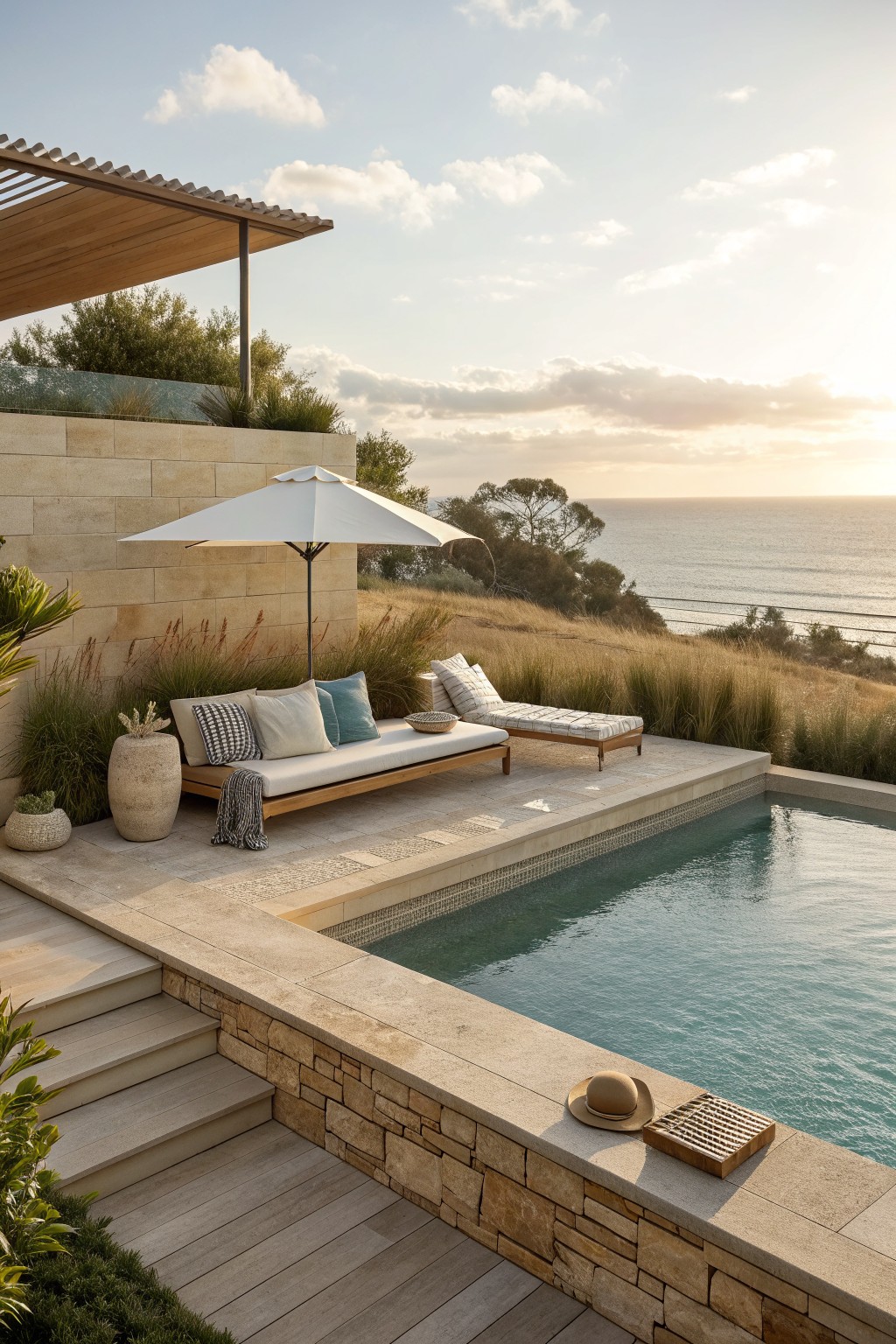
A raised platform next to the pool gives you a built-in spot for lounges without using up extra yard space. The flat surface sits right at the water’s edge and uses the existing wall as a natural backrest, so the seating feels like part of the pool rather than something added later.
This works best on lots that slope or have limited flat ground around the pool. Keep the platform height close to the pool coping so people can move between the two easily, and choose materials that match the deck to keep the whole area looking clean.
Built-In Benches Along The Walls
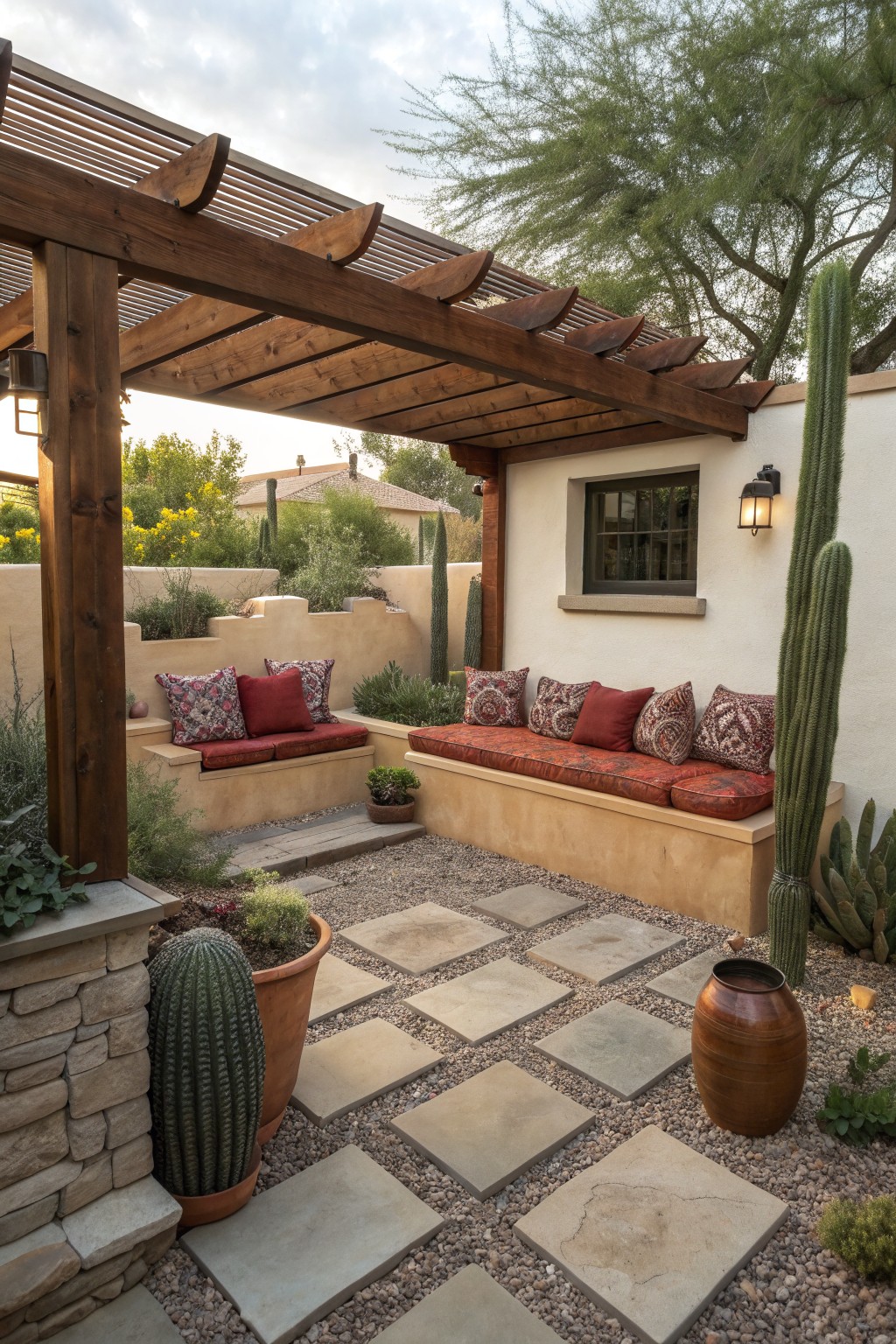
Built-in benches along the walls keep a small patio from feeling crowded. They turn the edges of the space into seating without adding freestanding furniture that takes up walking room.
This setup works best with a covered structure like a pergola overhead, since the roof helps protect the cushions. It suits dry climates and homes with stucco or masonry walls where the bench can be built right into the existing surface.
Built-In Benches Along The Deck
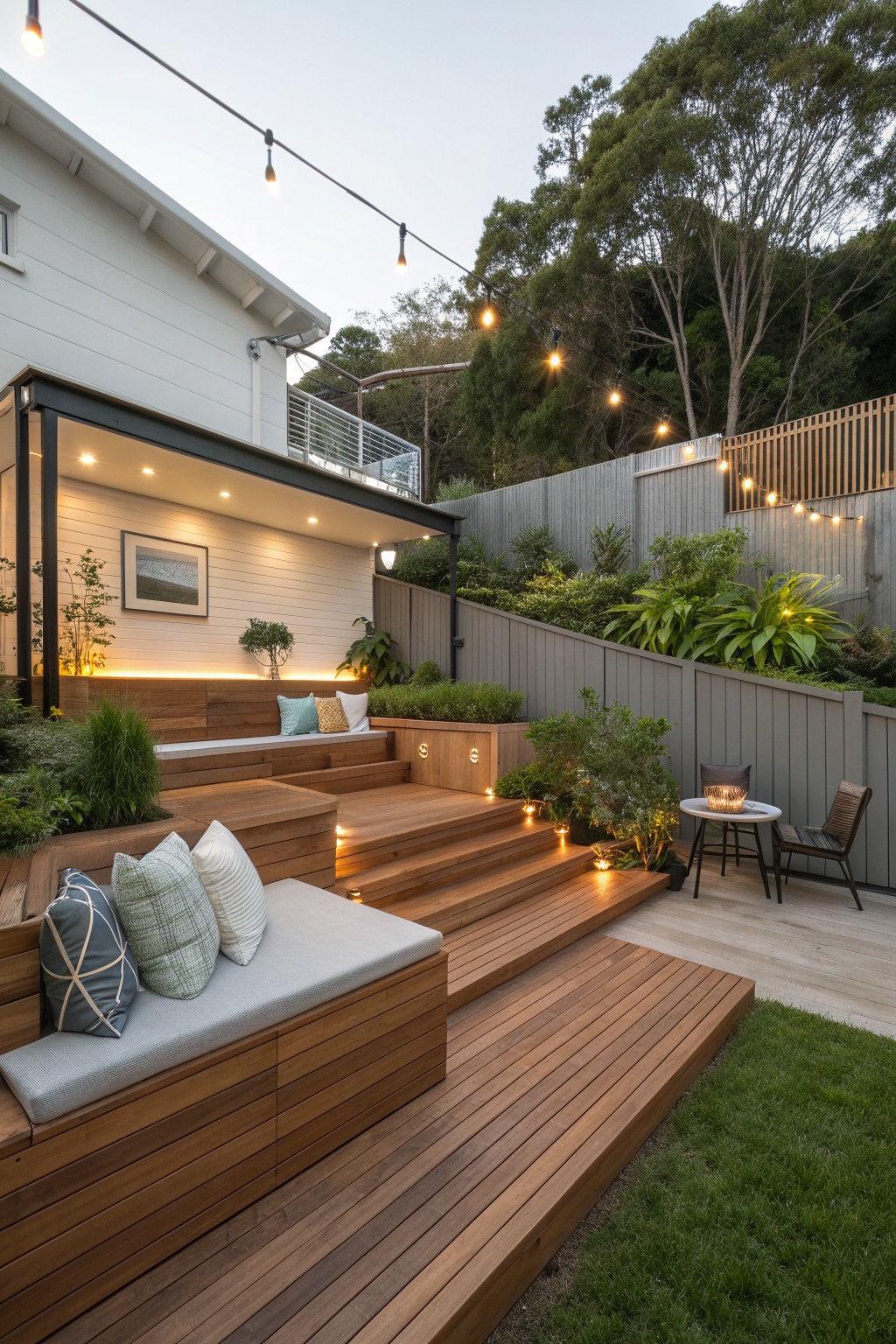
Built-in benches work well when you want seating without losing floor space on the deck. They sit right into the structure, so the open area stays clear for moving around or adding a small table later.
This approach suits smaller backyards or decks that need to serve multiple uses. Keep the benches simple in wood to match the deck, and add cushions only where you plan to sit most often.
Built-In Bench Seating Along a Wall
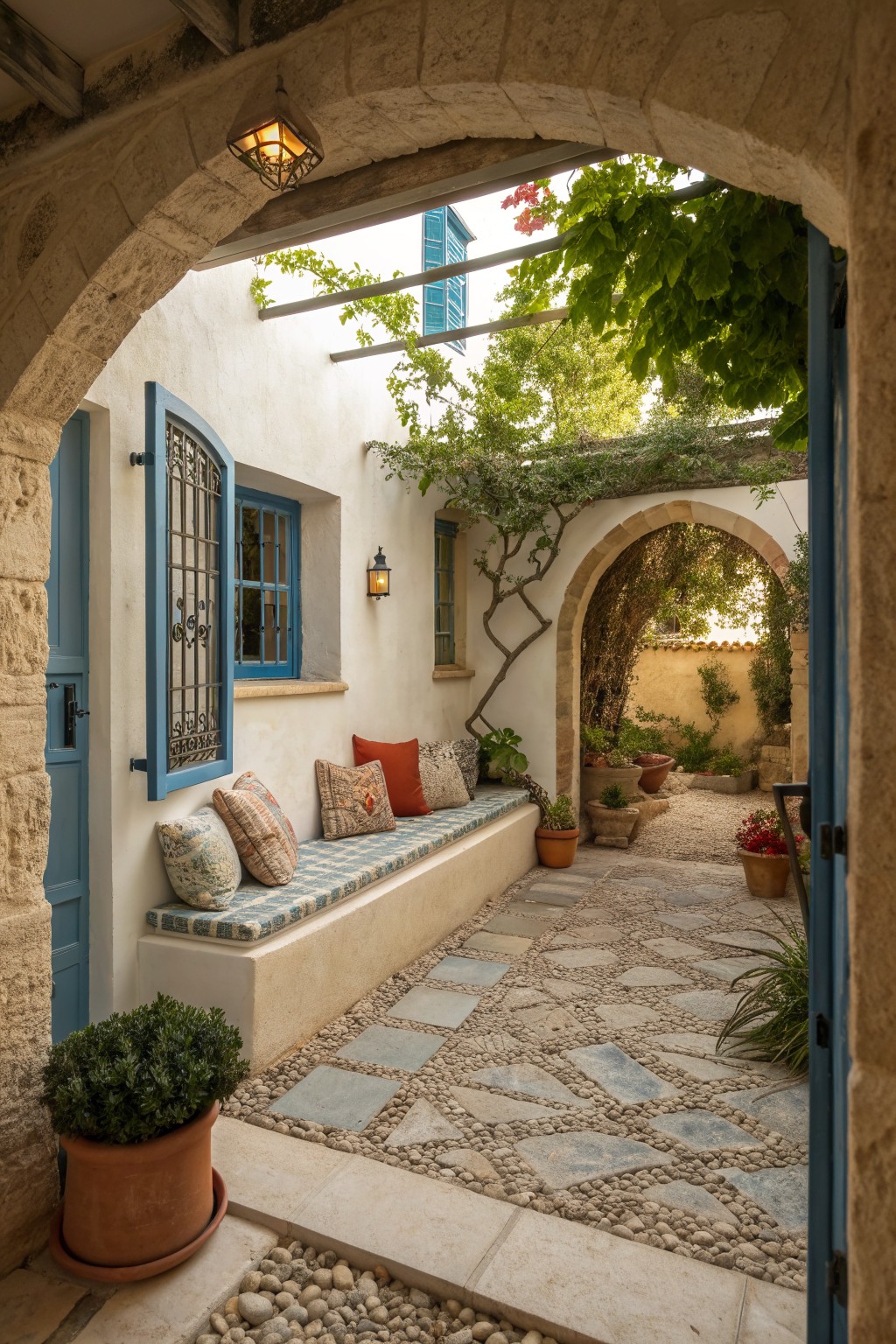
A built-in bench uses the wall space in a small courtyard without crowding the ground. It turns an otherwise plain stretch of wall into seating that stays out of the way and fits the layout naturally.
This setup suits homes with courtyards or tight patios where floor space is limited. Keep the bench low and add simple cushions so it feels comfortable without taking over the area.
Built-In Concrete Ledges For Extra Seating
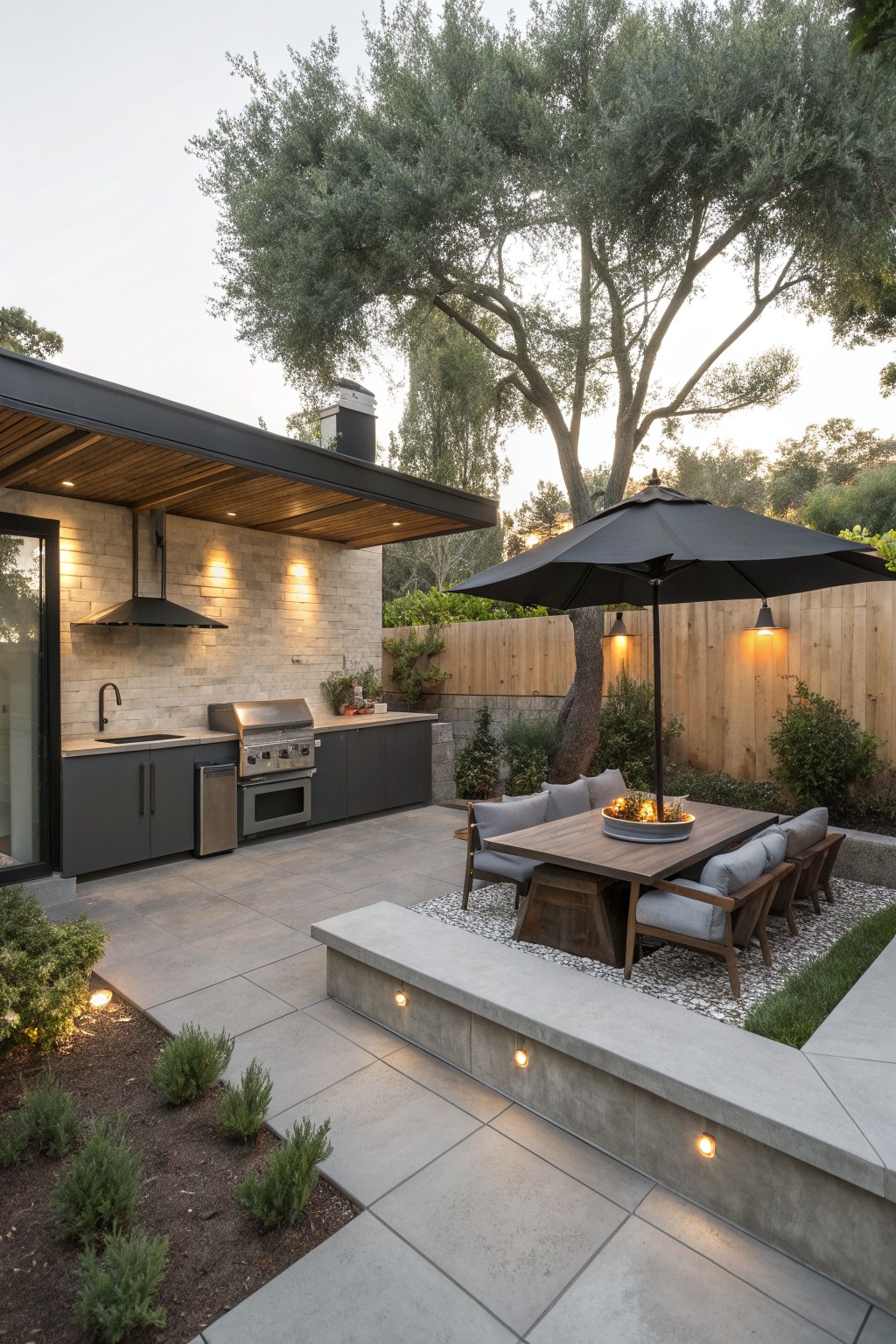
A low concrete ledge built along the edge of the patio gives you seating without adding separate chairs that take up floor space. It also helps mark off the dining area from the rest of the yard so the layout feels more organized.
This works well in smaller backyards where you want room to move around the table. It suits homes with modern or simple outdoor spaces, and the ledge can be topped with cushions when people are sitting. Just make sure the height feels comfortable for actual use.
Built-In Bench Seating With Wooden Crates
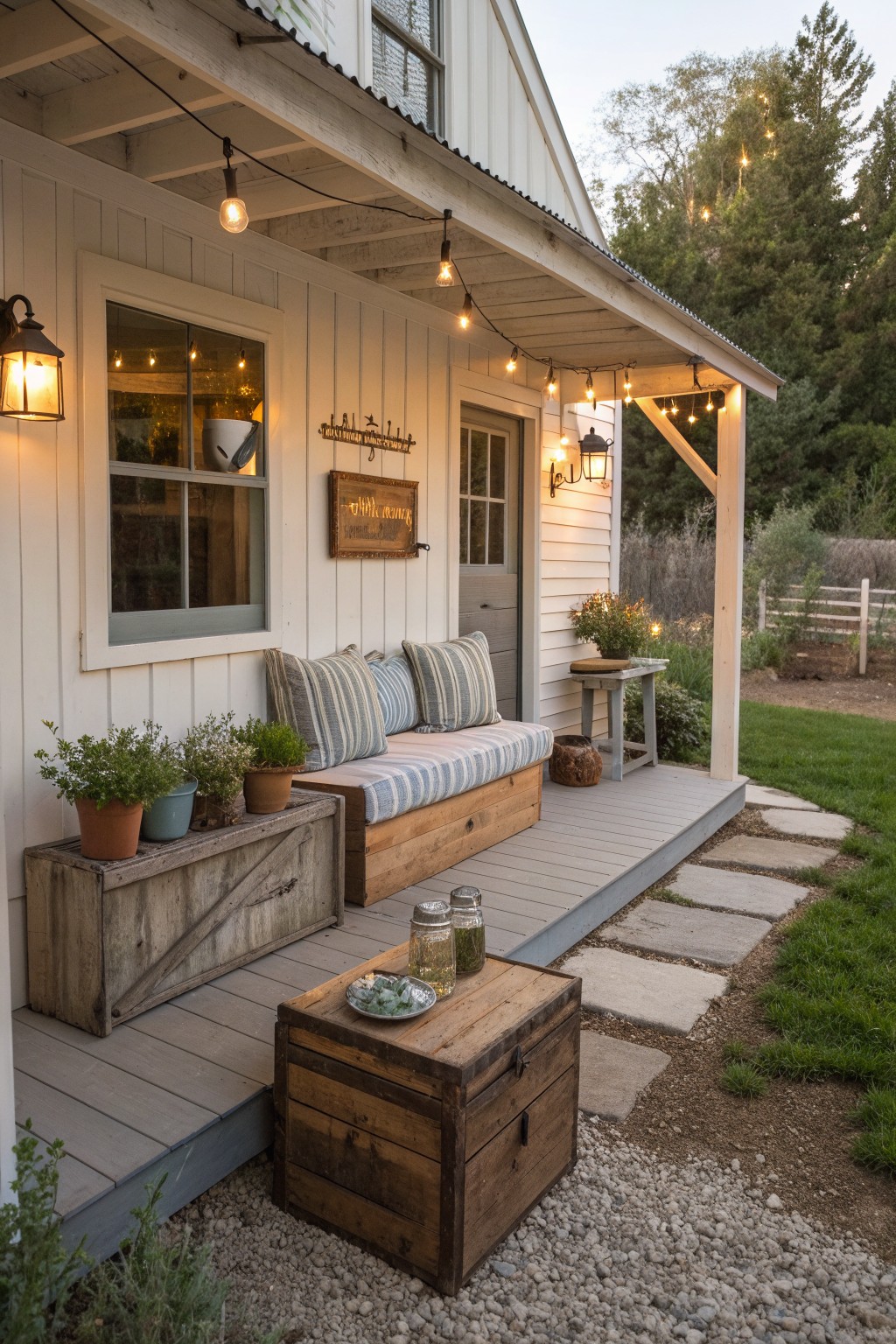
A built-in bench along the porch wall gives you a solid row of seating without eating up floor space. It stays tight to the house and leaves the rest of the deck open for moving around or adding a small table when you need it.
Wooden crates placed at either end work as side tables or extra seats and can hold plants too. This kind of setup suits small porches or narrow decks where you want seating that feels permanent but still leaves room to walk.
Built-In Bench Seating Along The Fence
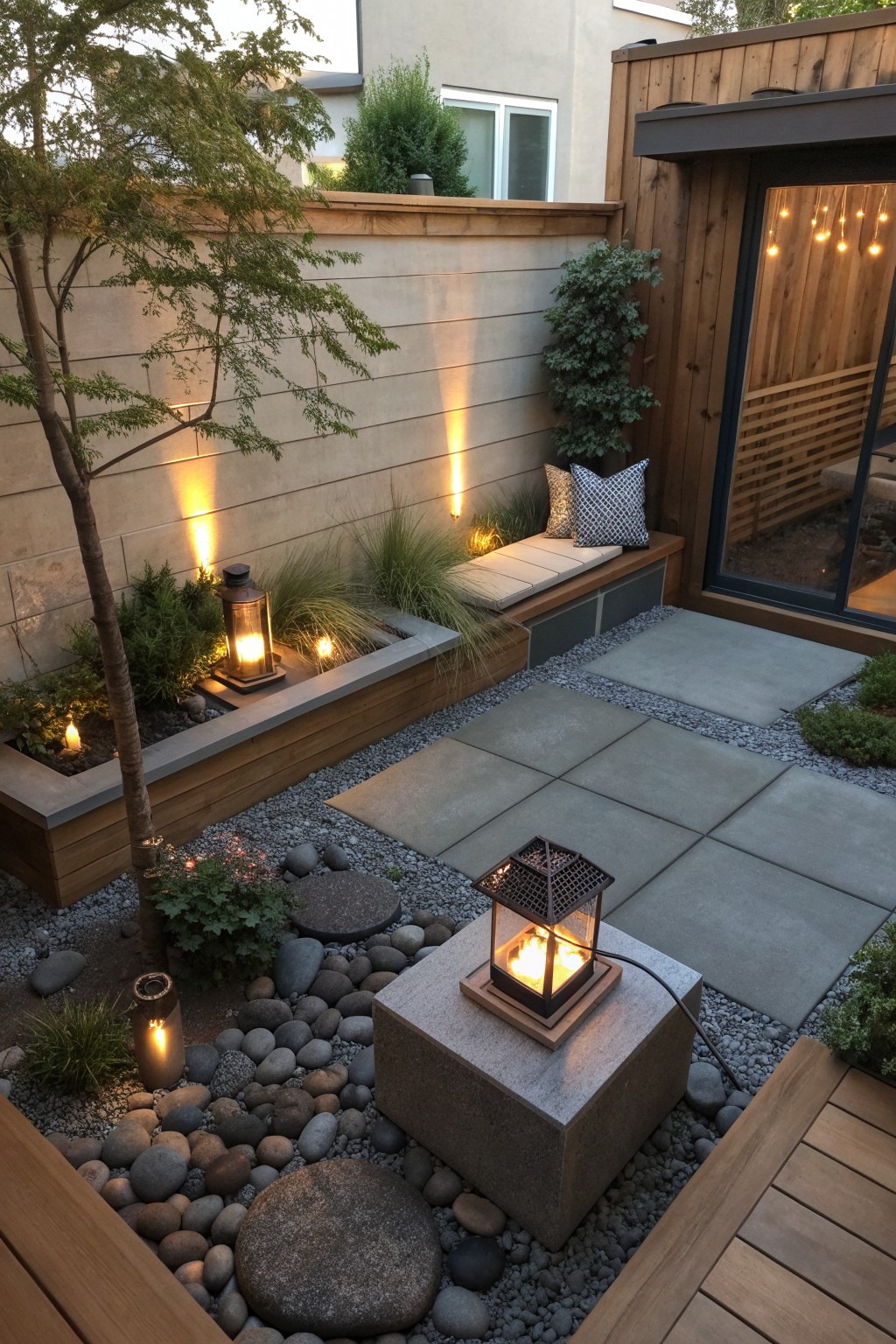
One simple way to add seating without crowding a small yard is to run a bench right along the fence or wall. It uses space that would otherwise sit empty and keeps the middle of the patio open.
This setup works best in narrow yards or tight corners. Keep the bench low and wide, add a couple of cushions for comfort, and let the surrounding gravel and plants do the rest. It stays out of the way when not in use but gives you plenty of places to sit when guests arrive.
Built-In Bench Seating Along a Wall
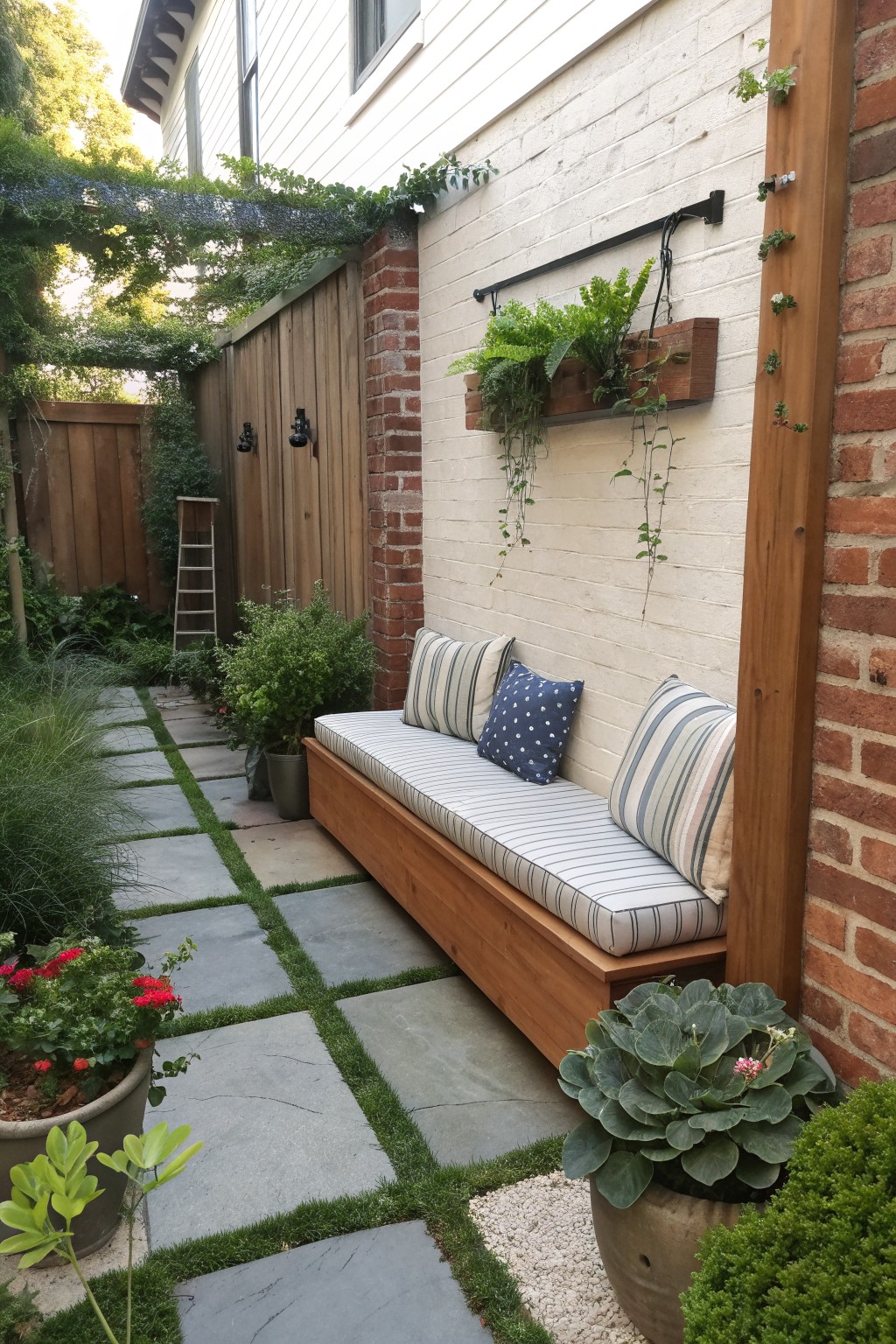
A built-in bench works well when space is tight because it tucks right against the house or fence without eating into the middle of the yard. It turns an otherwise unused strip of ground into seating while leaving the rest of the area open for paths or plants.
This setup fits best along a straight wall in smaller backyards or side yards. Use weatherproof cushions and add a few large pots nearby so the bench feels like part of the garden rather than just extra furniture.
Raised Planters With Wide Tops Add Seating
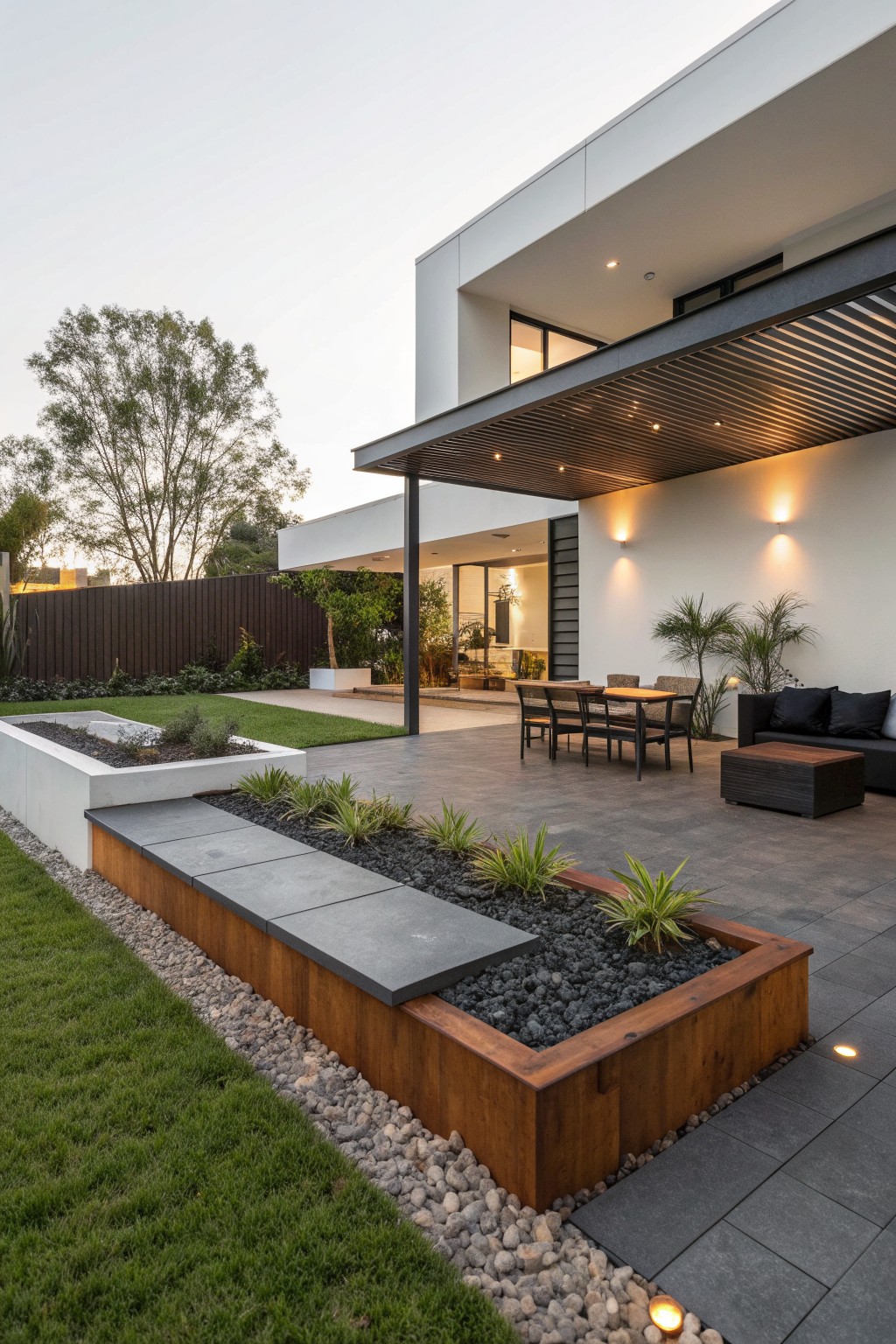
One simple way to fit more seating into a small backyard is to build planters with broad, flat tops. The tops act like built-in benches without needing extra furniture that would crowd the space. In this layout the long raised beds run along the edge of the patio and give people a place to sit while keeping the main floor open for a table and chairs.
This approach works best on patios or decks where you want defined zones but still need walking room. Use a sturdy top material that can handle weather and weight, and keep the planter depth reasonable so it does not block views. It suits modern homes with clean lines and smaller yards where every inch counts.
Built-In Benches That Run Along The Walls
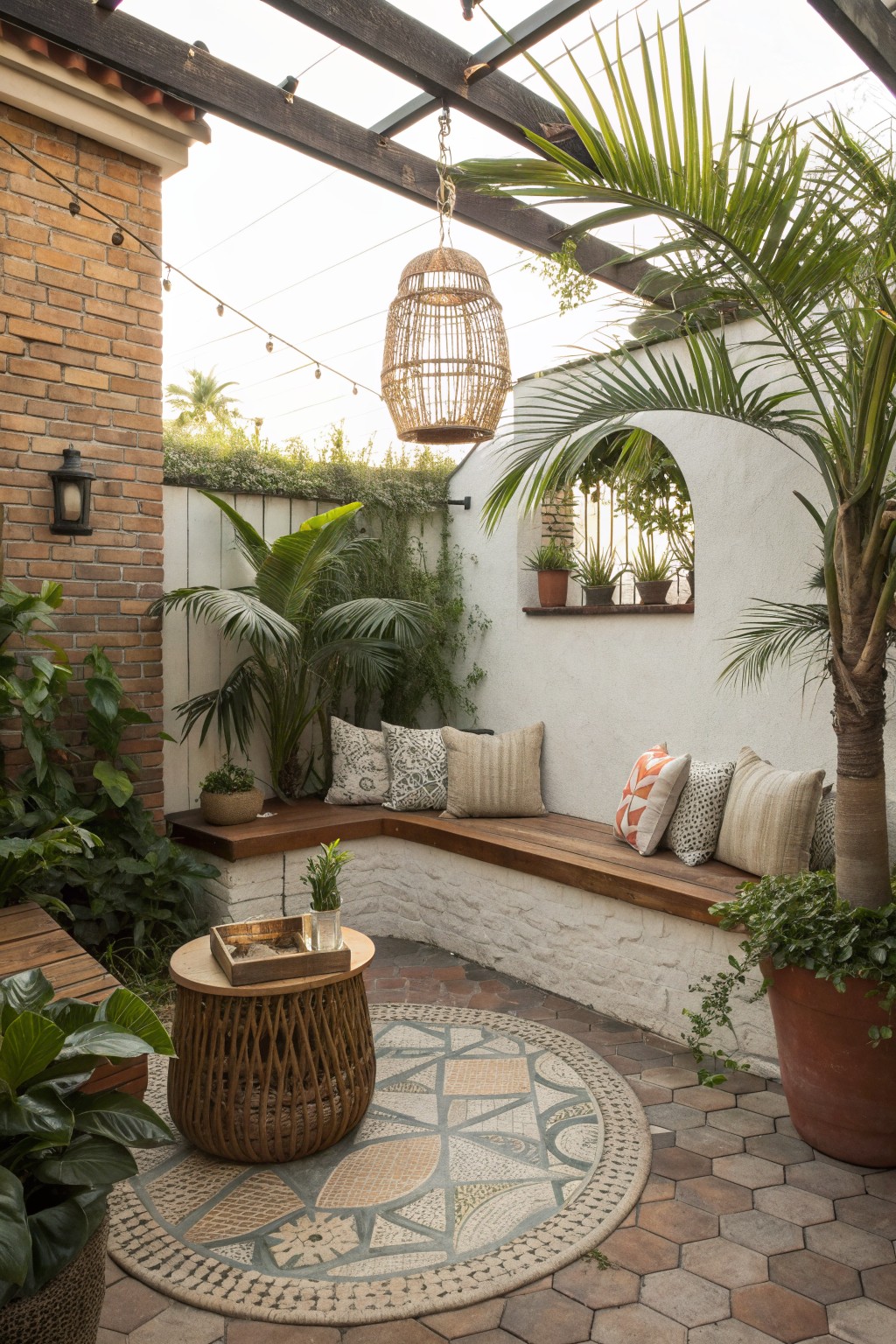
One simple way to add seating without crowding a small yard is to build the bench right into the existing walls. It uses the perimeter instead of pushing furniture into the middle of the space, and it gives the whole area a more finished feel.
This works especially well in patios or side yards with solid walls already in place. Keep the bench height comfortable for sitting, add cushions as needed, and leave enough room in front for a small table or plants.
Build Seating Right into the Pool Edge
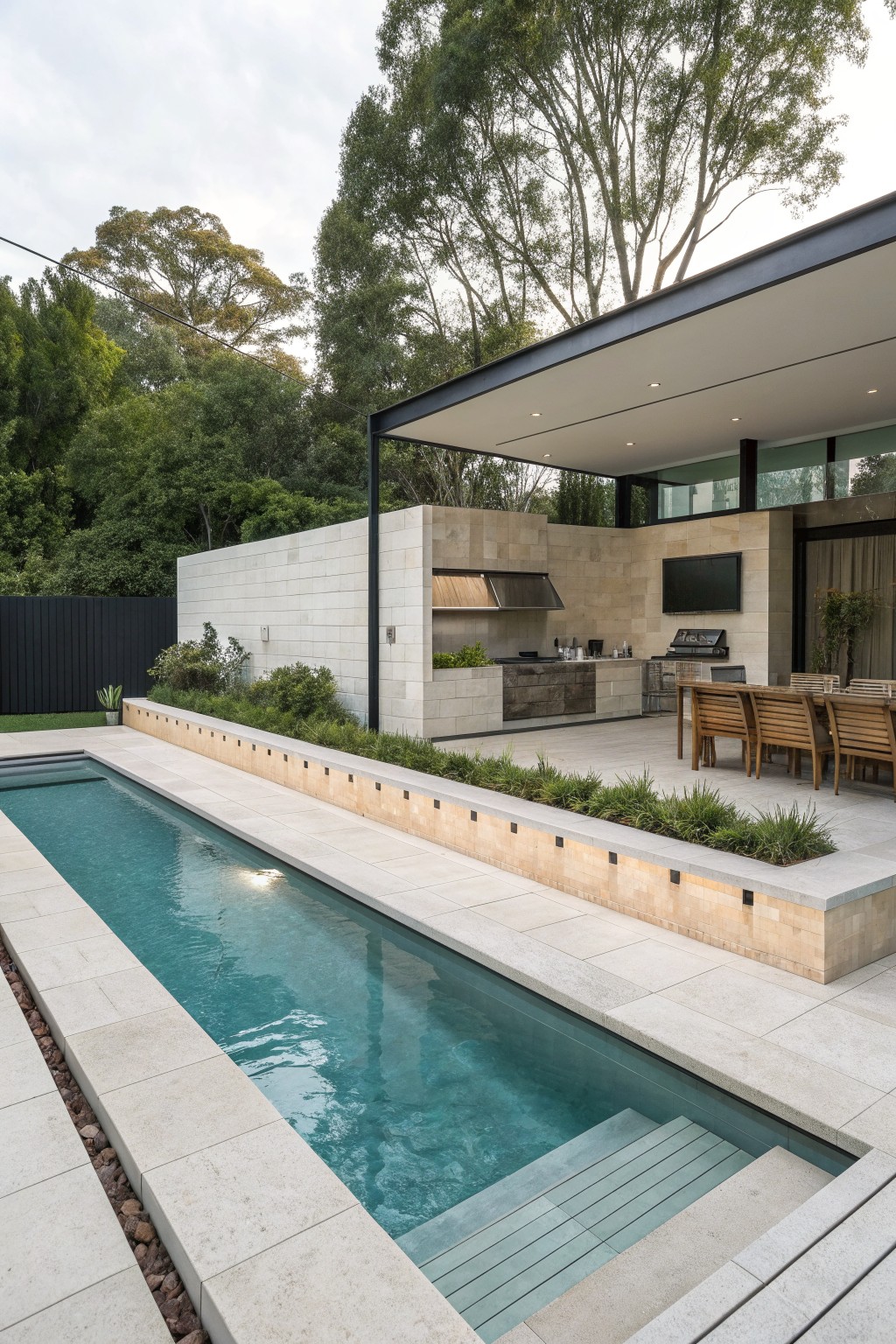
A long ledge built along the pool edge gives you extra places to sit without crowding the patio with separate chairs. It keeps the layout open and makes the whole area feel more connected instead of chopped up into separate zones.
This works best in backyards where space is tight and the pool sits close to the house. Make the ledge wide enough for comfortable seating and match the material to the surrounding paving so it blends in naturally.
Bench Along a Garden Path
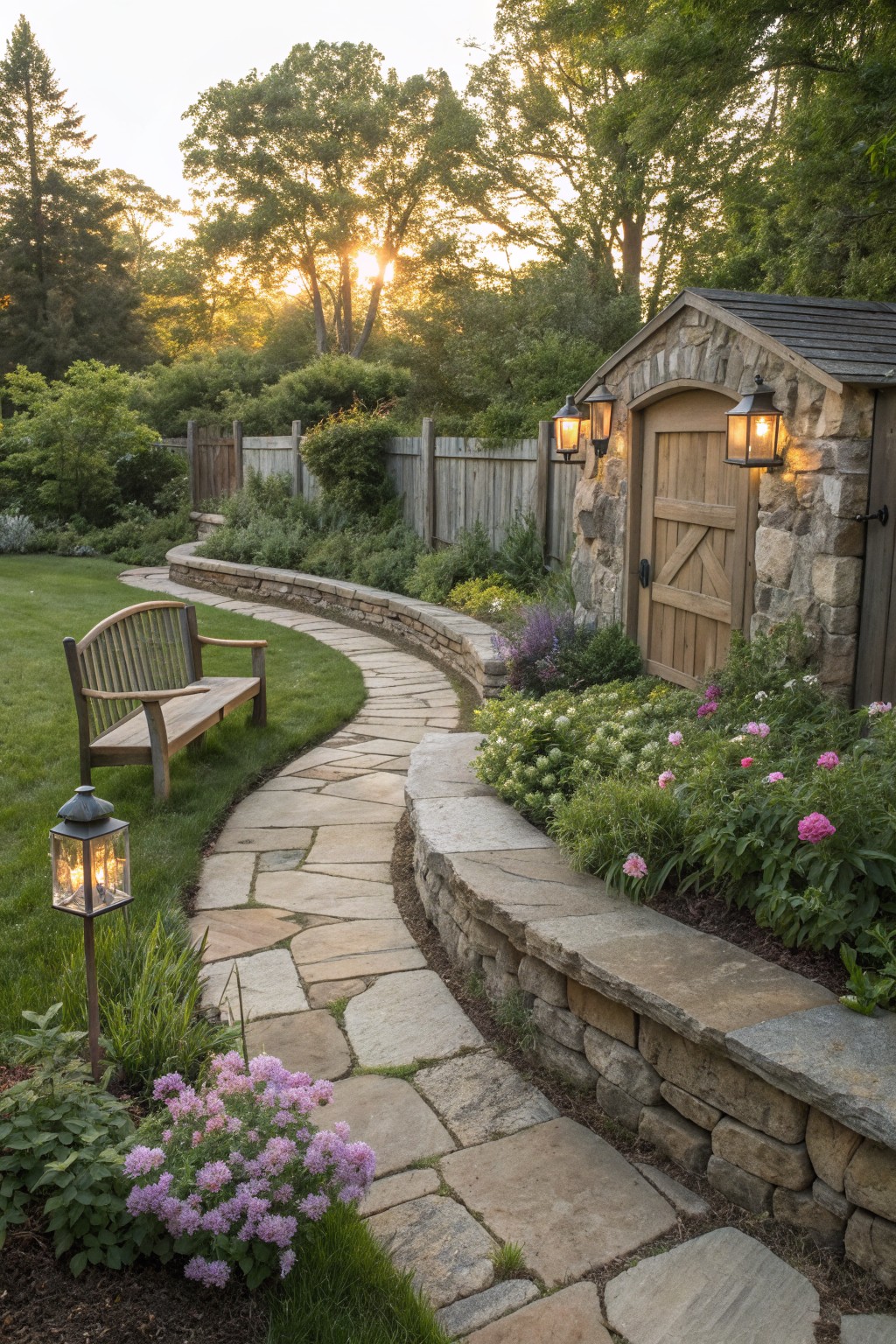
A bench set right beside a curving garden path gives you a place to sit without carving out a separate patio or deck. It uses the existing layout and keeps the seating tucked into the landscape so it does not eat up open lawn space.
This works well in smaller backyards where every foot counts. Keep the bench simple and let the path and planting do the framing. Just make sure the spot gets some shade or morning light depending on how you like to use it.
Built-In Bench Seating With Storage

Built-in benches work well along the edge of a deck or terrace because they give you seating without eating into the open floor space. They also keep the layout looking clean since the bench stays fixed in place instead of moving around.
This setup works best when you add storage underneath. Cabinets or compartments let you tuck away cushions and small tools, which keeps the area tidy. It suits smaller urban decks or rooftops where every inch counts and you want the seating to double as a practical feature.
Bench Set Into Gravel
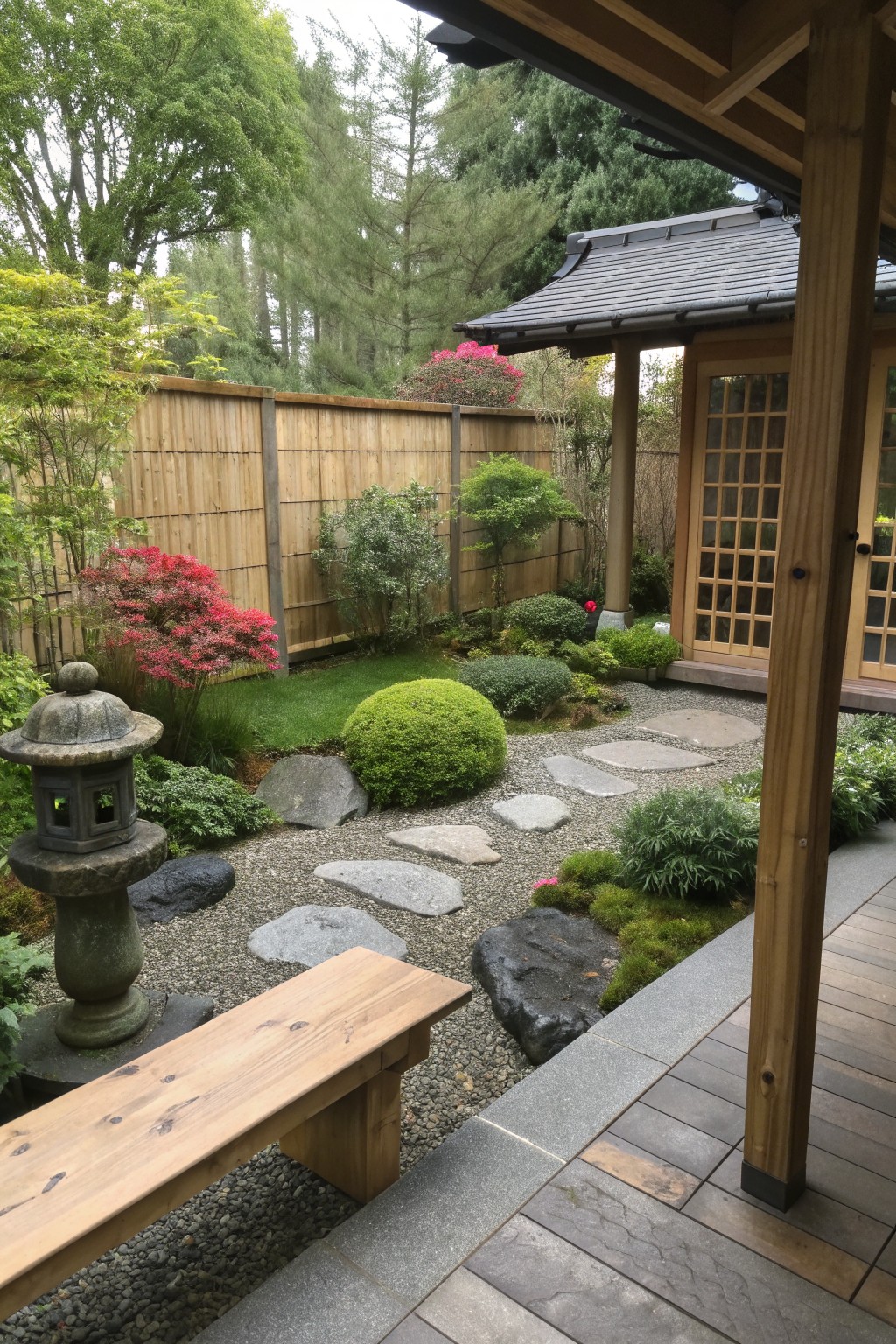
A low wooden bench placed right in the gravel gives you seating without carving out a separate patio. It sits low and simple so the garden flow stays open and the path can curve around it.
This works best in smaller yards where every foot of ground counts. Keep the bench plain and match the wood tone to nearby fences or decking so it feels like part of the landscape rather than added furniture.
Built-In Seating Along The Fireplace Wall
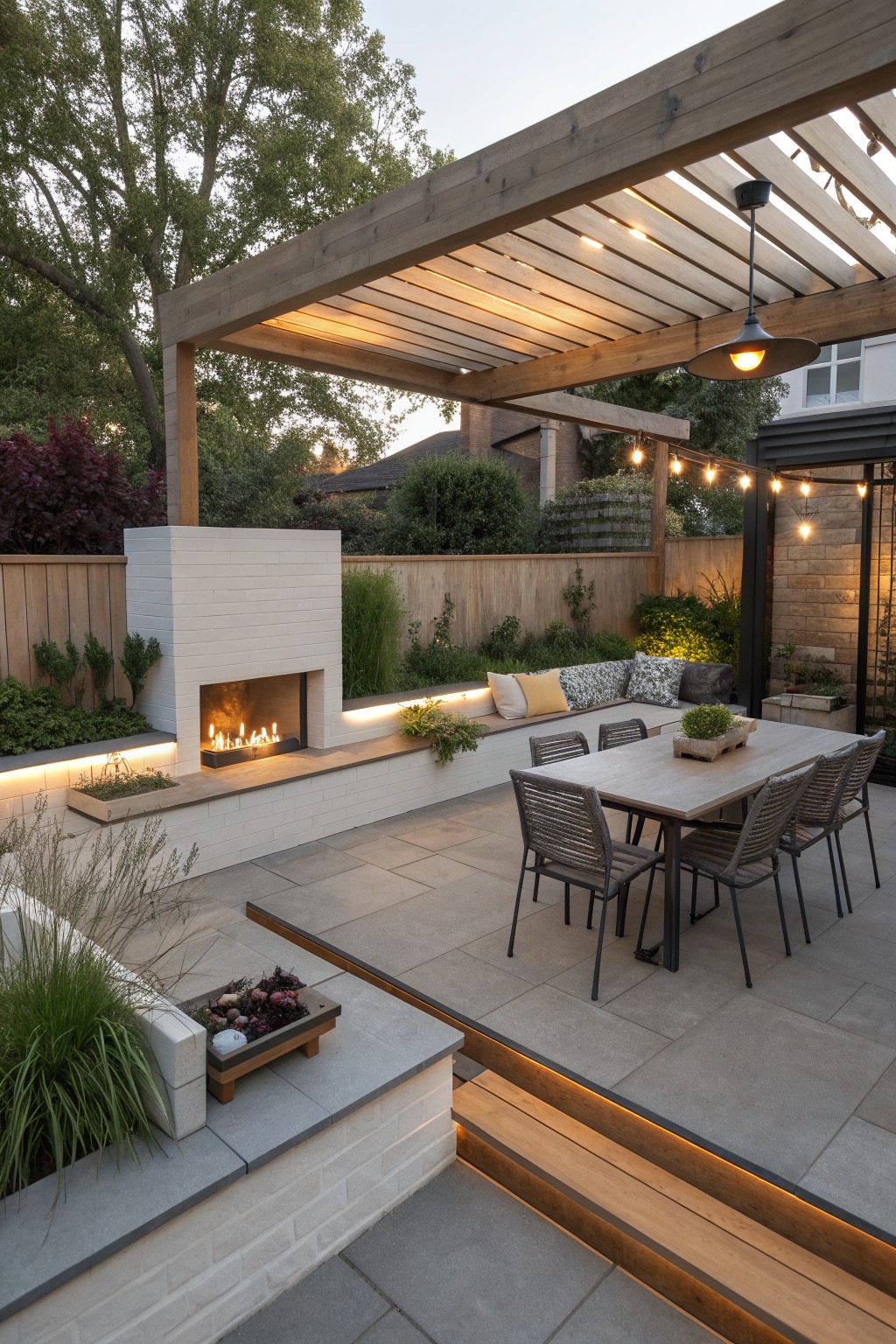
A built-in bench that runs straight into the fireplace structure keeps everything in one clean line. It gives you seating without pushing chairs or sofas into the middle of the patio, so the open space stays open for walking or a dining table.
This works best on a small to medium yard where the back wall can do double duty. Build the bench at the same height as the firebox so the whole thing feels like one piece instead of separate elements.
Built-In Benches That Work On Narrow Porches
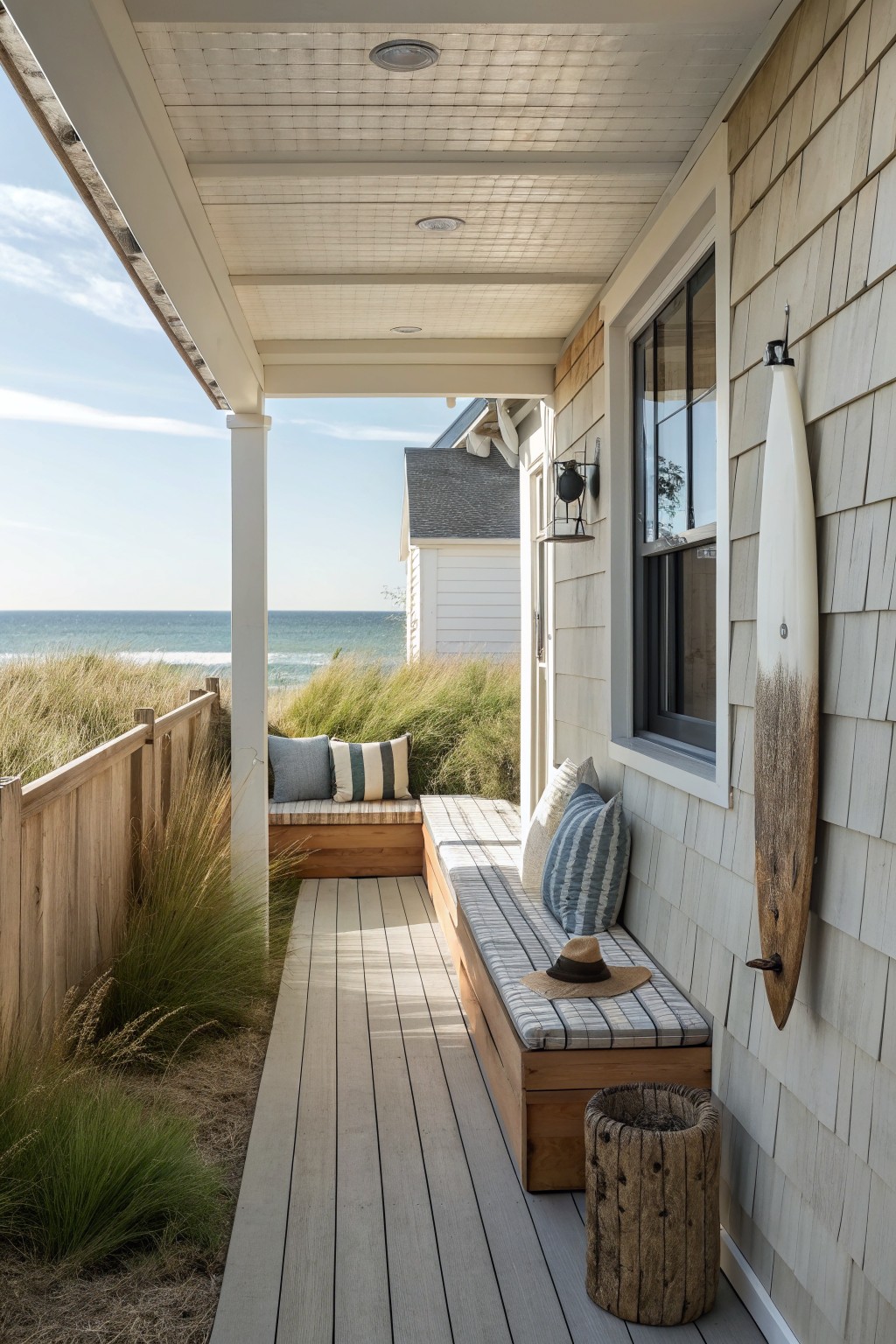
Built-in benches save space because they sit right against the house wall and do not take up extra floor area with legs or separate frames. They turn a slim walkway into usable seating without blocking the path.
This approach works best on porches or decks that run long but stay tight in width. Add a few cushions for comfort and leave the area below open for storage if needed. It fits homes where outdoor furniture has to stay simple and out of the way.
Built-In Benches Along Retaining Walls
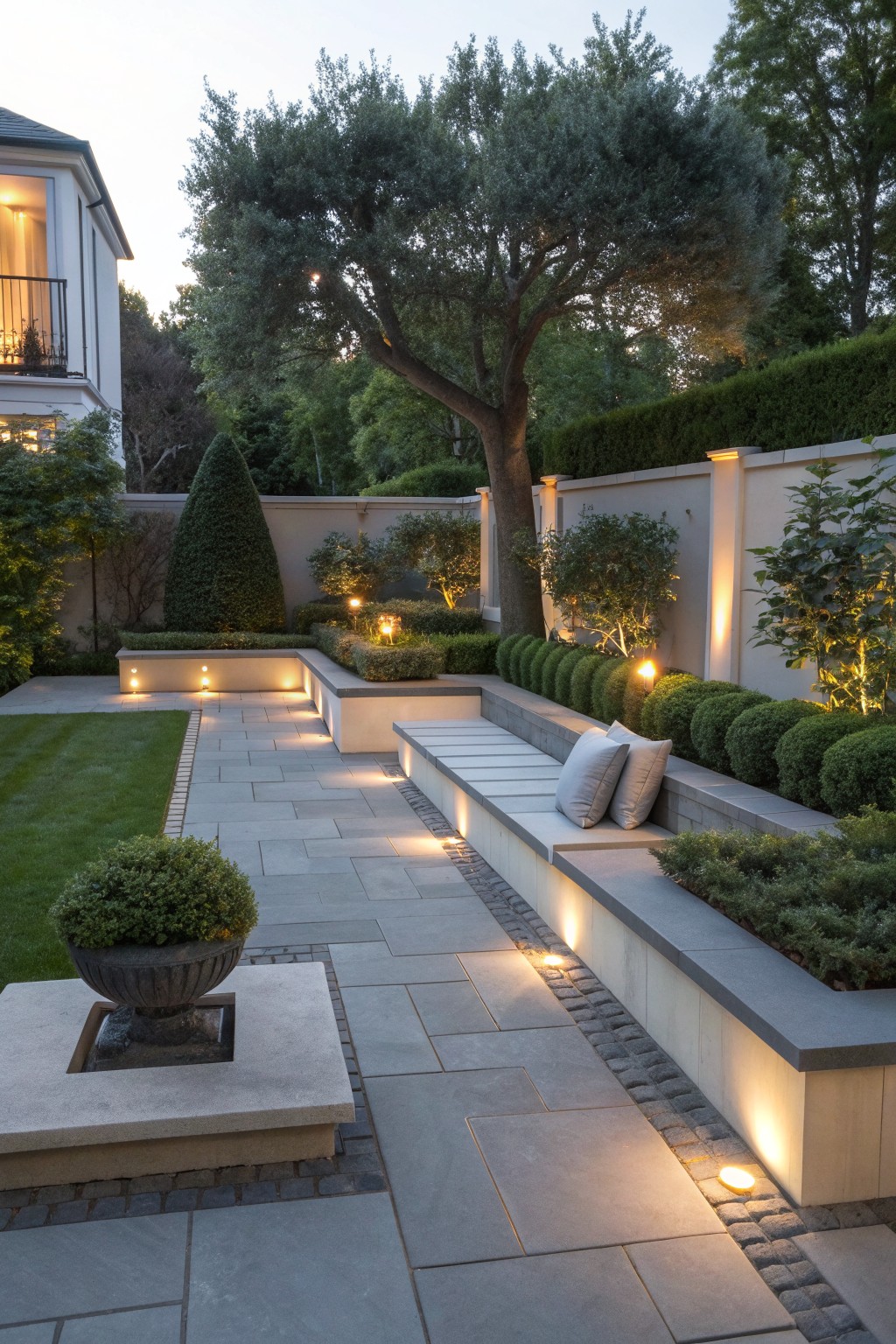
One simple way to add seating in a small backyard is to build the benches right into the retaining walls or raised beds. This keeps the open area clear and avoids bringing in separate furniture that takes up space.
The bench can run along one edge of the patio with a flat top for sitting and a back wall that also holds plants. It works best on lots that already have some slope or need low walls for grading, and it pairs well with simple paving and a few lights tucked underneath.
Built-In Seating Along the Outdoor Kitchen Base

One practical way to keep a backyard from feeling crowded is to build seating straight into the kitchen structure itself. The low stone ledge in front of the oven and grill gives people a place to sit without needing separate chairs taking up floor space.
This approach works best in smaller yards where the cooking area needs to pull double duty. It suits homes that already plan to use brick or stone for the counters, since the same materials can form a simple bench height without extra construction.
Frequently Asked Questions
Q: How do built-in benches handle wet weather over time?
A: Seal the wood every year to keep moisture out. Pick cedar or similar woods that resist rot naturally. This keeps your seating solid without extra covers.
Q: Can I build these seating ideas myself if I have basic skills?
A: Start with simple designs like corner benches against existing walls. Follow the measurements in the ideas to fit your space. You save money and get exactly what you need.
Q: What seating works best for very narrow yards?
A: Go for narrow ledges along the fence line. They tuck in without taking up floor space.
Q: How do I keep cushions from getting ruined outdoors?
A: Choose quick-dry foam and outdoor fabric. Store them in a nearby bin when not in use. This setup lets you enjoy comfort without constant replacements.


