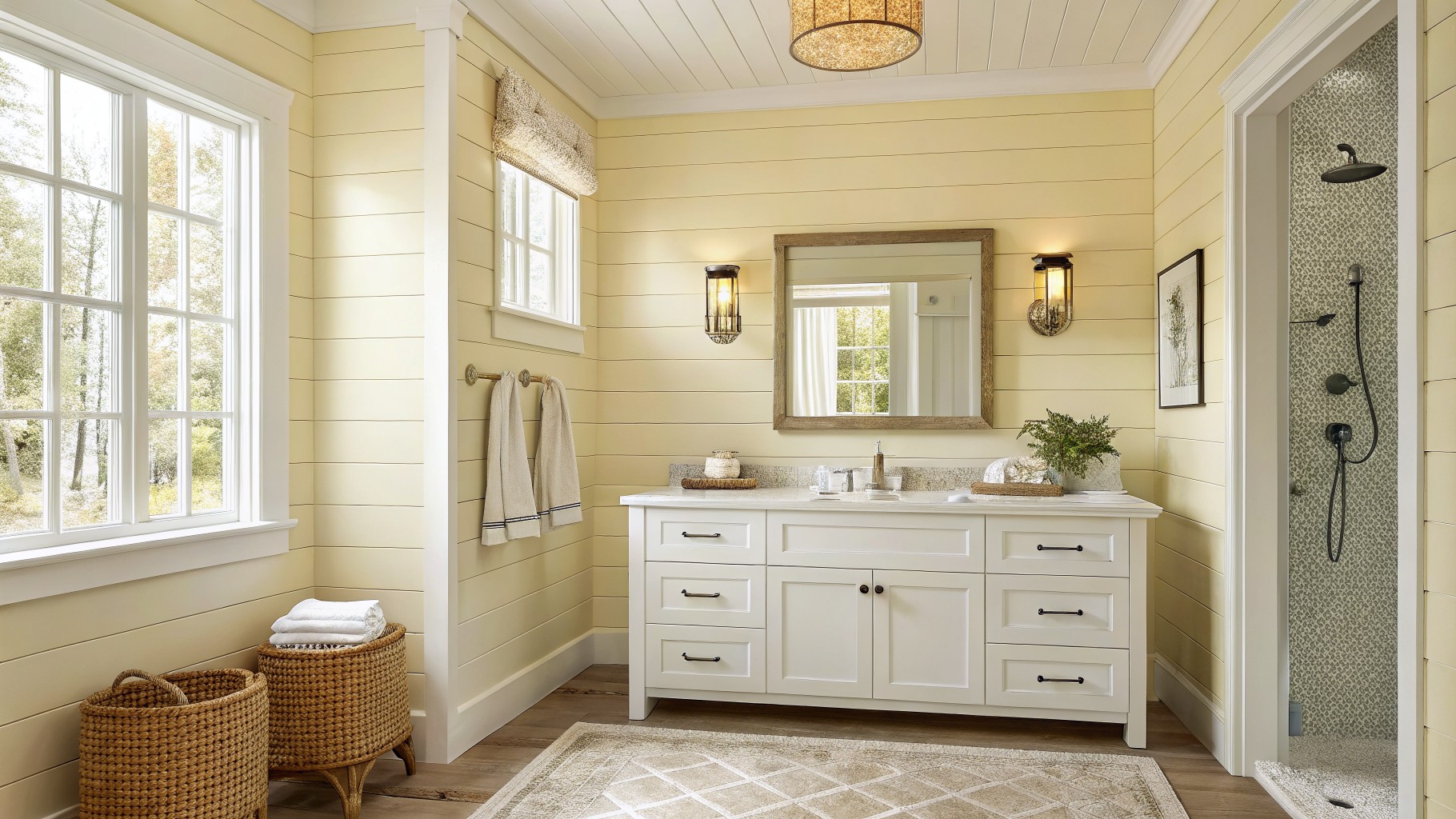
I have found that bathroom paint often shifts once the lights come on and steam fills the air each morning.
Warm tones can read softer or muddier next to tile and trim, so checking them against the actual surfaces helps.
Testing in the space matters.
I usually tape up a few samples and watch how they change from morning light through evening shadows.
That step has saved me from colors that looked fine on the chip but turned flat once the whole room came together.
Warm Beige Bathroom Walls
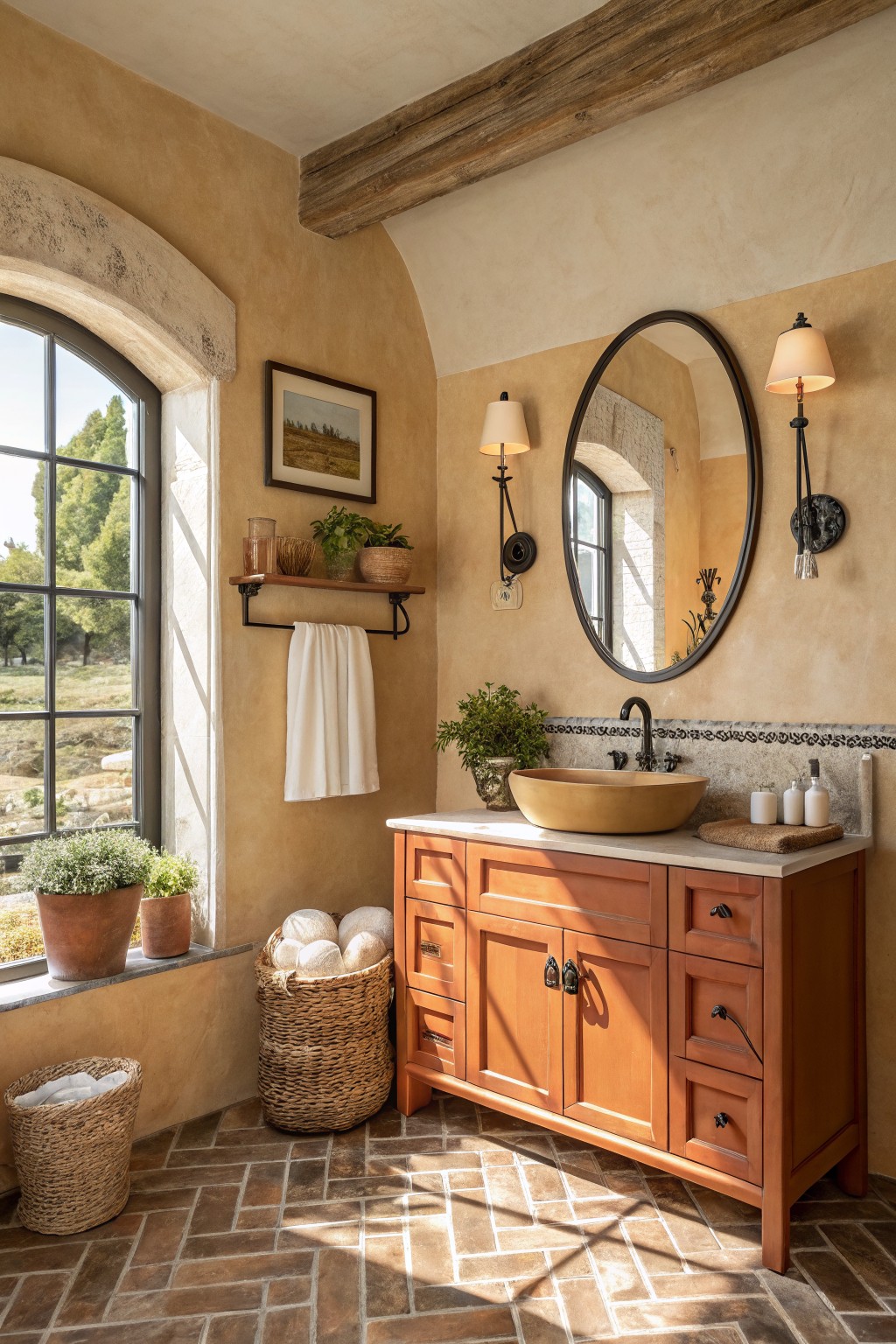
This bathroom uses a warm beige on the walls that sits somewhere between sand and soft clay. The color has a gentle yellow undertone that keeps the space feeling calm and grounded even with all the natural textures around it.
It works best with wood cabinetry and terracotta floors because those elements bring out the warmth without making the room feel heavy. Pair it with off-white trim if you want a little more contrast, but skip anything too cool or it can pull the beige into something dull.
Soft Greige Bathroom Walls
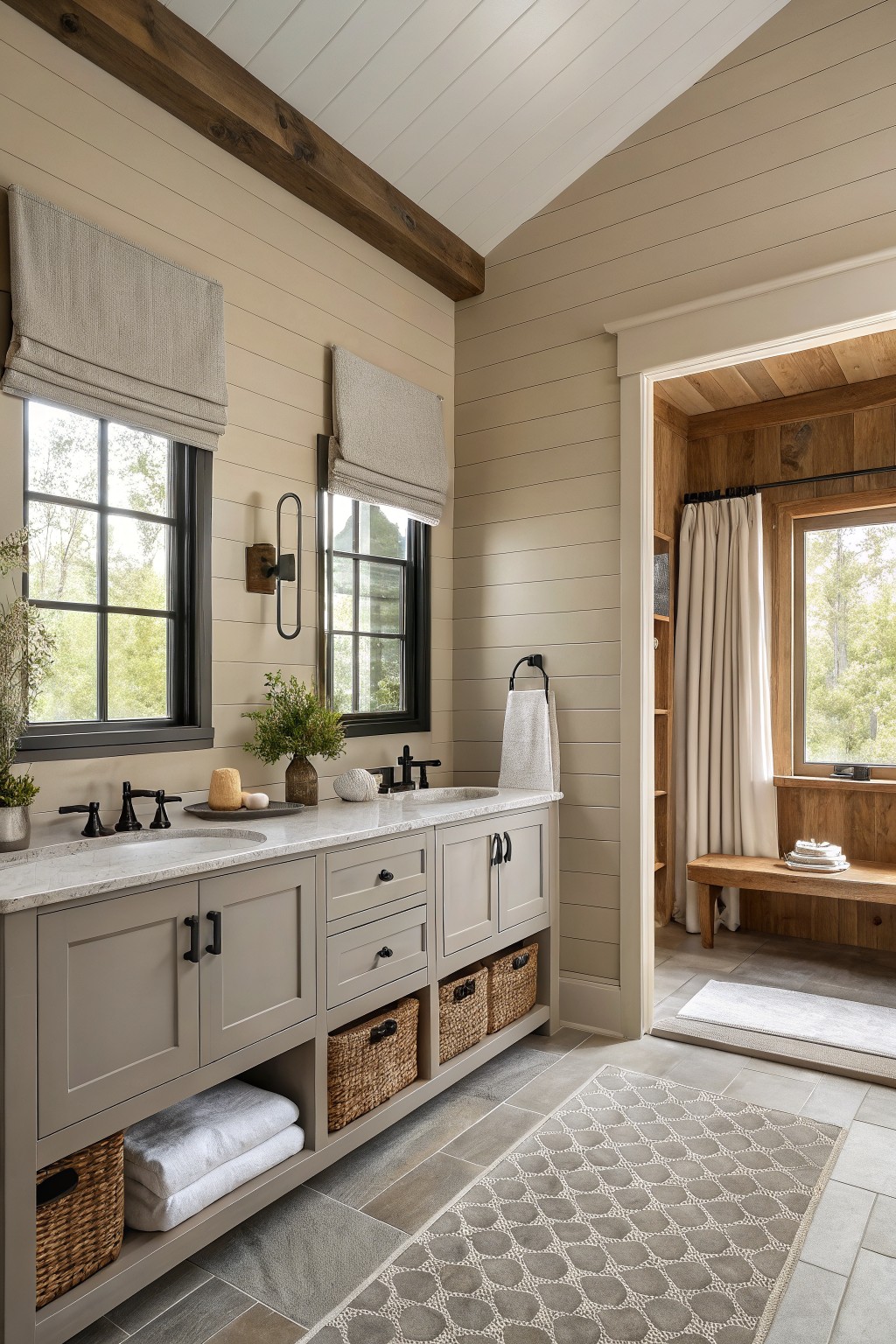
This bathroom uses a soft warm greige on the walls. It sits between beige and gray with a gentle warmth that keeps the room feeling calm and a bit cozy rather than stark.
The color works nicely with wood tones and black hardware. It also handles varying light well and pairs easily with stone or tile without competing. Try it in smaller baths where you want something flexible that still feels warm.
Warm Golden Yellow Walls
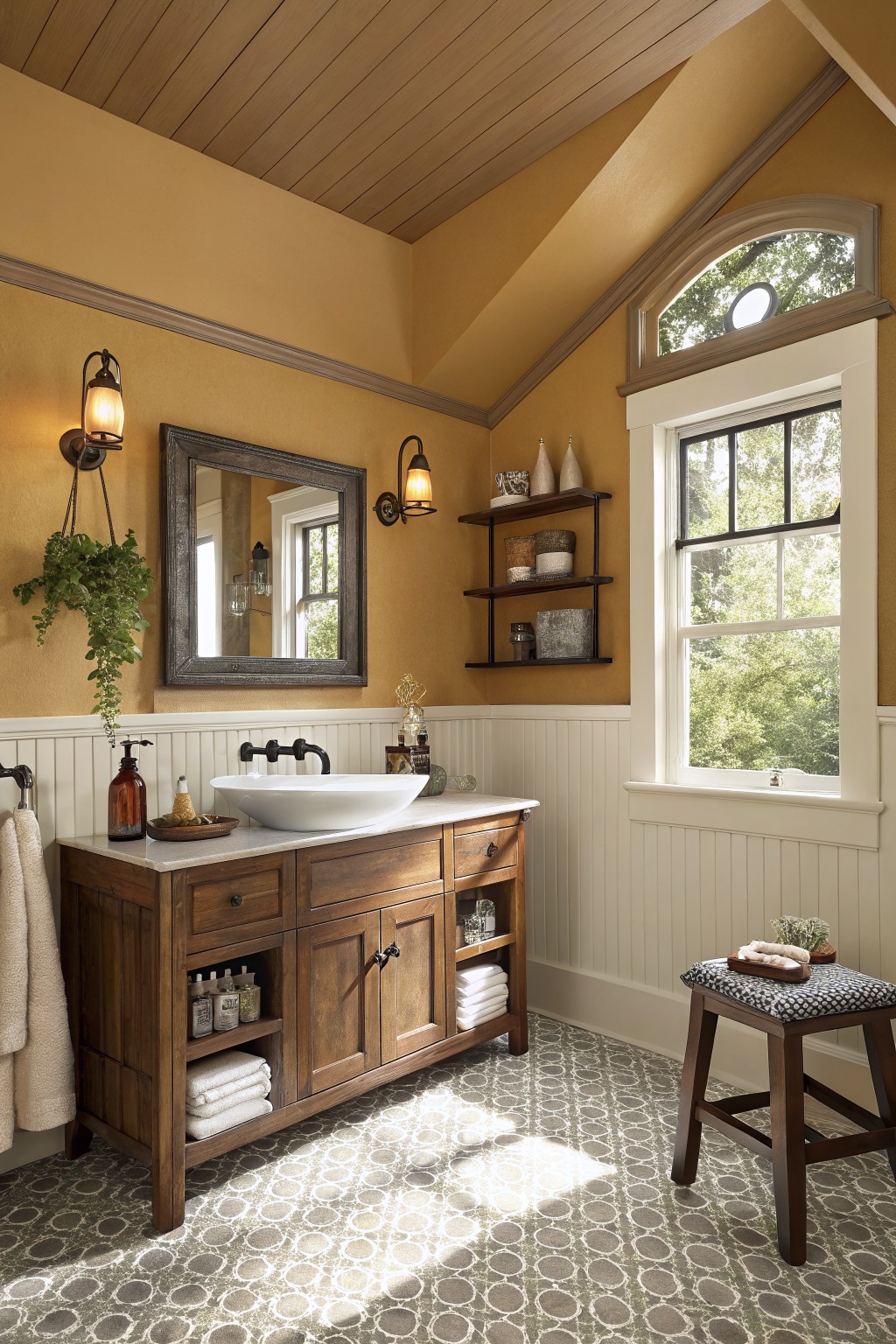
This bathroom uses a warm golden yellow on the upper walls. It is a rich color with soft orange undertones that feels cozy and grounded rather than bright or sunny.
The shade sits nicely against white wainscoting and warm wood cabinetry. It works best in spaces with steady daylight, where it stays inviting without turning too intense. Good matches include Sherwin Williams Harvest Gold, Benjamin Moore Golden Straw, Behr Honey Bee, and Farrow & Ball India Yellow.
Warm Blush Pink Walls
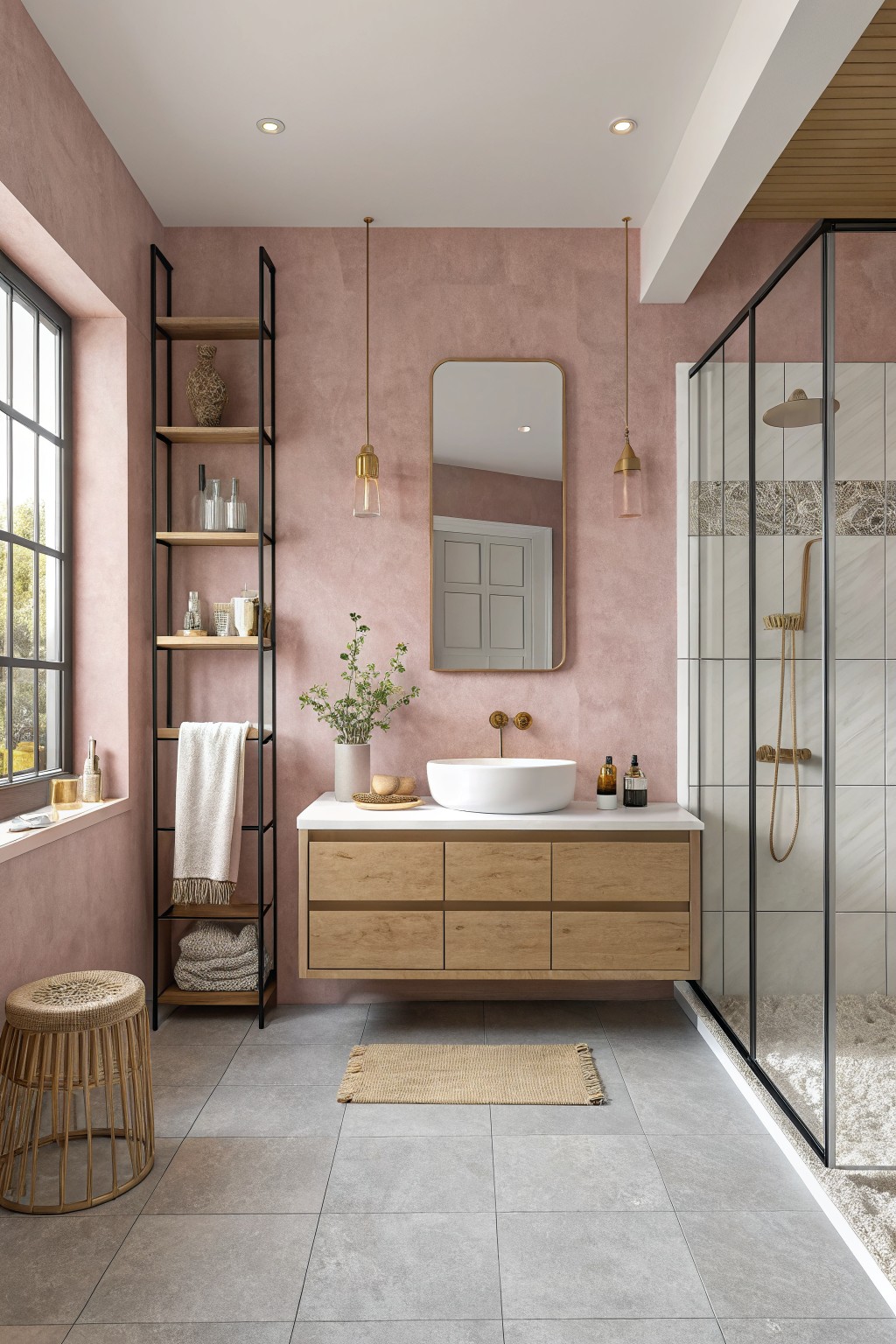
A warm dusty pink like this one gives the bathroom walls a soft, lived-in feel without turning too sweet. It leans slightly toward beige, which helps it read as calm and steady rather than loud.
The color has warm undertones that sit nicely next to wood cabinetry and gray tile. It works well in rooms with mixed lighting, though it can look a touch more muted in very bright spaces, so pairing it with natural wood and simple fixtures keeps the overall look grounded.
Warm Taupe Walls
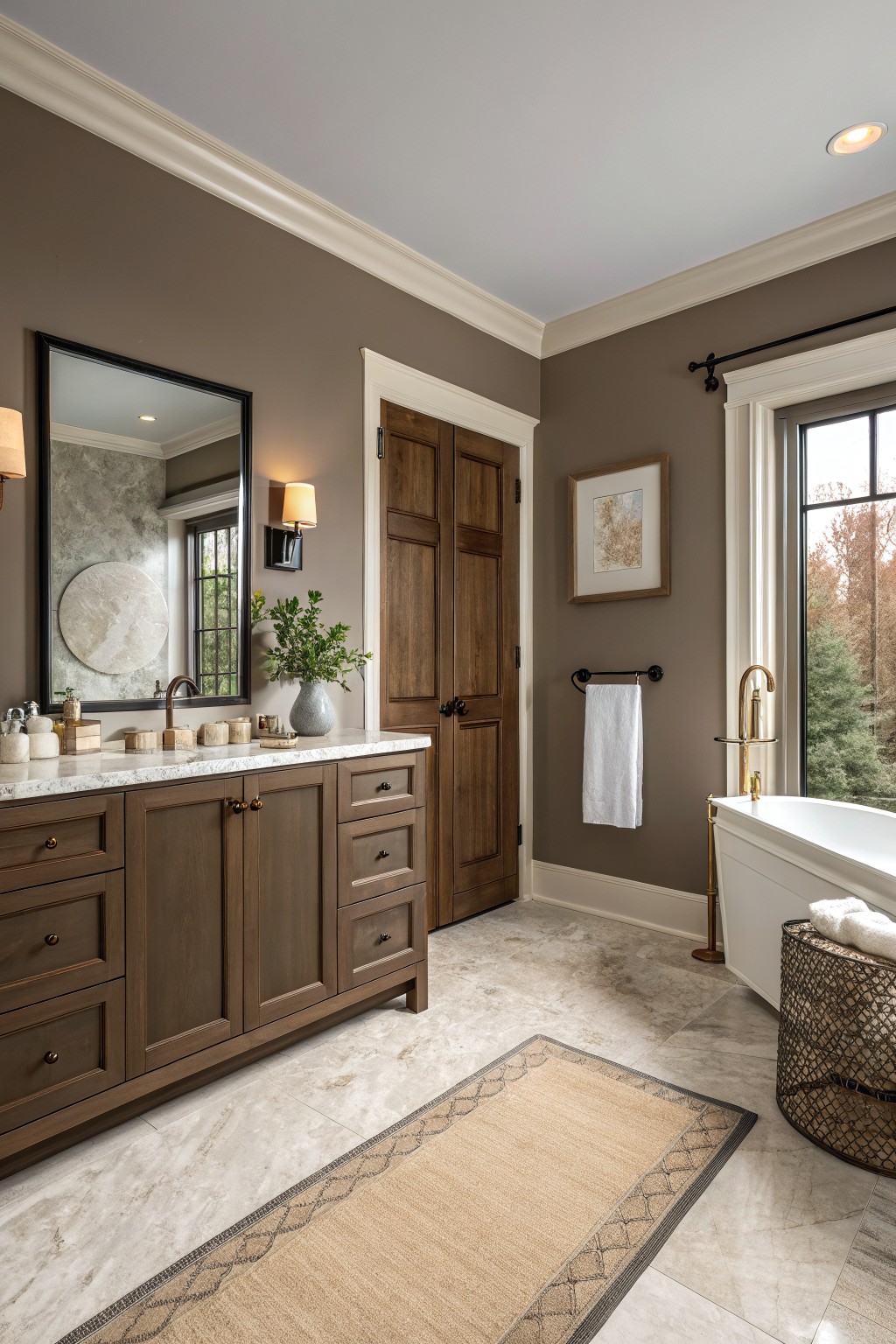
This bathroom uses a warm taupe that leans slightly brown rather than gray. It gives the room a cozy feel without making the space feel small or dark.
The color has a soft beige undertone that shows up more with the wood cabinetry nearby. It works best in bathrooms with similar wood tones or stone floors and pairs nicely with both brass and black fixtures.
Soft Warm Beige Walls
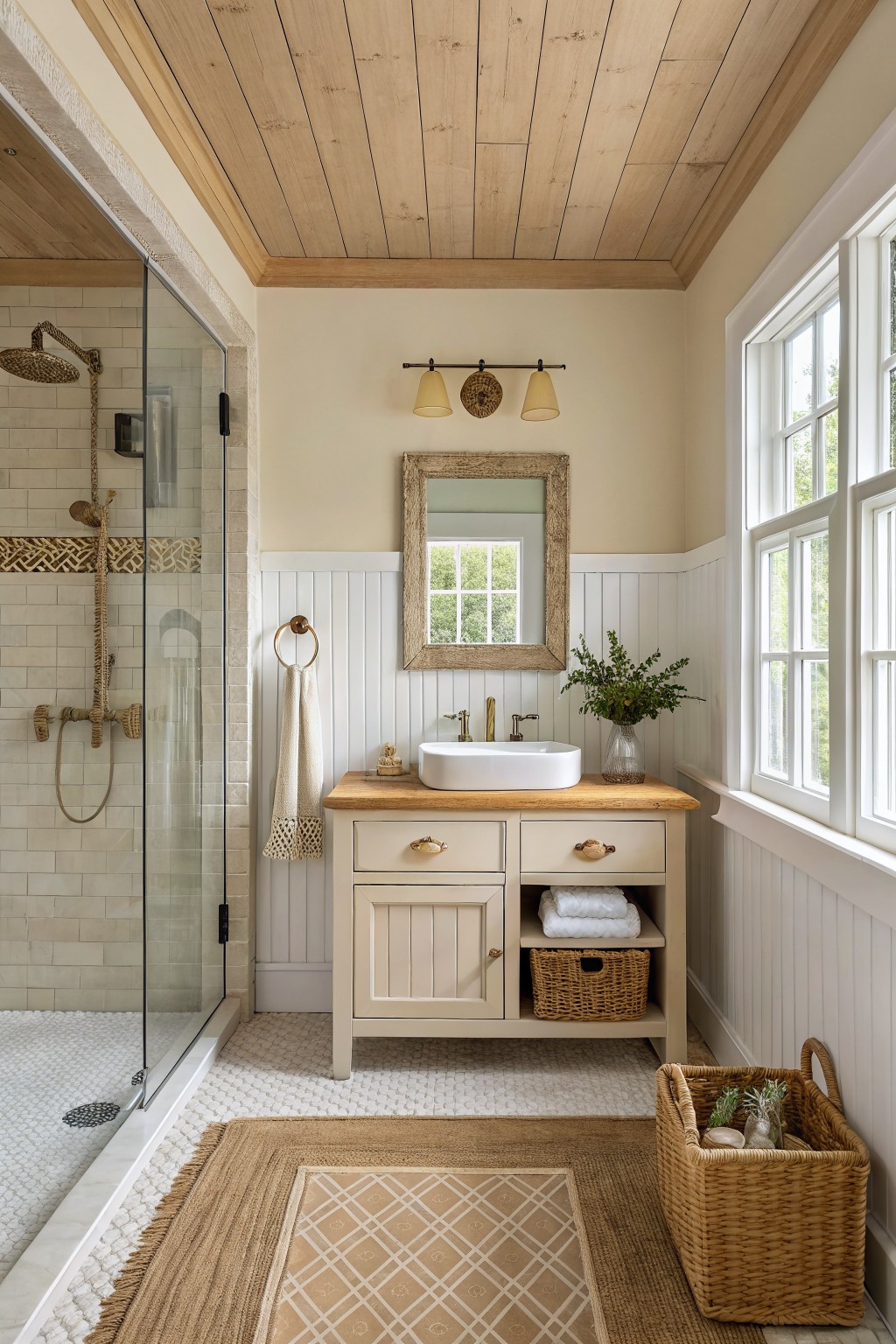
This bathroom shows a light warm beige on the walls. The color is a soft neutral that adds a gentle touch of warmth and keeps the space feeling calm and easy.
It has a slight yellow undertone that sits nicely next to the wood ceiling and vanity. Try it with white trim and natural textures like linen or woven baskets. Matches to consider include Benjamin Moore Pale Oak, Sherwin Williams Creamy, Behr Creamy White, or Farrow & Ball Slipper Satin.
Warm Sage Green Cabinets
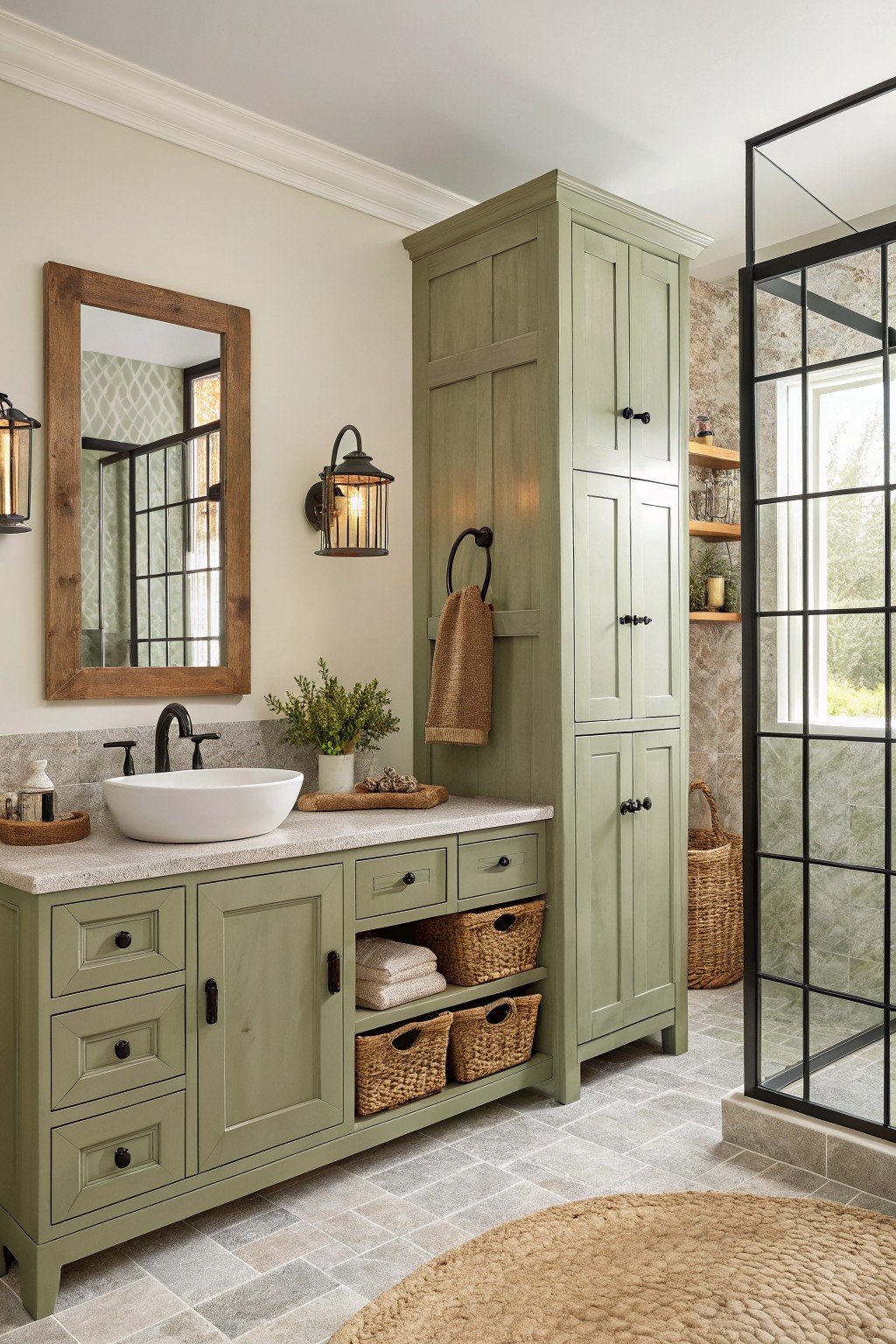
A warm sage green like the one on these cabinets brings a cozy feel to bathrooms. It sits between gray and green with enough warmth to keep the space inviting. Colors like Sherwin Williams Clary Sage or Benjamin Moore October Mist come close.
This shade works well with wood accents and stone surfaces. It stays calm under different lighting and pairs easily with black hardware or woven baskets.
Warm Terracotta Bathroom Walls
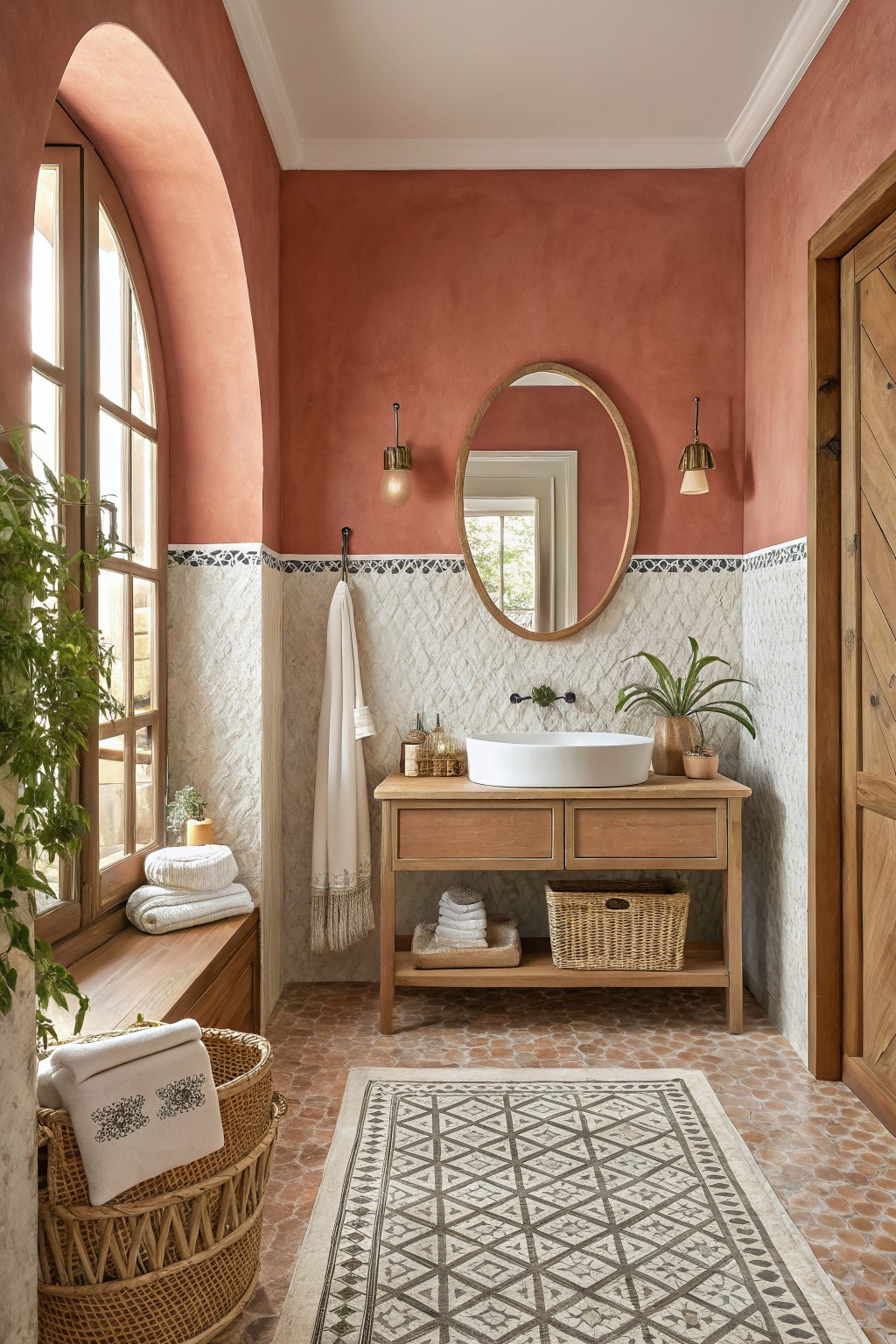
Warm terracotta gives this bathroom a grounded, cozy feel right away. The color is a soft earthy red-orange that avoids looking too bright or flat. It reads closest to Sherwin Williams Rookwood Terra Cotta, Benjamin Moore Terra Cotta, Behr Terracotta Tile, and Farrow & Ball Red Earth.
The slight orange undertone helps the wood vanity and woven textures feel richer. It works best in rooms with good natural light and pairs easily with stone floors or simple white fixtures. Darker accents can make it feel a little heavier if overdone.
Warm Sandy Beige Bathroom Walls
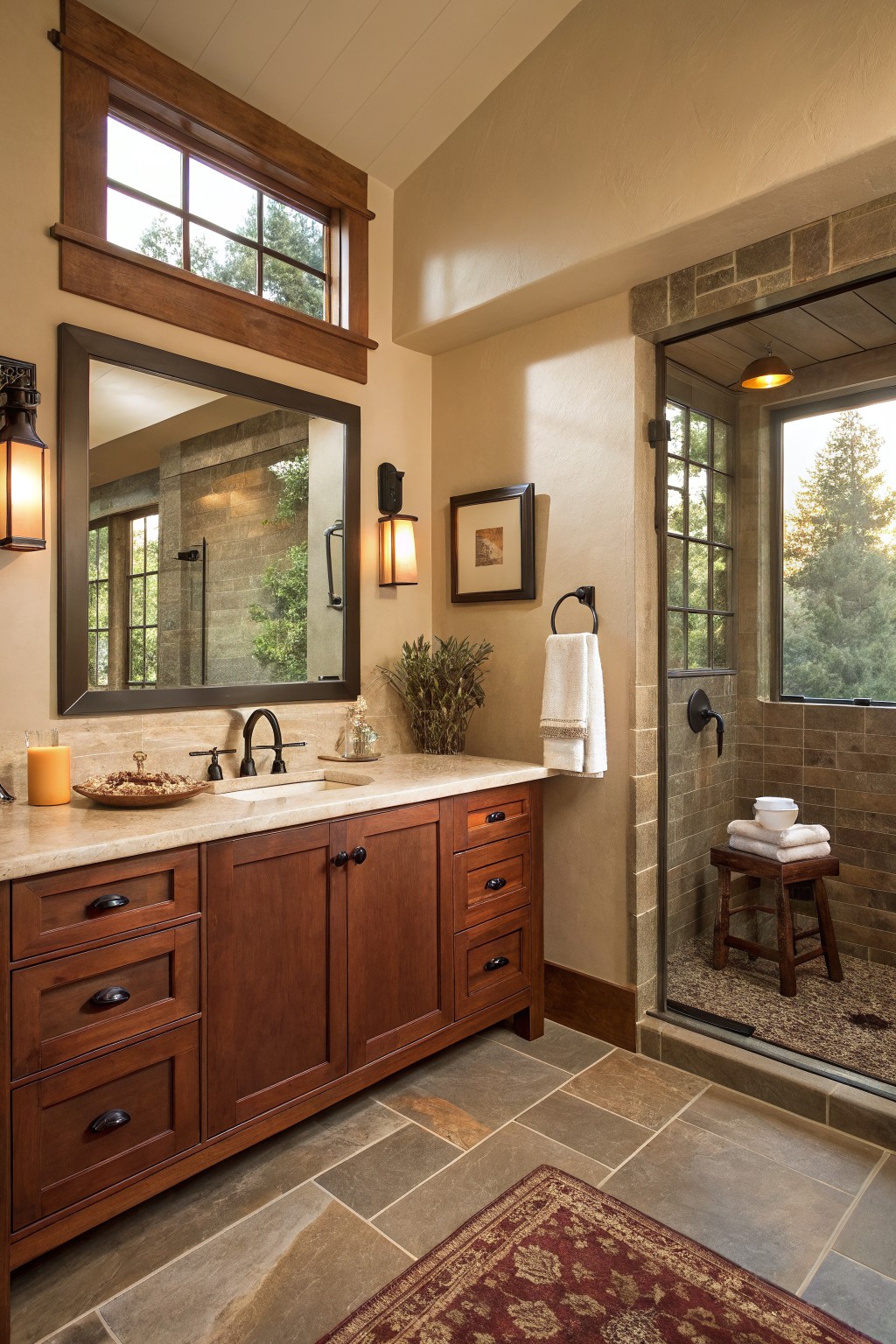
This warm beige on the walls gives the bathroom a soft, grounded feel that works well with natural materials. It sits in a light neutral range with a gentle sandy undertone that keeps the space from feeling cold or flat next to wood and stone.
It pairs best with medium to dark wood cabinetry and tiled floors in similar tones. In cooler light it can shift slightly toward taupe, so testing a sample on the wall helps avoid surprises. Closest matches include Sherwin Williams Accessible Beige, Benjamin Moore Edgecomb Gray, Behr Dune, and Farrow & Ball String.
Warm Yellow Walls
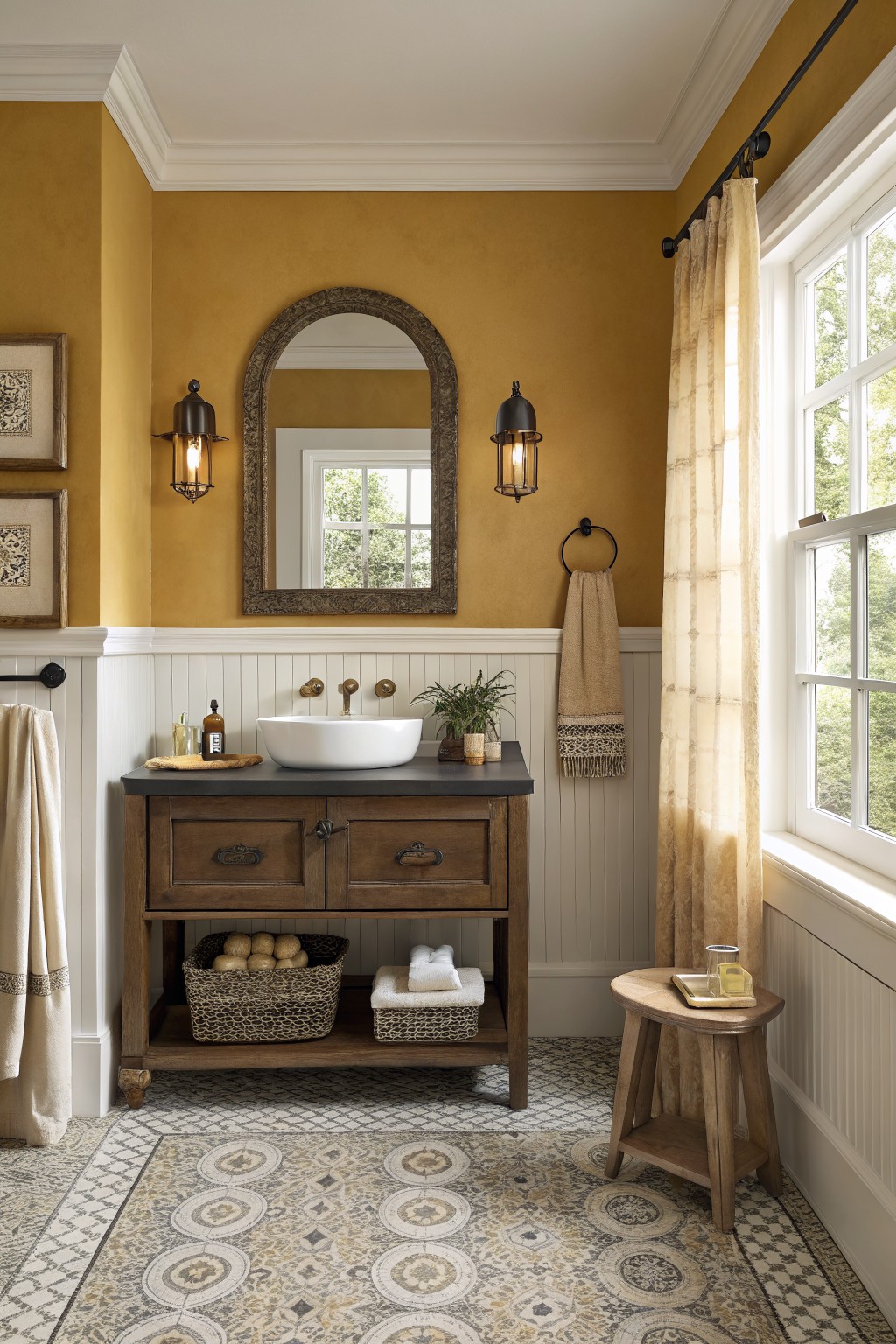
A warm yellow like this gives the bathroom a cozy, grounded feel without making the space feel small. It sits somewhere between golden and mustard, with enough depth to pair nicely with wood tones and white trim.
This color works best in rooms that get steady daylight because it can lean a bit darker in low light. It looks good with natural wood vanities and simple white wainscoting, and it keeps the overall look relaxed rather than stark.
Warm Terracotta Walls
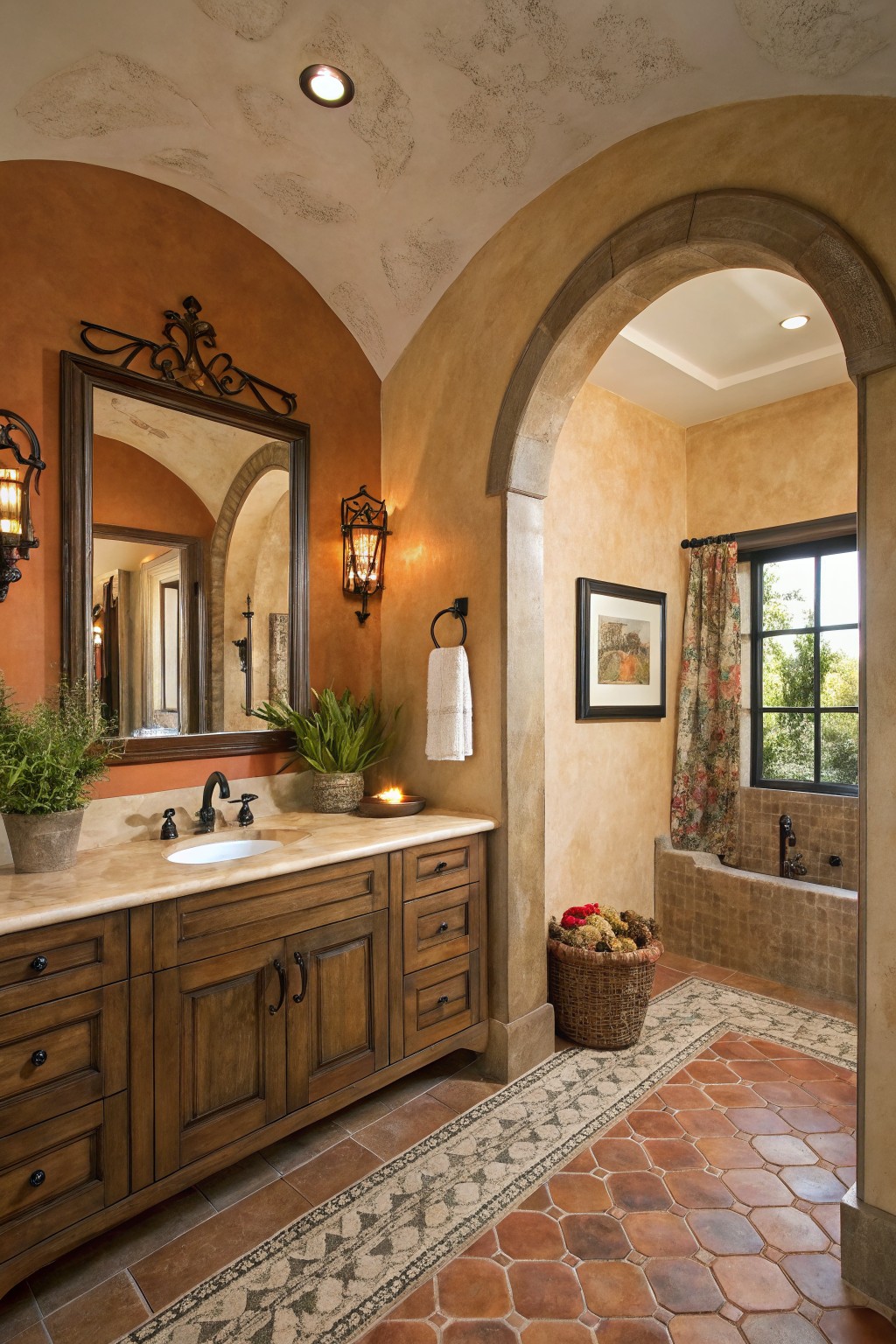
This warm terracotta reads as a medium clay color with soft orange undertones that keep the space feeling grounded. It sits nicely against the wood vanity and tile floor without overpowering them.
The color works best in bathrooms with similar warm materials. It can look a bit flat in very cool light, so most people pair it with natural wood tones or stone to keep the balance right. Best matches would be Benjamin Moore Georgia Clay, Sherwin Williams Rookwood Terracotta, or Behr Adobe Dust.
Warm Sage Green Walls
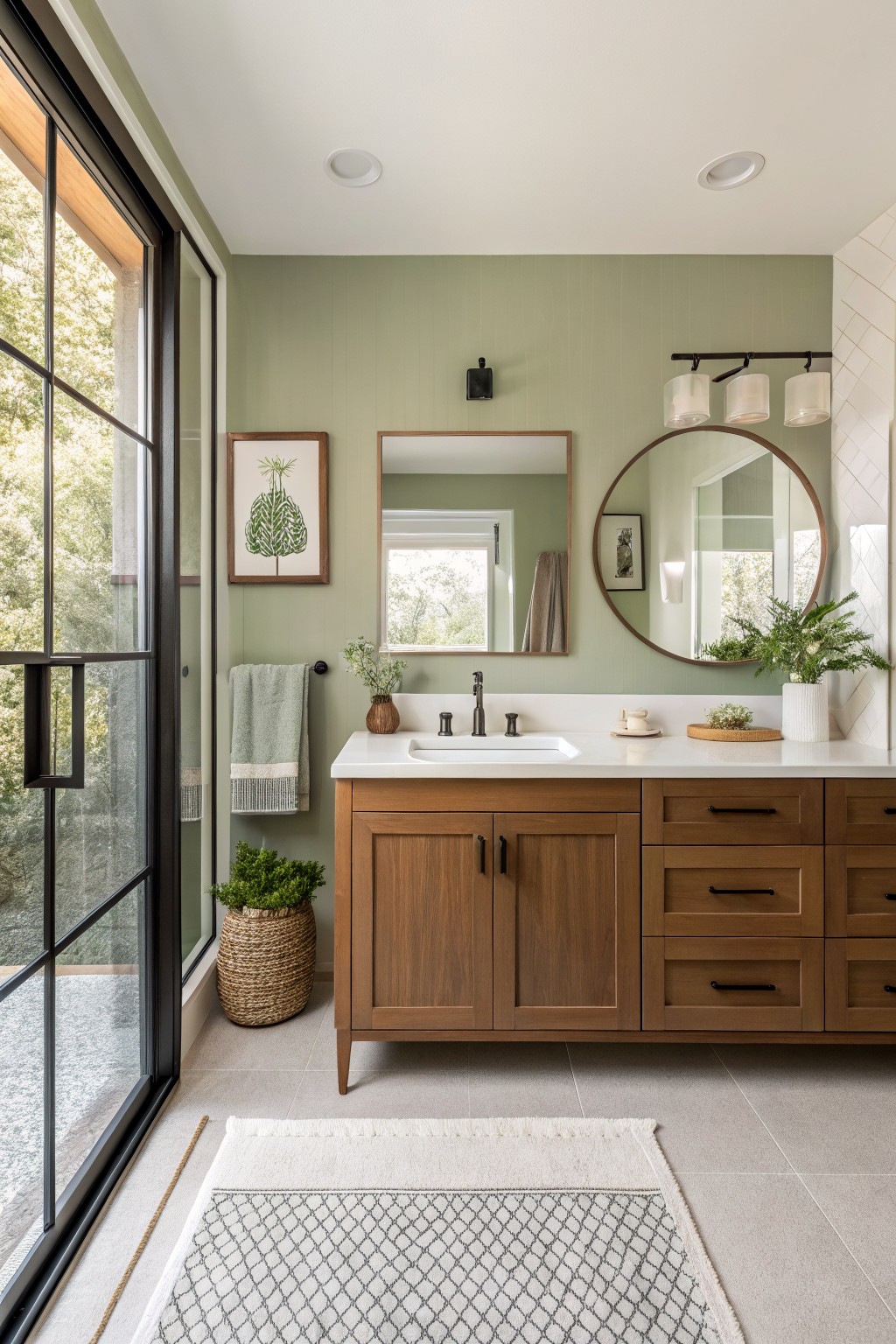
This bathroom uses a soft sage green on the walls. It is a muted green with gentle warm undertones that feels calm without turning cool or gray.
The color sits nicely next to the wood vanity and white counter. It works best in bathrooms with natural light and pairs well with black hardware or woven textures. Good matches include Sherwin Williams Evergreen Fog, Benjamin Moore Saybrook Sage, Behr Aged Olive, or Farrow & Ball Lichen.
Warm Peach Walls
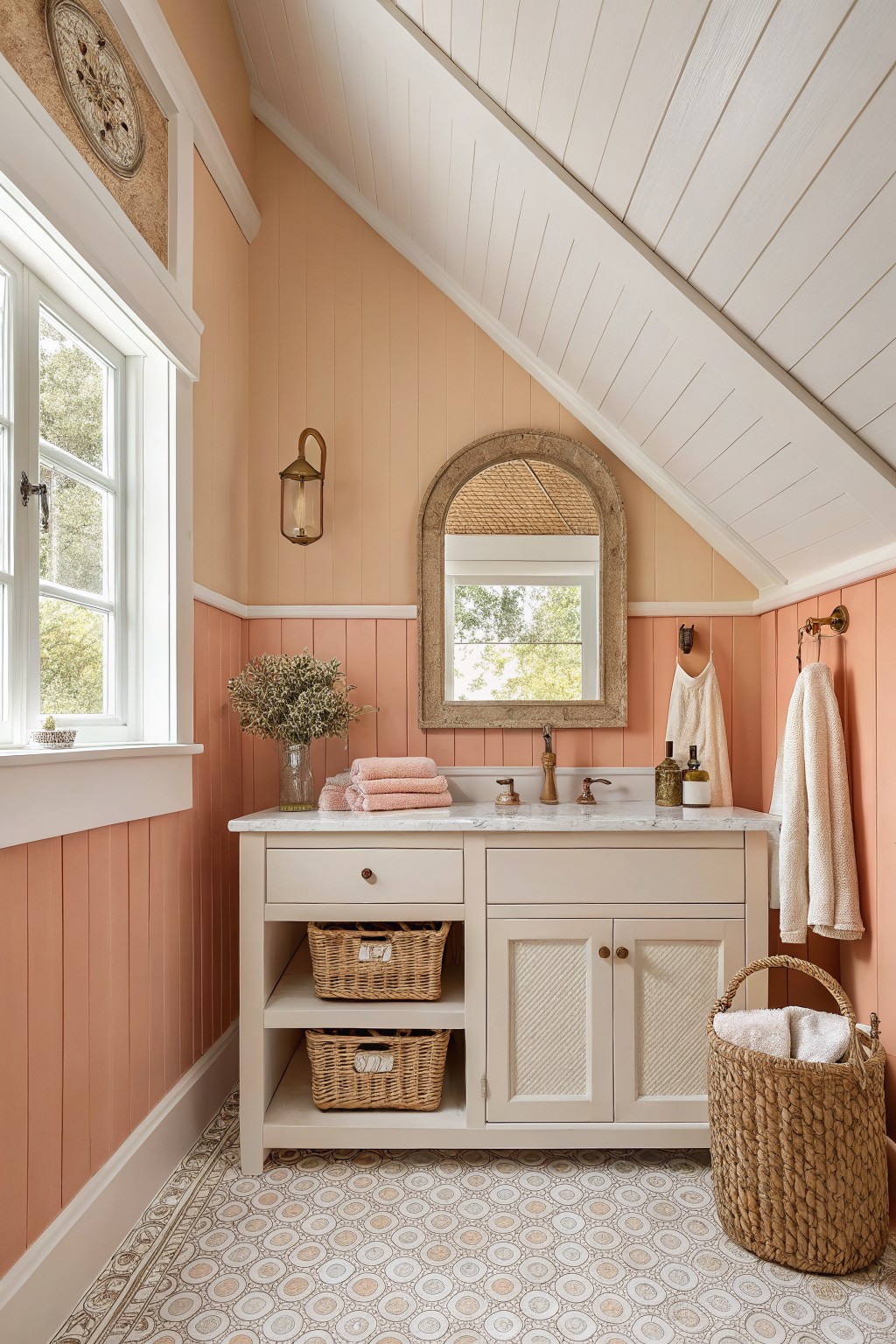
This warm peach brings a soft, sunny tone to the bathroom that feels cozy without turning too sweet. It sits between pink and orange, giving the walls just enough color to make the room inviting while still reading as a neutral.
The shade has a light yellow undertone that helps it stay bright even when the light is low. It works well with white trim, marble counters, and natural textures like wicker or wood.
Warm Taupe Beige Bathroom Walls
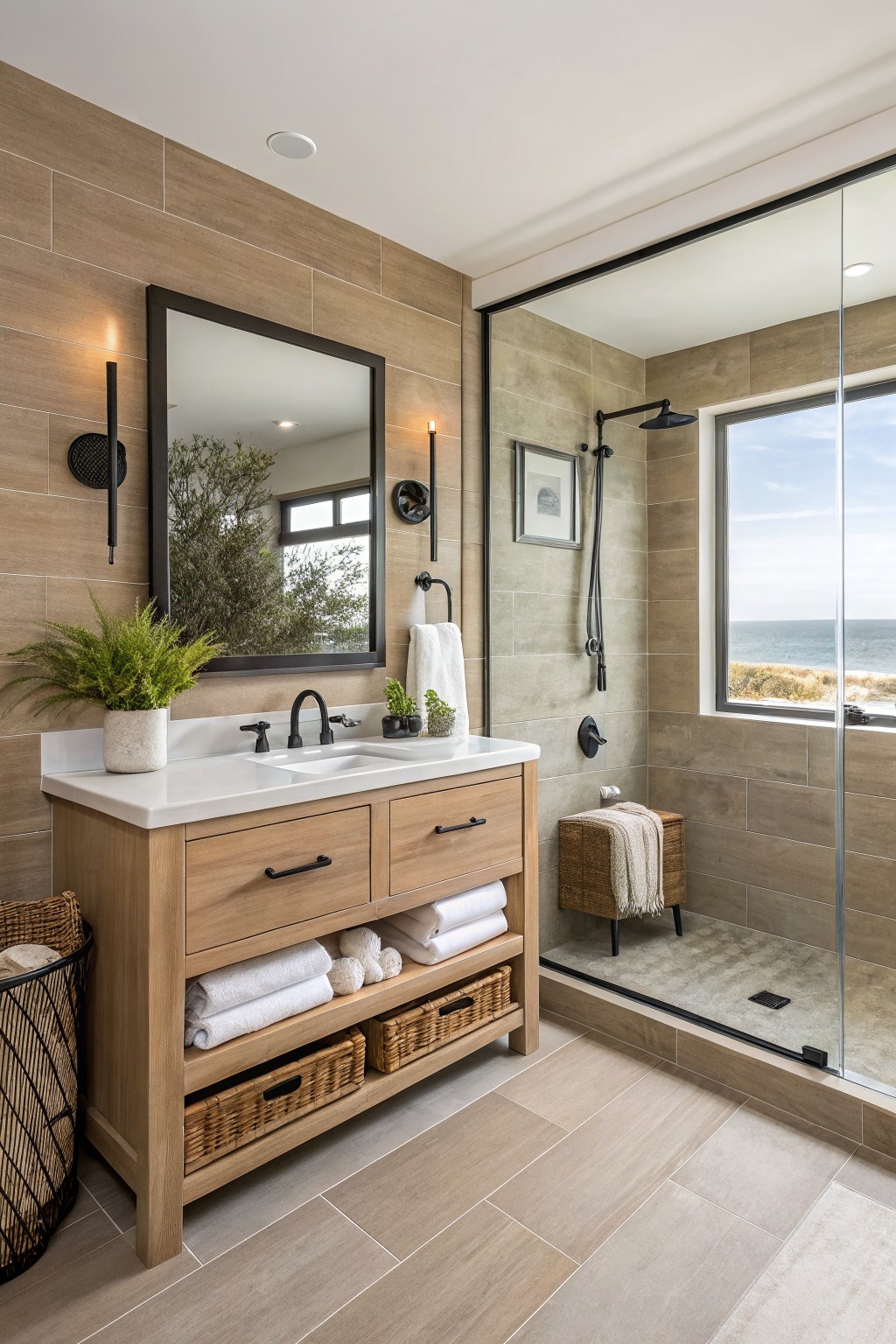
A warm beige is a solid choice for bathrooms because it feels calm and steady without pulling too cool or stark. This one leans slightly toward taupe, with enough warmth to make the room feel inviting even when the light is low.
It pairs easily with wood vanities and white counters, and the soft tone keeps tile and fixtures from looking harsh. Watch how it reads next to black fixtures though, since that contrast can make the beige feel a little lighter than expected.
Light Tan Beige Bathroom Walls
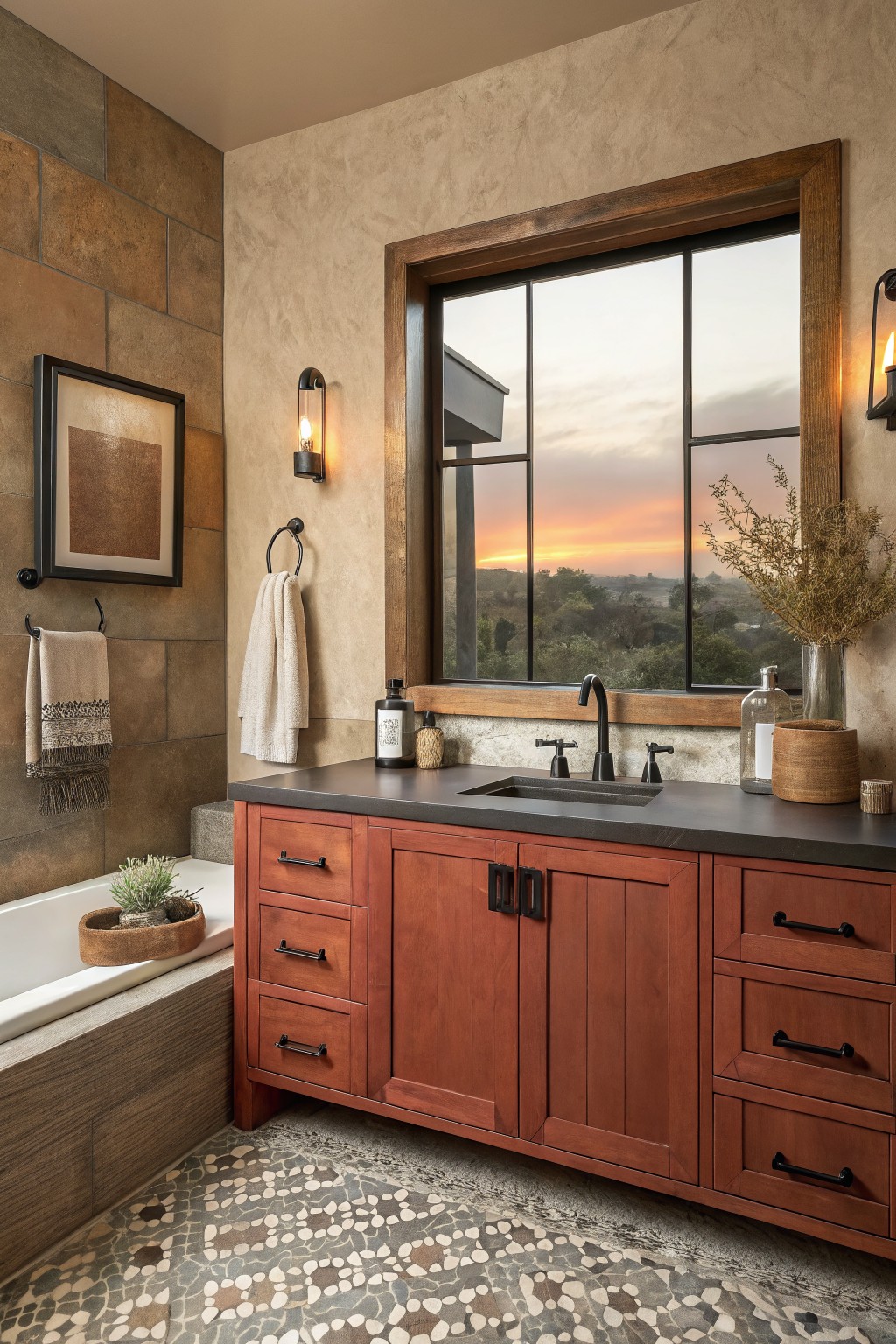
This bathroom uses a warm beige on the walls that sits somewhere between a light tan and a soft taupe. The color has a gentle earthy feel that keeps the room from looking too stark while still letting the wood vanity and stone floor stand out.
It works best with natural materials like wood and tile because the slight warmth in the beige prevents those elements from feeling cold. In lower light it can read a touch deeper, so testing a sample on the actual wall helps avoid surprises once everything is installed.
Creamy Warm Beige Walls
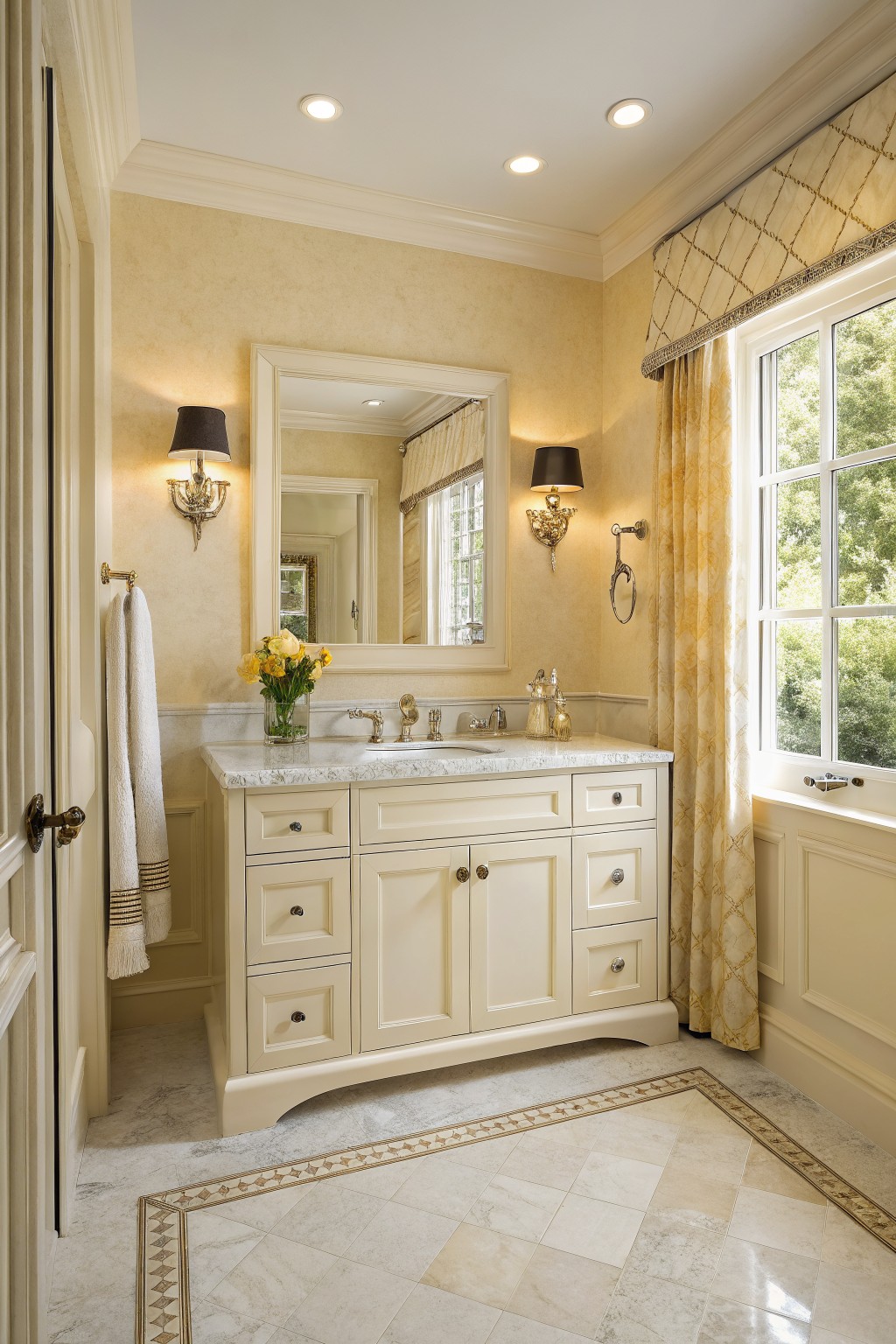
This bathroom uses a soft warm beige on the walls that sits somewhere between cream and light tan. It gives the space a gentle glow without feeling too yellow or too gray, and it works nicely with the marble and white cabinetry.
The color has a mild yellow undertone that helps it stay inviting even when the light is low. It pairs well with warm metals and natural stone, though it can start to look flat if paired with too much cool gray tile or stark white trim.
Warm ochre walls
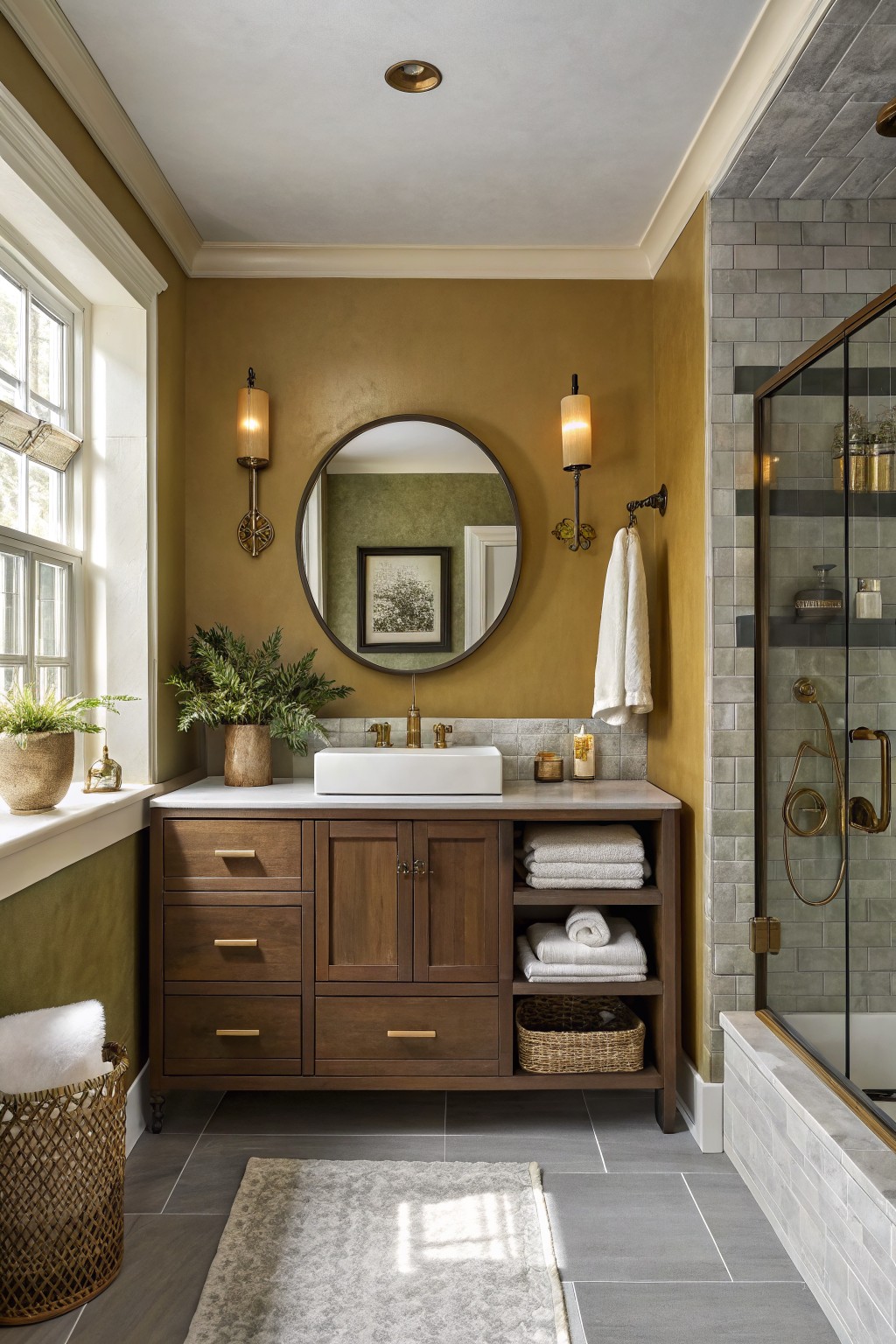
This bathroom uses a warm ochre on the walls. The color sits between yellow and tan, giving the space a soft glow that feels steady rather than bright. It keeps the room from looking stark while still reflecting light from the window.
The undertone leans slightly earthy, so it sits well next to the wood vanity and gray tile. It works best in bathrooms with decent daylight, and it pairs easily with brass or white fixtures. Too little light and it can start to feel heavy.
Frequently Asked Questions
Q: Will a warm color make my small bathroom feel cramped?
A: Soft warm shades like light terracotta or creamy beige actually wrap the space in comfort. They avoid the chill that can make tight rooms feel stark. Test a patch first to see how it settles with your lighting.
Q: How do I match one of these colors to my existing white tiles?
A: Pick a warm neutral that leans slightly golden or peach. It creates a gentle contrast that feels welcoming without fighting the tiles. One wall in the color often works best to keep things balanced.
Q: What if my bathroom has cool fluorescent lights?
A: Warm paint tones help soften that harsh glow and bring back some invitation. Look for shades with yellow or terracotta undertones. They shift nicely once the bulbs warm up in the evening.
Q: Do I need special paint for a steamy bathroom?
A: Use a satin or eggshell finish made for moisture. It stands up to daily use while keeping the color rich and inviting.