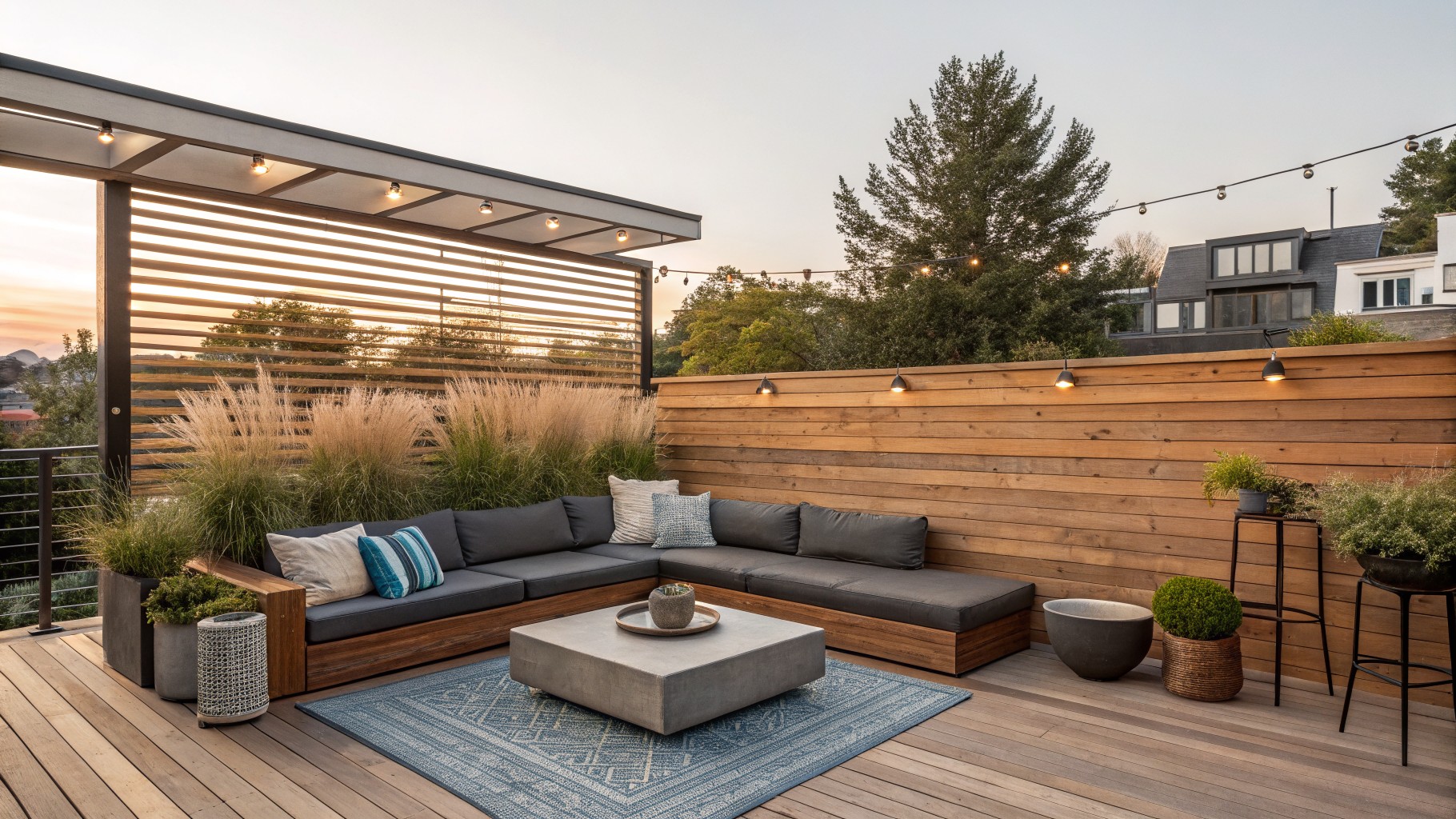
I have spent a lot of time figuring out privacy on my deck because the space only feels right when it stays bright enough to use throughout the day.
Blocking too much light turns what should be an extension of the house into something that gets ignored after a few weeks.
In my experience the setups that use partial screens or layered materials end up getting used the most.
People often start with the idea that full coverage will solve the problem yet that approach rarely matches how the deck actually gets lived in.
Light matters more than it seems at first.
Horizontal Slat Screens For Deck Privacy
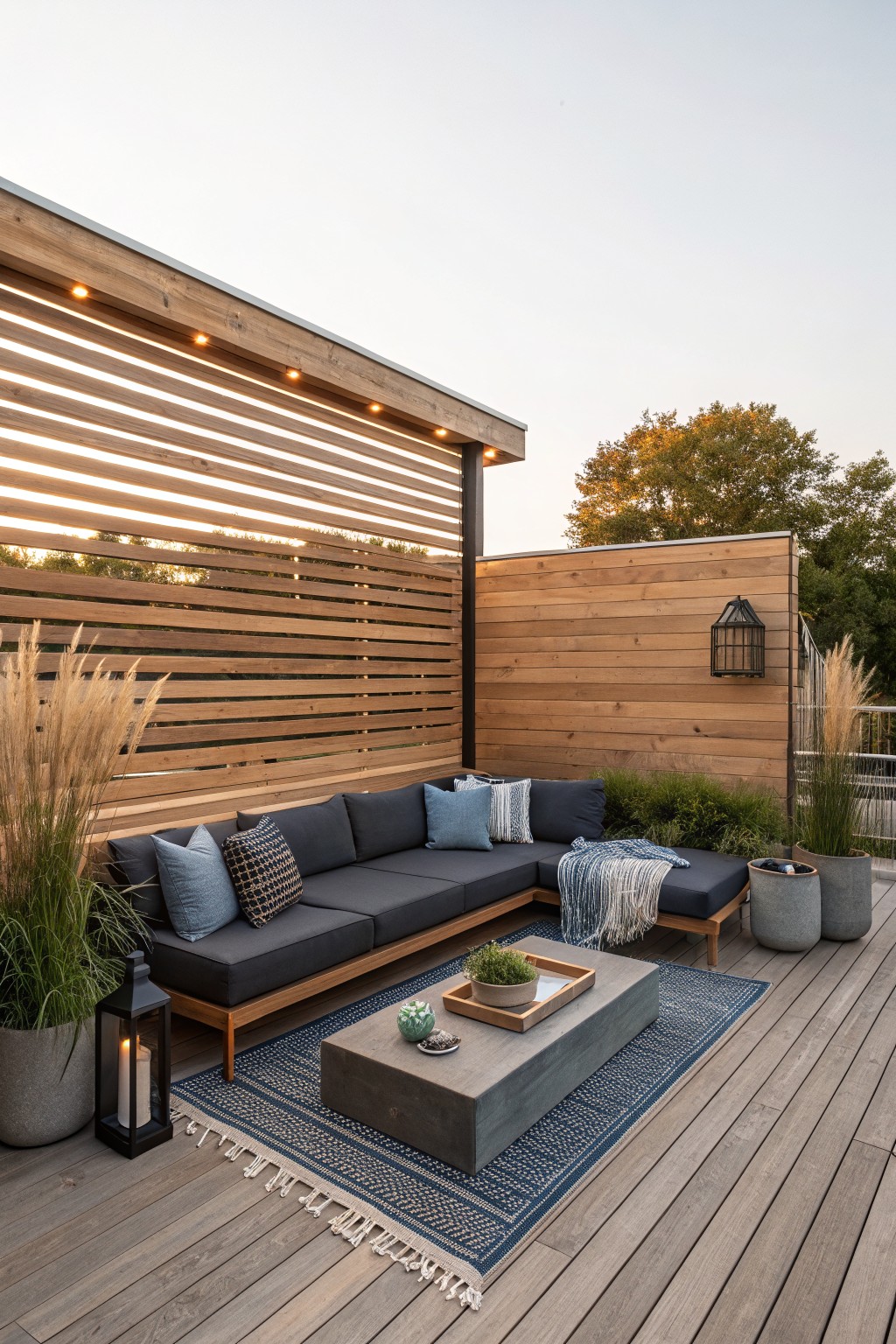
Horizontal slats work well when you want privacy on a deck but still need light to reach the seating area. The spaced boards block the direct view from outside while letting sun and air move through the gaps, so the space does not feel closed in.
This approach suits decks that sit close to neighboring homes or upper levels where full solid walls would feel too heavy. Run the slats at a consistent height along the sides that need screening and leave the rest open so the deck stays connected to the surrounding yard.
Glass Railings Keep The Space Bright
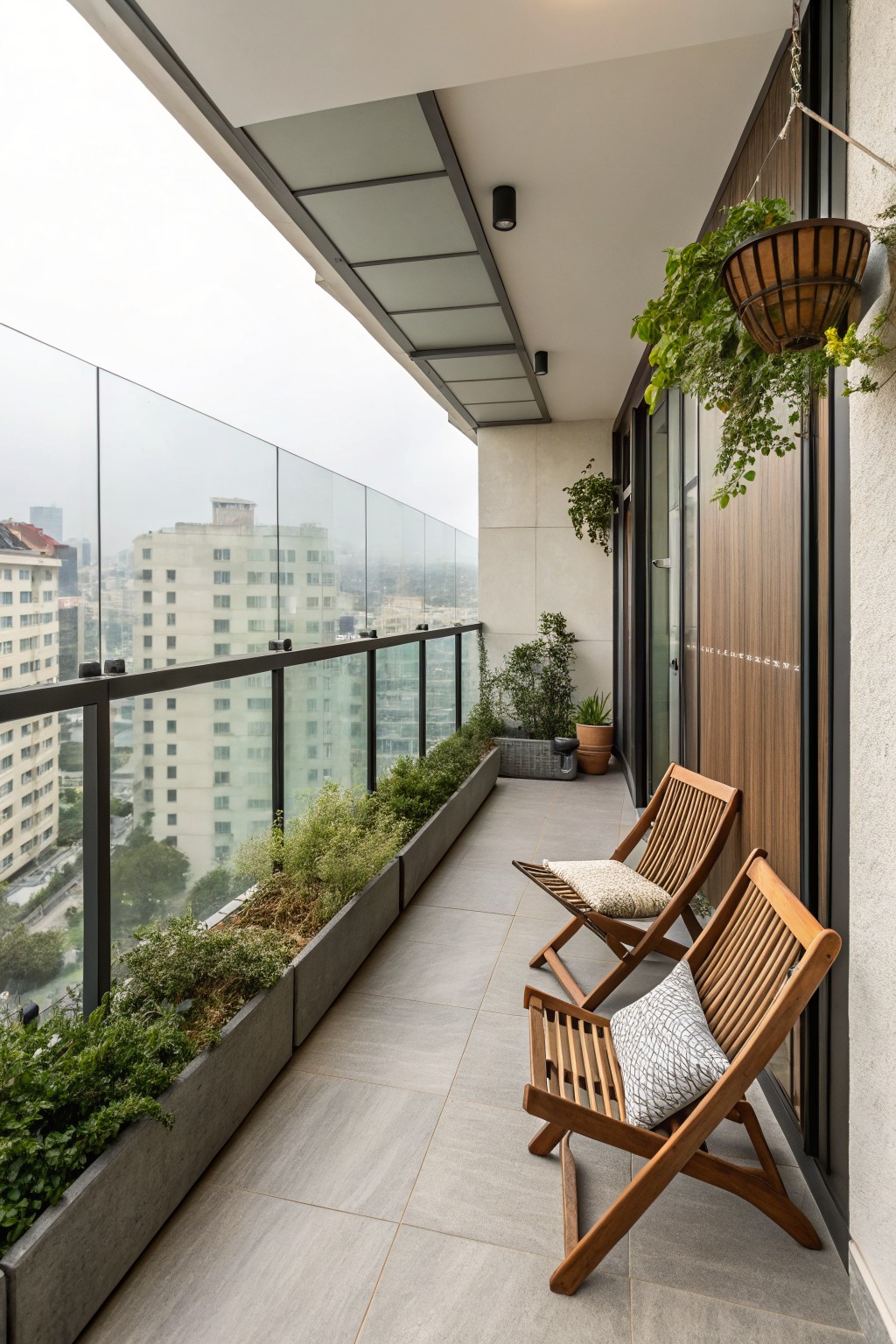
Glass railings work well when you want privacy on a balcony without losing light or the sense of openness. They let the view stay visible and allow natural light to reach the seating area even on overcast days.
This approach suits upper level balconies or decks that sit close to neighboring buildings. Pair the glass with a solid side wall or a few taller plants if you need a bit more screening on one side.
Built-In Planters For Side Screening
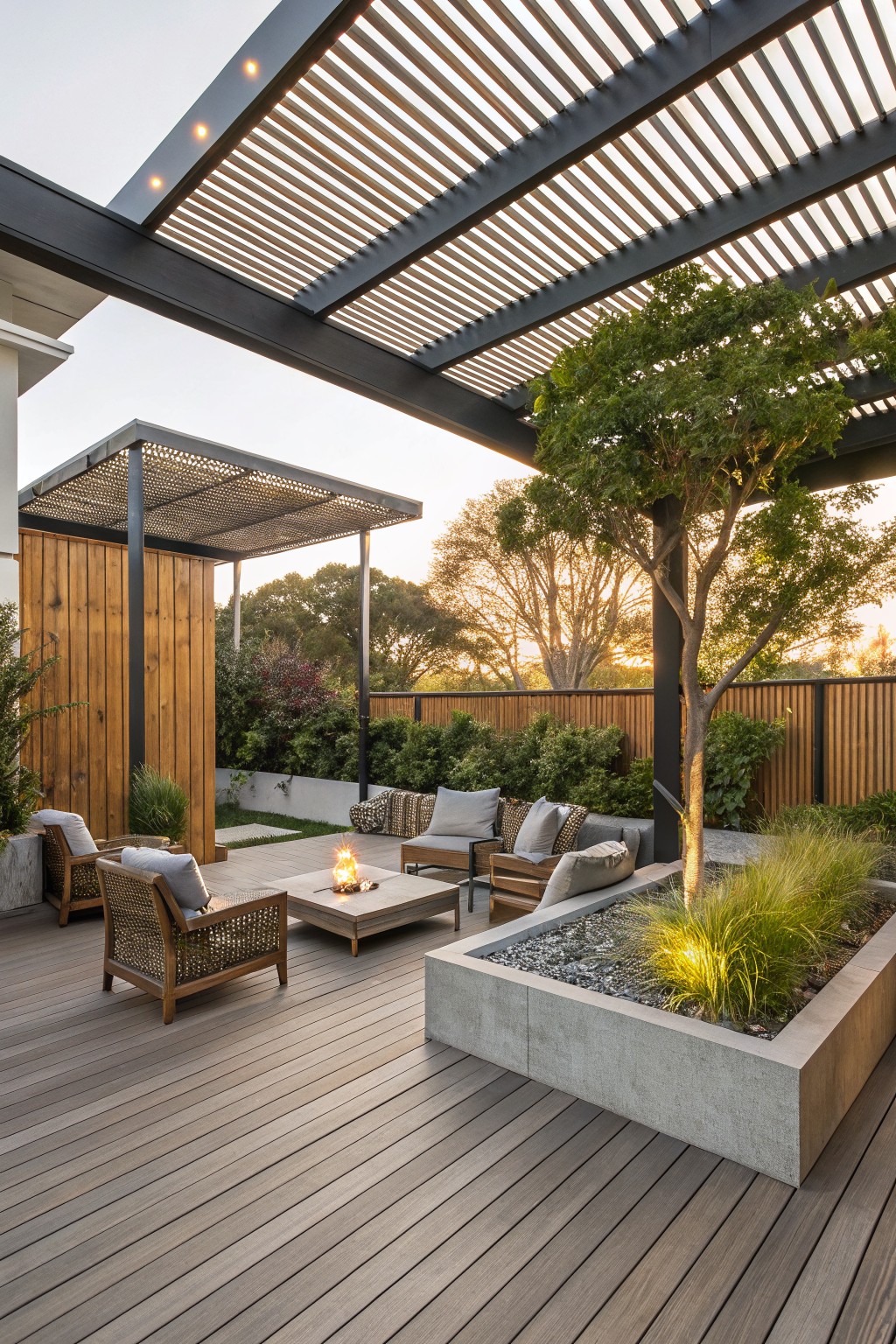
A raised concrete planter placed along one edge of the deck gives you screening without putting up a solid wall. The plants inside grow tall enough to block views from the side while still letting light and air move through the space.
This setup works well on decks that sit close to neighboring yards or fences. Keep the planter depth around two feet so the roots have room, and choose grasses or small trees that stay green most of the year. Just watch the height so you do not end up with a full barrier that cuts off the open feel.
Perforated Panels For Deck Privacy
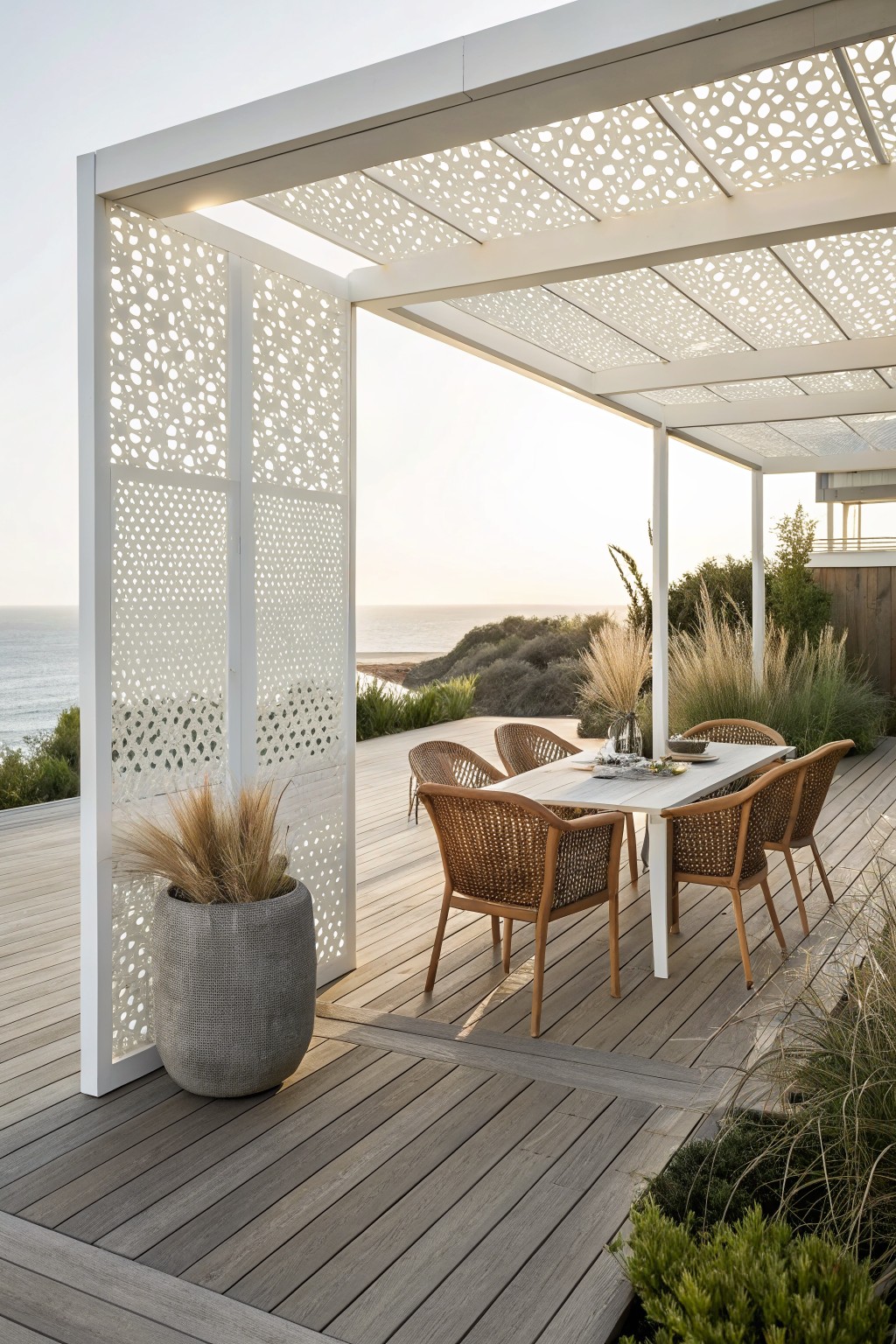
Perforated panels work well when you want privacy on a deck without turning the space into a closed-off box. The cutouts let daylight and breezes pass through while softening the view from outside. On an open deck this keeps the area feeling light and connected to the surroundings.
These screens suit modern homes with flat rooflines or pergola structures. Mount them along one or two sides where neighbors or the street have a direct line of sight. Choose a simple pattern and a light color so the panels blend with the deck rather than stand out as heavy walls.
Built-In Benches Along Partial Privacy Walls
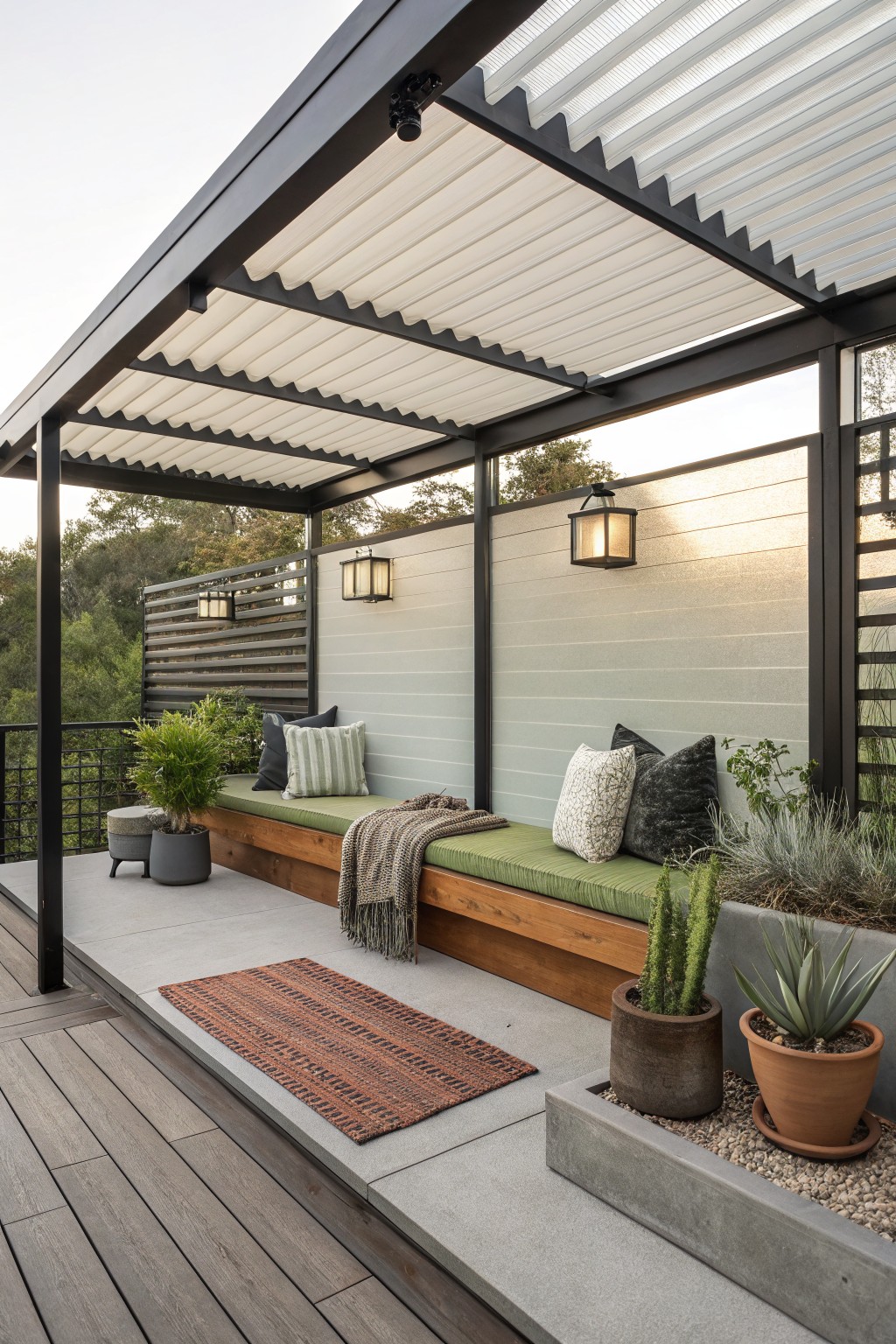
One simple way to add privacy on a deck is to place a built-in bench right against a wall that uses both solid panels and open slat sections. The solid part blocks the main sight lines, while the slats keep the space from feeling boxed in. A few large pots at the ends add extra screening without much effort.
This approach suits decks that sit near other homes or a street. It works best when the wall stays low enough to preserve views from a seated position, and the bench can even hide storage inside if you want to keep cushions and blankets out of sight.
Slatted Wood Screens For Deck Privacy
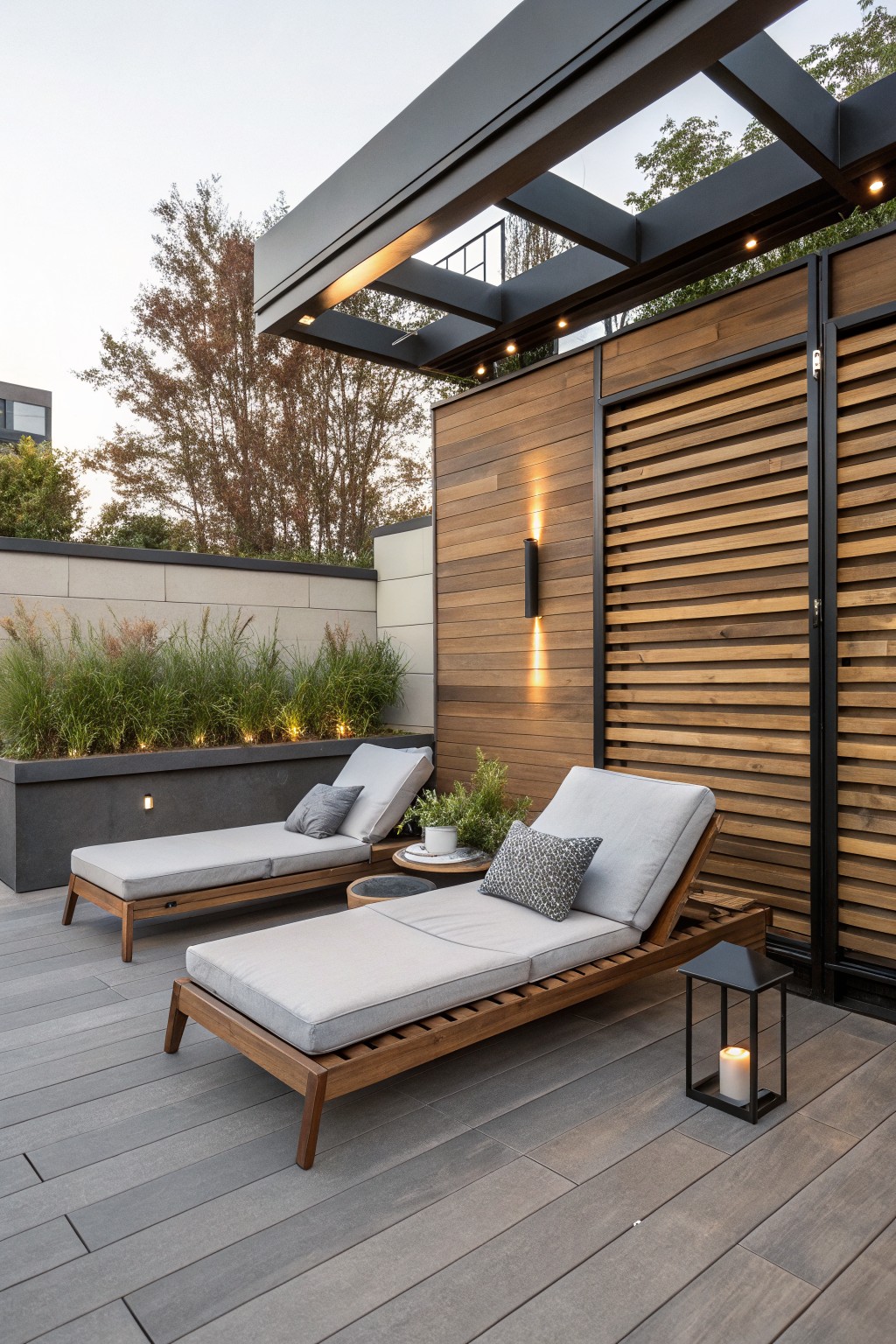
Slatted wood screens work well on decks because they block the view from outside while still letting light and air move through the space. The vertical spacing in the wood keeps the area from feeling closed in, which matters on smaller decks or urban lots where full walls would make things feel dark.
These screens fit best along one or two sides of a deck, especially when paired with an open overhead structure. They suit modern homes and work with both light and dark wood tones, though it helps to match the screen material to the decking or nearby fencing so the look stays consistent.
Slatted Pergolas For Light Deck Privacy
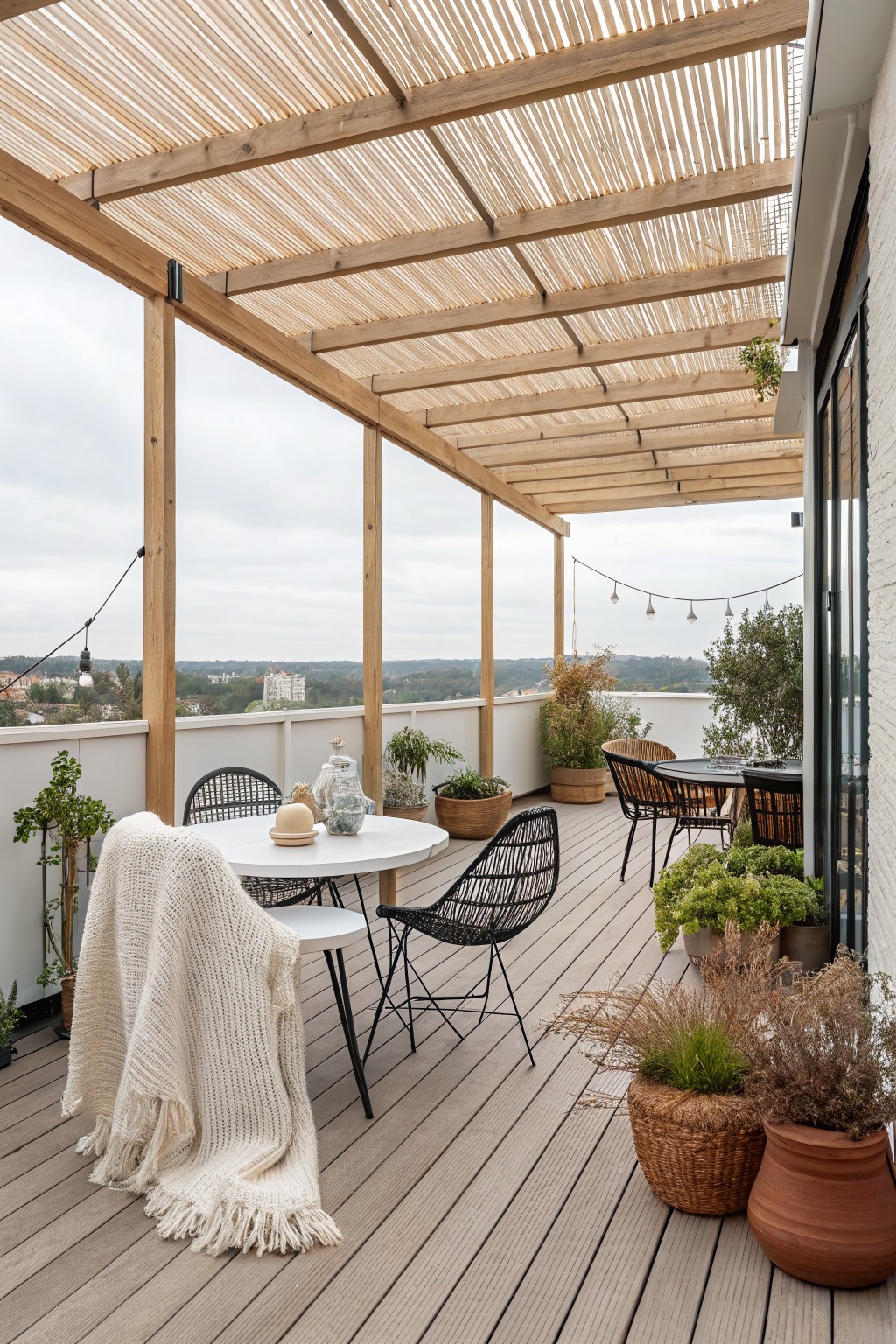
A pergola with spaced wooden slats overhead gives a deck some enclosure and shade while still letting plenty of light through. It works especially well on rooftops or upper level spaces where you want a bit of cover but do not want to feel closed in.
This approach suits homes with open views or small decks that need a simple layer of screening. Keep the sides mostly open and use potted plants or low railings if you want extra privacy without adding solid walls.
Raised Wooden Planters For Deck Privacy
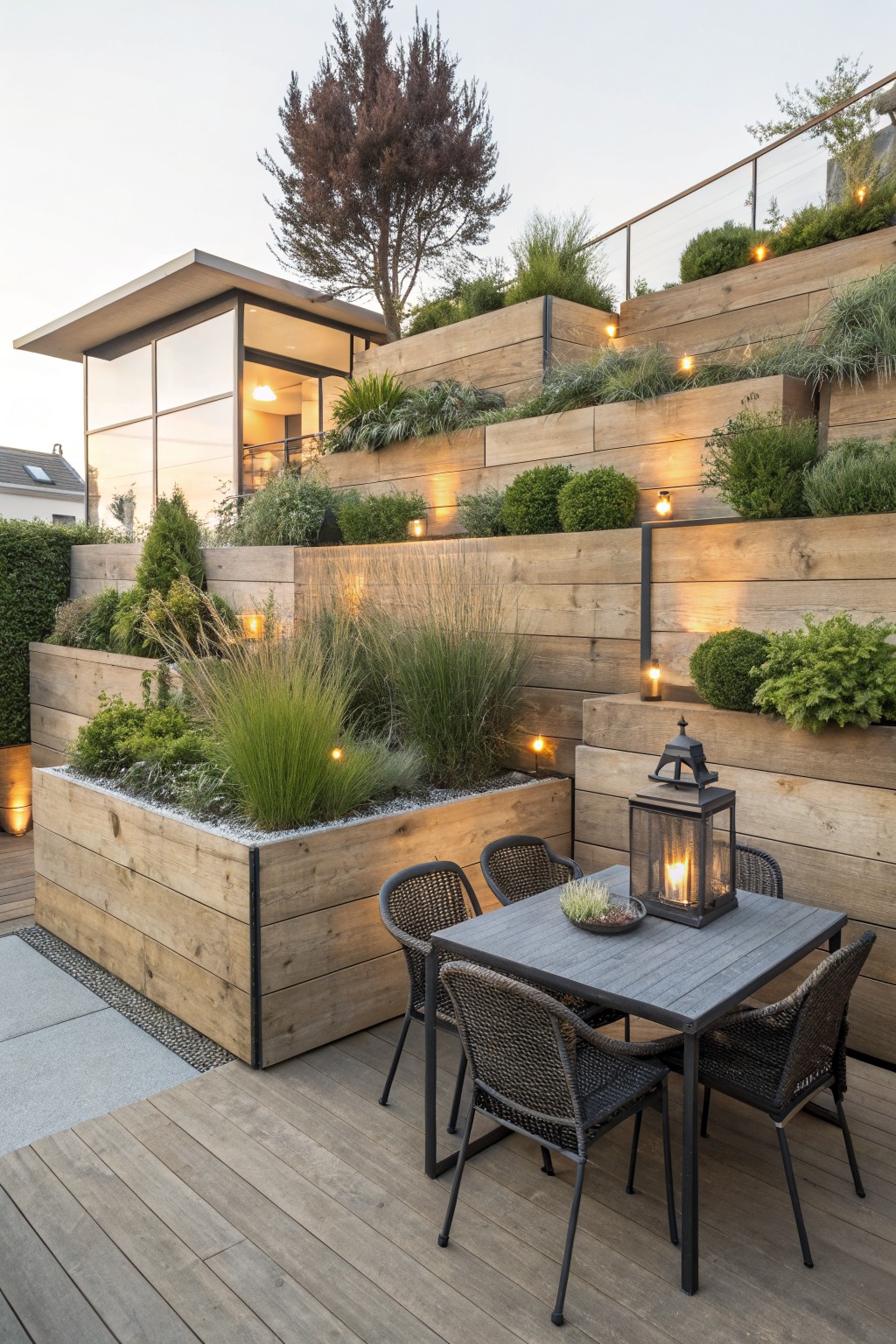
Many decks sit out in the open with little between you and the next house or yard. Raised wooden planters filled with a mix of grasses and shrubs give you a living screen that blocks the direct view without turning the space into a cave.
This setup works well on rooftops or upper-level decks where you need height but still want daylight. Build the boxes in tiers so they follow the slope, and keep the plants mostly evergreen so the screen stays useful through winter.
Decorative Screens With Open Patterns
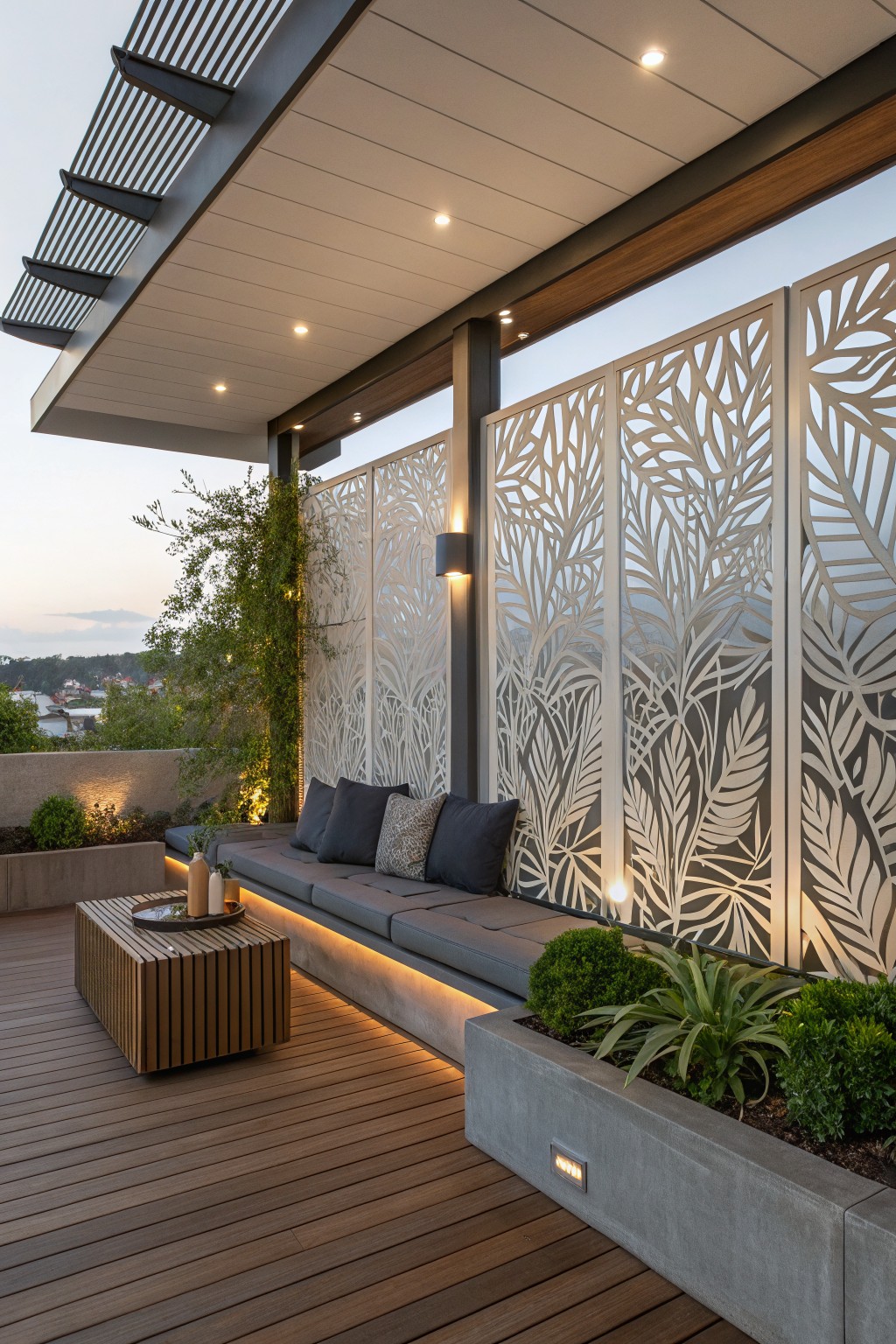
One simple way to get privacy on a deck is to use screens that have cutout patterns instead of solid panels. The openings let light move through the space so it does not feel closed off, while still hiding the view from outside.
These screens work best along the sides of a deck where seating sits against a railing or wall. They pair well with built-in benches and low planters because the light from overhead fixtures can still reach the cushions and plants without extra glare.
Wood Slat Screens With Climbing Plants
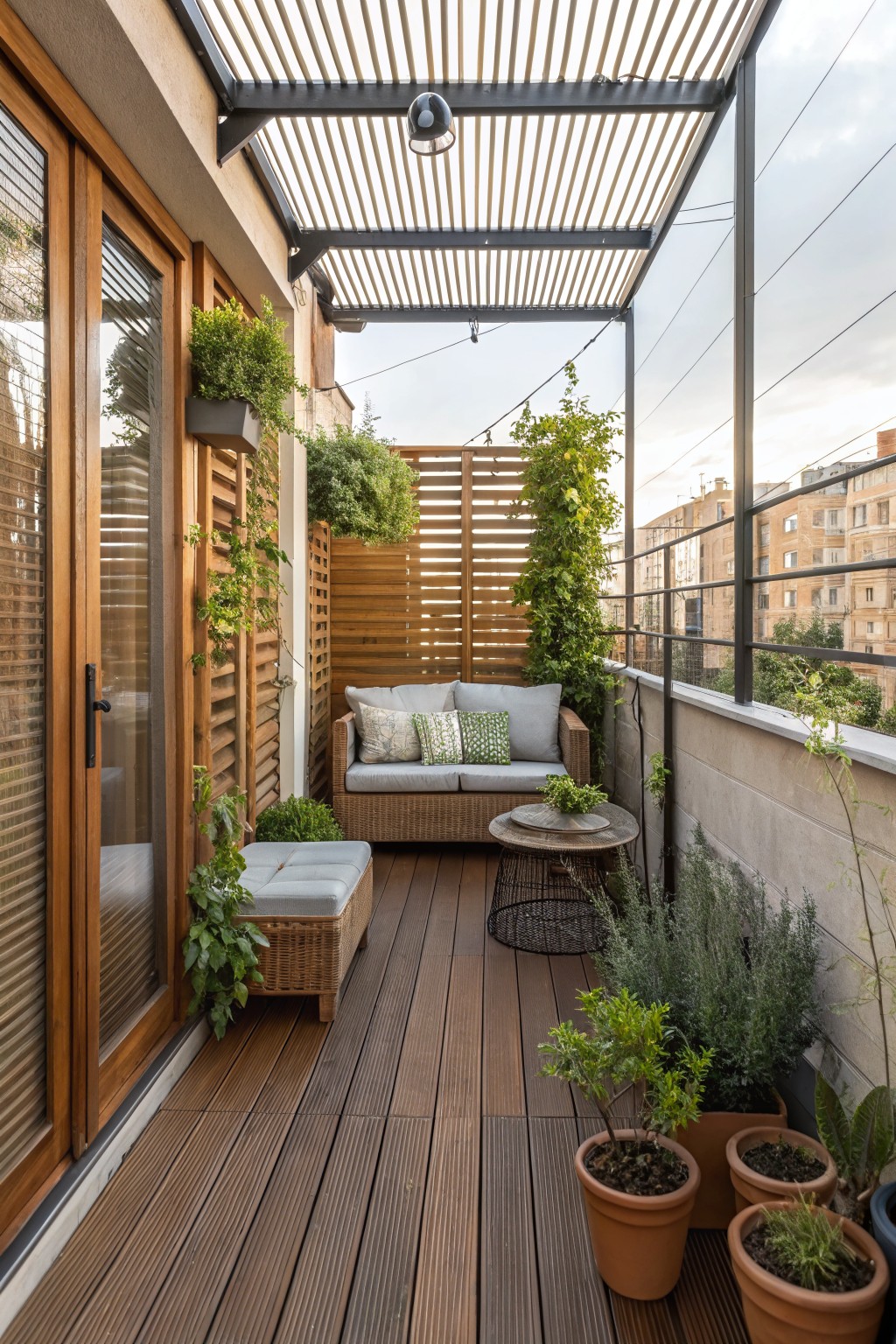
Many decks run into the same issue where full privacy walls feel too heavy and cut off too much light. A wood slat screen with climbing plants solves this by letting light filter through the gaps while the vines gradually add coverage. The open structure keeps the space feeling open instead of closed in.
This works especially well on balconies or narrow decks that sit close to other buildings. Place the screen where you need the most screening and let vines like ivy or grapes grow up it over a season or two. It stays simple to maintain and avoids the solid look of a fence or wall.
Bamboo Screens For Deck Privacy
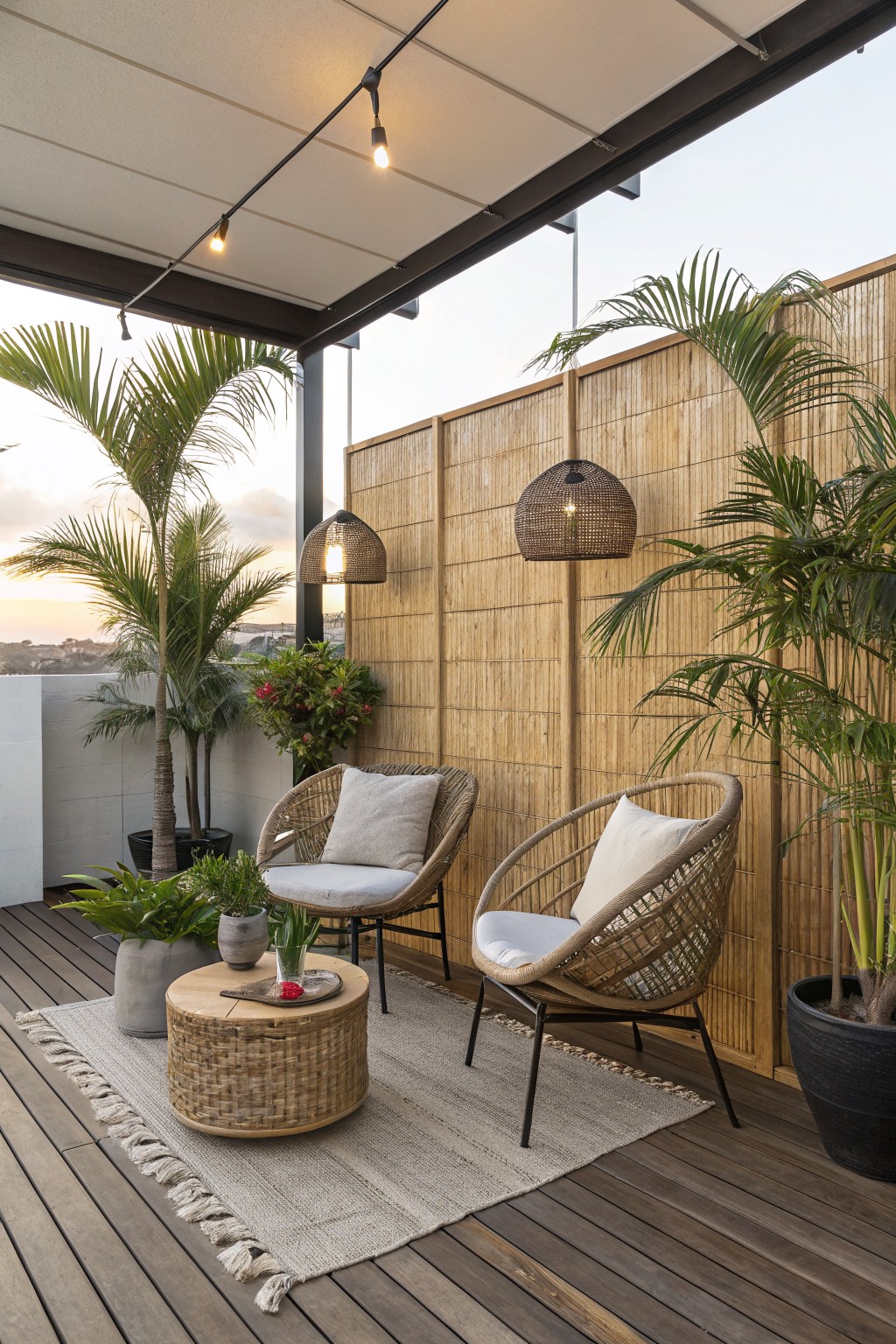
Bamboo screens give a deck privacy without turning it into a closed off space. They let light pass through while blocking the direct view from outside, which keeps the area feeling open and usable even in the evening.
Place them along the back or side of the deck behind seating. They work best on homes with wood or composite decking and pair well with simple potted plants to soften the edges.
Sheer Curtains For Deck Privacy
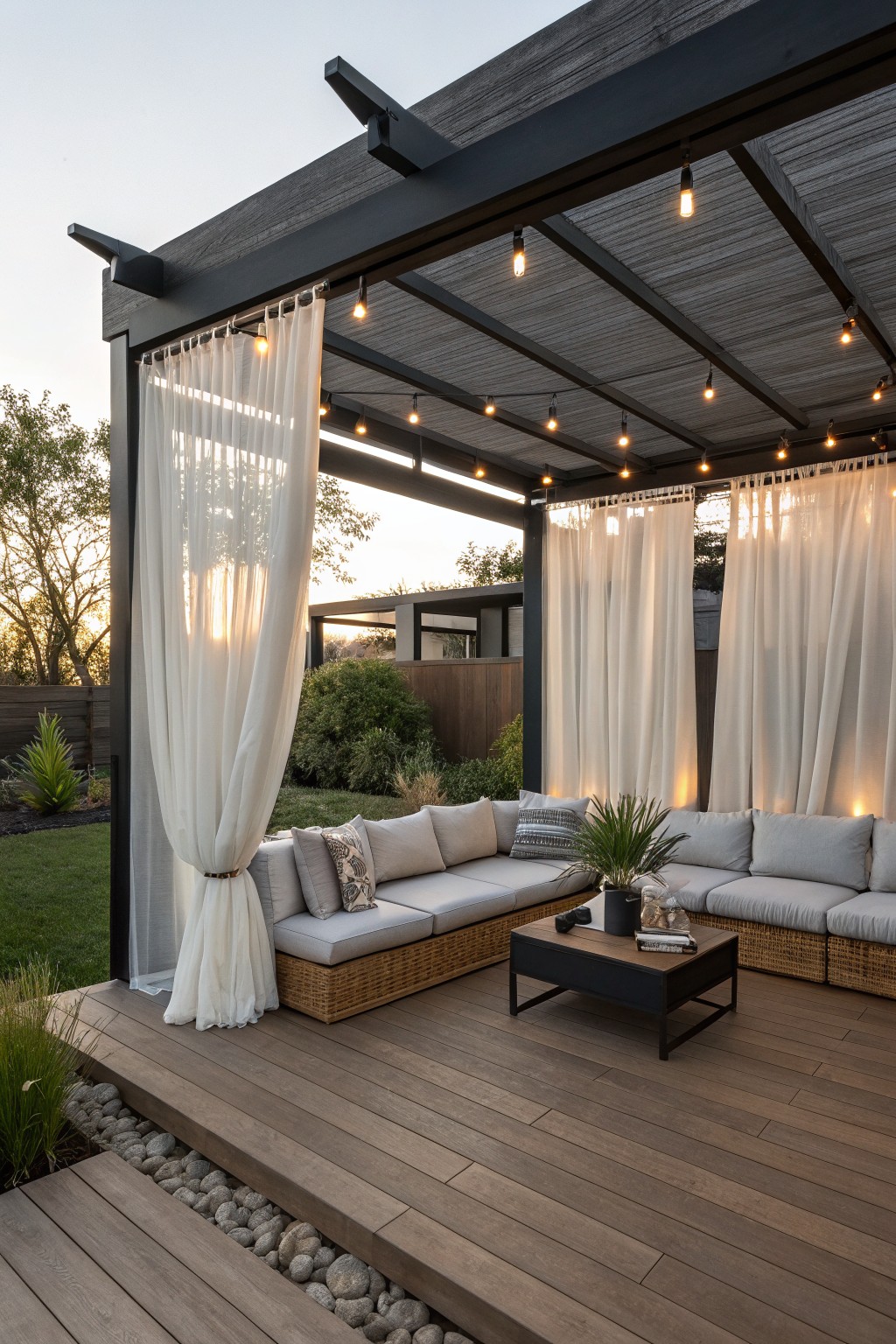
Sheer curtains give you a simple way to screen a deck without cutting off light or making the space feel boxed in. They soften the edges of an open structure while still letting air and views pass through, which works better than solid panels in most cases.
Hang them on a pergola or covered deck frame and tie them back during the day. This setup works best on modern outdoor spaces where you want flexible screening that can open up fully when needed. Choose weather-resistant fabric if you plan to leave them up for more than one season.
Slatted Wood Fences For Deck Privacy
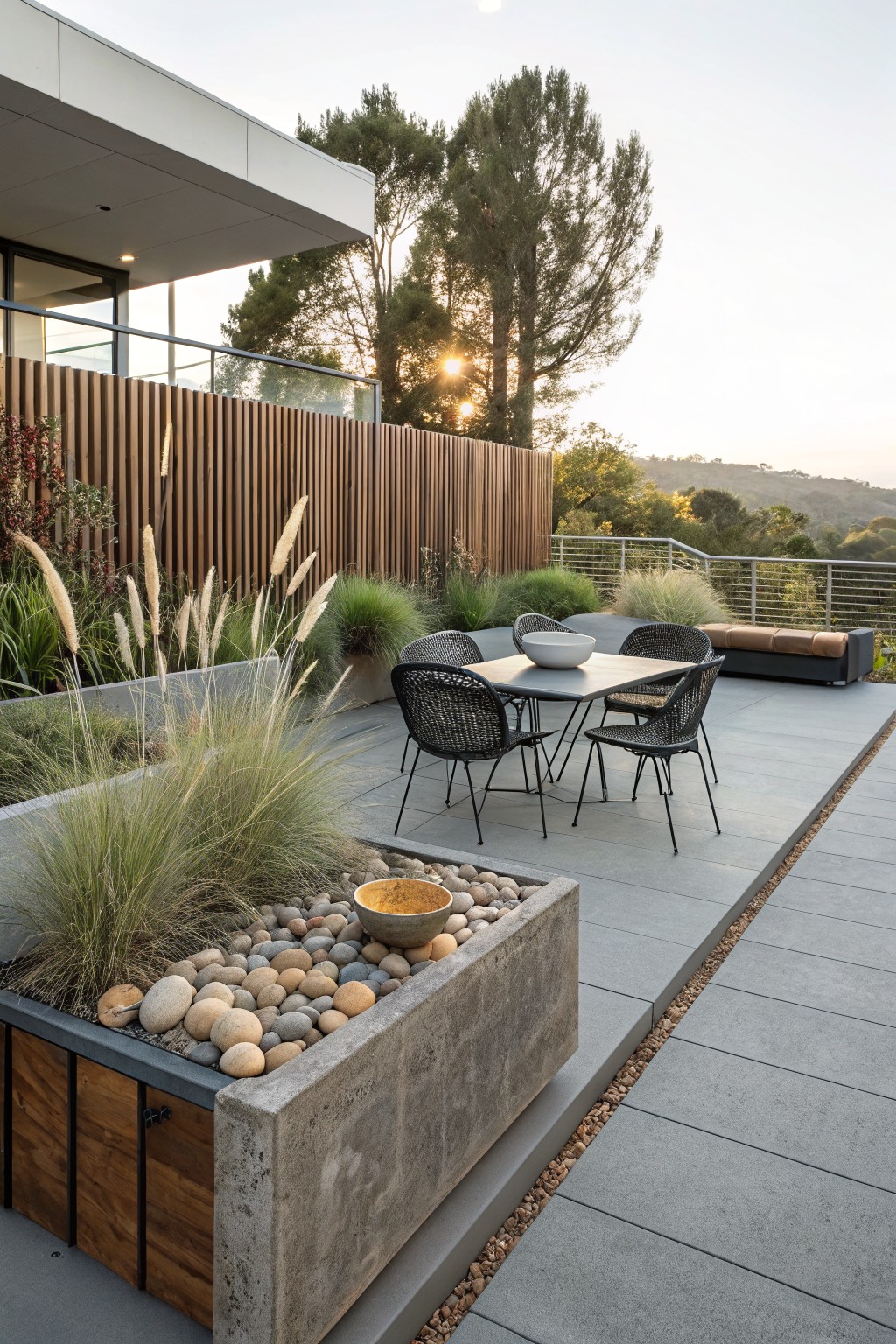
A tall vertical wood screen works well when you want privacy on a deck without turning the space dark. The gaps between the slats let light and air move through, so the area still feels open even when the fence runs along the edge.
This approach suits modern decks that sit above ground level or face nearby homes. Keep the spacing even and the wood untreated or lightly sealed so it weathers naturally. Pair it with low planting in front if you want a bit more softness without adding height.
Glass Railings With Tall Planters
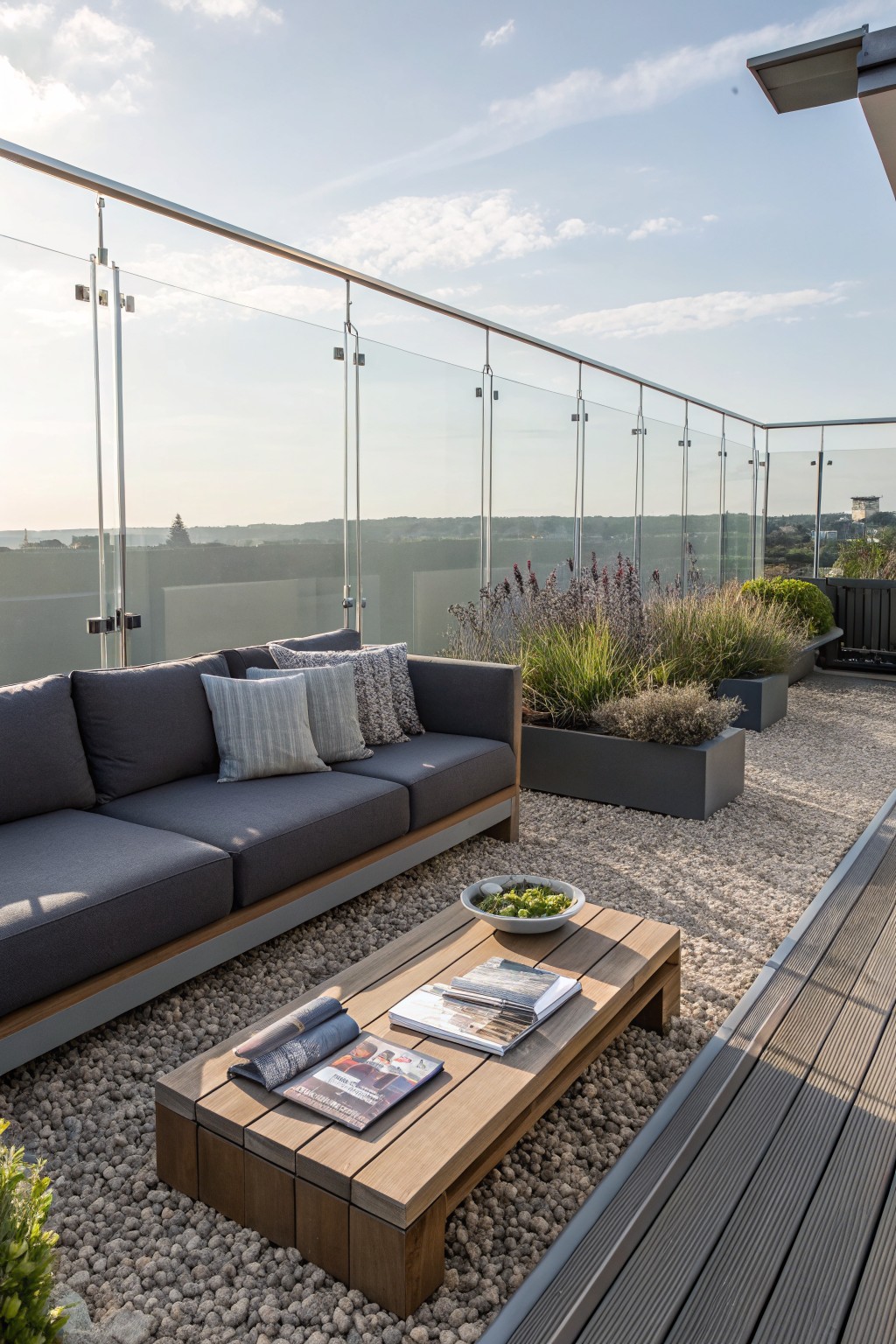
A glass railing gives you privacy without cutting off the light or the view. It works especially well on decks that sit up high where you want to feel enclosed but still see the landscape around you.
Pair it with a few large planters filled with tall grasses or shrubs. This adds a bit of screening on the sides while keeping the overall space open and bright. It suits modern homes and rooftop terraces where a solid wall would feel too heavy.
Vertical Slat Screens For Deck Privacy
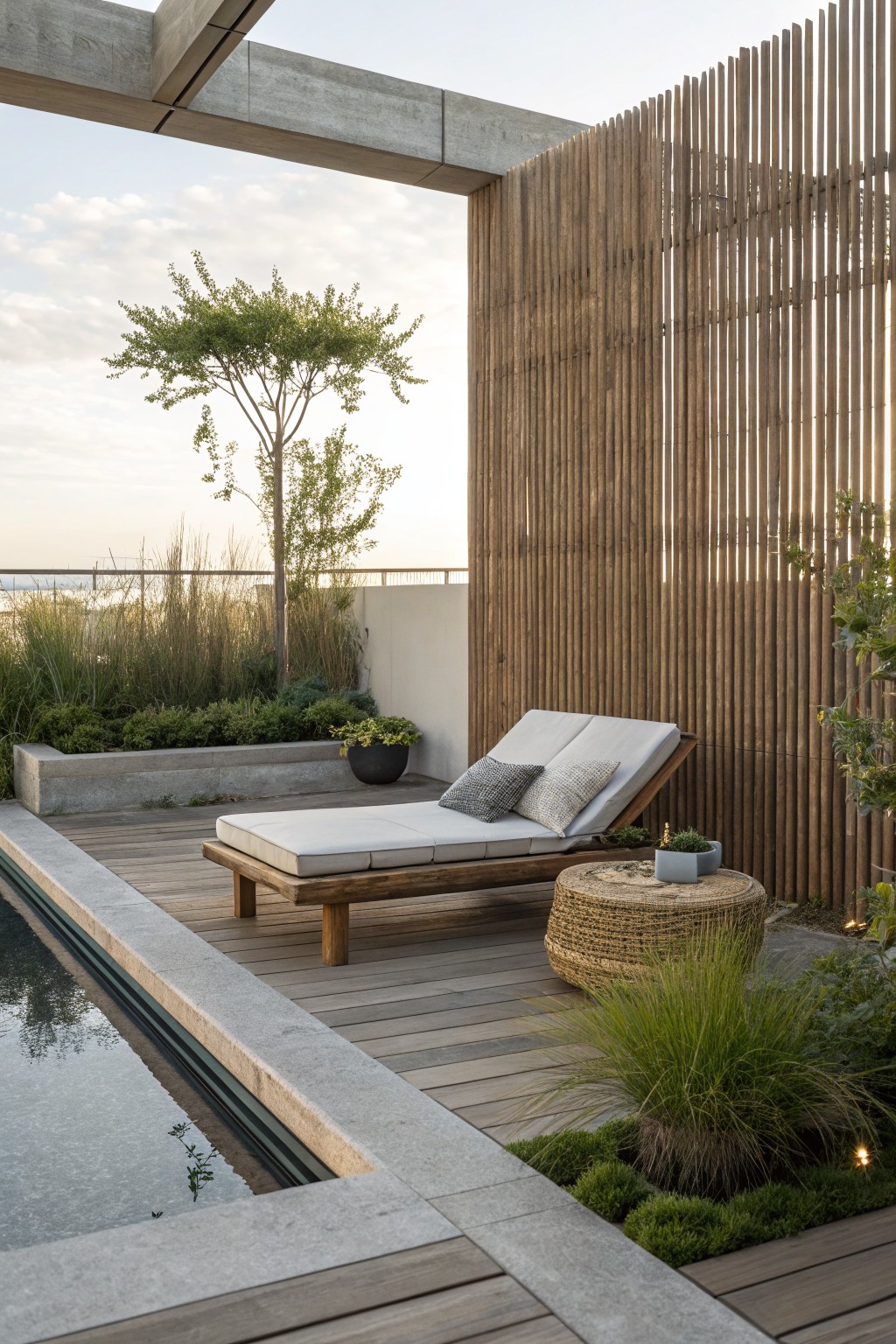
A tall vertical slat screen gives a deck privacy without turning it into a closed-off box. The gaps let light and air move through while cutting off direct views from outside.
This approach works best on decks that sit near other homes or open spaces where full walls would feel too heavy. It pairs well with wood decking and simple seating, and it holds up in most climates as long as the wood is treated for weather.
Frosted Panels For Deck Privacy
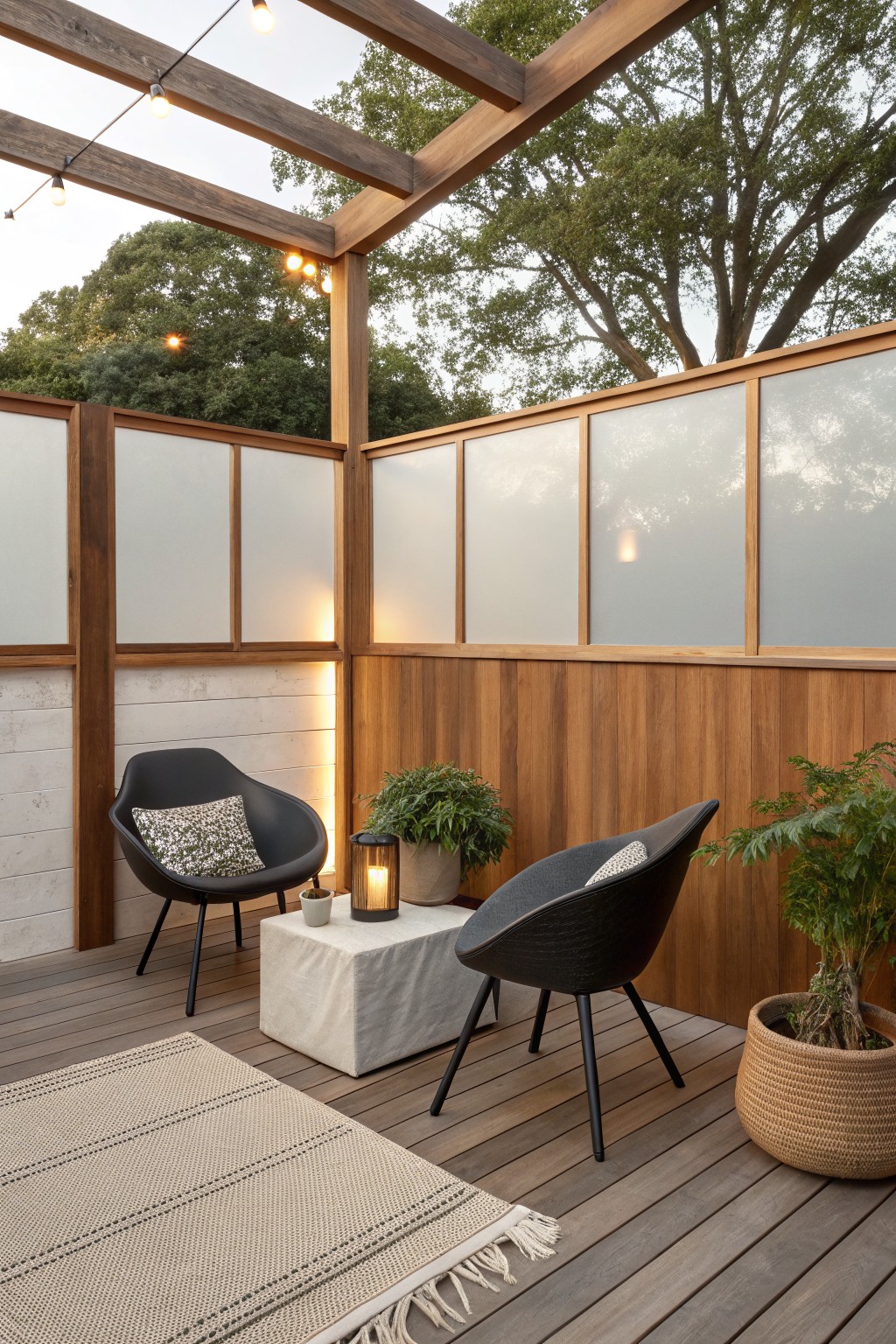
Frosted panels work well when you want privacy on a deck but still need natural light. They sit in the upper part of the wall framing and let daylight pass through while blocking the view from outside. This keeps the space from feeling closed in or dark.
They suit decks that sit close to neighboring homes or yards. Mount them between posts so the lower section stays open or uses wood for more solid screening. Just make sure the panels are set at eye level or higher to get the best balance of light and coverage.
Slatted Pergolas For Rooftop Deck Screening
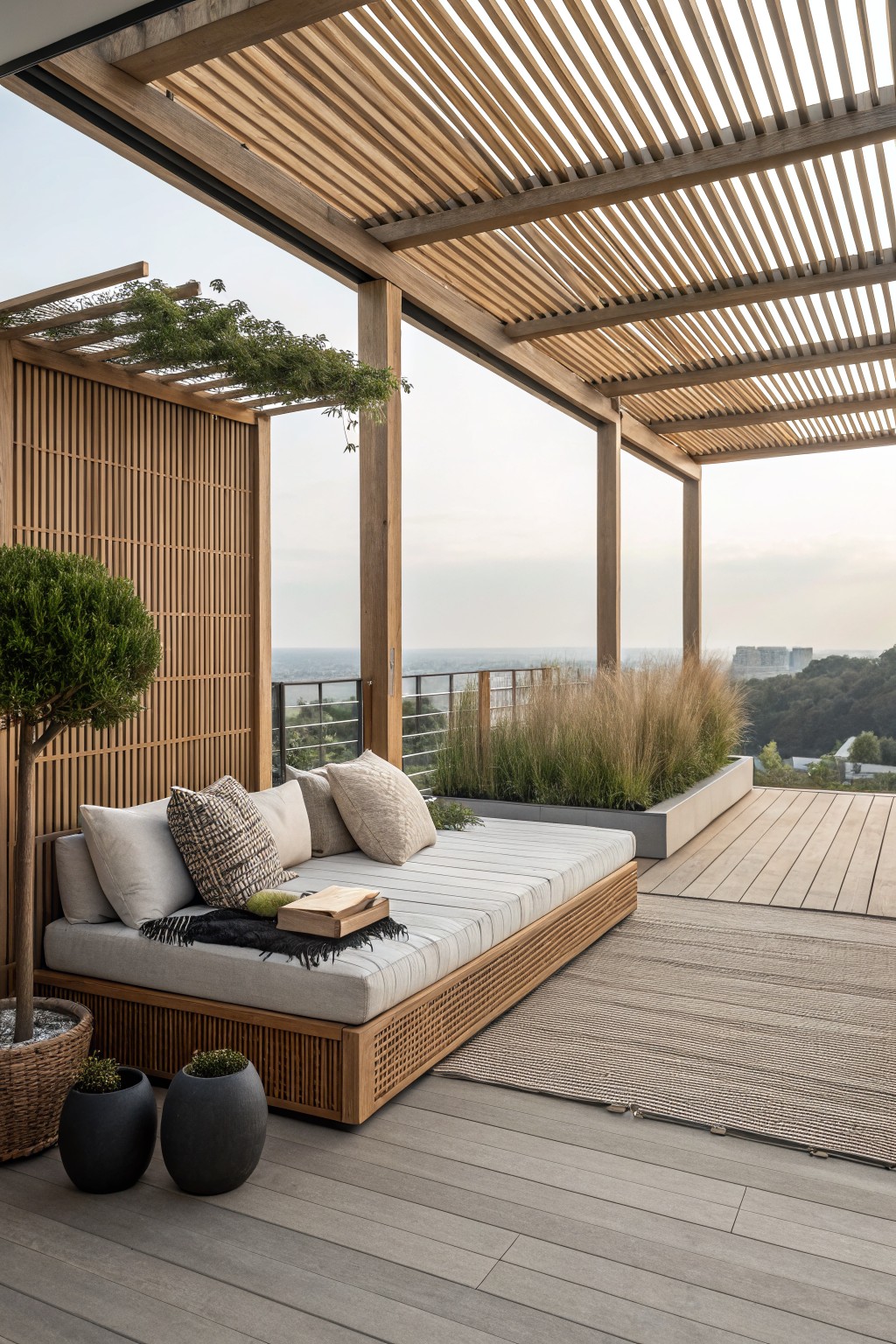
A slatted pergola overhead gives a deck some enclosure without turning it into a dark cave. The gaps between the boards let sunlight and air move through while still breaking up the view from above. It works especially well on rooftops or upper-level decks where neighbors or nearby buildings can see down.
This approach suits modern homes that want clean lines and wood tones. Keep the slats spaced evenly and use a light stain so the structure does not feel heavy. Pair it with a solid side screen only where you need extra privacy, and leave the rest open to the view.
Horizontal Slat Privacy Screens For Patio Edges
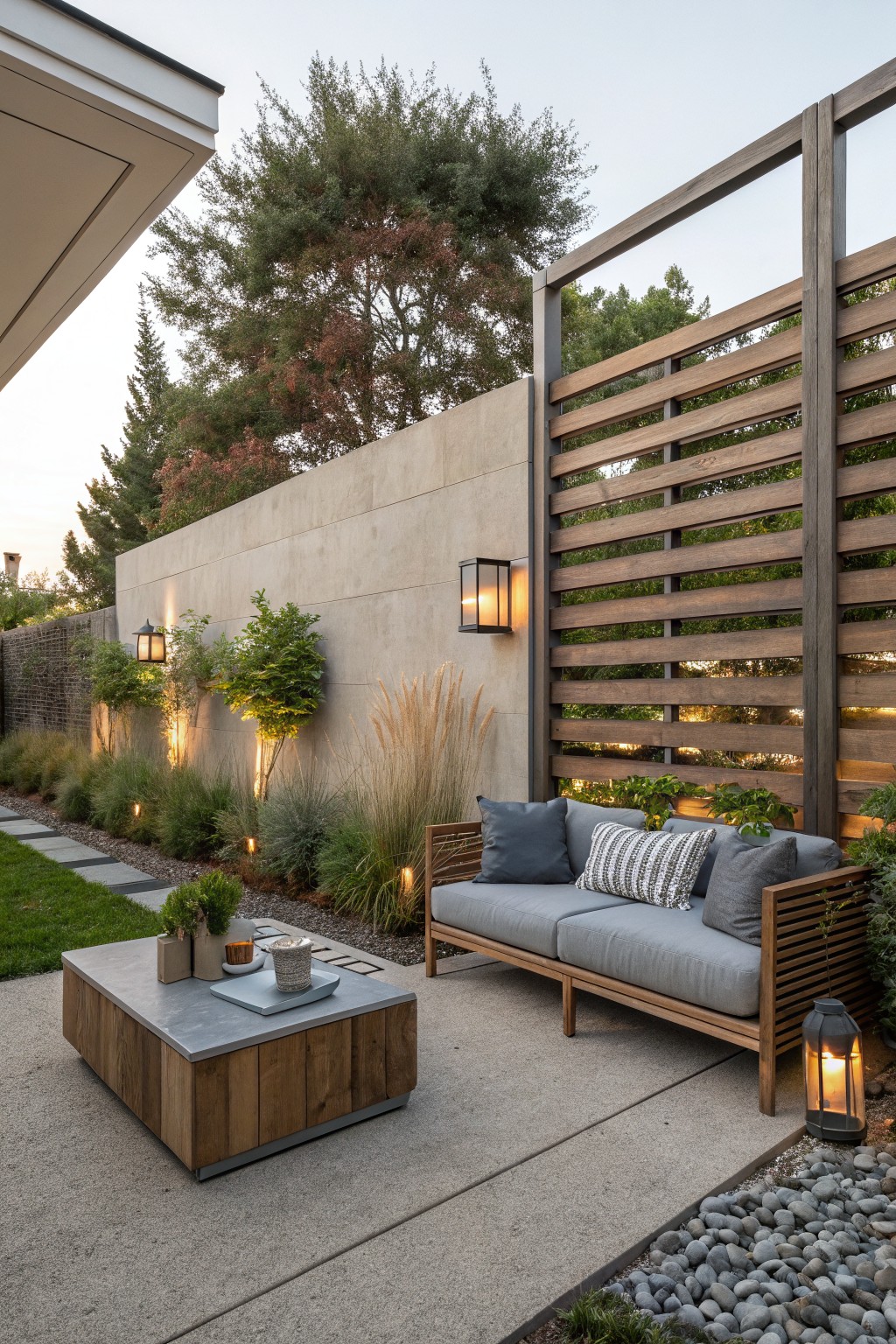
Many people want privacy on a deck but do not want to close the space in completely. Horizontal slat screens solve this by blocking the direct view while still letting light pass through the gaps.
This approach works best along the side or back edge of a patio where neighbors or the street are visible. It pairs well with a solid wall behind it and low planting at the base for a bit more coverage without losing the open feel.
Frequently Asked Questions
Q: How do I keep vines from spreading past the railing?
A: Trim them back every few weeks once they start growing fast. Tie the main stems to the support so they stay in one spot. This keeps things looking full without turning into a mess.
Q: What works if my deck sits in constant wind?
A: Go with heavier panels or fabric shades that you can tie down tight. Skip anything too light that might flap or tear loose. Anchor them to the posts right from the start.
Q: Can I add screening if I only have a tiny deck?
A: Hang a few narrow panels from the ceiling or side posts. They take almost no floor space yet still cut the direct line of sight. Place them where you sit most often.