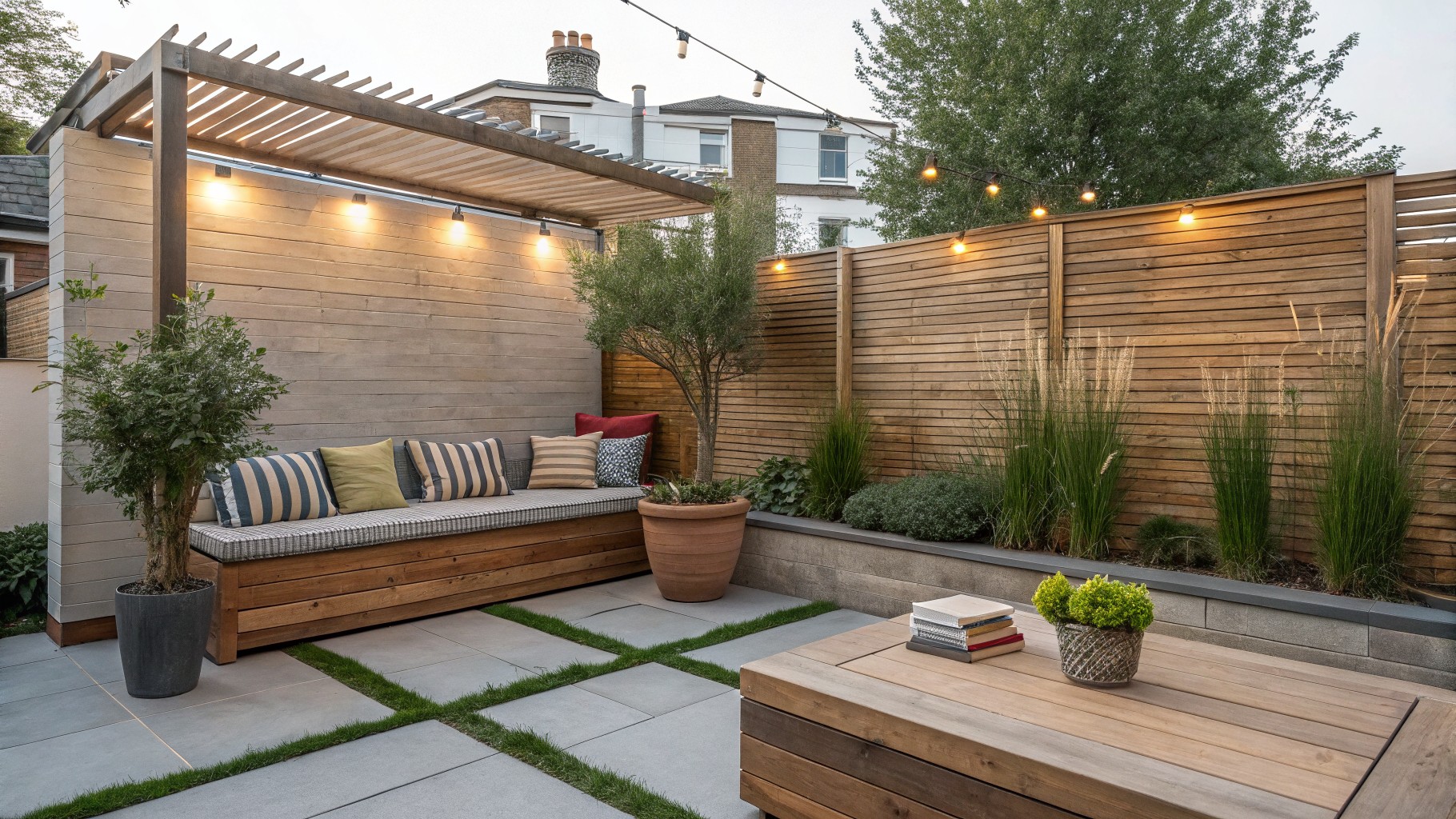
Living close to neighbors often means my backyard feels more exposed than I would like, especially when trying to relax on the patio after a long day.
Over time I have noticed that privacy solutions work best when they also keep the space feeling open and comfortable rather than closed in.
Some setups just do not hold up.
I like to think through how a screen or planting might change the way I actually spend time outside before committing to it.
A few of these approaches have helped me create spots that feel more private without sacrificing the easy flow I need from the house to the yard.
Add A Slatted Privacy Wall With Built-In Seating
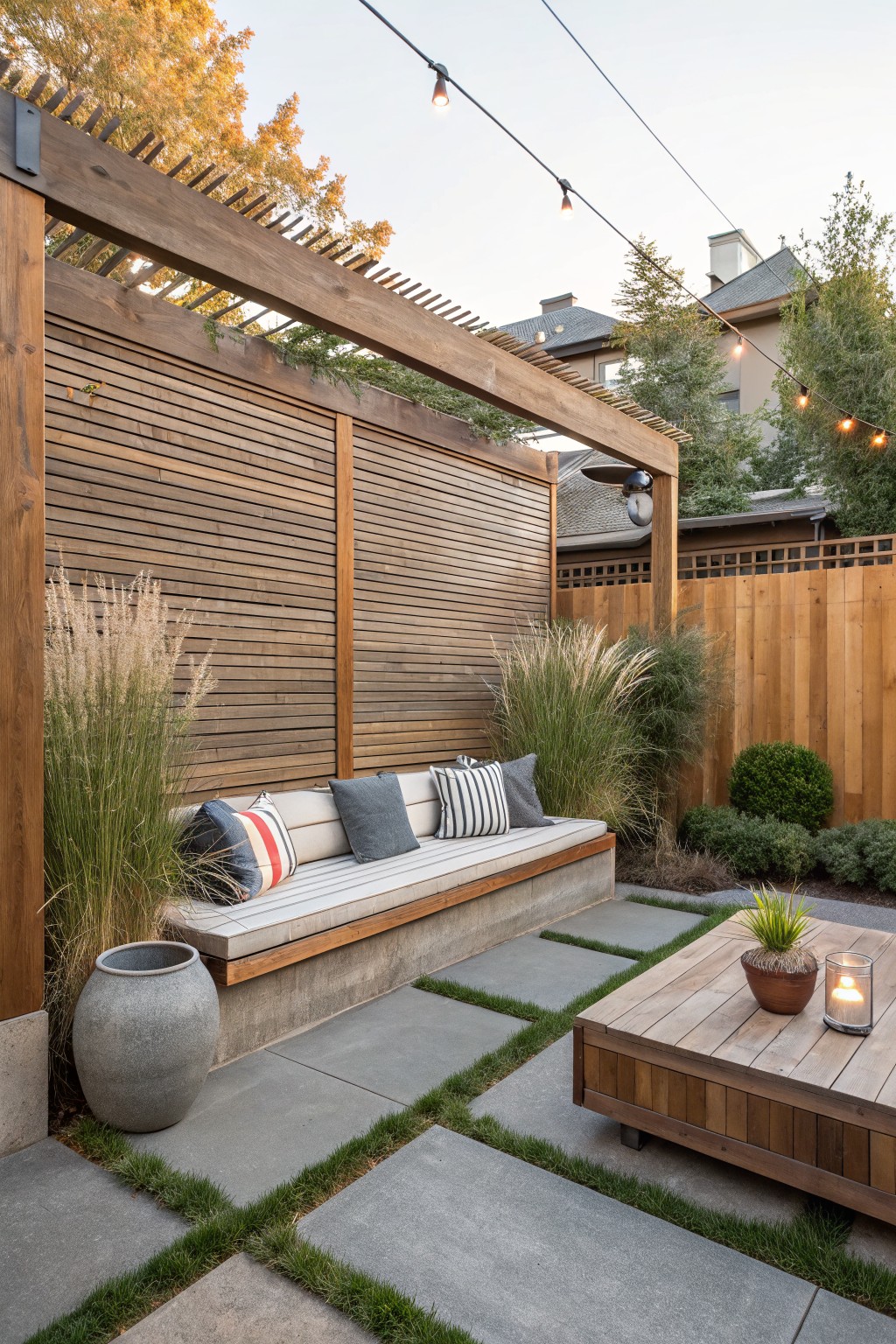
A tall wood screen with horizontal slats gives solid privacy while still letting some light and breeze pass through. It works better than a solid fence in tight spaces because it feels less heavy.
Place a bench right against the base so the wall doubles as a backrest. This layout suits small patios where you need screening from neighbors but do not want to lose usable seating area.
Tall Walls Create Privacy On A Small Patio

Tall solid walls can turn a narrow outdoor spot into a private area even when neighbors are right next door. They block sightlines and give the space a quiet, enclosed feel without taking up floor room the way screens or extra plants might.
This approach works best on compact lots where you already have some existing structure to build from. Match the wall material and color to the house so the whole area feels like one connected space rather than an add-on.
Use a Living Wall for Privacy in Tight Spaces
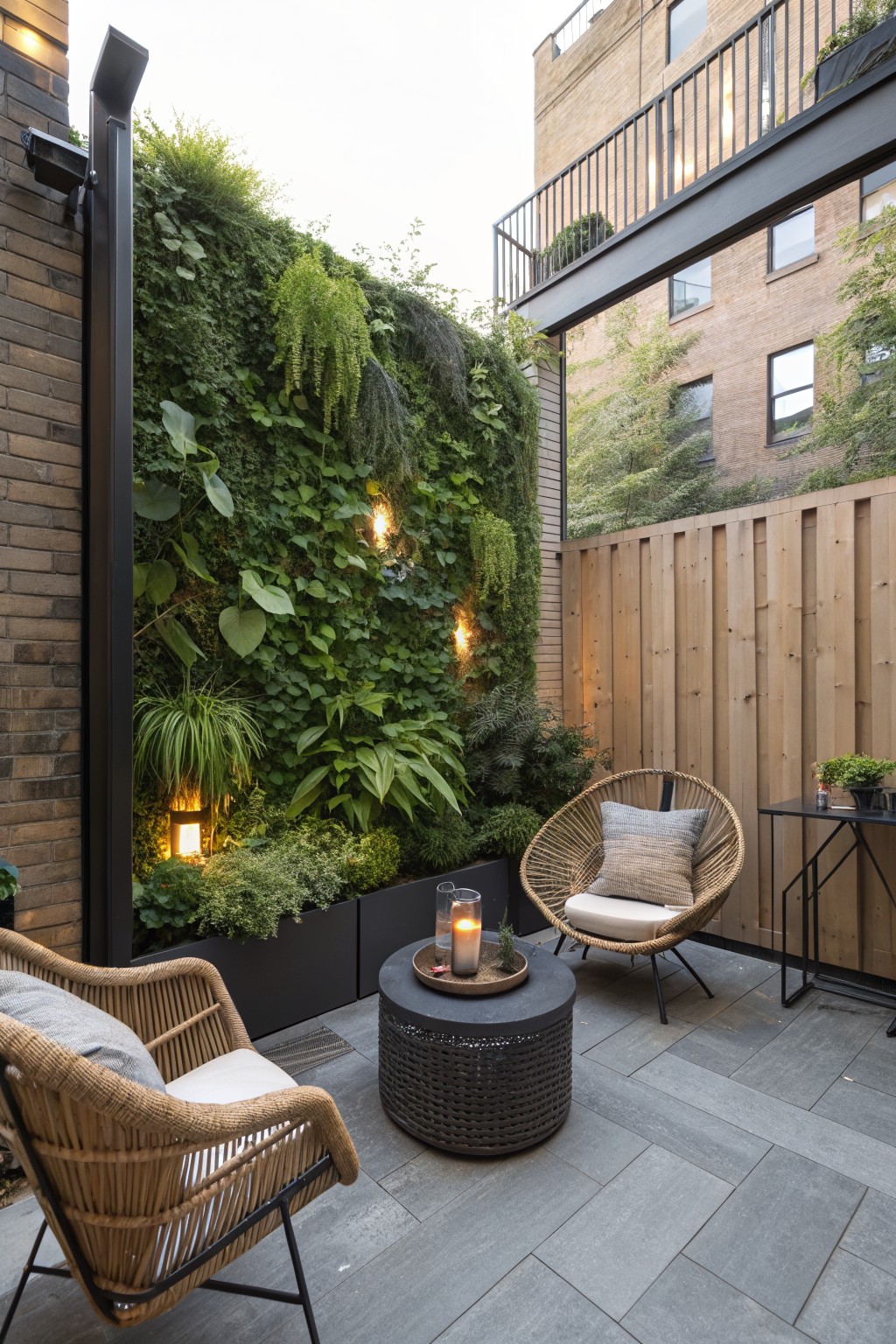
A living wall makes a strong privacy screen when your patio sits close to other buildings. The plants grow up and out to block views without needing extra floor space that most small yards cannot spare.
This works well on urban lots or townhomes where a regular fence feels too harsh. Place the wall on the side facing the nearest neighbor and keep the rest of the seating area open so the space still feels usable.
Layer Fencing With Tall Plants For Privacy
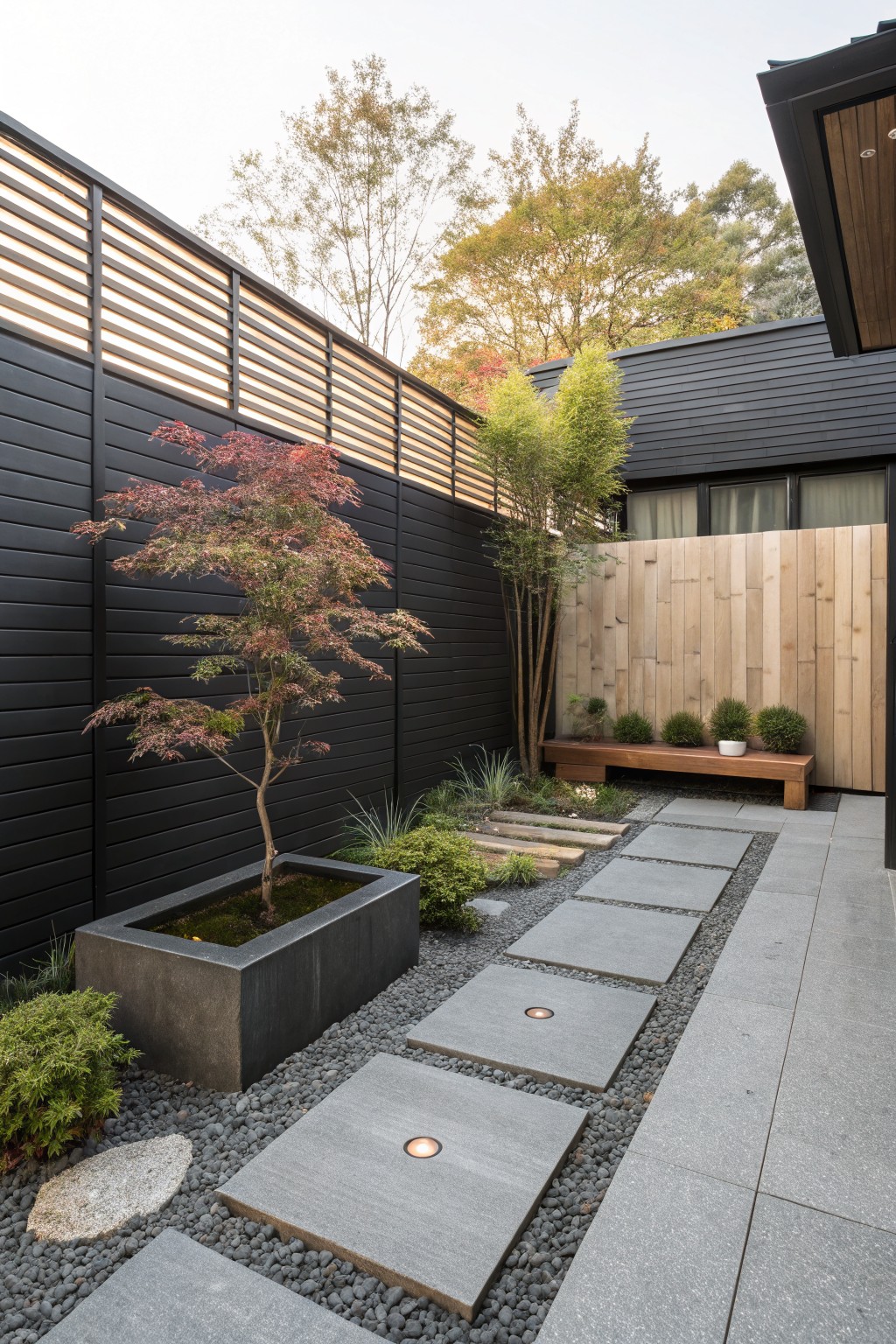
Many small backyards gain real privacy when a tall fence is paired with a few well placed trees or shrubs. The fence gives a solid base while the plants add height and soften the edge so the space still feels natural rather than boxed in.
This setup works best along side or back boundaries where houses sit close together. Pick narrow trees that stay contained and add a few lower shrubs in front so the planting stays layered without crowding the path or seating area.
Use a Side Screen and Tall Planters for Privacy

A tall mesh screen along one open edge works well when you need to block views without making a small patio feel closed in. Pairing it with a few tall trees in large pots adds another layer that feels softer and more natural than a solid wall.
This setup fits best on narrow balconies or decks that sit close to neighboring buildings. Place the screen on the side that faces the biggest exposure and keep the planters clustered along the back to soften the line while still leaving room to walk through the middle.
Grow Climbing Vines On Fences For Privacy
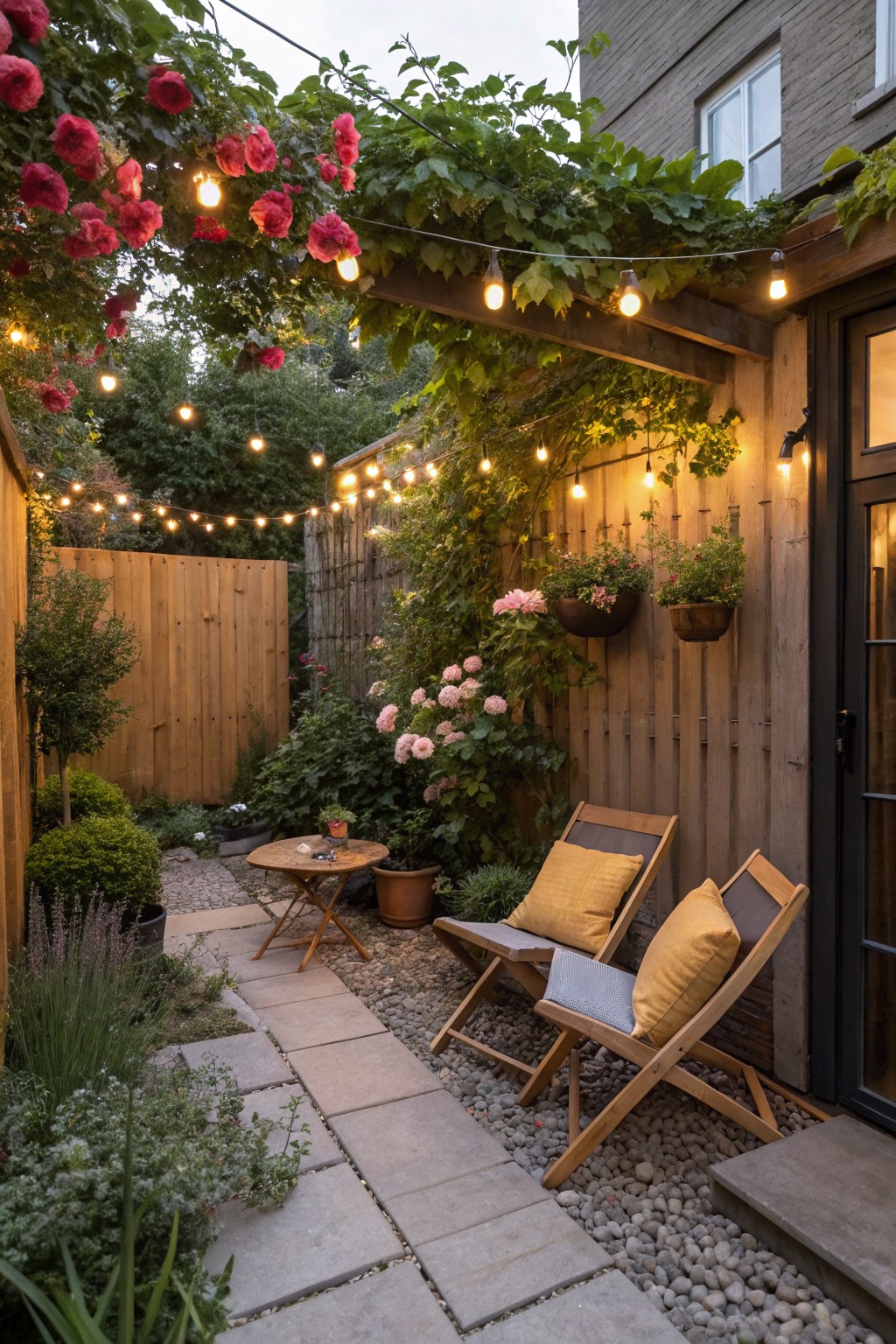
Climbing vines turn a basic fence into a living screen that blocks views from nearby homes. They add softness and depth without eating up floor space in a tight patio, and they work especially well when the yard sits right up against neighboring properties.
Plant them along the base of the fence and let them spread upward over time. This approach suits small backyards best because the greenery grows vertically and needs little extra room once established. Just make sure the vines suit your climate and the fence material can handle the weight.
Patterned Screens Add Privacy on Small Patios

Many small patios sit right next to other buildings, so a solid wall can make the space feel closed in. Patterned screens give separation without cutting off light or air, which keeps the area usable in the evening.
Set them up behind a bench or seating area and keep the rest of the space simple. They work best on rooftops or side yards where neighbors are close but you still want some openness.
Use Slatted Wood Panels for Backyard Privacy
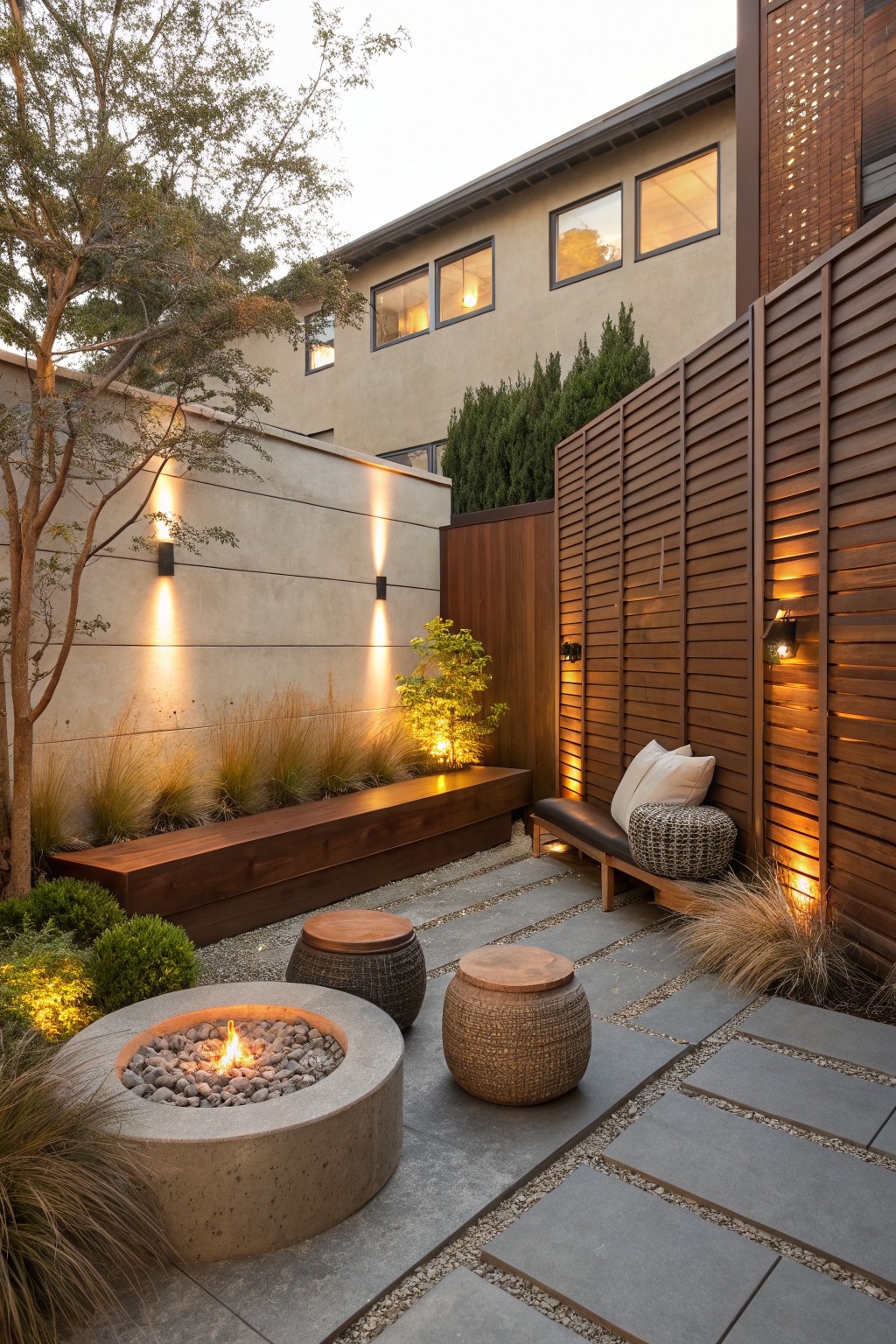
A tall screen made of vertical wood slats gives you solid privacy without making the space feel boxed in. It blocks the direct line of sight from nearby windows or yards while still letting air and some light through, which keeps the patio from feeling closed off. Many people like this approach because it adds warmth through the wood tone and works well even in narrow side yards.
Place the screen along the property line or against the house where neighbors can see in most easily. Pair it with simple seating or a bench right in front so the area feels intentional rather than just a barrier. This setup suits compact patios best when you want separation without losing the open feel of the rest of the yard.
Add A Wood Wall With Built-In Seating For Patio Privacy
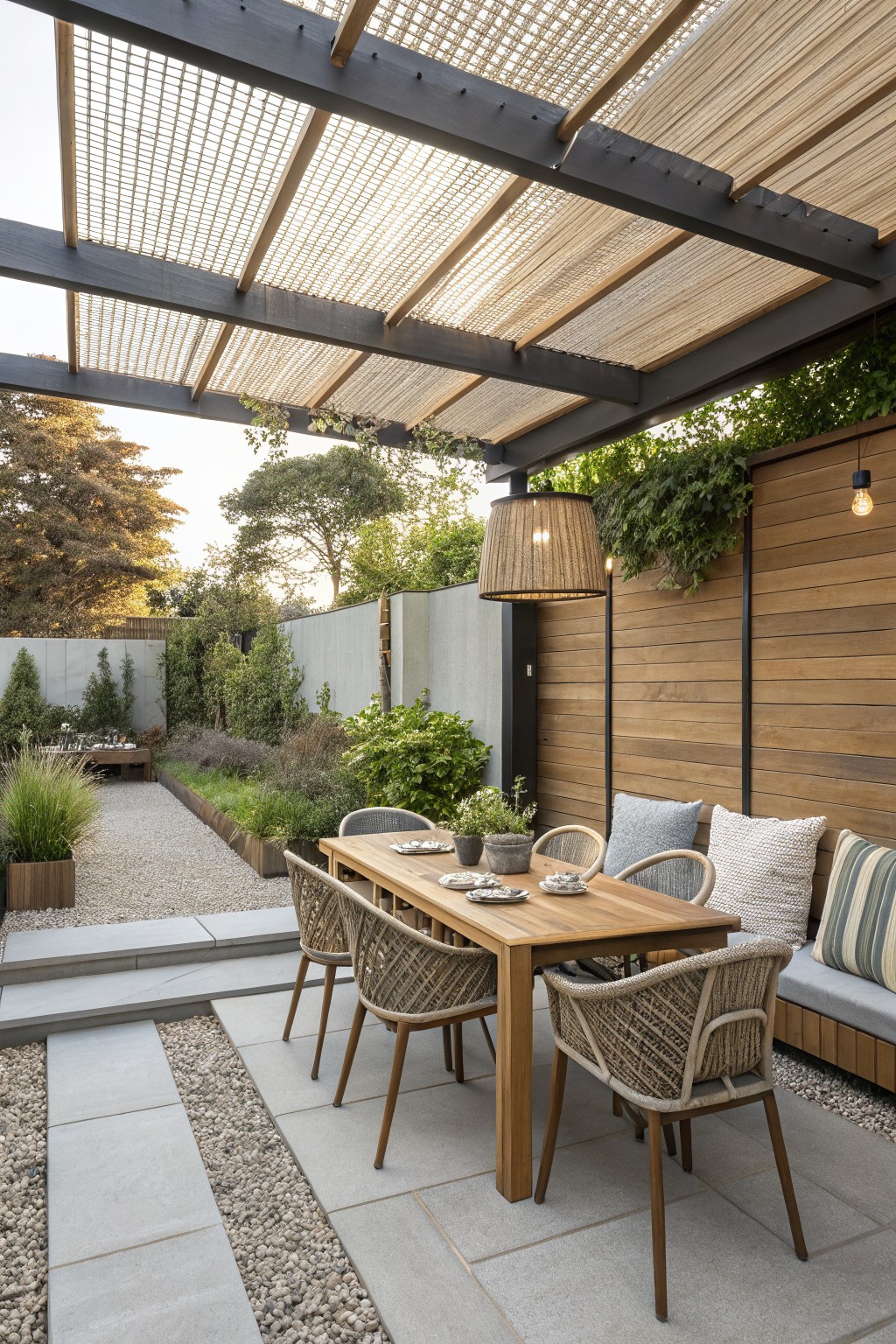
A solid side wall makes a small patio feel much more private without needing a lot of extra space. In this setup the wood panels block the view from close neighbors while the built-in bench turns that same wall into useful seating.
This works best on compact patios where you want to keep the open feel but still carve out a sheltered spot. Keep the bench cushions simple so the space stays comfortable without looking crowded.
Built-In Bench Seating With Privacy Screens
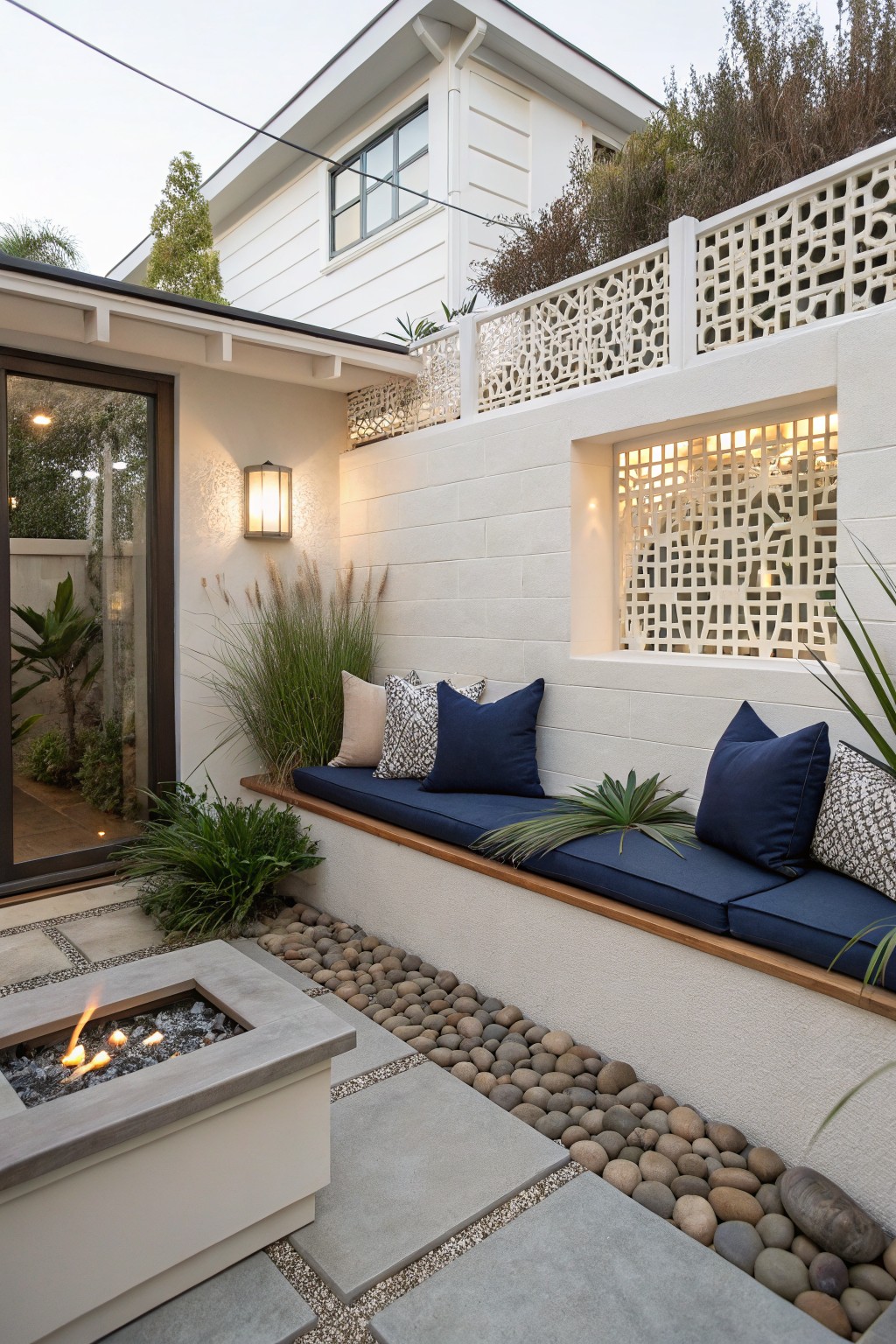
A built-in bench along the back wall gives you seating without taking up extra floor space in a small yard. It turns an otherwise empty stretch into a usable spot for relaxing or gathering.
The decorative cutout panels above the bench add privacy while still letting light through. This setup works especially well on compact patios next to neighboring homes where a full fence would feel too closed in.
Raised Planters for Side Privacy

Raised planters work well when you need privacy but still want an open feel on a small patio. They lift the plants higher so the greenery blocks the view from close neighbors without creating a solid wall right beside your chairs.
Build them along the patio edge using the same wood tone as your fence or screen. This setup suits compact yards where space is tight and you want planting that doubles as a barrier. Keep the boxes at least a foot deep so the plants can grow full enough to do the job.
Use a Tall Fence with Planting for Privacy

A tall fence combined with thick planting gives a small patio real seclusion even when houses sit close together. The vertical wood slats block the direct view while the layered leaves soften the edge and make the space feel more sheltered.
This approach works best in narrow side yards or compact backyards where you need to screen one or two sides. Keep the seating low and simple so the fence and plants stay the main focus and the area does not feel crowded.
Tall Hedges Create Privacy on a Small Patio
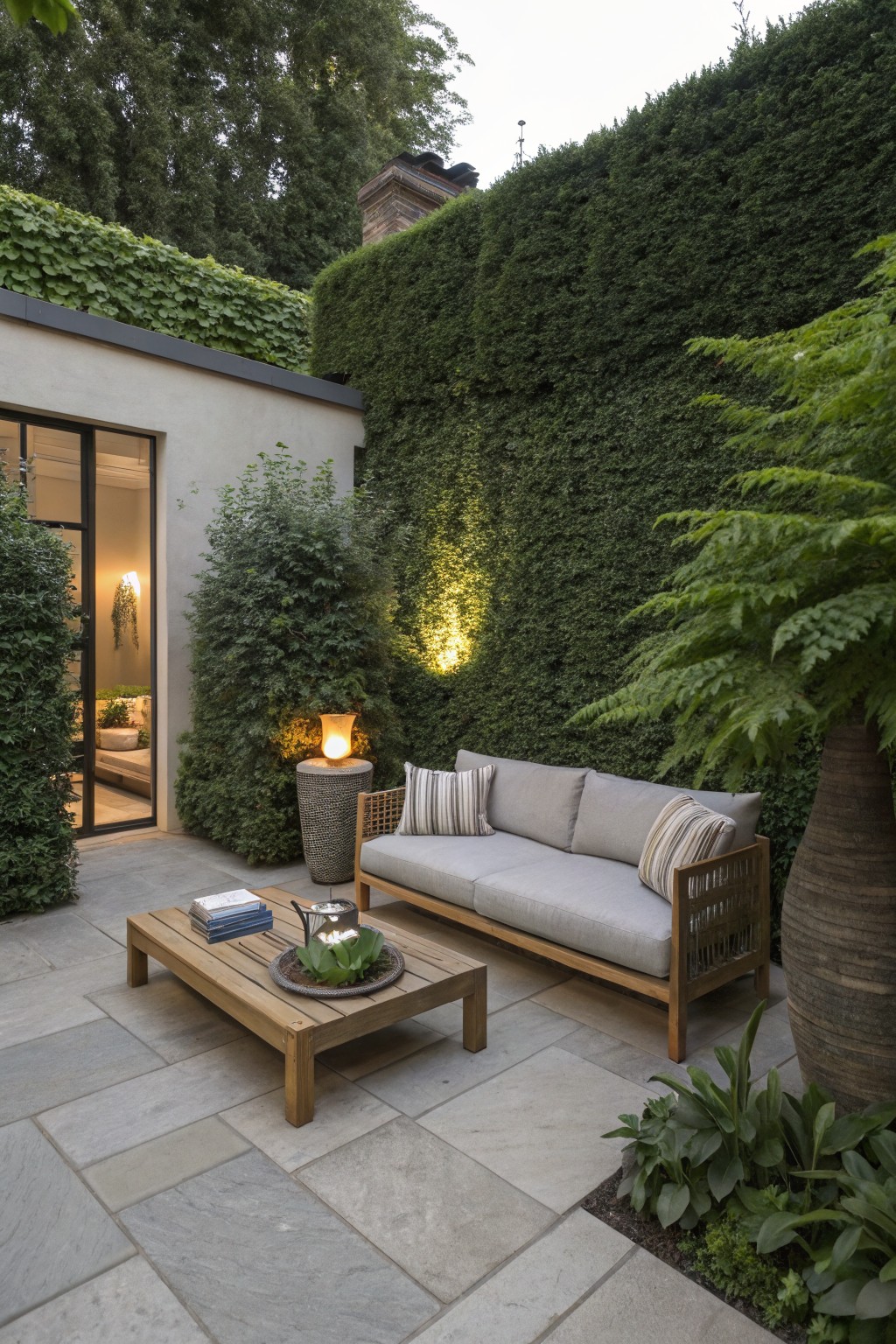
Many small patios sit right up against neighboring homes or fences. A dense hedge planted along the back and side edges blocks the view without adding another hard structure that can make the space feel closed in.
This approach works best in compact yards where you still want some openness overhead. Choose evergreens that grow tall and thick, and keep the planting bed narrow so the patio itself stays usable. The hedge becomes the main boundary while the seating area stays simple and open.
Use a Retaining Wall and Planting for Side Privacy

A low stone retaining wall with built-in lights and tall grasses gives you solid side screening while still keeping the patio open to the sky. It works especially well in narrow backyards where full fencing would feel too heavy.
This setup suits homes with close neighbors or sloping lots. Keep the wall height modest and let the planting do most of the blocking so the space stays usable rather than boxed in.
Pair A Tall Fence With Dense Plants For Privacy
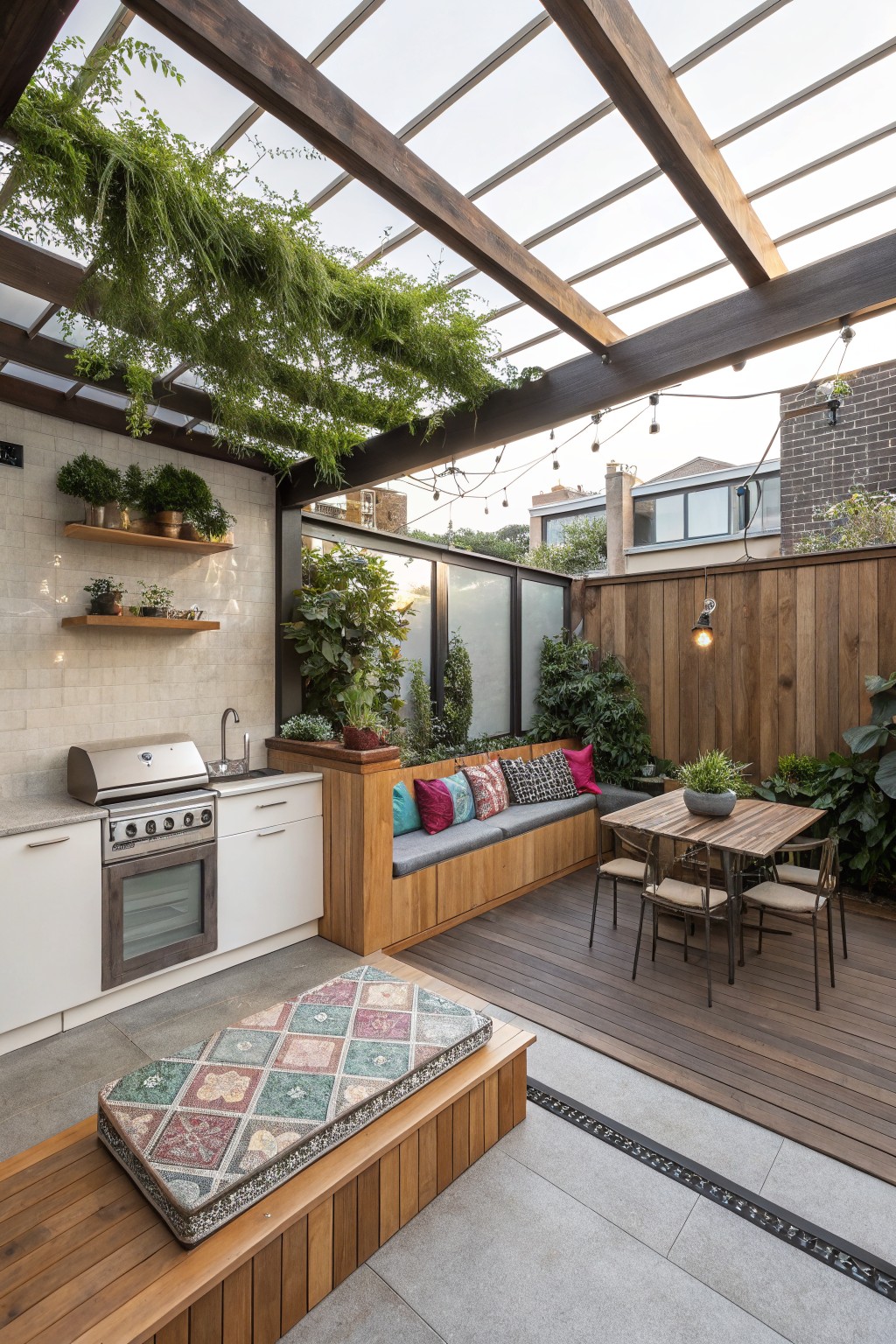
A tall fence lined with plants gives a small patio real privacy without making it feel boxed in. The wood blocks most sight lines from close neighbors while the greenery softens the edge and adds some life to the space.
This works best on compact patios that sit right next to other homes. Run the fence along the shared sides and fill the base with tall pots or shrubs so the two elements work together. Keep the fence height consistent and choose plants that stay full year-round if you want coverage in every season.
Add Tall Screens For A Private Daybed Spot

One easy way to carve out privacy in a small backyard is to set up tall folding screens along the open side of the space. They block the view from neighbors while still letting light through, so you can place a low platform bed right up against the fence or wall without feeling exposed.
This setup works best on gravel or simple paving where drainage is not an issue. Keep the screens lightweight but anchored so they hold up in wind, and choose a spot that already has some existing fencing or planting behind the bed for extra shelter.
Layer Wood Fencing With Climbing Plants

Many small patios sit right next to other houses, so a single fence often feels too thin. Adding wood panels with a grid section on top gives height without making the space feel closed in, and letting vines grow through the openings softens the look while filling gaps over time.
This setup works best on lots where neighbors are close on one or two sides. Keep the lower part solid for real privacy and let the plants handle the upper part so air and light still move through. It needs some trimming now and then, but it holds up better than a thin screen alone.
Build a Bench Along Your Privacy Wall
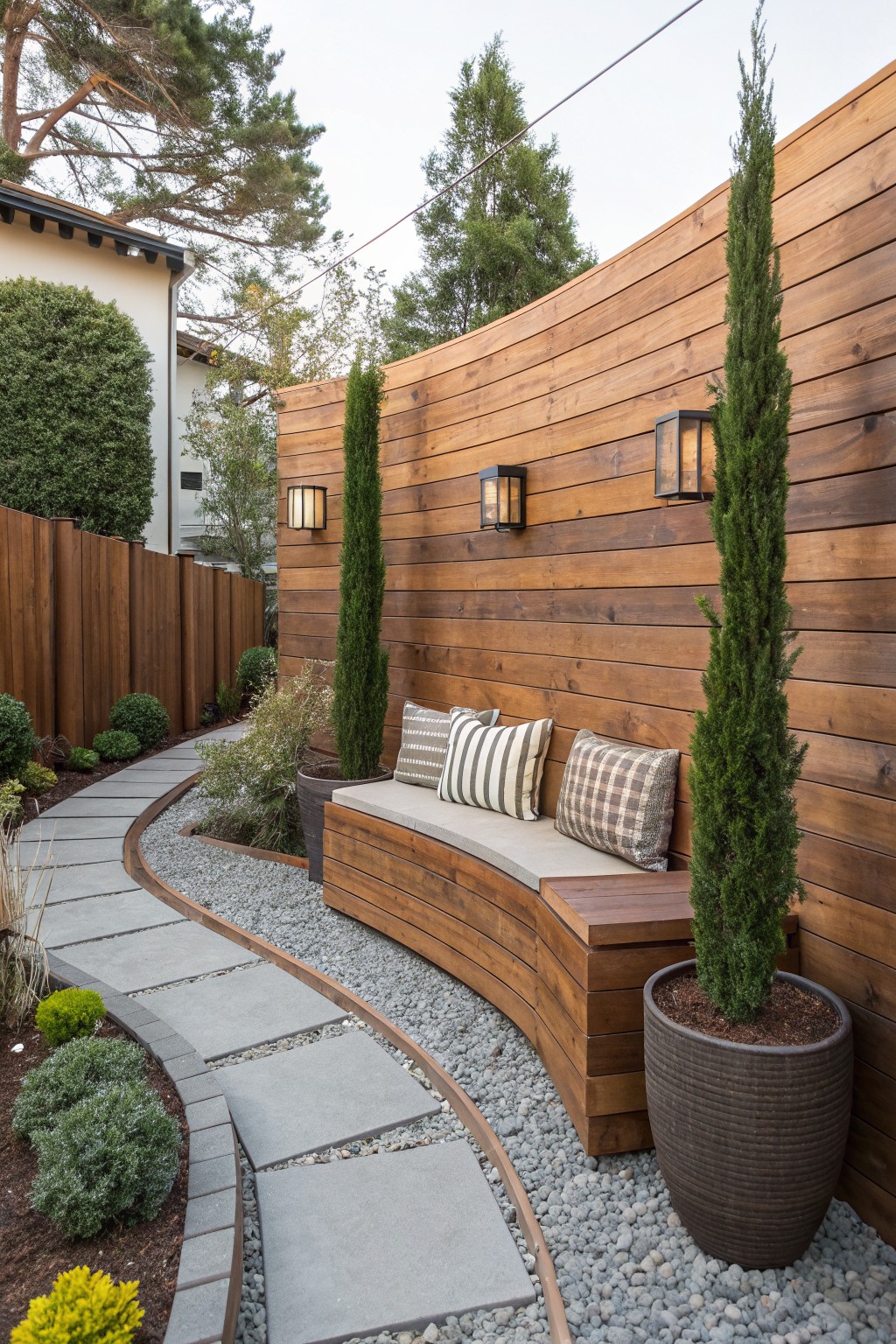
A built-in bench that follows the line of a tall fence or wall gives you seating without taking up much floor space. It works especially well in narrow yards where freestanding furniture would crowd the path or feel too open to neighbors.
Place the bench on the side that needs the most screening and keep the rest of the yard simple with gravel and a few tall plants. The wood tones blend with the fence so the whole area feels like one calm surface instead of separate pieces.
Tall Bamboo for Natural Privacy
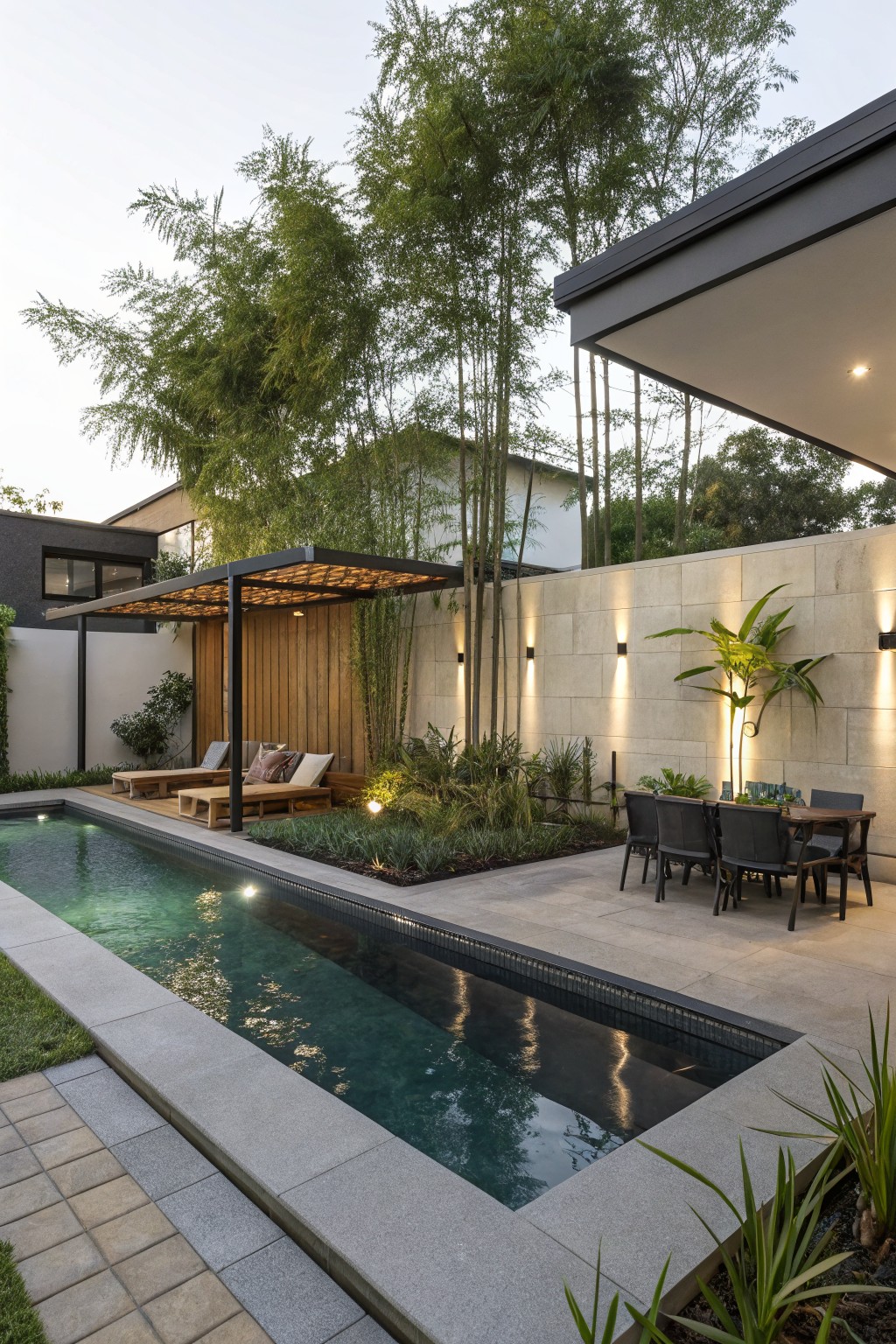
Tall bamboo works well when you need to block views from close neighbors without crowding a small patio. It grows straight up, so it screens the space vertically and leaves the ground open for seating or a pool edge. The cluster here shows how a few plants can fill in quickly against a wall.
It suits compact yards best when planted in a narrow bed along the property line. Choose a clumping type to keep it contained, and give it room to reach full height. This approach keeps the area feeling open while still creating separation.
Plant Tall Trees Along the Wall for Quick Screening
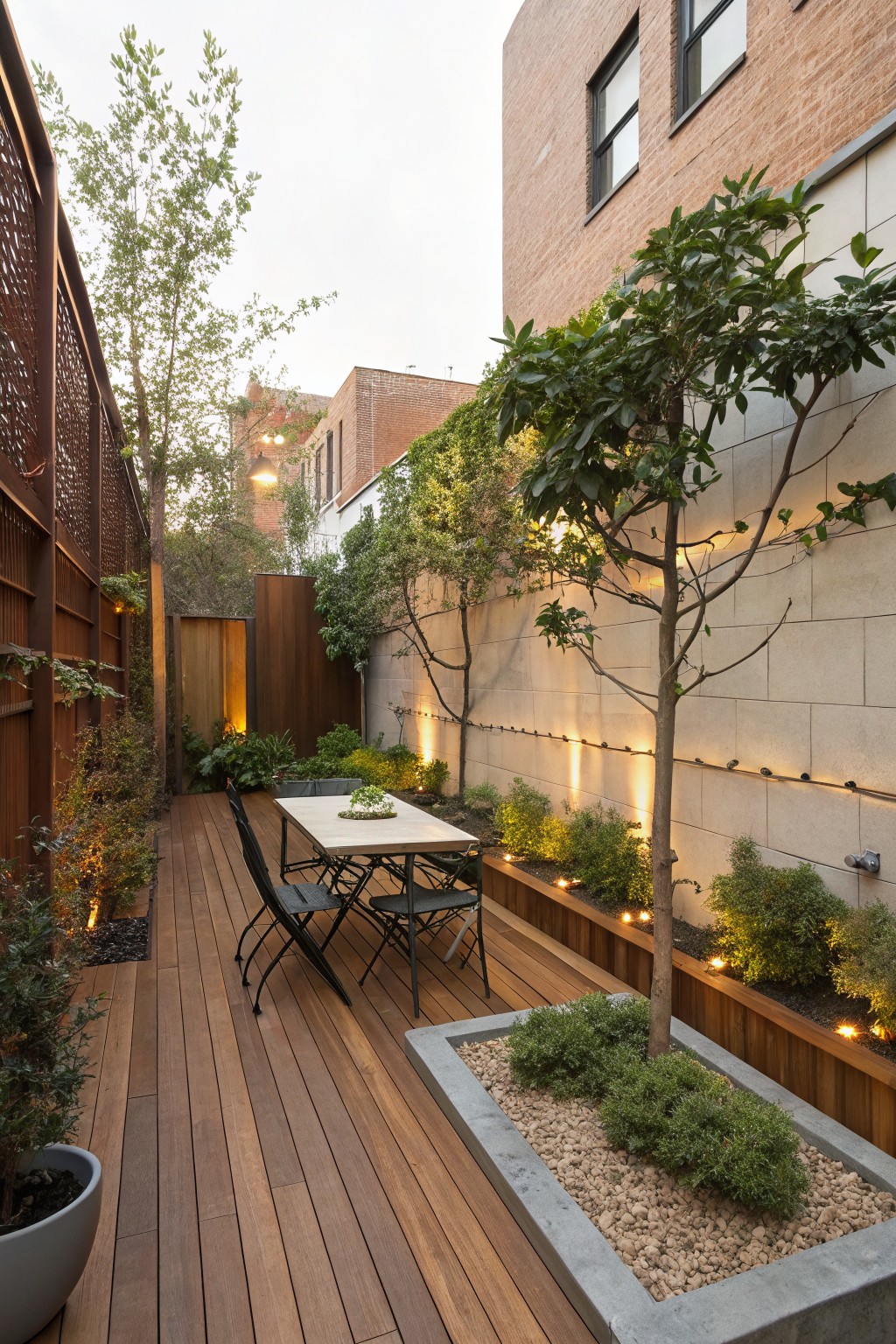
Many tight backyards sit between buildings with little room for wide beds or fences. Placing a few narrow trees in raised planters along one wall gives height and coverage without eating into the usable deck space. The trees here create a living screen that softens the view of nearby windows while still letting in light.
This approach suits small urban patios where floor space is limited. Pick upright varieties that stay slim, keep the beds narrow, and add low shrubs in front so the planting feels full from top to bottom.
Mix Screens And Planting For Patio Privacy

A tall fence gives you the basic wall, but adding a woven screen panel and thick planting along the edge makes the space feel much more private. This works especially well in tight backyards where neighbors sit close by and you want to block the view without crowding the seating area.
Place the screen where the fence ends and let the plants grow up around the base. The combination softens the look while still giving solid coverage, and it suits small patios that need quick results without major construction.
Blend Solid Fencing With Lattice For Privacy
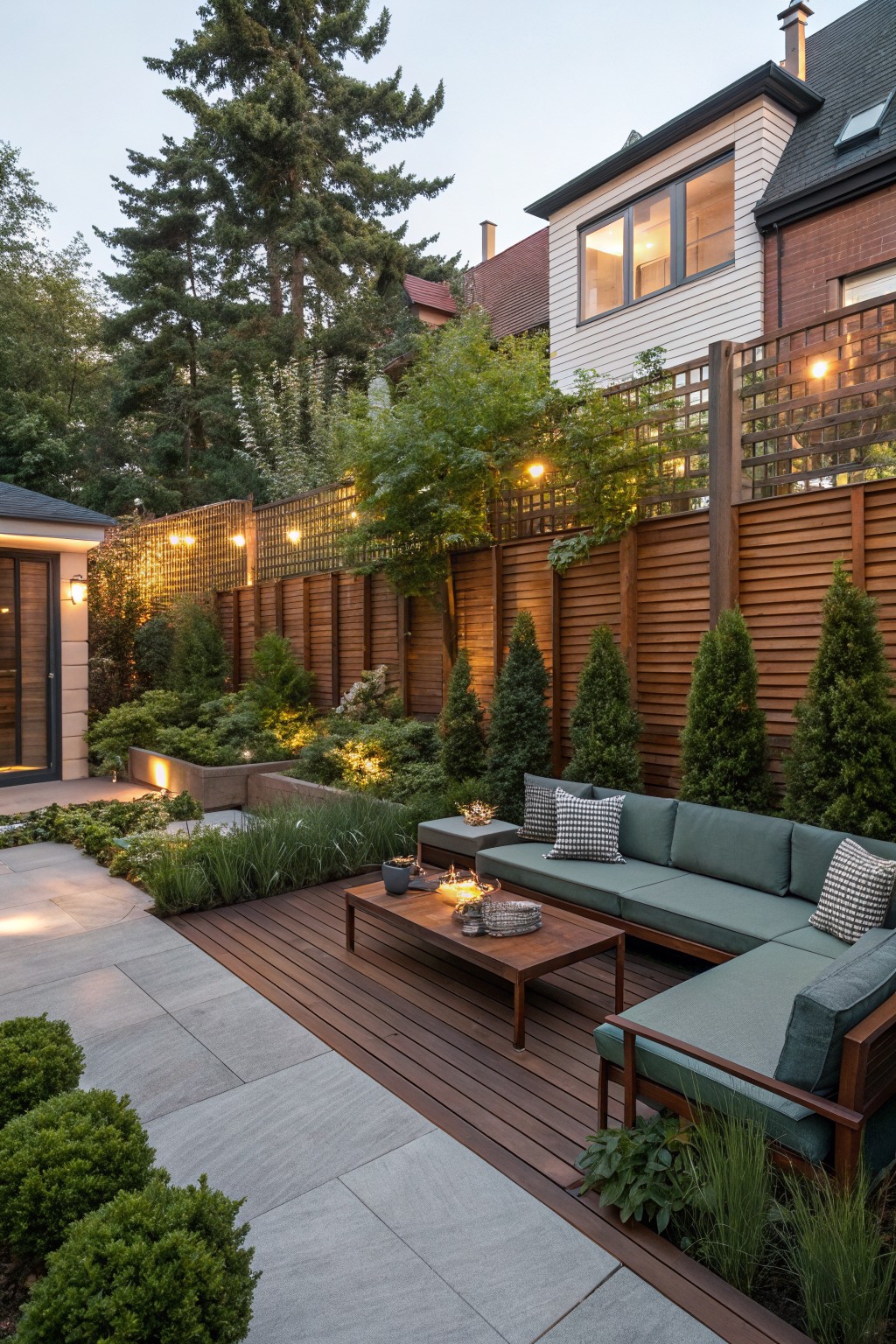
One simple way to handle privacy on a small patio is to use a fence that mixes solid wood panels with lattice sections. The solid parts block the main sight lines from nearby houses, while the open lattice keeps the space from feeling too closed off and still lets some light through.
This approach works best when you run it along the back or side of a compact yard where neighbors sit close. Add a few climbing plants at the base to soften the look over time, and keep the overall height reasonable so the area still feels open during the day.
Slatted Wood Screens Block Views On Small Patios

Many homeowners use vertical wood screens when they want privacy without making a small patio feel closed off. The open slats let air and light through while cutting direct sight lines from neighboring yards.
Place one or two screens along the edge of the seating area and add taller plants in front of them. This setup works best on compact decks or patios that sit close to property lines and gives you a defined space without needing a full fence.
Frequently Asked Questions
Q: My patio is barely big enough for a table. Which ideas actually fit without crowding it more?
A: Focus on vertical options like wall mounted planters or slim trellises along the edges. They use the height instead of floor space and keep the center open for sitting.
Q: How do I keep things private without making the space feel closed in and dark?
A: Mix in some open lattice panels with climbing vines. The vines grow to cover the view but still let light filter through so the patio stays bright.
Q: What about winter when plants die back and leaves drop?
A: Add evergreen shrubs or fabric panels that stay put year round. They hold the privacy line even when everything else goes bare.