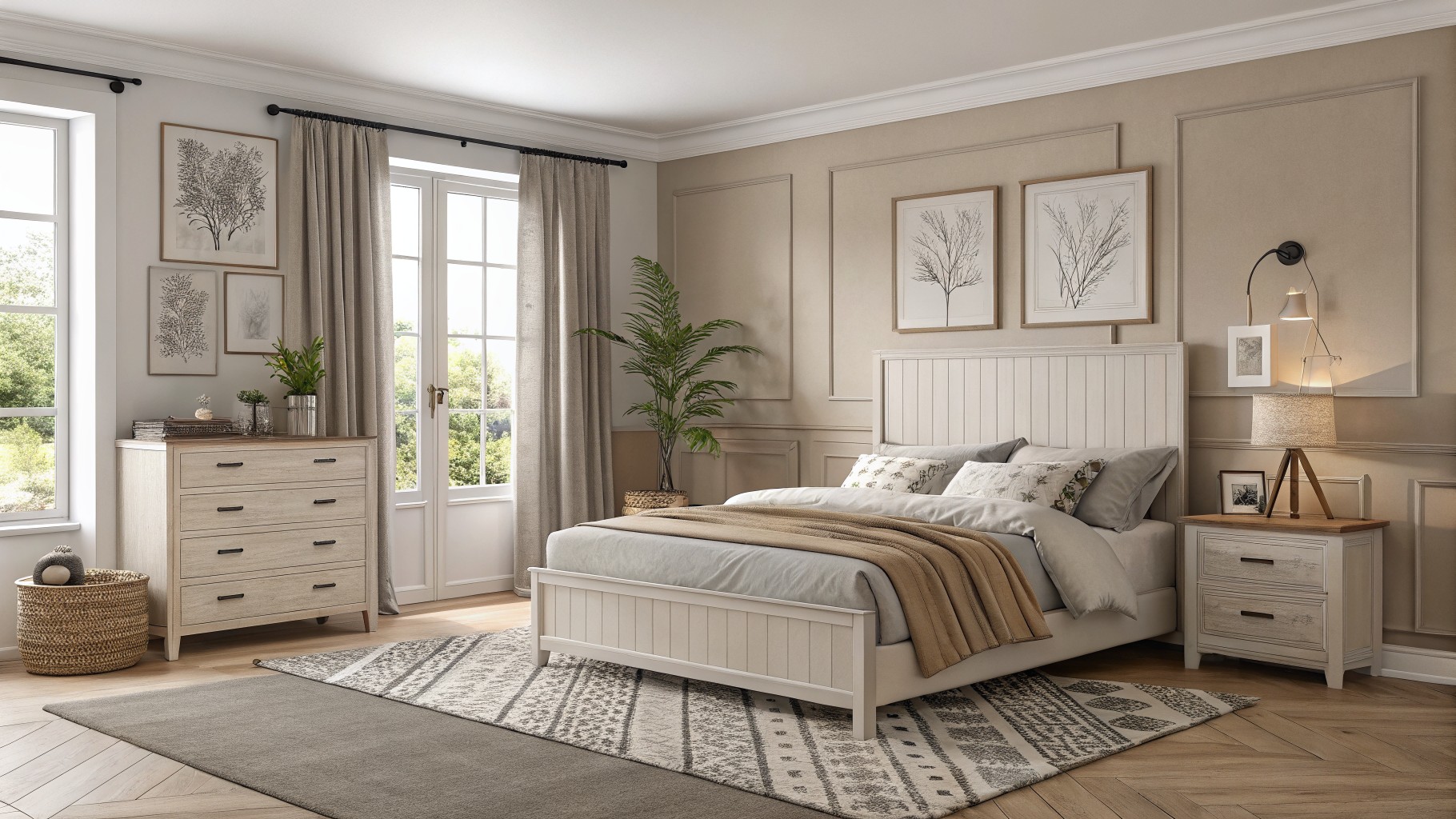
When choosing colors for a bedroom, the way natural light shifts across the walls from morning to night often changes how a neutral reads once furniture and textiles are added.
Muted tones tend to settle into the space more quietly than expected, provided their undertones do not fight the trim or flooring already in place.
I always tape up larger samples and live with them for a few days because small chips never show how a shade will behave beside the bed or against the ceiling.
Soft contrast between two close values can keep the room feeling calm instead of pulling attention in too many directions.
That final check in real light is the part I never skip.
Soft Greige Bedroom Walls

This soft greige on the walls sits right between gray and beige. It has a gentle warmth that makes the room feel settled without looking too stark or heavy.
The color reads best next to light wood tones and white trim. It handles both bright and softer light well, though it can shift cooler if there is not enough natural light in the space.
Soft Sage Green Walls
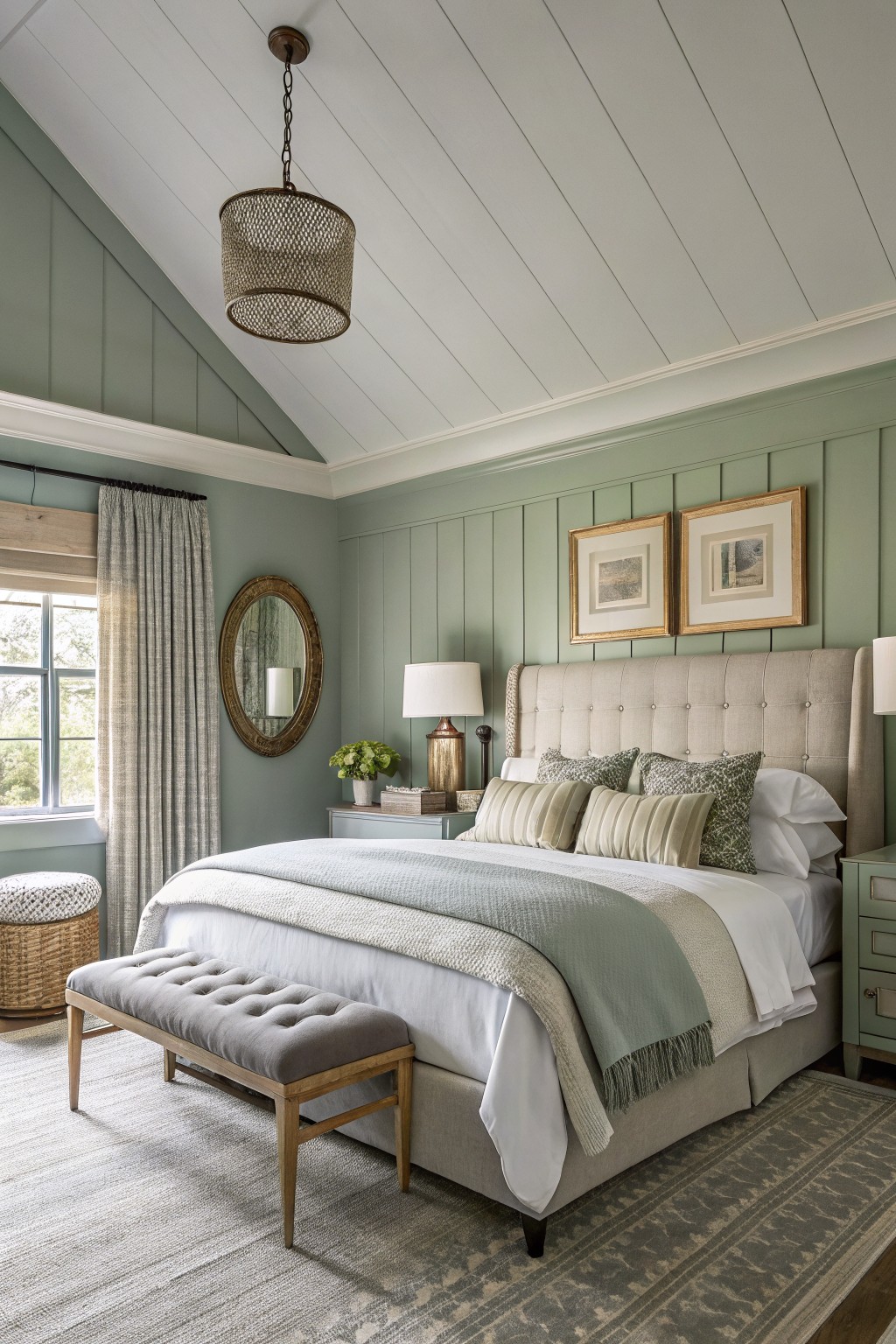
This bedroom uses a muted sage green on the walls. It is a soft color with gray undertones that feels calm without looking flat.
The shade pairs easily with warm wood and white trim. It works best in rooms with decent natural light since the green can shift a bit cooler in low light.
Soft Blue Gray Walls

A soft blue gray covers the walls here and gives the room a calm, steady feel without turning it cold. This kind of color sits right between blue and gray, so it feels quiet but still has enough depth to keep the space from looking flat. It pairs easily with warm wood tones like the bed frame and works well against simple white trim.
The color has a light cool undertone that shows up more in brighter light, which helps the room feel open. It suits bedrooms that already have natural wood furniture or neutral bedding, though it can look a bit stark if the lighting stays dim all day. Good matches include Sherwin Williams Sea Haze, Benjamin Moore Palladian Blue, Farrow & Ball Blue Gray, and Behr Silver Drop.
Dark Charcoal Bedroom Walls
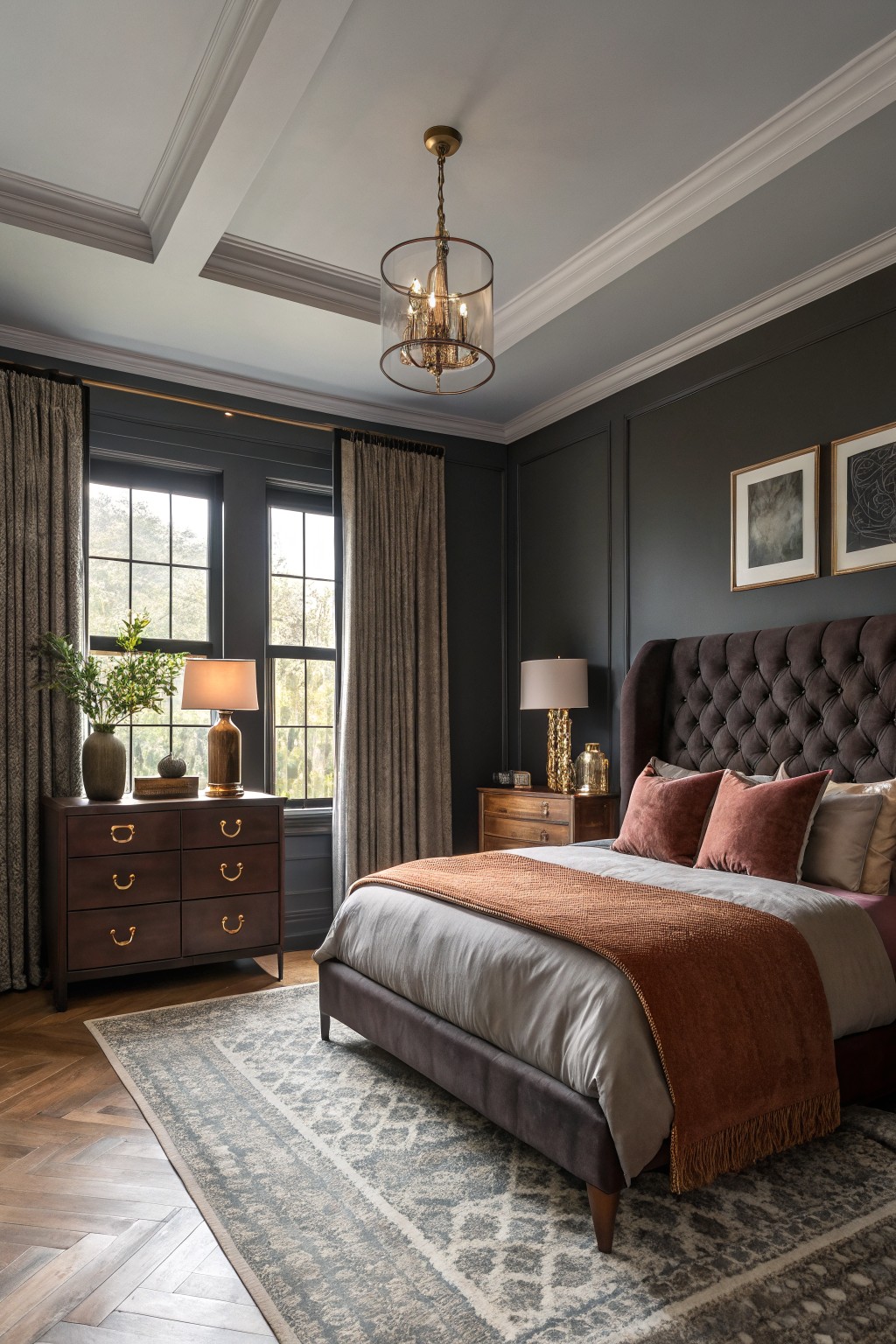
A deep charcoal gray covers the walls here and gives the room a steady, grounded feel. This color sits between a true black and a softer gray, so it keeps the space from looking flat while still feeling calm. It comes close to Sherwin Williams Iron Ore, Benjamin Moore Kendall Charcoal, or Behr Grizzle Gray.
The tone has a slight cool lean that works best with warm wood floors and simple trim. It can start to feel heavy if the room gets little natural light, so test a sample on more than one wall before committing.
Soft Blush Bedroom Walls
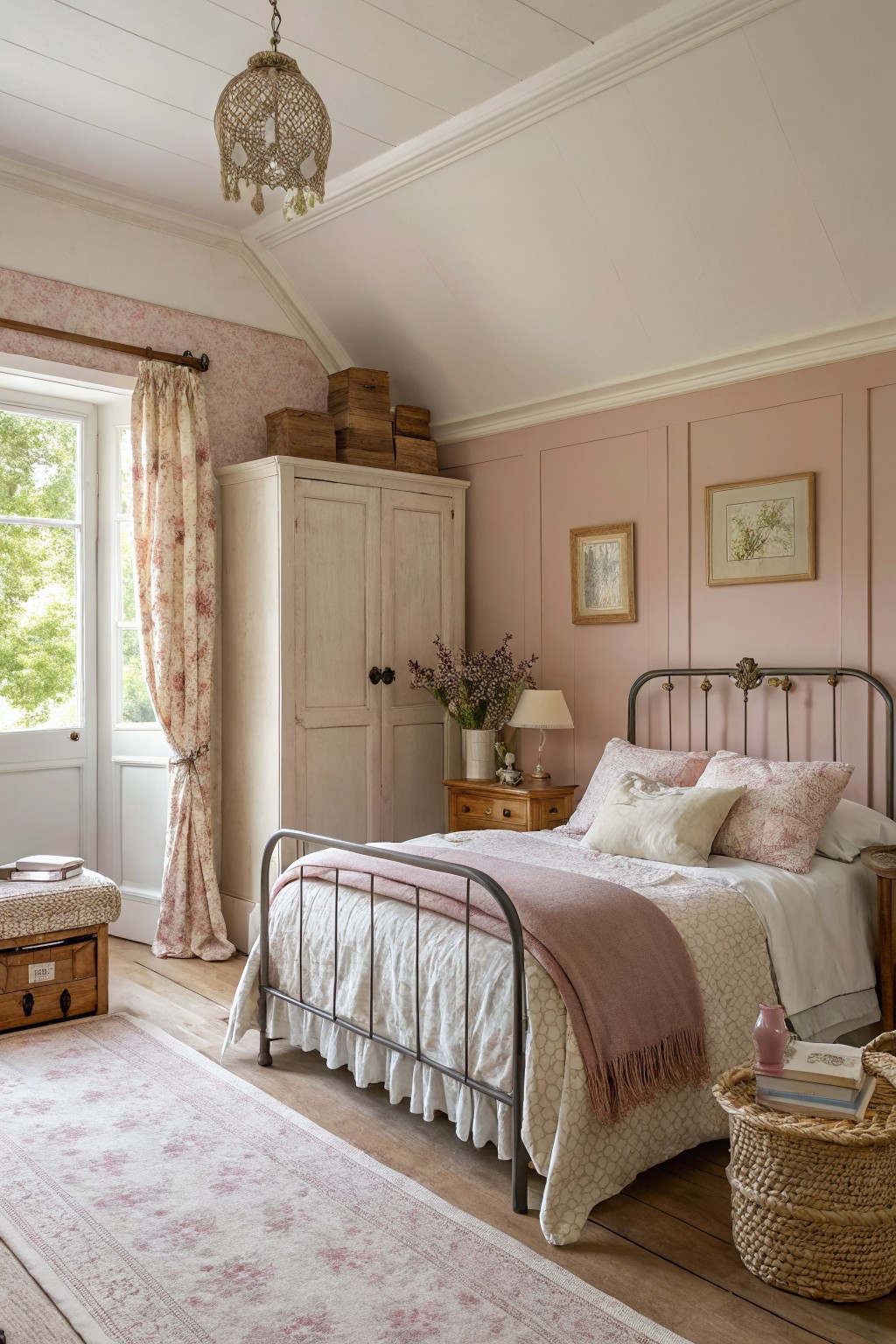
This bedroom uses a soft blush pink on the walls. It is a warm muted tone that sits between pink and beige and feels calm without turning too sweet or childish.
The color has a light peach undertone that keeps the wood floor from looking too cool. It pairs easily with white trim and works best in rooms that get some natural light during the day.
Warm Gray Beige Bedroom Walls

This bedroom uses a soft warm gray on the walls that sits between gray and beige. It keeps the room feeling calm and grounded while still letting the wood furniture and textiles stand out.
The color has a light warmth that works well with natural wood tones and avoids looking too cool in the space. It suits bedrooms with medium to bright light and pairs easily with both white trim and darker wood pieces.
Gray-Toned Sage Green Bedroom Walls

This bedroom uses a soft sage green on the walls that sits somewhere between gray and green. It feels calm without going flat and gives the room a quiet, grounded feel that works well with natural wood tones.
The color has a light gray undertone that keeps it from turning too cool or too warm. It pairs easily with white bedding and raw wood furniture, though it can look a bit dull if the room gets very little natural light.
Balanced Greige Walls With White Trim
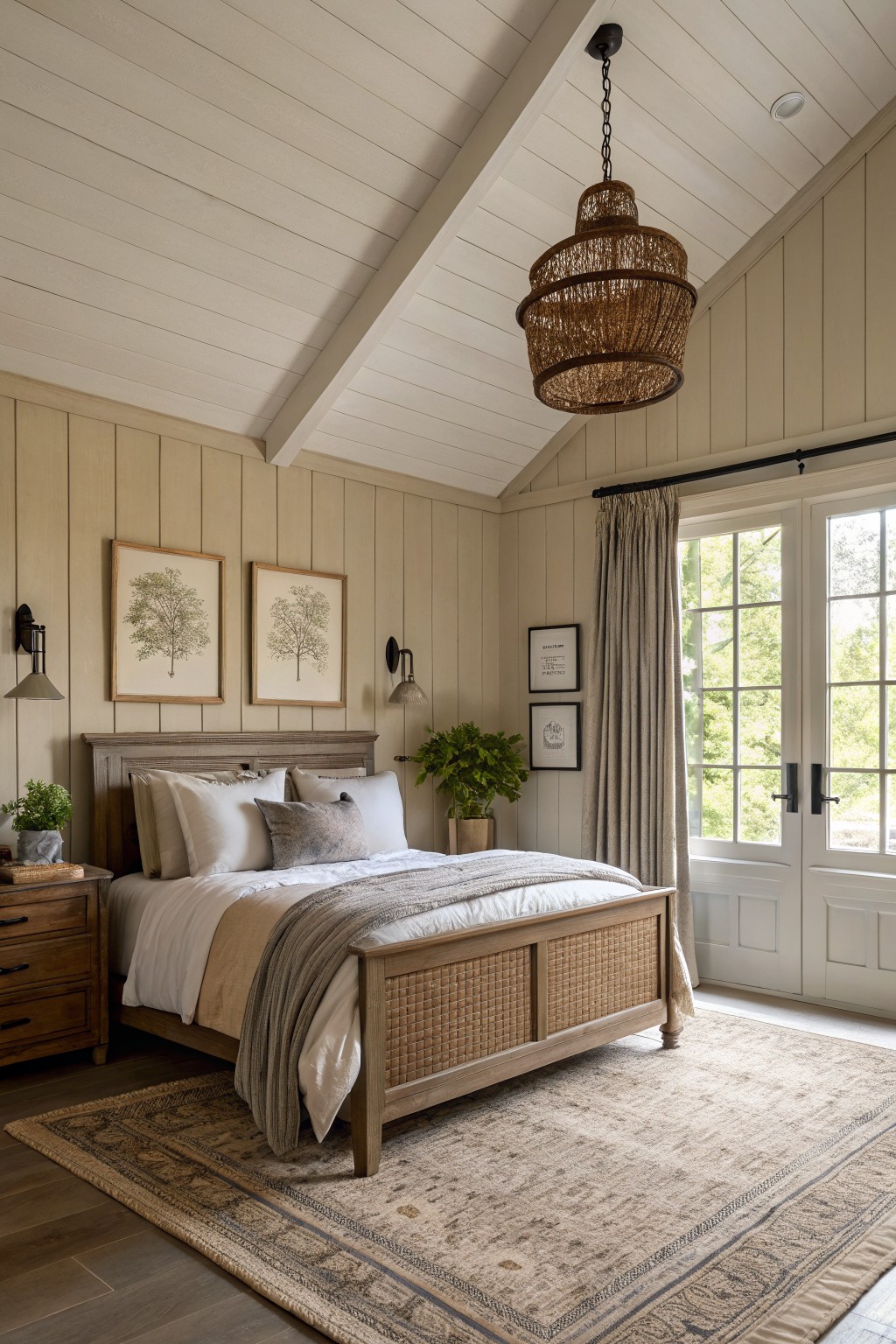
A soft warm greige covers the walls in this bedroom. The color sits between beige and gray without leaning too far in either direction, which helps it feel calm next to the wood tones and white trim.
It has a gentle warmth that keeps the space from turning cool under different lights. Sherwin Williams Accessible Beige or Benjamin Moore Collingwood give a close match, and both work well with natural wood and simple textiles.
Warm Greige Bedroom Walls

This bedroom uses a soft warm greige on the walls. It is a muted neutral with gentle brown undertones that feels calm and steady. The color works well because it sits quietly behind the wood trim and flooring without competing.
It reads a little warmer in daylight and stays balanced next to both light and dark furniture. Try it with cream textiles or simple wood pieces if you want the same easy feel. Good matches include Sherwin Williams Accessible Beige, Benjamin Moore Edgecomb Gray, Behr Greige, and Farrow & Ball Elephant’s Breath.
Warm Terracotta Bedroom Walls
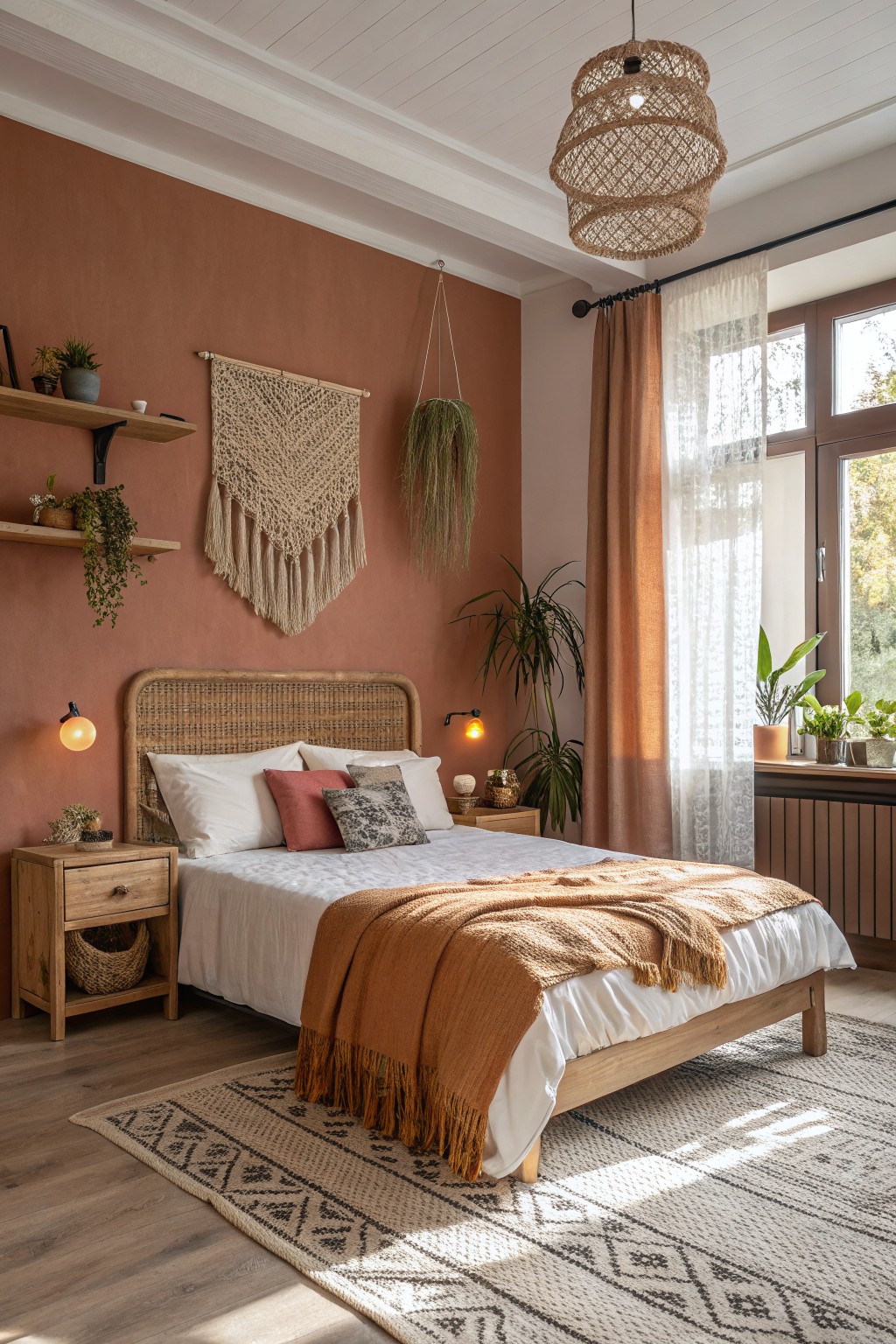
This bedroom uses a warm terracotta on the walls. It is a muted clay color with soft red undertones that feels grounded and a little earthy rather than bright or bold.
The tone works best with natural wood and simple light fabrics. It can look slightly deeper in low light, so it suits rooms that get steady daylight and pairs well with pale trim or woven textures.
Cool Blue Gray Bedroom Walls

This bedroom uses a soft blue gray on the walls that sits right between gray and blue without leaning too hard in either direction. It keeps the room feeling calm and open while still giving the space a bit of color that reads as intentional rather than just another neutral.
The color has cool undertones that show up more in natural light and pairs easily with white trim and light wood furniture. It works well in bedrooms that get decent daylight but can feel a little flat in very dark rooms so testing a sample on the actual wall is worth doing.
Muted Gray Green Bedroom Walls
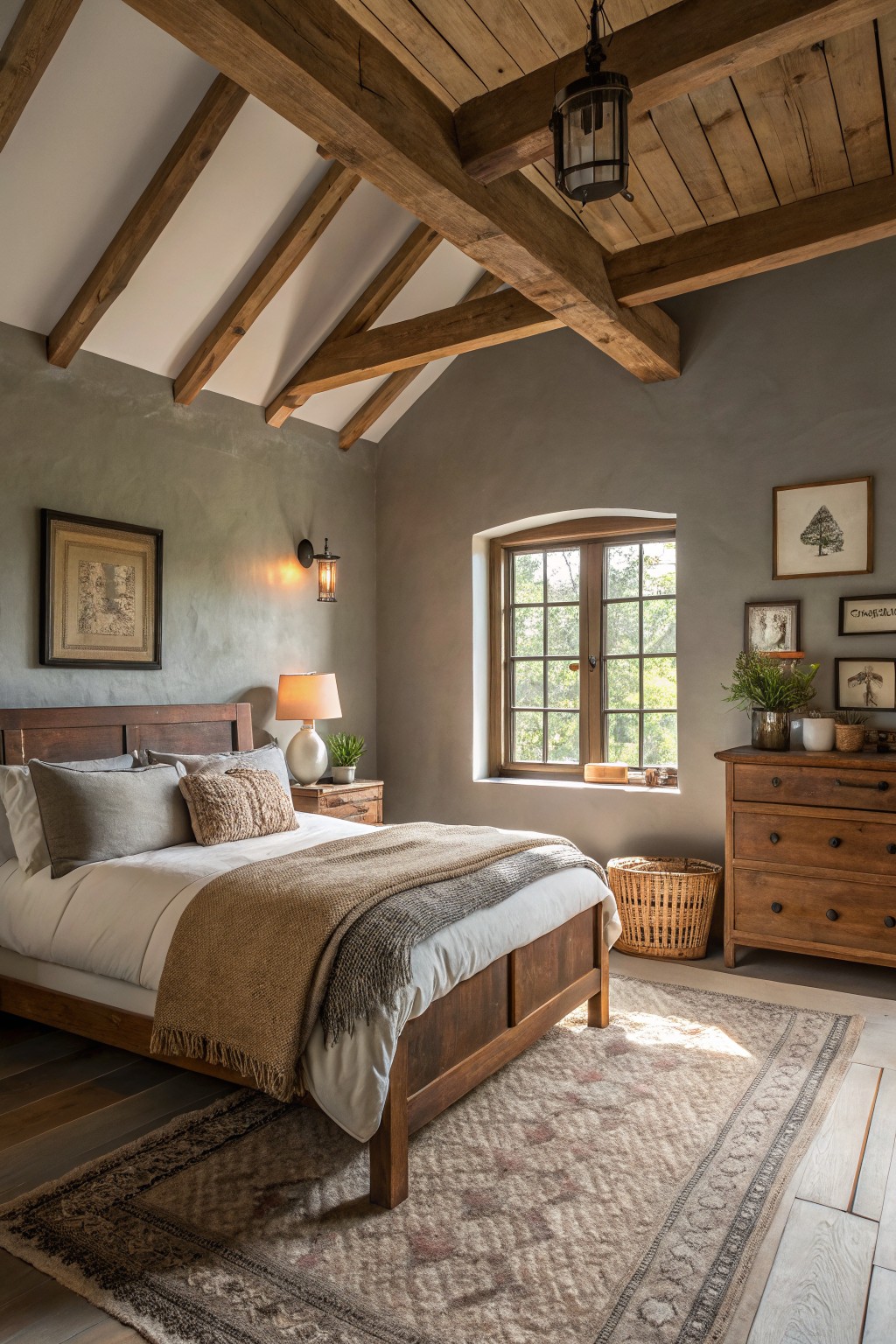
This bedroom uses a soft muted gray green on the walls that sits somewhere between gray and sage. It has a calm, slightly cool feel without turning chilly, and it works well with the warm wood tones in the room. Colors like this often read as Benjamin Moore Gray Owl, Sherwin Williams Silver Strand, Behr Silver Drop, or Farrow & Ball Mizzle.
The green undertone stays subtle in most lighting and helps the walls feel connected to the wood ceiling and trim. It pairs easily with natural wood furniture and simple textiles. Just watch that the room gets enough natural light, since the color can lean a bit cooler in low light.
Muted lavender gray walls
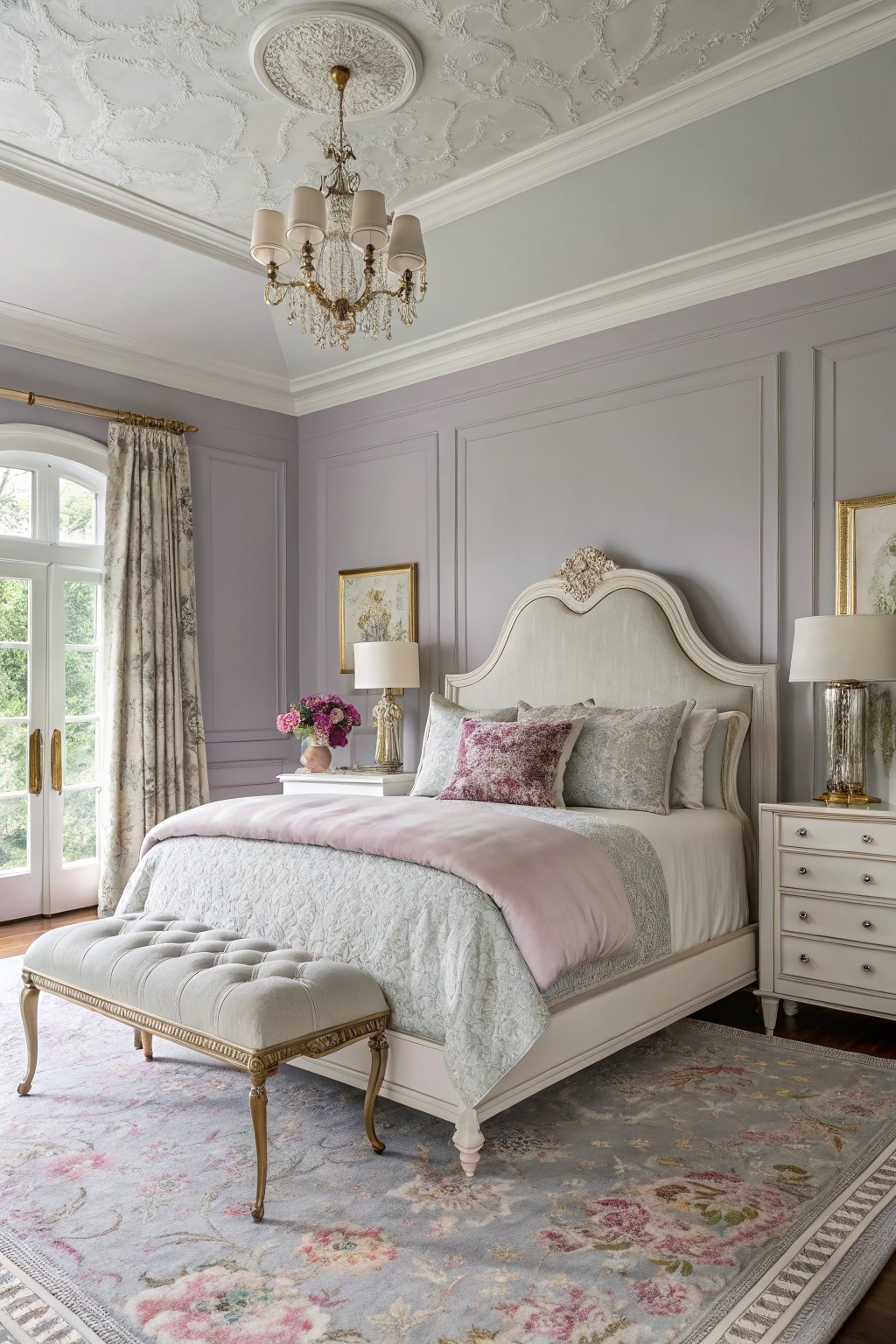
This bedroom uses a muted lavender gray on the walls. It is a light cool neutral that stays soft and calm without turning too blue or pink in most lighting.
The color has a gentle purple undertone that shows best next to white trim. It works well in bedrooms with wood floors or layered rugs and pairs easily with cream or pale linen textiles.
Warm Yellow Walls
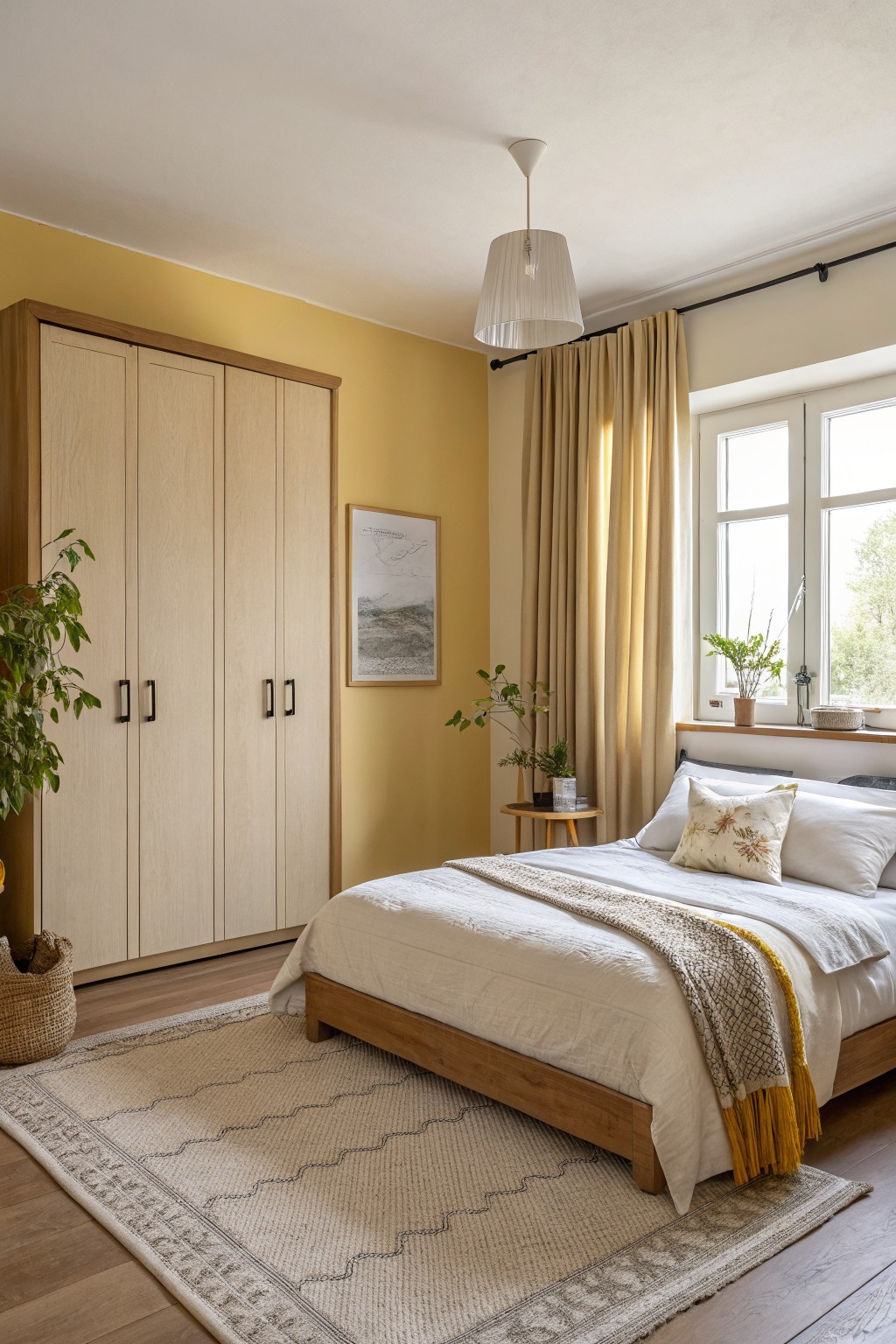
This bedroom uses a soft warm yellow on the walls that sits somewhere between cream and true yellow. The color has a gentle, earthy feel that keeps the room bright without looking sharp. It comes close to shades like Benjamin Moore Hawthorne Yellow, Sherwin Williams Optimistic Yellow, Behr Sunflower Seed, or Farrow & Ball Yellowcake.
The yellow works especially well next to light wood, since the warm undertones keep the wood from looking too cool or flat. It suits bedrooms that get steady daylight, where the color can shift from soft gold in the morning to a calmer tone later in the day. White trim and simple wood furniture help it stay balanced.
Deep Teal Bedroom Walls
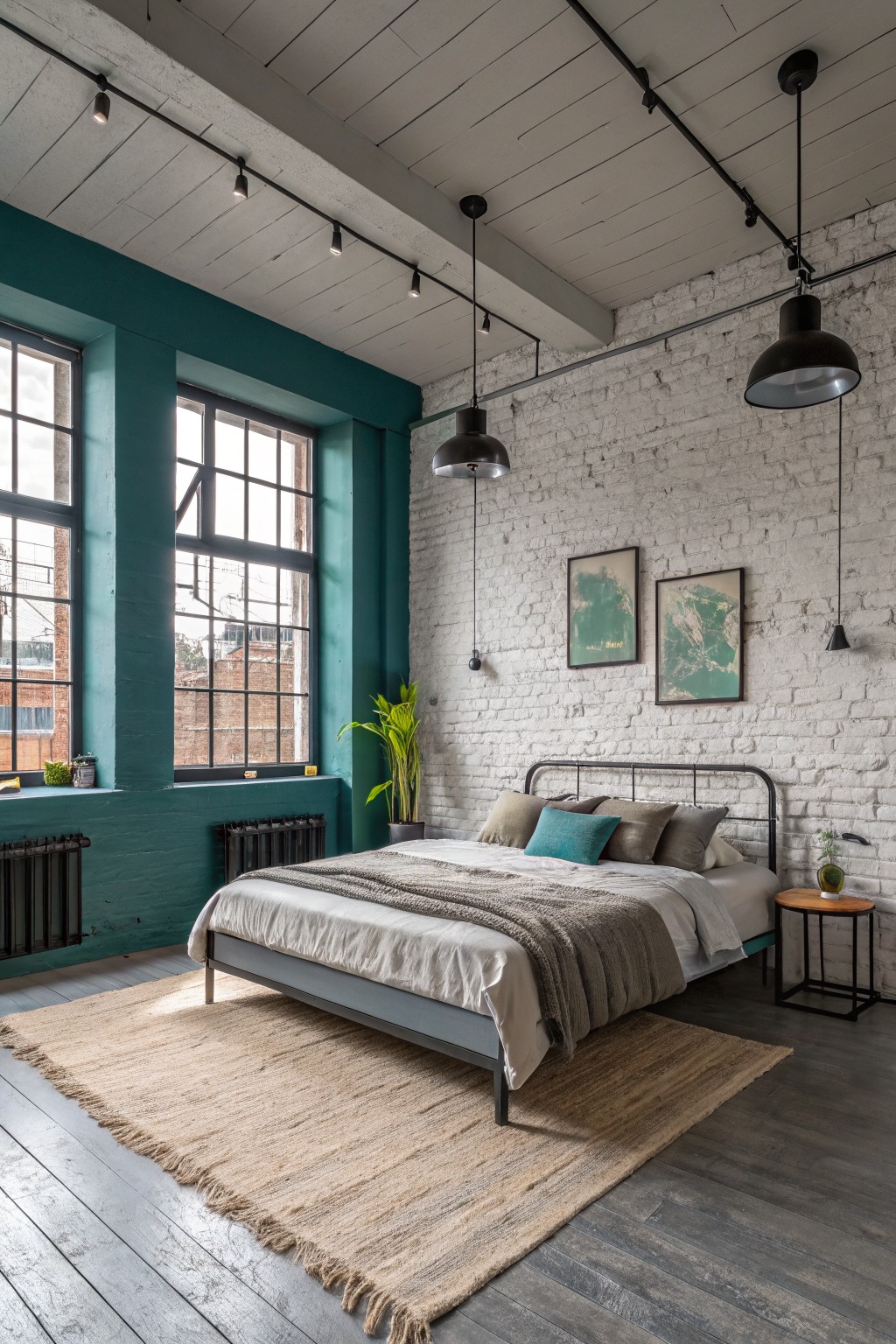
This deep teal on the walls gives the room a solid color base that still feels relaxed. It falls into the teal green family and stands out because it adds real depth without turning the space dark or heavy.
The color has a cool lean that sits nicely next to white brick and darker floors. It works best in bedrooms with good natural light and pairs easily with simple neutrals and wood tones. Likely matches include Farrow & Ball Vardo, Benjamin Moore 2063-10, Behr Deep Sea Dive, and Sherwin Williams Emerald Isle.
Muted Sage Green Walls
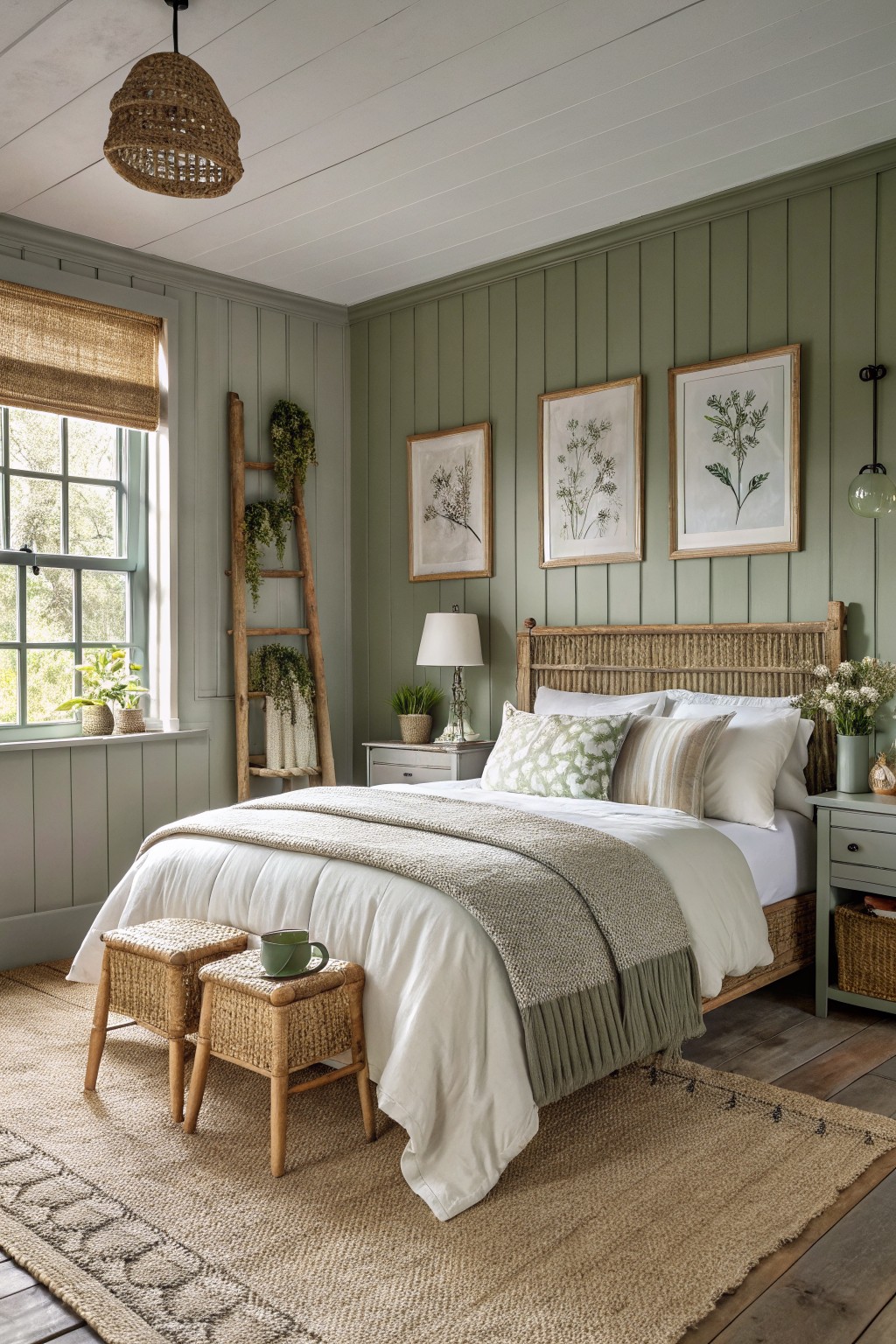
This bedroom uses a muted sage green on the walls. It is a soft gray-green that feels calm and a little earthy, which makes the room feel settled without looking flat.
The color has a cool undertone that shows up more in brighter light, so it works best with warm wood tones and white or cream textiles to keep the space from feeling chilly. It suits bedrooms that get decent daylight and pairs easily with natural materials.
Earthy Gray-Green Bedroom Walls

A muted sage green works well in bedrooms because it sits between gray and green without leaning too far either way. This color keeps the room feeling calm and a little grounded while still letting wood furniture and neutral textiles stand out.
It has noticeable gray undertones so it reads softer than a true green would. It pairs best with warm wood tones and off-white trim, but it can start to feel flat if the room lacks natural light or if everything else in the space is too cool.
Light Blue Gray Walls With Warm Wood Tones
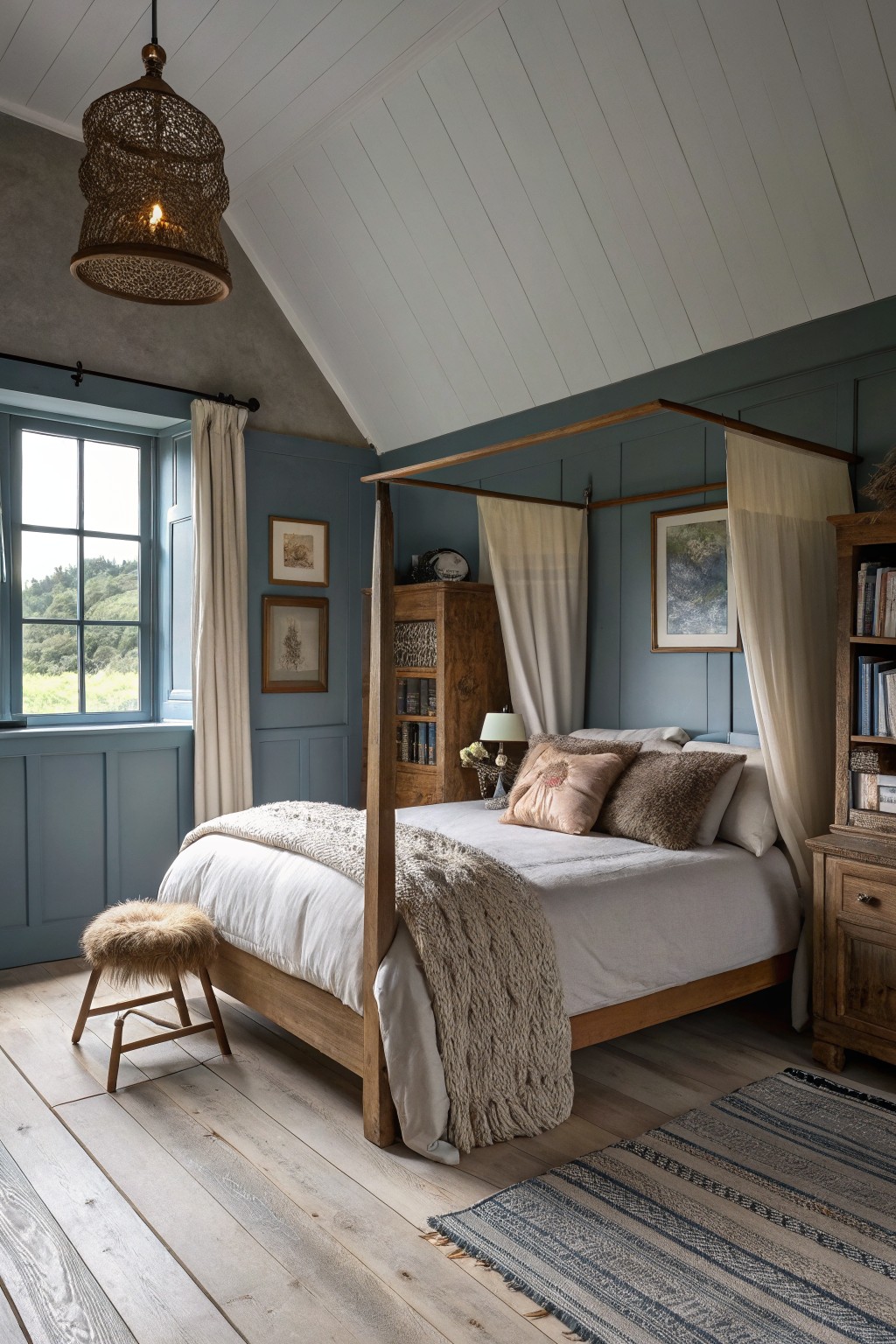
A soft blue gray on the walls gives a bedroom a calm, steady feel without turning it too cool or dull. This shade sits right between gray and blue, so it keeps the space feeling light while still offering some depth next to wood furniture and floors.
It works best with warm wood tones and simple white or off-white trim. Good natural light helps it stay soft instead of flat. Colors like Sherwin Williams Rainwashed, Benjamin Moore Smoke, Behr Silver Drop, or Farrow & Ball Light Blue come close to this look.
Soft Sage Green Bedroom Furniture
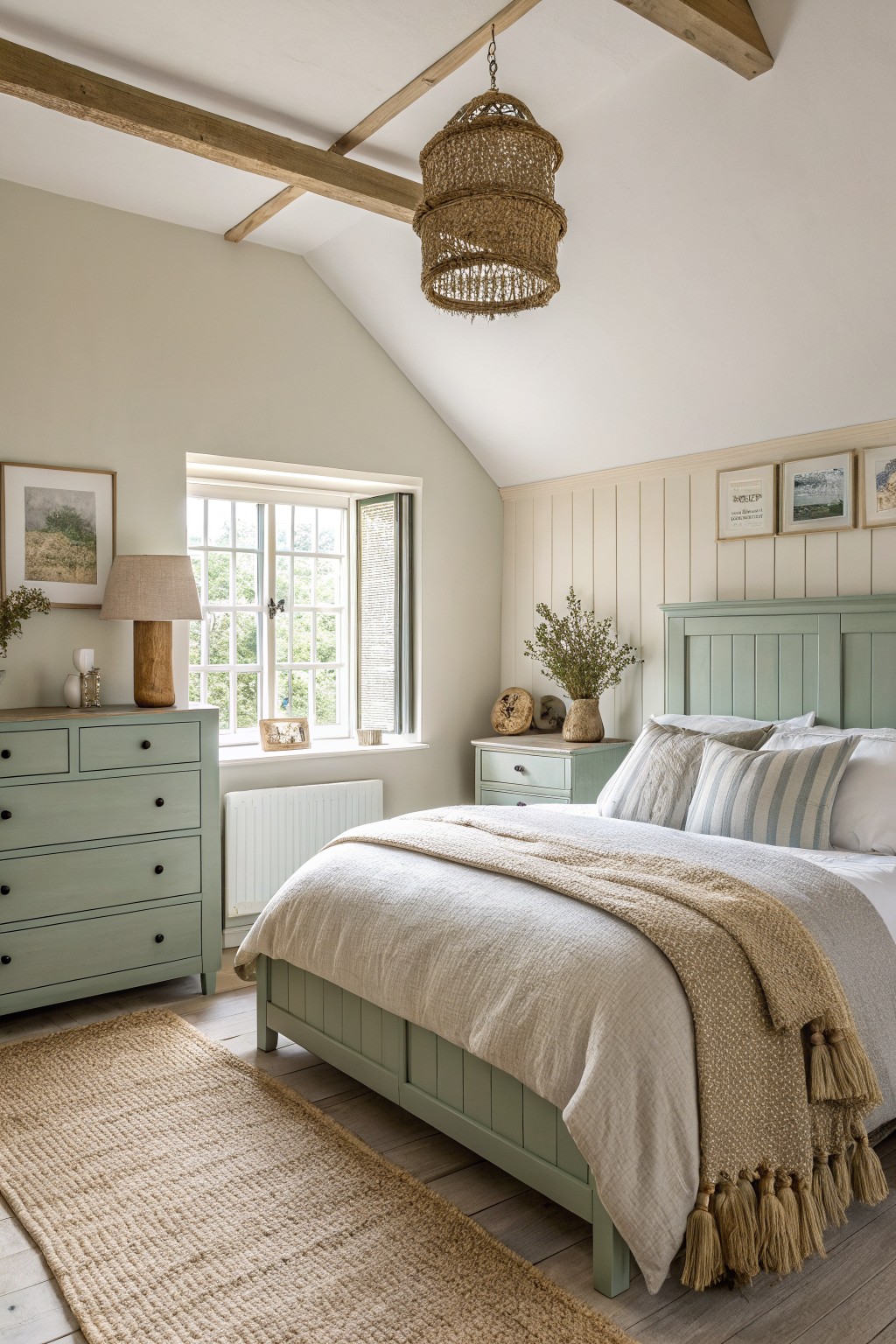
This soft sage green on the bed frame and dresser is a muted tone that sits somewhere between gray and green. It feels calm and a bit earthy without being too bold or too washed out.
The color has a slight gray undertone that helps it blend with warm wood floors and neutral walls. It works well in bedrooms that already have linen, cotton, or other soft textiles. Benjamin Moore’s Saybrook Sage or Farrow & Ball’s Light Blue would be close matches, along with Sherwin Williams Clary Sage.
Warm Greige Walls With Brown Undertones
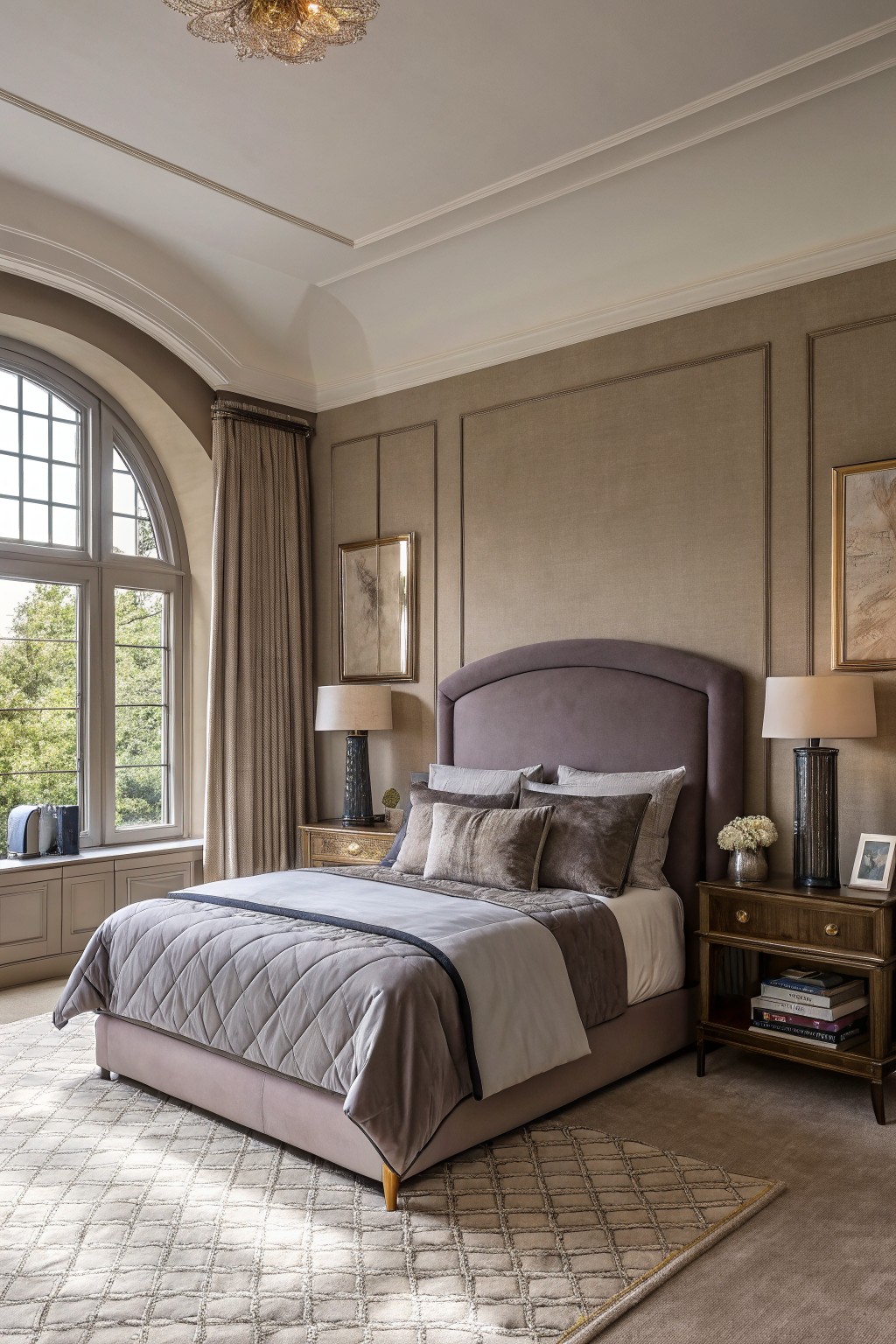
This bedroom uses a warm greige on the walls that sits between beige and gray. It gives the room a calm, settled look without feeling flat or too cool.
The color has a soft brown undertone that works well with wood furniture and keeps the space from feeling stark. It suits bedrooms with decent natural light and pairs easily with both pale textiles and deeper neutral accents.
Earthy Sage Green Bedroom Walls
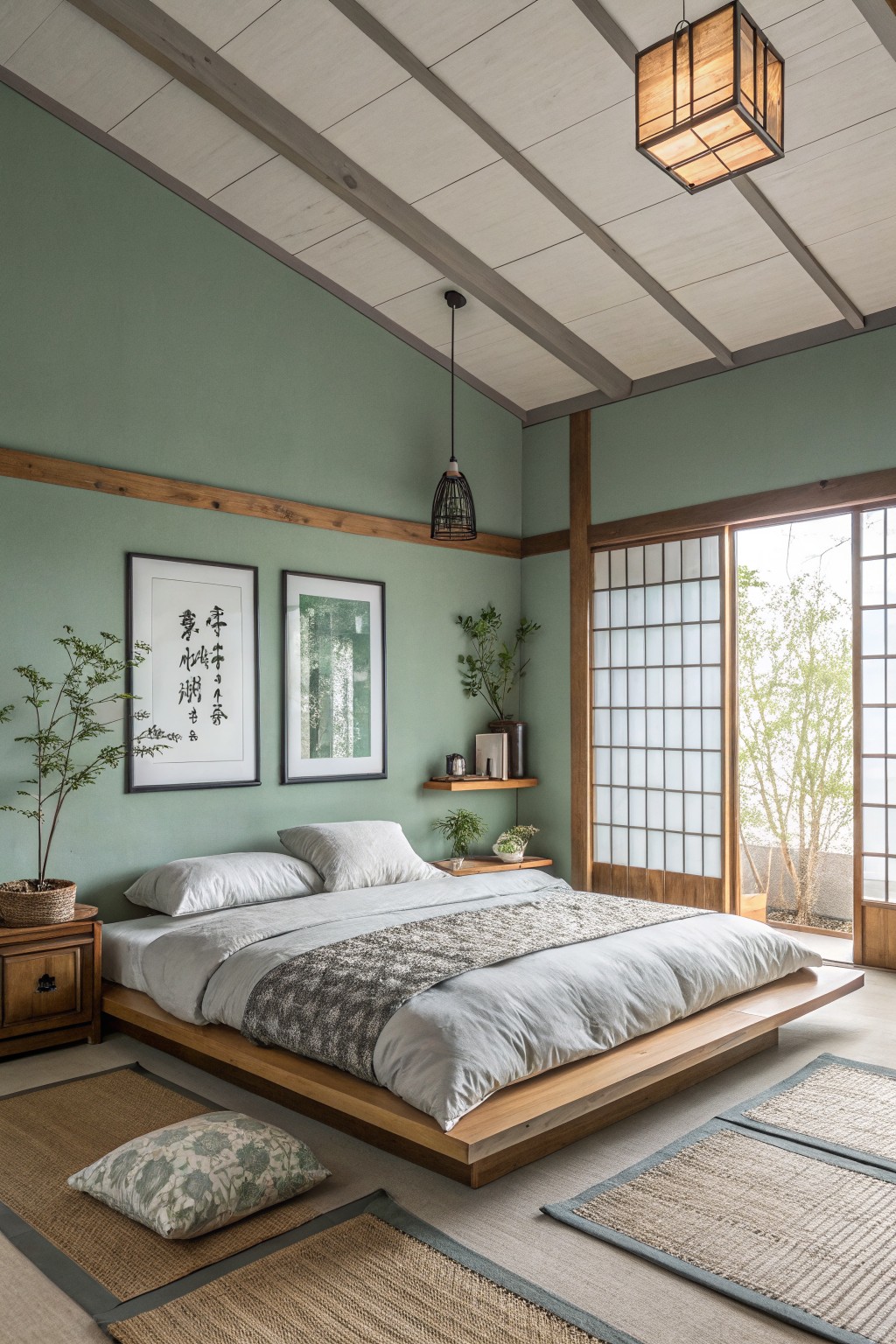
A soft sage green on the walls gives a bedroom that quiet, slightly earthy feel without making the space look heavy. This muted tone sits between gray and green, so it feels calm and easy to live with day to day.
It works best with warm wood tones and simple white or linen textiles. In brighter light the color lifts a little, while in softer light it can lean more gray, so a test patch on the actual wall is useful before committing.
Clay-Toned Terracotta Bedroom Walls
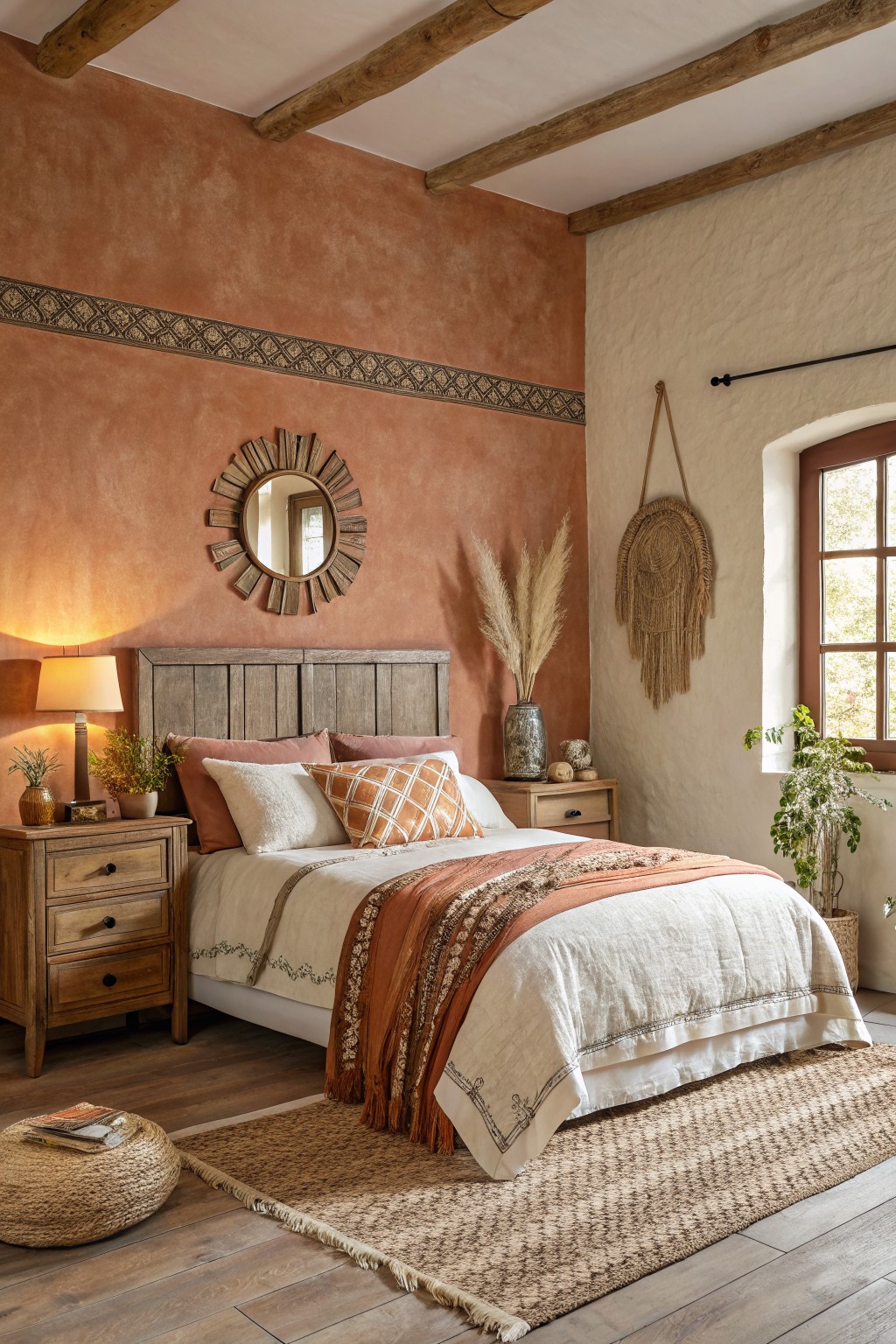
This bedroom uses a warm terracotta on the walls that sits somewhere between clay and soft rust. It gives the room an earthy base without feeling heavy, and it works especially well with the natural wood tones in the ceiling beams and floor.
The color has a slight pinkish undertone that shows up more in warmer light. It pairs nicely with linen bedding and raw wood furniture, but it can start to feel flat if the room gets very little natural light or if everything else leans too cool. Benjamin Moore’s Georgia Clay comes close, as does Sherwin Williams Canyon Clay. Behr’s Baked Clay and Farrow & Ball Red Earth are also in the same family.
Classic Greige Walls With Oak Furniture

This bedroom uses a soft greige on the walls. It is a muted neutral that sits between gray and warm beige, giving the room a calm base that works with wood tones and simple furnishings.
The color has a light warm undertone that keeps the space from feeling too cool. It pairs well with oak furniture and white bedding, and it holds up nicely in both bright and softer light.
Frequently Asked Questions
Q: How do I pick muted tones that still feel warm in a north-facing bedroom? A: Start with soft greige on the walls and layer in warm taupe bedding. Add a touch of dusty rose in the curtains to keep things cozy without going too cool.
Q: Can I mix different neutrals without making the space look flat? A: Try pairing a light oatmeal with a deeper mushroom gray on the headboard. The soft contrast comes from varying the textures like linen and velvet.
Q: What if my favorite color combo feels too dull once it’s all together? A: Swap one neutral for a slightly deeper muted shade, like trading beige for olive gray. Test a few samples on the wall at different times of day to see how the light shifts them.