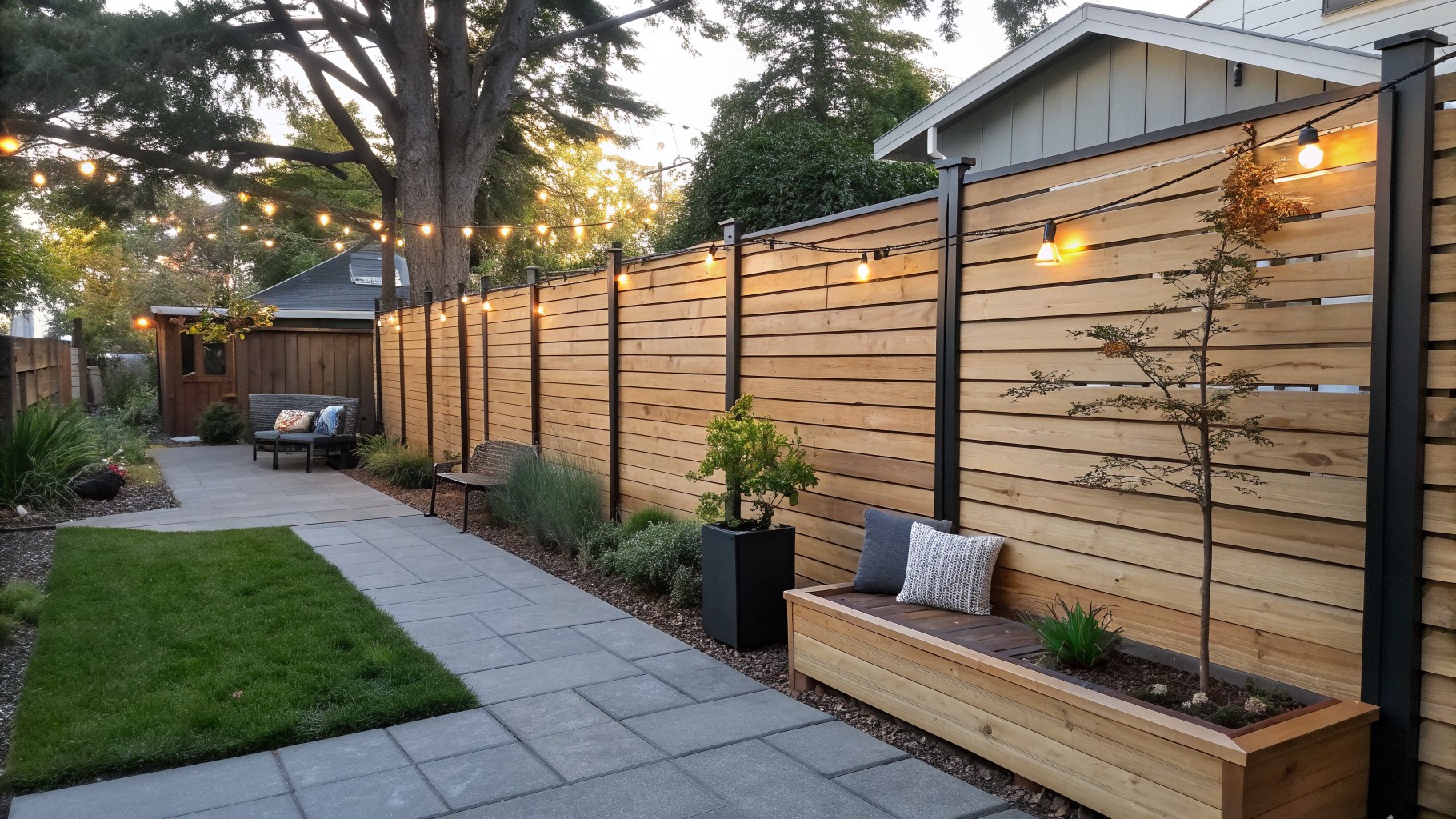
I have found that backyards often feel more open than they actually are until you sit outside for a while and notice how much the neighbors can see.
Fences that solve the privacy issue without making the space feel closed off tend to get used more often once they are in place.
The materials and heights matter more than people expect when it comes to keeping air and light moving through the yard.
Many simple weekend builds hold up better than they first appear because they work with the existing layout instead of fighting it.
I like to try one panel first to see how it changes the daily feel before building the rest.
Build Seating Into Your Privacy Fence
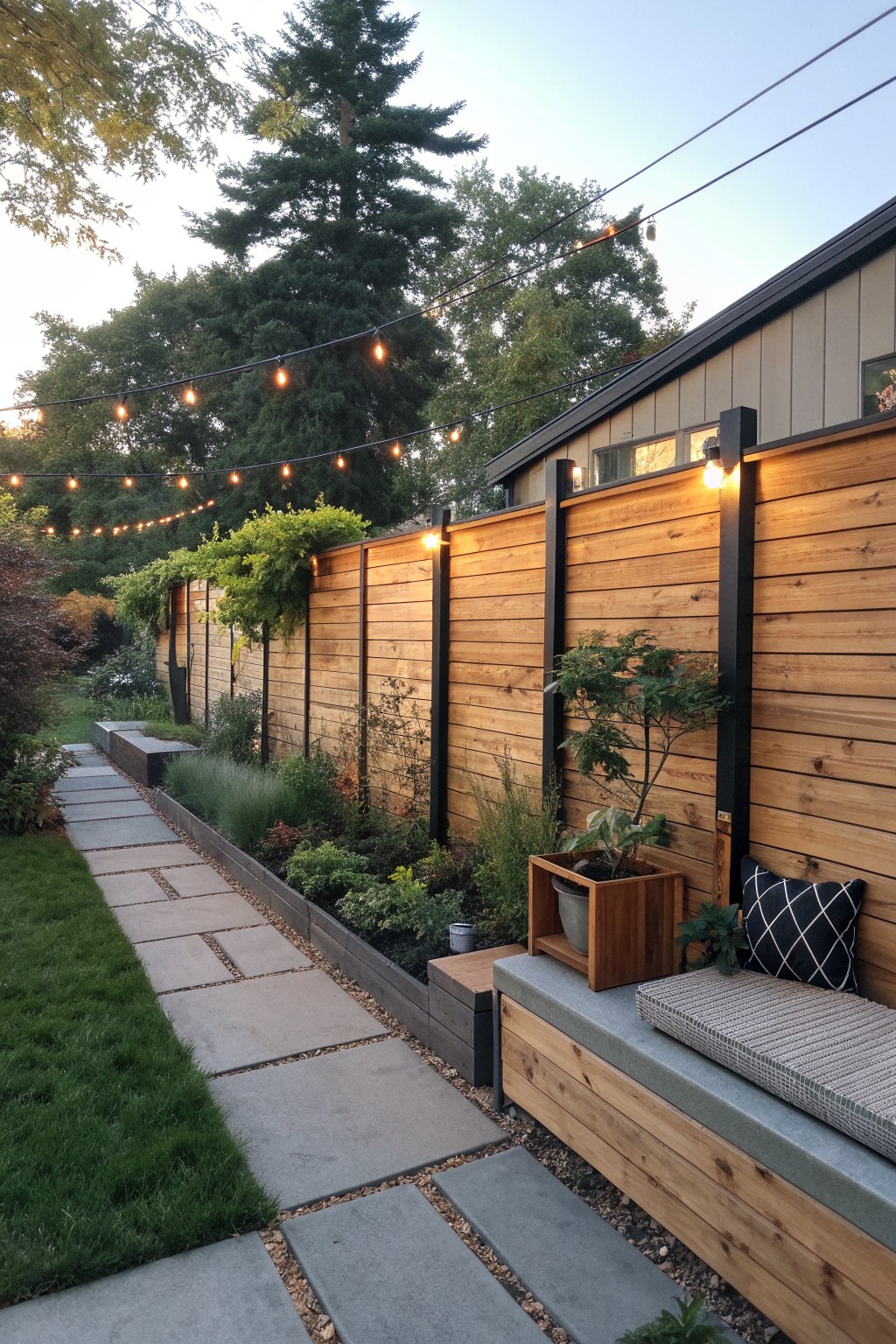
A fence that doubles as a bench gives you privacy without losing usable space in a smaller yard. The horizontal boards keep the look clean while the built-in seat turns the fence line into a place to sit and relax instead of just a barrier.
This setup works best along the side or back of the house where the fence already runs close to the living area. Make sure the bench frame is anchored well into the posts so it stays solid, and leave room for a few plants at the base to soften the wood.
Add Lattice Panels To Your Fence
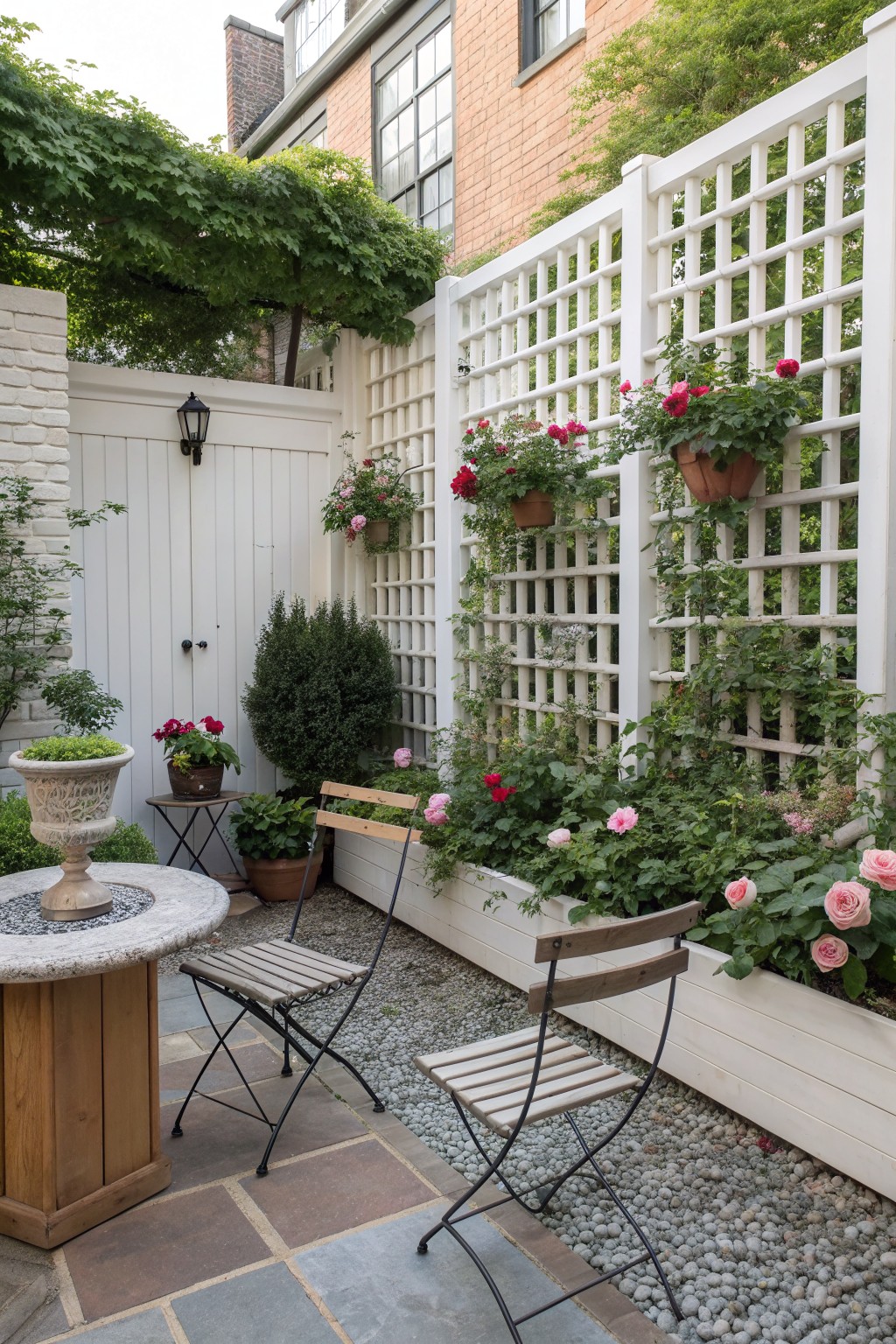
A simple way to gain privacy without making a space feel closed in is to top a solid fence with lattice. It blocks the direct view while still letting light and air through, and it gives vines or potted flowers something to climb.
This works best on small patios or side yards where a full solid wall would feel heavy. Attach the lattice to an existing fence or build it in sections so you can add or move planters as needed. Just check that the posts can handle the extra weight once the plants fill in.
Vertical Slat Fences For Outdoor Privacy
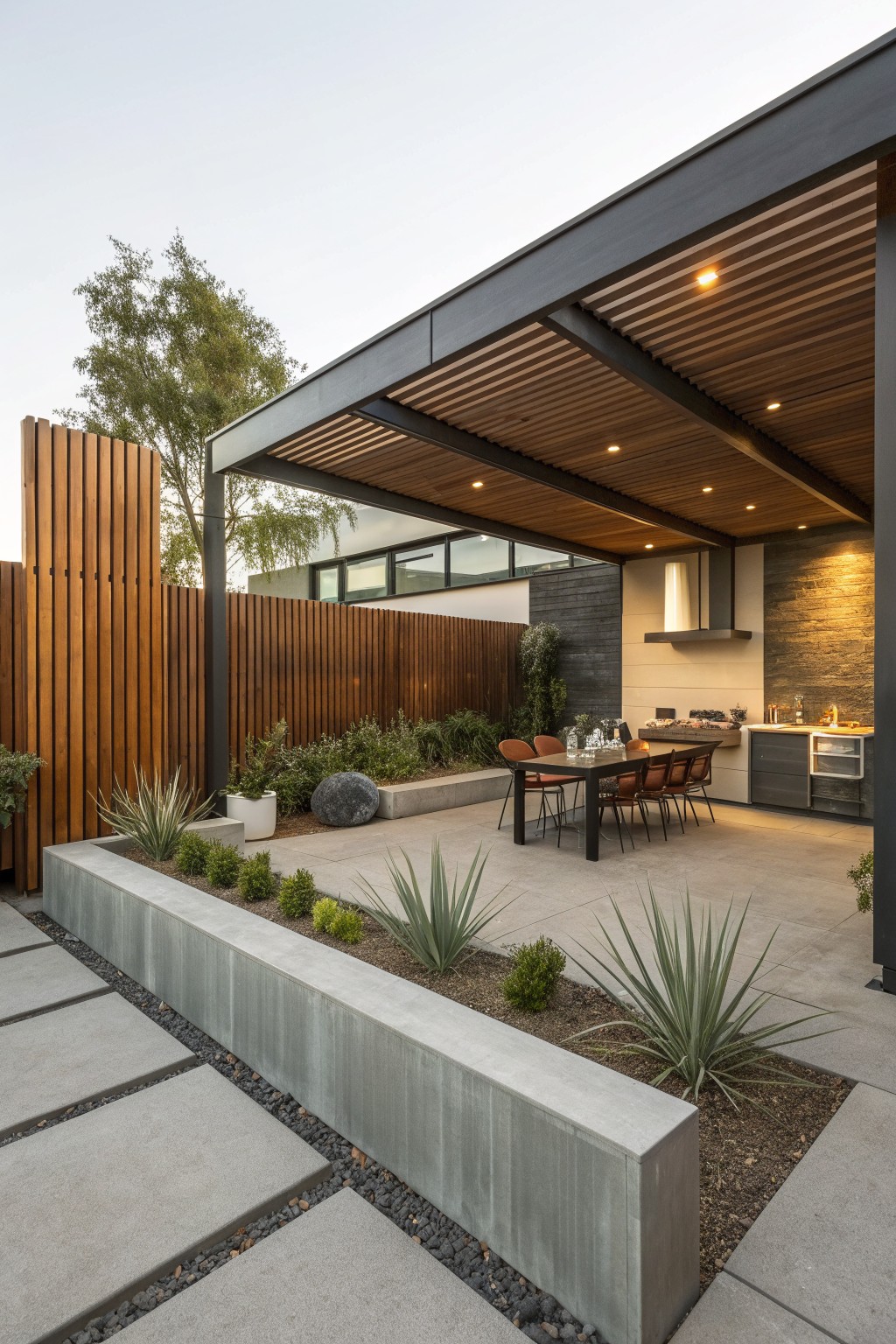
Vertical wood slats work well when you want to block views without making the yard feel closed in. They let some light and air through while giving the patio a clear boundary that feels intentional rather than heavy.
This approach suits smaller backyards or side yards where full solid fencing would feel too dark. Keep the slats spaced evenly and use a simple stain so the wood ages evenly with the rest of the space.
Bamboo Screening With A Built In Bench
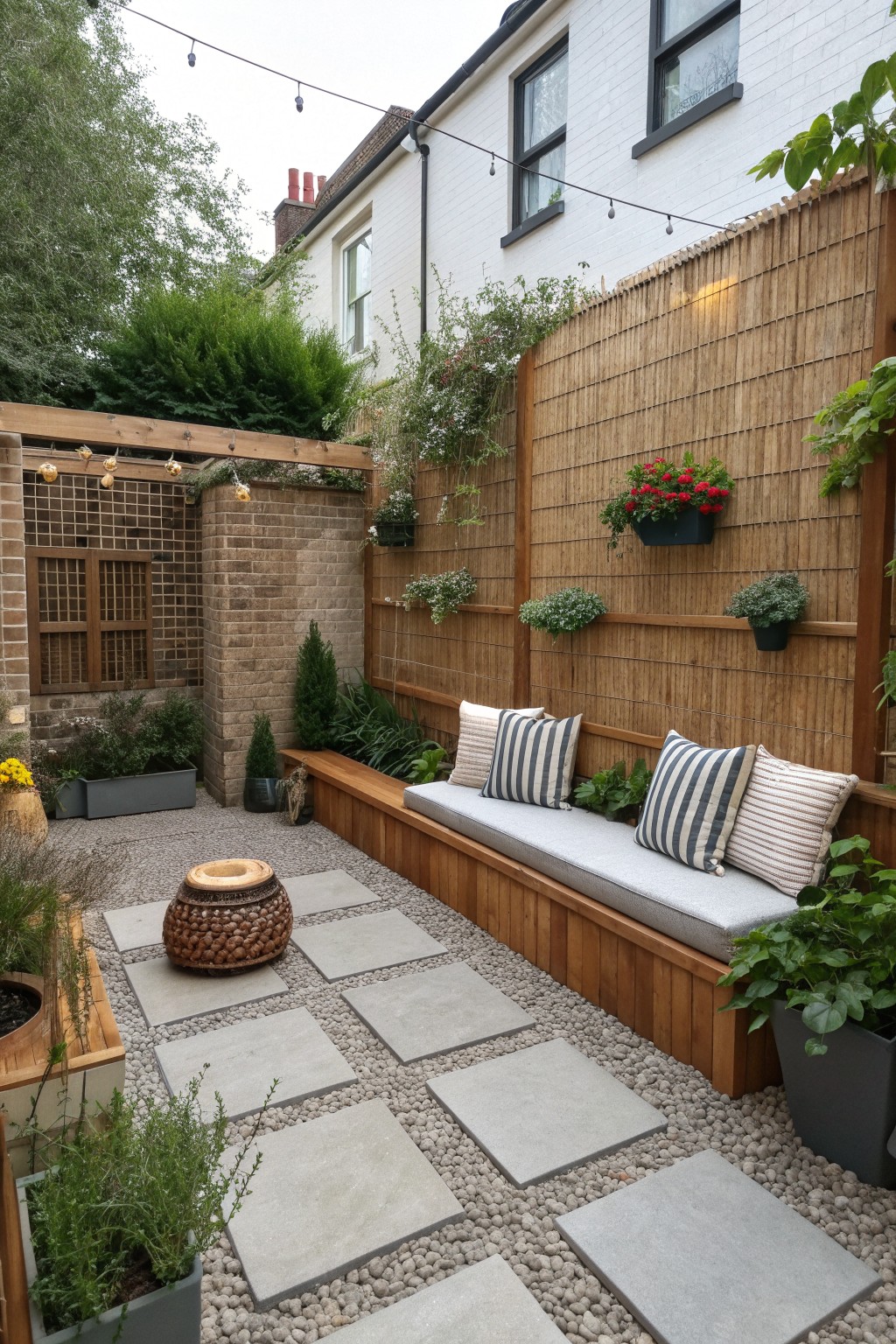
A tall reed or bamboo screen gives solid privacy without making the space feel closed in. It works especially well along one side of a small yard where you want to block a neighbor’s view but still keep some light and air moving through.
This setup suits narrow patios or side yards best. You can attach the screen to an existing fence or frame and add a simple bench along the base so the area feels more like a room than just a boundary. Keep the top edge a little uneven if you want a softer look.
Bamboo Screening For Quick Privacy
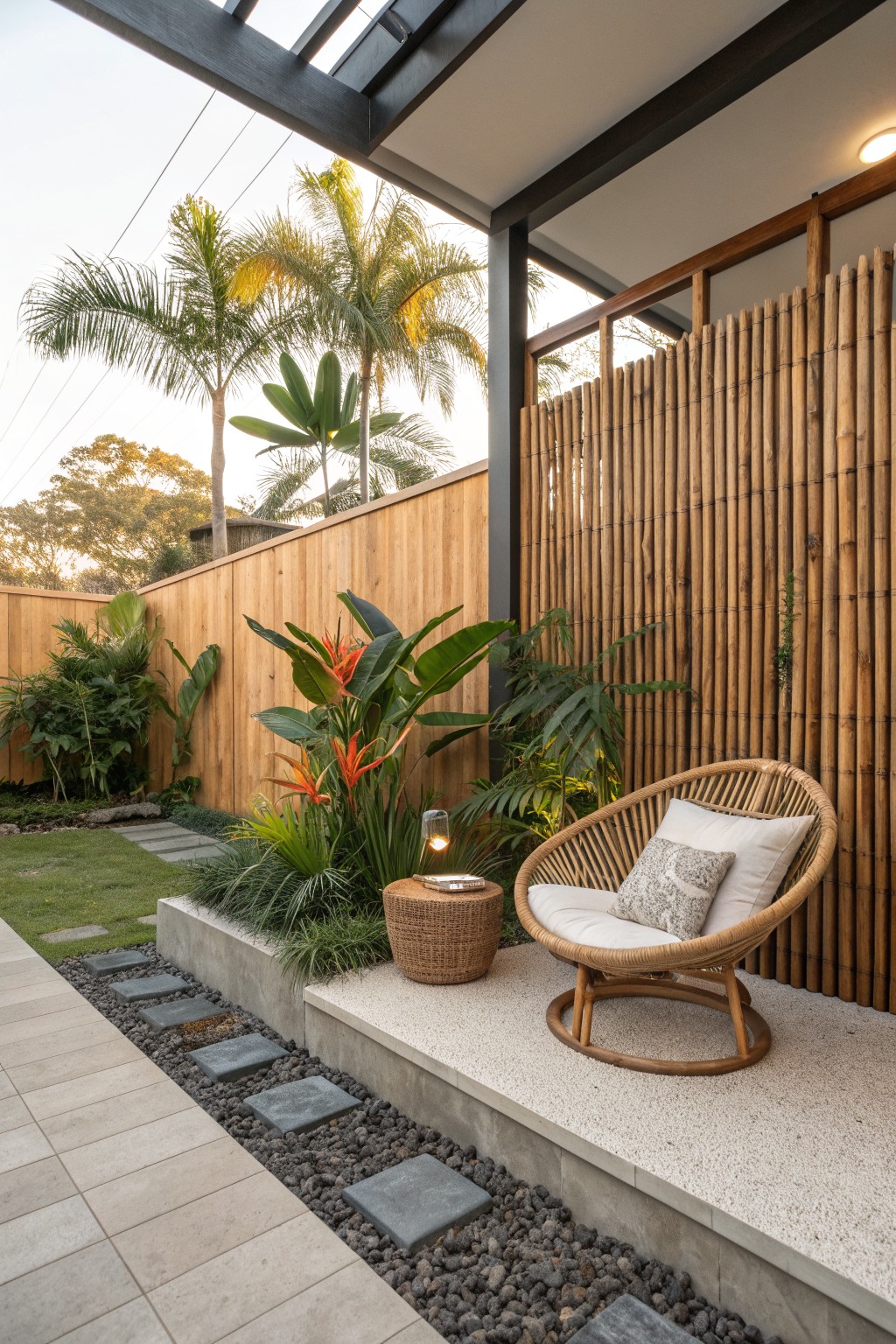
Bamboo panels give you a fast way to block views without putting up a solid wall. They feel lighter than wood or vinyl and still create a clear boundary around a seating spot.
This works best on small patios or along one side of a yard where you want privacy in a weekend. Set posts, attach the panels, and the screen is done. The natural color blends with most garden plants and does not need paint or stain.
Add Built-In Seating Along Your Privacy Fence
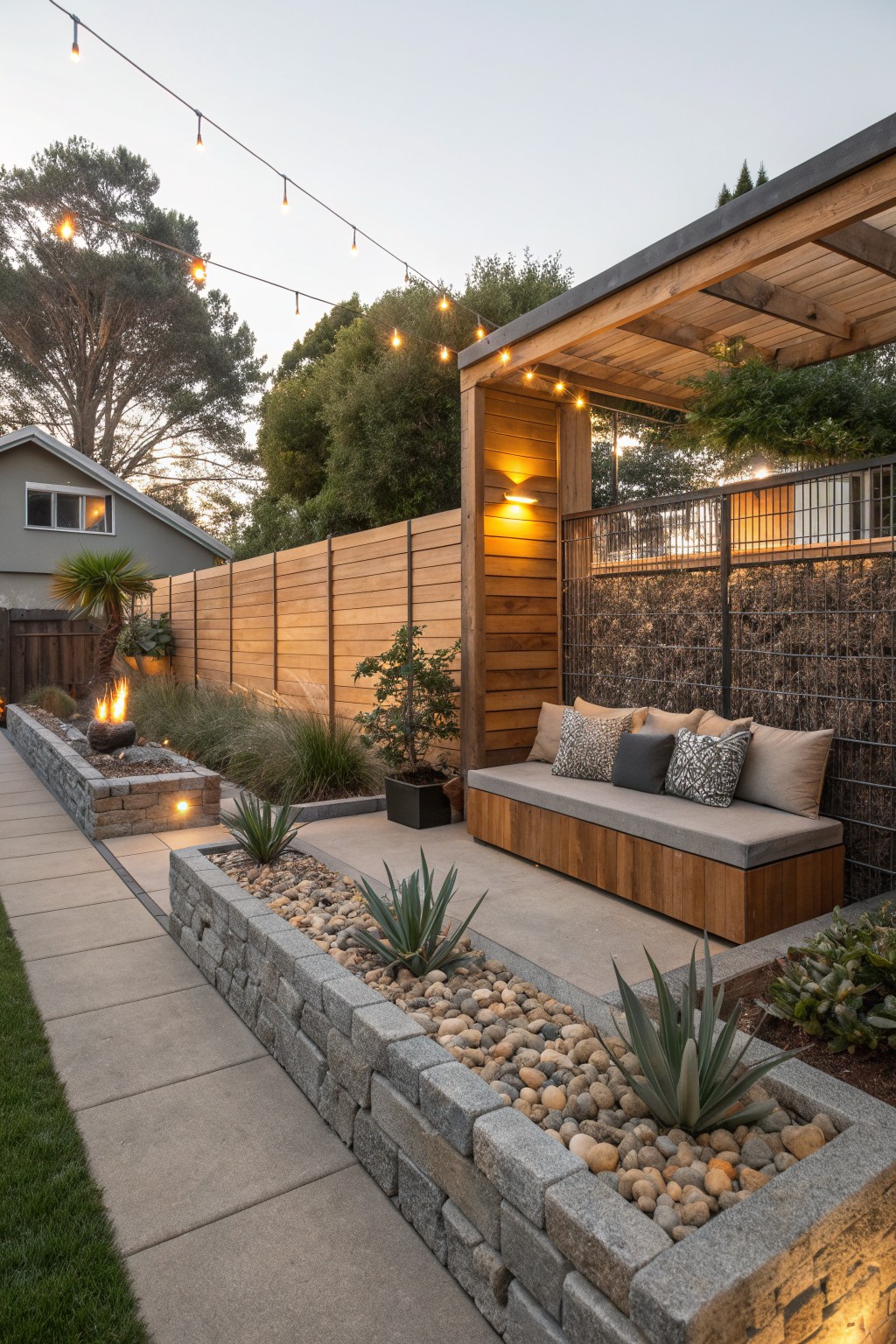
A privacy fence can do more than block the view from neighbors. Building a bench directly into the fence turns the structure into a usable spot for sitting without taking up extra yard space.
This setup works best in narrow side yards or small backyards where every foot counts. Use the same wood for both the fence and the bench so it reads as one piece, and add a simple roof overhead if you want shade or a bit of rain cover. Keep the bench depth around 18 inches so it stays comfortable without sticking out too far.
Horizontal Slat Fences For Backyard Privacy
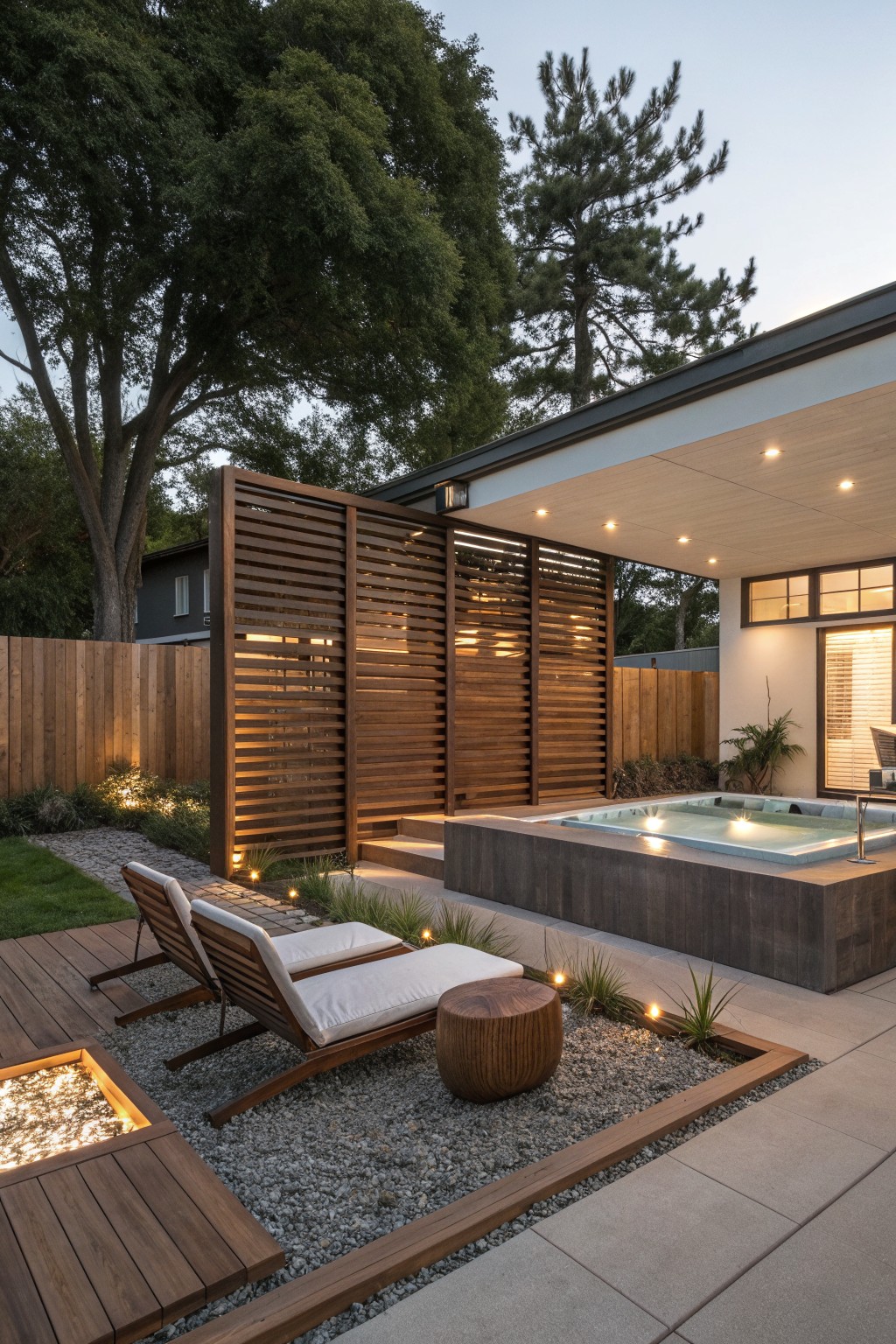
Horizontal slat screens give solid privacy without blocking all the light or making a yard feel boxed in. The open gaps keep air moving and let some view through while still hiding the space from the street or neighbors.
This approach works best around patios or seating areas where you want separation but not a full solid wall. It suits homes with wood decks and simple plantings, and you can put one up in a weekend using standard lumber and basic tools.
Dark Wood Fences For Garden Privacy

A tall solid wood fence gives a backyard garden real privacy without needing a lot of extra screening. The dark stain helps it blend into the background so the plants and path stay the main focus instead of the fence itself.
This style works well on smaller lots where you want a quiet enclosed feel. Keep the planting simple with low shrubs and ground cover along the base so the fence does not feel too tall or heavy.
Horizontal Slat Fences For Quick Privacy
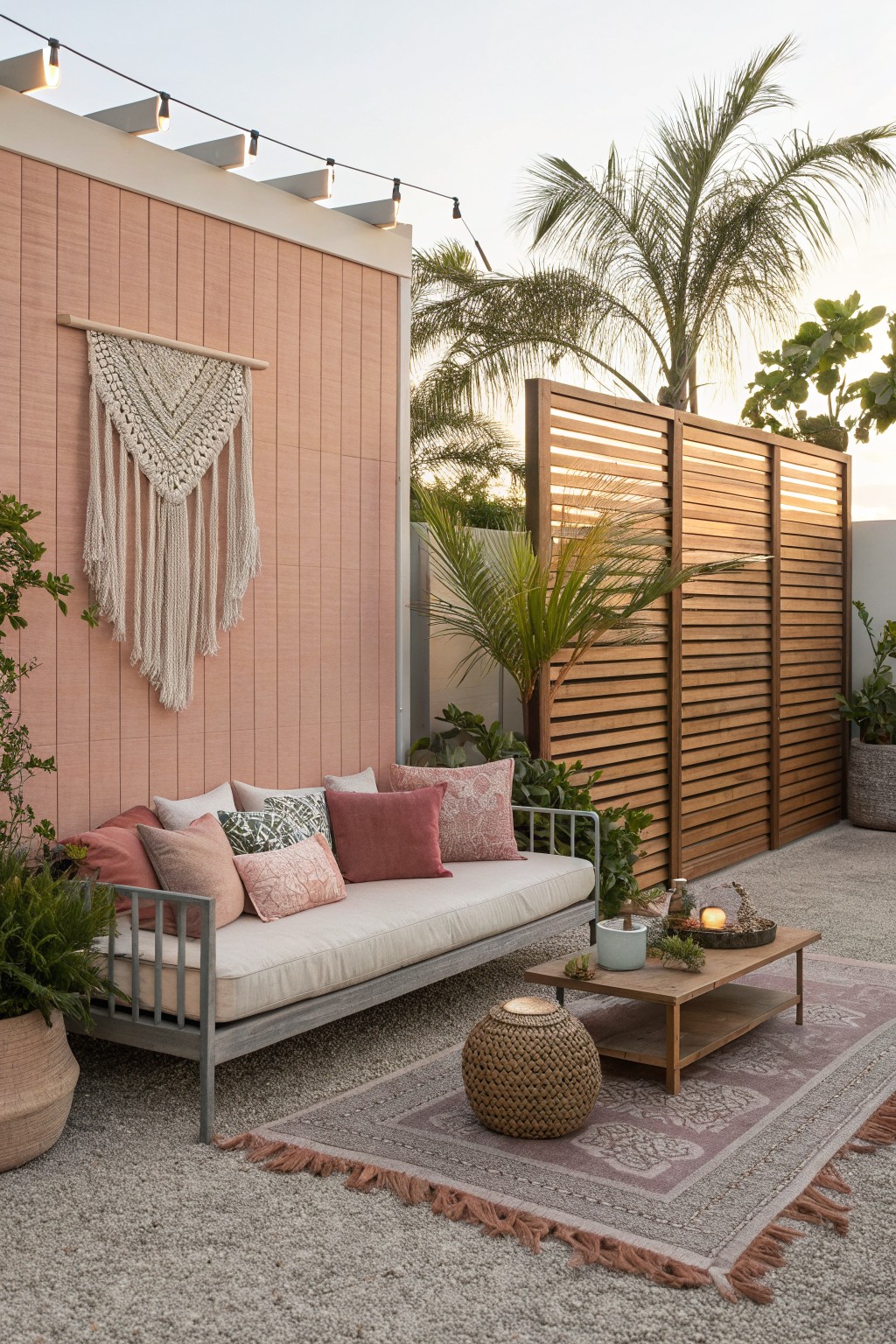
A slatted wood screen gives you solid privacy without turning the yard into a closed-off box. The gaps let light and breeze pass through, so the space still feels open and usable even when neighbors are close by.
This works best along one or two sides of a patio or deck where you want to define the area without building a full wall. Use pressure-treated lumber, space the boards evenly, and keep the height around six feet for good coverage.
Tall Wooden Privacy Fences

A tall wooden fence like this one blocks the view from outside and turns a backyard into a more private space. The solid boards do most of the work, and the height keeps things simple without needing extra screens or tall plants right away.
You can run a gate in the same style so the fence still feels like one piece. Climbing vines soften the look over time and add a bit more coverage where the boards meet. This approach works best on larger lots where you want something sturdy that holds up with little upkeep.
Vertical Wood Fencing for Patio Privacy

A tall vertical wood fence gives an outdoor patio solid privacy while keeping the space usable for dining and relaxing. The straight boards create a clean barrier that blocks views without needing extra structures or screens.
This approach works well on side yards or back patios where neighbors are close. Build it with simple framed panels so the job stays manageable for a weekend, and leave room at the base for low planting to soften the look over time.
Use a Decorative Block Wall for Privacy
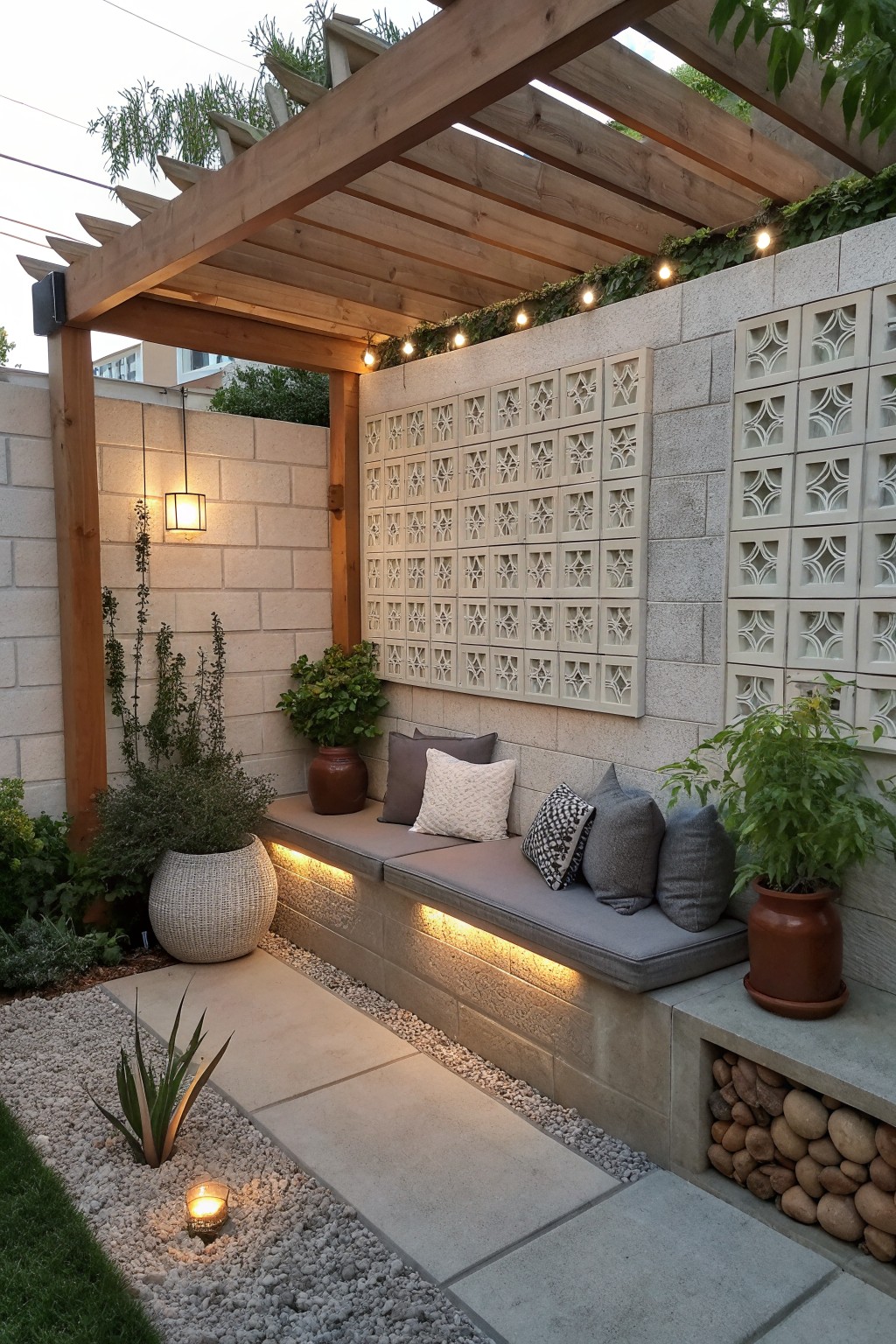
A patterned concrete block wall gives you privacy without turning the space into a solid barrier. The open design still lets air move through and keeps the area from feeling boxed in, which works especially well when you want to screen off a seating spot from neighbors.
This approach suits small backyards or side patios where a full fence would close things off too much. You can build it in a weekend with standard blocks, and it pairs easily with a simple bench or overhead structure to define the space.
Add A Tall Fence To Create A Private Patio Spot

A tall fence around a small seating area gives you privacy without needing a big structure or a lot of extra work. It turns an open patch of yard into a place where you can sit without feeling exposed to neighbors or the street.
This approach works best in smaller backyards where you want a defined spot for a table and chairs. Paint the fence a soft color so it feels like part of the garden instead of a solid wall, and keep the planting simple so the fence stays the main feature.
Enclose Your Patio with Tall Walls
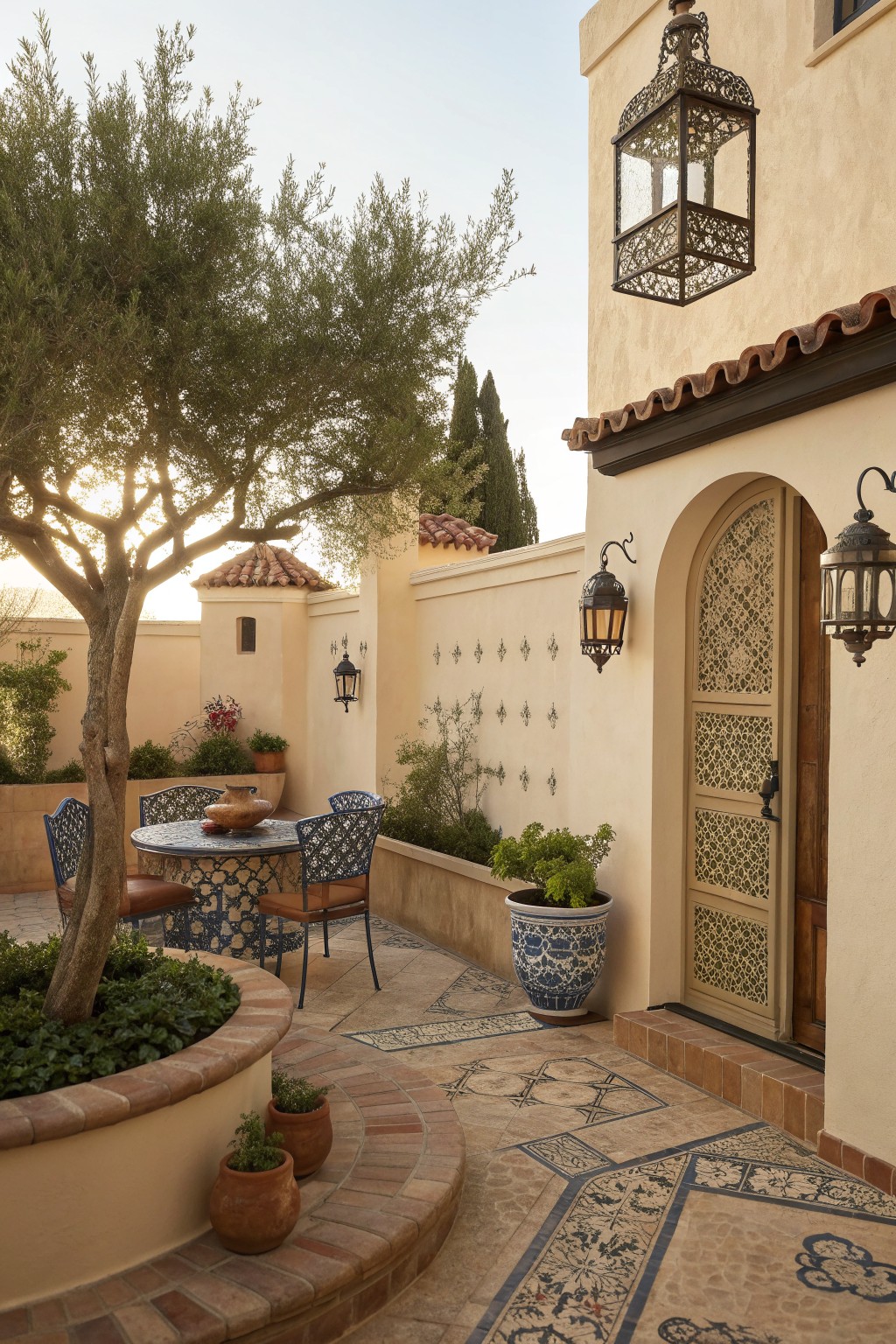
Tall walls around a patio give you privacy without needing a separate fence. They turn an open spot into a contained area that feels removed from the street or neighbors.
This approach works best on smaller yards where you want one defined space instead of spreading things out. Keep the walls simple and add a few large planters at the base to soften the look while the height does the main job.
Horizontal Slat Screens For Outdoor Privacy
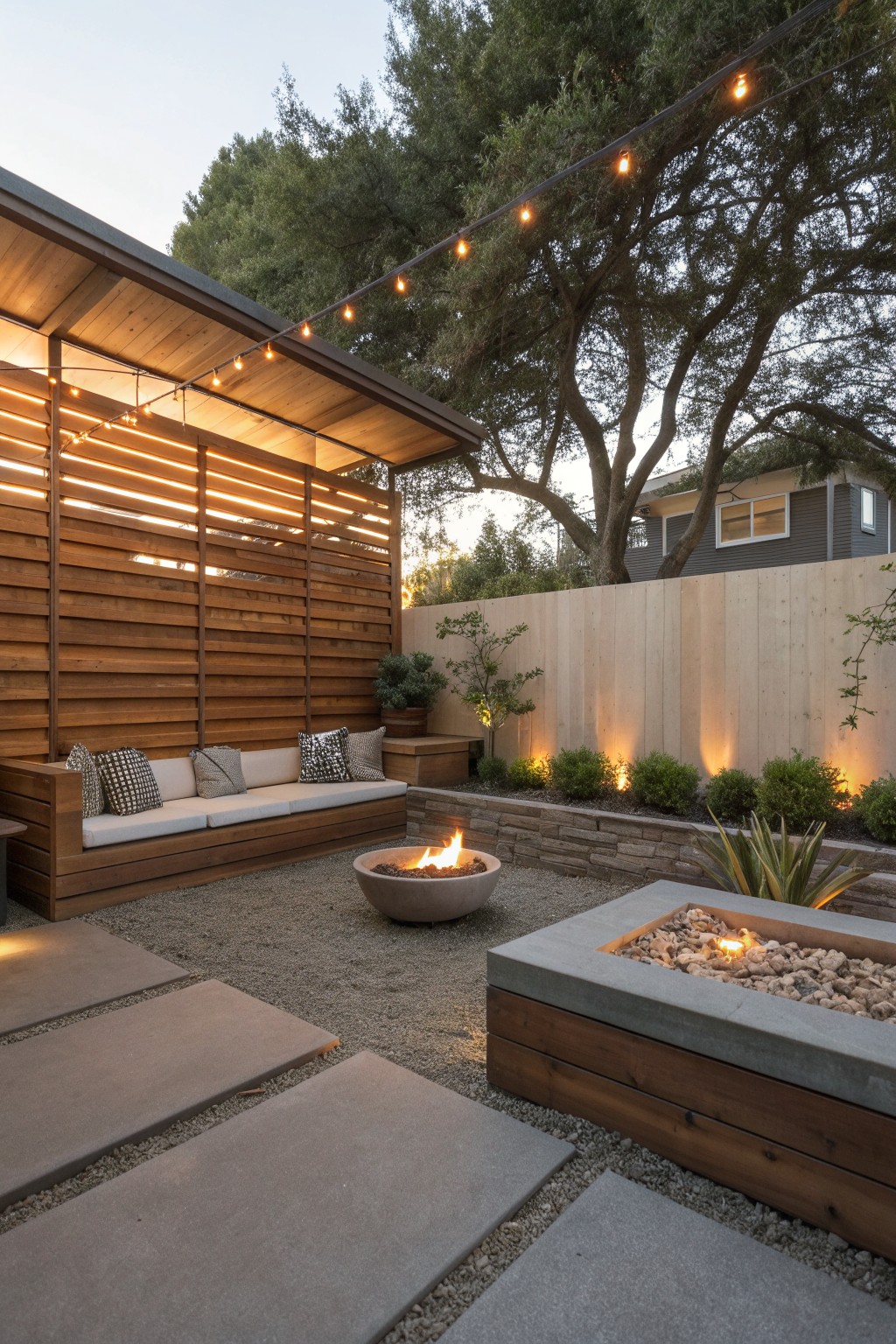
A screen made of horizontal wooden slats gives seating areas real privacy without making the yard feel closed in. The gaps let air and light through while blocking the view from outside, which works better than a solid wall in most backyards.
Build one along the edge of a patio or behind a bench using standard lumber. It suits smaller yards or side yards where you need to carve out a quiet spot without a full fence project.
Corrugated Metal Fencing for Quick Privacy

A corrugated metal fence gives solid backyard privacy in a weekend. It blocks the view from neighbors right away and stands up to weather without much upkeep.
This approach works well along the edge of a patio or around an outdoor kitchen. Keep the panels tall enough to feel enclosed but leave room for plants at the base if you want a softer edge.
Build a Bench Into Your Fence
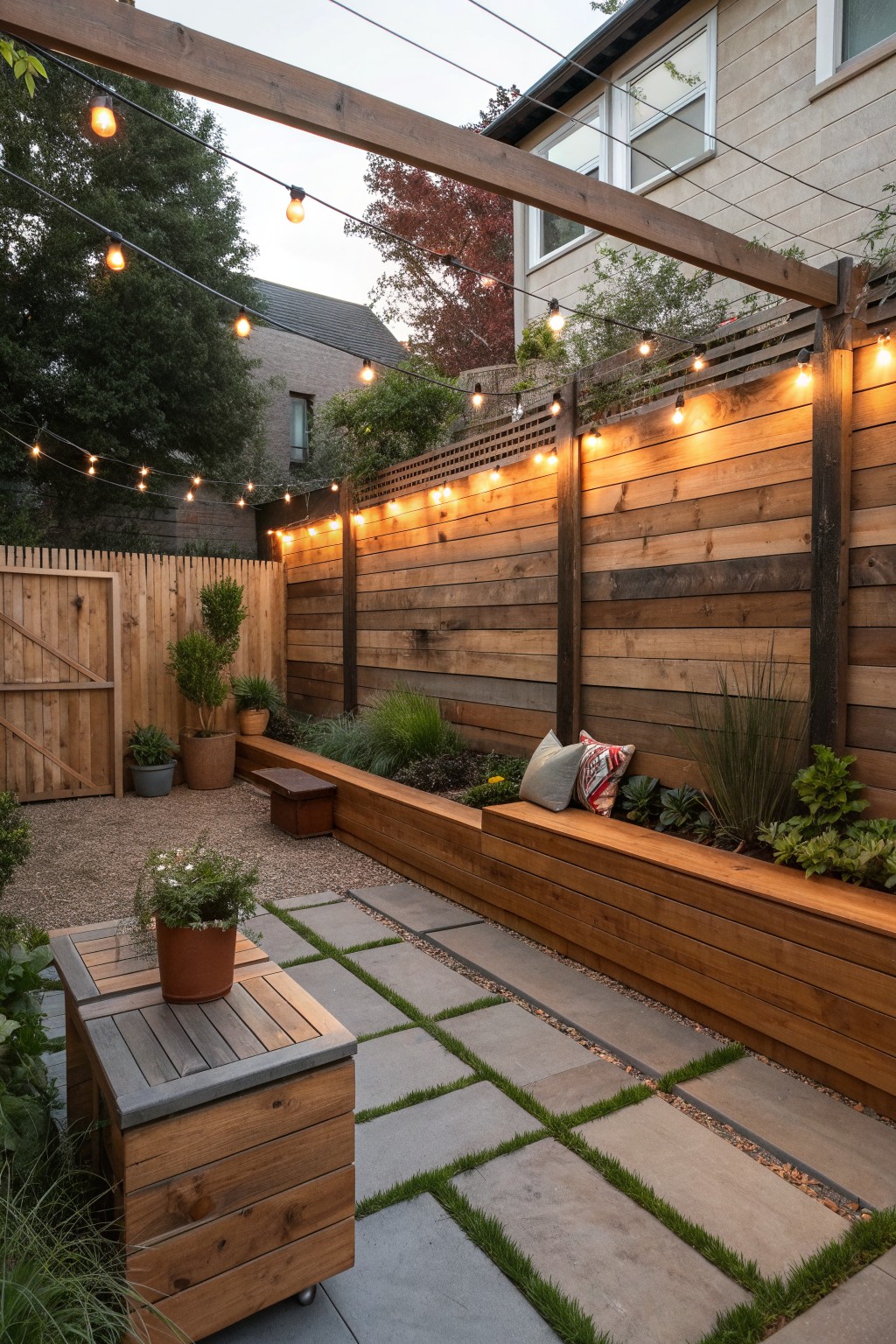
A privacy fence can do more than just block the view from neighbors. Adding a simple bench along the base turns the fence into usable seating while keeping the yard from feeling closed in. It works especially well in smaller backyards where floor space is limited.
This setup suits homes with gravel or paver patios and gives you a place to sit without adding extra furniture. Just make sure the bench height stays comfortable and the wood is sealed for outdoor use.
Build a Lattice Privacy Screen

A wood lattice screen gives you privacy without making the space feel closed in. The open grid pattern lets light and air through while blocking the view from outside, which works especially well along one side of a pool or patio.
Mount the screen on an existing wall or fence posts so it stays sturdy. This style suits narrow yards or spots where a solid fence would feel too heavy, and it pairs nicely with potted plants along the base.
Grow Vines On A Wood Fence For Natural Privacy
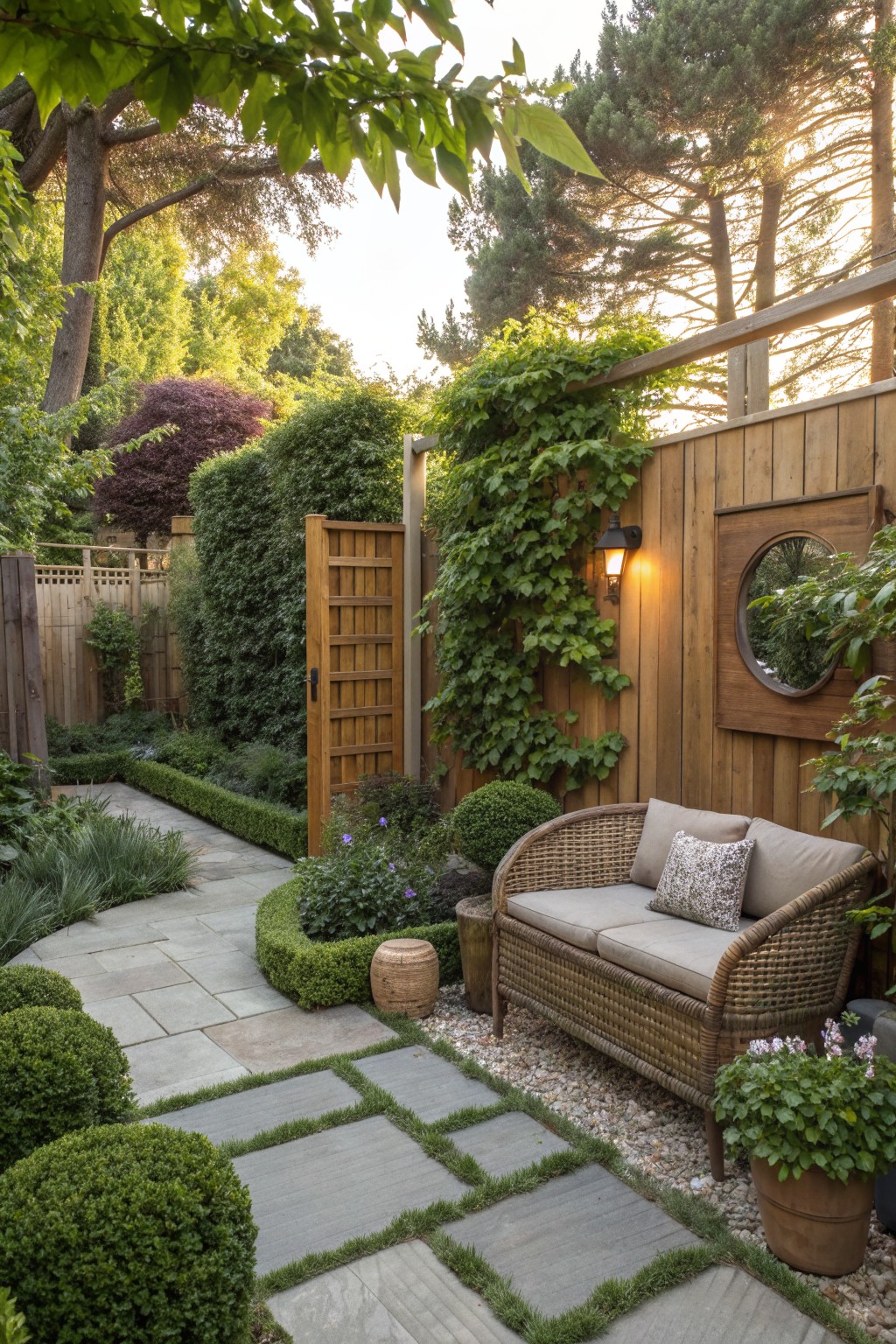
A solid wood fence already blocks the view, but letting vines climb over it turns the barrier into something softer and greener. The plants fill in gaps over time and give the whole yard a more settled look without needing extra panels or screens.
This works best along the back or side of a small yard where you want privacy but still like the feel of a garden. Start with fast climbers at the base and train them up the fence posts so they cover the wood evenly.
Frequently Asked Questions
Q: How do I keep a simple pallet fence from looking patchy once it is up? A: Space the pallets evenly and overlap the edges by a few inches so light does not leak through. Nail a horizontal strip across the back to pull everything straight before you add any finish.
Q: What if the ground slopes and my posts end up at different heights? A: Set the first post at the lowest point and measure up from there for the rest. Trim the tops level after everything is set so the fence line stays straight even when the dirt does not.
Q: Will a weekend fence hold up once winter hits? A: Sink each post at least two feet deep and pack gravel around the base for drainage. Check the joints after the first freeze and add an extra screw where anything feels loose.


