I often notice that earthy green shades shift in tone as sunlight moves across a room and mixes with the colors of nearby furniture and trim.
Testing a few options in the actual room helps avoid surprises later on.
The way these shades interact with trim and nearby furniture can either enhance the natural feel or make the room seem smaller than it really is.
I have seen colors that looked perfect in the store turn muddy once applied next to certain flooring materials.
Moving a painted sample board from one wall to another gives a clearer sense of what will work best in the space over time.
Soft Sage Green Walls
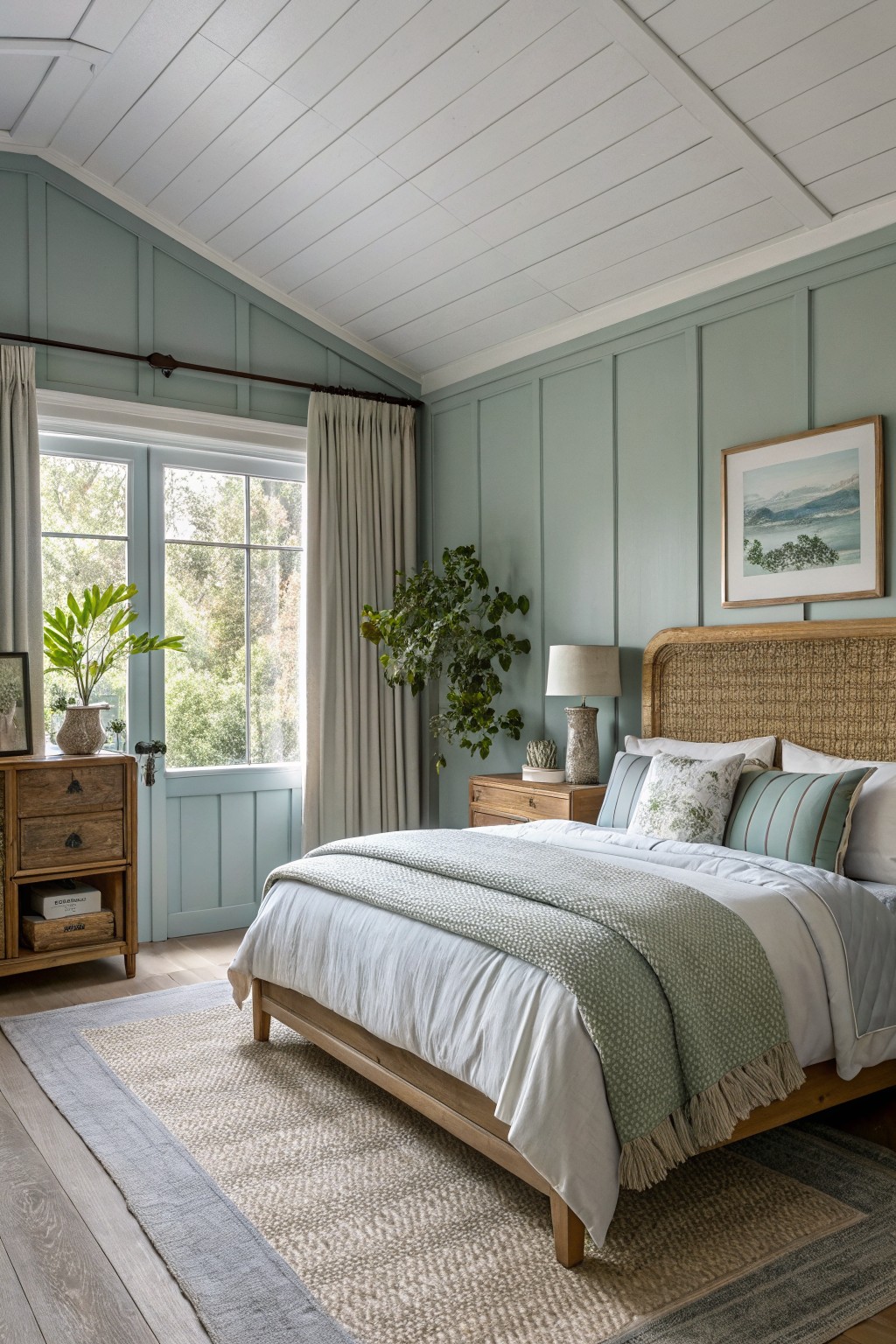
This soft sage green brings a calm, natural feel to a bedroom without making the space feel too dark or heavy. It sits in that earthy middle ground between green and gray, which makes it easy to live with day to day. Colors like Sherwin Williams Rainwashed, Benjamin Moore Wythe Blue, or Farrow & Ball French Gray give a similar effect.
The color has a slight cool undertone that shows up more in strong daylight, so it pairs nicely with warm wood floors and simple white trim. It works best in rooms that get decent natural light and looks good with linen, rattan, or other textured neutrals.
Earthy Green Walls
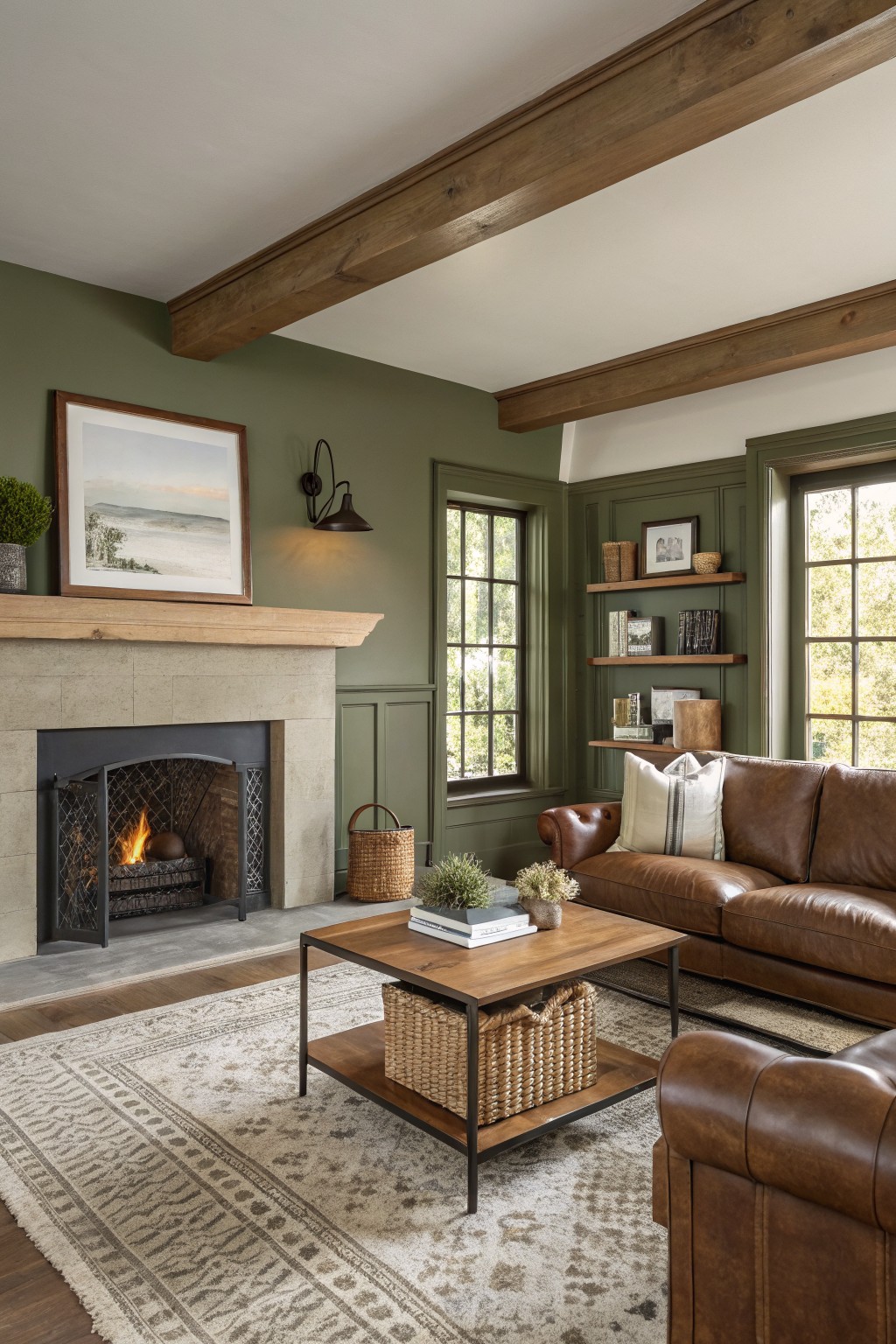
This earthy green paint color has a muted olive tone that feels calm and connected to nature. It looks closest to Sherwin Williams Evergreen Fog or Benjamin Moore Saybrook Sage, with Farrow & Ball Bancha as another strong match.
The color carries a slight warm undertone that keeps it from turning too cool next to wood. It pairs easily with brown leather, stone, and natural trim in rooms that get steady daylight.
Soft Olive Green Cabinets
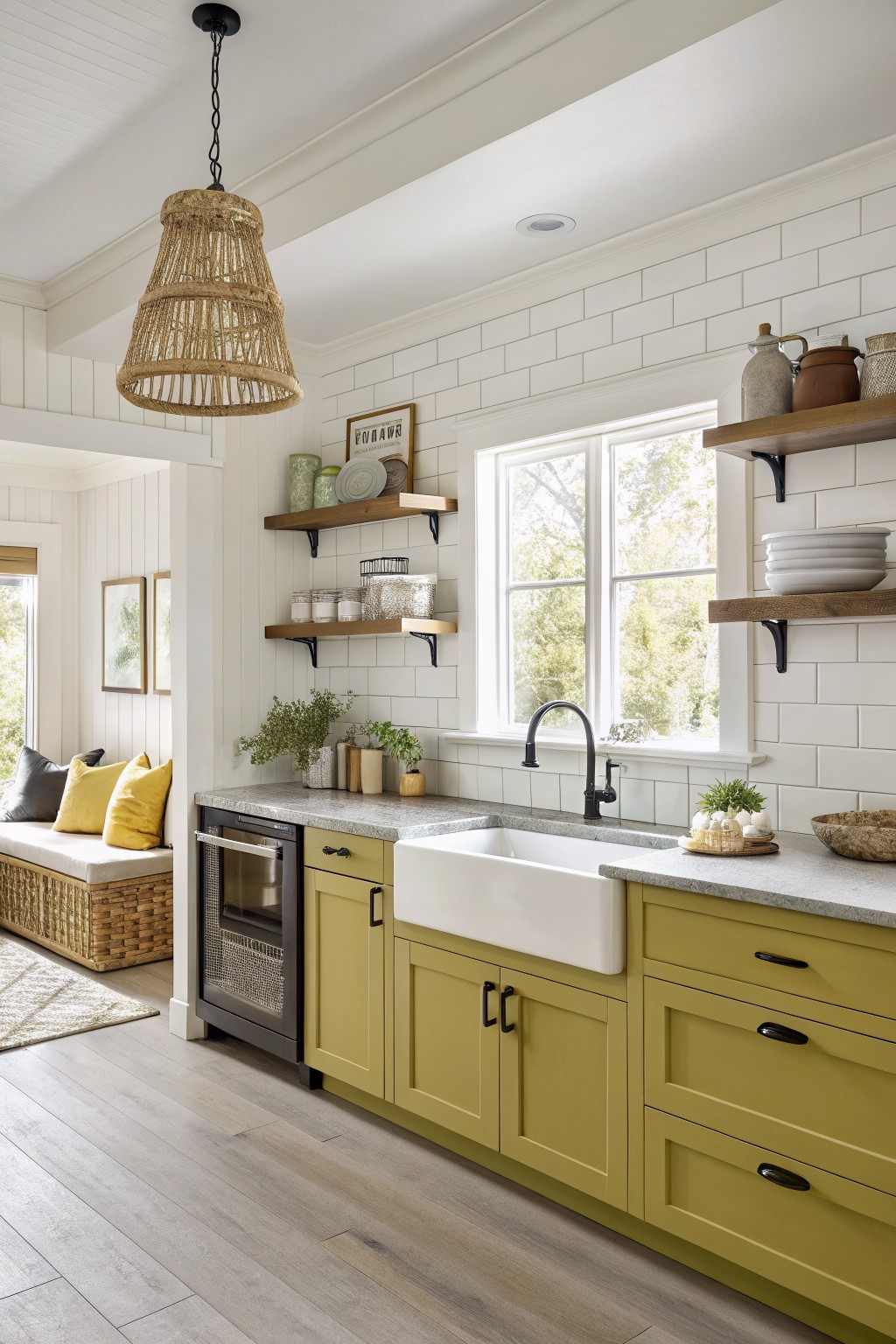
This kitchen uses a muted olive green on the cabinets. It is a warm earthy shade that sits nicely between green and yellow without leaning too bright or too dark. The color feels natural and steady, which is why it works so well when you want a little nature inside without making the space feel heavy.
It has a soft yellow undertone that keeps the green from turning cool or flat. This kind of tone pairs easily with wood tones and gray stone, and it holds up fine in both morning and afternoon light. Try it on lower cabinets first if you are not ready to paint the whole room.
Soft Sage Green Bathroom Walls

This soft sage green reads as a muted earthy tone with gentle gray undertones. It feels calm and natural without pushing too hard, which makes it easy to live with in smaller spaces like bathrooms.
The color sits nicely next to warm wood and white tile, but it can look a little cool if the lighting is very bright. It works best in rooms where you want a quiet connection to nature and pairs well with options like Sherwin Williams Clary Sage, Benjamin Moore Saybrook Sage, or Behr Mossy Path.
Soft Sage Green Walls With White Wainscoting

This soft sage green is the kind of color that feels natural without trying too hard. It sits right in the middle of green and gray with a touch of warmth that keeps the room from looking flat. It reads closest to Sherwin Williams Clary Sage, Benjamin Moore Saybrook Sage, or Farrow and Ball Lichen.
The white wainscoting underneath helps the green feel lighter and more balanced. It works best in rooms with wood tones nearby, since the warmth in the paint keeps everything from feeling too cool or stark.
Soft Sage Green Built-In Bench Walls
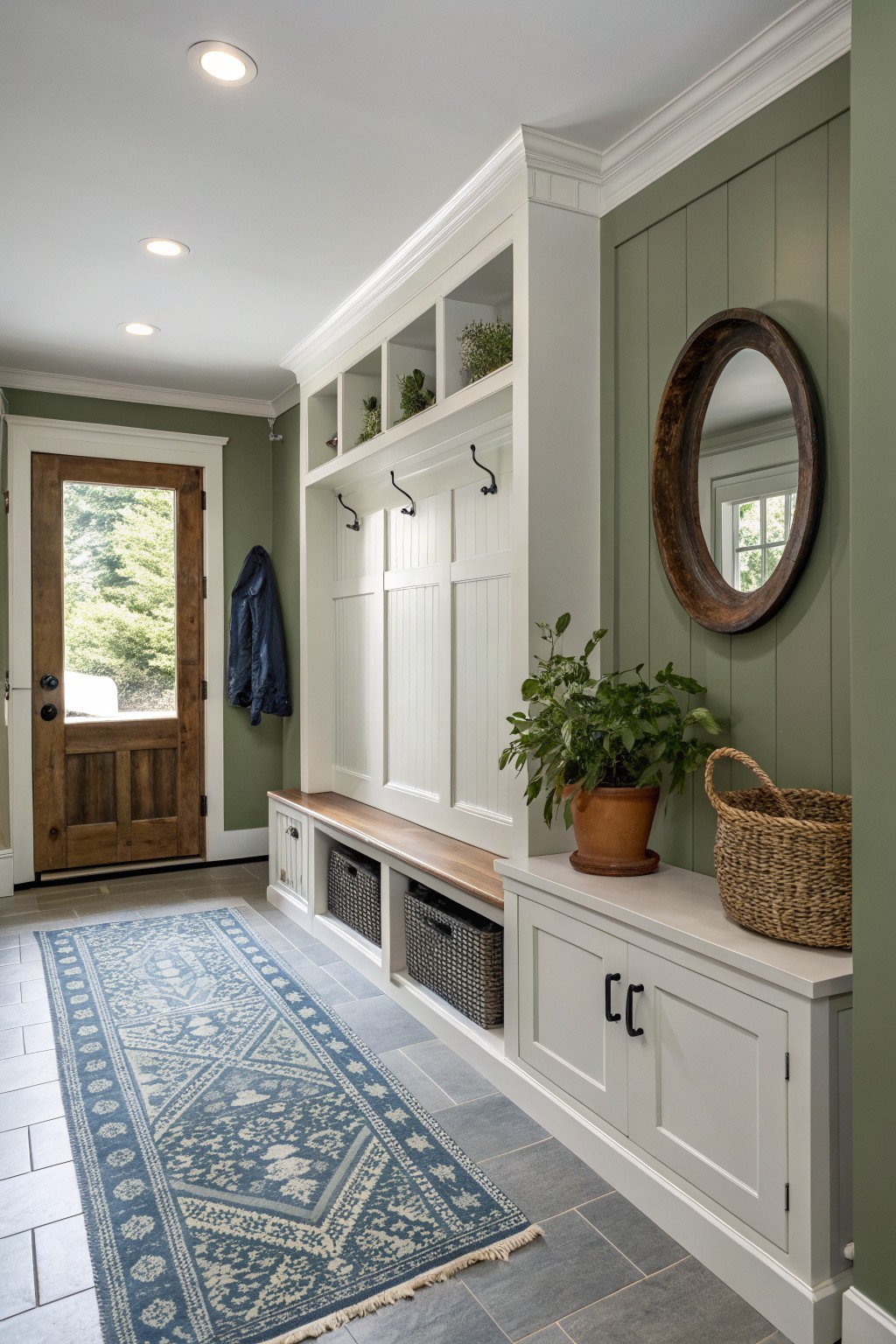
This muted sage green gives the walls a calm, grounded look that feels easy to live with. It sits somewhere between gray and green, and reads closest to Sherwin Williams Evergreen Fog, Benjamin Moore October Mist, Behr Aged Sage, or Farrow & Ball Lichen.
The soft undertone keeps the color from turning too yellow or blue in different lights. It works especially well with white trim and built-in cabinetry, and it helps the wood tones in the bench and floor feel warmer without competing.
Deep Green Office Walls
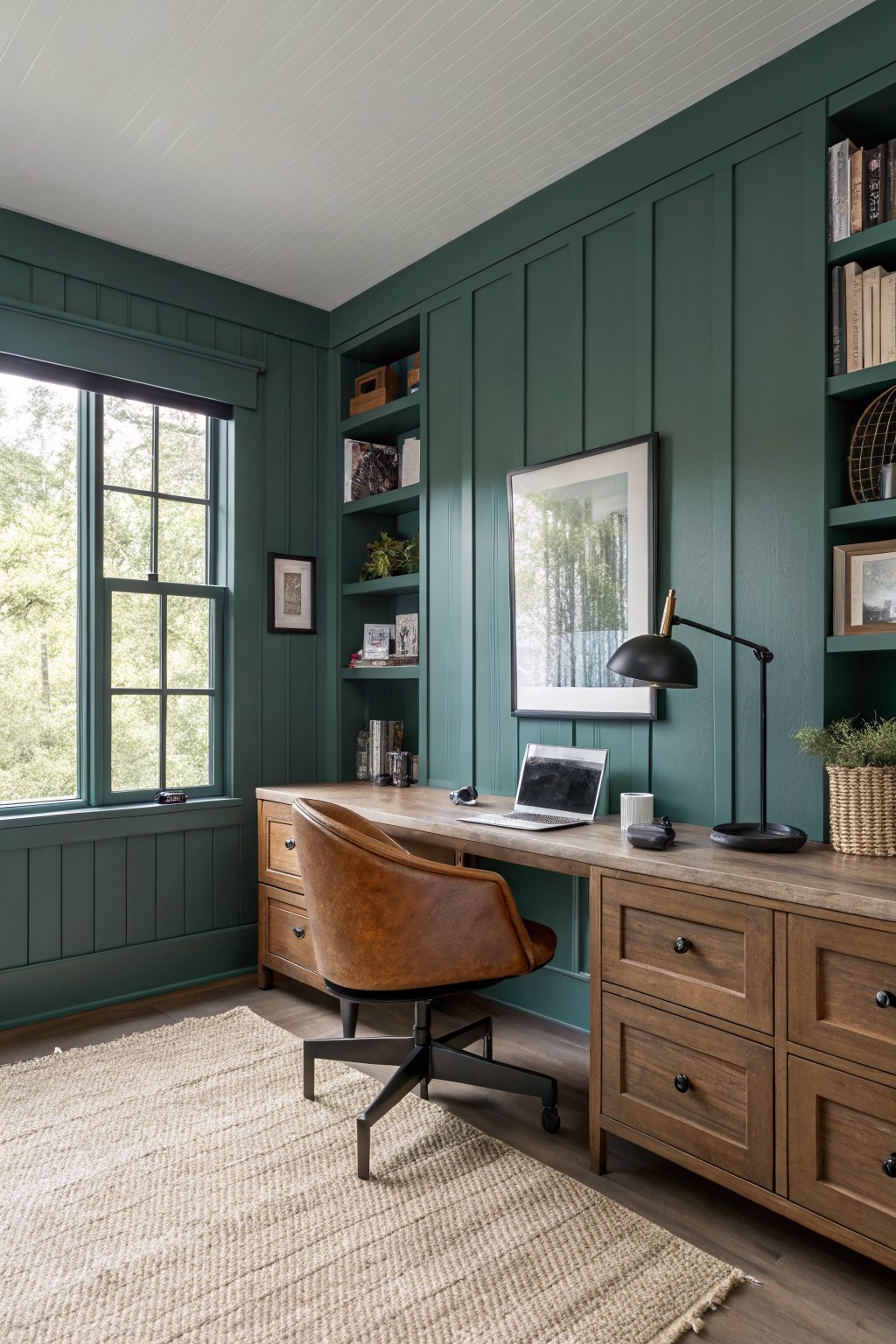
This deep green gives an office or study a grounded, natural feel without making the room feel closed in. It falls into the forest green family and reads very close to Sherwin Williams Evergreen or Benjamin Moore Forest Green, with a similar depth showing up in Behr Ivy League as well.
The color has a subtle cool undertone that keeps it from turning muddy next to wood tones. It works best with warm oak furniture, black hardware, and plenty of natural light so the green stays rich rather than heavy.
Soft Yellow Green Walls
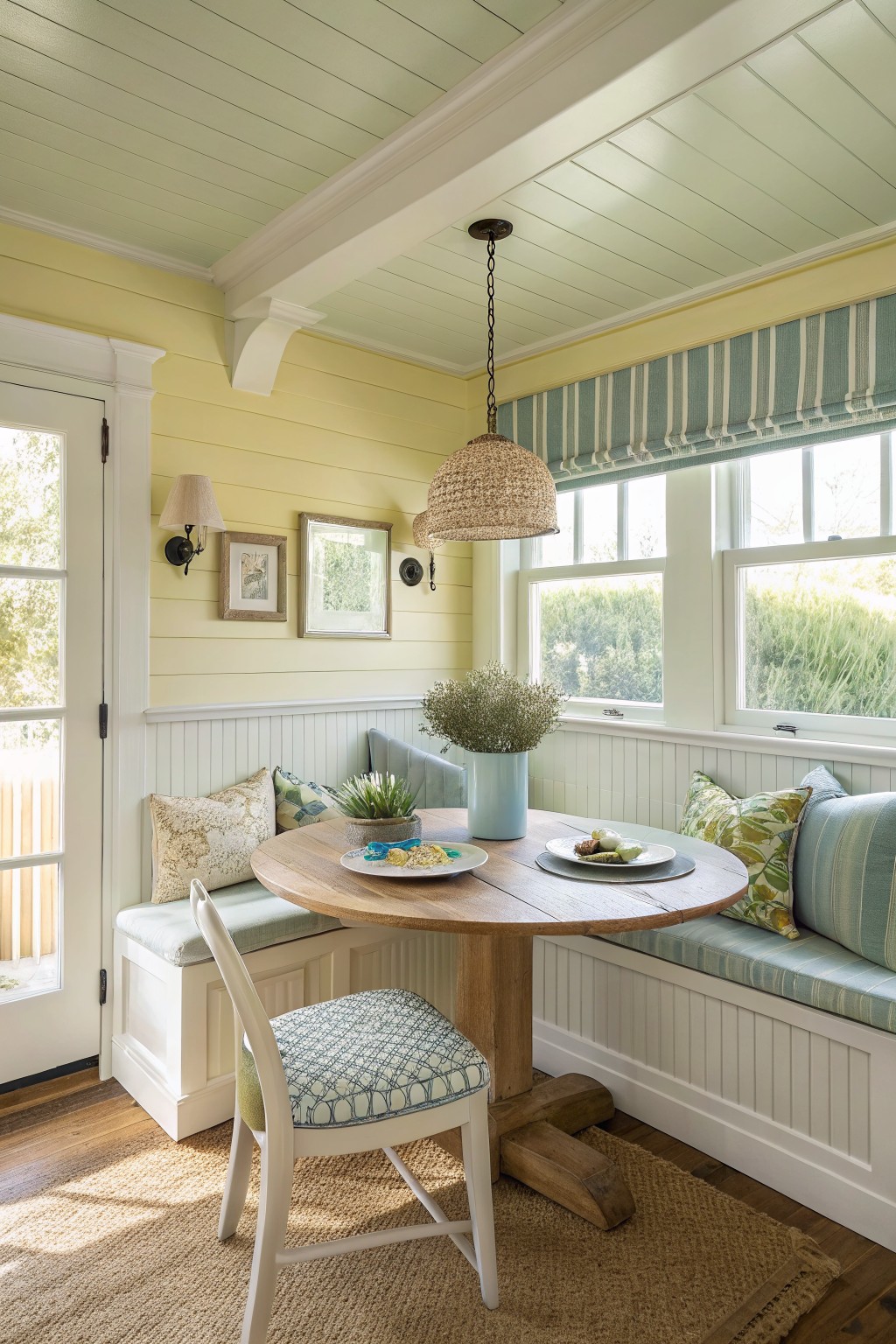
This pale yellow green on the walls brings a quiet freshness to the room. It sits somewhere between a light sage and a soft celery, with enough yellow in the mix to keep it from feeling cool or flat. Similar shades show up in colors like Benjamin Moore’s Spring Green, Sherwin Williams’ Misted Fern, Farrow & Ball’s Pale Green, or Behr’s Green Tea.
It works best in rooms that get steady daylight since the yellow undertones can shift warmer or brighter depending on the time of day. White trim and natural wood help hold it steady so the color stays gentle rather than turning too sweet.
Soft Sage Green Cabinetry
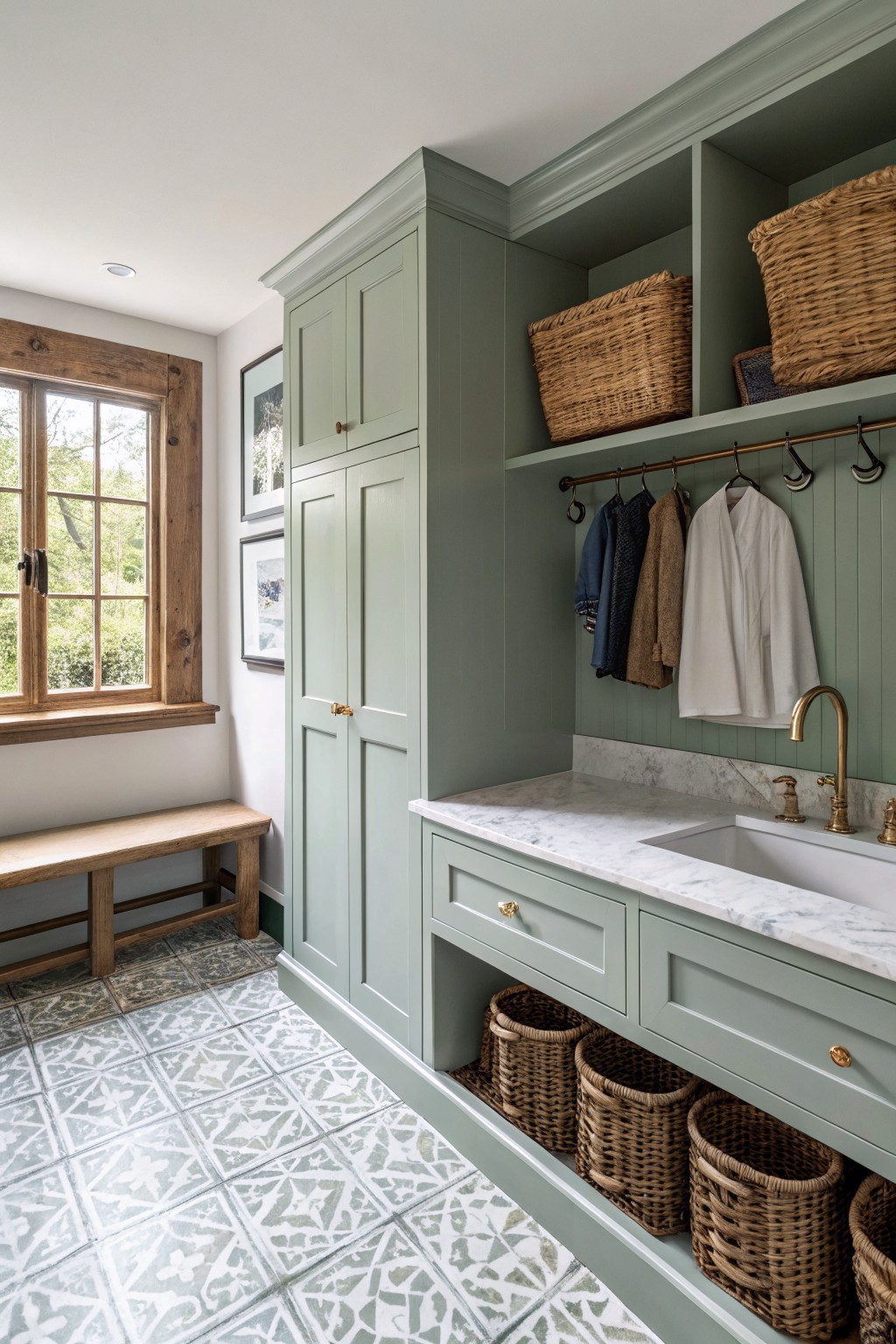
This muted sage green brings a calm, earthy tone to cabinetry without feeling heavy. It has just enough depth to stand out against lighter walls while still keeping the whole space feeling open and connected to nature.
The color sits nicely next to warm wood and stone, and it works especially well in rooms that get good natural light. Pair it with simple brass hardware or white counters if you want the green to read a little softer.
Deep Green Walls
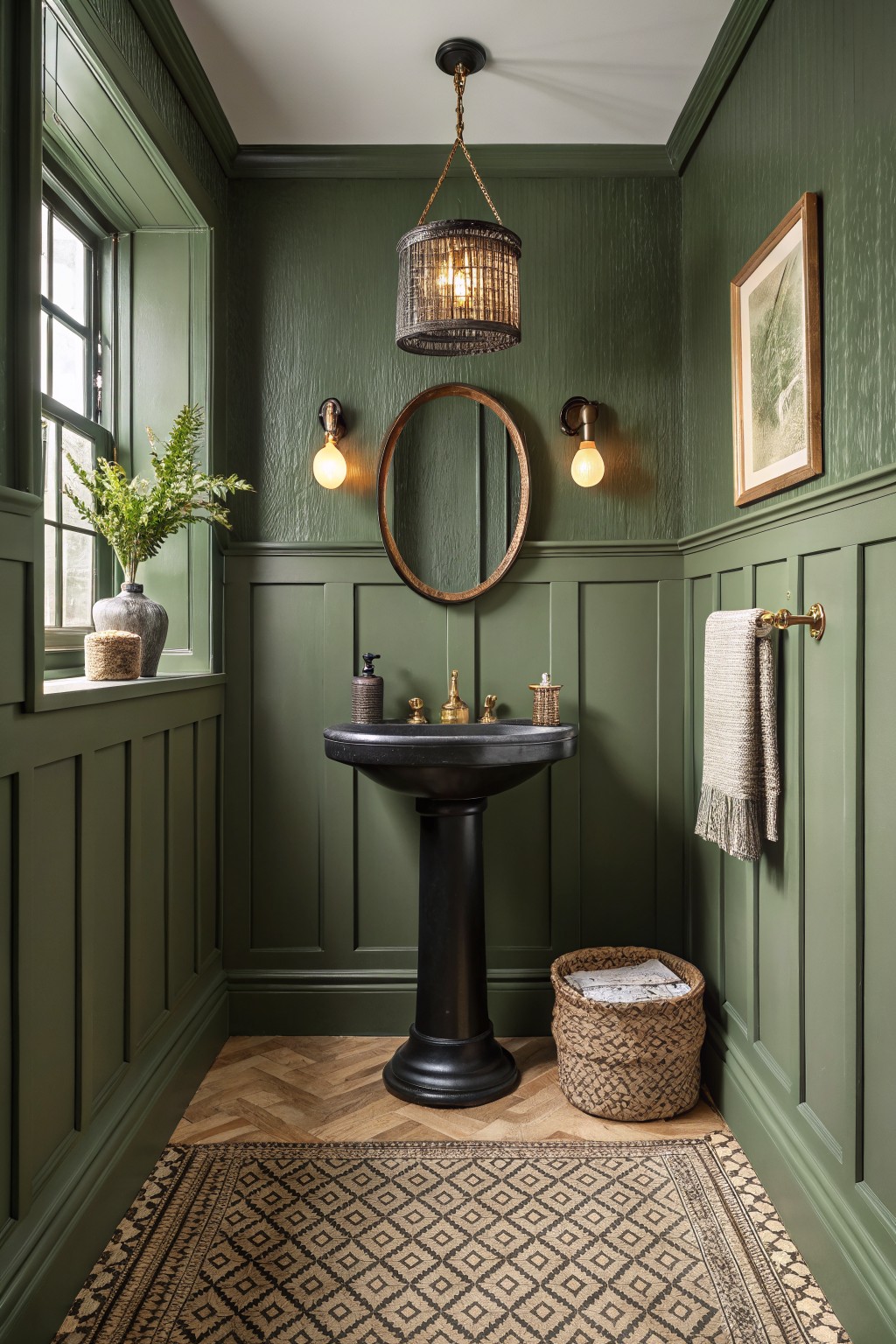
This deep forest green brings a calm, natural feel to a bathroom without making the space feel heavy. It sits somewhere between olive and pine, with enough depth to hold its own next to wood floors and dark fixtures. Colors like this often read closest to Benjamin Moore Forest Green, Sherwin Williams Rookwood Dark Green, or Farrow & Ball Bancha.
The tone stays steady through the day and works especially well in rooms with wood trim or black hardware. It can feel a little cool in very low light, so most people pair it with warm lighting and natural textures like linen or jute to keep the room from going flat.
Deep Olive Green Walls

This deep olive green brings a grounded, natural feel to the room without making it feel heavy. It has a warm undertone that sits nicely next to wood tones and brick, which is why it works so well in spaces with built-ins or lots of trim work. Colors like Sherwin Williams Rookwood Dark Green, Benjamin Moore Forest Green, Behr Olive Branch, or Farrow & Ball Studio Green give a similar look.
The color holds up well in both natural light and evening lamplight, though it can read a little darker in north-facing rooms. It pairs best with warm wood floors, cream upholstery, and simple white or off-white trim so the green stays the main focus rather than competing with other strong elements.
A Muted Earthy Green Kitchen

This deep muted green gives the kitchen a grounded, natural feel that still feels calm. It sits somewhere between sage and olive with soft gray undertones and works especially well against the white tile and warm wood tones in the room.
It handles both natural light and darker corners without shifting too much. Try pairing it with black hardware and simple wood stools the way it is here. Good matches would be Sherwin Williams Evergreen Fog, Farrow & Ball Green Smoke, Benjamin Moore Guilford Green, or Behr Eucalyptus Leaf.
Soft Sage Green Bedroom Walls
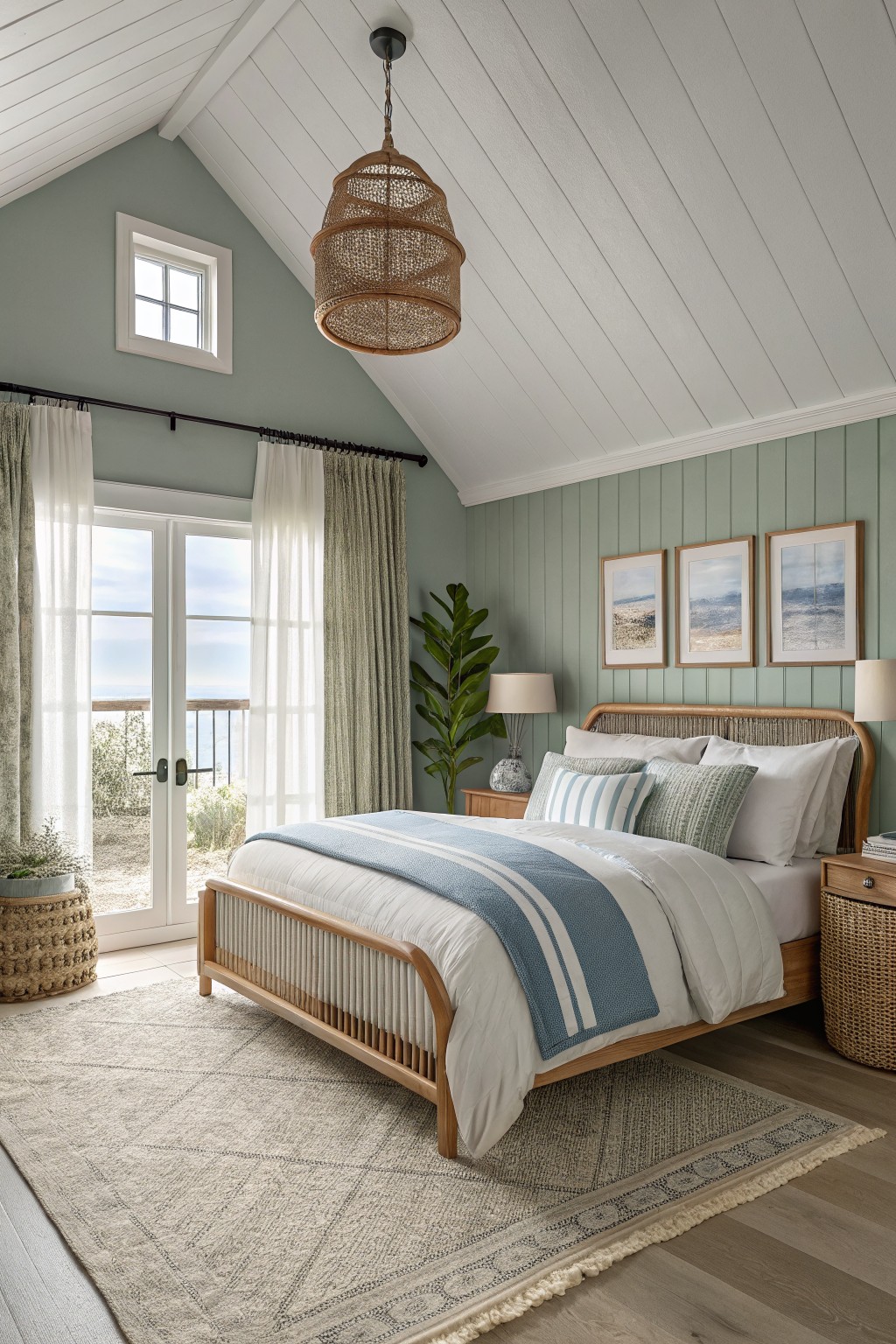
This muted sage green on the walls gives the room a calm, slightly earthy feel without making it feel dark. It sits right between gray and green, which keeps it from looking too bold or too cool on its own.
The color has a soft gray undertone that works well with warm wood tones like the bed frame and floor. It suits bedrooms or any space where you want a natural look that still feels light. Pair it with white trim and simple linen curtains if you want it to stay airy.
A Muted Sage Mudroom

This muted sage green brings a quiet, grounded feel to high-traffic spots like mudrooms and entryways. It sits between gray and green without leaning too far either way, so it feels natural next to wood tones and stone floors rather than competing with them. Colors like Sherwin Williams Evergreen Fog, Benjamin Moore Saybrook Sage, Farrow & Ball Lichen, or Behr Dried Thyme all land close to this shade.
It holds up well with warm wood benches and woven baskets because the gray undertone keeps the green from feeling too bright or country. In rooms with mixed lighting it can shift a little cooler, so test a sample on both the wall and cabinetry before committing. It suits homes that want a bit of nature inside without going full forest green.
Deep Forest Green Walls
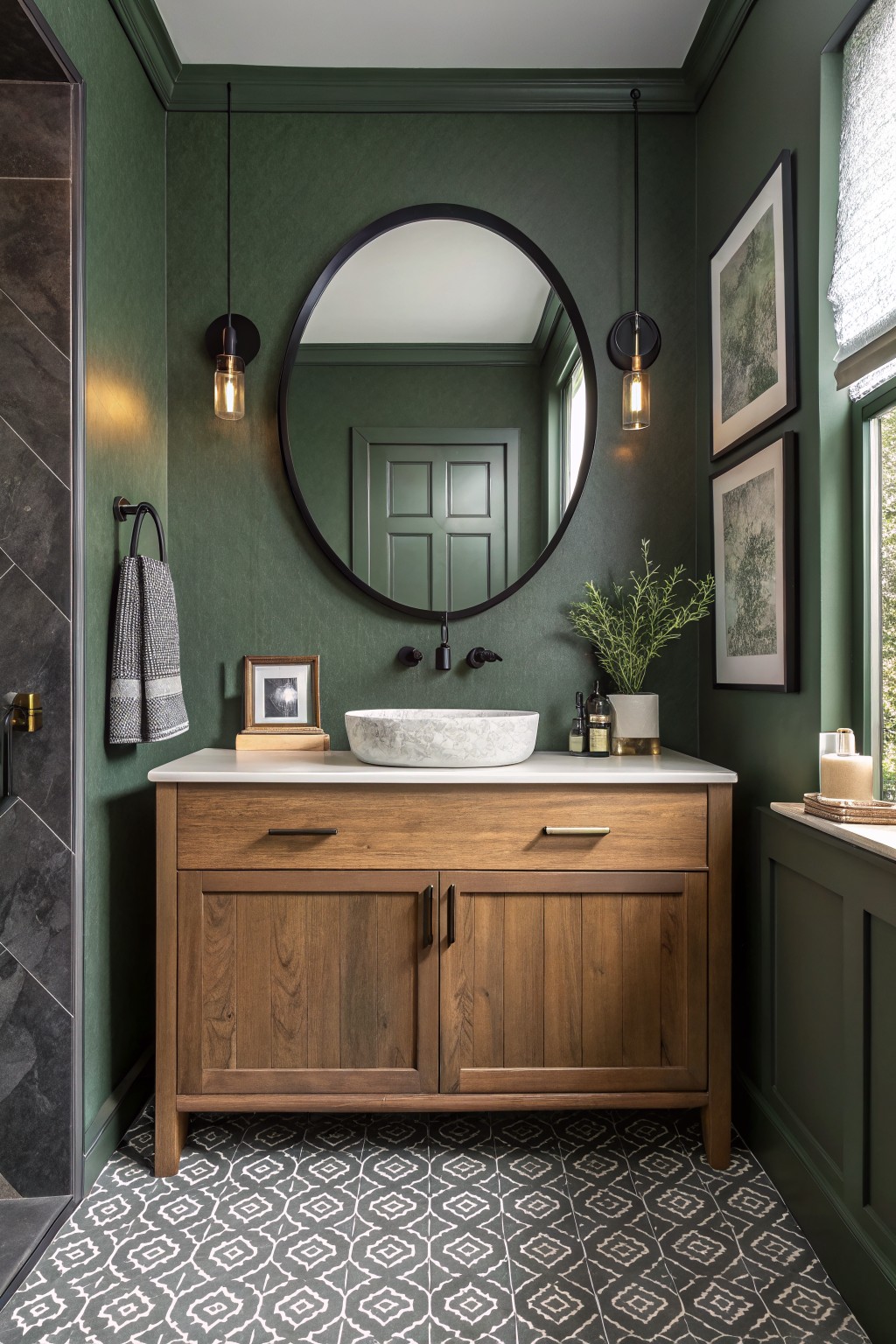
This deep forest green brings a calm, grounded feel to a bathroom without making it feel heavy. It sits in that earthy range with a slight blue undertone, which helps it read as natural rather than flat.
It works especially well against warm wood vanities and white counters, and it holds its depth even when light is limited. Pair it with black fixtures or simple tile to keep the look balanced, but test it first in your own lighting since greens shift more than you expect.
Soft Sage Green Breakfast Nook Walls
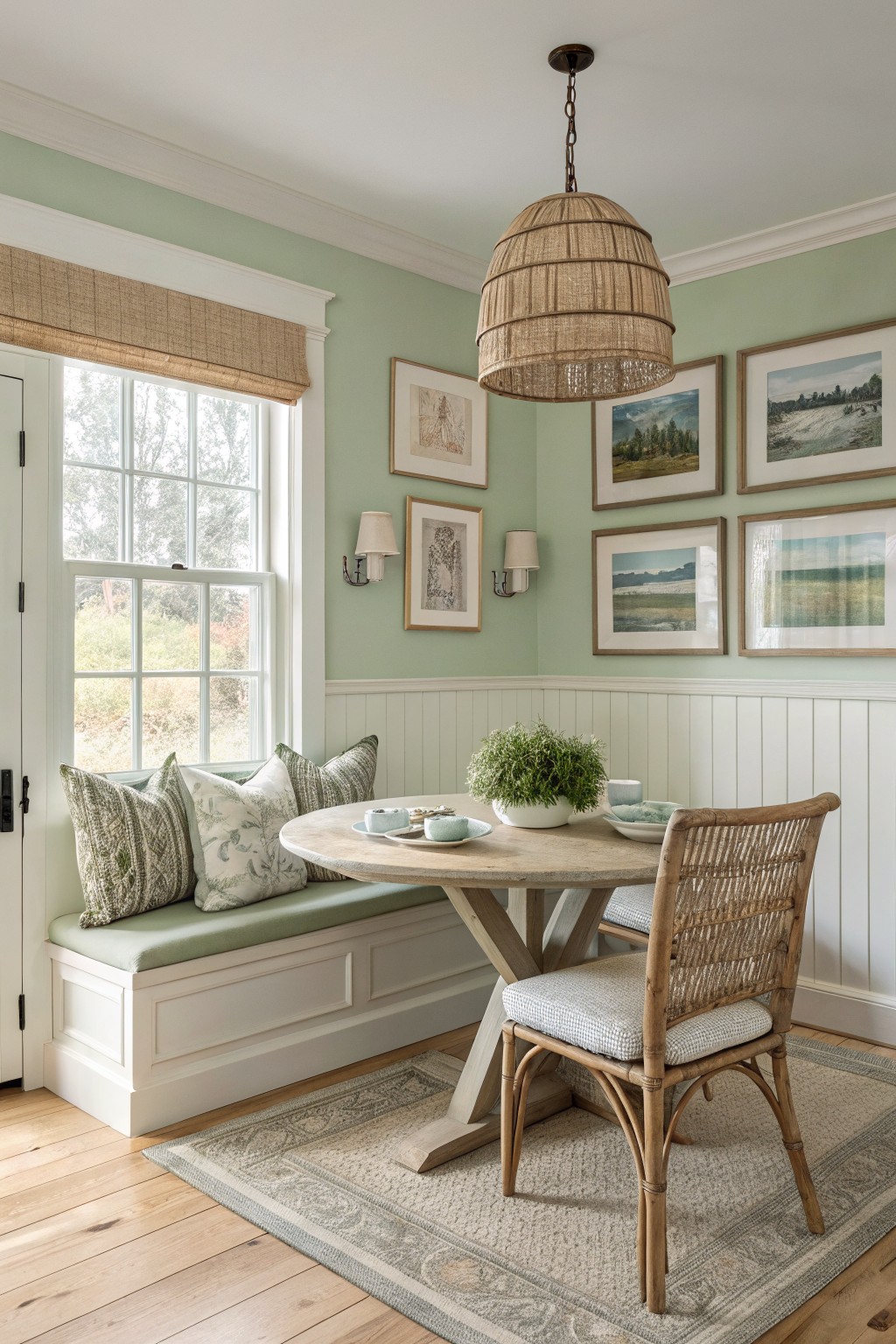
This soft sage green brings a quiet natural feel to the room without feeling too bold. It has a muted tone with just enough gray in it to keep things calm, and it works especially well against white trim and warm wood floors.
The color shifts a bit with the light, sometimes looking a touch cooler and other times more earthy. It suits spaces like breakfast nooks or casual dining areas and pairs nicely with woven pieces or simple wood furniture. Closest matches would be something like Sherwin Williams Rainwashed, Benjamin Moore Saybrook Sage, or Behr Aloe Vera.
Soft Sage Green Laundry Room Cabinetry
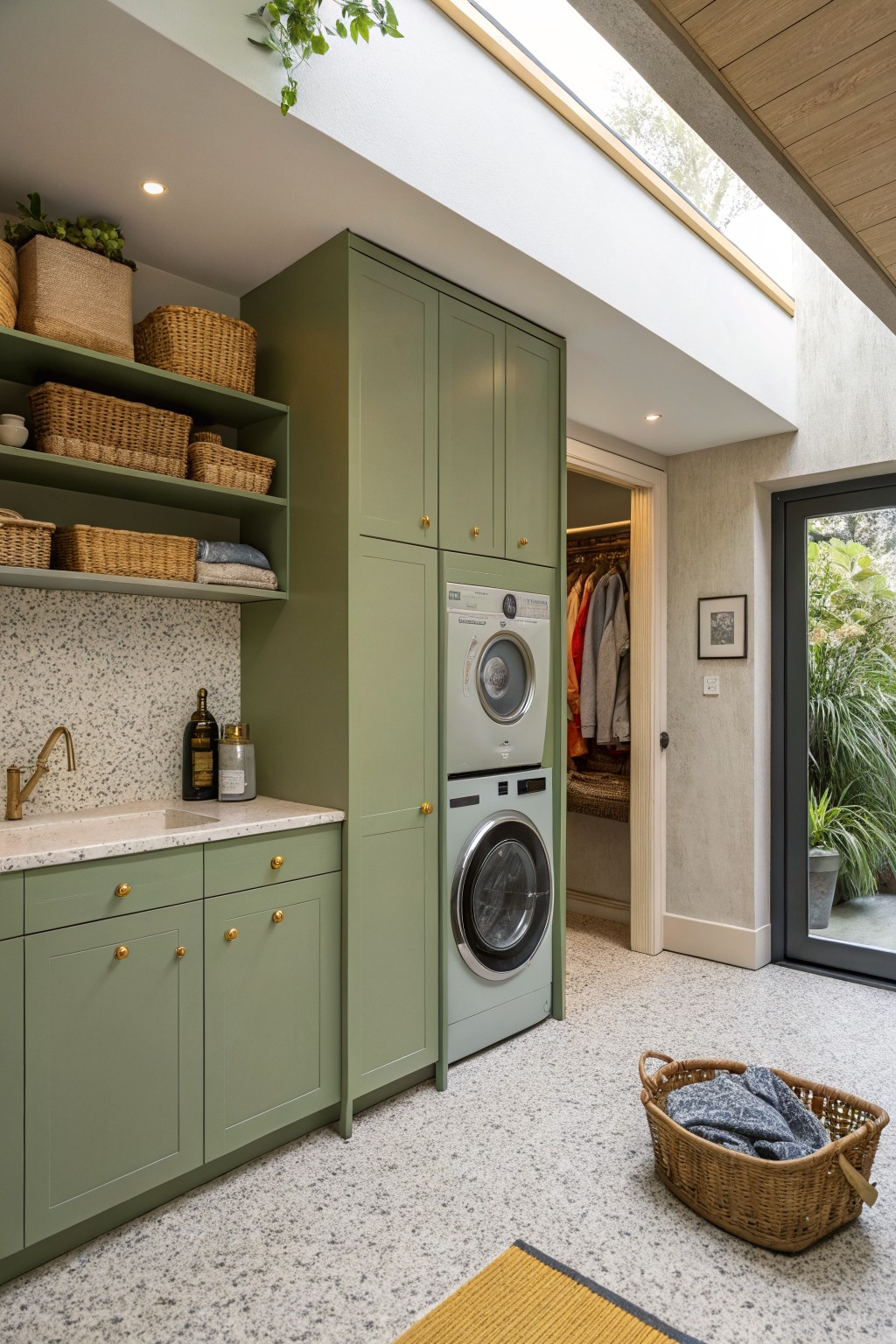
This is a soft sage green that leans slightly gray and sits comfortably between green and neutral. It brings a quiet outdoor feel into a hardworking room without taking over the space. The color works well on cabinetry because it feels calm next to stone, wood, and simple textiles.
It holds up nicely in bright light and pairs easily with brass pulls or warm wood tones. Just watch that it does not go too cool if your room gets mostly north light. A few plants or woven baskets help it feel even more natural.
Soft Earthy Green Cabinets
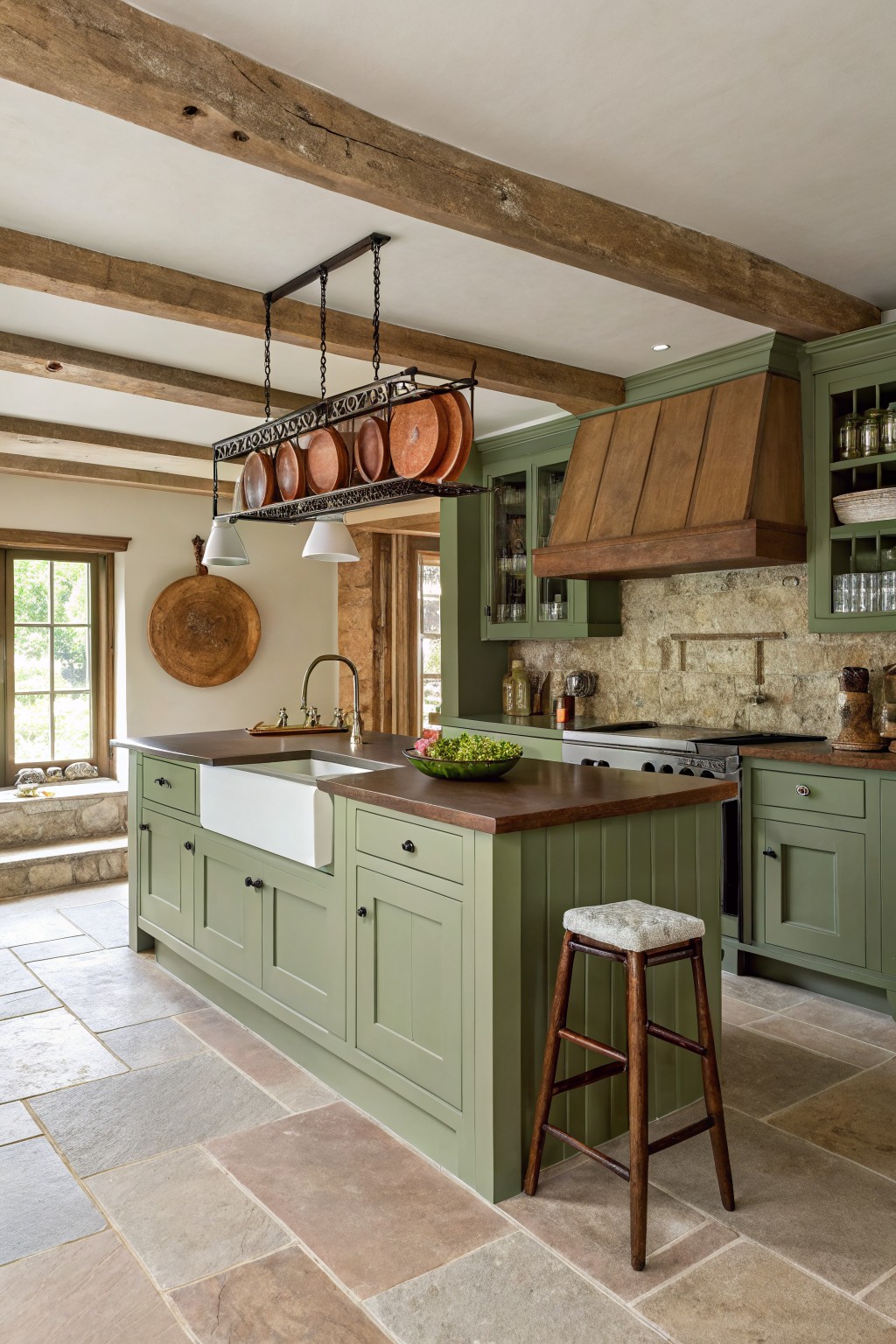
This muted green on the cabinets is a classic earthy shade that leans toward sage with a touch of olive. It brings a calm, grounded feel to the kitchen without turning too dark or bold. Shades like Sherwin Williams Clary Sage, Benjamin Moore Saybrook Sage, or Farrow & Ball French Gray sit right in that same range.
The color holds up well next to wood counters and beams because it has enough warmth to feel natural rather than flat. It works best in kitchens or rooms with mixed materials, though it can look a bit cool if the light stays low all day.
Soft Sage Green Built-Ins

This muted sage green feels like a natural choice for built-ins because it stays calm and blends right into the room. It has enough depth to make the shelves and cabinetry look intentional without taking over the space, and it works especially well when you want the paint color to feel connected to the wood floors and surrounding light.
The color sits somewhere between gray and green, so it avoids any yellow cast that can show up in some sages. It looks good with warm wood tones and simple textiles, and it suits older homes or reading areas where you want something steady rather than trendy.
Deep Earthy Green Walls

This deep earthy green on the walls feels like a natural choice for bringing some outdoors inside. It has a rich tone that grounds the room while still letting the wood ceiling and beams stand out.
It works best in spaces with warm wood tones and natural light. Try something close to Sherwin Williams Forest Green, Benjamin Moore Hunter Green, or Behr Forest Floor if you want a similar depth.
Muted Sage Green Walls
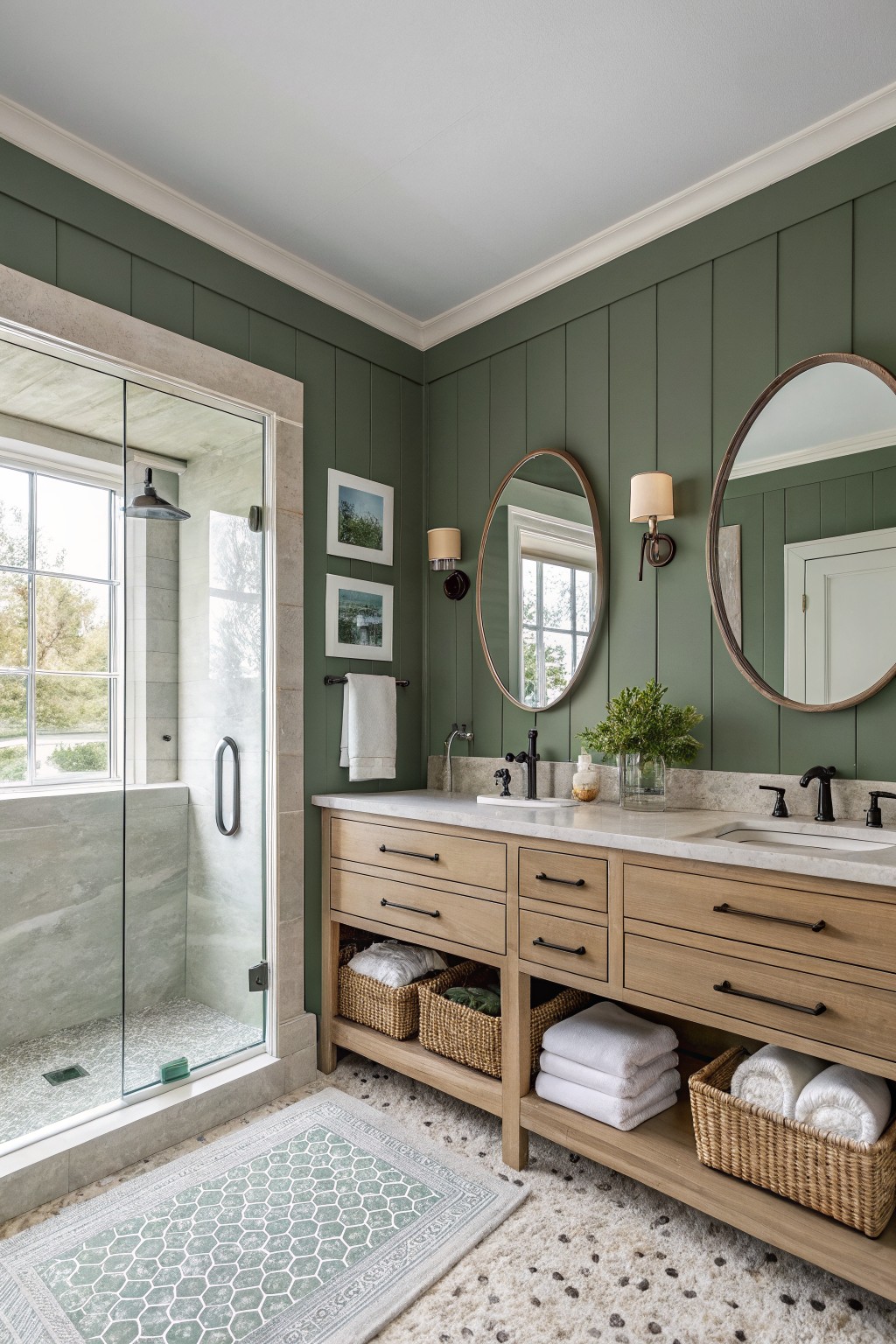
This bathroom uses a muted earthy green that sits right in the sage family. It has a soft gray undertone that keeps it calm rather than bold, and it feels like it belongs with natural materials instead of fighting them. Shades like Sherwin Williams Evergreen Fog or Benjamin Moore Saybrook Sage come close, along with Farrow & Ball Green Smoke for a slightly deeper version.
The color holds up nicely against the light wood vanity and white countertop without looking too heavy. It works best in rooms that get decent daylight, since the gray notes can turn a bit cooler in low light. Pair it with warm wood tones or simple black hardware if you want the green to stay relaxed and grounded.
Soft Sage Green Small Bathroom Walls
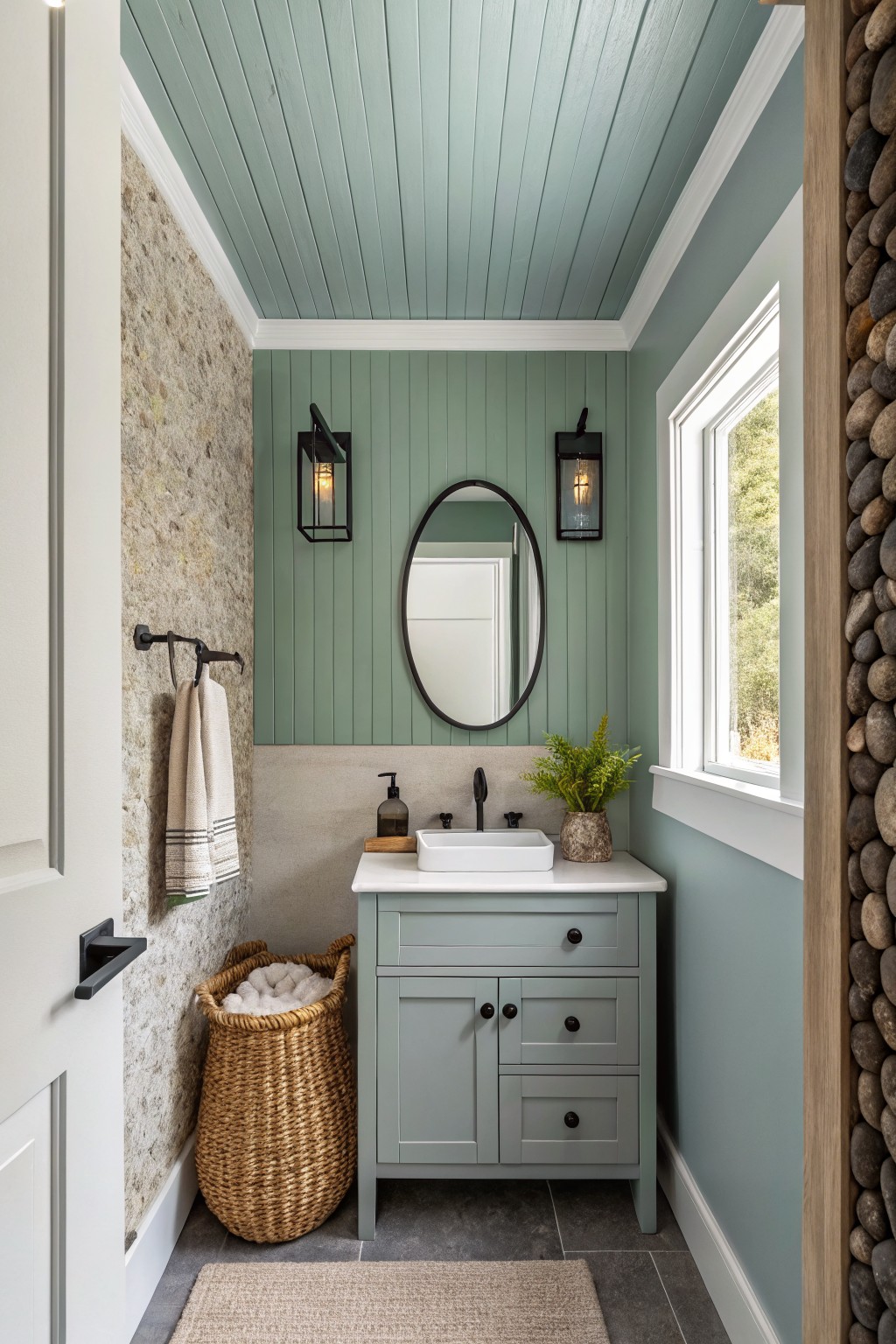
This soft sage green has a quiet, grayish undertone that keeps it feeling calm rather than bold. It sits nicely between blue and green, which is why it works so well in smaller rooms where you want a bit of nature without things feeling too dark or busy.
The color looks closest to Benjamin Moore’s Saybrook Sage or Sherwin Williams’ Clary Sage. It pairs easily with white trim and natural textures like stone or woven baskets, though it can look a little flat if the lighting is very dim.
Frequently Asked Questions
Q: How do I pick the right earthy green without ending up with something too bold on my walls?
A: Grab a few sample pots and brush them onto large boards you can shift around the room. Check each one in morning light and again at dusk to see how the color shifts. This quick test shows which shade blends with your space instead of fighting it.
Q: Will a deep forest green make my bedroom feel smaller?
A: Go for it on one accent wall and keep the rest in a soft off-white. Add light curtains and a simple wood headboard to balance the depth. The room stays open while still pulling in that grounded feel.
Q: What colors pair easiest with these greens for a relaxed vibe?
A: Warm neutrals like taupe or soft beige work well on trim and larger furniture. Layer in textures such as linen or rattan to echo the natural theme without extra effort.