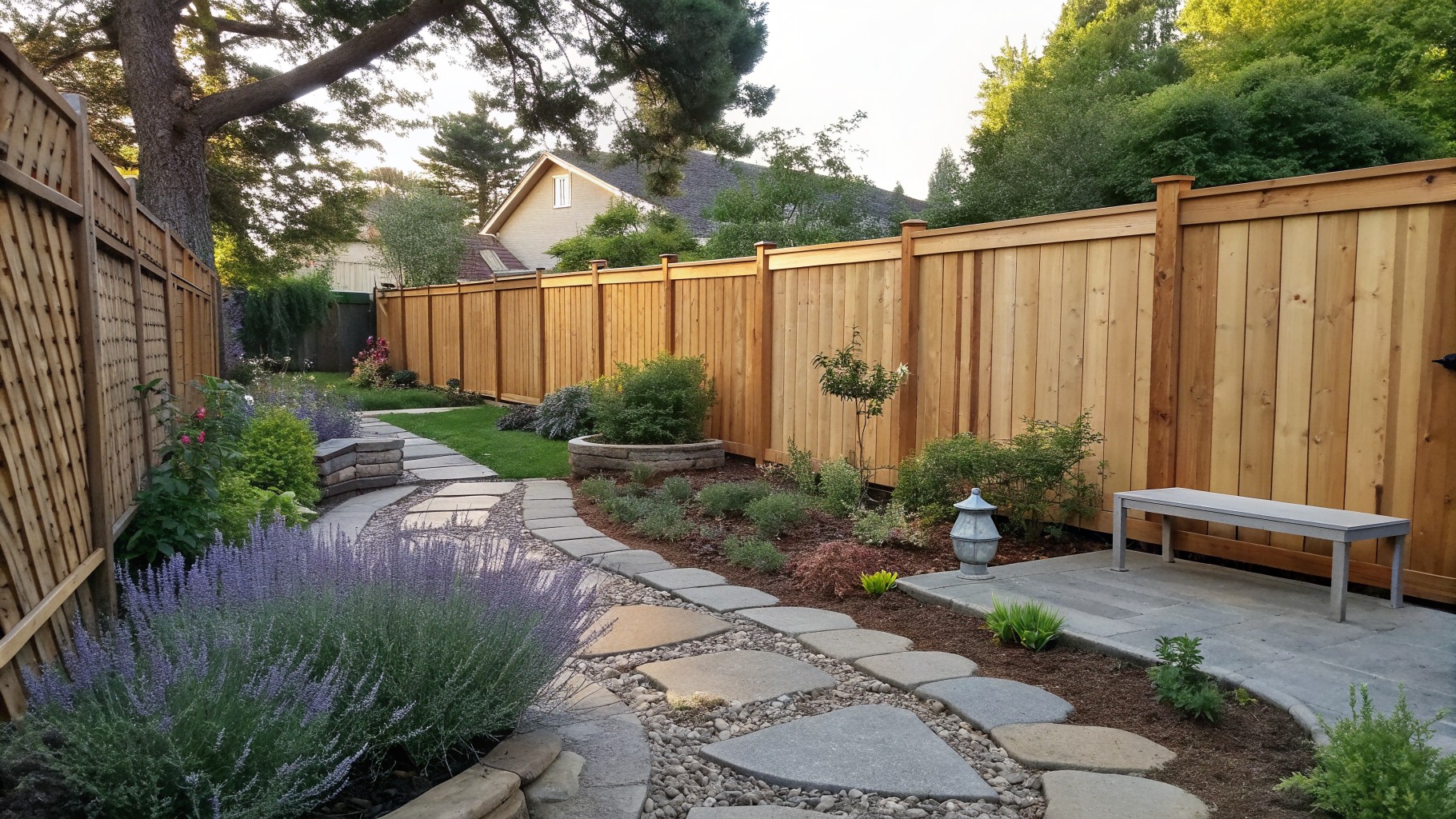
I have always noticed that a good fence does more than mark the edge of a yard.
It shapes how the whole backyard feels day to day, especially when you want a quiet spot to sit outside without neighbors looking in.
Wood brings a texture that softens the boundary and keeps things from feeling too stark.
Not every style holds up the same way.
I would probably start by testing a few simple vertical styles on a small section before committing to the whole perimeter.
Layering Plants Along a Wood Fence
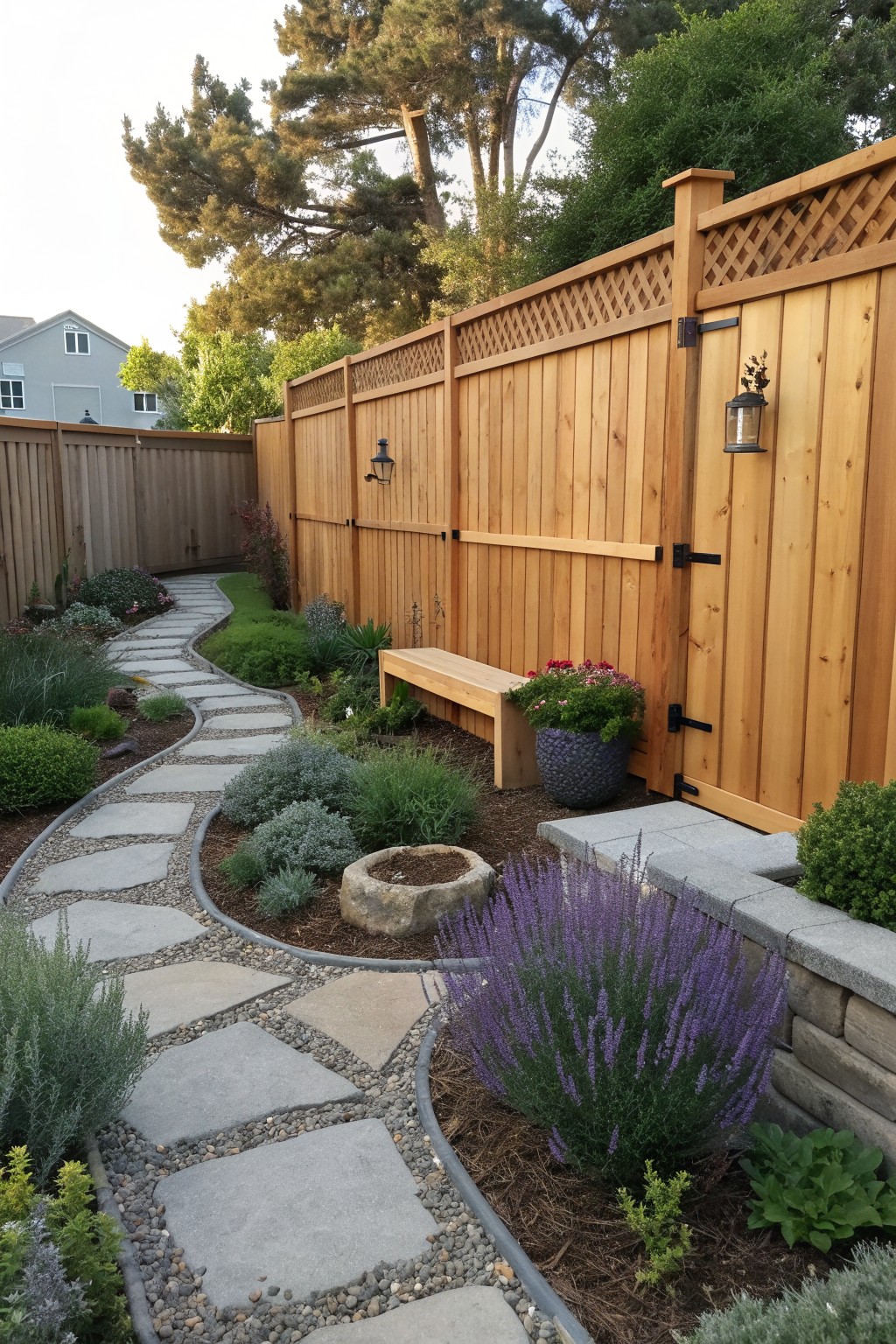
A wood privacy fence gives a solid base for garden beds, and layering plants in front of it keeps the whole area from feeling flat. Different heights of shrubs and flowers add texture while the fence itself supplies that steady natural tone.
This works well in side yards or along the back line of a lot where you need privacy but still want some softness. Keep the path simple and curved so it feels natural rather than forced, and choose plants that match your local conditions so the beds stay low maintenance over time.
Horizontal Wood Fencing For Outdoor Privacy
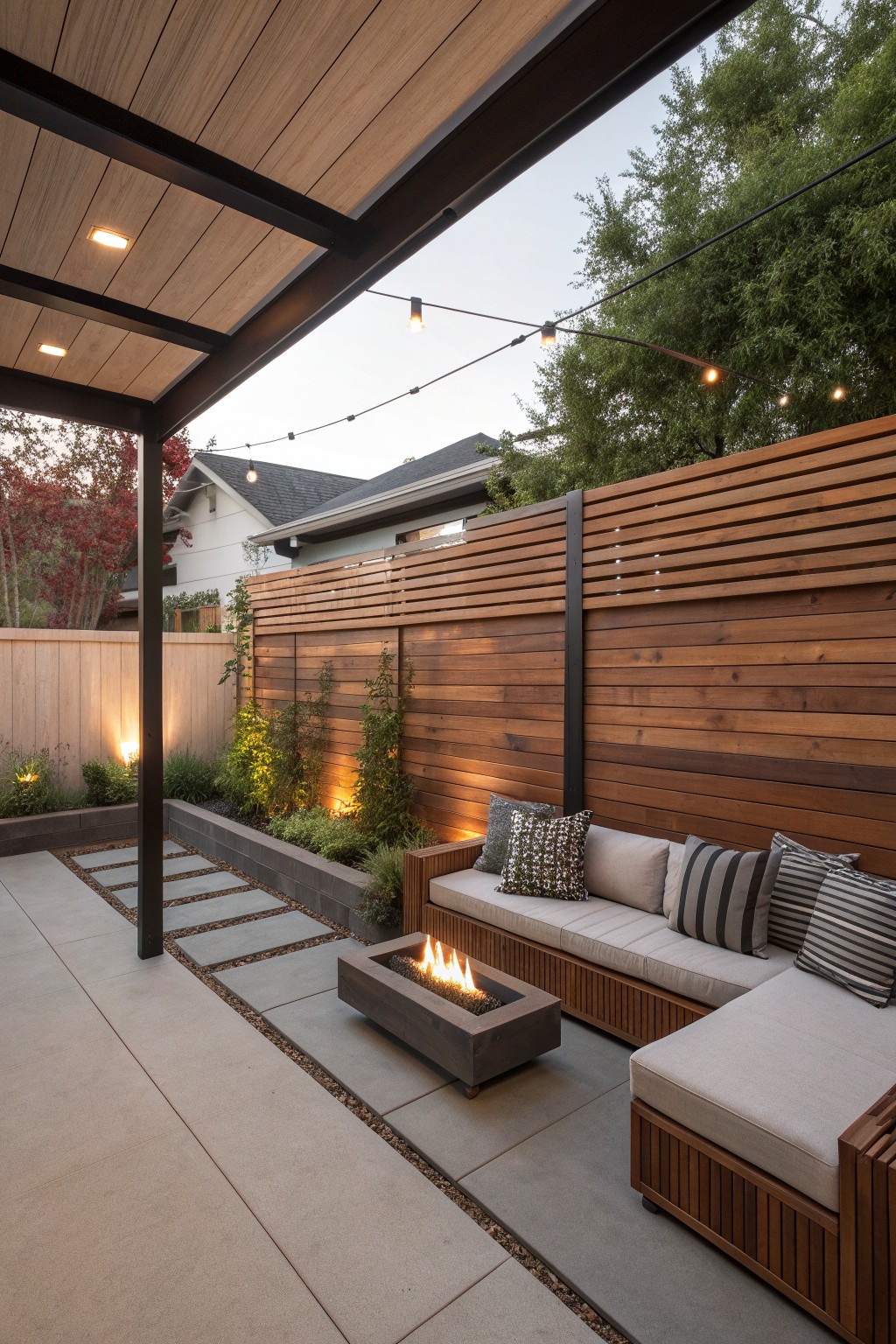
Horizontal wood fencing gives an outdoor space a clear boundary without making it feel closed in. The clean lines of the boards create a solid backdrop that still feels natural, which works especially well when you want privacy but also want the area to stay inviting for evening use.
This approach suits homes with patios that sit close to neighboring yards. Keep the fence height consistent and let the wood age to a softer tone over time. Pair it with low plantings along the base so the structure blends into the rest of the yard rather than standing out as a wall.
Classic Wood Fences That Line A Path
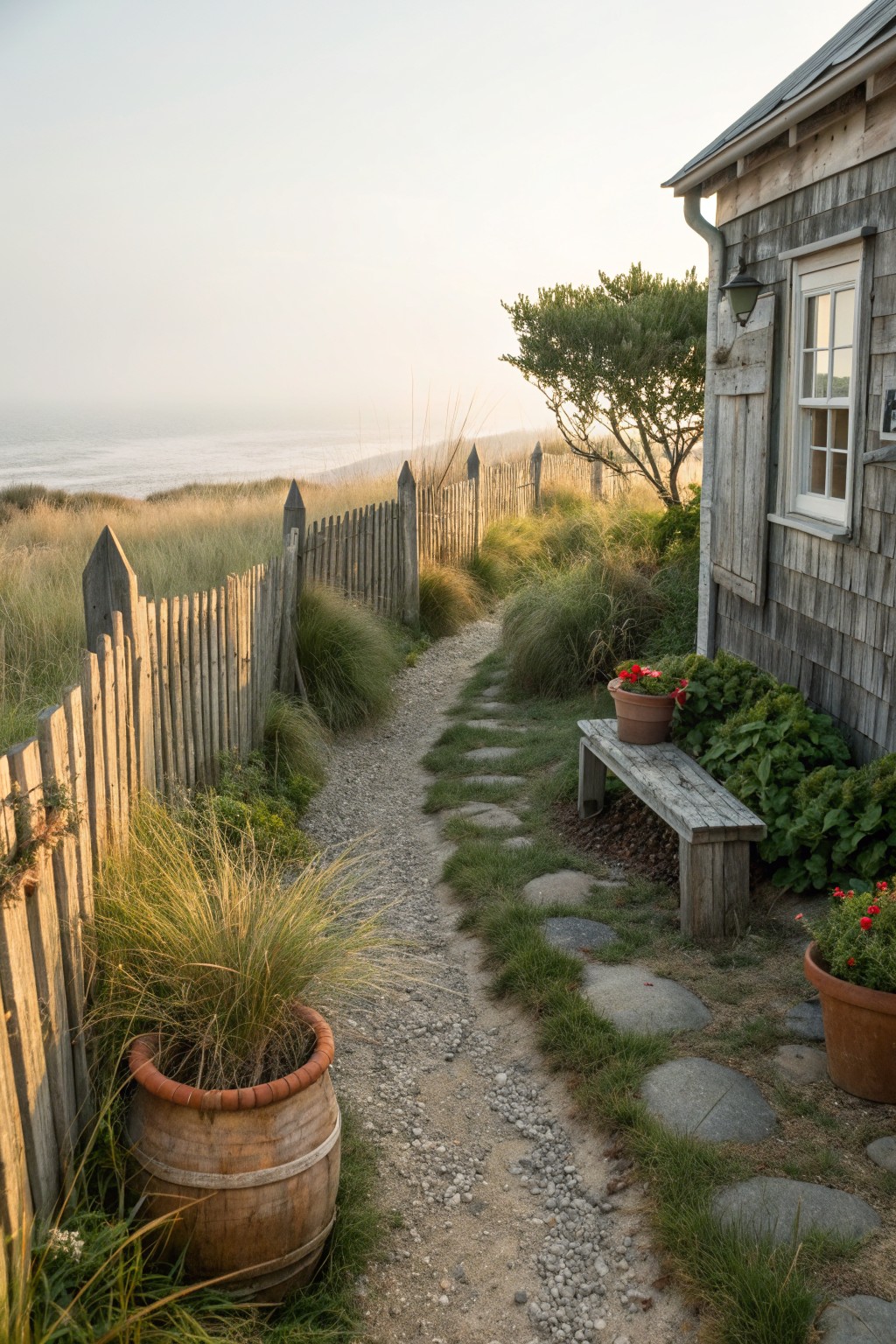
A wood fence running along a garden path gives structure without cutting off the view. The weathered boards bring that warm texture right into the landscape and make the path feel more intentional.
This approach works best on homes with a natural setting or open views beyond the yard. Keep the fence height consistent with the surroundings and let low plants soften the base so the wood feels like part of the garden rather than a barrier.
Wood Privacy Fences Around Outdoor Patios
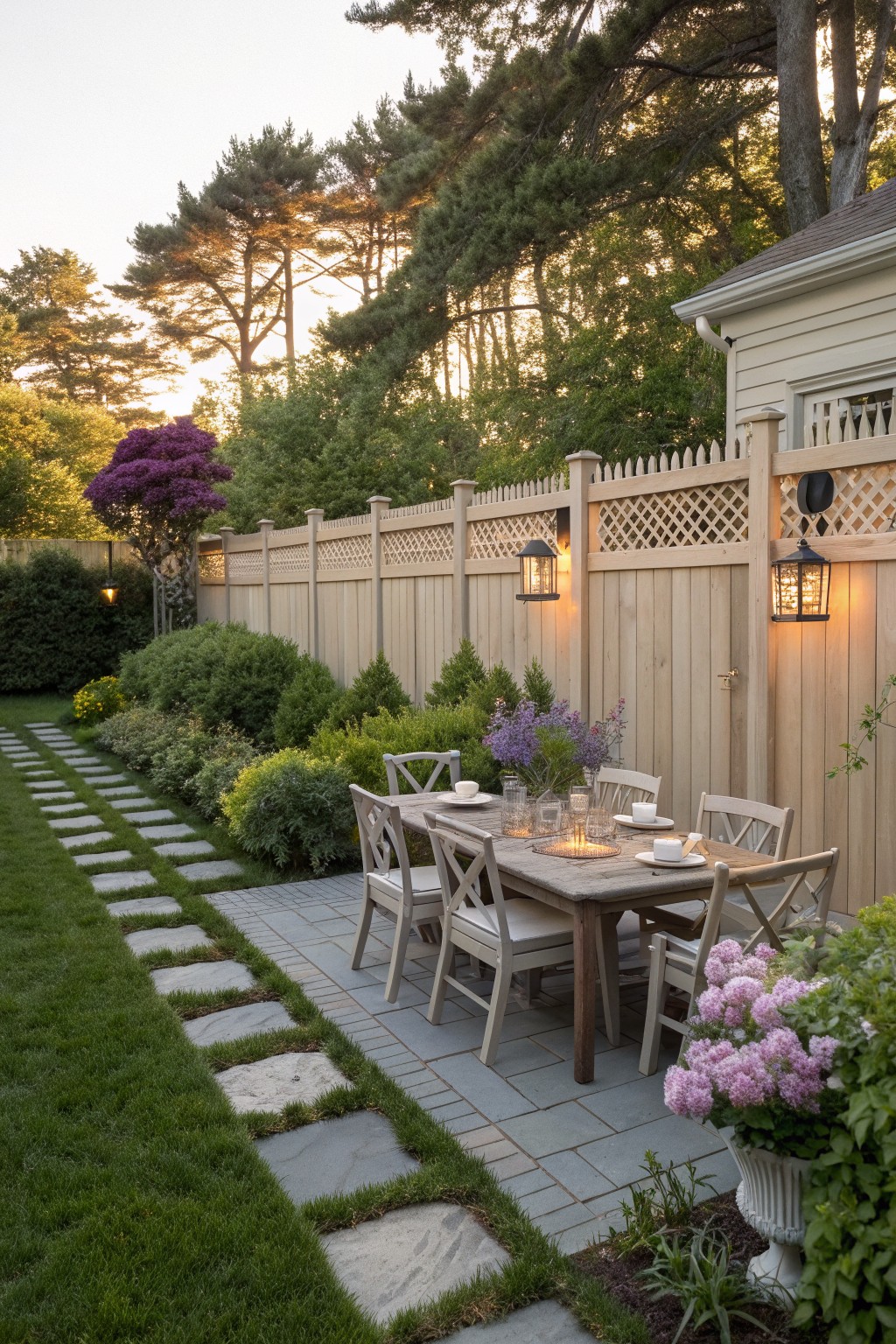
A wood privacy fence works well when you want to turn part of the yard into a defined spot for dining or relaxing. The vertical boards give a clean backdrop while the natural grain adds warmth that blends with the surrounding plants and stone paving.
This approach suits homes with modest yards or close neighbors. Keep the fence height practical for your area and let some low shrubs soften the base so the whole space feels connected rather than closed off.
Vertical Wood Fencing Around Outdoor Patios
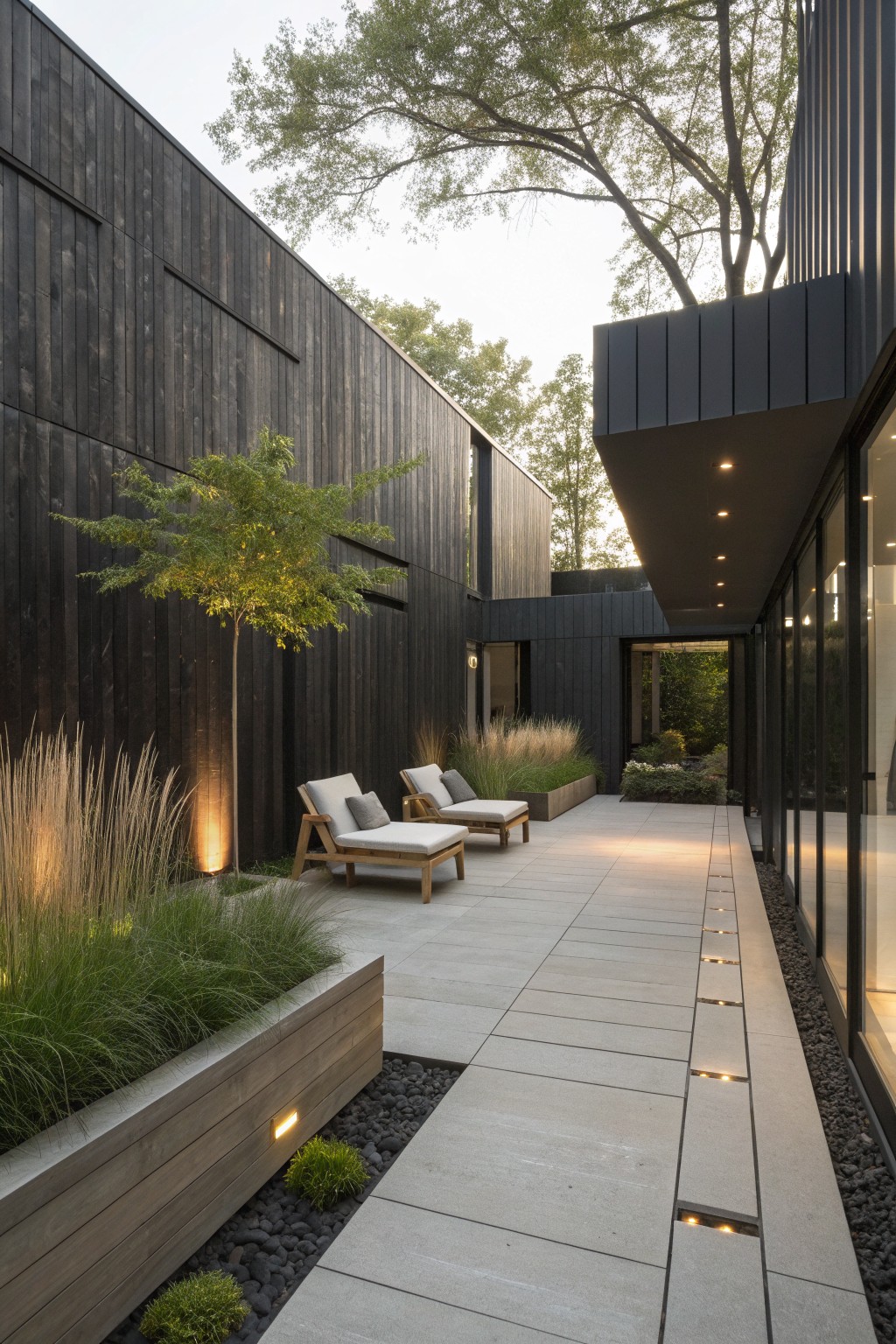
A tall wood fence made of vertical boards gives an outdoor seating area real privacy without making it feel closed in. The dark stain adds warmth and a natural texture that pairs well with stone paving and simple plantings. Many people like this approach because it turns an open side yard into a usable space that feels separate from the street or neighbors.
This style works best on narrow lots or in neighborhoods where you need solid screening. Keep the fence height consistent with local rules, and leave room for low plantings along the base so the wood does not sit right against the ground. It suits both modern and traditional homes as long as the fence color stays in the deep brown or charcoal range.
Raised Beds Along a Wood Privacy Fence
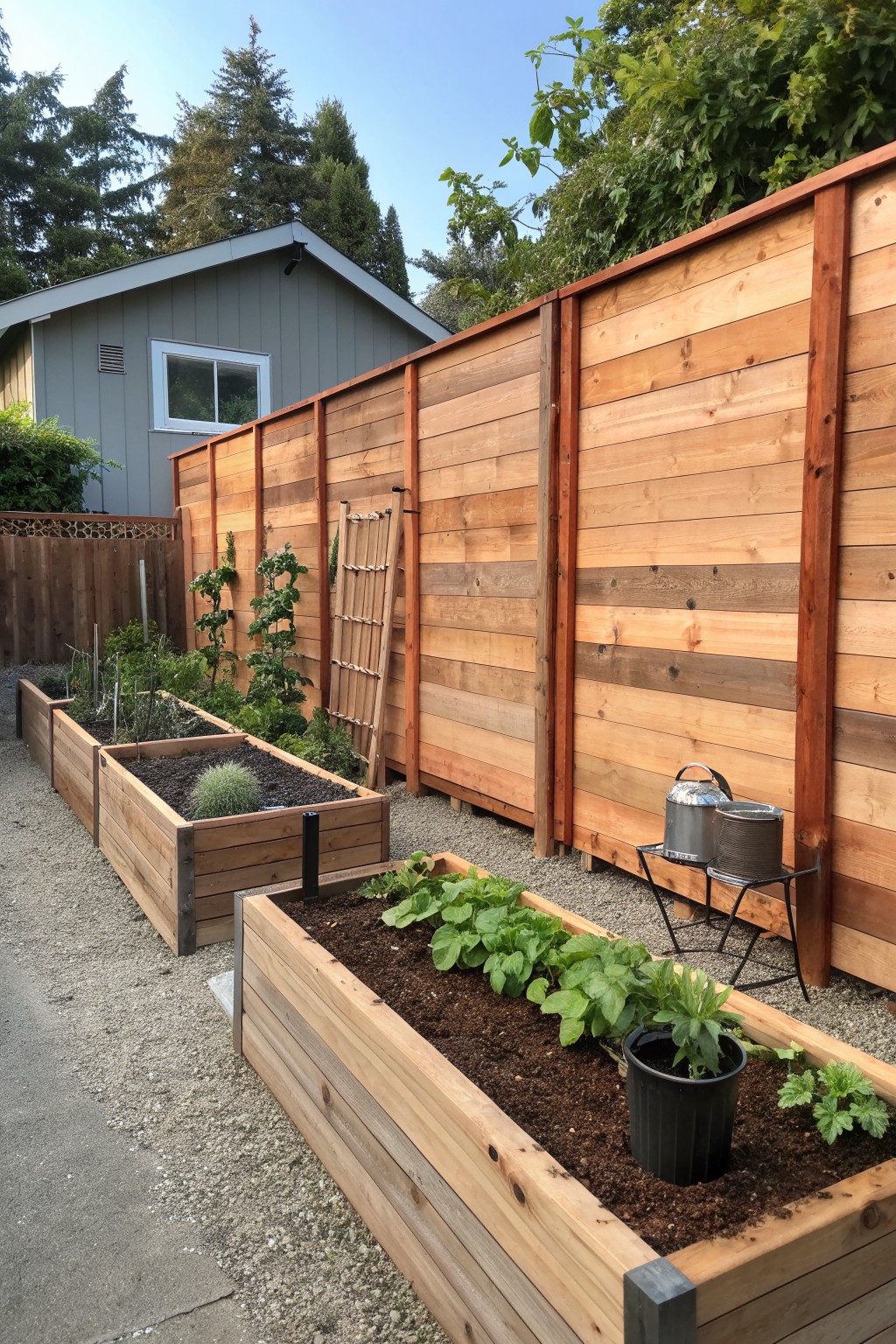
Many homeowners like running raised beds right along a wood privacy fence because it turns the fence into a useful backdrop instead of just a barrier. The wood adds warmth and texture while the beds keep the planting area neat and easy to reach.
This works best in narrower side yards or back gardens where you need both privacy and growing space. Keep the beds a few inches away from the fence so air can move and the wood stays in better shape over time.
Add Built-In Seating to the Fence
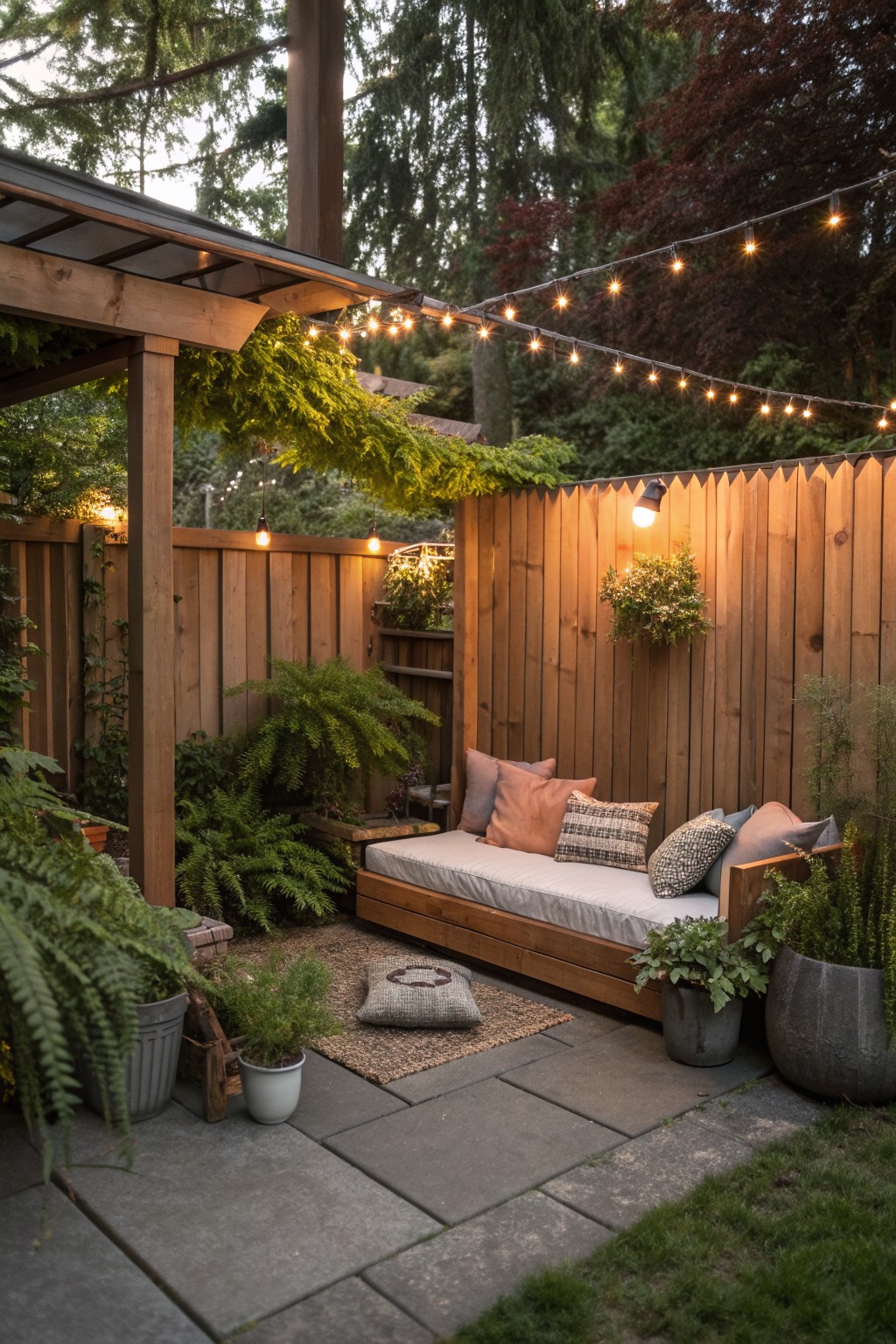
A wood privacy fence can do more than just mark the edge of the yard. Building a bench right into the base turns the fence into a place to sit, which keeps the space from feeling empty and gives you a spot that feels tucked away without adding extra pieces of furniture.
This works especially well in smaller yards or side areas where floor space is limited. Match the bench material to the fence so the whole thing reads as one solid structure, and leave room for a few plants along the sides if you want a bit more softness.
Wood Privacy Fencing Around Pool Patios

A tall wood privacy fence gives a pool area a sense of enclosure without making it feel closed in. The vertical boards add a warm texture that pairs well with the water and surrounding plants, and they block views from neighboring properties or the street.
This approach works best on smaller or mid-sized lots where you want the pool to feel more private. Use a fence height of at least six feet, and choose a wood species that ages to a soft gray if you prefer low maintenance over frequent staining.
Wooden Gates That Blend With the Garden
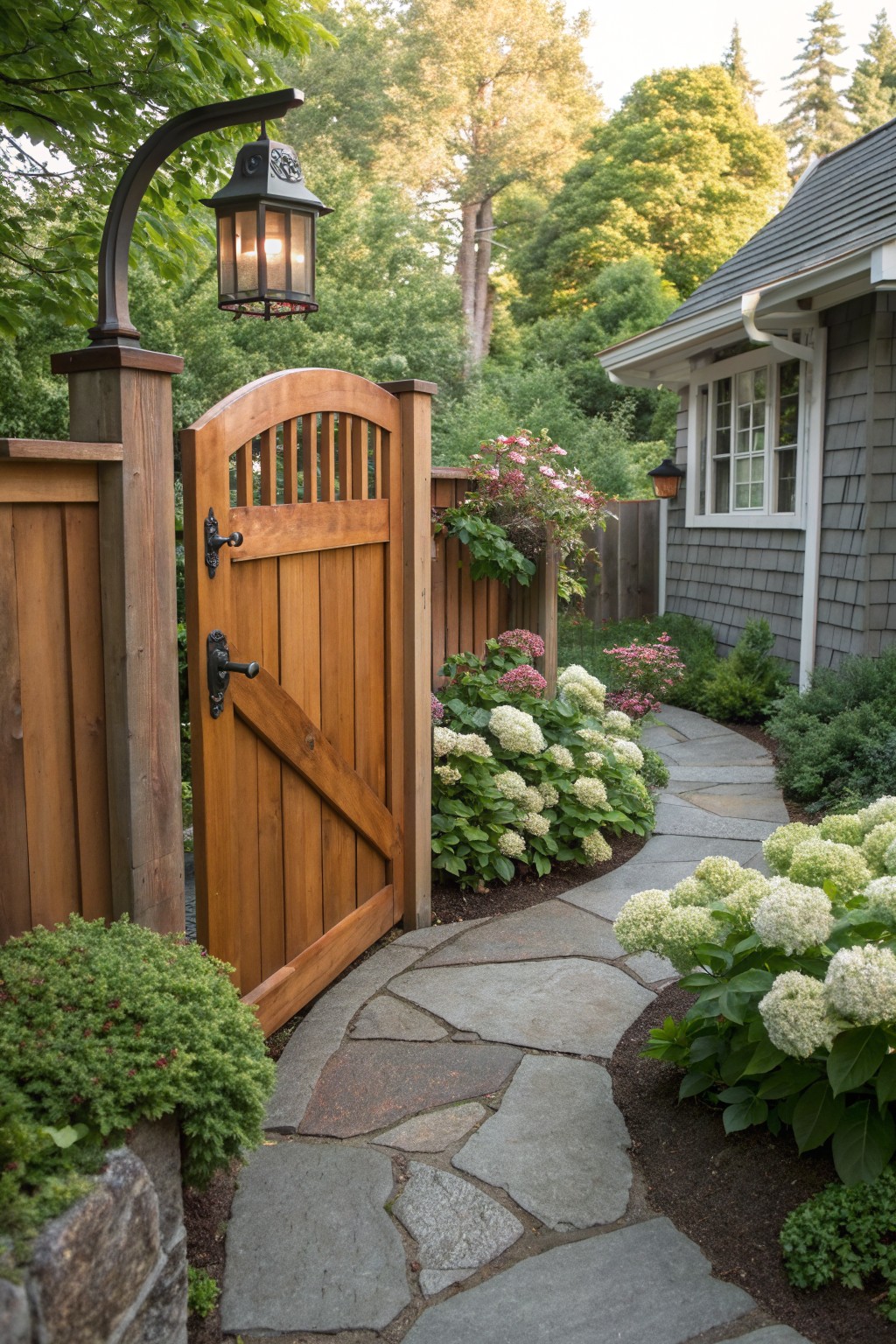
A wooden gate with an arched top gives a privacy fence a bit more presence without making it feel heavy. The natural grain and simple brace keep the whole thing looking warm and straightforward rather than too formal.
This approach works best along a path that leads into the yard, where low plantings can soften the base of the fence on both sides. It suits homes with established trees and flower beds, since the wood tones help the fence sit comfortably among the greenery instead of cutting across it.
Wood Lattice Fences Around Outdoor Patios
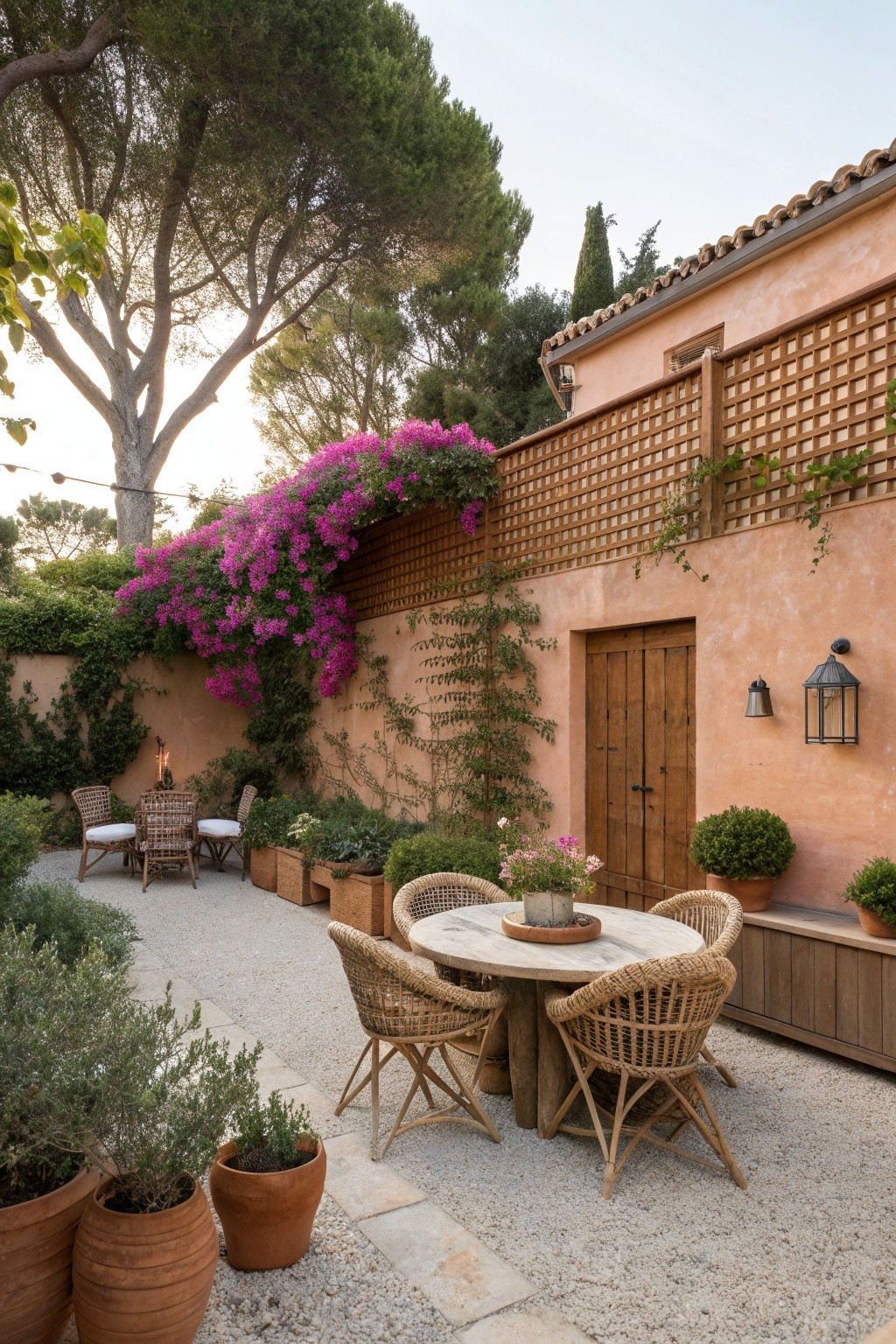
A wood privacy fence with a lattice top section works well when you want to enclose a patio without making it feel closed in. The mix of solid boards below and open lattice above gives both screening and a place for vines to climb, which adds natural texture right where people sit and gather. It turns an open gravel area into something that feels more like a room.
This approach suits homes with sunny side yards or back corners that need a bit of separation from neighbors. Keep the wood tone warm and let plants grow along the base so the fence becomes part of the planting rather than a hard wall. Just watch that the lattice stays sturdy enough to support heavier vines over time.
Horizontal Wood Slat Fences
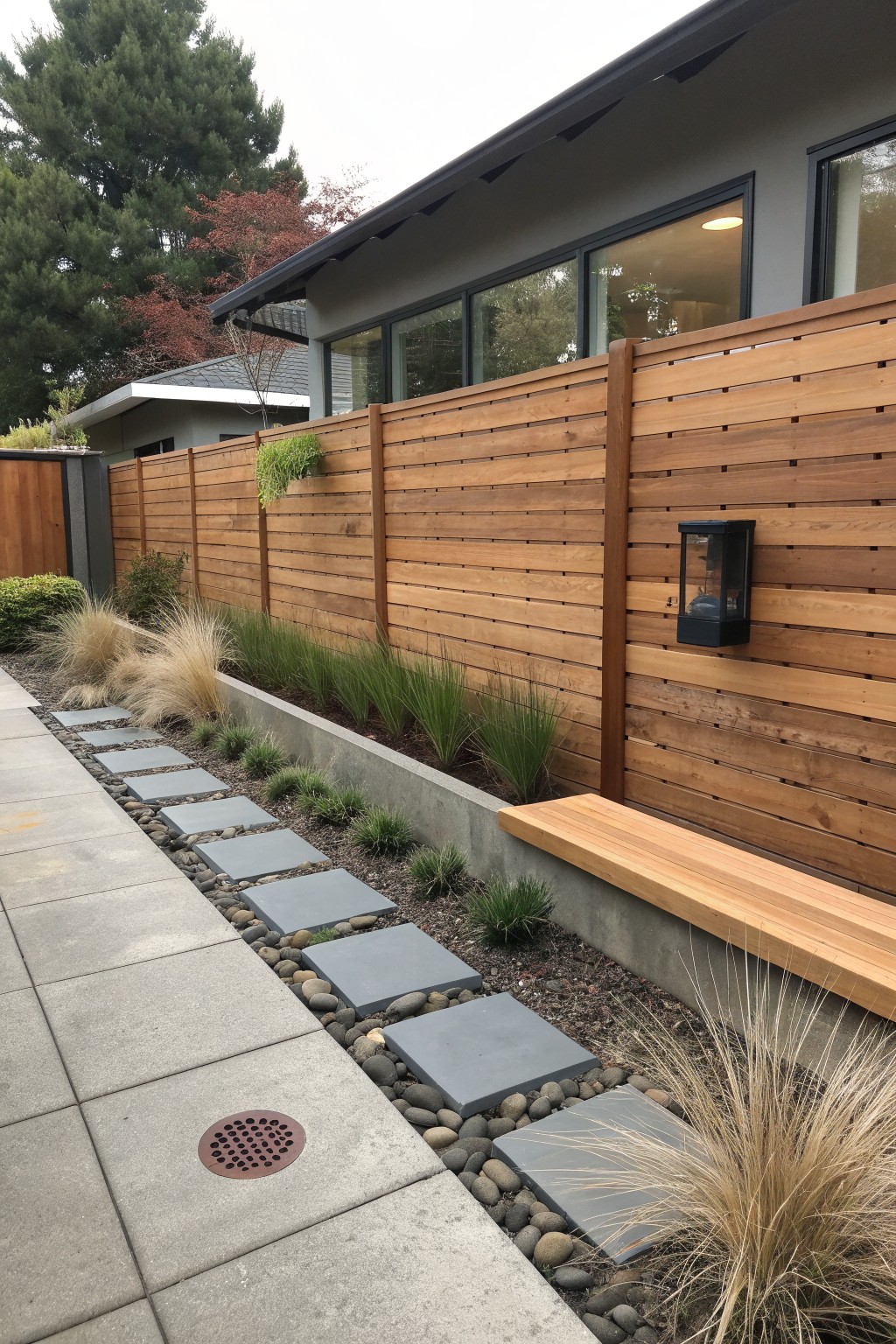
Horizontal wood slats create a clean privacy fence that still feels warm and natural. The even lines give the structure a steady look without making the yard feel closed in, and the wood grain adds texture that ages nicely over time.
This approach works well along the side of a house where the fence needs to match modern lines. Keep plantings low in front so the slats stay visible and the fence does not compete with taller growth.
Vertical Wood Slats For Side Yard Privacy
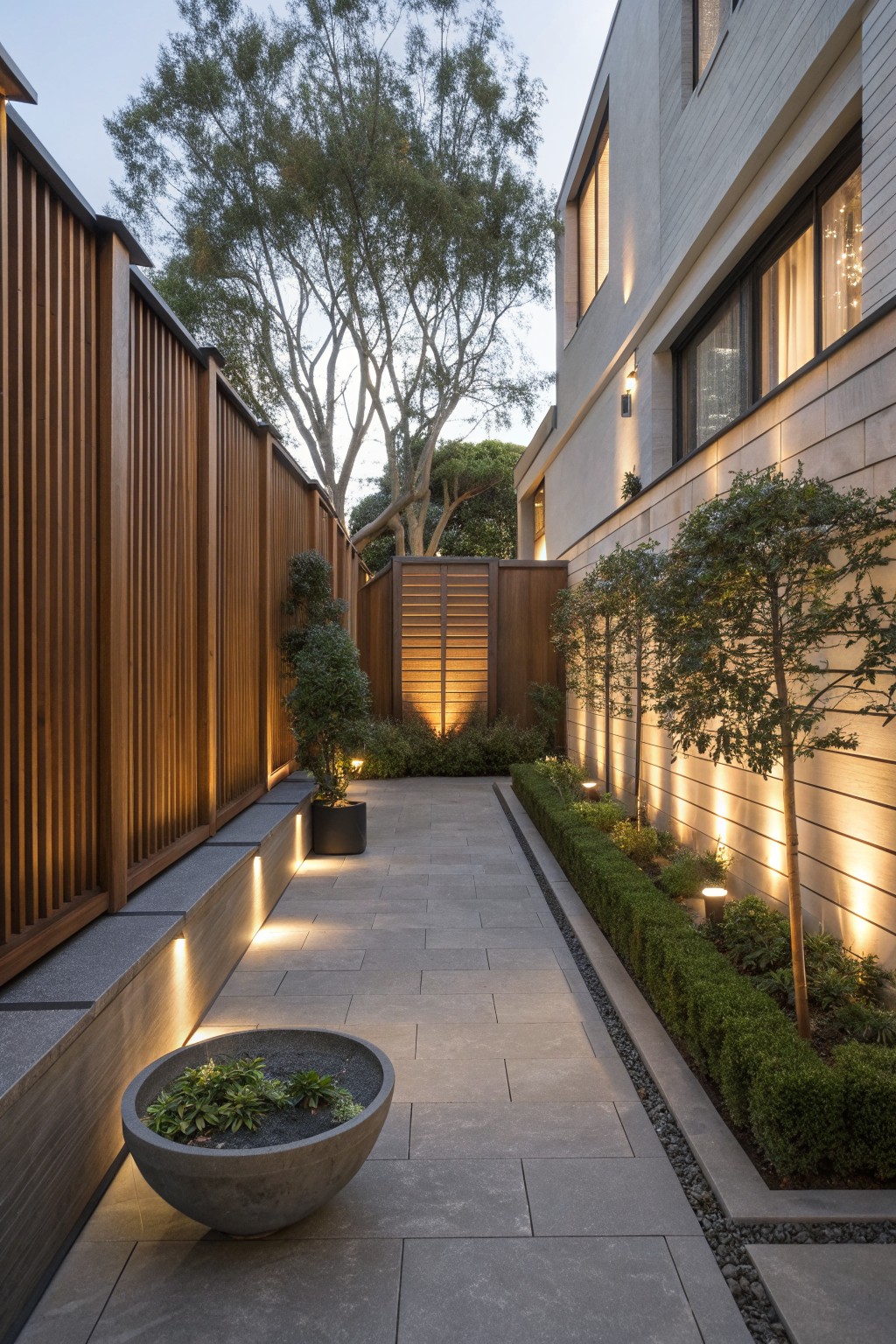
Tall vertical wood fencing works well when you need solid privacy along the side of a house without making the space feel closed in. The straight boards add a warm texture that softens the look of hard surfaces like paving and walls.
This approach fits homes with narrow side yards or long paths where space is limited. Keep the fence height consistent and pair it with low plantings so the area stays open and easy to maintain.
Wood Privacy Fences Behind Raised Beds
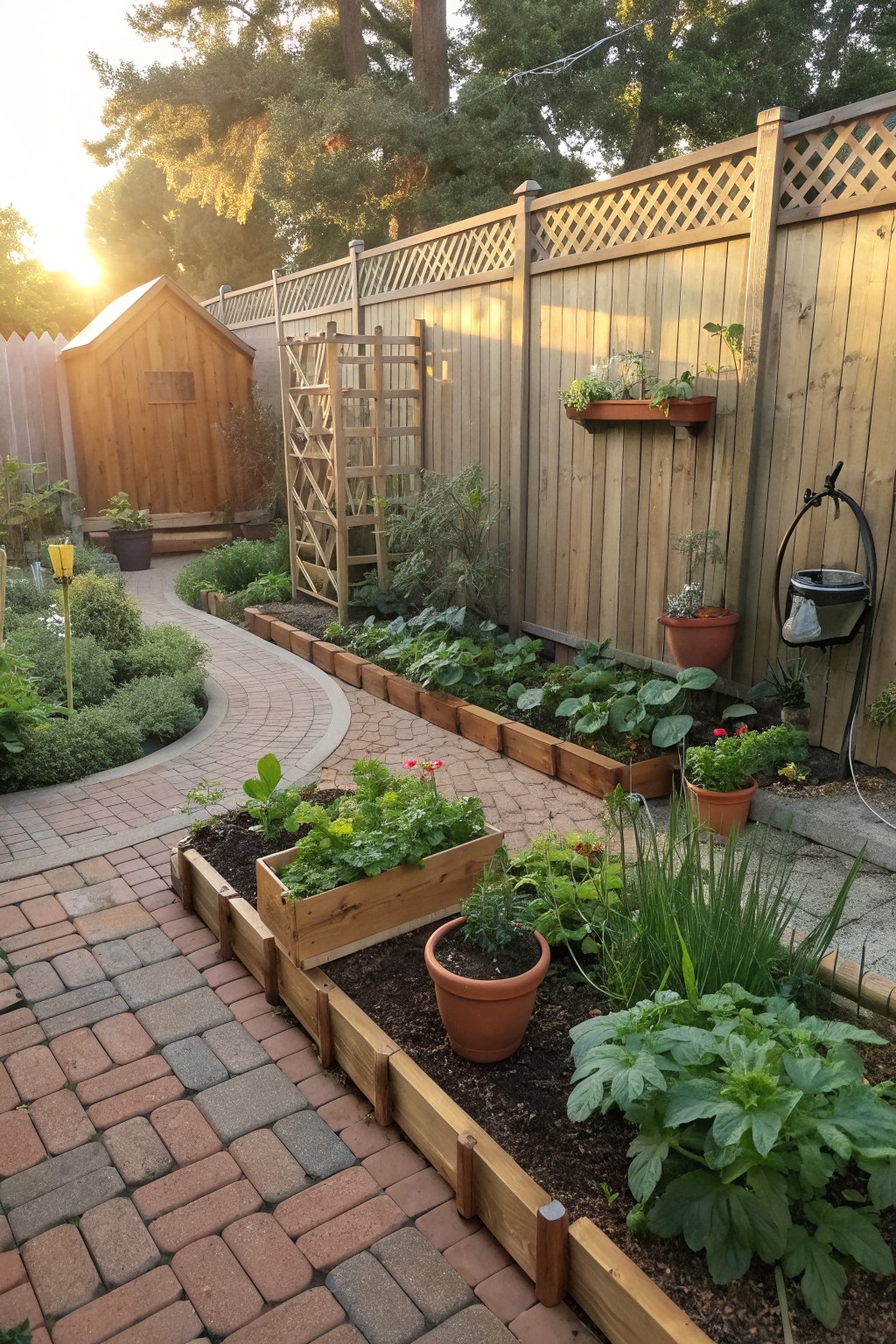
A tall wood privacy fence works well when it sits right behind raised garden beds. The natural grain and warm tone of the wood give the whole planting area a settled look that painted or metal fences often lack. It also creates a clean vertical line that lets the greenery stand out without competing.
This setup suits smaller yards where you want both privacy and room to grow vegetables or flowers. Keep the fence boards vertical and add a simple lattice top if you need a bit more height without blocking light. Just make sure the beds sit a few inches away from the fence so air can move and the wood stays in good shape over time.
Horizontal Wood Slats For Outdoor Privacy
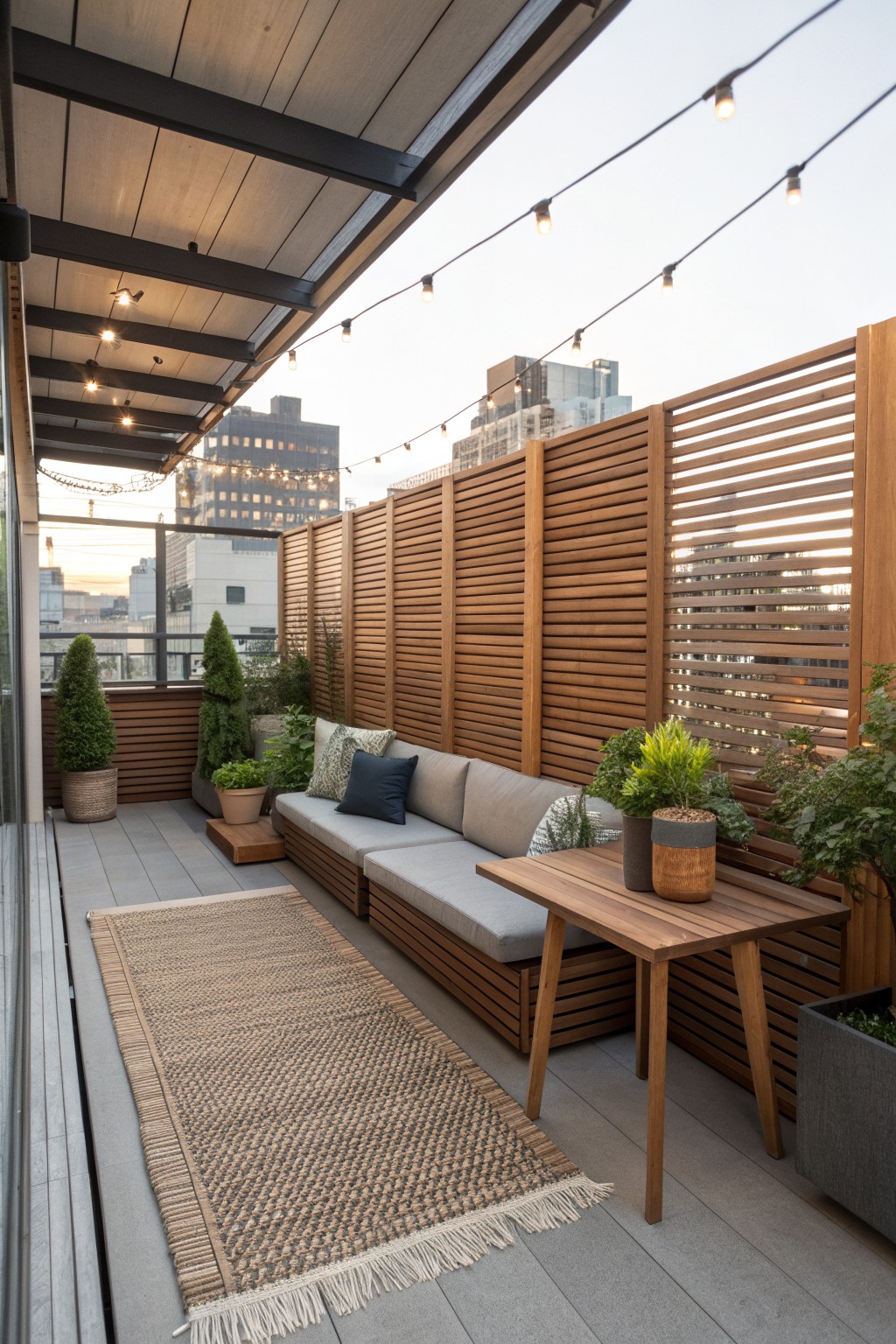
Horizontal wood slats work well when you want privacy without losing the open feel of an outdoor space. They create a clean screen that blocks views while still letting in light and air, and the natural grain adds warmth that painted fences often lack.
This approach suits balconies and small patios best, especially in urban settings where neighbors sit close by. Keep the slats evenly spaced and match the tone to any decking or furniture so the whole area feels connected rather than patched together.
Wood Fences With Stone Bases
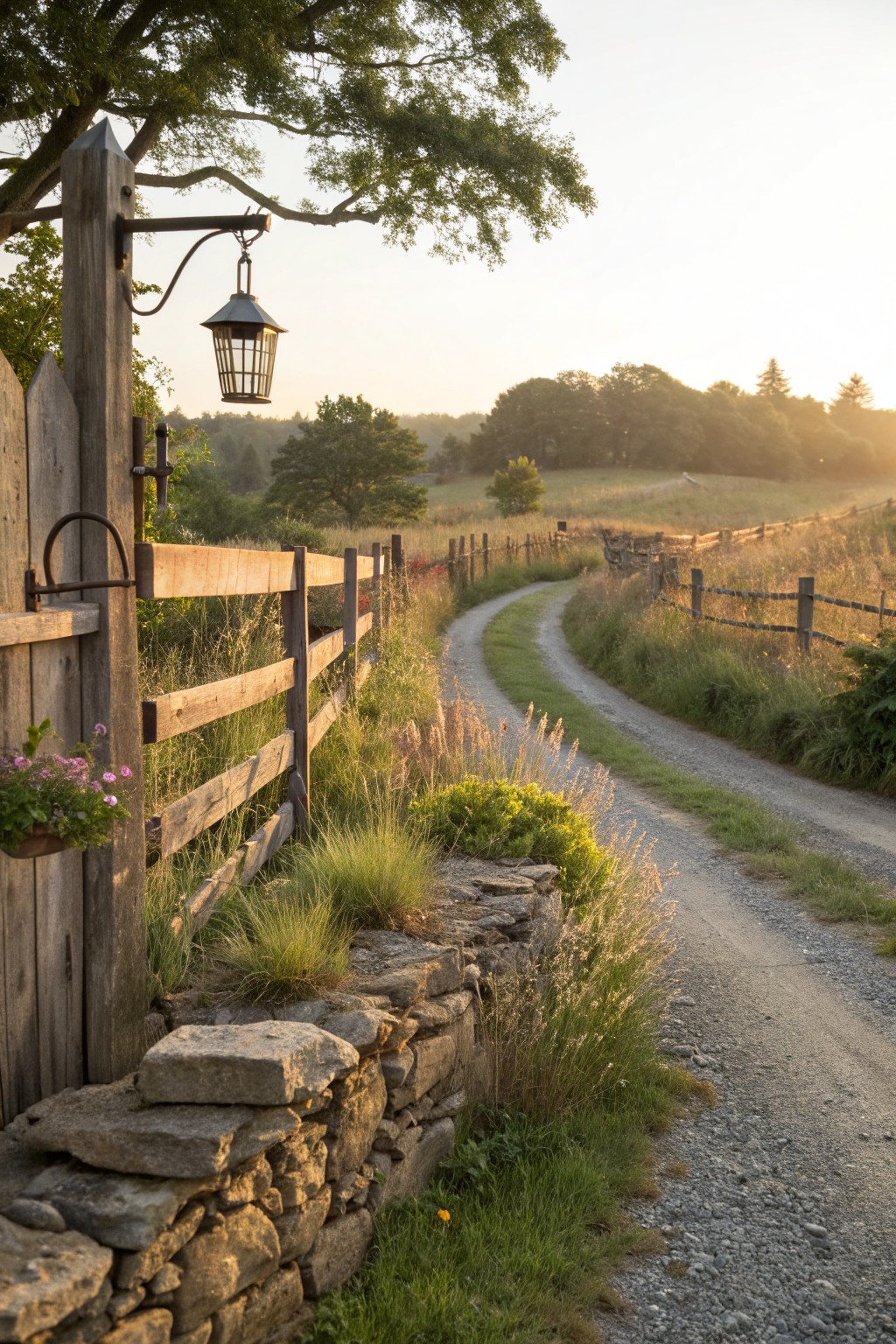
A low stone wall under a wooden fence adds weight and texture that makes the whole boundary feel more settled. The wood stays lighter and more open while the stone handles the ground level, which keeps the look from turning too heavy or too plain in open land.
This setup works well along paths or property edges where you want privacy without blocking the view completely. It suits older homes or rural places that already have natural materials nearby, and it holds up better than wood alone once the ground gets wet or uneven.
Wood Fence With Open Slat Top For Balanced Privacy

A wood privacy fence that uses solid boards on the lower section and open slats above gives you solid screening without making the yard feel boxed in. The solid part blocks views from the street or neighbors, while the slatted top lets in some light and air so the space still feels connected to the rest of the garden.
This approach works best on smaller lots or along side boundaries where full height fencing might feel too heavy. Keep the planting low in front of the fence so the wood stays the main feature, and add simple lights along the top rail if you want to use the space after dark.
Wood Slat Privacy Screens Around Patios
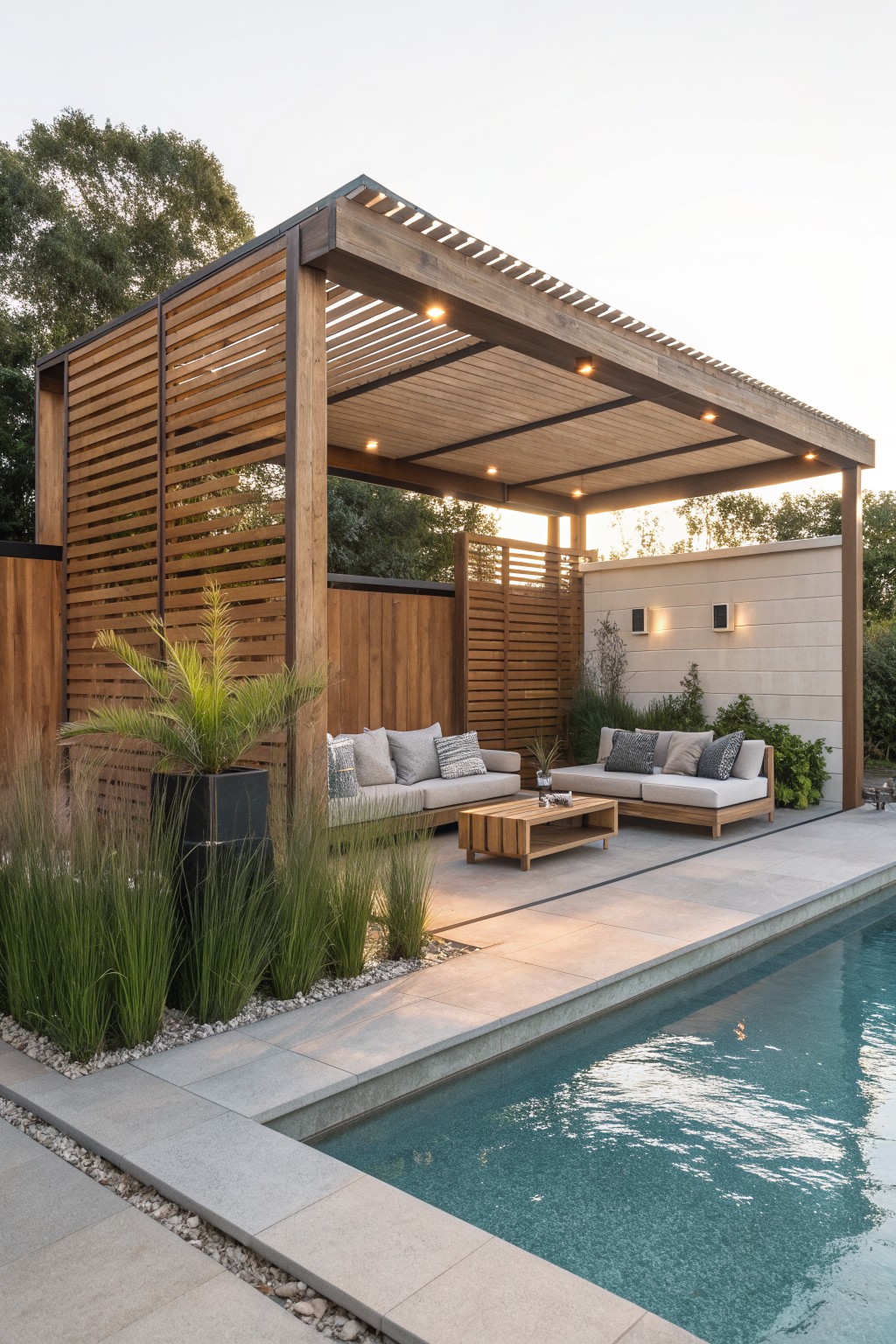
Wood slat screens give a patio a bit of separation without turning it into a closed off box. The vertical lines add texture and warmth while the open gaps keep air and light moving through the space.
They suit homes with pools or side yards where full walls would feel too heavy. Match the wood tone to any nearby pergola or fence so the whole area reads as one simple structure rather than separate pieces.
Raised Planters Along A Wood Fence
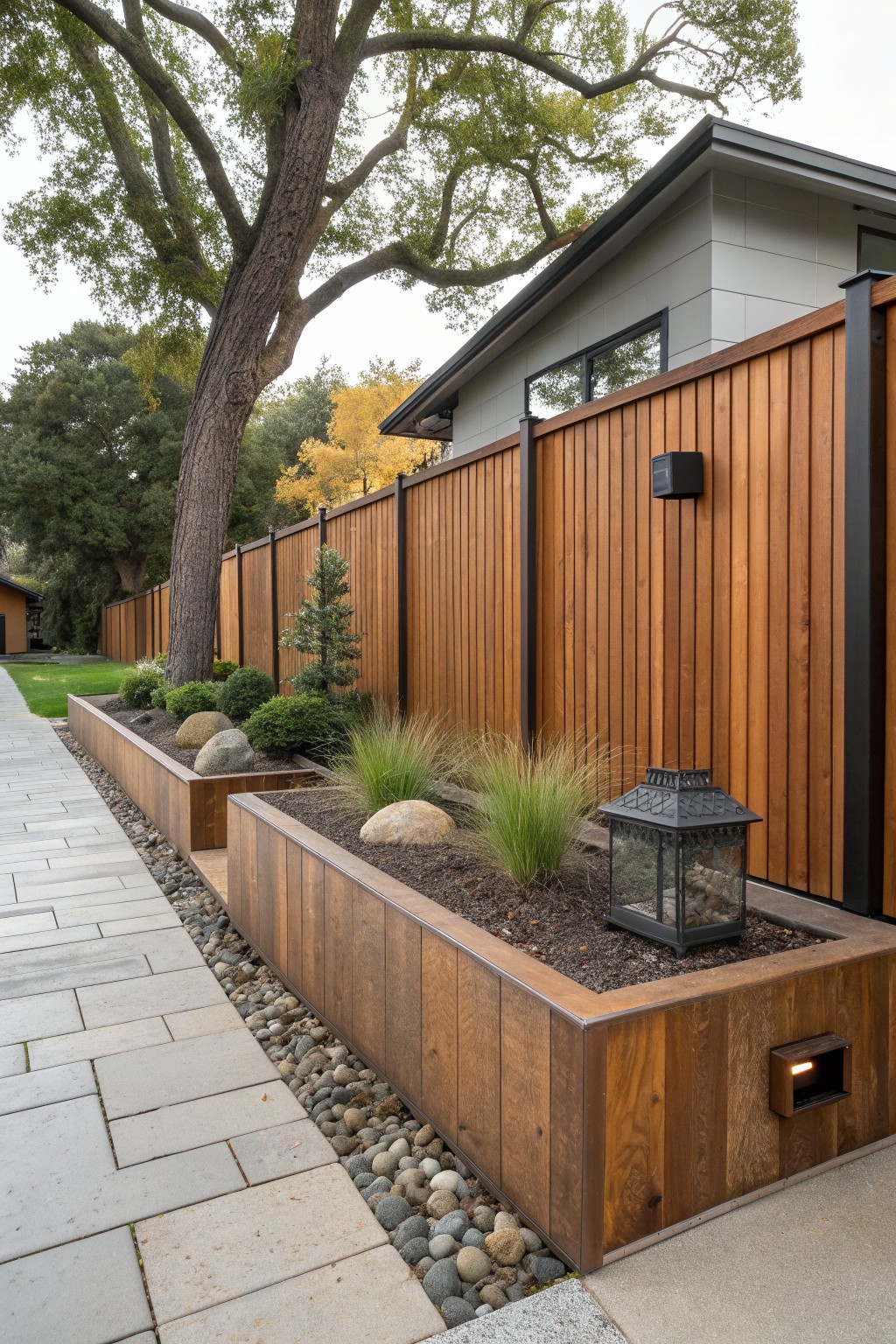
A tall wood privacy fence already gives you solid coverage, but adding raised planters along the base makes the whole setup feel more finished. The matching wood ties the two together so the fence does not look like a flat wall. It also gives you room to plant without crowding the path or lawn.
This works best on side yards or along a walkway where you want screening but still need some softness. Keep the beds narrow enough that they do not block access, and choose grasses or low shrubs that stay tidy. The result is a fence that feels like part of the garden instead of just a boundary.
Wood Privacy Fences For Private Outdoor Patios
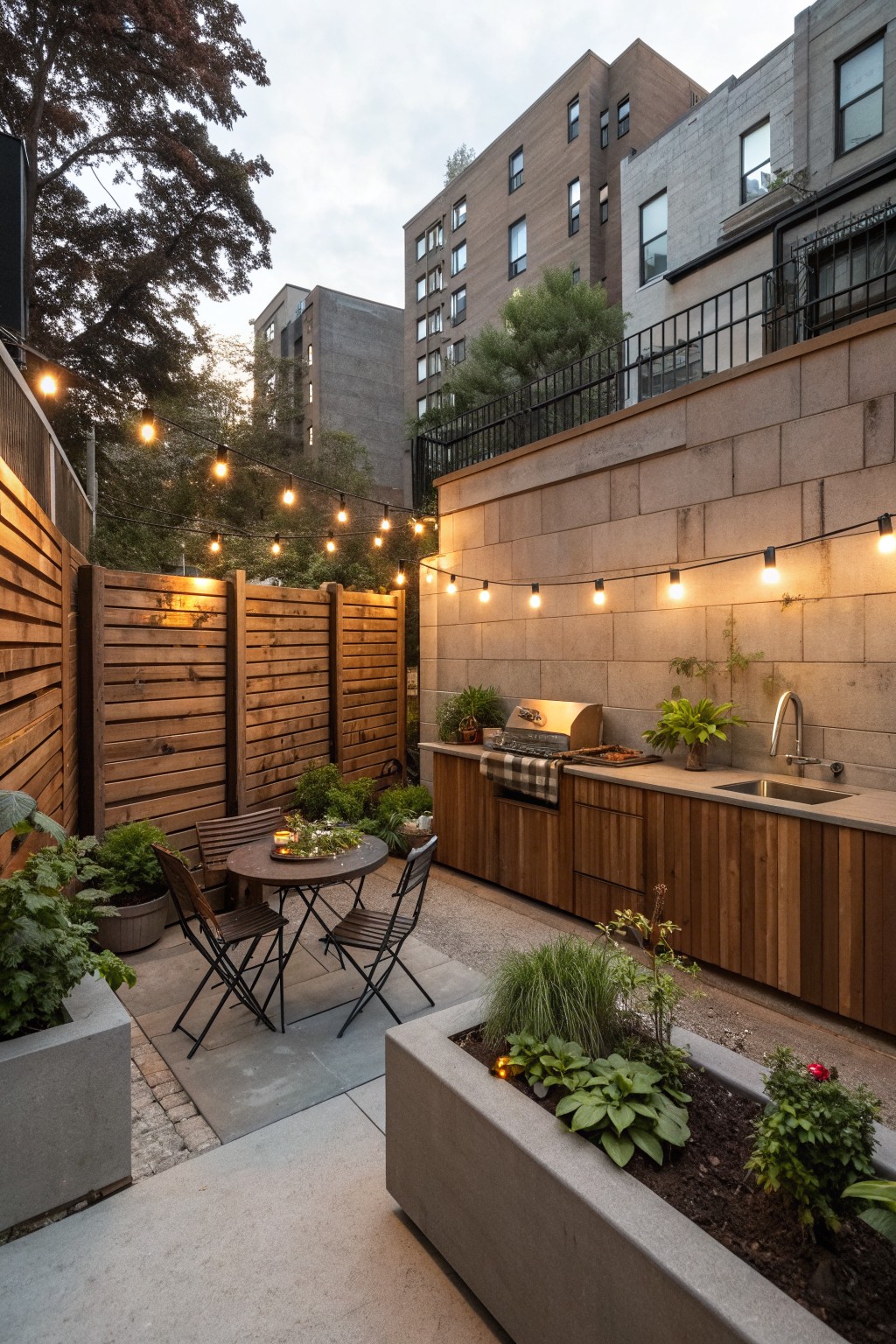
A wood privacy fence works well when you want to turn a small patio into a more usable outdoor room. The solid panels block views from nearby buildings and add a warm natural texture that fits right in with the rest of the yard. It keeps the space feeling sheltered without making it feel closed in.
This approach suits homes with tight lots or shared walls where you need a clear boundary. Keep the fence height around six feet and use simple horizontal boards so the material stays the main feature. Add a few potted plants along the base if you want a bit more softness.
Frequently Asked Questions
Q: How do I pick a wood type that stays solid in rain without much fuss?
A: Cedar or redwood resists rot better than pine in wet spots. Treat the bottom edges with a sealant before setting posts. Check the grain and skip boards with big knots that could split later.
Q: What height keeps the fence private without making the yard feel closed in?
A: Go with six feet for most backyards since it blocks sight lines from standard windows. Add a lattice top if you want some air flow and light. Measure from the ground up on the lowest side to avoid gaps.
Q: How often should I reseal the wood after the first year?
A: Apply a fresh coat every two years in sunny areas to stop cracking. Focus on the south facing side first since it takes the most heat. Skip it only if the wood still beads water well after a rain.


