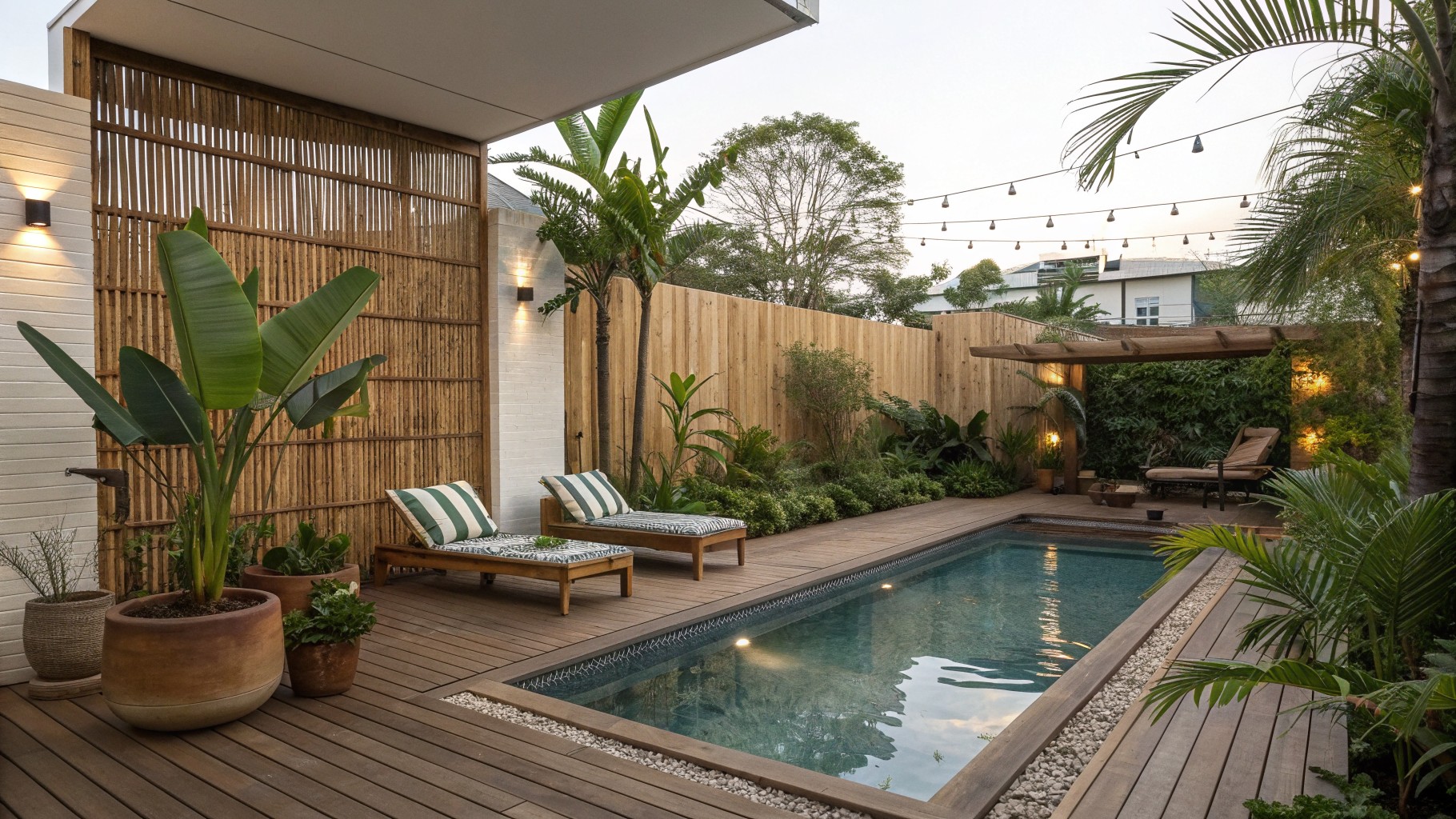
Pools in backyards often end up feeling too open when neighbors can see right in during the warmer months.
I learned this the hard way after spending a season trying to enjoy our pool without constant awareness of the street view.
Adding a fence changes the dynamic but only if it fits the layout and does not crowd the water edge.
Some solutions work better than others once you factor in sun angles and maintenance.
Privacy matters more than people expect until they actually live with it.
Bamboo Screening Along The Pool Deck
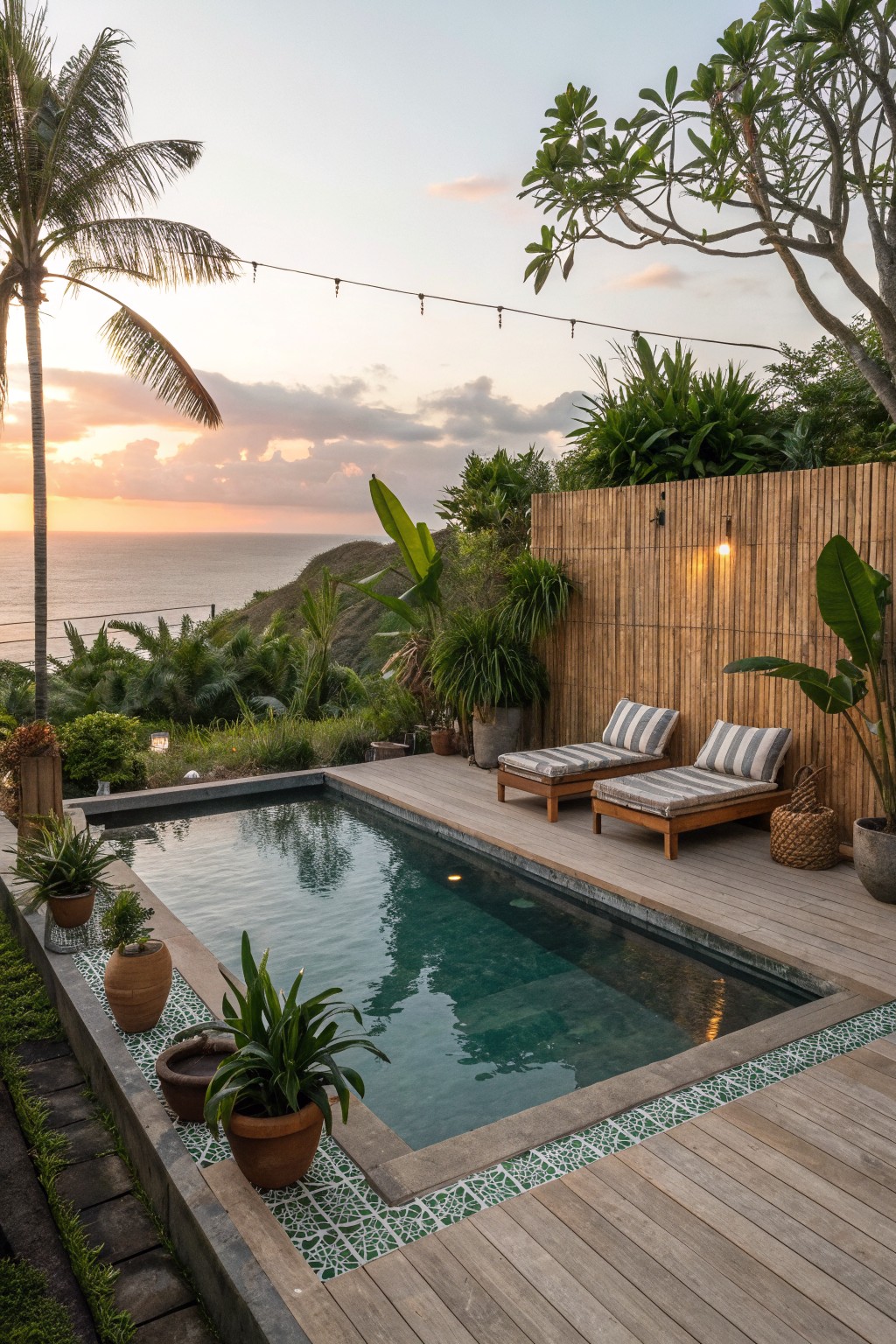
Bamboo screening works well next to a pool because it blocks the view from one side while still letting some light through. The natural texture fits right in with decking and plants, and it avoids the heavy look of solid walls.
This setup suits homes on smaller lots or slopes where you want privacy on just one or two sides. Keep the panels tall enough to clear sight lines from nearby houses and anchor them firmly so they stay upright.
Horizontal Wood Fencing for Pool Privacy
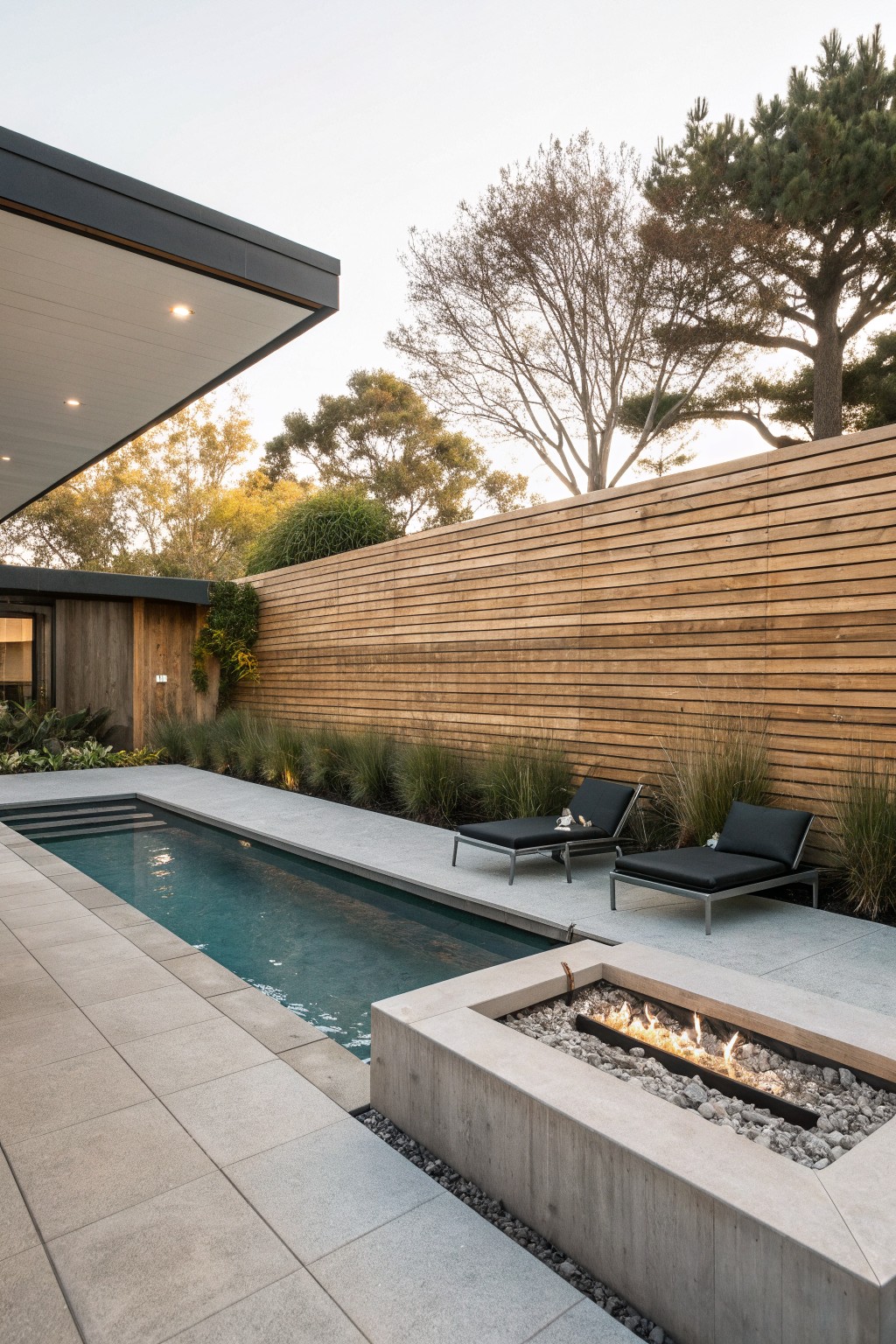
A fence built with wide horizontal wood slats gives a pool area real seclusion while still feeling like part of the yard. It blocks sightlines from outside without turning the space into a closed box, and the natural tone of the wood keeps everything looking relaxed rather than stark.
This works best on properties where the pool sits close to neighboring homes or streets. Keep the fence height consistent, and add a narrow planting bed at the base if you want a bit of greenery to soften the line.
Add Built-In Seating Along a Privacy Wall
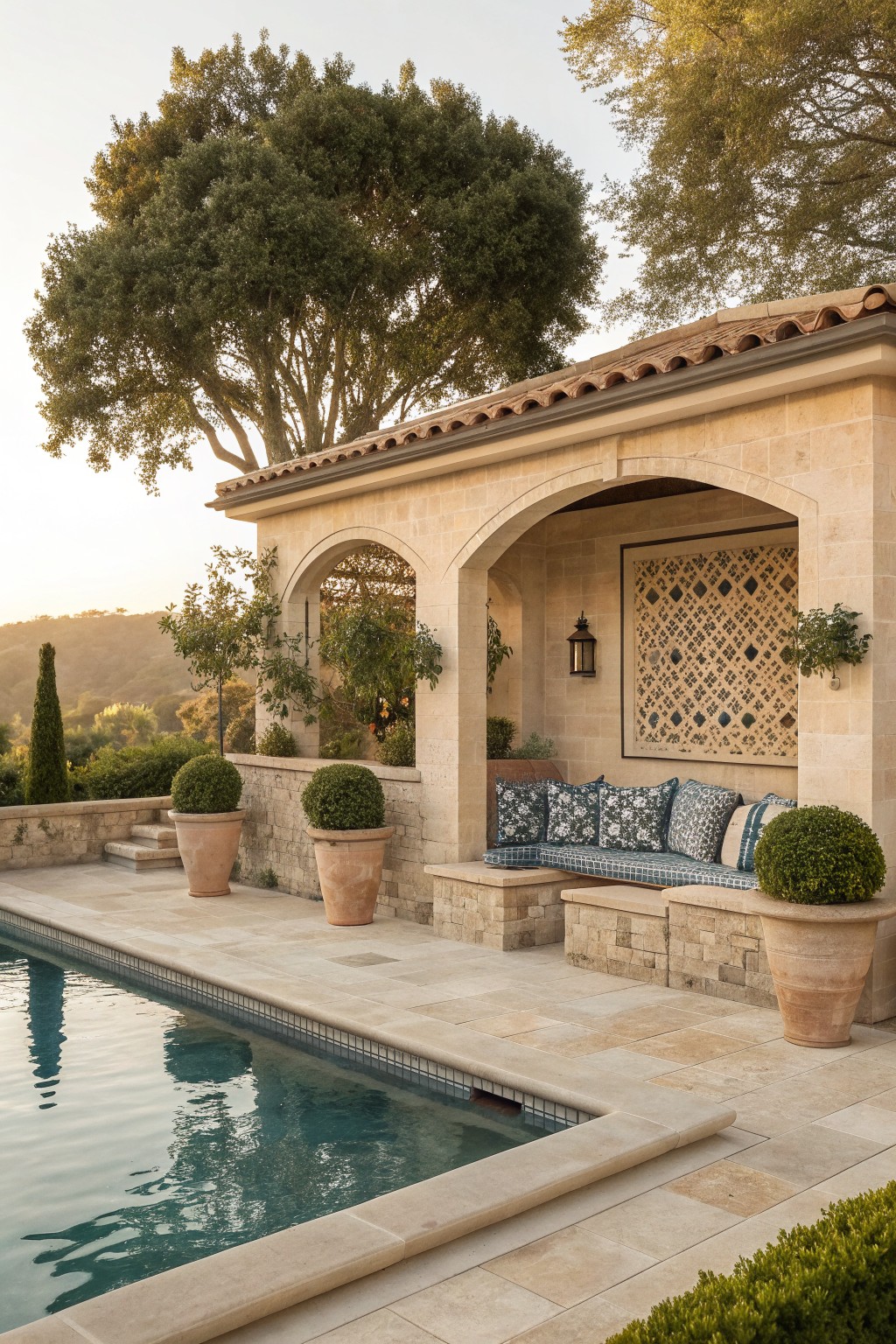
One simple way to improve privacy around a pool is to run a solid wall or screen right behind a built-in bench. The wall blocks the view while the bench makes the space usable instead of just empty barrier space.
This setup works best in a covered patio or pavilion where the structure already exists. Keep the bench depth around 18 inches and add thick cushions so people actually want to sit there for more than a few minutes.
Tall Wood Screens For Pool Privacy
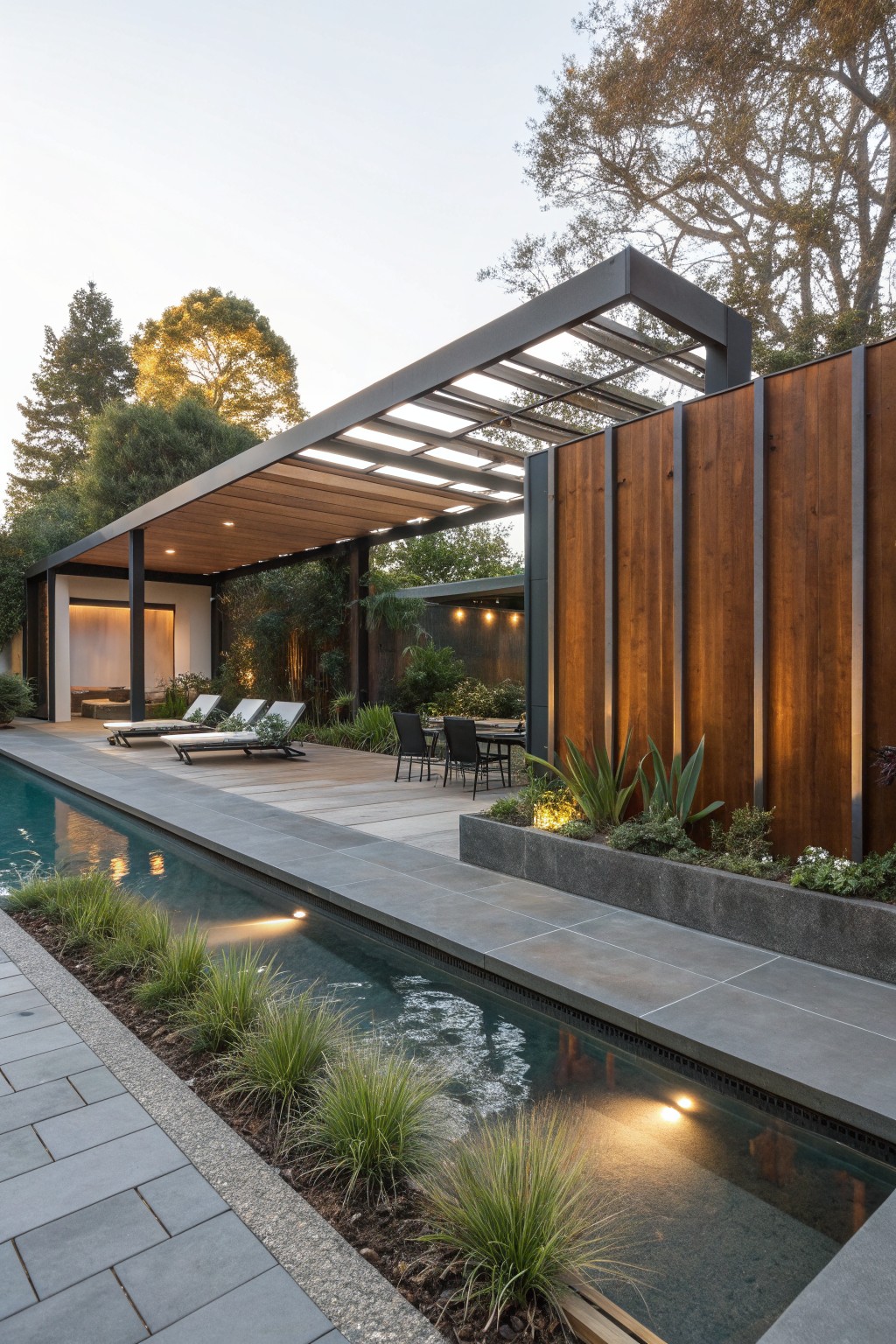
A tall wood screen gives the pool area real seclusion without closing it in completely. It blocks the view from the street or neighboring yards while still letting light and air move through the space.
This works best on modern or contemporary homes where the clean vertical lines match the house style. Place the screen along one or two sides of the pool deck so it feels like a natural extension of the house rather than an afterthought.
Painted Fences With Climbing Roses
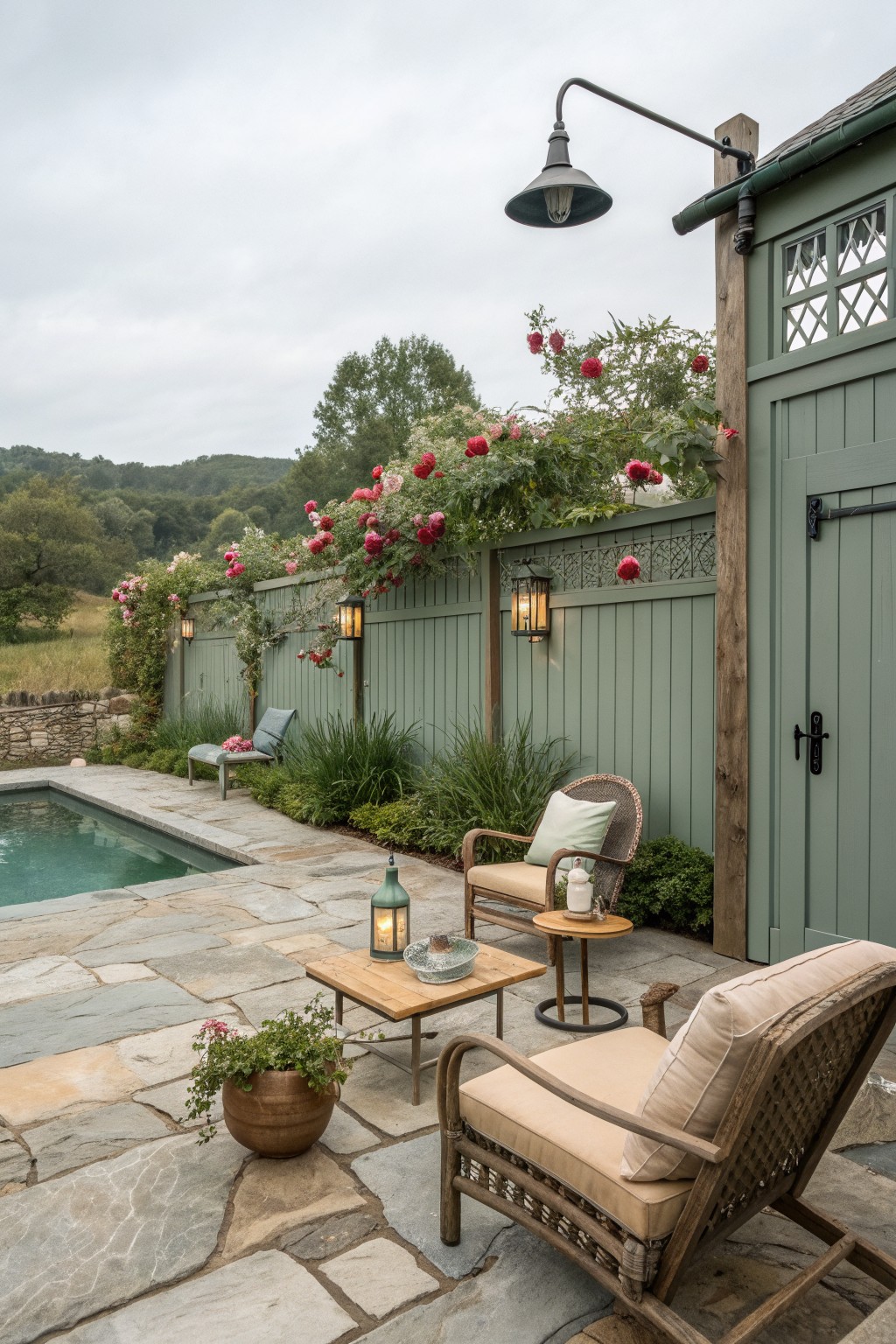
A solid fence painted in a soft green gives the pool area a clean backdrop while the climbing roses add height and coverage over time. This setup blocks views from outside without making the space feel closed in.
It works best on smaller yards where you need reliable privacy but still want some greenery. Keep the fence tall enough to screen seating areas and add a few lanterns along the top for light after dark. The roses need regular trimming so they do not overgrow the structure.
Slatted Wood Screens For Pool Privacy
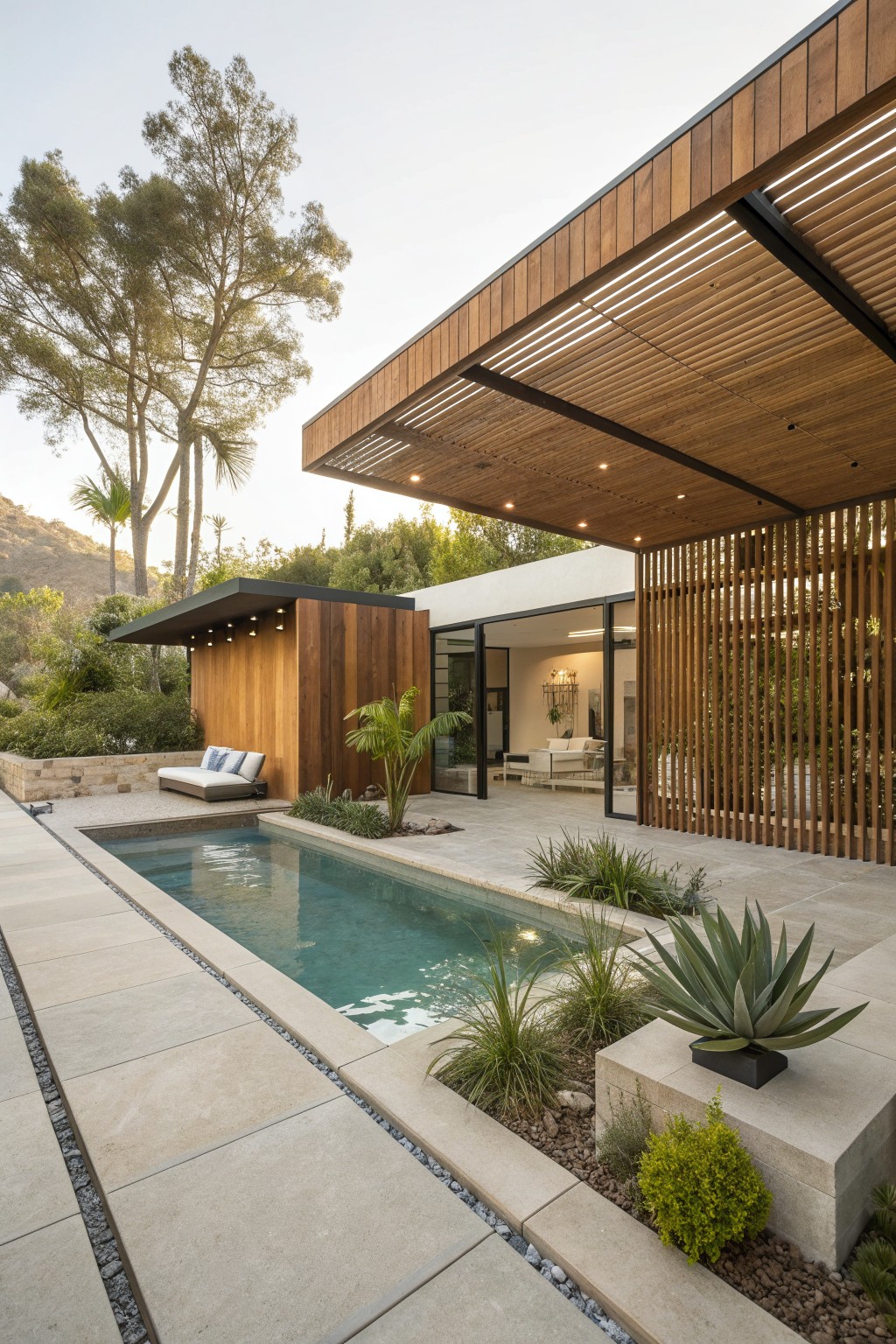
Vertical wood slats work well for pool privacy because they block the view without turning the space into a solid wall. The gaps let light and air through, so the area still feels open even when the screen runs close to the pool edge.
This approach suits modern homes that already use wood elsewhere on the exterior. Run the screen along the side that faces neighbors or the street, and keep the height just above eye level. Match the wood tone to the house so the screen looks like part of the structure instead of an add-on.
Living Walls Work as Natural Pool Privacy Screens
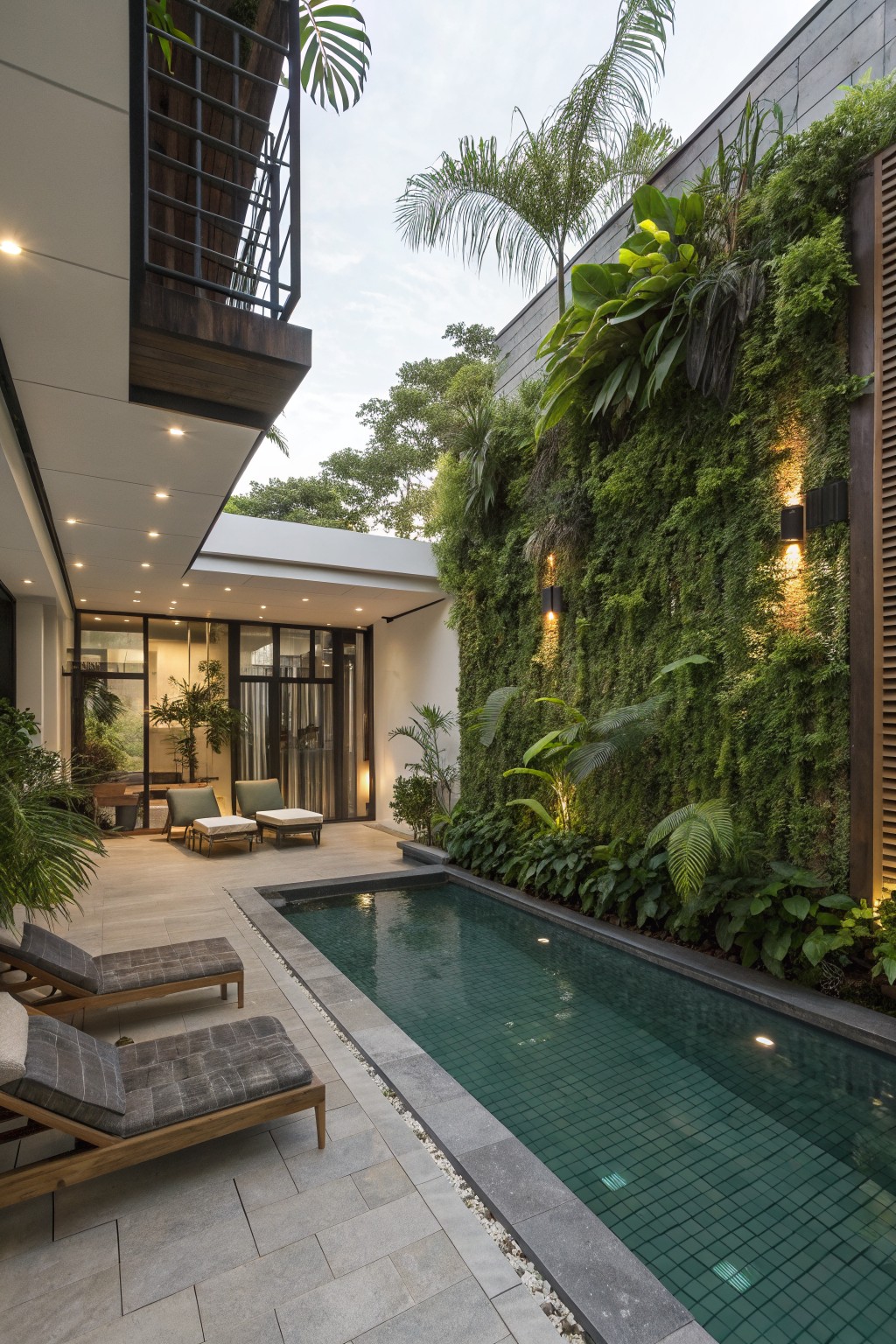
A living wall next to a pool gives solid privacy without the closed-in feel of a fence or screen. The plants grow dense enough to block sight lines while the setup still feels open and connected to the outdoors.
This idea suits homes with limited side yard space or strict height rules on fences. Keep the wall irrigated and pick plants that handle the extra humidity from the water.
Mix Fence Materials For Pool Privacy
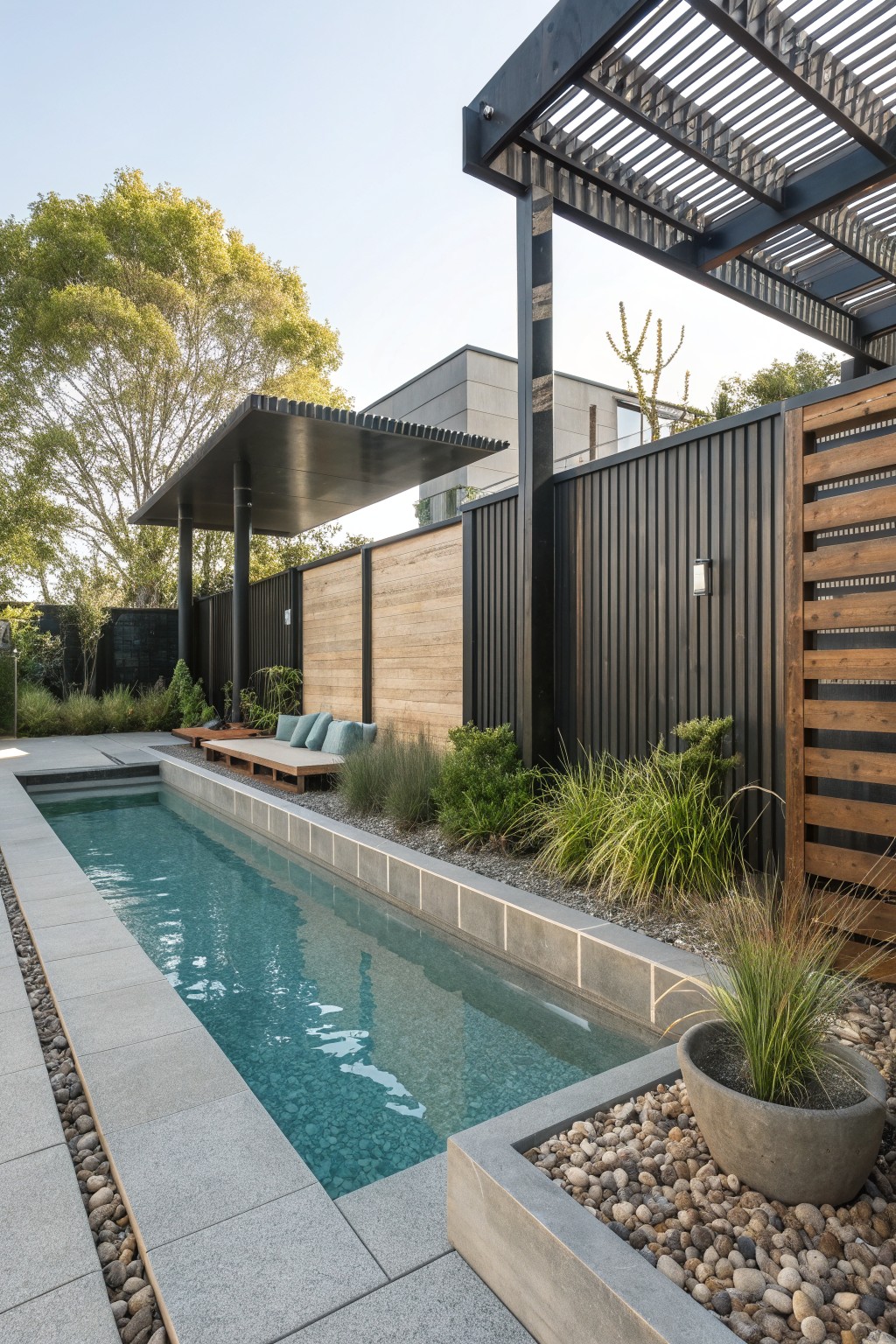
Many pool owners find that a single fence style can feel too plain or too open. Mixing vertical slats with wider wood panels gives you solid coverage while adding a bit of texture that softens the look.
This approach works best on smaller lots where you need strong screening from neighbors. It suits modern homes and lets you adjust sections later if the plants grow in or if you want to change one material without replacing the whole fence.
Add Lattice Panels to a Pool Fence
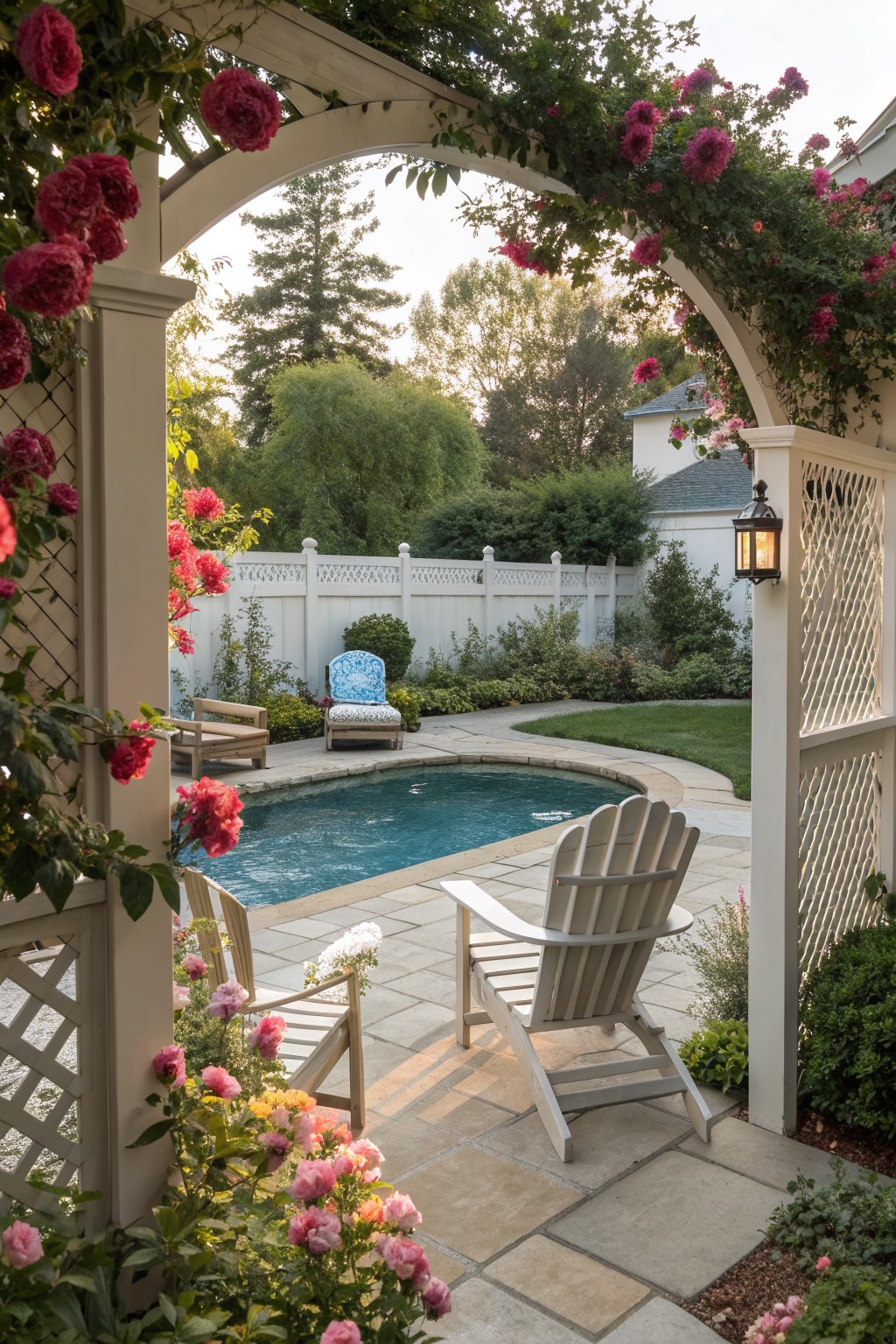
A white fence with lattice sections gives a pool area solid privacy while still letting in light and air. The open grid pattern blocks views from neighbors without turning the space into a solid wall.
This setup works best in smaller backyards where you want seclusion but still like seeing some greenery beyond the fence line. Add climbing plants along the lattice so they fill in over the seasons and soften the look.
Vertical Wood Slats For Pool Privacy
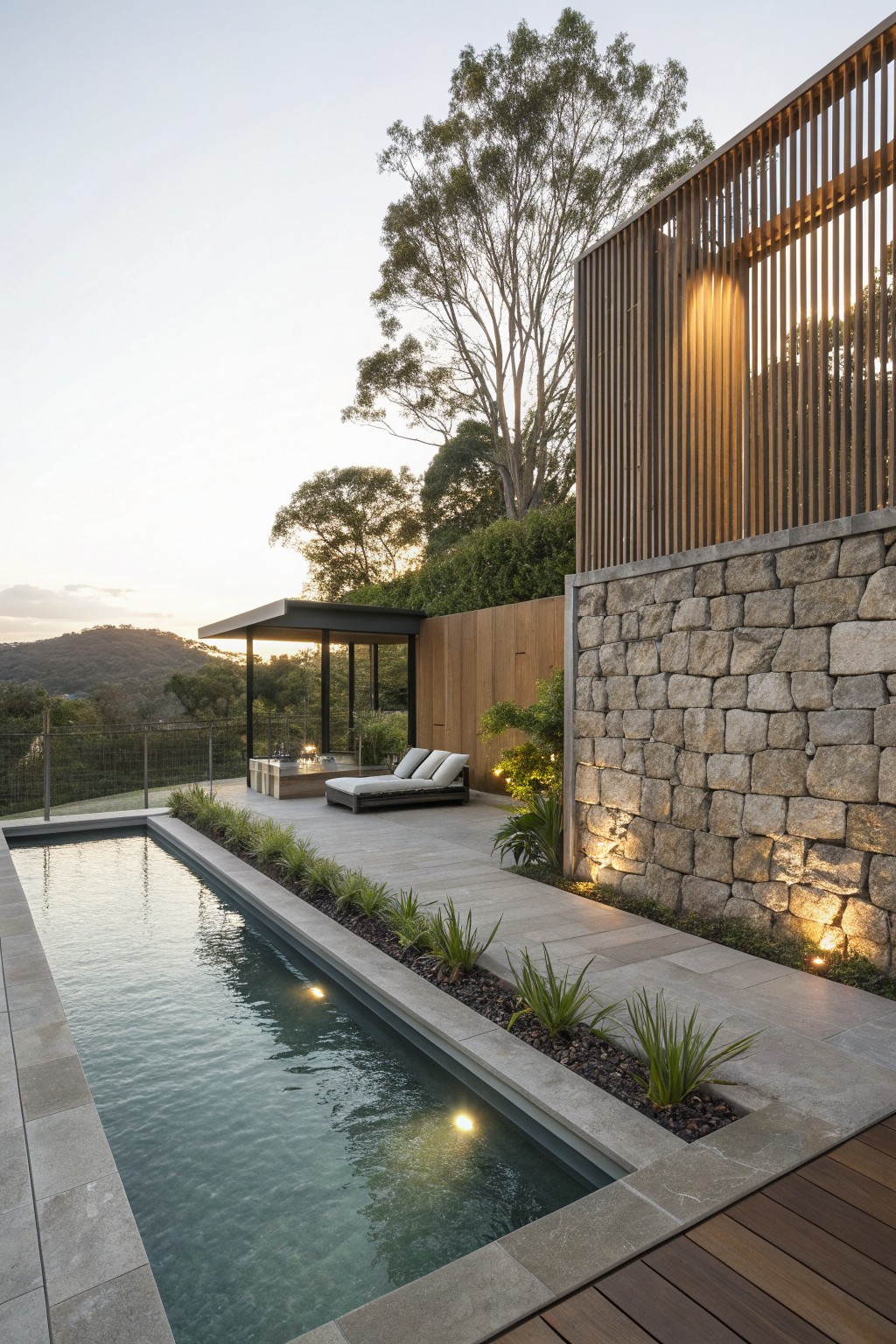
Many homeowners use tall vertical wood slats to screen the pool area without making the space feel closed in. The slats let in light and breeze while blocking direct sightlines from neighboring yards or higher ground.
This setup works best when paired with a solid base like stone, which adds weight and durability. It suits homes on sloped lots or those needing a partial screen rather than a full enclosure around the entire pool.
Bamboo Fencing For Pool Privacy
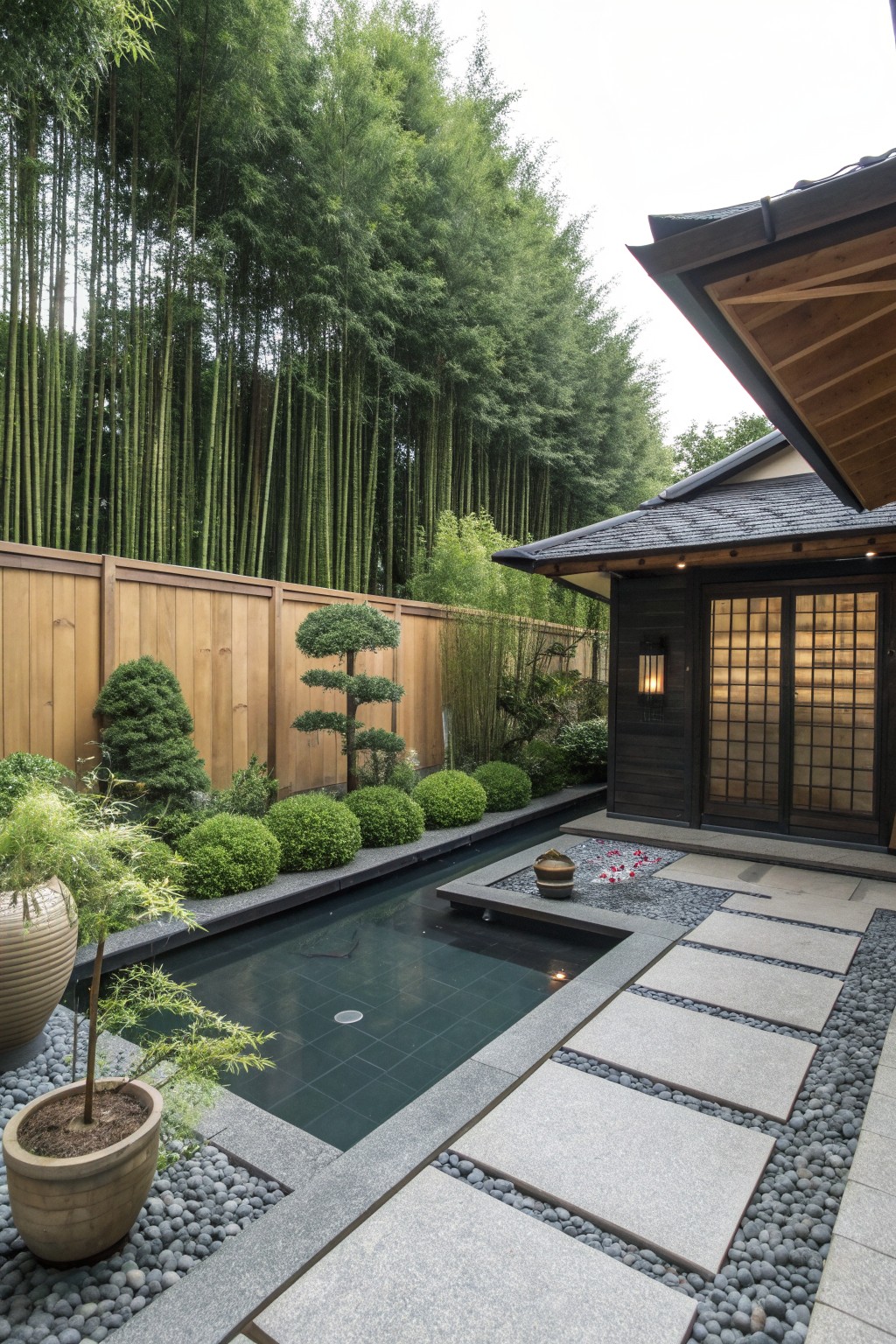
A tall bamboo fence gives a pool area solid privacy without the heavy look of wood panels or masonry. It blocks the view from outside while still letting air and some light move through, which keeps the space from feeling boxed in.
This works especially well on smaller lots or in neighborhoods where houses sit close together. Place the fence along the property line and add a row of shrubs in front to soften the base and improve screening over time.
Walled Courtyards Provide Natural Pool Privacy
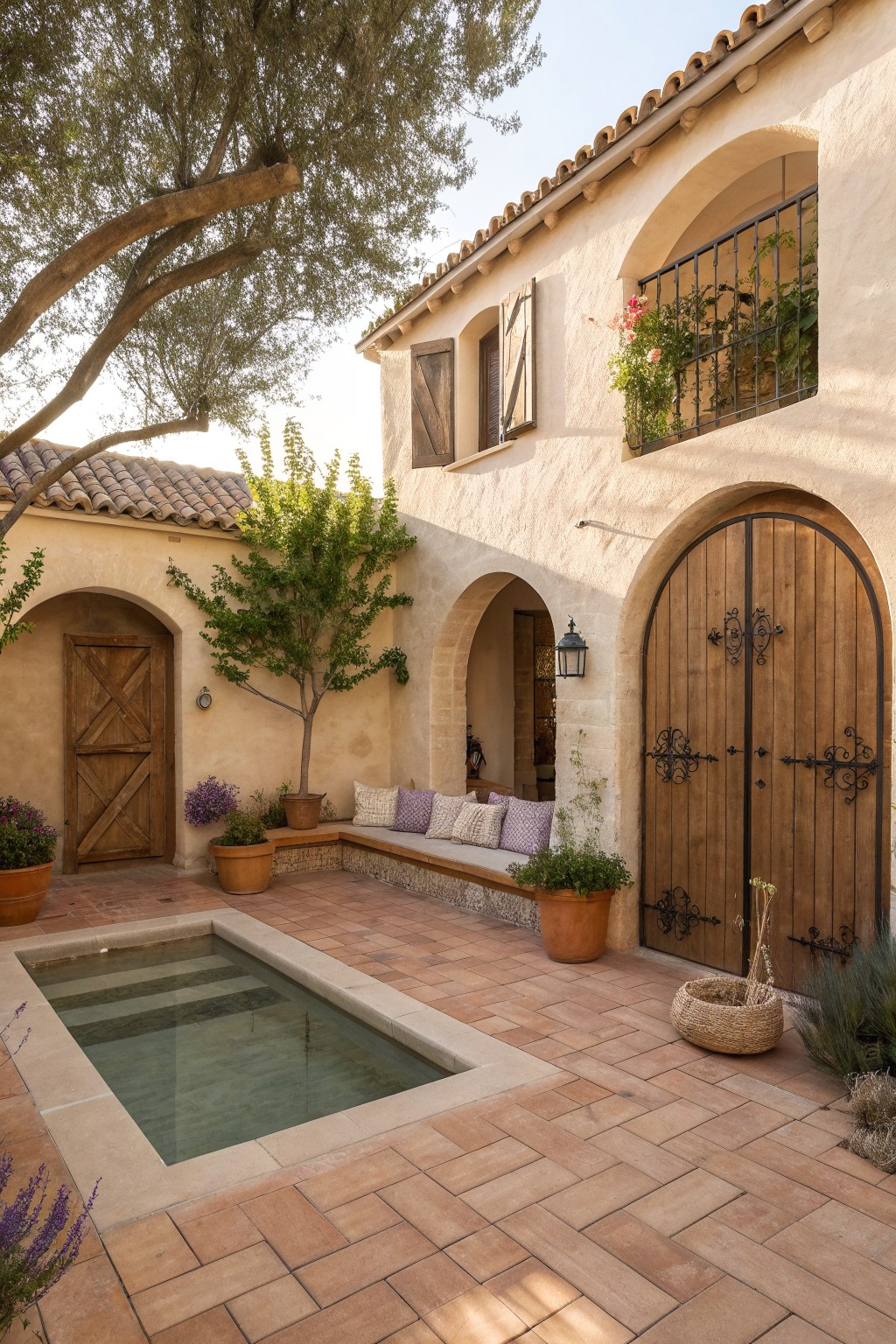
Many homes already have the bones for good pool privacy without adding a separate fence. The walls and gates that form a courtyard can close off the pool area from the street or neighbors while still letting light and air through.
This setup works best on homes with existing perimeter walls or when you can add a partial enclosure during a remodel. Keep openings like gates or arches to avoid making the space feel boxed in, and use the walls to support climbing plants or simple lighting.
Decorative Wood Screens For Pool Privacy
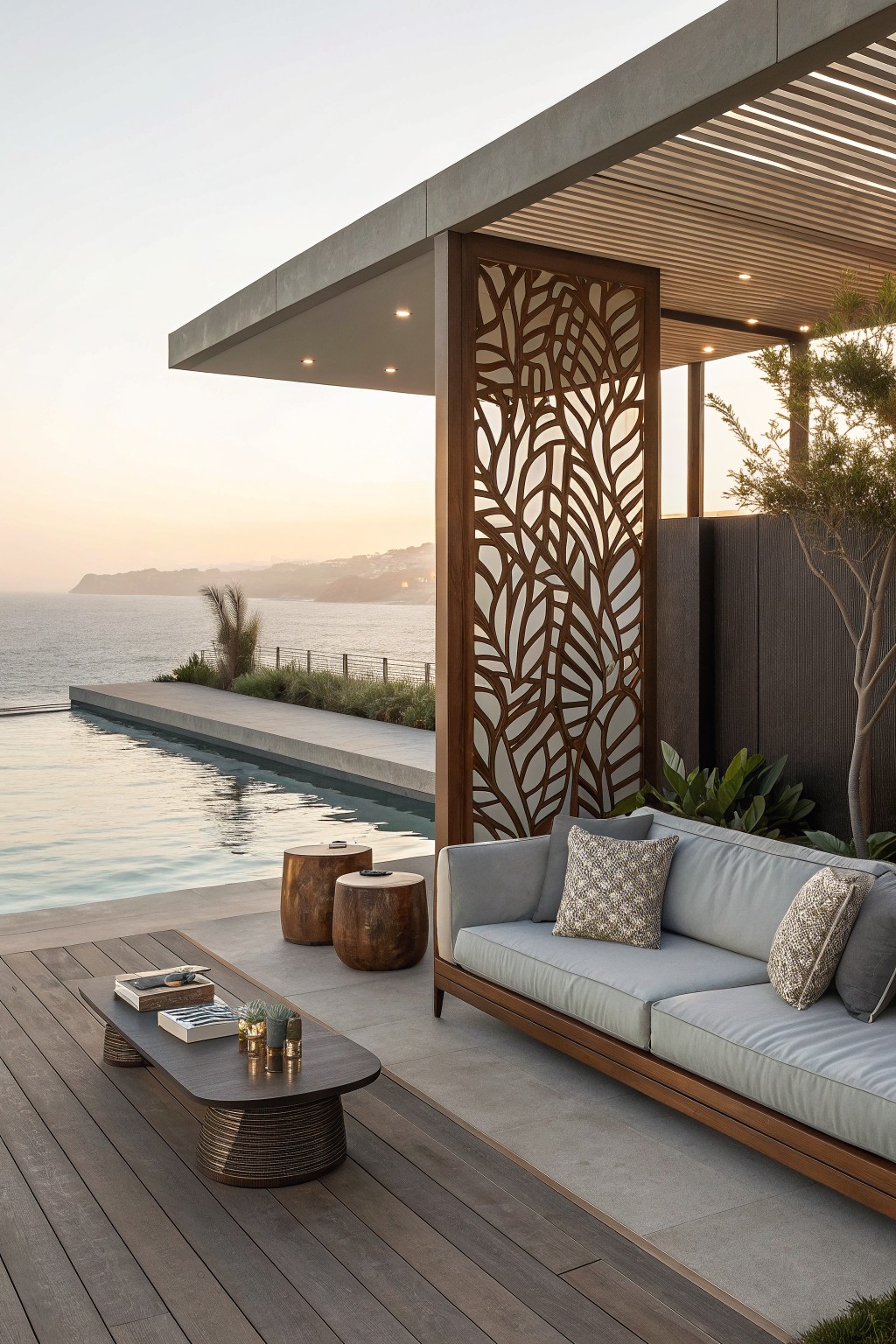
A wood screen with a cutout pattern gives you privacy around the pool without closing off the space completely. It blocks the direct view while still letting light and air through, which keeps the area from feeling boxed in.
This works best on a deck or patio edge where you need separation from neighbors but still want to keep the open feel. Choose a pattern that matches the style of your furniture and make sure the wood is treated for outdoor use so it lasts.
Natural Woven Screens for Pool Privacy
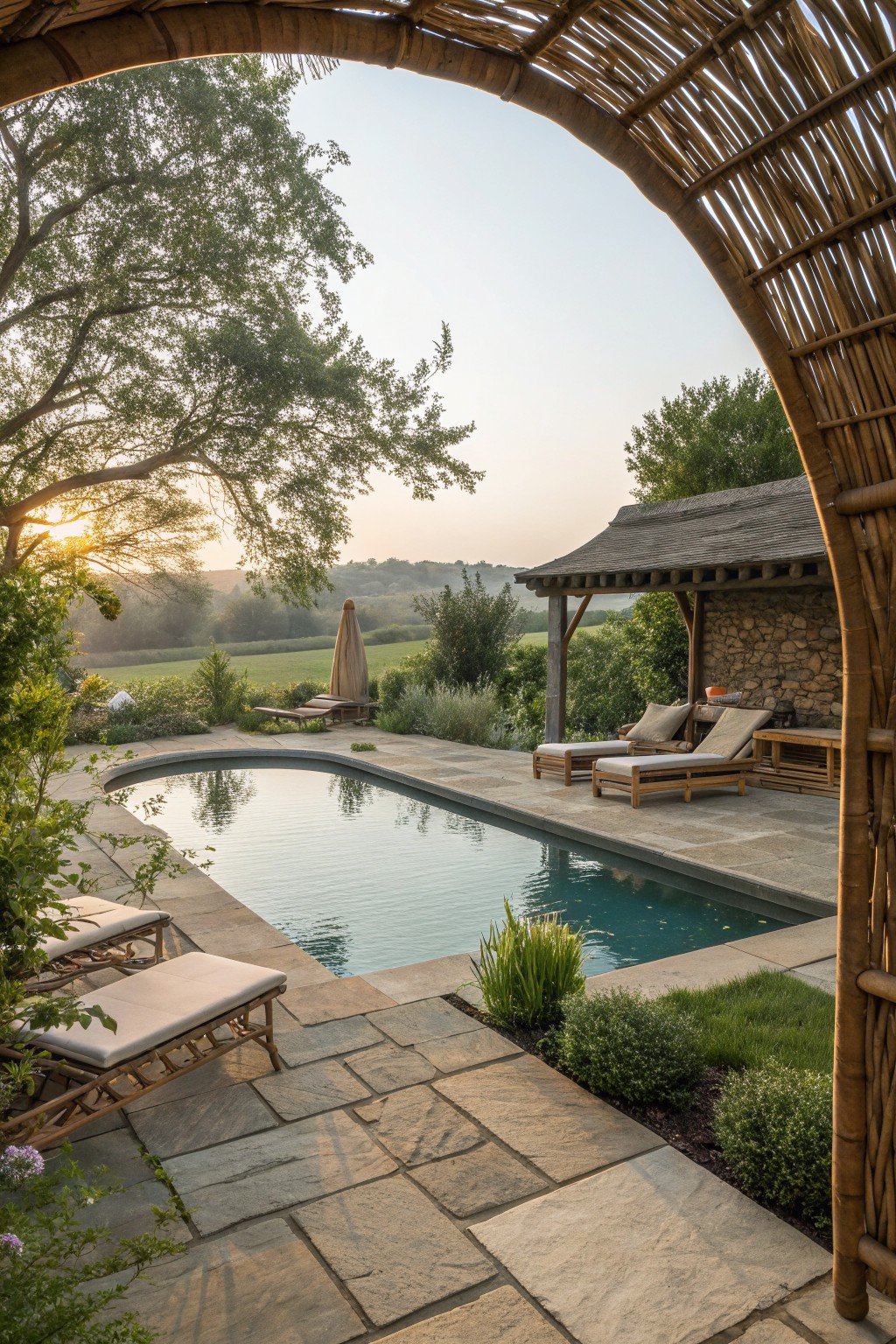
Woven screens made from bamboo or similar natural materials work well for pool areas that need some seclusion without feeling boxed in. They let air move through and keep the space from looking too heavy while still blocking outside views.
This approach suits homes with gardens or open backyards where you want privacy but also want to keep a relaxed outdoor feel. It pairs best with stone paths or wood structures and holds up better when the material is treated for weather.
Combine a Tall Fence with Potted Plants for Pool Privacy
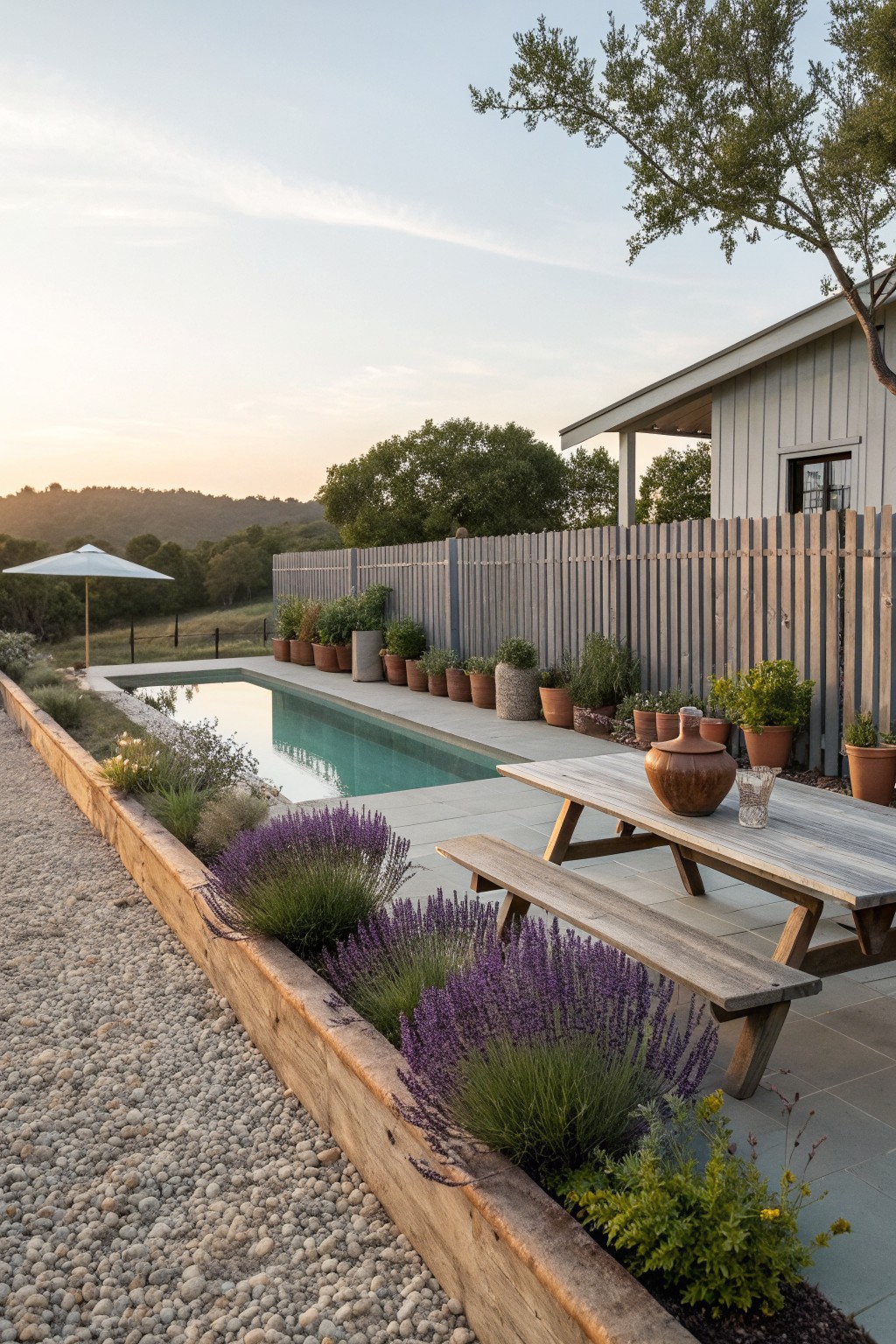
A tall wooden fence creates instant privacy around a pool. Lining the base with potted plants adds a second layer of screening and softens the hard edge of the fence at the same time.
This approach works best in side or back yards where you need solid coverage but do not want a fully enclosed feel. Use a mix of pot sizes and plant heights along the fence so the line stays interesting and the privacy holds even as plants shift with the seasons.
Perforated Metal Screens For Pool Privacy
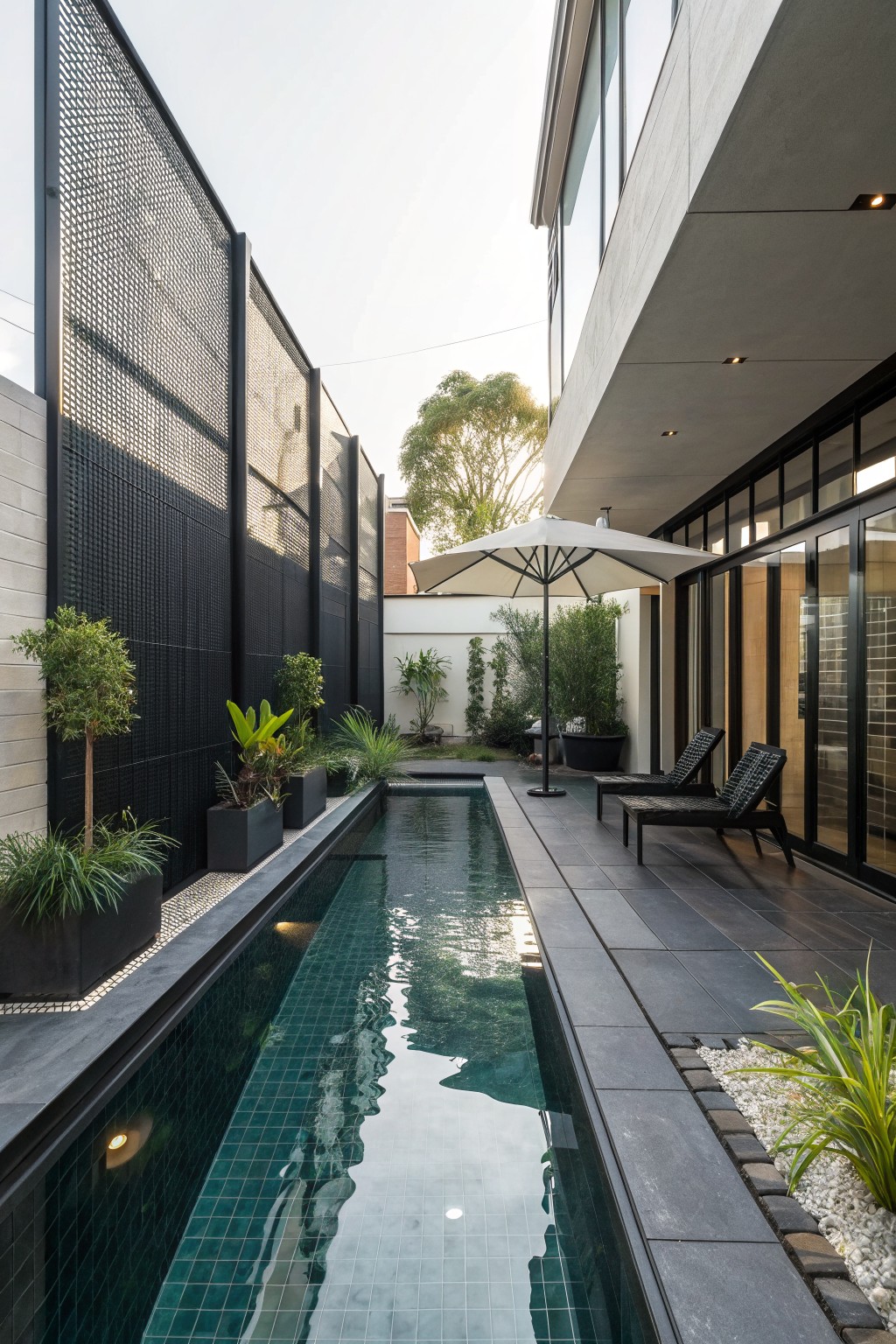
A tall perforated metal screen can give a pool area solid privacy while still letting in light and air. It blocks the view from outside without turning the space into a dark box, which is useful when houses sit close together.
This approach works best on narrow side yards or modern homes where you want a clean look that does not need constant upkeep. Just make sure the panels are mounted securely and the holes are small enough to feel private from the street or neighboring windows.
Wooden Gates in Stone Walls
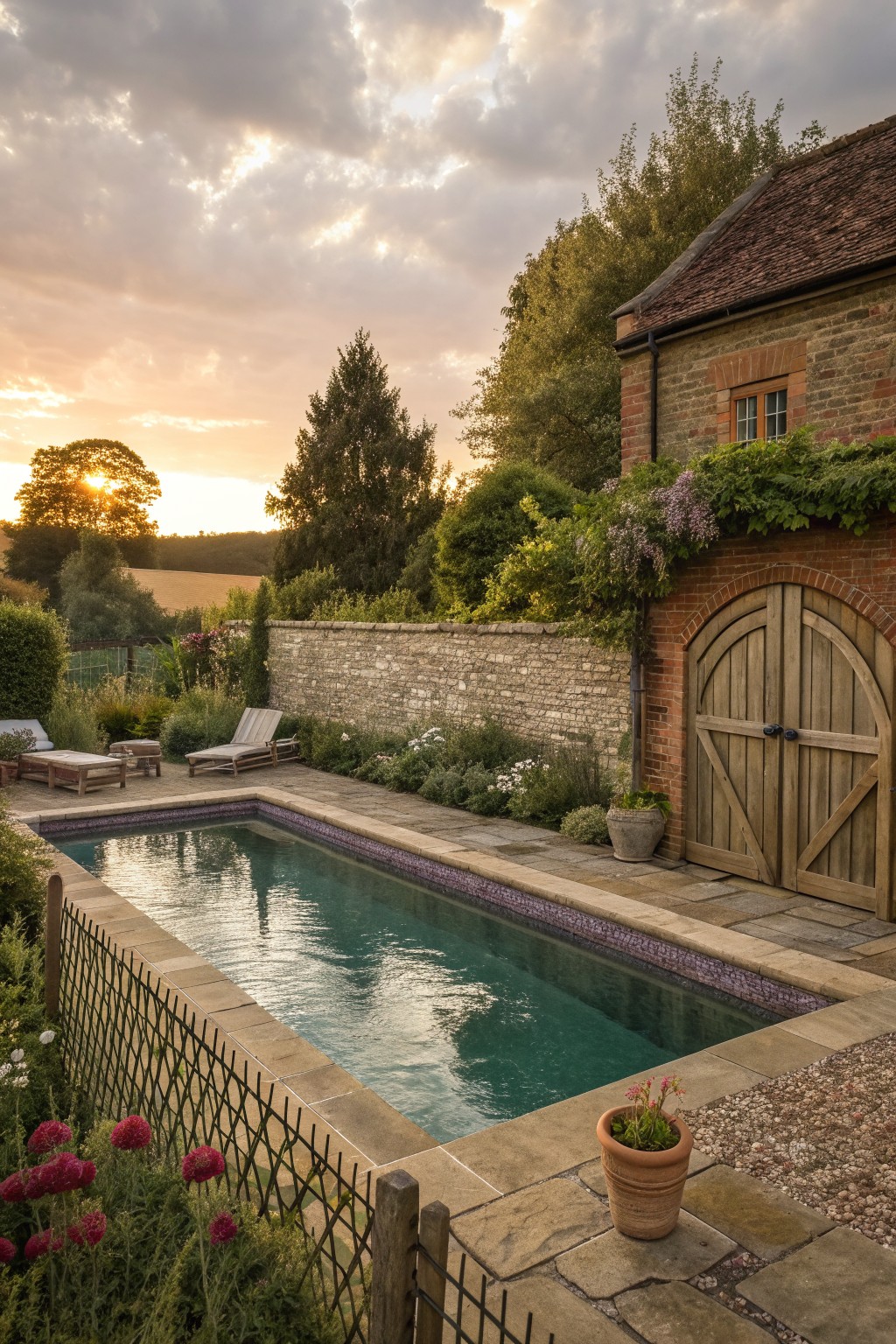
A wooden gate built into a stone wall creates solid privacy around a pool without making the space feel boxed in. The gate blocks sightlines from the side while the wall handles the longer stretches, and both materials age in a way that fits older gardens.
This setup works best on properties that already have boundary walls or brick outbuildings. Match the gate wood to any nearby structures so the whole fence line feels like one piece rather than an add-on.
Layer Wood and Stone for Pool Privacy
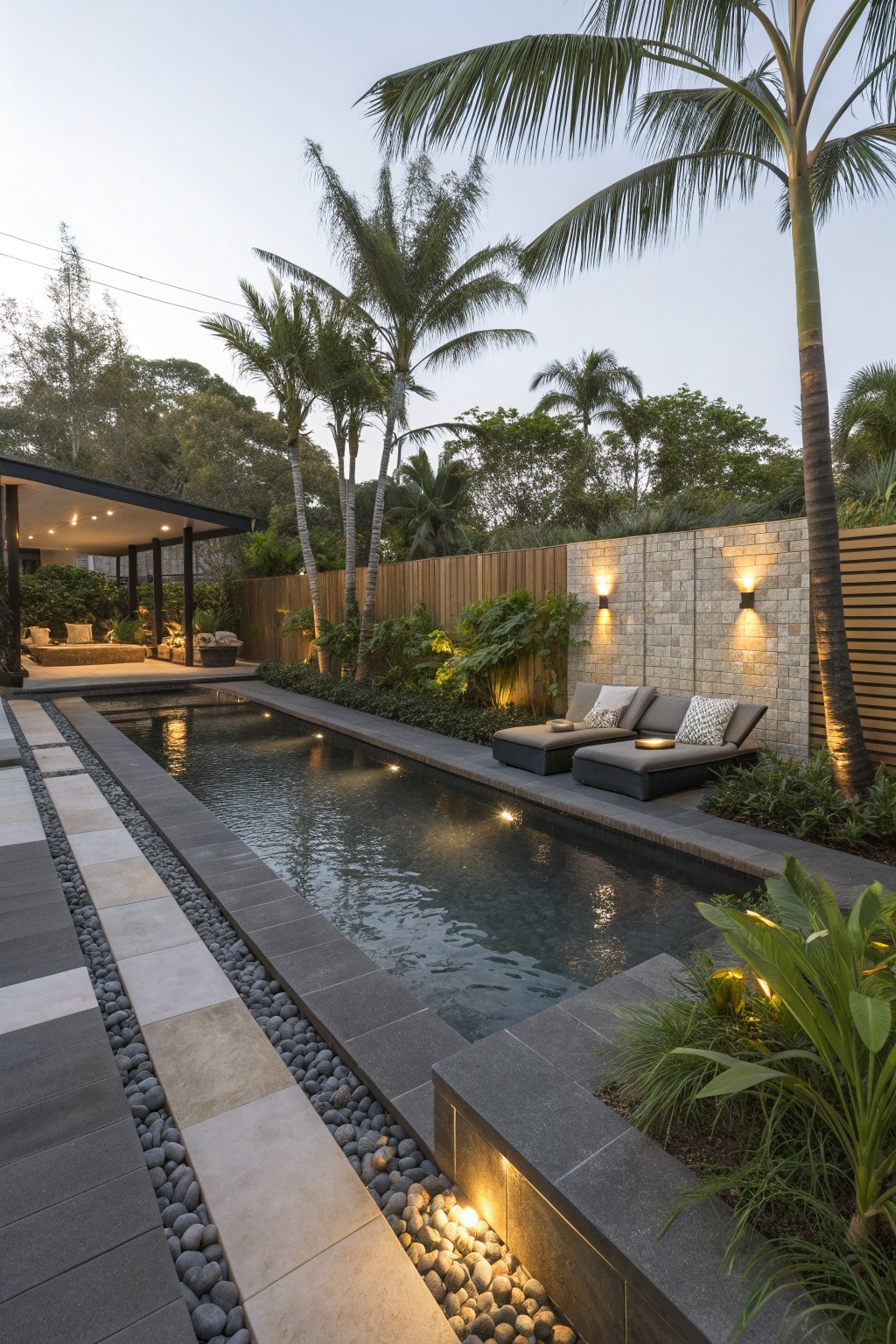
Many people want solid privacy around a pool without ending up with a plain tall fence on every side. Mixing a wood fence with a stone wall section gives height and coverage while adding some texture that feels less like a barrier.
This setup works best along the longer edges of the pool where you need screening from neighbors. Keep the stone part lower or mid height and add a few plants in front so the whole thing does not feel closed in.
Tall Concrete Walls With Bamboo For Privacy
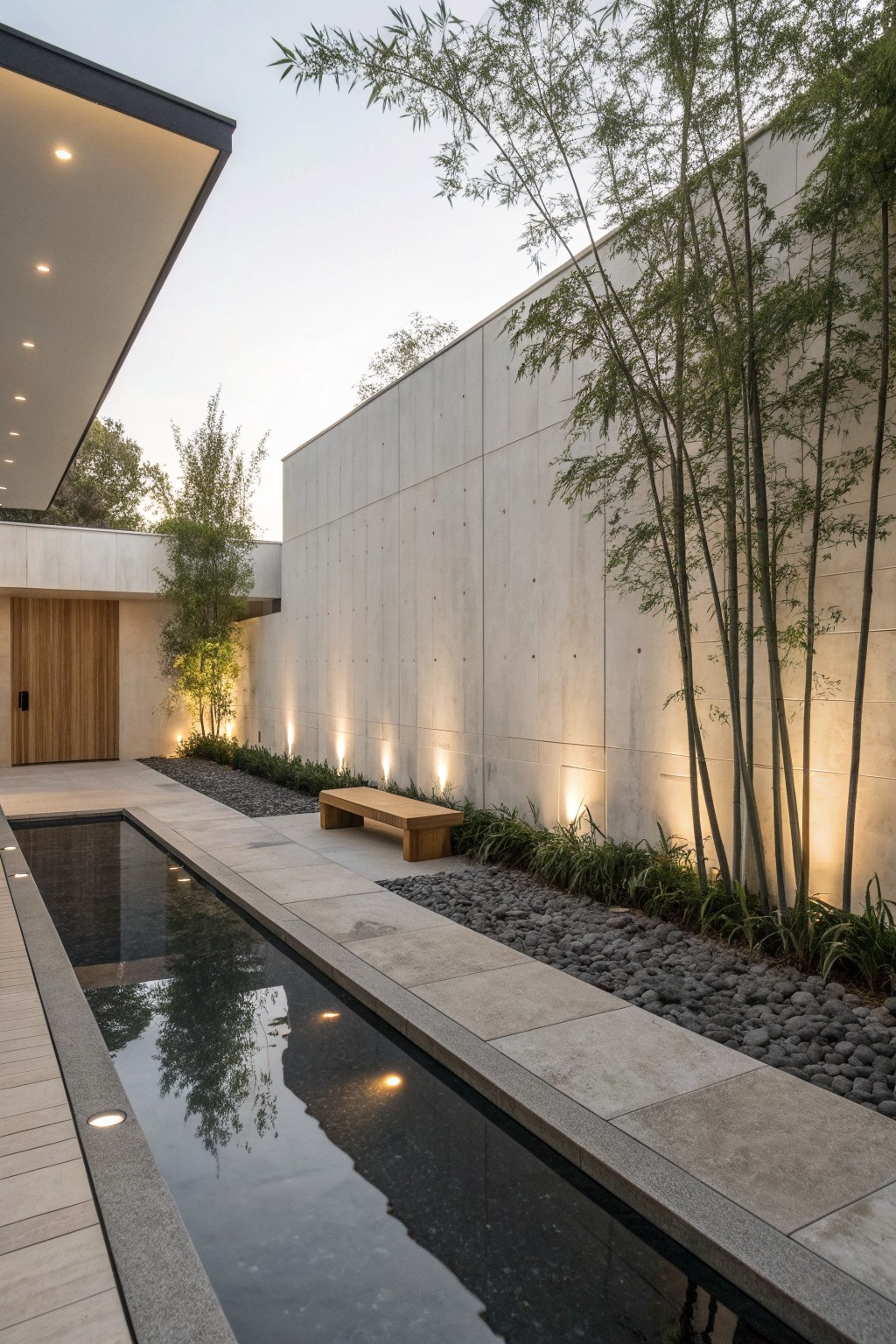
A solid wall paired with tall bamboo gives you real seclusion around a pool without needing a traditional fence. The height blocks sight lines from neighbors while the planting softens the surface and adds movement.
This approach works best on narrow side yards or modern homes where you want clean lines. Keep the bamboo in a contained bed so it stays neat, and add low lighting along the base if you use the space at night.
Frequently Asked Questions
Q: How high should the fence go if I want real privacy from the house next door?
A: Go for at least six feet so people cannot see over it from their yard or windows. Place it right along the property line on the side that needs blocking. This cuts the view without boxing in the whole pool deck.
Q: Will a wood fence hold up okay right next to the pool water?
A: Pick pressure treated wood and seal it every couple of years. The seal keeps moisture out and stops rot from splashing pool water. Metal posts set in concrete give extra strength where the ground stays damp.
Q: Can I add something quick and cheap if the fence alone still feels too open?
A: Stretch outdoor fabric panels across parts of the fence for instant extra cover. They roll up when you want more sun and cost far less than another structure. Just clip them high enough that they do not dip into the water.
Q: What if the fence looks too plain once it is up?
A: Hang a few simple planters on the inside face and let vines grow up the posts. The green softens the look fast and adds a bit more screening over time.


