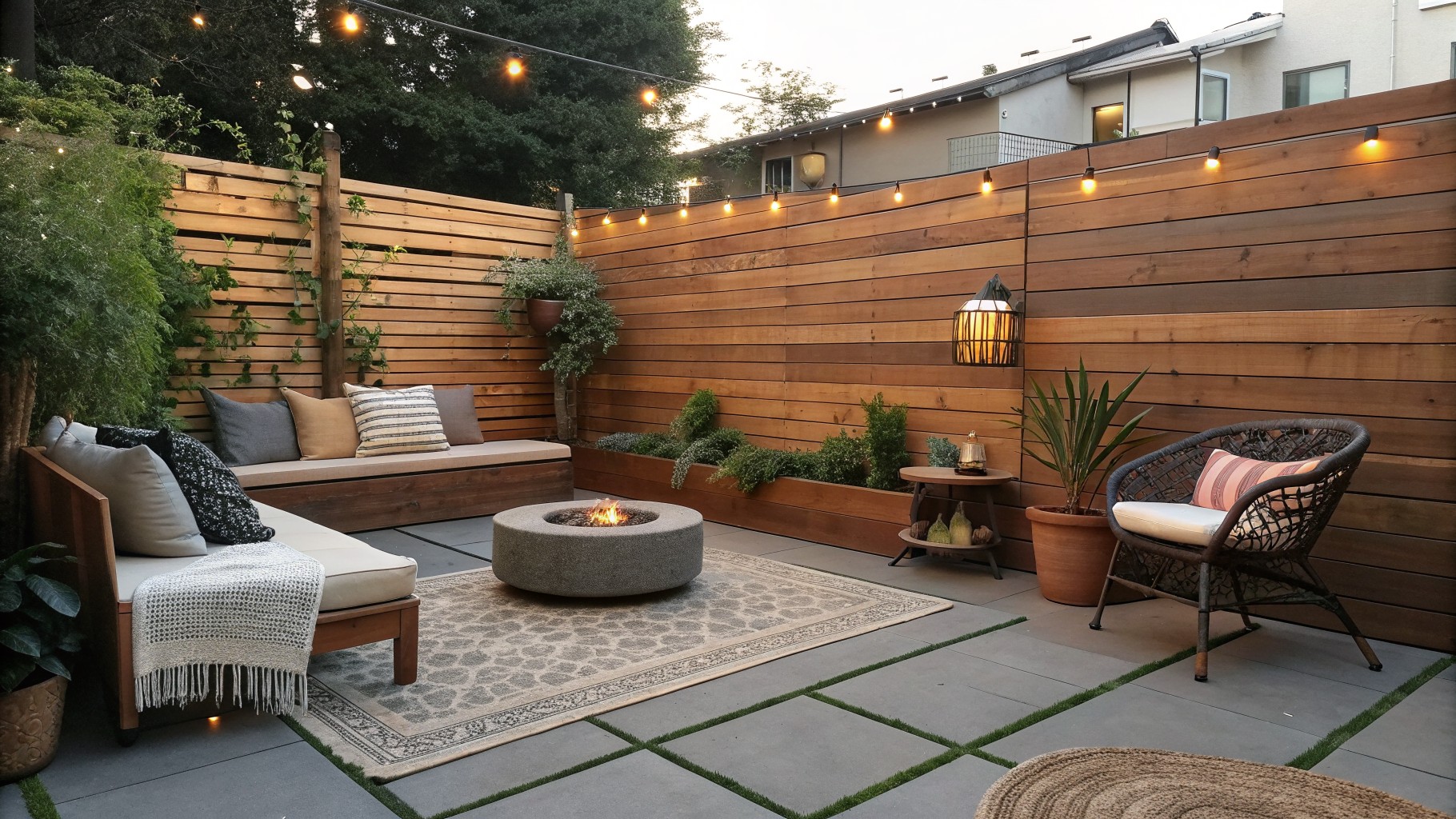
When I step out onto my patio in the evening, the open sides always make me aware of how close everything else feels.
A well placed fence can turn that same spot into a place where I actually want to linger without checking over my shoulder.
It changes the whole experience.
I usually start by looking at options that match the existing layout rather than overhauling the entire area at once.
Over time I have learned that the right height and material make a bigger difference in daily use than any single style choice.
Horizontal Wood Privacy Fences

A horizontal wood slat fence creates strong privacy while still letting some air move through the space. The clean lines keep the enclosure from feeling too closed in, and the warm tone of the wood works with most patio styles.
Run string lights along the top edge or attach them directly to the slats so the area stays usable after dark. This approach fits smaller yards or townhouse patios where you need separation from nearby homes without a full solid wall.
Grow Privacy With a Trellis and Vines

A wall mounted trellis covered in climbing roses creates a living screen that gives a patio real seclusion without closing it in completely. The plants soften the boundary and add color while still letting light and air through.
This idea works best on patios that sit right against the house where a full fence would feel too heavy. Use a sturdy wood or metal lattice, plant something vigorous like roses or clematis, and let it fill in over a season or two.
Slatted Fencing With Planters For Privacy

Horizontal slatted fencing gives a patio a clear boundary without making the space feel boxed in. The open gaps let light and air pass through while still cutting off most of the view from outside.
Placing raised planters right along the base adds another layer of coverage and softens the look of the fence. This setup works well on side yards or back patios that sit close to other homes, especially when you want a simple screen that does not require much upkeep.
Bamboo Fencing for Quick Privacy

Bamboo fencing gives a patio or small garden a solid sense of privacy without feeling heavy. The vertical lines keep the space from looking boxed in while still blocking the view from outside.
It works best along the back or side of a seating area where you need screening but want to keep some air and light. Pair it with gravel and a few low plants so the fence becomes part of the garden rather than just a wall.
Climbing Vines Add Natural Privacy to Patios

Many patios feel exposed even with walls around them, so adding climbing vines is a simple way to close off the space without building anything new. The vines grow fast, fill gaps, and create a living screen that blocks views from neighbors or the street.
This approach works best on homes that already have solid walls or fences around the patio. Choose strong climbers that suit your climate, give them room to spread, and check that they will not harm the surface they grow on.
Tall Wooden Fences for Patio Privacy

A tall wooden fence works well when you want an outdoor dining area to feel more closed off. It cuts down on sight lines from neighbors and gives the space a settled, sheltered feel without much extra work.
This approach fits best in back or side yards where you already have some planting along the base. Keep the fence height consistent and let simple string lights or a pergola handle the rest of the atmosphere.
Tall Privacy Screens Block Views Without Closing In The Space

Many rooftop patios and upper decks feel too exposed because of nearby buildings. Tall vertical panels on one or two sides cut off those sight lines while still letting light and air move through the area.
These panels work best when they match the height of the seating so the space stays open overhead. They pair easily with planters along the base and suit modern or simple deck layouts where you want privacy without adding a full fence or wall.
Mix Stone With Bamboo Screening for Privacy
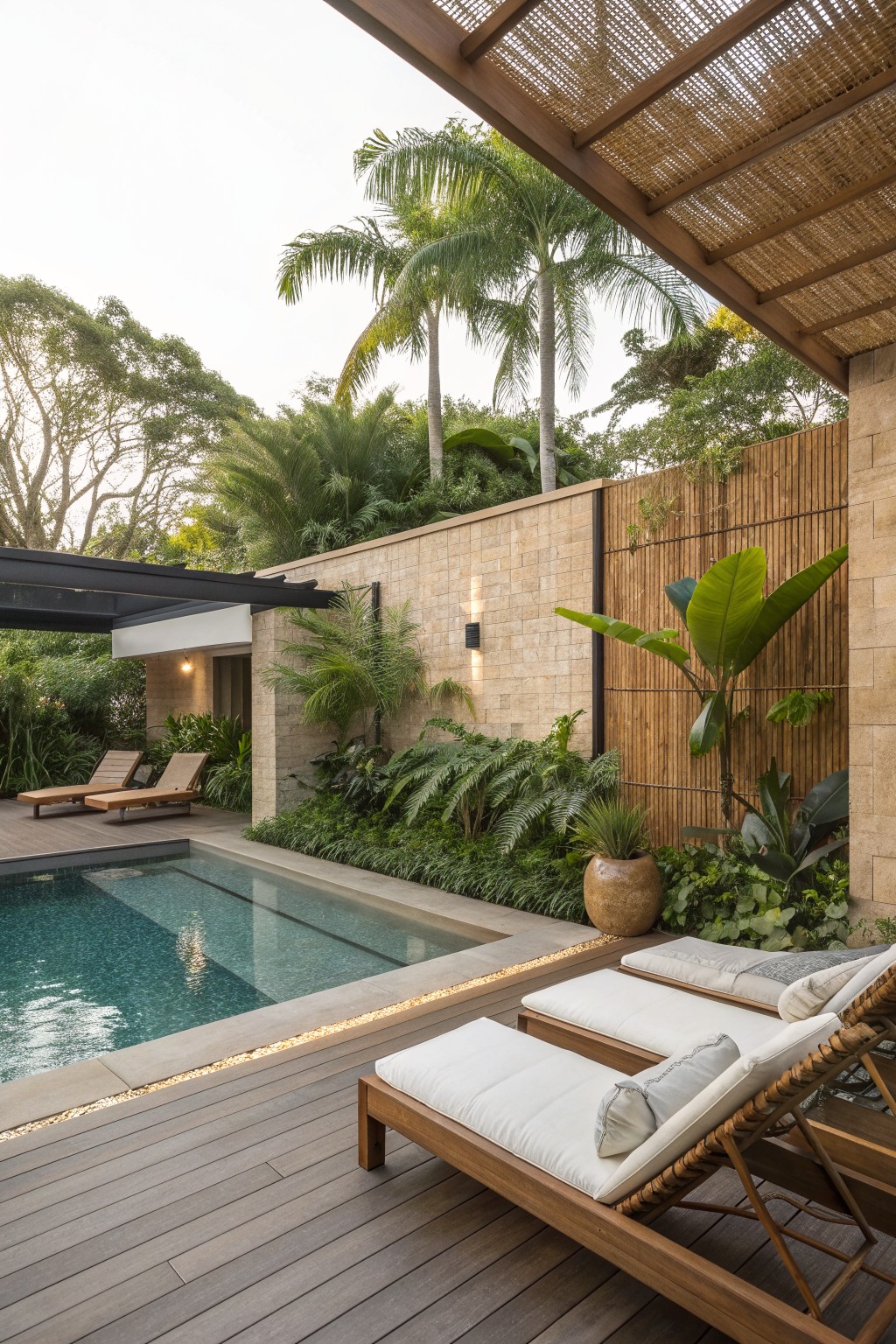
One simple way to improve privacy on a patio is to combine a solid wall with a lighter screen material. The stone wall gives a sturdy base that blocks most sightlines, while a vertical bamboo screen adds height and filters views from above without making the space feel boxed in. A few plants along the base help soften the transition.
This setup works best on patios that already have some kind of boundary wall but still need extra screening. It suits pool areas or seating zones where you want seclusion without losing all connection to the surrounding greenery. Secure the screen well so it stays in place through wind and weather.
Climbing Vines Create Natural Seclusion on Patios
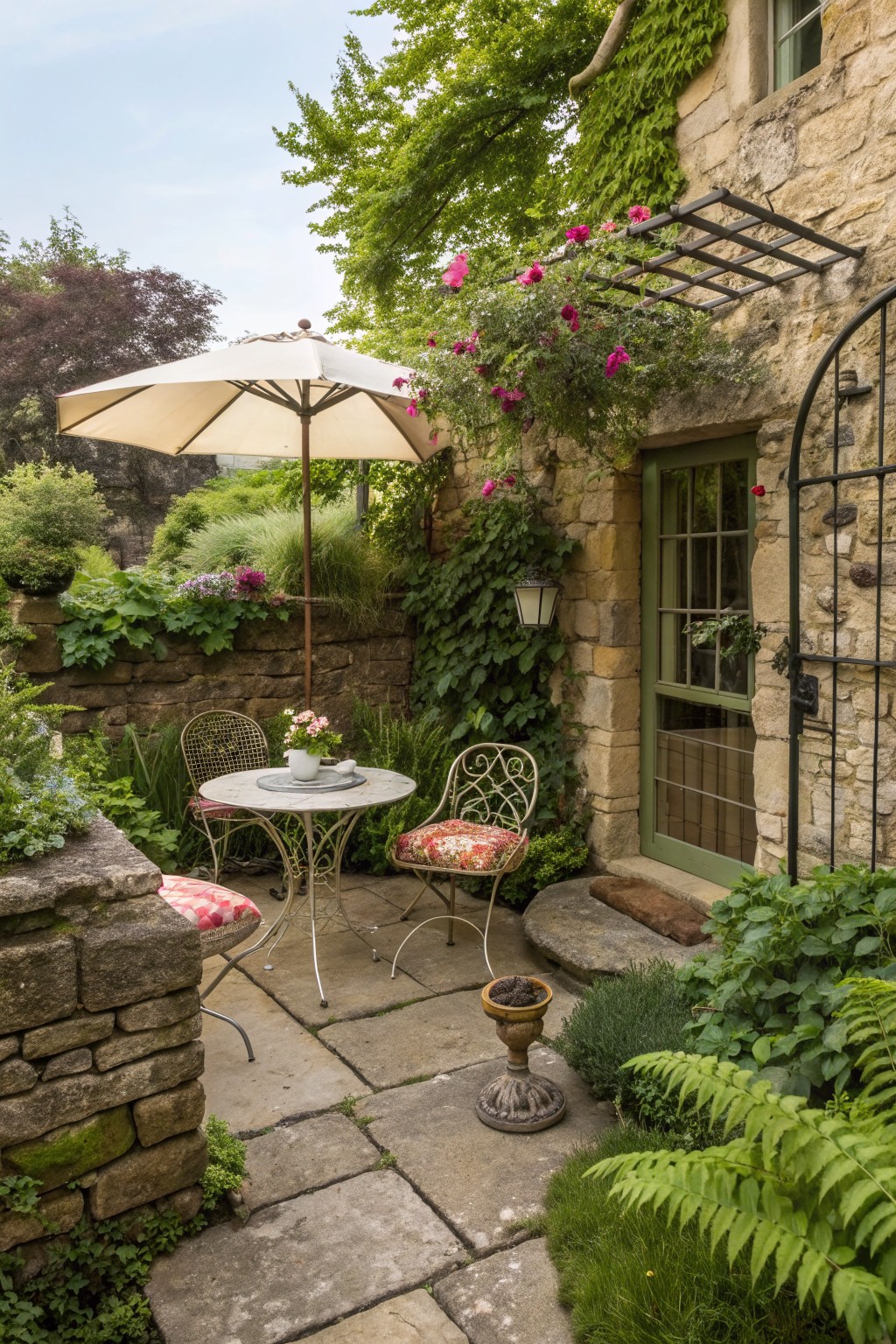
Vines and climbing plants work well when you want privacy without putting up a solid fence or tall screen. They soften the edges of a space and let in some light while still blocking views from outside. In this setup the plants cover the stone walls and run along a simple trellis, turning what could feel open into a quiet corner.
This approach suits older homes or patios with existing walls and structures. You can start with fast climbers like roses or ivy and train them over time. Just make sure the wall or trellis can handle the weight and that you prune enough to keep things from getting overgrown.
Tall Fences Help Outdoor Bars Feel More Private

A solid fence along the edge of the patio gives the bar area a clear boundary. It blocks sight lines from neighboring yards and reduces noise, so the space feels more like an extension of the house instead of an open deck. The dark color of the fence also keeps the focus on the bar counter and seating instead of the view beyond.
This approach works best in suburban backyards where homes sit close together. Match the fence material and height to your local codes, and leave enough room behind the bar for people to move around comfortably. Avoid placing the fence too close to the seating or it can start to feel cramped.
Stone Walls for Solid Patio Privacy
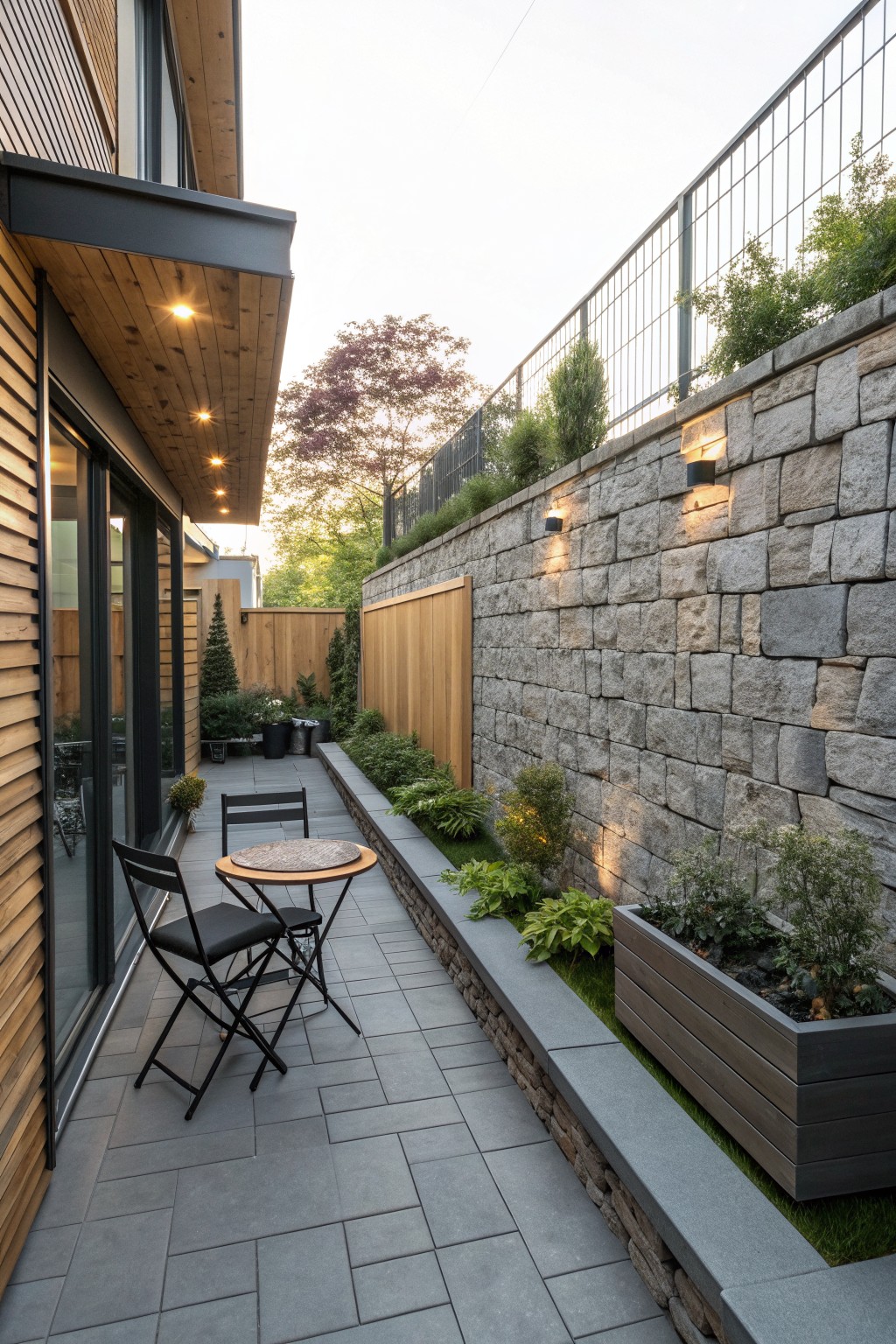
Stone walls give a patio real privacy without needing tall fencing on every side. They block sightlines from neighbors while holding up well in any weather, and the material feels grounded next to a house.
This approach works best on narrow side yards or townhouse lots where space is tight. Place the wall along one long edge and add a low planter on top so the greenery softens the hard surface without taking up floor room.
Try a Tall White Fence for Seclusion

A tall white fence with clean vertical boards gives a patio that enclosed feeling without making it feel boxed in. It blocks views from the street or neighboring yards while still letting light and air move through the space.
Hang a couple of lanterns along the fence for soft evening light and tuck in a few plants at different heights. This setup works well on smaller lots or coastal homes where you want to keep things simple but still create a defined outdoor room.
Living Walls Offer Natural Privacy on Patios

A living wall gives you privacy while keeping the space open and green. Instead of a solid fence, the plants grow up a frame and create a thick screen that softens the view from outside.
This idea works best in smaller patios or urban yards where you want coverage without closing everything in. It pairs well with a simple overhead structure and needs a good irrigation setup so the plants stay full.
Mix Wood Fencing With Woven Screens

Mixing solid wood fencing with lighter woven screens gives you privacy without closing the space off completely. The wood blocks most of the view while the open weave lets in light and air so the patio still feels comfortable instead of boxed in.
This setup works best on decks or terraces that sit close to other buildings. Hang a woven panel on part of the fence or insert lattice sections between solid boards to control how much you want to screen.
Horizontal Slat Fencing For Patio Privacy

Horizontal slat fences give a patio real privacy without making the space feel boxed in. The gaps let in light and air, so the area still feels connected to the yard while blocking direct views from outside.
This works best on patios that sit close to neighboring homes or streets. Pair the fence with a simple overhead structure like a pergola to add shade and make the whole spot feel more like a separate room. It suits homes with clean modern lines and pairs well with wood decking or pavers.
Tall Wooden Fencing For A Secluded Patio

Tall wooden fencing works well when you want a patio to feel more private without closing it off completely. The vertical boards create a solid barrier that blocks sightlines from outside while still letting some air move through the space.
This approach suits homes on smaller lots or in neighborhoods where backyards sit close together. It pairs especially well with a simple overhead cover that adds shade and makes the area feel more like an outdoor room than an open deck.
Slatted Screens For Patio Privacy

A slatted screen gives you privacy without making the patio feel boxed in. The gaps let light and air move through while blocking the direct view from nearby buildings or neighbors, which keeps the space feeling usable instead of closed off.
This works best in tight urban yards where full walls would feel too heavy. Place the screen along one edge near seating or a counter, and add a simple hanging plant or two if you want to soften the lines a bit.
Add a Wooden Gate for Patio Privacy

A large wooden gate gives you an easy way to control how private your patio feels. It creates a clear boundary without making the space feel completely closed off, and you can swing it open or shut depending on the day.
This idea works best on patios that already have some structure like a brick wall or fence line. Keep the gate simple in style, add a few string lights along the top, and let vines grow over the edges so the whole area feels more tucked away.
Frequently Asked Questions
Q: How high should I build the fence to block views without making the space feel closed in?
A: Aim for about six feet tall. That height stops most neighbor glances while the top still lets in some sky. Measure your seating area first to get the balance right.
Q: Will a basic wood fence last through wet winters?
A: Go with cedar since it handles moisture better than pine. Seal it once a year to avoid rot. The fence stays solid with just that bit of care.
Q: Can I attach plants to the fence for extra privacy?
A: Yes train vines like ivy along the panels. They fill gaps quickly and add a green layer. Start with young plants in pots at the base for easy growth.


