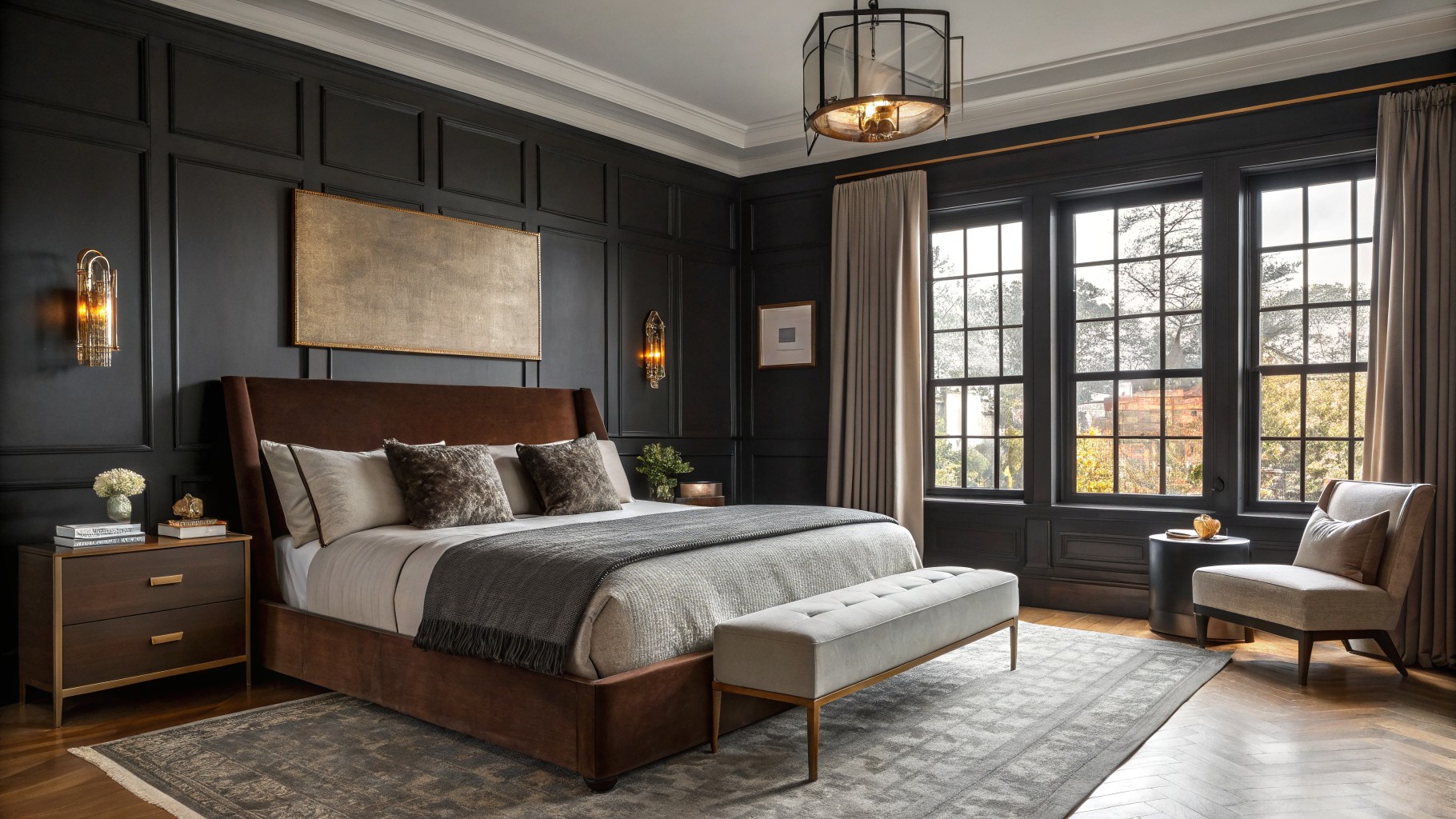
I have watched bedroom colors shift from soft and full in morning light to something much flatter by evening once the lamps come on and the curtains close.
Undertones show up fast against trim and bedding, and a shade that feels warm in the store can pull cool or muddy next to existing furniture.
I test samples on multiple walls before committing.
Colors with a bit of gray or brown mixed in tend to settle better and keep their depth even after the room is fully furnished.
The ones worth keeping are those that still feel balanced when you stand in the doorway at different times of day.
Dark Charcoal Bedroom Walls
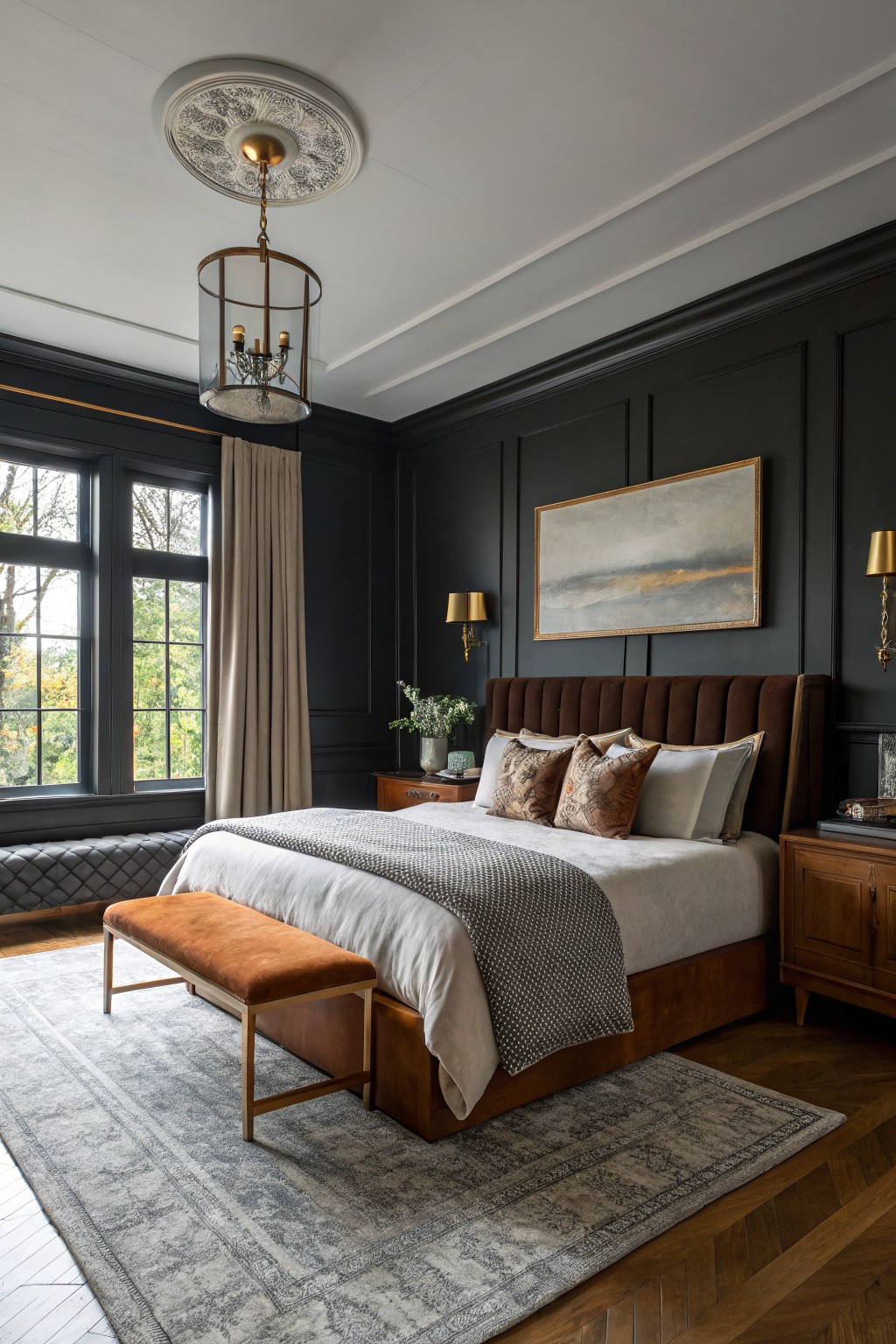
A deep charcoal gray covers the walls in this bedroom. It gives the space a solid, grounded look that still feels livable because the color has a bit of warmth to it.
This shade works best in rooms with decent natural light and pairs easily with wood furniture or lighter textiles. It can feel heavy if the room is small or lacks windows, so test it on a larger sample first.
Deep teal bedroom walls
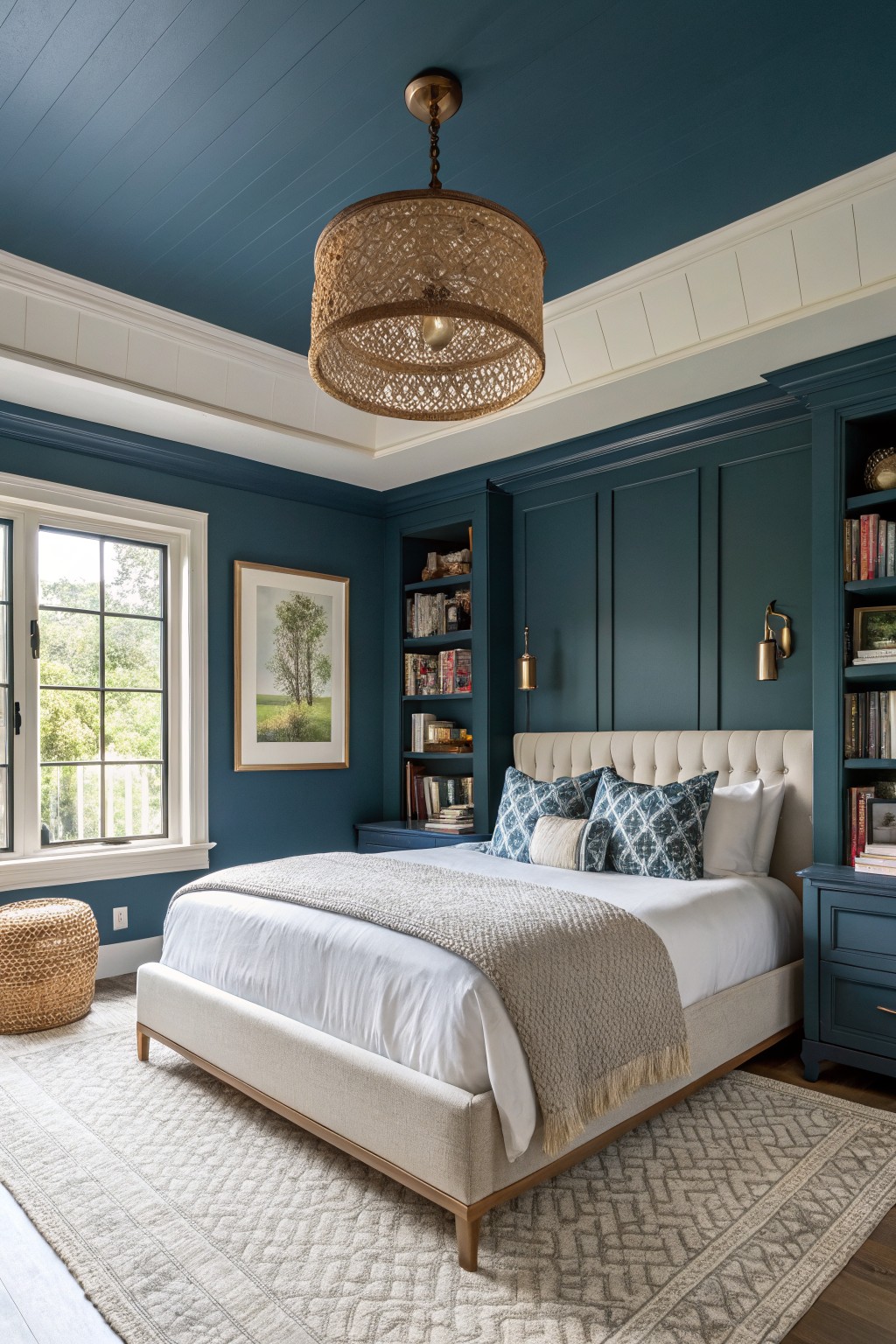
This deep teal brings a rich, grounded feel to the bedroom without making it feel heavy. It sits right between blue and green, with enough depth to hold its own against white trim and wood tones. Many people like it because it feels cozy at night but still fresh during the day.
It has cool undertones that show up more in low light, so it works best in rooms that get steady daylight. Pair it with warm wood furniture or cream textiles to keep the space from feeling too chilly. Benjamin Moore Hale Navy, Sherwin Williams Naval, Farrow & Ball Inchyra Blue, and Behr Deep Sea Diver all sit close to this shade.
Warm Greige Bedroom Walls
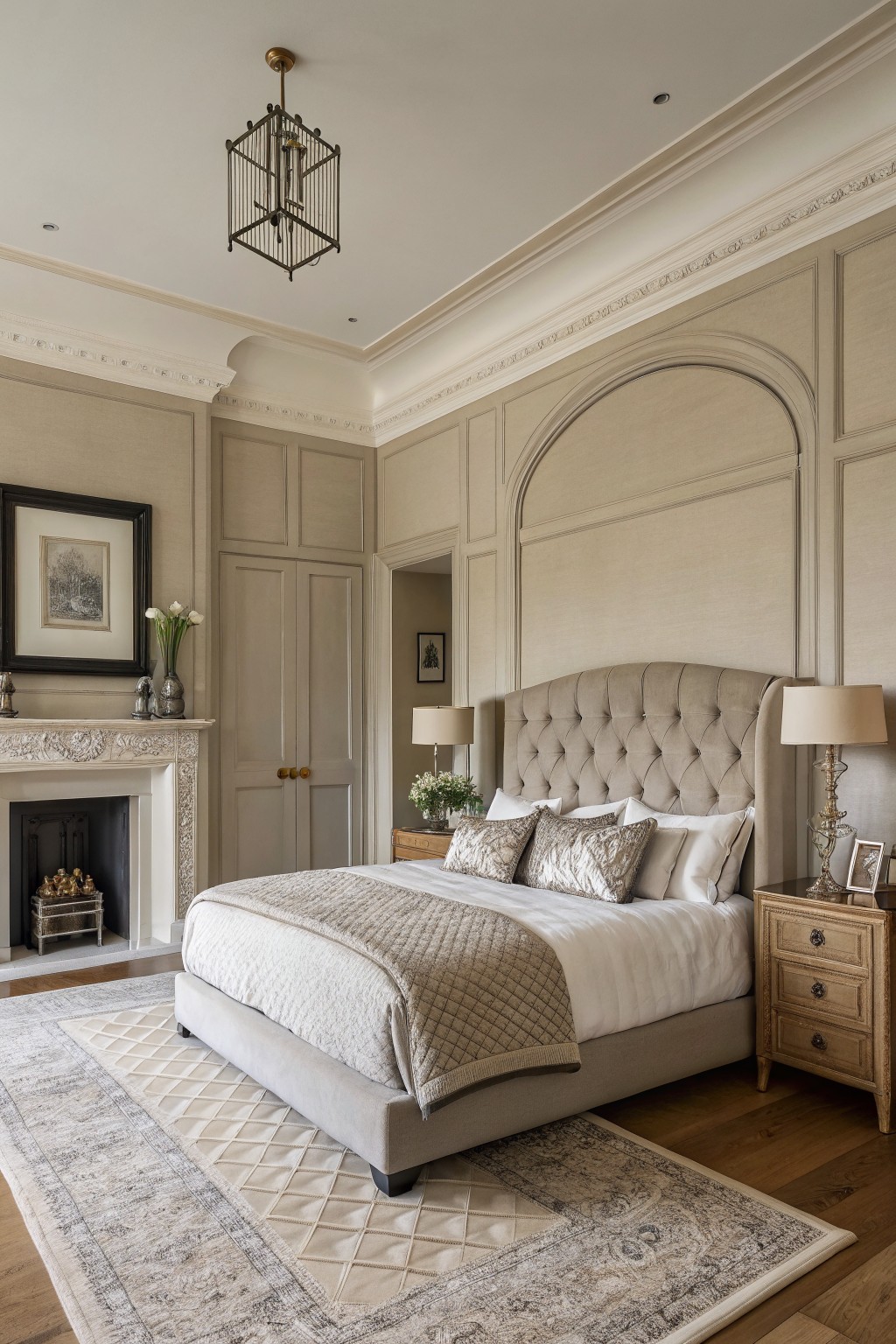
This bedroom uses a warm greige on the walls. It sits between beige and gray, with enough depth to feel cozy while still keeping the space light and calm.
The color has a soft warmth that works well with wood floors and painted trim. It looks closest to Sherwin Williams Accessible Beige, Benjamin Moore Revere Pewter, or Farrow & Ball Elephant’s Breath, and it tends to read nicely in rooms with both natural light and warmer lamps.
Soft Sage Green Walls
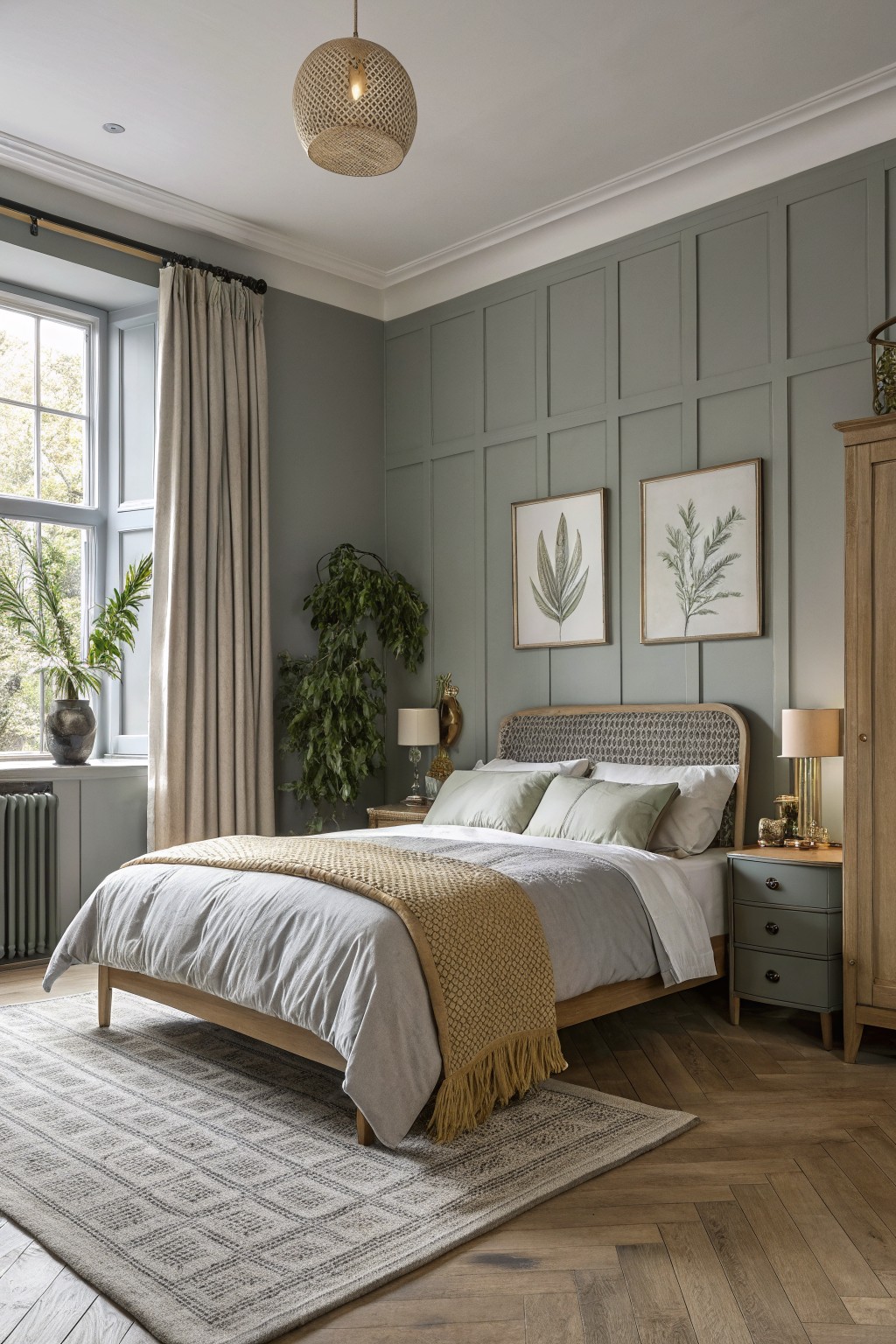
This bedroom uses a muted sage green on the walls. It is a soft gray-green that feels calm and grounded without turning too cool or dull.
The color has a slight gray cast that helps it sit nicely next to warm wood floors and trim. It works best in rooms with decent natural light and pairs well with simple wood furniture or linen fabrics. Try Benjamin Moore Saybrook Sage, Sherwin Williams Clary Sage, Farrow & Ball French Gray, or Behr Aged Sage.
Warm Sage Green Walls
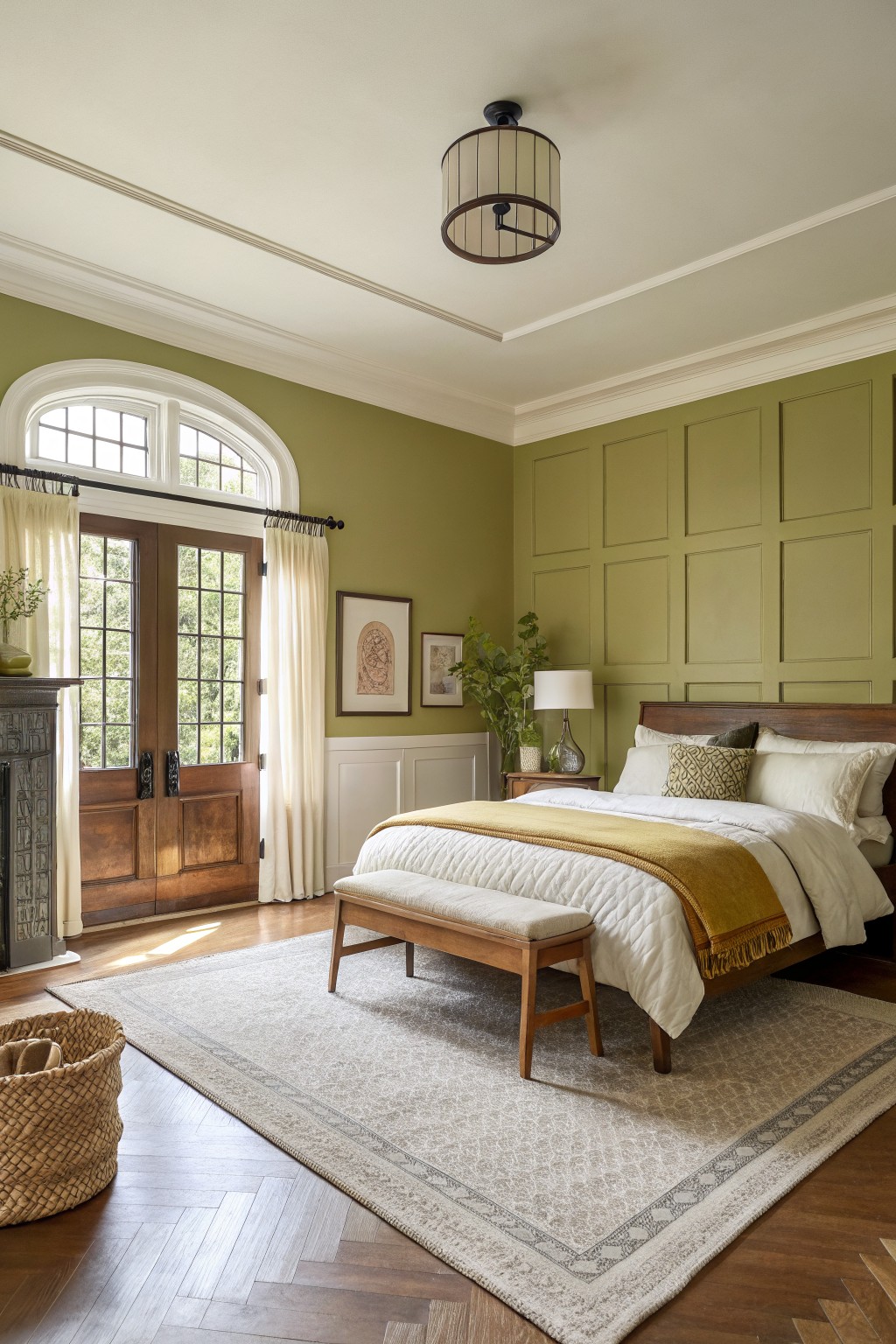
A soft sage green on the walls gives a bedroom that grounded, natural feel without going too dark or cold. This muted shade sits between gray and green, with just enough warmth to keep the room comfortable next to wood floors and trim.
It works best in spaces that get steady daylight, where the color stays calm rather than shifting flat. Pair it with white or off-white trim and simple wood furniture so the green stays the main focus without competing. Closest matches are Sherwin Williams Evergreen Fog, Benjamin Moore Saybrook Sage, or Behr Dried Basil.
Deep Teal Walls With Jewel-Tone Accents
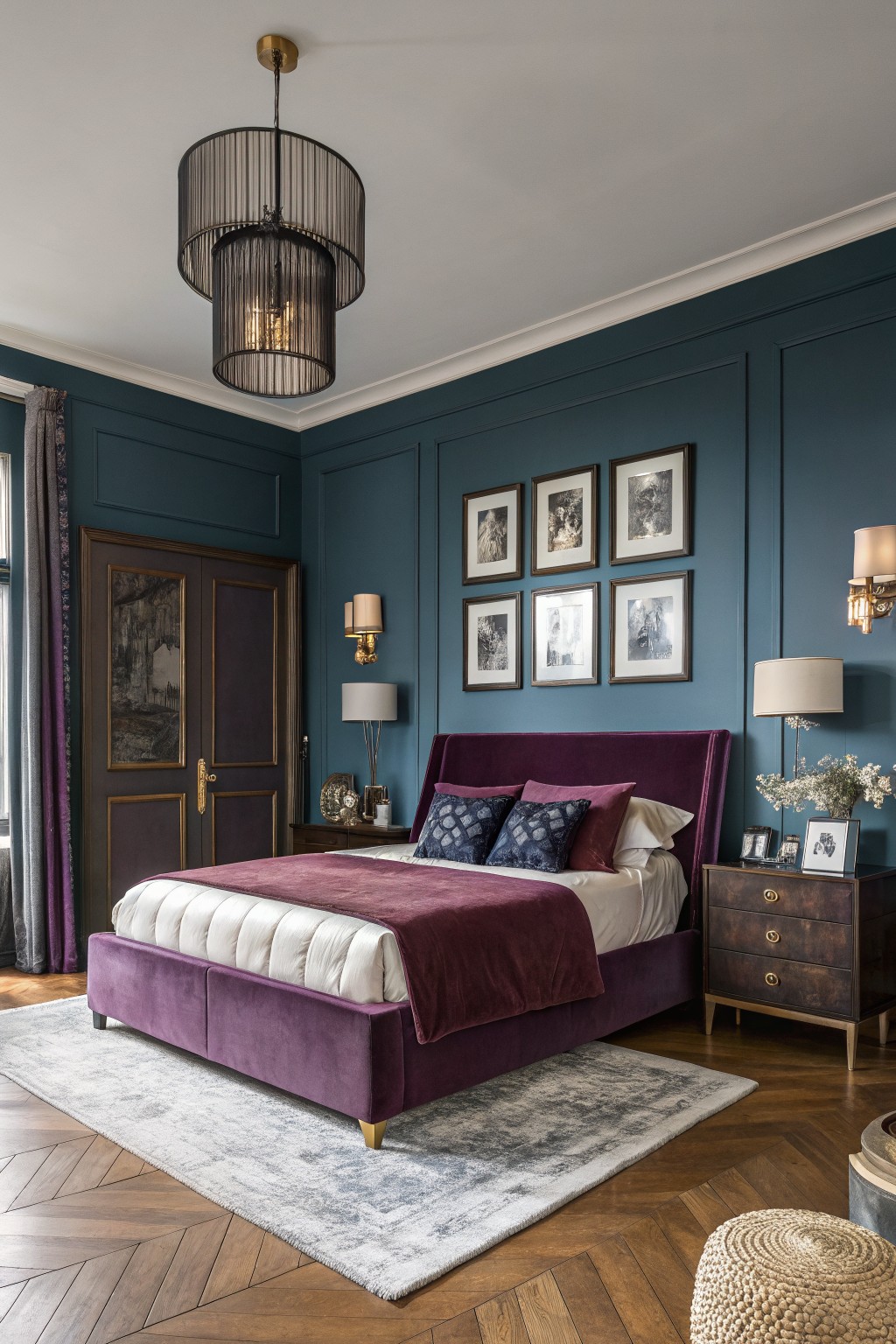
Deep teal makes a bold but workable choice for bedrooms when you want color without going too dark. This shade sits between blue and green, giving the walls some depth while still feeling calm enough for rest. It shows up nicely against wood floors and works well in rooms that get decent natural light during the day.
The color has a slight green undertone that keeps it from reading flat. It pairs easily with warm wood furniture, white trim, or deeper jewel tones like the purple bedding seen here. Just watch the lighting, since low light can make it feel heavier than expected.
Warm terracotta walls
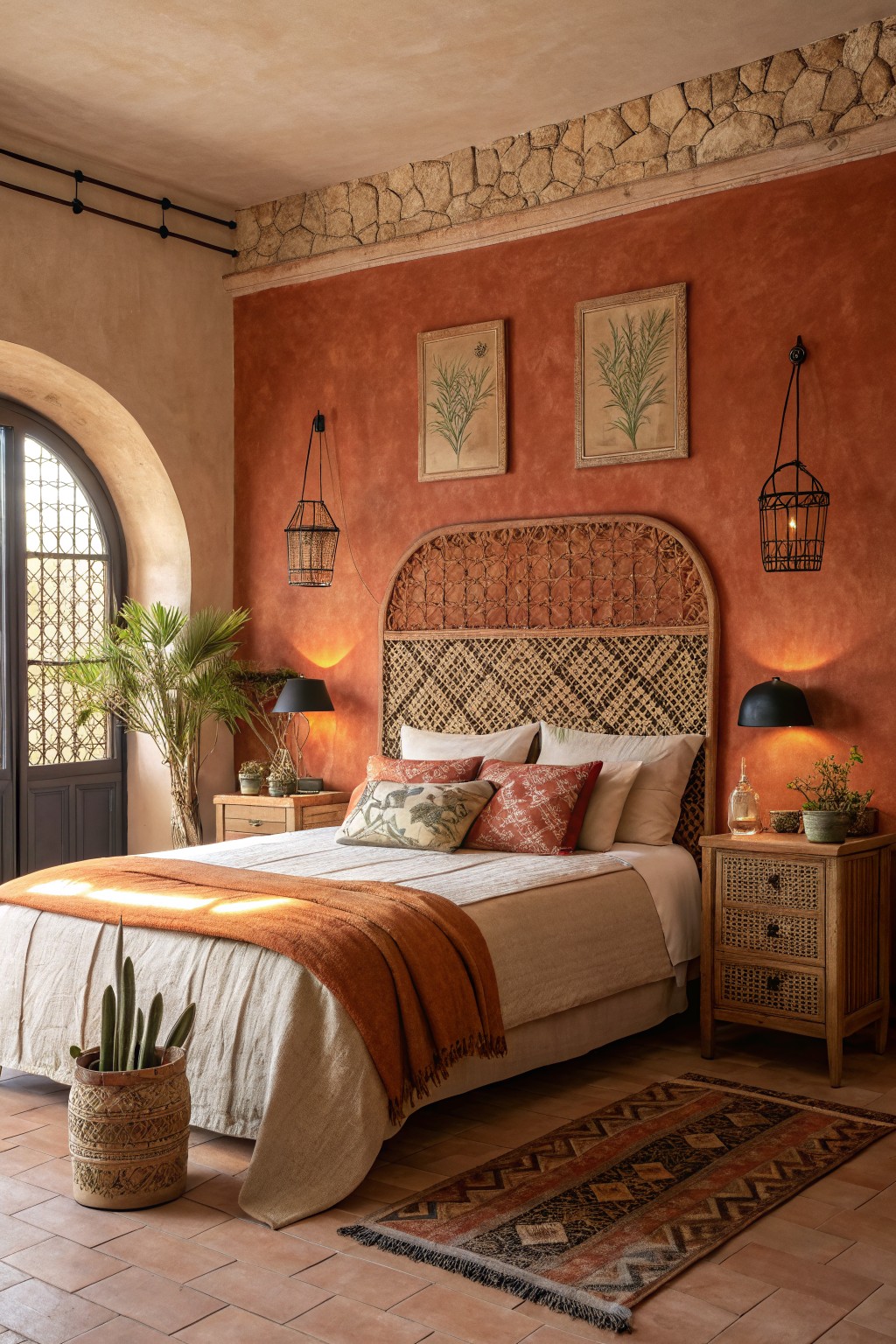
This bedroom shows a warm terracotta paint on the walls. It is a clay red with soft orange undertones that gives the room a grounded feel without turning heavy.
The color sits nicely next to wood tones and stone. It works best in spaces with good natural light and pairs easily with simple furnishings in similar earthy shades. Benjamin Moore Caliente, Sherwin Williams Fired Brick, and Farrow & Ball Red Earth all read close to this.
Soft blush walls
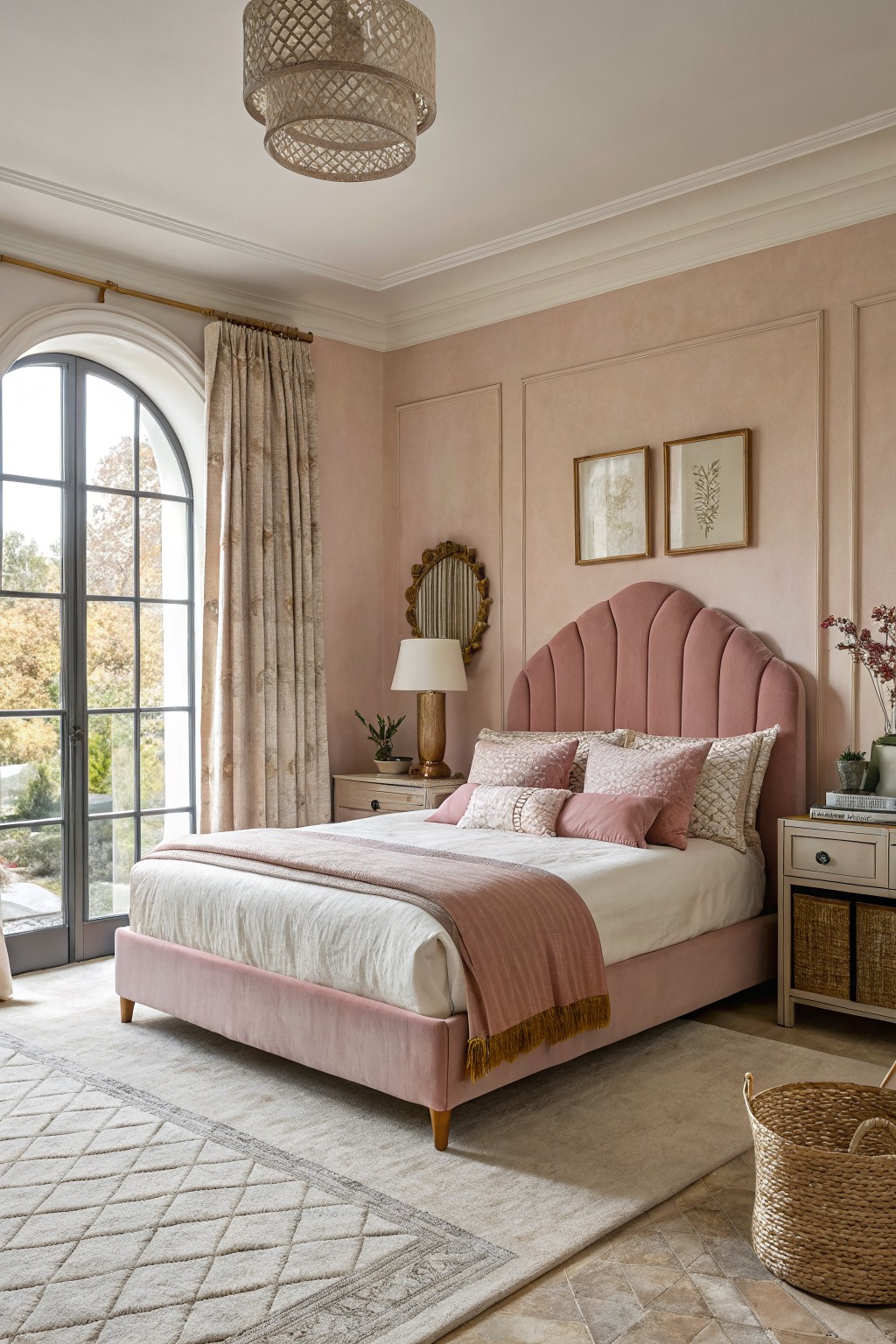
This bedroom uses a soft blush beige on the walls. It is a warm neutral with gentle pink undertones that feels calm and a little lived-in rather than crisp or cool.
The color works well with wood floors and cream bedding. It suits rooms that get steady daylight and pairs easily with linen or velvet in similar tones. Best matches would be something like Benjamin Moore Pale Pink, Sherwin Williams Rosebud, Behr Blush Beige, or Farrow & Ball Setting Plaster.
Soft Yellow Bedroom Walls
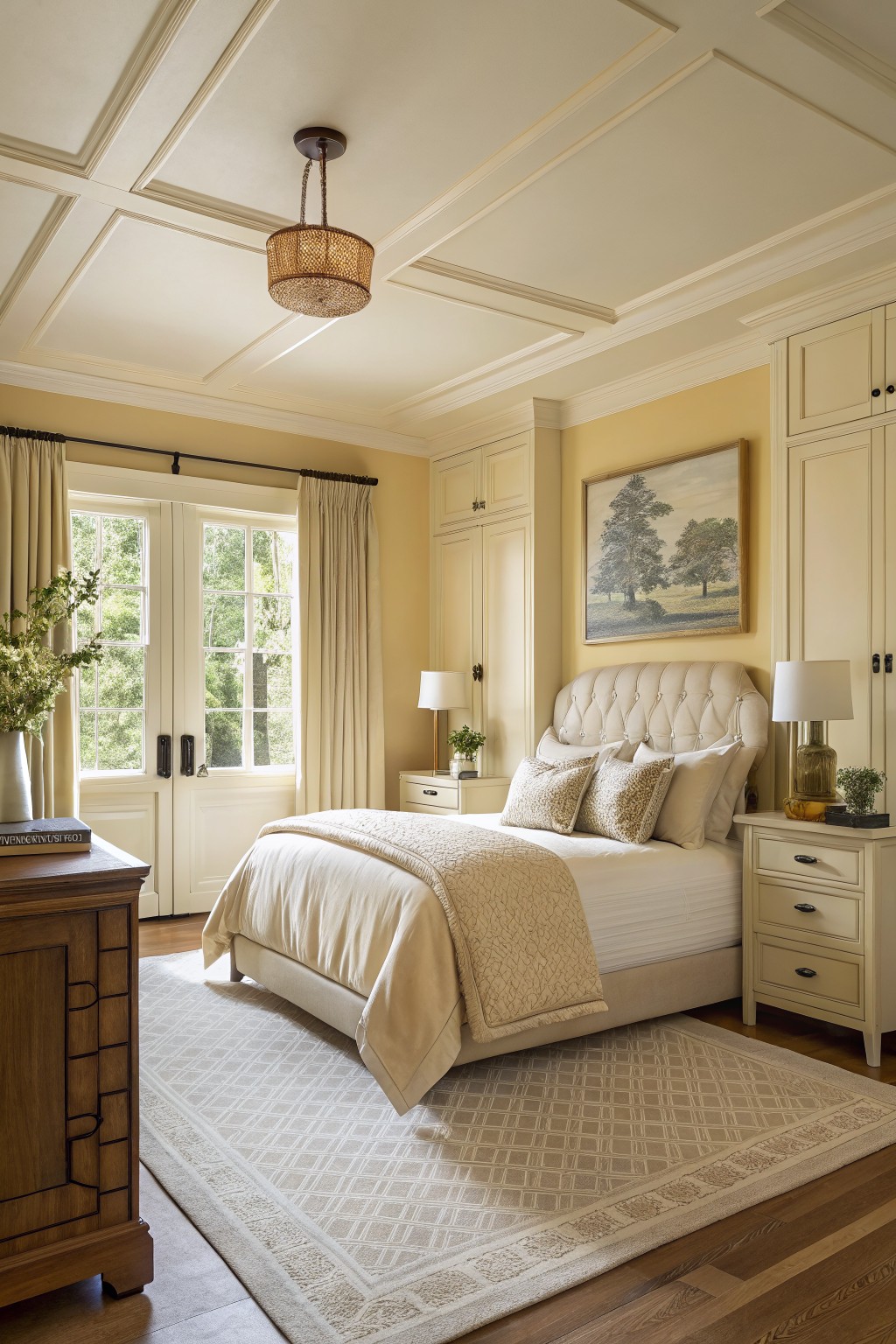
This is a warm pale yellow that feels soft and slightly creamy rather than bright or citrusy. It brings a gentle glow to the room without overpowering the space, and it works nicely with the wood tones on the floor and furniture.
The color sits close to Benjamin Moore Hawthorne Yellow, Sherwin Williams Lemon Verbena, or Behr Cream Puff. It pairs well with off-white trim and built-ins, though it can look a bit flat if the room gets very little natural light.
Soft blue gray bedroom walls
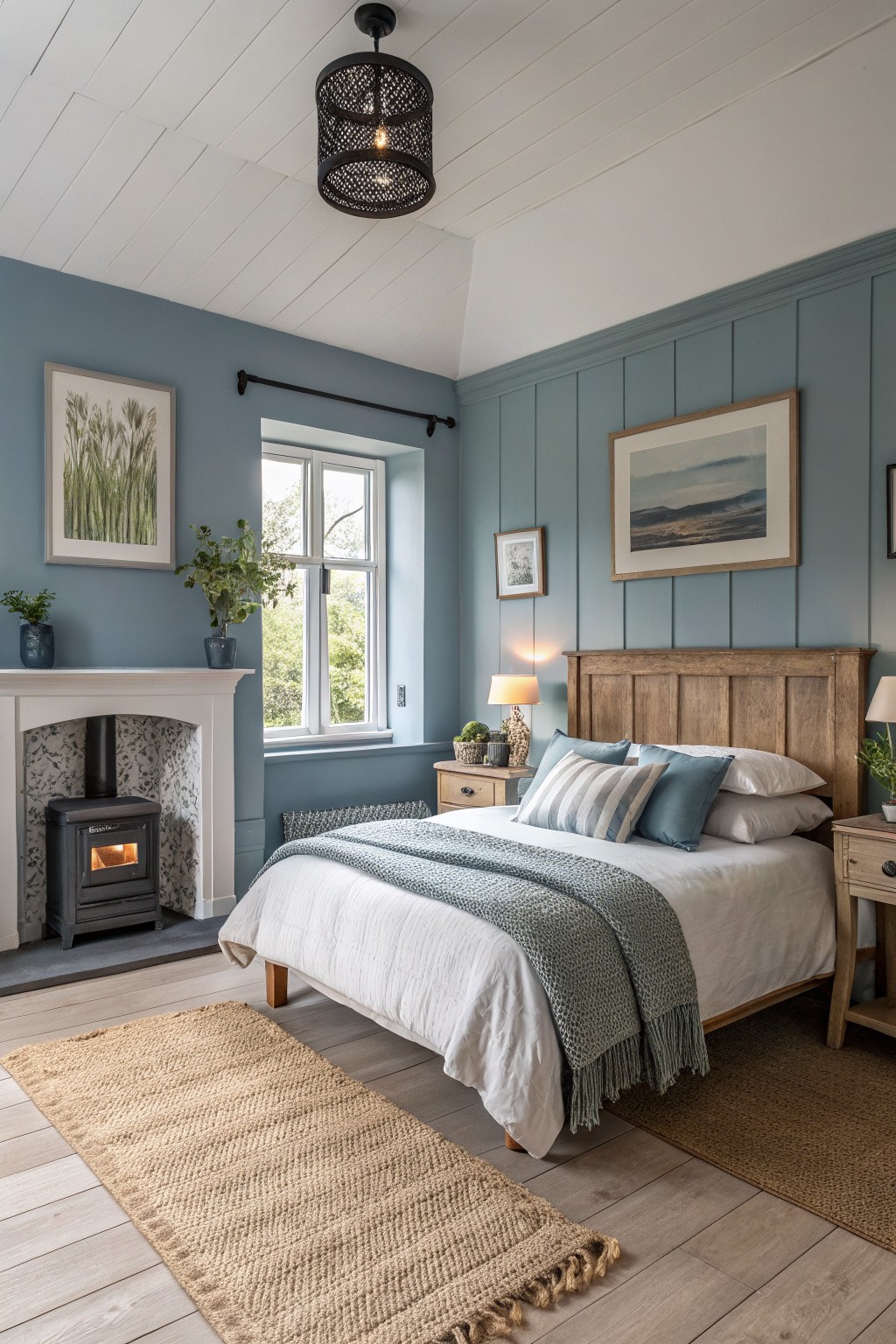
This muted blue gray brings a calm, slightly cool tone that feels steady without being heavy. It looks closest to Sherwin Williams Rainwashed, Benjamin Moore Wythe Blue, or Farrow & Ball Blue Gray.
The color holds up well next to warm wood and white trim. It suits bedrooms that get steady daylight and pairs easily with linen or simple wood furniture.
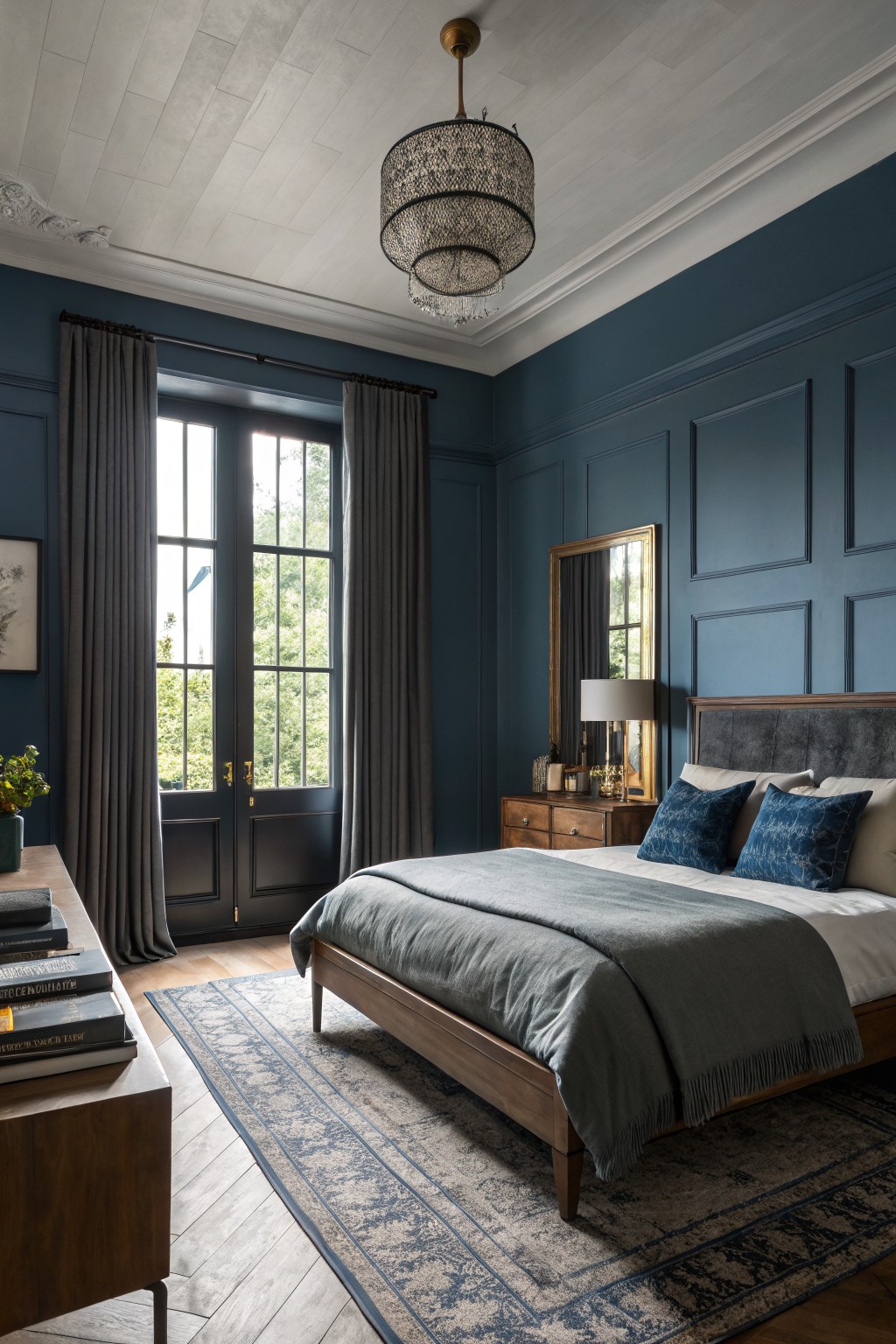
A deep navy blue gives a bedroom real presence without needing a lot of extra color. This shade sits on the cooler side and brings enough depth to make the room feel finished and calm.
It works best with warm wood tones and lighter bedding so the space does not feel heavy. Sherwin Williams Naval, Benjamin Moore Hale Navy, and Farrow & Ball Hague Blue all sit close to this color. Watch how it shifts with the light before committing.
Rich Terracotta Clay Bedroom Walls
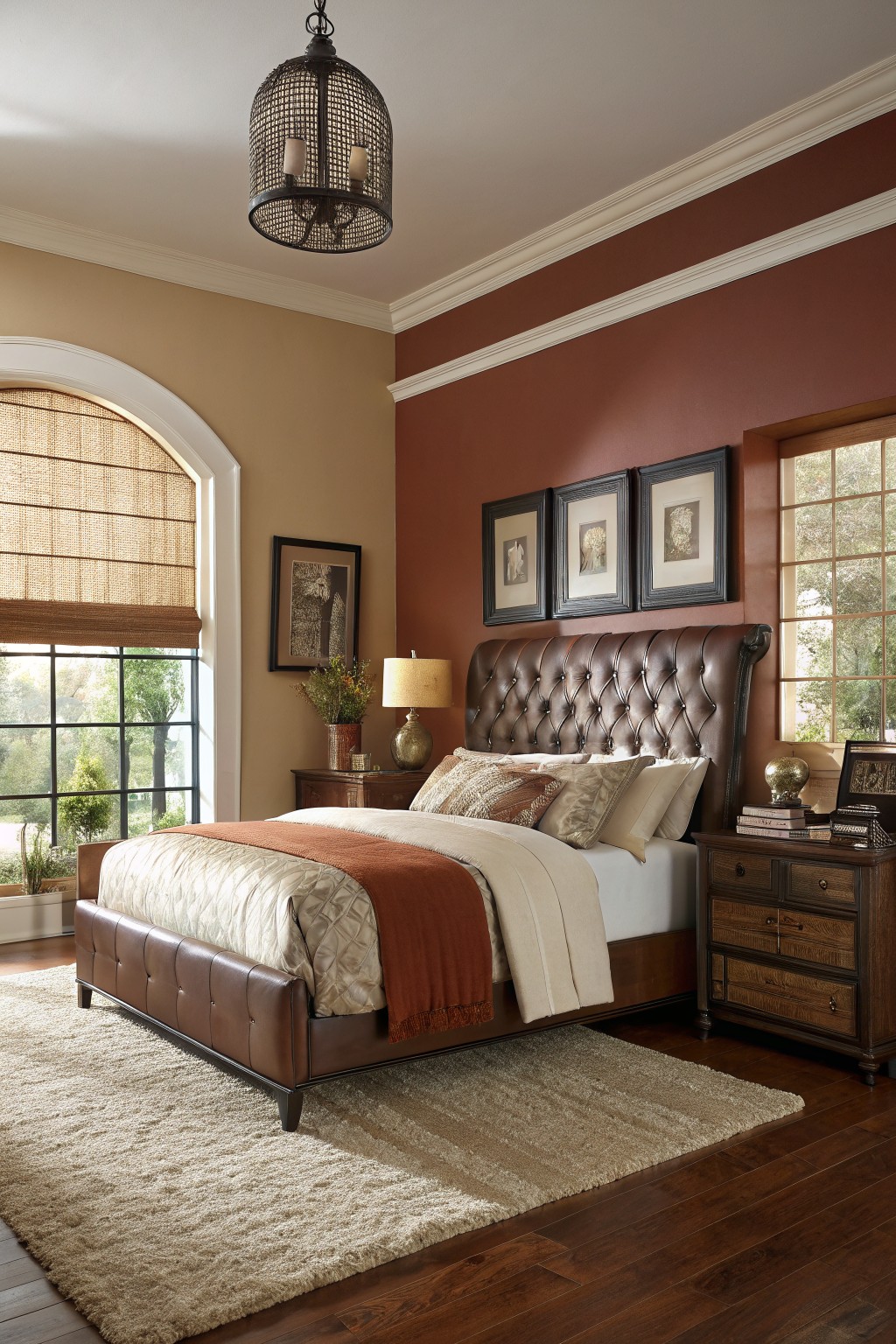
A deep terracotta works well on bedroom walls when you want something richer than beige but not as heavy as brown. It sits between red and clay, giving the room a steady warmth that feels lived in.
This shade has a slight brown undertone, so it pairs easily with wood floors and leather furniture. It looks best with soft creams or off-whites on the other walls and trim to keep the space from closing in.
Light Sage Green Bedroom Walls
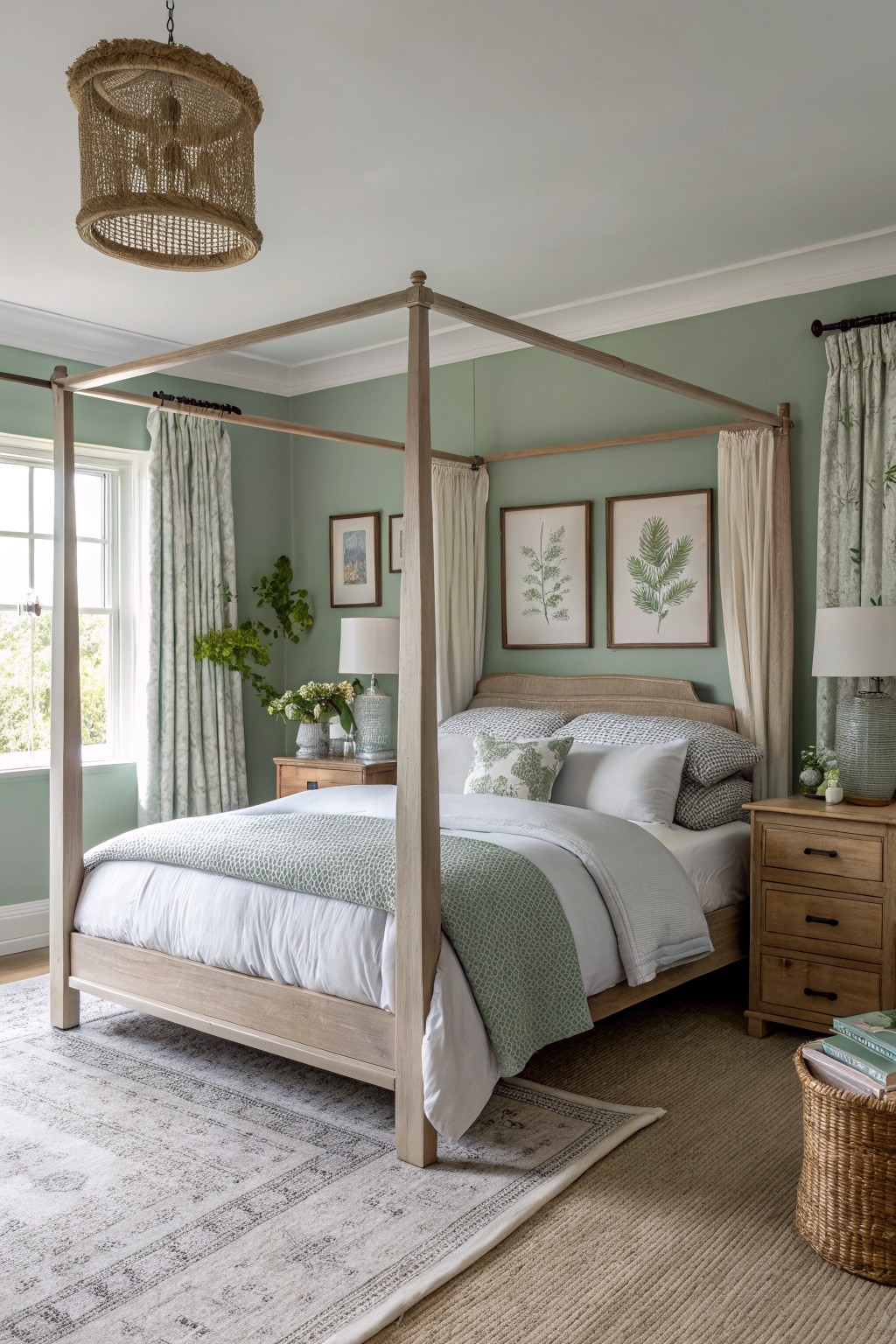
This bedroom uses a soft sage green on the walls that sits right between gray and green. It feels calm without going flat, and the color stays gentle even when the light changes during the day. The tone works well in rooms that get steady natural light and helps the wood furniture read warmer by comparison.
It has a light cool undertone that pairs easily with white bedding and natural wood. Try it in bedrooms that need a bit of color but still want to feel open and restful. Watch how it shifts next to very warm woods, since the green can pull slightly blue in those cases.
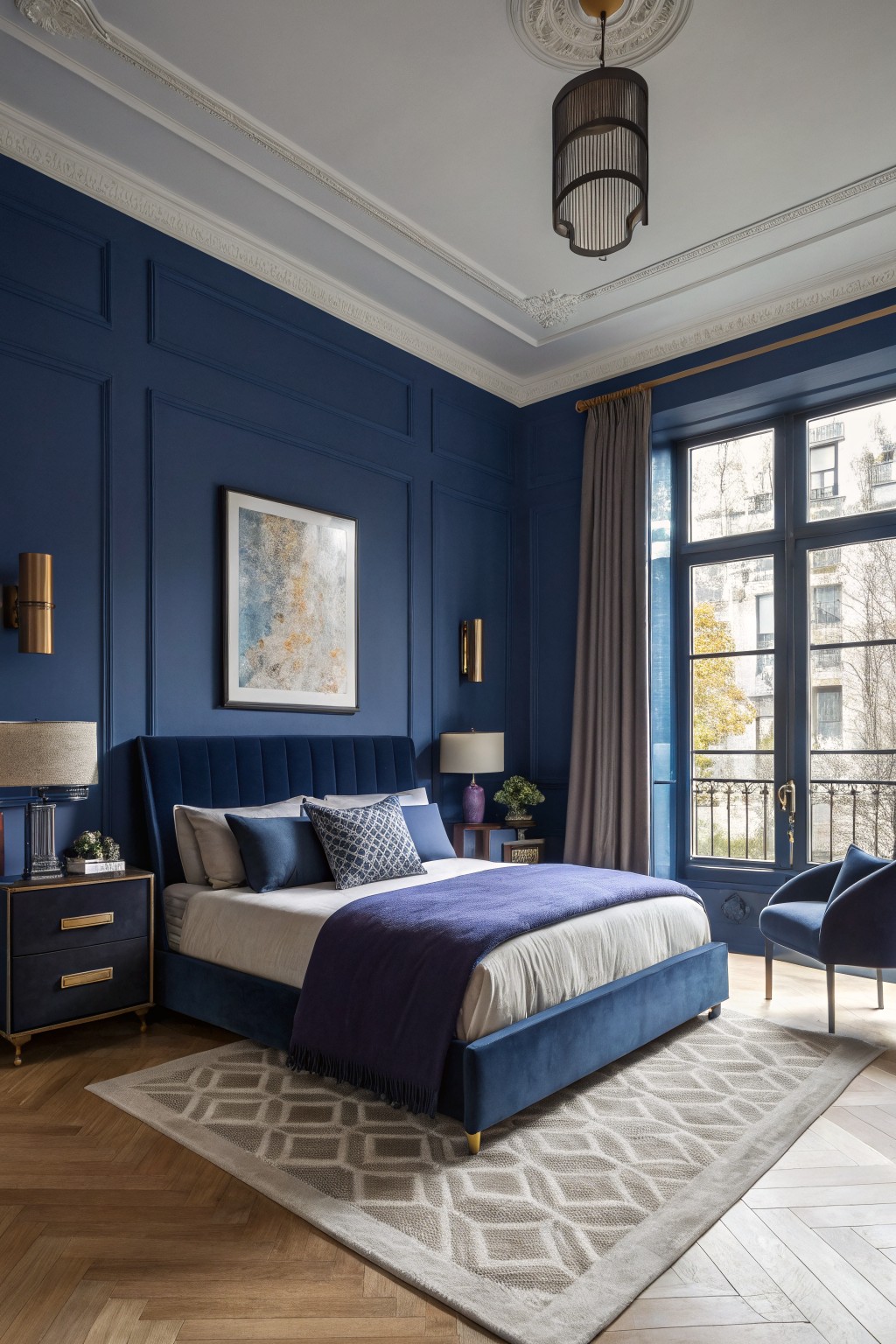
This deep navy blue gives a bedroom real weight and presence. It is a cool, saturated shade that reads as both classic and modern, and it works especially well on paneled walls where the molding adds extra depth.
The tone has a slight blue-gray cast that keeps it from feeling too purple in the evening. It pairs cleanly with warm wood floors and simple metallic accents, but it can feel heavy in small rooms with low light so test a sample on more than one wall before committing.
Soft peach beige walls
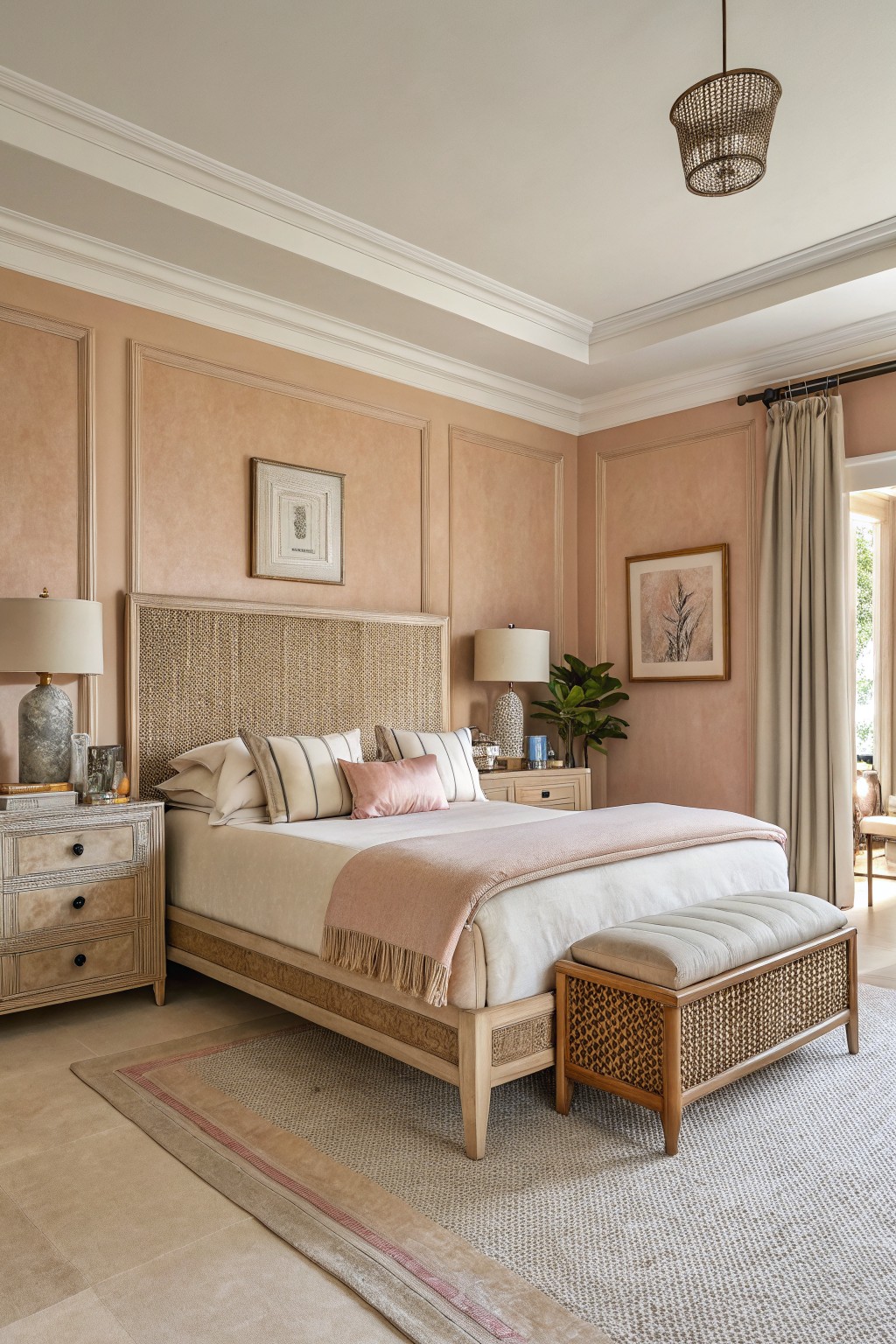
This soft peach beige on the walls brings a gentle warmth to the bedroom without turning too pink or orange. It sits nicely between beige and a light clay tone, which makes the space feel calm and a bit more interesting than a plain neutral.
The color has a warm undertone that pairs easily with wood furniture and soft textiles. It works best in rooms with decent natural light, since it can look a little flat in very dark spaces. Try it with Sherwin Williams Toasted Almond, Benjamin Moore Lenox Tan, or Farrow & Ball Setting Plaster if you want something close.
Warm Taupe Bedroom Walls
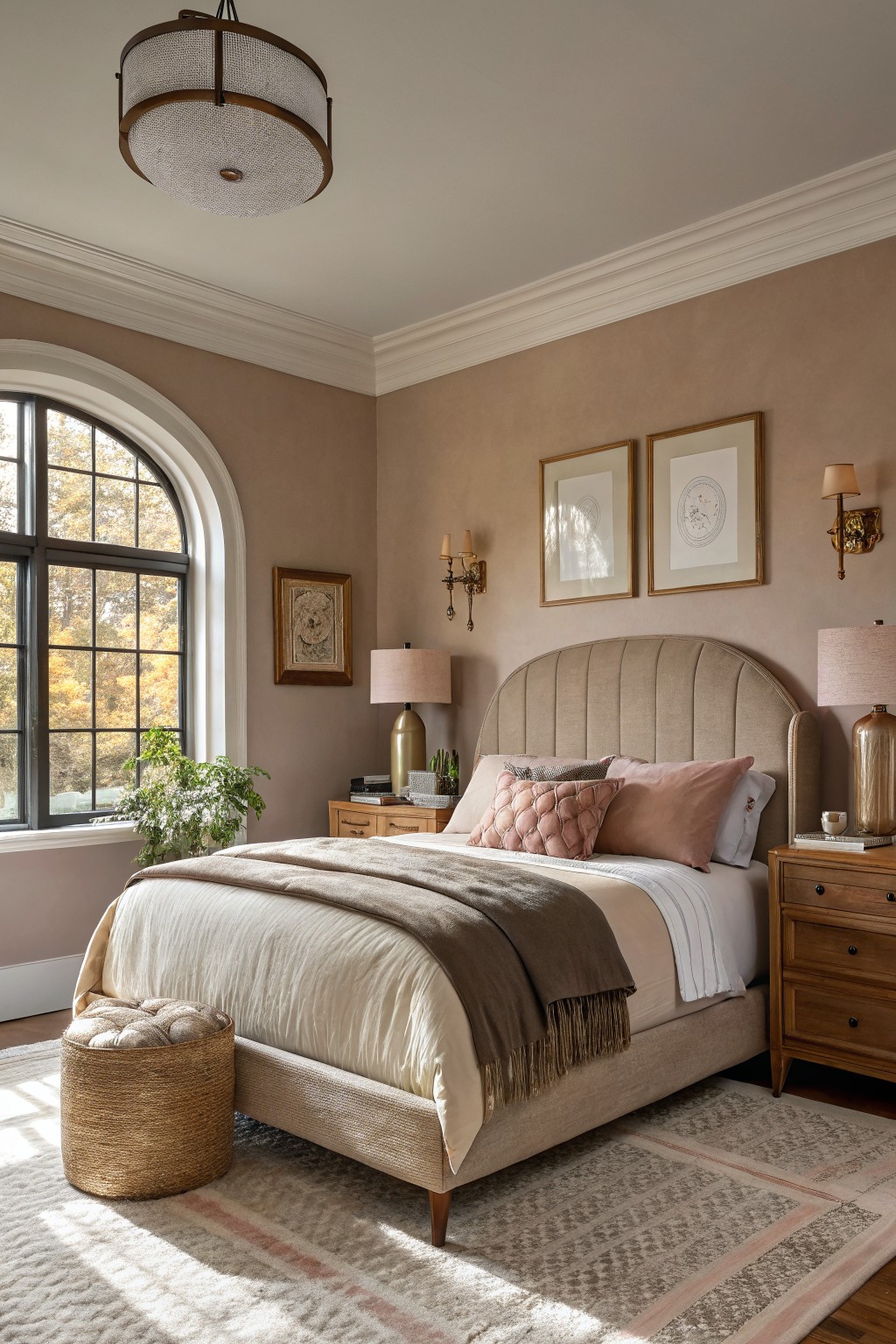
This bedroom shows a soft warm taupe on the walls. It is a muted neutral with a touch of brown and gray that feels grounded and easy to live with.
The color has a gentle earthy undertone that works well with wood furniture and soft textiles. It suits bedrooms that get steady daylight and can look good with both light and deeper accents.
Deep Green Bedroom Walls
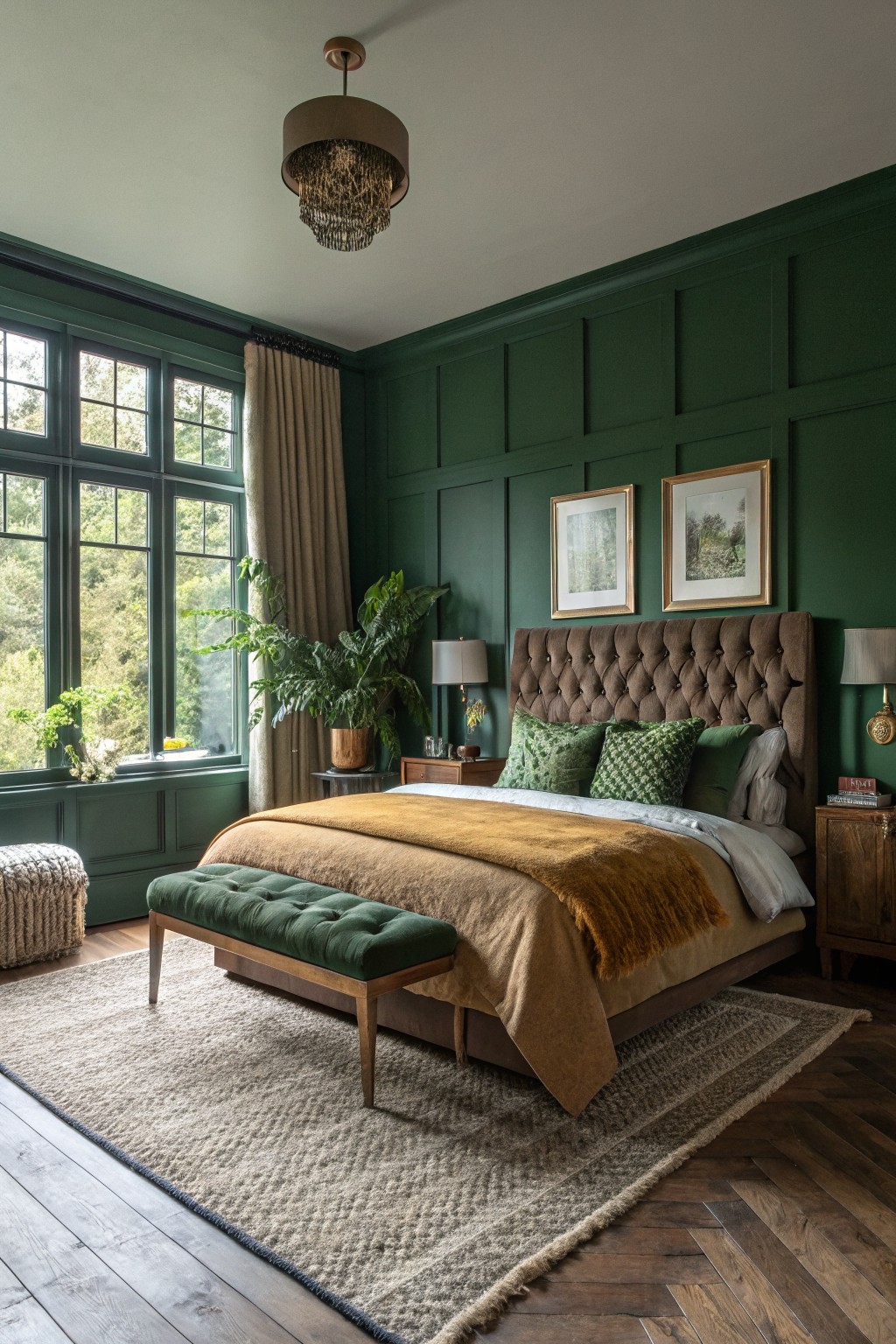
A deep green on the walls brings a solid, grounded look to a bedroom without making the space feel closed in. This color family sits between true green and a touch of blue, and it shows up best in rooms that already have some wood or warm tones around.
It works well with brown furniture and wood floors, and it can take either white trim for contrast or matching dark trim if you want everything to blend. Try Sherwin Williams Rookwood Dark Green, Benjamin Moore Forest Green, Behr Deep Forest, or Farrow & Ball Hunter Green as starting points.
Warm Beige Bedroom Walls
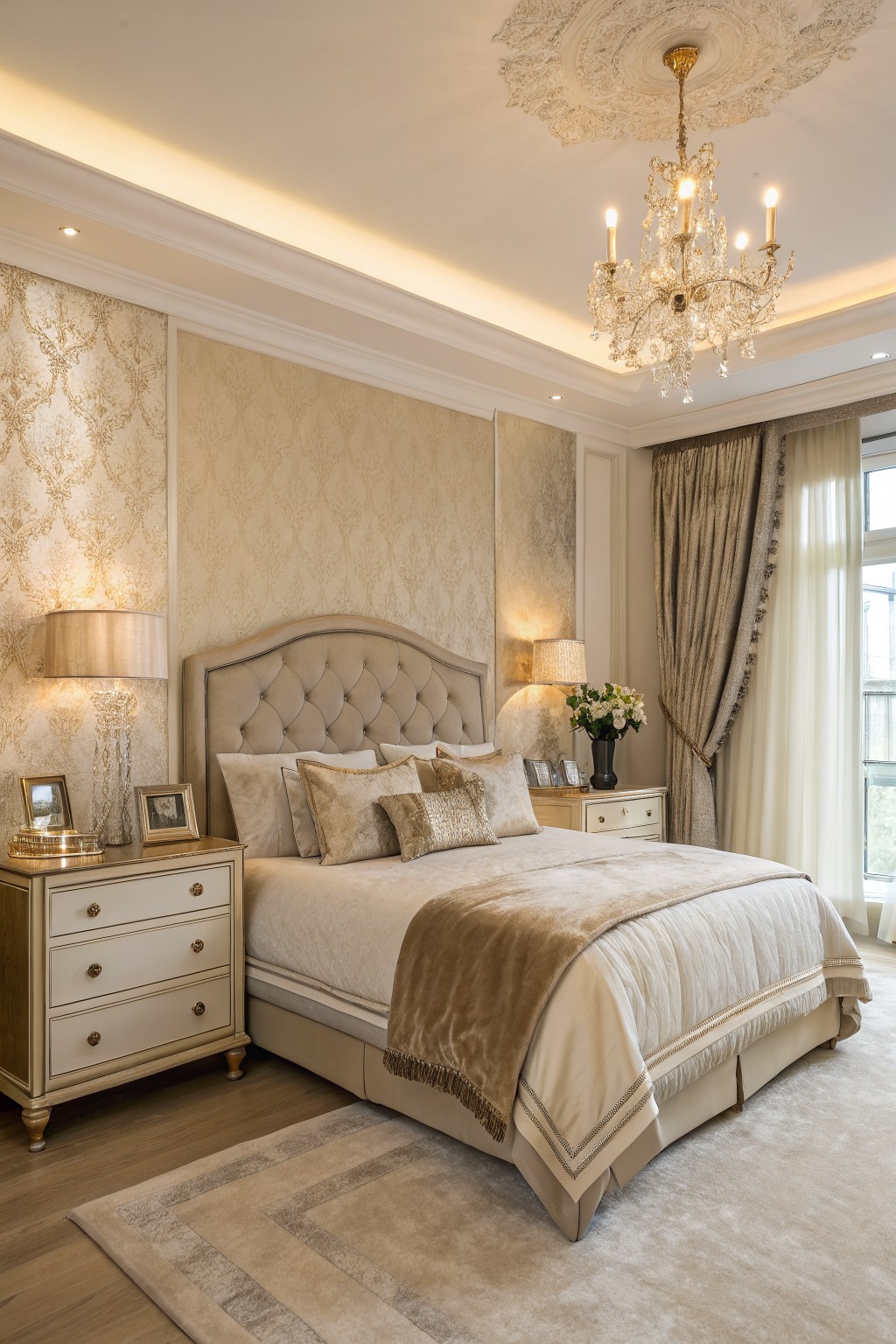
A warm beige like this gives a bedroom that settled, comfortable feel without turning too yellow or too gray. It sits right in the middle of cream and light taupe, so it still feels light but has enough depth to hold its own next to wood floors and richer fabrics.
This shade has a soft, slightly muted undertone that works best with warm whites on the trim and ceiling. It can look a little flat if the room gets only cool light, so most people pair it with cream bedding or natural wood furniture to keep the warmth going.
Pale Blue Gray Bedroom Walls
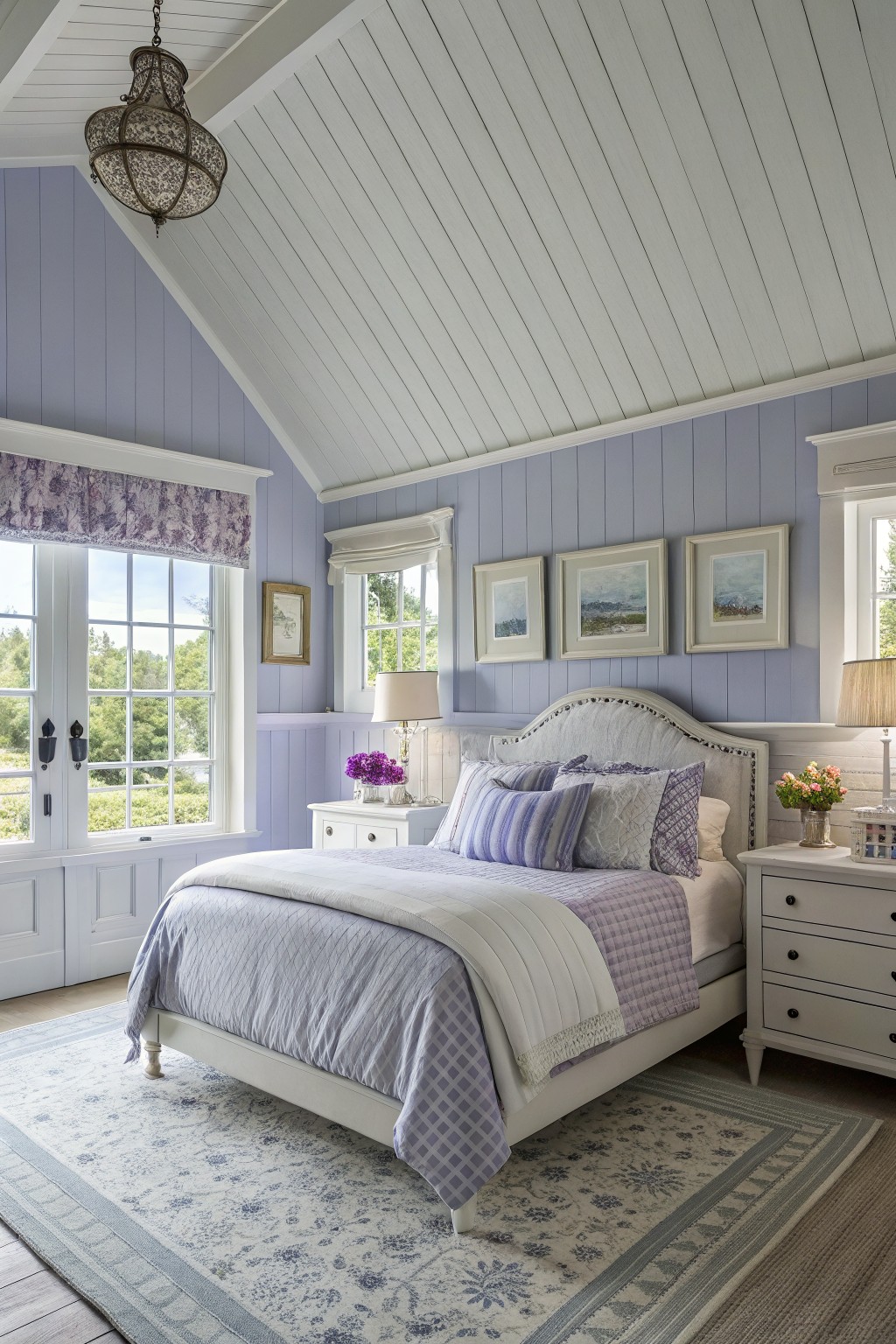
This bedroom uses a soft blue gray on the walls. The color sits between gray and a very pale blue with just a touch of lavender in the undertone.
It reads cooler in low light but stays gentle overall. The shade works best with crisp white trim and light wood floors. Pair it with simple white bedding or natural linen to keep the room feeling open and calm. Avoid heavy dark furniture if you want it to stay light.
Earthy Clay Terracotta Bedroom Walls
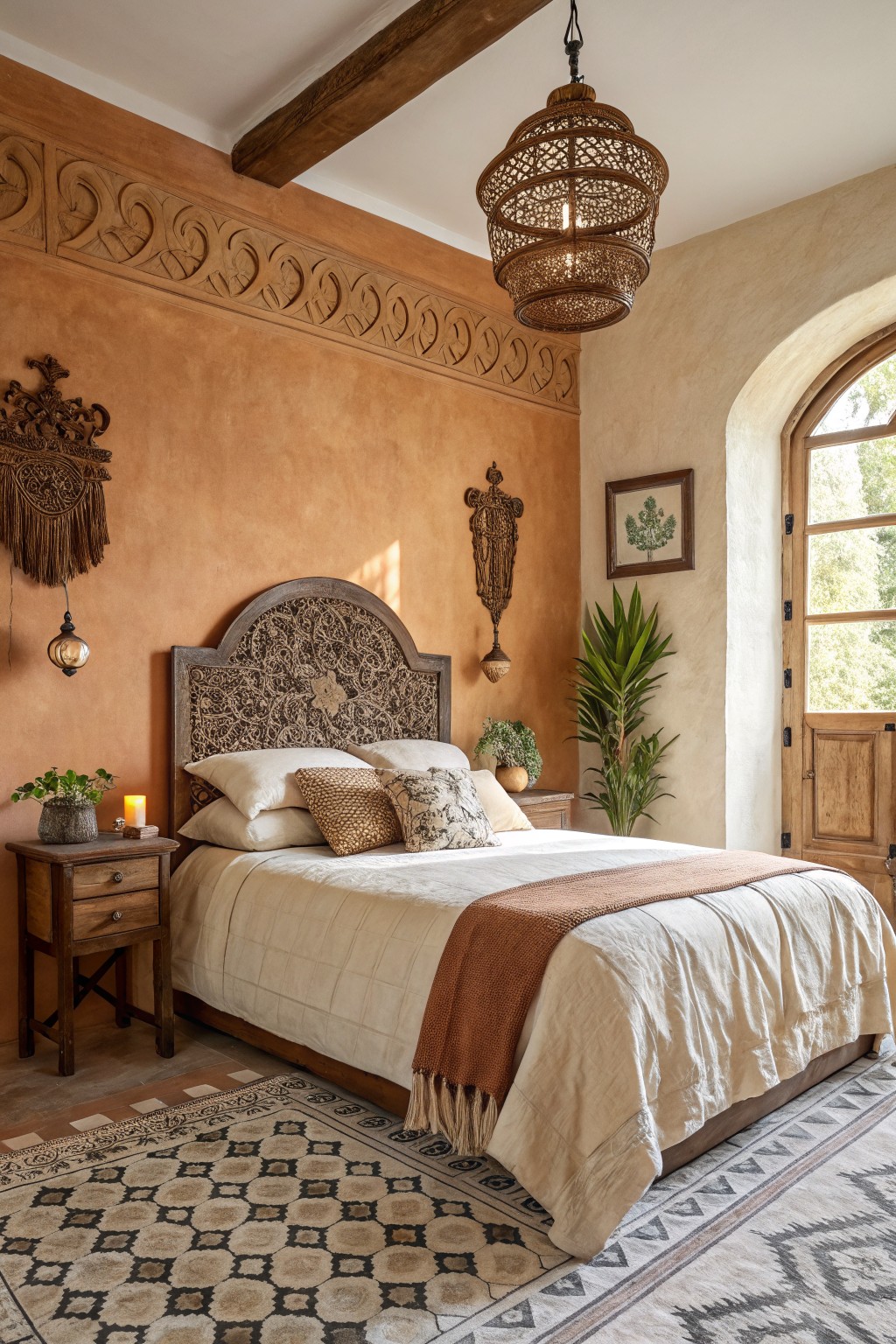
This bedroom shows a warm terracotta paint on the walls that feels earthy and solid. It sits in that soft clay range, not too bright and not too muted, which helps it add some weight to the space without closing it in. Colors like this often read closest to Sherwin Williams Baked Clay, Benjamin Moore Moroccan Spice, or Behr Canyon Clay.
The tone has a gentle orange undertone that keeps it warm next to wood. It works well with natural floors and simple trim, though it can look flat if the lighting stays too cool or if you pair it with too many grays.
Muted Sage Green Bedroom Walls
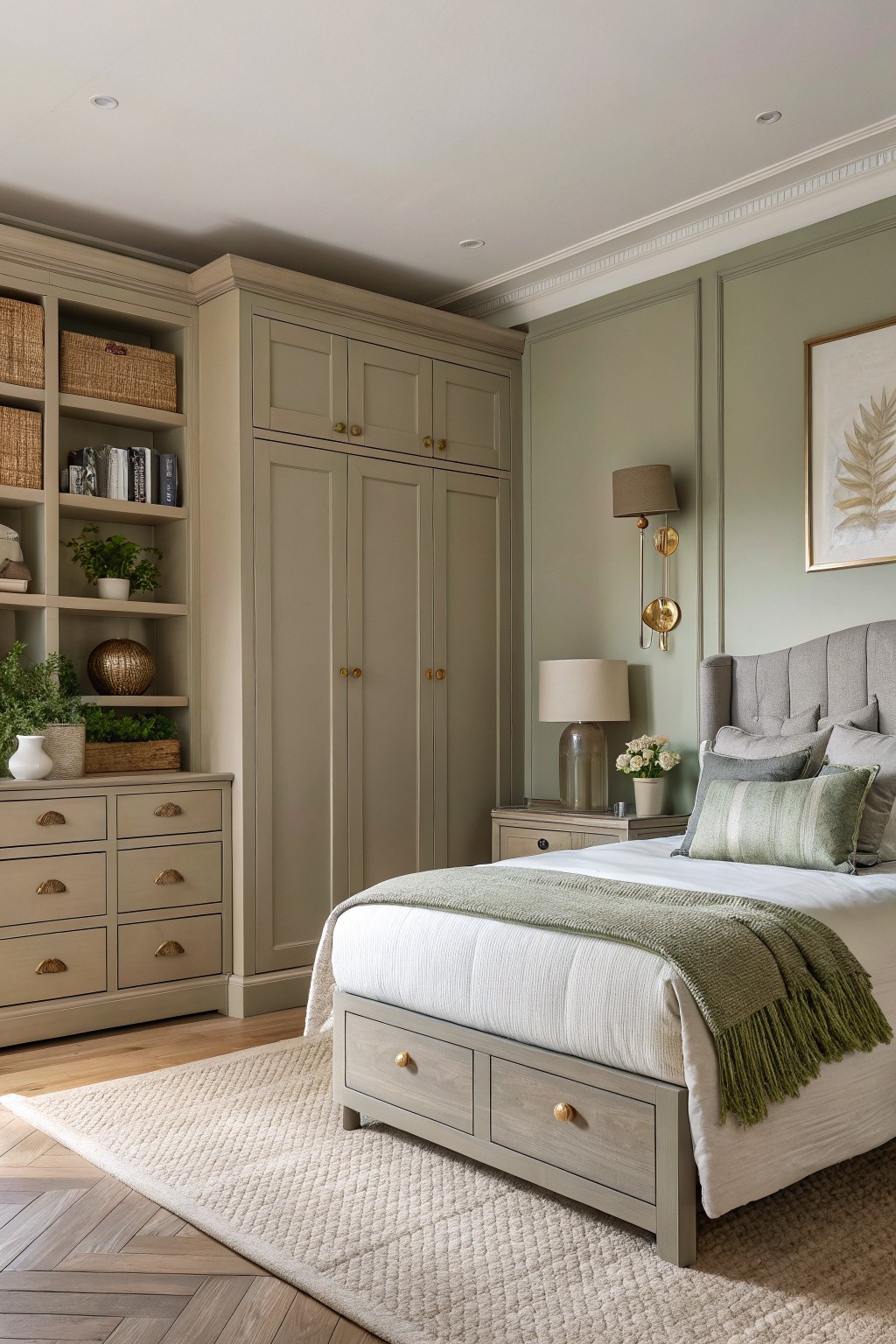
This muted sage green brings a calm, grounded feel to a bedroom without going too cool or too dark. It has enough gray in it to feel soft and a little warm at the same time, which helps the color work with wood floors and built-in cabinetry.
It reads closest to Sherwin Williams Dried Thyme or Benjamin Moore Soft Fern. The slight green undertone keeps the room feeling fresh while still pairing easily with warm wood and simple white textiles.
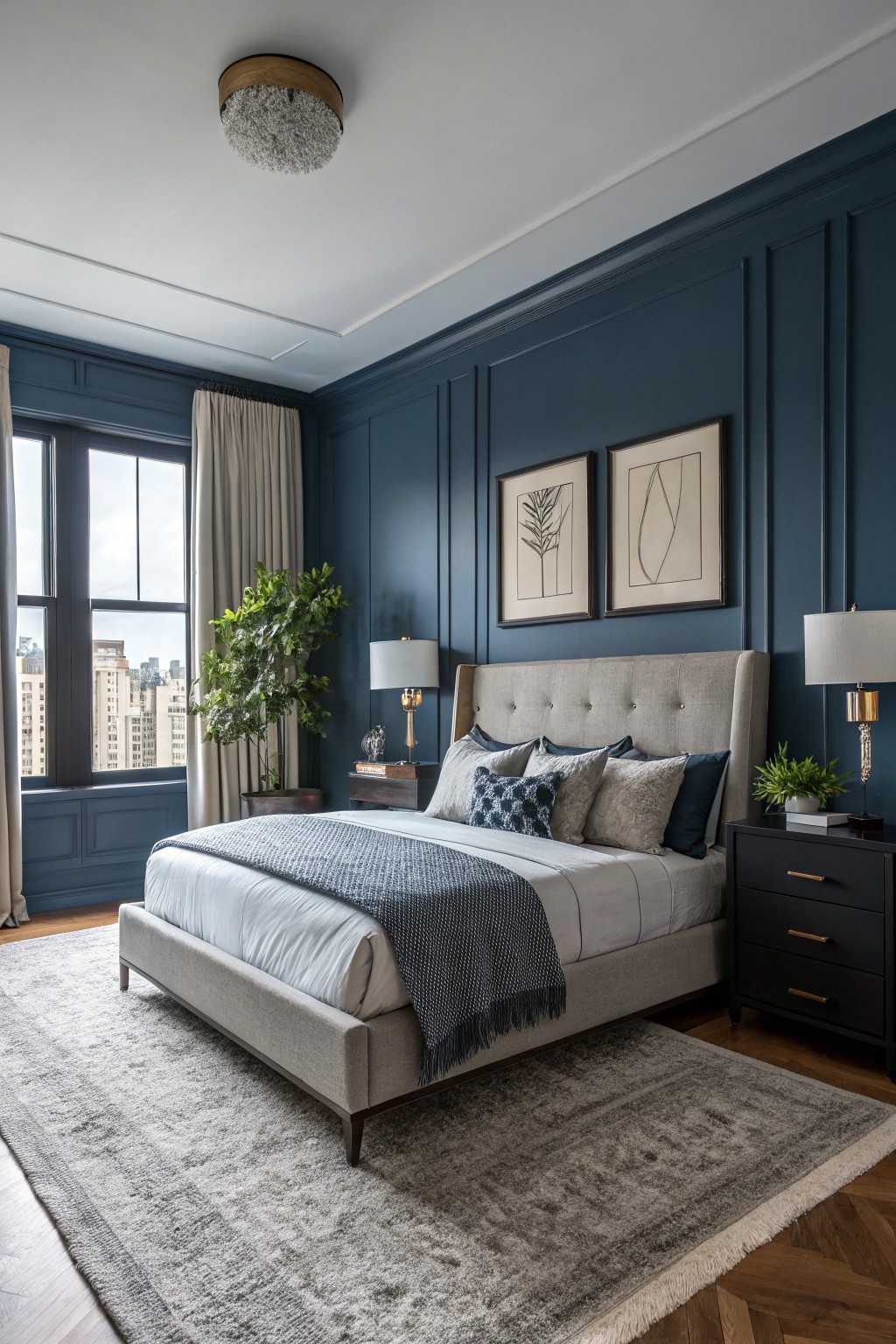
A deep navy works well in bedrooms because it feels grounded without turning the room too dark. This shade sits somewhere between a true blue and a soft black, which helps it read rich next to wood floors and lighter bedding. It gives the space weight while still feeling calm.
Navy like this often has a slight cool undertone, so it pairs best with warm wood tones or cream textiles to keep the room from feeling cold. It looks good on walls with some texture or paneling, and it holds up nicely in both natural daylight and warmer evening light. Try it with Sherwin Williams Naval, Benjamin Moore Hale Navy, Behr Midnight Blue, or Farrow & Ball Hague Blue.
Warm Ochre Bedroom Walls
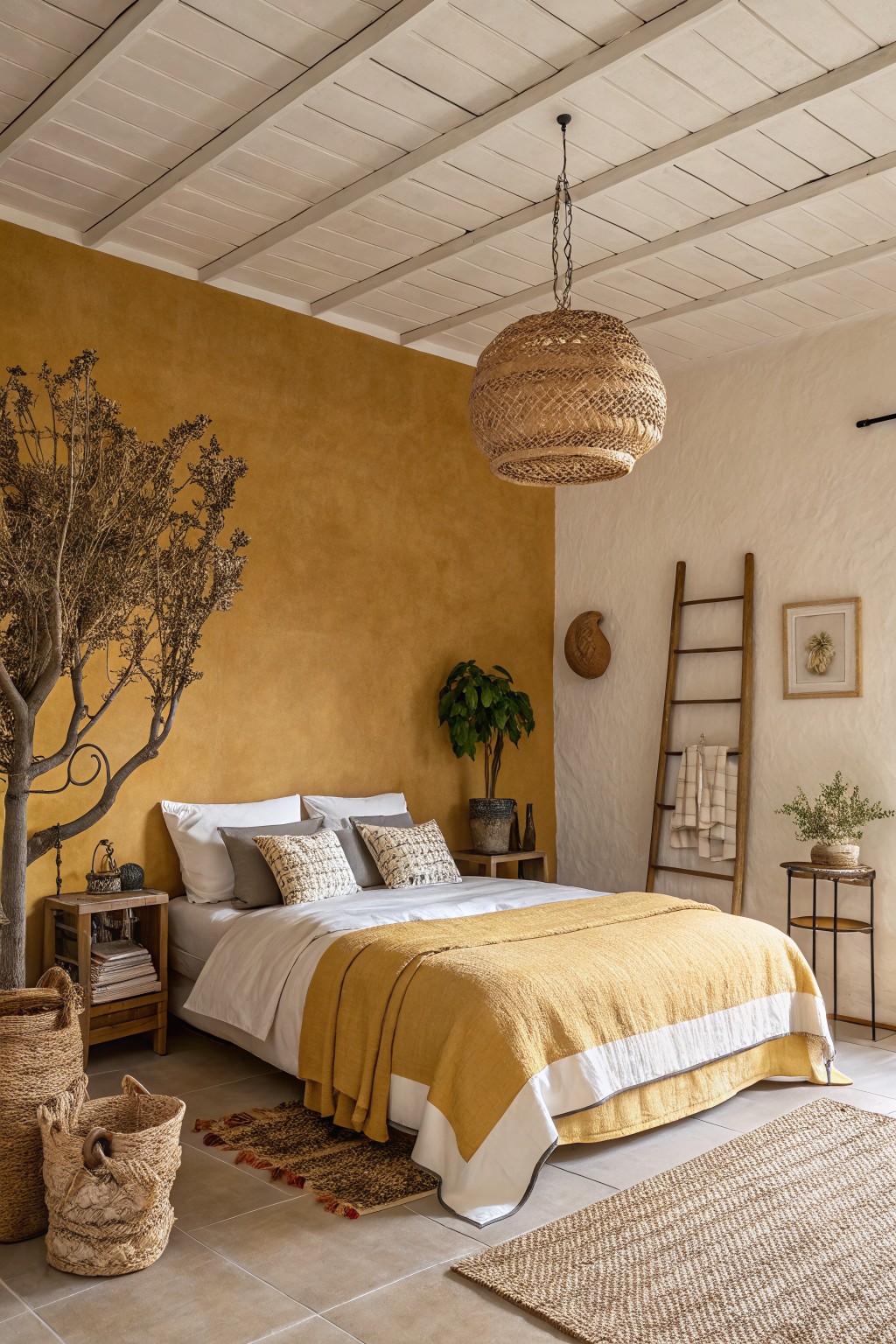
A warm ochre yellow like this one reads closest to Sherwin Williams Biltmore Gold, Benjamin Moore Hawthorne Yellow, or Farrow & Ball India Yellow. It brings a grounded richness that still feels calm in a bedroom setting. The depth comes from its earthy base rather than any brightness.
This shade works best with warm wood tones and soft whites. It can look a little heavy in low light, so it suits rooms that get steady daylight. Pair it with natural baskets or linen to keep the feel balanced.
Moody Charcoal Black Bedroom Walls
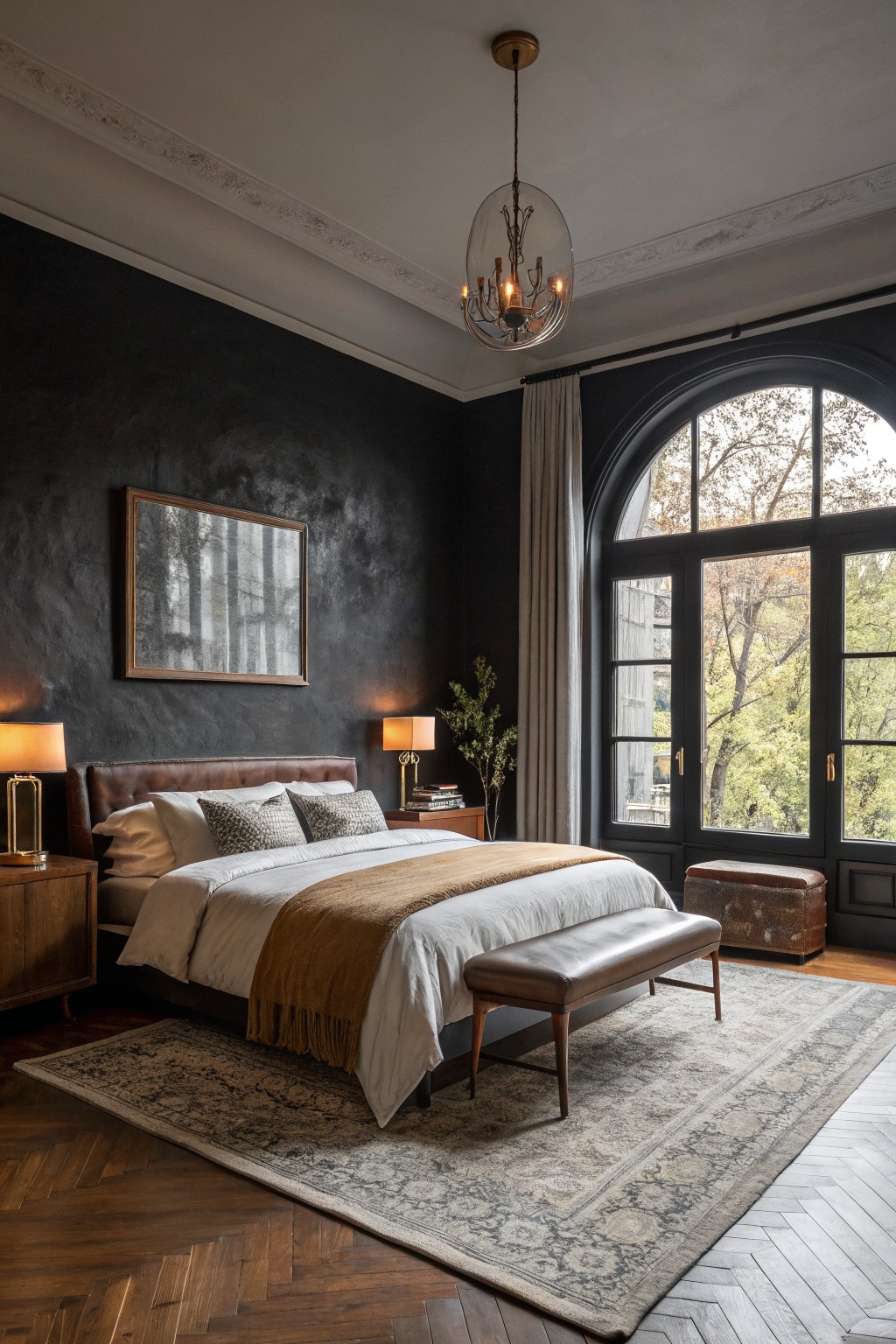
A deep charcoal black works really well on bedroom walls when you want something that feels grounded and a little moody. This color sits between true black and a dark gray, and it has a slight warmth that keeps the room from feeling too cold or stark. It pairs easily with wood tones and leather without competing with them.
The finish reads flat in most lighting, which helps it stay calm rather than shiny. It works best in rooms with decent natural light and wood floors, though it can make smaller spaces feel tighter if you go too dark on every wall. Try it with warm white trim or natural wood furniture to keep the contrast balanced.
Muted Gray-Teal Bedroom Walls
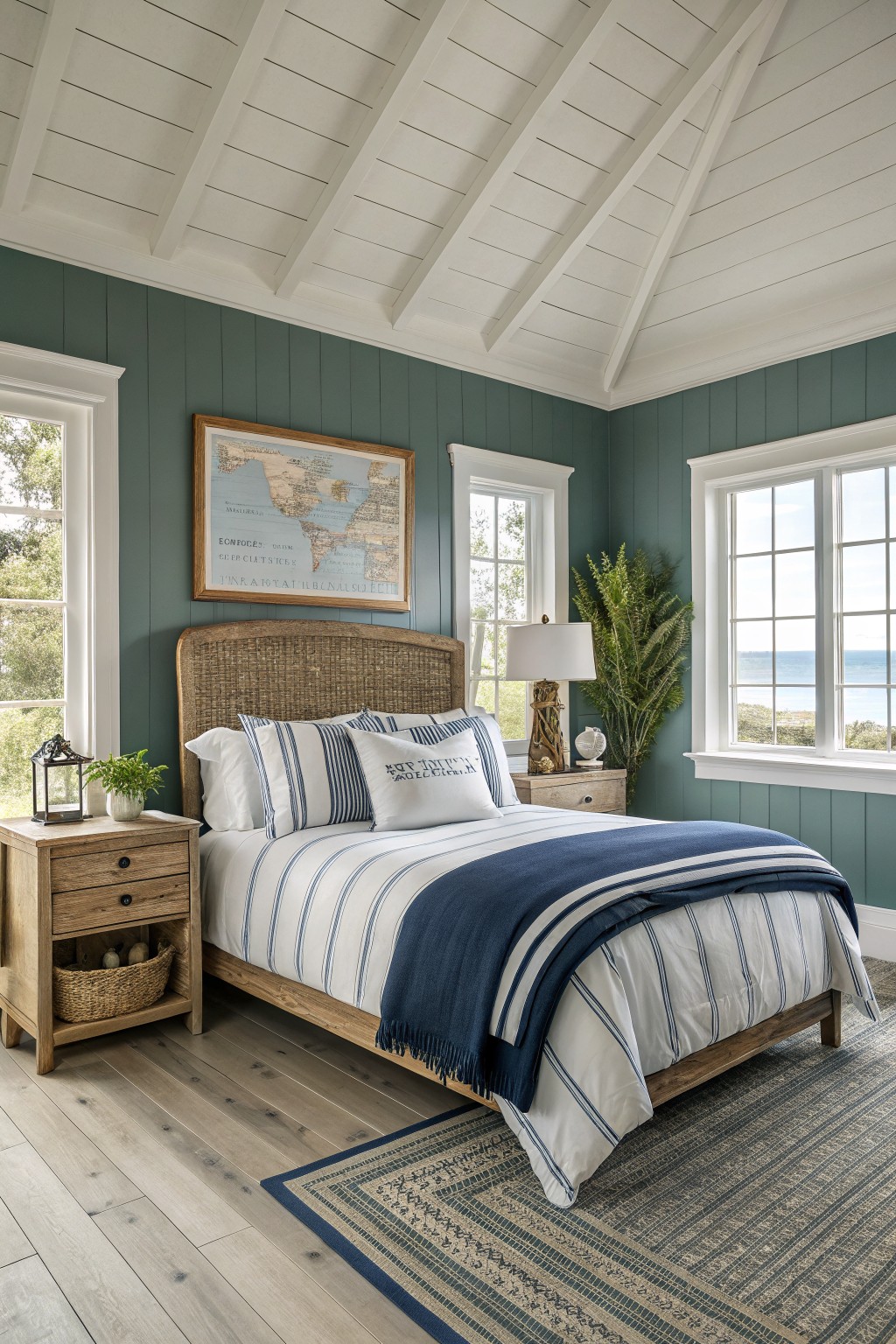
A muted teal gives bedrooms a calm but slightly richer feel than plain gray or beige. This color family sits between blue and green with a soft gray undertone that keeps it from looking too bright or coastal.
It works best with warm wood floors and white trim, which help the teal feel grounded instead of cool. Watch the lighting though, since the color can lean more blue in low light and more green with strong sunlight. Good matches in this range include Sherwin Williams Rainwashed, Benjamin Moore Aegean Teal, and Farrow & Ball Green Blue.
Frequently Asked Questions
Q: How do I know if a deep color will make my small bedroom feel even smaller? A: Test the paint on a large board first and move it around the room at different times of day. Deep tones add richness when you balance them with lighter bedding and curtains. This keeps the space feeling cozy instead of closed in.
Q: What if my room gets mostly cool light from north facing windows? A: Lean toward warmer neutrals that carry a hint of red or yellow. They fight the chill and create the warmth you are after. Check samples under your room’s lighting before committing.
Q: What accents work best with these rich bedroom colors? A: Natural materials like wood and linen bring out the depth nicely. Add a single metallic element for a high end touch. Let the paint color lead so the room feels pulled together.