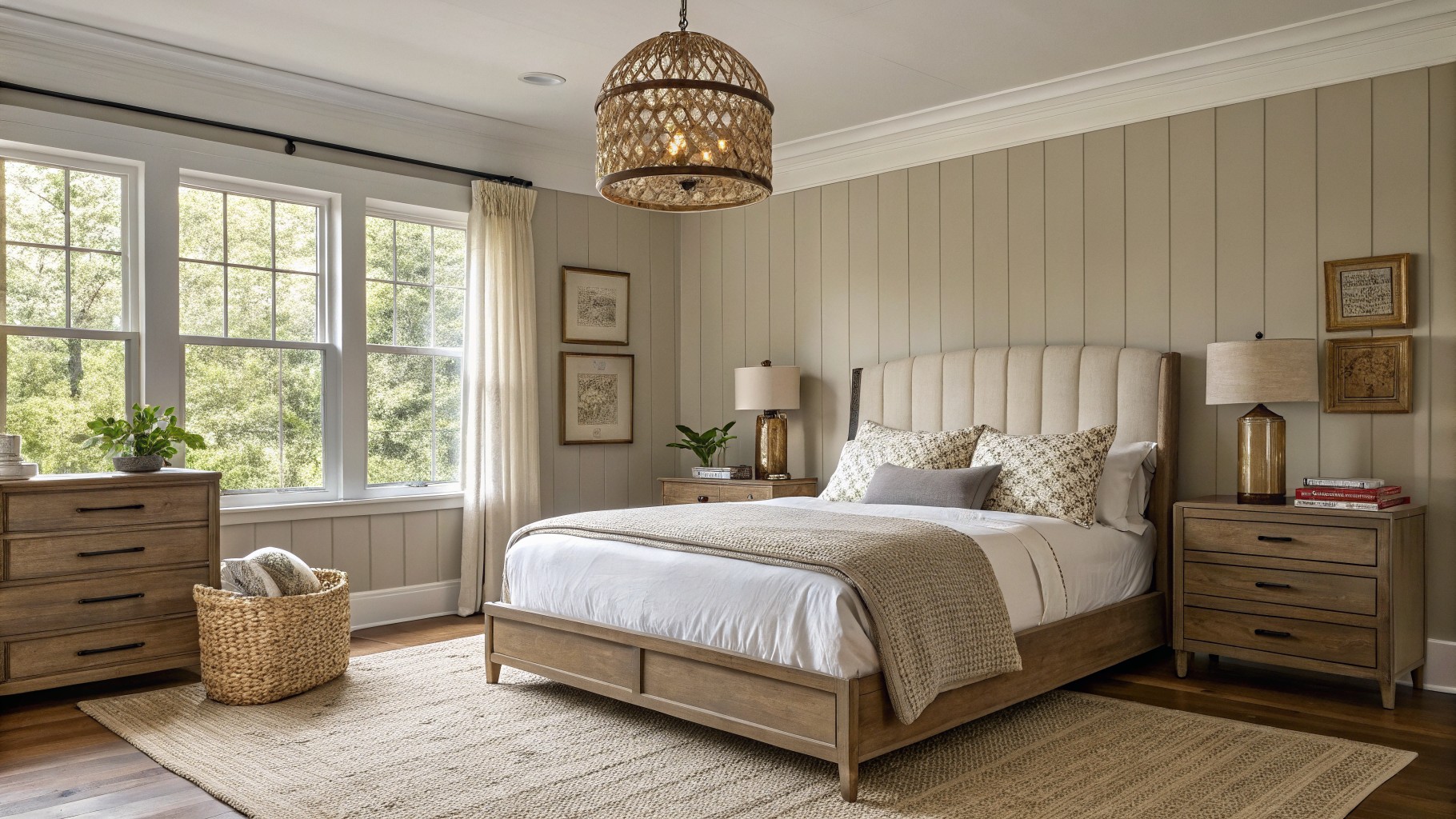
I often find that warm neutrals settle into a bedroom more easily than stark whites once the furniture and bedding are in place.
They shift with the light throughout the day and can pick up hints of beige or taupe depending on the window direction and the trim color beside them.
I have learned to check samples on at least two walls because the undertones only show up after the paint dries and the room is lived in for a while.
Test them in the actual space first.
Adding layers like a linen headboard or a jute rug then helps the color feel grounded instead of washed out.
Warm Greige Bedroom Walls
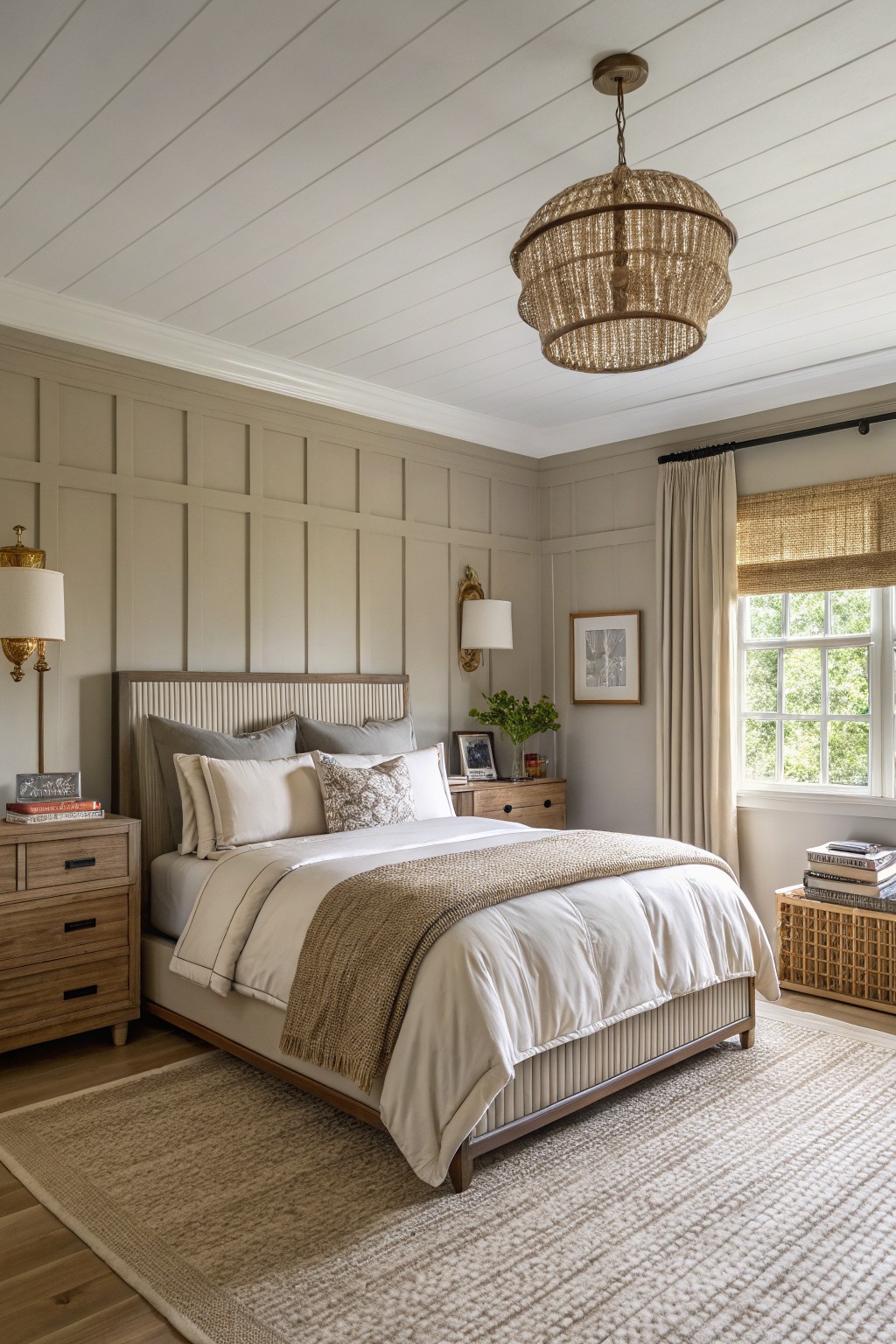
This bedroom uses a warm greige on the walls. It is a soft neutral that blends gray and beige without leaning too far in either direction. The color feels calm and steady, which makes it easy to live with in a bedroom where you want things to stay restful.
It has a light warm undertone that keeps the space from turning cold next to white bedding or trim. The shade works best with natural wood furniture and simple textiles. Try it in rooms that get decent daylight, since it can look a bit flat in very low light.
Soft Blush Bedroom Walls
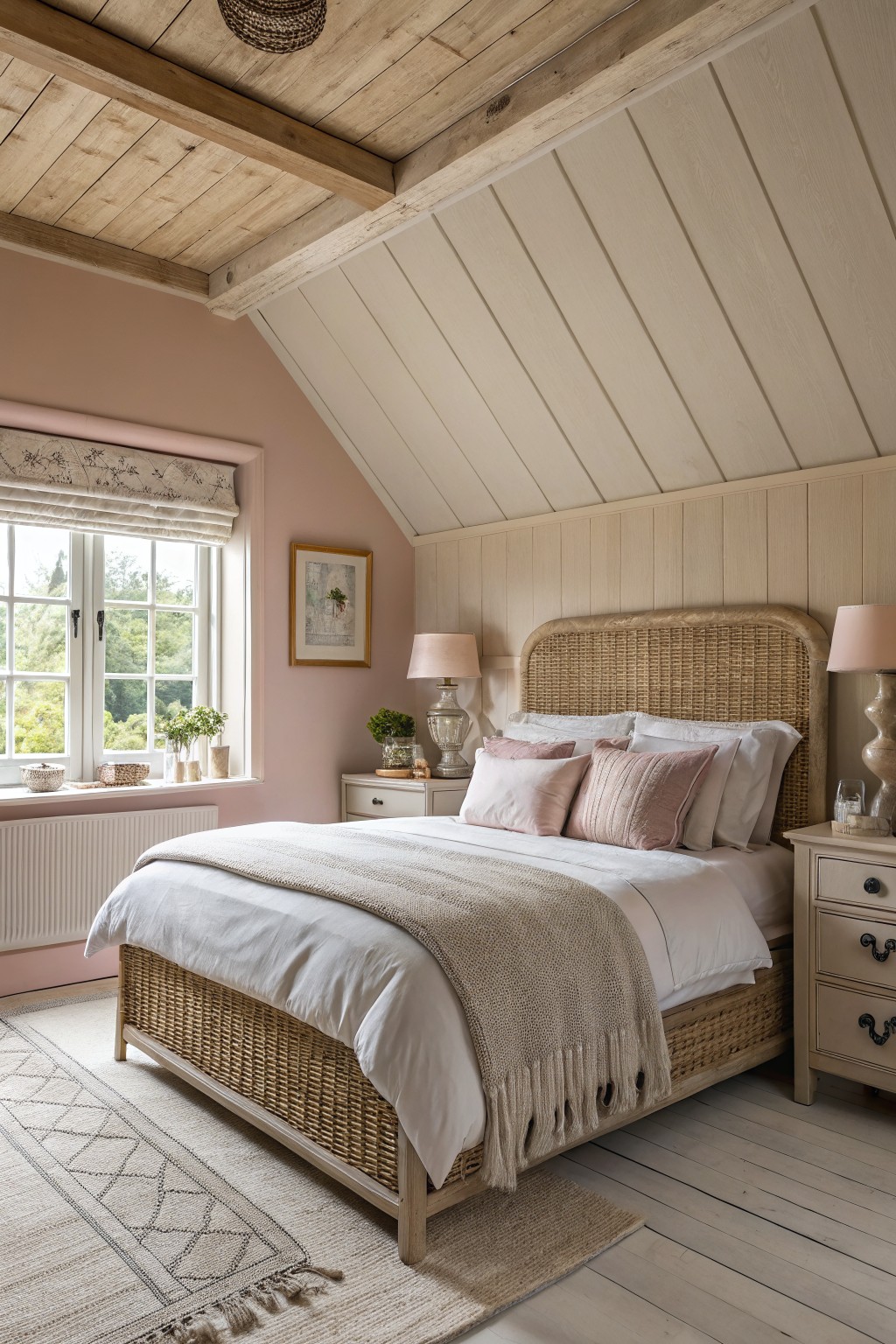
This soft blush neutral on the walls gives the room a warm, gentle feel that stays easy on the eyes. It leans more pink than beige but keeps enough warmth to avoid looking too sweet or cool. Many people like this kind of color in bedrooms because it feels calm and still leaves room for other textures to show up.
The undertone reads warm, which helps it sit nicely next to wood and woven pieces. Benjamin Moore Pale Pink comes close, as does Sherwin Williams Blushing Bride. Farrow & Ball Setting Plaster and Behr Blush both have that same soft dusty quality.
Warm Off-White Bedroom Walls
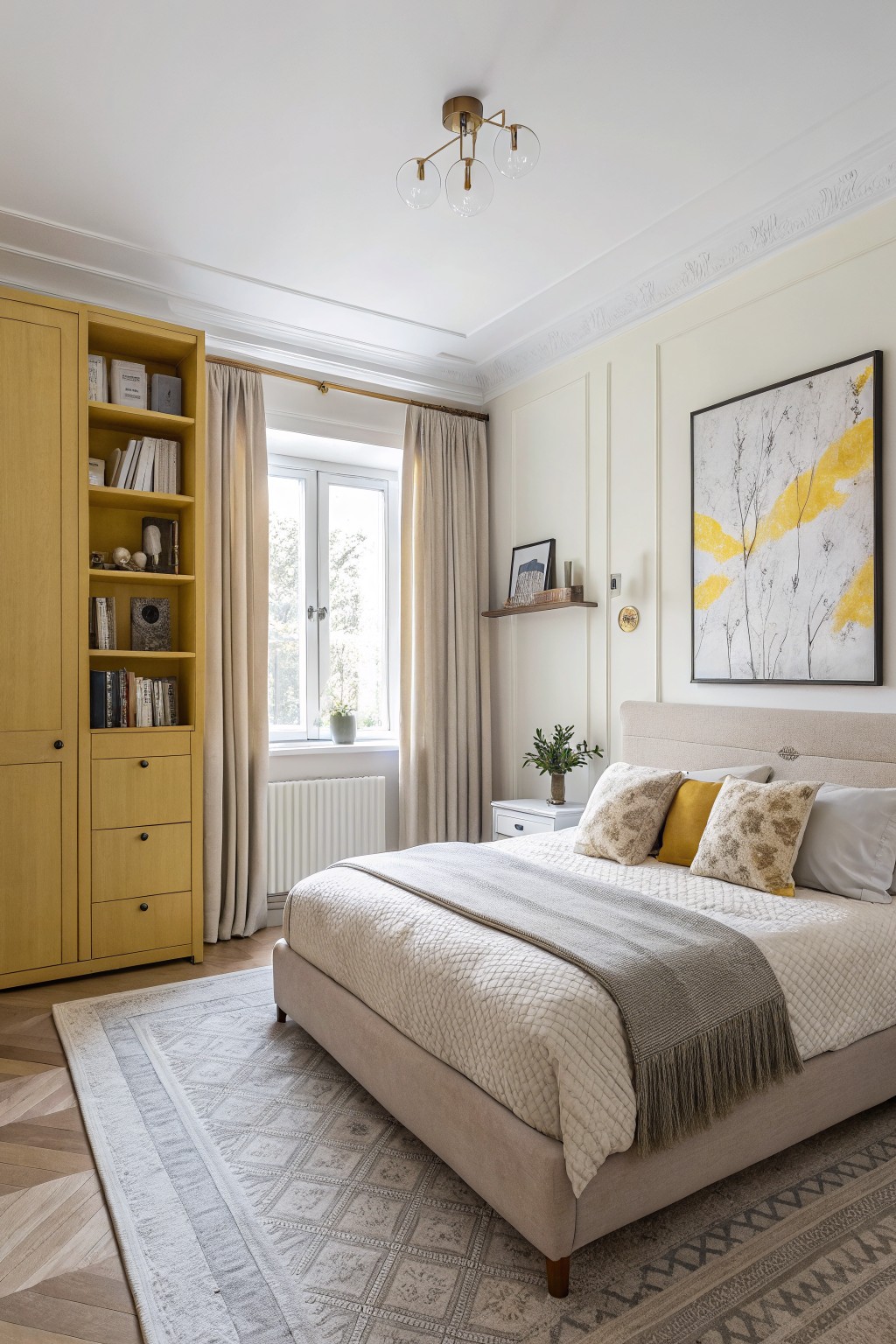
This bedroom uses a soft warm white on the walls. It is a gentle neutral that feels calm without turning stark or cold. The slight warmth keeps the room from feeling flat next to the wood floor and built-in cabinetry.
The color has a light creamy undertone that reads warmer in daylight. It works best with white trim and simple textiles. Avoid pairing it with anything too gray or it can start to feel dull.
Warm beige bedroom walls
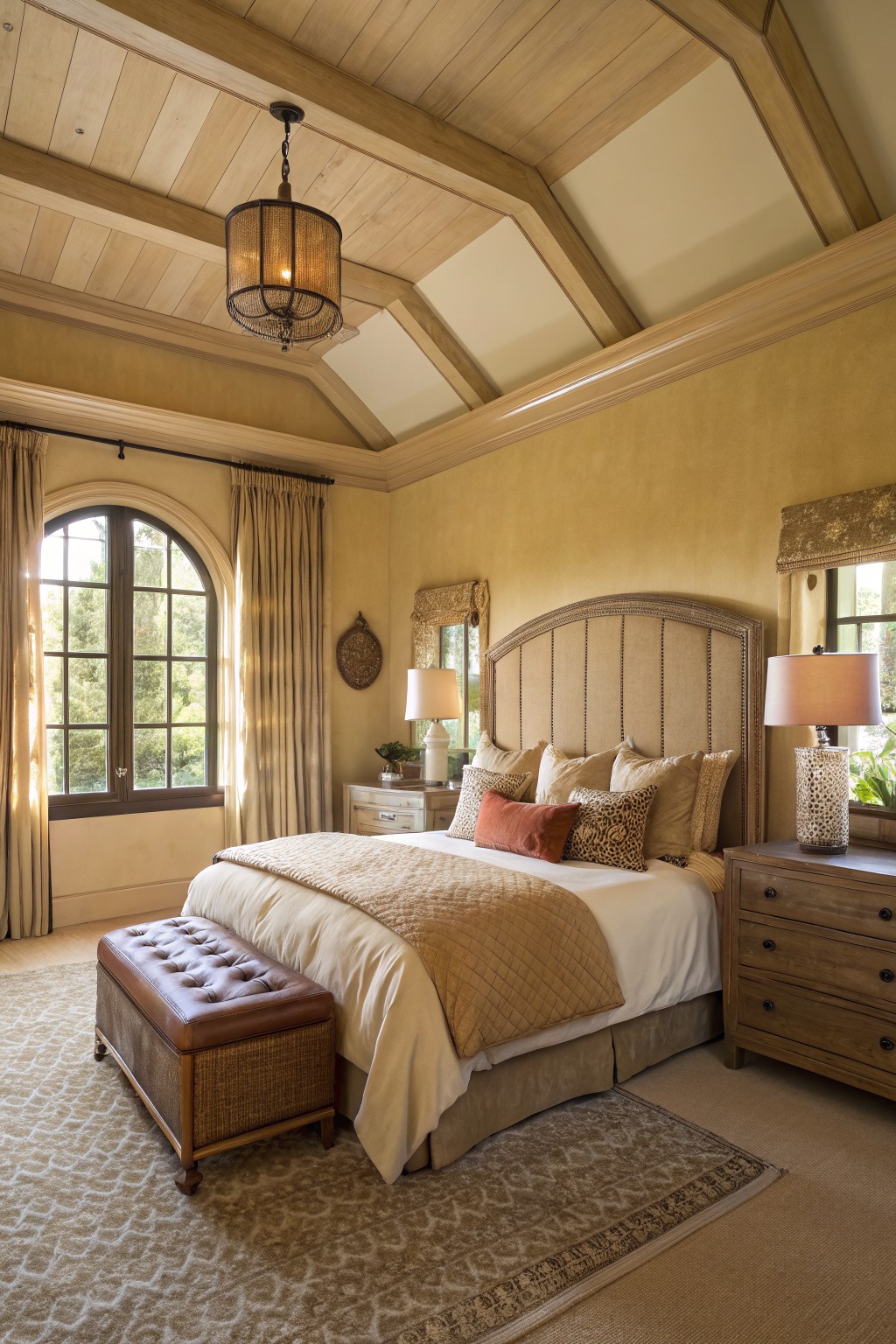
This warm beige has a soft golden undertone that keeps the room feeling calm and grounded. It sits right in that middle ground between yellow and brown so it reads cozy rather than flat.
The color pairs easily with wood tones and cream textiles. It can pick up a bit more yellow in strong daylight so it helps to test a sample on the wall first.
Warm Greige Walls With Natural Wood Accents
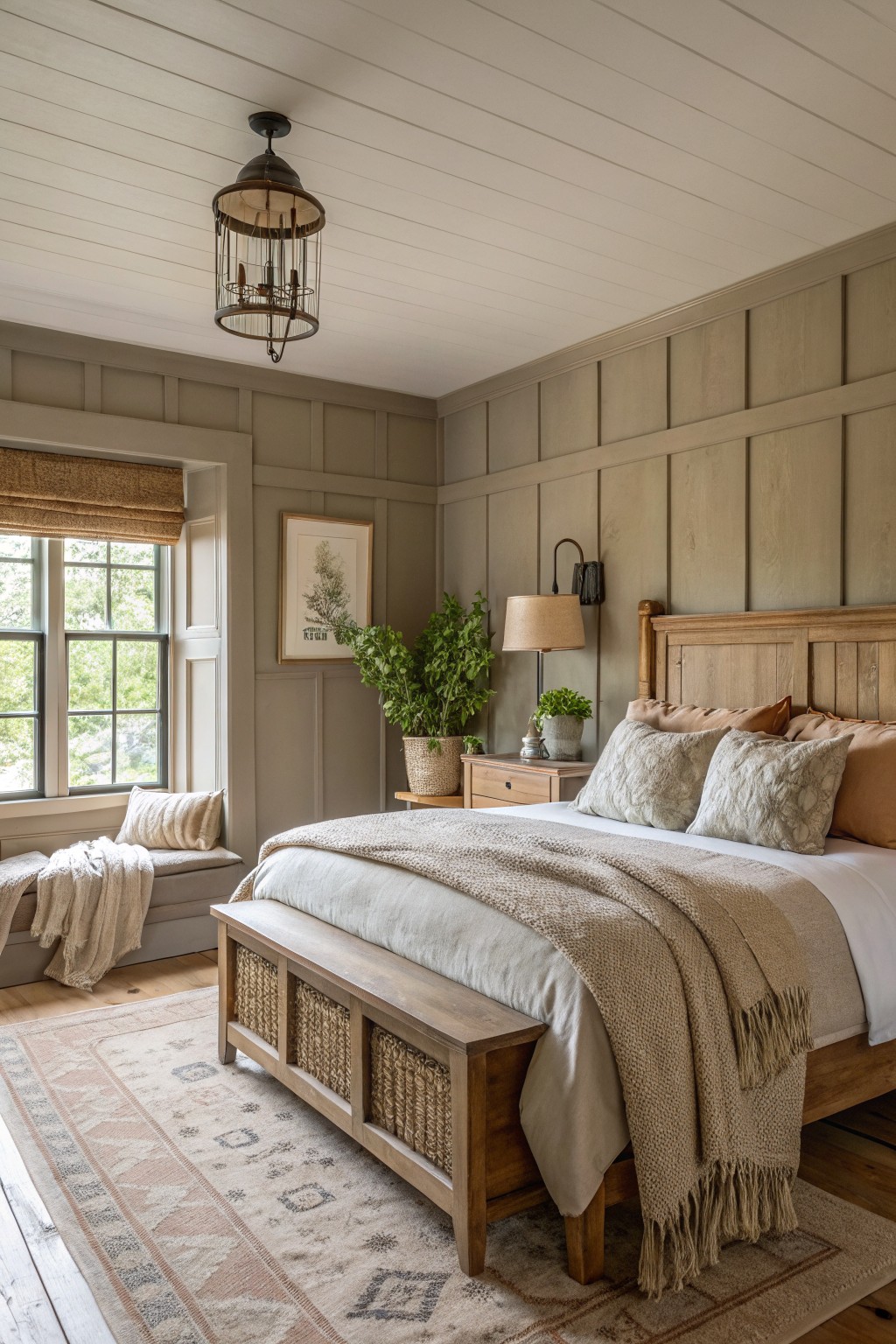
This bedroom uses a warm greige on the walls. It is a soft neutral that blends gray and beige with gentle warmth underneath.
The color holds up well next to wood trim and furniture. It works in most bedrooms that already have natural wood tones or cream textiles. Try Sherwin Williams Accessible Beige, Benjamin Moore Edgecomb Gray, Behr Silver Fox, or Farrow & Ball Elephant’s Breath.
Creamy Off-White Walls With Layered Texture
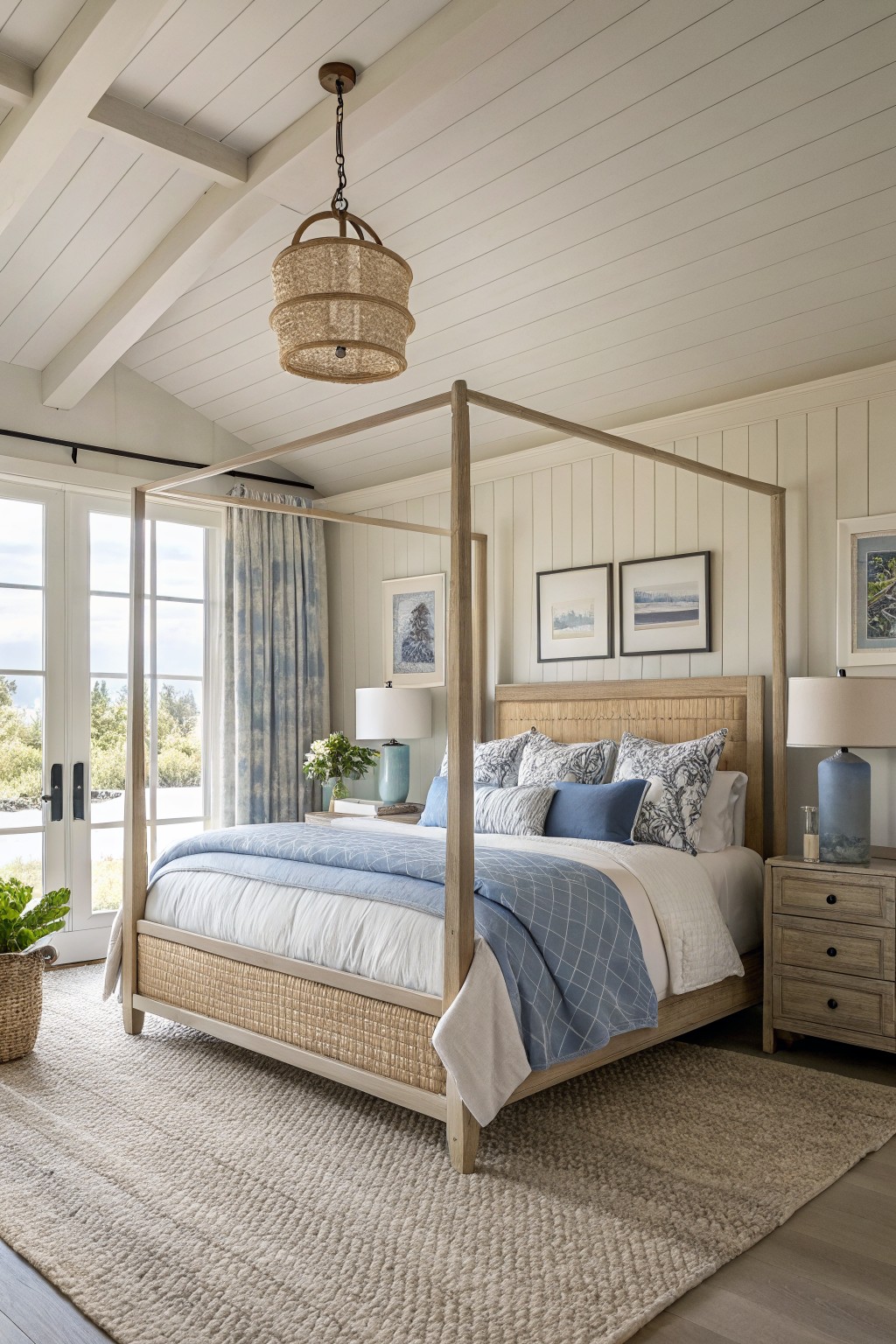
The walls are painted in a soft warm off-white that leans slightly creamy. This kind of neutral keeps the room feeling light and open while still pairing nicely with wood tones and textured surfaces.
It has a mild warm undertone that shows up more in natural light. This color works best in bedrooms with wood furniture or pale flooring, and it stays flexible if you want to add layers of linen or woven pieces later.
Warm Cream Bedroom Walls

This bedroom uses a soft warm cream on the walls. It sits between white and beige, giving a gentle neutral that feels calm without turning dull or cold.
The color has a light yellow undertone that keeps the space from looking flat next to wood floors and white trim. It works best in rooms with good natural light and pairs easily with linen, wool, or any soft textured fabrics.
Soft Warm Gray Walls
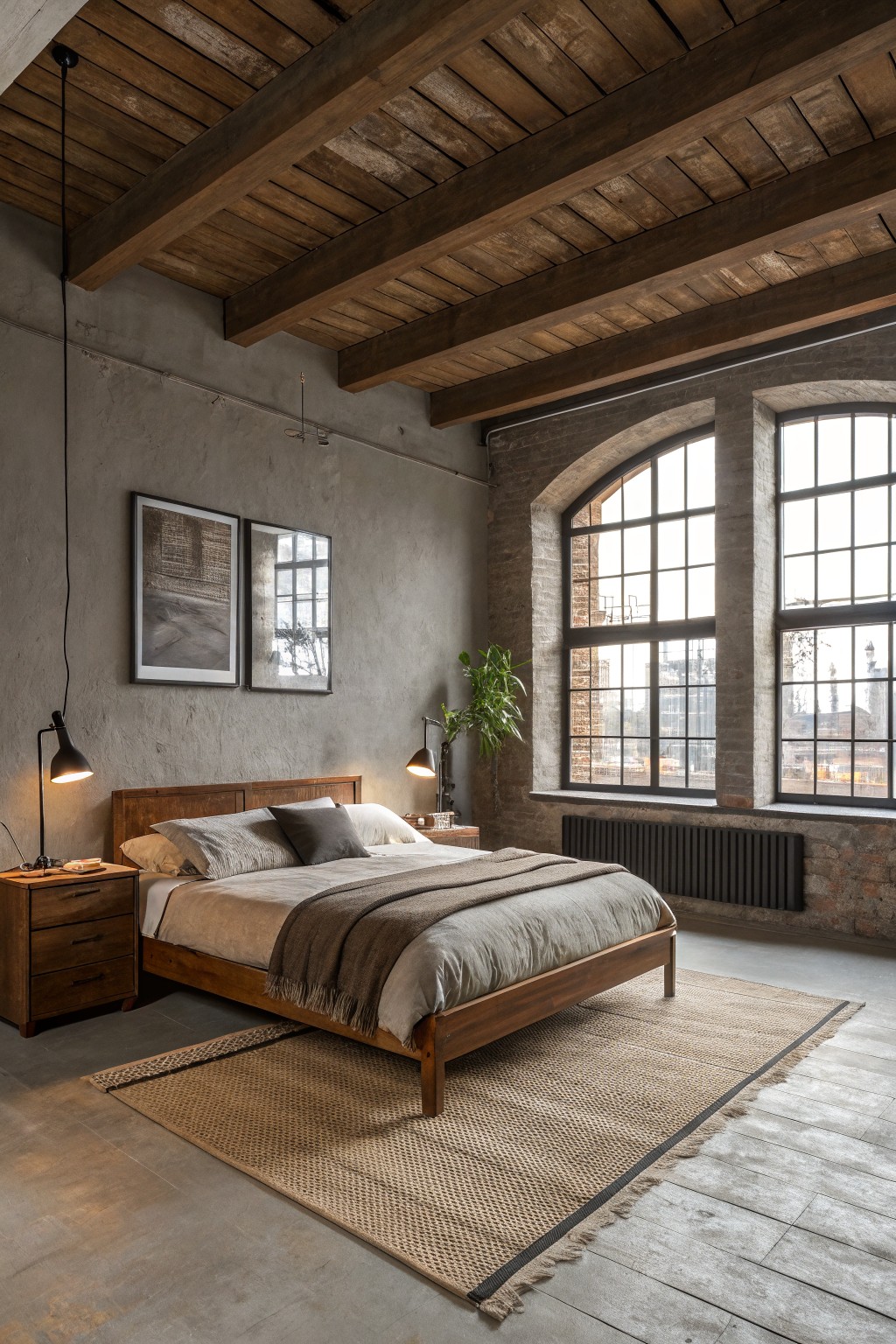
This bedroom uses a warm gray on the walls that feels steady and quiet without pulling too cool. The color sits in a soft neutral range that works with wood tones and keeps the room from feeling stark or overly modern.
It has a light beige undertone that shows up best in natural light and helps the gray blend with brick and concrete details. Try it in rooms with wood floors or beams, and pair it with simple textiles rather than too many competing colors.
Light Beige Walls With White Trim
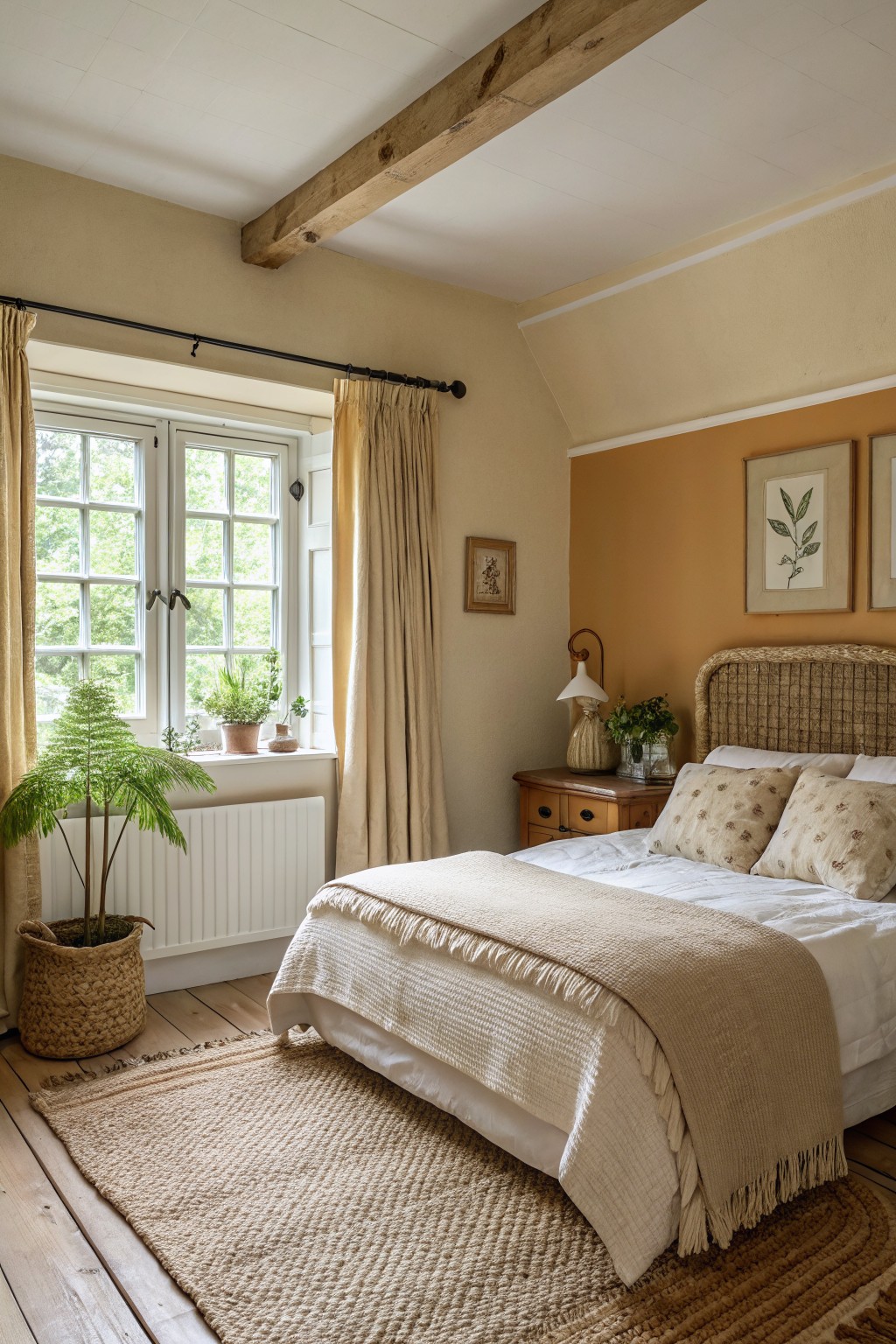
This bedroom uses a soft warm beige on the walls. The color family is a light neutral beige with gentle warmth. It reads similar to Sherwin Williams Accessible Beige, Benjamin Moore Pale Oak, or Behr Toasted Barley.
The slight yellow undertone helps the room feel brighter during the day and keeps the wood tones from looking too cool. It works especially well with white trim and natural textures like linen or jute. Watch the lighting though, since this shade can shift warmer in north-facing rooms.
Warm Brown Bedroom Walls
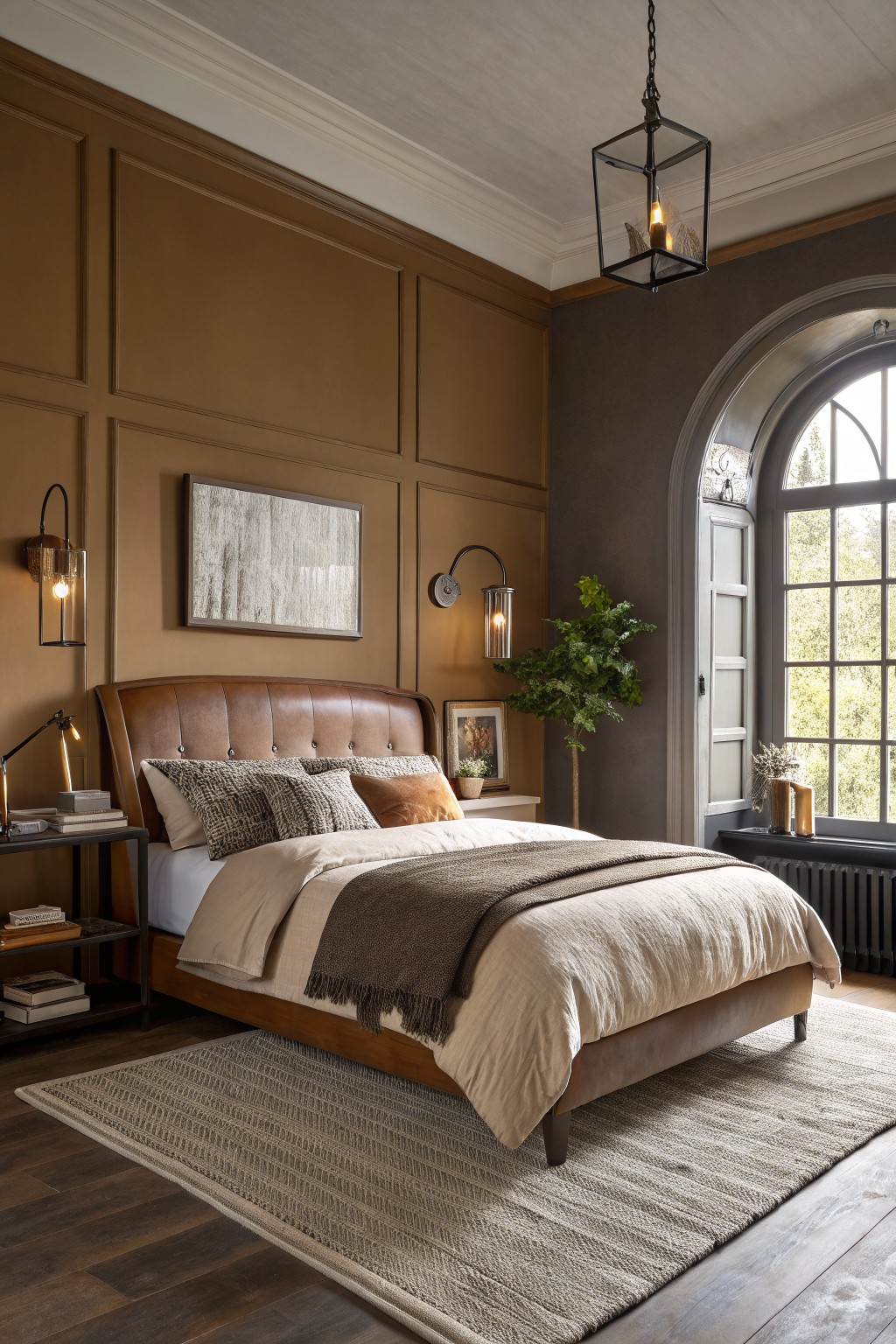
This bedroom uses a warm brown on the walls that sits in the earthy neutral range. It reads closest to Benjamin Moore Raccoon Fur or Sherwin Williams Urbane Bronze, with Farrow & Ball London Stone as another close option.
The color has a soft depth that works well with wood trim and furniture. It stays calm in most lighting and pairs easily with cream textiles or layered neutral bedding.
Creamy White Bedroom Walls
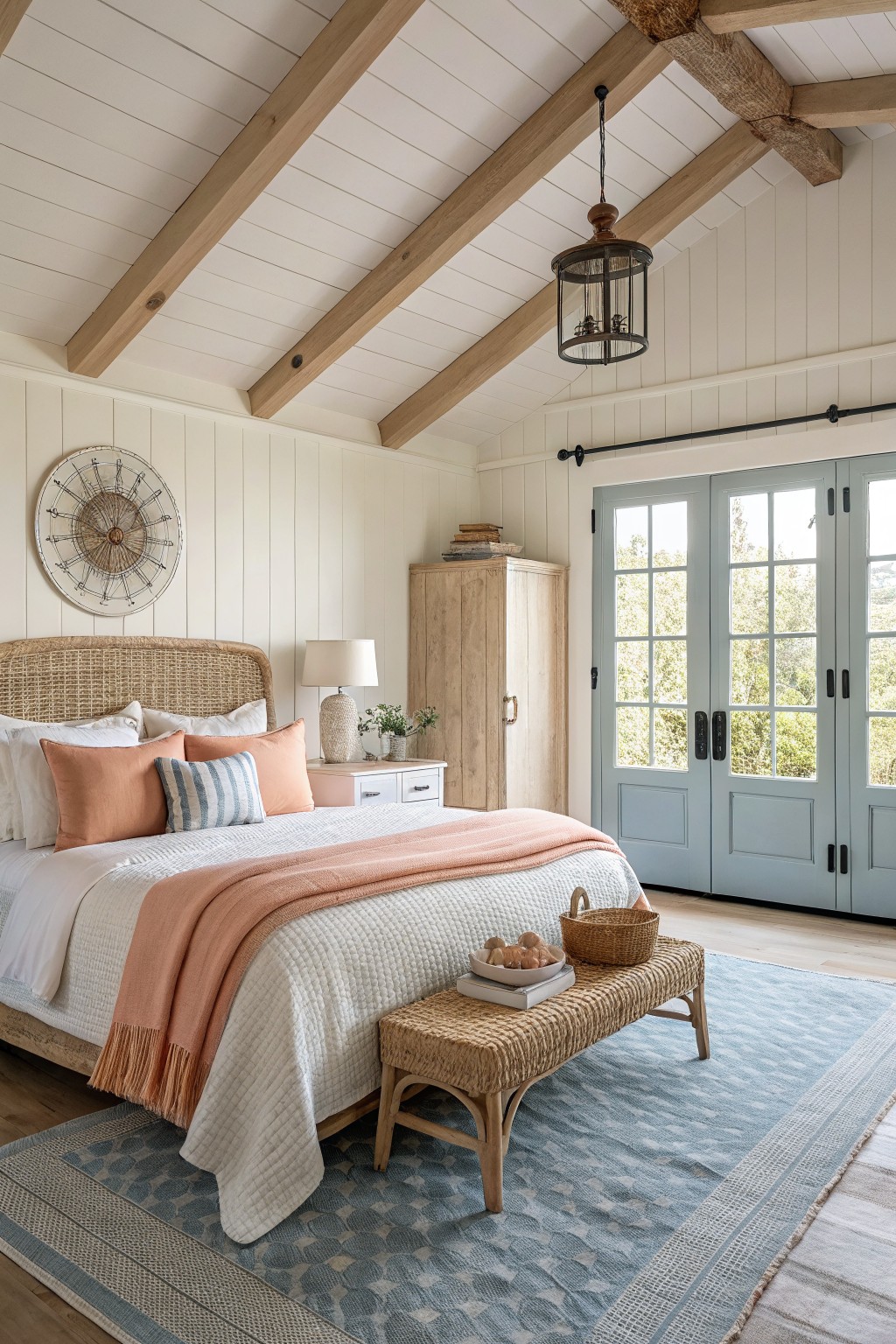
This bedroom uses a soft warm white on the walls that feels calm and easy to live with. It sits in the creamy off-white family and gives the space a quiet background without looking stark next to the wood ceiling beams.
The color has a gentle warm undertone that keeps the room feeling cozy rather than cold, especially in natural light. It works well with natural wood tones and soft textiles, though it can start to look too yellow if paired with strong orange or peach accents. Good matches include Benjamin Moore Cloud White, Sherwin Williams Alabaster, Behr Antique White, and Farrow & Ball Wimborne White.
Warm Greige Walls
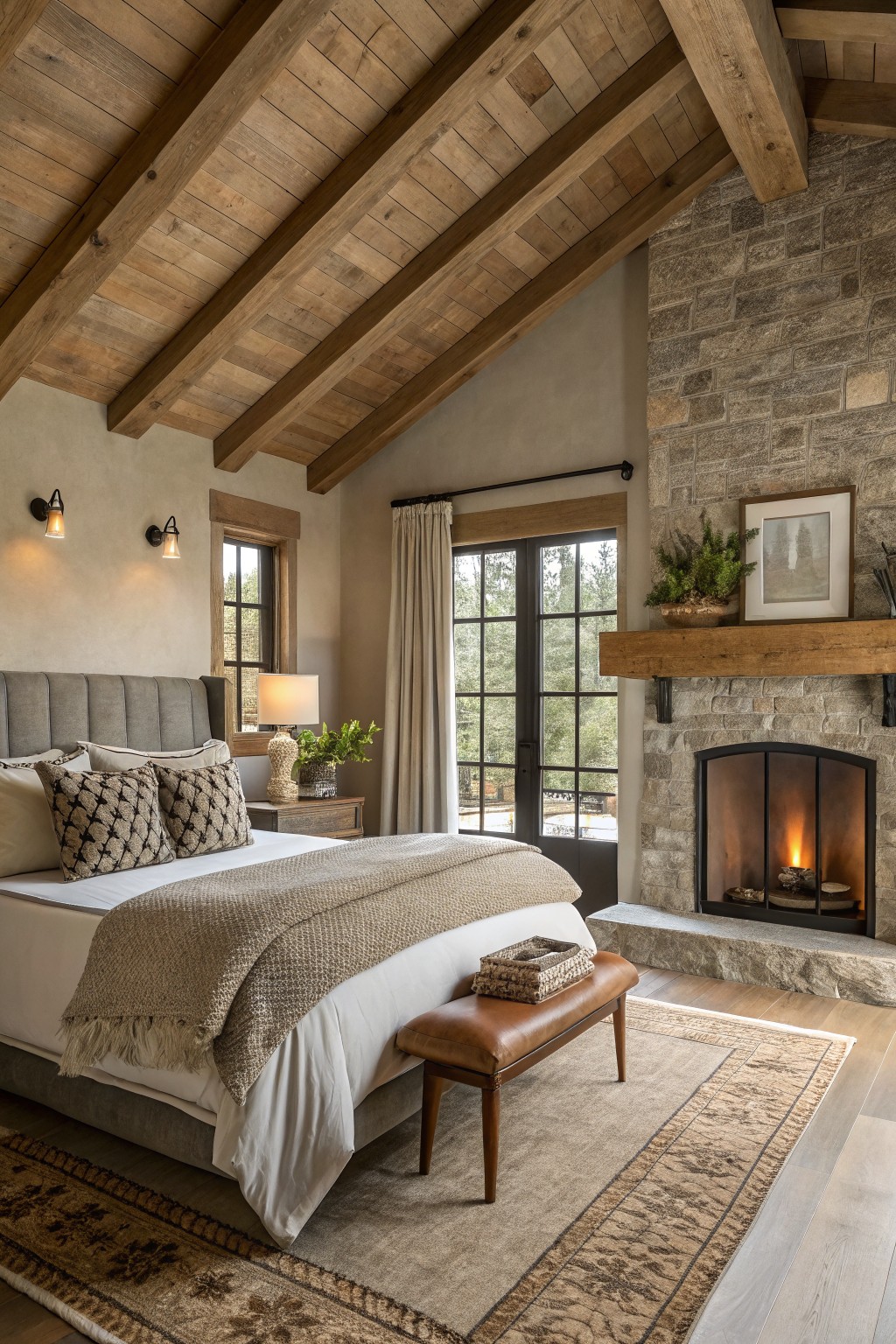
This bedroom uses a soft warm greige on the walls. It sits right between gray and beige, so it stays calm without turning cold or too yellow.
The color has a light depth that lets wood tones and stone read clearly beside it. It works best in spaces with natural materials and holds up well under both daylight and warmer lamps.
Soft Warm Beige Bedroom Walls
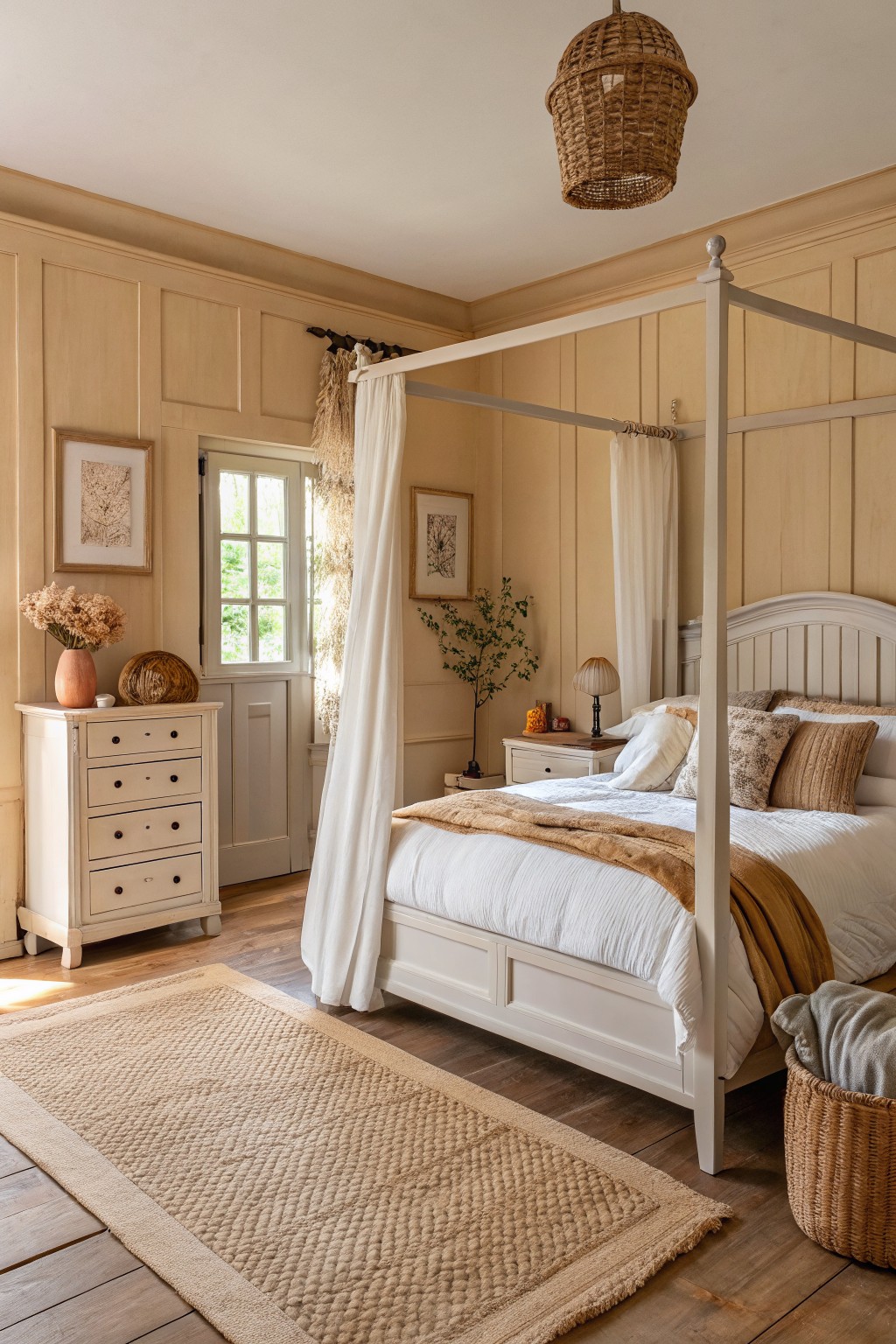
This bedroom uses a soft warm beige on the walls. It is a light neutral that brings just enough warmth without feeling heavy or dark. Colors in this range often sit close to Sherwin Williams Accessible Beige, Benjamin Moore Edgecomb Gray, or Behr Almond Wisp.
The beige has a gentle yellow undertone that keeps it from looking cool or gray. It pairs easily with wood floors and white trim, and it works best in rooms that get steady daylight. Too little light can make it feel flat, so test it in the space before committing.
Sandy Beige Walls With Built-In Shelving
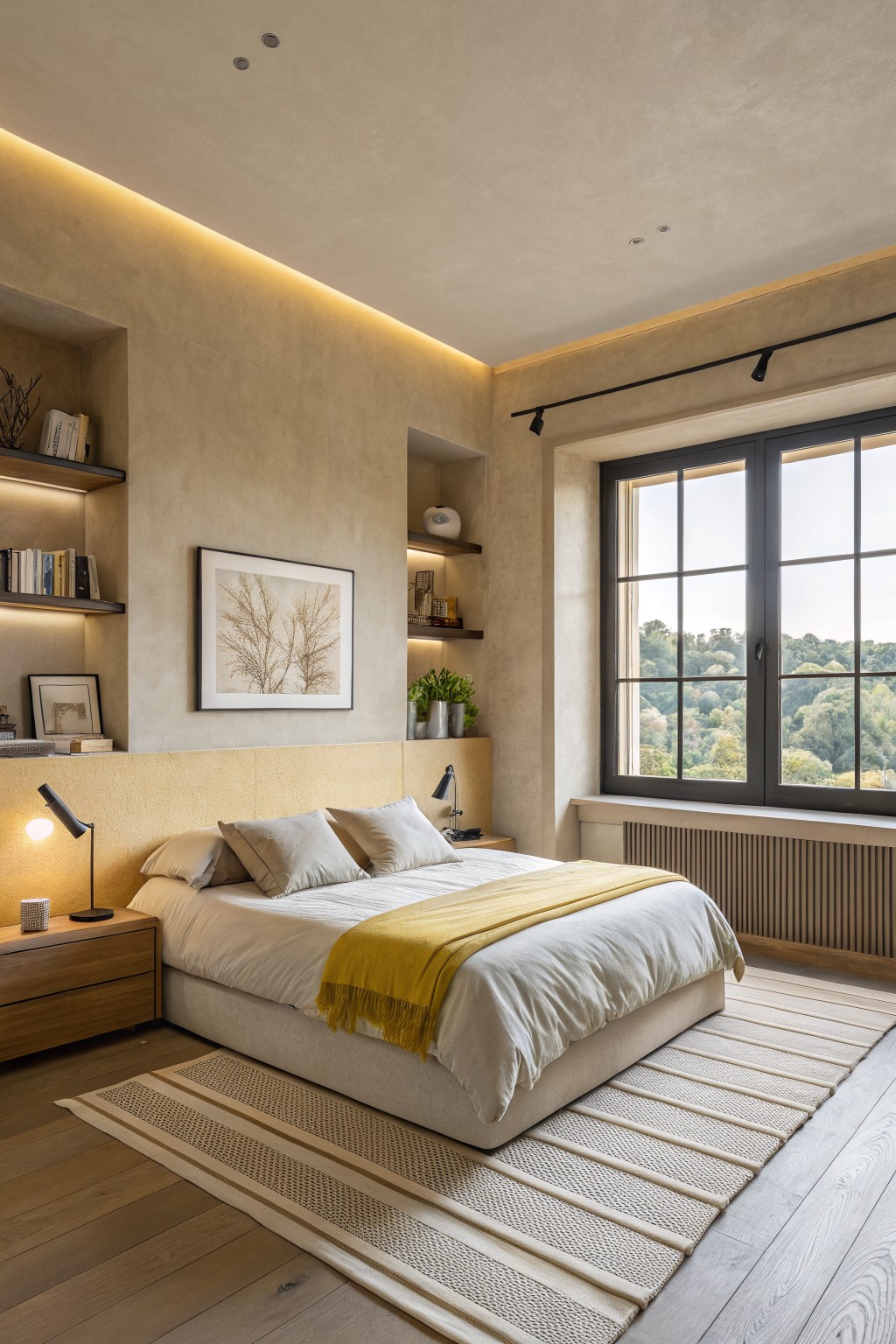
This bedroom uses a soft warm beige on the walls. It sits right in that light sandy range that feels calm and steady without pulling too yellow or gray.
The color has gentle warm undertones that sit nicely next to wood floors and built-in shelves. It works best in rooms with good natural light and pairs easily with linen, wool, and other natural textures.
Soft warm blush beige walls
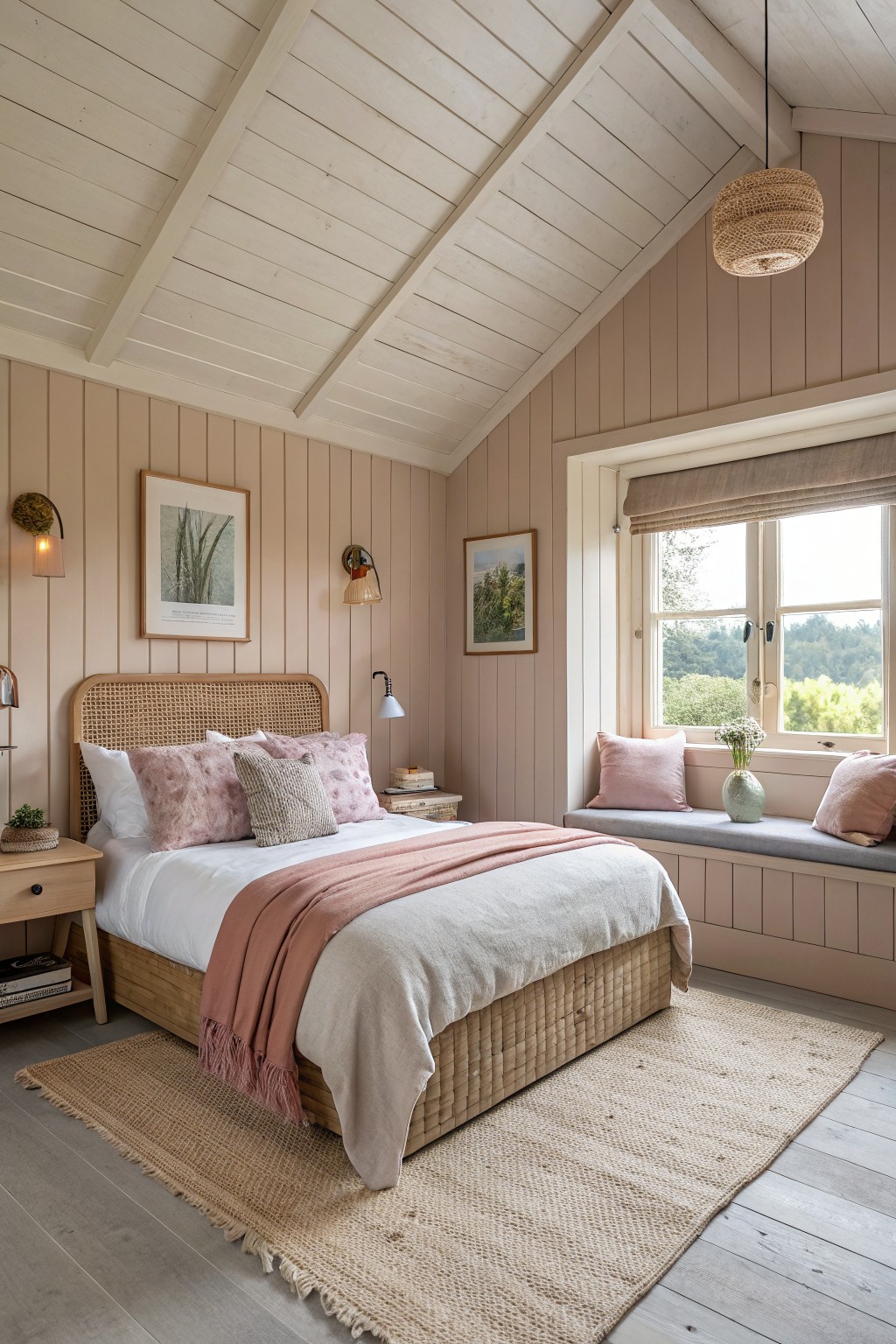
This bedroom shows off a soft warm blush beige on the walls. It is a gentle neutral that leans slightly pink but stays quiet and calm, which makes the space feel cozy without turning too sweet or too dull.
The color has a light warm undertone that works well with natural wood and soft textiles. It pairs nicely with white trim and layered linens, though it can look a little flat if the lighting is very cool. Good matches include Farrow & Ball Setting Plaster, Benjamin Moore First Light, Sherwin Williams Creamy, and Behr Soft Muslin.
Warm terracotta walls
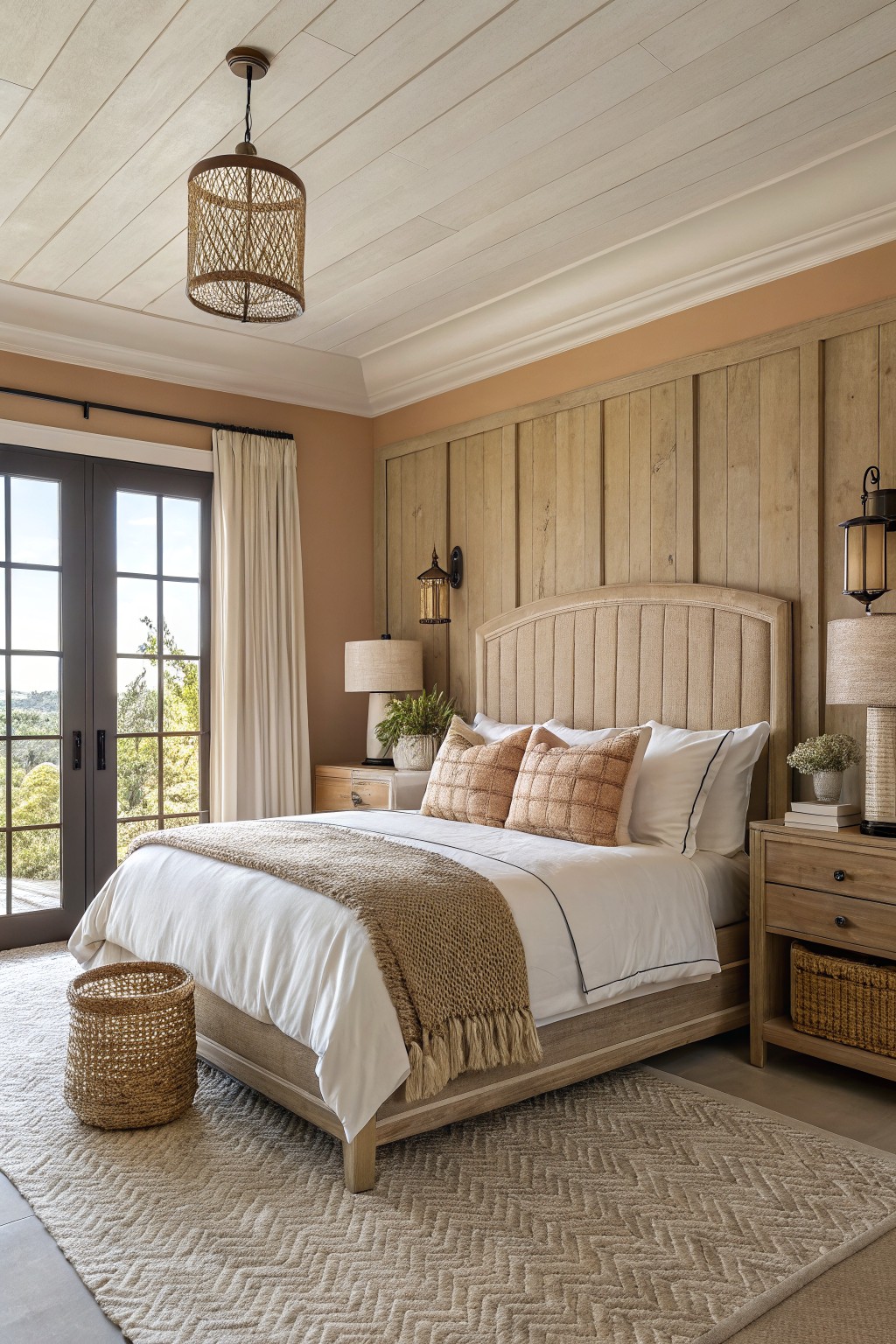
The walls are painted in a soft warm terracotta beige. It has a gentle peach undertone that keeps the room feeling calm and slightly earthy rather than plain beige.
This shade sits well next to the wood paneling and lighter flooring. It stays even in changing light and works best with white bedding, natural textures, and simple wood furniture. Avoid pairing it with too much gray or it can start to look pink.
Balanced Greige Walls for Natural Light
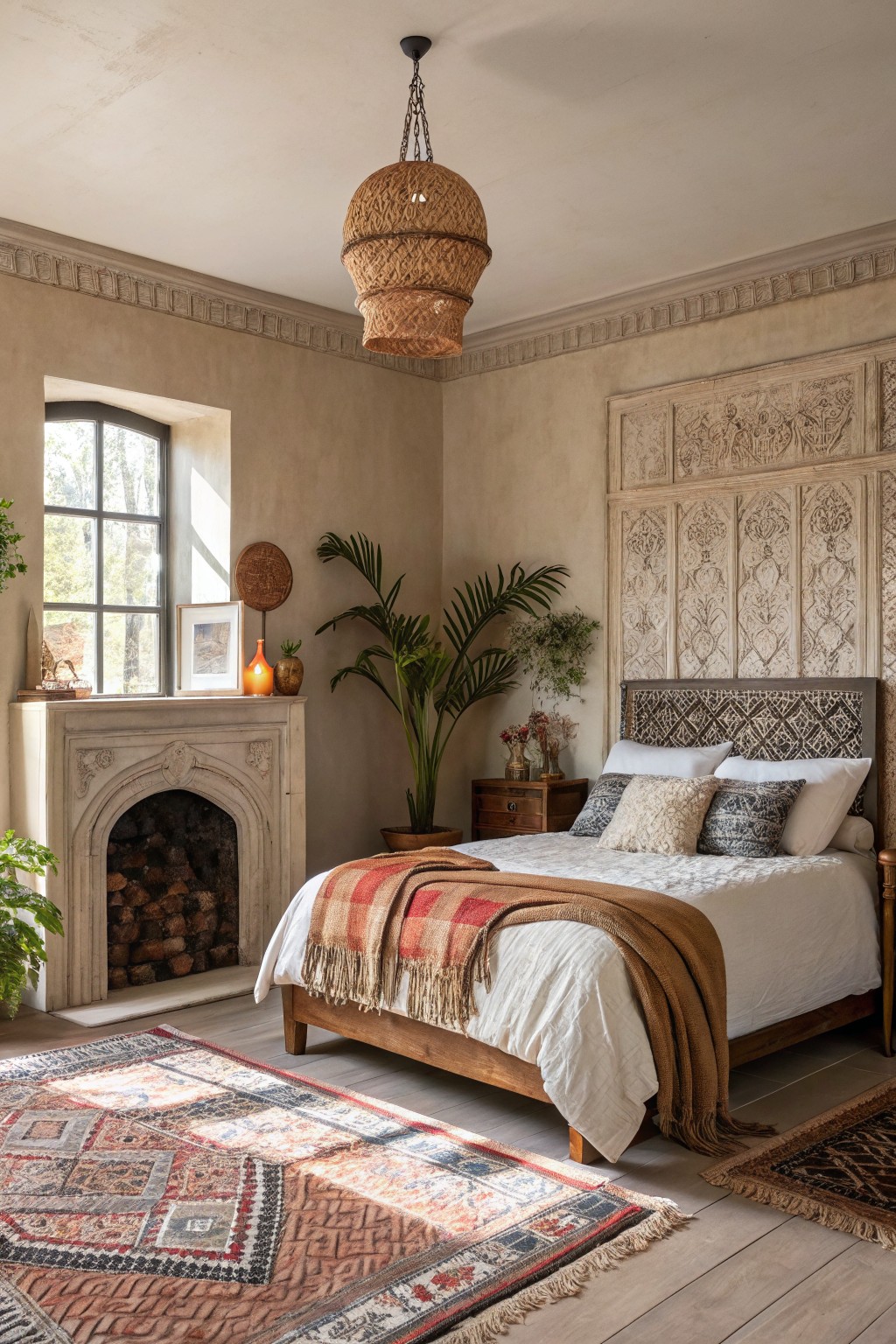
The walls are painted in a soft warm greige. It sits between beige and gray without leaning too far in either direction, which helps the room feel calm and steady.
This shade pairs easily with wood furniture and natural textures. It holds up well in both morning and afternoon light, though it can look a bit cooler if the room gets very little sun.
Classic Greige Walls With Dark Wood Furniture
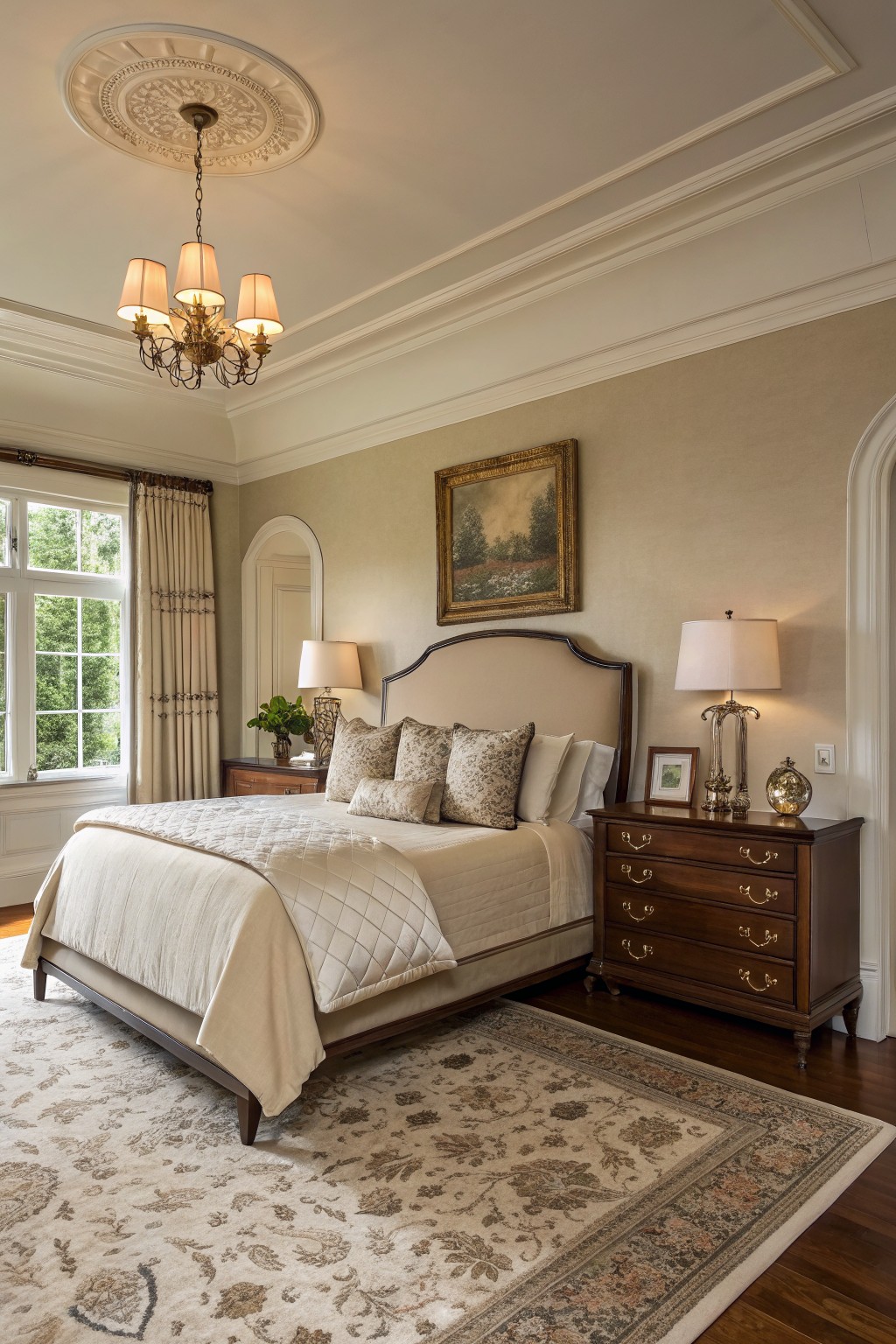
This bedroom uses a warm greige on the walls. It is a soft neutral that sits between beige and gray without leaning too far in either direction. It reads close to Sherwin Williams Accessible Beige or Benjamin Moore Edgecomb Gray.
The color stays gentle next to the wood furniture and keeps the room feeling calm. It works best with natural light and pairs easily with cream textiles or darker wood tones.
Soft Sage Green Walls
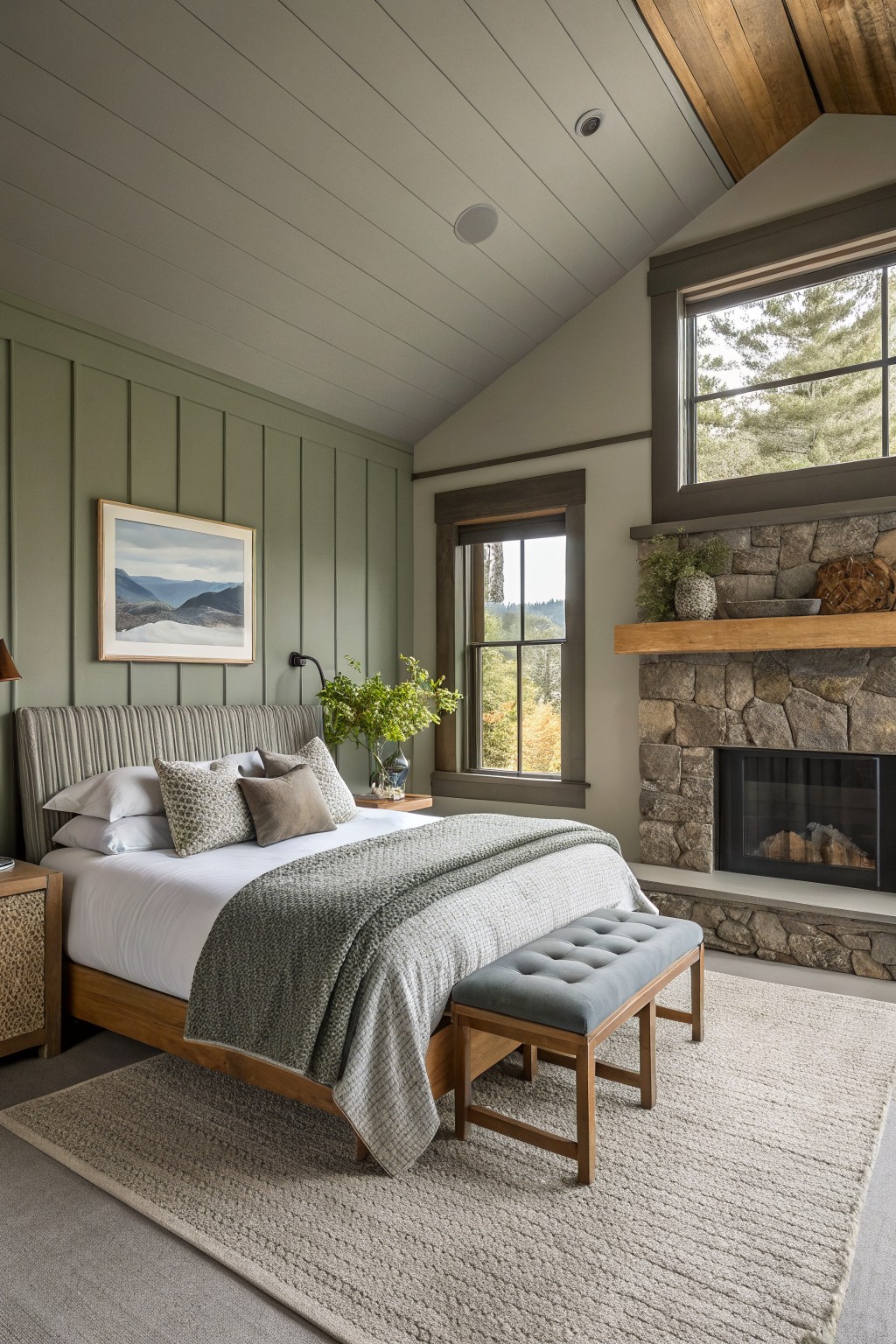
A soft sage green works nicely on bedroom walls when you want something calm but not too plain. This color sits in that middle ground between gray and green, giving the room a quiet feel without making it feel cold or overly earthy.
It has a gentle gray undertone that shows up more in softer light, so it pairs best with warm wood tones and simple neutrals. Avoid pairing it with anything too stark or bright if you want the same peaceful look.
Neutral Beige Walls With Mushroom Undertones
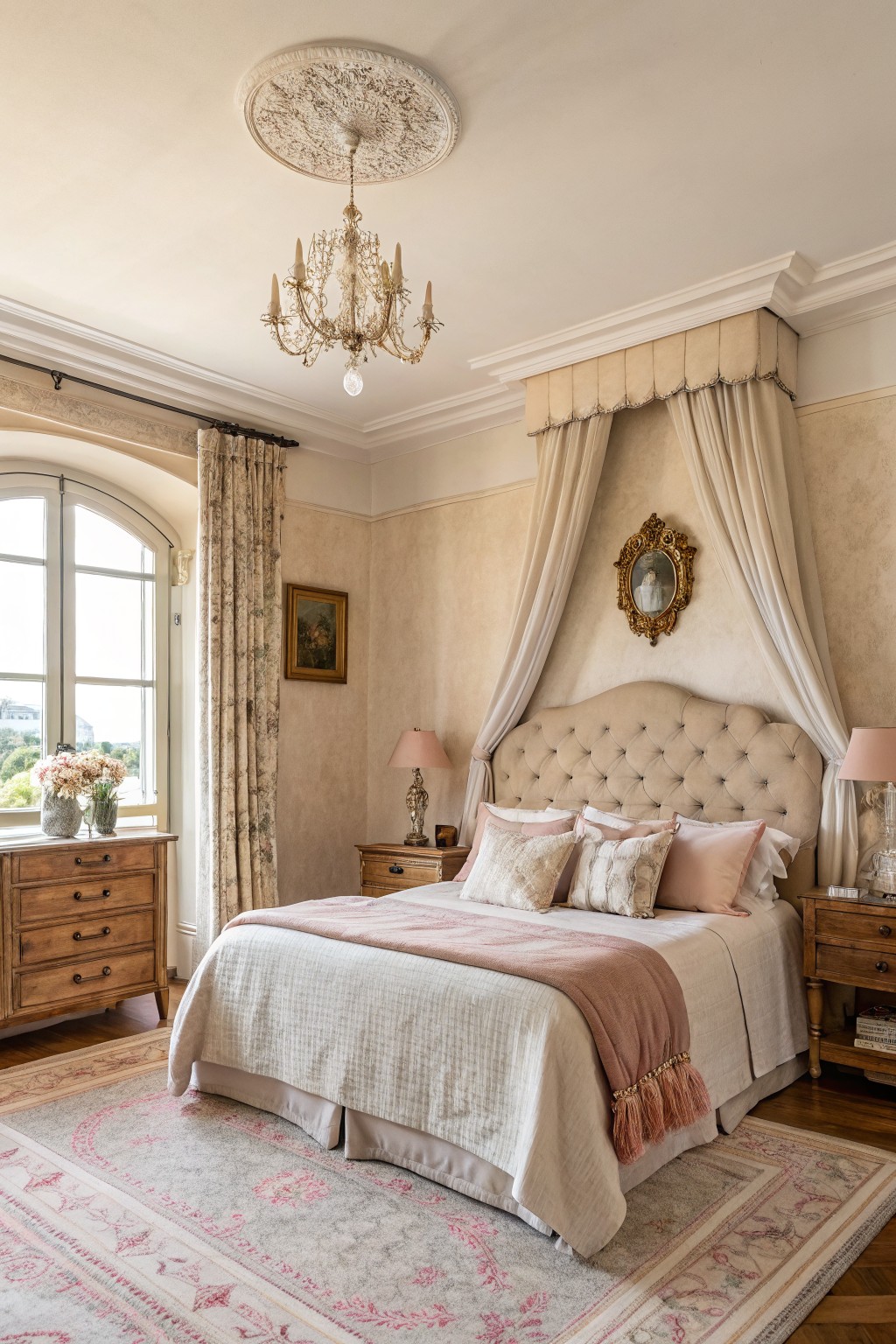
This bedroom uses a warm beige on the walls. It is a soft neutral that adds a gentle warmth without feeling heavy or too pale.
The color sits close to Sherwin Williams Accessible Beige, Benjamin Moore Revere Pewter, Farrow & Ball Stony Ground, or Behr Creamy Mushroom. It works best with warm wood tones and simple textiles, and it stays balanced even when the light shifts through the day.
Layered Greige Walls With Textured Bedding
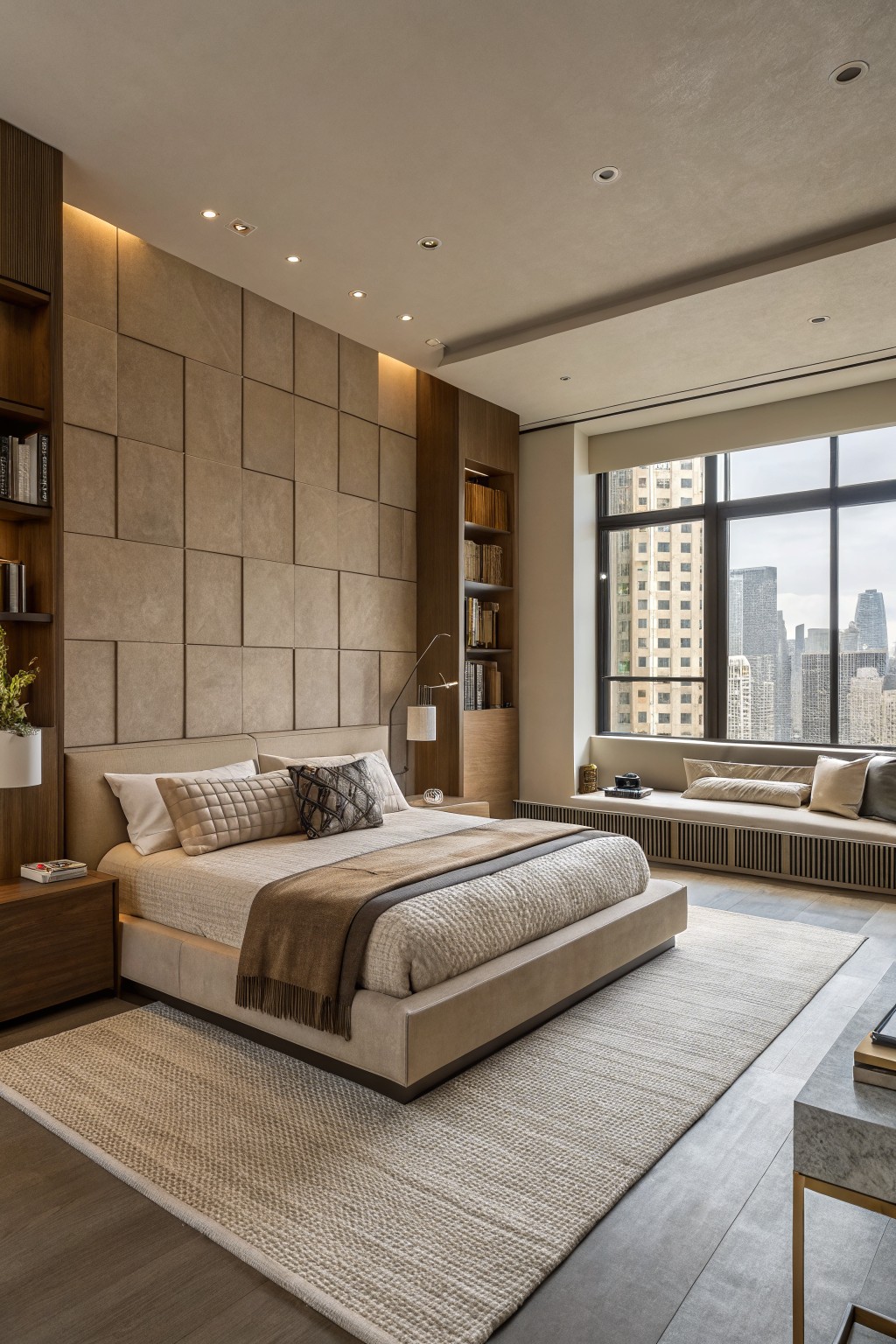
A warm greige works well on bedroom walls when you want something soft but not too light. This color sits between beige and gray, giving the room a calm base that still feels grounded next to wood furniture and textured bedding. It reads as a gentle neutral that holds up nicely in both morning and evening light.
The undertone here leans slightly warm, so it pairs best with natural wood tones and layered fabrics rather than stark white trim. If the room gets lots of direct sun, the color can shift a touch lighter during the day. Good matches include Sherwin Williams Accessible Beige, Benjamin Moore Revere Pewter, Behr Greige, and Farrow & Ball Elephant’s Breath.
Warm Beige Walls With Natural Light
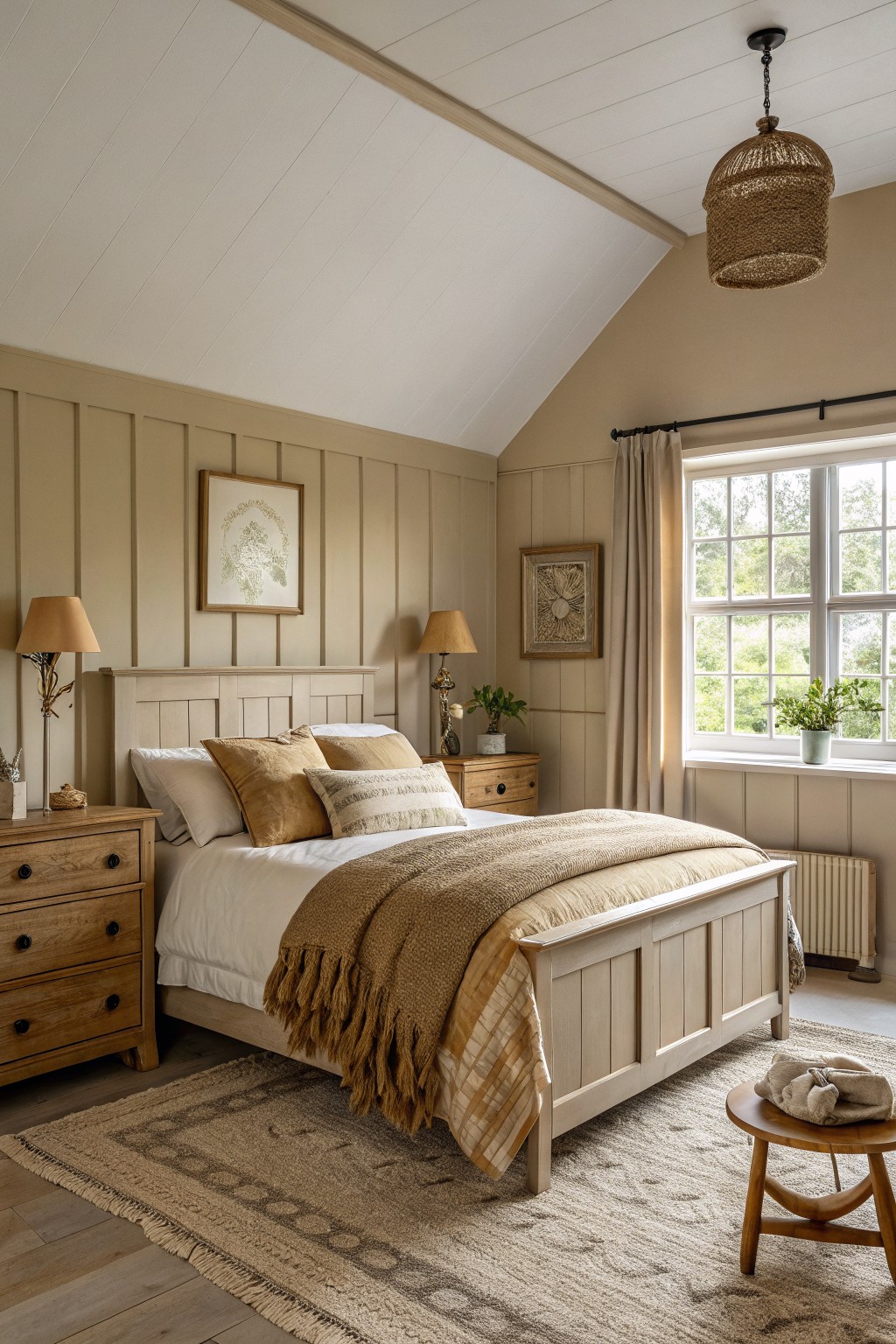
A warm beige works well here because it stays soft while still feeling grounded. It sits between cream and light taupe, giving the room a calm base that does not fight the wood tones or white bedding. Shades that come close include Sherwin Williams Accessible Beige, Benjamin Moore Edgecomb Gray, and Behr Toasted Almond.
The color carries a gentle yellow undertone that shows up more in daylight. It pairs best with natural wood and simple textiles, and it tends to look best in rooms that get steady natural light. Too much cool gray or stark white can make it feel off.
Warm Terracotta Bedroom Walls

This bedroom uses a warm terracotta color on the walls that sits right in the middle of orange and brown. It gives the room a grounded feel without making it dark. The shade works especially well in spaces with natural light and wood tones nearby. It reads closest to Sherwin Williams Canyon Clay, Benjamin Moore Moroccan Spice, or Farrow & Ball Red Earth.
The color has a soft orange undertone that keeps it from feeling too cool or flat next to woven textures and light wood. It suits bedrooms that already have linen, rattan, or stone elements. Just watch how it shifts in the evening since the warmth can deepen once the sun goes down.
Soft Gray Bedroom Walls
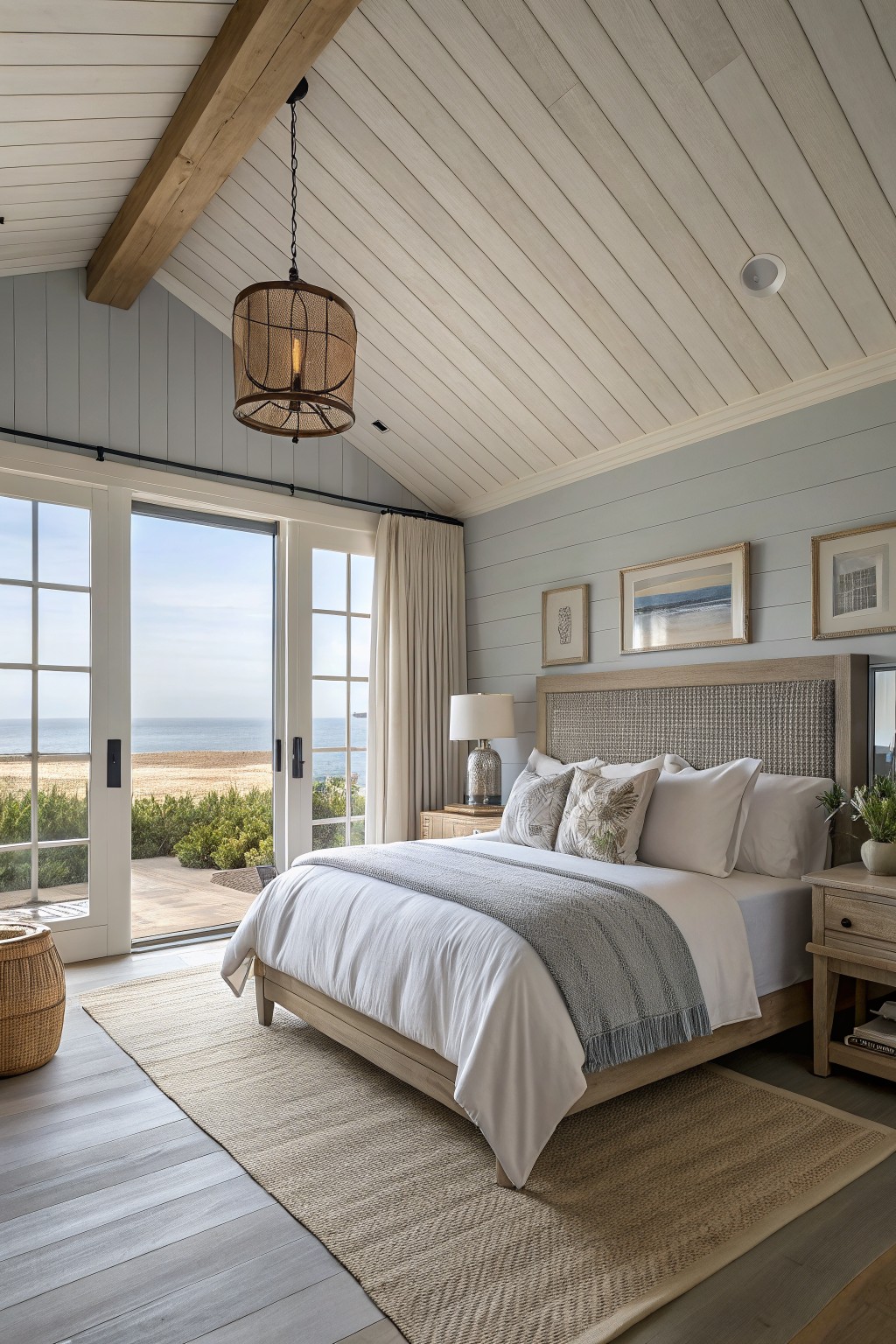
This light gray sits in a calm middle ground with a faint blue undertone that keeps the room feeling quiet. It works as a simple base that does not compete with wood floors or natural light coming through large windows.
The color stays even across the day and pairs easily with white bedding or linen curtains. It suits smaller or larger bedrooms alike as long as the trim stays crisp and the lighting is not too dim.
Warm Beige Walls With Pink Undertones
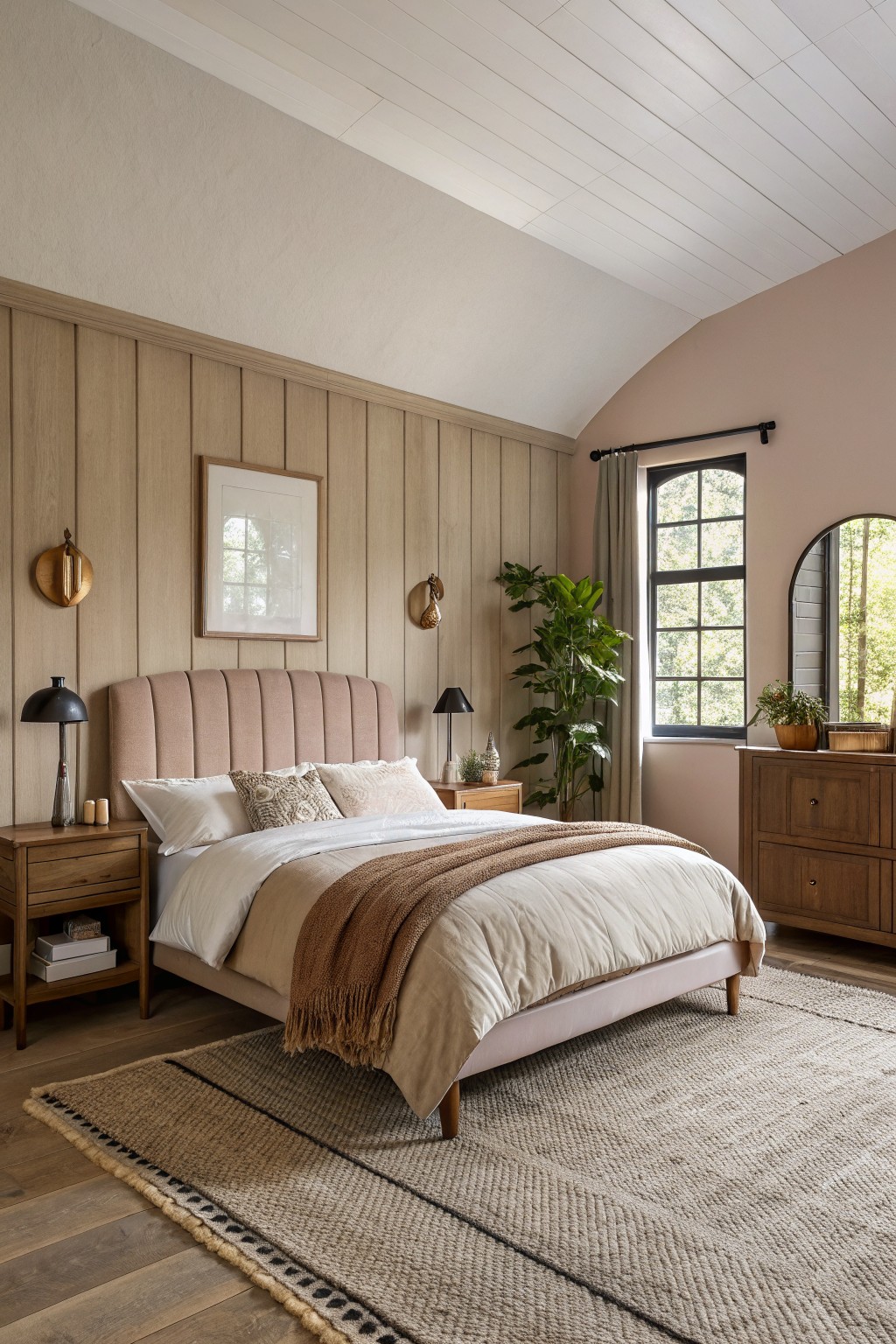
This warm beige sits right in the middle of neutral territory with a gentle pink undertone that keeps it from feeling flat. It gives the room a quiet, settled look that pairs easily with wood tones and soft textiles.
The color shifts a little depending on the light but stays warm enough to feel cozy rather than cool. It works best in bedrooms where you want something simple that still leaves room for layers of texture and natural materials.
Frequently Asked Questions
Q: How do I choose between all those warm neutrals for my walls? A: Start with the one that matches your favorite piece of furniture. Then build layers of texture around it with rugs and throws. This keeps the room feeling grounded and calm.
Q: What if layering textures makes my bedroom look too busy? A: Pick two main textures to start like soft cotton and rough linen. Add one more only if the space still feels open.
Q: Can I bring in a bit of color without losing the peaceful vibe? A: Stick to soft greens or muted terracotta in small accents (like a pillow or two). They blend right in with the neutrals. Keep everything else simple so the calm stays intact.