I have found that these muted greens shift more than expected once they meet real wood tones or stone surfaces in a home.
Olive shades in particular tend to pull warmer against white trim but cool down again when the light moves across the day.
Samples always show the truth.
Sage works best when it echoes the actual garden outside rather than fighting with the roof or brick it sits beside.
Garden inspired colors hold up longer if you check how they change between indoor corners and outdoor walls before committing.
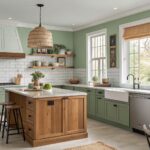
Sage Green Kitchen Cabinets

This soft sage green on the cabinets brings a quiet, earthy tone to the kitchen without feeling too bold. It is a muted green with gray undertones that sits comfortably next to warm wood and white tile. Colors in this range often read close to Sherwin Williams Clary Sage or Benjamin Moore Saybrook Sage, and they can also land near Behr Aged Sage.
The finish stays steady in natural light but can lean a touch cooler when the room gets less sun. It pairs well with black hardware and wood counters, though it helps to test a sample first since the gray side shows up more against stark whites.
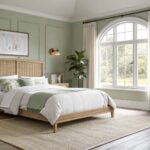
Soft Sage Green Bedroom Walls
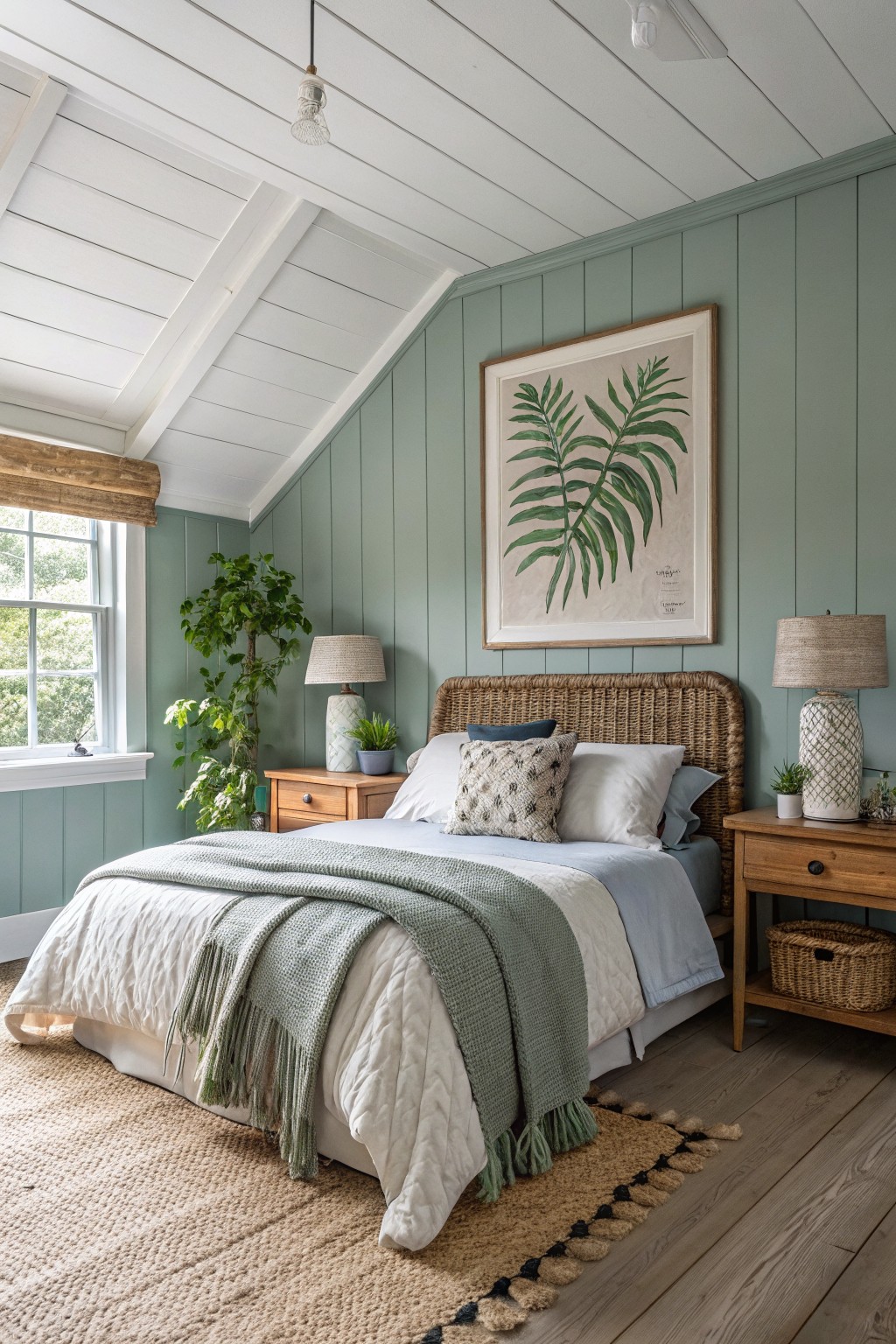
This soft sage green on the walls gives a calm, earthy feel that fits right into farmhouse style. It is a muted green with gray undertones that sits comfortably between olive and garden tones without feeling too bold or too pale.
The color works best with warm wood furniture and simple white trim. It holds up well in rooms with plenty of natural light and pairs easily with linen, jute, or other natural textures. Similar shades include Benjamin Moore Saybrook Sage, Sherwin Williams Sage Green, Behr Mossy Green, and Farrow & Ball Lichen.
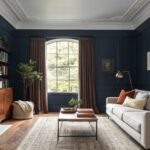
Warm Olive Green Walls
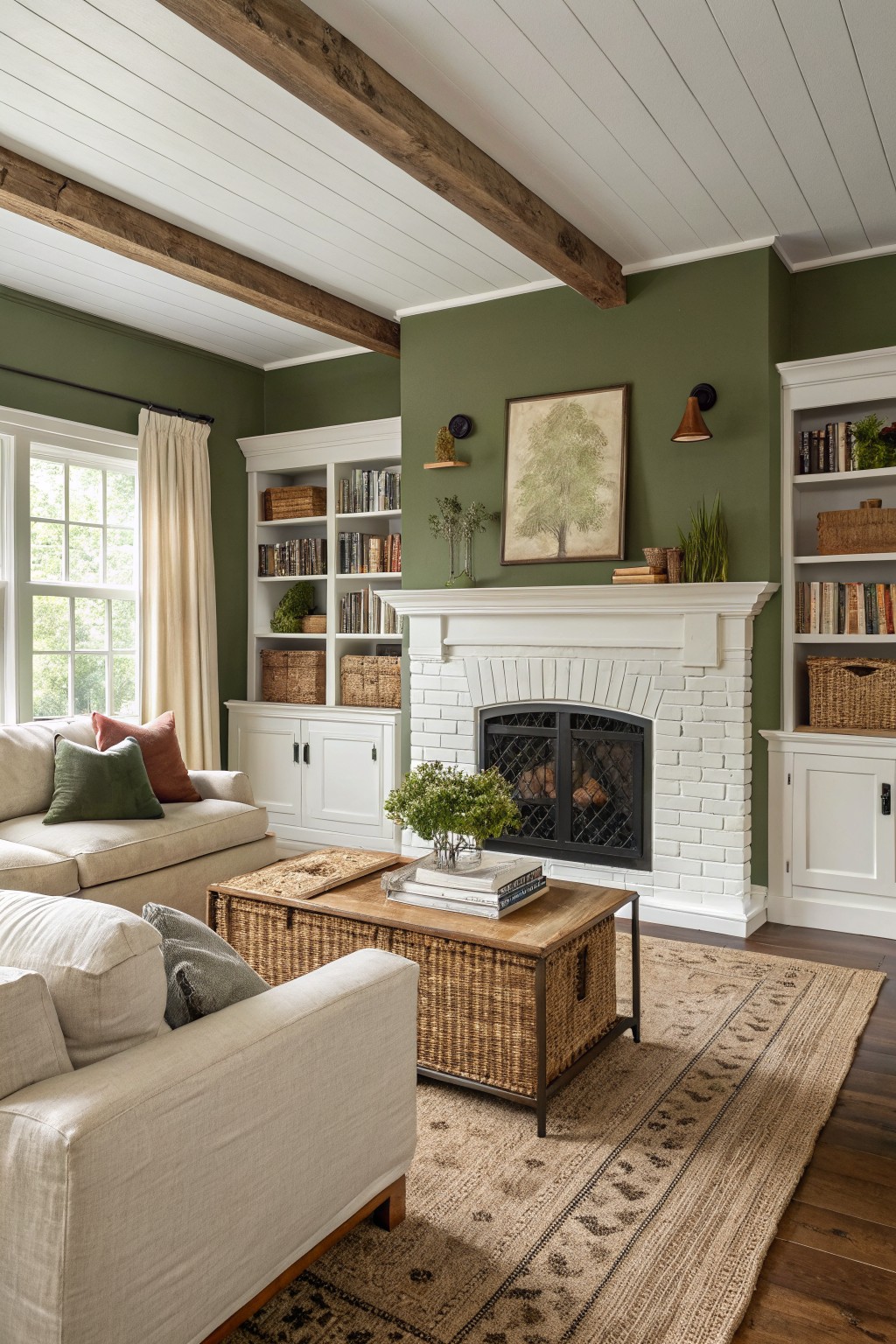
This living room uses a deep olive green that feels earthy and grounded without going too dark. It sits between sage and olive, with a slight warmth that keeps the space from feeling cold next to all the white trim and wood tones.
It reads closest to Sherwin Williams Evergreen Fog, Benjamin Moore Saybrook Sage, or Farrow & Ball Lichen. The color works especially well in rooms with natural wood and white built-ins, though it can look heavy if the light is very low.
Sage Green Walls
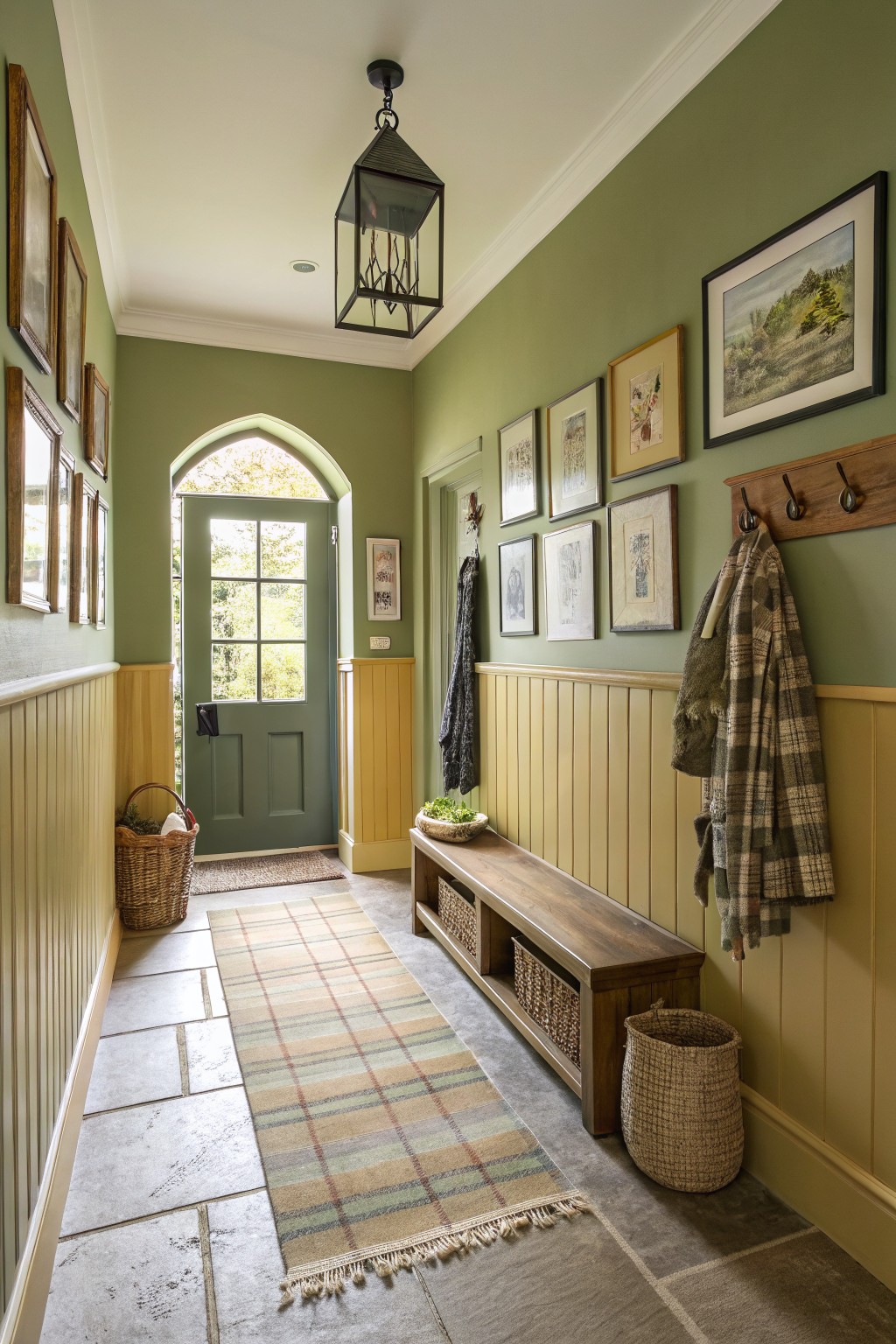
This sage green paint brings a soft earthy tone to the walls that feels right at home in a farmhouse setting. It sits between gray and green with just enough warmth to avoid looking flat or dull.
The color reads nicely against wood trim and natural flooring. It works best in spaces with some natural light and pairs well with simple wood furniture and woven baskets.
Soft sage green cabinetry
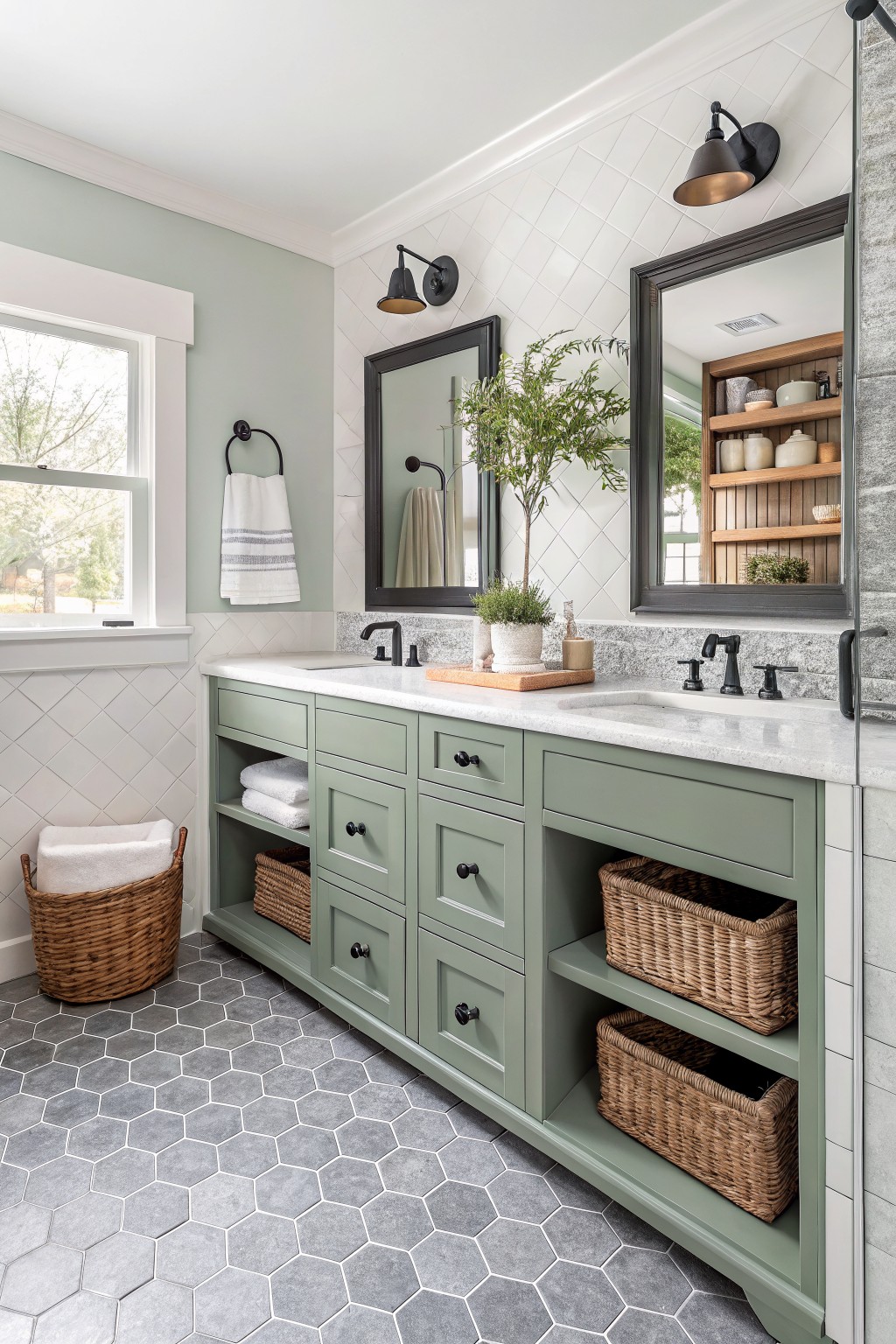
Sage green brings a calm, earthy feel to a bathroom without going too bold. This muted shade sits somewhere between gray and green, making it easy to live with day after day. It looks close to Benjamin Moore Saybrook Sage, Sherwin Williams Sage Green, or Behr Mossy Green, all of which give that same soft garden tone.
The color works well with white countertops and open wood shelves because it keeps the space feeling grounded rather than stark. It pairs nicely with black hardware and woven baskets too. Just watch the lighting, since the green can shift a bit cooler under bright overhead bulbs.
Soft Sage Green Walls
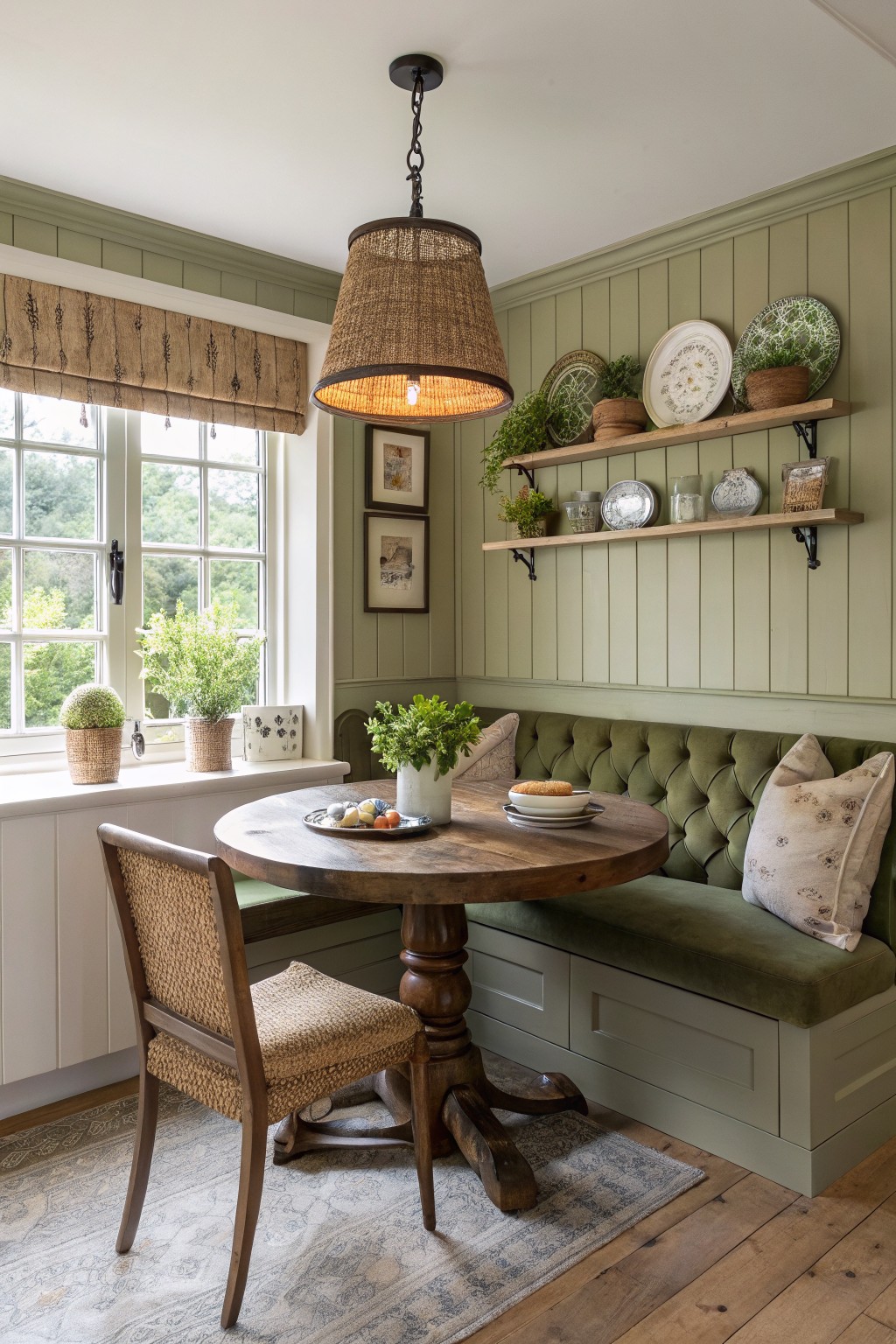
This wall color is a soft sage green with a hint of gray that keeps it feeling calm rather than bright. It sits nicely next to the warm wood tones in the room and gives the space a quiet, lived-in look that works well in older homes. The shade looks closest to Sherwin Williams Clary Sage, Benjamin Moore Saybrook Sage, Behr Soft Sage, or Farrow & Ball French Gray.
It tends to read a little cooler in low light but warms up nicely with morning sun. Pair it with white trim and natural wood furniture if you want the green to stay gentle instead of turning muddy.
Soft Sage Green Walls
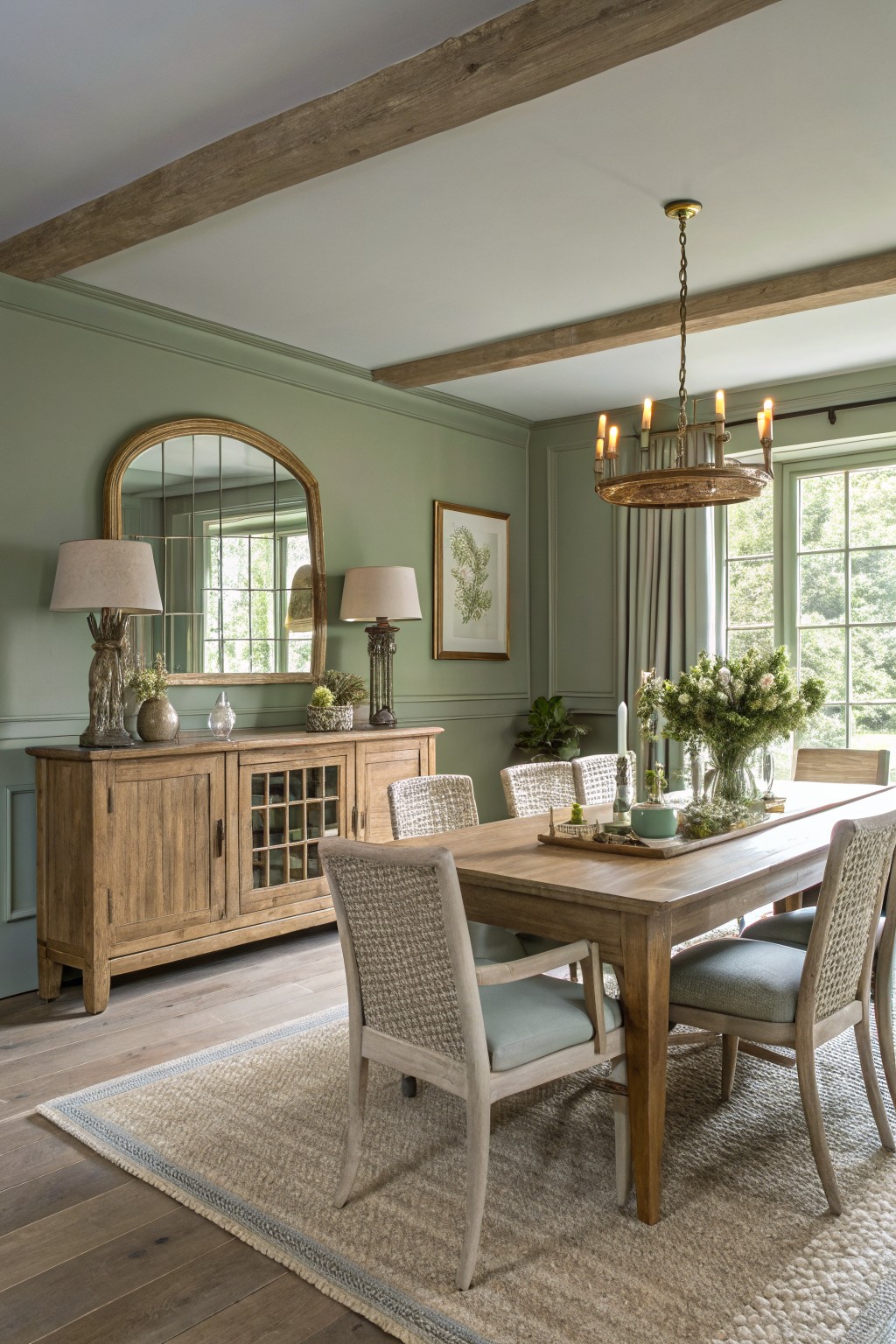
This muted sage green brings a calm, garden-inspired tone to the room without feeling heavy. It sits in that soft middle ground between gray and green, and reads very close to Sherwin Williams Clary Sage or Benjamin Moore Saybrook Sage.
The gray undertone helps it stay quiet next to warm wood, so it works well in dining rooms or living spaces where you want a bit of color but still need the walls to feel light. It can look a touch cooler in low light, so testing a sample on the actual wall is worth doing.
Soft Sage Green Walls

This soft sage green gives the walls and built-in storage a calm earthy look that feels right at home in a farmhouse entry. The color sits in that middle range between gray and green, so it reads quiet rather than bright.
It works best with crisp white trim and natural wood or woven textures nearby. Watch the light though, because in low light it can lean a little cooler than expected.
Soft Sage Green Siding

Sage green siding brings a quiet, lived-in feel to a farmhouse exterior. This muted shade sits somewhere between gray and green, with enough warmth to keep it from looking flat against natural materials.
It pairs best with white trim and soft stone foundations. The color stays steady in changing light and works well on older homes where you want the siding to blend rather than stand out.
Sage Green Siding

This muted sage green gives the siding a soft, earthy feel that sits nicely between gray and green. It works especially well on older homes because it blends with surrounding trees and garden tones without looking too bright or too dark.
The color has a slight warm undertone that keeps it from turning cool in shade. It pairs easily with brick paths, white trim, and dark roofing, though it can look flat if the trim is too stark or the light is very harsh.
Sage Green Cabinets
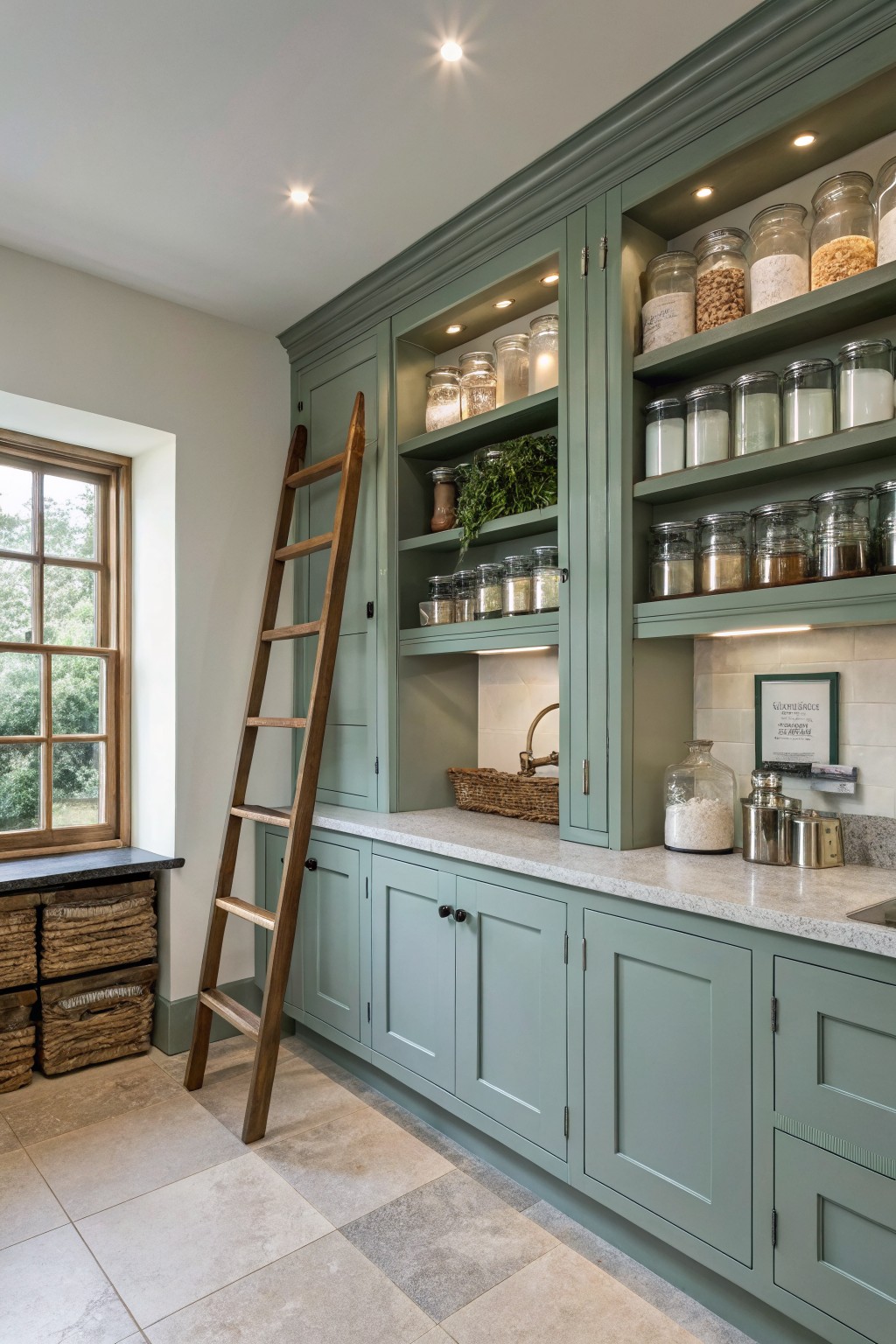
This muted sage green brings a calm, earthy feel to kitchen cabinetry. It sits between gray and green without leaning too far in either direction, which makes it easy to live with in a farmhouse setting.
It works best with warm wood tones and light stone counters. The color holds up nicely under both natural light from windows and warmer overhead bulbs, though it can read a little cooler in very bright spaces. Try it with Benjamin Moore Saybrook Sage, Sherwin Williams Retreat, or Farrow & Ball French Gray for a close match.
Olive green doors
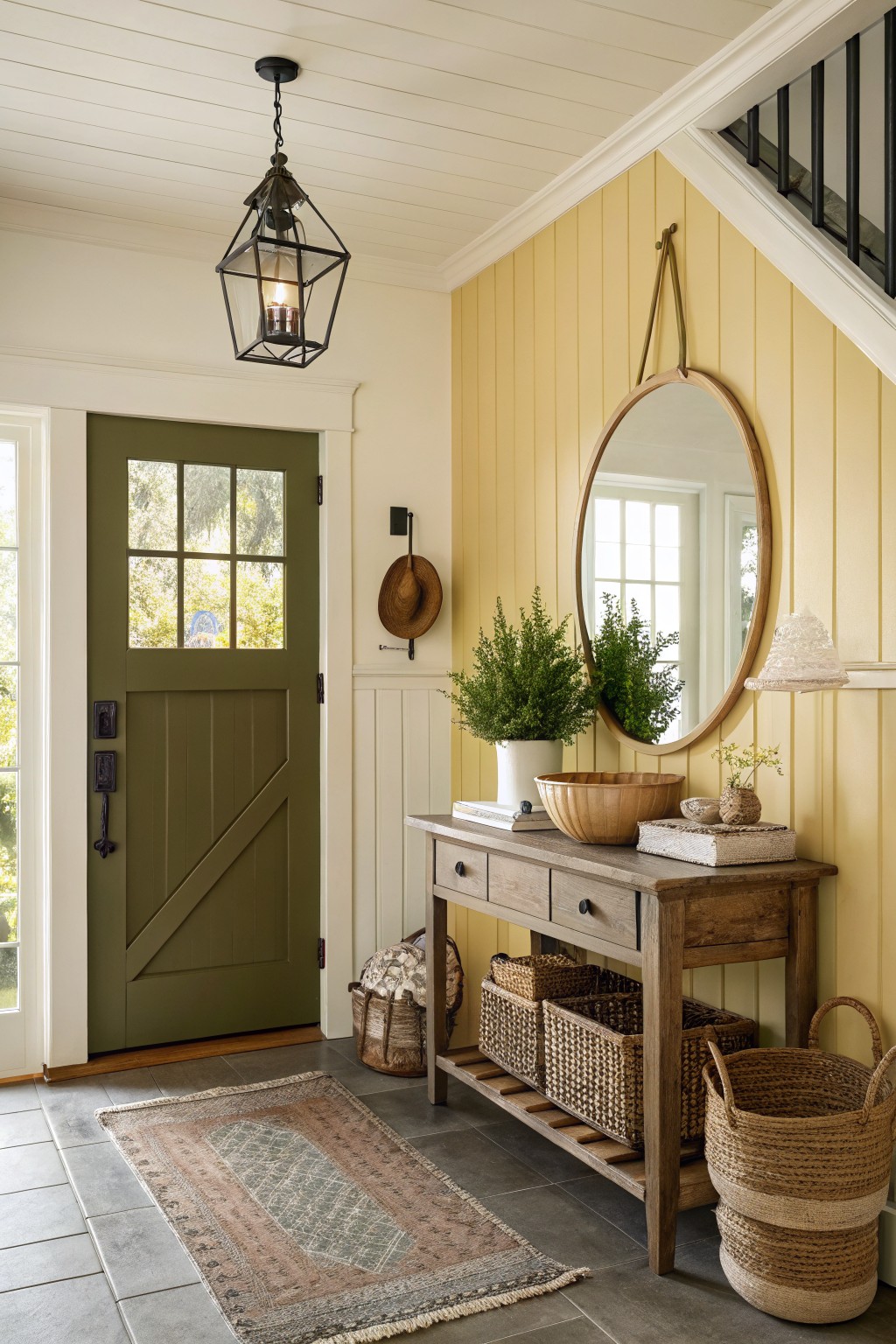
An olive green door like this one gives a simple earthy look that fits right into farmhouse style. It sits between sage and deeper garden greens, and colors that come close include Sherwin Williams Olive Grove, Benjamin Moore Saybrook Sage, Behr Dried Basil, and Farrow & Ball Bancha.
The tone has a touch of warmth that helps it work with wood floors and lighter walls. It shows up best on doors or built-ins where you want some color without making the room feel closed in.
Soft Sage Green Walls
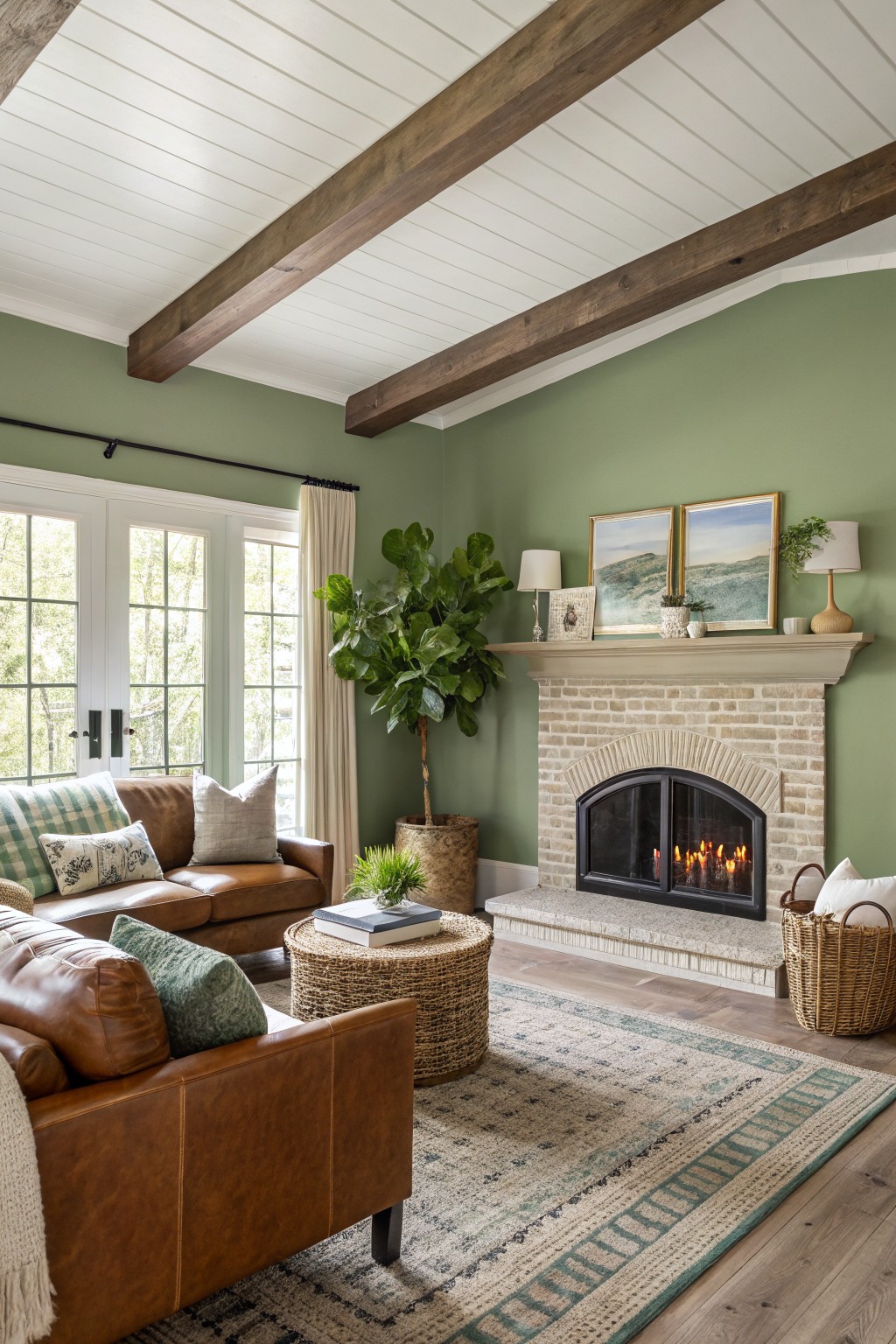
This sage green sits in that middle ground between olive and gray. It gives the walls a soft garden tone that feels calm but still grounded, especially when paired with wood beams and brick.
The color has a light warm undertone that keeps the room from feeling chilly. It works well in living rooms or family spaces where you want something natural but not too dark, and it looks best with warm wood floors and simple trim.
Sage Green Staircase
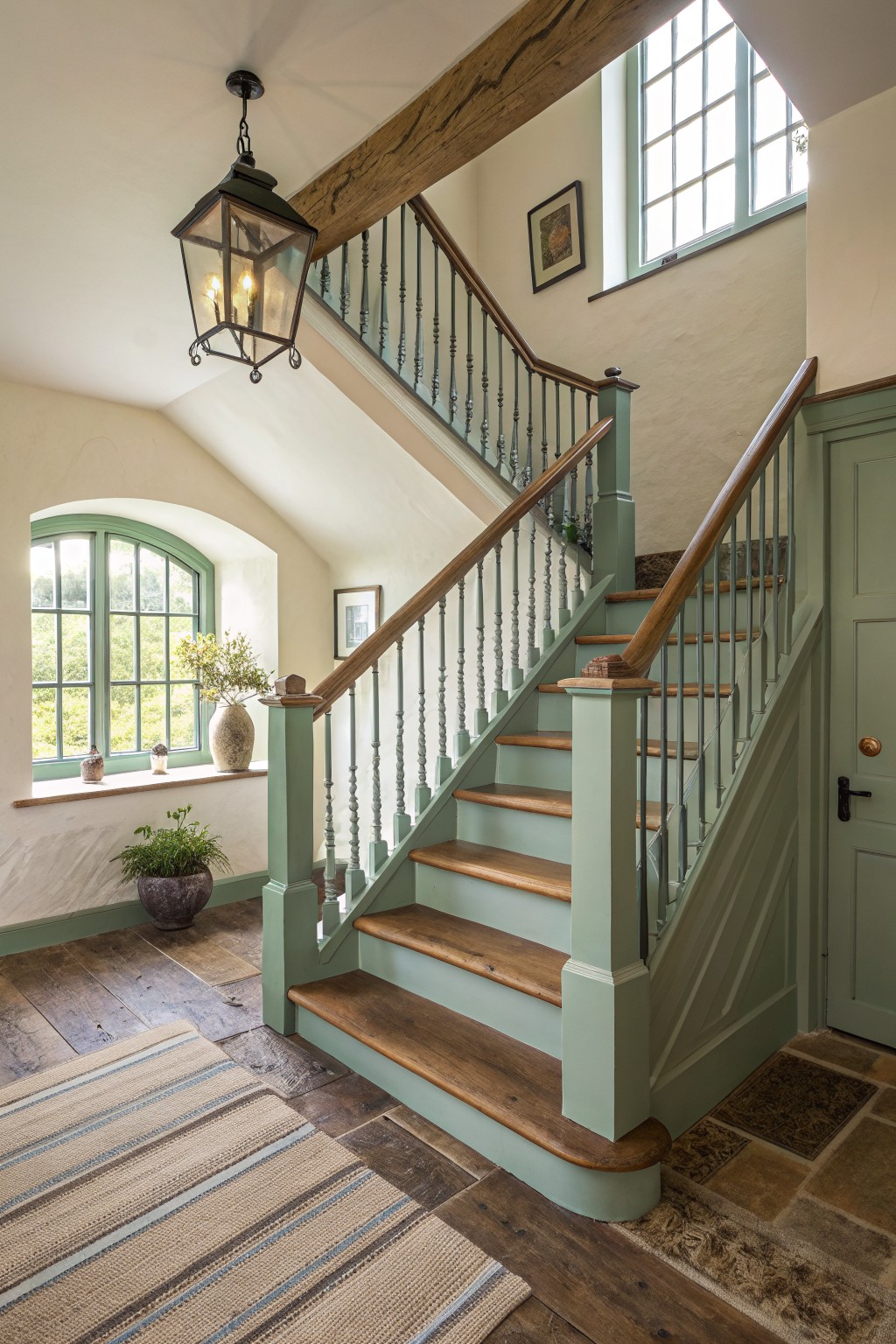
This muted sage green sits right in the middle of the green and gray range. It feels soft and a bit earthy, which makes it a good fit for older homes that already have wood floors and trim.
It works best when paired with warm wood tones and simple painted details. In brighter light it leans a little more green, while in shaded spots it can read cooler, so test a sample on the wall first.
Sage Green Walls
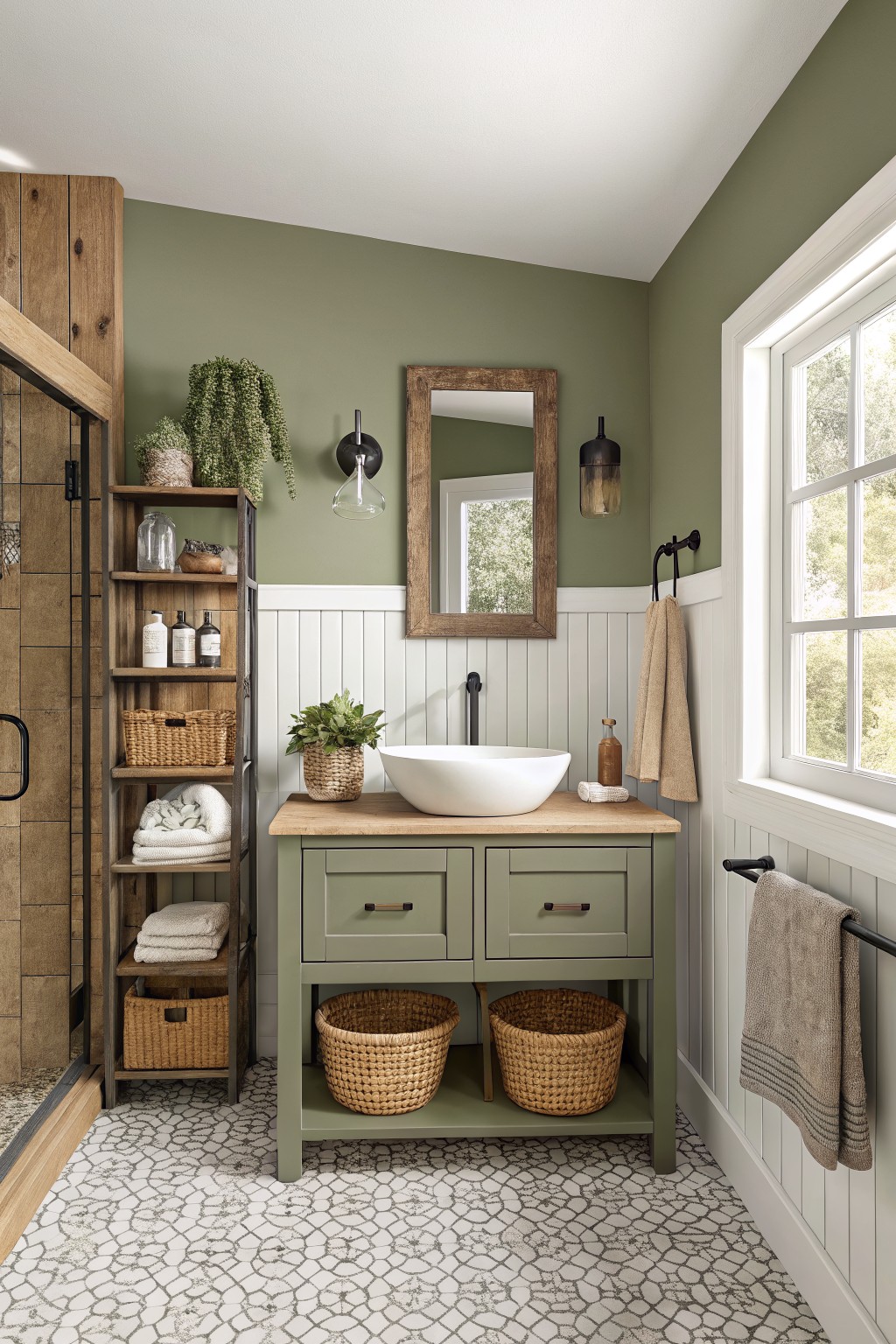
This bathroom shows a soft sage green on the upper walls. It is a muted earthy tone that feels calm and grounded without being too dark or heavy.
The color has gentle gray undertones that help it sit nicely next to white wainscoting and warm wood. It works well in farmhouse bathrooms and pairs easily with natural textures like woven baskets or wood vanities. It can look a little flat in very low light, so test it in the actual space first.
Sage Green Front Door
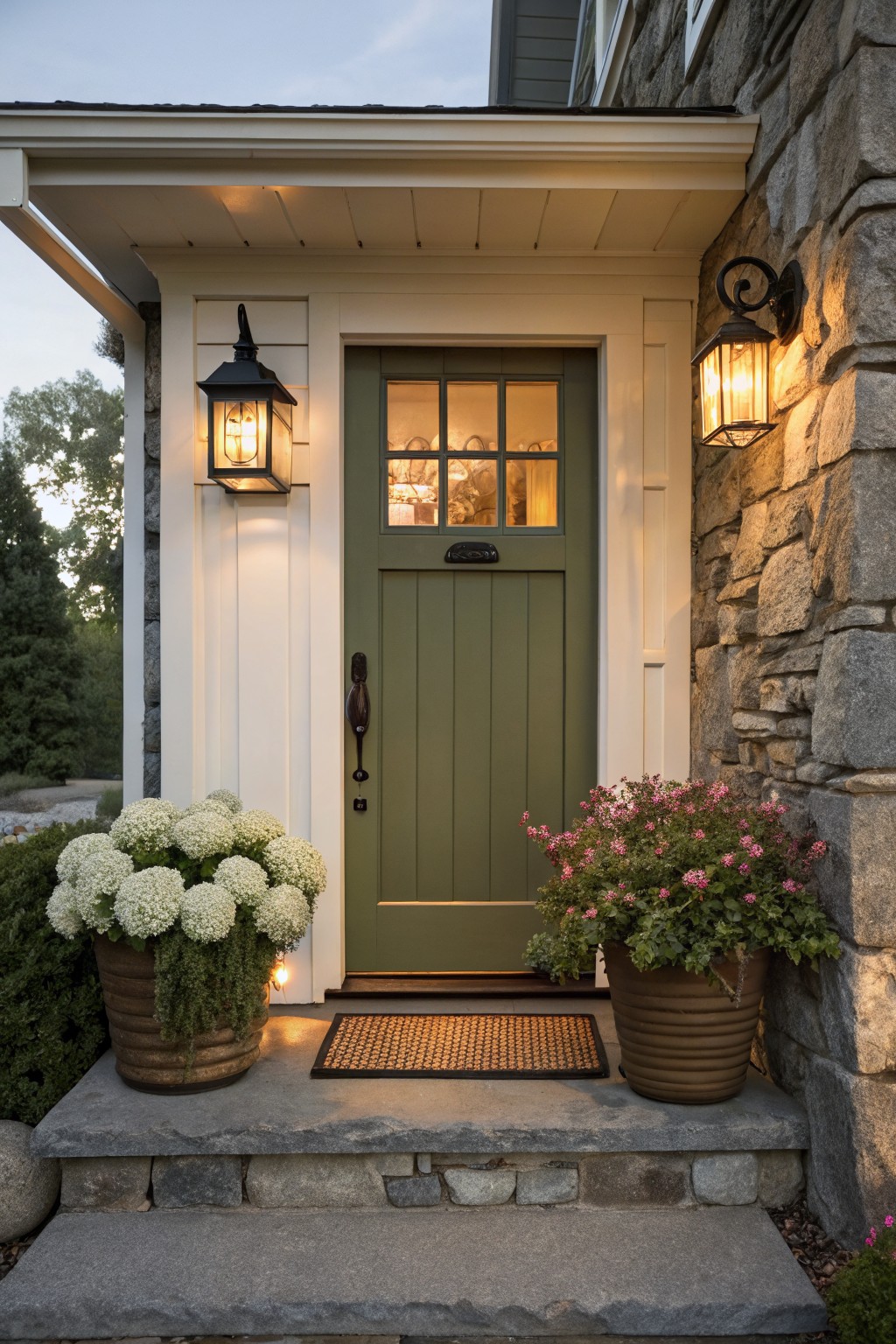
This muted sage green is a solid pick for a farmhouse door. It has a soft earthy tone that feels calm and settled rather than bright or trendy.
The color has a hint of gray that helps it blend with stone and white trim. It works well on homes with natural textures and pairs easily with black hardware or simple wood details.
Olive Green Garage Doors
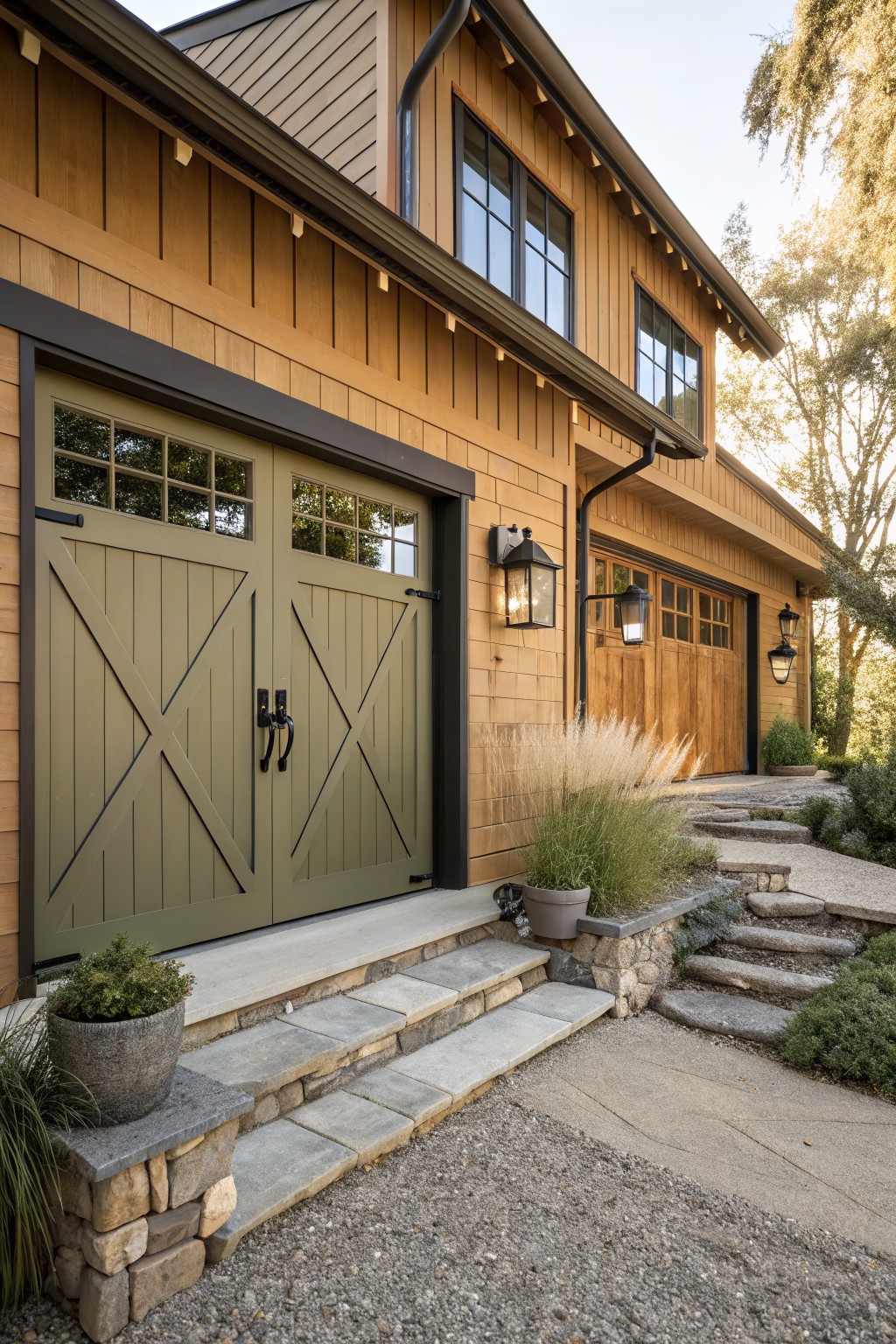
An earthy olive green like this one on the garage doors gives the exterior a soft garden tone that feels natural rather than bold. It has enough depth to stand out against the wood siding without fighting it.
The color leans slightly warm so it works well with stone and wood tones around the house. It suits farmhouses or similar styles best and looks fine with black hardware, though it can read a bit flat next to too many cool grays.
Frequently Asked Questions
Q: How can I tell if a green will match my wood floors?
A: Hold paint samples next to your flooring in different lights. Sage often blends smoothly with warm woods while olive adds nice contrast. Try a few spots before deciding.
Q: Do these colors work on trim or just walls?
A: They look great on walls but try a lighter version on trim for definition. Garden tones can make cabinetry pop without overwhelming the room.
Q: What if the paint dries darker than expected?
A: Buy a quart and paint a test patch on the actual surface. Let it dry fully over a day or two. This saves you from repainting a whole room later.