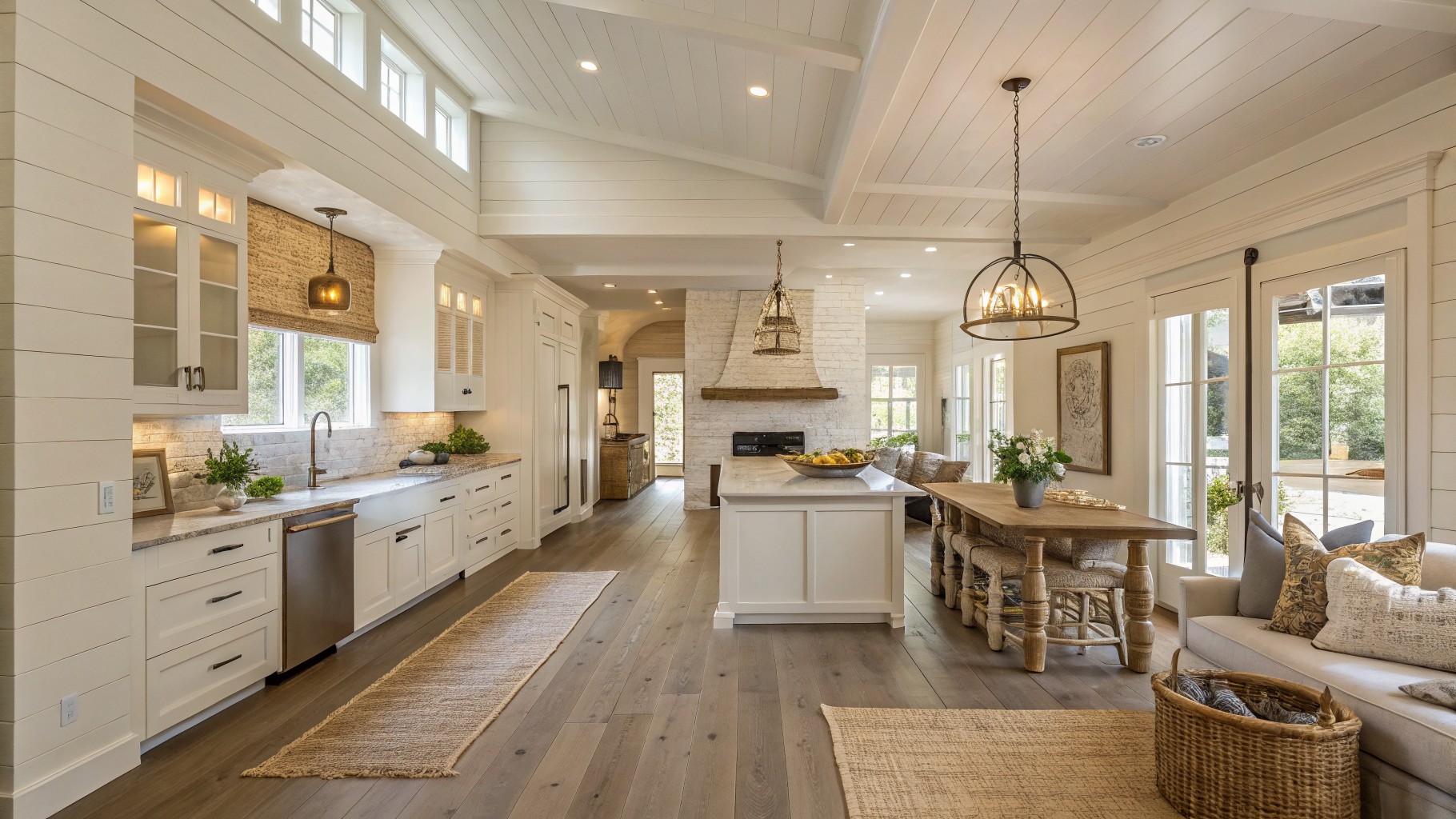
I have found that colors meant to tie rooms together often shift more than expected once the walls are up.
When light moves through a hallway into the kitchen the same shade can look warmer or cooler depending on the time of day.
That makes it worth painting large samples and living with them for a week or two before committing.
Undertones become obvious next to white trim or wood floors so checking those details early saves headaches later.
Test in the actual space.
Creamy White Walls

This is a warm white with a soft cream undertone. It gives the space a light, connected feel that works well when the kitchen, hallway, and living area share the same color.
The warmth keeps the wood floors from looking too cool and helps the white cabinetry blend in rather than stand out. It suits homes that want a simple background without going fully bright white.
Warm Greige Cabinets For Connected Spaces
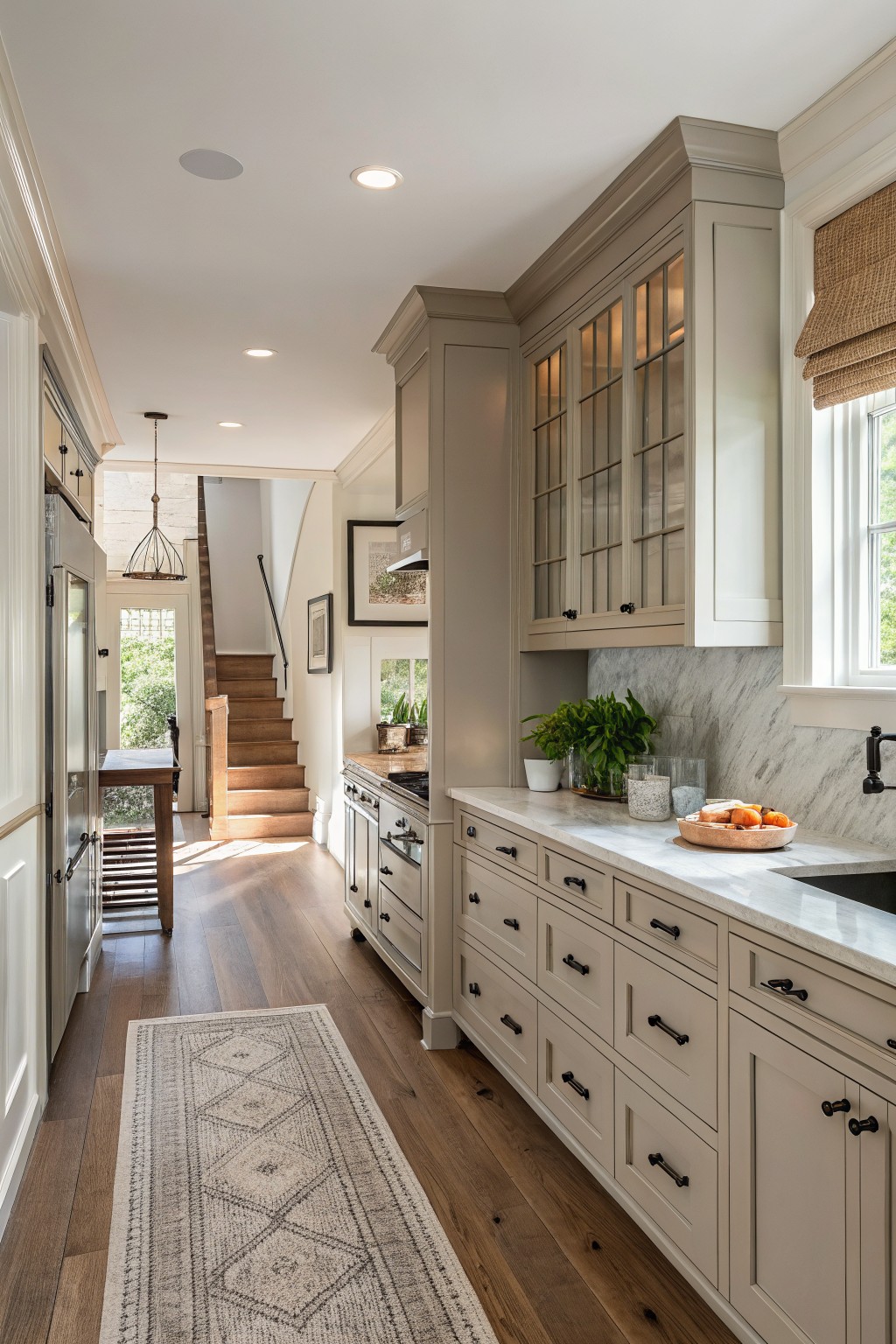
This kitchen shows a soft greige on the cabinets that reads as a warm neutral rather than a true gray. It sits between beige and gray, which makes it easy to use across open spaces without looking too stark or too yellow.
The color has gentle warm undertones that work well with wood floors and light stone. It suits kitchens that flow into hallways or living areas, and it pairs cleanly with both dark hardware and natural wood tones.
Soft Sage Green Cabinets
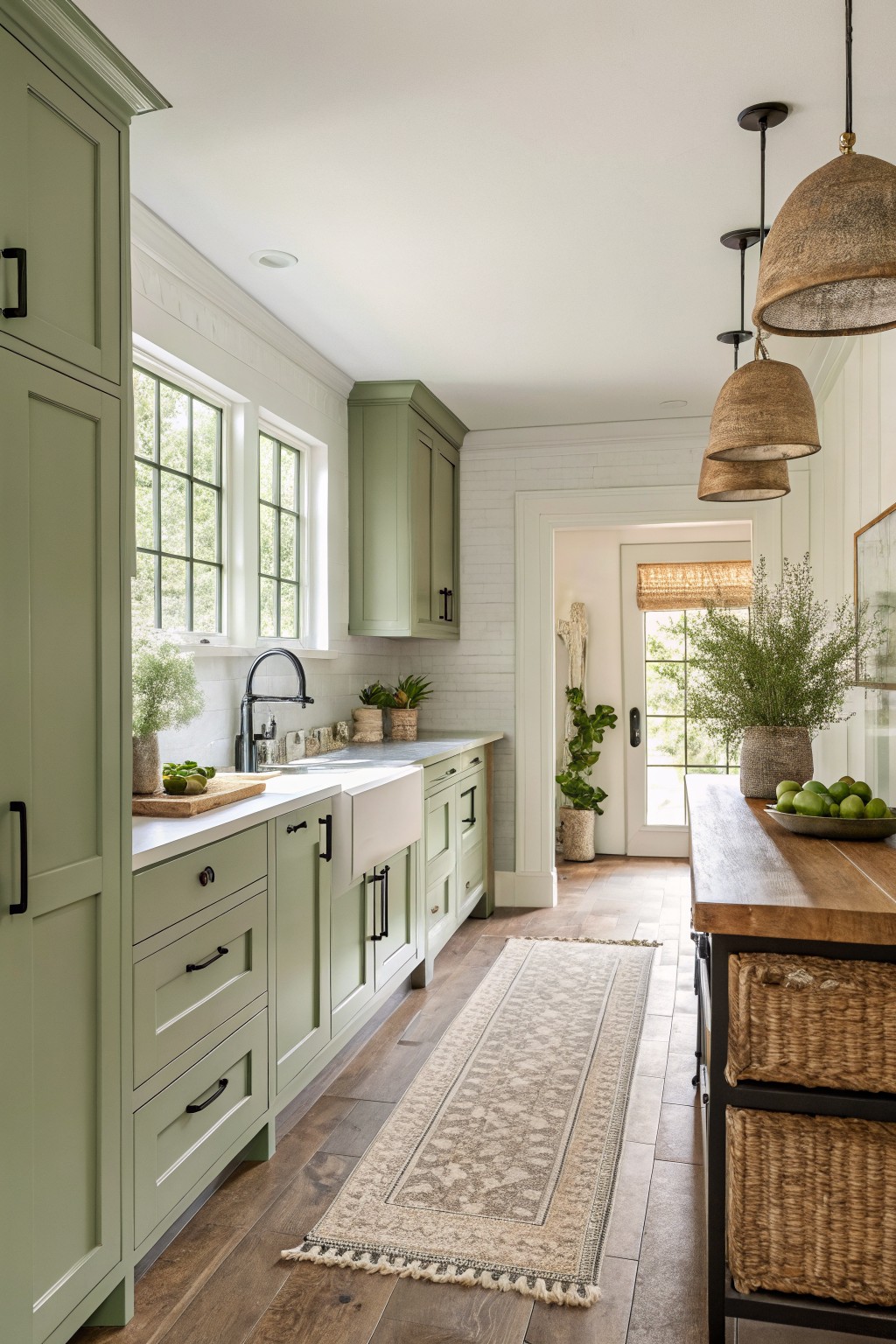
This kitchen uses a soft sage green on the cabinets. It is a muted green that sits between gray and green without feeling too cool or too bright. Colors in this family work well in farmhouse homes because they feel calm and tie different rooms together without much effort.
The green has a light gray undertone that helps it stay steady next to white trim and warm wood floors. It pairs easily with black hardware and natural textures. Sherwin Williams Clary Sage, Benjamin Moore Saybrook Sage, and Behr Aged Eucalyptus all sit close to this shade.
Soft Sage Green Cabinetry

This soft sage green brings a calm, grounded feel to connected spaces like kitchens and living areas. It sits somewhere between gray and green, with just enough warmth to keep the room from feeling cool or flat next to wood tones and brick.
It works best when paired with natural wood, white trim, and simple textiles. Watch how it shifts in different lights, since the gray undertone can read cooler near north-facing windows but stays balanced next to warm oak and stone.
Muted Blue Gray Cabinets

This muted blue gray on the cabinets gives the kitchen a steady, grounded feel without going too dark. It sits between navy and charcoal, with enough gray in the mix to keep the space from feeling heavy or cold. Many people reach for this type of color when they want the cabinets to blend with wood tones and stone rather than stand out on their own.
It tends to read a little cooler in bright light and softer under warmer bulbs, so test it on a sample board first. It pairs easily with natural wood, white walls, and black hardware. Good matches in this range include Sherwin Williams Naval, Benjamin Moore Hale Navy, Behr Dark Shadow, and Farrow & Ball Stiffkey Blue.
Soft Blue Gray Walls
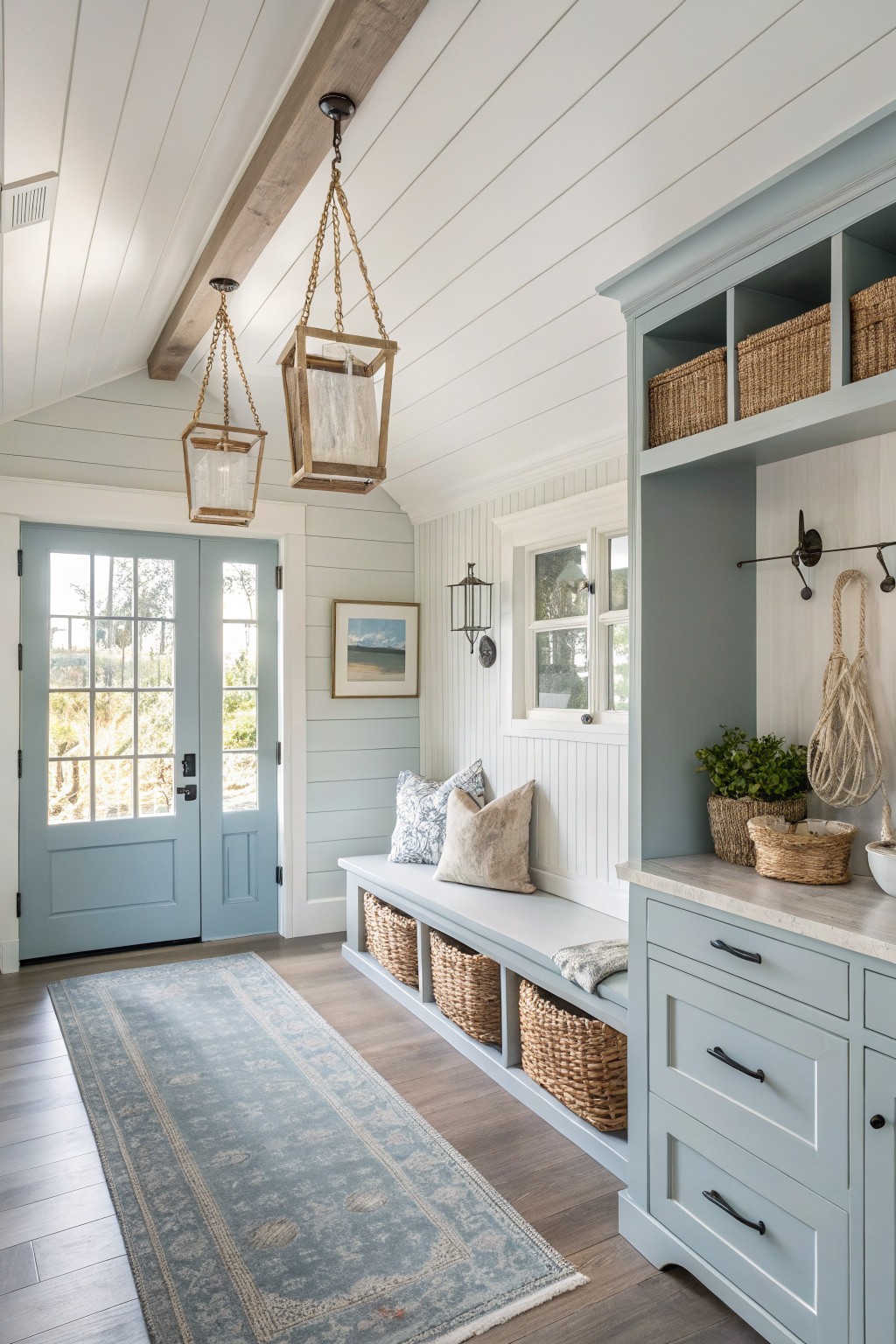
This muted blue gray on the walls and built ins brings a quiet, steady tone that suits farmhouse hallways and entries. It reads closest to Sherwin Williams Silver Strand, Benjamin Moore Horizon, Behr Silver Drop, or Farrow & Ball Skylight.
The cool undertone stays gentle next to white trim and wood floors. It works best in rooms with steady daylight and pairs easily with natural baskets, woven textures, and simple wood pieces.
Soft Greige Cabinets
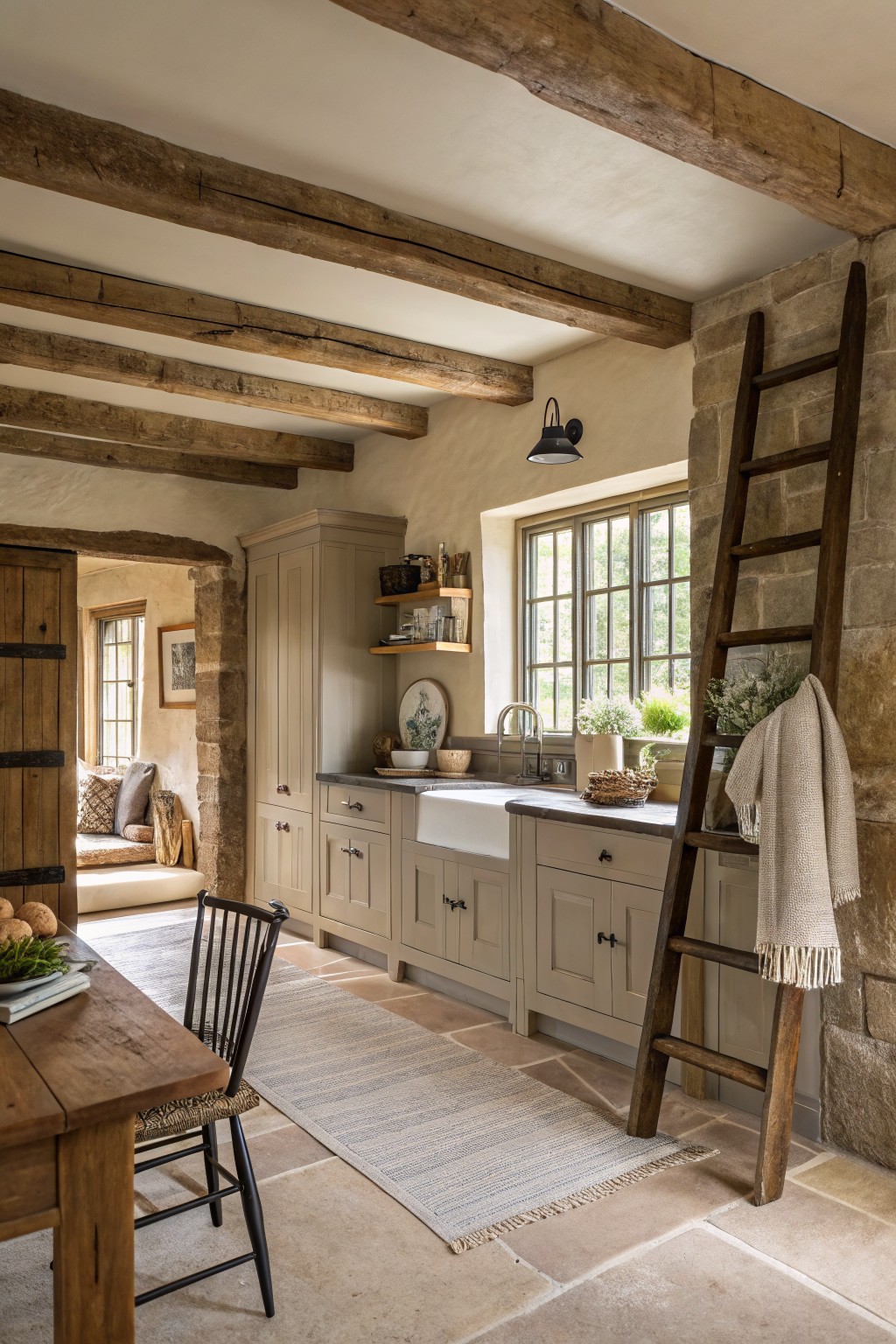
This greige on the cabinets sits right in that middle ground between gray and warm beige. It feels calm and steady next to the wood beams without pulling too cool or too yellow.
The color has a light warmth that keeps the space from looking flat, especially when the stone and wood tones are this strong. It works well in older homes where you want the cabinets to blend rather than contrast sharply.
Warm Terracotta Walls

This wall color is a warm terracotta with soft orange-red undertones that feel earthy and grounded. It reads as a natural plaster tone rather than a bright orange, which helps it sit comfortably next to wood and stone without overwhelming the room.
It pairs nicely with warm wood tones and terracotta tile floors, and it holds up well in spaces that get both natural light and shadow. Try it in hallways or entry areas where you want something richer than beige but still easy to balance with lighter furniture and trim.
Soft gray cabinetry
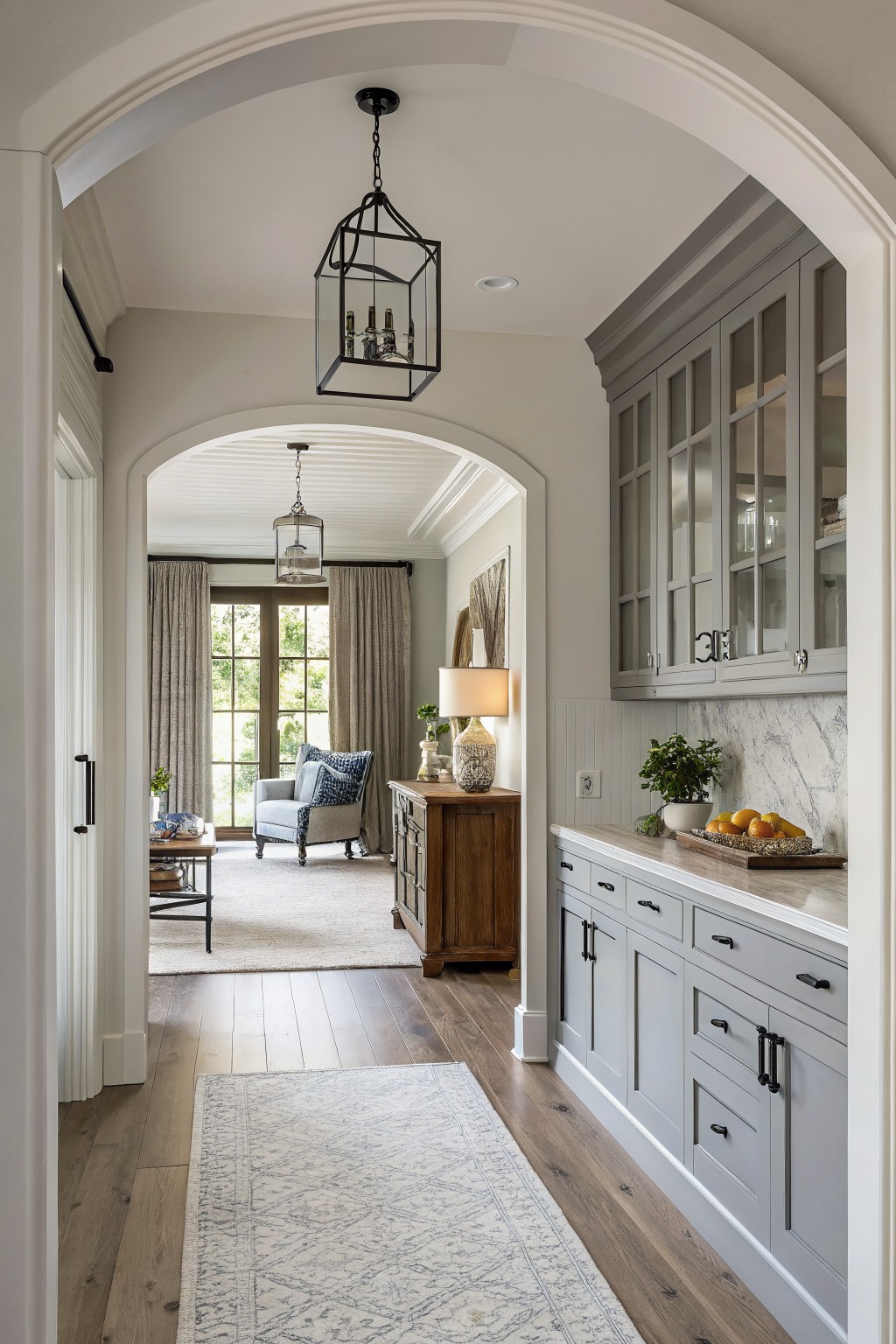
A soft gray on cabinets gives this kind of space a steady, quiet look without feeling heavy. It lands in the middle of warm and cool, which makes it easy to use across a kitchen that opens into other rooms.
This gray carries a light blue-gray undertone, so it can shift a bit depending on the light and what wood tones sit next to it. It works best with warm flooring and simple white trim, and it stays balanced even when you add darker hardware or stone counters.
Soft sage green cabinetry

This muted sage green on the built-in cabinet and lower paneling gives the space a calm, grounded feel without making the room feel heavy. It sits nicely between the warm beige walls above and the wood tones on the floor and ceiling beams. The color has just enough depth to make the cabinetry stand out while still reading as farmhouse rather than formal.
It leans slightly warm with a touch of gray, which helps it blend with terracotta tile and natural wood. This kind of green works best in entries or hallways where you want some color but still need it to connect to lighter rooms nearby. Pair it with warm wood and simple black hardware to keep the look balanced.
Soft Blue Gray Cabinets

This soft blue gray on the cabinets gives the kitchen a calm, steady look that still feels like a real farmhouse. It sits between gray and blue without leaning too hard either way, which helps it tie the wood counters and white brick together without fighting them.
The color has a slight cool cast that shows up more in shaded spots, so it needs decent natural light to stay balanced. It pairs best with warm wood floors and simple white trim, but it can start to feel flat if everything else around it stays too cool or too dark.
Dark Charcoal Cabinets

This deep charcoal gray on the cabinets creates a solid base for the whole kitchen. It is a dark neutral that feels substantial next to the wood floors and white tile backsplash.
The color sits slightly cool and works best with warm wood tones or copper accents to keep the space from feeling too heavy. It suits open kitchens where you want the cabinetry to anchor the room without overpowering the lighter elements around it.
Soft Greige Kitchen Cabinets

This soft warm greige brings a gentle color to the cabinets without making the kitchen feel heavy. It sits between beige and gray with a light pinkish undertone that keeps the space feeling calm and connected to the wood beams and stone floor.
The color works best in rooms with plenty of natural light and pairs easily with brass hardware, white trim, and natural wood tones. It can read a little pink in the morning light, so test it on a sample board before committing to the whole room.
Soft teal doors and cabinets
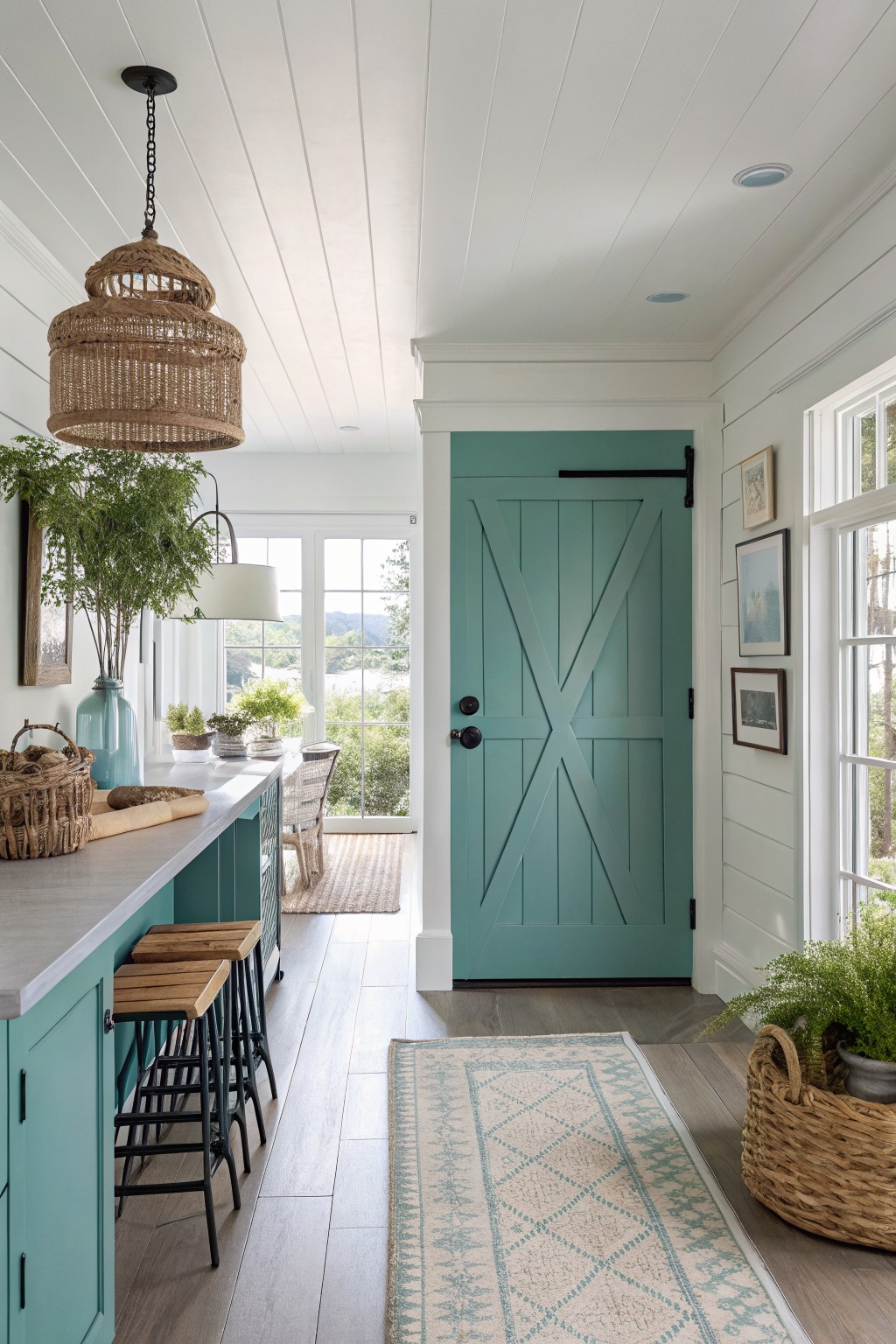
This soft teal brings a cool blue-green tone to both the cabinets and the door. It reads as a muted teal that stays calm next to white walls and light wood floors.
The color has a slight gray undertone that helps it feel grounded rather than bright. It works best with black hardware and natural wood tones, and it suits farmhouse kitchens or hallways where you want a bit of color that still connects easily to the rest of the house.
Soft gray walls

This muted gray on the walls and cabinets creates a steady base that links the kitchen to the hallway and living areas. It feels calm next to the wood beams and stone without pulling too much attention.
The color has a light cool undertone that reads a bit cleaner in natural light. It works best with warm wood floors and simple trim, though it can look flat if the lighting stays too dim.
Warm Greige On Walls And Built Ins

This is a soft warm greige that leans slightly toward taupe. It reads calm and quiet next to the wood tones and stone floor, which is why it works well when you want one color to carry through several rooms without feeling flat.
The color has a hint of warmth that keeps it from going too cool under different lights. It pairs easily with white trim, natural baskets, and painted cabinetry, though it can start to feel dull if there is not enough contrast from wood or texture nearby.
Warm clay beige walls

This warm clay beige gives the connected kitchen and hallway a soft, grounded feel. It has enough warmth to sit comfortably next to wood beams and terracotta tile while still keeping the space light.
The color carries gentle peach undertones that shift a little depending on the light. It works best with natural wood tones, painted cabinetry in soft greens or grays, and simple stone or tile surfaces. It suits older farmhouses that need a color to tie rooms together without looking too stark.
Soft Sage Green Cabinets
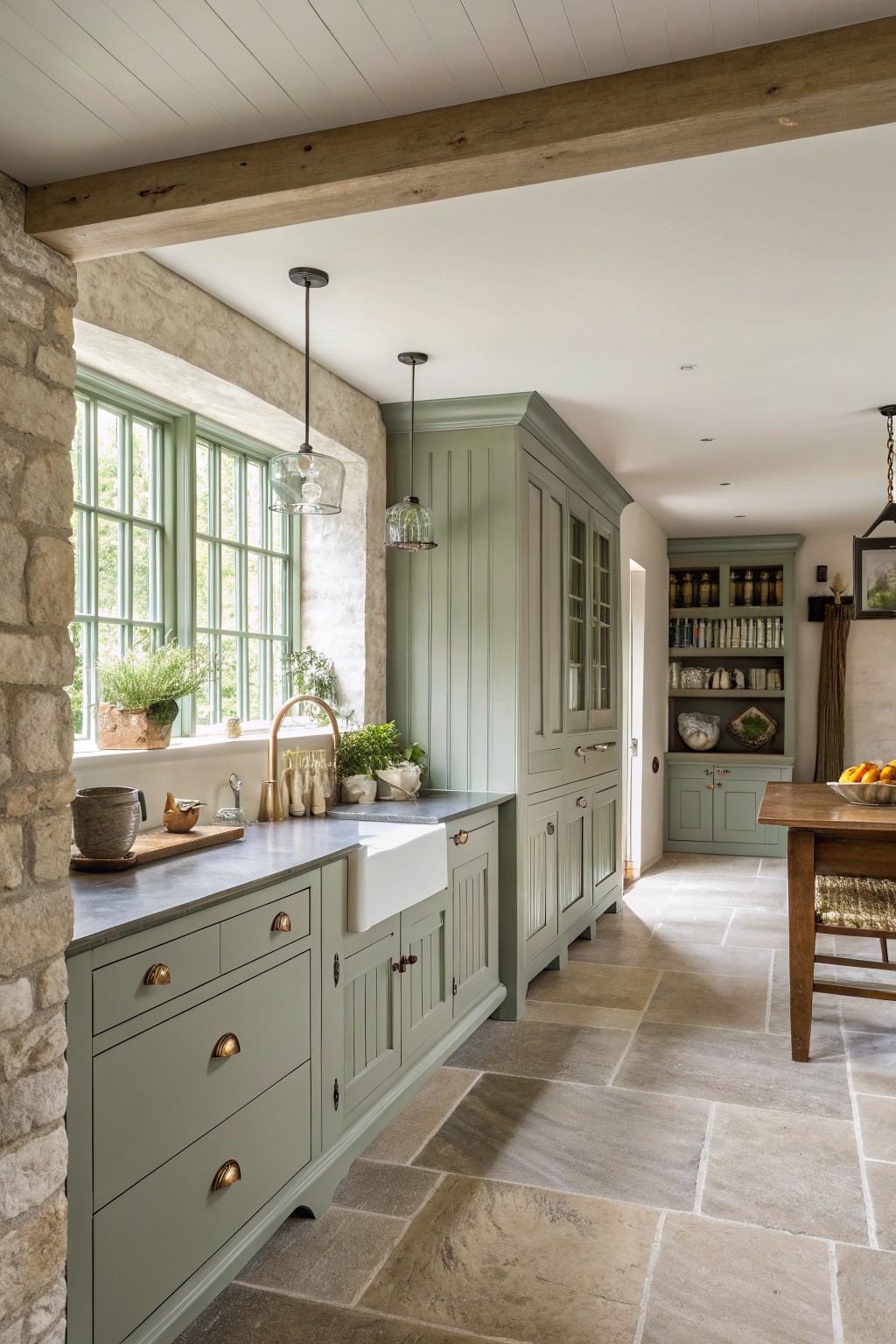
This soft sage green on the cabinets brings a quiet, steady tone to the kitchen without feeling too bold. It sits in that middle ground between gray and green, which makes it easy to connect to nearby rooms. The shade reads close to Sherwin Williams Evergreen Fog, Farrow & Ball Pigeon, or Benjamin Moore Saybrook Sage.
It holds up well next to wood tones and stone, though it can turn cooler in low light. The color works best in spaces that flow into hallways or living areas where you want something calm but still grounded.
Frequently Asked Questions
Q: How do I pick colors that link the kitchen straight into the hallway without making everything look the same? A: Choose one soft neutral as your base for all the walls. Then shift the tone just a step or two on cabinets or doors so the eye moves easily from room to room while each space still feels distinct.
Q: My living area gets strong afternoon light but the kitchen stays dimmer. How do I keep the palette balanced? A: Use the same main color everywhere yet pick a half-shade lighter version for the kitchen walls. The extra brightness evens out the feel without breaking the flow.
Q: Can I bring in a bit of contrast on trim or is that too risky with farmhouse tones? A: Keep trim in a clean off-white that sits close to your wall color. This adds just enough definition while the overall palette stays calm and connected.