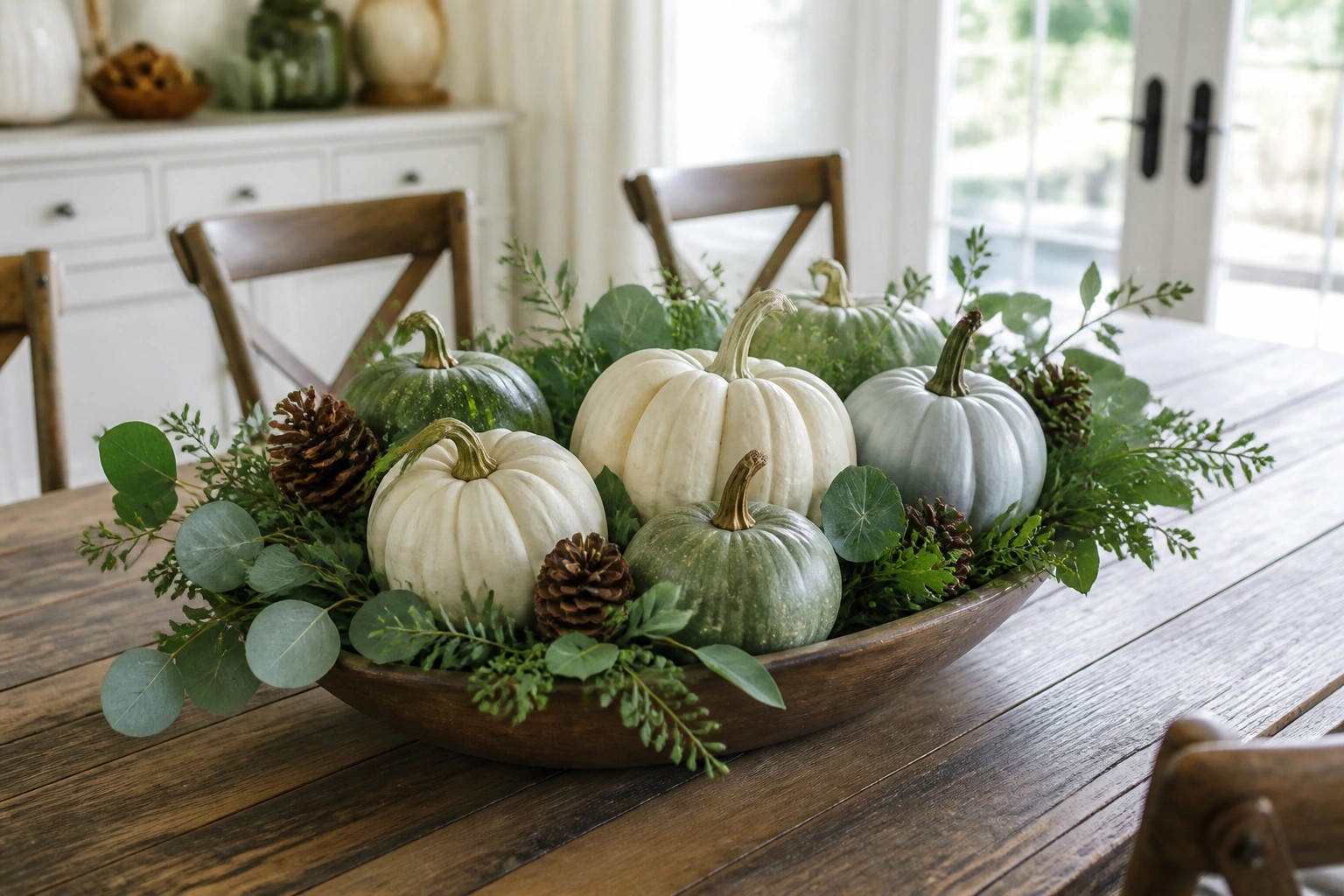
I have found that pumpkin contests reward ideas that go beyond basic carving or painting.
When I plan my own entry I look for ways to combine textures and unexpected elements so the pumpkin feels like a complete scene.
Many displays blend together because they rely on the same stencils and colors year after year.
One well-executed twist usually catches the judges eye faster than several safe choices.
I keep coming back to these approaches because they help any pumpkin hold its own on a crowded table.
Layer Pumpkins For A Tall Centerpiece
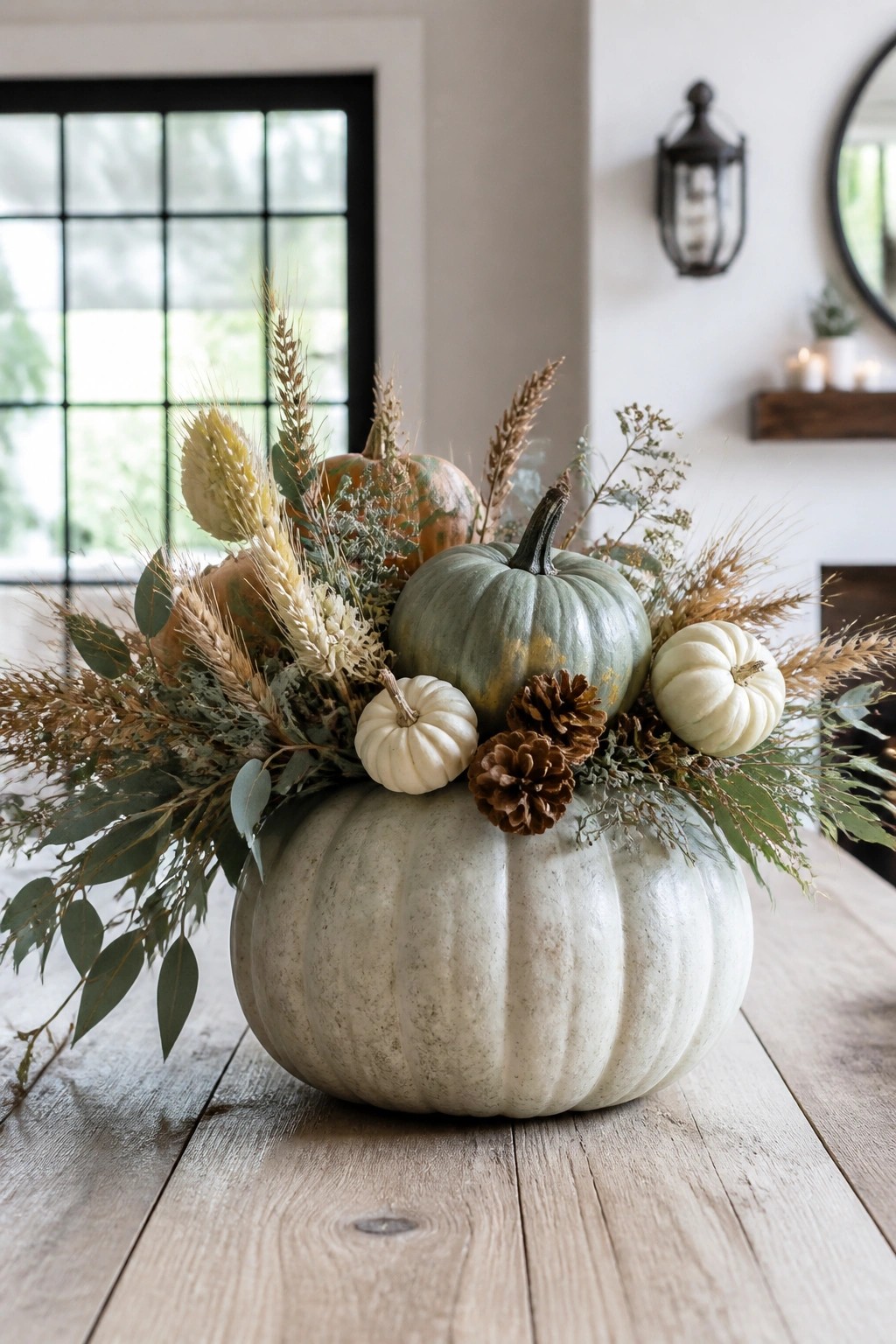
Stacking pumpkins of different sizes and colors gives a simple tabletop display more height and presence without needing extra props. The large white pumpkin at the base anchors everything while the smaller sage green one on top adds contrast and draws the eye upward. Adding a few dried stems and pinecones around the edges keeps the look natural and prevents it from feeling too polished.
This works well on a dining table or kitchen island where you want the pumpkins to be the main focus. Choose one large sturdy pumpkin as your foundation, set a medium one on top for height, then tuck in smaller pumpkins and a handful of dried grasses or cones to fill gaps. Keep the rest of the table clear so the arrangement stands out on its own.
Group Pumpkins Along The Mantel
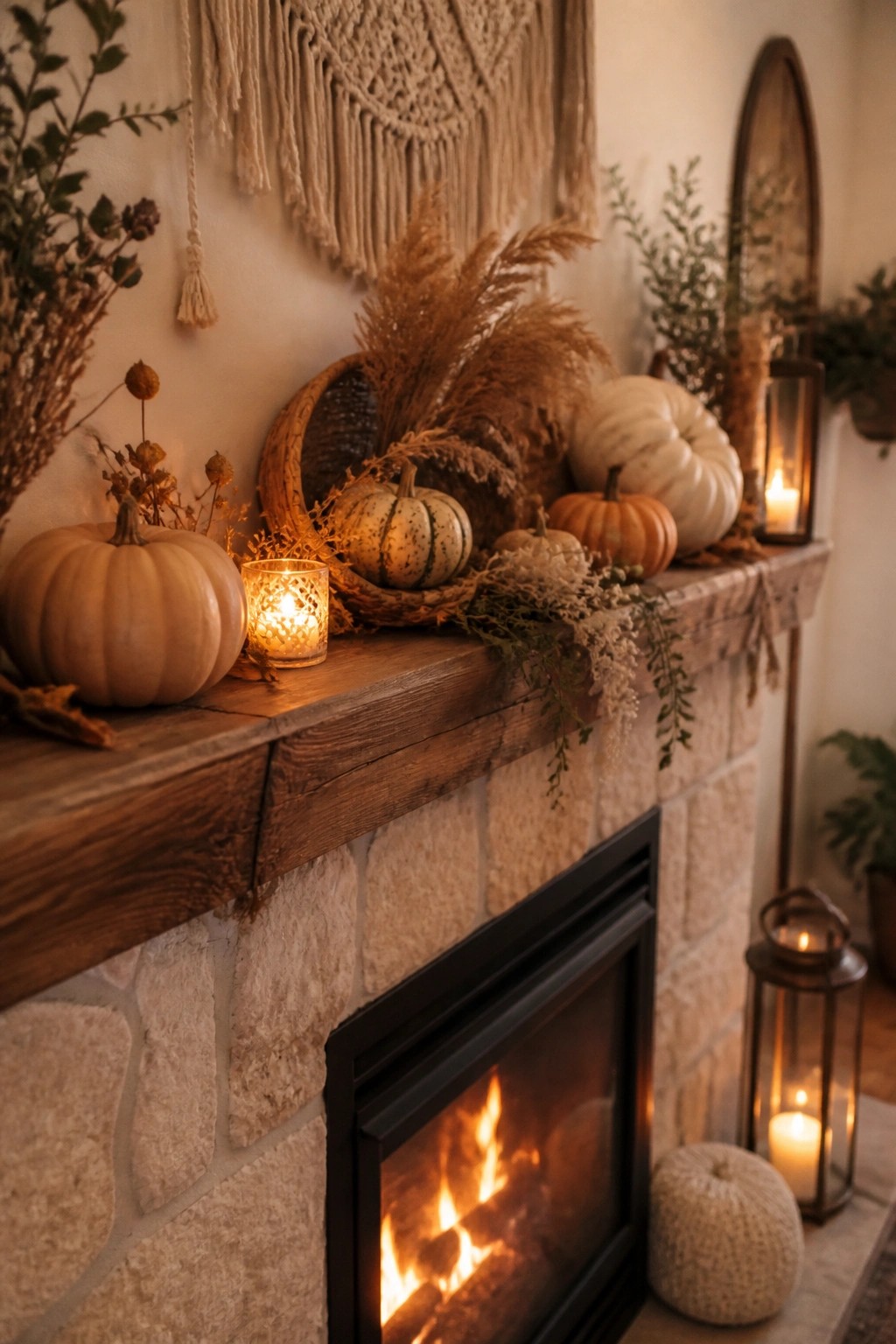
A simple way to highlight your pumpkin decorating efforts is to line them up across a mantel. Different sizes and shades stand out more when kept together in one spot instead of scattered around the room. The fire below adds a bit of warmth without competing with the pumpkins themselves.
Start with three to five pumpkins in a row and adjust as needed. Leave space between them so each one can be seen clearly. Add a couple of low candles if you want extra light, but keep any extra pieces minimal so the pumpkins remain the main focus.
Group Pumpkins By Color On An Entry Console
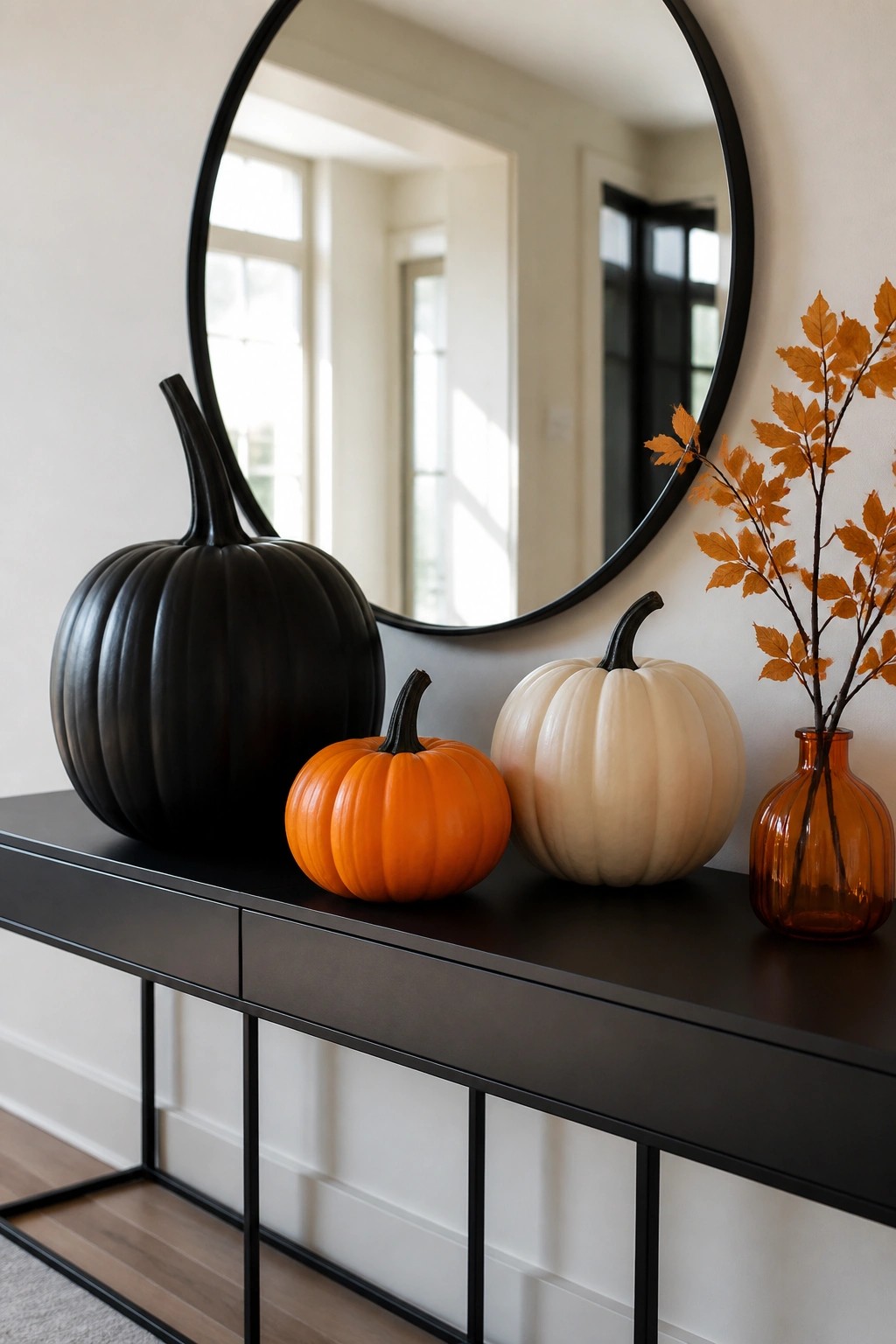
Mixing black, white, and orange pumpkins on a single surface gives a clean Halloween look without needing extra props. The contrast between the matte finishes stands out against a dark console and keeps the display from feeling busy.
Place the largest pumpkin at one end and step the sizes down toward the other side. Add only one small accent like a tinted glass vase if you want a little extra color. This setup works well in an entry because it stays visible from the doorway and takes just a few minutes to arrange.
Turn A Pumpkin Into A Glowing House
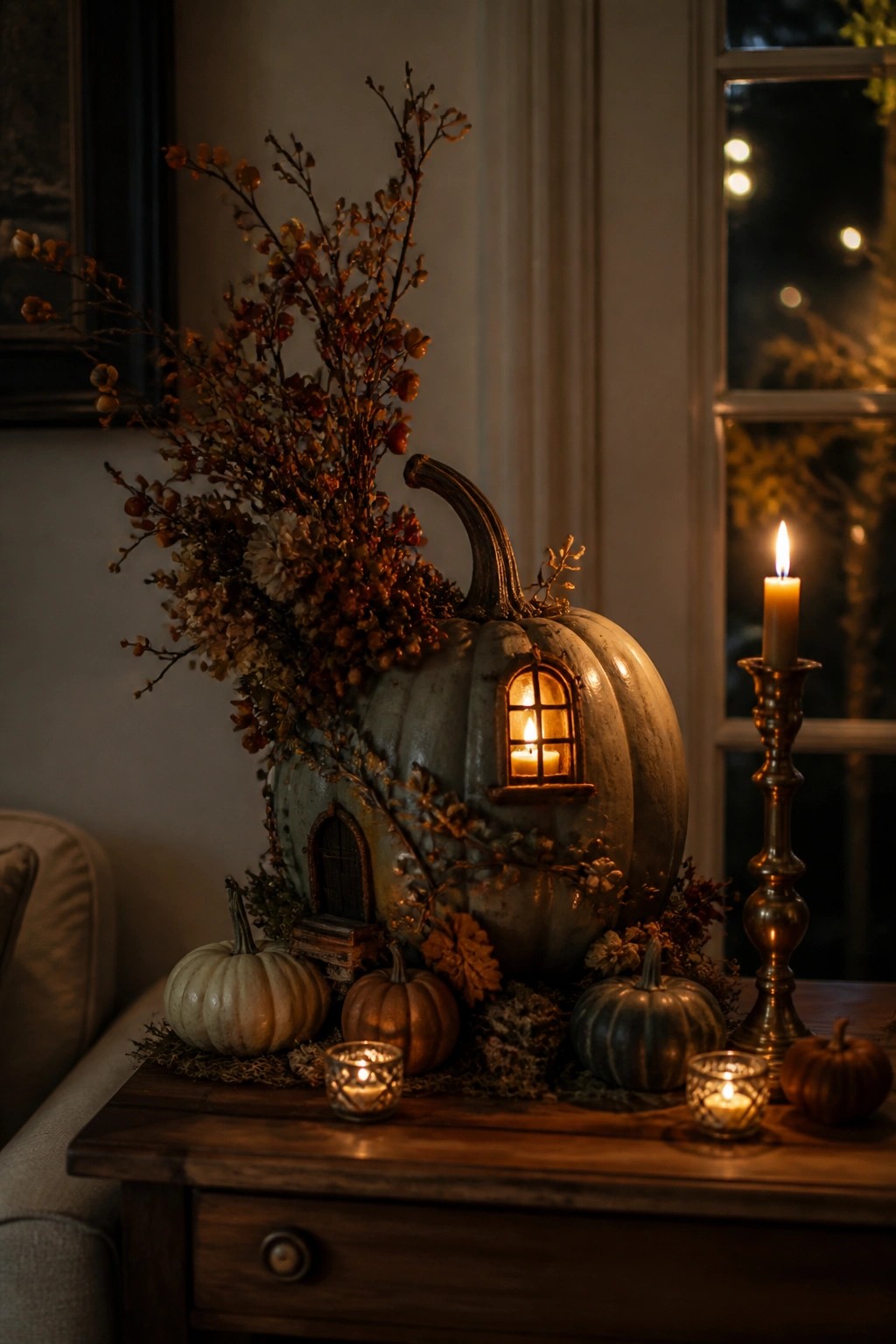
Carving a pumpkin into a miniature house with cut windows and a door creates a strong focal point for any tabletop. The lit interior makes the whole piece stand out even in a dimly lit room, and it feels more finished than a standard carved face.
Set the pumpkin on a tray or wooden surface and place a few smaller pumpkins around the base. Battery operated candles inside the windows keep it safe while still giving off that warm glow. A few dried branches tucked into the top add height without crowding the look.
Group Pumpkins Of Different Colors And Sizes
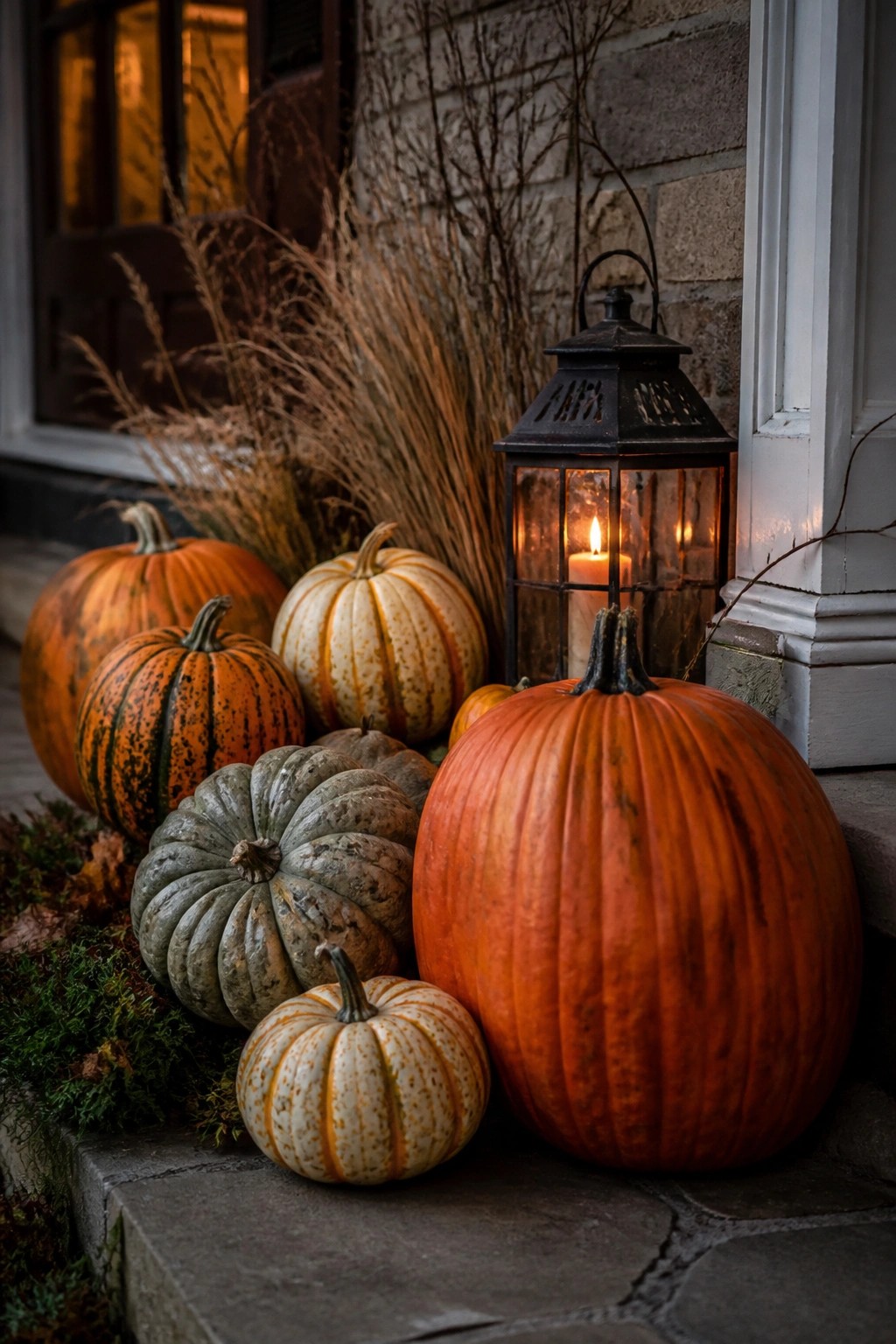
Mixing orange, white, and green pumpkins in one spot gives a porch display more visual interest than using just one type. The variety makes the arrangement stand out in a contest because the eye moves across the different finishes and shapes instead of landing on a single color block.
Place the largest pumpkins at the base and tuck smaller ones around them, then add one dark lantern for a simple focal point. Keep the rest of the steps clear so the pumpkin group stays the main feature. This approach works on any porch or entry steps and needs only a dozen or so pumpkins to feel full.
Use A Painted Pumpkin As A Floral Centerpiece
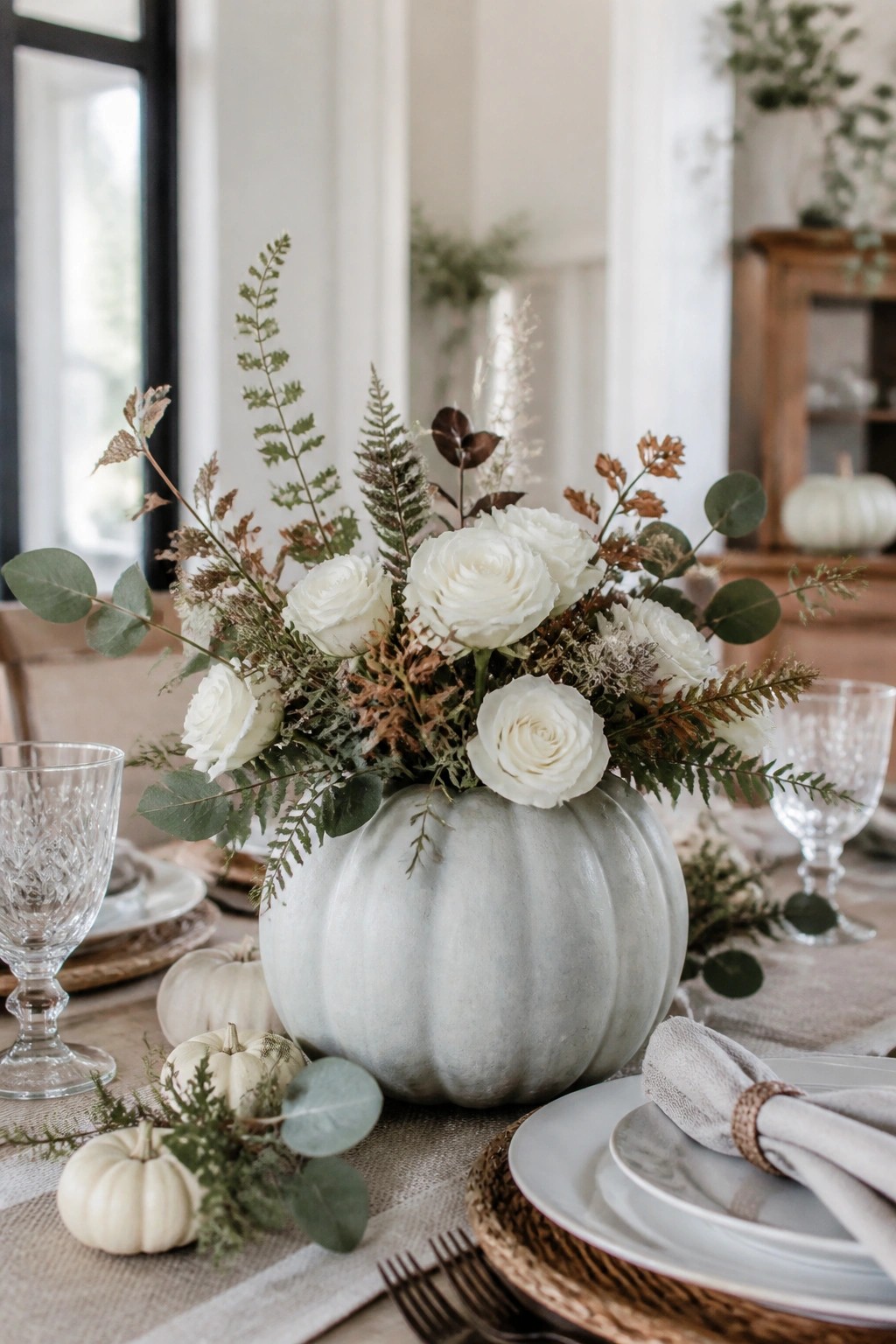
Painting a pumpkin a soft neutral shade and using it as a vase gives you a clean seasonal look that still stands out in a decorating contest. The smooth painted surface lets the flowers take center stage while the pumpkin shape keeps the arrangement tied to fall.
This idea works best on a dining table where you want something simple yet noticeable. Pick a medium pumpkin, cut a wide opening at the top, add a small container inside, and arrange white roses with ferns and eucalyptus. A few smaller unpainted pumpkins around the base help tie the whole setting together.
Arrange Pumpkins Across The Mantel
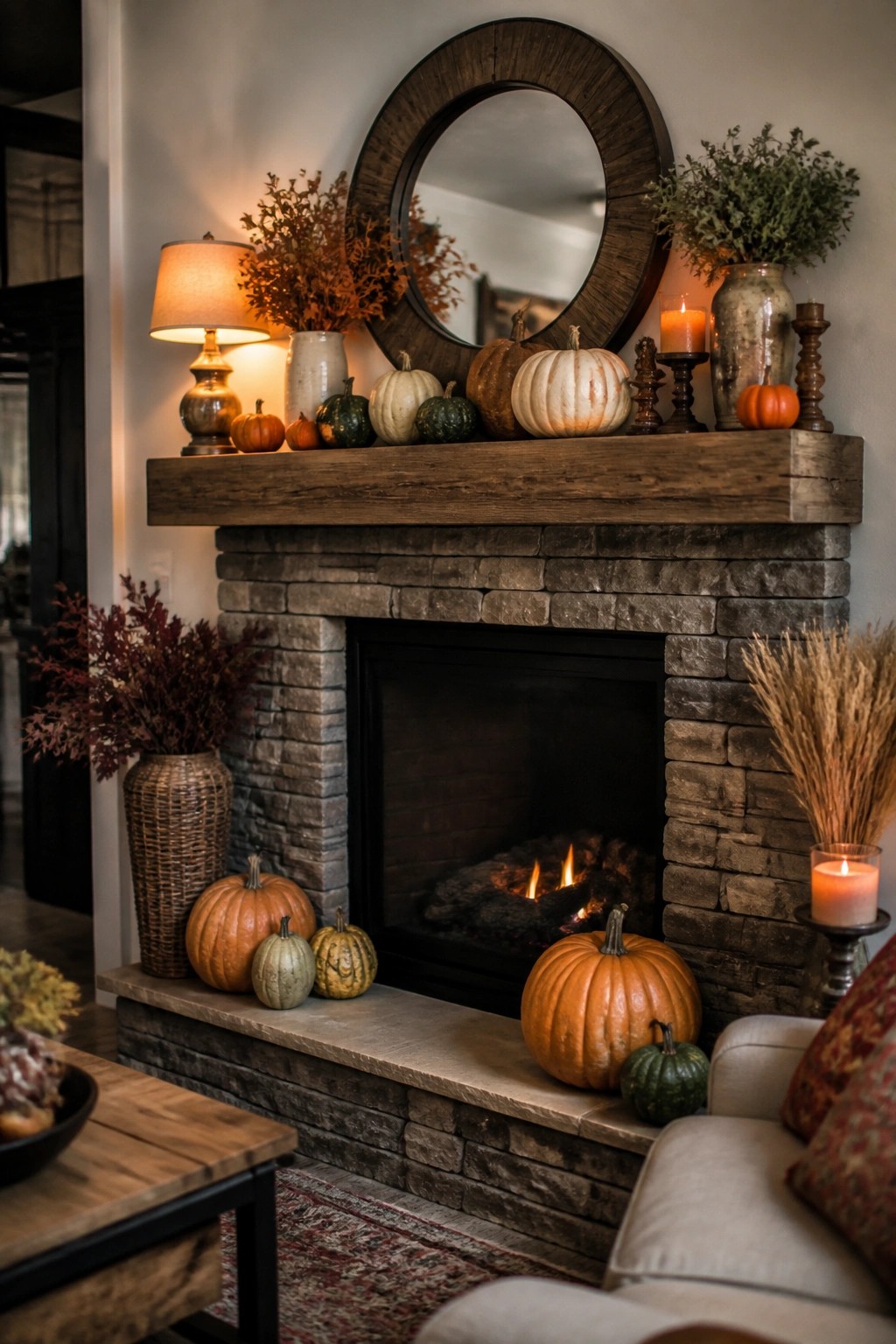
A mantel covered in pumpkins of different sizes and shades makes a simple but effective Halloween display. Mixing bright orange pumpkins with pale white and green ones keeps the look interesting without needing extra props or bright colors. The arrangement draws the eye because the pumpkins sit at varying heights and angles rather than in a straight line.
To copy the idea, start with three or four larger pumpkins on the mantel itself and add a few smaller ones tucked between them. Place one or two more pumpkins on the hearth to extend the grouping downward. Keep any candles or dried stems low so the pumpkins remain the main focus. This works well in living rooms where you want a clear seasonal statement without filling every surface.
Create A Pumpkin Tray On The Coffee Table
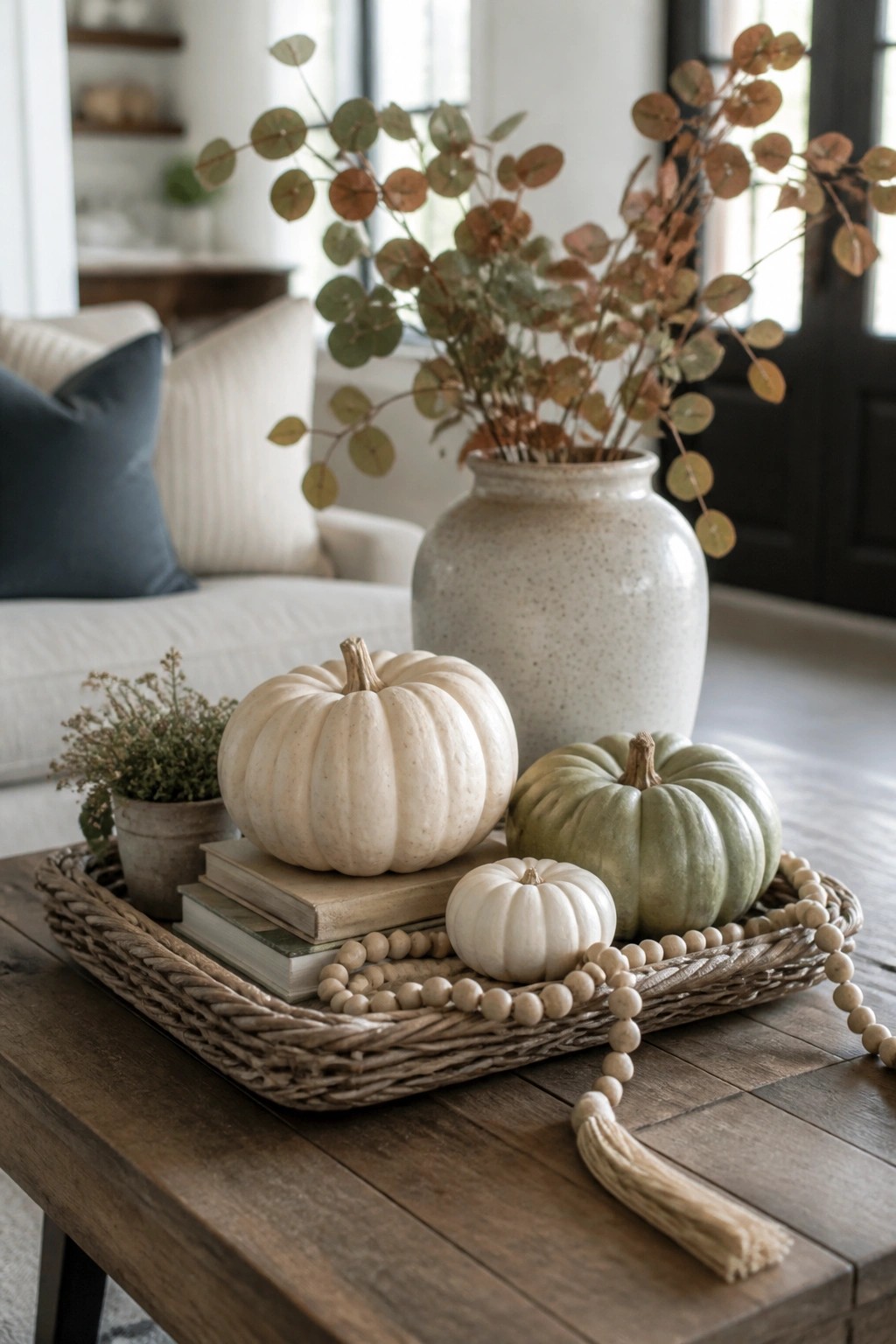
Grouping several pumpkins together on a tray gives the coffee table a clear seasonal focus without much effort. The mix of sizes and soft colors keeps it simple while still reading as intentional. A few supporting pieces like stacked books or a short garland help tie the arrangement together and prevent it from looking scattered.
This setup works well in a living room because it stays low and leaves room for everyday use. Start with a shallow tray, add three to five pumpkins in varying shades, and layer in one or two neutral accents. Keep the rest of the table clear so the pumpkins remain the main feature.
Group Mixed Pumpkins On A Console
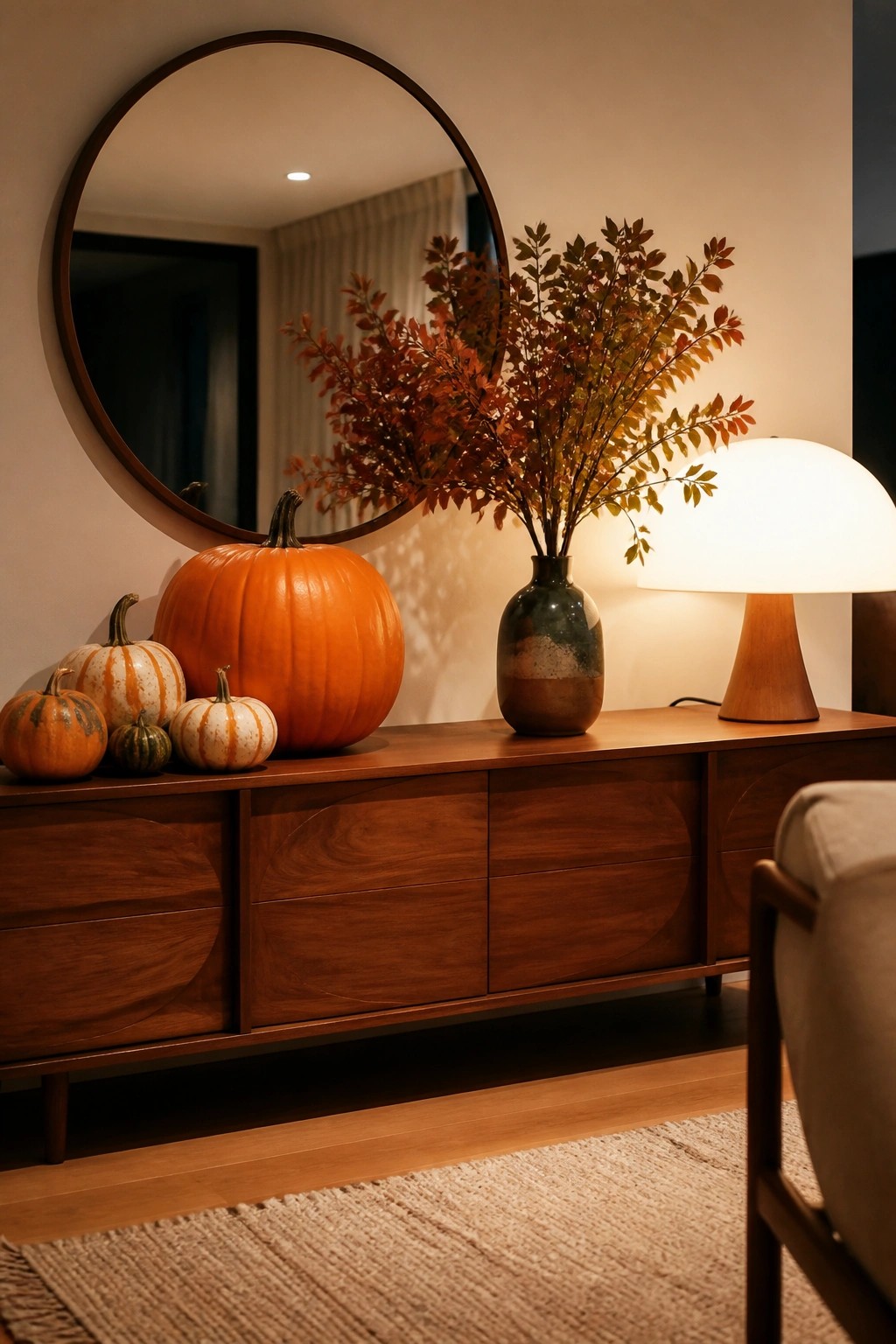
A simple way to stand out in a pumpkin decorating contest is to skip carving and focus on a strong grouping instead. Placing several pumpkins of different sizes and patterns together on a low console creates a clean focal point that reads as intentional without needing extra props.
Use one large pumpkin as the anchor and add smaller ones with stripes or varied shapes around it. Keep the rest of the surface light so the pumpkins remain the main feature. This setup works well in an entry or living area where people pass by often.
Arrange Pumpkins With Varied Finishes In One Cluster
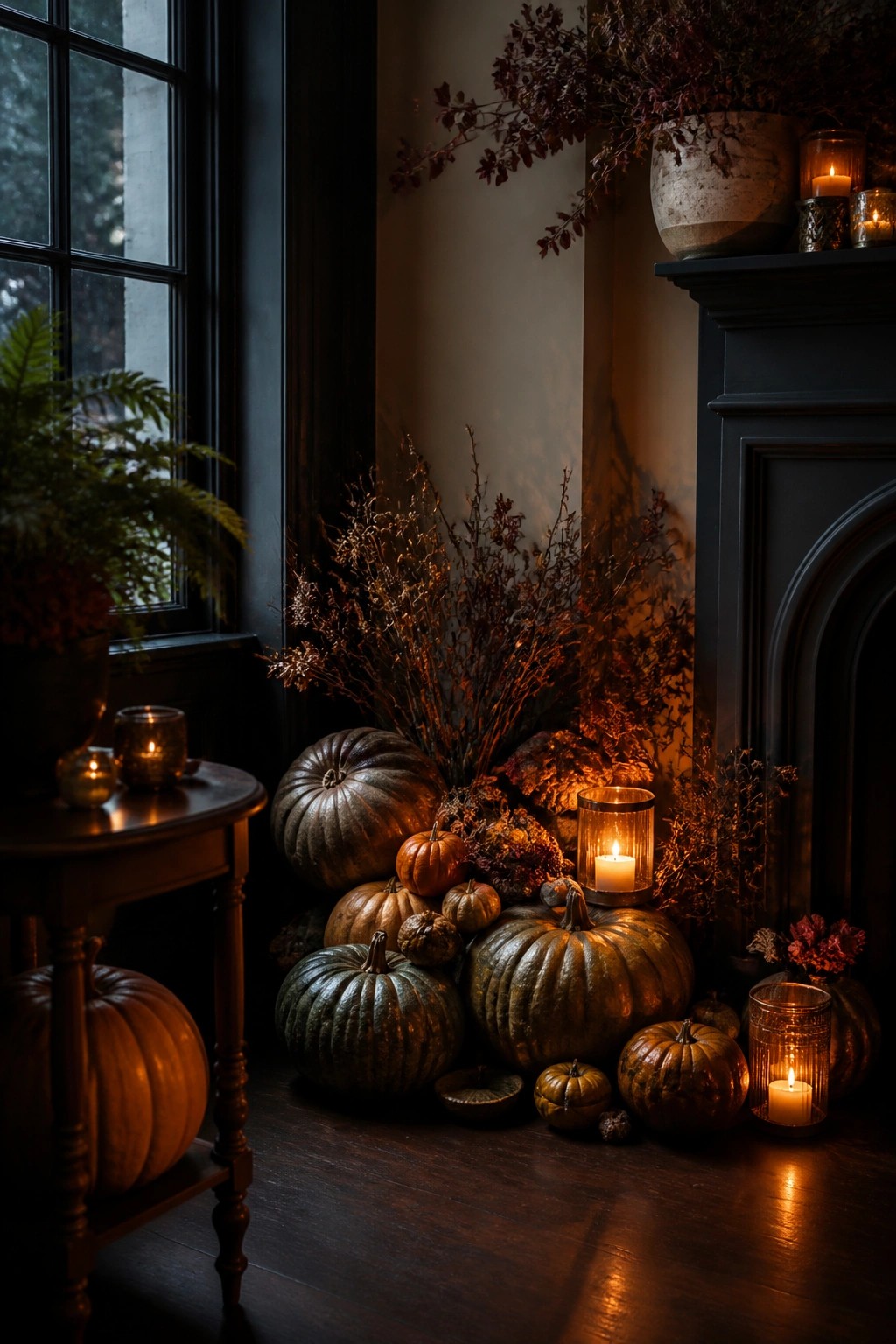
Mixing pumpkins that have different surface treatments makes a strong focal point for a contest entry. Some look lightly metallic while others stay matte or natural, and the mix keeps the group from looking flat or one-note.
Place the pumpkins together on the floor near a fireplace or in a corner. Add a few glass candle holders and some dried branches in the middle to fill gaps. Use different sizes so the arrangement feels full without needing many extra pieces.
Group Pumpkins In A Bowl For A Clean Display
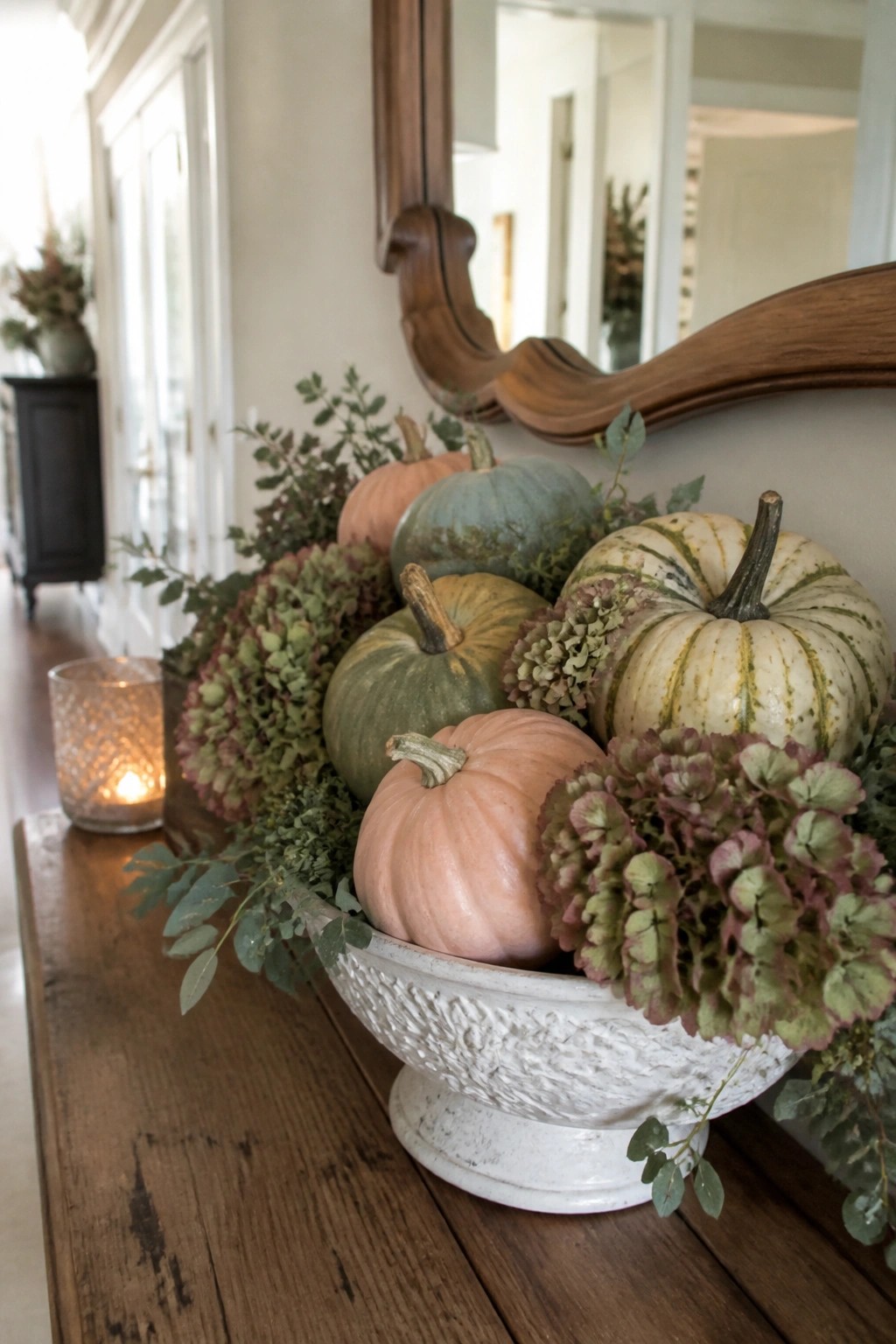
A bowl filled with pumpkins of different colors and sizes makes a strong entry for a pumpkin decorating contest. The mix of peach, green, and striped varieties draws attention without needing extra props or carving. Placing the bowl on a console keeps the focus on the pumpkins themselves.
This setup works best in an entryway or hallway where people can see it up close. Use three to five pumpkins that vary in shape and tone, then tuck in a few dried flowers for texture. Keep the rest of the surface simple so the arrangement stays the main feature.
Turn A Pumpkin Into A Floral Vase
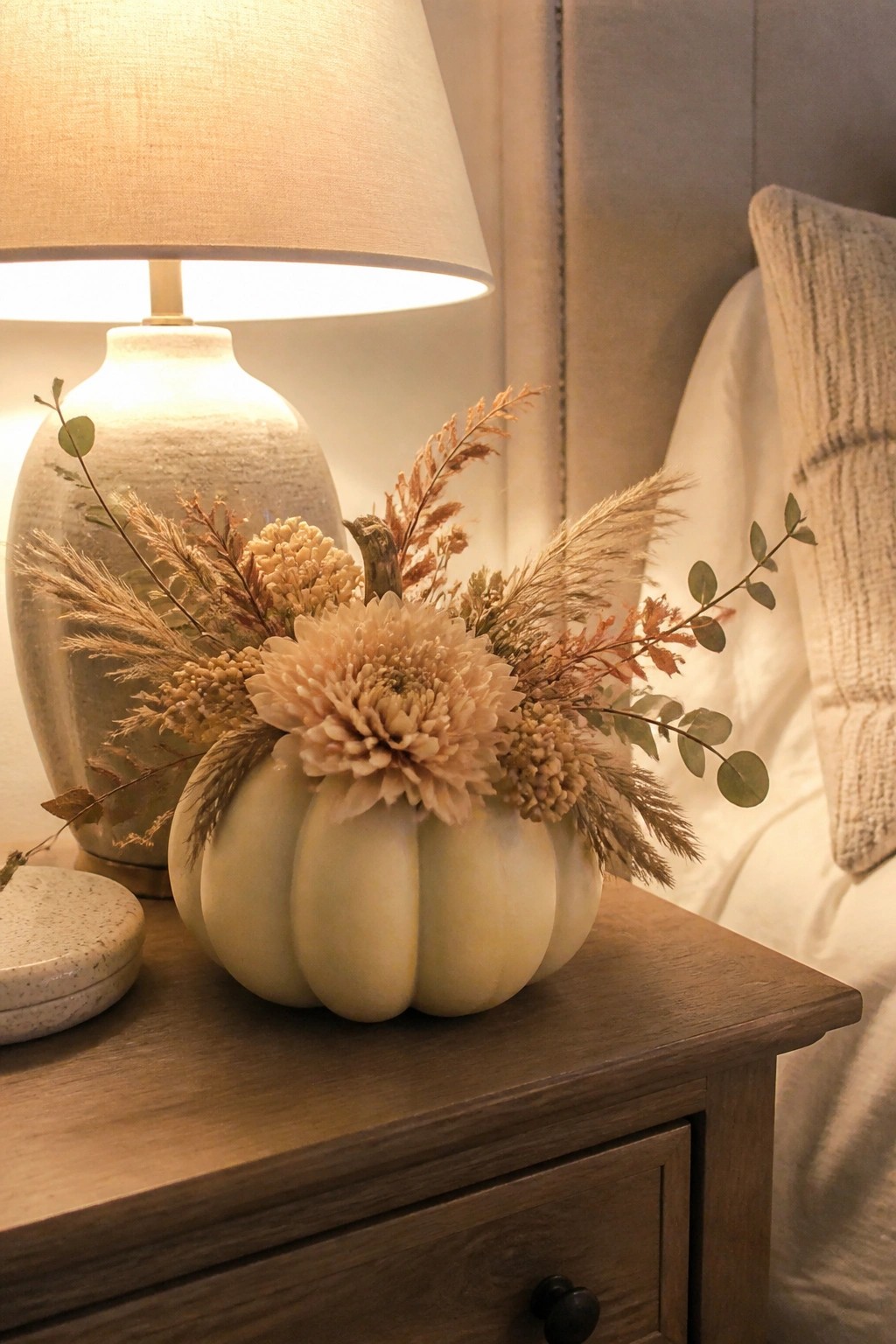
A simple white pumpkin works well as a vase when filled with dried flowers and grasses. The arrangement stands out because the pumpkin itself becomes the container, giving the display a clean shape without needing extra containers or bright colors.
Place one on a nightstand or side table where the height of the flowers can be seen clearly. Use a few stems of pampas grass and larger blooms to fill the opening, and keep the rest of the surface simple so the pumpkin stays the main focus.
Group Pumpkins In A Big Table Display
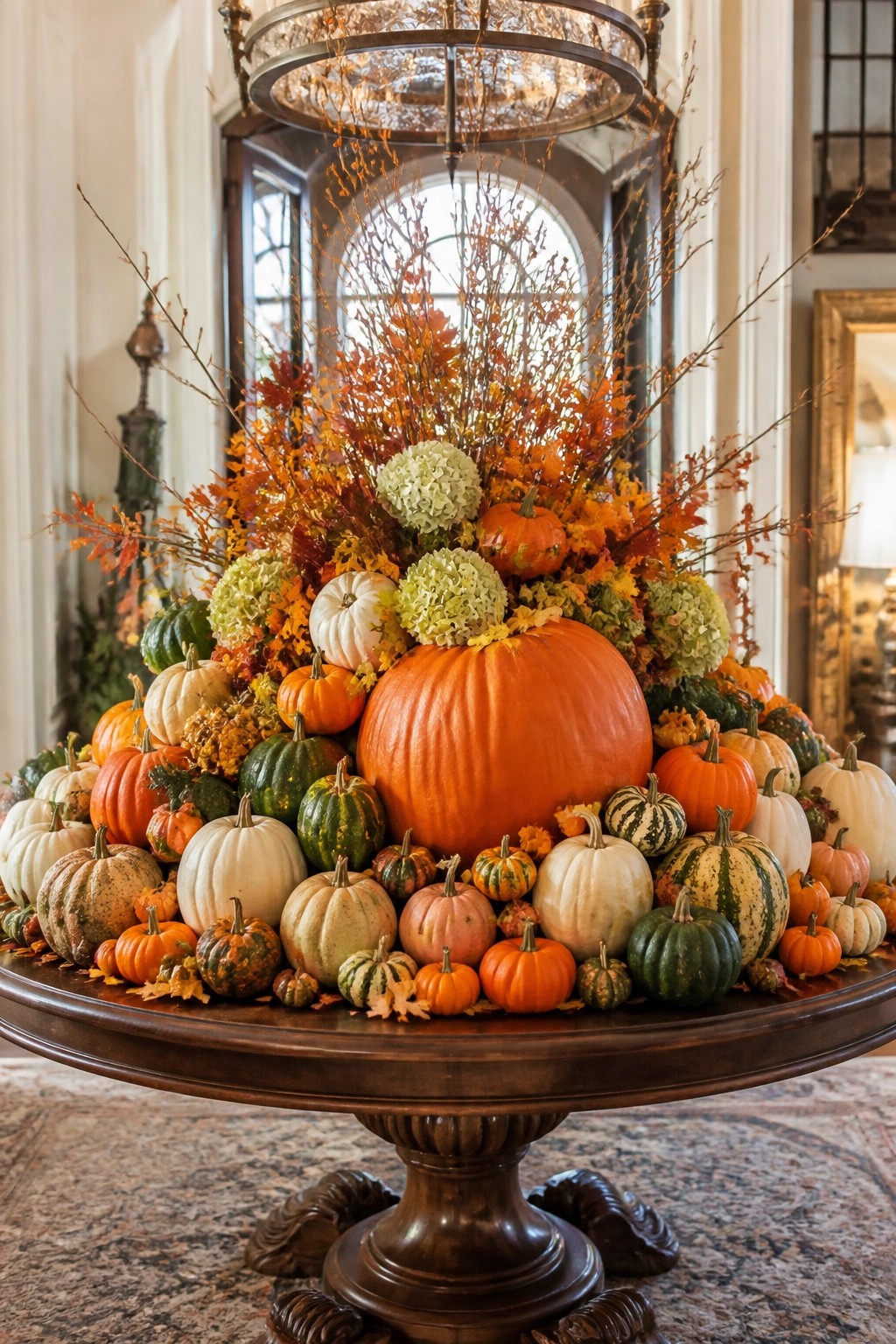
A large cluster of pumpkins in different sizes and colors makes a strong entry for a pumpkin decorating contest. The mix of smooth orange, white, green, and striped varieties creates visual interest without needing carved faces or extra props. One big central pumpkin anchors the whole arrangement while smaller ones fill in around it.
Place the display on a dining table or entry table where the height and volume can be seen from across the room. Use real or faux pumpkins, add a few bare branches for height, and keep the supporting elements simple so the pumpkins stay the focus. This approach works well indoors and shows off variety rather than individual carving skill.
Group Pumpkins In Muted Tones
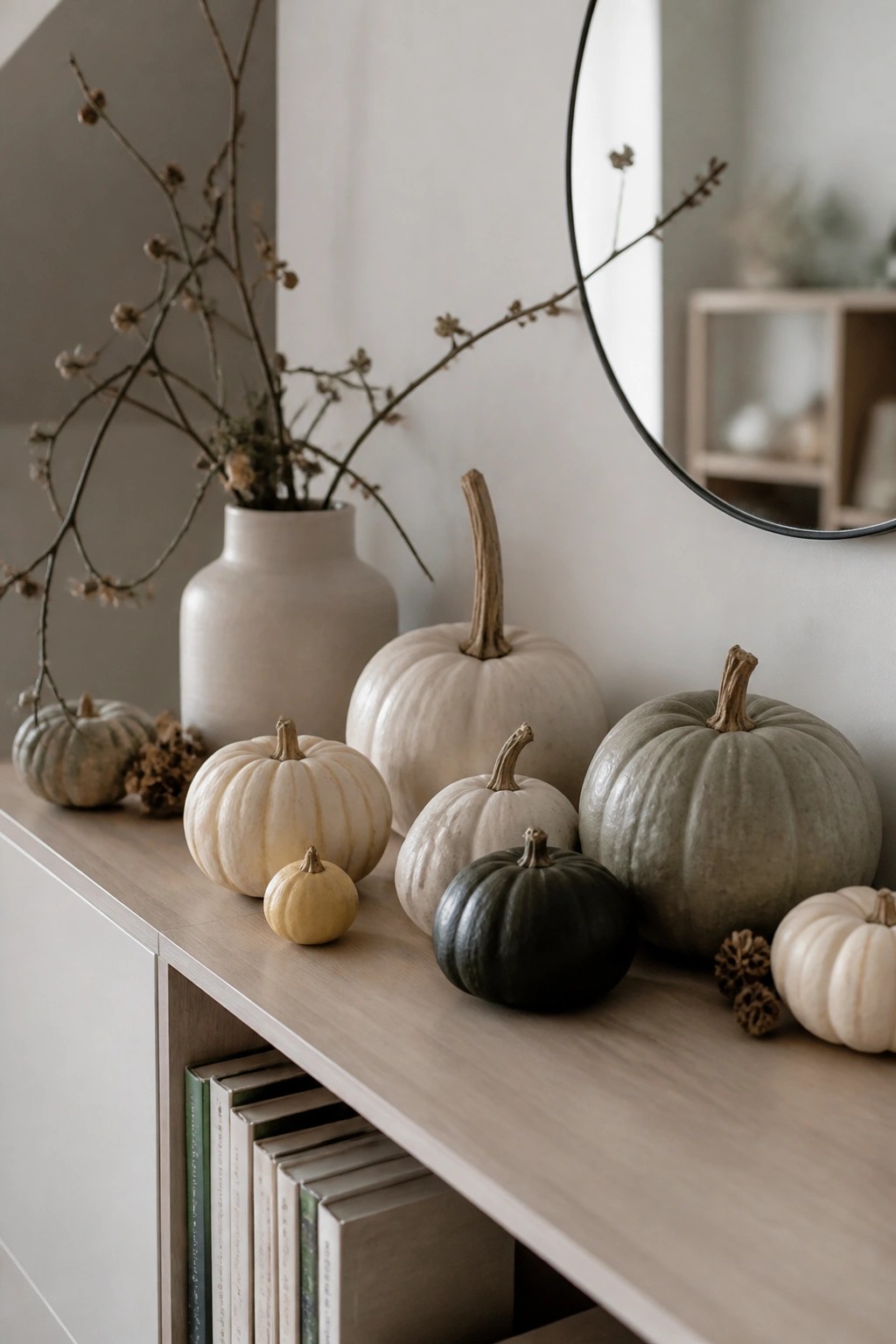
Using pumpkins in soft off-white, sage, and charcoal shades creates a calm Halloween display that still feels seasonal. The variety in size and finish gives the arrangement visual interest without needing bright orange or bold patterns.
Place the pumpkins in a loose row across a console or entry table, mixing a few smaller ones in front for depth. Keep the surrounding pieces minimal so the different pumpkin colors stand out clearly.
Group Pumpkins In Mixed Metallic Finishes
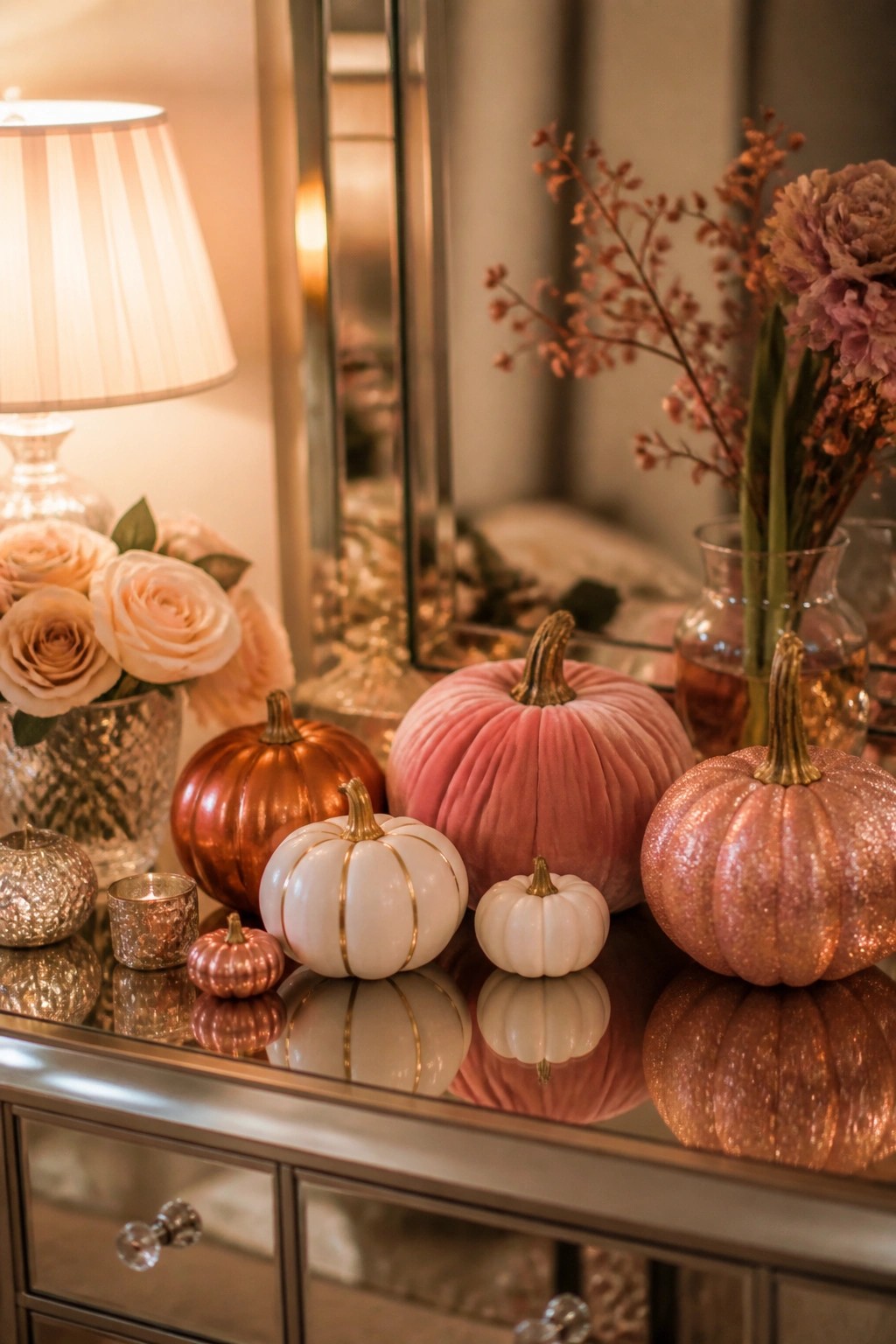
A simple way to stand out in a pumpkin decorating contest is to skip bright orange and go for a mix of metallic and neutral finishes instead. The pumpkins here use copper, glitter rose gold, soft velvet pink, and white with gold stripes. That combination creates contrast and catches the light without looking busy.
Place the largest pumpkins in the back and work smaller ones toward the front so every finish shows up. Add just a couple of supporting pieces like a lamp or flowers so the pumpkins remain the main focus. This approach works well on a console, entry table, or mantel where people can see the details up close.
Arrange Mixed Pumpkins In A Tray
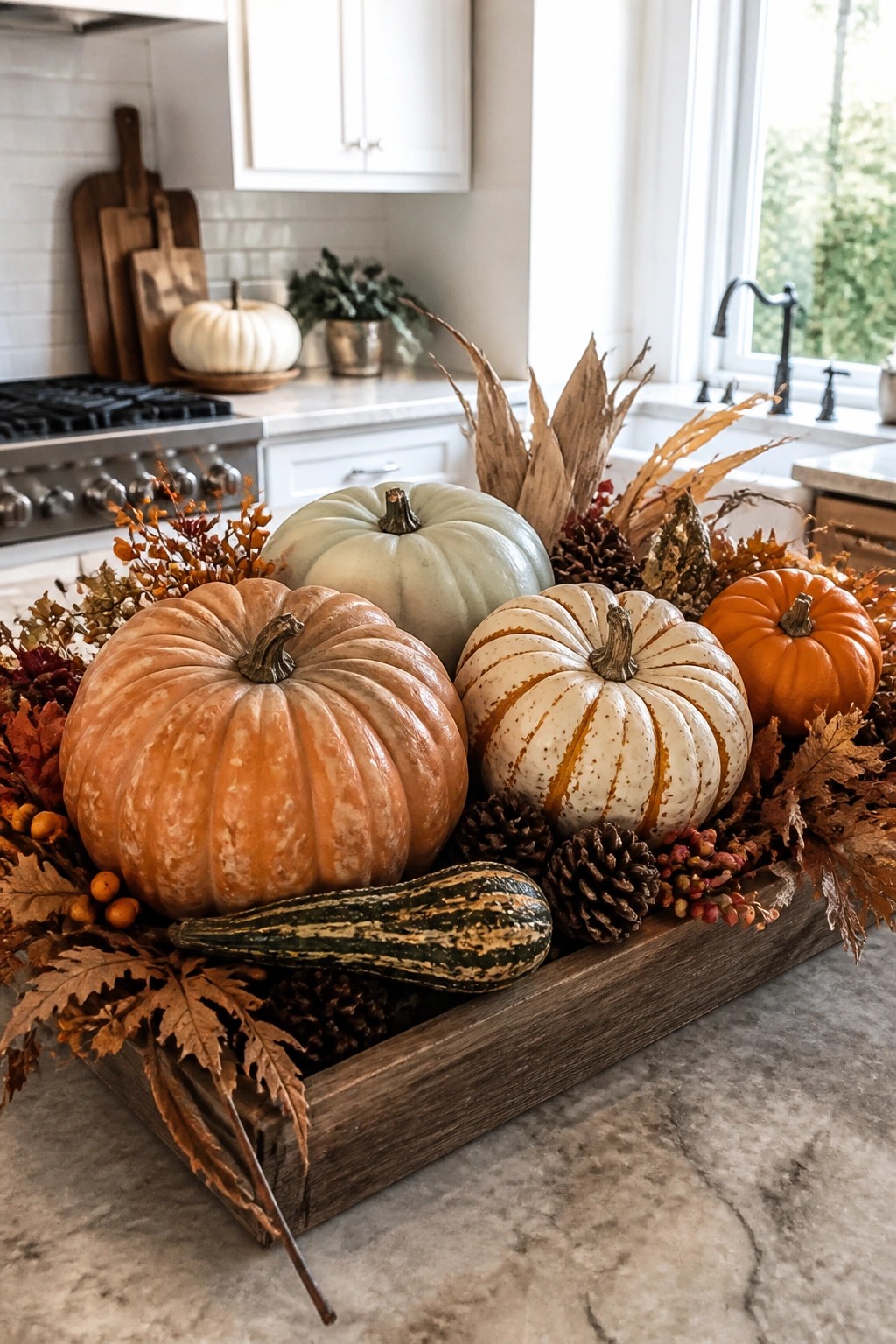
A wooden tray filled with different pumpkin varieties makes a simple but effective display that shows off shape and color without much effort. The mix of smooth orange, white, and pale green pumpkins plus the striped gourd creates enough variety to catch attention while staying contained in one spot.
Set the tray on a kitchen counter or island where people gather. Add a few pinecones and dried leaves around the edges to fill gaps and keep the arrangement from looking scattered. This works best when you limit the number of pieces so the pumpkins remain the clear focus.
Cluster Pumpkins On A Bench For The Porch
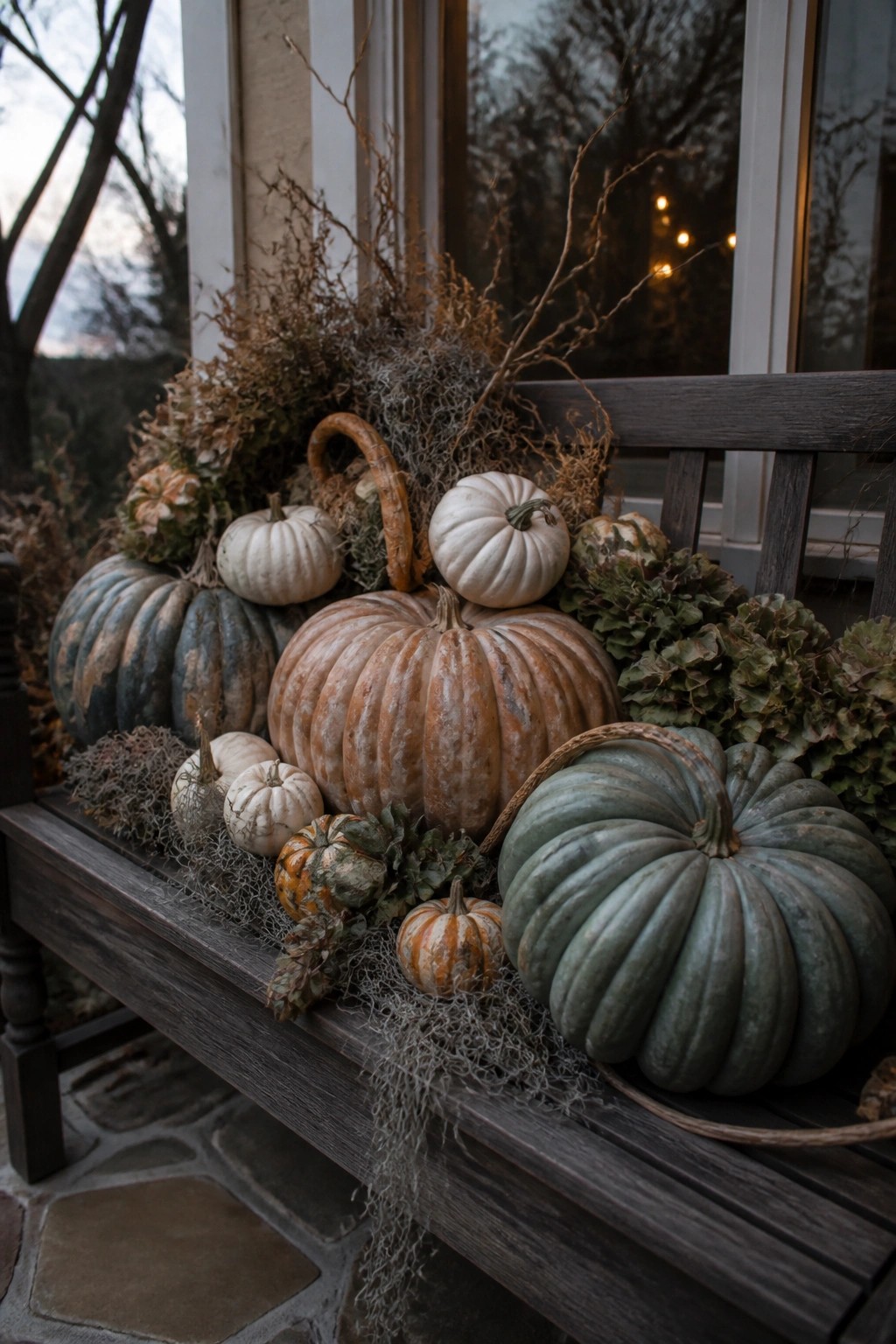
A simple way to make an entrance stand out is to line a bench with pumpkins in different sizes, shapes, and muted colors. The mix of white, blue-green, and faded orange varieties creates interest without needing extra props or bright Halloween colors.
Place the largest pumpkins toward the center or back and tuck smaller ones in front with a few stems of dried grass. This works well on a front porch or entry step where people pass by often, and it stays effective even after the holiday because the pumpkins can stay until they naturally fade.
Arrange Pumpkins Across The Mantel
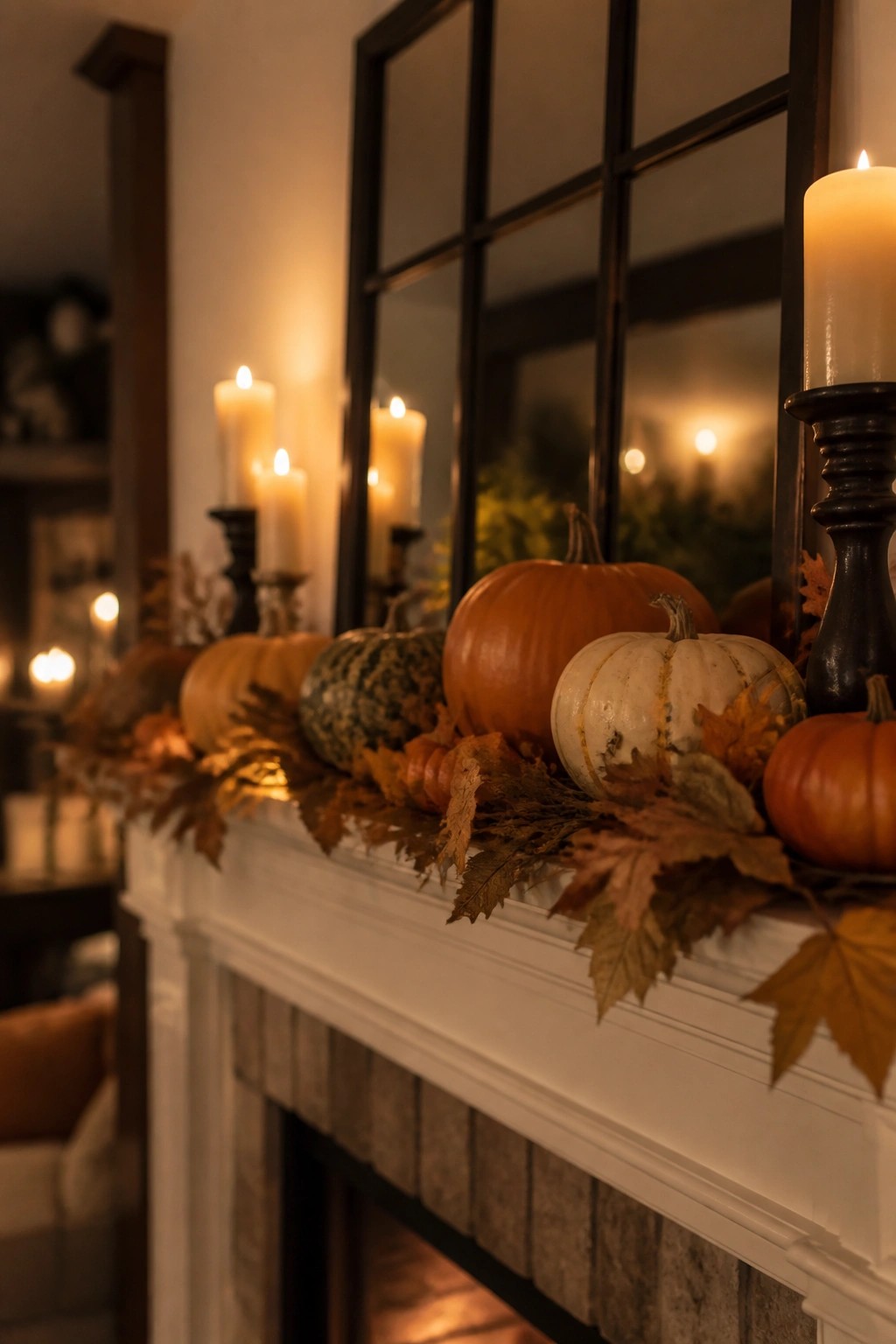
A simple row of pumpkins in different sizes and colors makes a clean Halloween statement on the mantel. The mix of bright orange, pale white, and one speckled gourd keeps the look interesting without needing extra props or bright colors.
Set the largest pumpkins in the center and work outward with smaller ones. Tuck a few dried leaves underneath to fill gaps, then add black candle holders at each end. This works well on any mantel and takes only a few minutes to put together or take down after the holiday.
Frequently Asked Questions
Q: How do I keep my carved pumpkin looking fresh for the contest?
A: Scoop out all the insides right away. Soak the pumpkin in a light bleach solution for a few minutes then dry it well. This step slows down the bacteria that cause rot fast.
Q: What if I don’t have steady hands for detailed carving?
A: Switch to painting your pumpkin with acrylics instead. Bold patterns and scenes stand out just as much in a contest. Stencils help you get sharp lines without needing perfect control.
Q: How do I move my decorated pumpkin to the event safely?
A: Set it inside a box with some towels for cushioning. Hold the box level and keep other items off the top during the trip.


