I have always had a soft spot for black paint, especially when I want a space to feel a little more defined and pulled together.
It is one of those colors that can look bold one minute and surprisingly easy the next, depending on how you use it.
In this roundup, I pulled together some of my favorite Benjamin Moore black paint colors that really stand out in the best way.
Some feel crisp and modern, others lean a bit softer and more lived in, which I honestly prefer for everyday homes.
If you are thinking about going darker, this is where I would start.
A Soft Black That Feels Lived In
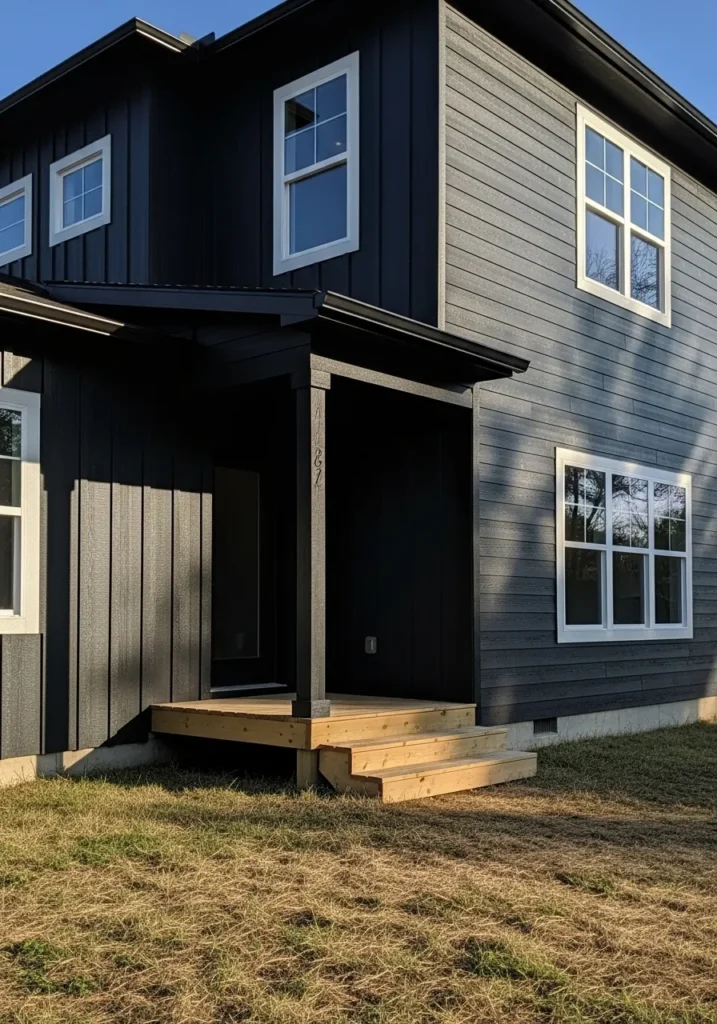
This reads closest to Benjamin Moore Black HC-190, a soft black that leans just a bit muted instead of sharp. It has that slightly relaxed look you often see on modern farmhouse exteriors, especially next to simple white window trim and natural wood steps. It’s not a harsh black. It feels a little worn in, which makes it easier to live with.
The undertone sits on the cooler side, but not icy. In bright light it can show a touch of charcoal, while in shade it settles into a true deep black. It works well on siding like this, especially if you mix in warm wood or creamy whites. One thing to watch is how flat it can feel on large surfaces, so adding trim or texture helps break it up a bit.
A Warmer Black For Exteriors
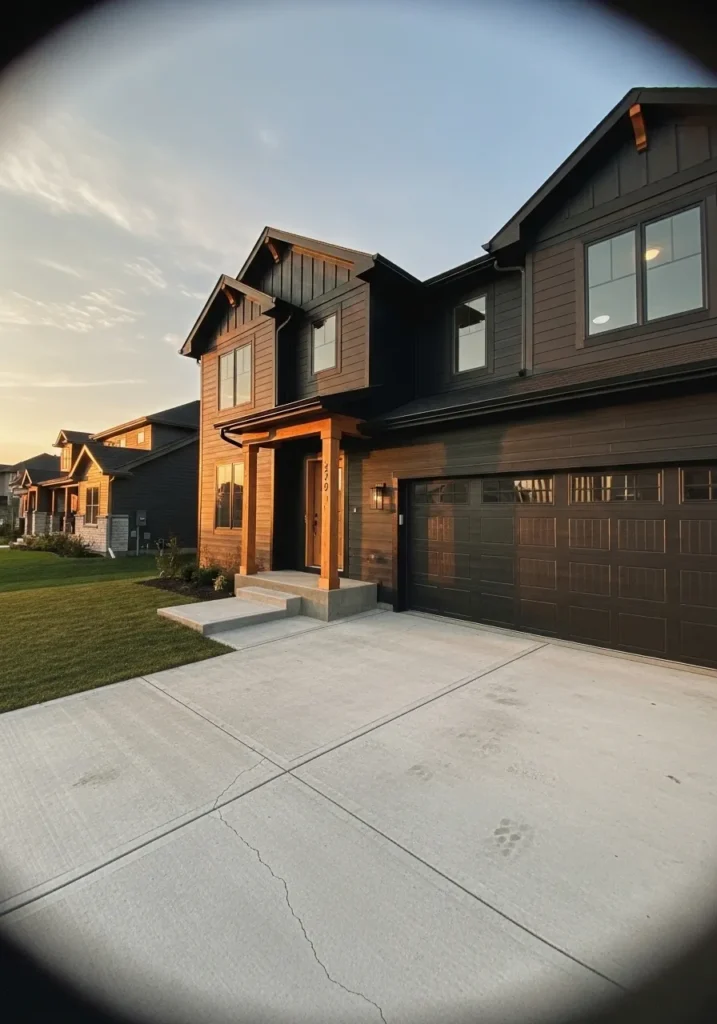
This looks closest to Benjamin Moore Black Iron 2120-20, a black that leans just a bit warm instead of cool. It doesn’t read as sharp or inky. There’s a softness to it, especially next to the natural wood posts at the entry, which makes the whole exterior feel more relaxed and easier to live with.
The undertone has a brown base, so in certain light it can shift toward a deep charcoal rather than a true jet black. That works well on larger surfaces like siding where a flat black might feel too heavy. It pairs nicely with wood, concrete, and even warmer whites. If you want a black that feels a little less stark, this is a good direction to look.
A Deep Black With A Slight Blue Cast
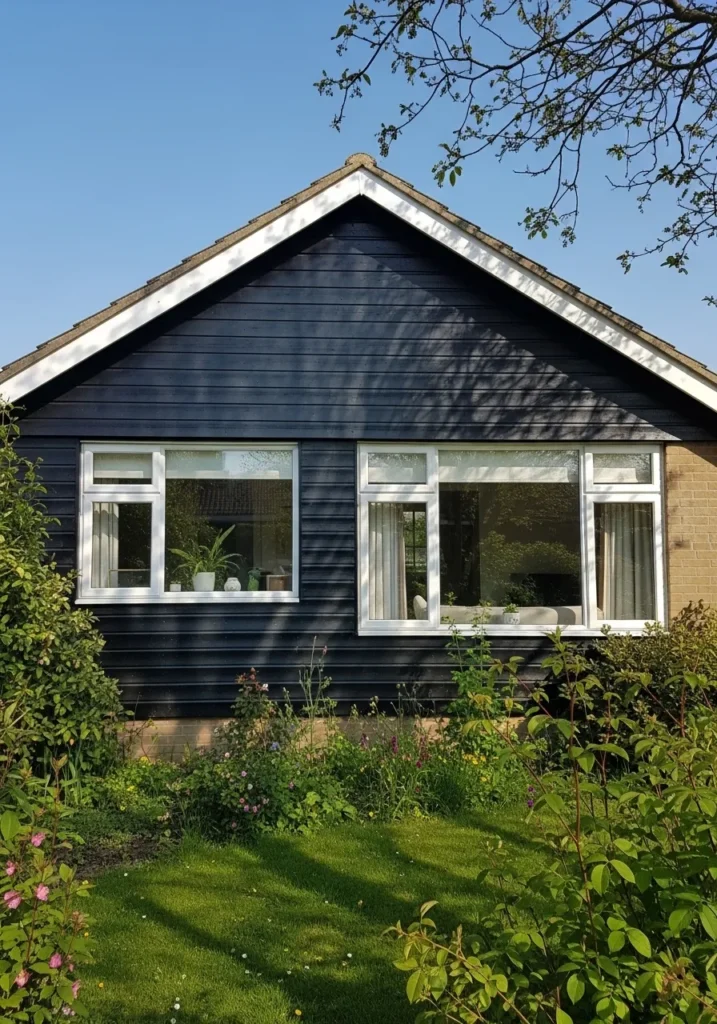
This feels very close to Benjamin Moore Hale Navy HC-154 used as a near-black, or possibly Benjamin Moore Black Sapphire 2063-10, both of which read like a black with a soft blue undertone. It’s not a flat black. There’s a subtle color shift in it, especially noticeable against the crisp white window trim, which gives it a cleaner, sharper look.
The undertone leans cool, and that blue hint comes out more in brighter light. In lower light, it settles back into a true dark tone. It works well on siding like this where you want contrast but still a bit of interest. Pairing it with bright whites keeps it fresh, while too many warm elements nearby can make the color feel slightly out of place.
A Clean True Black For Modern Walls
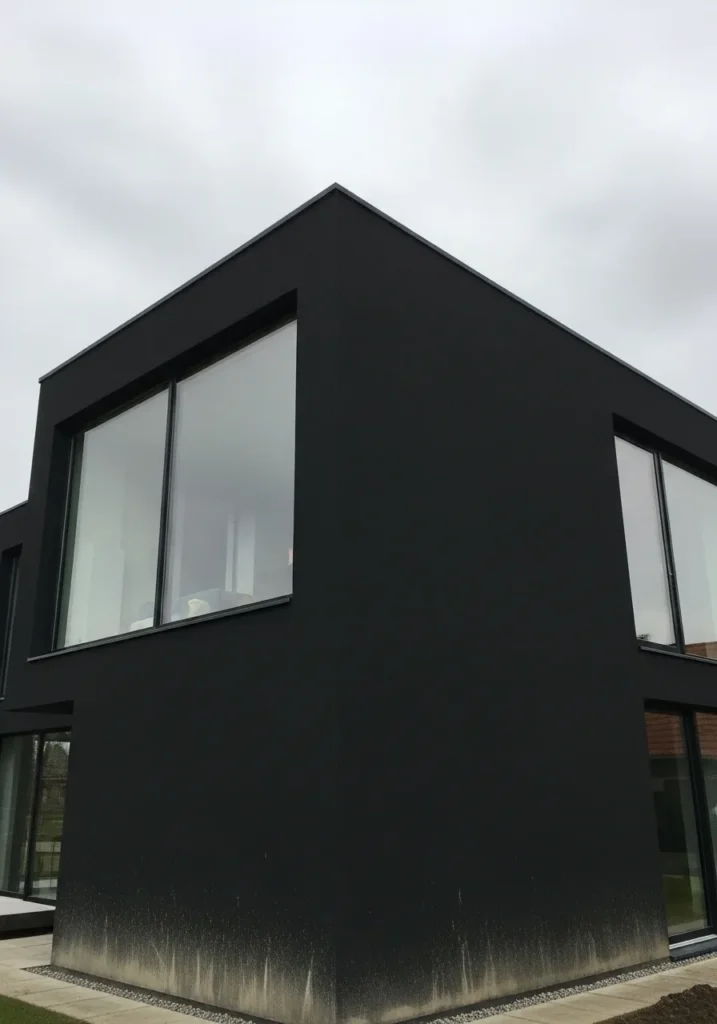
This looks closest to Benjamin Moore Black 2132-10, a true black that reads very neutral and clean. It doesn’t lean warm or cool in an obvious way. On a smooth exterior like this, it comes across as solid and even, which is part of the appeal. It feels simple and direct.
The lack of strong undertone means it holds steady in most lighting. It stays black, which is not always the case. That makes it a good pick for modern shapes and large wall areas where you want consistency. Pair it with clear glass and minimal trim and it stays sharp. One thing to keep in mind is how easily marks and dust can show, especially near the base, so finish and upkeep matter a bit more here.
A Soft Black For Urban Exteriors
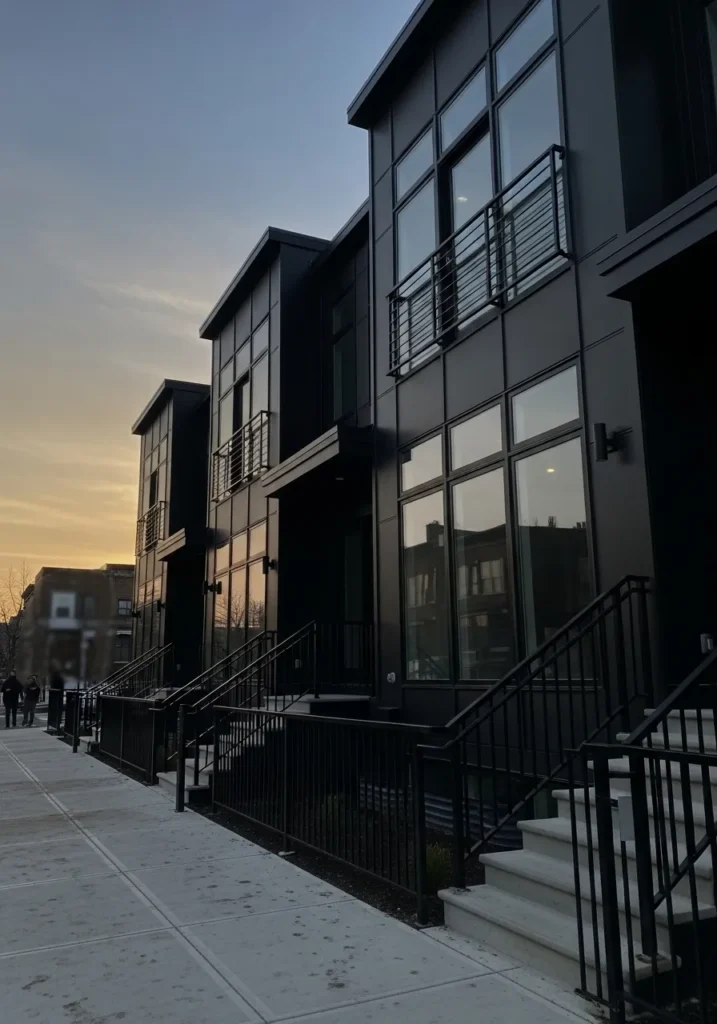
This looks closest to Benjamin Moore Onyx 2133-10, a softer black that doesn’t feel too sharp or heavy. It has a slightly muted look, which works well on these flat panel surfaces and large window walls. The color reads calm and even, not overly bold, which makes it easier to use across a full row of homes.
The undertone leans just a touch cool, but it stays fairly neutral overall. In changing light, it can shift between a true black and a very dark charcoal. It pairs nicely with black metal railings and glass, keeping everything consistent without too much contrast. If anything, you just want to make sure there’s enough texture or variation so the finish doesn’t feel too flat.
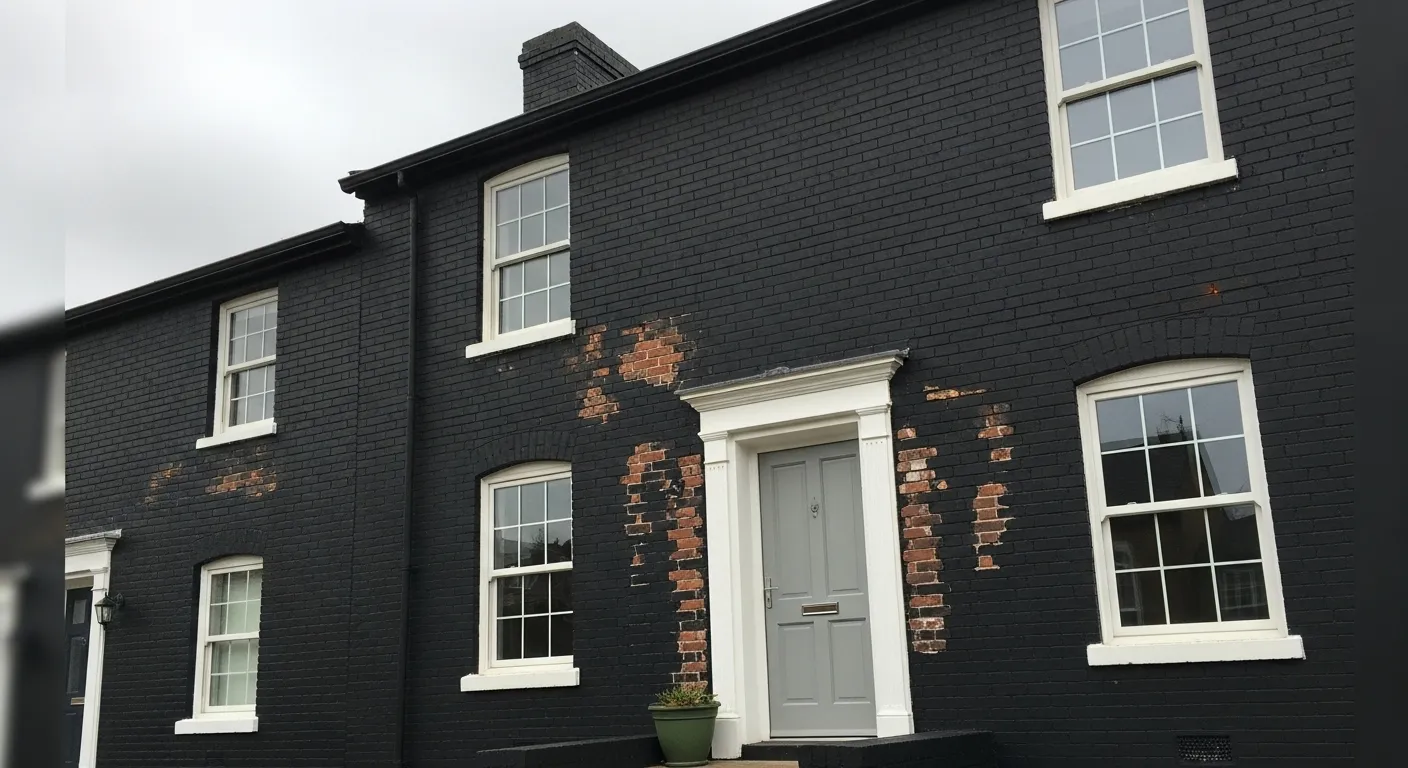
A Soft Charcoal Black On Brick
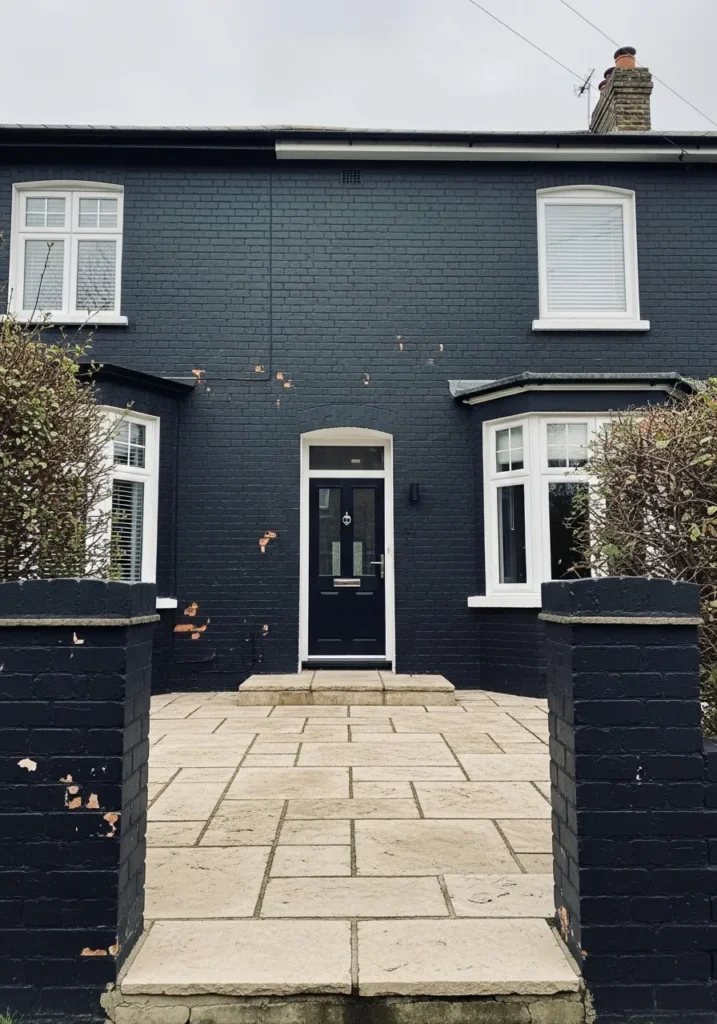
This reads very close to Benjamin Moore Wrought Iron 2124-10, which sits right between black and charcoal. It’s not a true black, and that’s part of why it works so well on brick. You can see a bit of movement in the color, especially where the surface is slightly worn, and it keeps the finish from feeling too flat.
The undertone leans cool with a hint of gray, so it softens the look without turning blue. Against the white window trim and light stone path, it feels balanced and easy to look at. This kind of color works well if you want a darker exterior but still want some texture to show through. Pure black can hide that.
A Black That Lets Wood Stand Out
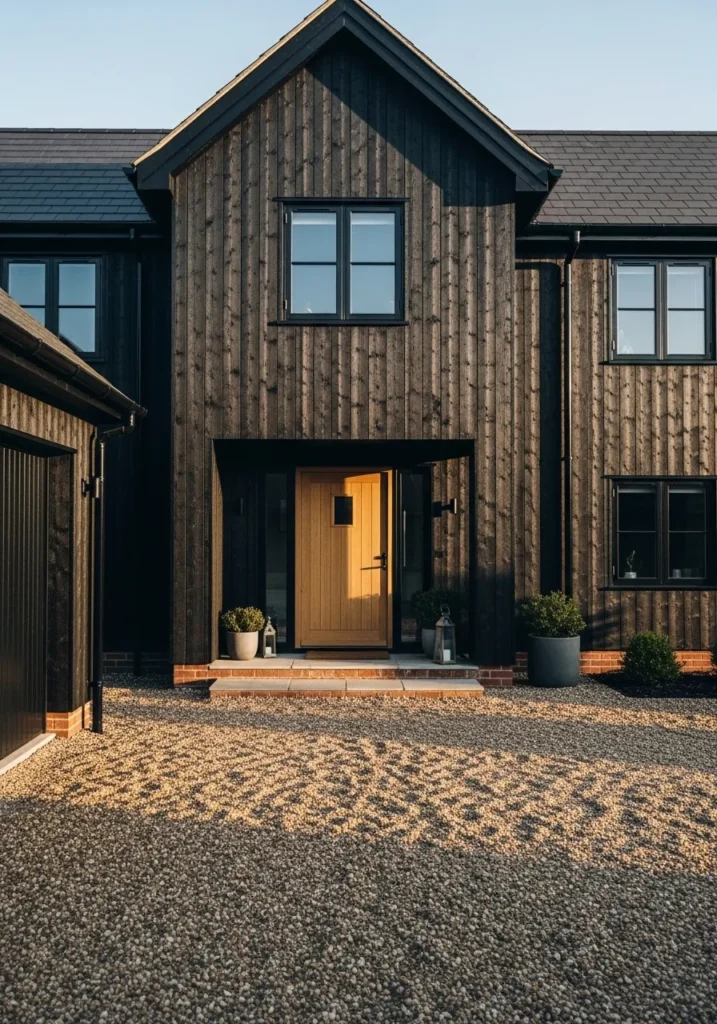
This looks closest to Benjamin Moore Soot 2129-20, a deep black that has just enough softness to sit well next to natural wood. It doesn’t feel too crisp or cold. Instead, it has a slightly muted quality that works nicely on vertical siding like this, where you want the texture to stay visible.
The undertone leans gently cool, but it is subtle enough that the wood door still feels warm and natural beside it. In brighter light, it can read a touch lighter than a true black, almost like a dark charcoal. That can be helpful if you want contrast without going too stark. It pairs best with wood, black trim, and simple materials that do not compete for attention.
A Glossy Black That Feels Bold
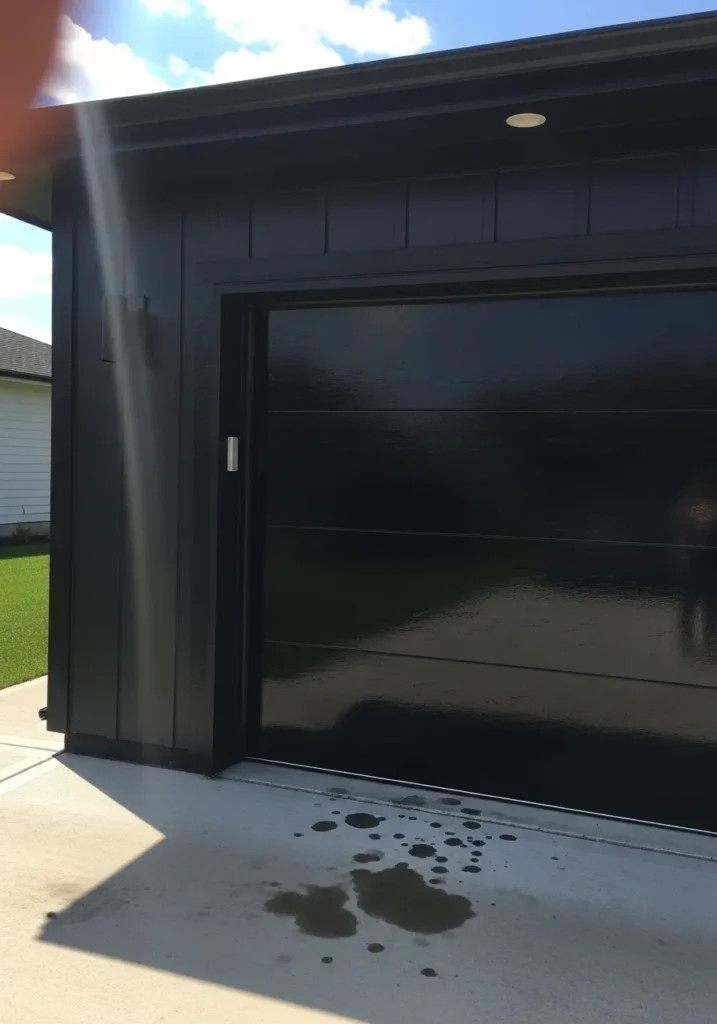
This looks closest to Benjamin Moore Black 2132-10 in a high-gloss finish, a true black that reads very deep and even across smooth surfaces. The shine changes how the color behaves. Instead of looking flat, it reflects light and surroundings, which gives it a sharper, more polished feel on something like a garage door.
The undertone stays neutral, so you don’t get much color shift, just more or less shine depending on the light. That makes it a strong choice for smaller areas where you want contrast to stand out a bit more. It pairs well with matte siding nearby, since the difference in finish keeps things from feeling too uniform. Just be ready for fingerprints and marks to show more easily.
A Black That Reads Soft On Stucco
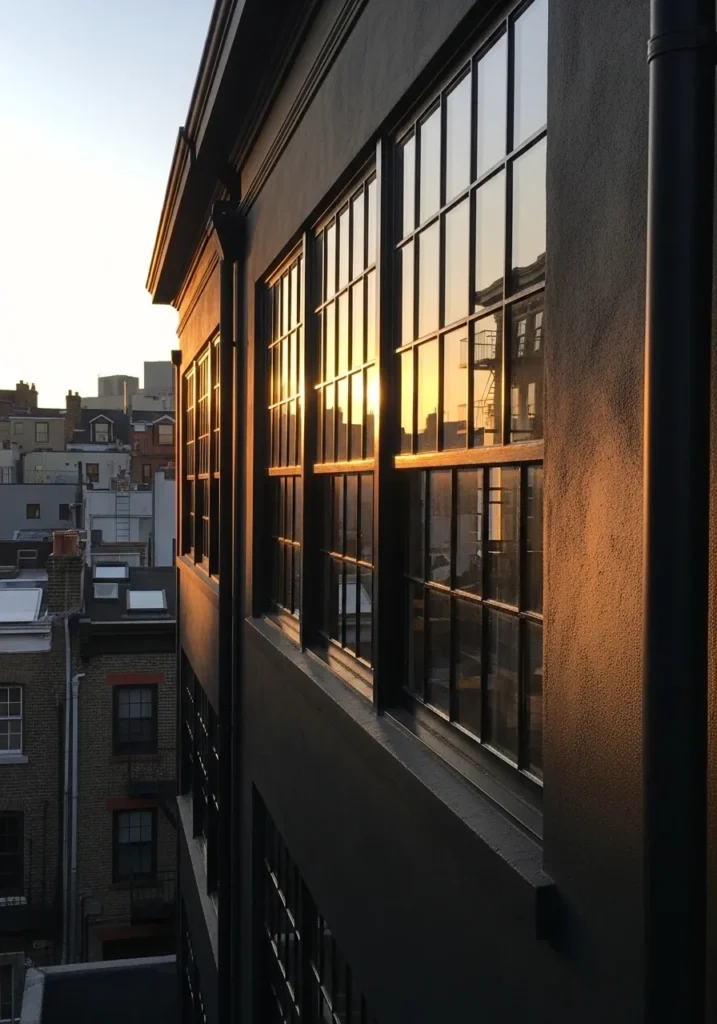
This looks closest to Benjamin Moore Onyx 2133-10, a black that comes across a bit softened rather than sharp. On a stucco surface like this, it doesn’t feel flat or heavy. It has a quiet depth to it, especially next to those dark window frames, where everything blends without looking too stark.
The undertone leans slightly cool, but it stays pretty neutral overall. In stronger light, it can shift toward a deep charcoal instead of a pure black. That actually helps on textured walls, since it keeps the surface from looking too solid. It works well with glass and metal details, and it’s a good choice if you want black without it feeling too intense.
A Worn Black That Feels Natural
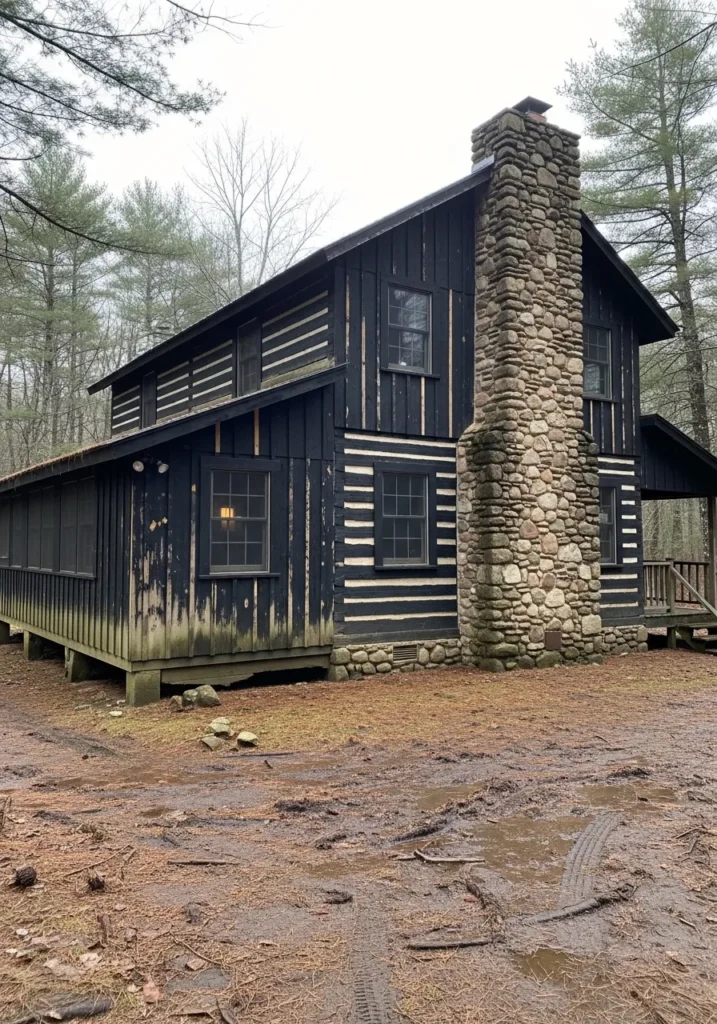
This looks closest to Benjamin Moore Black Forest Green 2130-10, used here in a way that reads almost black with a soft earthy cast. It doesn’t come across as a clean, crisp black. Instead, it has that slightly aged feel, especially on wood siding where some wear shows through. It feels more relaxed and a bit rustic.
The undertone leans green, which helps it sit nicely next to the stone chimney and natural surroundings. In lower light, it can pass as black, but in brighter conditions you may notice that muted green coming through. This kind of color works well on cabins or older homes where a perfectly solid black might feel too stark.
A Soft Black For Outdoor Walls
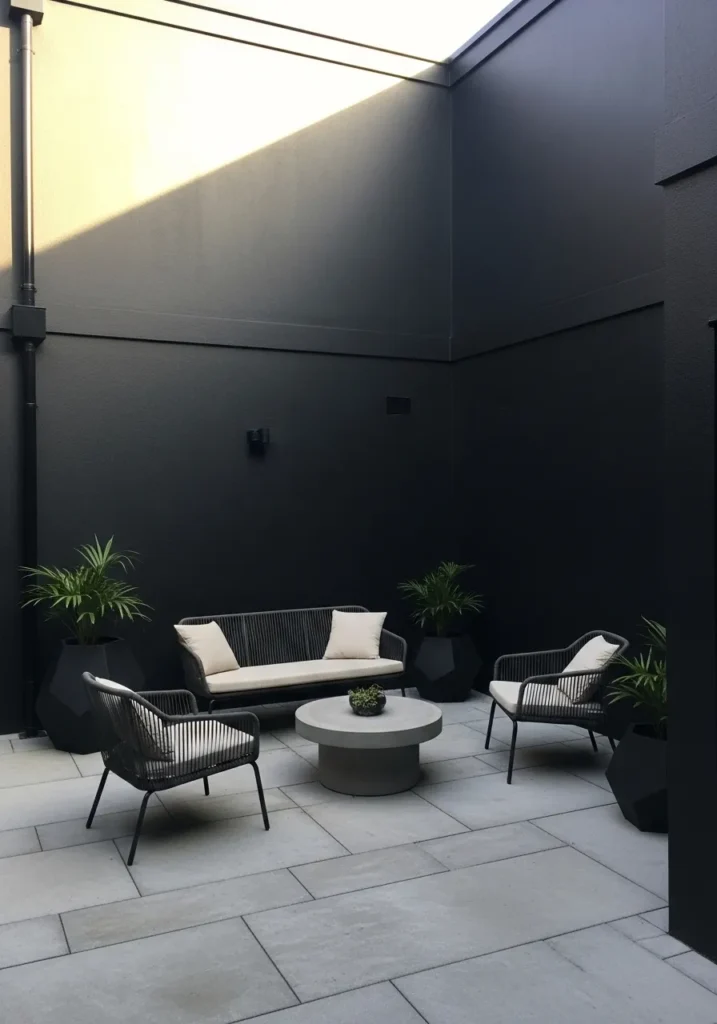
This looks closest to Benjamin Moore Onyx 2133-10, a black that feels slightly softened rather than sharp. It has a smooth, even look on large wall areas like this, especially next to simple patio furniture and light stone flooring. It reads clean, but not harsh.
The undertone leans a bit cool, though it stays fairly neutral in most light. You might notice it shifting toward a dark charcoal at times, which actually helps in a closed-in outdoor space. It works well when you want the walls to recede a little and let lighter pieces stand out. Matte or low sheen finishes tend to suit this kind of color best.
A Slightly Soft Black On Brick
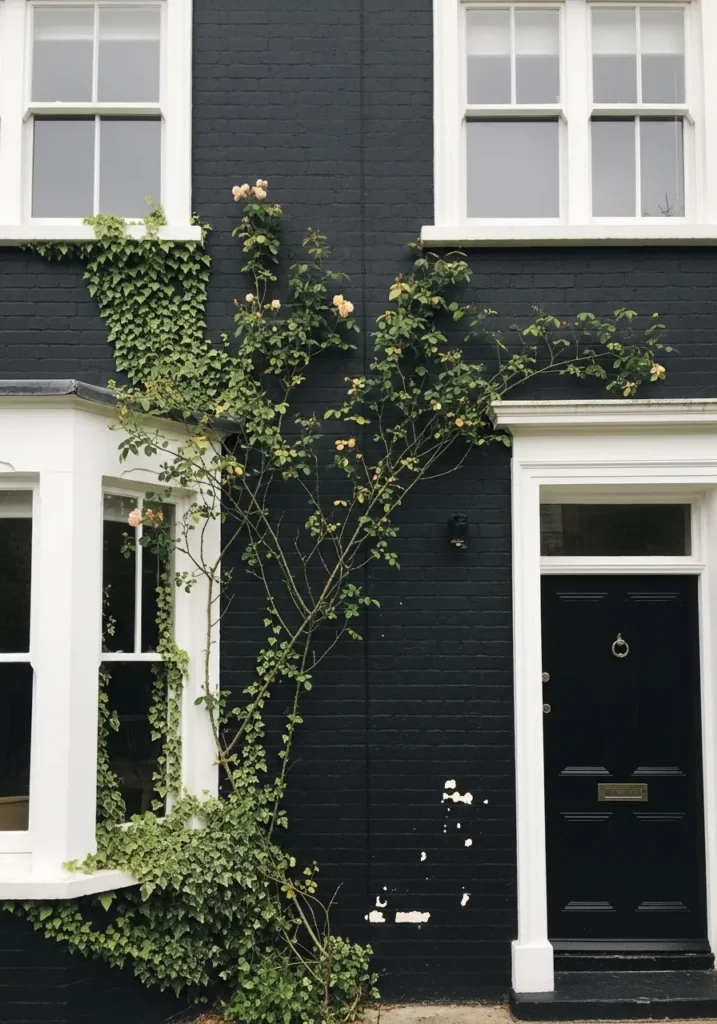
This looks closest to Benjamin Moore Wrought Iron 2124-10, a black that leans into charcoal just enough to feel softer on brick. It doesn’t read as a flat, inky black. There’s a bit of give to it, especially next to the crisp white window trim and that black door, which keeps the contrast from feeling too sharp.
The undertone sits on the cool side with a gray base, so it can shift a little depending on the light. Sometimes it reads almost like a deep graphite. That works well on older brick where you want some texture and variation to show through. A true black might feel too solid here, but this one stays a bit more forgiving.
A Classic Black Against White Trim
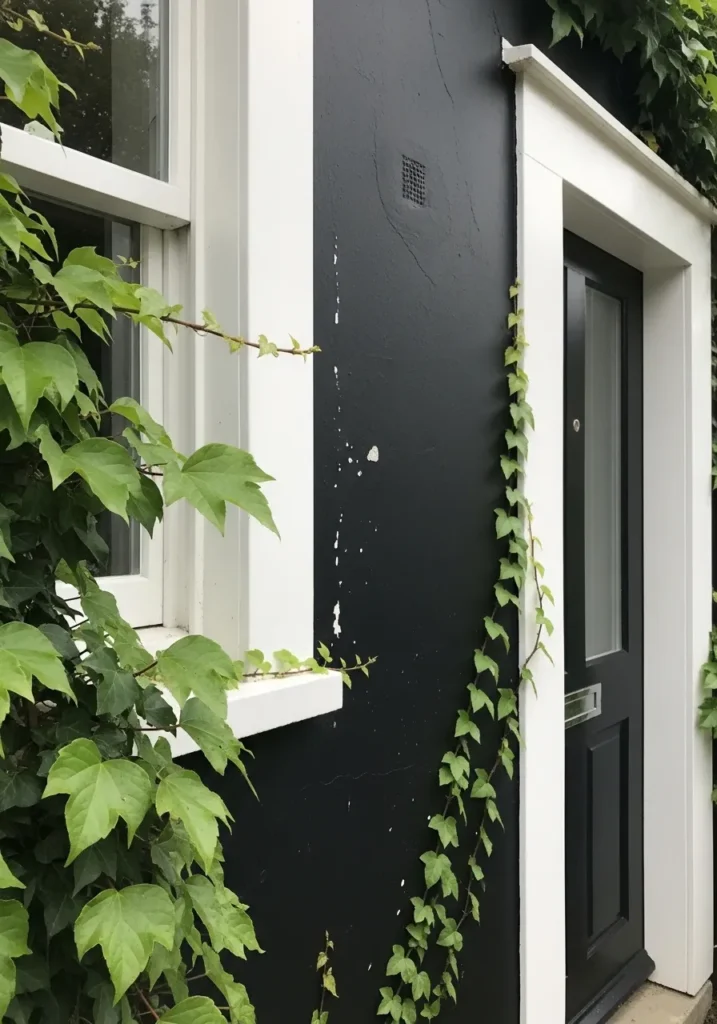
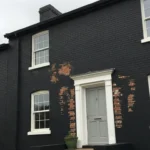
This reads closest to Benjamin Moore Black HC-190, a straightforward black that sits nicely between soft and strong. It does not feel overly crisp, which helps when it is paired with bright white trim around windows and doors. That contrast looks clean without feeling too sharp or harsh.
The undertone leans just slightly cool, though it stays fairly neutral overall. On a painted wall like this, especially one with a bit of wear, it can soften into a dark charcoal in certain light. That actually works in its favor. It keeps the finish from looking too perfect and makes it easier to live with on older surfaces.
A Clean Black For Modern Homes
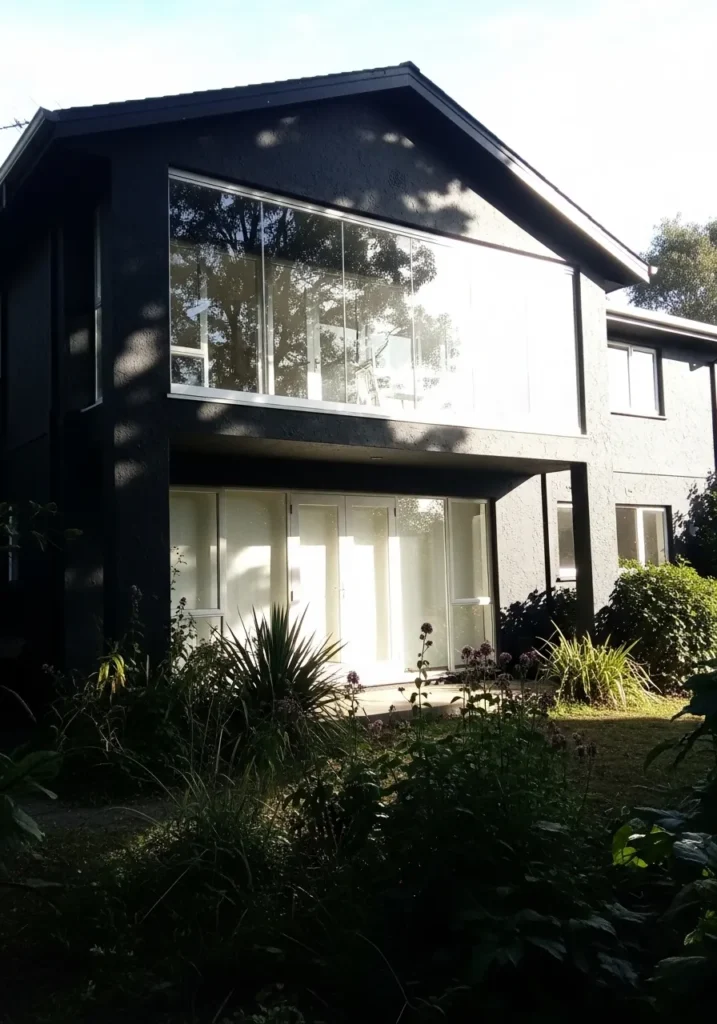
This looks closest to Benjamin Moore Black 2132-10, a true black that reads clear and even across smooth exterior walls. It has a simple, no-nonsense look, which works well on modern shapes with large glass panels. It doesn’t bring in much softness, so the lines of the house stay sharp.
The undertone is very neutral, so it holds steady in different lighting without shifting much. That makes it a reliable choice for contemporary exteriors where you want consistency. It pairs easily with glass and minimal trim, but it can feel a bit stark if everything around it is also dark. A little contrast nearby helps it feel more balanced.
A Practical Black For Fences
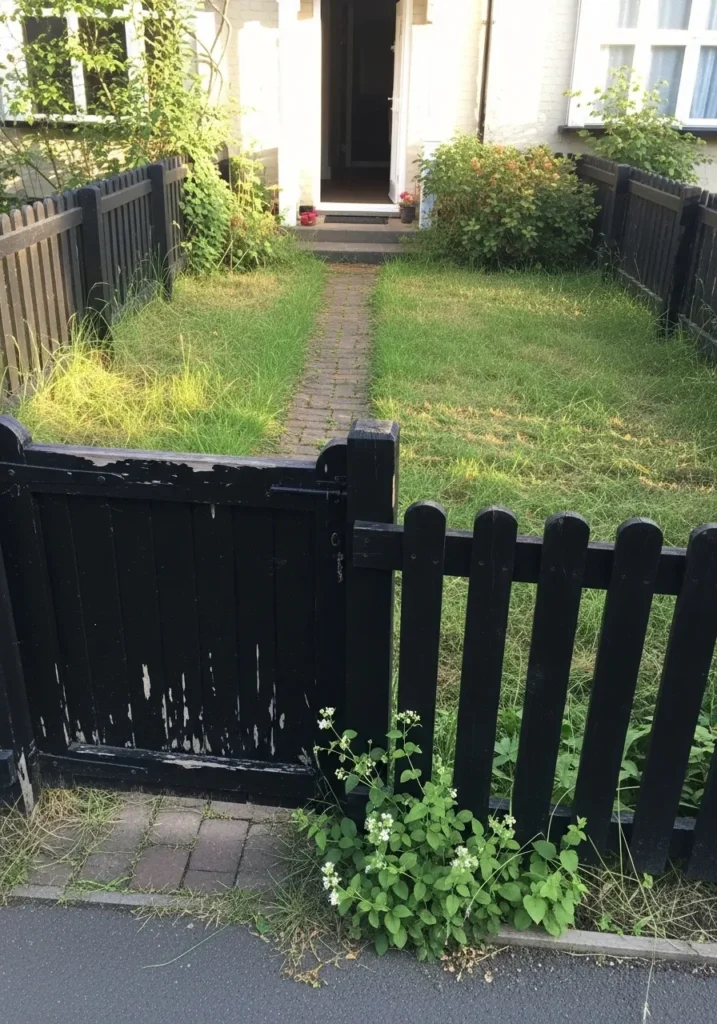
This reads closest to Benjamin Moore Black HC-190, a soft, slightly muted black that works well on exterior wood like fencing. It doesn’t feel too crisp or formal. Even with some peeling and wear showing through, the color still holds up and looks natural in a small front yard setting.
The undertone leans just a touch cool, though it stays fairly neutral overall. In bright light it can soften into a dark charcoal, which actually helps on surfaces that get a lot of use. It pairs easily with greenery and simple white exteriors, and it’s a forgiving choice if you don’t want to repaint every little mark right away.
A Deep Black For Coastal Homes
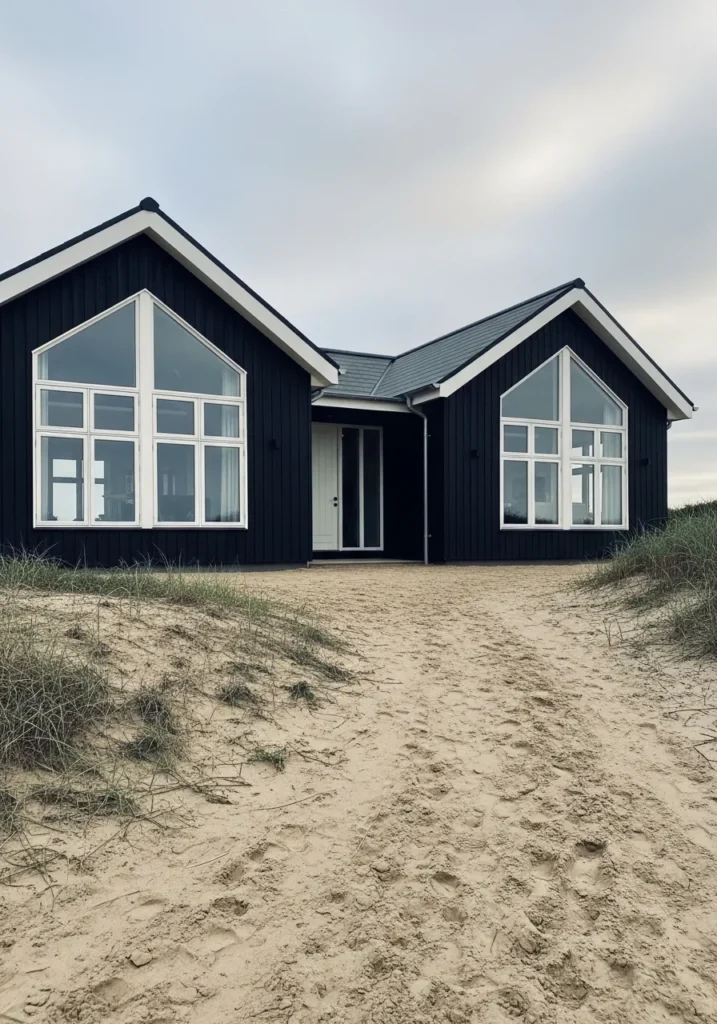
This looks closest to Benjamin Moore Soot 2129-20, a deep black that reads a little softer than a true jet black. It works well on vertical siding like this, especially when paired with bright white window frames. The contrast feels clean but not too sharp, which suits a simple coastal-style home.
The undertone leans slightly cool with a gray base, so it can shift toward a dark charcoal in brighter light. That helps keep the exterior from feeling too heavy against lighter surroundings like sand and pale trim. It’s a good choice if you want a strong dark color that still feels a bit relaxed and easy to live with.
A Soft Black For Outdoor Living Areas
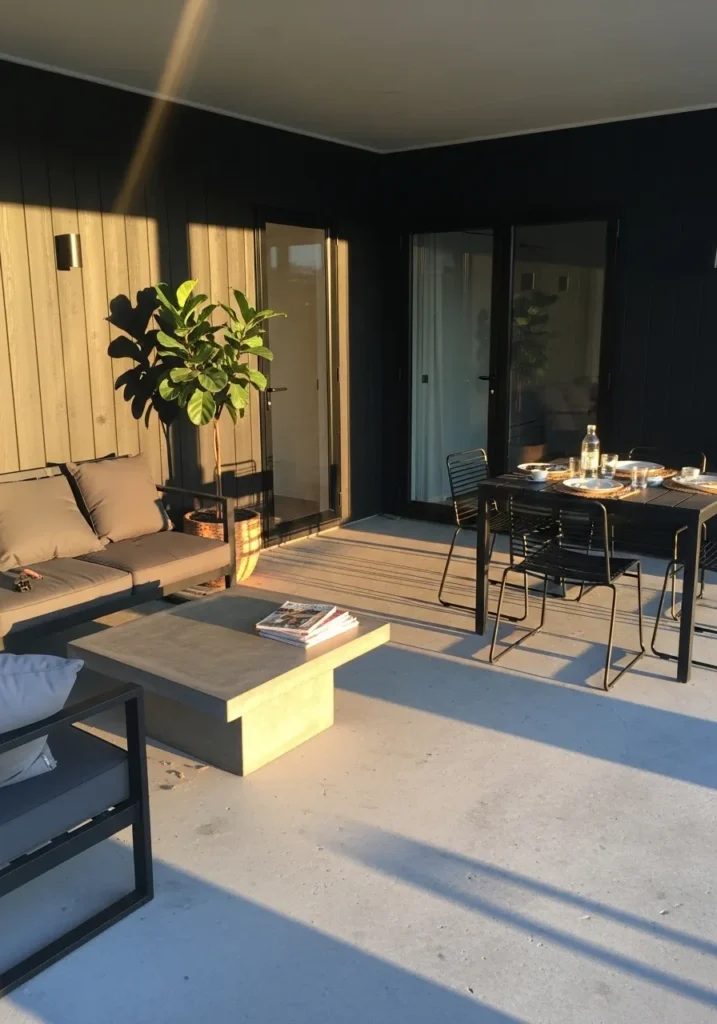
This looks closest to Benjamin Moore Wrought Iron 2124-10, a black that leans slightly into charcoal rather than reading fully inky. On exterior walls like this, it feels a bit more relaxed and easier to sit with, especially next to warm wood tones and simple outdoor furniture.
The undertone sits on the cool side, but not too sharp, so it shifts gently depending on the light. In brighter conditions it can soften and show more gray, which helps keep the space from feeling too closed in. It works well for patios or covered areas where you want a dark backdrop that still feels comfortable for everyday use.
A Softer Black For Classic Exteriors
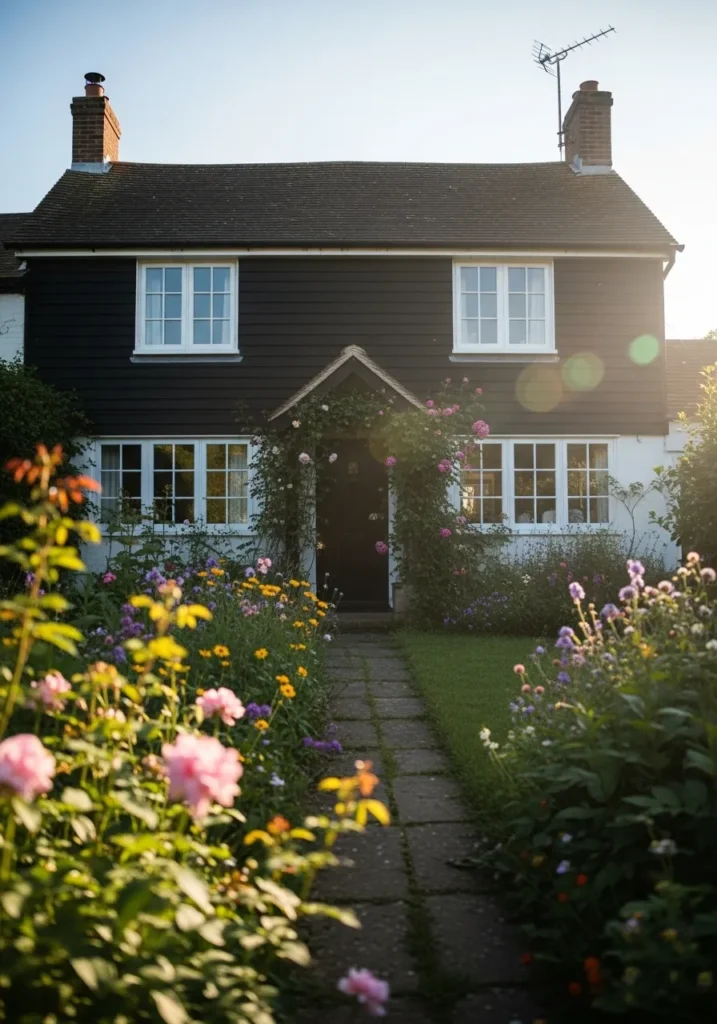
This reads closest to Benjamin Moore Black Satin 2131-10, a black that feels a touch lighter and more relaxed than a deep jet shade. It sits nicely on traditional siding, especially with white windows and a simple front door. The contrast is clear, but it does not feel too stark.
The undertone leans slightly warm, which helps it settle in with natural surroundings like a garden or older brick. In brighter light it can ease into a charcoal look, which makes it easier to live with on a full exterior. It is a good pick if you want a dark house that still feels a bit familiar and not too sharp.
A True Black For Modern Exteriors
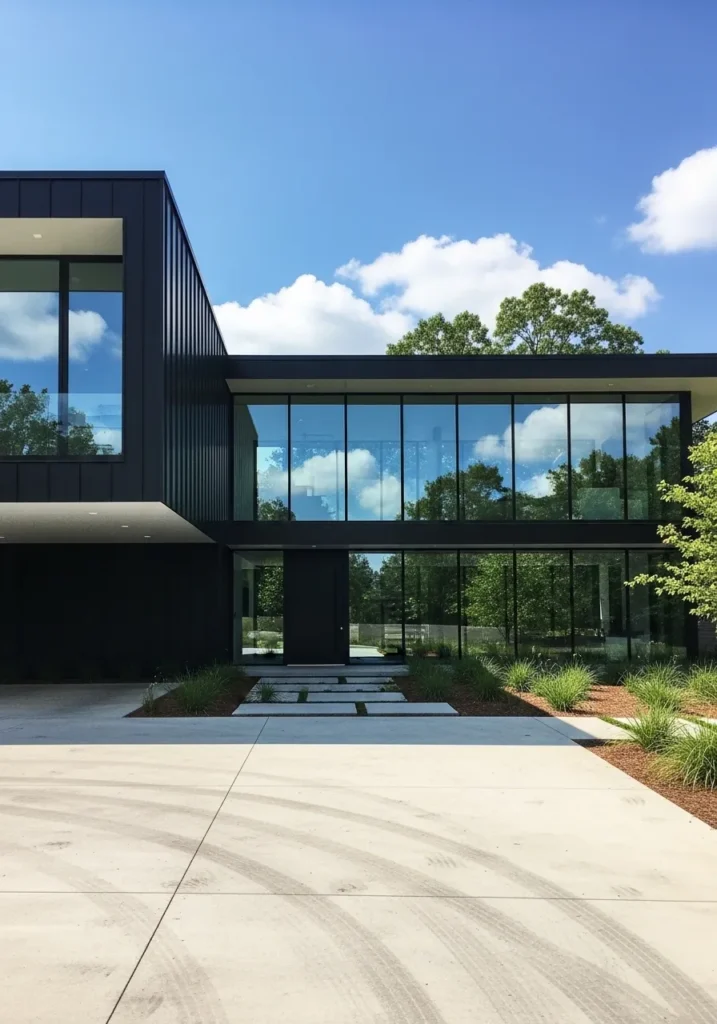
This looks closest to Benjamin Moore Onyx 2133-10, a deep, true black that reads clean and solid across large exterior surfaces. It has that clear, even look you want on modern homes, especially with wide glass panels and simple lines. It does not soften much, which keeps everything feeling crisp.
The undertone is very neutral, so it stays consistent without shifting into gray or brown. That makes it easier to use on a full exterior without surprises. It pairs well with glass and light paving, but it does need some contrast nearby or it can feel a bit flat on its own.