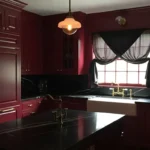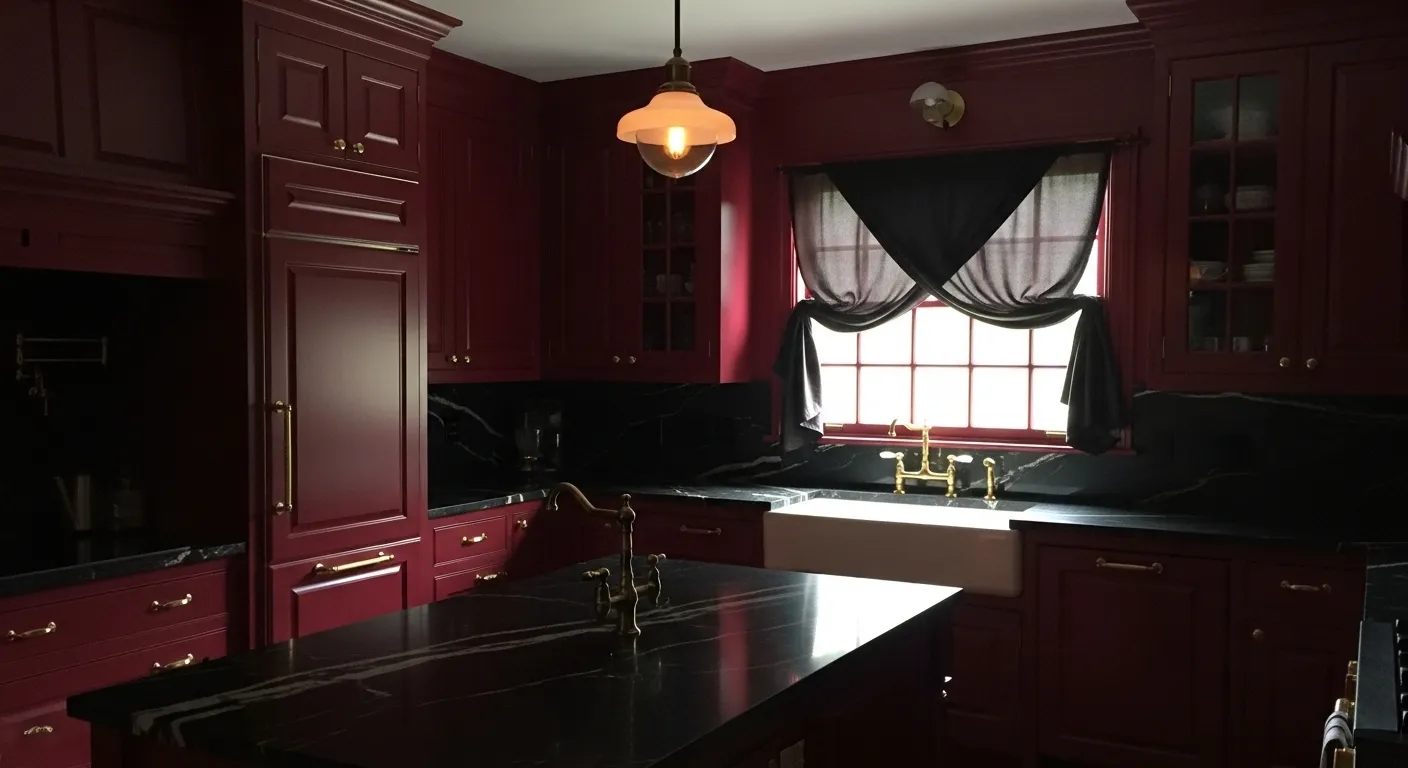
I have always believed that paint is the quickest way to change how a kitchen feels, and honestly, it still surprises me every time.
Sometimes all it takes is the right shade to make everything look more pulled together without touching a single cabinet.
I pulled together these Benjamin Moore colors because they feel modern but still easy to live with, which is exactly what I look for in my own space.
If you’re into soft neutrals, moody blues, or warmer tones that feel a little cozy, there is something here that will click.
These are the kinds of colors I keep coming back to again and again, especially when I want a refresh that actually lasts.
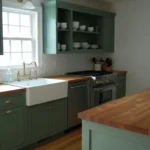
A Soft Sage Green That Feels Easy To Live With
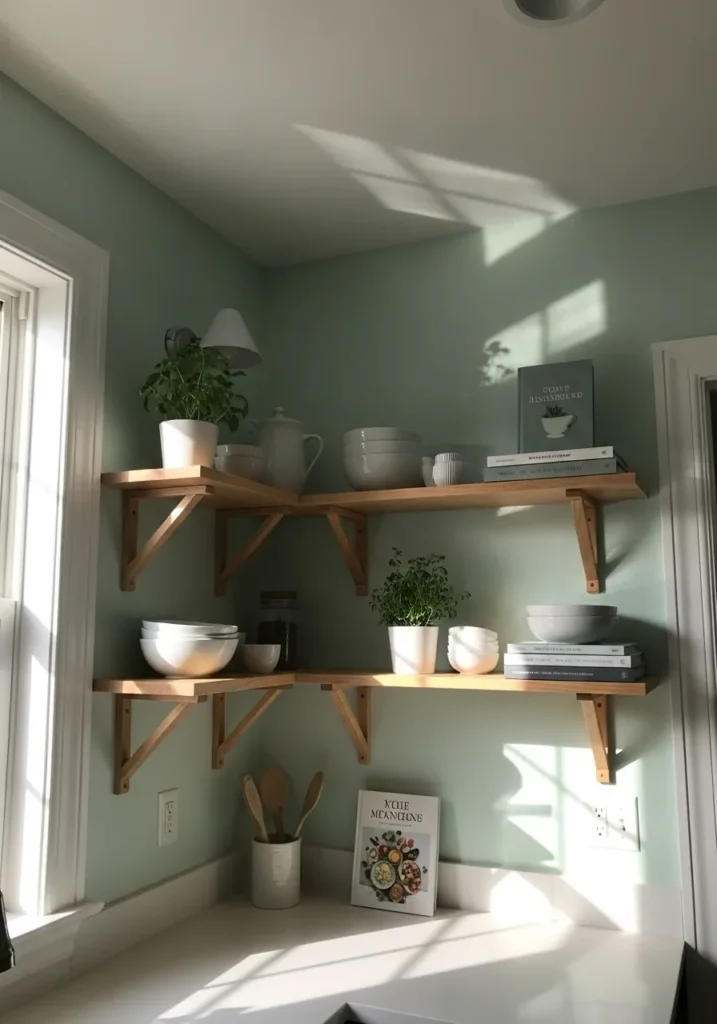
This looks very close to Benjamin Moore Hollingsworth Green, a light sage that sits right between green and gray. It reads calm without going dull, and it has that slightly muted quality people tend to come back to. You can see how it works with simple wood shelves and white pieces without trying too hard.
The undertone leans a bit cool, but not in a sharp way. It shifts depending on the light, sometimes greener, sometimes more gray. It does well in smaller kitchen corners or open shelving areas where you want a bit of color but nothing loud. Pair it with light woods, off-white trim, and simple finishes. I’d avoid pairing it with very yellow lighting since that can muddy the tone a little.
Muted Green That Feels Collected
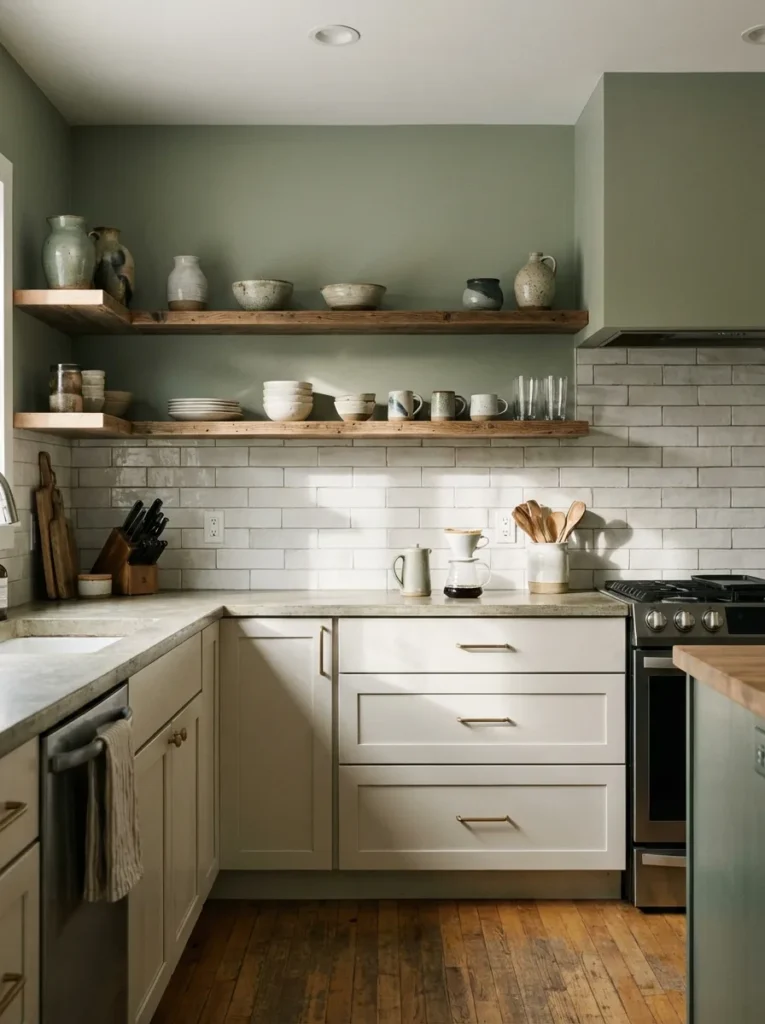
This looks closest to Benjamin Moore Saybrook Sage, a soft green that leans slightly gray. It has that settled, quiet look that works well in a kitchen without feeling plain. Next to simple wood shelves and off-white cabinets, it reads calm and steady rather than bright.
The undertone is a bit earthy, which helps it sit nicely with warm materials like wood floors and natural finishes. It can shift depending on the light, sometimes greener, sometimes more toned down. It works best if you keep the rest of the palette simple. Too many bold colors nearby can make it feel off.
Warm Greige That Feels Quiet And Clean
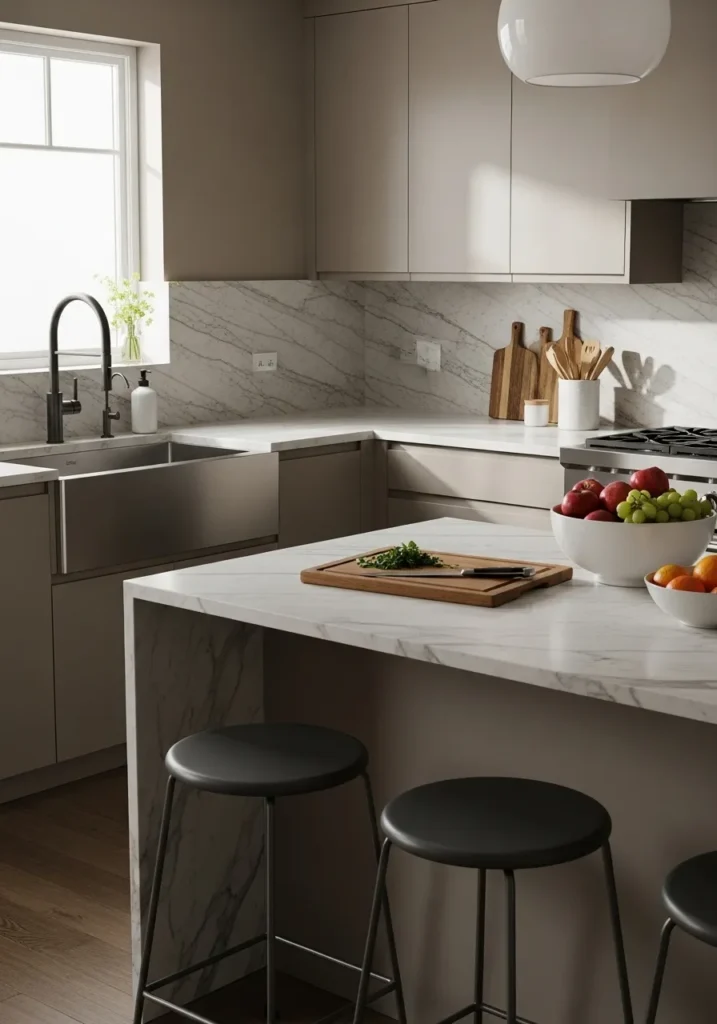
This reads very close to Benjamin Moore Edgecomb Gray, a soft greige that sits between beige and gray without leaning too far either way. It has a calm, easy look that works well in a kitchen, especially next to white marble and simple cabinetry. Nothing sharp about it.
The undertone is slightly warm, which keeps it from feeling cold even with a lot of stone and metal nearby. It tends to look lighter in bright spaces and a bit cozier in lower light. It pairs well with soft whites and natural wood, but I would skip pairing it with cooler blue-grays since that can make it feel a little off.
Soft Beige That Works With Wood Cabinets
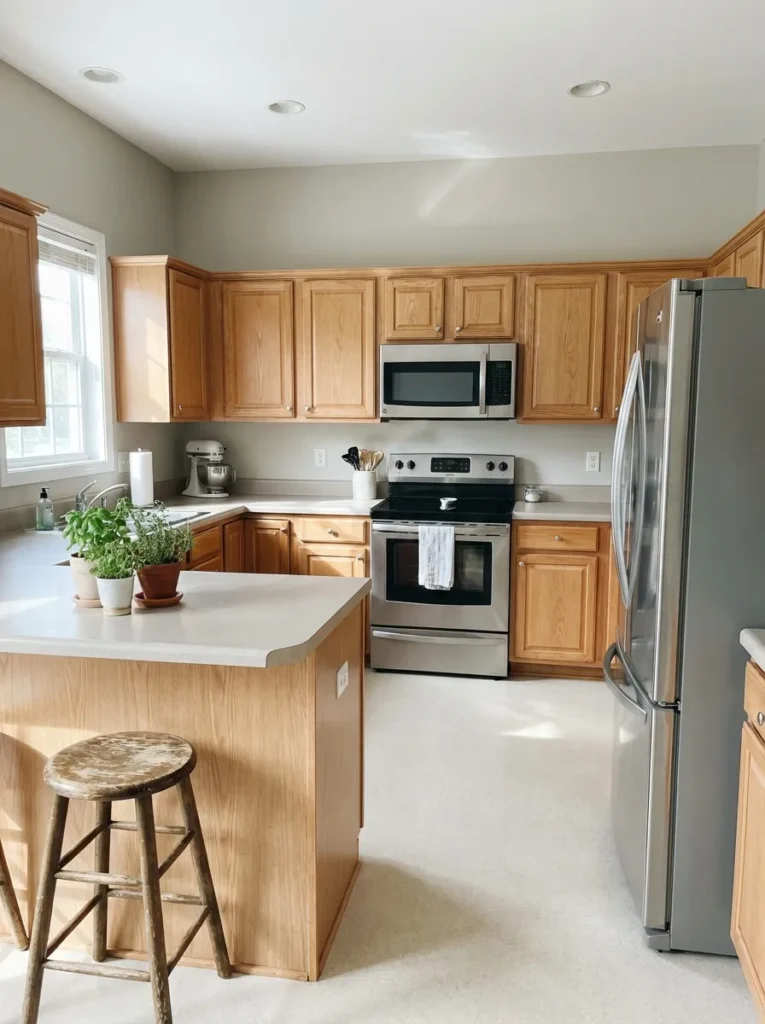
This looks closest to Benjamin Moore Manchester Tan, a light beige with a slightly muted, creamy base. It sits in that middle ground where it is not too warm and not too gray, which makes it easy to use in kitchens with a lot of natural wood. Next to oak cabinets like these, it feels steady and not overly yellow.
The undertone leans gently warm, but it stays controlled, which helps it work with both stainless steel and lighter countertops. It can shift a bit depending on the light, sometimes reading more beige, sometimes a touch soft gray. It works best if you keep the rest of the finishes simple and avoid pairing it with strong pink or orange tones.
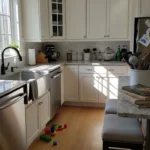
Dusty Blue That Feels Calm In A Kitchen
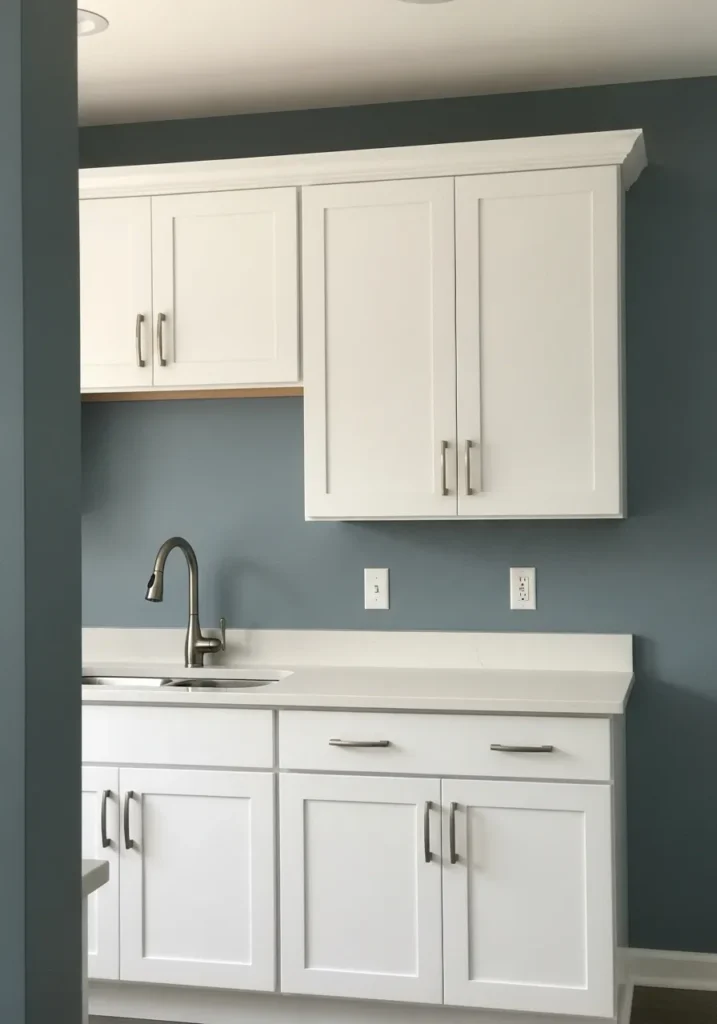
This looks closest to Benjamin Moore Boothbay Gray, a muted blue with a noticeable gray base. It sits right in that soft blue-gray range that feels relaxed without turning pastel. Against clean white cabinets like these, it comes across steady and easy to live with.
The undertone leans cool, but the gray keeps it from feeling sharp or overly crisp. It can shift a bit depending on light, sometimes reading more blue, sometimes more gray. It works best with whites, brushed metals, and simple finishes. I would avoid pairing it with very warm creamy tones since that contrast can feel a little off.
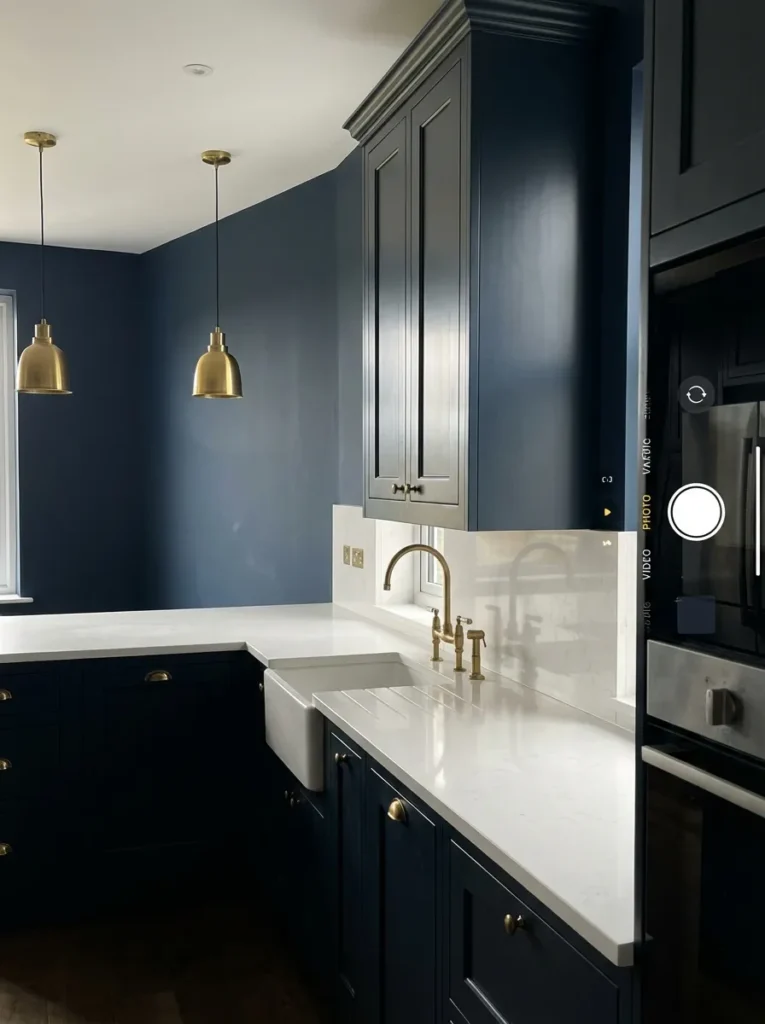
This reads very close to Benjamin Moore Hale Navy, a deep blue that leans slightly cool without turning overly crisp. It has that rich, steady look that works well on both walls and cabinetry, especially next to white surfaces and warm brass fixtures. It feels bold but still easy to live with.
The undertone stays fairly balanced, though it can read a bit darker in lower light. In brighter spaces, you’ll notice more of the blue come through. It pairs well with clean whites and warm metals, but I would avoid mixing it with too many other strong colors. Keeping the palette simple helps it look its best.
Soft Black Walls In A Kitchen
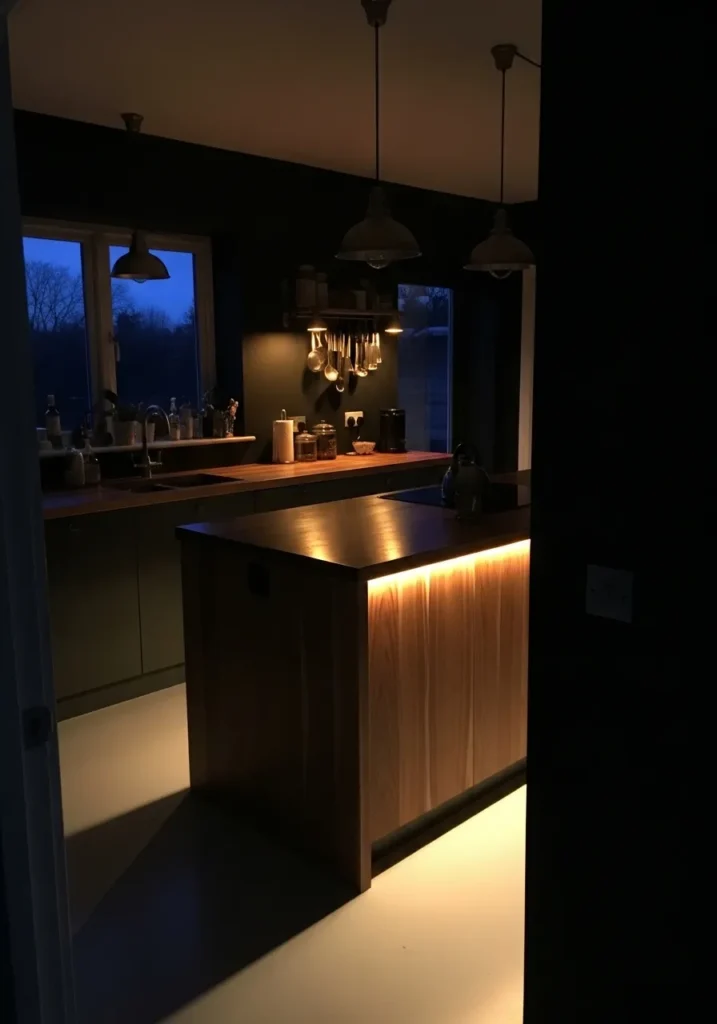
This looks very close to Benjamin Moore Black Beauty, a deep black that has a slightly softened edge rather than a harsh, flat finish. It reads dark but not empty, which is what makes it work in a kitchen, especially next to warm wood and simple lighting.
The undertone leans just a touch warm, so it pairs well with natural materials and softer whites. In lower light it can read almost fully black, but with a bit of light you start to see that softer tone come through. It works best when you keep surrounding finishes simple. Too many bright colors nearby can make it feel heavy.
Soft Off White That Works With Natural Wood
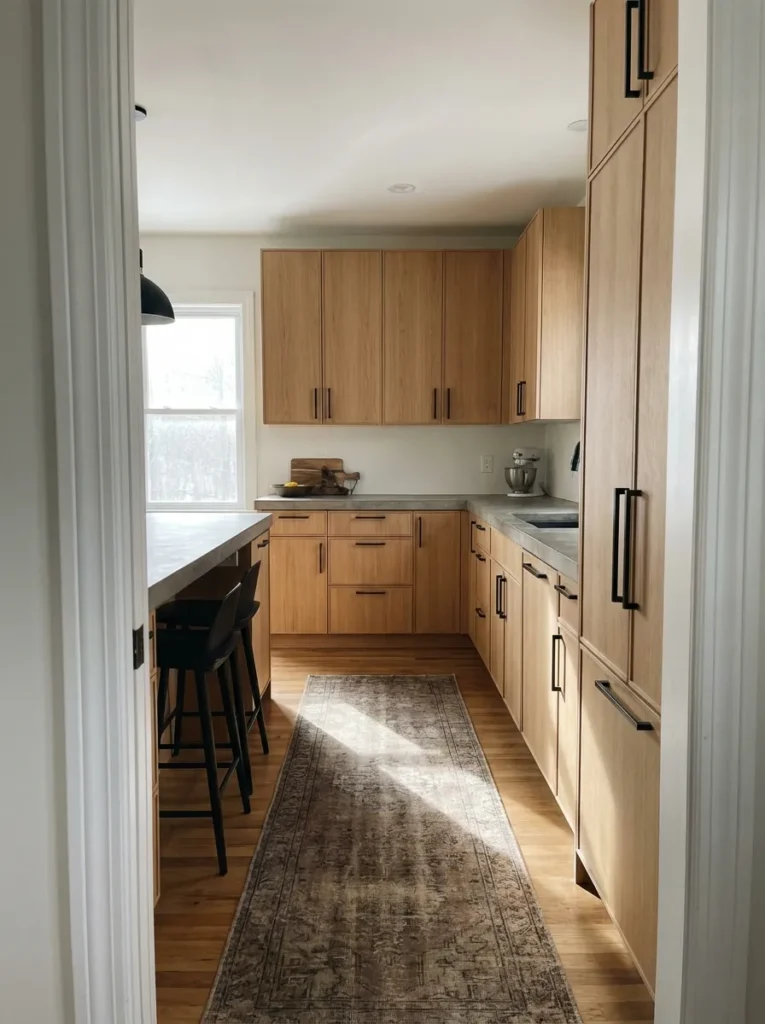
This reads closest to Benjamin Moore White Dove, a soft off white that has a gentle warmth without turning creamy or yellow. It sits nicely against light wood cabinets like these, keeping everything feeling simple and easy to look at. Not stark, not cold.
The undertone leans warm but stays subtle, which helps it blend with wood tones and light countertops without clashing. It can look brighter in strong daylight and a bit softer in the evening. It works well across full kitchens, especially if you want a quiet backdrop that does not compete with cabinetry or flooring.
Cool Gray Walls With Crisp White Cabinets
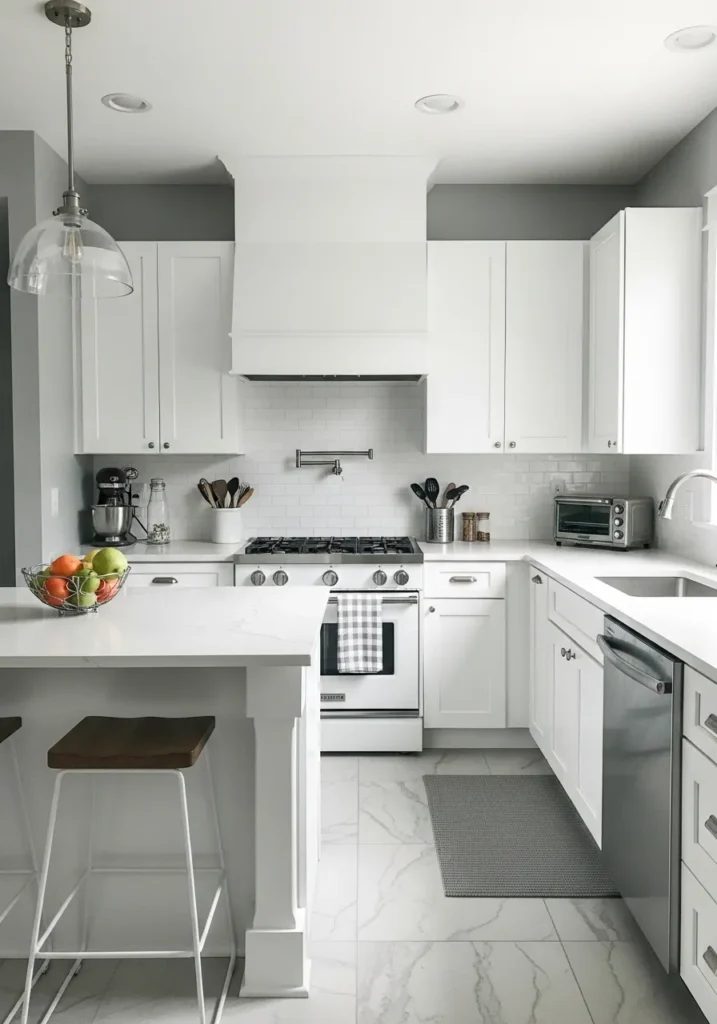
This looks closest to Benjamin Moore Gray Owl, a light gray that leans slightly cool without feeling icy. It sits in that clean middle range where it works well with bright white cabinets and simple finishes. You get a soft contrast, but nothing that feels sharp or busy.
The undertone has a hint of blue, which shows up more next to bright whites and polished surfaces. It can shift a bit depending on the light, sometimes reading more neutral, sometimes a touch cooler. It works best in kitchens where you want a fresh look without going fully white. I would keep surrounding tones fairly neutral so it does not start to feel too cold.
Clean White That Feels Slightly Warm
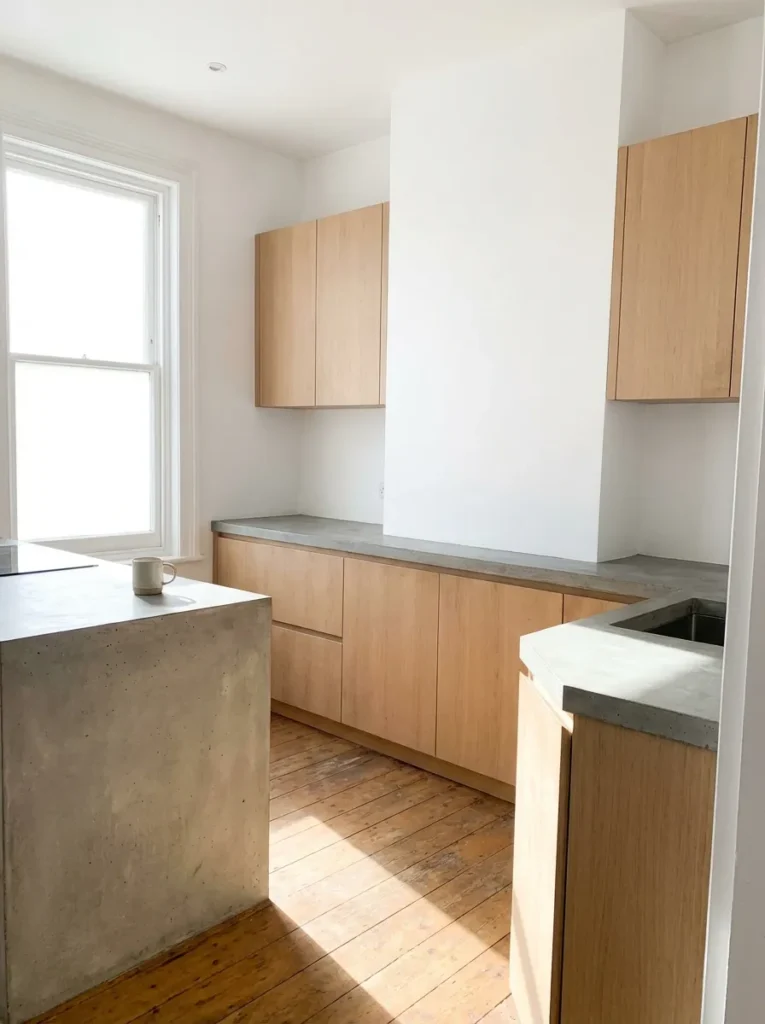
This looks closest to Benjamin Moore Simply White, a clean white that has just enough warmth to keep it from feeling stark. It sits nicely against light wood cabinets like these, giving the whole space a bright but not cold look. It is one of those whites that feels easy to use across a full kitchen.
The undertone leans warm, though it stays fairly subtle. In stronger light it reads crisp, and in softer light it turns a bit creamier. It works well with natural wood, concrete, and simple finishes. I would avoid pairing it with very cool gray tones since that contrast can feel a little off.
Warm Terracotta Walls In A Kitchen
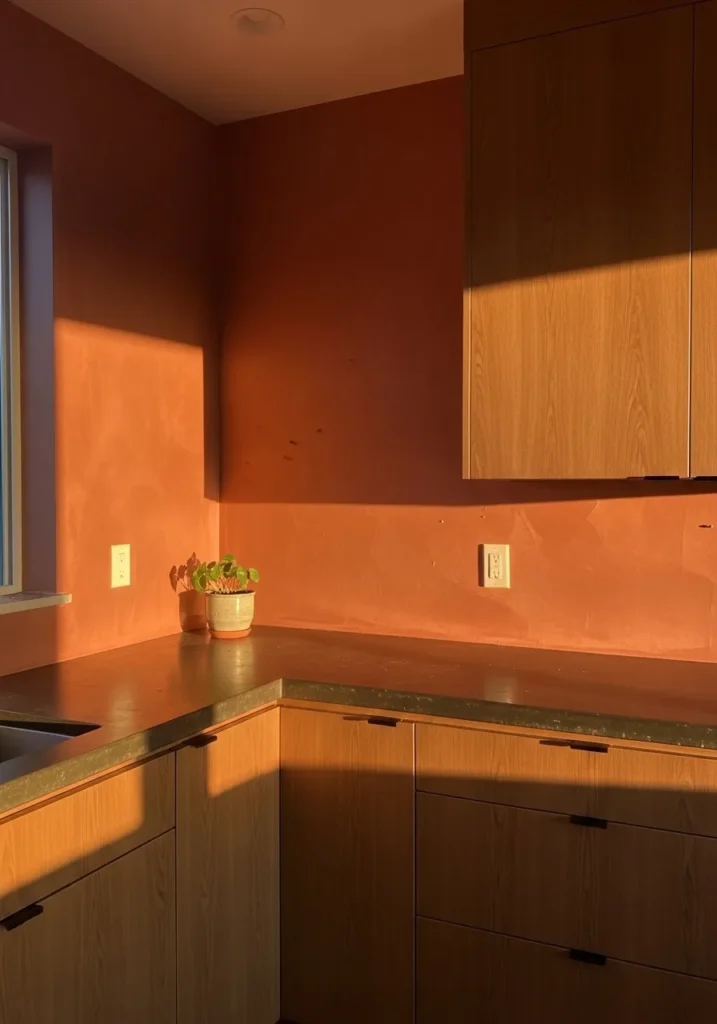
This looks closest to Benjamin Moore Potters Clay, a rich terracotta that leans warm and slightly earthy. It has that sunbaked feel without turning too orange, which makes it easier to use in a kitchen than brighter reds. Next to natural wood cabinets, it comes across steady and grounded.
The undertone is clearly warm, with a bit of brown mixed in, so it pairs well with wood, darker countertops, and simple finishes. It can shift a little depending on the light, sometimes deeper, sometimes a bit softer. It works best when you let it be the main color and keep everything else fairly quiet.
Soft Blush Pink That Feels Subtle
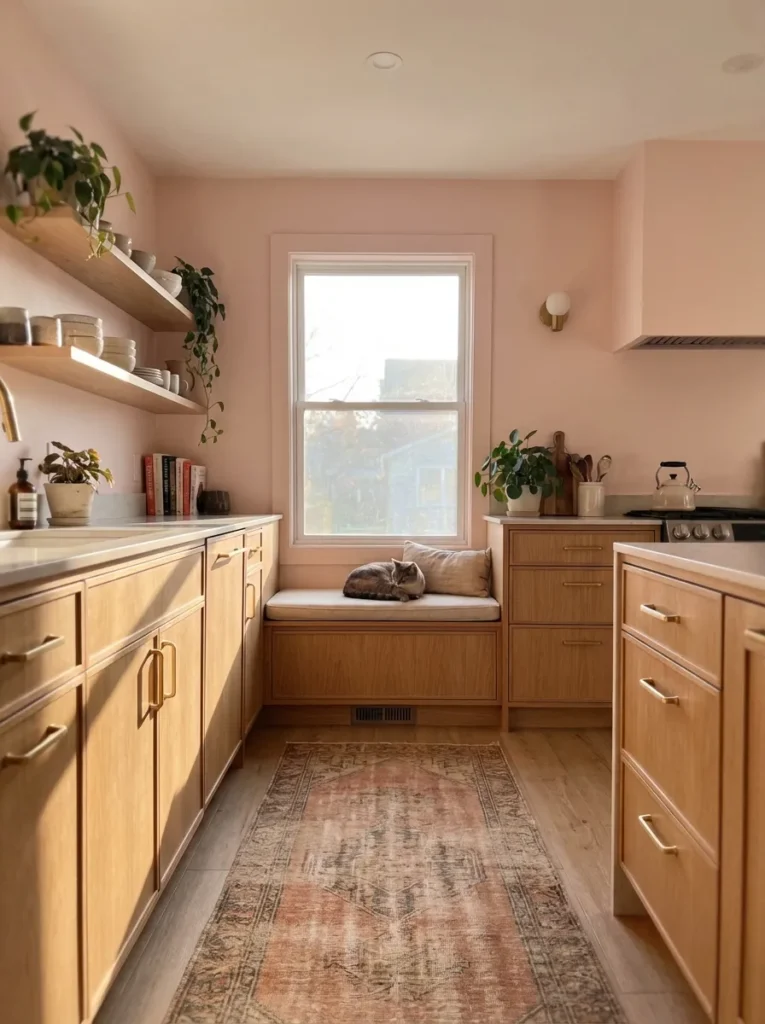
This looks closest to Benjamin Moore First Light, a pale blush pink with a soft, muted base. It sits in that quiet range where it reads more like a warm neutral than a true pink, especially next to light wood cabinets like these. It feels gentle and not overly sweet.
The undertone leans warm with a hint of peach, which helps it work well with natural wood and simple finishes. It can shift depending on the light, sometimes looking more beige, sometimes a bit more pink. It works best if you keep everything around it calm and avoid cooler grays that can make it look out of place.
Pale Blue That Feels Light And Clean
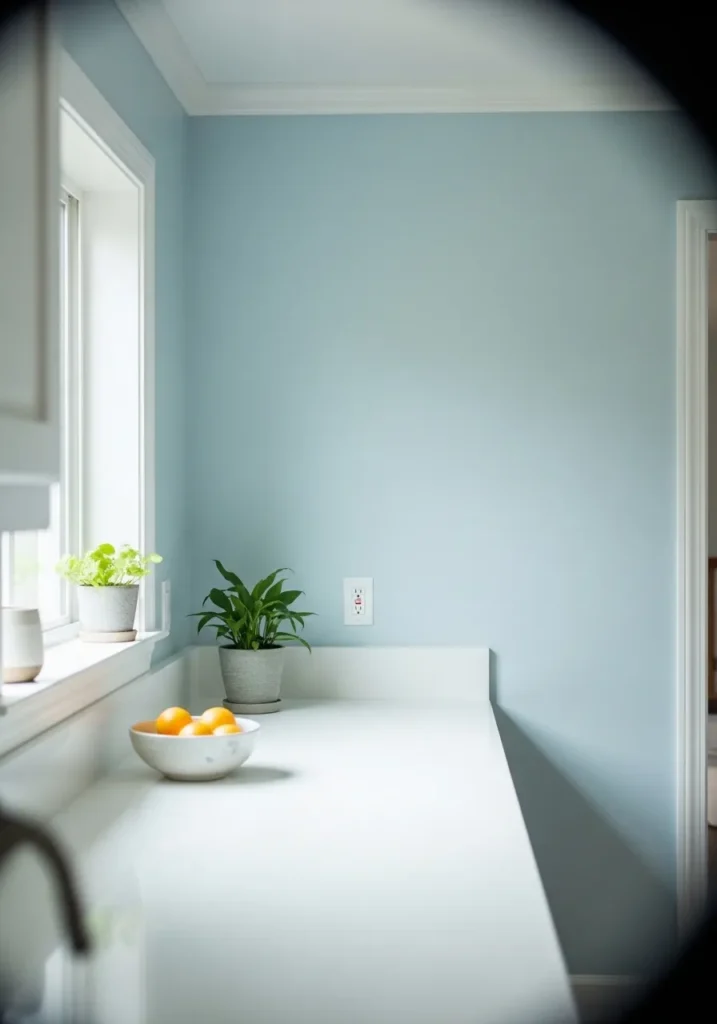
This looks closest to Benjamin Moore Breath of Fresh Air, a soft pale blue with a light gray base. It sits in that airy range where it almost reads neutral, especially next to white countertops and trim. It feels calm without being dull.
The undertone leans cool, though it stays gentle and not icy. It can shift a bit with the light, sometimes looking more blue, sometimes closer to a soft gray. It works well in smaller kitchens or side counters where you want a bit of color without making the space feel busy.
Soft Black That Feels Less Harsh
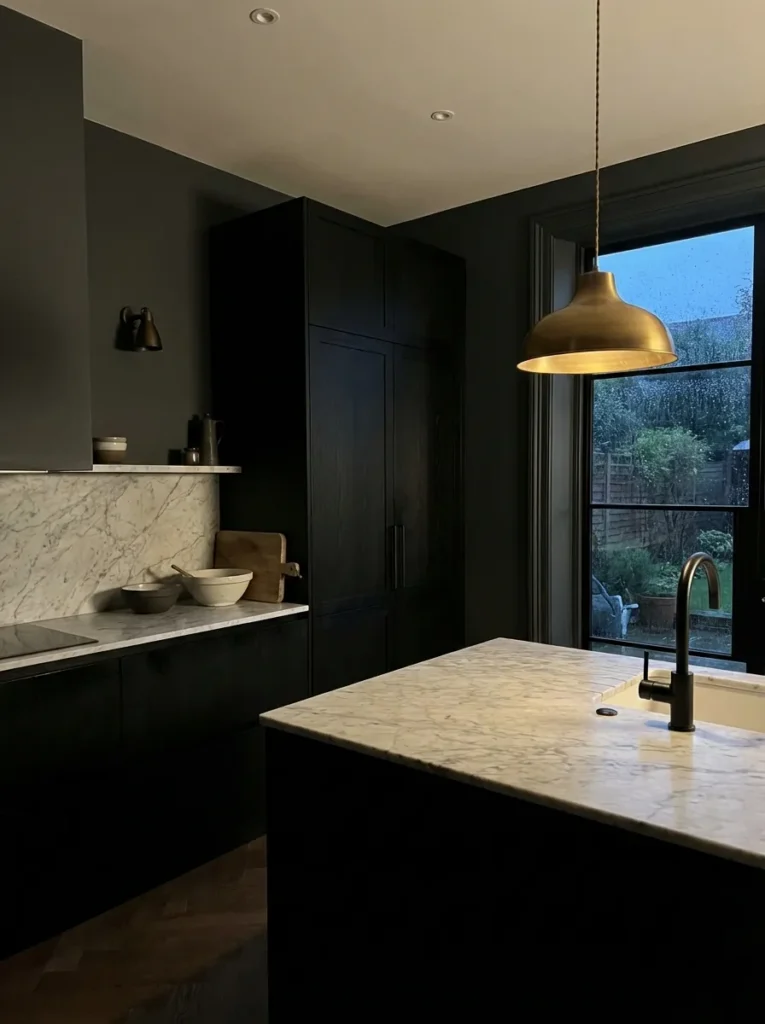
This looks closest to Benjamin Moore Iron Mountain, a deep charcoal that sits between black and gray. It has that softened look that keeps it from feeling too stark, especially next to white marble and warm brass. It reads dark, but not flat.
The undertone leans slightly warm, which helps it work with wood floors and warmer finishes. In lower light it can look almost black, but with more light you start to notice the gray come through. It works best when you keep nearby colors simple and avoid cooler blues that can clash with its warmth.
Deep Olive Green That Feels Warm
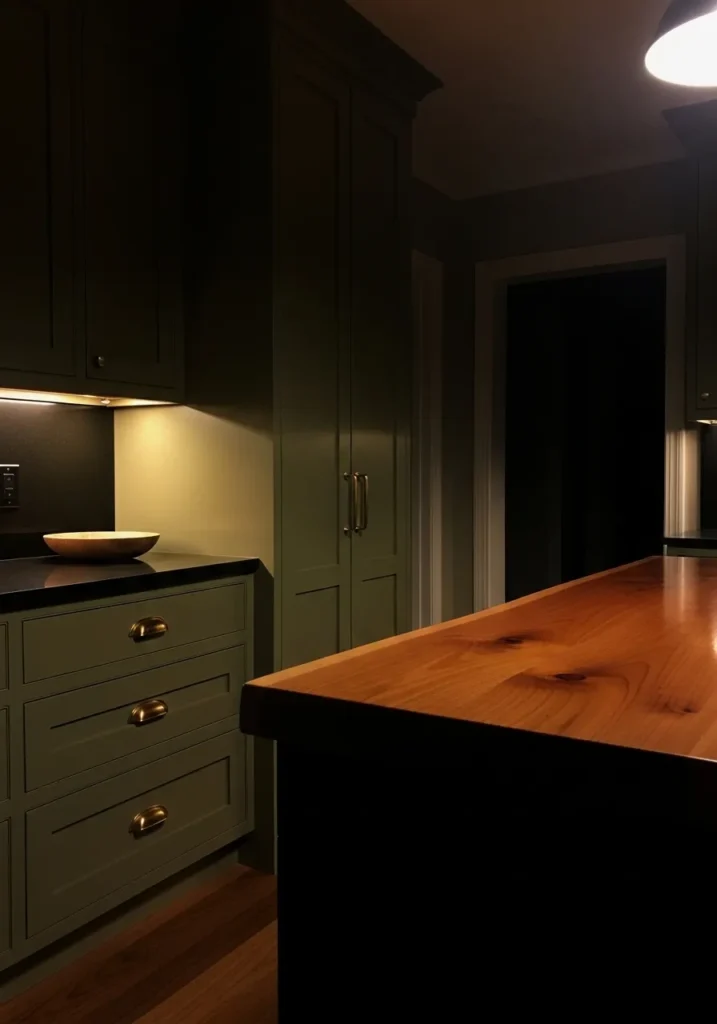
This looks closest to Benjamin Moore Vintage Vogue, a deep olive green with a slightly muted, earthy base. It sits in that darker green range that feels settled rather than bold, especially next to warm wood countertops and brass hardware. It has a quiet, steady presence.
The undertone leans warm, with a bit of brown mixed in, which helps it blend with natural materials and softer lighting. It can look deeper in lower light and a touch greener when the space brightens up. It works best if you keep nearby colors simple and avoid cooler blues that can clash with its warmth.
Creamy Beige That Feels Easy With Wood
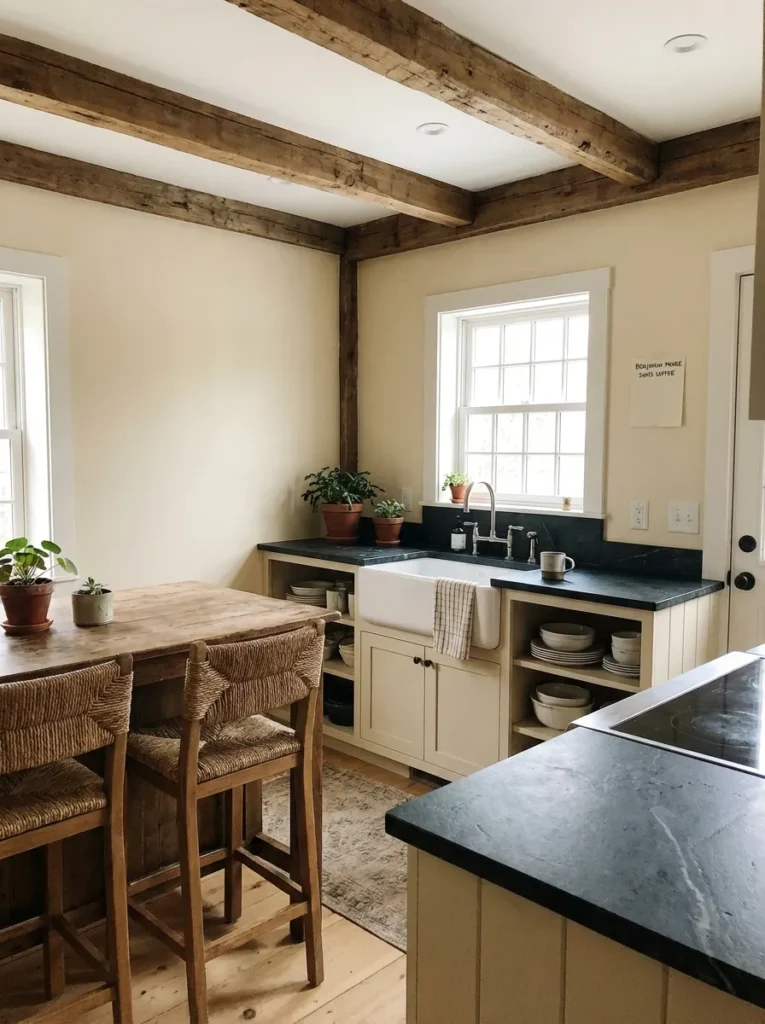
This looks closest to Benjamin Moore Swiss Coffee, a soft creamy beige that leans warm without turning too yellow. It has that relaxed, lived-in feel that works well in kitchens with exposed wood beams and natural finishes. It keeps the space light but not stark.
The undertone is gently warm, which helps it sit comfortably next to wood cabinets and darker countertops. It can read a bit richer in lower light and lighter in brighter spaces. It works best if you keep other colors soft and avoid pairing it with cool grays that can make it feel slightly off.
Warm Greige That Feels Soft And Natural
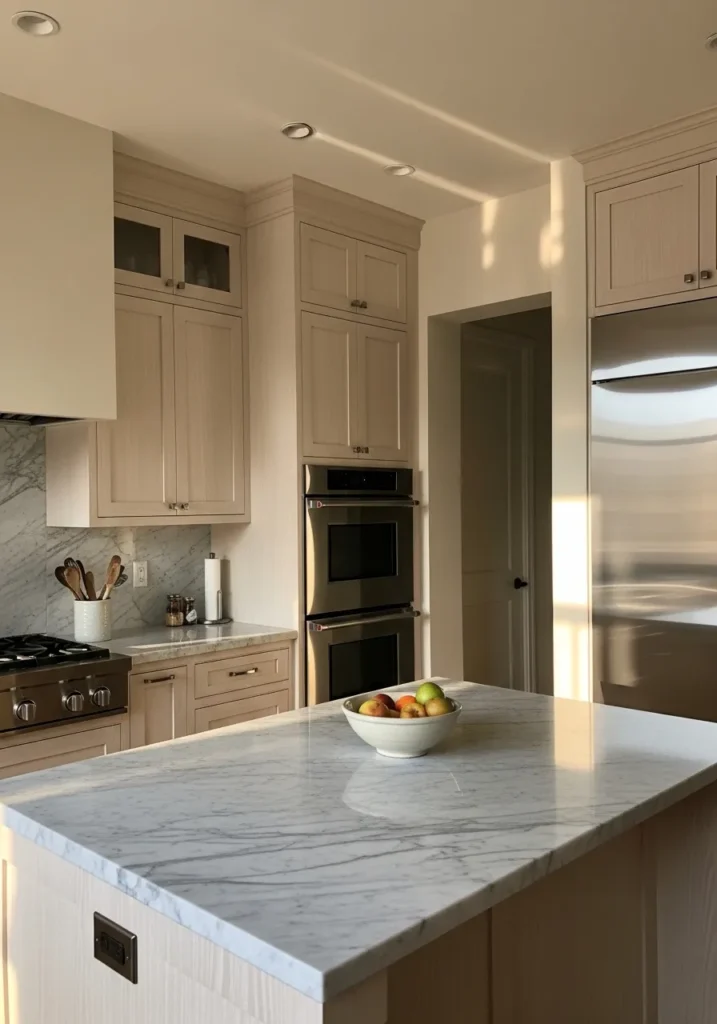
This looks closest to Benjamin Moore Balboa Mist, a light greige that leans gently warm without turning beige. It sits right in that soft middle range where it works easily with pale wood cabinetry and white stone surfaces. It feels calm and easy to live with.
The undertone has a slight warmth, but it stays subtle, which helps it shift nicely through the day. In brighter light it reads lighter and cleaner, and in softer light it takes on a bit more depth. It pairs well with natural wood and soft whites, and I would skip pairing it with cooler blue-grays since that can make it feel a little off.
Muted Blue That Feels A Bit Moody
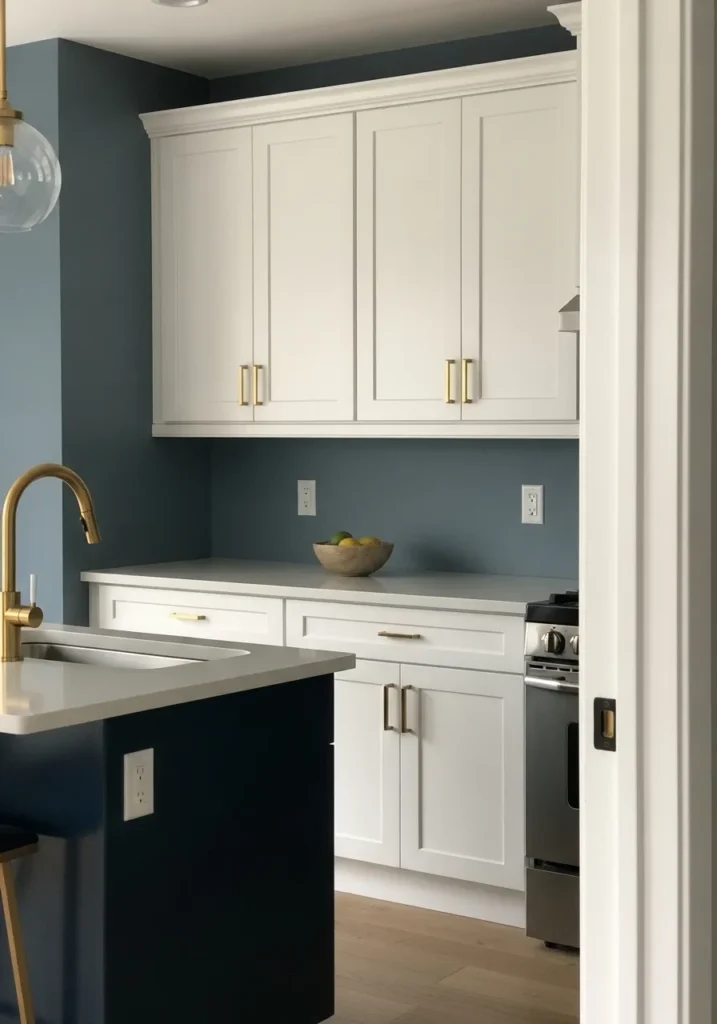
This looks closest to Benjamin Moore Van Deusen Blue, a medium to deep blue with a soft gray base. It sits in that in-between range where it feels rich but not too bright, especially next to white cabinets and warm brass hardware. It has a calm, slightly moody look without going too dark.
The undertone leans cool, though the gray keeps it from feeling sharp. It can shift depending on the light, sometimes reading deeper and more muted, sometimes showing a bit more blue. It works well when paired with clean whites and simple finishes. I would avoid mixing it with warmer beiges since that contrast can feel a little off.
Warm Taupe Walls That Feel Quiet
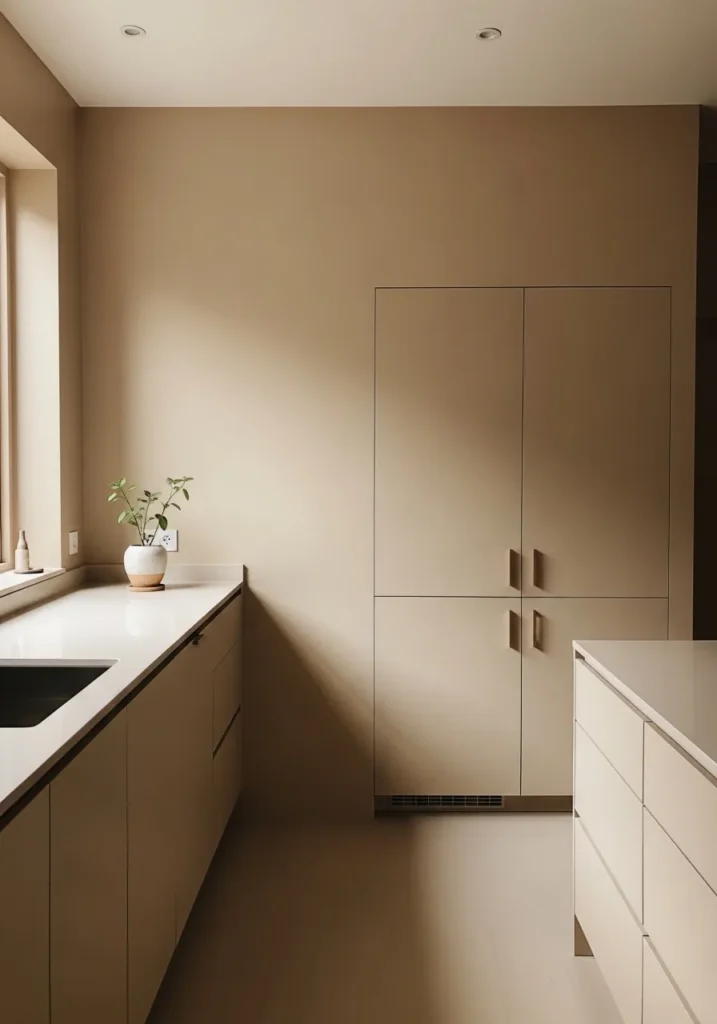
This looks closest to Benjamin Moore Smokey Taupe, a mid-tone taupe that leans warm with a soft brown base. It sits right in that calm neutral range where it feels steady without looking flat, especially next to simple cabinetry and light countertops. It is the kind of color that does not ask for attention.
The undertone carries a bit of warmth, which helps it work well with wood and softer whites. It can read slightly deeper in lower light and a bit lighter when the room brightens up. It works best when you keep nearby finishes muted and avoid cooler grays that can make it feel slightly off.
Deep Green That Feels Almost Black
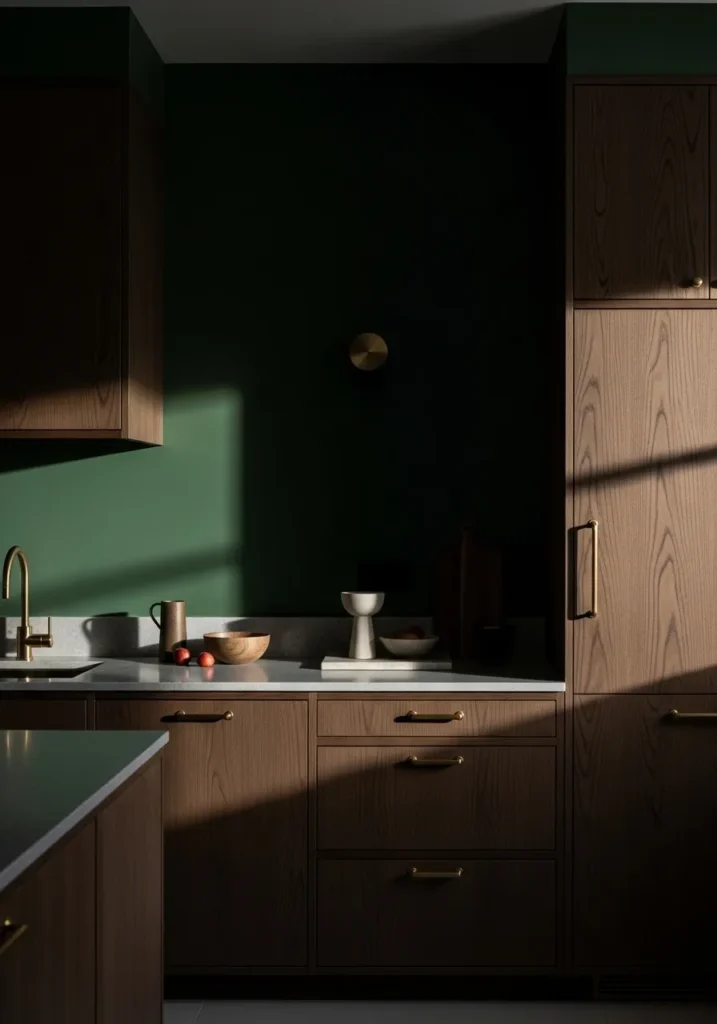
This looks closest to Benjamin Moore Essex Green, a very deep green that can read almost black at first glance. It sits in that darker range where the color feels rich but still has a bit of life to it, especially next to warm wood cabinets and simple hardware . It is bold, but not in a loud way.
The undertone leans green with a slightly warm base, which helps it work with natural materials. In low light it can look nearly black, and in better light you start to see more of the green come through. It works best when the rest of the palette stays simple, otherwise it can start to feel too heavy.
Soft Lavender Gray That Feels Light
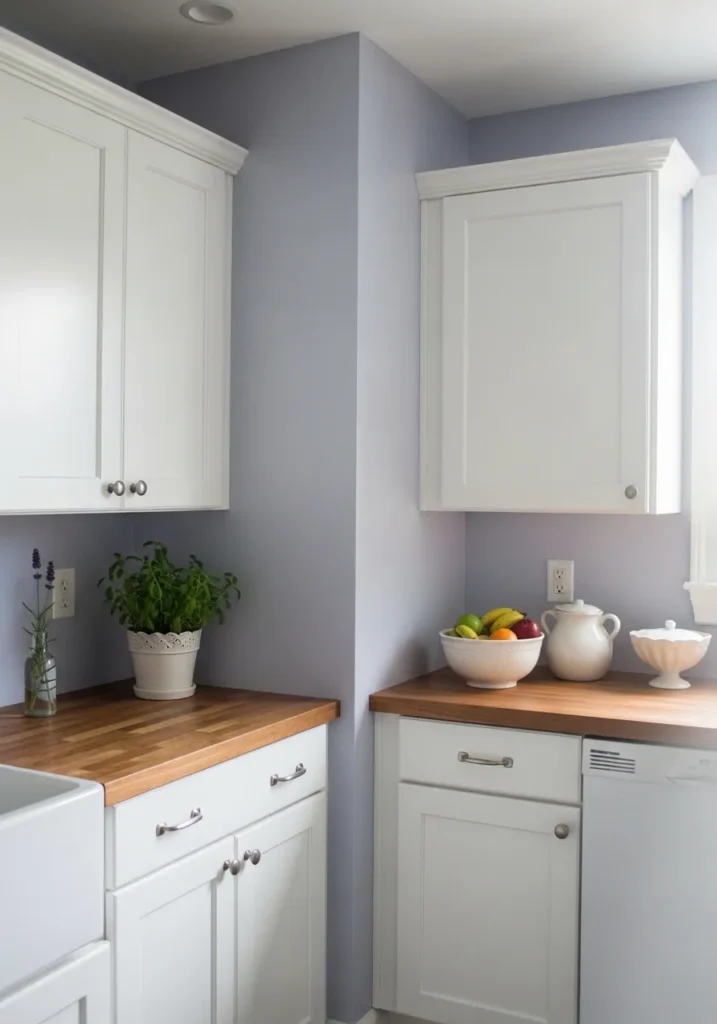
This looks closest to Benjamin Moore Violet Mist, a very light gray with a soft lavender undertone. It sits in that pale, slightly cool range where it reads almost neutral at first, especially next to white cabinets and warm wood counters . It feels gentle and a bit different without being obvious.
The undertone can shift depending on the light, sometimes looking more gray, sometimes showing a faint hint of purple. It works well in smaller kitchens or corner areas where you want something light but not plain white. I would keep surrounding colors simple since stronger tones can make the purple note stand out more than you might want.
Muted Teal That Feels Calm
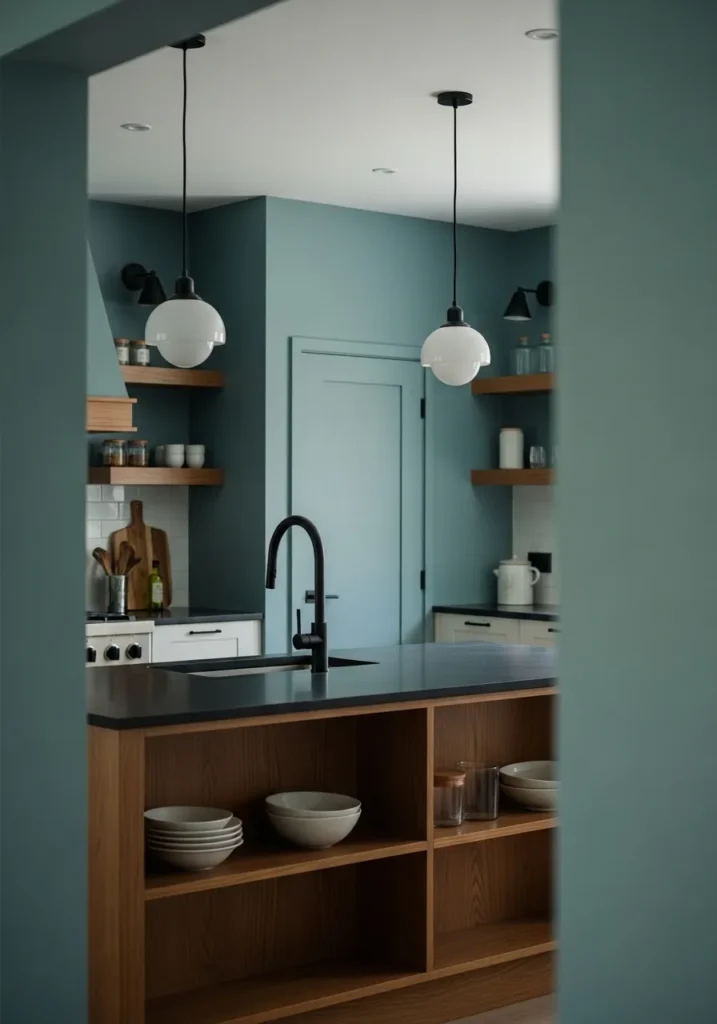
This looks closest to Benjamin Moore Aegean Teal, a softened blue green with a noticeable gray base. It sits in that quiet middle range where it brings color into the kitchen without feeling bright or busy. Next to the warm wood shelving and darker countertop, it feels steady and easy to live with .
The undertone leans slightly cool, though the gray keeps it from feeling sharp. It can shift depending on the light, sometimes reading more blue, sometimes more green. It works well when paired with simple whites and natural wood, and I would avoid mixing it with stronger greens that can make it feel a bit off.
Warm Clay Brown That Feels Lived In
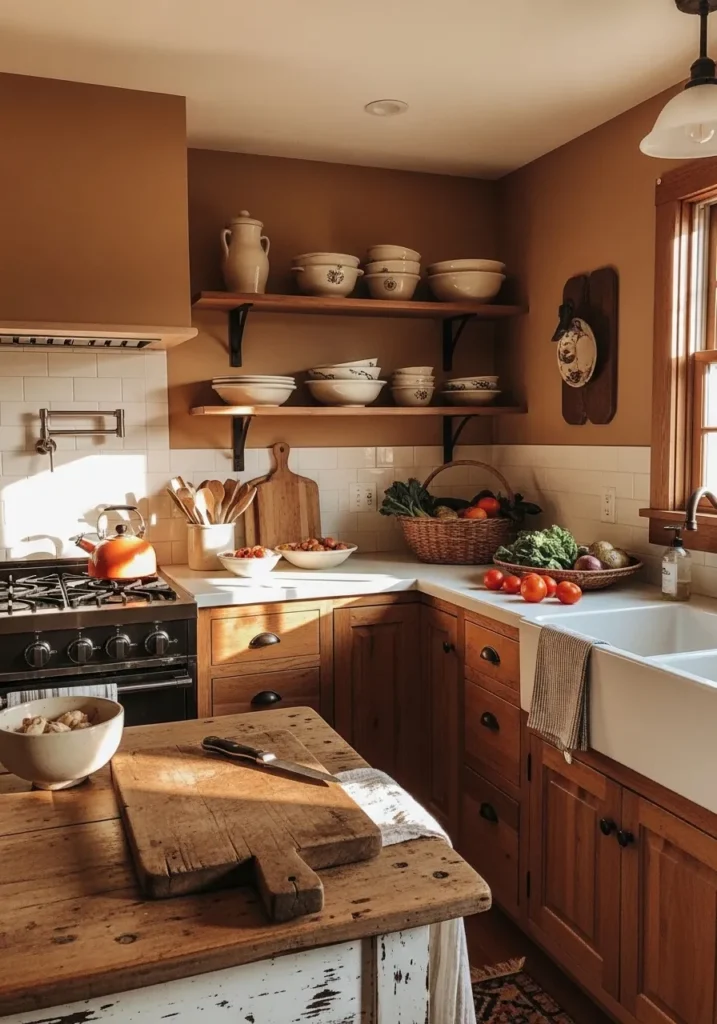
This looks closest to Benjamin Moore Rust, a warm clay brown that leans into that earthy terracotta range without going too orange. It has a grounded, slightly rustic feel that works well in kitchens with wood cabinets and simple shelving . It feels settled and familiar.
The undertone is clearly warm, with a bit of red and brown mixed in, which helps it sit naturally with wood and cream tones. It can look richer in lower light and a bit lighter when the room brightens up. It works best when you keep other colors soft and avoid cooler grays that can make it feel out of place.
Soft Blue Gray Cabinets
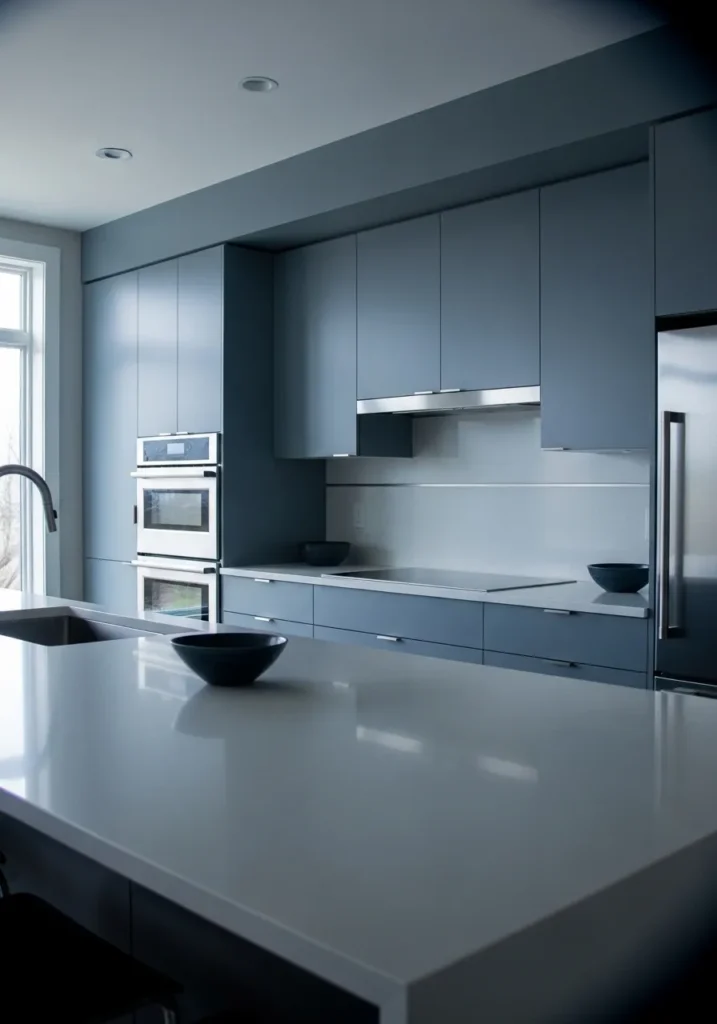
This reads very close to Benjamin Moore Van Deusen Blue, a muted blue gray that sits right between navy and slate. It feels calm but still has enough depth to hold its own across full cabinetry . A color like this works well when you want something darker without going too heavy.
The undertone leans cool, with a slight softness that keeps it from feeling sharp next to white counters and stainless appliances. It can shift a bit depending on light, sometimes more blue, sometimes more gray. I like it most in clean, simple kitchens where the color can stay the focus and not compete with too many finishes.
Soft Butter Yellow Walls
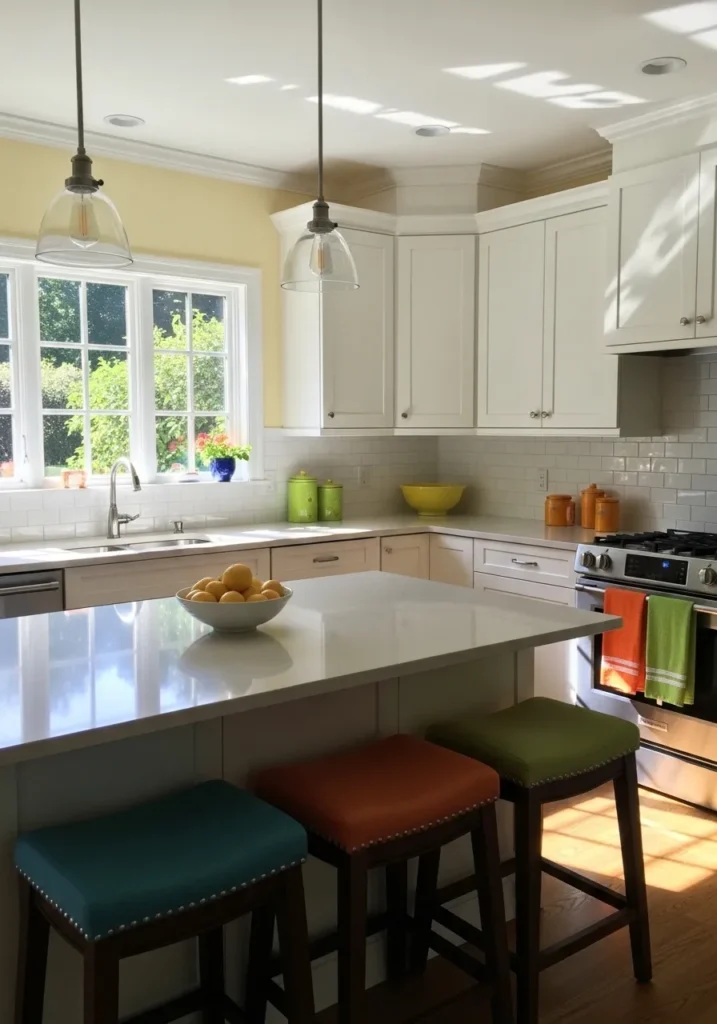
This looks closest to Benjamin Moore Hawthorne Yellow, a light buttery yellow that leans warm without feeling too bright. It sits in that gentle range where it brings a bit of color into the kitchen while still feeling easy to live with . Next to white cabinets, it keeps things from feeling too plain.
The undertone is clearly warm, with a soft golden base that works well in kitchens with good natural light. It can look a bit richer in dimmer corners and lighter near windows. It pairs best with warm whites and simple finishes, and I would skip cooler grays since they can make the yellow feel a little off.