I’ve always believed the right paint color can completely change how a bathroom feels, and lately I’ve been leaning into that calm spa vibe at home.
There’s something about soft, quiet colors that just makes everything feel more relaxed, even on busy mornings.
I pulled together these Benjamin Moore shades because they have that gentle, polished look without feeling too formal or stiff.
If you’re into bathrooms that feel fresh, simple, and a little indulgent, these colors are such an easy place to start.
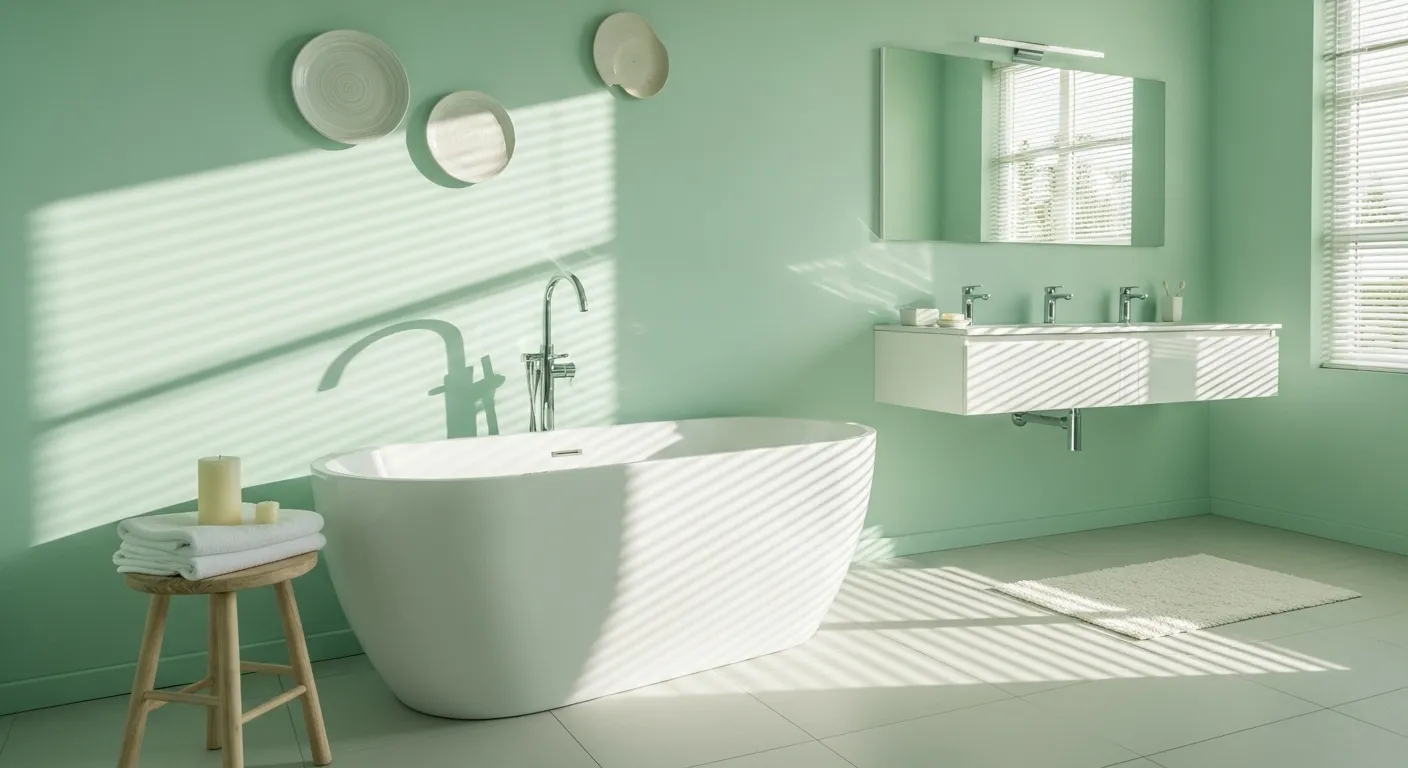
Pale Sage Green Bathroom Walls
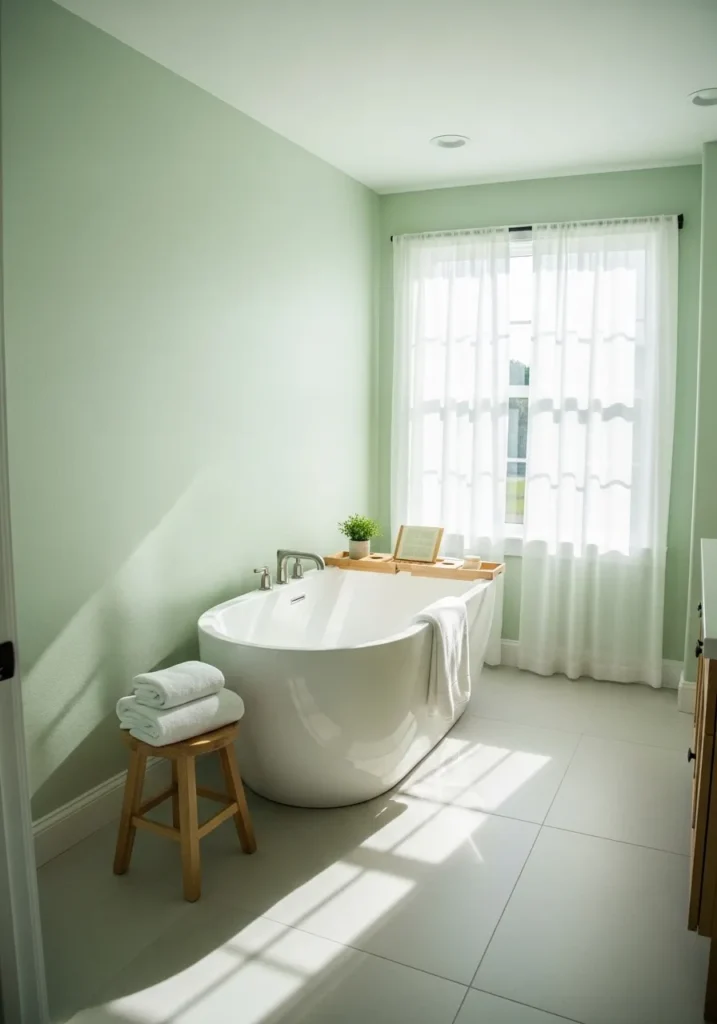
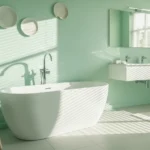
This looks very close to Benjamin Moore Healing Aloe. It’s that soft sage green that leans a bit muted and slightly gray, not bright or minty. You see it right away on the walls around the tub, and it gives the whole space a quiet, easy feel that works well for a bathroom.
There’s a gentle cool undertone here, but it still feels comfortable next to the light wood stool and white tub. It tends to read a little lighter in rooms with good natural light, so it won’t feel heavy. I like it with simple whites and pale wood, and I’d skip anything too dark or glossy since that can make this kind of green feel a bit off.
Warm Beige Bathroom Walls
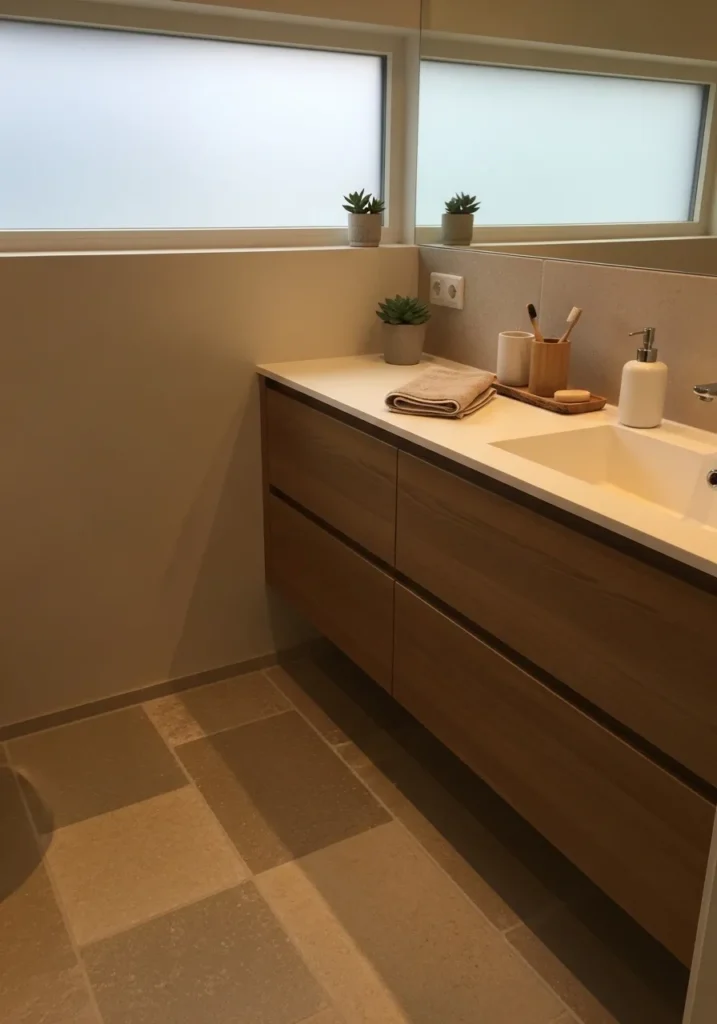
This looks closest to Benjamin Moore Muslin. It’s a soft warm beige that leans a bit creamy without turning yellow, and it reads calm and steady on the walls. You can see how it sits next to the wood vanity and still feels balanced, not too light and not too heavy.
There’s a gentle warmth underneath that works well with natural wood and stone tile, so it feels easy to live with. In lower light it can deepen slightly, but it usually stays soft and even. I tend to like this kind of beige with simple white counters and matte finishes, and I’d avoid pairing it with cooler grays since that can make it look a little off.
Soft Blue Gray Walls
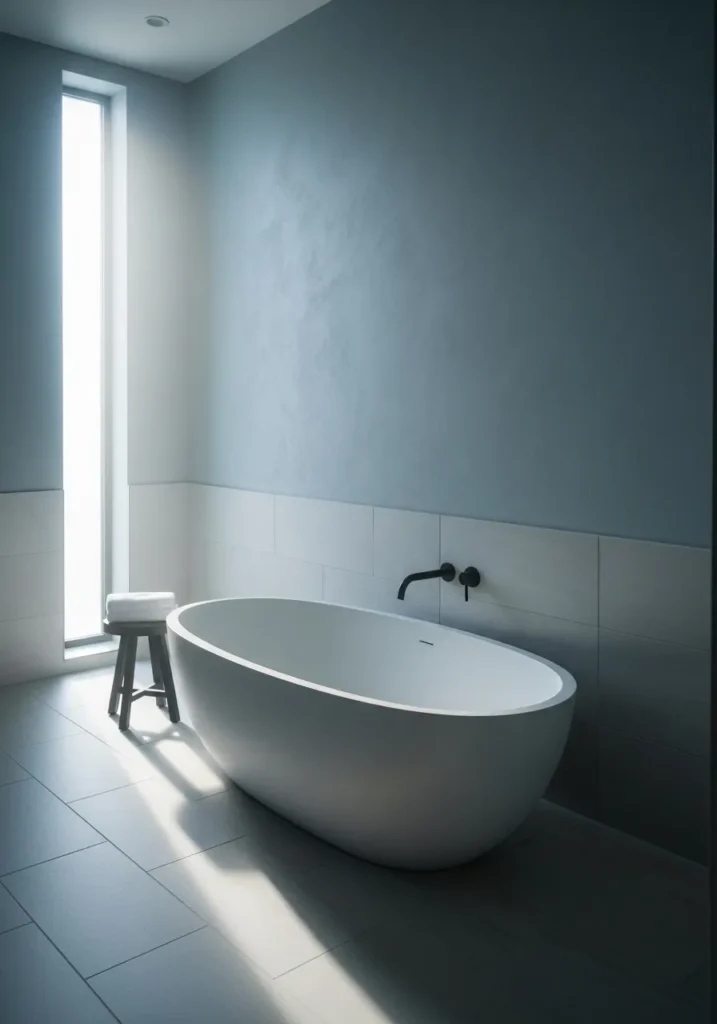
This reads very close to Benjamin Moore Smoke. It’s a blue gray that leans cool and a little moody, not bright or airy. On the wall behind the tub, it comes across calm and steady, the kind of color that doesn’t try too hard but still feels considered.
The undertone sits firmly on the cool side, so it pairs nicely with crisp white tile and darker fixtures. In stronger light it can look a bit lighter and more blue, but in softer light it deepens into a gentle gray. I’d keep the rest of the room simple with clean whites and a bit of natural texture, otherwise it can start to feel a little heavy.
Warm Taupe Walls
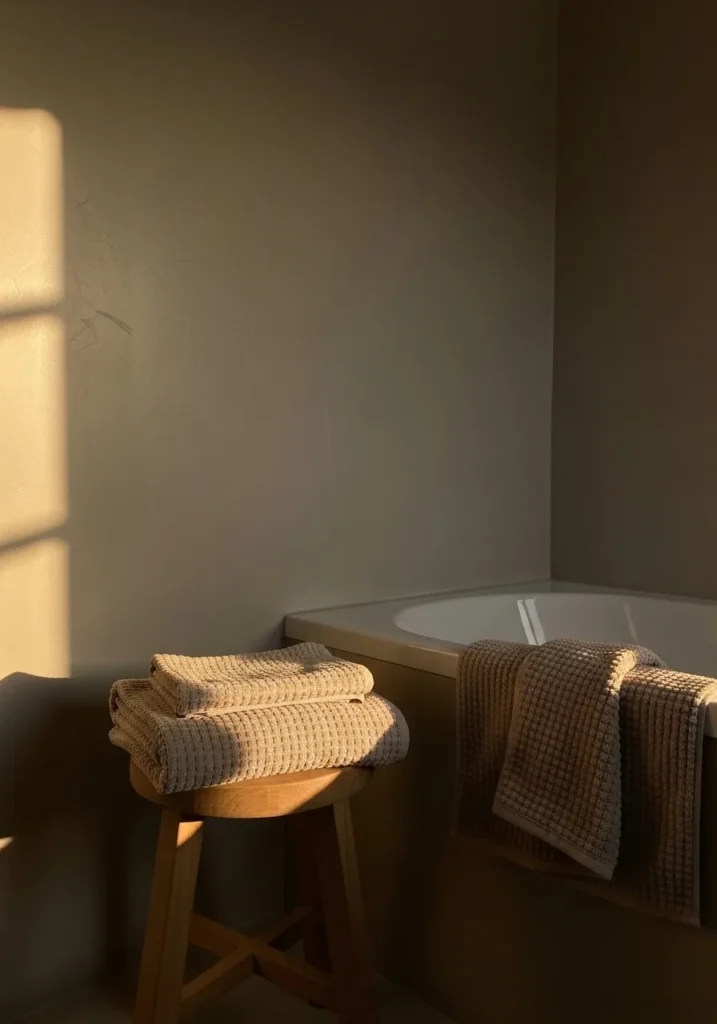
This looks closest to Benjamin Moore Pashmina. It’s a soft taupe that leans warm, sitting somewhere between beige and gray without going too cool. On a simple wall like this, it feels steady and quiet, especially next to the light wood stool and neutral textiles.
There’s a gentle brown undertone that keeps it from feeling flat, and it tends to shift a bit depending on the light. In brighter areas it can read lighter and a touch creamier, while in lower light it deepens into a richer taupe. I like it with soft whites and natural textures, though I’d skip pairing it with sharp cool grays since that can make it feel slightly muddy.
Light Aqua Blue Walls
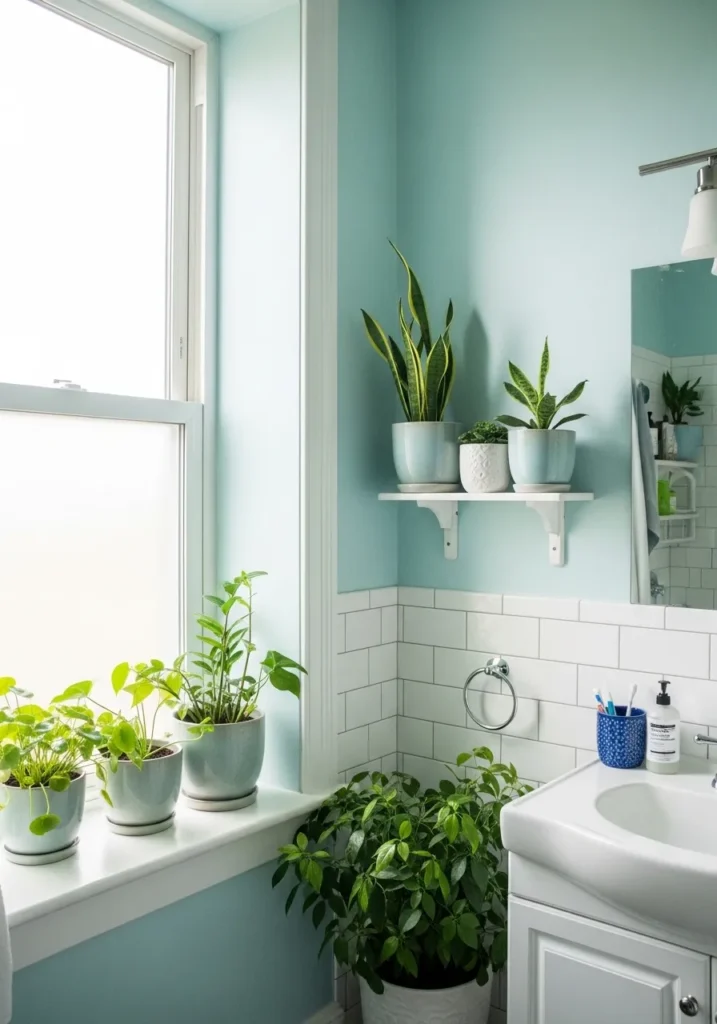
This reads very close to Benjamin Moore Palladian Blue. It’s a soft aqua that sits between blue and green, with a light and slightly airy feel. On the walls near the window and around the plants, it comes across fresh without feeling sharp or overly bright.
There’s a gentle green undertone that keeps it from going icy, which is why it works so well with white tile and simple fixtures. In brighter light it can lean a bit more blue, while in softer light it settles into a quieter aqua. I tend to keep everything else fairly simple with this kind of color, since too many bold accents can start to compete with it.
Muted Blue Gray Walls
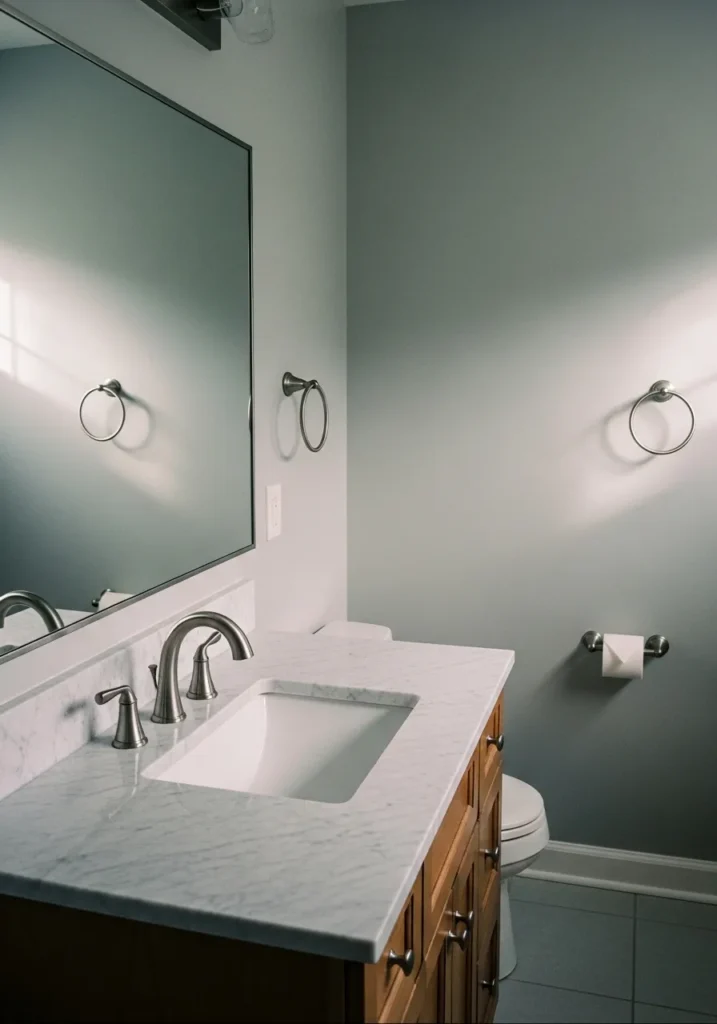
This looks closest to Benjamin Moore Boothbay Gray. It’s a soft blue gray that leans slightly cool, with just enough depth to feel grounded without going dark. On the main wall near the vanity, it reads calm and even, especially against the white countertop.
There’s a quiet blue undertone that comes through more in brighter light, while in dimmer spots it settles into a more neutral gray. It pairs nicely with warm wood cabinets and brushed metal finishes, which help keep it from feeling too cool. I’d keep the palette simple here, since this kind of color can shift a bit depending on what you put next to it.
Dusty Blue Gray Walls
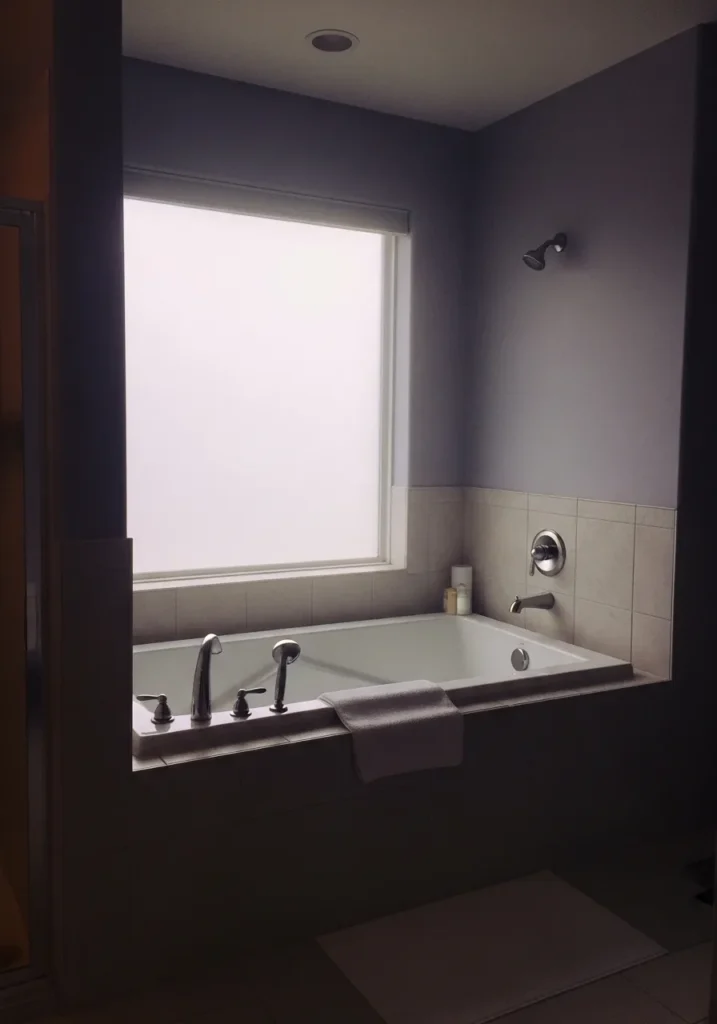
This looks very close to Benjamin Moore Nimbus Gray. It’s a deeper blue gray with a soft, slightly muted finish that doesn’t feel sharp or cold. On the wall around the tub, it reads calm but a bit more grounded than lighter spa colors, which can be nice if you want something with a little weight.
The undertone leans cool with a hint of blue, though it can shift toward gray when the light is lower. Next to the white tub and light tile, it feels balanced and not too dark. I’d keep the rest of the room simple and light, since too many heavy finishes can make this kind of shade feel closed in.
Soft Creamy White Walls
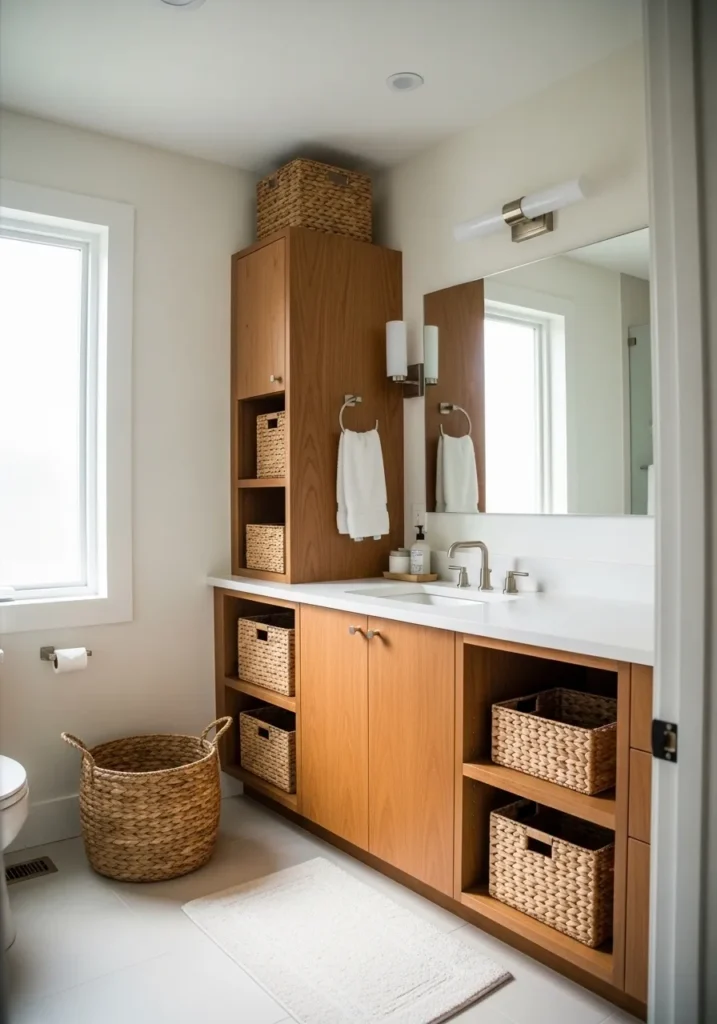
This looks closest to Benjamin Moore Swiss Coffee. It’s a warm off white with a soft creamy base, not stark or cold. On the walls around the vanity, it reads gentle and easy, especially next to the wood cabinetry and woven baskets.
There’s a light warmth in it that keeps the space from feeling flat, and it tends to stay consistent in most lighting. It works well with natural wood and simple white finishes, which you can see here. I usually avoid pairing this kind of white with very cool grays, since that contrast can make it look a bit yellow.
Warm Sand Beige Walls
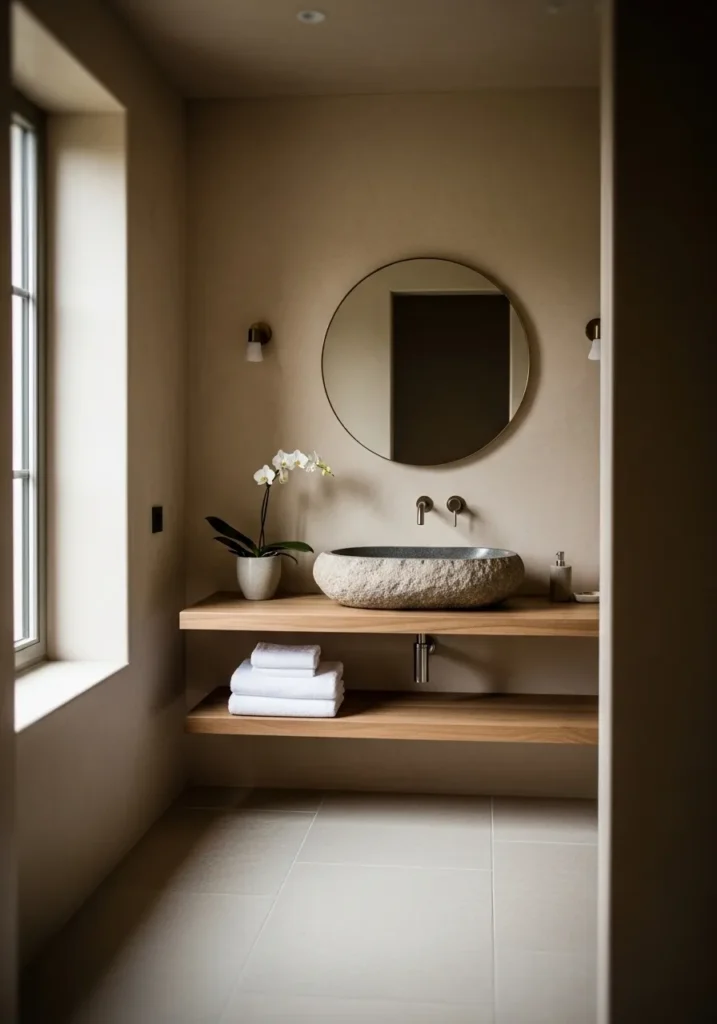
This looks very close to Benjamin Moore Manchester Tan. It’s a soft beige with a sandy, slightly warm base that sits somewhere between cream and light tan. On the wall behind the floating wood shelf, it reads calm and steady without feeling too pale or washed out.
There’s a gentle warmth here that works well with natural wood and stone, which you can see in the sink and shelving. It tends to stay fairly consistent in different lighting, though it can look a bit richer in lower light. I like it with soft whites and simple finishes, and I’d avoid anything too cool next to it since that contrast can make it feel a little off.
Soft Powder Blue Walls
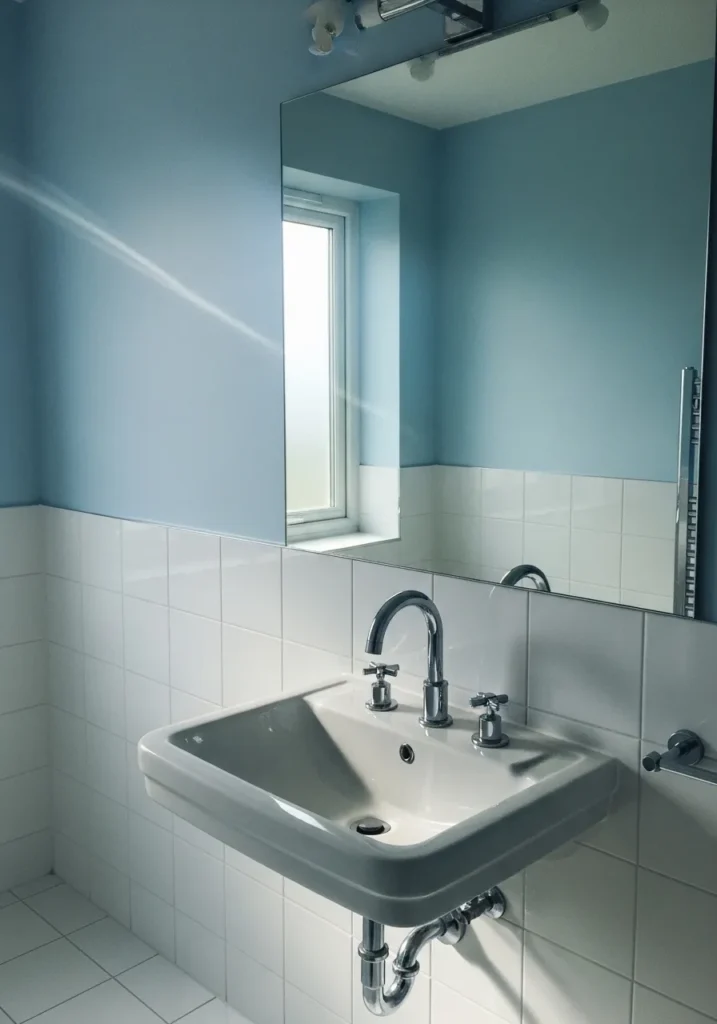
This looks closest to Benjamin Moore Woodlawn Blue. It’s a light blue with a gentle gray undertone, so it doesn’t feel bright or overly sweet. On the wall above the white tile, it comes across clean and calm, the kind of color that feels easy to live with day to day.
There’s a soft coolness to it, but the slight gray keeps it from feeling sharp. In brighter light it leans a bit more blue, while in softer light it settles into a quieter tone. I like it with crisp white tile and simple chrome fixtures like this, and I’d avoid pairing it with anything too warm or yellow since that can throw it off a bit.
Soft Blue Green Walls
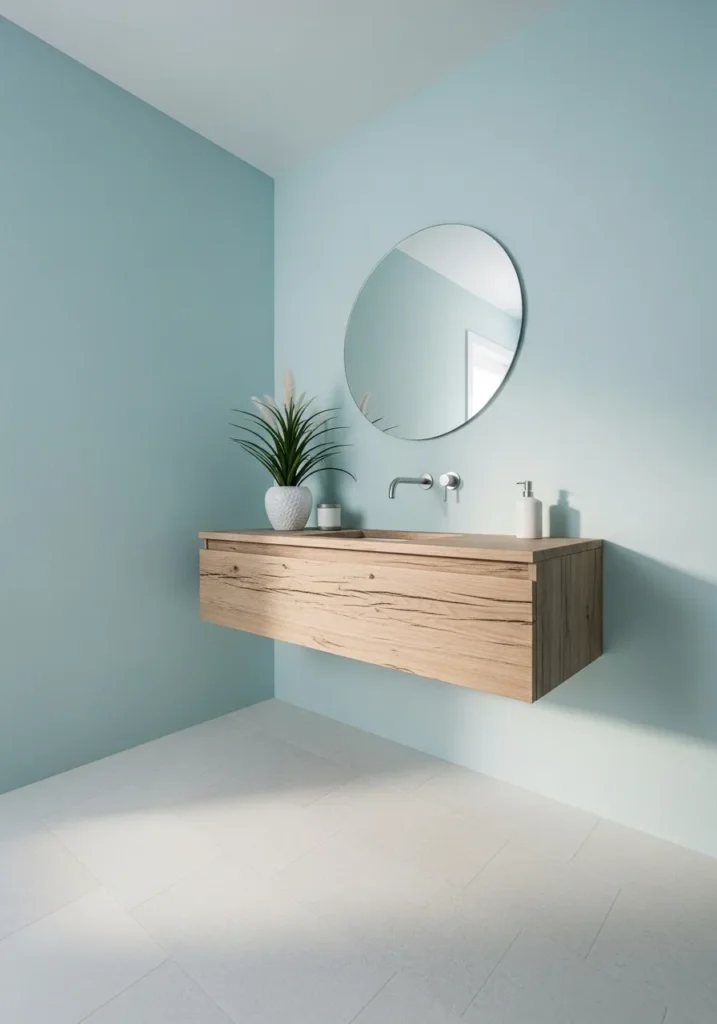
This looks closest to Benjamin Moore Quiet Moments. It’s a light blue green that leans soft and a bit muted, not bright or tropical. On the wall behind the floating wood vanity, it reads calm and easy, the kind of color that doesn’t feel busy even in a small space.
There’s a slight green undertone that shows up more when paired with natural wood like this, which keeps it from feeling too cool. In brighter light it leans a bit more blue, while in softer light it settles into a gentle green. I like it with pale wood and simple white finishes, since anything too dark can make it feel a little heavier than it should.
Deep Charcoal Gray Walls
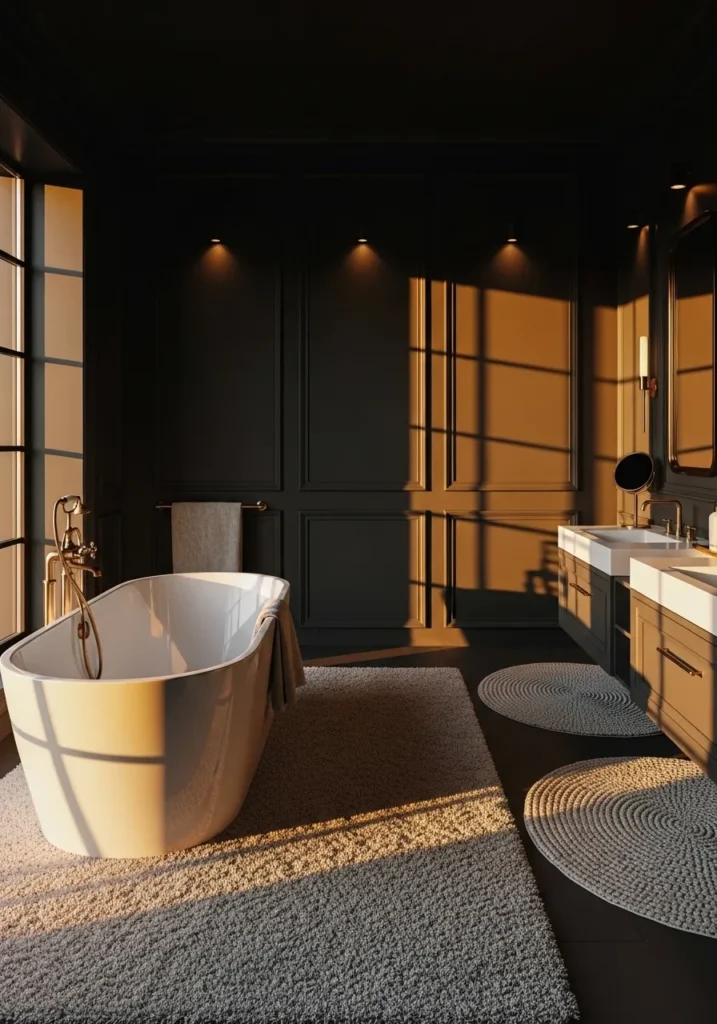
This looks closest to Benjamin Moore Kendall Charcoal. It’s a rich charcoal gray with a soft, slightly warm base, not a flat black or overly cool gray. On the paneled wall behind the tub, it reads deep and steady, giving the room a more grounded feel than lighter spa colors.
There’s a subtle warmth in it that works nicely with the brass fixtures and lighter surfaces around the tub. In brighter light it can show a bit more gray, but in lower light it deepens quite a bit. I’d keep the rest of the space lighter and simple, since too many dark finishes can make this kind of color feel a bit closed in.
Warm Greige Bathroom Walls
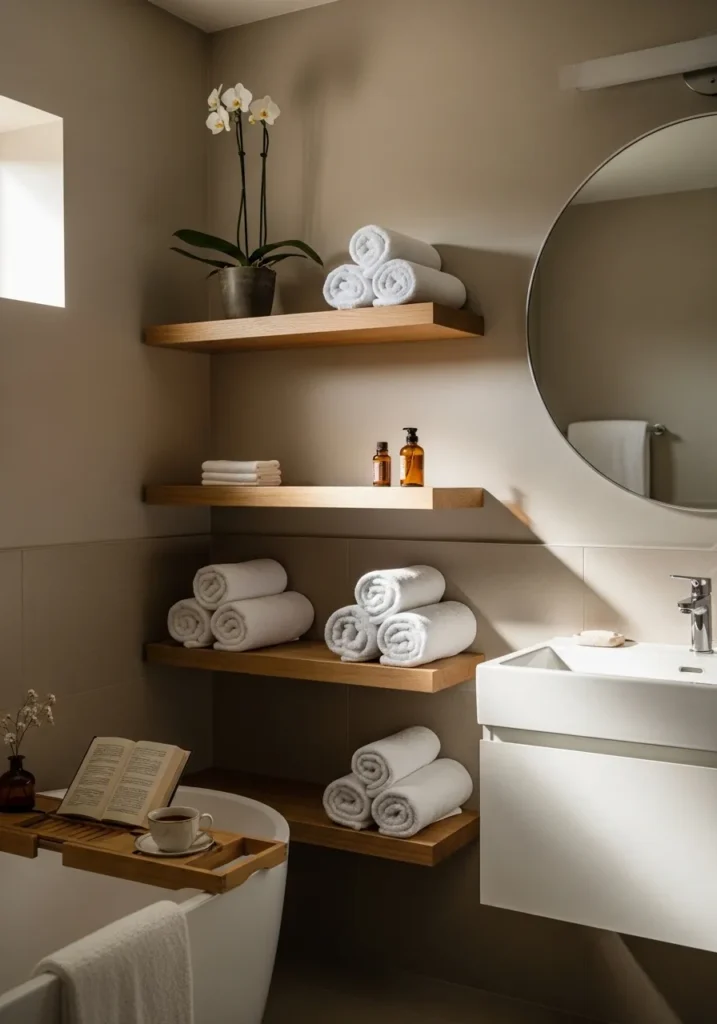
This looks closest to Benjamin Moore Edgecomb Gray. It’s a soft greige that sits right between beige and gray, with a gentle warmth that keeps it from feeling cold. On the wall near the floating shelves, it reads calm and easy, not too light but not heavy either.
There’s a subtle beige undertone that works really well with wood shelves and white towels, so everything feels tied together without much effort. In brighter light it leans a bit lighter and softer, while in lower light it can look a touch deeper. I tend to like this kind of greige with warm finishes, since pairing it with cooler tones can shift it in a direction that feels slightly dull.
Soft Blush Beige Walls
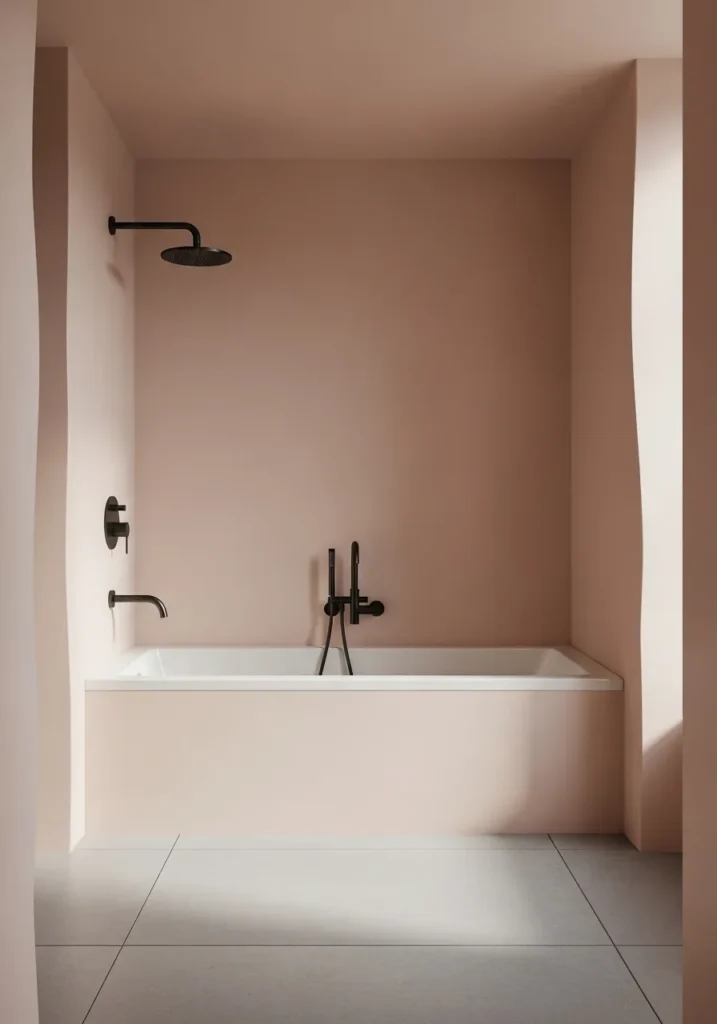
This looks closest to Benjamin Moore First Light. It’s a very soft blush beige with a hint of pink, but it stays muted and calm rather than sweet. On the wall around the tub, it reads warm and quiet, not too beige and not too rosy.
There’s a gentle warmth that comes through more next to the white tub and darker fixtures, which helps it feel balanced. In brighter light it can lean a bit lighter and almost creamy, while in lower light the blush tone shows a little more. I’d keep the rest of the space simple with soft neutrals, since too many strong colors can make this one feel a bit fussy.
Muted Sage Green Walls
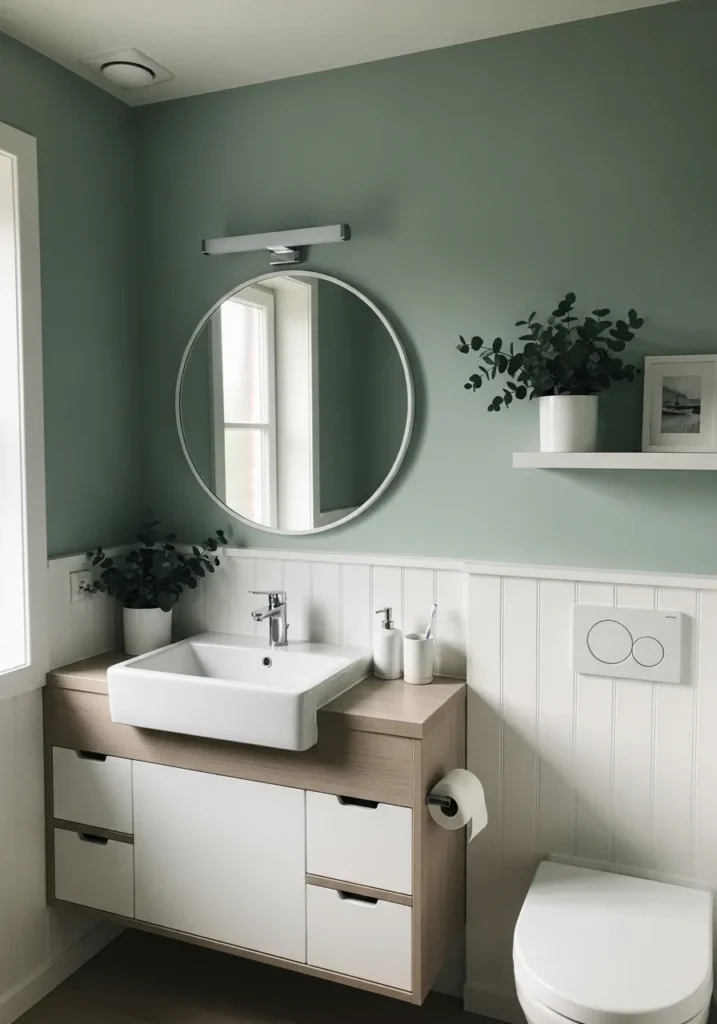
This looks closest to Benjamin Moore Saybrook Sage. It’s a soft sage green with a slightly gray base, so it feels muted rather than fresh or bright. On the wall behind the sink, it reads calm and steady, especially next to the white paneling and simple vanity.
There’s a gentle earthy undertone that pairs nicely with light wood and white finishes, which keeps everything feeling balanced. In brighter light it can lean a bit more green, while in softer light it settles into a quieter gray-green. I tend to keep the rest of the space simple with this kind of color, since too many bold tones can make it feel a bit busy.
Cool Light Gray Walls
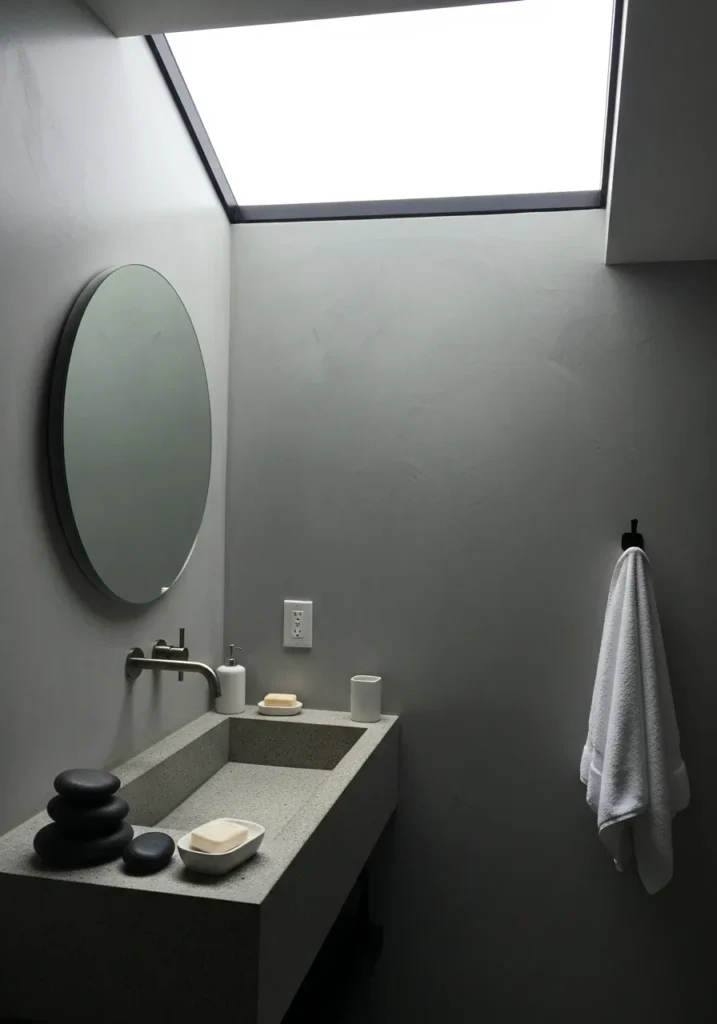
This looks closest to Benjamin Moore Stonington Gray. It’s a soft, cool gray with a clean and slightly crisp feel, not too dark and not too warm. On the wall near the concrete sink, it reads simple and quiet, which works well in a smaller space.
There’s a cool undertone that leans a bit blue, especially next to white and stone finishes. In brighter light it can look lighter and a bit softer, while in lower light it deepens slightly. I’d keep the rest of the palette clean and minimal with this one, since warmer tones can make it feel a little out of place.
Warm Creamy Beige Walls
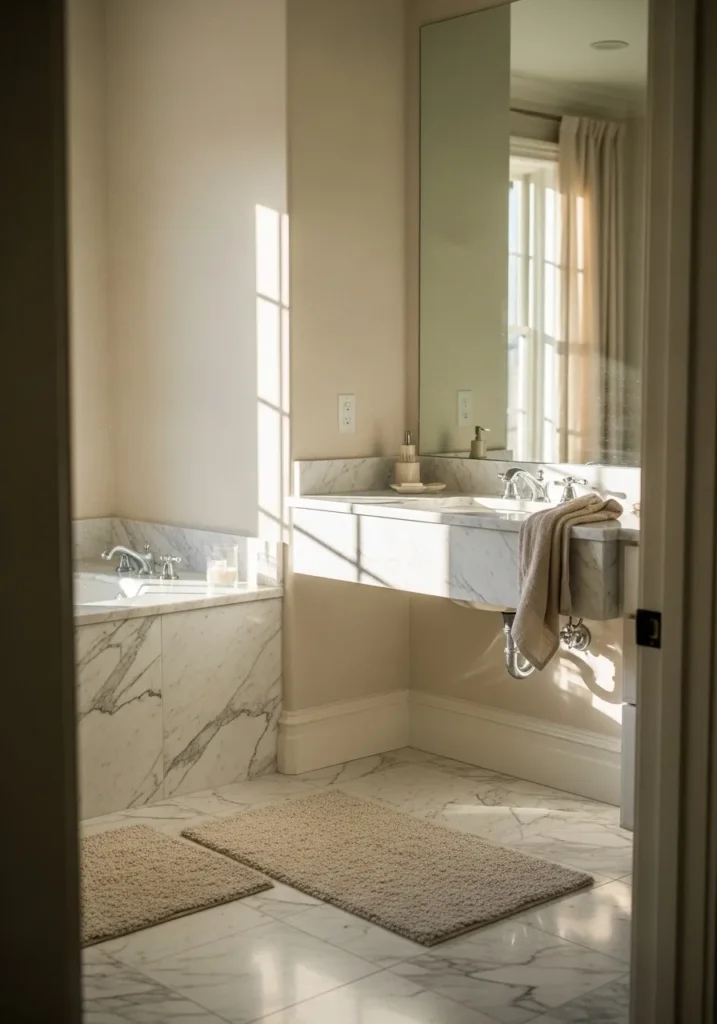
This looks closest to Benjamin Moore Natural Cream. It’s a soft, warm beige that leans a little creamy rather than yellow, which gives it that calm, easy feel. Next to the marble tub and vanity, it keeps everything light without going stark.
There’s a gentle warmth in it that shows more when paired with white stone and soft textiles. It tends to stay steady in different lighting, though in brighter light it can read a bit lighter and almost off-white. I’d keep finishes simple here, brushed metals or polished chrome both sit well against it.
Muted Blue Gray Walls
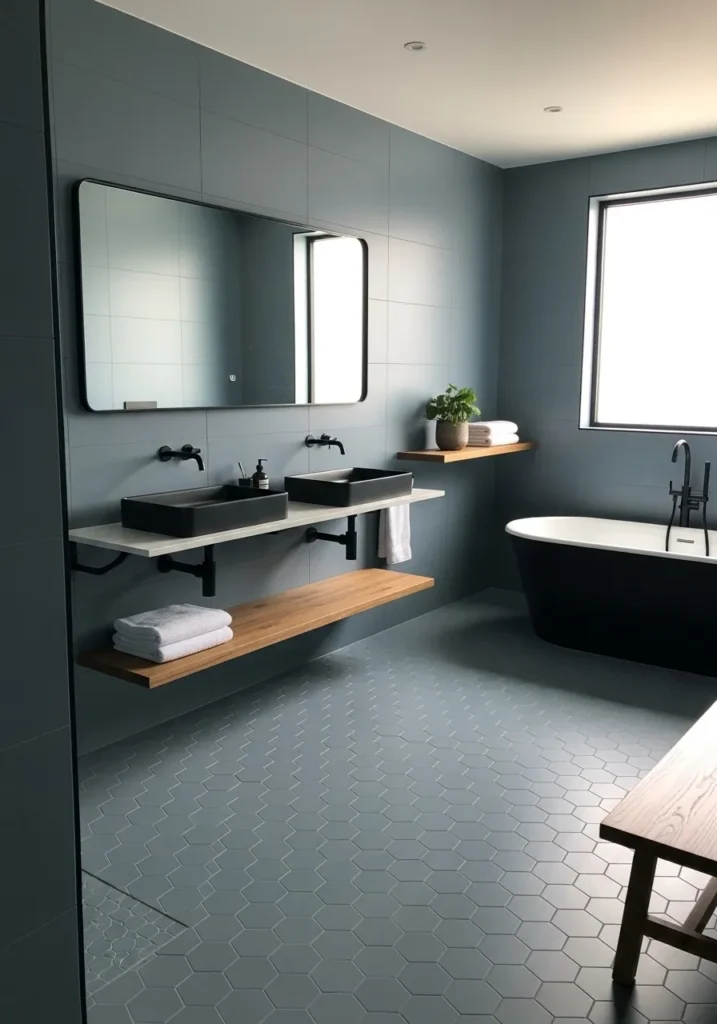
This reads very close to Benjamin Moore Boothbay Gray. It’s a blue gray with a slightly dusty tone, not too bright and not too heavy. On the tiled walls around the sinks, it gives a calm, steady backdrop that feels easy to live with.
There’s a cool undertone here that leans blue, especially next to the black fixtures and crisp white surfaces. In brighter light it can look a bit lighter and softer, while in dimmer spots it deepens into a moodier gray. I’d pair it with light wood like the floating shelves to keep it from feeling too cool.