When the yard drops away from the house it becomes clear that a standard fence install will leave awkward spaces at the bottom that defeat the purpose of privacy.
I have walked properties where owners spent time and money on a new fence only to realize later that the slope created new sight lines they had not planned for.
Paying attention to how each section steps or follows the contour makes a lasting difference in how the whole boundary holds up.
Slopes test every detail.
Over time I have come to check the lowest points first when I consider any changes to the yard edges.
Retaining Walls That Double As Privacy Screens

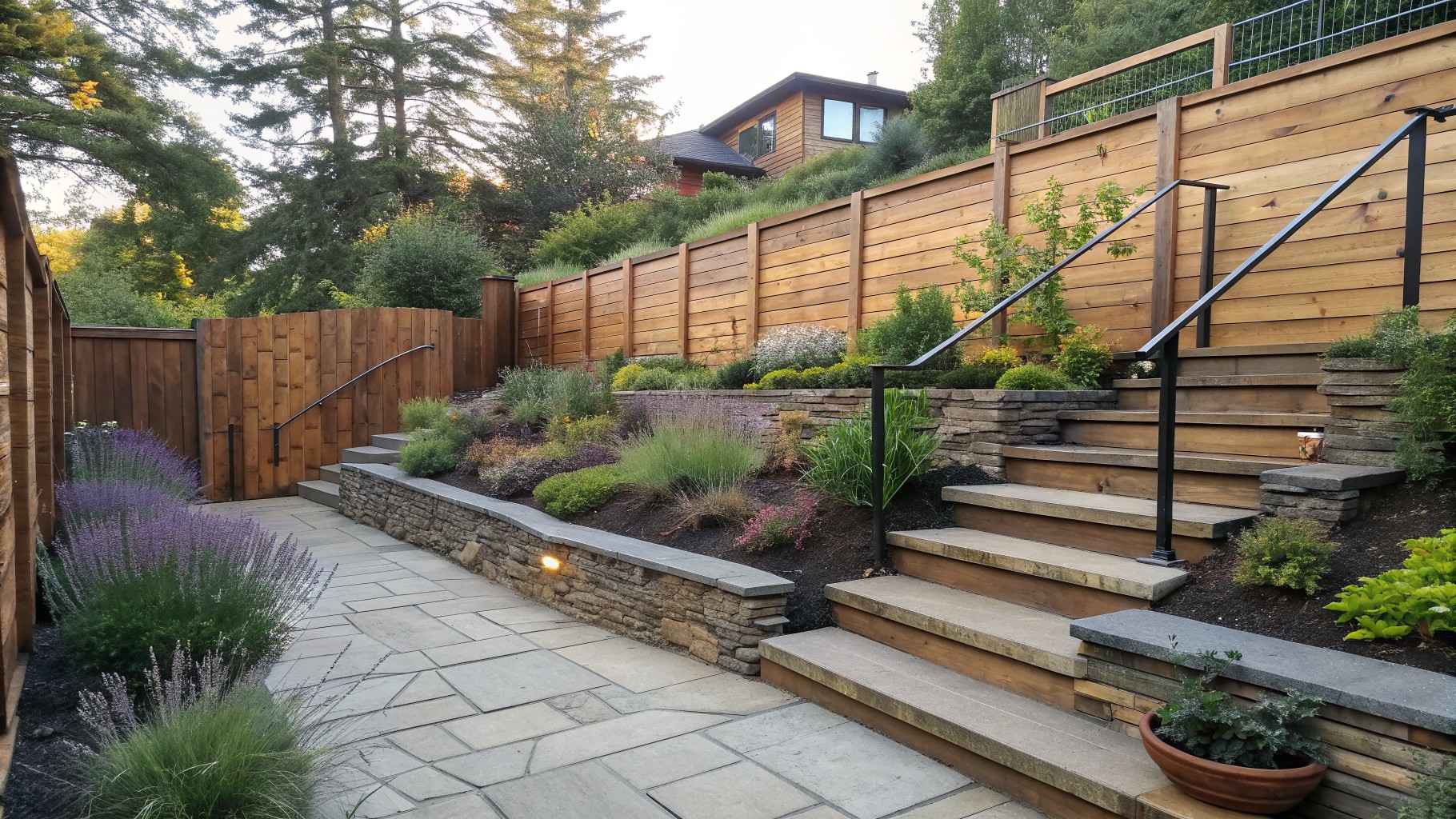
On sloped yards, a single tall fence often looks awkward or leaves gaps at the bottom. Tiered retaining walls step down with the hill and give solid coverage at every level without a lot of custom cutting.
This setup works best on backyards that drop away from the house. Use pressure-treated lumber for the tiers, add a fence on top where extra height is needed, and make sure each level has drainage so water does not sit against the wood.
Wood Fences On Retaining Walls
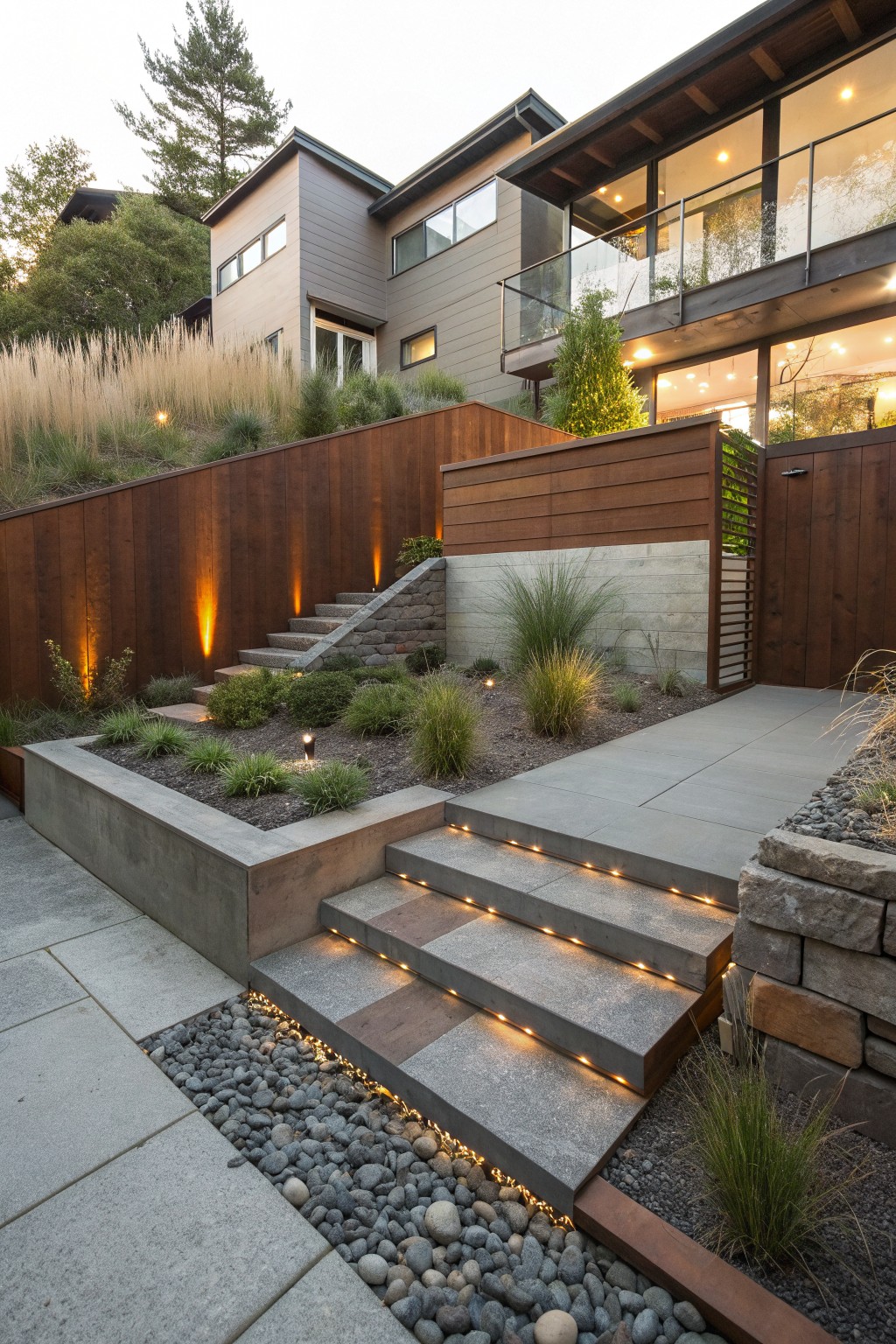
Fencing a sloped yard often means dealing with uneven fence lines or gaps at the bottom. Building the fence on top of a retaining wall keeps the panels level and at a consistent height for better privacy.
This setup works best on lots with noticeable grade changes where a straight fence would look off. It also lets you add planting beds at different levels without losing the solid barrier you need.
Retaining Walls Keep Fences Level on Sloped Yards

Putting a privacy fence on a hill often leads to uneven lines and weak posts. Retaining walls solve that by carving out flat sections where the fence can sit straight. The walls also give you room for planting beds along the base.
This approach works best in backyards that drop away from the house. Build the walls first in tiers, then set your fence posts on the upper level. Use materials that match the slope so the whole structure feels solid rather than patched together.
Step the Fence to Follow the Slope

Stepping fence panels keeps each section level even when the yard drops. It avoids the tilted look you get when a single long fence tries to run straight up a hill, and it still gives solid privacy from top to bottom.
Pair the stepped sections with simple retaining walls so the ground stays flat in front of each run. This setup works on gradual slopes where you want planting beds or a path along the fence line without fighting the grade the whole way.
Stepped Retaining Walls Handle Slopes Well

Stepped retaining walls work nicely on sloped yards because they turn a steep drop into usable levels without needing one tall barrier. The approach keeps the space from feeling closed in while still giving a clear boundary between the house and the area below.
This setup suits homes built on hills where a flat fence would look awkward or require too much cutting into the grade. Keep the walls low enough to follow the natural contour and add a simple railing on top where extra security is needed. Avoid tall solid walls that can feel heavy on a slope.
Stone Retaining Walls For Sloped Yards
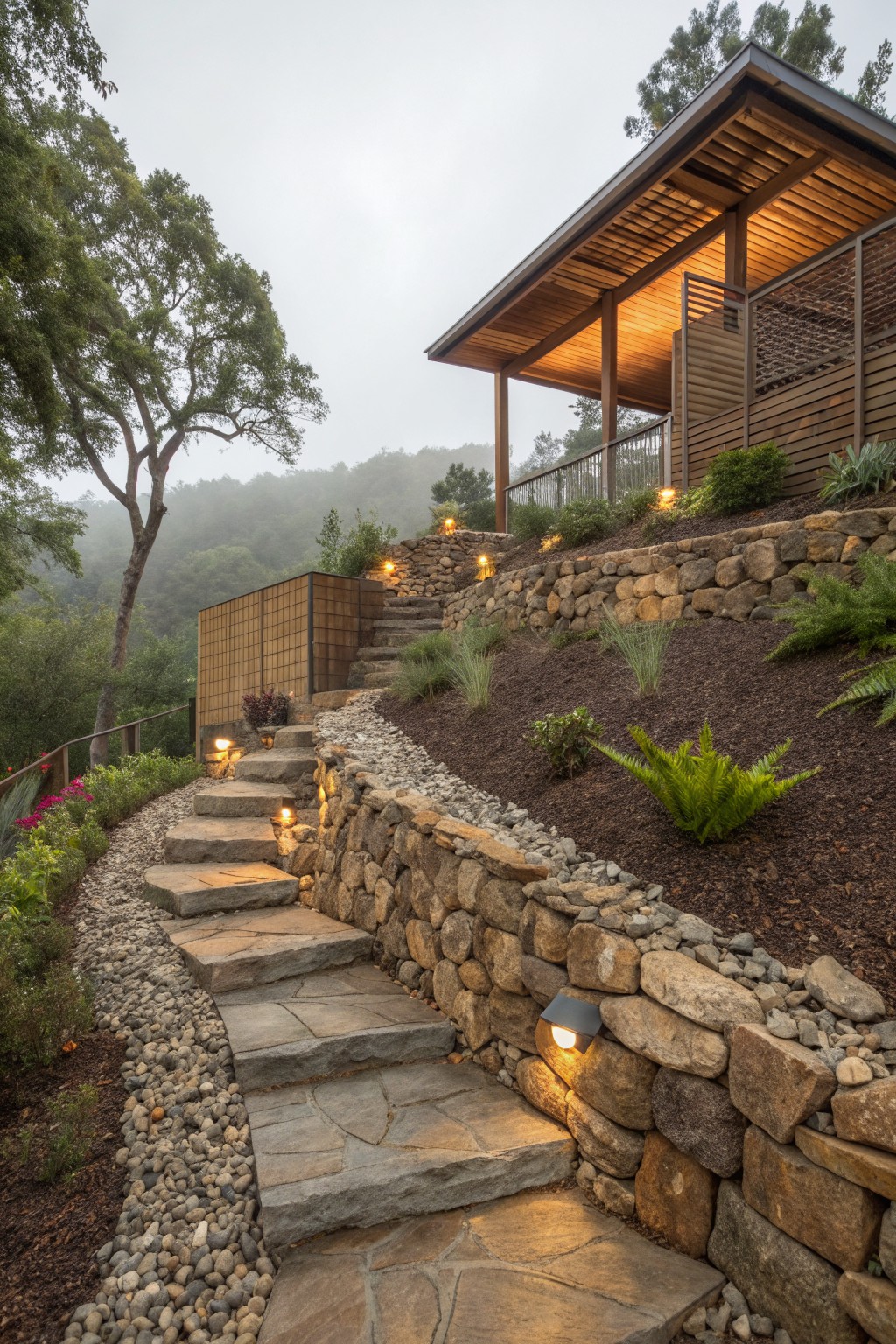
Stone retaining walls give you a solid way to deal with a steep drop while still keeping the yard usable. They hold the soil in place and create flat spots for paths or steps so you are not fighting the slope every time you walk through the space.
You can tuck a wood privacy screen right against the wall on the upper side if you want extra coverage from the house above. This setup works on most homes with uneven lots because the stone lasts for years and the plants can grow along the edges without constant trimming.
Retaining Walls Make Fences Work On Slopes

Retaining walls give you a level base when the ground drops away. That makes it much easier to set a straight privacy fence without gaps or tilting posts. The stone work also keeps soil from washing down and under the fence during heavy rain.
Wood fences sit nicely on top of these walls and still block the view from above or below. This setup suits wooded lots with noticeable drops and holds up better than trying to follow the slope with the fence alone.
Combine Privacy Fences With Retaining Walls
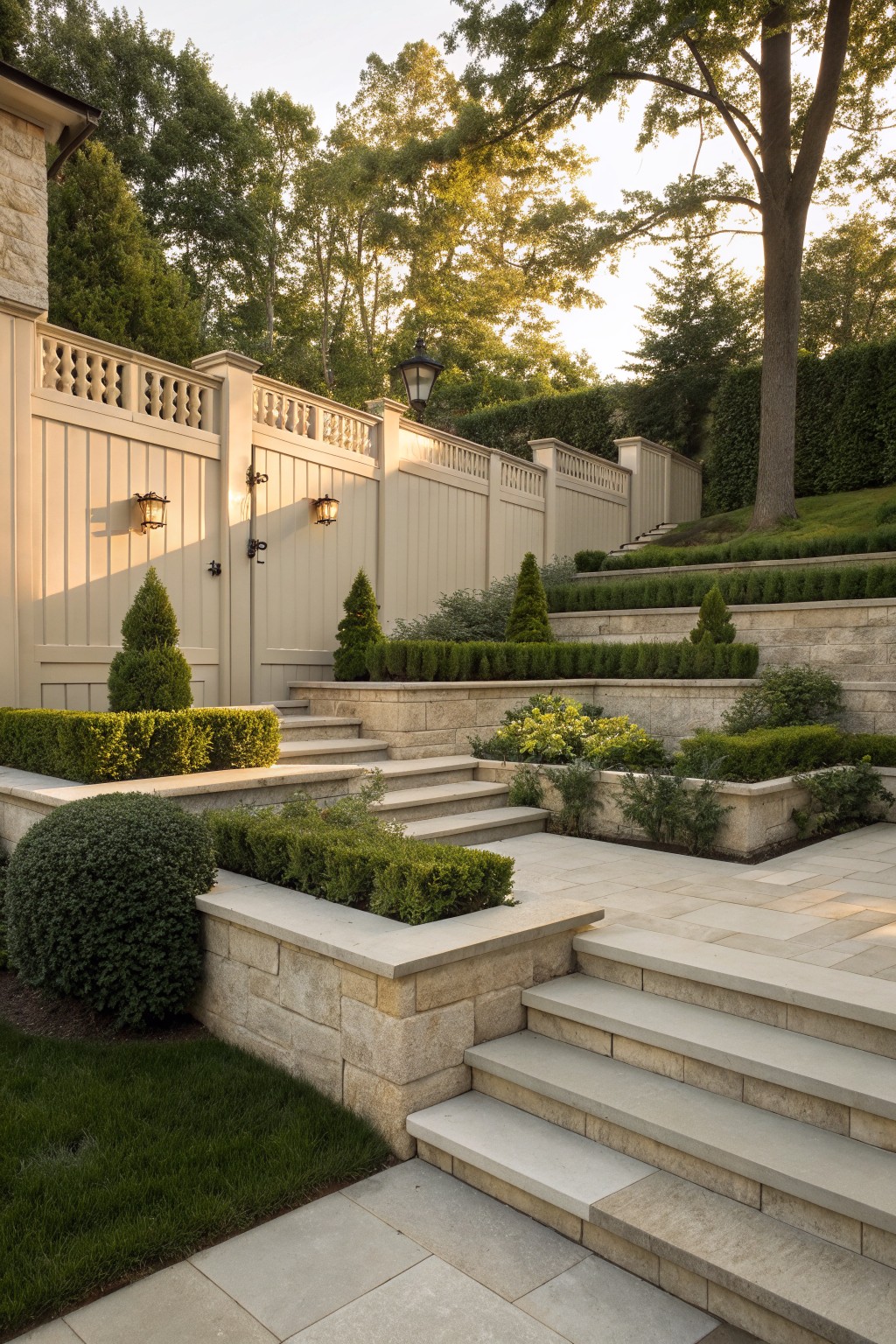
A tall fence can lose some of its privacy value on a slope because the ground drops away and leaves gaps. Adding stone retaining walls underneath solves that by creating flat sections where the fence can sit level and solid.
This setup works best on yards that rise or fall sharply behind the house. The walls carry the height changes while the fence stays at one height, which keeps the screening consistent without needing a stepped or angled fence line.
Reed Fencing That Follows the Slope
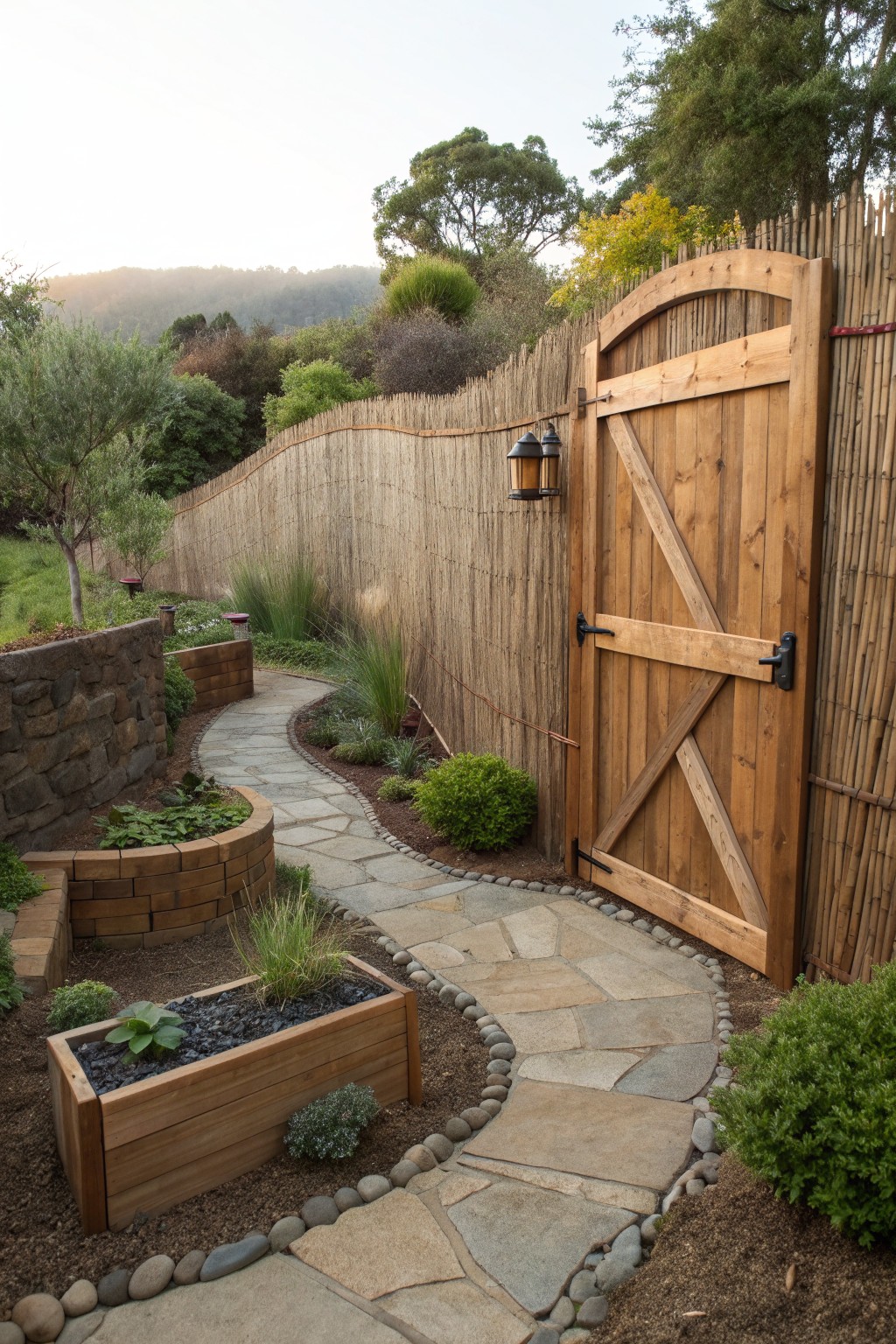
A reed fence can be one of the easier ways to get privacy on a sloped yard because it bends and follows the ground instead of needing a flat base. The material is light and flexible, so it can curve along the hillside without looking forced or requiring heavy grading.
This works best on properties where the drop is gradual. Set the posts at different heights so the top stays fairly straight while the bottom tracks the slope. A simple wooden gate can be added without breaking the line of the fence.
Retaining Walls Make Fencing Easier on Sloped Yards
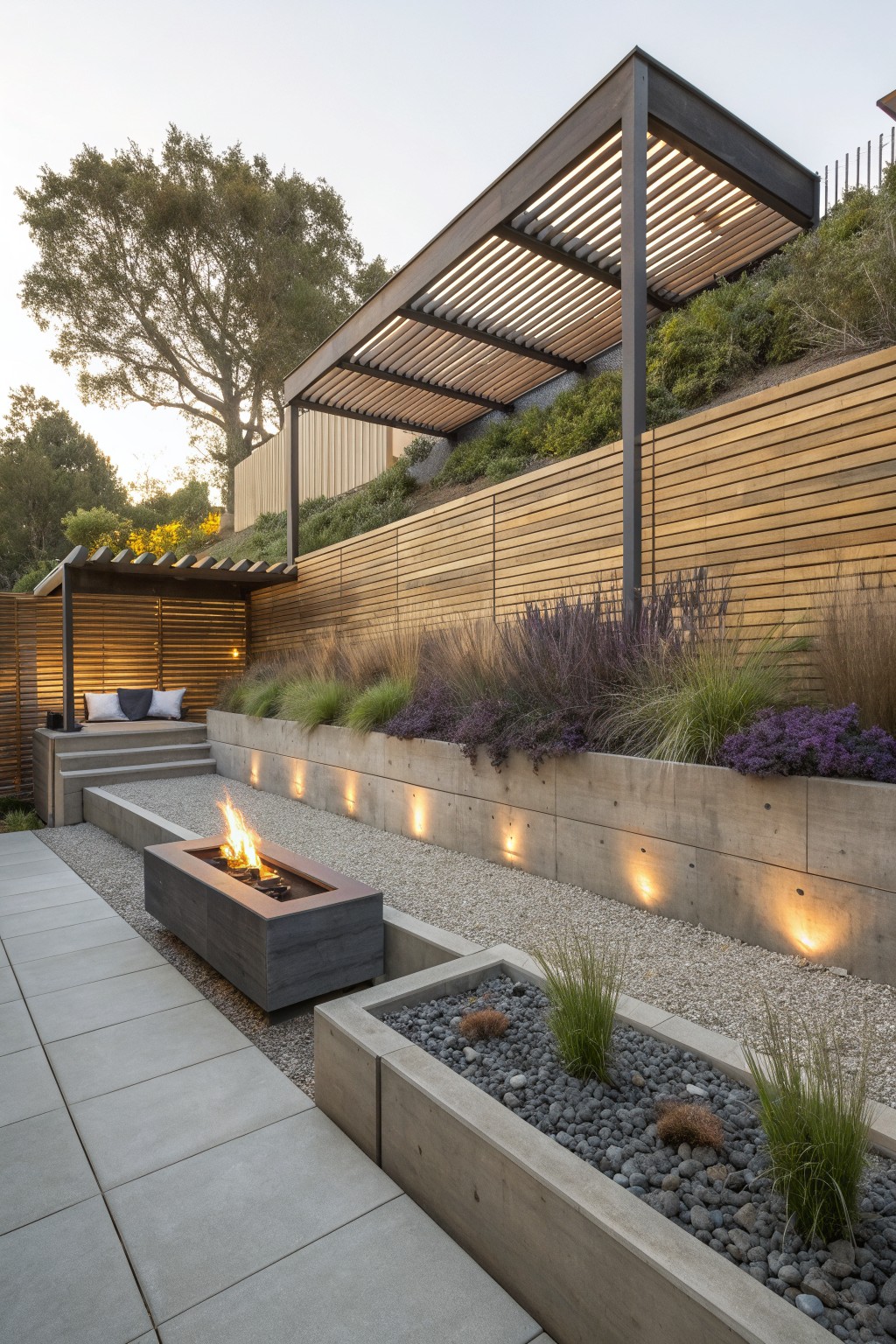
Many yards sit on a hill, which makes it hard to put up a fence that looks straight and actually works for privacy. A retaining wall solves part of the problem by creating flat ground where the fence can sit level, and it also gives you a raised bed for plants that add more screening.
This setup works best in backyards where the land drops off behind the house. Concrete walls handle the slope and give the fence a solid base, while the planting pockets let you layer grasses and shrubs that grow up and fill in gaps over time.
Bamboo Fencing That Follows the Slope

Bamboo fencing works well on sloped yards because the panels can run at different heights without looking off balance. It creates a solid screen while still feeling lighter than wood or vinyl, and it blends in with the surrounding plants and trees.
This approach suits homes where the yard drops away from the house. Set the posts to match the grade, then add a low stone base to hold back the soil and keep the fence line steady. It holds up in most climates and needs little trimming to stay looking neat.
Vertical Wood Fencing for Sloped Yards

Tall vertical wood fencing works well on sloped yards because it can follow the grade without looking broken or uneven. The continuous lines keep the fence sturdy and give solid privacy even when the ground drops away.
This style pairs easily with a deck since the fence can attach right to the structure and create a sheltered spot. Set the posts on a level base first, then run the slats down the slope so the whole thing stays durable over time.
Pair Tall Fences With Retaining Walls On Slopes

A tall privacy fence can look uneven or hard to secure when the yard drops away. Pairing it with low stone retaining walls lets the fence run level while the ground steps down in clean tiers.
This setup works best along side yards or back property lines on wooded lots where drainage and stability matter. Build the walls first with good footing and gravel backfill so the fence posts have solid ground to anchor into.
Layer Plants On Retaining Walls For Privacy On Sloped Yards

Terracing a slope with stone retaining walls lets you stack plants at different heights. This creates a natural screen that blocks views from above or below without needing a tall fence that might lean or crack on uneven ground. The setup works because each level adds depth and coverage that a flat fence often cannot match on a hill.
This approach suits homes where the yard drops or rises sharply and you still want usable outdoor space. Place denser shrubs and small trees along the upper edges of the walls so they fill in over time. Keep the lower levels simpler so the whole structure stays stable and easy to maintain.
Stone Pillars For Gateways On Slopes
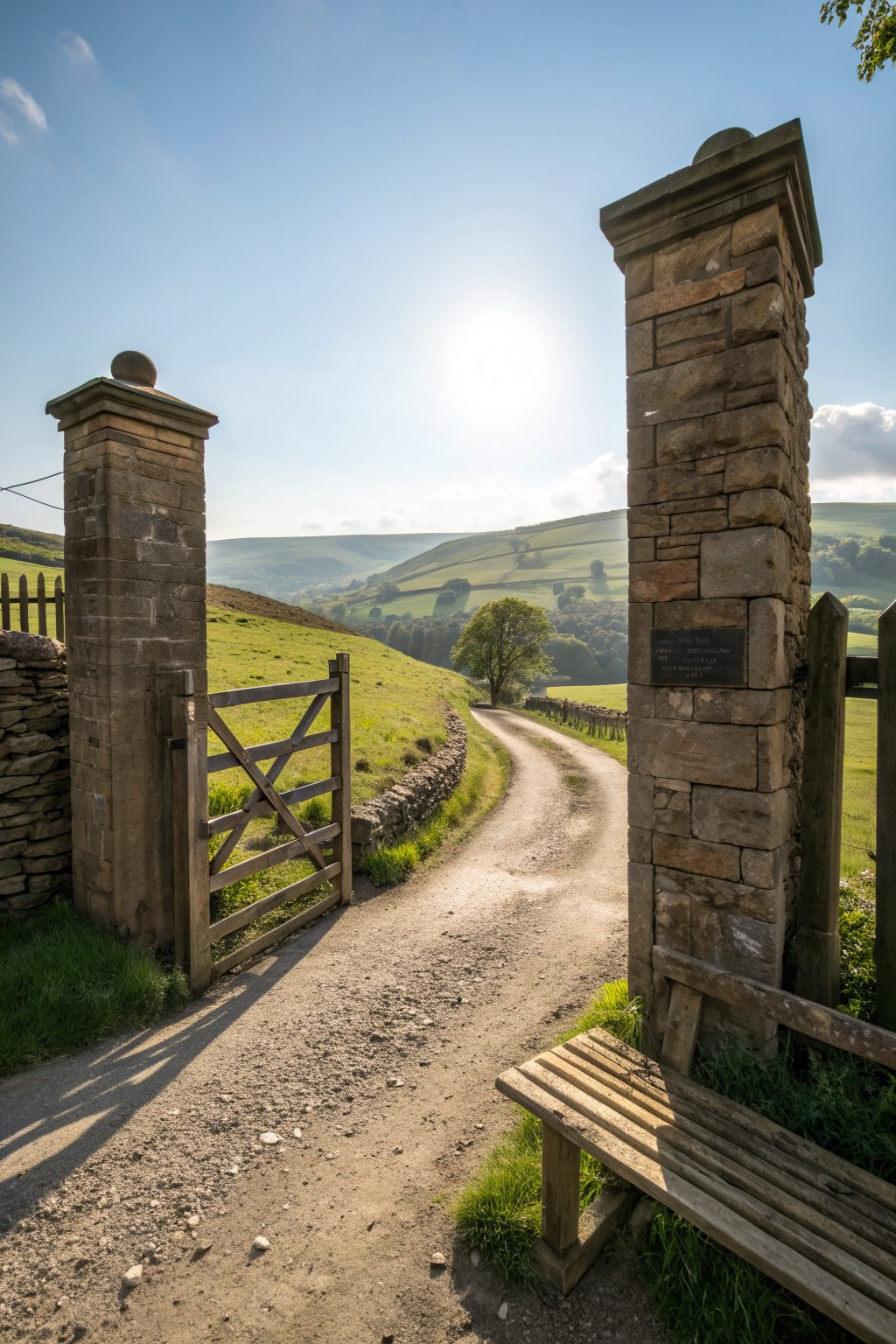
Stone pillars give a gate solid footing when the ground slopes or drops off. They stay in place better than lighter posts because the weight and the way they are set into the soil help them resist shifting over time.
This approach works well at the entrance to a driveway or path on a rural property. Set the pillars at the points where the slope changes most, then hang a simple wooden gate between them. The result gives you a clear boundary without needing a long run of fence along every uneven section.
Retaining Walls That Support Privacy Fences on Slopes
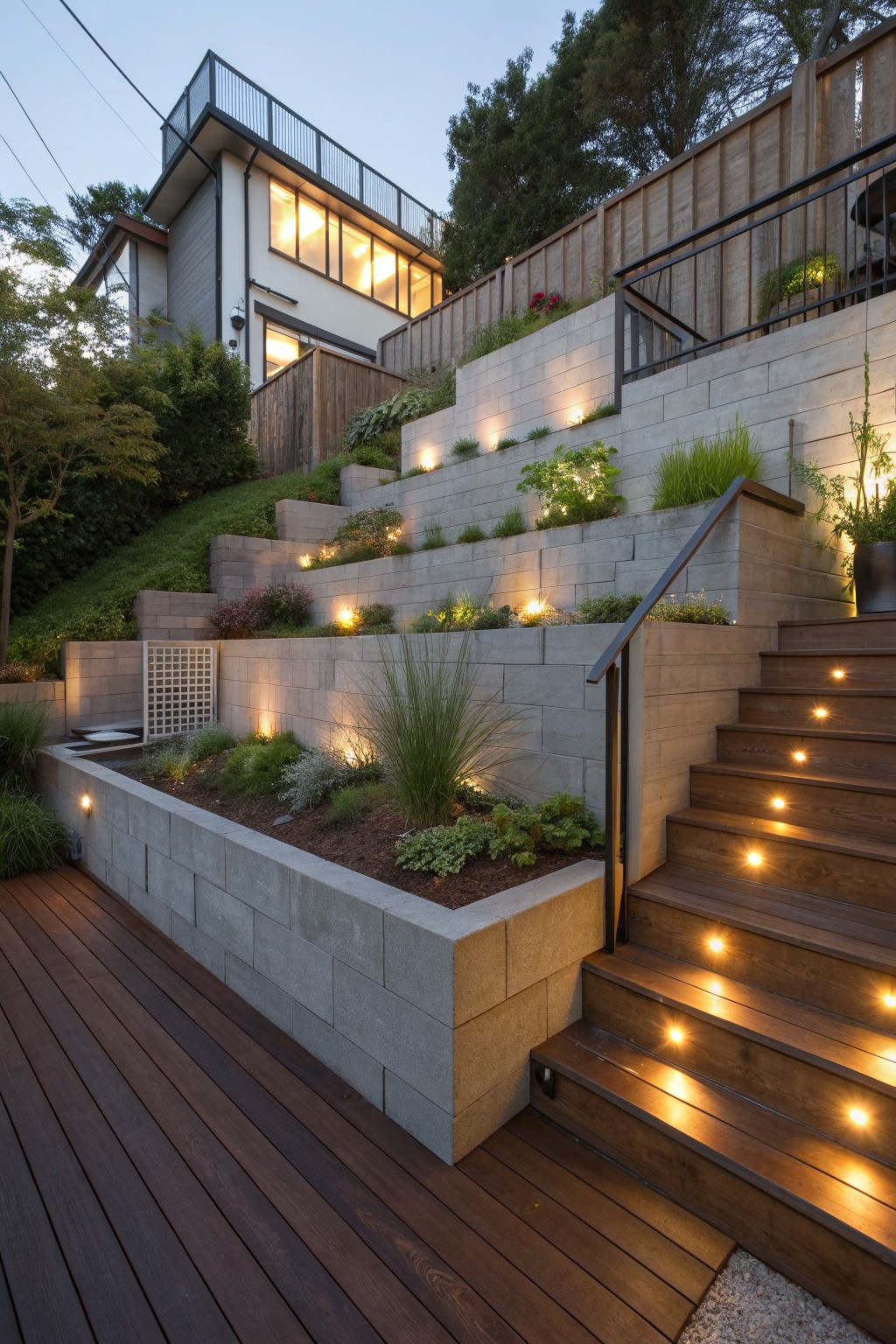
Retaining walls let you install a straight privacy fence even when the yard drops away. They create flat sections that keep the fence posts level and secure instead of forcing the fence to follow every dip in the ground.
This setup works best on hillsides where you need both privacy and erosion control. Plant low shrubs or grasses along the wall tops to blend the concrete with the rest of the yard and add a second layer of screening.
Terrace the Slope Behind the Fence

A fence on its own can look awkward on a steep grade, but adding terraced stone walls changes that. The walls create flat spots that let the fence run straight while the ground drops away in controlled steps. This setup keeps the fence stable and gives the yard more usable space instead of a sharp drop right behind the posts.
Stone works well here because it holds up against soil movement and blends with the steps. It suits homes with backyards that slope down from the house or along one side. Just make sure the walls are built deep enough and the fence posts are anchored into the higher levels so nothing shifts over time.
Combine Vertical Fencing With Retaining Walls

Many sloped yards need retaining walls just to create usable space. Adding a tall vertical slat fence directly above those walls gives privacy without eating into the flat areas below.
This approach suits homes where the lot drops off sharply. The fence blocks sight lines from the street or neighboring homes while the walls handle the grade change. Anchor the posts well into the wall so the whole thing stays solid over time.
Frequently Asked Questions
Q: How do I set posts level when the yard slopes down sharply?
A: Start at the highest point and work your way down. Measure each post height from a string line stretched across the slope. This way the fence stays even without extra steps.
Q: Can I use panels on a really uneven yard or do I need custom cuts?
A: Custom cuts work fine for most slopes. Buy longer panels and trim them on site to match the ground. It saves time over buying pre stepped sections.
Q: What about gates on sloped ground?
A: Hang the gate from the higher side post. Add an extra brace at the bottom so it clears the low spots when it swings open.


