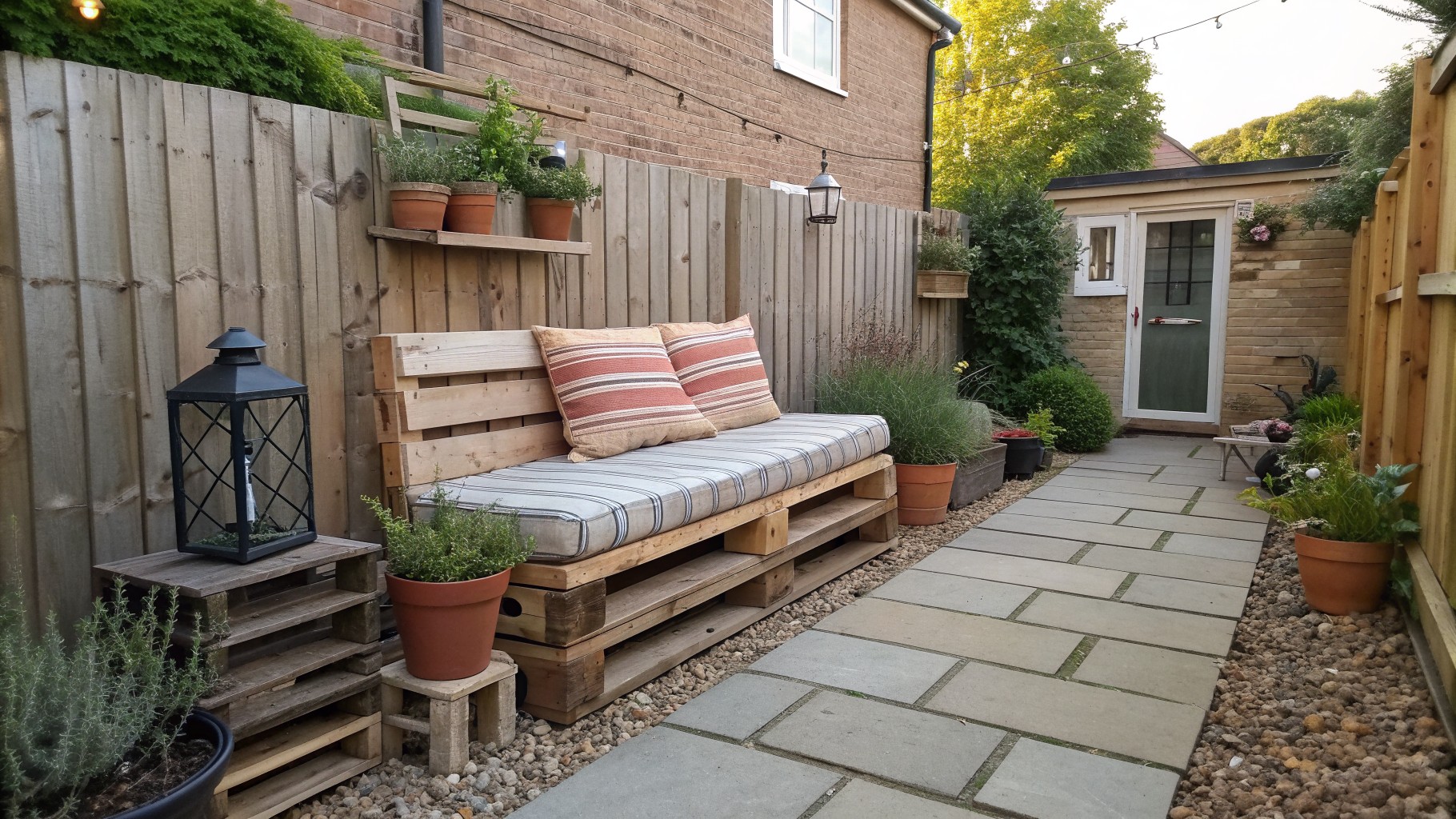
I have learned over time that small backyards often end up underused because there is nowhere comfortable to sit without taking up too much room.
When I added a basic bench along one fence line last summer, the whole area started to feel more like a place I could relax in rather than just a patch of lawn to mow.
Choosing the right materials matters more than the design itself since weather quickly shows which ones will last.
Some setups look fine in photos but end up rarely used once the seasons change.
I usually start with the simplest builds to see what actually fits the space before committing to anything larger.
Make a Simple Pallet Bench for Small Yard Seating
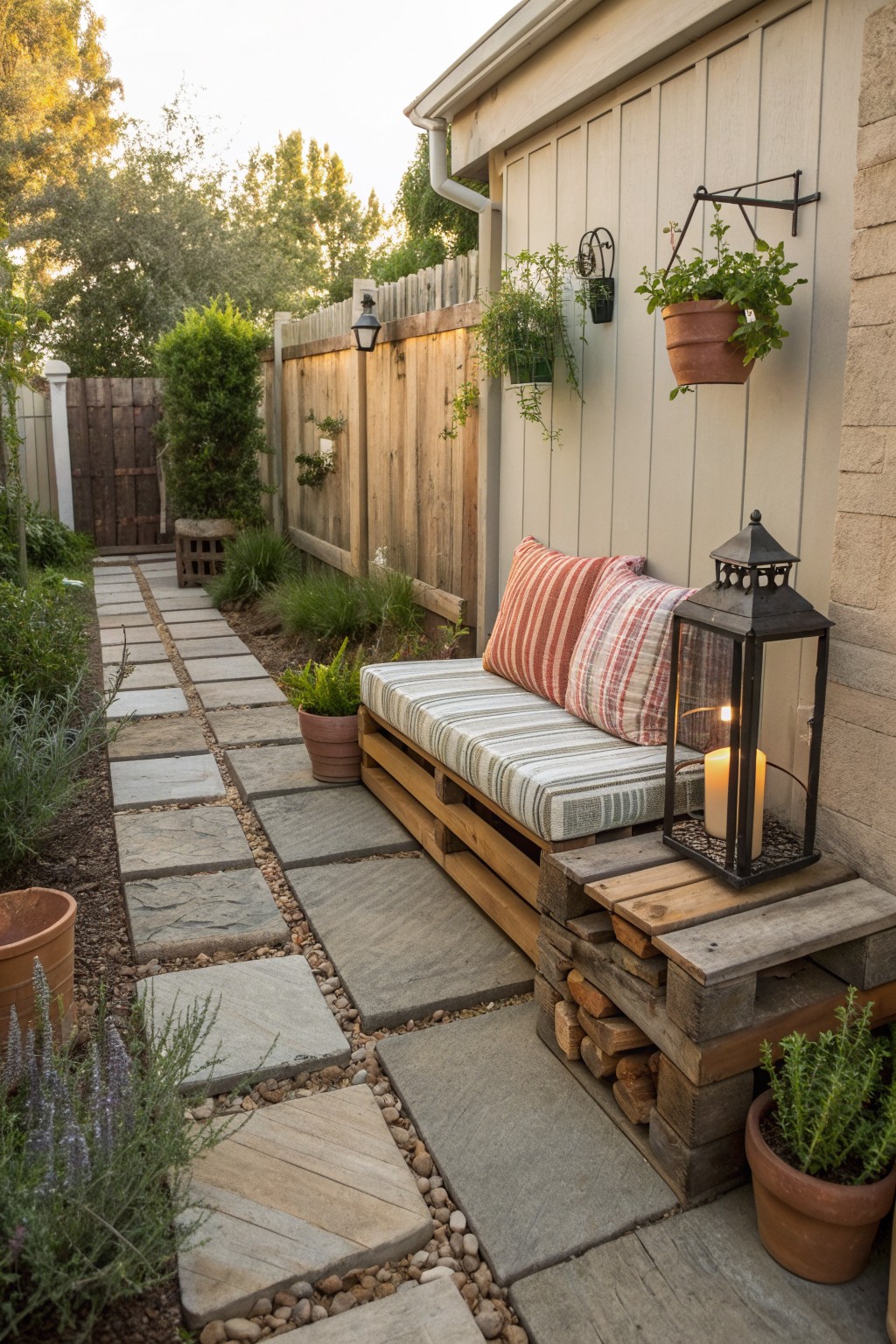
A pallet bench gives you an easy way to add seating without buying new furniture. It fits narrow spots well because the wood pieces already come in a ready frame that you can stack and secure in an afternoon.
Set one along a path or fence where you want a place to rest. This works best in small backyards that need extra seating but cannot fit a full patio set.
Built-In Benches Along Planter Walls
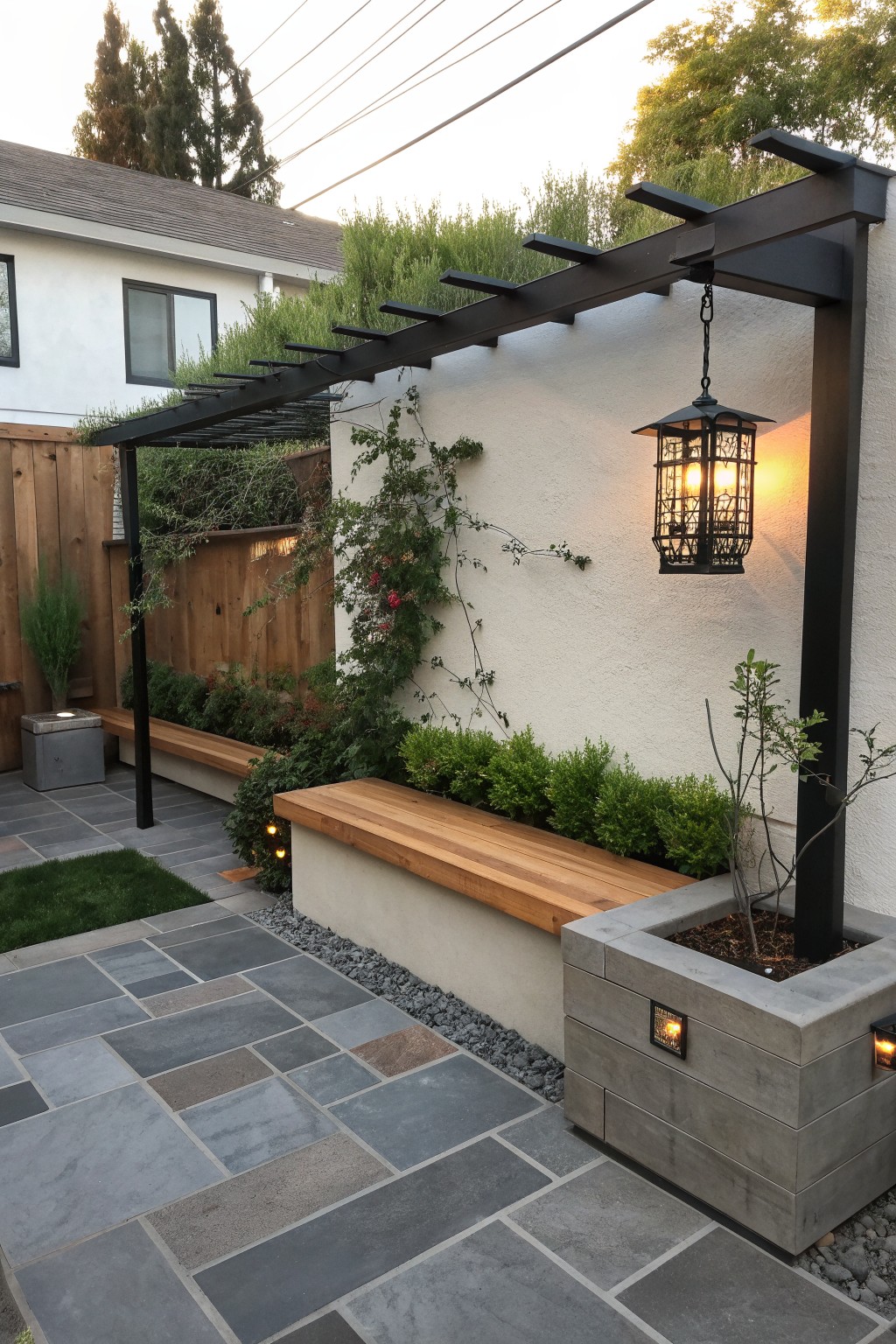
One simple way to add seating in a small yard is to build the bench right into the edge of a raised planter. This approach gives you a solid place to sit while keeping the layout open and avoiding extra furniture that can crowd the space.
It works best when you already need a low wall for planting beds. The bench can run the full length of the planter and still leave room for paths or a light overhead structure. Use weather-resistant wood and make sure the seat height stays comfortable for everyday use.
Built-In Benches With Storage
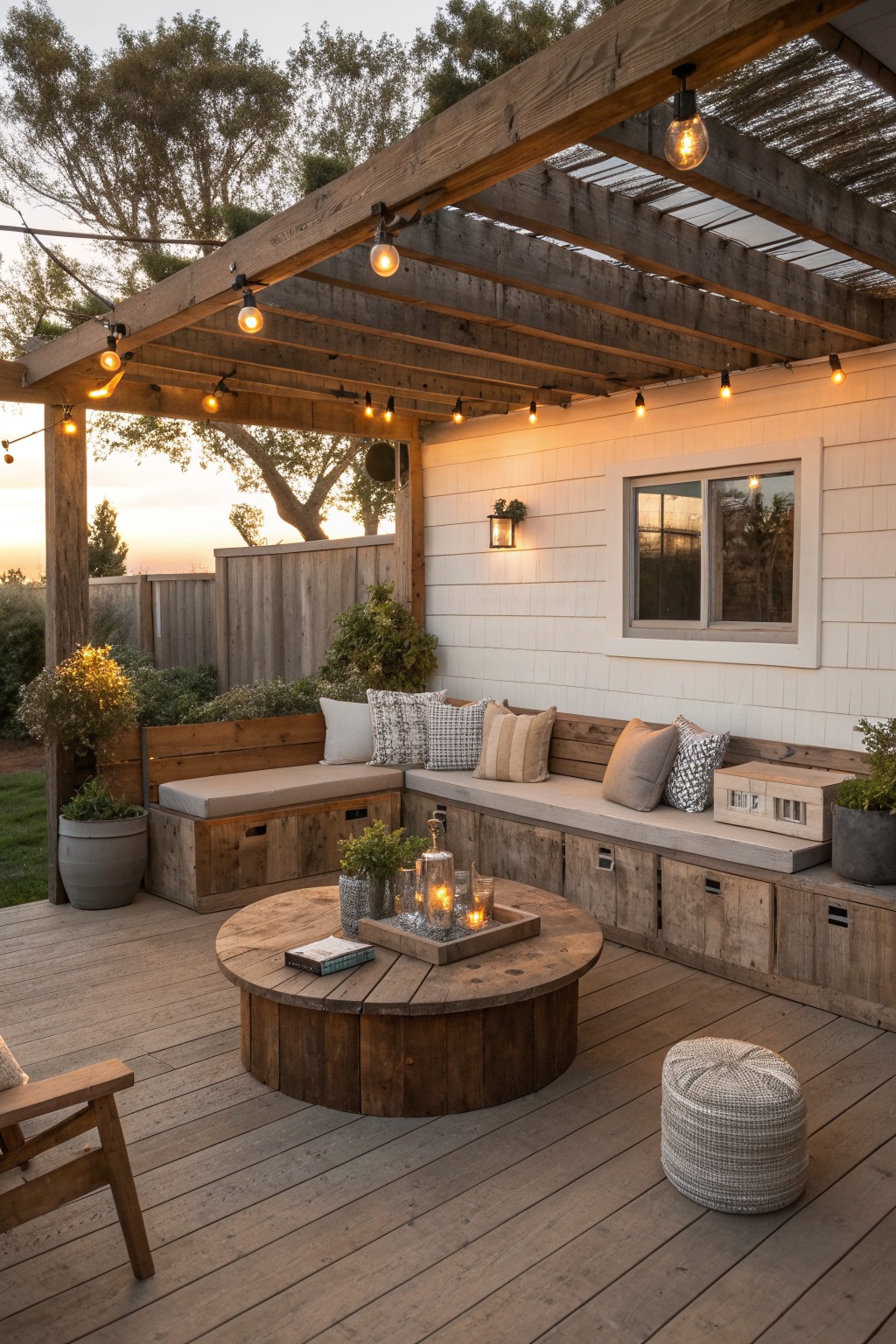
Built-in benches make good use of the space along a fence or house wall in a small backyard. They create steady seating without adding extra furniture that takes up floor room, and the built-in style keeps everything looking neat and tied to the space.
You can frame them with basic lumber and add lift-up tops for storage inside. This works best on a deck or patio where you want room to sit but still need to keep things open for walking around. The storage helps hide cushions or garden tools when they are not in use.
Build A Bench Against A Slat Screen
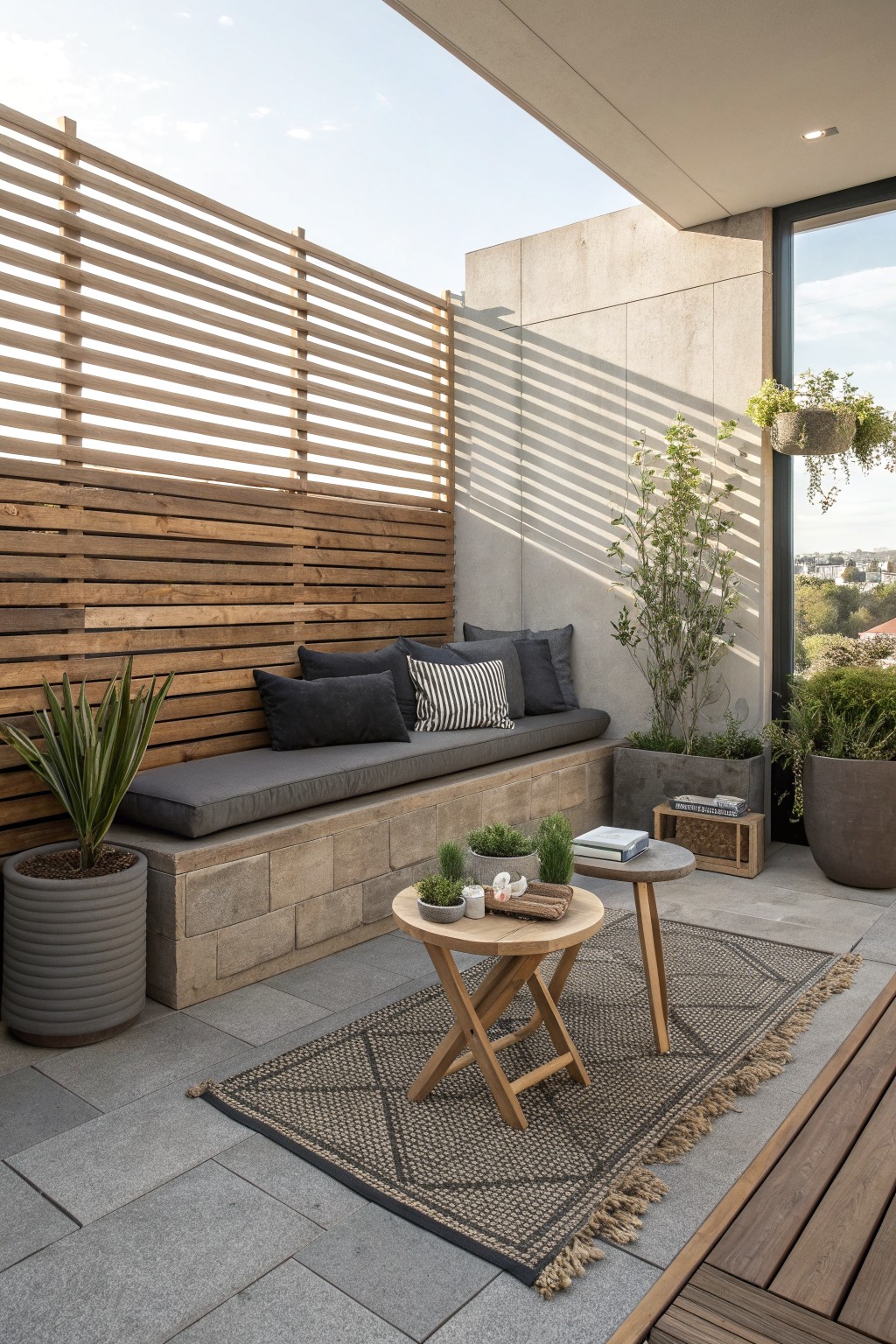
A horizontal slat screen behind a bench gives a small seating area some privacy and a clear edge without making it feel boxed in. The open slats let light through and keep the space from looking too heavy, which works well when the backyard is tight on space.
You can build the bench right into the screen using simple wood framing and add a cushion on top for comfort. This setup fits patios, side yards, or balconies where you need a defined spot to sit but still want an open feel.
Build A Bench Into The Wall
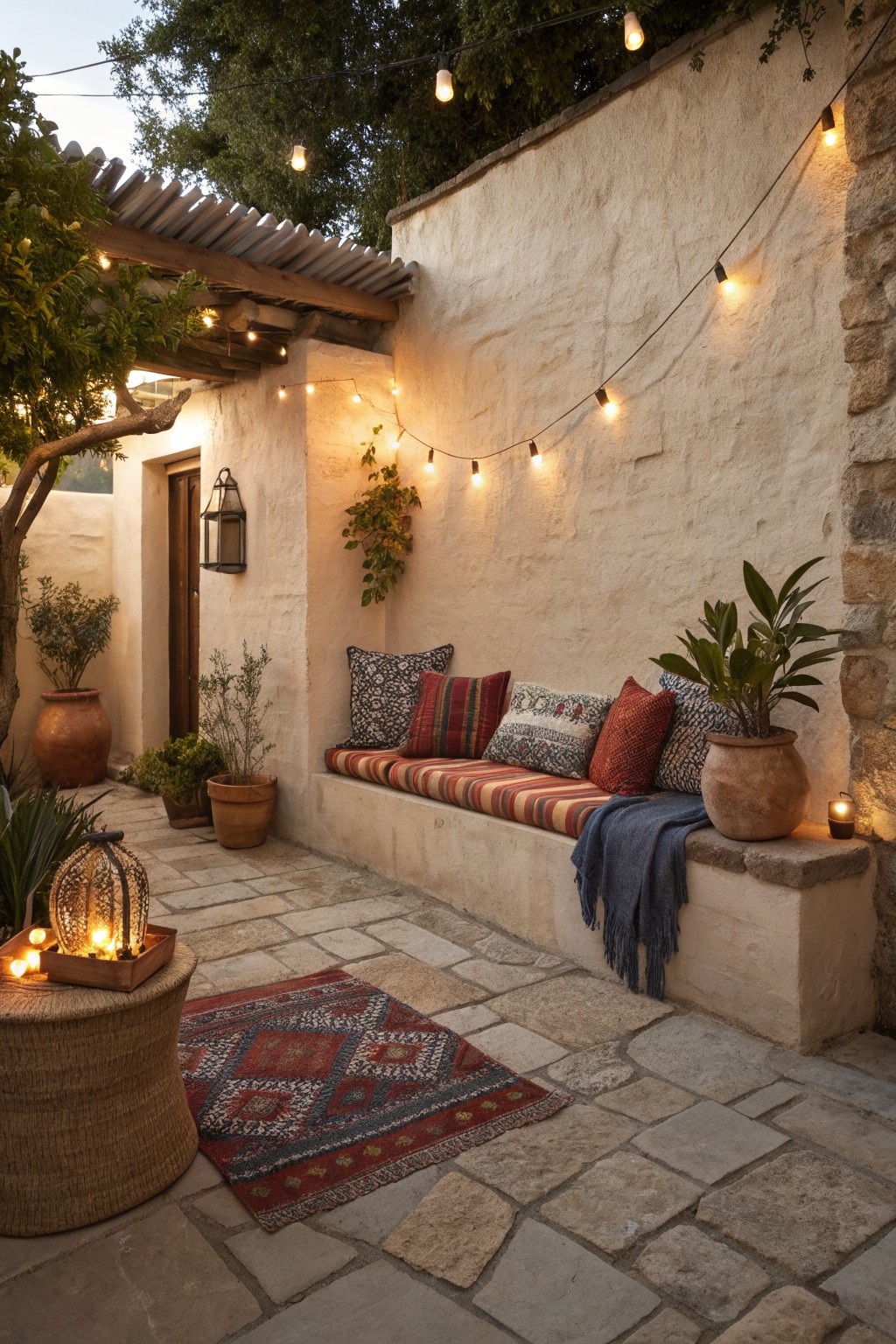
A built-in bench takes advantage of an existing wall and turns it into seating without using much extra floor space. This setup works especially well in small yards where a regular bench would crowd the area or block the path.
It suits homes with a solid fence or house wall that can support the structure. Keep the bench simple with basic framing and add cushions for comfort, then place a few pots nearby to soften the look.
Curved Bench for Fire Pit Areas
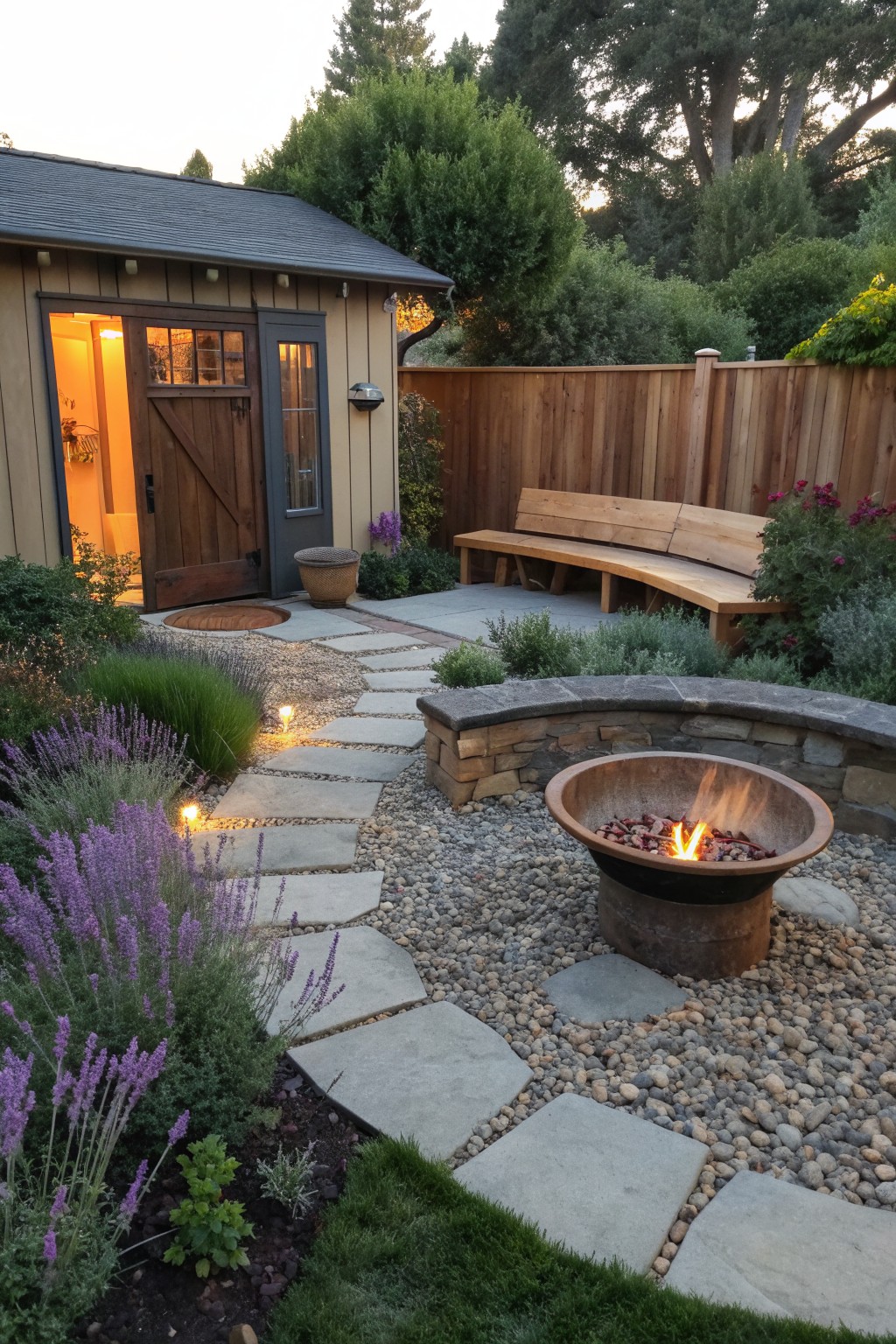
A curved bench works well when you want to add seating right around a fire pit without crowding the space. It follows the shape of the area so more people can sit comfortably while still leaving room to walk around the pit.
This style fits small backyards best because it uses the edge of the patio or gravel area instead of taking up open ground. Keep the bench low and simple so it does not block views of the plants or the fire.
Add a Bench Along the Fence
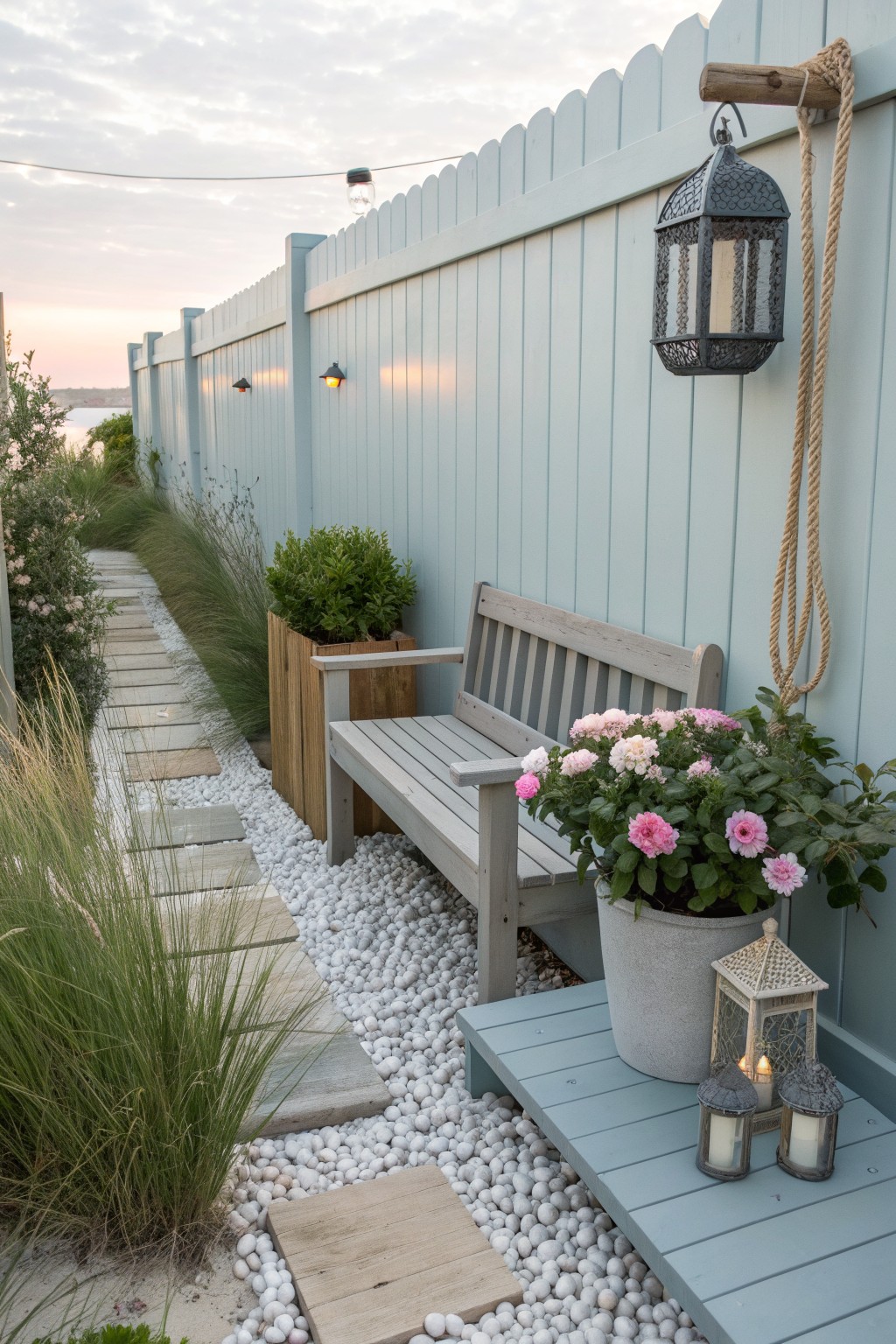
A bench placed right against the fence turns a narrow strip into usable seating without eating into the rest of the yard. It keeps the path clear and gives you a simple place to sit and enjoy the garden.
This setup works best in small backyards where every foot counts. Try adding a couple of flower pots nearby and a lantern or two so the spot feels finished even after dark.
Add Storage Under the Bench Seat
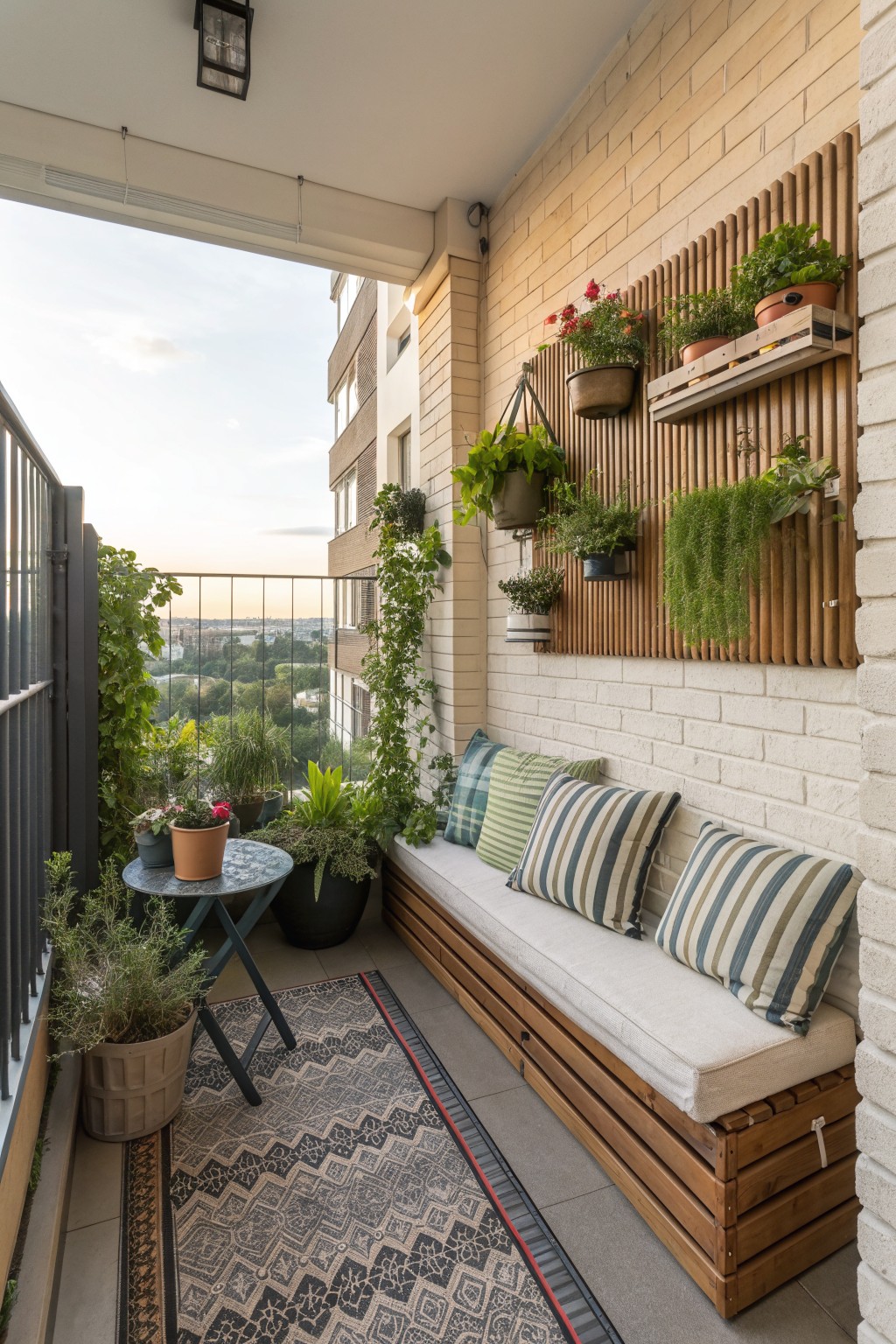
A bench with storage underneath makes a small seating area more practical without taking up extra space. You can tuck away cushions, gardening tools, or other items and still keep the surface clear for sitting.
This setup works well on balconies or in tight yards where floor space is limited. Build it from simple lumber and add a hinged lid or drawers so it stays easy to use over time.
Create a Tiled Garden Bench
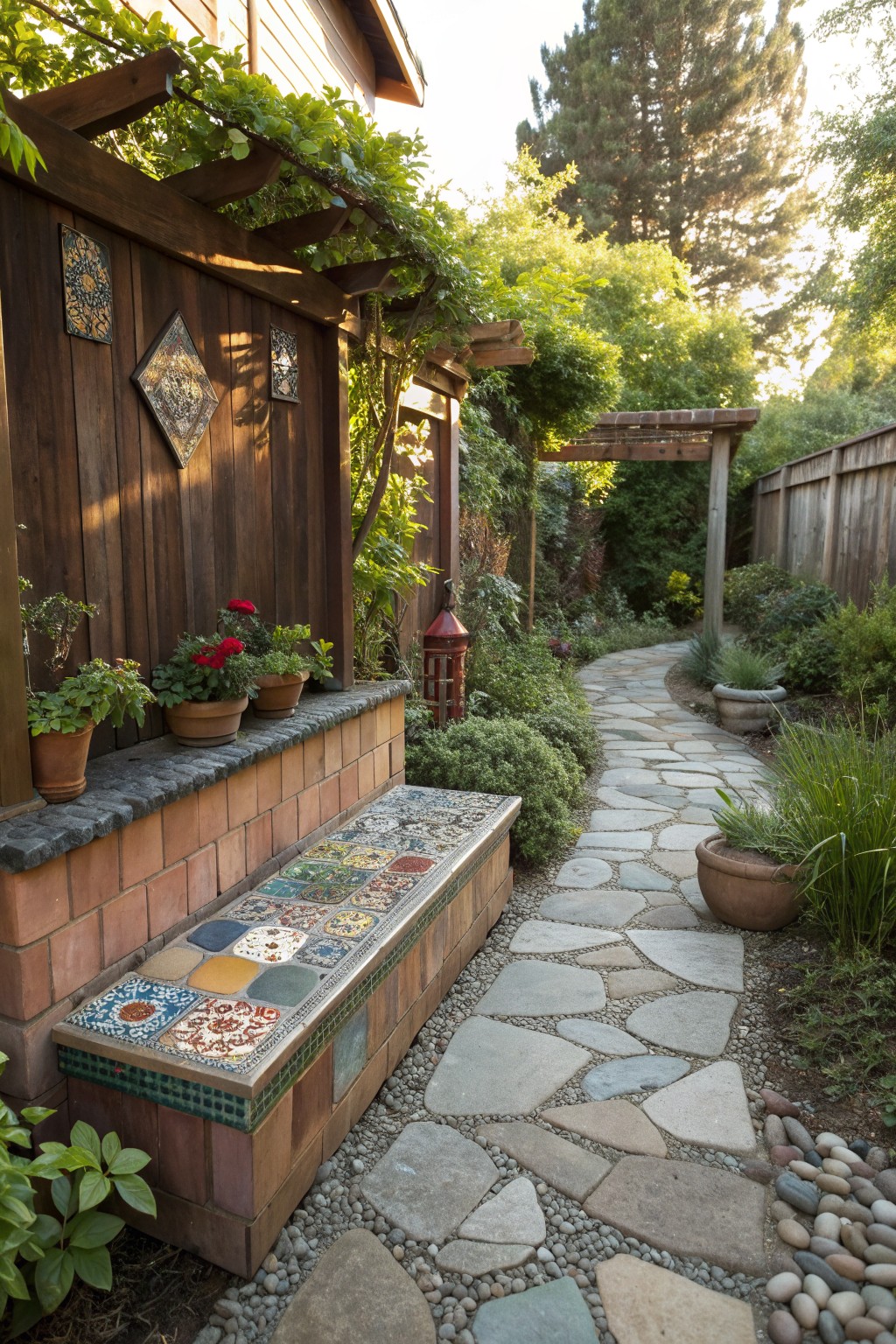
A bench covered in colorful tiles gives you seating that lasts outdoors and brings some pattern into a small yard. The brick base keeps it solid, while the tile top adds interest that holds up in sun and rain without much upkeep.
Place it along a path or against a fence where you need extra spots to sit. It works best in gardens that already have stone or gravel underfoot, and you can match the tiles to nearby pots or plants for a simple, pulled-together look.
Concrete Bench Along a Gravel Edge
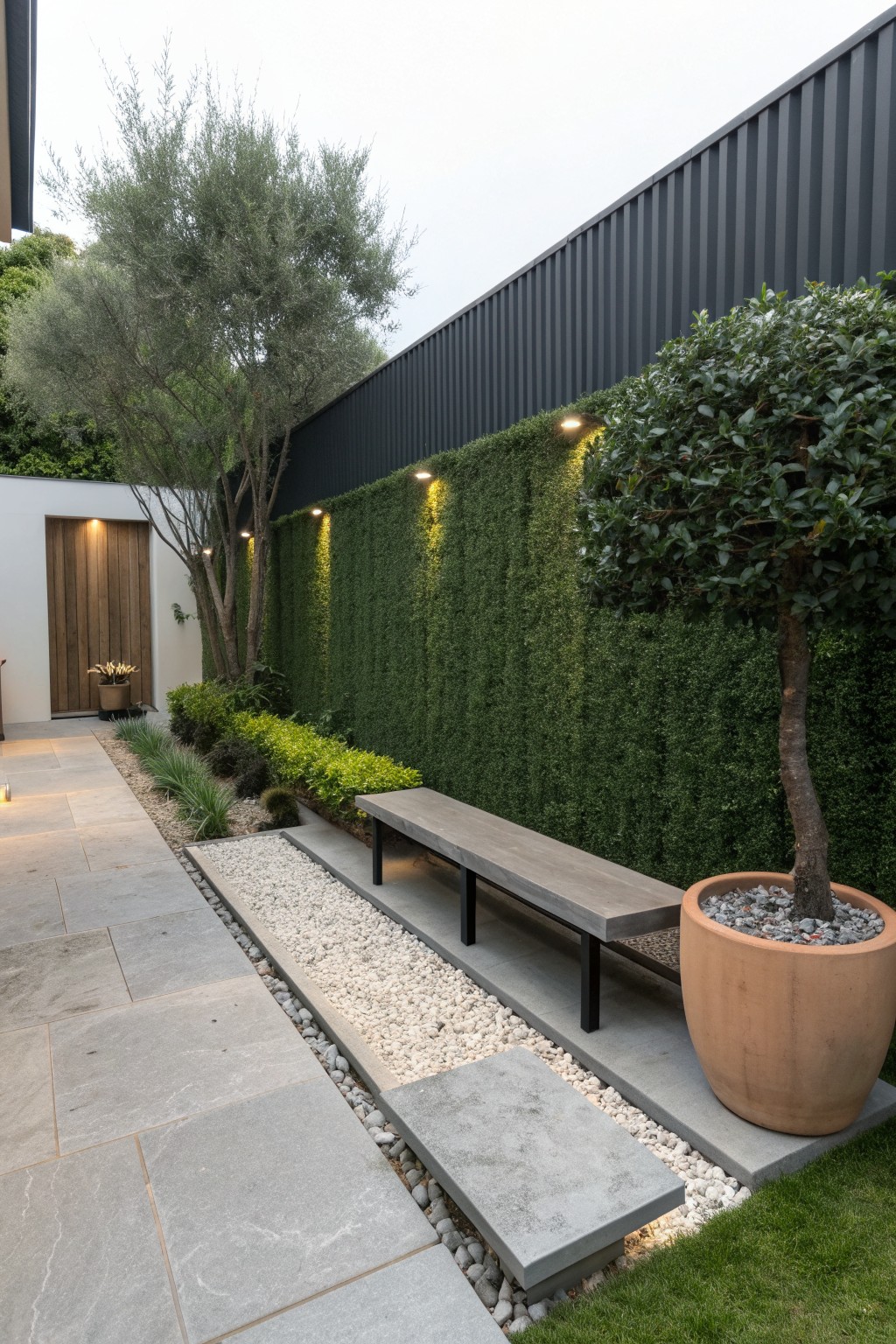
A long, low bench set right beside a gravel strip gives you seating without eating into the usable space. It works especially well in narrow side yards or small back gardens where you need every foot. The simple slab style keeps the look clean and lets the planting do the rest.
This setup suits homes with straight beds and paved paths. Build the bench from poured concrete or precast slabs on sturdy legs, then keep the gravel narrow so the bench feels like part of the hardscape rather than an added piece. Just make sure the height matches any nearby steps so people can move easily between them.
Built-In Corner Benches For Small Spaces
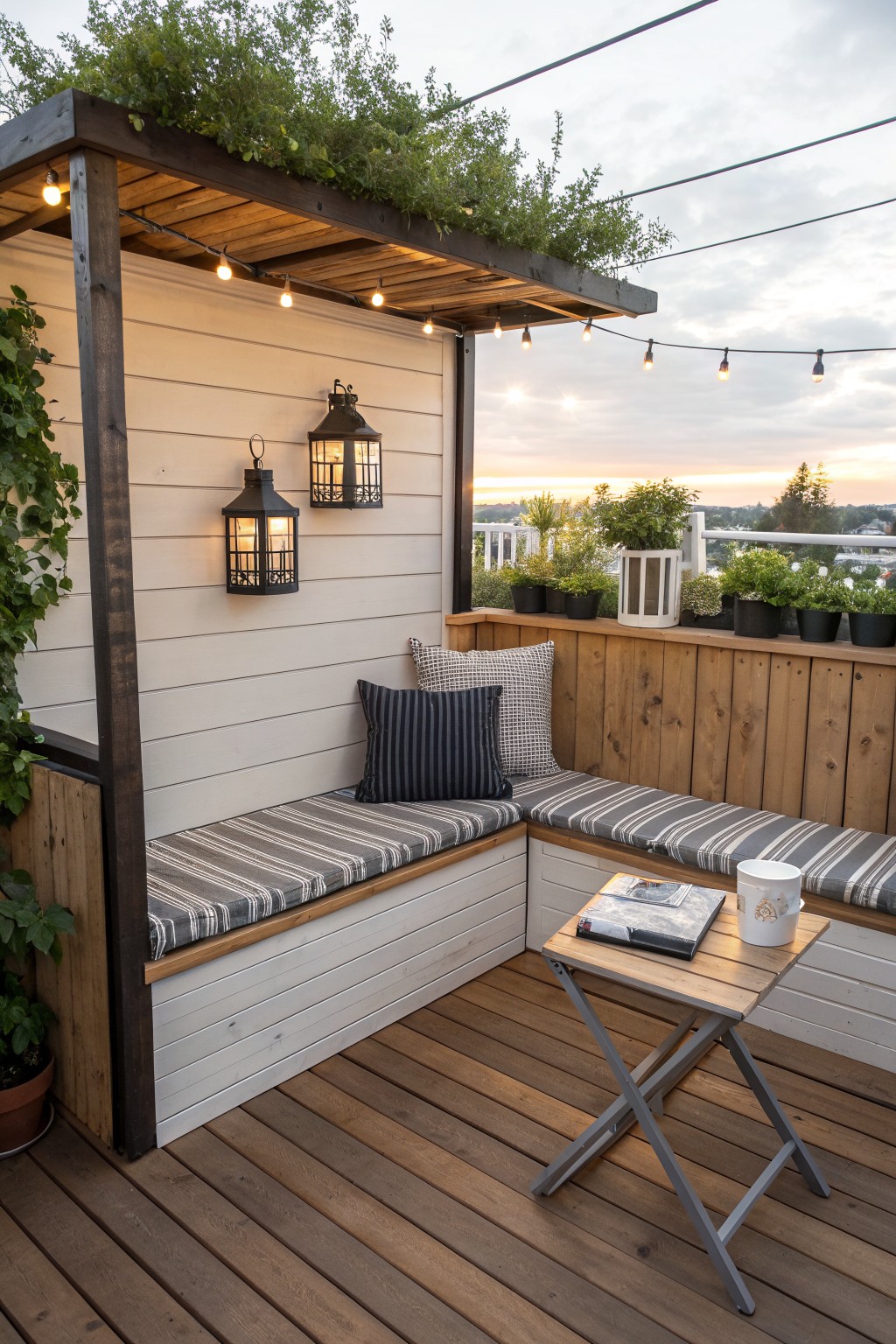
Corner benches make good use of space that often goes to waste on a small deck or patio. They give you more seating without blocking the middle of the area, and the L-shape feels natural for groups or quiet mornings with coffee.
They work best on decks with a wall or railing to build against, and adding a simple overhead structure helps with shade. Storage under the seats keeps cushions and tools out of sight, which keeps the whole spot tidy.
Built-In Benches Along the Walls
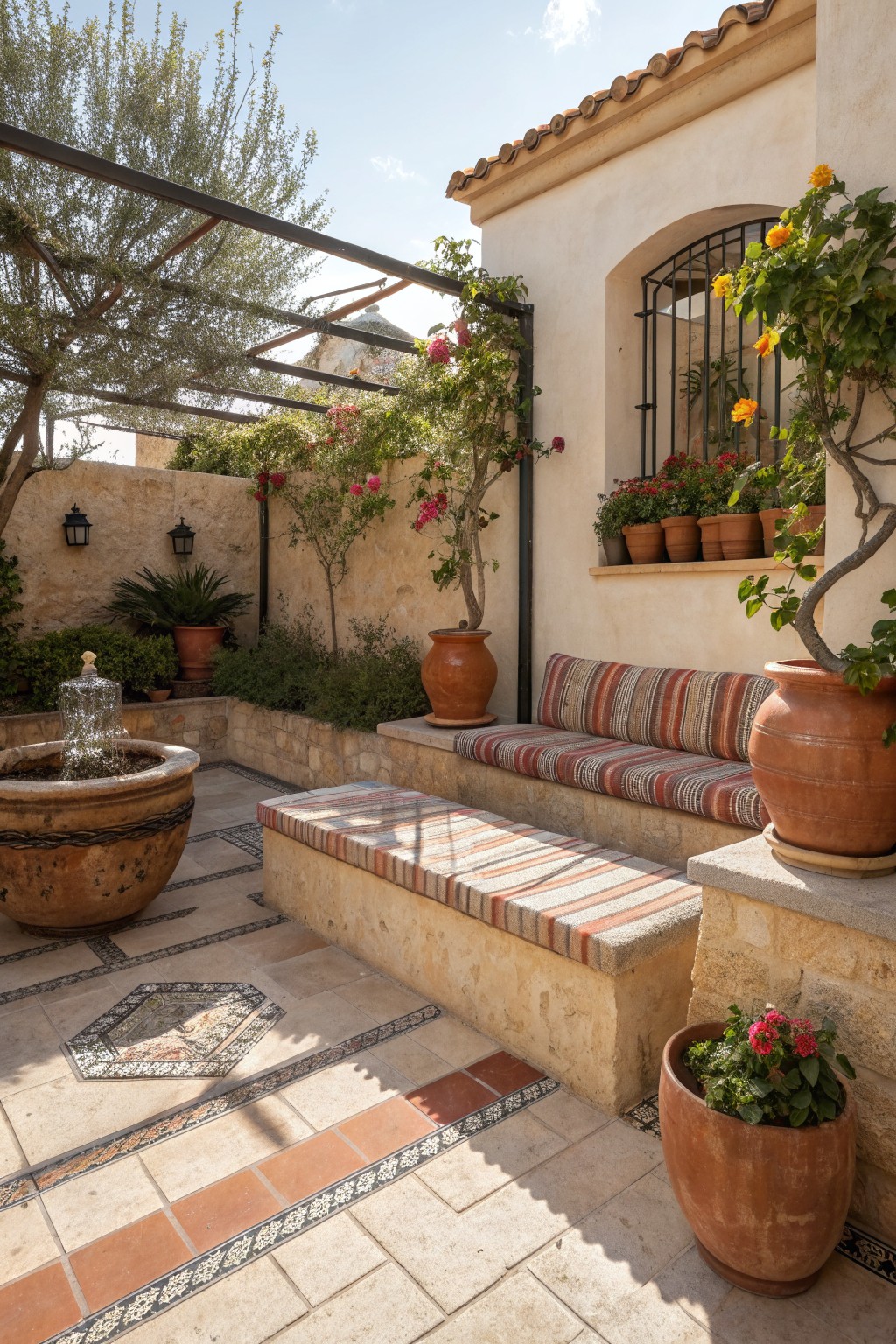
One simple way to add seating in a small backyard is to build benches right into existing walls or ledges. This approach keeps the space open and gives you more room to move around without adding separate chairs or sofas that take up floor space.
It works especially well in courtyards or along patio edges where the structure is already there. Just top the ledge with a weatherproof cushion and you have comfortable spots for sitting. Make sure the surface is wide enough and fairly level before you add cushions.
Build a Bench Against the House Wall
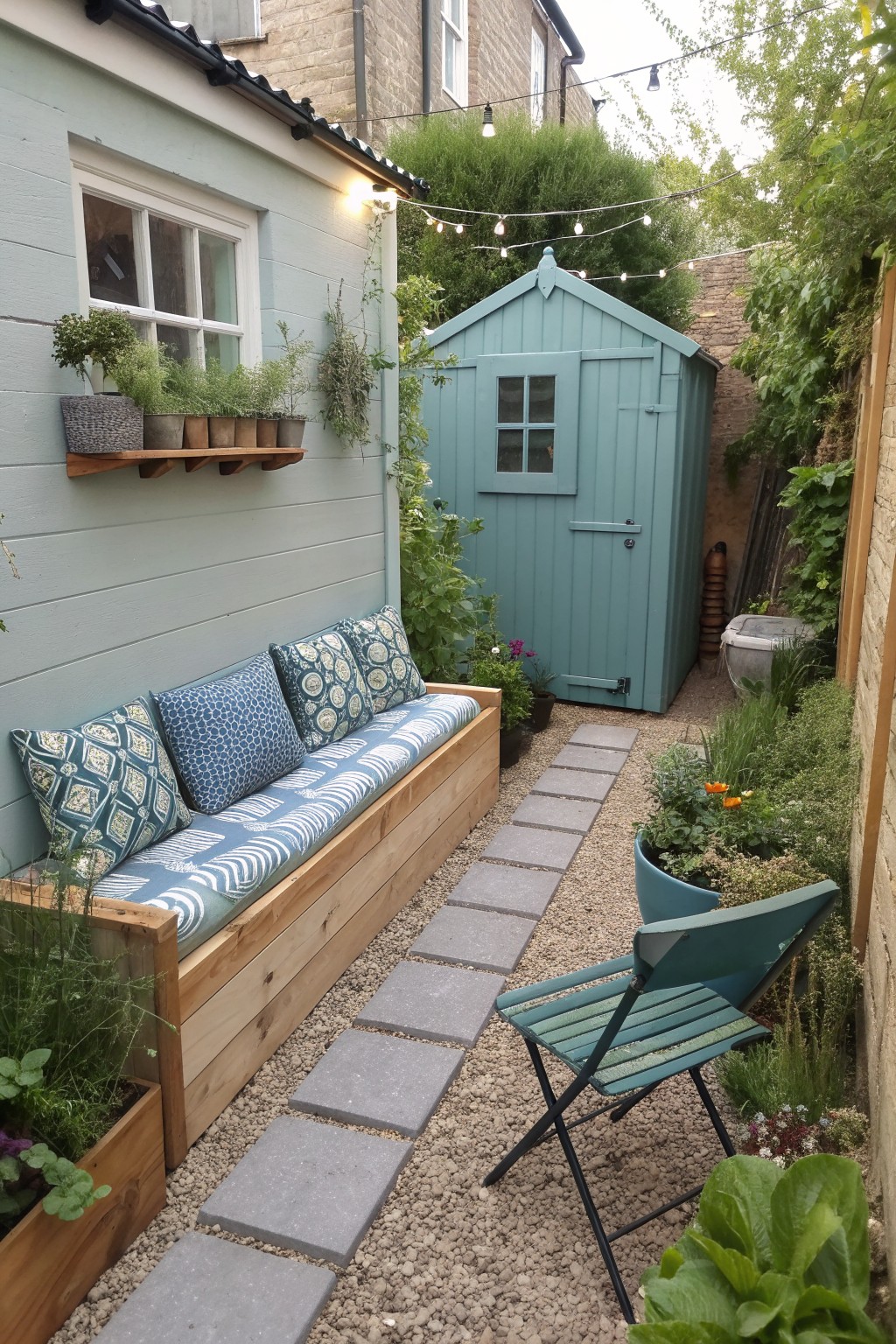
A bench built right against the house wall works well in small backyards because it uses the existing structure for support. This keeps the seating from taking up much space while still giving you a solid place to sit.
It fits best in narrow side yards or along a straight wall where a freestanding bench would crowd the path. Keep the front area simple with gravel and stepping stones so the bench stays the main feature without blocking movement.
Curved Bench Around a Fire Pit
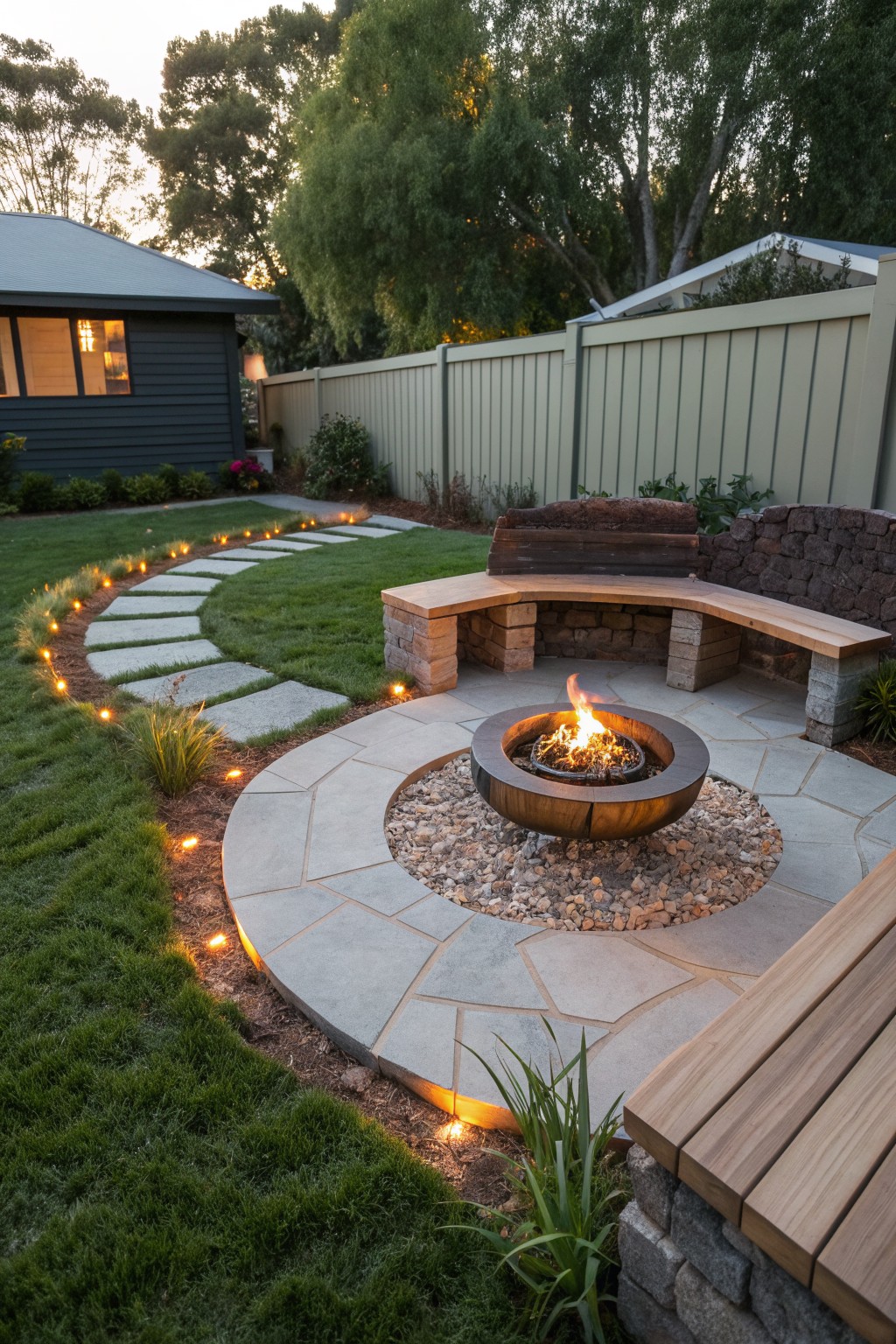
A curved bench makes good use of the space right next to a fire pit. Instead of lining up straight chairs, the shape lets more people sit close to the flames without crowding the area. It also feels more settled because the seating follows the round edge of the pit itself.
This setup works best on a small patio where every foot counts. You can build the base from stone or blocks and top it with simple wood planks. Just make sure the curve leaves enough room for feet and for people to move around the pit safely.
A Simple Bench With Open Shelves Below
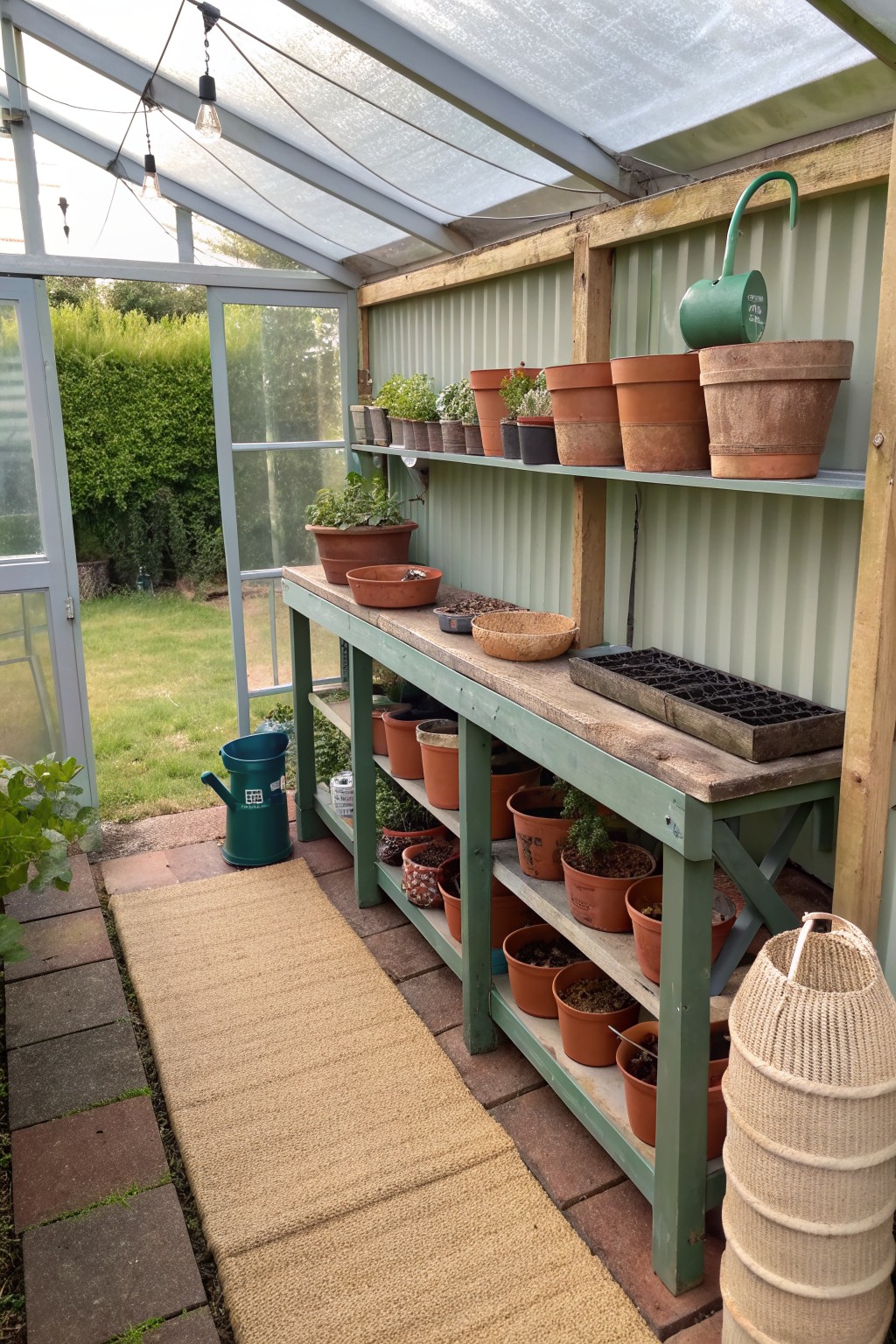
A long narrow bench makes a good base for a potting station when space is tight. The open lower shelves keep pots and soil within reach without crowding the work surface, and the setup stays useful even in a small greenhouse or shed.
This style works best in backyards where the bench can sit against a wall and still leave room to move. Paint the frame a soft green or leave it natural, then add a thick wood top that can handle spills. It gives you a steady place to work without taking up much floor area.
Bench Seating Along A Deck Edge
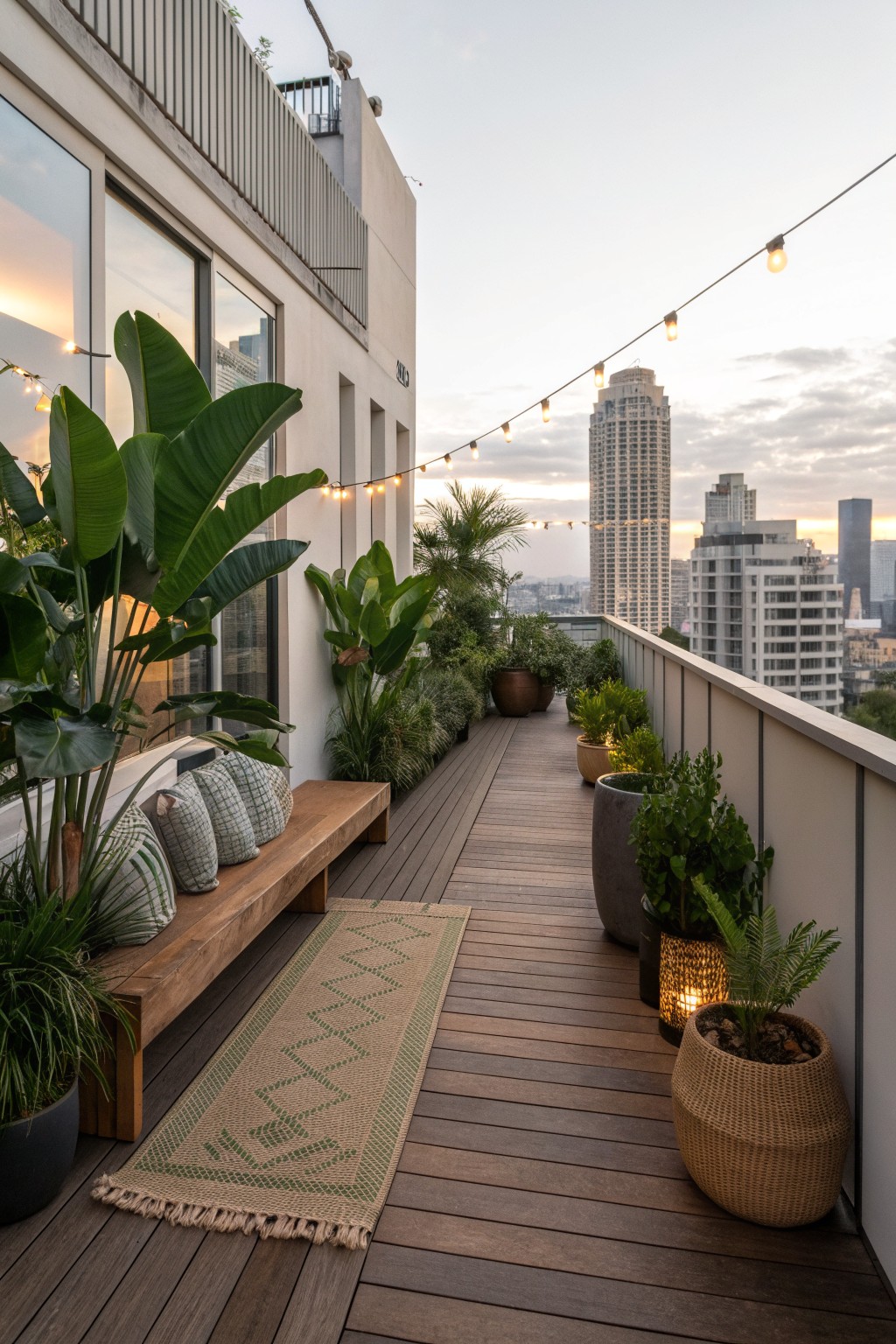
A long bench placed along the side of a deck or balcony turns a narrow strip of space into seating for several people. It keeps the middle of the deck open and avoids crowding the area with separate chairs.
This works well on small backyards or apartment balconies where every foot counts. Build it from basic lumber to match the deck boards, then add cushions and a few pots nearby to make the spot feel finished.
Built In Bench Along A Wall
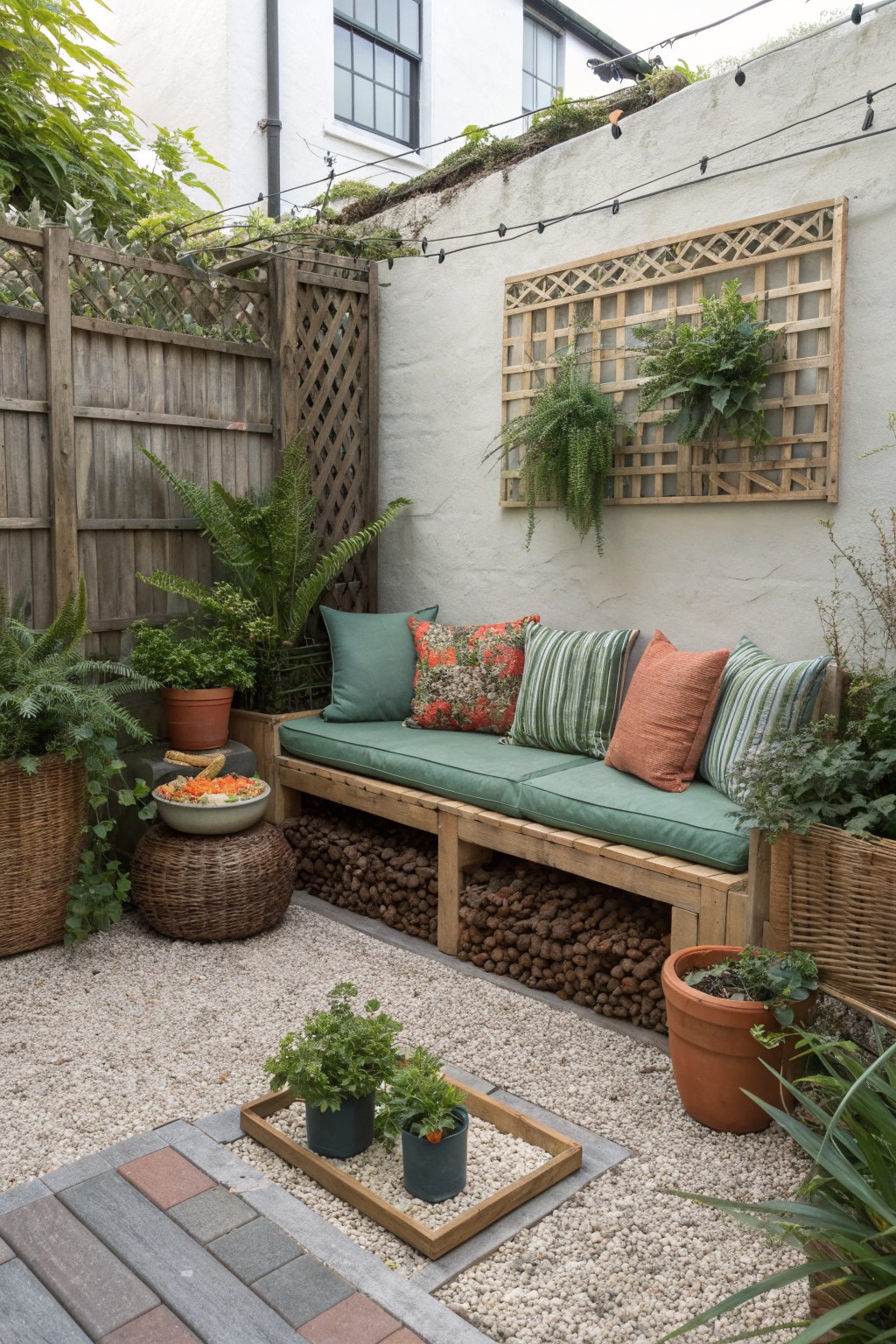
A bench that runs along the wall saves space in a small backyard and gives you solid seating without taking over the middle of the yard. It stays low and simple, so the area still feels open even when you add cushions and a few plants around the edges.
Build it with basic lumber and leave the space below open for gravel. This helps with drainage and keeps the look casual. It works well in gravel or paved yards where you want a place to sit without adding bulky furniture.
Stone Bench for Simple Backyard Seating
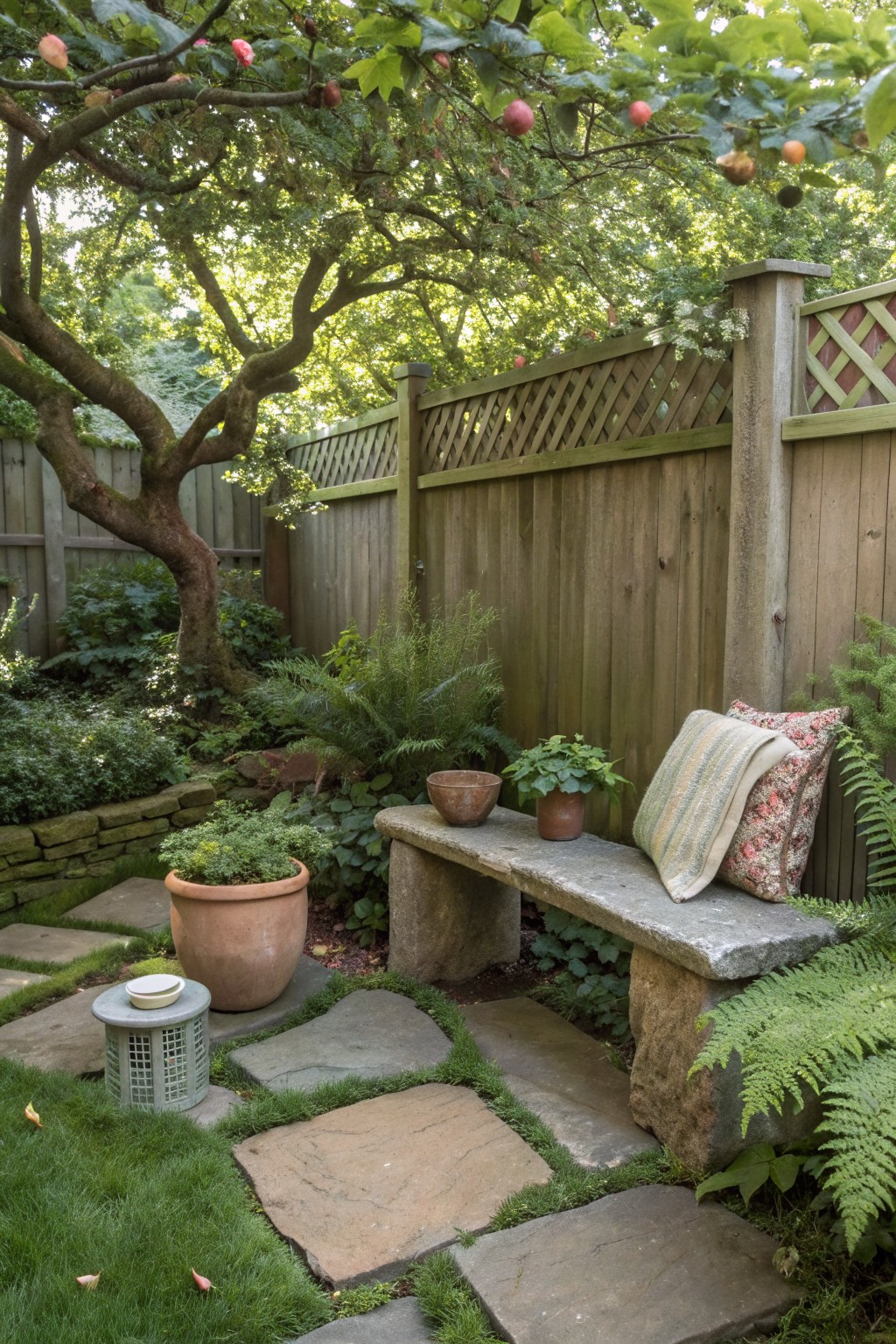
A stone bench fits well in a small backyard because it stays put and needs almost no upkeep. It blends into the garden without looking like an added piece of furniture, and it holds up fine through rain and changing seasons.
Place one along a fence or path edge where the ground is already fairly level. A couple of cushions make it comfortable for sitting, and the surrounding plants and stepping stones keep the whole spot feeling open rather than crowded.
Add Storage Under The Bench Seat
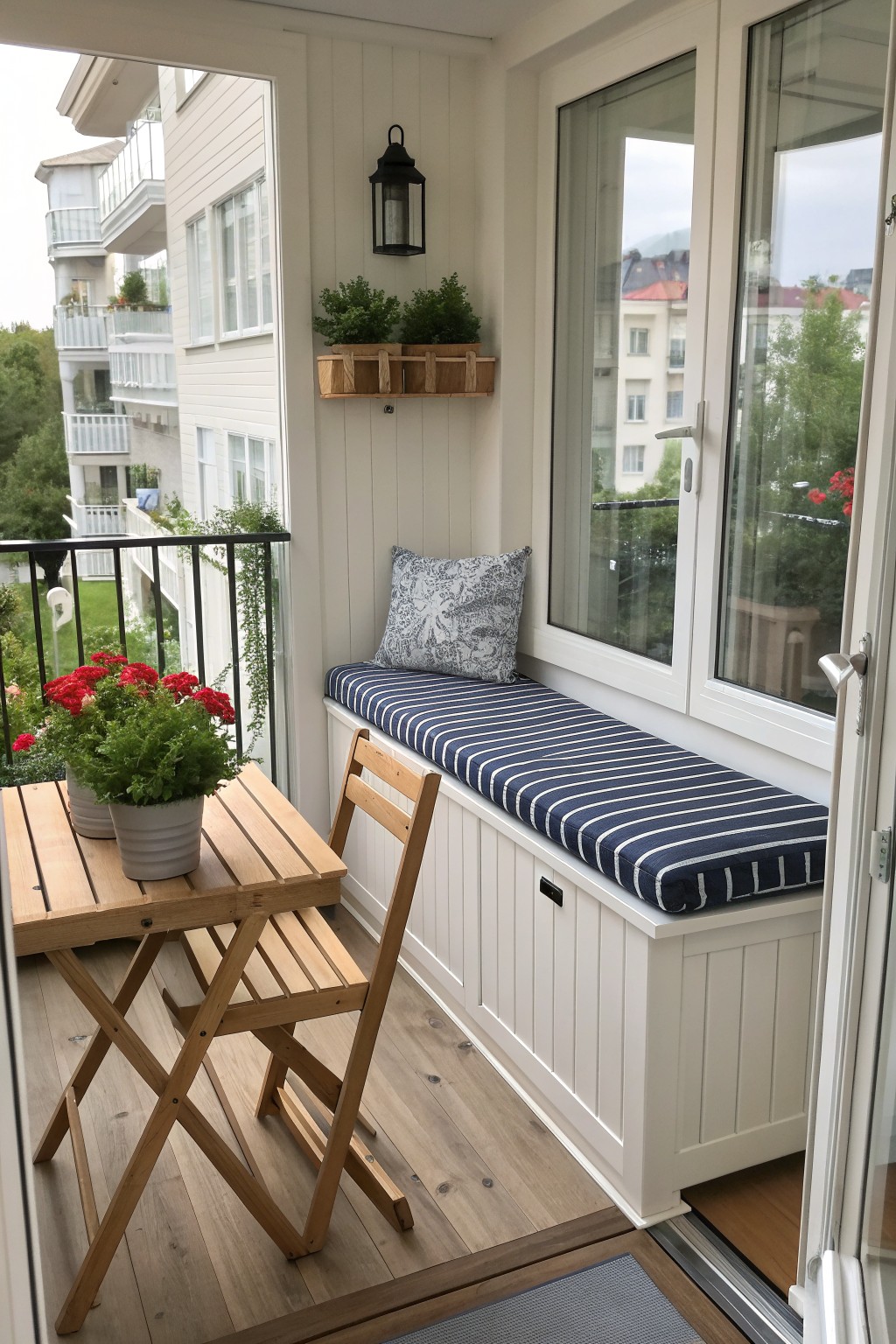
A bench with storage built right into the base gives you seating and a place to tuck away cushions or small tools without crowding the floor. It works especially well on balconies or small patios where every inch counts and freestanding furniture can start to feel cramped.
This kind of bench suits apartments or townhomes with narrow outdoor spaces. Build the frame to match the length of your railing or wall, then add a hinged lid and a simple cushion on top so the whole thing stays practical through the seasons.
Make Raised Bed Walls Double as Benches
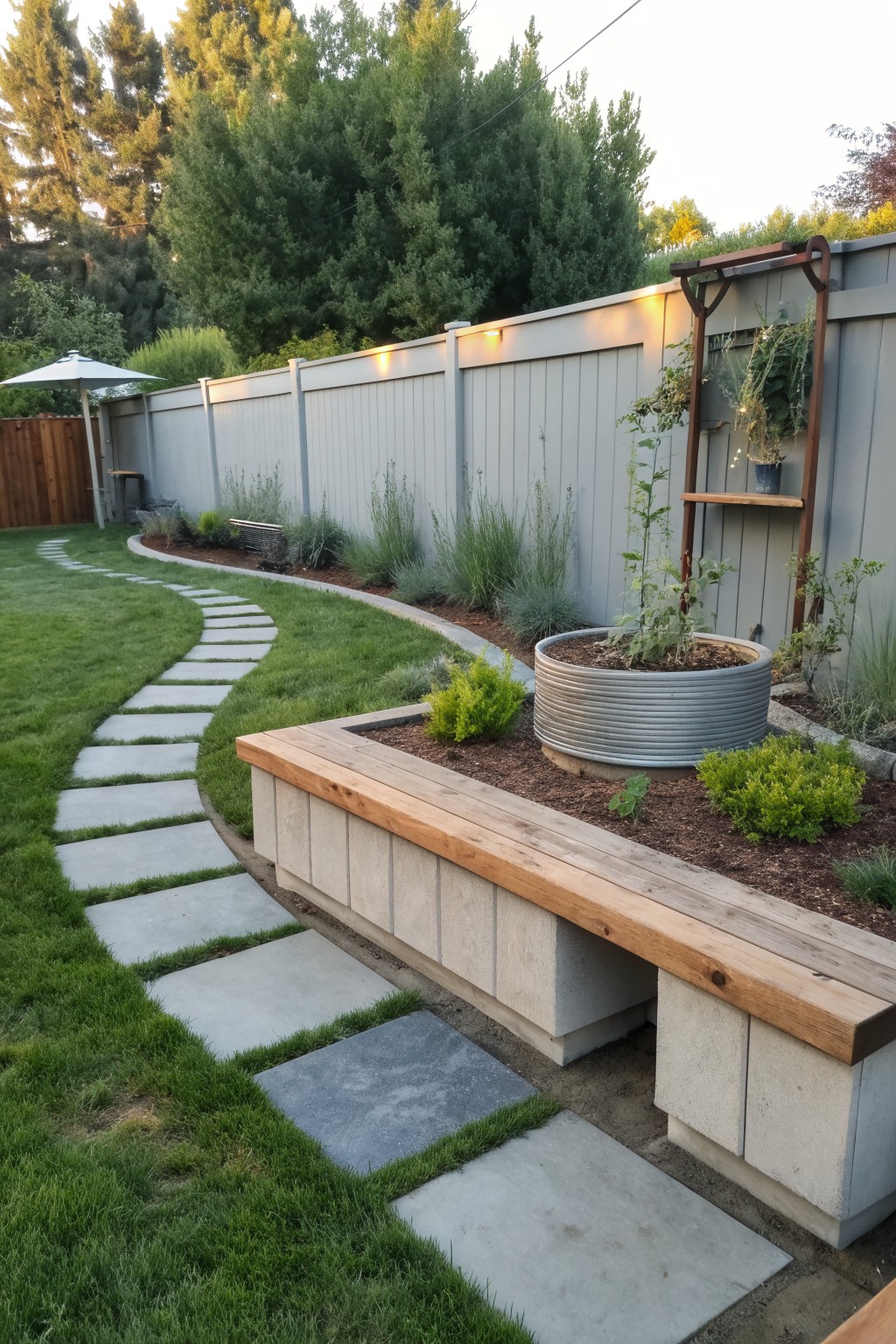
One simple way to add seating in a small yard is to build your raised beds with a wide, flat top that can also serve as a bench. This approach keeps the space from feeling crowded because the seat takes up no extra ground area and stays right where you already have planting space.
It works best with concrete blocks or sturdy timber walls that can support the weight. Just lay a solid wood plank across the top and secure it well. The bench stays useful for weeding or taking a break without needing a separate structure.
Built In Bench With Tile Top
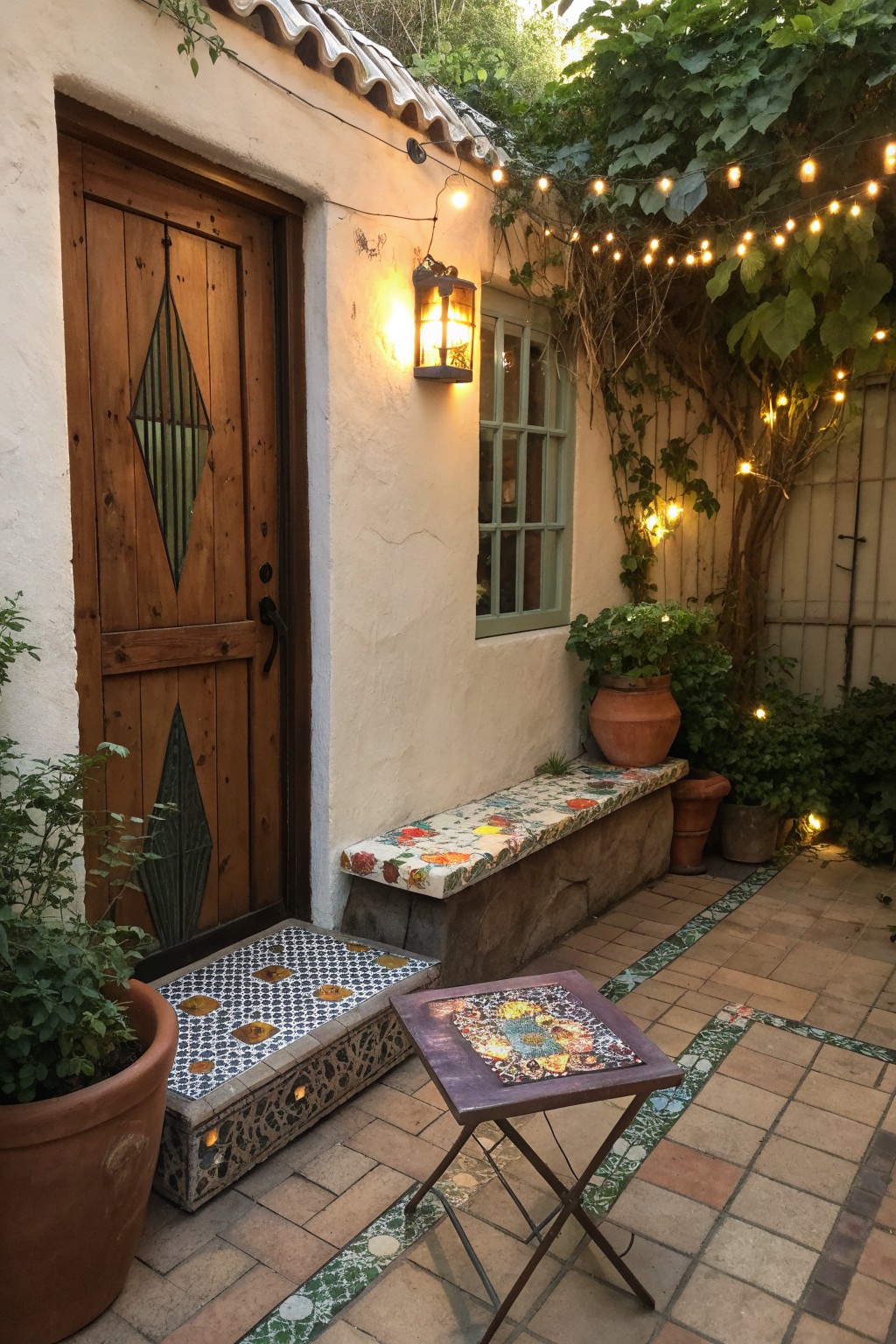
A built in bench works well when you have a low wall or ledge already in place. It turns that spot into seating without adding furniture that takes up room on a small patio or side yard. Tiles on top help it hold up to weather and give it a finished look.
This setup fits best along the side of a house or against a garden wall where you need a place to sit. Add a simple cushion for comfort and keep the rest of the area open so the space does not feel crowded.
Bench Along the Fence Line
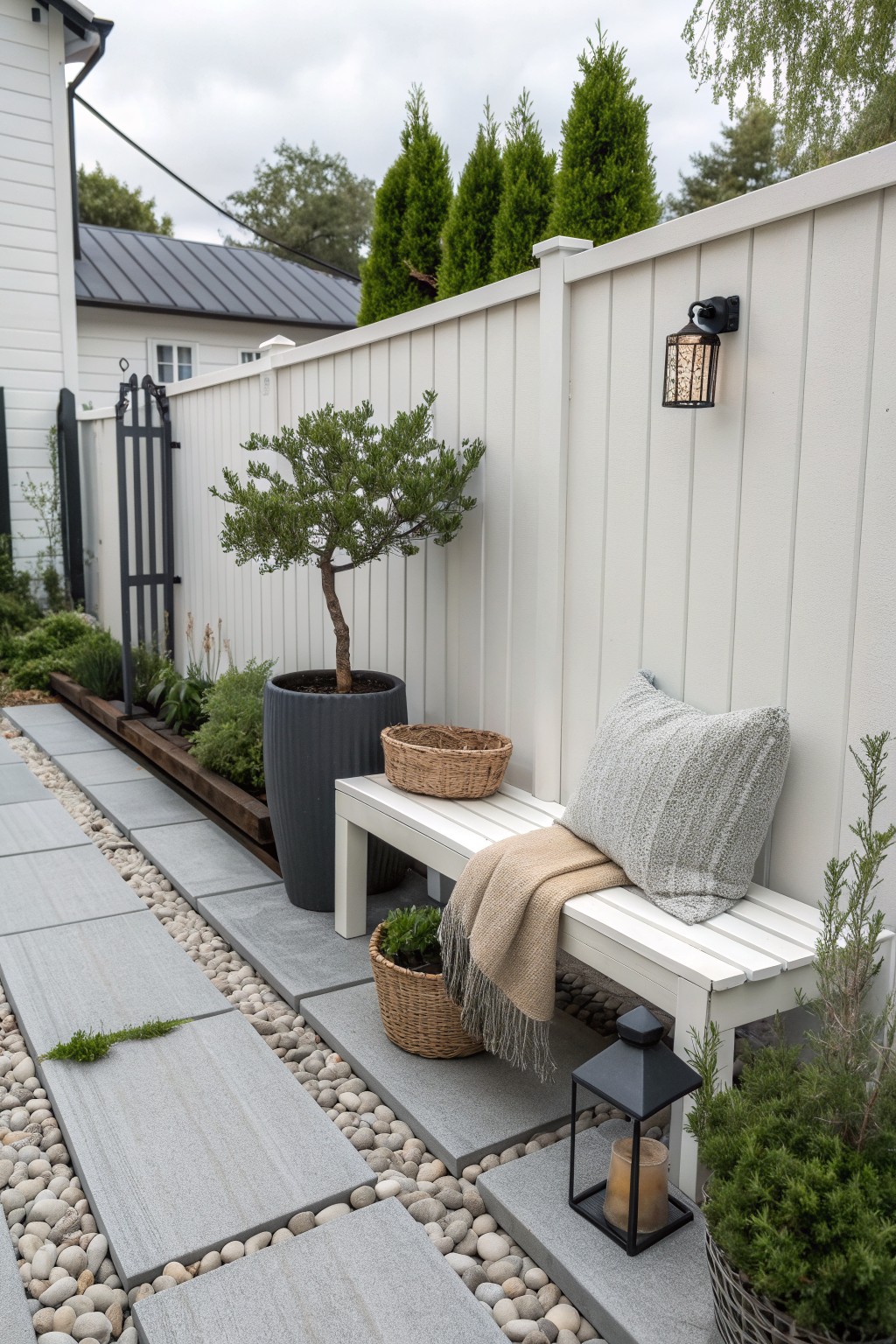
Placing a bench flat against a fence is one of the easiest ways to add seating in a small yard. It uses the fence as a backrest so the bench does not need extra space behind it, and the whole setup stays out of the way of paths and plantings. A light throw and one pillow are usually enough to make it feel finished.
This approach works best in narrow side yards or along the back fence where you want a quiet spot without crowding the rest of the garden. Keep the bench simple and light in color so it blends with the fence rather than standing out. Just check that the ground stays level and that any nearby plants will not overgrow the seat.
Frequently Asked Questions
Q: What wood holds up best if the bench stays out in the rain all year?
A: Cedar or redwood works well because it resists rot without much fuss. Give it a coat of sealant every spring to keep the color from fading. Skip cheap pine boards unless you paint them often.
Q: How do I keep a bench from eating up all the space in a tiny yard?
A: Build it no longer than four feet and set it right against the fence. That leaves the middle of the yard open for plants or a small table. You can also make the seat fold up when you need extra room to walk through.
Q: What if I only have basic tools like a drill and handsaw?
A: Most of these benches use straight cuts and screws so you can finish them without special gear. Buy lumber already cut to length at the store to save time. Start with the simplest design first and add details later if you want.


