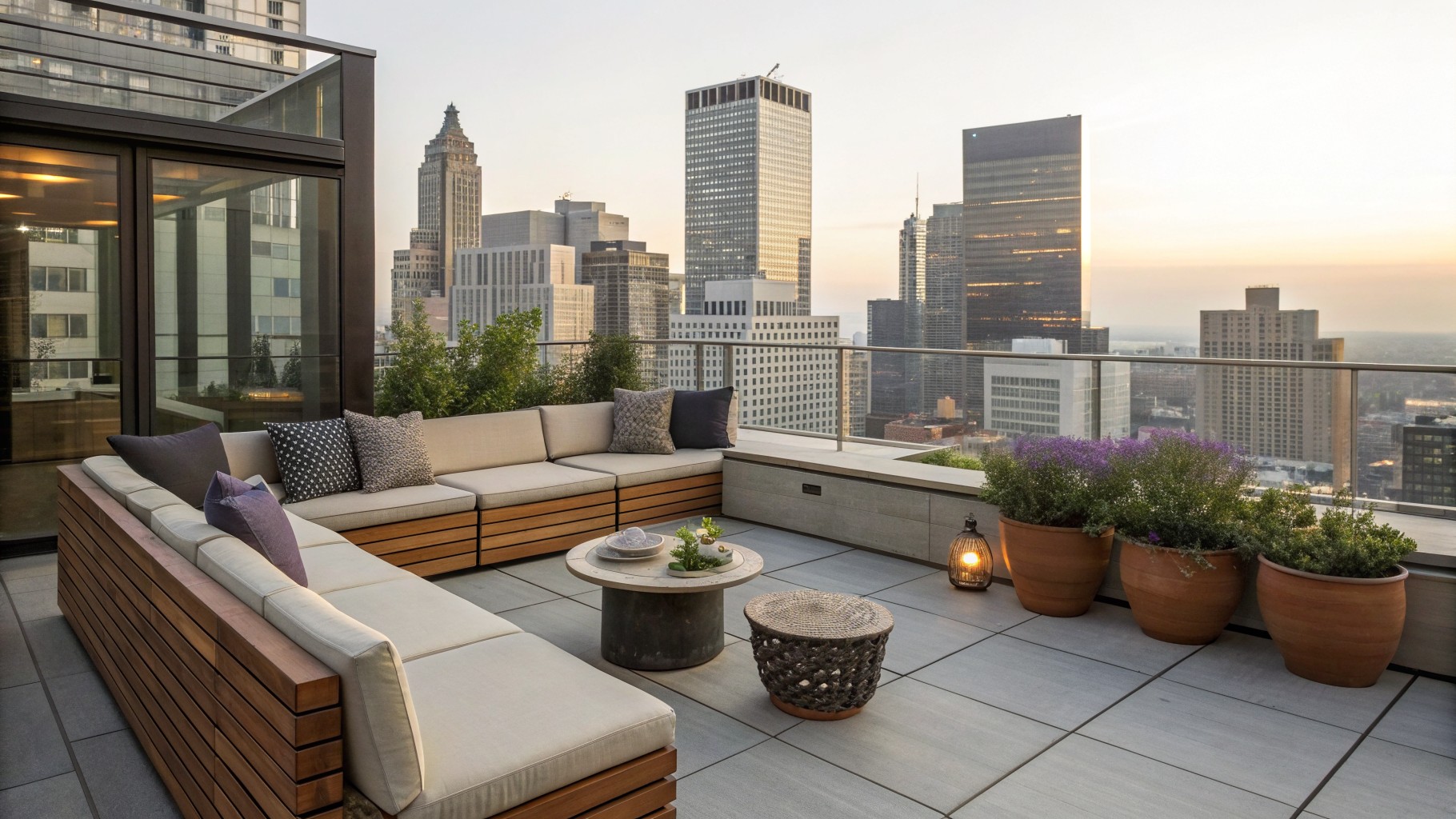
I have noticed that small urban terraces often end up feeling more like storage than a place to unwind when the seating takes over too much floor space.
People tend to focus on the view first but then realize the chairs and tables need to work for actual evenings outside without constant rearranging.
Usability comes first for me.
Some seating ideas I have come across make better use of corners and low profiles so there is still room to move around or add a few pots.
It helps to picture how the space will function over time rather than just on one nice afternoon.
Add a Slatted Pergola for Light Shade
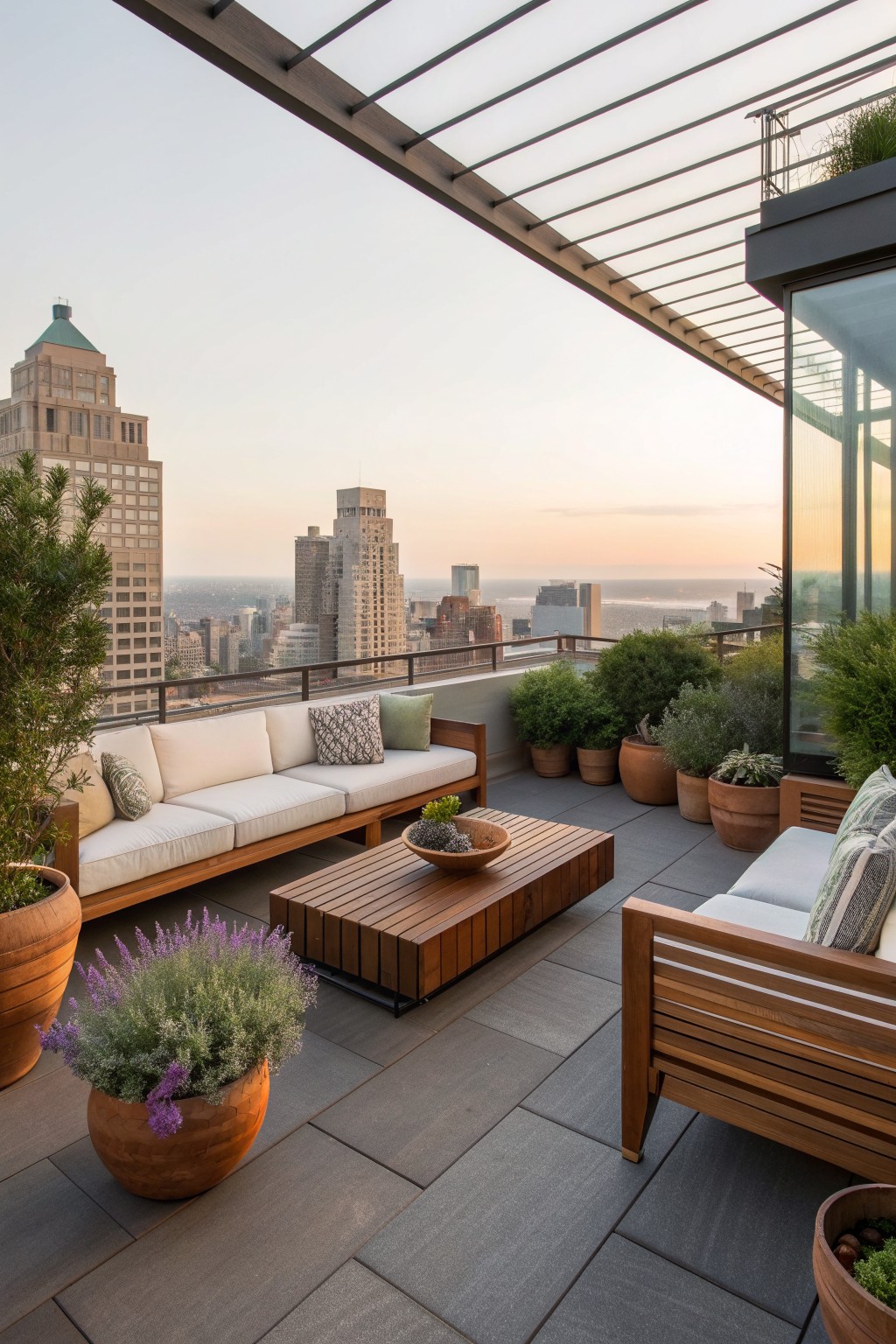
A slatted overhead structure works well on small rooftops because it filters sunlight without blocking the open feel or the views. It gives the seating area a bit of definition and makes the space feel more like an outdoor room instead of just a few chairs on a deck.
This approach suits urban terraces that get strong afternoon sun. Keep the pergola simple and light colored so it does not feel heavy, then add seating and plants underneath. It is easy to adapt on most buildings and does not require full enclosure.
Overhead String Lights And Wall Plants
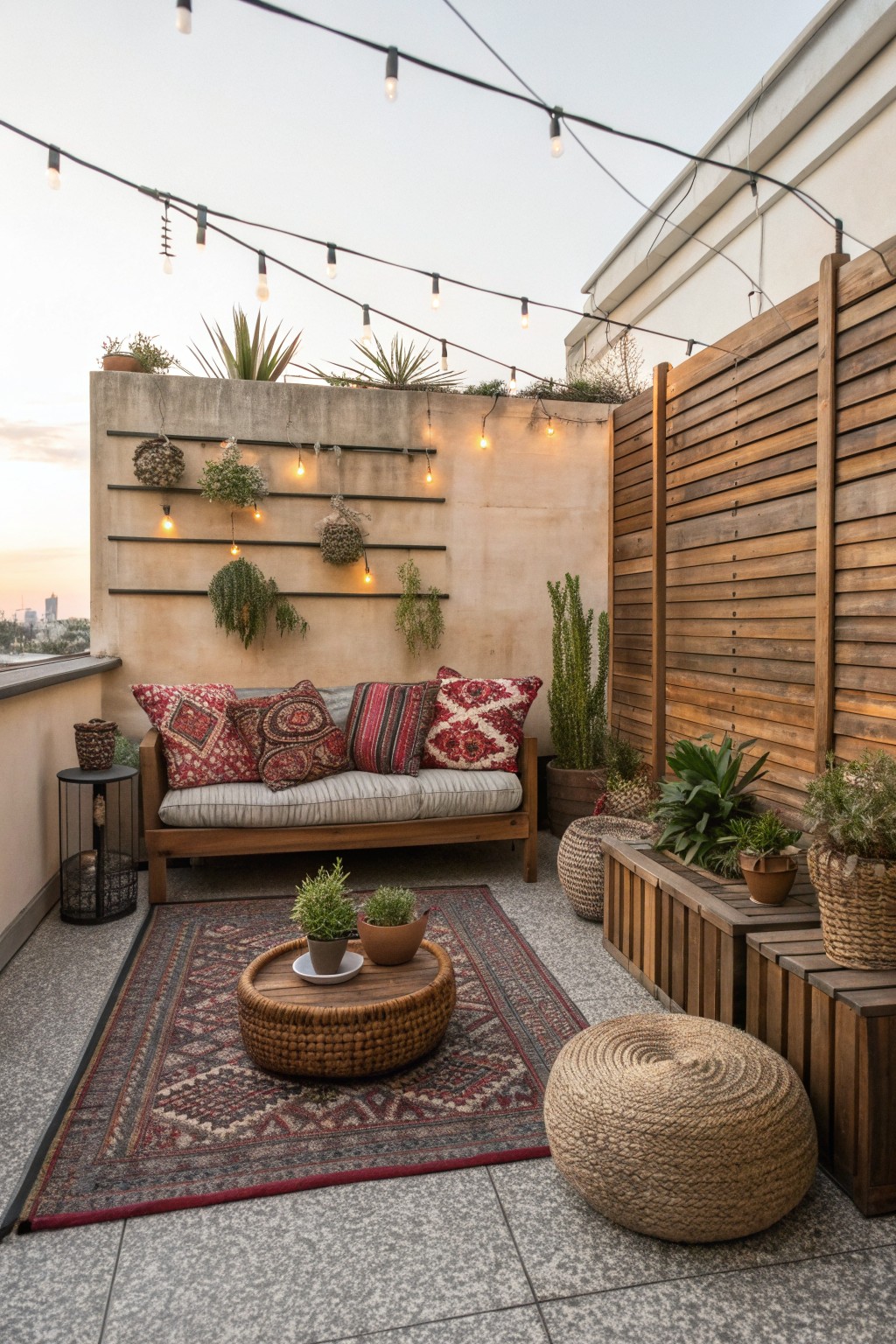
String lights work well on small rooftops because they add height and a bit of enclosure without taking up floor space. Pairing them with plants hung on simple horizontal bars keeps the wall from feeling bare and gives the seating area a softer backdrop.
This setup suits compact urban terraces where you want a clear spot to sit without crowding the floor. Keep the bench low and add a rug underneath so the zone reads as one area. Make sure the lights are on a dimmer so they stay pleasant in the evening.
Built-In Benches Along The Walls
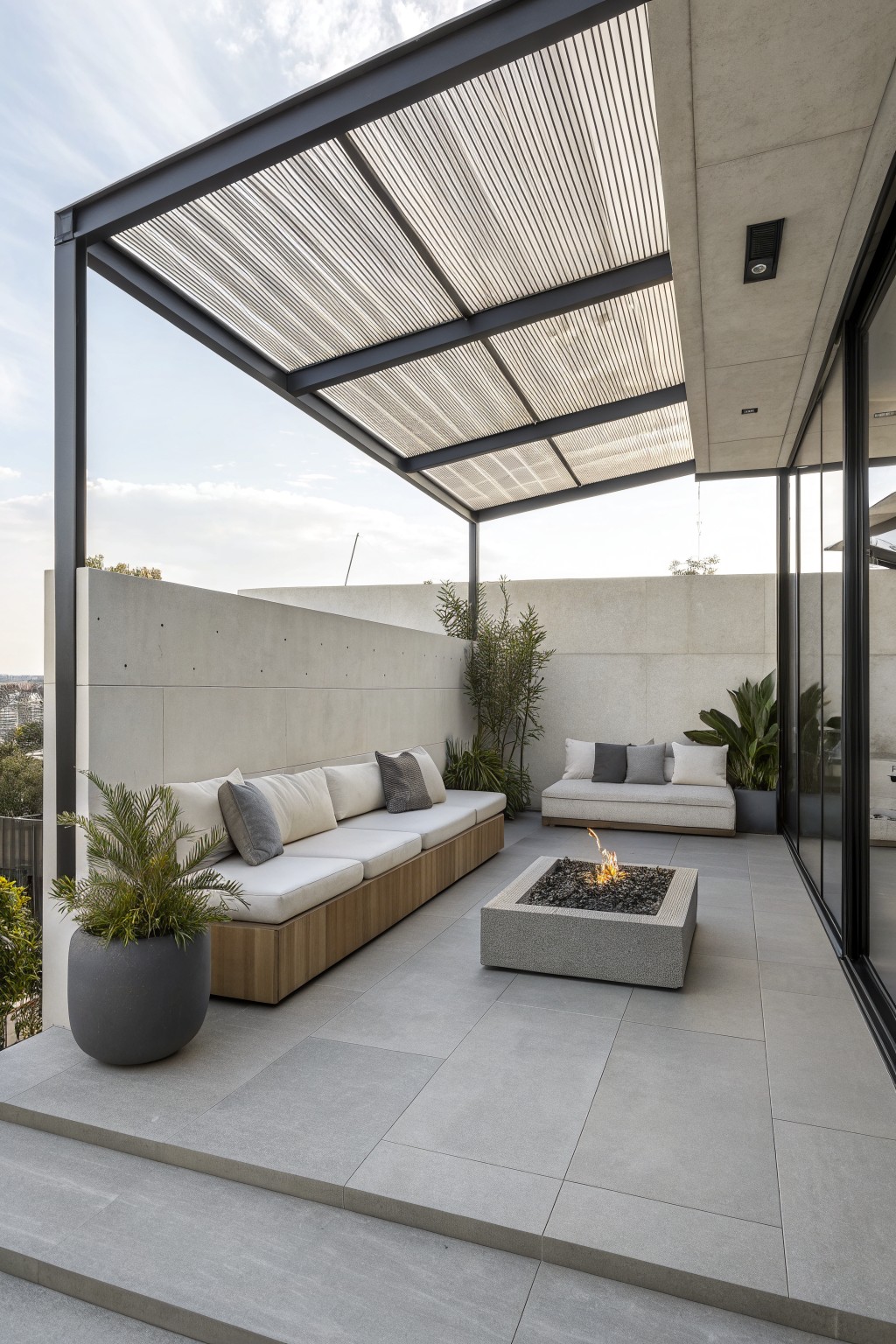
Built-in benches are a practical way to add seating without crowding a small rooftop terrace. They sit right against the wall and use the existing structure, so the open floor stays clear for movement and other features like a fire pit.
This setup works best on urban rooftops where every square foot counts. Keep the bench depth around 18 inches so it feels comfortable but does not eat into walking space, and add simple cushions for everyday use.
Built-In Bench Seating Saves Floor Space
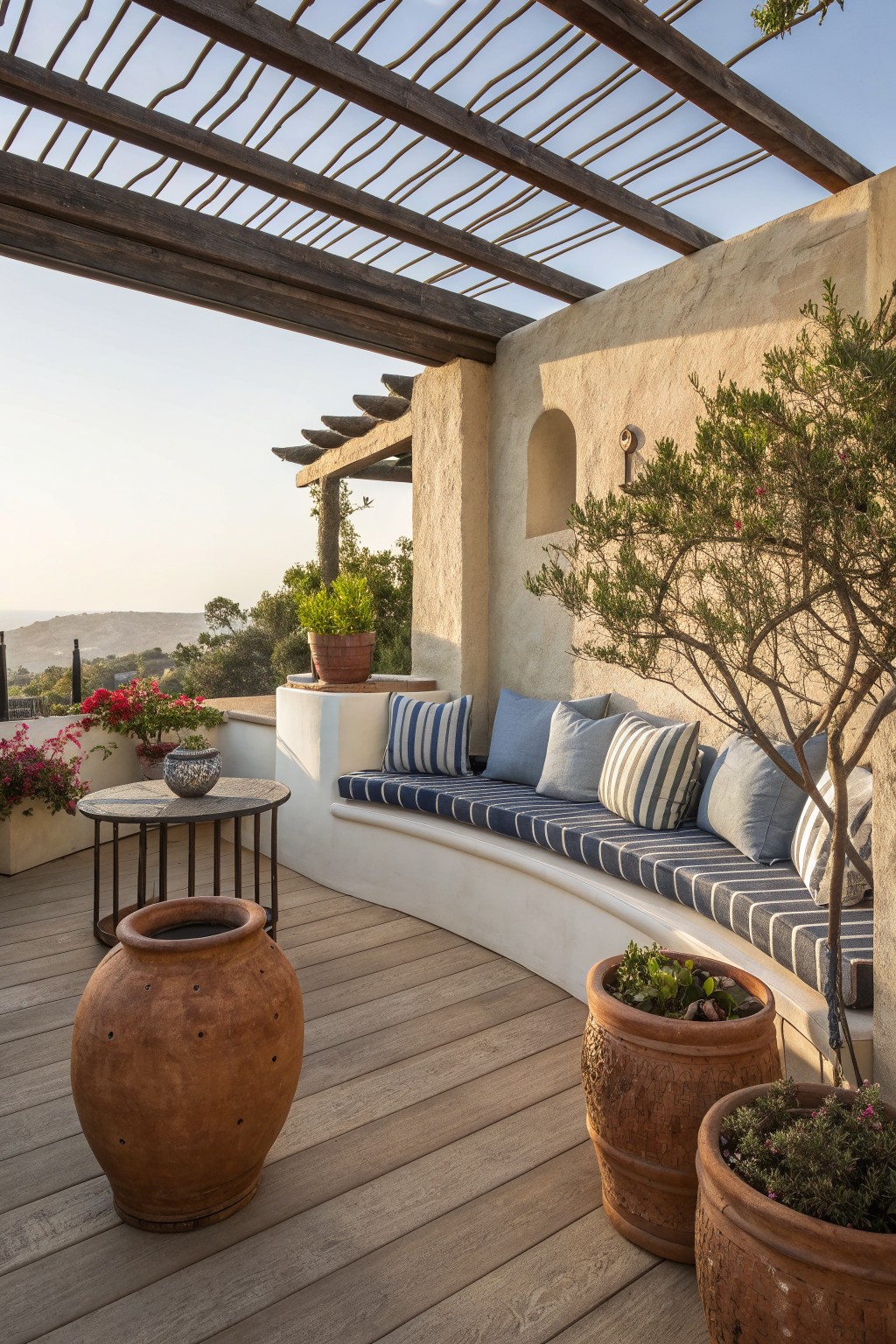
A built-in bench along the edge of a rooftop terrace gives you seating without eating up the middle of the floor. It works especially well on small urban spaces where every square foot counts, and you can add cushions to make it comfortable for longer sits.
This setup suits rooftops with a solid perimeter wall and pairs easily with a simple overhead structure for shade. Keep the cushions in durable fabrics and choose a bench depth that still leaves room to walk around.
Zone A Small Terrace With Gravel
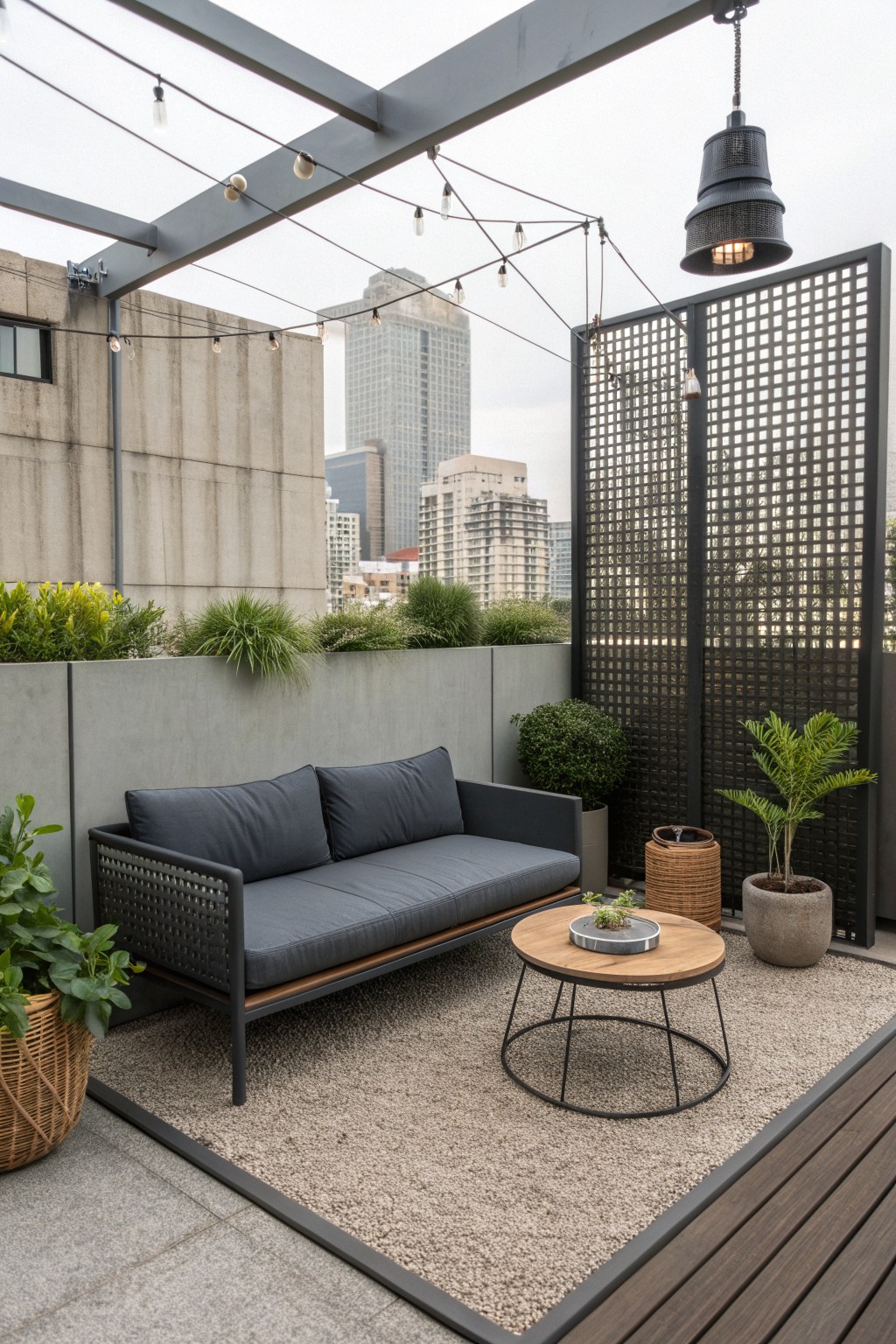
A bordered gravel section gives a rooftop terrace a clear sense of place without needing walls or big structures. It keeps the seating area feeling separate from the rest of the roof while still letting water drain and the space stay open.
This works well on small urban rooftops where you want the furniture to feel grounded. Lay down a simple frame, fill it with gravel, and place a sofa and table inside it. The look stays practical and does not add much weight or height.
Define the Seating Area With a Striped Rug
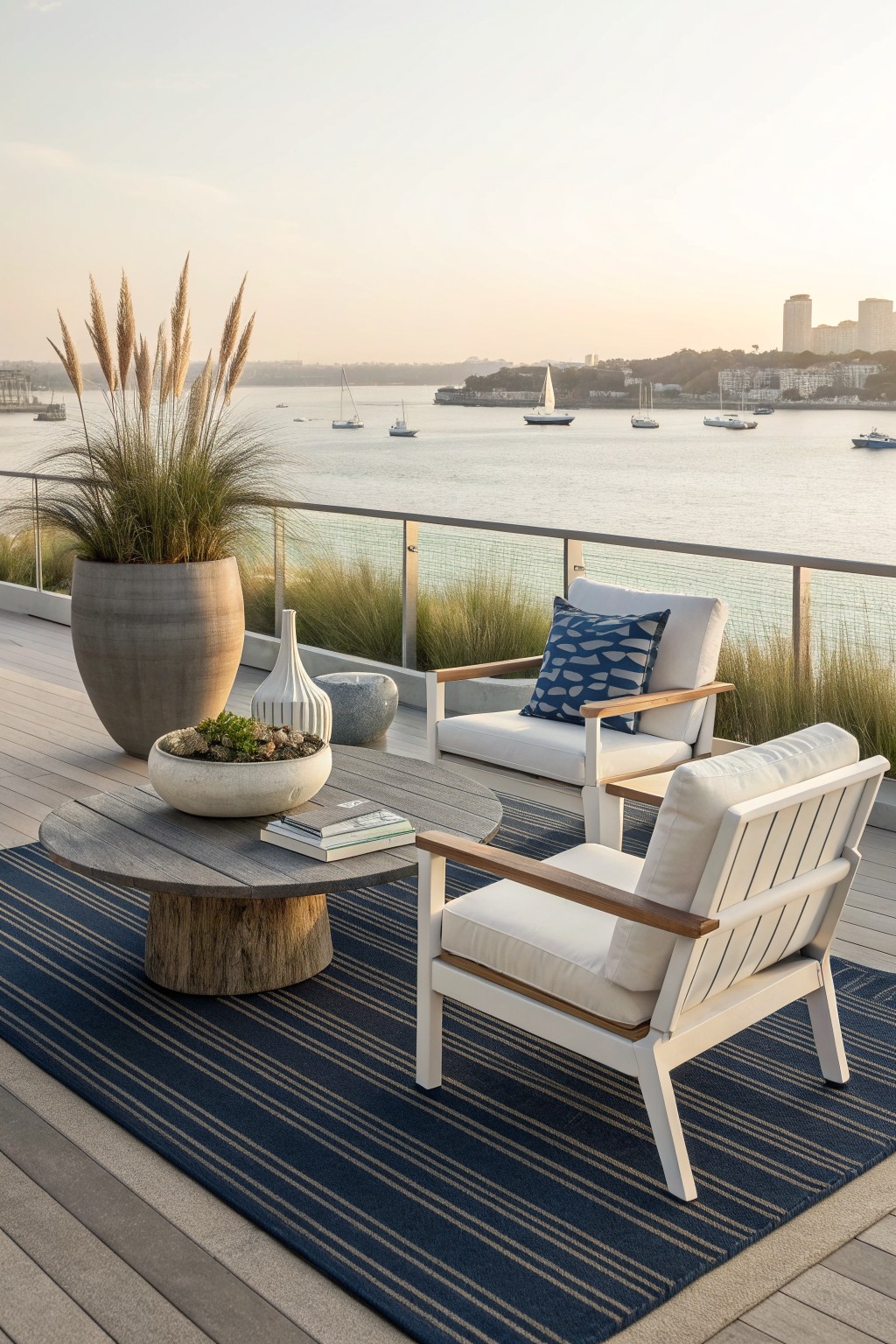
A striped outdoor rug helps mark where the seating zone begins and ends. On a rooftop or small terrace this simple step keeps the space from feeling scattered and gives it a more settled look.
It works especially well when the deck or floor runs the same material all the way across. Place the rug under the main chairs and table so the legs sit fully on it. Keep the pattern bold enough to stand out but not so busy that it fights the furniture. This approach suits compact urban terraces that need quick visual order without adding walls or screens.
Curved Bench Seating For Small Terraces
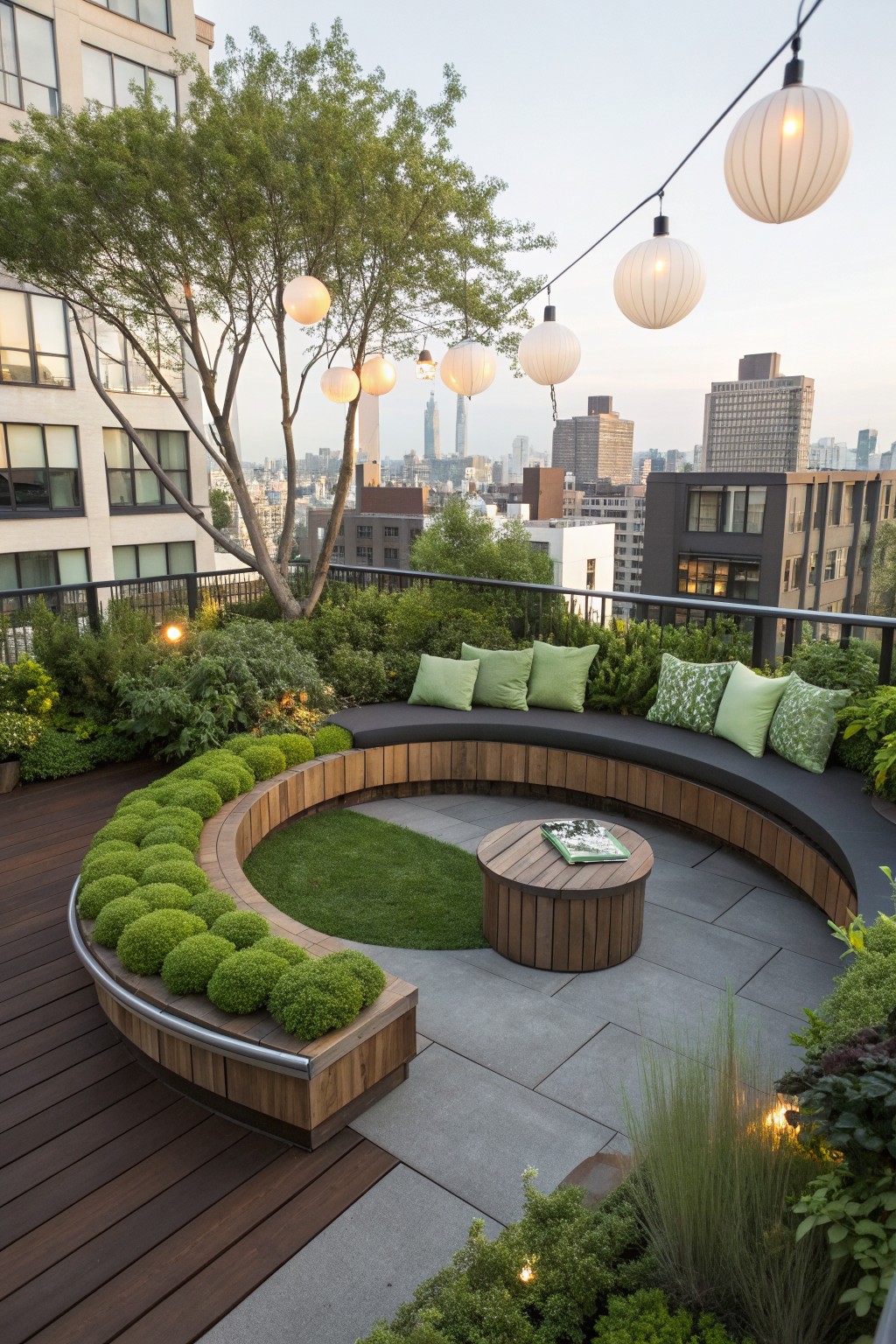
A curved bench built along the edge of a rooftop terrace gives you more seating without eating up the middle of the space. It follows the shape of the deck and leaves an open area in the center for a table or just room to move around.
This layout works best on small urban rooftops where walls or railings already define the shape. Keep the bench low and add planting along the back edge to soften the look and block some of the view from nearby buildings.
Built-In Perimeter Seating
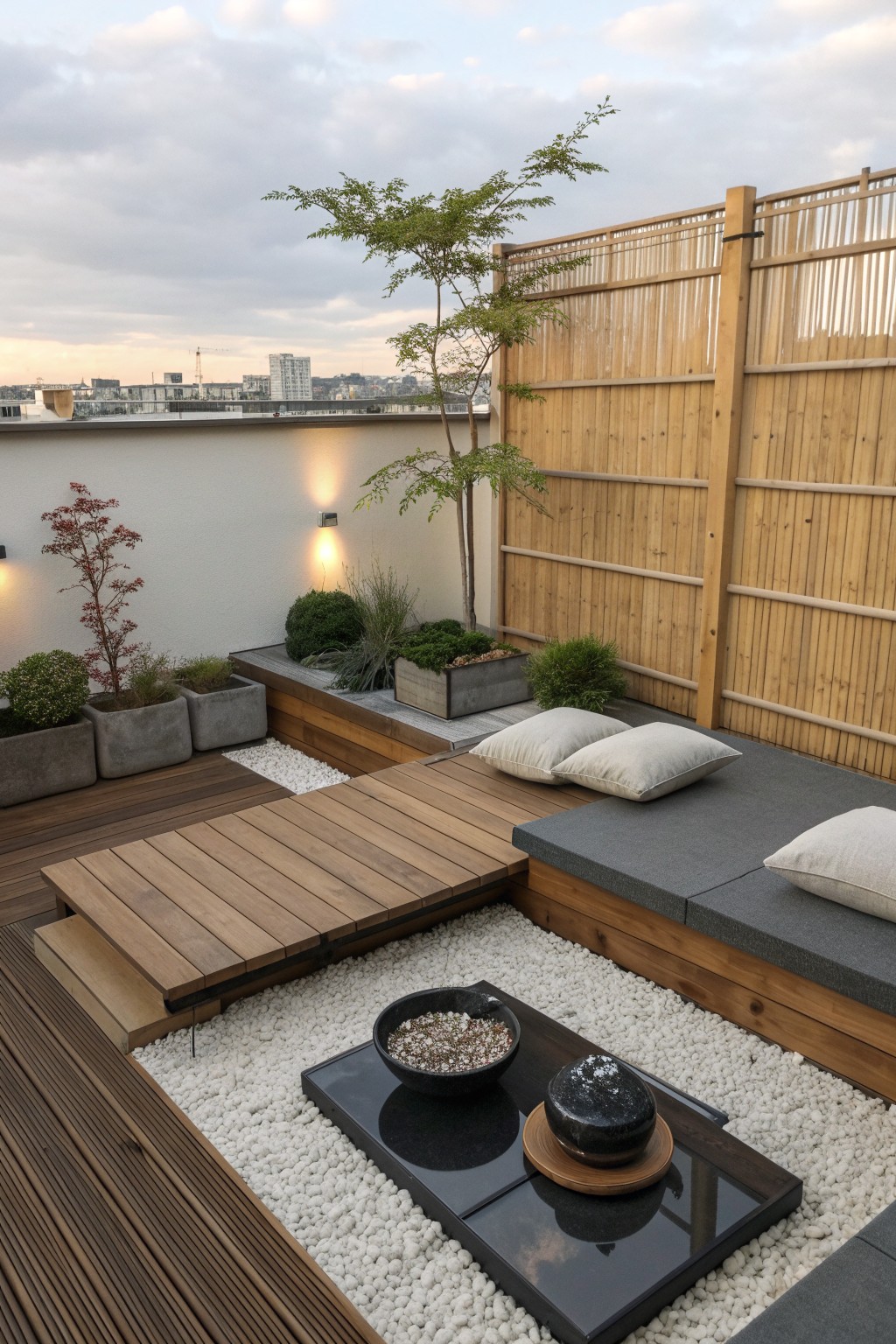
Small rooftops often feel cramped when you add loose chairs and tables. Building seating along the edges solves that by turning the fence line into a permanent lounge without eating up floor space.
This setup works best on terraces that already have solid boundaries. Add thick cushions on top of a simple wooden platform and keep the center open for movement or a few accent pieces.
Bench Tables That Fit Narrow Terraces
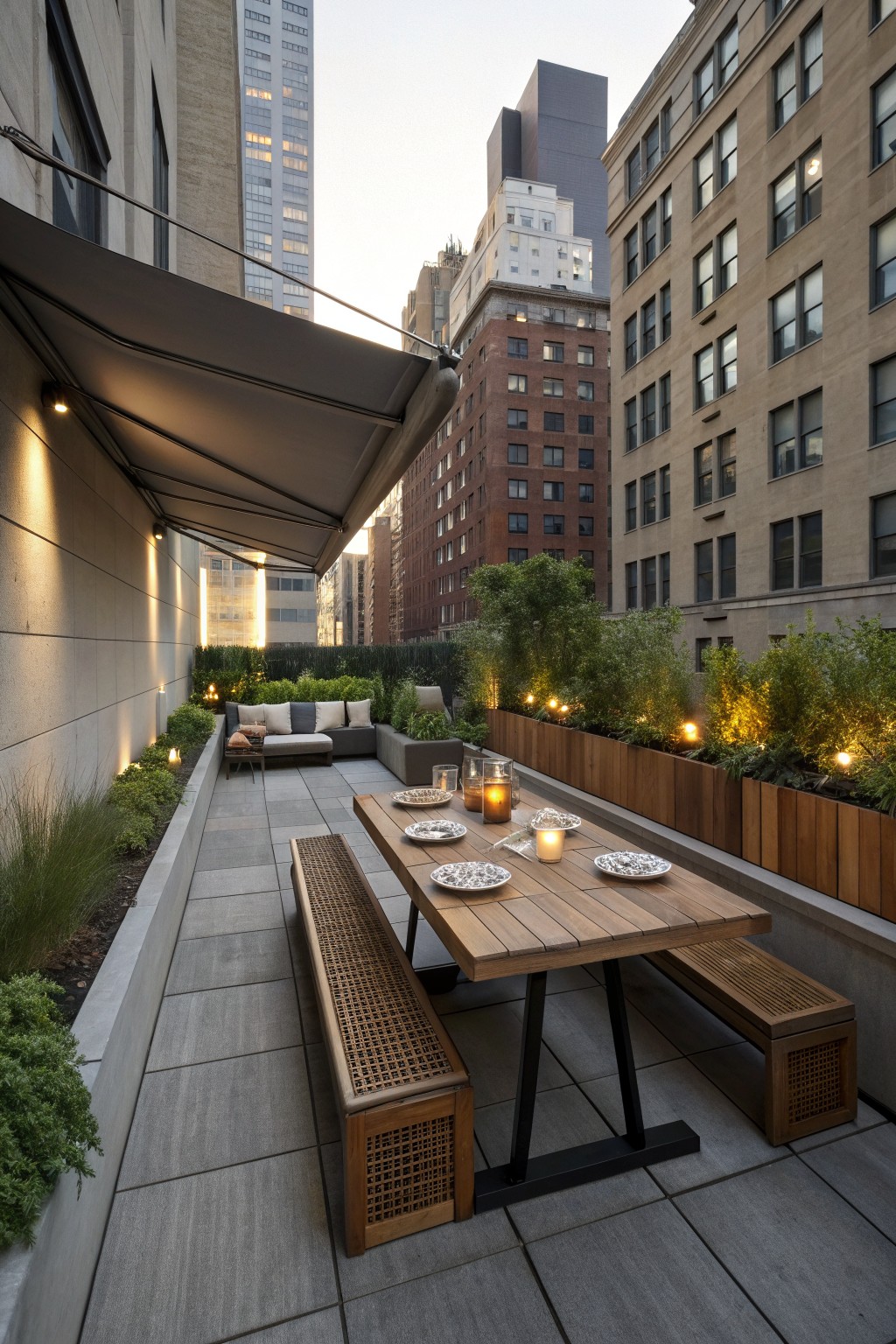
A long table with benches makes good use of the limited width on many small urban terraces. It turns the longest part of the space into a place to sit and eat without blocking the walkway or feeling cramped.
Place the table against a raised planter edge so the benches stay out of the main path. This layout works well on rooftops where you already have built-in planting boxes, and it leaves room for simple lighting among the plants.
Shade the Seating Area with a Large Umbrella

A large umbrella makes a small rooftop terrace much more usable during the day. It creates shade over the main sitting spot without adding walls or heavy structures that would crowd the space.
Set the umbrella so it covers the table and the chairs around it, and pick a model with a solid base that can be adjusted as the sun moves. This setup works especially well on urban rooftops where you want simple shade that does not feel permanent.
Hang a Hanging Chair to Save Floor Space

A hanging chair works well on small urban terraces because it lifts the seat off the ground and leaves the floor open for walking or extra plants. The woven style adds a light look without feeling bulky in a tight area.
This setup suits rooftops where every bit of space matters. Check that your structure can hold the weight and keep the rest of the furniture simple so the terrace stays easy to move around in.
Built-In Bench Seating Saves Floor Space
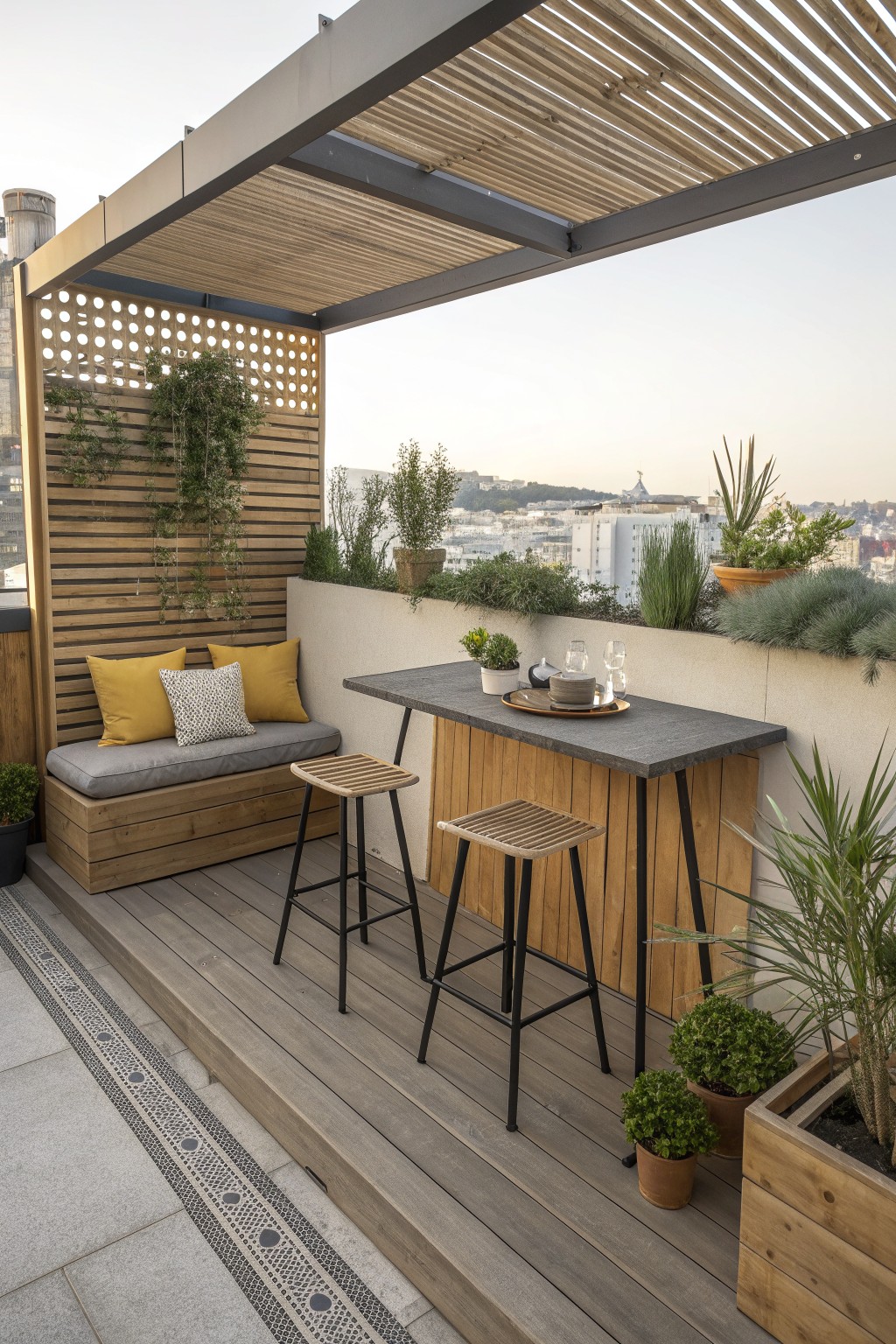
A built-in bench along one wall gives you extra seating without the bulk of freestanding chairs. On a small rooftop terrace it keeps the middle of the deck open and makes the whole area feel less crowded. The bench can double as storage if you add a lift-up seat, which helps when you have limited room for extra furniture.
This setup works best on terraces that already have a solid back wall or railing. Keep the bench depth around 18 inches so it does not eat into walking space, and choose cushions that can stay outside. Pair it with one or two bar stools at a narrow counter if you want room for both lounging and quick meals.
String Lights And Hanging Lanterns
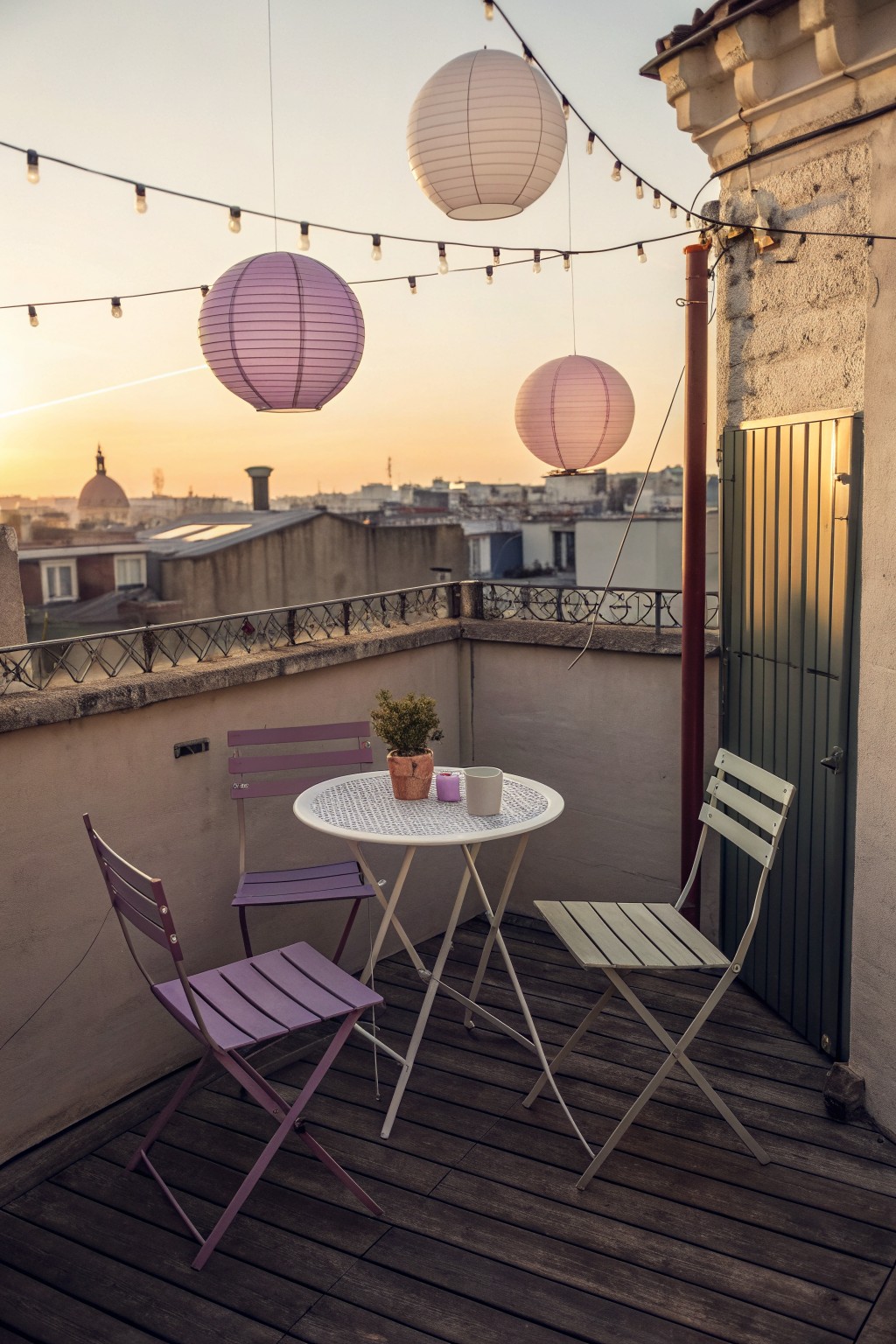
Many small terraces feel empty after dark. Hanging paper lanterns along with string lights overhead adds a soft layer of light that makes the space usable in the evening without taking up floor space.
This approach suits urban rooftops where room is limited. Run the lights along the railing or from a simple pole, and keep the lanterns at varying heights so they do not block the view. Warm bulbs work best to avoid a harsh feel.
Edge Your Seating With Built-In Planters
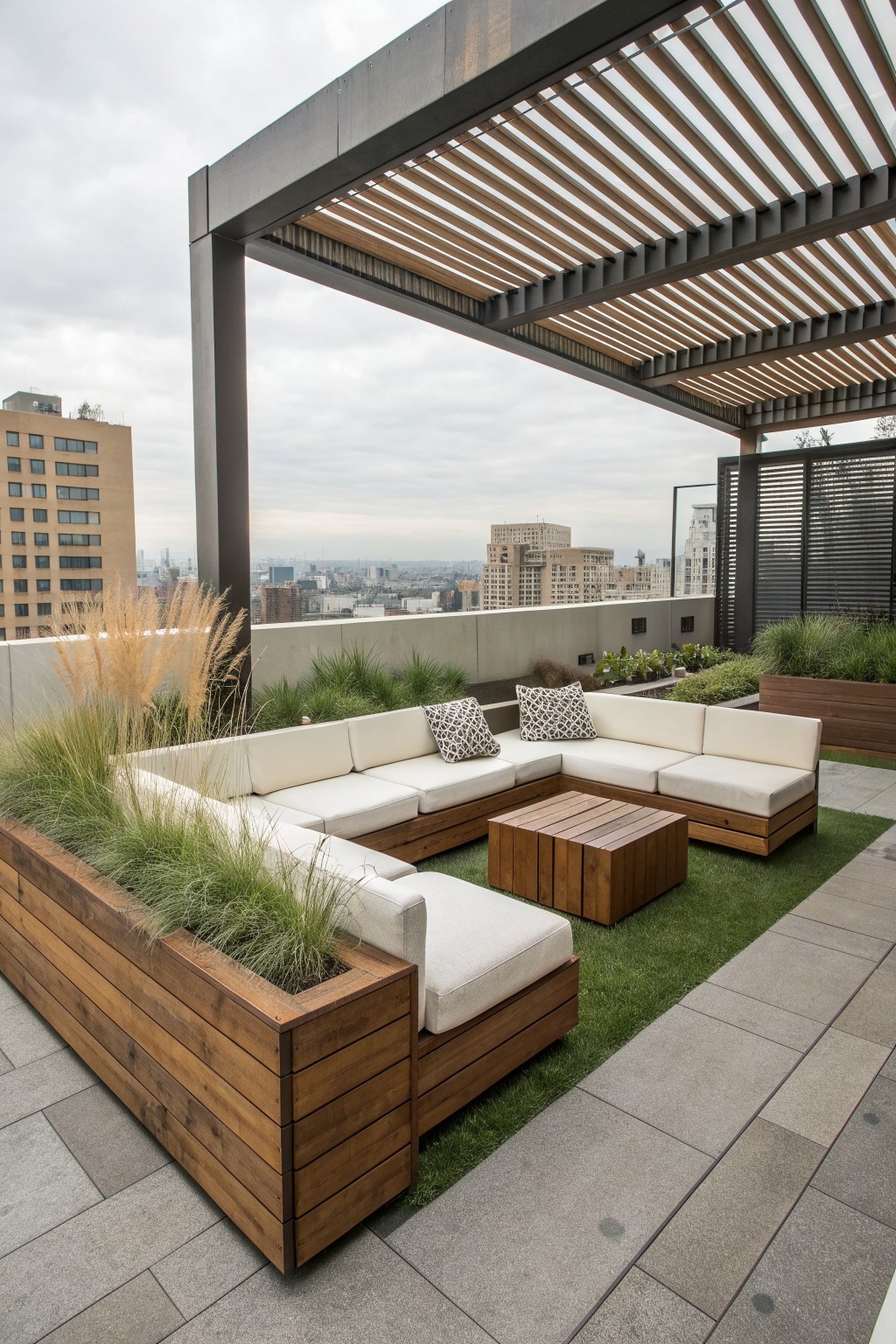
Raised planters can help turn a small rooftop into a space that feels more settled and private. Placing them right against the seating keeps the plants close without eating into floor space, and the wood ties the whole area together.
This approach suits tight urban terraces where you want greenery but still need room to move around. Match the planter material to your seating frame and choose grasses or low-care plants that can handle wind and sun.
Built-In Bench Seating With A Planting Ledge
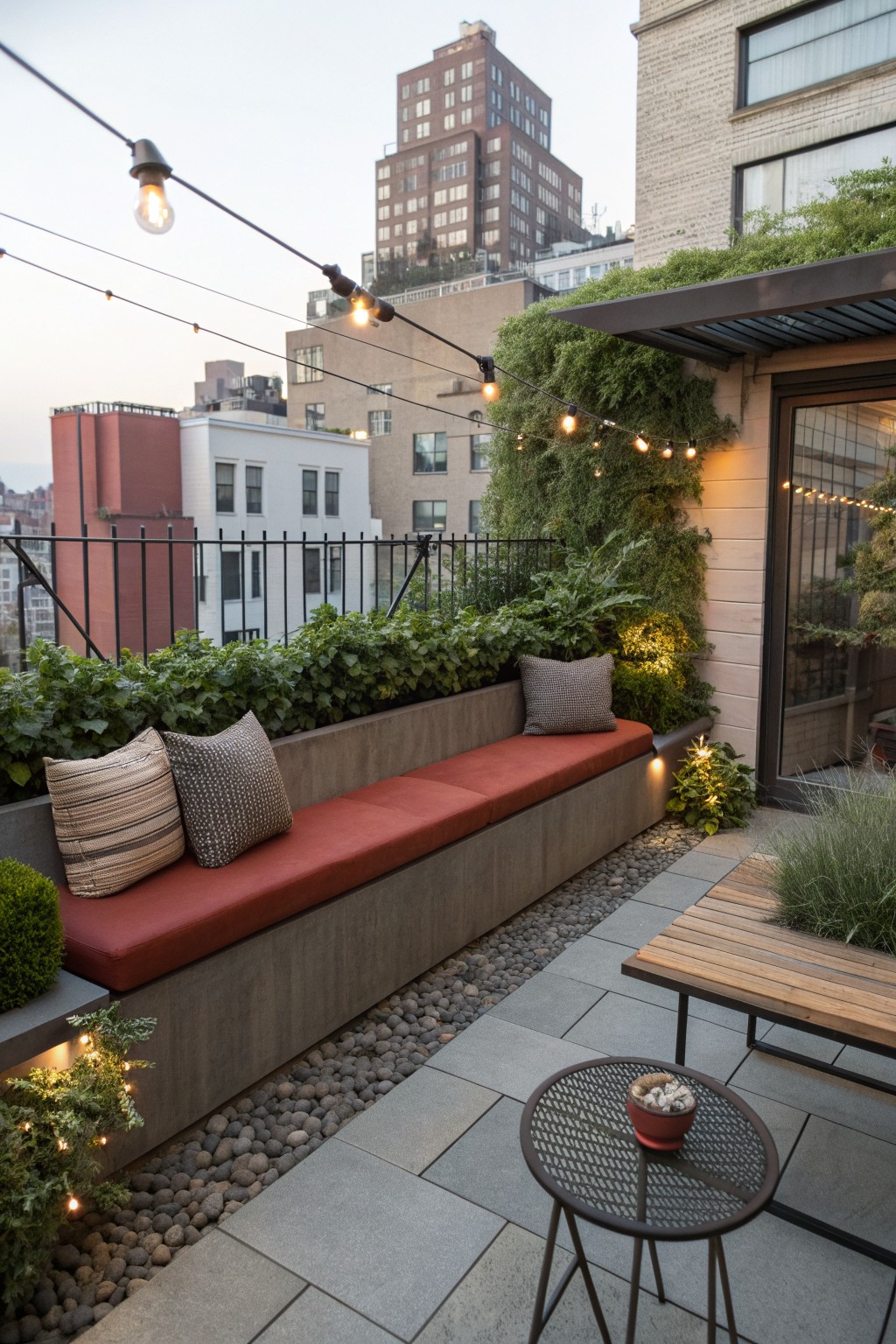
A built-in bench along the edge works well on small rooftops because it gives you seating without taking up extra floor space. The wide ledge behind it doubles as a planting bed, so the greenery stays contained and does not crowd the walking area.
This setup fits urban terraces best when the bench runs the full length of one side. Keep the cushion in one solid color and use simple pillows so the focus stays on the plants. It works on most building types as long as the structure can support the weight of the concrete and soil.
Run a Planter Bench Along One Wall
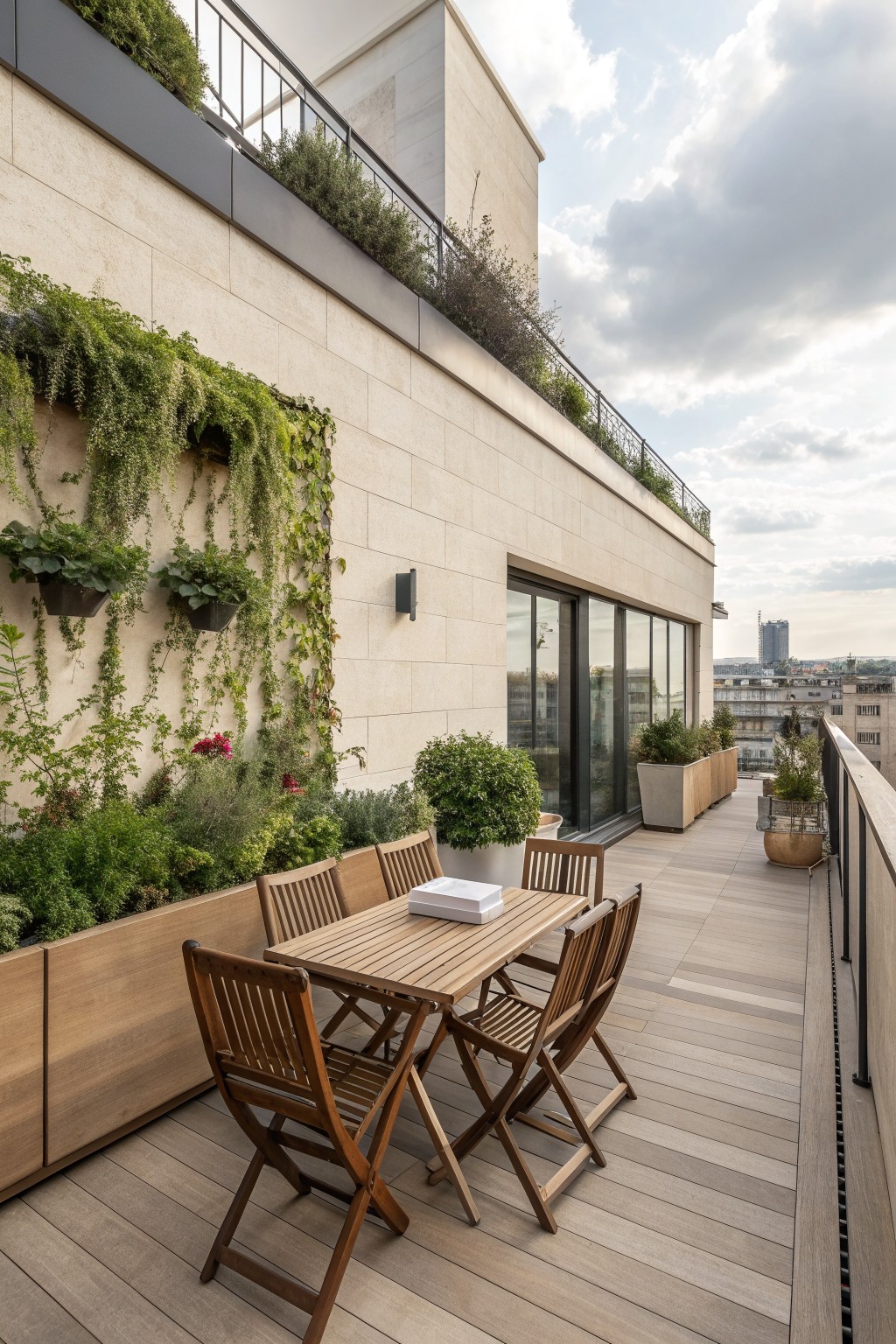
A long planter box along the edge turns a narrow terrace into a usable dining spot without eating up walking room. The wood ties the seating area to the plants and keeps everything feeling connected rather than scattered.
This works best on small rooftops where you need both greenery and seating in the same stretch. Choose a simple wood that can handle weather, and keep the chairs foldable so the space can open up when the table is not in use.
Add a Shade Sail Overhead
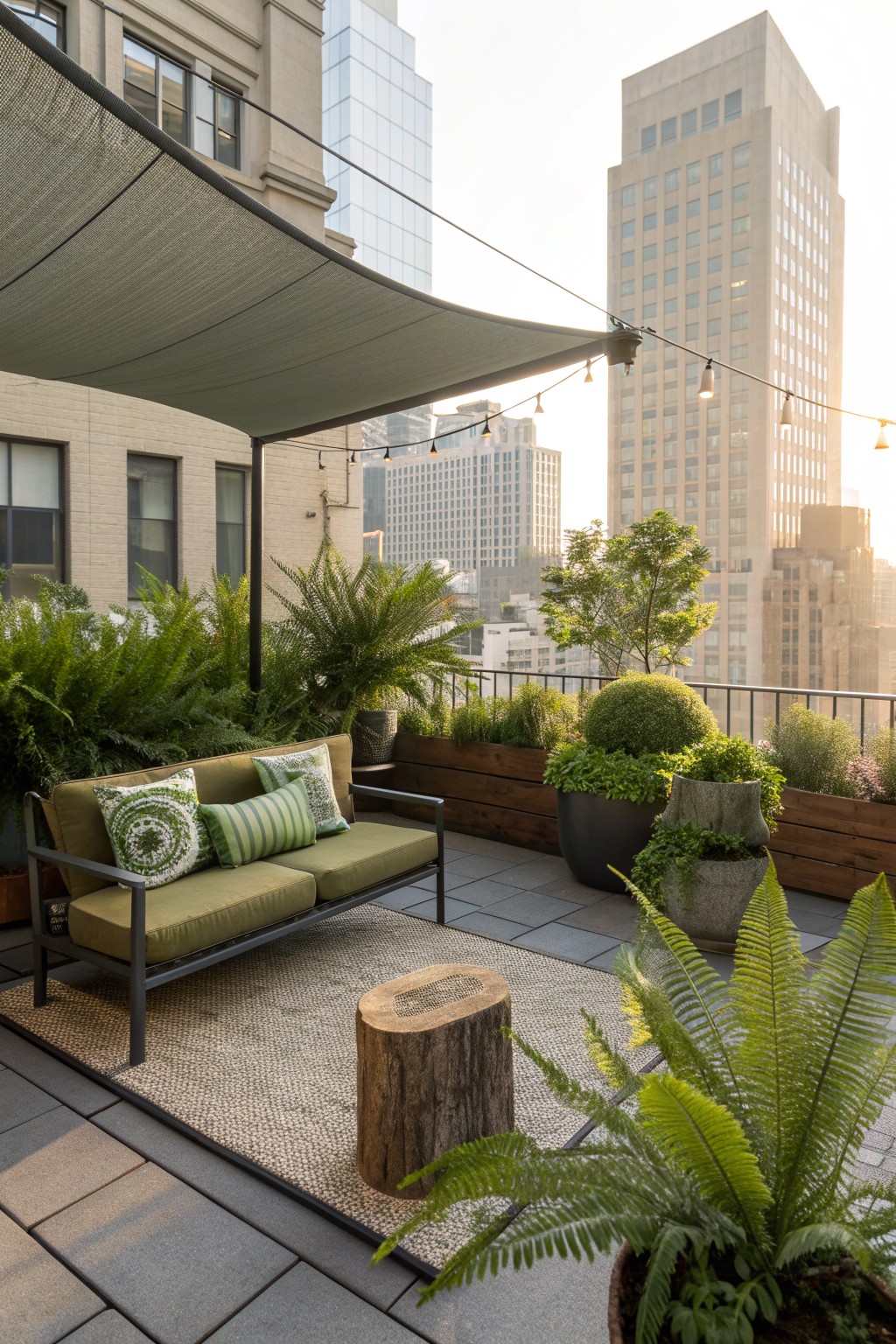
A shade sail gives a small rooftop terrace real daytime comfort without blocking the open view. It cuts down on harsh sun so the seating area stays usable instead of turning into a hot spot by midday.
Stretch one across the main sitting zone and anchor it to nearby walls or posts. This setup suits tight urban spaces where permanent structures would feel too heavy or take up too much room.
Mount A Projector Screen For Movie Nights
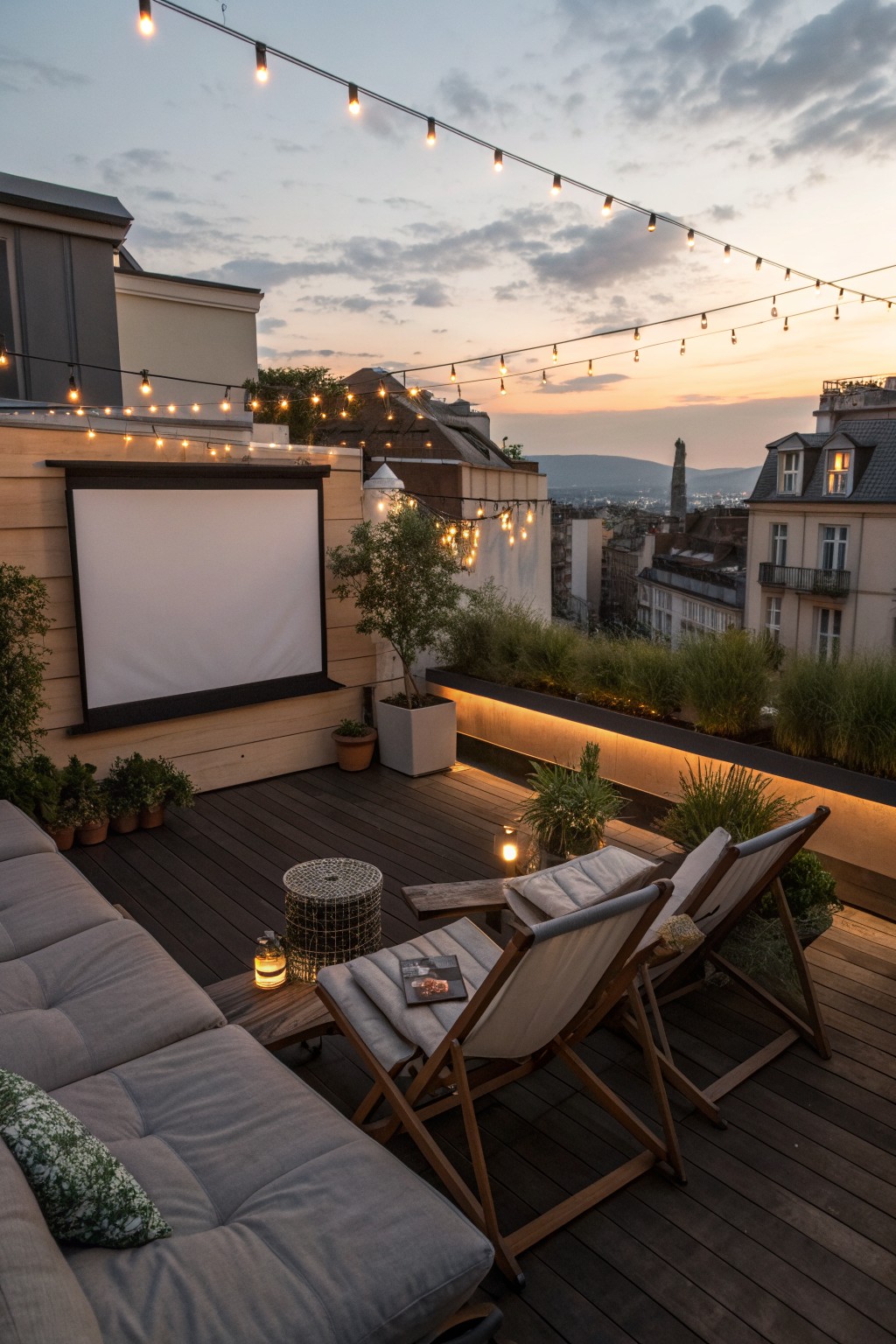
A projector screen gives a small rooftop terrace a clear reason to stay outside after dark. It turns an open deck into a spot for watching films without needing much extra furniture or space.
The screen works best when paired with simple seating and overhead string lights. This approach suits urban rooftops that get evening use and already have basic decking or railings in place.
Create Privacy with Vertical Planting
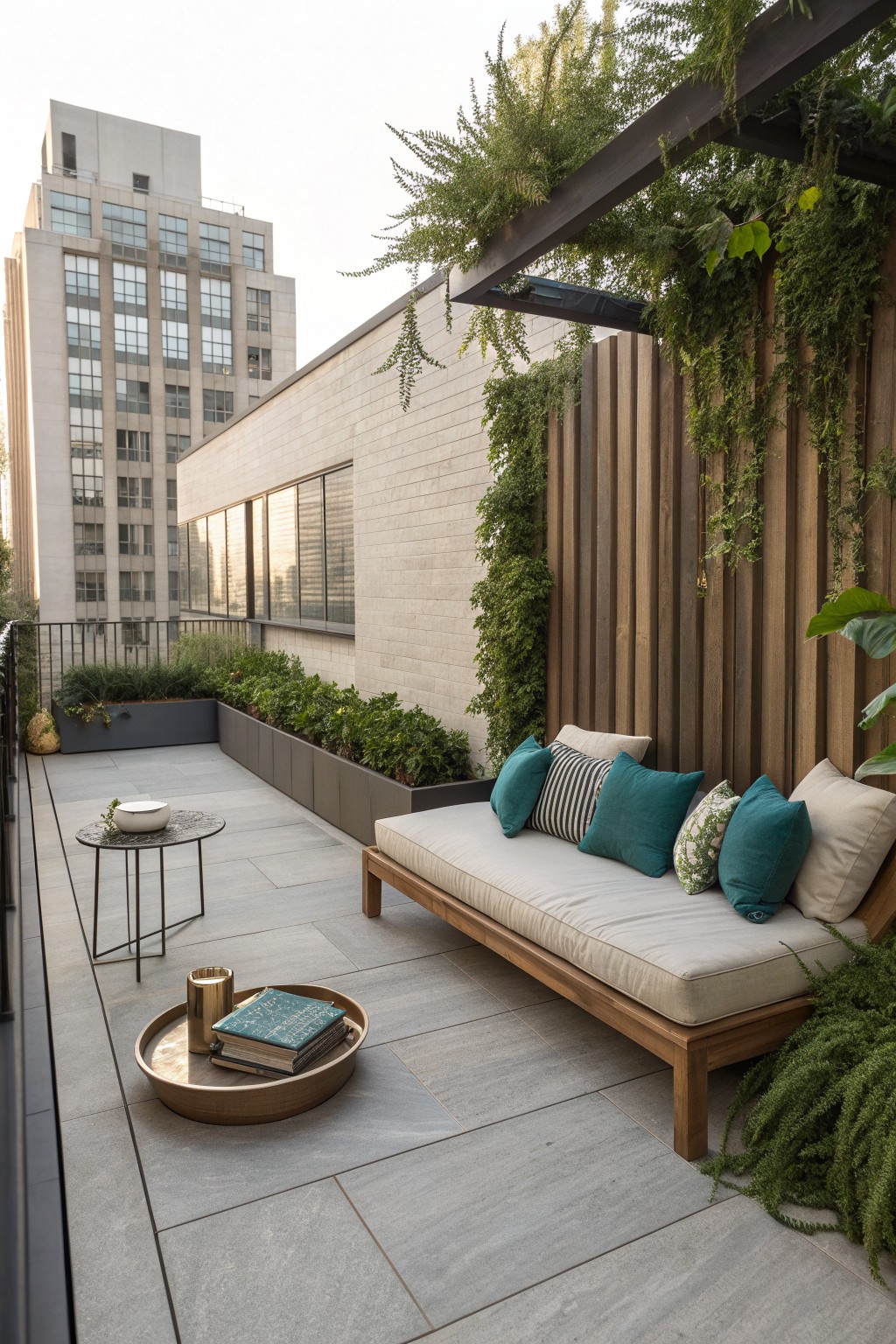
Vertical planting paired with wood screening turns an exposed rooftop into a much more usable space. The vines and slats block sight lines from neighboring buildings without making the terrace feel closed in.
This setup works best on small urban terraces where floor space is limited. Run a narrow planter along the wall, choose fast climbers, and place a simple daybed or bench in front so the greenery becomes the backdrop rather than the main occupant.
Frequently Asked Questions
Q: How can I keep chairs from sliding around on windy rooftop days? A: Anchor them with heavy planters or secure straps to the railing. Check the weather before leaving loose cushions out overnight.
Q: What works for cushions if sudden rain hits my terrace? A: Choose quick-dry outdoor fabrics and tuck extras into a sealed storage box. A simple waterproof tarp over the seating area handles most downpours.
Q: How do I squeeze in more seats when the floor space already feels full? A: Go for stackable stools that slide under a small table. Wall-mounted benches free up walking room without adding clutter.


