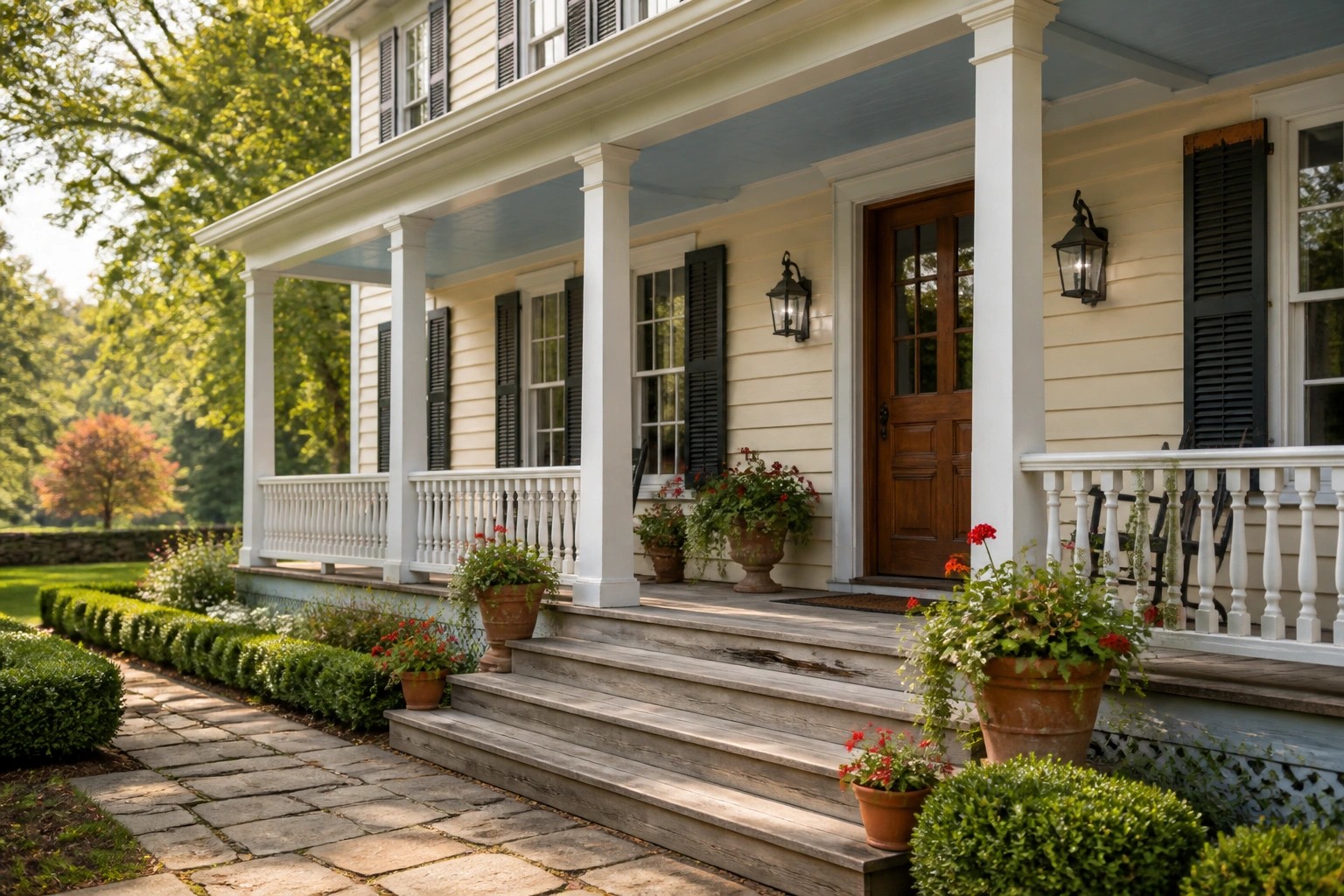
I often find that exterior paint behaves differently once it covers a large area of siding and sits next to the trim and porch details.
The light outside changes how undertones appear throughout the day, especially when the color is placed near stone or landscaping.
Samples on the actual house reveal the truth.
I have learned to place test patches in both shaded and sunny spots so I can see how the shade holds up against the roof color and any brick accents.
This approach shows which farmhouse shades will stay consistent rather than shifting in unexpected ways once the weather and seasons change.
Creamy White Siding
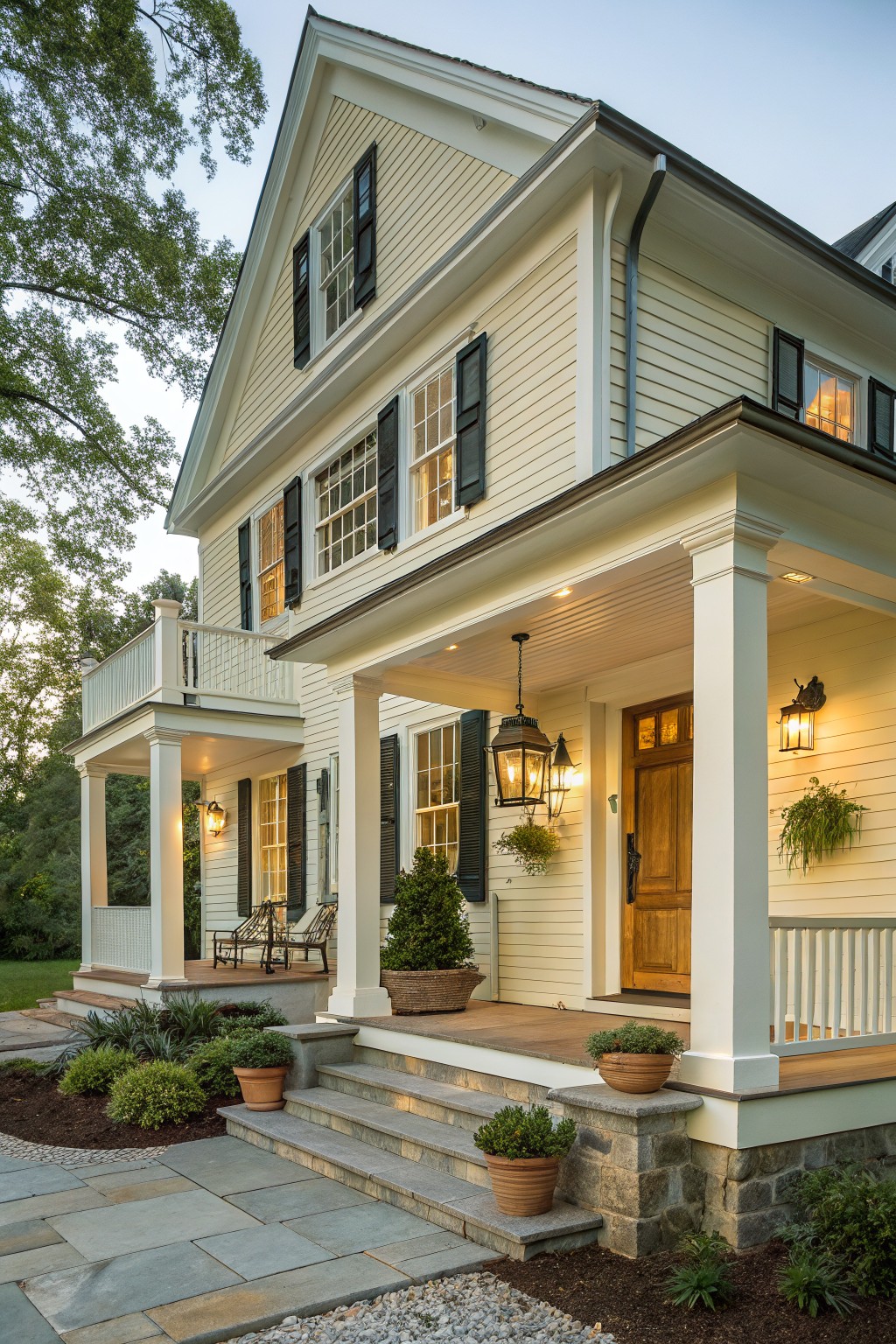
A warm creamy white makes a good choice for farmhouse siding. It keeps the look soft and traditional without turning too bright or stark next to the roof and foundation.
This shade sits just off pure white with a touch of warmth that helps it feel at home with wood and stone. It works best on older-style homes where you want the siding to stay in the background rather than stand out.
Light blue gray siding
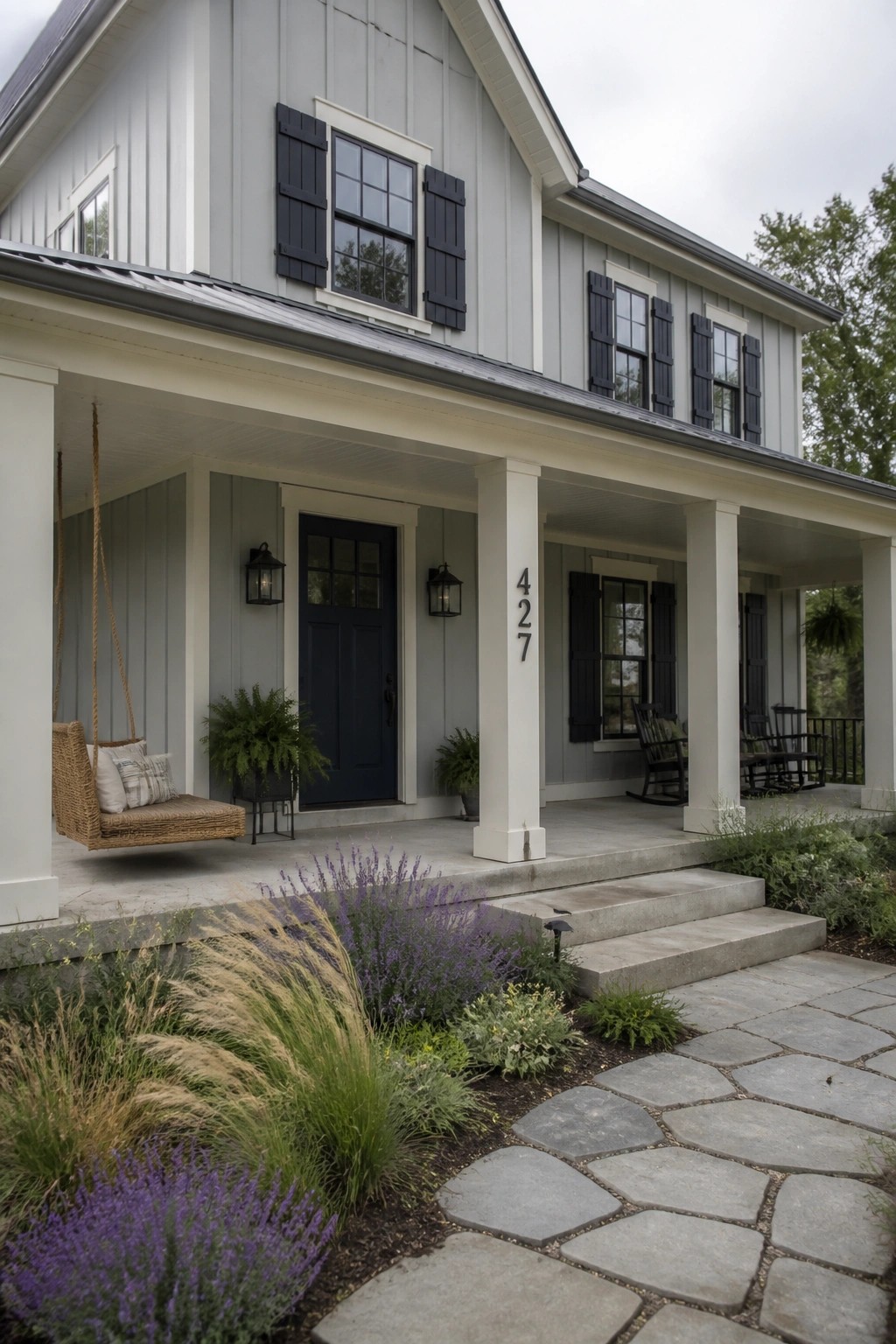
This light blue gray on the siding brings a calm, slightly cool tone that feels right for farmhouse exteriors. It reads as a soft neutral rather than a true blue, which helps it sit quietly next to white trim without looking too bold.
The color works best on homes with clean lines and some natural stone or wood nearby. It can shift a bit cooler in shade, so testing a sample on the wall before committing is usually a good idea.
Soft Sage Green Siding
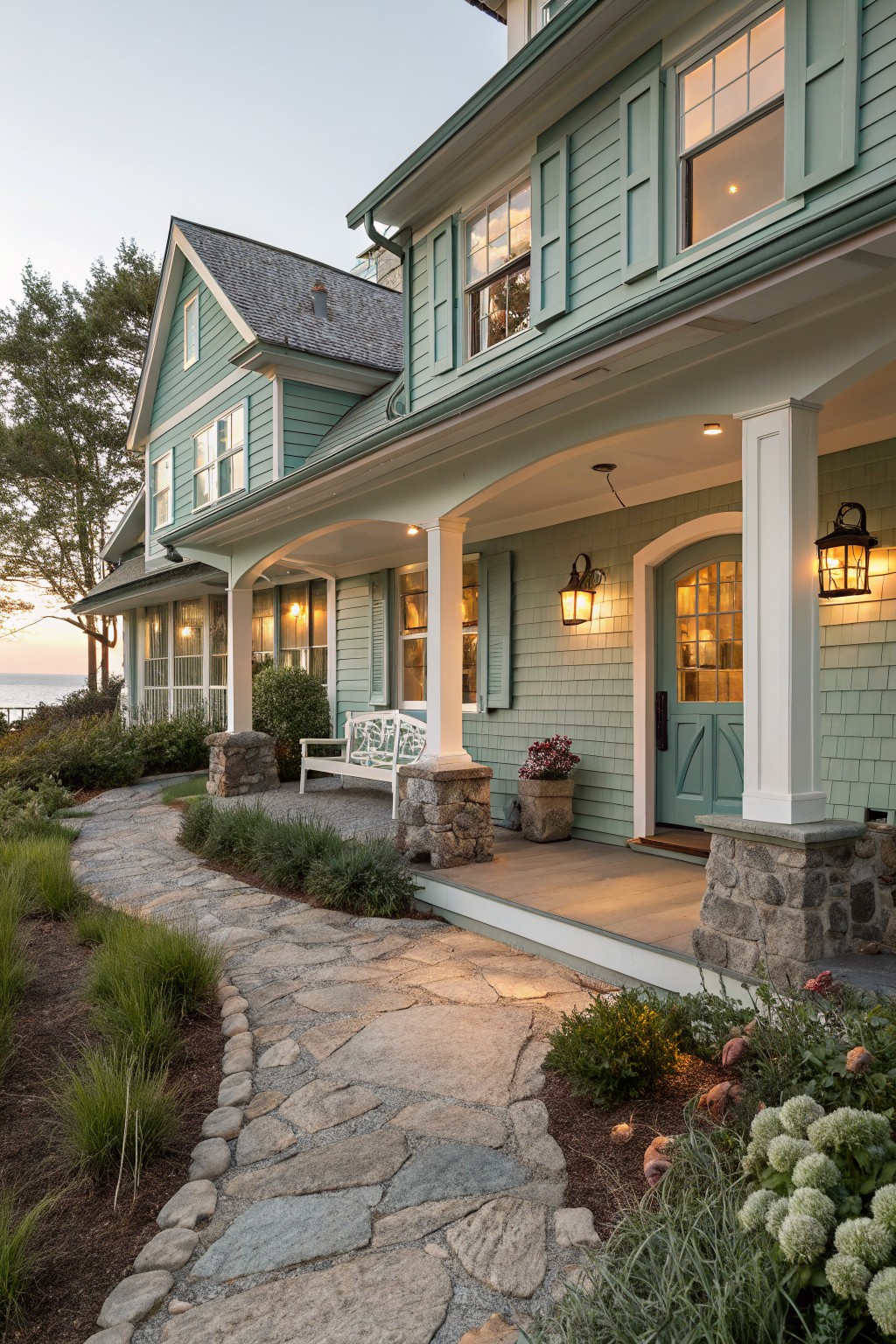
This soft sage green on the siding gives a calm look that works well for farmhouse exteriors. It carries a light blue-green tone that feels gentle rather than bold. Colors like Sherwin Williams Rainwashed, Benjamin Moore Saybrook Sage, or Behr Quietude sit close to this shade.
The cool undertone keeps it from turning too yellow in strong light. It pairs cleanly with white trim and stone details without competing for attention. Just check a sample on the wall first since the color can shift slightly depending on the time of day.
Soft Greige Siding
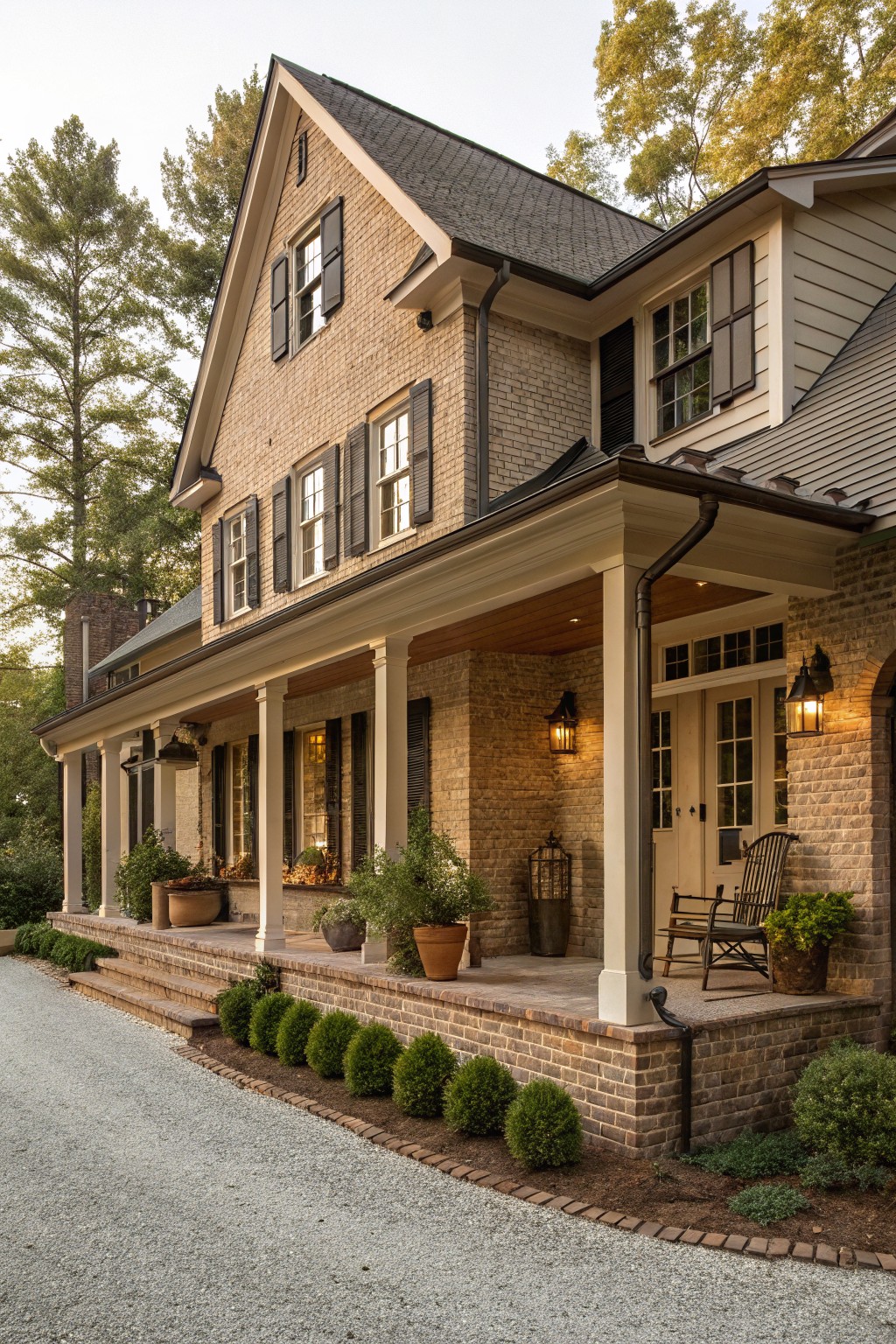
A soft greige covers the main siding here and gives the house a quiet, lived-in look. The color sits right between beige and gray with a touch of warmth that keeps it from feeling flat next to the brick base.
This shade works best on farmhouses that already have natural materials around the foundation. It pairs cleanly with white trim and darker shutters without competing. Sherwin Williams Accessible Beige, Benjamin Moore Edgecomb Gray, and Behr Greige all land close to this tone.
Soft Green Siding

A soft sage green gives farmhouse siding a calm, settled look. This color sits between gray and green, so it feels natural rather than bold and works well on larger surfaces like the whole house.
It has a slight gray undertone that keeps it from turning too bright in sunlight. Try Sherwin Williams Evergreen Fog, Benjamin Moore Saybrook Sage, or Behr Dried Thyme if you want something close.
Soft Greige Siding

A soft greige works well for farmhouse siding because it sits between beige and gray without leaning too far in either direction. This color feels calm and blends nicely with most roof tones and natural surroundings.
It has a light warm undertone that shows up more in morning light and stays fairly neutral later in the day. Try pairing it with white trim and dark shutters. Sherwin Williams Accessible Beige, Benjamin Moore Revere Pewter, or Behr Greige are all close matches.
Soft Yellow Siding

This pale yellow siding gives the house a warm, gentle look that feels right at home on a farmhouse. It sits in a soft buttery range that stays light but still has enough color to stand out against white trim.
The tone leans slightly warm, so it pairs easily with stone foundations and dark shutters. It can read a bit brighter in full sun, so testing a sample on the wall helps make sure it stays as mellow as it looks here. Likely matches include Sherwin Williams Biltmore Buff, Benjamin Moore Hawthorne Yellow, Behr Canvas Tan, and Farrow & Ball Hay.
Dark Gray Siding
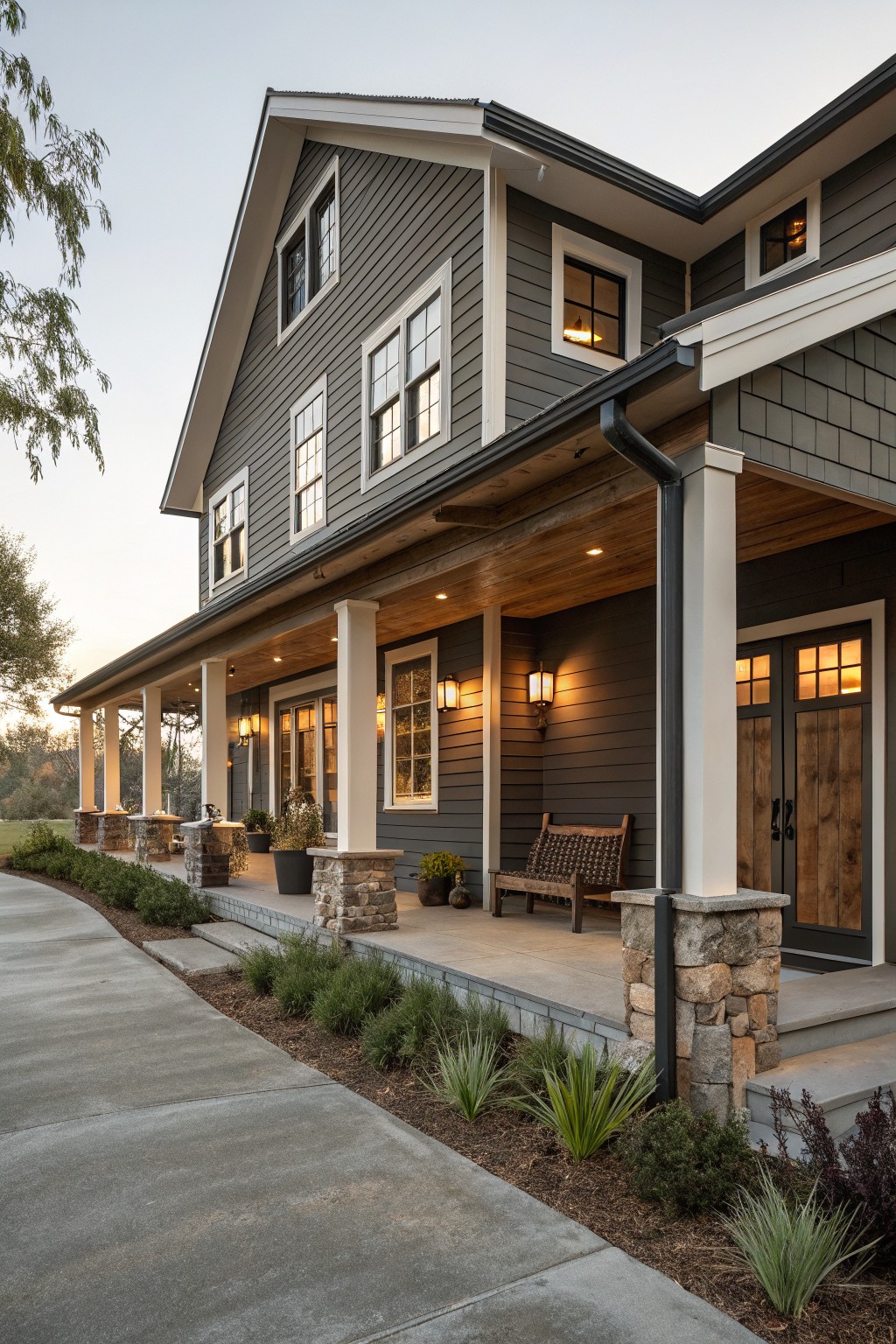
This dark gray siding is the main color choice here. It is a deep charcoal tone that feels solid and a little moody without going fully black.
The color sits cooler in the shade and picks up slight warmth in the evening light. It pairs best with white trim and natural wood doors, though it can look flat if the surrounding landscaping stays too bright or busy.
Soft Sage Green Siding
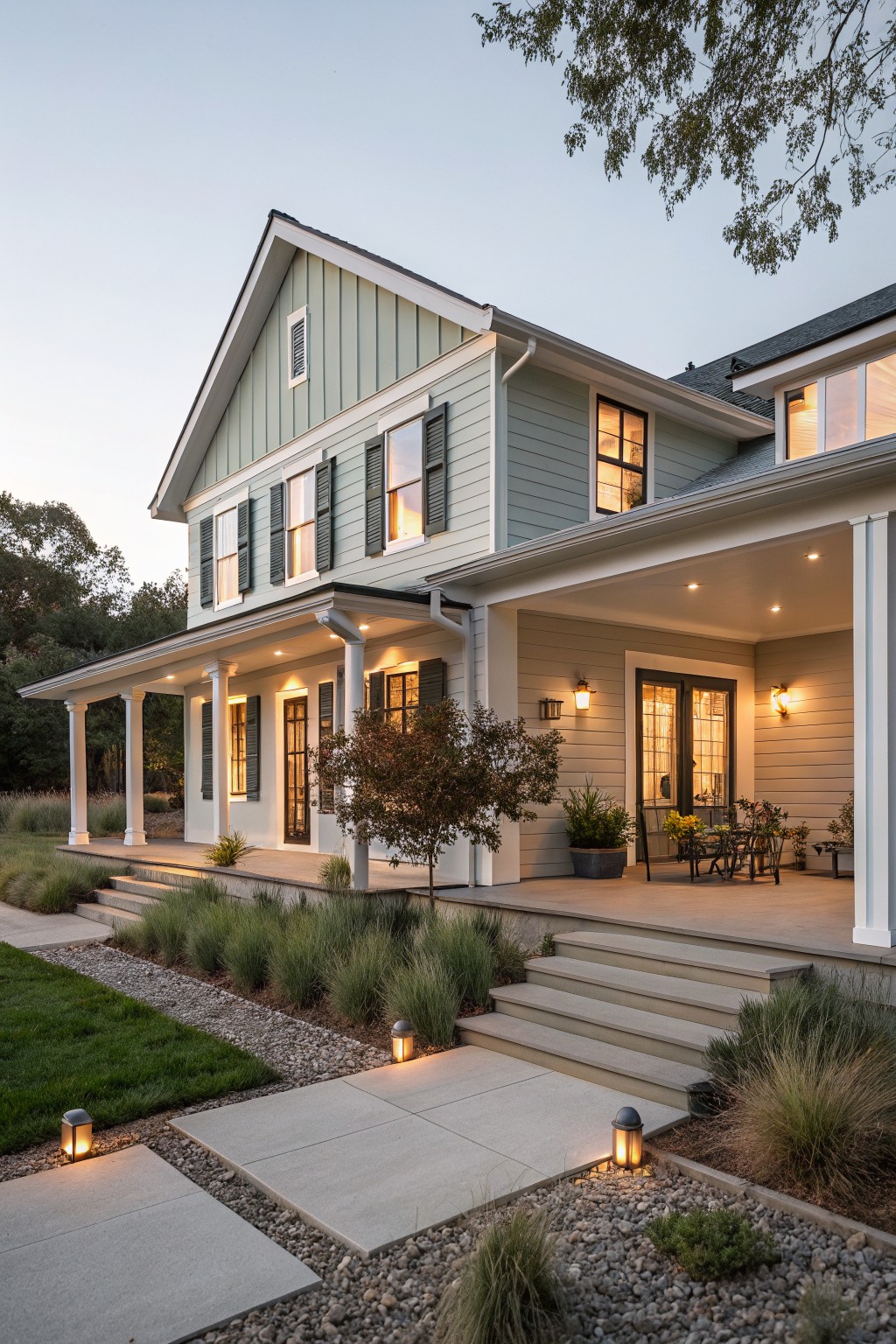
This soft sage green on the siding gives a farmhouse a quiet, natural look. It sits somewhere between green and gray and feels easy to live with outside. Colors like this often match up with Sherwin Williams Evergreen Fog, Benjamin Moore Saybrook Sage, or Behr Soft Sage.
The green has a light cool undertone that works well with white trim and a darker roof. It suits homes with trees or garden space around them and can start to look washed out if there is too much direct sun.
Soft Beige Siding

This soft beige siding gives the house a warm, easy look that feels right for a farmhouse. It sits in that middle ground between white and gray without leaning too cool or too yellow.
The color has a gentle warmth that holds up well next to white trim. It works best on homes with simple lines and pairs nicely with natural wood accents or darker shutters.
Warm Red Siding
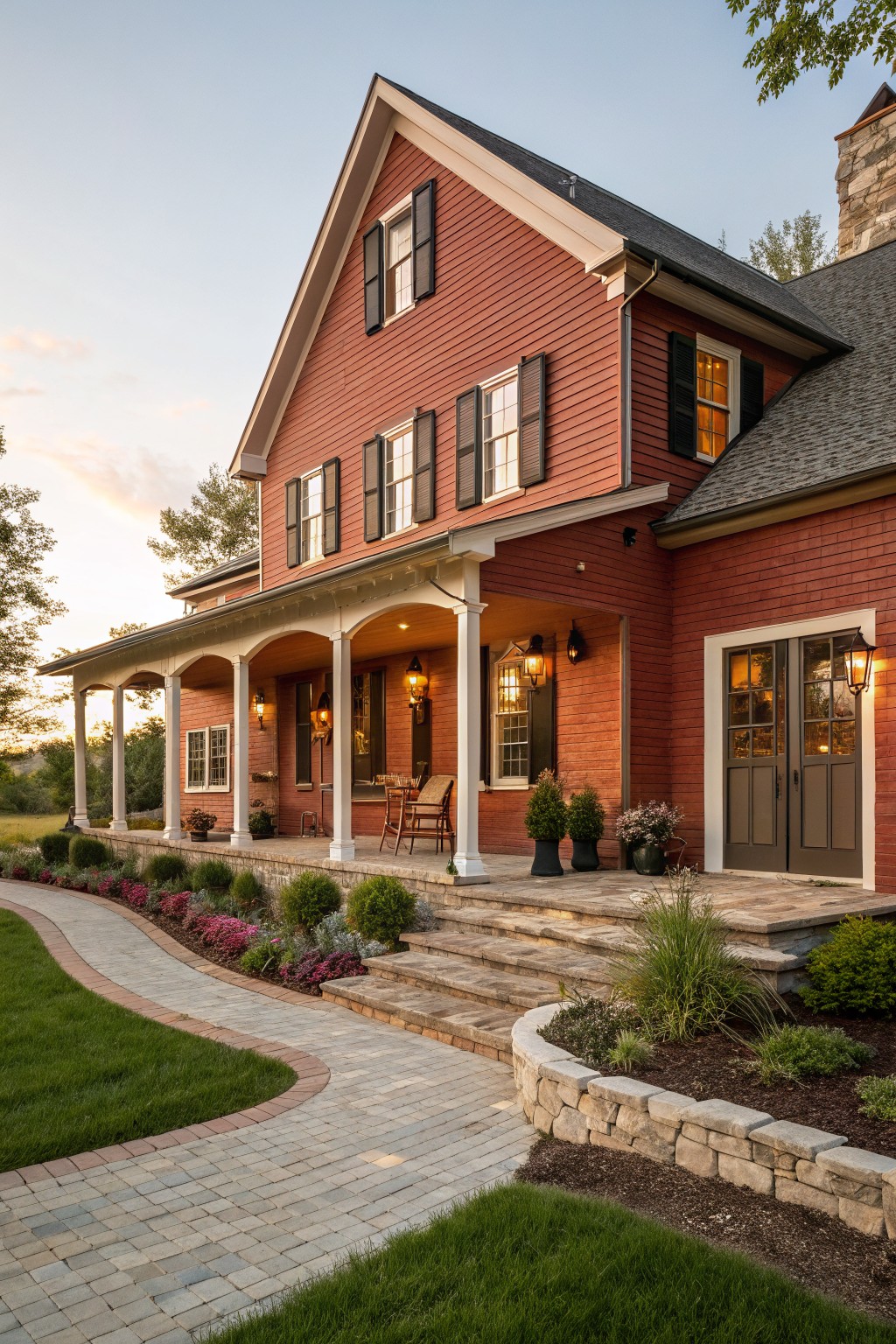
This warm red siding gives a farmhouse that solid, grounded look many people like. It sits in a true red family with some earthy undertones that keep it from feeling too bold or toy-like.
The color holds up well next to white trim and stone details. It works best on homes with clean lines and pairs easily with gray or black roofing. Good matches include Sherwin Williams Red Barn, Benjamin Moore Caliente, Behr Red Barn, and Farrow & Ball Incarnadine.
Soft blue gray siding

This soft blue gray on the siding gives a farmhouse that calm, slightly cool look without feeling stark. It sits right in the middle of blue and gray, so it reads as a gentle neutral that still adds a bit of color.
The tone has a faint green undertone that helps it sit nicely next to stone and white trim. It works best on homes with simple architecture and pairs easily with wood accents or a darker roof. Good matches in this range are Sherwin Williams Rainwashed, Benjamin Moore Wythe Blue, Behr Soft Rain, and Farrow & Ball Light Blue.
Soft Gray Siding
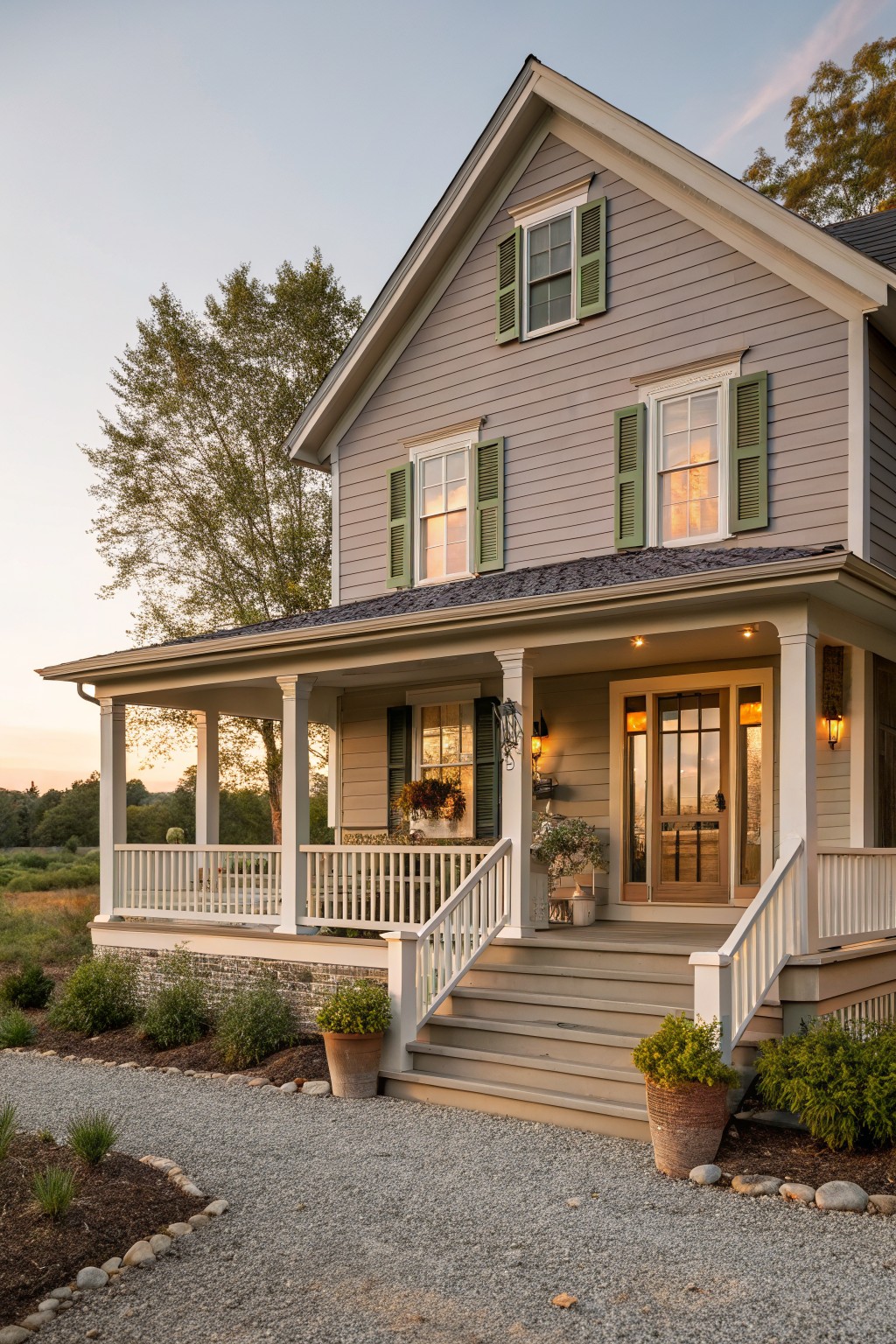
This siding color is a soft muted gray with a hint of warmth. It sits somewhere between gray and greige, which helps it feel calm without looking flat or cold on a farmhouse.
The color holds up well next to white trim and works with most roof tones. It suits homes that have greenery nearby or a simple stone base, though it can start to feel washed out if the light is very bright all day.
Soft Sage Green Siding
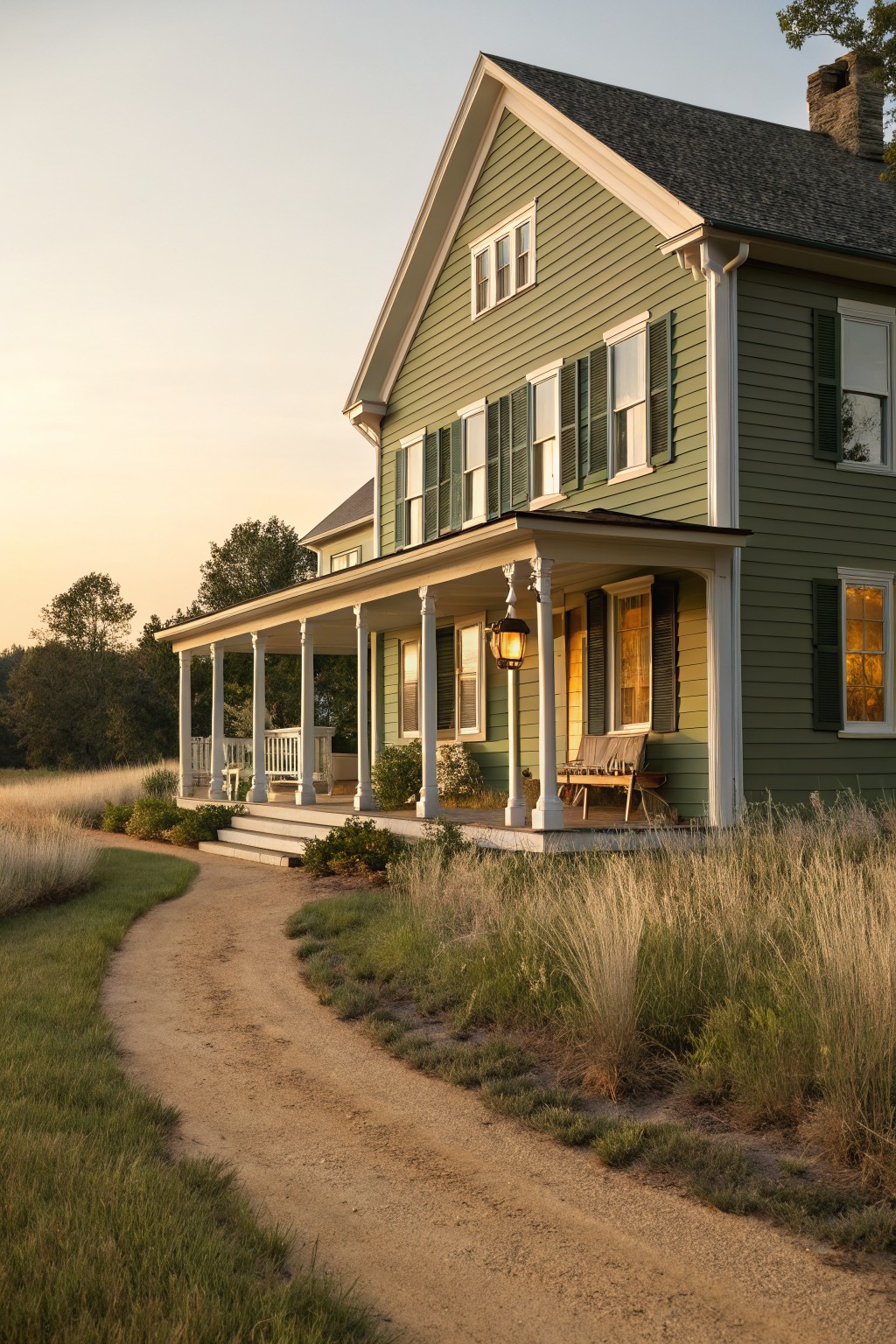
This soft sage green on the siding gives a farmhouse a calm look without feeling too bold. It sits in that gray-green range that feels natural next to trees and fields.
The color has a slight warm undertone that keeps it from going too cool outside. It works best with white trim and holds up nicely on older homes where you want something gentle but still clear.
Blue Gray Siding
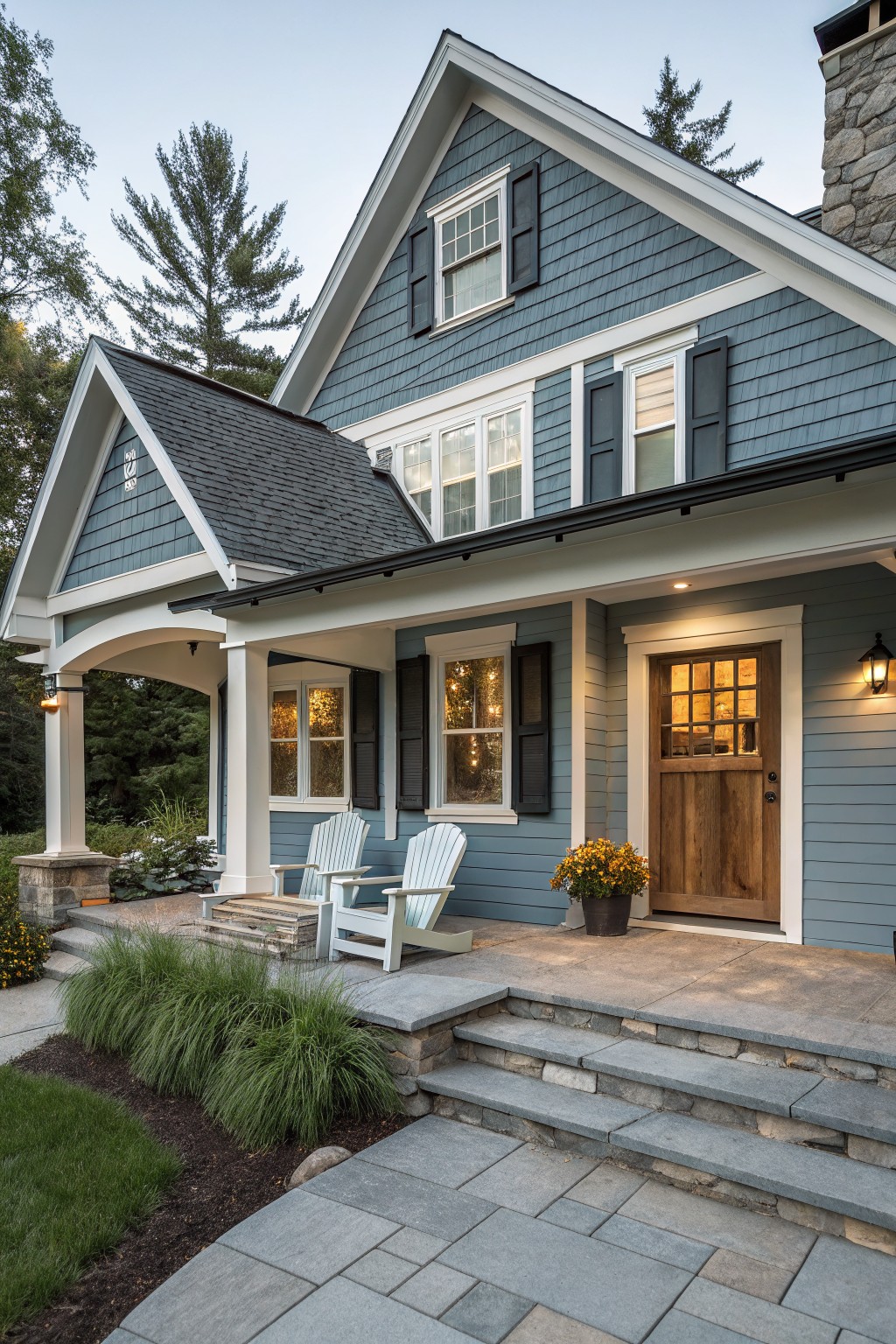
This blue gray siding sits right in the middle of gray and blue. It gives the house a quiet, steady look that fits farmhouse style without feeling too bold or too washed out.
The color has cool undertones that hold up well next to white trim. It works best on homes with some natural wood or stone nearby. Sherwin Williams Riverway, Benjamin Moore Smoke, Behr Silver Strand, or Farrow & Ball Pigeon all read close to this shade.
Soft sage green siding
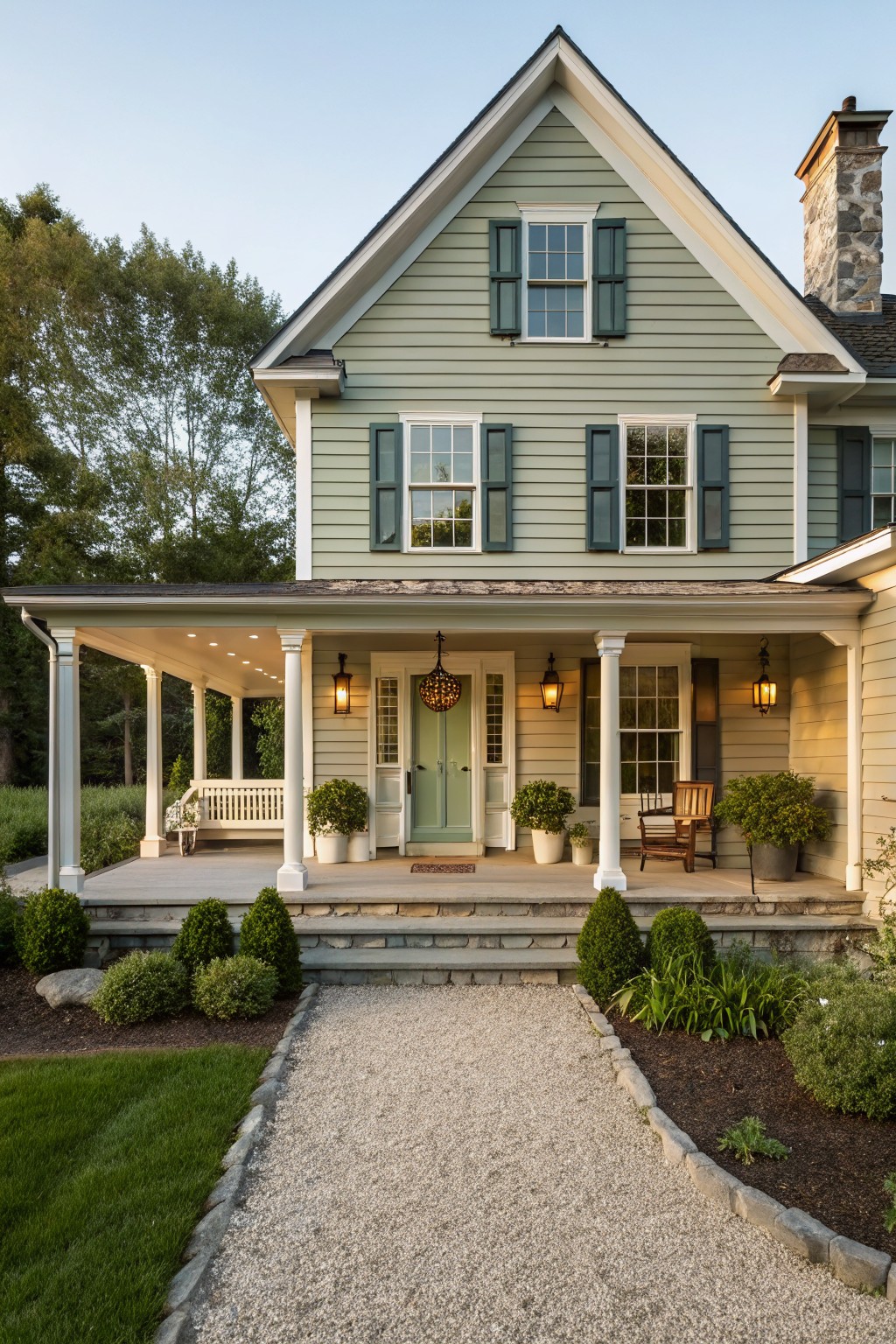
This house uses a soft sage green on the siding. It is a muted color with a hint of gray that keeps the whole exterior feeling calm and easy rather than too bright.
The color sits nicely against white trim and works well on homes with stone or natural wood accents nearby. It tends to look best in filtered light or shaded settings where the gray undertone shows through without turning flat.
Soft Teal Siding
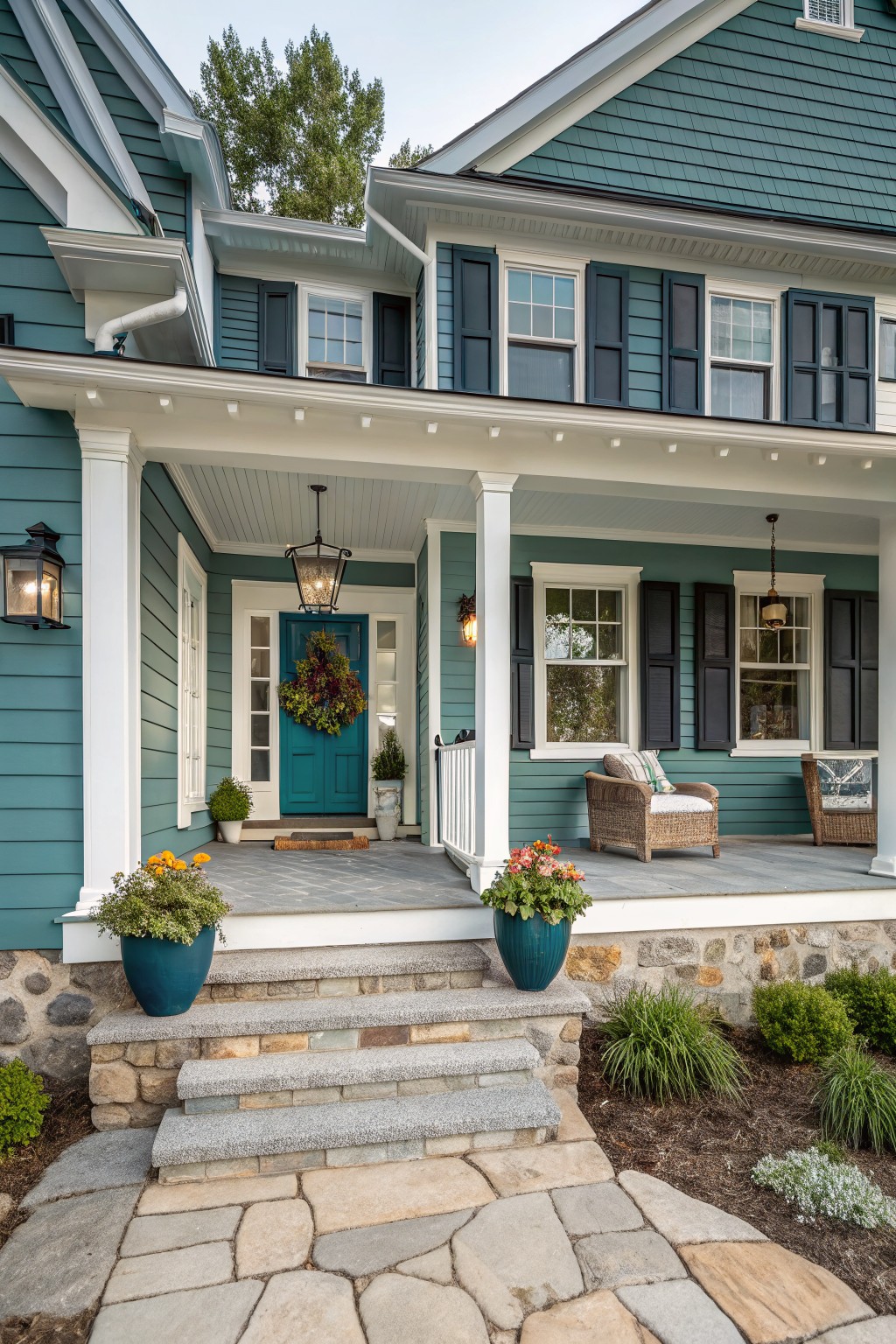
This muted teal gives farmhouse siding a calm, slightly coastal feel that still reads traditional. It sits between blue and green without leaning hard either way, which keeps the house from looking too bold or too dull. The color looks closest to Sherwin Williams Rainwashed, Benjamin Moore Water’s Edge, Behr Breezeway, or Farrow & Ball Inchyra Blue.
It works best on homes with white trim and natural stone at the base. The soft green undertone helps it settle in with grass and trees, while the blue side keeps it from feeling too warm. Avoid pairing it with very dark roofing or heavy brick if you want the teal to stay the main focus.
Soft Greige Siding
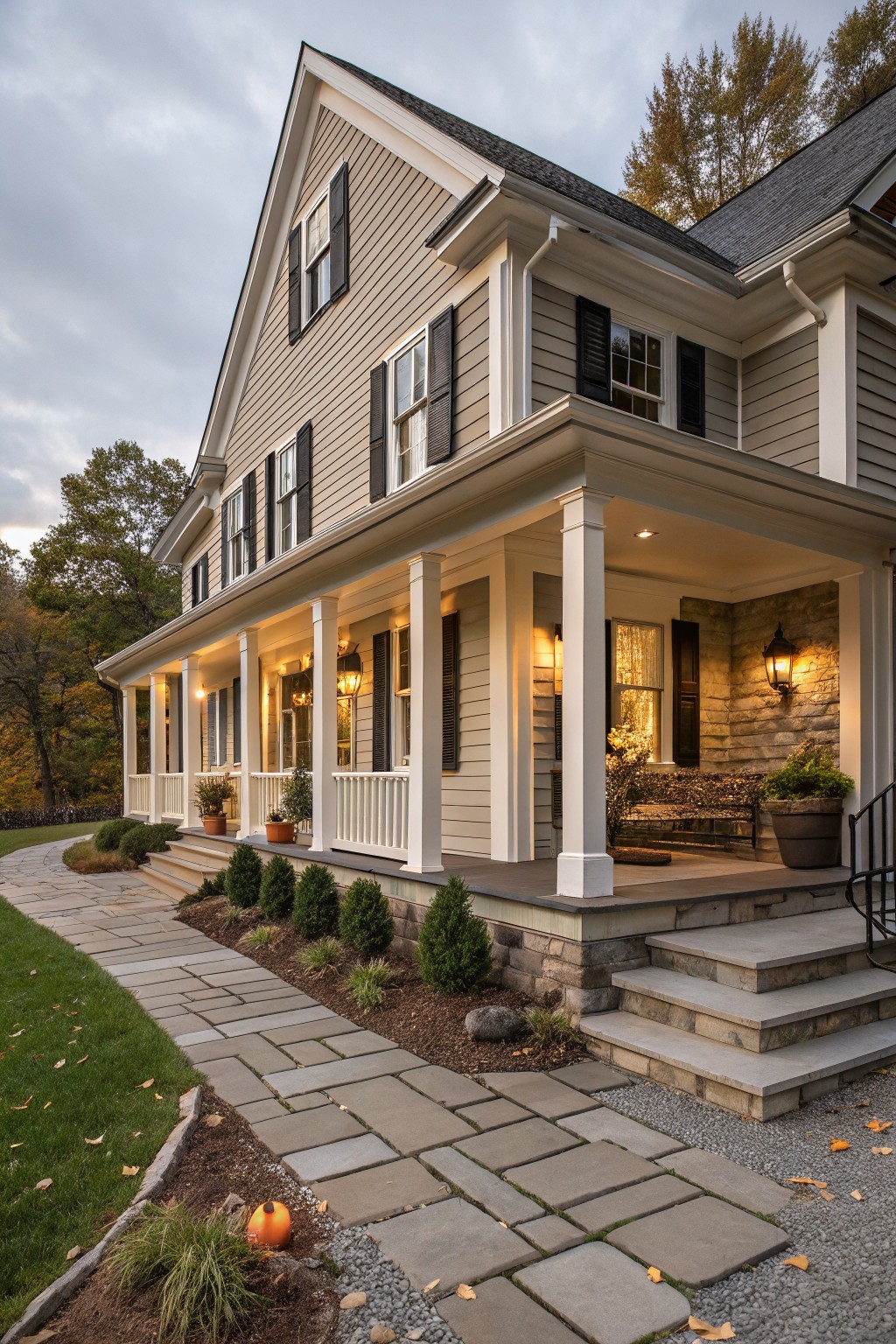
This siding color is a soft greige that feels like a mix of light gray and warm beige. It gives the house a calm, settled look without going too cool or too brown. It reads closest to Sherwin Williams Repose Gray or Benjamin Moore Edgecomb Gray, with Behr Silver Gray as another close option.
The slight warmth in the undertone helps it sit nicely next to stone and white trim. It works best on homes that already have some natural texture around the base or roof, and it stays easy to live with year after year.
Soft Yellow Siding
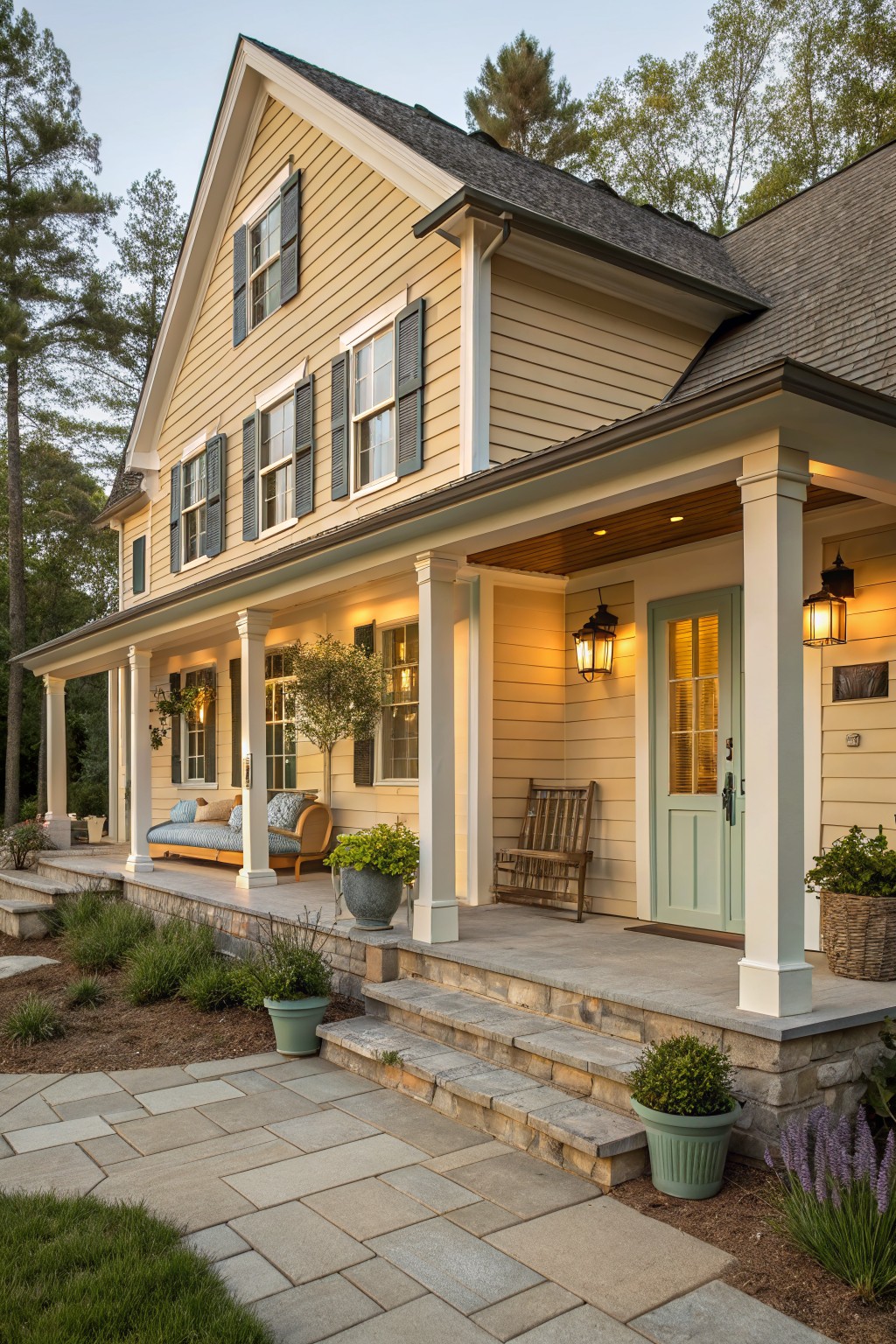
This soft yellow siding brings a warm, gentle tone to the whole house. It sits in that light buttery range that feels cheerful but still calm next to white trim and stone.
The color has a slight golden undertone that keeps it from looking too cool or flat outside. It works well on farmhouses with dark shutters or wood accents, though it can start to feel washed out if the roof is very dark.
soft gray siding

This light gray siding gives the house a clean, calm look without feeling stark. It sits in the cool gray family and works especially well on farmhouse exteriors because it keeps the whole place feeling bright while still grounding the design.
The color has a subtle blue-gray undertone that shows up more in shade than in full sun. It pairs nicely with white trim and natural wood doors. Good matches in this range include Sherwin Williams Repose Gray, Benjamin Moore Gray Owl, Behr Silver Satin, or Farrow & Ball Light Gray.
Frequently Asked Questions
Q: How do I pick a siding color that still works if my trim is already white? A: Go with a soft gray or warm beige that sits close to the white on the color wheel. This keeps the whole front looking balanced without extra contrast work.
Q: Should I test paint on the porch before committing to the full siding job? A: Grab a few quarts and brush them onto a spare board or the actual wall. Check how they shift in morning light versus late afternoon since farmhouse shades often warm up outside.
Q: What happens if I want darker shutters but worry they will overpower a light house? A: Choose a deep green or navy that pulls from the roof or door accents instead. One darker element grounds the look and keeps the siding from feeling too bright on its own.