When I choose paint for a bedroom I pay attention to how the color will shift once the lights are low and the morning sun starts to come in.
Some shades hold a soft depth even when the room gets little natural light while others flatten out against the trim and bedding.
I have noticed that undertones often become more obvious after the first coat goes up next to existing furniture and flooring.
Testing a patch on the actual wall saves disappointment later.
A few colors in this group seem to stay calm through changing light without pulling too warm or cool by evening.
Soft Greige Walls
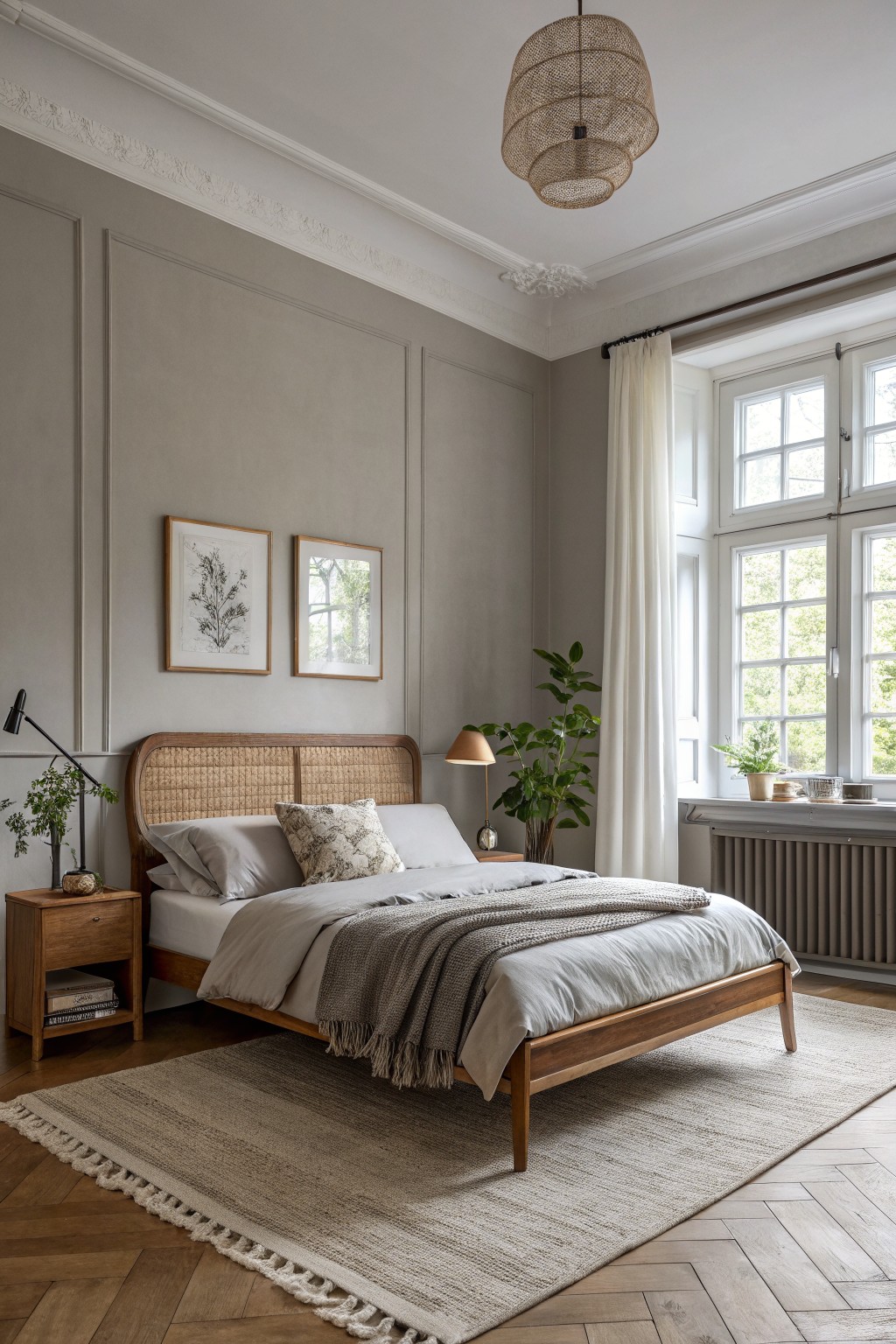
This bedroom uses a warm greige on the walls that sits right between gray and beige. It feels calm and steady without turning cool or flat. The color holds up well in lower light and still looks soft when the room gets less sun during the day.
It has a gentle warm undertone that works nicely with wood tones and simple furnishings. Try something close to Sherwin Williams Accessible Beige, Benjamin Moore Revere Pewter, or Farrow & Ball Elephant’s Breath if you want the same effect.
Soft Sage Green Walls
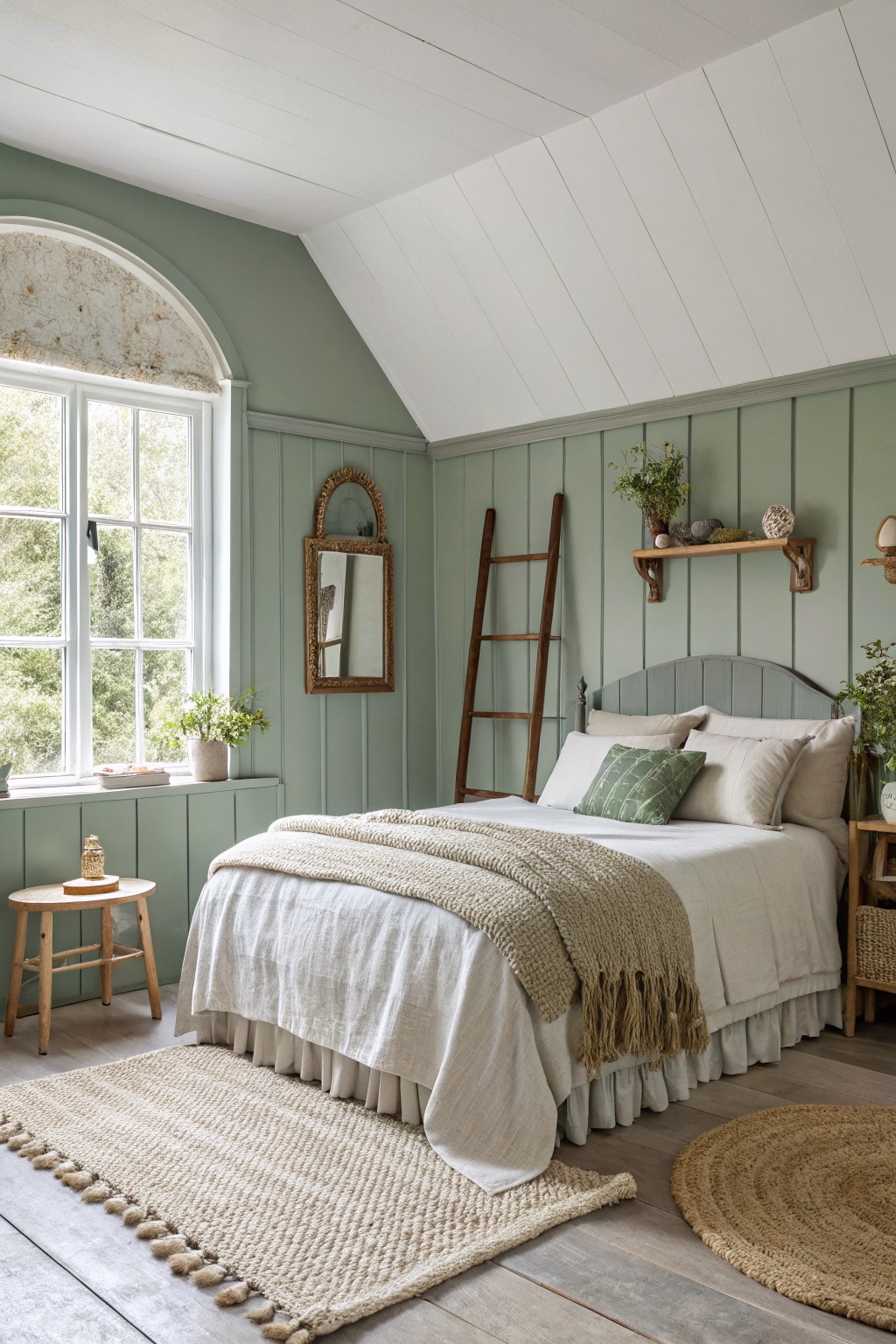
This soft sage green works as a calm bedroom color because it stays muted and slightly grayed. It feels restful without turning cold or flat, especially in rooms that get softer natural light.
The color has a cool undertone that sits nicely next to wood floors and white trim. It works best in spaces where you want something gentle that still feels grounded, and it pairs easily with linen or cotton bedding in neutral tones.
Soft Blue Gray Walls
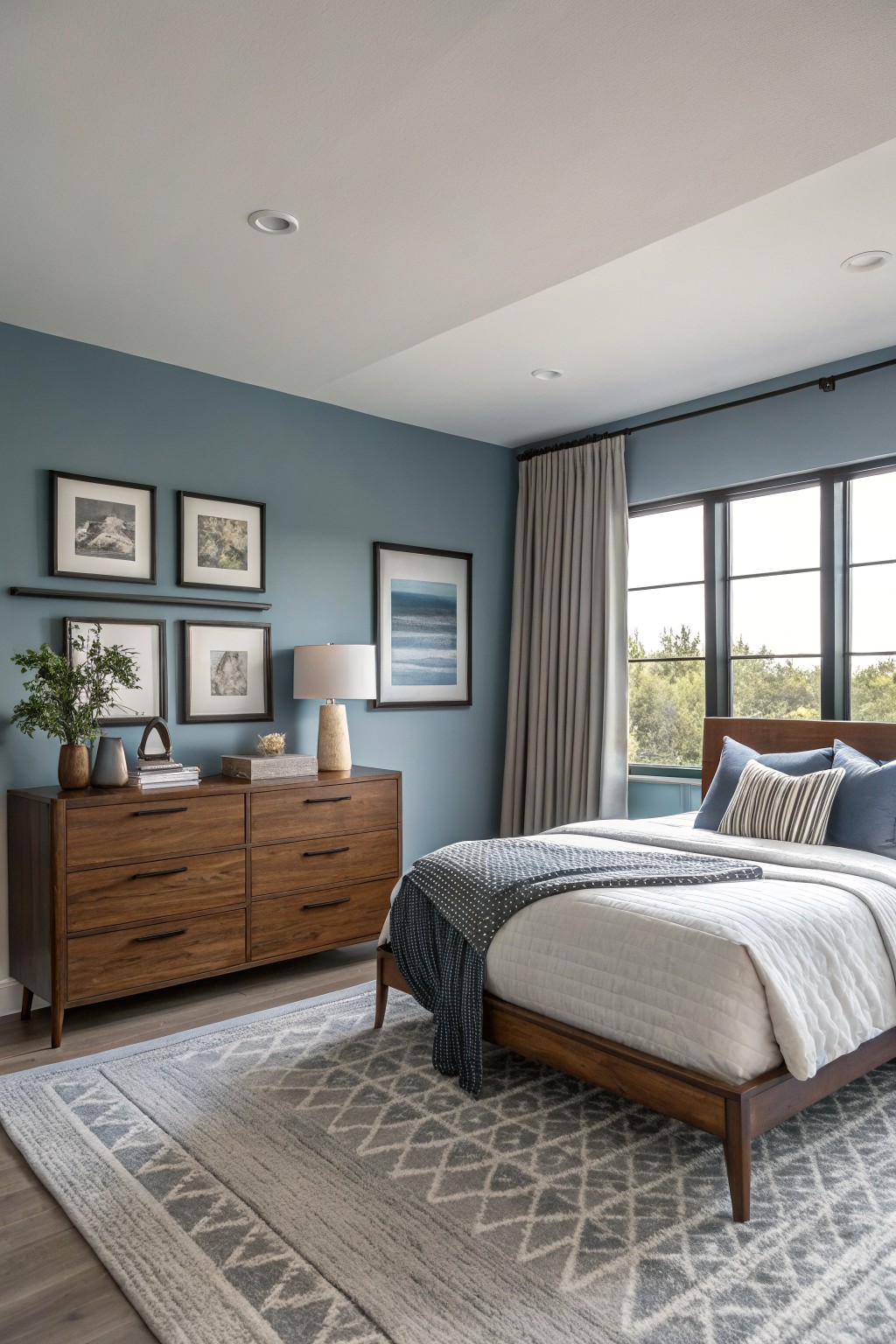
This soft blue gray gives bedrooms a calm, quiet feel without going too dark or cold. It reads as a gentle blue with gray mixed in, making it easy on the eyes in low light or first thing in the morning.
The color has a cool undertone that works best with warm wood tones and simple textiles. It looks close to Sherwin Williams Rainwashed, Benjamin Moore Wythe Blue, or Behr Silver Strand.
Muted Sage Green Walls
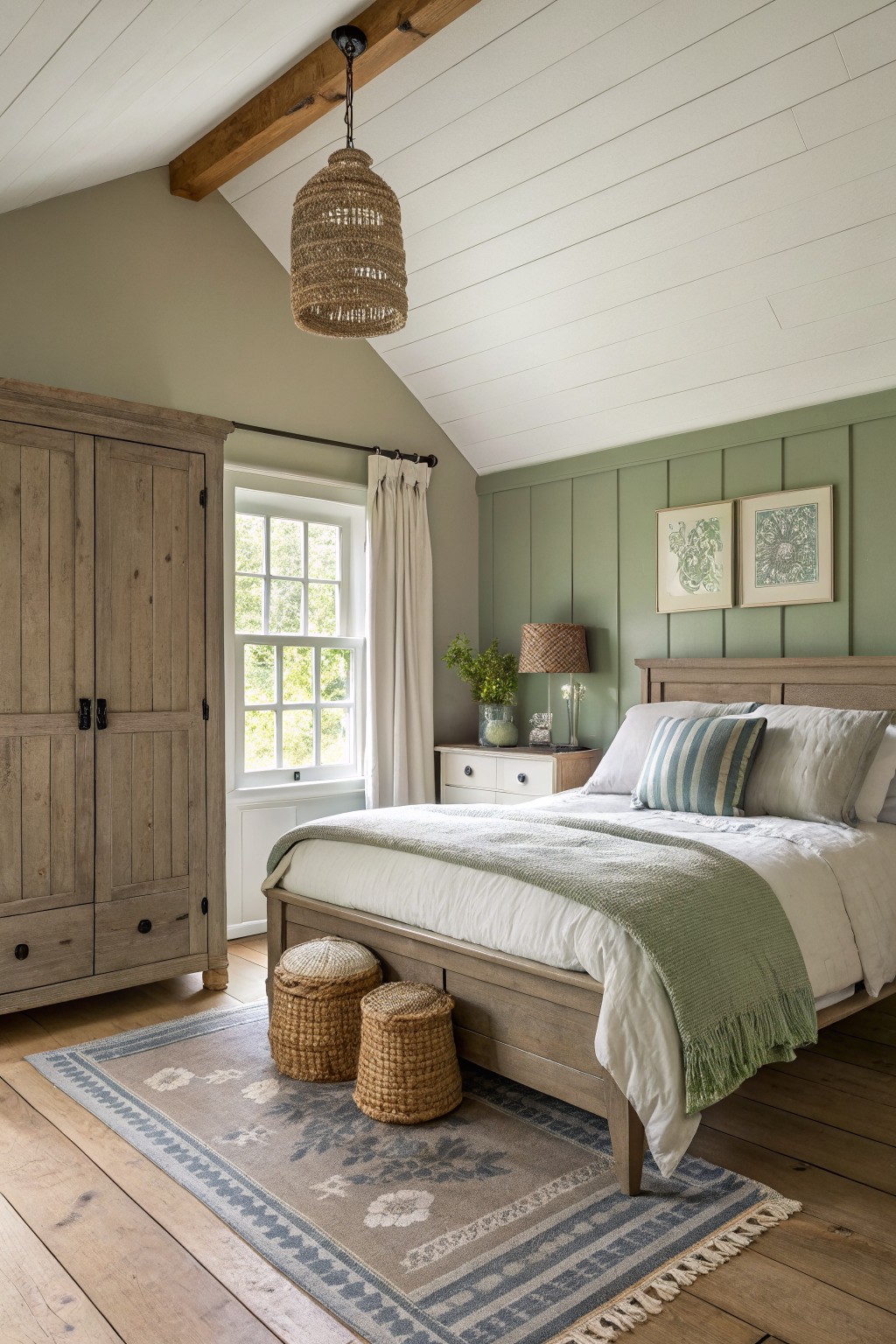
A muted sage green like this gives a bedroom that calm, steady feeling without making the space feel heavy. It sits between gray and green, which helps it stay soft and easy on the eyes even in lower light.
The color has cool undertones that sit nicely against warm wood floors and simple trim. It works well in rooms that get some natural light during the day, and it pairs best with light bedding and natural textures rather than anything too bright or dark.
Soft yellow bedroom walls
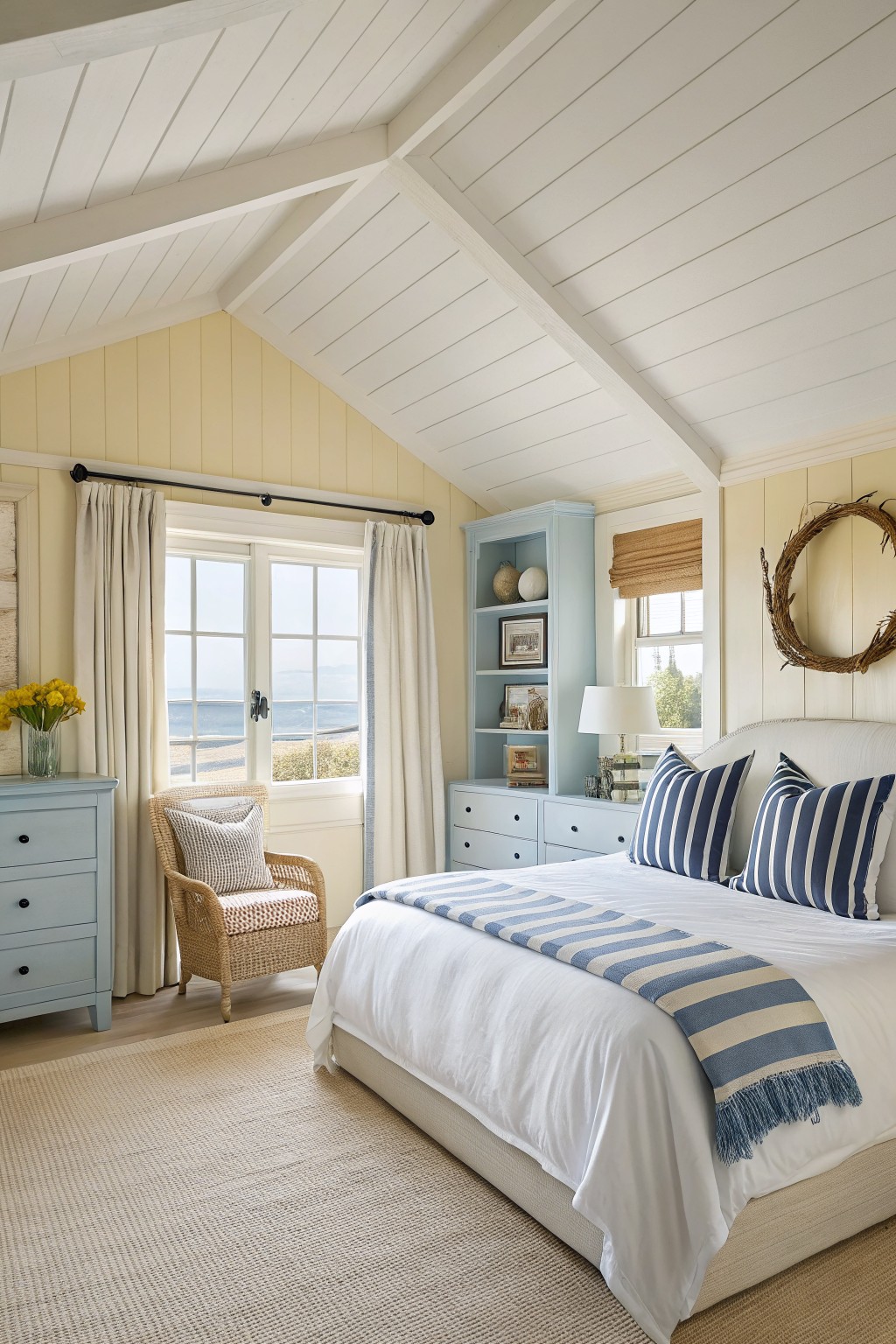
This soft pale yellow brings a gentle warmth to the room without feeling too sunny or bright. It sits in that light buttery range that feels calm and easy on the eyes, especially useful in bedrooms where you want something soothing for low light or early mornings. The color reads closest to Benjamin Moore Pale Yellow, Sherwin Williams Buttercup, Behr Lemon Meringue, or Farrow & Ball Hay.
It has a warm undertone that pairs nicely with white trim and light wood floors. The yellow stays soft enough that it does not push the room toward anything bold, so it works well if you want a little color but still need the space to feel restful. Just test it in different lights first, since yellows can shift more than you expect.
Soft greige bedroom walls
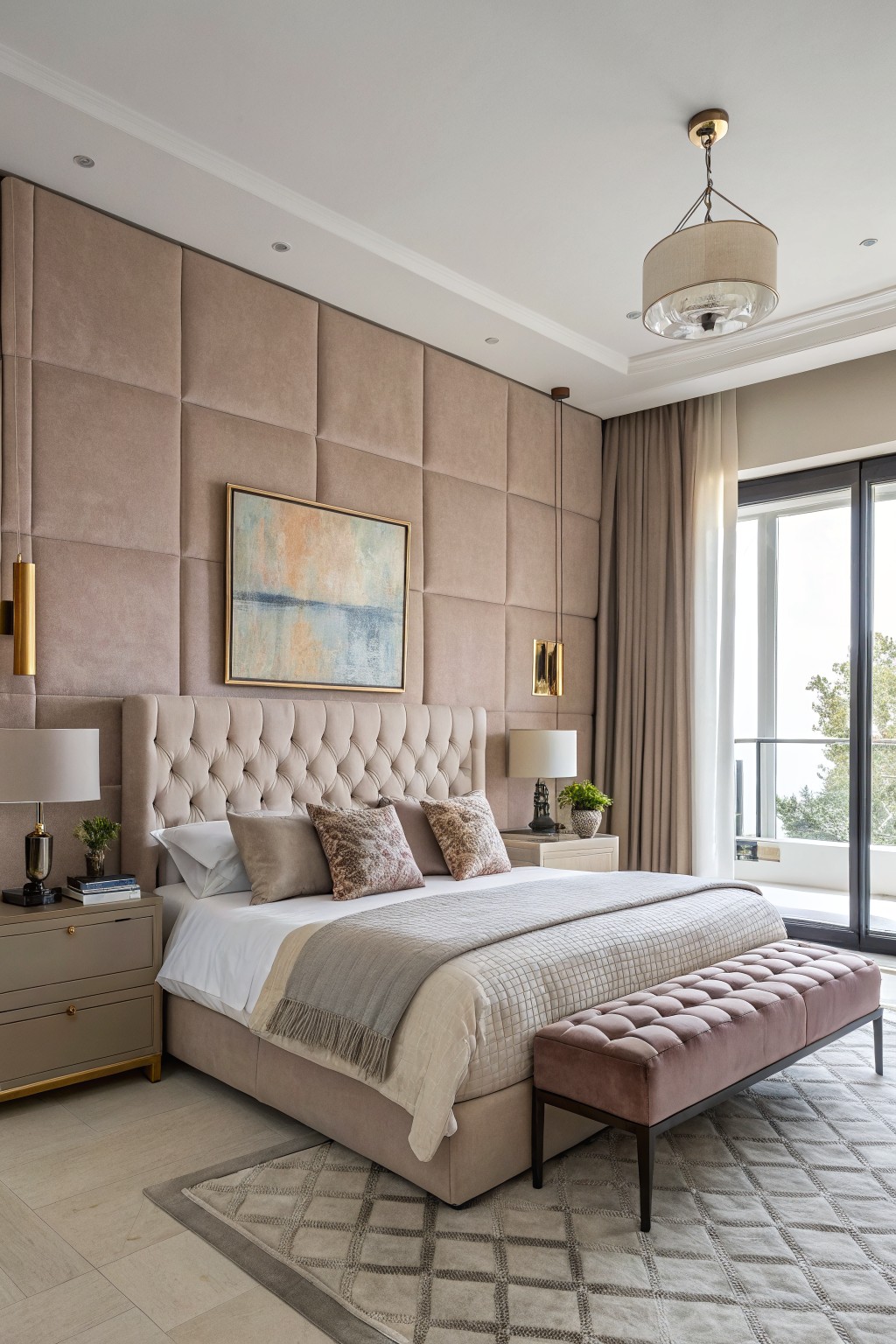
This bedroom uses a soft greige on the main wall behind the bed. It is a warm neutral that blends beige and gray without leaning too far in either direction.
The color has light brown undertones that help it feel steady in low light. It works well with pale wood floors and simple white bedding, and it tends to stay calm even when the room gets morning sun. Good matches include Sherwin Williams Accessible Beige, Benjamin Moore Revere Pewter, Behr Greige, and Farrow & Ball Elephant’s Breath.
Warm terracotta walls
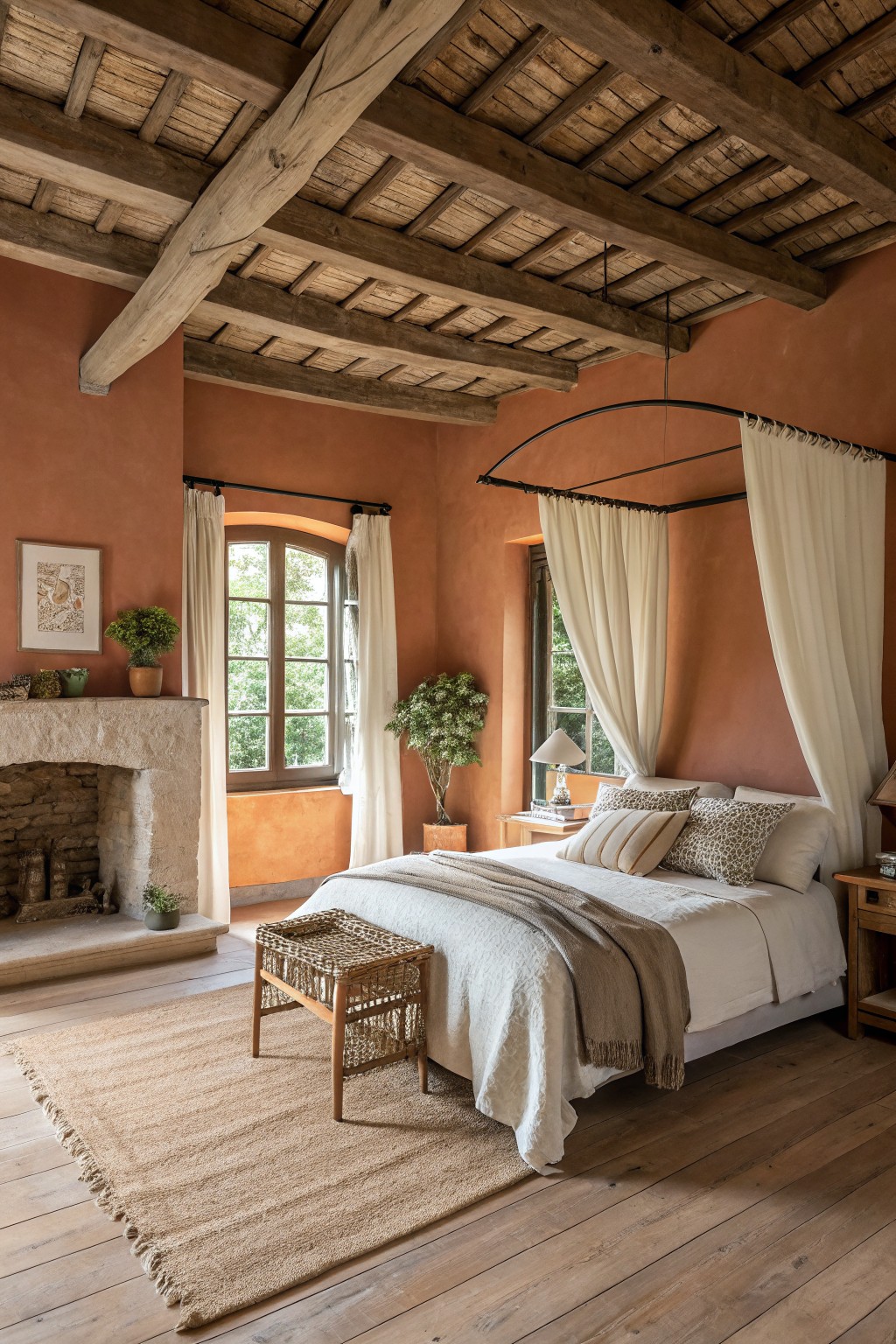
This warm terracotta reads as a soft clay orange with gentle red undertones. It brings a grounded feel to the room while still keeping things light enough for low light conditions and quiet mornings.
The color works especially well next to natural wood and stone, and it holds up nicely against white linens or simple curtains. It can start to feel heavy in very dark rooms, so it suits spaces that get at least a little daylight.
Pale Blue Gray Walls
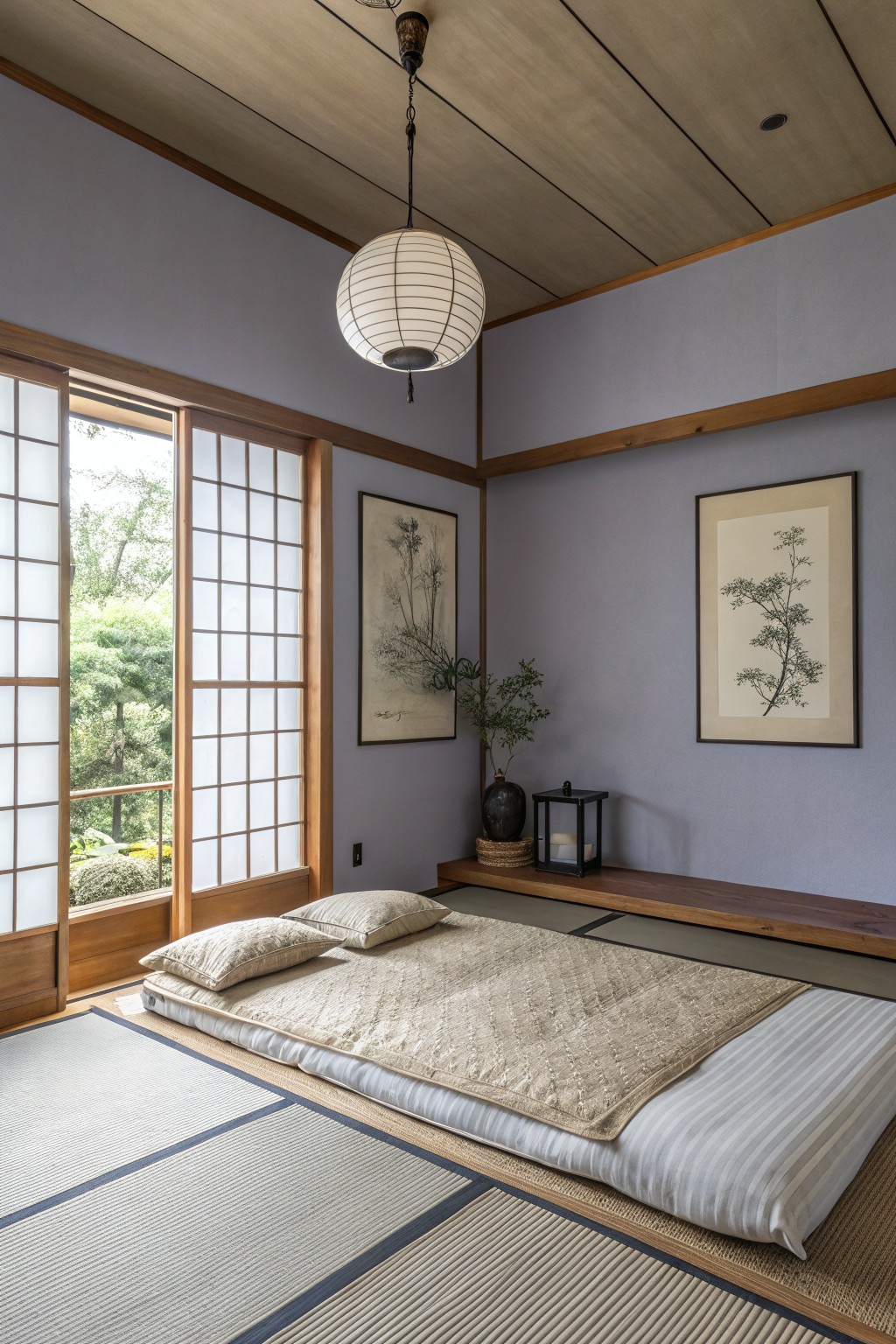
This soft blue gray reads as a calm, cool neutral that feels restful without turning stark. It sits between gray and a very pale blue, and similar shades include Sherwin Williams Sea Salt, Benjamin Moore Silver Satin, Behr Silver Drop, and Farrow & Ball Light Blue.
The subtle cool undertone helps the color stay soothing in low light, and it looks best next to warm wood trim. It suits simple bedrooms where you want the walls to recede rather than compete with other elements.
Soft Seafoam Green Walls
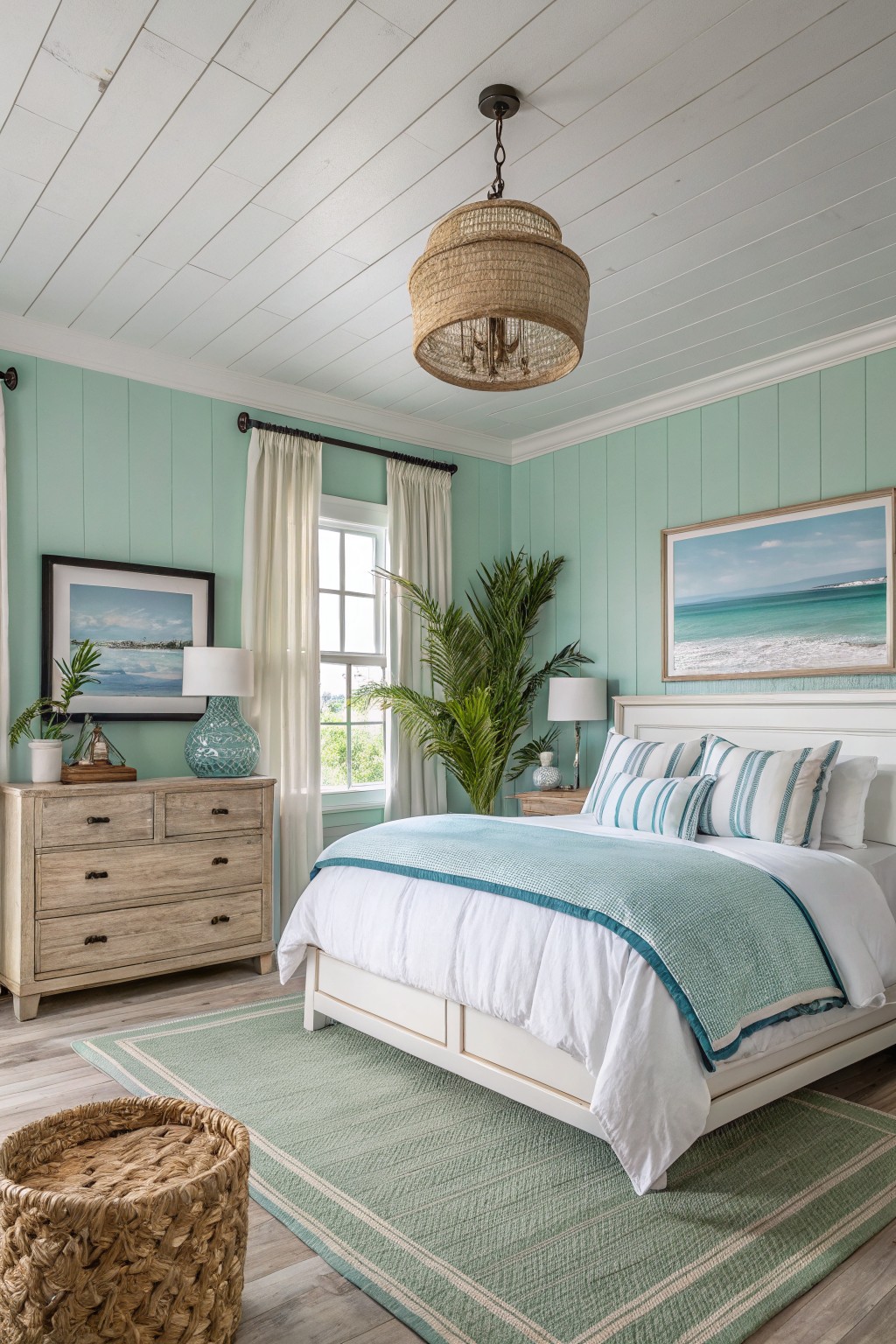
A soft seafoam green like the one on these walls brings a quiet, breezy feel to a bedroom. It sits between green and blue without leaning too hard either way. This color family tends to read calm and slightly coastal. It looks closest to Sherwin Williams Rainwashed, Benjamin Moore Beach Glass, Behr Sea Foam, or Farrow & Ball Pale Powder.
The undertone stays cool but soft enough that it still feels gentle in lower light. It pairs easily with white trim and light wood floors. Just watch that it does not pick up too much gray if the room gets very little natural light.
Soft Blue Gray Bedroom Walls
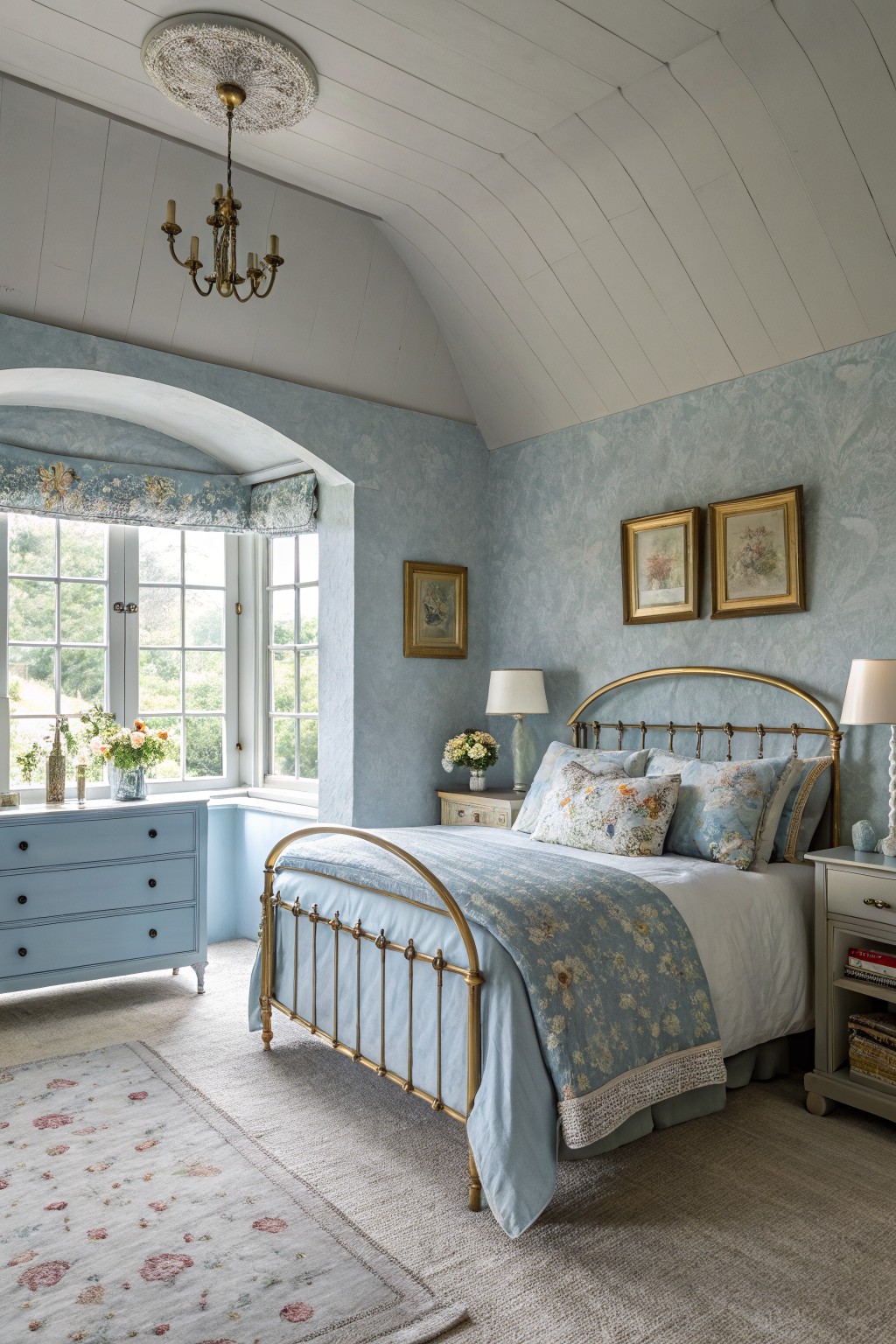
This soft blue gray keeps a bedroom feeling calm and easy to rest in. It sits between blue and gray with a cool undertone that stays gentle even when the light is low.
It works best with warm wood floors and simple white or cream bedding. Brass or gold accents stand out nicely against it, but it can start to feel flat if the room has too much cool gray already.
Deep Sage Green Walls
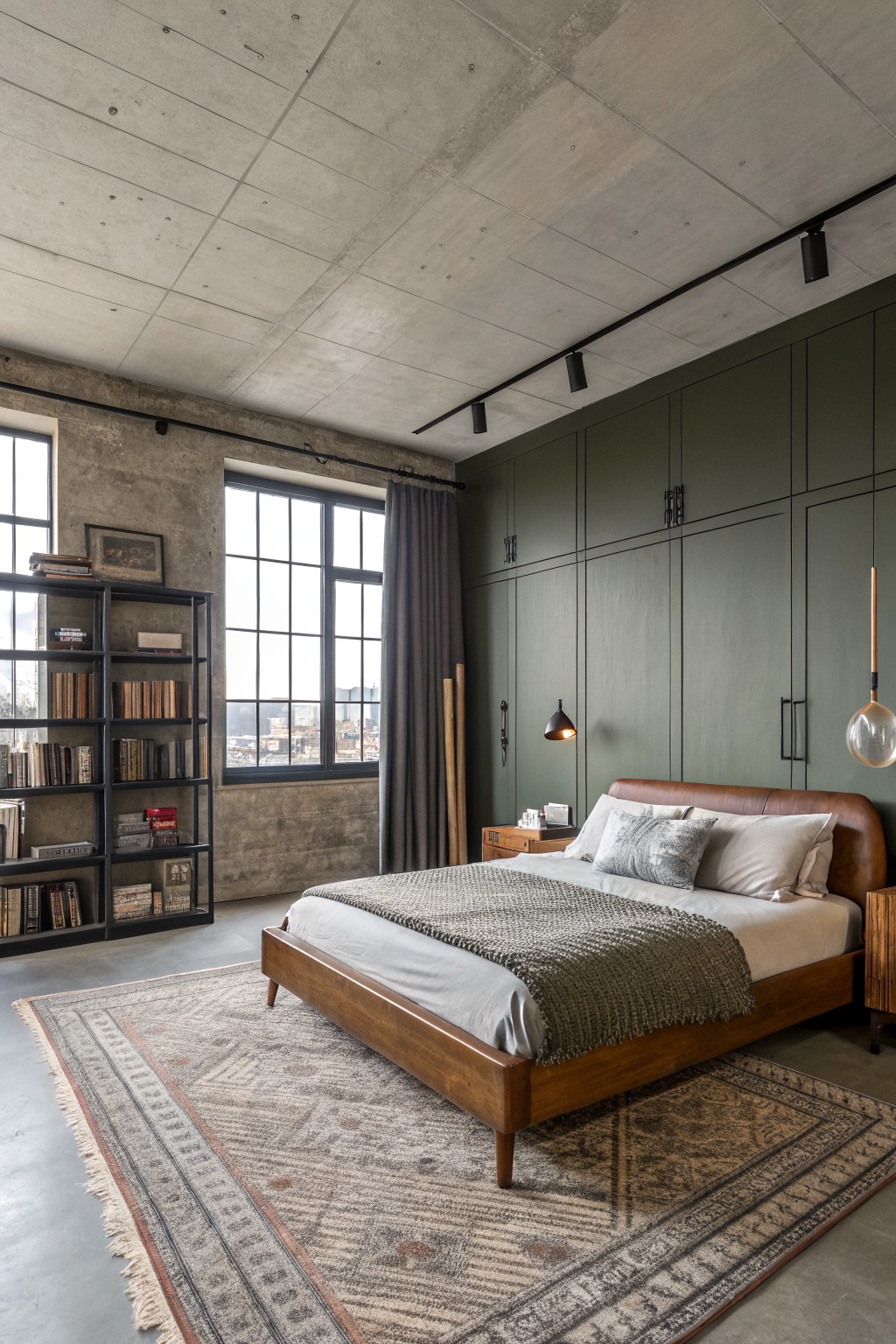
A deep sage green like the one on these walls gives a bedroom a quiet, settled feel without making the room feel small. It sits somewhere between gray and green, so it stays calm even when the light is low.
This color works especially well with warm wood furniture and built-in cabinetry because the wood tones keep it from looking flat. It reads closest to Sherwin Williams Evergreen Fog, Farrow & Ball Green Smoke, Benjamin Moore Saybrook Sage, or Behr Aged Eucalyptus.
Soft Blush Pink Walls
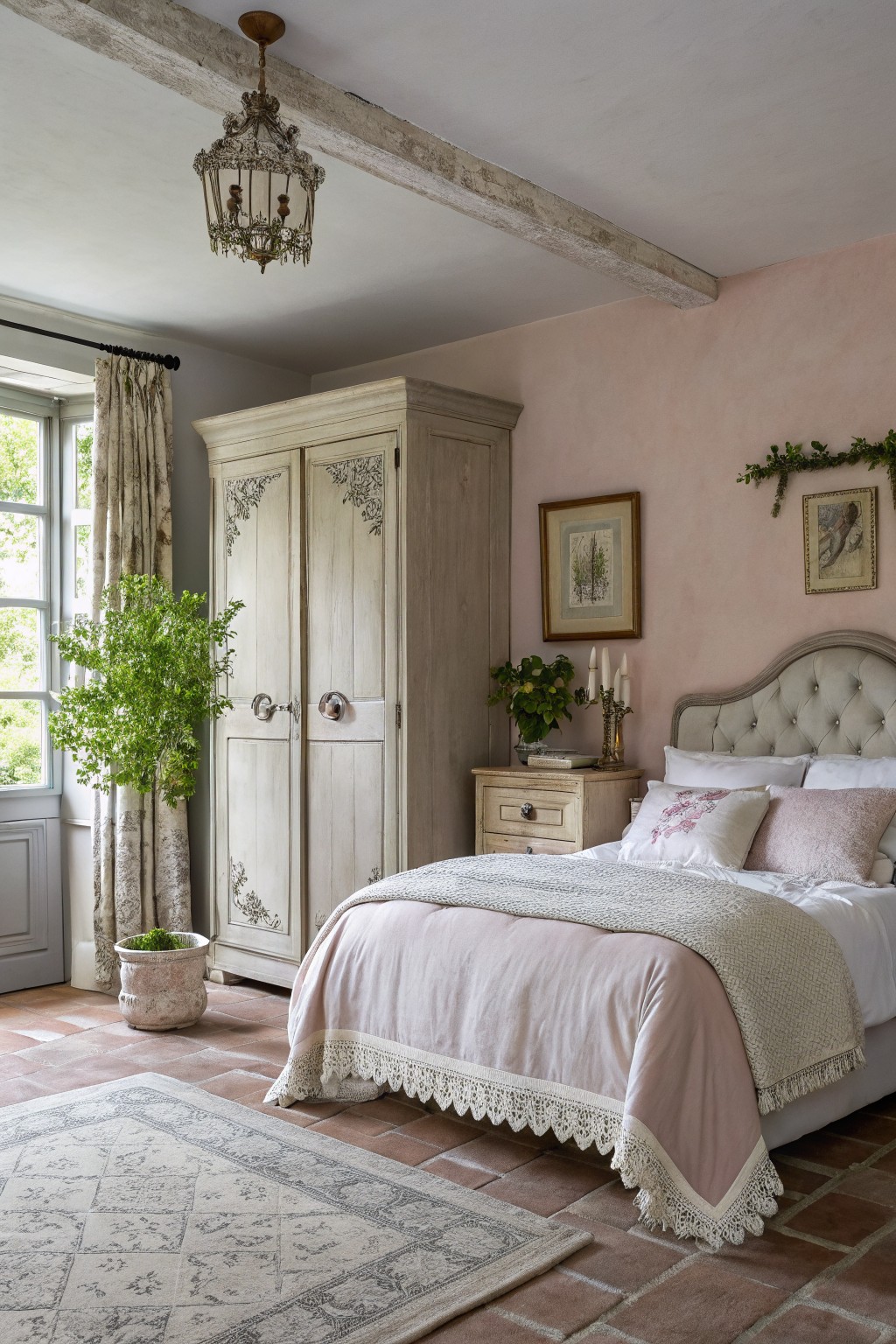
A soft blush pink works well on bedroom walls when you want something gentle that still feels warm. This color sits between pink and beige, so it reads as quiet rather than sweet. It pairs nicely with terracotta floors and pale wood furniture without fighting them.
It has a slight warm undertone that keeps the room from feeling chilly in low light. Try it with white trim or simple linen bedding if you want the walls to stay the main focus. Colors like Benjamin Moore Pink Ground, Sherwin Williams Blushing, Behr Blush Pink, and Farrow & Ball Pink Ground all sit in this same range.
Soft Teal Bedroom Walls
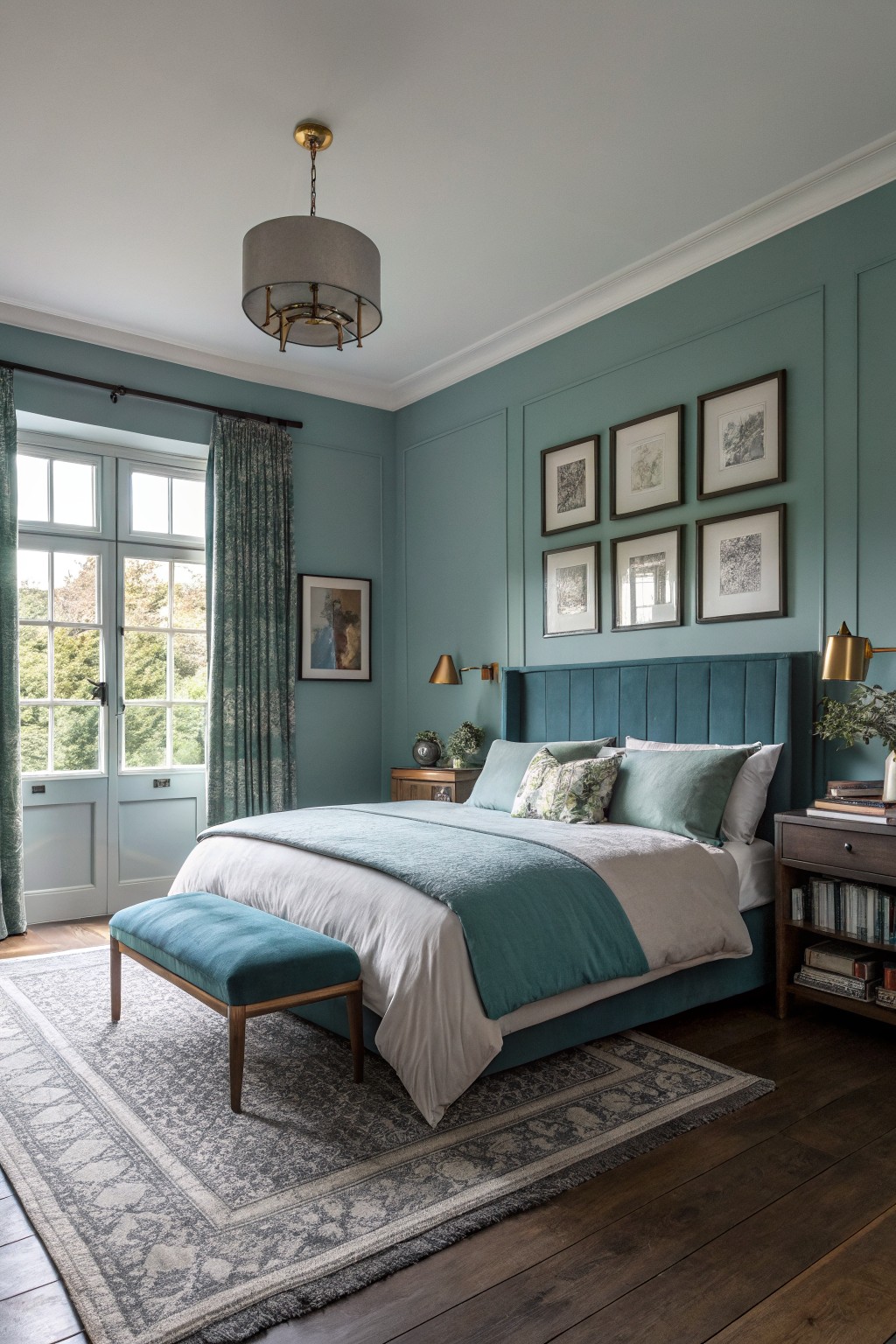
A muted teal works well on bedroom walls when you want something restful but not too plain. This shade sits between blue and green with a touch of gray that keeps it from feeling bright or sharp.
It handles low light nicely and pairs easily with warm wood floors or simple white bedding. Look for colors like Sherwin Williams Rainwashed, Benjamin Moore Wythe Blue, or Farrow & Ball Inchyra Blue if you want something close.
Soft Yellow Walls
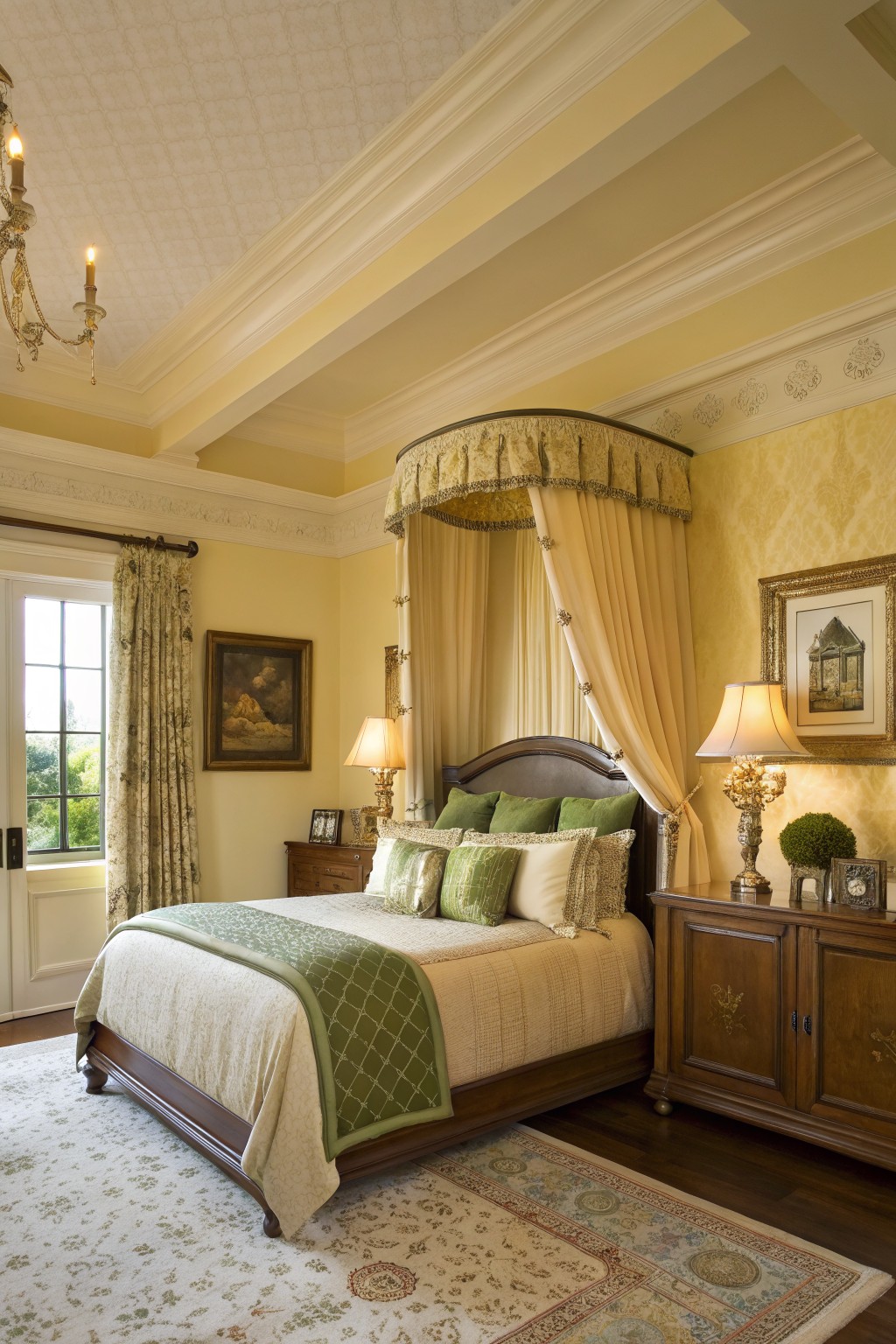
This bedroom uses a soft warm yellow on the walls that stays gentle without turning dull. The color has a creamy base that feels easy on the eyes in lower light and still gives a bit of lift in the morning.
It works best with white trim and medium wood tones, since those keep the yellow from feeling too sweet. Colors like Benjamin Moore Pale Yellow, Sherwin Williams Afternoon, Behr Mellow Morning, or Farrow & Ball Yellow Ground all sit in the same range.
Soft teal walls
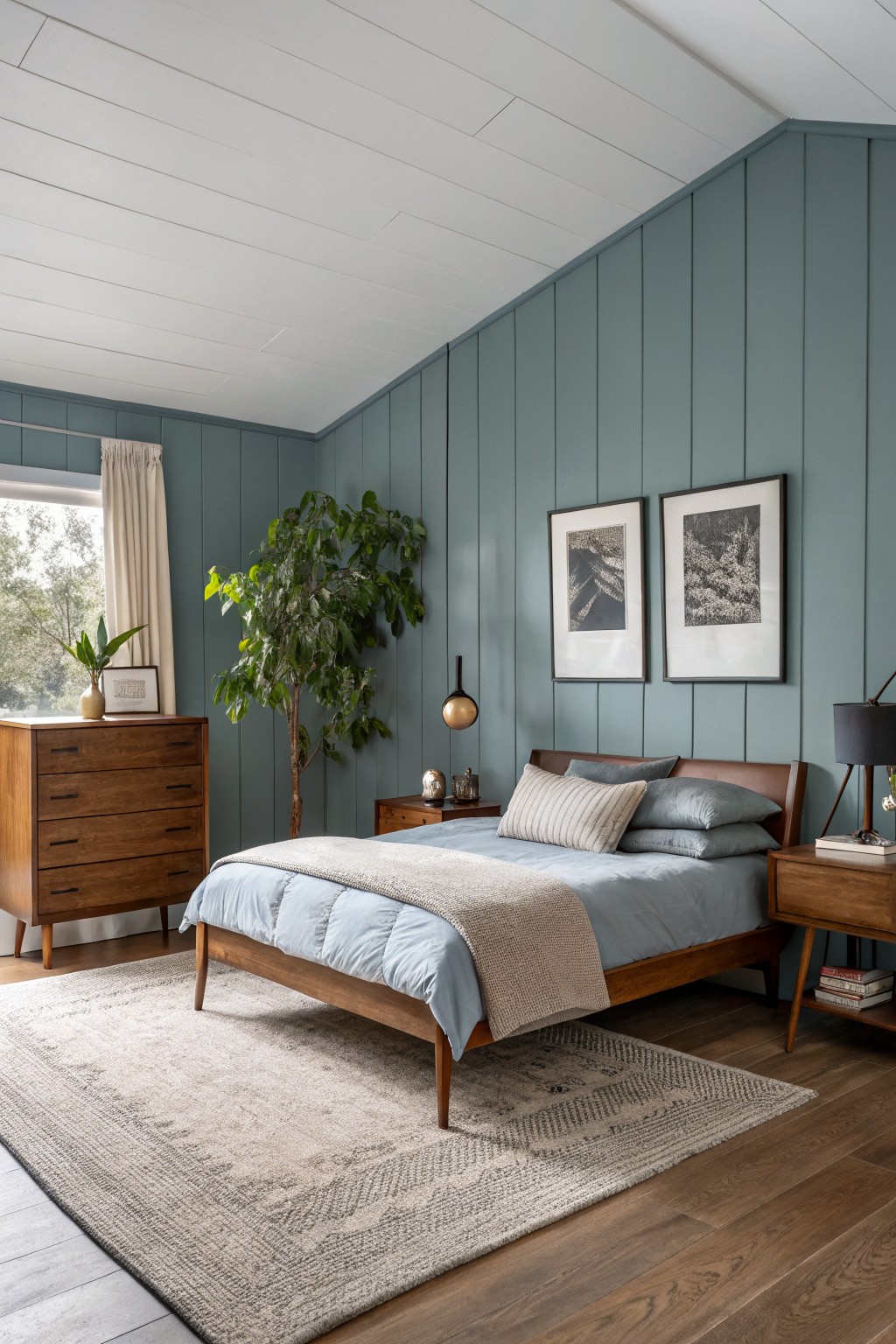
This muted teal sits right between blue and green with a touch of gray. It gives the walls a calm, steady feel that works well in bedrooms where you want something restful but not too stark.
The color pairs naturally with warm wood floors and furniture. It stays even in lower light and looks best with simple textiles and natural materials rather than anything too bright or busy.
Dusty Blue Gray Walls
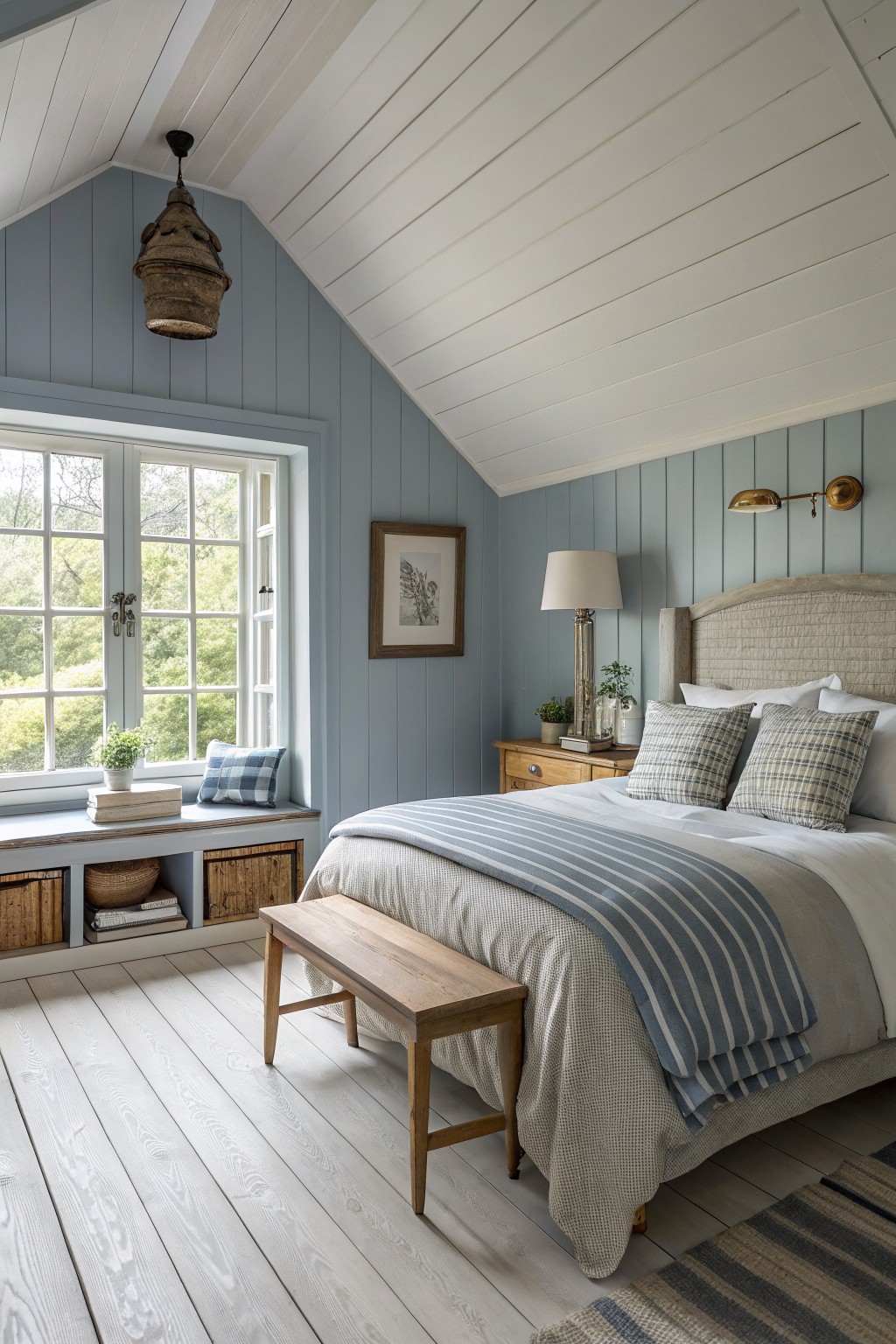
This bedroom uses a soft blue gray on the walls. It sits between blue and gray so the color stays calm and easy on the eyes even when the light is low.
The shade has cool undertones that work well with white trim and light wood floors. It suits bedrooms that need a gentle feel without going too stark or too dark. Try it with Sherwin Williams Rainwashed, Benjamin Moore Palladian Blue, Behr Silver Drop, or Farrow & Ball Light Blue.
Gray-Toned Sage Green Walls
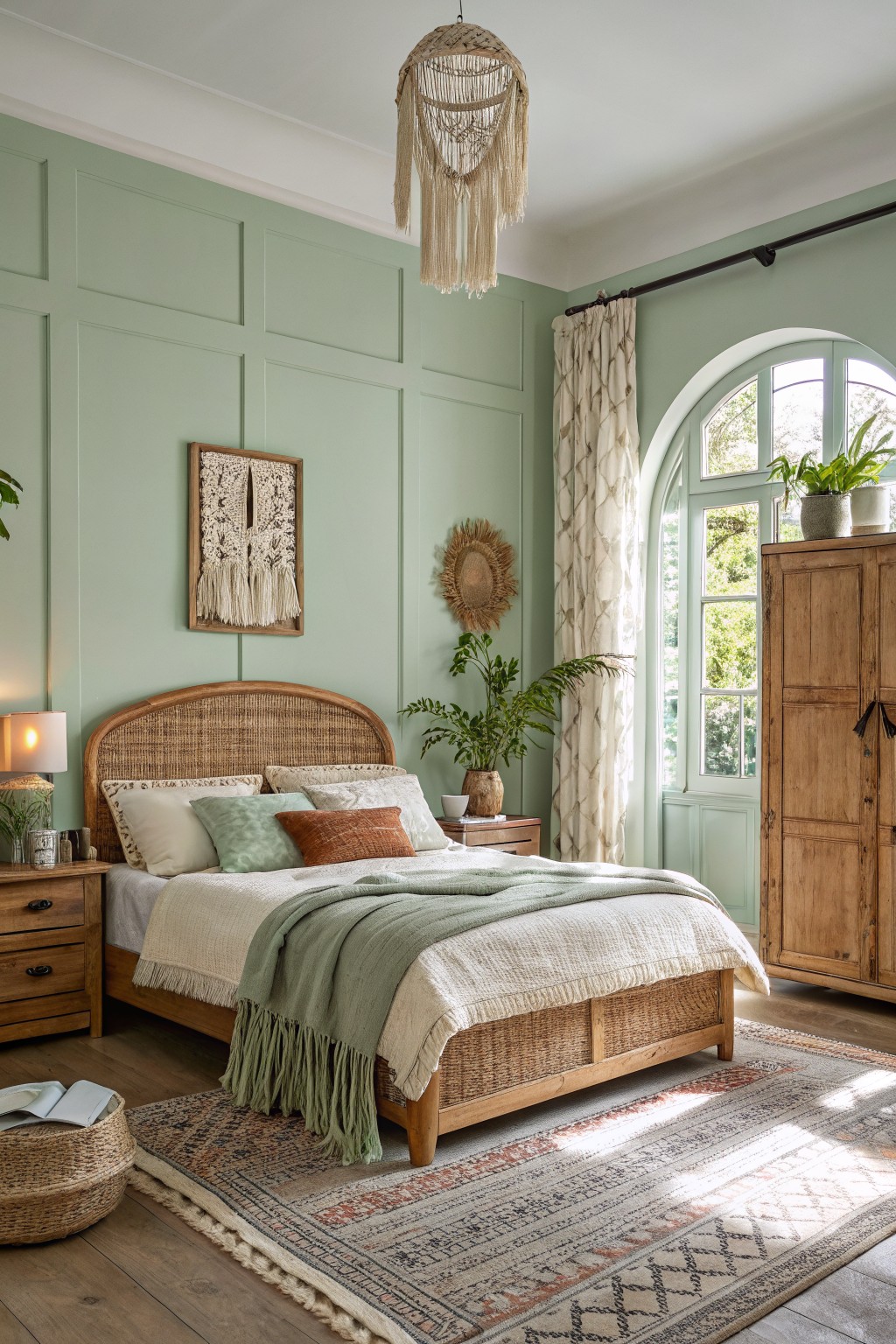
This soft sage green brings a quiet, restful tone to a bedroom without feeling heavy or dull. It has a muted quality that sits between green and gray, which helps it stay soothing in low light. The color reads closest to Sherwin Williams Clary Sage, Benjamin Moore Saybrook Sage, Behr Aloe, or a lighter take on Farrow & Ball French Gray.
It pairs well with warm wood furniture and simple textiles, keeping the space feeling balanced. These greens can shift a bit grayer as the light fades, so test a sample on the wall before committing.
Soft lavender gray walls
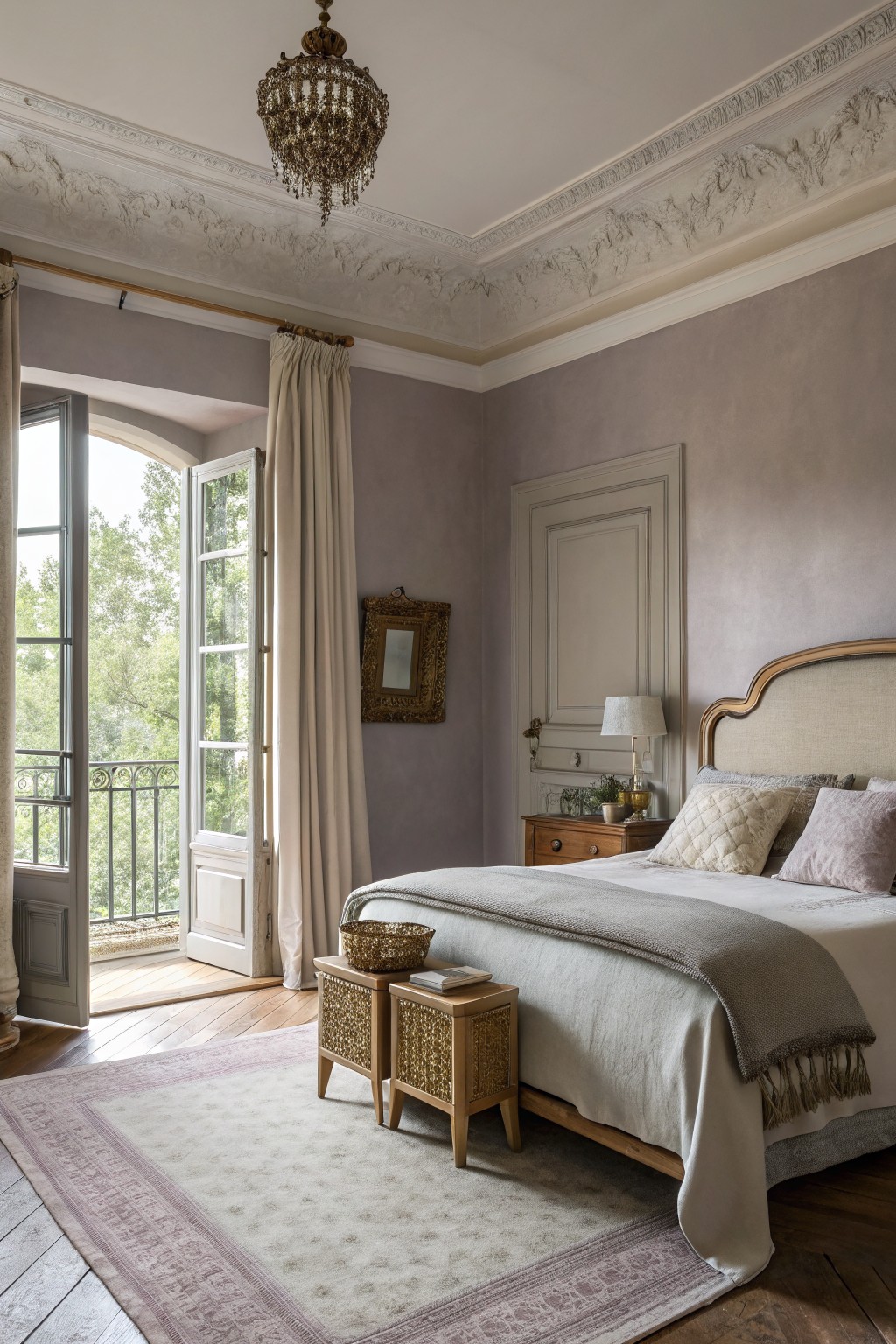
This bedroom shows a soft lavender gray on the walls that feels calm without going too cool. It sits between gray and a hint of muted purple, which keeps the space restful even when the light is low. Colors like this work well in older rooms where you want something gentle that still reads as neutral.
It has a slight cool undertone that pairs nicely with warm wood floors and simple painted trim. Try it with Benjamin Moore Gray Owl, Sherwin Williams Worldly Gray, or Farrow & Ball Ammonite if you want a similar depth.
Frequently Asked Questions
Q: How do I pick a color that feels right in low evening light?
A: Paint a large sample board and move it around the room at night. Look at it under your usual lamps to see how it shifts. This step saves you from surprises later.
Q: Should I avoid anything too gray if my mornings are dim?
A: Skip pure grays and lean toward soft greiges instead. They pick up a little warmth from early light without turning stark. Your room will feel gentler when you wake up.
Q: What about matching the color to my existing bedding and rugs?
A: Pull the main tones from your textiles. A paint that echoes those hues ties everything together without extra purchases.