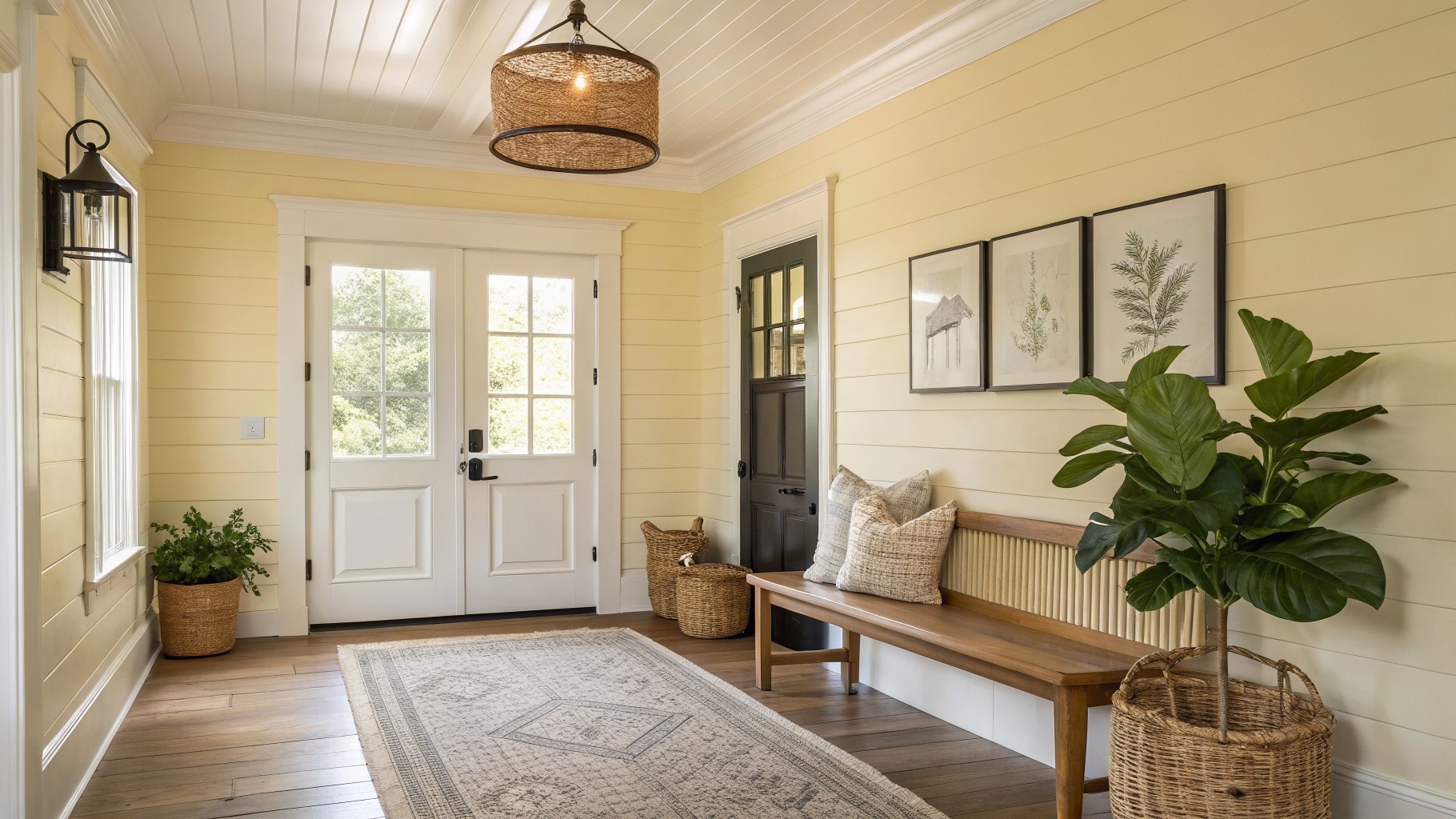
I often find that entryway paint looks different once the afternoon light moves across it and mixes with the existing trim.
The way a color reads next to wood floors or a console table can change everything about whether it feels finished.
Samples matter more than you expect.
Watching how the shade holds up from morning through dusk helps avoid surprises later on when the hallway feels too dim or overly bright.
Bringing home a few cans and painting large swatches has become my standard step before choosing anything for these kinds of spaces.
Soft yellow walls
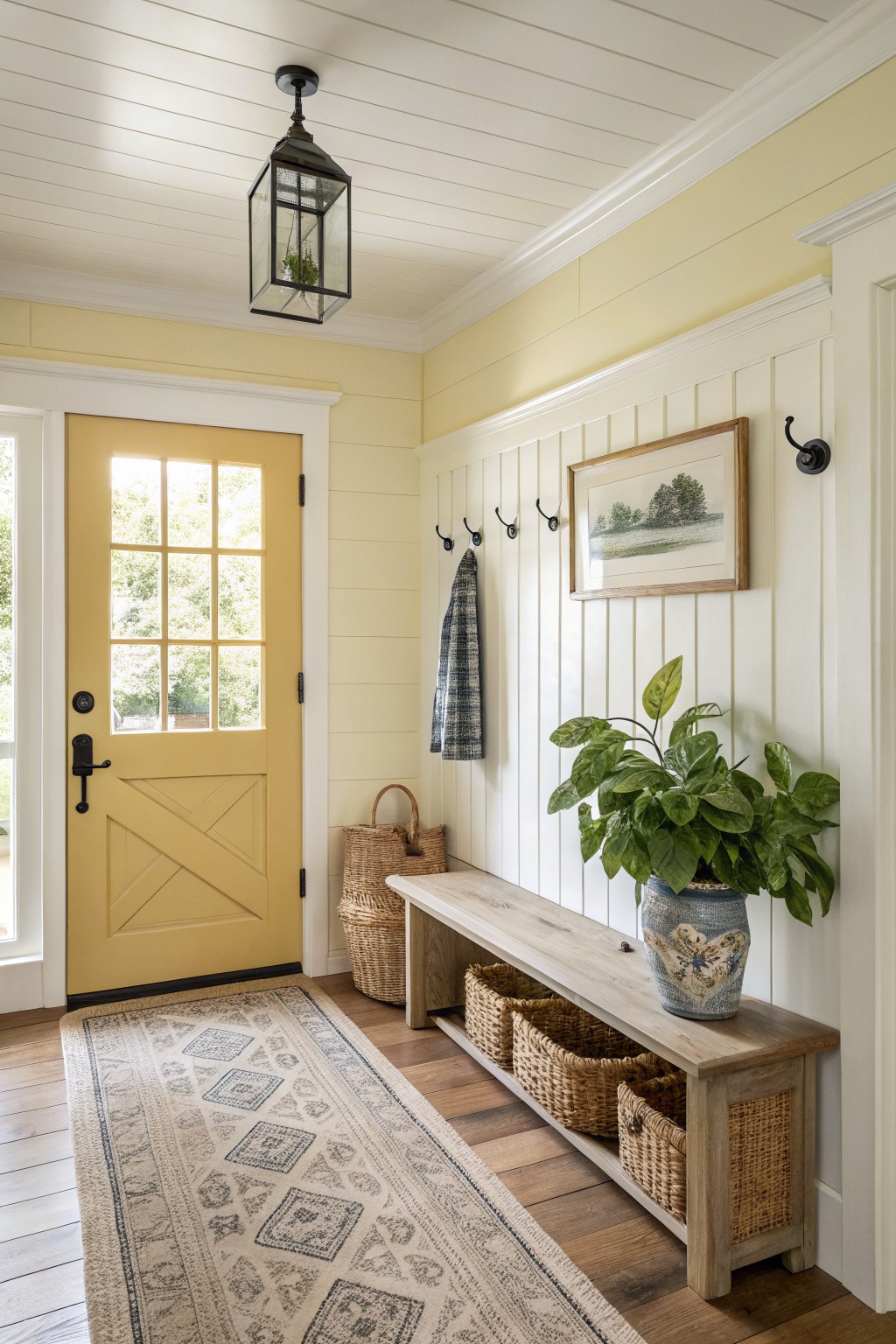
This soft yellow gives an entryway a gentle lift without turning bright. It sits in that warm, creamy range that feels easy on the eyes and works nicely with wood tones.
The color has a light undertone that stays calm next to white trim and darker floors. It suits older homes or simple farmhouse spaces where you want a bit of color but still need the hallway to feel open.
Soft Blue Gray Walls
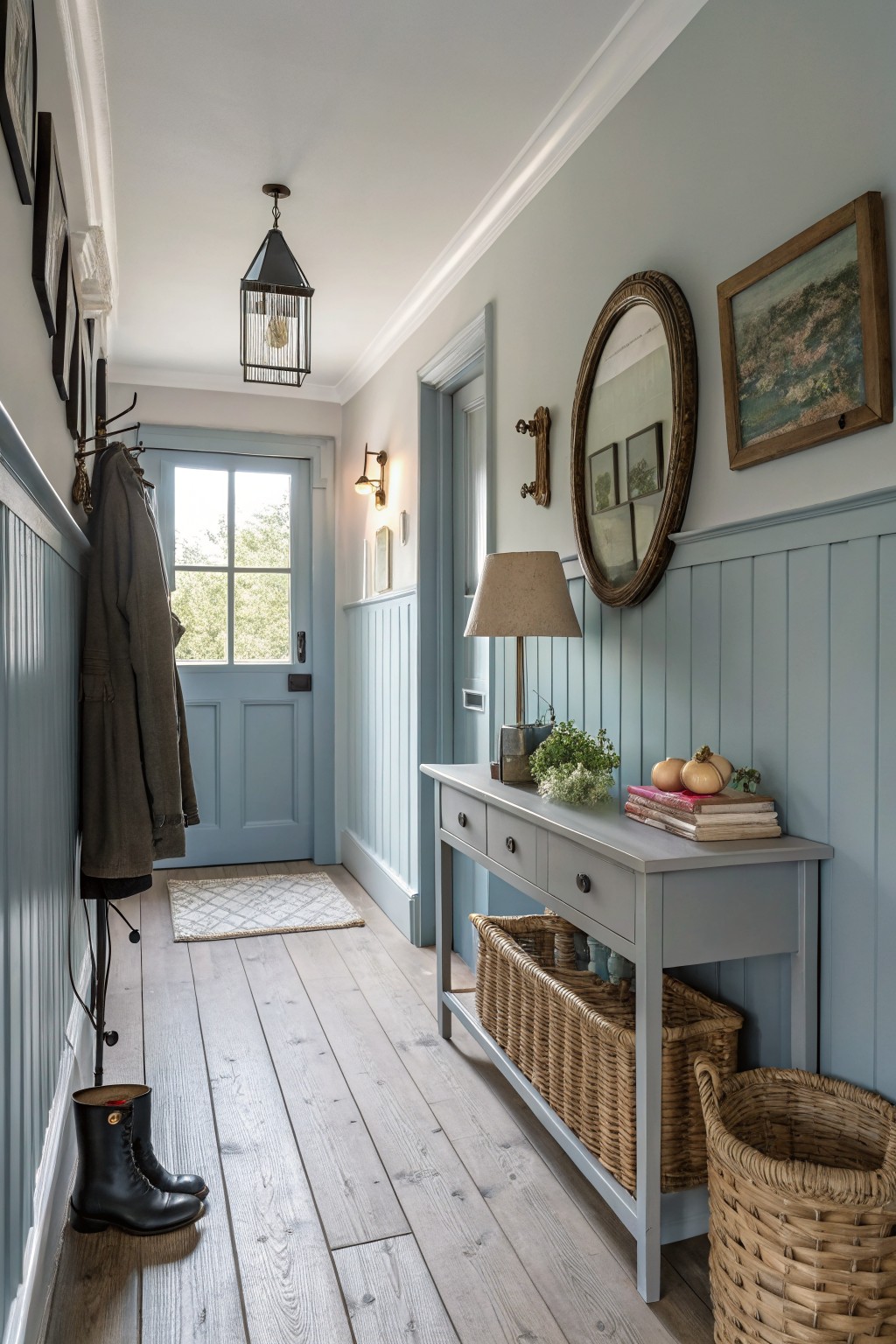
This soft blue gray brings a calm feel to an entryway without making it feel cold. It sits somewhere between gray and blue, with a hint of green that keeps it from looking flat next to wood floors and trim. Colors like this often read closest to Sherwin Williams Rainwashed, Benjamin Moore Wythe Blue, or Farrow & Ball Light Blue.
It works best in spaces with plenty of natural light and pairs easily with warm wood and simple white trim. Watch the undertones though, since a bit more green can shift the look depending on the time of day and what else is in the room.
Soft Greige Built-Ins
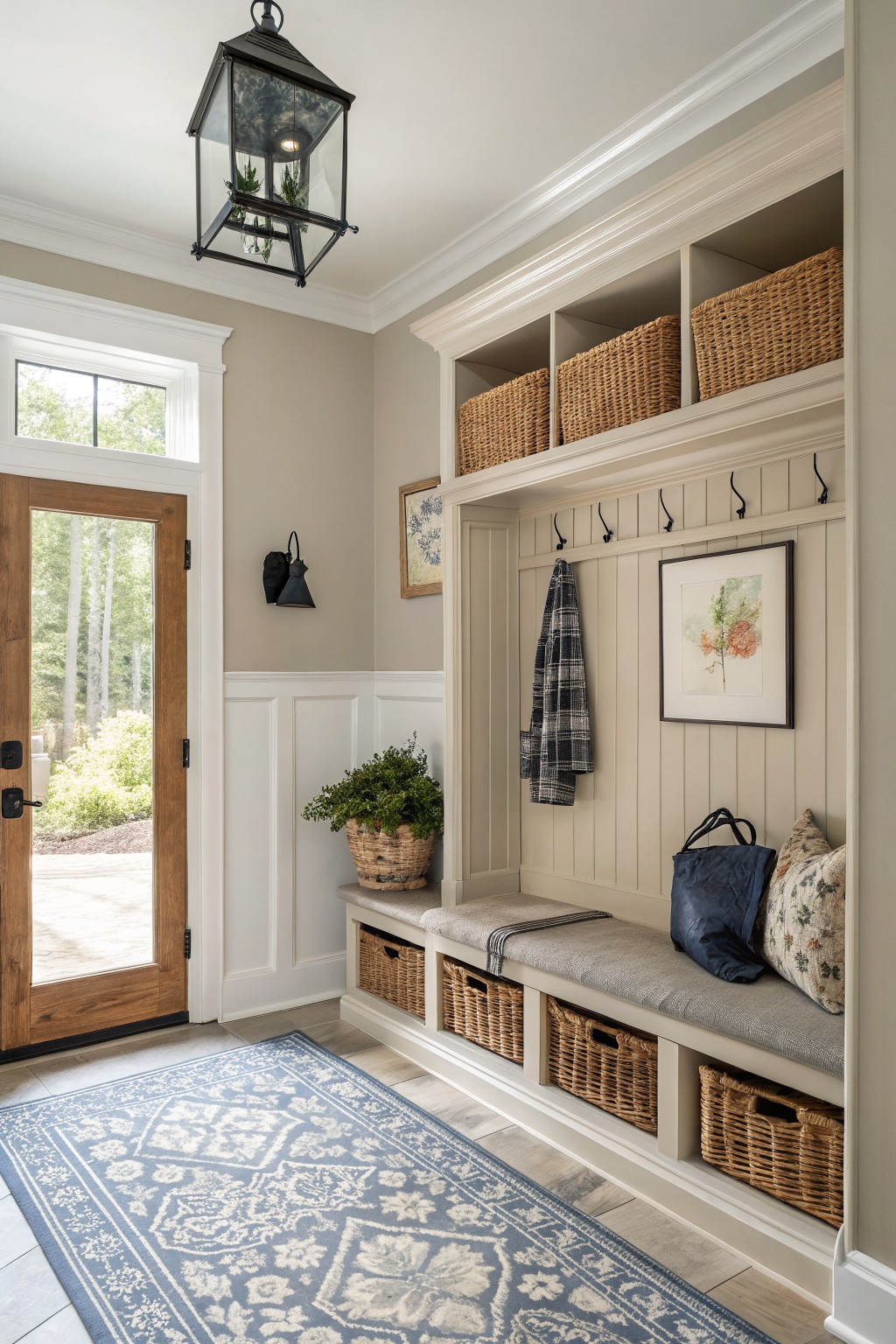
This soft greige sits between gray and beige, giving the walls and cabinetry a quiet warmth that still reads light. It keeps the entry from feeling too stark while making the whole space look finished and calm.
The slight warmth helps it sit nicely next to wood tones and white trim. It works especially well in rooms with mixed textures like baskets or fabric, and it stays bright even when natural light is limited.
Soft Sage Green Walls
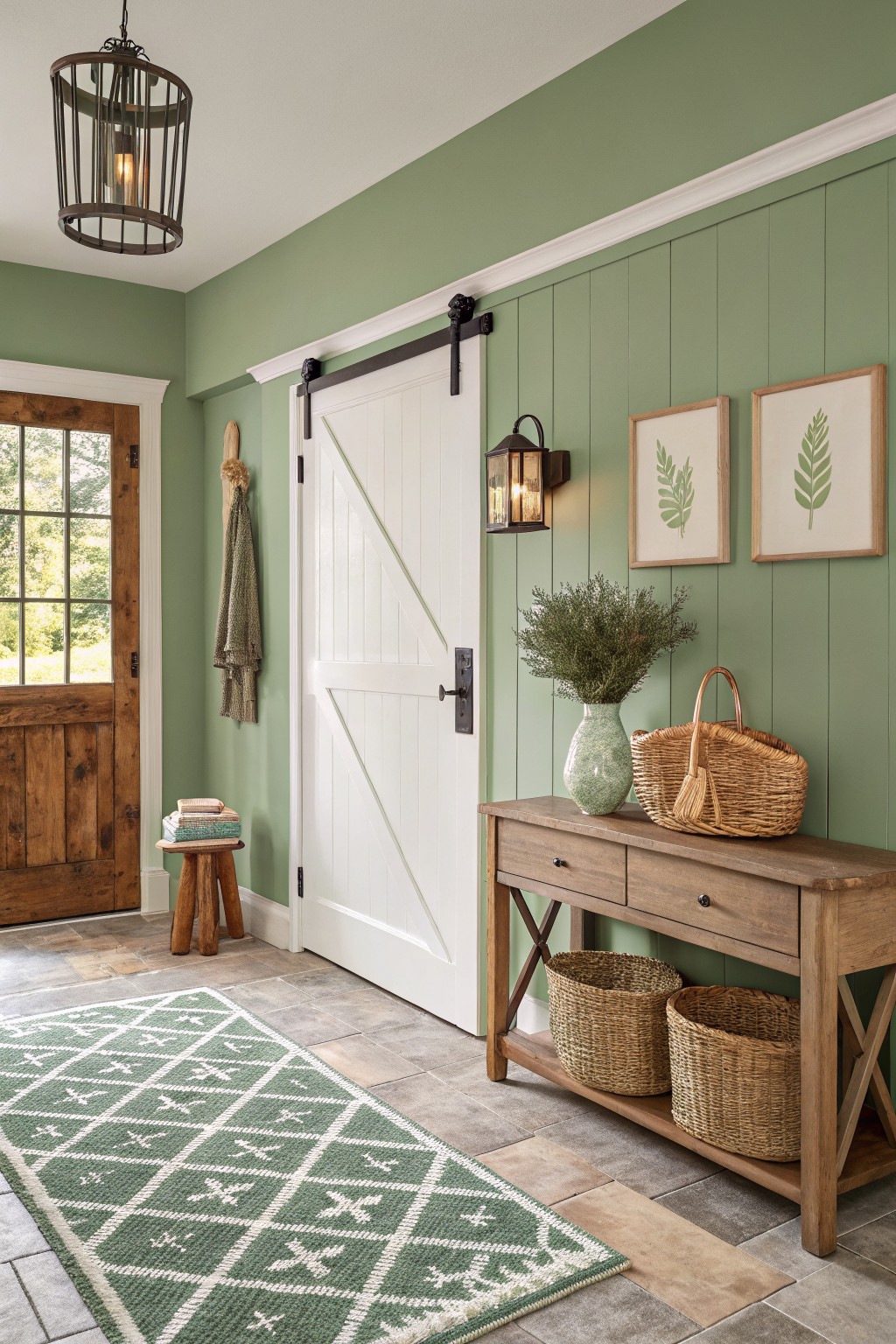
This muted sage green brings a calm, slightly earthy feel to an entryway without making it feel heavy. It reads as a soft green with gray undertones that keeps the space bright while still feeling finished.
The color works best when paired with crisp white trim and warm wood accents. It can look a little flat in low light, so it suits hallways or entries that get decent daylight.
Soft Warm Greige Walls
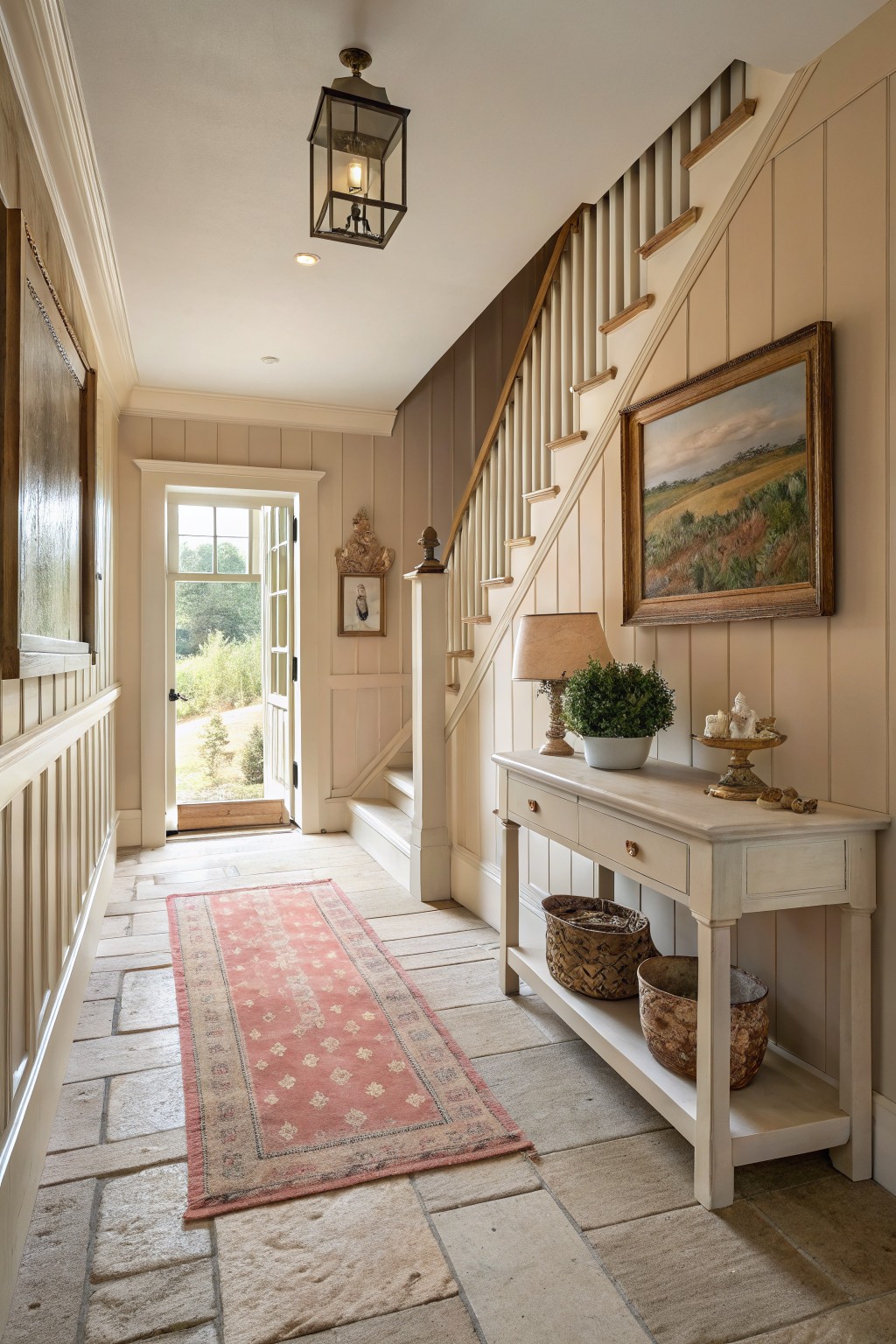
This entryway uses a soft warm greige on the walls. It has a light beige base with a hint of gray that keeps the space feeling bright without going too cool or stark.
The color works nicely next to white trim and natural wood. It suits older homes with stone floors or simple wood details and pairs best with light rugs and basic wood pieces. Closest matches include Benjamin Moore Edgecomb Gray, Sherwin Williams Accessible Beige, and Behr Creamy Mushroom.
Crisp White Walls
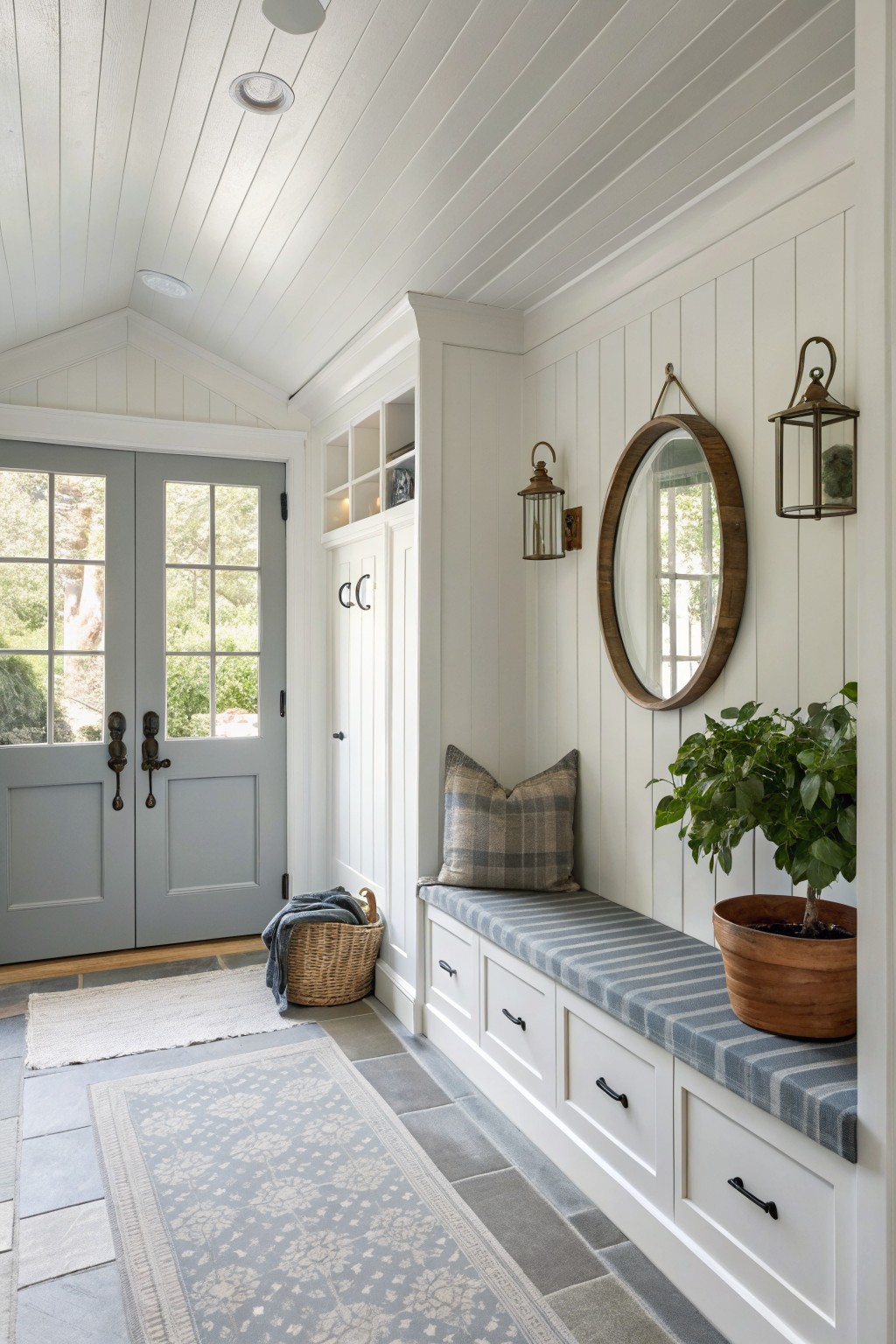
A crisp white works well in a farmhouse entry because it keeps the whole space feeling open and finished. This kind of white sits right on the line between bright and soft, so it bounces light around without looking stark against wood floors or darker accents.
It has a slight cool lean that pairs nicely with gray tones in the bench cushion and stone tile. Most people find it holds up in hallways that get mixed light, though it can read a touch brighter if the trim stays the same color.
Soft Yellow Walls For Entryways
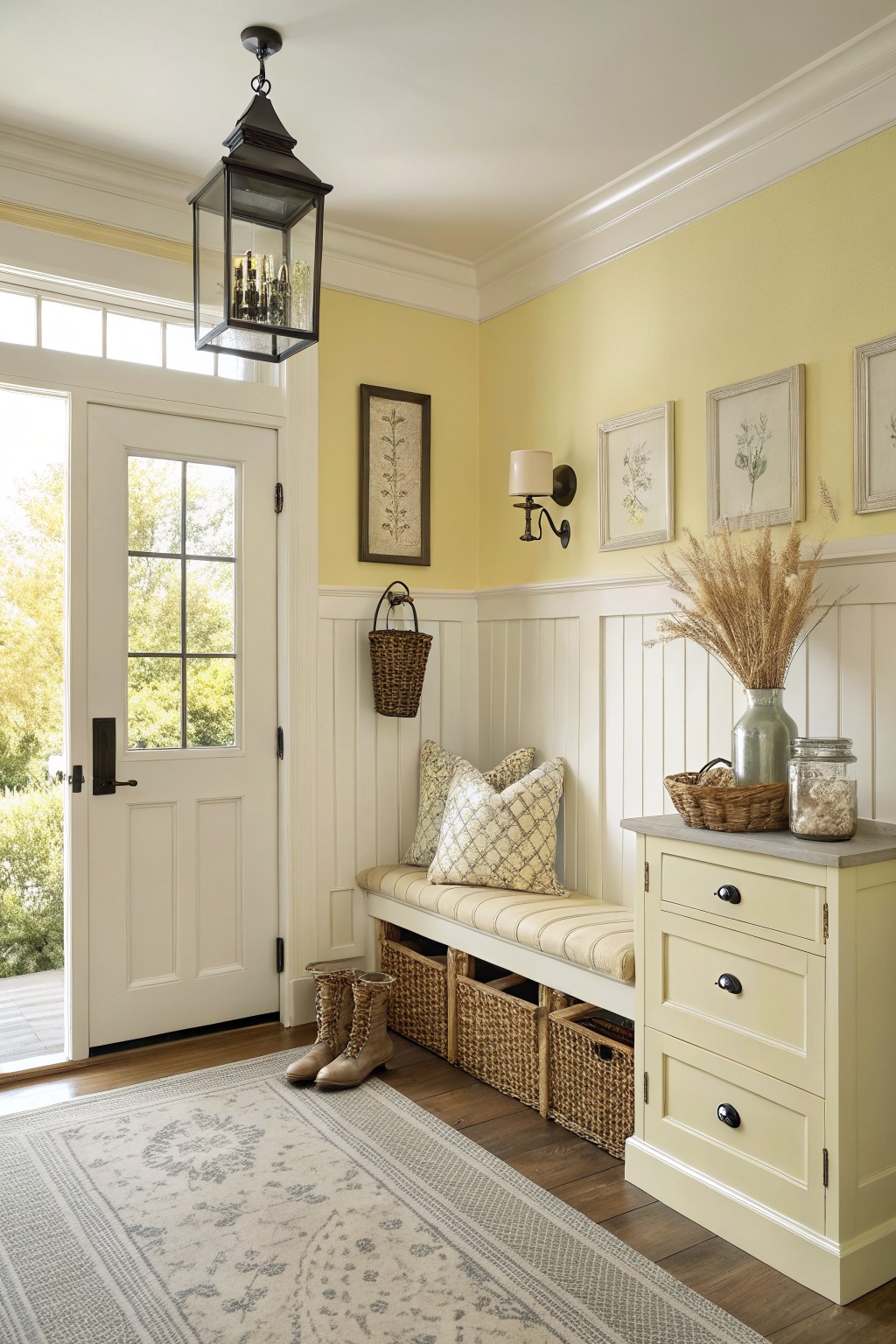
A soft yellow like this brings a gentle brightness to entry spaces without feeling too bold. It has a warm, buttery quality that keeps the room feeling open and finished even when the light changes through the day.
The color sits well above white wainscoting and works nicely with wood floors and natural baskets. It suits homes that want a bit of cheer without moving into strong color territory. Look for shades close to Benjamin Moore Pale Yellow, Sherwin Williams Lemon Tint, Behr Mellow Yellow, or Farrow & Ball Dorset Cream.
Soft Sage Green Walls
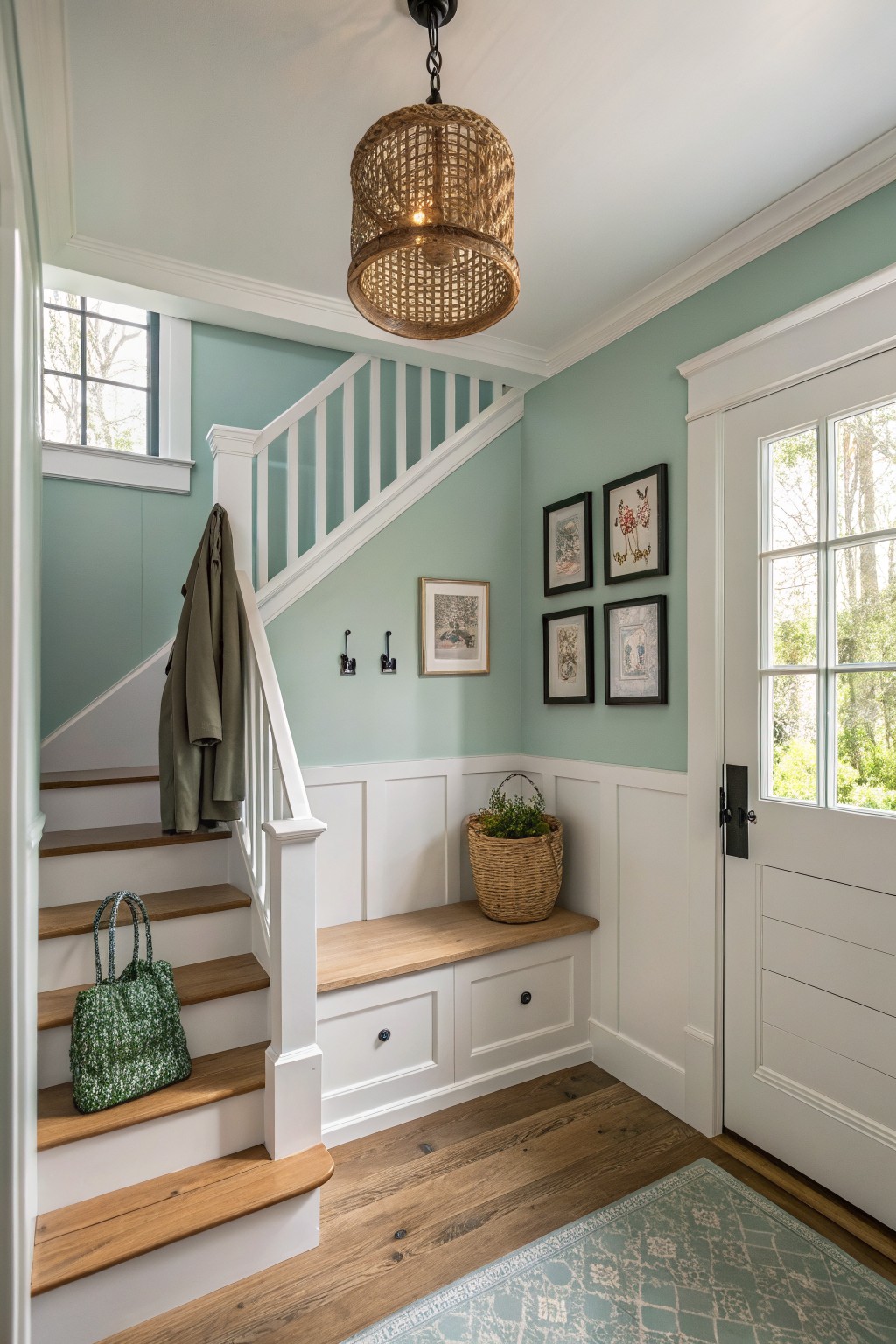
A soft sage green like the one on these walls gives an entryway a calm, finished look without feeling too bold. It sits in that light green family with a cool undertone, which helps the space feel open even when natural light is limited.
This shade pairs easily with white trim and warm wood floors, though it can lean a little blue in dimmer corners. Sherwin Williams Rainwashed, Benjamin Moore Saybrook Sage, Behr Soft Fern, and Farrow & Ball Pigeon all have a similar feel.
Soft Gray Walls
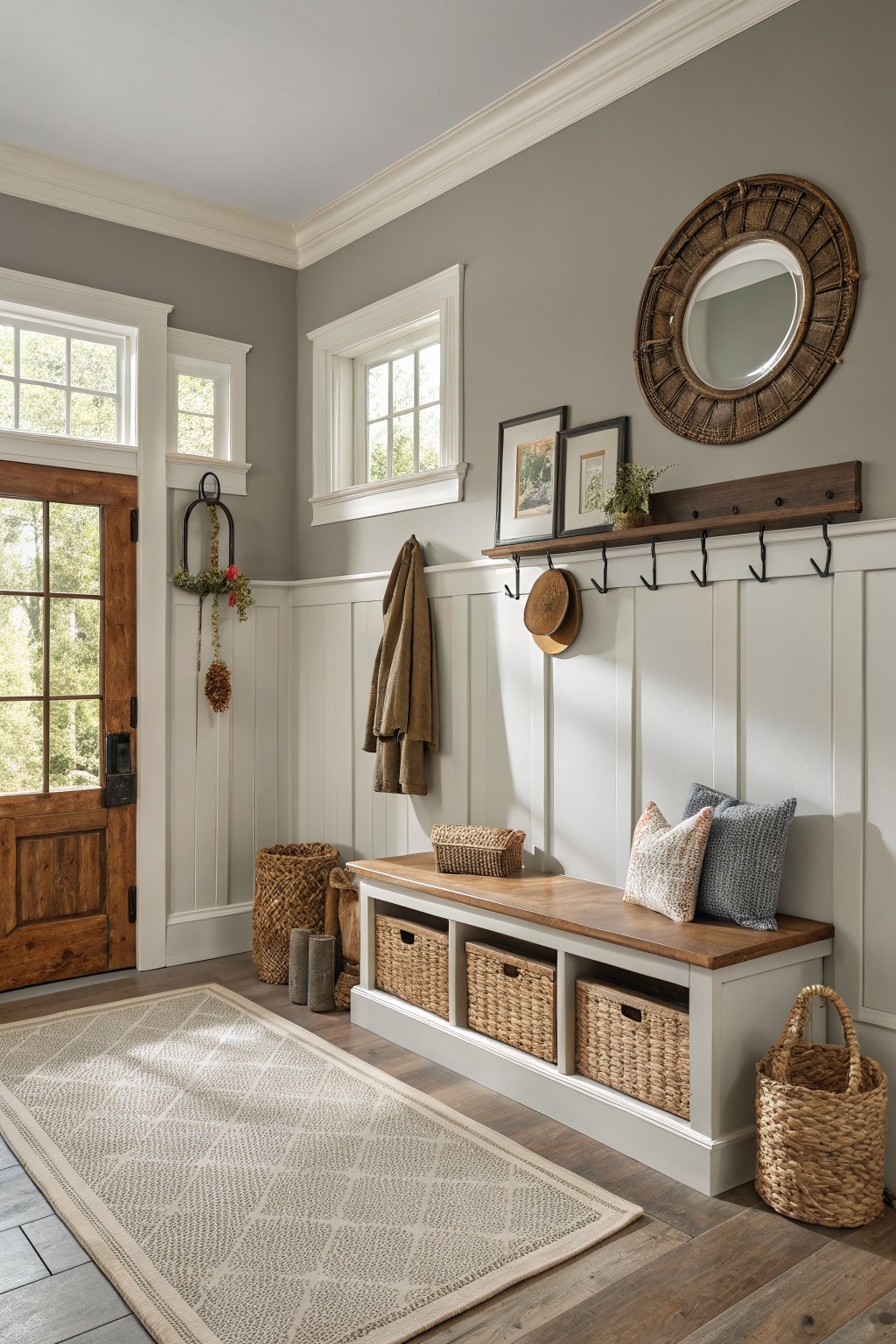
This soft gray on the walls gives an entry a quiet, finished look that still feels welcoming. It is a light to mid-tone gray with a touch of warmth that keeps the space from turning too cool next to all the white trim.
The color works best in rooms with decent natural light and pairs simply with white wainscoting and wood tones. It can start to look flat if the lighting is very dim, so test it on a larger patch before committing.
Soft Greige Walls
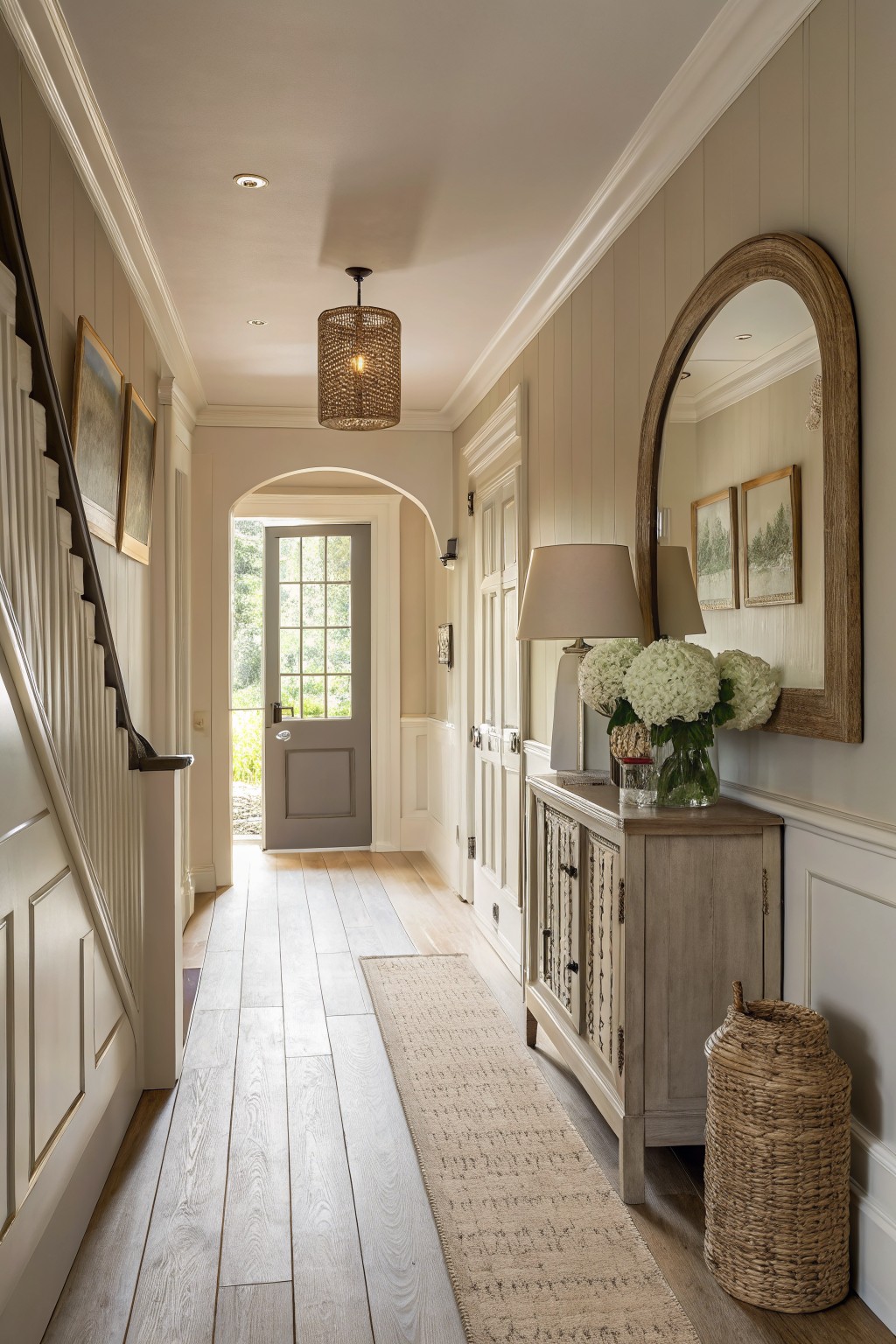
This hallway uses a light warm greige that sits between beige and gray. It keeps the space bright while adding just enough warmth to feel finished rather than stark. The color works well with white trim and light wood floors because it does not fight them.
It has a soft warm undertone that shows up more in natural light. Pair it with painted cabinetry or simple wood furniture if you want the same calm look throughout an entry or hall. Colors like Sherwin Williams Accessible Beige, Benjamin Moore Pale Oak, Behr Toasted Almond, or Farrow & Ball Elephant’s Breath sit in this same range.
Soft Teal Built-Ins
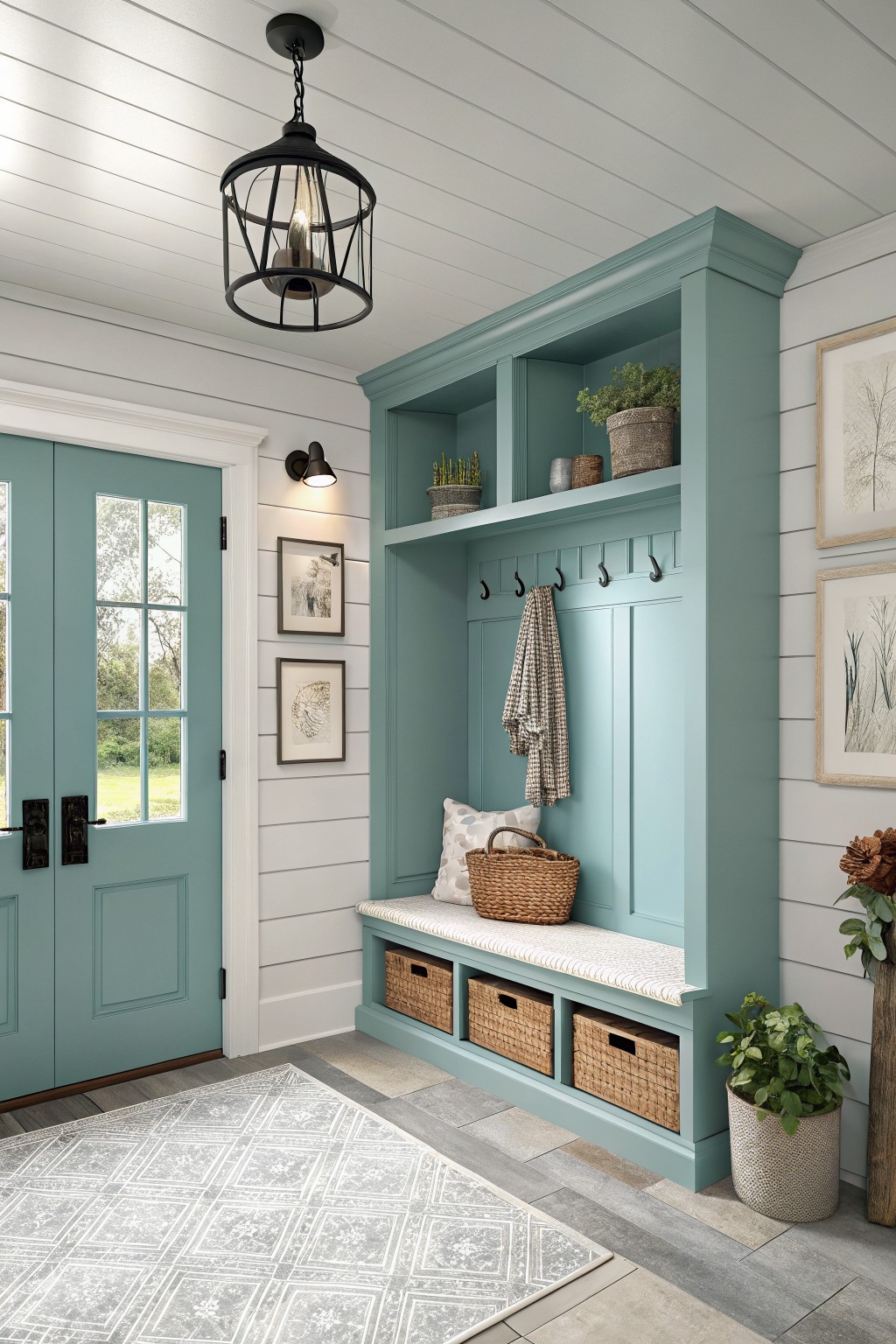
This muted teal works well on the built-in storage because it brings in color without making the space feel busy. It has a soft blue-green tone that sits comfortably next to white walls and wood floors. The color feels closest to Sherwin Williams Retreat, Benjamin Moore Wythe Blue, or Behr Seaglass.
It carries a light gray undertone that keeps it from turning too bright in the afternoon light. This makes it a good choice for entryways where you want something a little different from plain white or gray but still easy to live with. Pair it with black hooks or simple baskets if you want a bit more contrast.
Warm Greige Walls
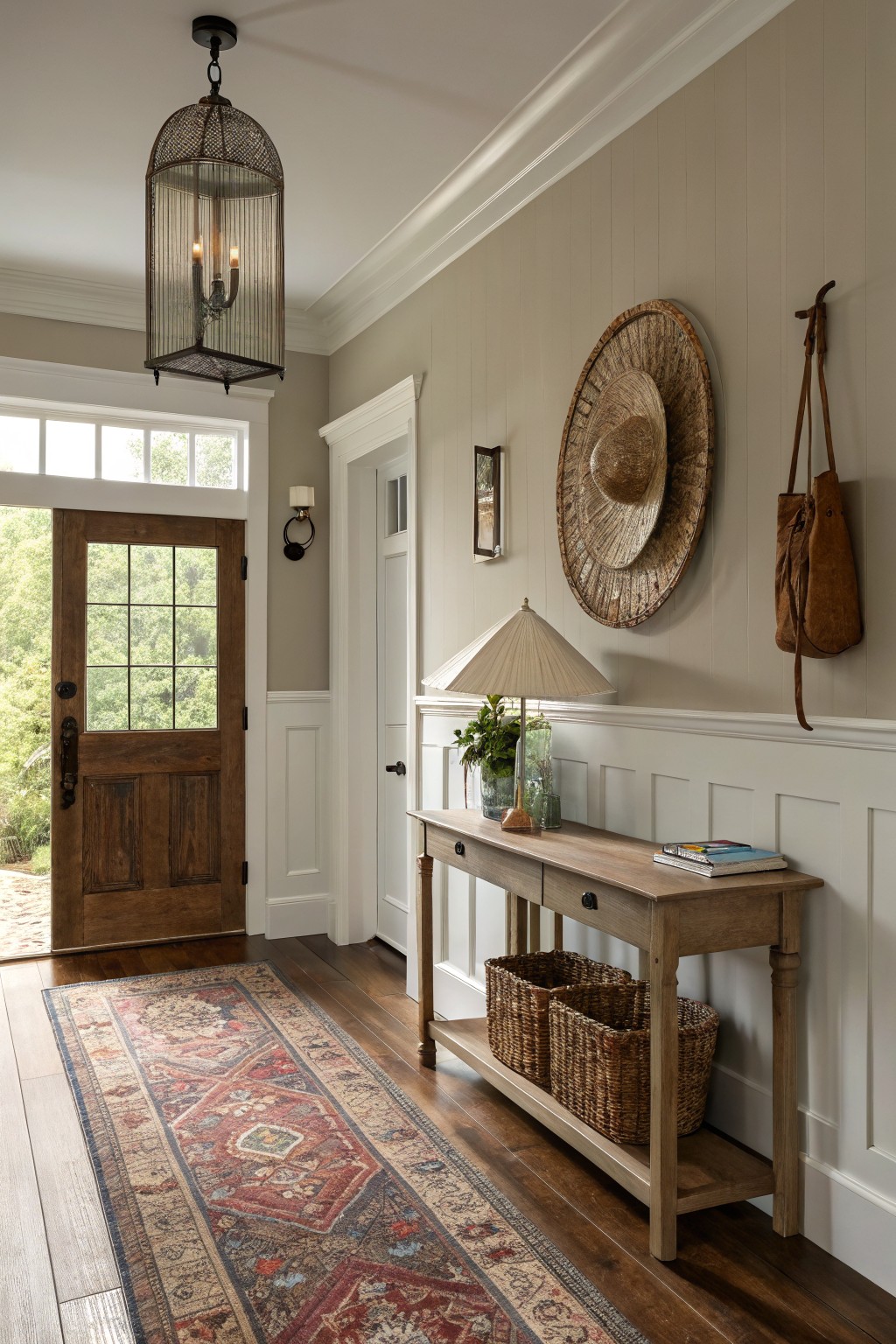
This entryway uses a soft warm greige on the walls. It blends gray and beige in a way that feels quiet and finished without looking flat or cold.
The color has a light taupe undertone that keeps the space from feeling stark next to white trim and wood floors. It works well in hallways and entry areas where you want something neutral that still feels a bit grounded. Good matches include Sherwin Williams Worldly Gray, Benjamin Moore Edgecomb Gray, Behr Toasted Almond, or Farrow & Ball Elephant’s Breath.
Soft Sage Green Walls
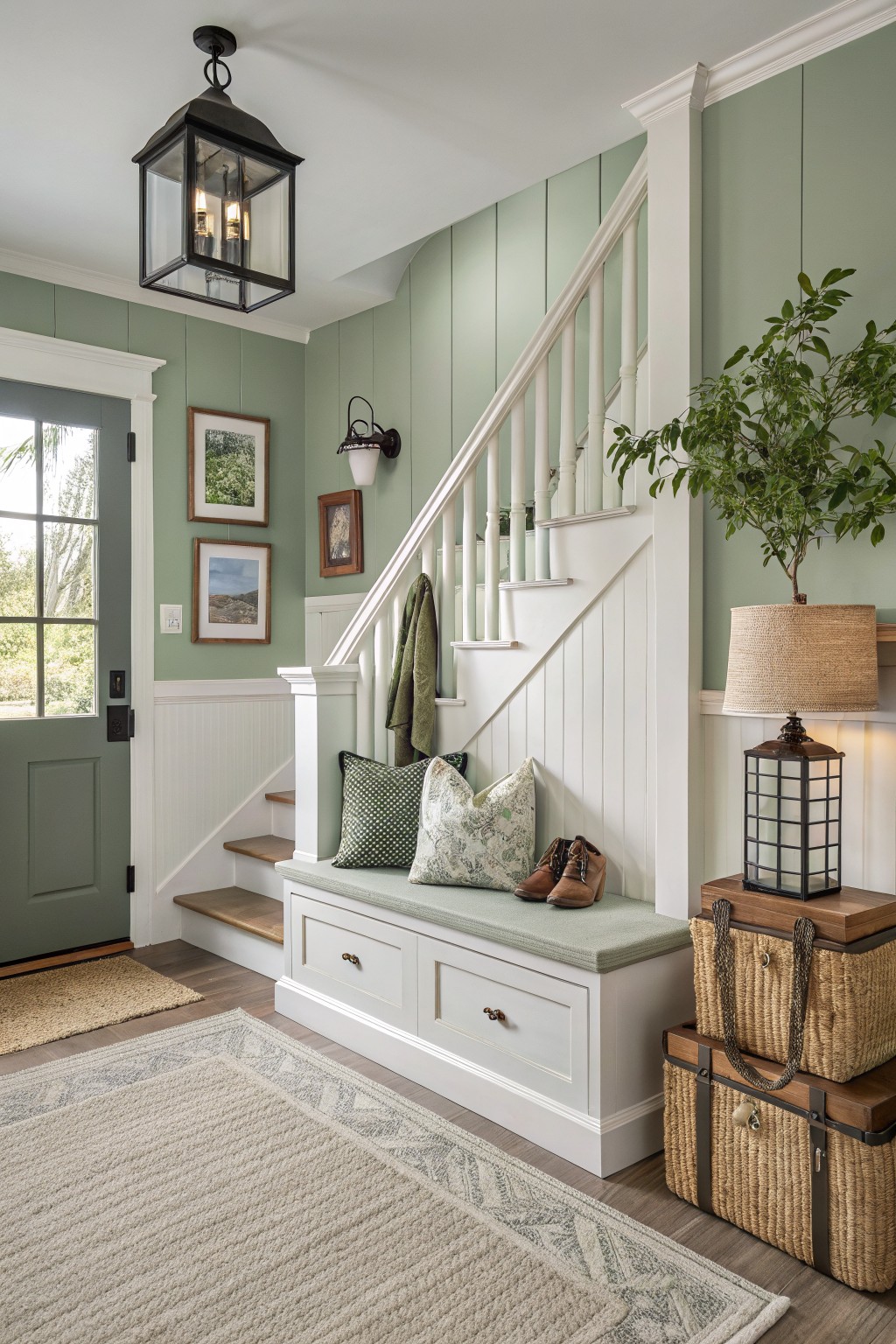
A soft sage green like the one on these walls gives an entryway a quiet, finished look without going too bold. It has enough gray in it to feel calm and helps the whole space read brighter next to the white trim and wood stairs.
The color sits cool with a touch of blue undertone, so it works best in rooms that get steady daylight. Pair it with crisp white millwork and simple wood accents to keep the hallway feeling open and easy to live with.
Soft Greige Walls
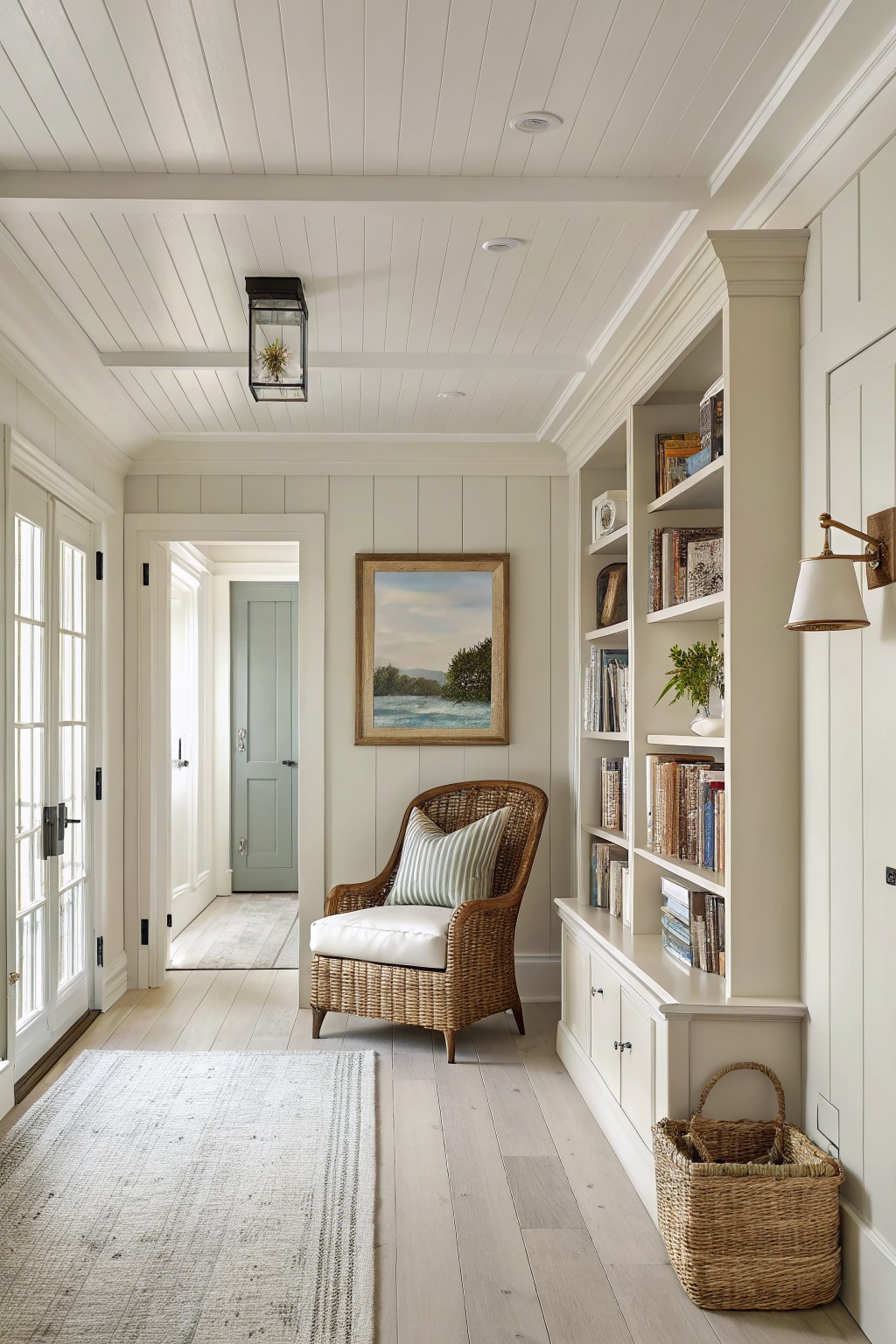
This light greige sits right between gray and beige. It gives the walls a quiet warmth that still keeps the hallway feeling open and bright.
The color has a soft warm undertone that plays well with white trim and pale wood floors. It also works nicely next to natural textures like woven baskets or light cabinetry, though it can start to look flat if the lighting is very cool.
Soft Blue-Gray Walls
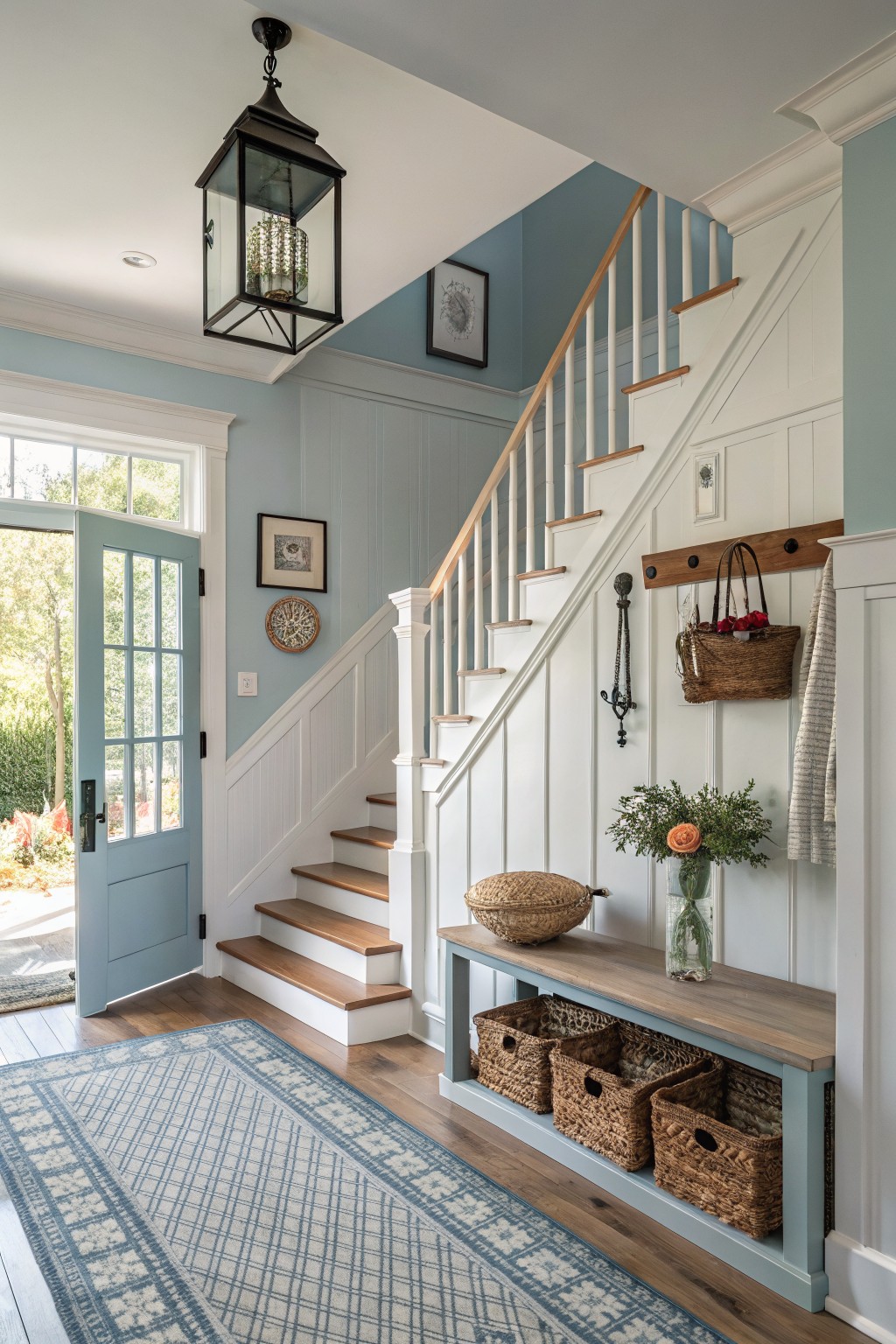
This soft blue-gray on the walls gives the entry a quiet, finished look without feeling cold. It sits somewhere between gray and blue, with just enough color to keep the space from looking flat next to all the white trim and wood tones. Colors like Sherwin Williams Silver Strand, Benjamin Moore Palladian Blue, or Behr Rainwashed tend to land close to this shade.
It works well with white wainscoting and wood stairs because the blue-gray keeps the contrast gentle rather than stark. In rooms with decent natural light it stays airy, though it can lean a bit cooler in low light, so testing a sample on the actual wall is worth it.
Clean White Built-Ins
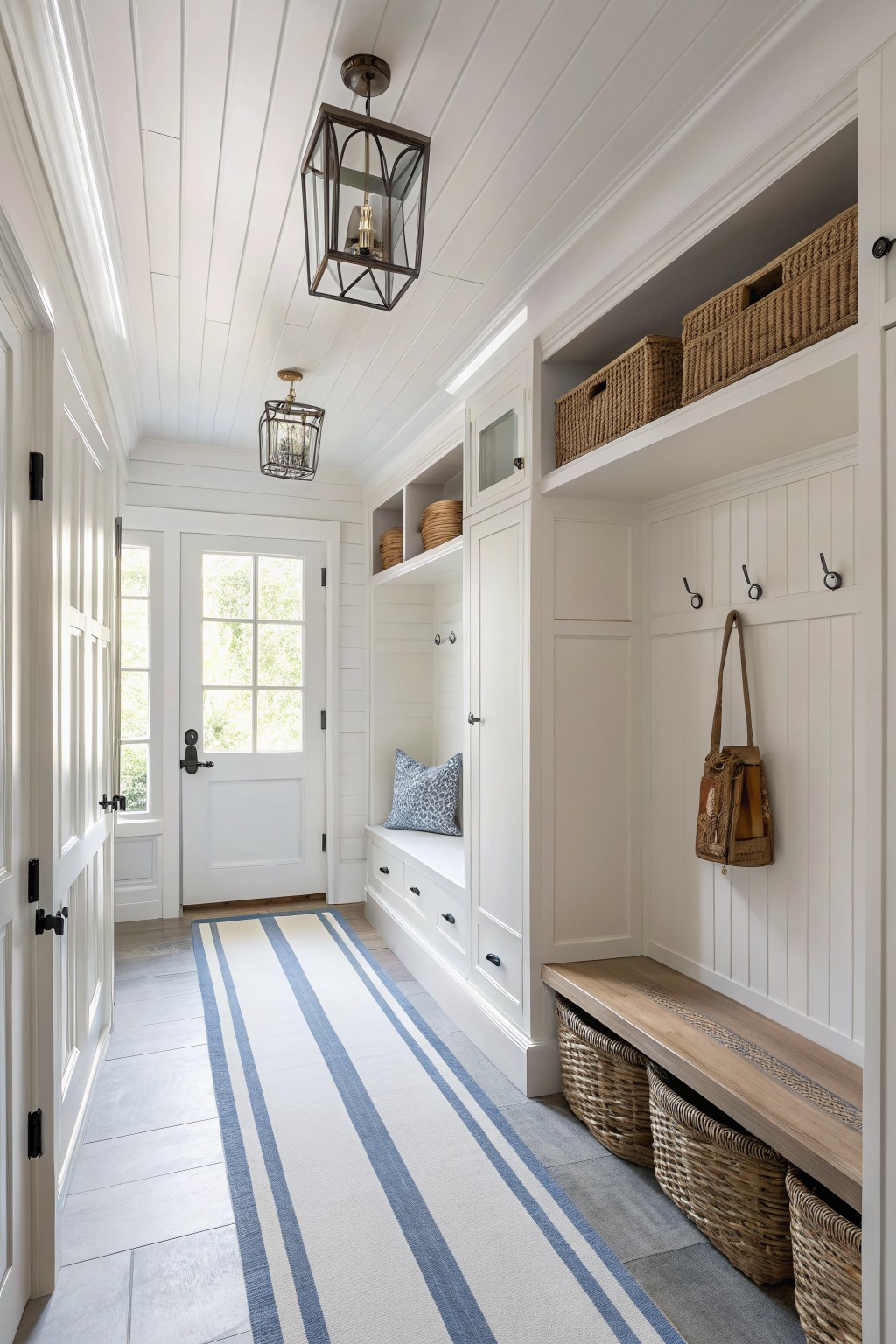
This entryway uses a crisp white on the walls and cabinetry that keeps the whole space feeling open and bright. It is a clean white with very little undertone, which helps light bounce around the narrow hallway and makes the wood bench and baskets stand out without competing.
White like this works best when you want the built-ins to feel like part of the architecture rather than added furniture. It pairs easily with natural wood tones and simple hooks, though it can look stark if the lighting is too cool or the floor is very gray.
Soft Sage Green Walls

A soft sage green works well in entryways because it brings a bit of color without making the space feel dark or closed in. This muted green sits somewhere between gray and green, giving the walls a calm look that still feels fresh next to white trim and light wood floors.
It has cool undertones that show up more in bright light, so it pairs best with warm wood tones or natural baskets to keep the room from feeling too chilly. Many people like this shade in hallways because it brightens the space while still looking finished and simple.
Warm Greige Walls In The Entry
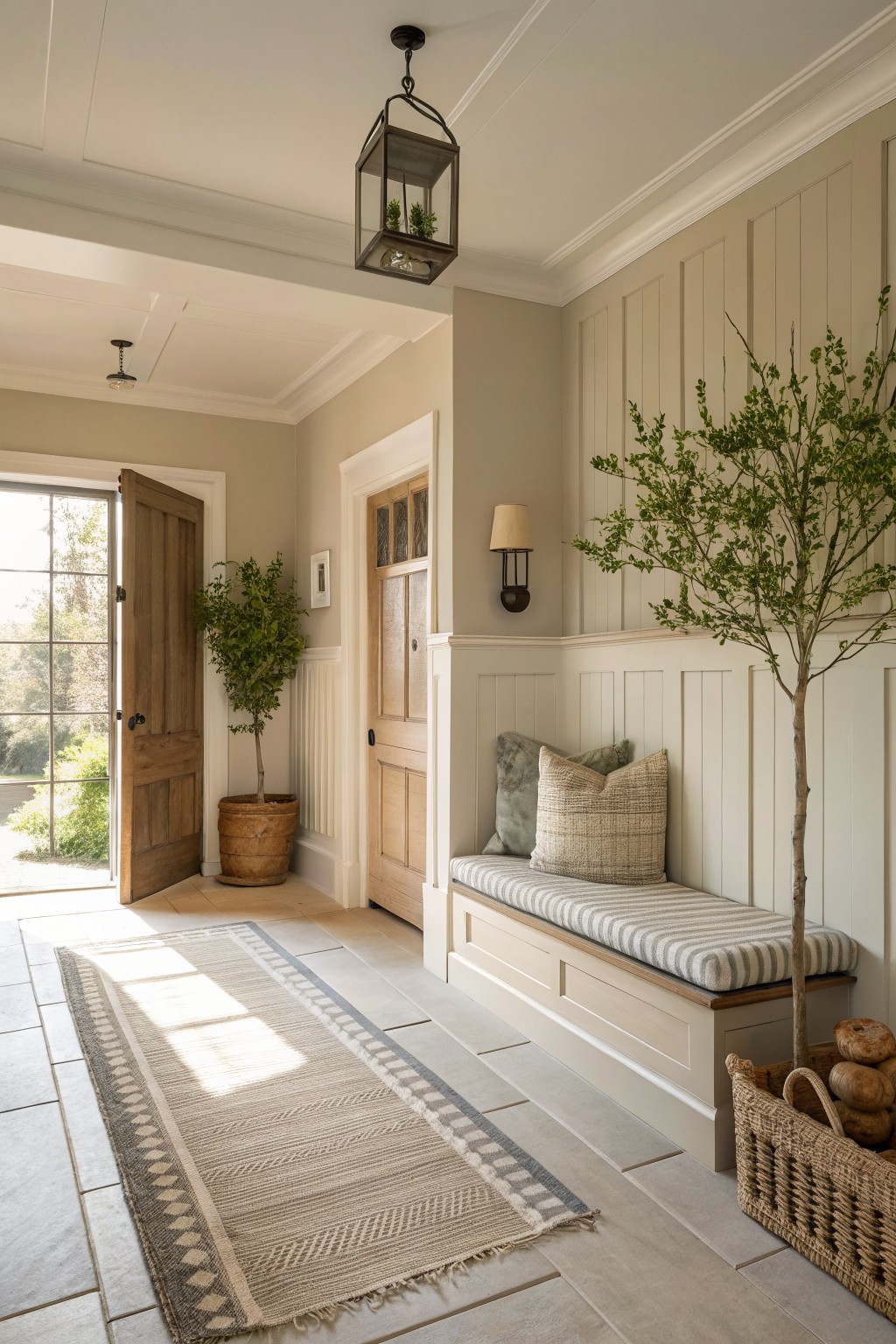
This entry uses a soft warm greige on the walls. It sits between beige and gray and gives the space a quiet brightness that still feels grounded.
The color has a light taupe undertone that works well with white trim and wood tones. It suits farmhouse hallways that get decent daylight and pairs easily with natural wood, stone, or simple textiles.
Warm Greige Walls

This warm greige sits right in the middle between beige and gray. It gives the walls a soft, lived-in look that still feels clean and finished. The color works especially well in entryways because it stays bright without turning stark next to wood floors and trim.
It has a gentle warm undertone that keeps the space from feeling cool or flat. Pair it with natural wood furniture and white trim to let the tone read evenly throughout the day. It suits older homes that need a color that feels updated but not too modern.
Soft Sage Green Walls

This entryway uses a soft sage green on the upper walls. It is a light cool green that stays calm and bright without turning stark or cold.
The color has a slight blue undertone that reads clean next to white wainscoting and wood floors. It works well in small entry spaces and pairs easily with natural wood, simple hooks, and light textiles.
Soft Greige On Walls And Built-Ins
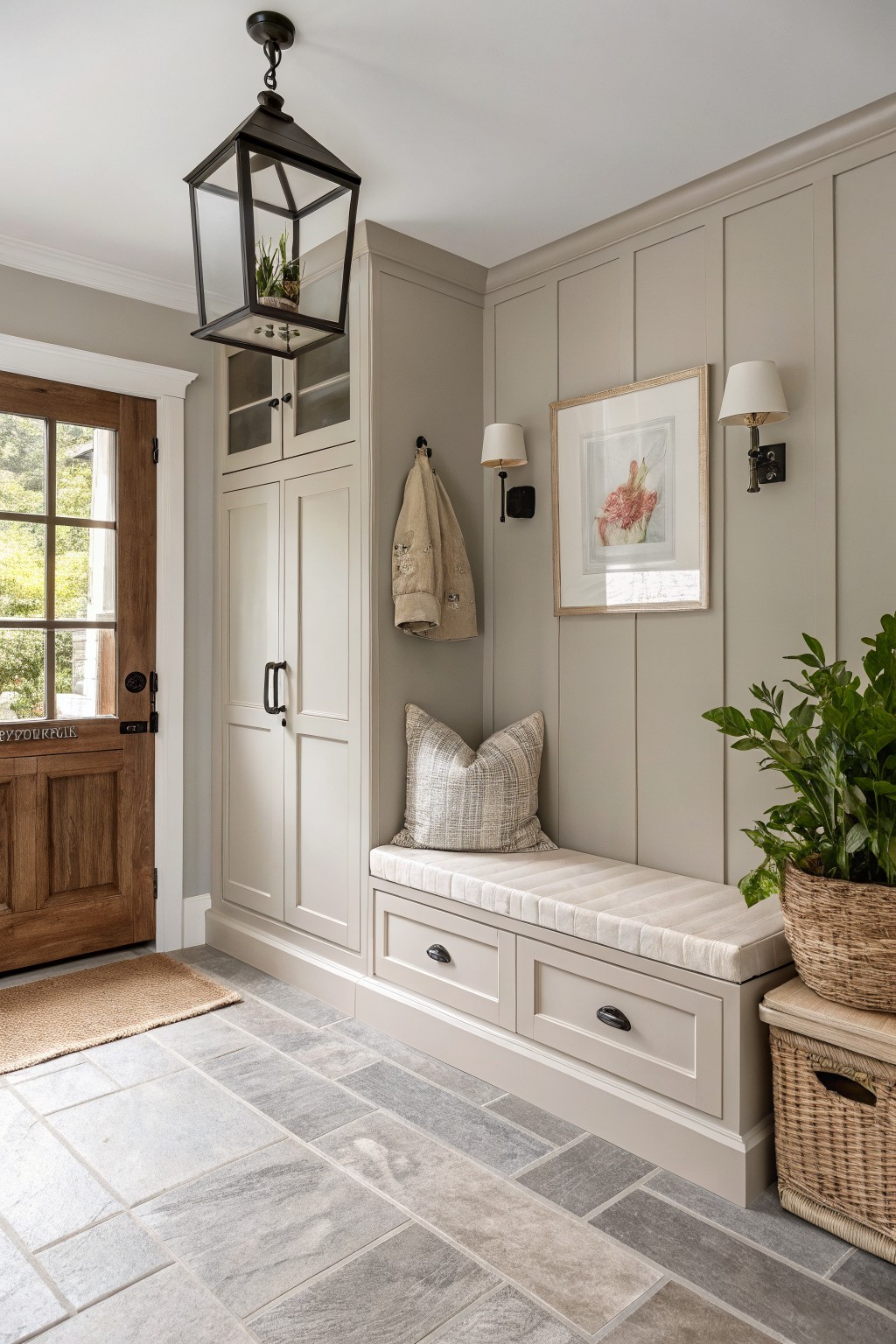
This entryway uses a soft greige that sits right between gray and beige. It gives the space a quiet, finished look without feeling cold or too heavy. The color works well on both the walls and the built-in cabinetry because it stays calm next to the wood door and stone tile floor.
It has a light warm undertone that keeps the room from looking stark. This shade pairs nicely with white trim and natural wood tones, and it holds up in rooms with mixed lighting. Similar colors include Sherwin Williams Agreeable Gray, Benjamin Moore Edgecomb Gray, and Behr Silver Strand.
Warm Yellow Walls

This entry shows a soft yellow on the walls that feels warm and light at the same time. It is a creamy, gentle yellow that brightens the space without turning harsh.
The color has a faint golden undertone that sits well next to white trim and wood tones. It works best in entries with decent natural light and pairs easily with simple furnishings and woven baskets.
Frequently Asked Questions
Q: My entryway gets almost no natural light. Which colors from the article should I try first?
A: Go for the warm off-whites with subtle yellow undertones. They catch even small amounts of light and keep the space from feeling flat.
Q: Do I need to repaint the trim too?
A: Leave the trim white if it is already in good shape. The contrast helps the new wall color stand out and gives that finished farmhouse touch.
Q: How can I make sure the paint looks polished once it dries?
A: Roll on two thin coats instead of one thick one. This avoids roller marks and gives even coverage that feels intentional.