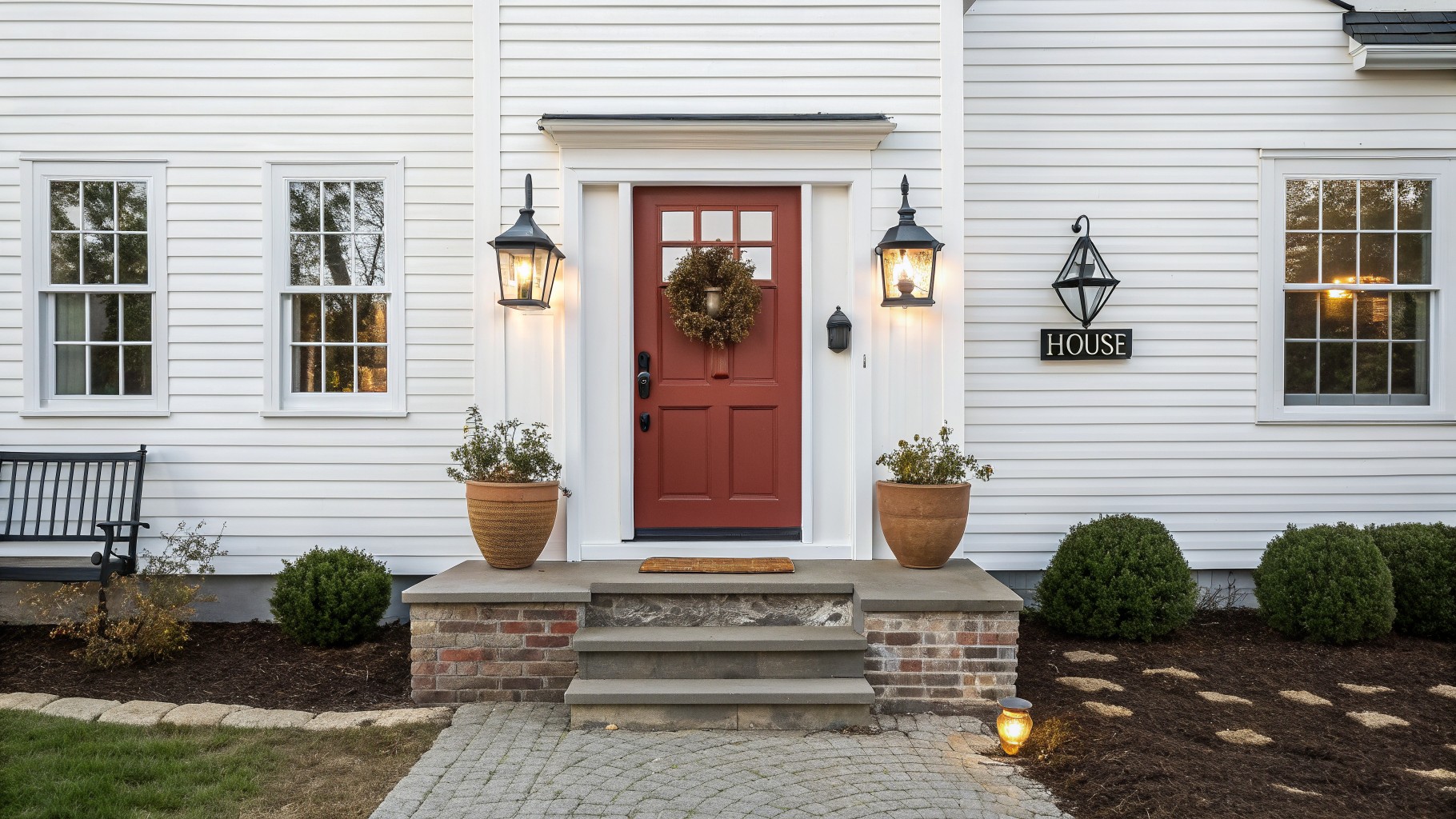
I usually start by looking at how a color will sit next to the existing trim and any stone or siding that frames the entry.
Light hits the door at different angles from morning through evening and that changes how the shade reads from the street.
Samples on the actual surface are worth the extra step.
Some colors that seem welcoming in the can end up looking flat or harsh once they are exposed to real weather and sun.
The ones that hold steady without clashing with the roof or landscaping tend to give the house a more settled look overall.

A deep navy blue door gives a farmhouse entry a solid, grounded look. This shade sits between black and true blue, so it reads strong but still welcoming next to white trim and siding.
The color has a slight cool lean that keeps it from feeling too heavy outdoors. It pairs cleanly with stone steps or light masonry and holds its depth even when the light shifts through the day.
Soft Sage Green Doors
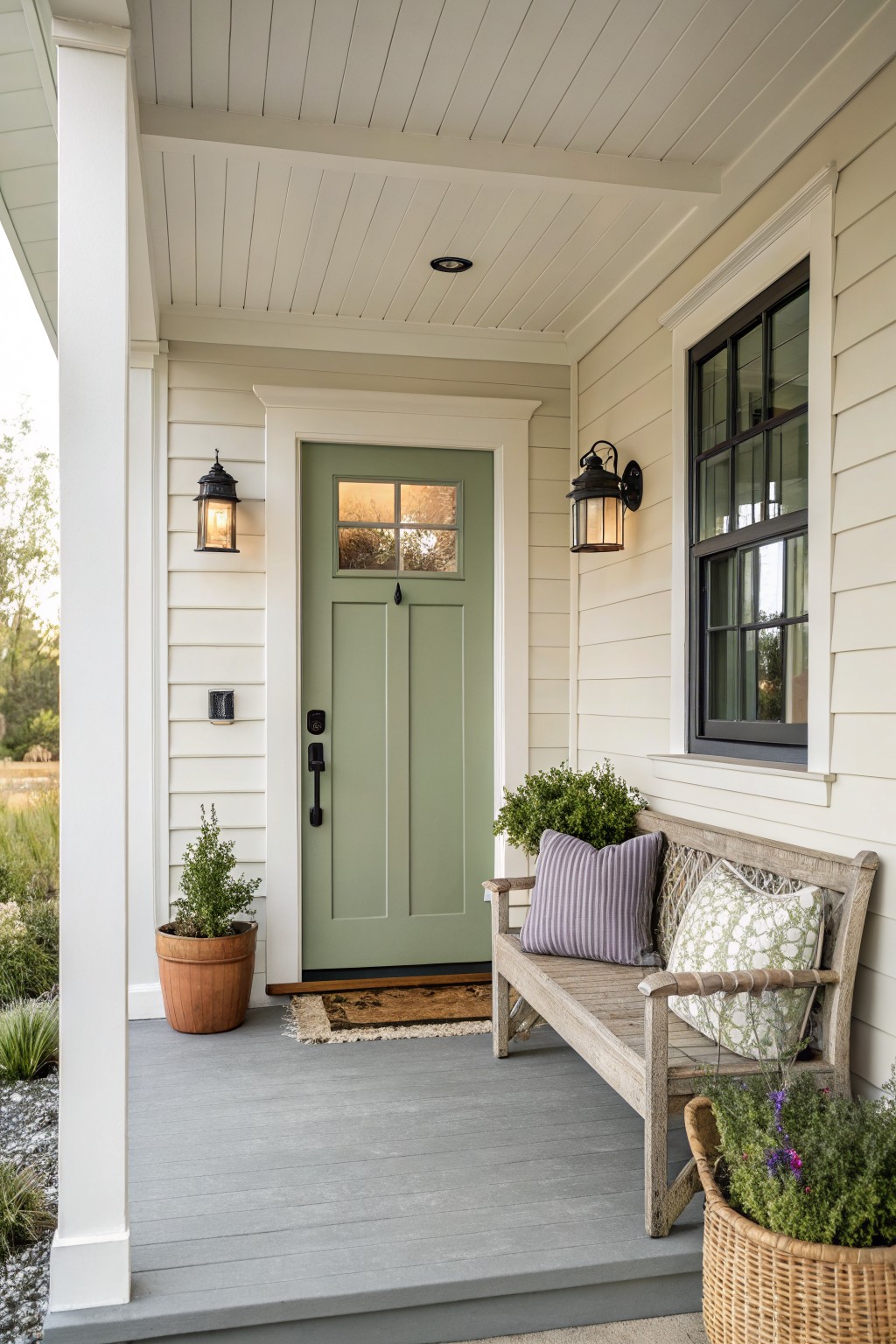
A soft sage green makes a nice choice for a farmhouse front door. This muted green sits between gray and green without leaning too cool or too bright. It pairs well with white trim and natural wood accents around the entry.
The color has a slight gray undertone that helps it read calm next to weathered wood and stone. It works best on homes with light siding or simple trim, and it can look off if the surrounding colors run too yellow or too stark. Good matches include Sherwin Williams Clary Sage, Benjamin Moore Saybrook Sage, and Behr Aged Sage.
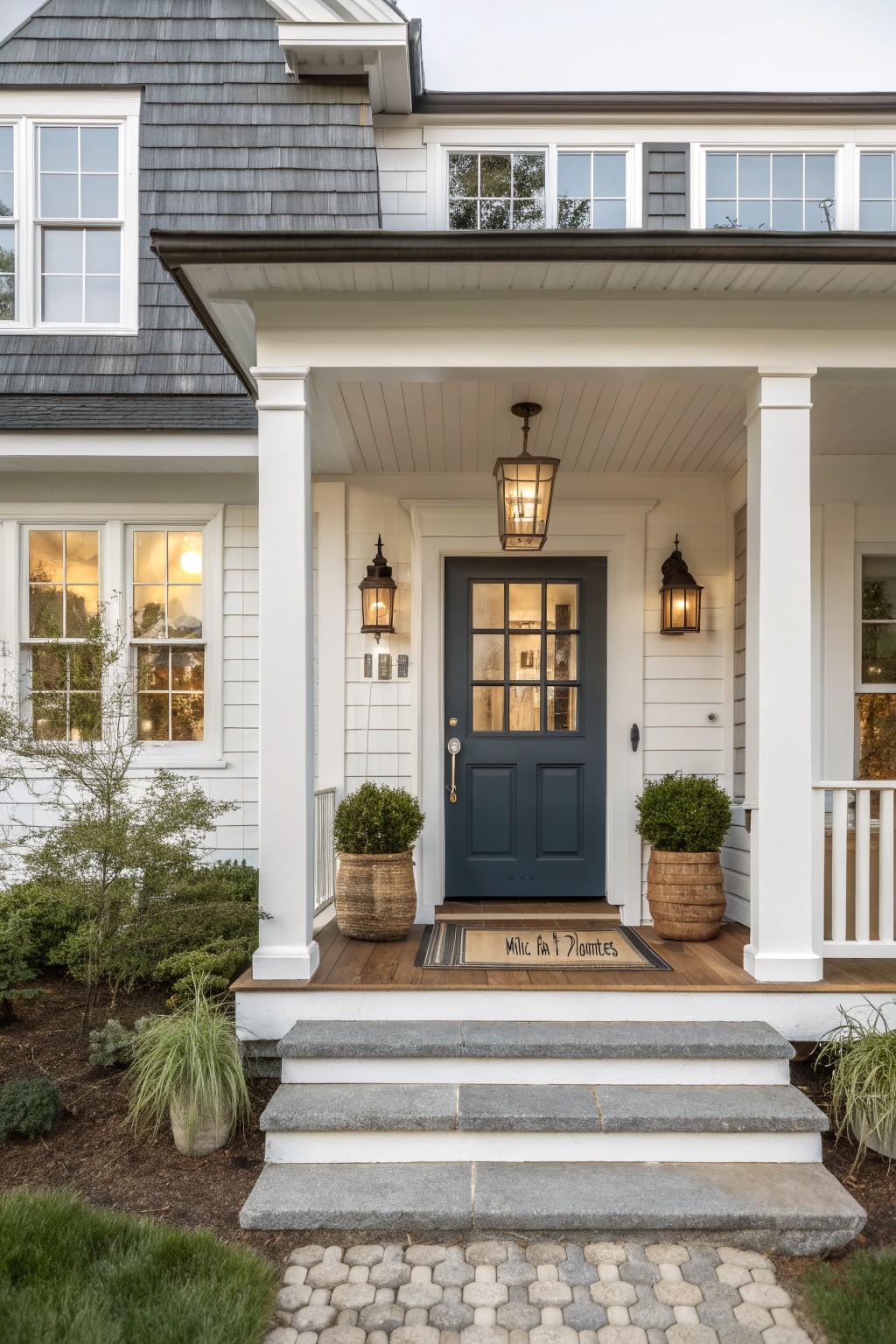
A deep navy reads well on a farmhouse front door since it gives contrast without feeling too bright or trendy. This one has a cool gray undertone that keeps it from looking flat next to white siding.
It works best with natural wood on the porch floor and steps. Pair it with warm white trim and avoid anything too yellow or it can shift cooler than expected.
Golden orange front door
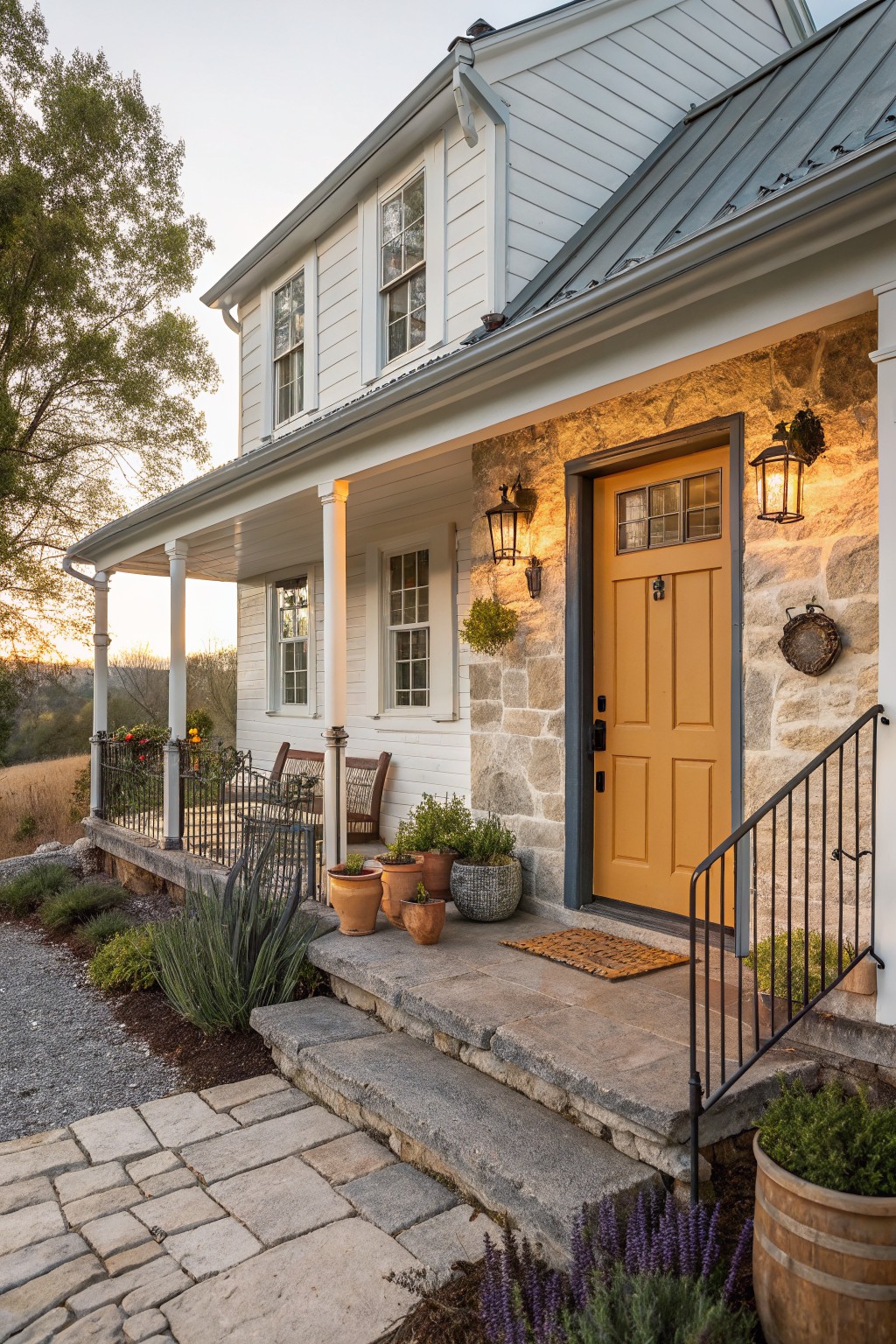
This warm golden orange door color gives the entrance a friendly, settled look. It sits in the yellow-orange range with a soft golden base that feels sunny but not harsh, and it reads nicely against the stone and white siding.
The tone holds up well outdoors and works best on homes with natural materials or neutral trim. It pairs easily with wood, stone, or dark metal accents, though it can lean more yellow in strong sunlight so testing a sample on the actual door helps.
Soft Teal Front Doors
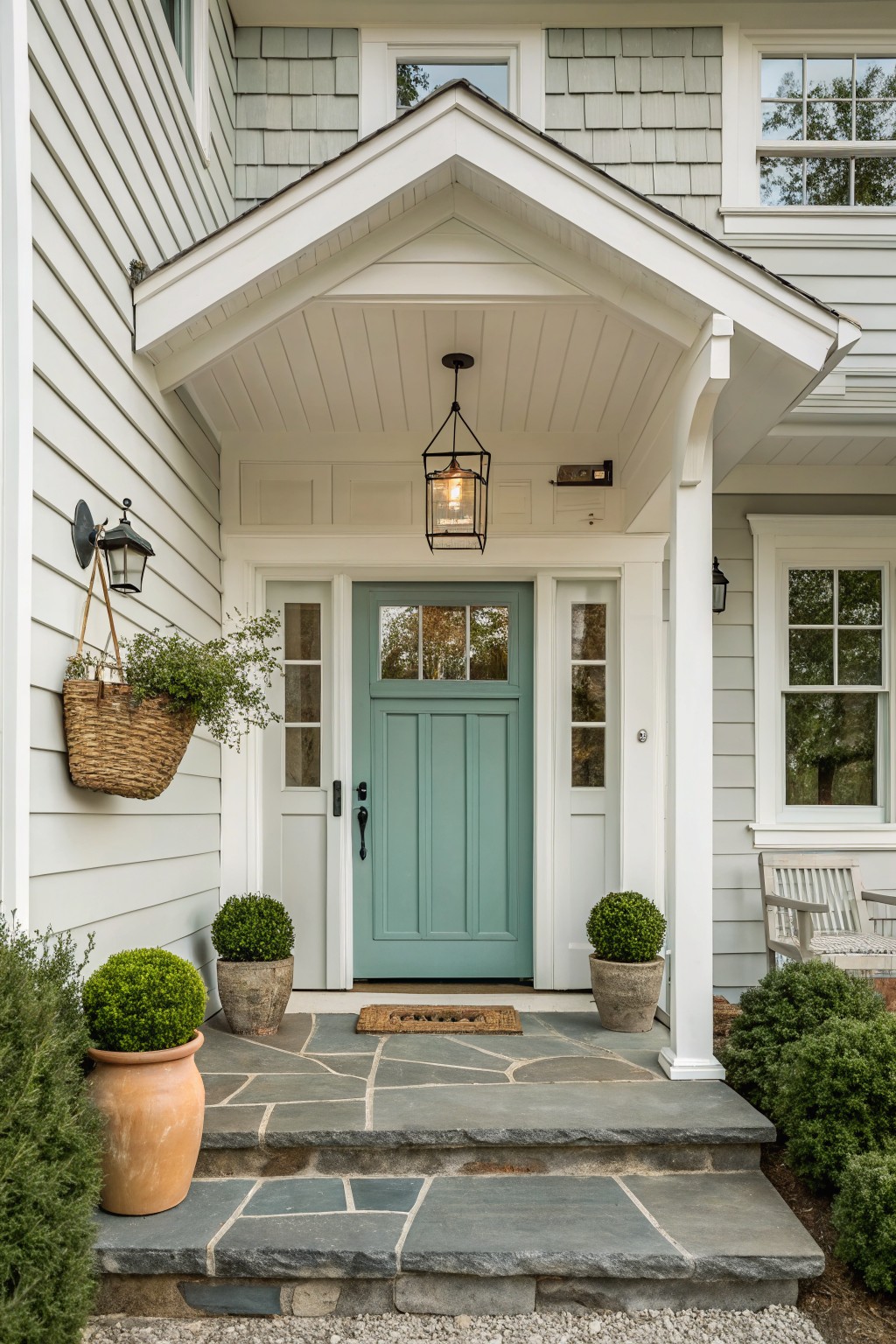
A soft teal green like this one gives a front door a fresh but calm look. It sits between blue and green, which makes it easy to pair with white siding without feeling too bold.
This shade has a bit of gray in it so it stays quiet in bright sun. It works well on farmhouse doors and looks nice with stone steps or simple black hardware.
Warm Terracotta Front Door
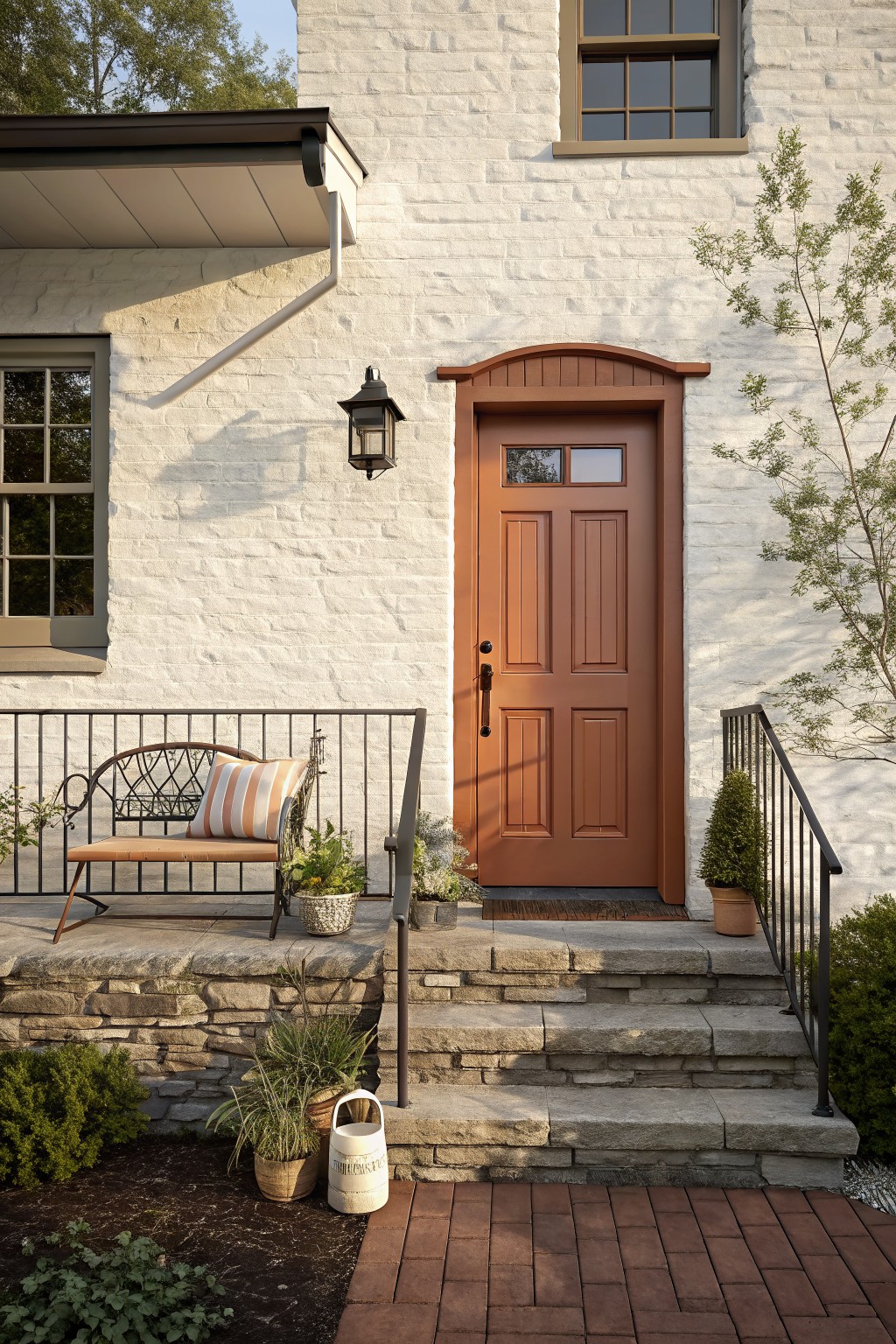
This warm terracotta brown reads as a soft clay color with a bit of red in it. It gives the door a grounded look that fits right in with white brick and stone without feeling too bold or too dull.
The color has some warmth that shows more in bright light and sits nicely next to natural materials. It works well on farmhouses or older homes where you want the door to stand out just enough but still feel connected to the rest of the exterior. Pair it with warm white trim or black hardware if you want a simple contrast.
Soft butter yellow door

A soft butter yellow gives a farmhouse door that gentle, sun-warmed look without going too bright. This shade sits in the warm yellow family and feels easy on the eyes next to white siding and stone.
It carries a light creamy undertone that keeps it from looking stark outside. Pair it with warm white trim and natural wood accents, and it works nicely on traditional or cottage-style homes. Watch how it shifts in full sun since the warmth can read stronger at certain times of day.
Soft Green Siding
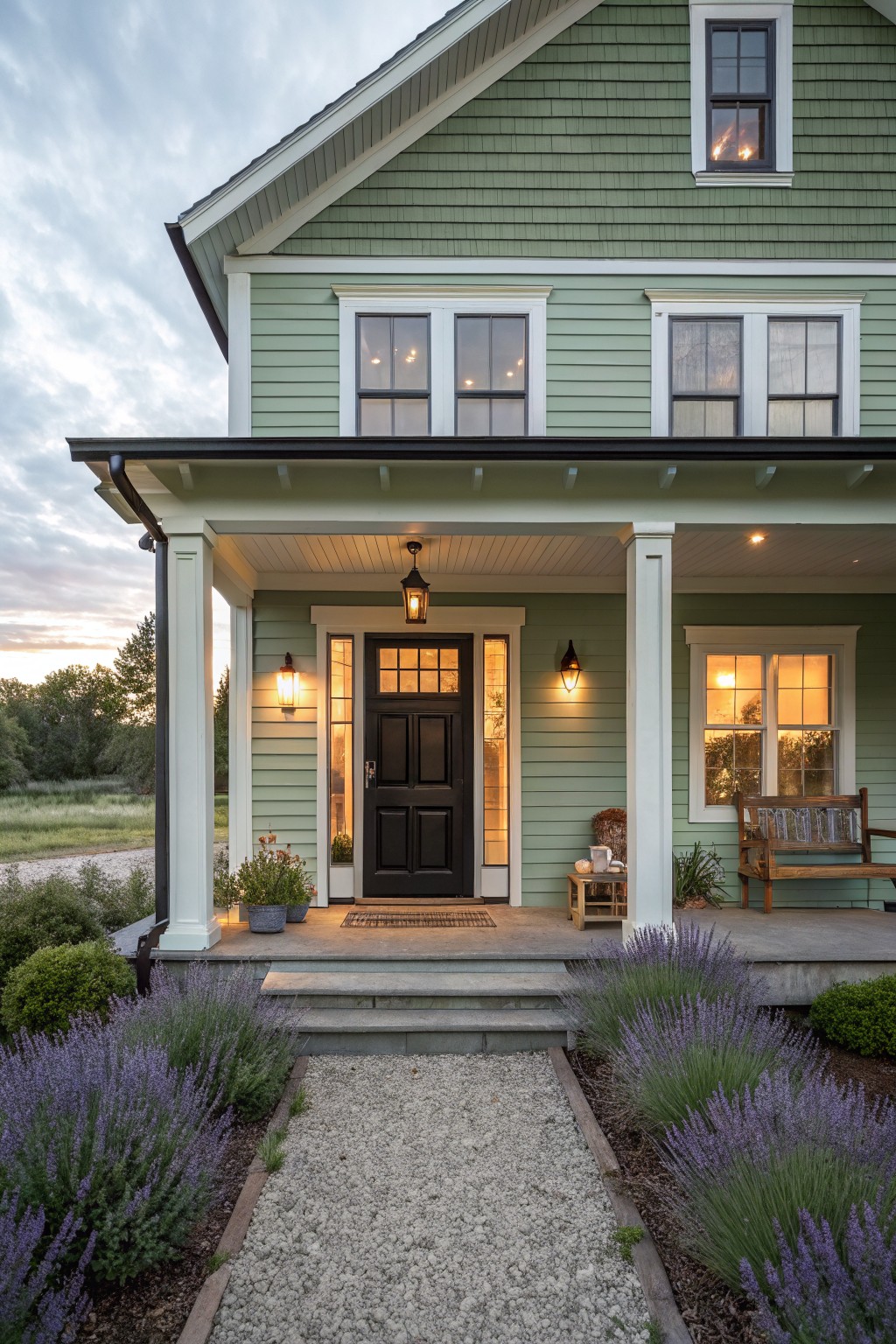
This soft sage green on the siding gives the house a calm look that still feels like a classic farmhouse. It is a muted green with a touch of gray that keeps it from going too bright or too blue.
The color works best with white trim and a darker door. It handles changing light well and pairs nicely with wood accents or simple plantings near the foundation.
a muted blue front door
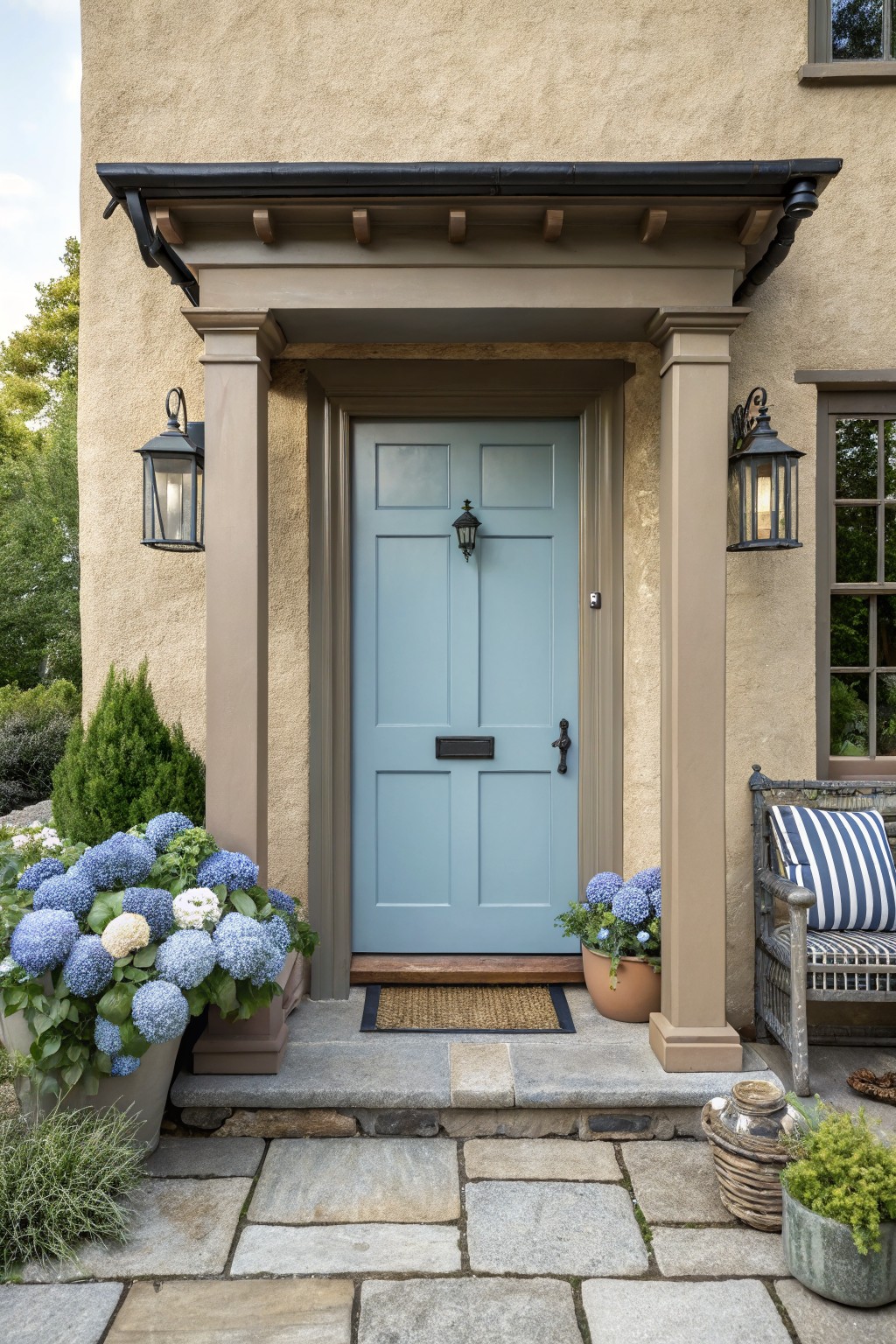
A soft muted blue like the one on this door brings a calm touch to a farmhouse entrance. It sits in that middle ground between gray and blue, so it feels gentle rather than bold and works with many siding tones.
This shade has a slight cool undertone that shows up more in bright light, which helps it stay fresh next to warm stone and wood. It pairs easily with natural materials and holds up well on homes that already have neutral trim. Sherwin Williams Rainwashed, Benjamin Moore Quiet Moments, and Behr Dusk Blue all sit close to this range.
A muted blue front door
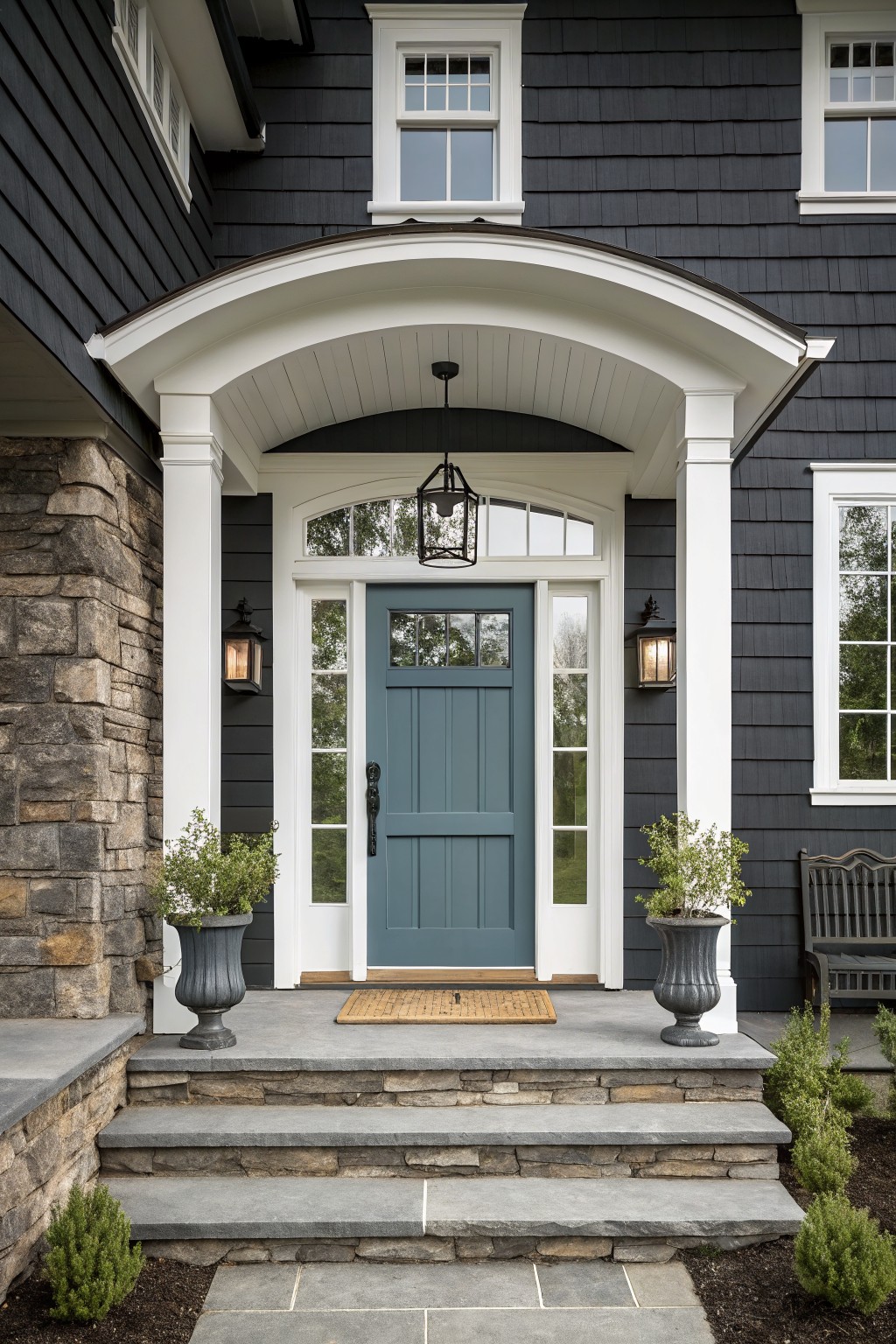
This soft blue door sits right in the middle of the blue family. It has enough gray in it to feel calm rather than bright, which helps it sit nicely against the dark siding and white trim without looking too bold.
The color leans slightly cool, so it reads best in good natural light and pairs well with warm stone and wood tones. On houses with dark exteriors it gives a quiet contrast that still feels welcoming. Closest matches would be Sherwin Williams Rainwashed, Benjamin Moore Wythe Blue, Behr Still Water, or Farrow & Ball Oval Room Blue.
Warm Brown Front Doors
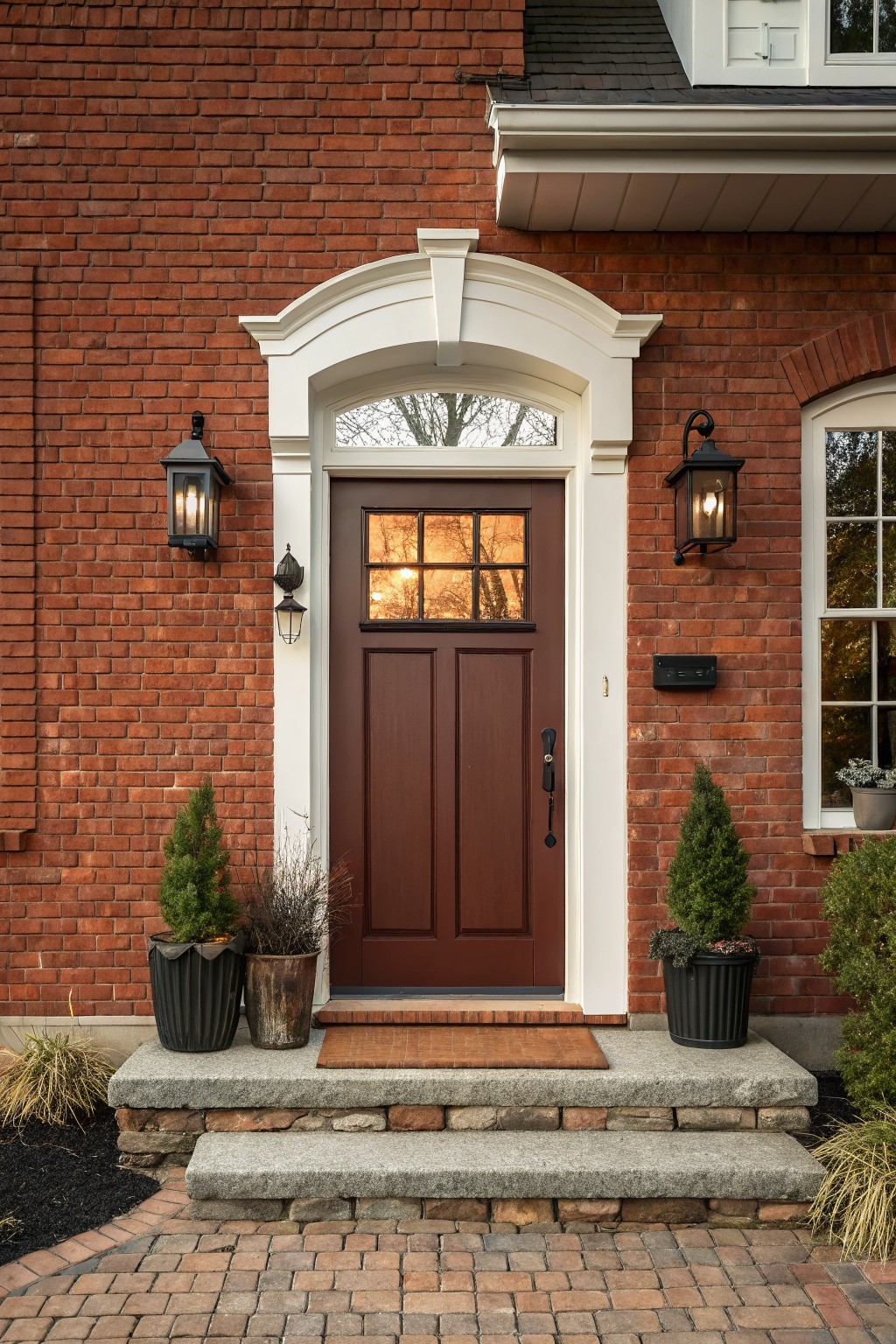
This deep warm brown on the door gives a solid, traditional look that fits right in with red brick. It feels rich without going too dark or dramatic, and the slight red undertone keeps it from looking flat next to the masonry.
The color reads as a true brown rather than a gray or black, so it works best on homes where you want something a little softer than charcoal but still classic. It looks closest to Sherwin Williams Redwood, Benjamin Moore Espresso, Behr Saddle Brown, or Farrow & Ball Tanner’s Brown.
A dark charcoal front door

This deep gray reads as a soft charcoal that sits nicely on the door without feeling too heavy. It has a slightly cool lean but still feels grounded next to the light siding, which helps the door stand out in a simple way. Many people like this kind of gray because it works on both older homes and newer ones without needing a full repaint of the whole exterior.
It pairs best with warm white or light cream trim and looks good against stone or wood accents. Watch how it shifts in different light, since some versions can pull a touch blue or brown depending on the brand. Good matches to consider are Sherwin Williams Iron Ore, Benjamin Moore Kendall Charcoal, Behr Dark Shadow, or Farrow & Ball Railings.
Warm terracotta front doors
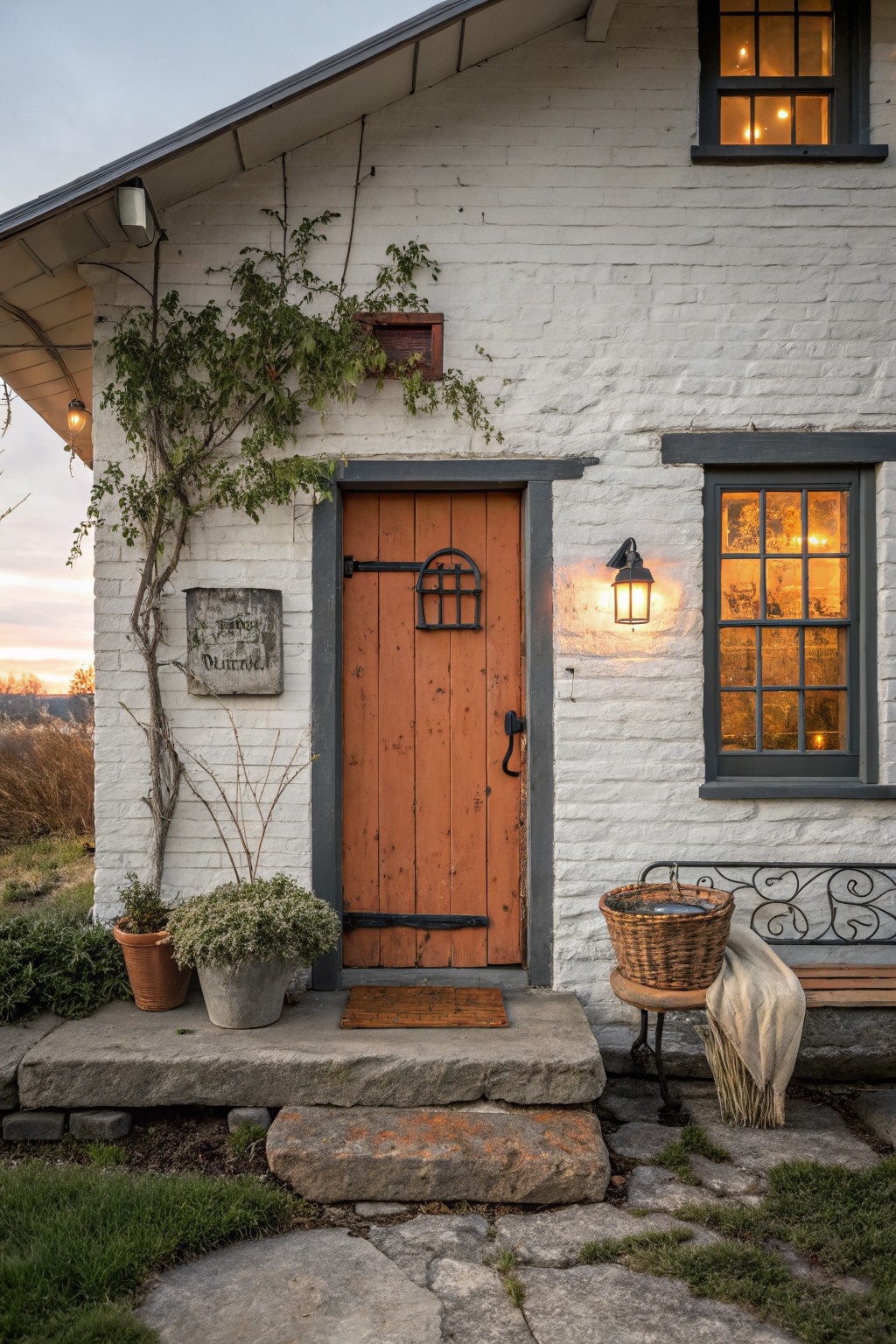
This warm terracotta door color gives a farmhouse that soft, earthy look without going too bold. It sits in a muted orange-red range that feels grounded next to white brick and works well on older homes where you want a bit of warmth.
It has a slight clay undertone that can lean more orange in bright light or pick up redder notes toward evening. Try it with black hardware or natural wood accents, and test a sample on the door itself since the finish shows every bit of texture.
Dusty Rose Front Door
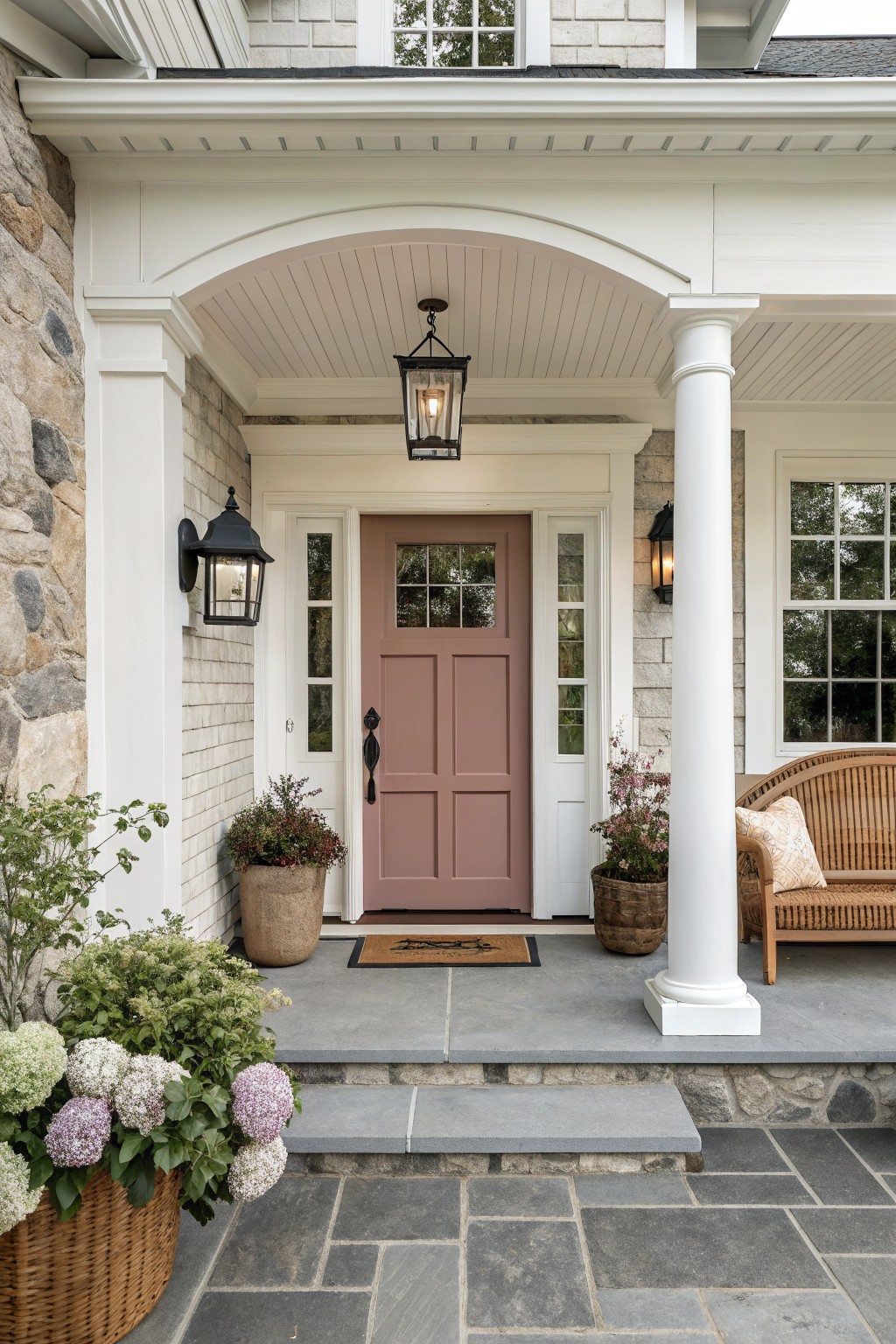
This dusty rose front door color sits right between pink and taupe. It gives a soft, slightly muted look that still reads as color without feeling too bright or sweet on a farmhouse exterior.
The grayish undertones help it blend with stone and white trim rather than stand out sharply. It works best on homes with similar neutral masonry or siding and holds up well in changing light.
A muted green front door

This muted sage green on the front door gives a calm, slightly earthy look that fits many farmhouse styles. It has enough gray in it to feel soft rather than bold, and it works well against lighter siding without needing a full repaint of the house.
The color sits nicely with white trim and stone details. Something close to Sherwin Williams Evergreen Fog or Benjamin Moore Saybrook Sage would give a similar effect, and Behr Aged Sage is another option worth testing in your light.
Warm Terracotta Red Doors
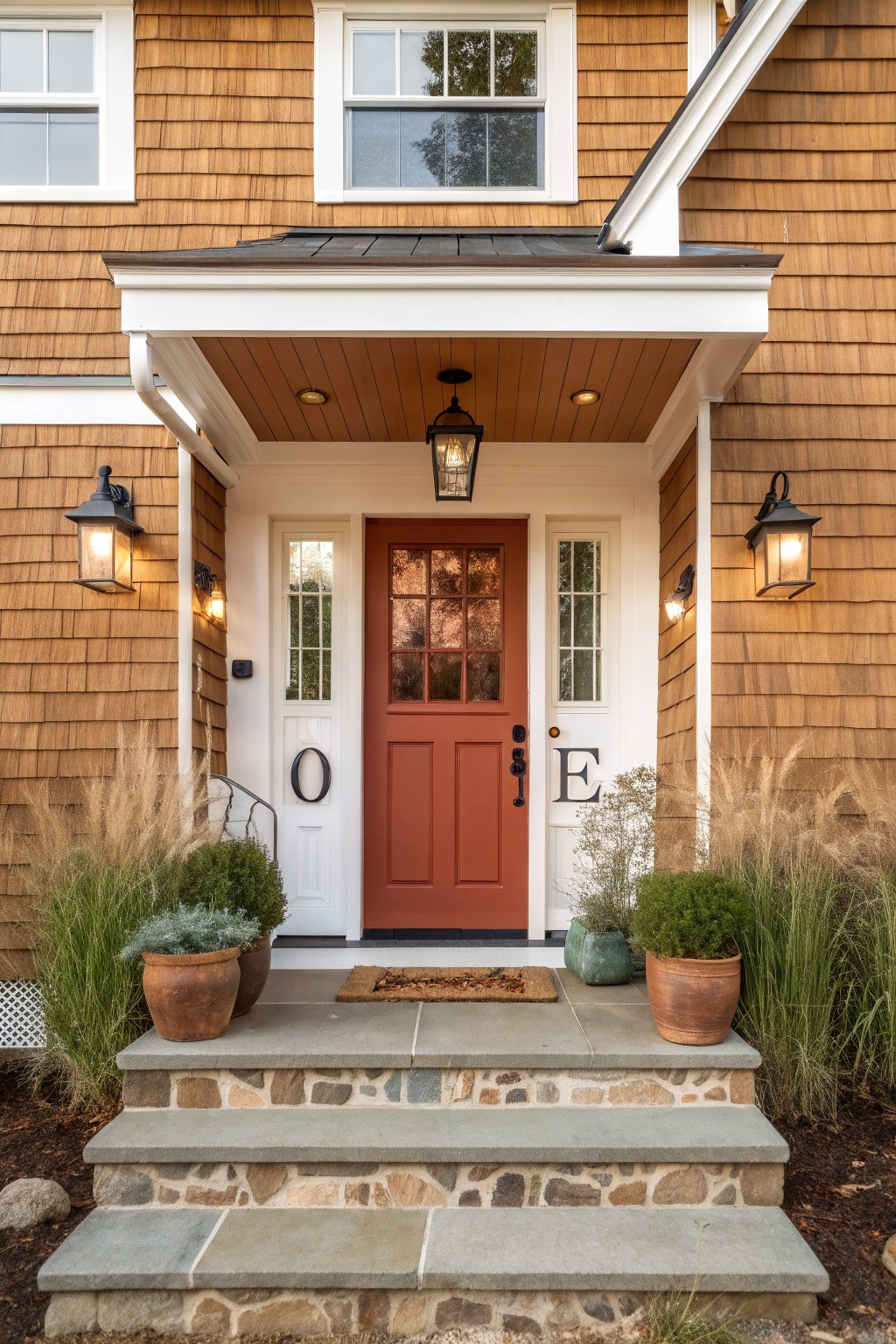
This terracotta red gives a farmhouse door a grounded, earthy look that feels natural with wood siding. It sits right between orange and true red, so it reads warm without turning too bright or loud.
The color has a soft orange undertone that works well with cedar shakes and stone. Try shades like Benjamin Moore Heritage Red, Sherwin Williams Red Barn, Behr Fired Brick, or Farrow & Ball Red Earth.
A teal front door
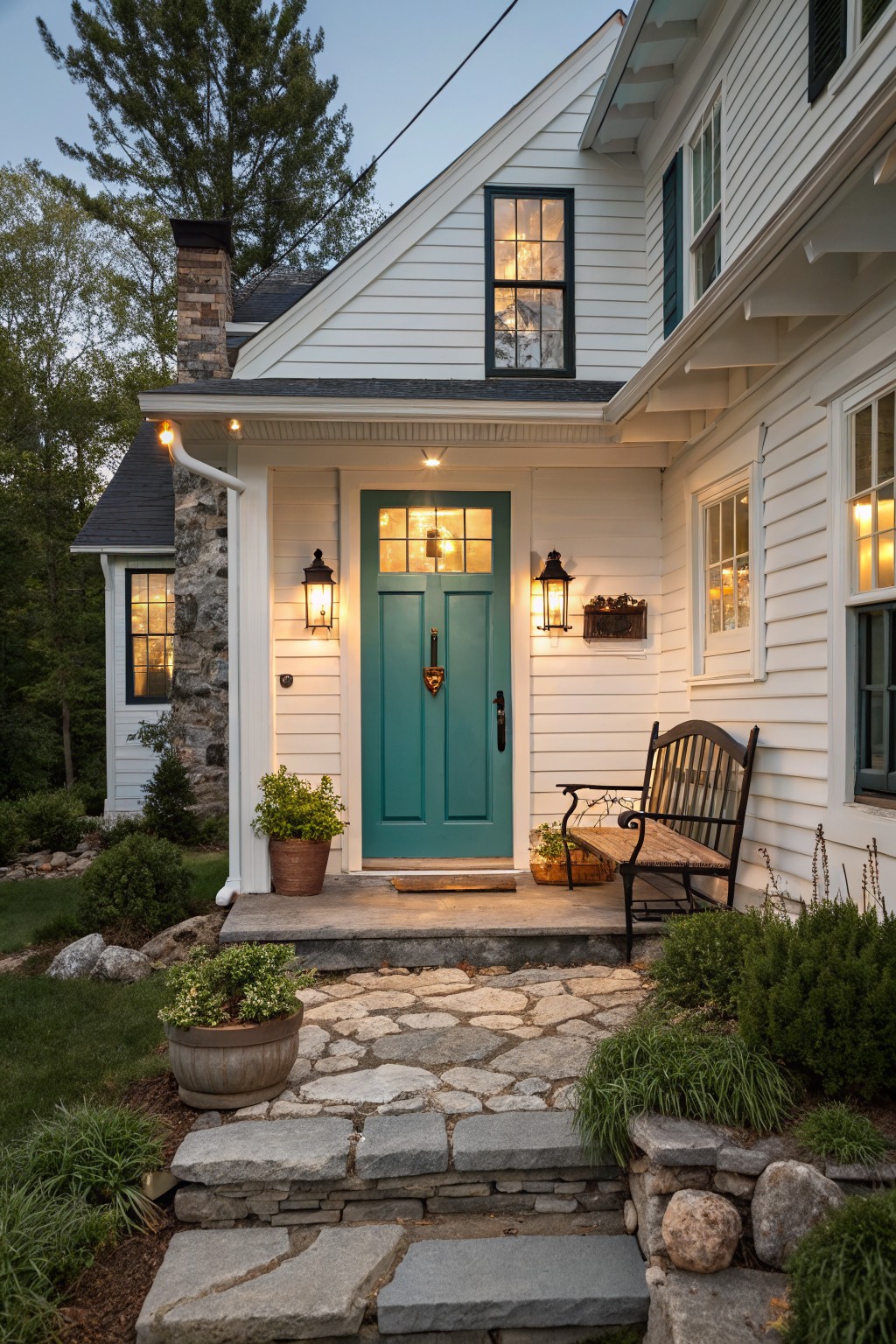
This teal front door sits right in that blue-green range and gives the house a clean, welcoming look without needing a full repaint. It has enough color to stand out while still feeling grounded next to white siding and stone.
Teal like this tends to read a little cooler in shade and slightly brighter in sun, so it pairs best with warm whites or soft grays on the trim. It also looks good next to natural wood doors or black hardware if you want a bit more contrast.
Frequently Asked Questions
Q: How do I make sure the new door color matches my existing windows and roof? A: Stand back from the street and hold up paint chips against those features. Choose one that feels like it belongs without fighting the other tones. A soft white or sage often does the trick here.
Q: What happens if the color looks different once it’s on the door? A: Outdoor light changes everything so grab a few samples and paint small sections first. Live with them for a day or two before committing. This avoids a full redo later.
Q: Do I need special paint for a farmhouse door? A: Regular exterior paint works as long as it handles weather well. Focus on a satin or semi gloss finish for easy cleaning. Your door stays looking fresh with less effort.